Most people associate the word “vanity” with an excessive concern or pride in one’s appearance or sometimes in one’s qualities. But at its root, vanity refers to emptiness. To say that someone is vain is to say that it he or she is empty or largely lacking in meaning, depth, or substance.
It makes sense that people get worked up about externals when there isn’t much happening on the inside. And thus it makes sense that we connect emptiness (vanity) with excessive show.
There are many expressions that enshrine this connection:
All form and no substance
That Texan is all hat and no cattle
All bark and no bite
All booster, no payload
All foam, no beer
All sizzle and no steak
All talk
Show me the money
The Wisdom Tradition in the Bible, especially the Book of Ecclesiastes, speaks of vanity at great length. In it, the word is usually used to refer to the ultimate futility of what this world offers because the world itself is ultimately empty and vacuous.
Then I considered all that my hands had done and the toil I had expended in doing it, and behold, all was vanity and a striving after wind, and there was nothing to be gained under the sun (Eccl 2:11).
He who loves money will not be satisfied with money, nor he who loves wealth with his income; this also is vanity (Eccl 5:10).
The world, which so mesmerizes our senses, shows itself ultimately to be empty of power or any lasting substance.
We have here, no lasting city (Heb 13:14).
As for man, his days are like grass: or as the flower of the field. Behold, he flourishes. But the wind blows and he is gone; and his place never sees him again (Ps 103:15-16).
I thought of these notions of vanity when I saw this admittedly very funny commercial. It shows a man concerned only with his appearance. Actually, he’s even more vain than that: it’s how he smells that concerns him (this is an Old Spice commercial, after all). He is so vapid, so vain, that he thinks that even if he doesn’t look good, well at least he smells like someone who looks good!
As he moves through the scenes of the commercial he becomes increasingly devoid of substance (literally!).
Symbolically, we can see him as the vain person who goes through life carelessly, paying no attention to the way in which the world, the desires of the flesh, and the devil strike at and eat away at him. But he doesn’t worry about that because at least he smells like someone who looks good! His only real substance is to be lighter than air, a whiff. It is form over substance, impression over reality. It is empty show; it is vanity on steroids.
Here is a humorous look at vanity, a vanity so extreme that it goes beyond appearance and extends into the vapid, vacuous, and vaporous vanity of merely wanting to smell like someone who looks good. It is a remarkable portrait of the empty show that vanity ultimately is. Enjoy!
The Gospel proclaimed on Wednesday of this week included the familiar John 3:16. So familiar is this verse, that many hold up signs or have bumper stickers that simply say, “John 3:16.”
For God so loved the world that he gave his only-begotten Son,
so that everyone who believes in him might not perish
but might have eternal life (John 3:16).
It is indeed a beautiful verse, but I would argue that many use it inauthentically by pulling it out from its place within a longer passage. The fuller segment is John 3:16-21, which is as much a passage of warning as it is of consolation and assurance.
Here it is again, along with the remainder of that longer passage:
For God so loved the world that he gave his only-begotten Son, so that everyone who believes in him might not perish but might have eternal life. For God did not send his Son into the world to condemn the world, but that the world might be saved through him. Whoever believes in him will not be condemned,
but whoever does not believe has already been condemned,
because he has not believed in the name of the only-begotten Son of God.
And this is the verdict,
that the light came into the world,
but people preferred darkness to light,
because their works were evil.
For everyone who does wicked things hates the light
and does not come toward the light,
so that his works might not be exposed.
But whoever lives the truth comes to the light,
so that his works may be clearly seen as done in God (John 3:16-21).
This fuller context has somewhat of a different tone. It sets forth a great drama in which our lives are cast. It amounts to sober assessment of the obtuseness of many human hearts and of the urgent need for us to decide well in life.
Those who merely quote the first verse run the risk of presenting this text as a kind of a freewheeling assurance that all is well and that salvation is largely in the bag, that judgment and condemnation are not a significant factor since “God so loved the world.” And while the concept of faith is included in this first verse, without the larger context the tendency is to soft-pedal the need for repentance and for the obedience of faith. In so doing, the true drama and sober teaching of the fuller text are lost.
The longer passage fleshes the message out and has a balance that the shortened text does not. Here is what Jesus is in effect saying, expressed in more modern language:
As I live, I and my Father do not desire that any should die in their sins or be lost. I have not currently come as your judge but as your savior. I will come one day as the judge of all, but now is a time of grace and mercy extended to you.
But you need to know that you have a decision to make, a decision that will determine where you will spend eternity.
So please listen to me! Open the door to me and let me draw you to the obedience of faith and the beauty of holiness. If you do this, light will dawn for you, for I am the Light and your life will grow ever brighter.
But if you will not repent and come to a lifesaving obedience of faith, your heart will begin to despise me and the light of my glory. You will become accustomed to the darkness and begin to consider the Light (which I am) to be obnoxious, harsh, judgmental, and even cruel. Yes, you will begin to hate me, for I am the Light. You will prefer the darkness because you love your sins more.
Come to your senses and don’t let this happen. You have a decision to make: for the light or for the darkness, for me or for the prince of this world, Satan. Be sober and understand the dramatic choice before you. Your salvation depends on your choice to come to obedient faith in me or to reject me.
And know this: on the day of your judgment, the verdict will not be rendered by me so much as by you. For by then, you will either love the Light or hate it. And I will not force you to live in a light you detest. You will be free to go your own way. It will not be I who reject you. It will be you who reject me.
Be sober. Don’t let this happen. Don’t marginalize or ignore me. Don’t prefer the world and its twisted values and passing pleasures. Your sins will make you hate the light and prefer the darkness. You have a decision to make.
This message is much more complex than that contained in the popular, abbreviated text known as John 3:16. God’s mercy is offered, but the final verdict will center on whether or not we accept it. This message may be less consoling but it is true nonetheless, and only the truth can set us free.
There is a tendency by many to pull out certain verses and isolate them from their context and from the fuller message of the Gospel. The full and authentic Gospel echoes the opening call of the Lord Jesus: “Repent and believe the Good News.”
So yes, John 3:16! But please continue reading. The whole Gospel, please!
One of the more perplexing claims of the growing number of agnostics and atheists among us is that there is no evidence of an intelligent creator of the universe. But clearly the created universe manifests intelligibility and order from the farthest reaches of outer space down to our tiny planet and further down into the “inner space” of cells, atoms, and molecules. Science affirms the existence of a creator by uncovering the inner order and intelligibility of created things. But strangely, the age of science seems to be fostering a denial of that evidence.
Indeed, creation is a veritable symphony of billions of notes working together in an extraordinary harmony that seems to shout, “I was composed and carefully thought out; my master composer is also the great conductor of my symphony, so carefully laid out!”
That the created world is intelligible is the very basis of the sciences. The world manifests meaning that we can discover and it moves along in predictable ways; it does not randomly change from one thing to the next from one moment to the next. Because there is order and intelligibility, a scientist can predict, propose, and test theories, and replicate results. Without order and intelligibility there could be no scientific method.
And yet many of the scientists who use this scientific method deny the very intelligence who provides the intelligibility that their science presumes. For if the created world is intelligible, then clearly an intelligence imposed this intelligibility upon it. That the created world manifests order demonstrates that someone so ordered it.
If all of this intricate order happened just by accident at one moment in time, it would then require something to maintain that order and keep it from breaking down the very next instant into something completely different. And yet this does not happen. Reality does not suddenly and randomly mutate into something else. It follows predictable laws; changes are orderly and exhibit continuity with what went before. Order is present not just at one point in time, but is sustained over time and becomes demonstrably more organized as complex life forms develop. Clearly, creation tends toward a certain end in an orderly and progressive way.
That there is order and intelligibility to the created world is demonstrably true and to deny this fact would seem to be the reaction of a madman. The universe shouts out, “I was planned and carefully executed; I have been intricately designed by an intelligent cause moving me in an intelligible direction!”
I would understand if physical scientists were to say that they are not equipped to opine on who or what this intelligence is. Indeed, the physical sciences are notequipped to measure the metaphysical. For so many scientists to claim the ability to deny that there is an intelligence (whom we believers call God) is for them to act outside of their field, unreasonably so.
The claim that there is no God is not a scientific claim; it is a philosophical one. Those who maintain that there is only the physical and not the metaphysical are actually making a metaphysical claim. They refute their own assertion in the very act of declaring it! The claim that physical science wholly explains all of reality is not one that can be demonstrated scientifically. The claim is proven false the very moment it is declared.
Many will say that there is no evidence of God’s existence because they cannot see it under a microscope or through a telescope. But of course God is not a physical being; He does not tip our scales. He cannot be physically measured any more than can justice, mercy, beauty, or any other metaphysical concept. None of these can be seen with the tools of physical science—but they are no less real.
Yes, there is a great deal of evidence of a creator. The entire created world is steeped in intelligibility and order. There is a magnificent interplay between material, efficient, formal, and final causality. By its intelligibility, the created world shouts of the intelligence that made it so. By its order, it sings of the one who so ordered it.
Existence itself provides the answer to the questions: “Why is there something rather than nothing? Why is there anything at all?” The only reasonable answer that can come back from the existing cosmos is this: “I was caused!” Something cannot cause itself any more than you and I can cause ourselves. We, and the entire cosmos, were caused by someone other than ourselves and outside of ourselves. The cosmos says, “Someone outside of me caused me. That is why I exist. That is why anything exists at all.”
We moderns have become very obtuse and inwardly focused. If anything, we should be more convinced than ever that God exists, as our sciences have revealed such incredible complexity and intricate order in every layer and level of creation. We should be singing of the incredible wisdom of the creator who has so perfectly ordered every level of his creation. And yet, sadly, just the opposite seems to be happening—agnosticism and atheism are growing.
Far too many scientists, who should know better (for there would not be science at all without the intelligibility built into creation), make unfounded denials of God, a pronouncement that is clearly outside their field of expertise. And because so many of us idolize the sciences, we give great weight to the claims of scientists, even when those claims are nonscientific.
Contemplating this tragic turn of events brings to mind a little parable told by Venerable Fulton Sheen many decades ago:
Those who refuse to unify the cosmos in terms of Pure Intelligence but content themselves with secondary causes may be likened to an all-wise mouse living in a grand piano who … explained the music by the play of hammers on the strings, the action of which could be seen in his own narrow little world. Scientists catch the tune, but miss the player (Old Errors and New Labels, Fulton J. Sheen 1931, p. 17).
Yes, we have become mousy in our thinking. We prefer to live inside the piano and explain the music of the spheres only internally, never thinking of the great artist outside, who gives and causes the magnificent, understandable, beautiful, and intricate melody we hear.
Sadly, the great debate over the existence of God seems only to grow, even as the evidence of intelligibility, order, and design increases. It is a great debate of mice and men.
Cardinal Sarah, in his book-length interview with Nicolas Diet, God or Nothing, has many good observations on the Sacred Liturgy. His remarks should cause all of us to think as well as to repent.
His fundamental insights are that the Sacred Liturgy is about the adoration and worship of God, and that it is our hearts that God seeks.
I will present a few quotes from the good Cardinal in bold, black italics while my meager commentary is in plain, red text.
Cardinal Sarah has the following to say about the implementation of liturgical reform:
Unfortunately, right after the Council, the Constitution on the Sacred Liturgy was understood, not in terms of the fundamental primacy of adoration, of the Church humbly kneeling before the greatness of God, but rather as a book of formulas …. We have seen all sorts of “creative” liturgical planners who sought to find tricks to make the liturgy attractive, more communicative, by involving more and more people, but all the while forgetting that the liturgy is made for God. If you make God the Great Absent One, then all sorts of downward spirals are possible, from the most trivial to the most contemptible.
… If we make the liturgy for ourselves, it moves away from the divine; it becomes a ridiculous, vulgar, boring, theatrical game. We end up with liturgies that resemble variety shows …. The faithful go back home … without having encountered God personally or having heard him in the innermost depths of their heart (God or nothing, p. 105).
It is amazing to me how hard it is for us to get this simple point across today. The Liturgy is about God and the worship of God. It is listening with docility to His Word proclaimed and worshiping Him in the Word made Flesh, in the Eucharist. But you would almost never know that by walking into a typical Mass. Thomas Day summarized modern worship well when he described it as “the aware, gathered community celebrating itself.”
Cardinal Sarah presents a beautiful image of the Church and of the goal of liturgy: “the Church humbly kneeling before the greatness of God.”
And what a terrible indictment, what a “fail” that Cardinal Sarah describes: “The faithful go back home … without having encountered God personally or having heard Him in the innermost depths of their heart.”
I wonder if any pastor or liturgy committee has ever articulated so clear a goal and so clear a “fail” to be avoided. Burn all the glossy liturgy magazines with their trendy ideas! The good Cardinal has set forth everything we need to consider.
Next, the Cardinal has a call to repentance for some of us who have turned the liturgy, God’s Sacred Liturgy, into a battleground. The Cardinal describes the opposing camps: those favoring the classical liturgy and those favoring the modern. He is plain in saying that these wars are a countersign and must displease God exceedingly. His Eminence has something to say to both sides. Whichever side you are on, prepare to repent.
First, Cardinal Sarah states the problem:
God alone should be our point of reference. However, … we have different concepts of liturgy that go so far as to cause mutual rejection, hostility, or even a cold war…. Too often we are opposed, each one enclosed in his little chapel …. Ideology replaces adoration (Ibid, p. 116).
Do you see what he is saying? God is the point. But instead, we look at each other and make “the other guy” the point. We say, “He isn’t kneeling enough.” “She’s wearing a veil!” “You’re turning back the clock with all your Latin stuff.” “Listen to that hootenanny music, that Protestant hymn. Look at that dumb charismatic emotionalism. It’s so irreverent!”
Note our inward focus, our obsession with the other guy. But where is God in all this? Well, the Cardinal has our number: “ideology has replaced adoration.” I don’t have any time to adore God if I’m too busy watching what the other guy is or isn’t doing.
The Cardinal continues,
The liturgy is God’s time, and it tends to become the heart of an ideological pitched battle between different concepts [classical and modern]. It is sad to enter God’s house with one’s shoulders loaded with weapons of war and one’s heart filled with hatred … (Ibid, p. 116).
Yikes! And don’t tell me his observation isn’t fair.
Now here comes the money quote:
Indeed, beyond the rite, God looks first for human hearts….
The first rubric of any Liturgy is this: Caritas suprema lex (Charity is the highest law). God wants our love! At the end of every liturgy, whether it is your favorite form or not, did you worship God? Did you tell Him that you love Him? Did you love and adore Him? Were you grateful and astonished at His goodness and mercy?
Some years ago, as a large team of us were going into the basilica to celebrate a Solemn High Pontifical Mass in the Extraordinary Form, I was asked to offer a prayer. The liturgy is enormously complex and as I prayed that we would remain focused and remember our roles I also asked God: “Please, Lord, help us to do well. But above all, help us to remember to worship you.” I have no doubt that on that day I missed a few bows or biretta tips, but I pray that I did not forget my primary goal, which was to worship the God who loves me despite my fumbling.
Next, the Cardinal speaks to us who love the “Classical Liturgy”:
If a person respects the ancient rites of the Church but is not in love, that individual is perishing. I think that this is the situation of the most extremist adherents of the various liturgical schools. Strict, almost fundamentalist ritualism or the modernist-type deconstruction of the rite, [these] can cut people off from a true search for the love of God.
Risking the wrath of traditionalists, of which I am one, I must say that I have sometimes suffered at the hands of fellow traditionalist for not being “traditional enough.” For some, it is not enough to like the Traditional Latin Mass (TLM); one must also despise the Ordinary Form and insist on its abolition. While I love the TLM, I do not hate the Ordinary Form. And I also like gospel music. I have been discredited by some for these views. But how could I hate the Ordinary Form or gospel music? It is the form I was largely raised in, the form in which I was ordained, and the form in which I have celebrated the vast majority of the Masses of my priesthood. Gospel music has spoken to my soul every bit as much as have chant and polyphony, and gospel music is always about God, not us.
Whatever the faults of the Ordinary Form (and they are not negligible), it has fed me and has been the way I have encountered the Lord for most of my life!
But yes, I have suffered at the hands of traditionalists. And my suffering is made the more acute because I love them. But I will not hate the new Mass. I also love many others in the Church who worship in the Novus Ordo and have met the Lord there. There are some in the Neocatechumenal Way, in the Charismatic Movement, in Cursillo, and in my own parish with its vibrant gospel liturgy, who have met the Lord in non-traditional ways. The New Mass and its diversity has helped them to find a place where they could meet God.
The Cardinal’s rebuke is a call to repentance to fundamentalists and extreme adherents to tradition who would simply reject the experience of others who have found the Lord in non-traditional ways. The New Liturgy allows a lot more freedom, and if the Church allows a freedom we are wrong to excoriate others for doing what the Church permits. It may not be my favorite type of music; it may make use of liturgical options that are not my preference; but if it is allowed, for the love of God, never get between another person and God.
The Cardinal warns devotees of the modern forms, too:
In Africa, when I attend Masses that last six hours, I see only a celebration that suits personal preferences. I strongly doubt there is a true encounter with God in such moments of continual excitement and dances that are not very conducive to the encounter with the mystery. God is horrified by forms of ritualism in which man satisfies himself. Even though it is necessary to give thanks to God for the real vitality of our African liturgies … when the [paschal] mystery is encumbered with elements that are foreign to the Eucharist, it give the impression that we are celebrating ourselves. We absolutely must strive to do again what Jesus did. Let us remember his Words: “Do this in memory of me.”
[These aberrations can] lead us to the celebration of the great mystery of our faith, but are made without any recollection, without any sense of wonder, without any religious “awe” at being face to face with God. The celebrants chat and discuss all sorts of trifling things while walking [in procession] up to the altar of the Lord!
Yes, here is the major problem with the modern form: it can so easily devolve into a self-satisfying, self-absorbed liturgy in which God is barely referred to, and whose seeming purpose is to praise ourselves and lift up man rather than God. Modern liturgy too easily becomes what pleases us. But where is God? Where is the time to reflect and reverently experience that He is Lord and worthy of my worship? When do we listen during these noisy, busy liturgies? When do we ever stop all the congratulations of one another that so predominate modern liturgy? Is the Liturgy only about us, the music we like, and self-aggrandizement? What would happen if we just stopped all the lengthy Thank-yous that so burden the beginning and end of every Mass?
And thank you, Cardinal Sarah, for calling out the chattering priests who, instead of singing the hymn or worshiping God, engage in banter and delight in acknowledgments as they process up the aisle. Shame on us!
And then a final word from Cardinal Sarah:
The liturgy is a moment when God, out of love, desires to be in profound communion with men. If we truly experience these sacred moments, we can encounter God. We must not fall into the trap that tries to reduce the liturgy to a simple place of fraternal conviviality … (Ibid, p. 124).
Amen!
Here’s a song from the 1970s that I often sang in my youth. Although it is from a “goofy” period, it reminds us to remember God.
And here is a song from the classical liturgy that carries the same message:
In the Office of Readings this Easter season, we are reading from the Book of Revelation. This choice might seem surprising, but there are good reasons for it.
While many suppose that the Book of Revelation is merely about the end of the world, it is about far more; it is also about what is happening right now. It was not written only for the end of the ages but for all ages. It is a book of glory that discloses the victory that Jesus has already won. Don’t get lost in lots of exotic theories; Revelation is a book of glory that prophetically declares what is really going on.
Its title in Greek is Ἀποκάλυψις Ἰησοῦ Χριστοῦ (Apokalupsis Jesou Christou), which literally means “The Unveiling of Jesus Christ.” It is as if Jesus is pulling back the veil to show us what is really going on. He shows us the great drama of history and tells us that He has already won the victory. He declares that we should not to lose heart while the dust settles, while the wheat is separated from the chaff and the harvest is brought in.
We are too easily mesmerized or terrified by our limited view of history. We think that life depends on which political party wins, or whether a cure is found for some disease, or whether world leaders can reach rapprochement. But the battle is far higher and deeper than our little sliver of the early 21st century. It is far deadlier and is about more dramatic issues than what will happen to the GNP of the U.S. or which of the latest political theories will prevail.
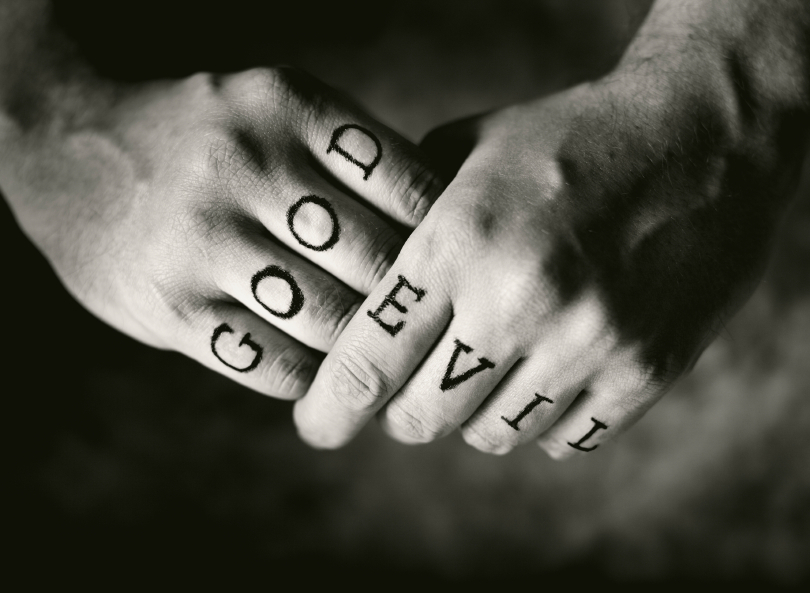
This is a great drama between good and evil. It concerns the far more fundamental issue of where you will spend eternity. Yes, there is a great and cosmic battle in which we are all caught up; it is happening all around us. St. Paul says,
For we do not contend against flesh and blood, but against the rulers, against the authorities, against the cosmic powers over this present darkness, against the spiritual forces of evil in the high places. Therefore, take up the whole armor of God, that you may be able to withstand in the evil day, and having done all, to stand firm (Eph 6:11-13).
The Book of Revelation is speaking to the same reality. It unveils the true and cosmic battle. In so doing, it declares without ambiguity who the victor is: Jesus Christ our King, who has already won. There are only two kingdoms, two armies, two sides. You must decide whom you will serve: the prince of this world or the King and Lord of all creation.
Revelation opens with a vision of the glory of Jesus the Great Lord and Son of Man:
I, John, your brother and partner in the tribulation and the kingdom and the patient endurance that are in Jesus, was on the island called Patmos on account of the word of God and the testimony of Jesus. I was in the Spirit on the Lord’s day, and I heard behind me a loud voice like a trumpet saying, “Write what you see in a book and send it to the seven churches, to Ephesus and to Smyrna and to Pergamum and to Thyatira and to Sardis and to Philadelphia and to Laodicea.” Then I turned to see the voice that was speaking to me, and on turning I saw seven golden lampstands, and in the midst of the lampstands one like a son of man, clothed with a long robe and with a golden sash around his chest. The hairs of his head were white, like white wool, like snow. His eyes were like a flame of fire, his feet were like burnished bronze, refined in a furnace, and his voice was like the roar of many waters. In his right hand he held seven stars, from his mouth came a sharp two-edged sword, and his face was like the sun shining in full strength. When I saw him, I fell at his feet as though dead (Rev 1: 10-17).
Yes, here is our Lord Jesus in His resurrected and conquering glory!At the name of Jesus every knee shall bend in the heavens, on the earth, and under the earth, and every tongue proclaim to the glory of God the Father that Jesus Christ is Lord (Phil 2:10-11).
Yes, Jesus Christ is the faithful witness, the firstborn of the dead, and the ruler of kings on earth. To him who loves us and has freed us from our sins by his blood and made us a kingdom, priests to his God and Father, to him be glory and dominion forever and ever. Amen. Behold, he is coming amid the clouds, and every eye will see him, even those who pierced him, and all tribes of the earth will wail on account of him. Even so. Amen (Rev 1:5-7).
The second part of the Book of Revelation calls the Church and us as individuals to repentance and perseverance. The cosmic battle reaches the Church and individual disciples. The battle is in the Church and in the heart of every person. Thus, the letters to the seven churches. We are not to lose the love we had at first. We must be willing to endure hardship and persecution. We are to reject the fornicators and all those who propose any sort of sexual immorality. We are to resist syncretism and every form of false religion. We must resist all of the deep secrets of Satan; we must not be in any agreement with his ways. We must resist sloth and not fall back. We must resist lukewarmness and every sort of pride and self-satisfaction. The Church, clergy, and laity must fight the good fight, must persevere. We must endure hardship and always keep in mind the reward that awaits the courageous and the eternal disgrace that is coming to cowards and to all embrace the world, the flesh, and the devil.
John is then caught up into Heaven to see the glory of God and the heavenly liturgy. He has revealed to him what must take place soon. Historically, the Book of Revelation pointed to the destruction of Jerusalem and to the end of an era. Down through the ages, empires and nations have crumbled; eras and epochs have come and gone; only God’s Kingdom, as proclaimed and made sacramentally present by the Church, has or will survive.
Today we are arguably at the end of another era and epoch. The West is crumbling and decadence abounds. Confusion about basic reality is so widespread that our current cultural situation can credibly be described as a lunatic asylum. Even within the Church, voices that should speak out prophetically are silenced by fear and infected by worldliness. There is among Church leaders, clergy, and laity a widespread softness and a feeling that the risk of speaking out is too great.
The message of the Book of Revelation is a strong antidote to times like these as well as to times that have gone before and may well come after. The message is clear: be strong, be prepared, and be willing to suffer, realizing that no matter how powerful and glamorous evil may seem, Jesus is the victor. We must persevere and realize that we are swept up into a cosmic battle that is much larger than our current situation, but which reaches us nonetheless. We must choose sides. Don’t think that you can sit on the fence. Satan owns the fence and he is coming for you and will say, “You belong to me.”
The seals, the bowls, and the trumpets of Revelation are but a further description of the cosmic battle and the wretched defeats that ultimately come upon the defiant and disobedient. God will not leave unpunished those who despise His Kingdom and His holy ones. These seven ordeals times three are a call to repentance to those who survive. They are also a manifestation of God’s justice and ultimate authority over history.
A crucial battle comes in Revelation 12, when the red dragon with seven heads and ten horns besets Mother Mary, who is also an image of the Church. But note this: the devil cannot prevail in the war that breaks out in Heaven. He is hurled to the earth, where he unsuccessfully pursues the woman (who is Mary and the Church). He is a big loser, and in a rage he continues to pursue us.
For the time being, the cosmic battle continues. But Satan rages, for he knows his time is short. He is a big loser.
But even losers still have an odd ability to dupe and impress foolish, gullible people. And so Satan still flashes the cash, makes empty promises, and dangles passing pleasures before us. Sadly, many of the worldly and unspiritual foolishly fall prey to his pomp and lies. Mysteriously, God permits this until the full number of the elect are gathered in.
And then comes the end:
And fire came down from heaven and devoured Satan and his armies and followers. And the devil, who deceived them, was thrown into the lake of burning sulfur, where the beast and the false prophet had been thrown. They will be tormented day and night for ever and ever. Then I saw a great white throne and him who was seated on it. The earth and the heavens fled from his presence, and there was no place for them. And I saw the dead, great and small, standing before the throne, and books were opened. Another book was opened, which is the book of life. The dead were judged according to what they had done as recorded in the books. The sea gave up the dead that were in it, and death and Hades gave up the dead that were in them, and each person was judged according to what they had done. Then death and Hades were thrown into the lake of fire. The lake of fire is the second death. Anyone whose name was not found written in the book of life was thrown into the lake of fire.
Then I saw a new heaven and a new earth, for the first heaven and the first earth had passed away, and there was no longer any sea. I saw the Holy City, the new Jerusalem, coming down out of heaven from God, prepared as a bride beautifully dressed for her husband. And I heard a loud voice from the throne saying, “Look! God’s dwelling place is now among the people, and he will dwell with them. They will be his people, and God himself will be with them and be their God. He will wipe every tear from their eyes. There will be no more death or mourning or crying or pain, for the old order of things has passed away.” He who was seated on the throne said, “I am making everything new.” Then he said, “Write this down, for these words are trustworthy and true” (Rev 20:9-21:5).
Yes, it is good that we read the Book of Revelation. It is a pulling back of the veil, wherein the Lord tells us what is really going on and what the outcome shall be. He is telling us not to lose heart. “In this world you shall have tribulation, but have courage, I have overcome the world” (John 16:33).
Be not dismayed, fellow Christians. Do not be fearful of what is coming upon this world. Even if it is the end of the era or epoch, the Church has endured such sea changes before. Christ has already won the victory and has promised that the Church will remain indefectible. When the current foolishness has runs its course, we will still be here preaching the Gospel, even if we have become a small remnant and are preaching from jail!
Do not be fearful. Do not be a coward. Preach boldly and with love. Continue to shine the light of the Gospel in the darkness. The Gospel will win; it always wins.
Don’t get lost in all the details about the Book of Revelation and miss its message. The message is one of victory in the midst of persecution and trial. It is a call to persevere. It is a pulling back of the veil to show us what the end shall be! Be strong, be courageous, be certain. Jesus has already won the great victory in the cosmic battle. The dust is still settling. But know for certain that Jesus has won and if you choose Him, so will you!
He who overcomes will inherit these things, and I will be his God and he will be My son. But for the cowardly and unbelieving and abominable and murderers and immoral persons and sorcerers and idolaters and all liars, their part will be in the lake that burns with fire and brimstone, which is the second death (Rev 21:7-8).
Regardless of what you think is going on, this is what is really going on. Choose sides. I urge you to choose Christ with courage. Don’t look back. Come what may, Viva Christo Rey!
The word “relevant” is one seen and heard frequently in modern times. Today it seems that everything said, taught, or presented should be relevant. On one level, this means that it ought to be applicable, reasonable, understandable, easily grasped, etc.
But today there is also a more problematic meaning added to the concept: to be in agreement with or in step with modern times, to be in agreement with the thinking, leanings, customs, and mores of people today.
Thus many today demand that the Church be relevant, meaning by this that the Church reflect the culture around her, that she be more of a thermometer recording the temperature than a thermostat seeking to regulate it. For many, this means that the Church should reflect the views of her members, rather than the views of her founder and head, Jesus Christ, who is the same yesterday, today, and tomorrow, and whose Word endures forever. To many, this also means that the Church should cast aside a large number of her most basic teachings and practices.
Thus there is a lot of tension around the word “relevant” (and the related “relevance”). It is necessary to discern authentic concerns while at the same time screening out inauthentic demands.
An important point can be made to those who demand that the Church be relevant by setting forth the original meaning of the word. For today, many use the word in a way that is directly opposed to its original meaning.
The Latin etymology of relevant is re (again) + levare (to lift). Hence, to be relevant literally means “to lift up something again.” And since “re” can denote a repetitive action, relevant can also mean “to lift up something again and again.”
The implication of the word is that something has been dropped or cast aside, and then someone reaches down and picks it up again. Yes, something that was dropped or had fallen away or into disuse is then picked up and presented anew, presented freshly. Theoretically, you could even apply the word to refer to something that was cast aside as old-fashioned or out-of-date, that is taken up again, that is presented anew.
Thus, in its Latin roots, being relevant actually means nearly the opposite of what many people intend today. Today, many use the word to imply that something ought to be dropped because it is old-fashioned or displeasing. But the original roots of the word speak of something dropped that should be picked up again!
This examination of the Latin derivation suggests a possible way forward in capturing the word “relevant” and using it with proper balance.
On the one hand, the re part of the word demands that while the Church must ever lift up our unchanging truths, we cannot simply rehash ideas in the same old way. Although the idea or truth is still valid, the way in which we express it may need adapting; it may need representing. Obviously as the Church encounters new languages, translations need to be made. As cultures, situations, and circumstances change, some of the analogies or images used to express the undying truth may need adjustment. The Latin etymology captures the notion that although things sometimes do fall away or drop, they need to be picked up again and represented, that is, presented in new and fresh ways.
On the other hand, the levare part of the Latin derivation shows that if something significant has been dropped, it is important to pick it up again. Certain things cannot be allowed to drop or fall away; they must be picked up again and again.
And thus despite demands to be relevant by dropping some of our teachings, the Latin roots of the word say just the opposite. To be relevant, we must re+levare; we must pick them up again and again, presenting them newly and freshly but still lifting them up. Even if the culture is dubious and hostile, we must continue to present, to represent, to lift up again and again the truths that God has given us, truths that can never die.
And in this sense, to a world that demands we be relevant, we can say, “Amen!” We must pick up again and again the perennial truths that God has given us, but we must also accept the challenge to present them freshly and with zeal, in a manner that is understandable—even infectious—to others.
In today’s Gospel, the risen Lord appeared to the apostles, who were gathered together in one place. The fact that they were gathered in one place is not without significance, for it is there that the Lord chose to appear to them. One of them, as we shall see, was not in the gathering and thus missed the blessing of seeing and experiencing the risen Lord. It might be said that Thomas, the absent apostle, blocked his blessing.
Some people want Jesus without the Church. No can do. Jesus is found in His Church, among those who have gathered. There is surely joy to be found in a personal relationship with Jesus, but the Lord also announced a special presence whenever two or three are gathered in His name. It is essential for us to discover how Mass attendance is essential for us if we want to experience the healing and blessing of the Lord. This Gospel has a lot to say to us about the need for us to gather together to find the Lord’s blessing in the community of the Church, in His Word, and in the Sacraments. Let’s look at today’s Gospel in five stages.
I. Fearful Fellowship – Notice how the text describes the gathering of the apostles: On the evening of that first day of the week, when the doors were locked, where the disciples were, for fear of the Jews … These men are frightened, but they are in the right place. It is Sunday, the first day of the week, and they have gathered together. The text says nothing about what they are doing, only that they have gathered. But in a sense this is all we need to know, for this will set the stage for blessings and for the presence of the Lord.
And these are men who need a blessing! The locked doors signify their fear of the Jewish authorities. One may also assume that they are discouraged, lacking in hope, and maybe even angry. For they have experienced the earthquake that Jesus’ crucifixion was for them. It is true that some of the women in their midst claim to have seen Him alive, but now it is night and there have been no other sightings of which they have heard.
But, thanks be to God, they have gathered. It is not uncommon for those who have “stuff” going on in their lives to retreat, withdraw, and even hide. Of course this is probably the worst thing that one can do. And it would seem that Thomas may have taken this approach, though his absence is not explained. Their gathering, as we shall see, is an essential part of the solution for everything that afflicts them. This gathering is the place in which their new hope, new hearts, and new minds will dawn.
And for us, too, afflicted as we are in so many ways, troubled at some times and joyful at others, there is the critical importance of gathering each Sunday, each first day of the week. In every Mass, the Lord prepares blessings for us. I am powerfully aware that every Mass I celebrate, especially Sunday Mass, is a source of powerful blessings for me. Not only does God instruct me with His Word and feed me with His Body and Blood, He also helps form me through the presence and praise of others: the people I have been privileged to serve. I don’t know where I’d be if it were not for the steady support of the People of God: their prayers, their praise, their witness, and their encouragement.
The Book of Hebrews states well the purpose and blessing of our liturgical gatherings:
Let us hold fast the confession of our hope without wavering, for He who promised is faithful; and let us consider how to stir up one another to love and good deeds, not neglecting to meet together, as is the habit of some, but encouraging one another; and all the more as you see the Day drawing near (Heb 10:22-25).
So the apostles are meeting together, encouraging one another. As we shall see, they are about to be blessed. But the blessing occurs only the context of the gathering, so Thomas will miss it; this blessing is only for those who are there. And so it is for us, who also have blessings waiting but only if we are present, gathered for Holy Mass. Don’t block your blessings!
II. Fabulous Fact– Then comes the blessing: For where two or three are gathered in my name, there am I among them (Matt 18:20). The text from today’s Gospel says, Jesus came and stood in their midst and said to them, “Peace be with you.” When he had said this, he showed them his hands and his side. The disciples rejoiced when they saw the Lord. Jesus said to them again, “Peace be with you.”
Suddenly there is a completely new reality, a new hope, a new vision. Note, too, that there is also a new serenity, a peace, a shalom. For not only do they see and come to experience a wholly new reality, they also receive an inner peace. Observe again that this is only to those who are present.
And here is a basic purpose of the gathering we call the Sacred Liturgy. For it is here that we are invited to encounter the living Lord, who ministers to us and offers us peace. Through His word, we are increasingly enabled to see things in a wholly new way, a way that gives us hope, clarity, and confidence. Our lives are reordered. Inwardly, too, a greater peace is meant to come upon us as the truth of this newer vision begins to transform us, giving us a new mind and heart. Looking to the altar, I draw confidence that the Lord has prepared a table for me in the sight of my enemies and my cup is overflowing (Ps 23). The Eucharist is thus the sign of our victory and our election; as we receive the Body and the Blood of the Lord, we are gradually transformed into the very likeness of Christ.
Is this your experience of the gathering we call the Mass? Is it a transformative reality, or just a tedious ritual?
As for me, I can say that I am being changed, transformed into a new man, into Christ, by this weekly, indeed daily, gathering we call the Mass. I have seen my mind and heart changed and renewed. I see things more clearly and have greater hope, joy, and serenity. I cannot imagine what my life would be like were it not for this gathering of the Holy Sacrifice of the Mass, where Jesus is present to me and says, “Shalom, peace be with you.” Over the years, I am a changed man.
Yes, the Mass works. It transforms; it gives a new mind and heart. Don’t block your blessings; be there every Sunday.
III. Forgiving Fidelity – Next comes something quite extraordinary, something that simply cannot take place within a private notion of faith. The text says, “As the Father has sent me, so I send you.” And when he had said this, he breathed on them and said to them, “Receive the Holy Spirit. Whose sins you forgive are forgiven them, and whose sins you retain are retained.”
In this remarkable moment, the Lord gives the apostles the power to forgive sin. Note that He is not simply giving them the ability to announce that we are forgiven. He is giving them the juridical power to forgive, or in certain cases to withhold/delay forgiveness. This is extraordinary! Not only has He given this authority to men (cf Matt 9:8), He has given it to the very men who abandoned Him (with the exception of John) at His crucifixion. These are men who are well aware of their shortcomings! Perhaps it is only because Jesus knows of their awareness that He can truly trust them with such power.
There are those who deny that Confession is a biblical sacrament. But here it is, right here in today’s Gospel. There are other texts in Scripture that also show Confession to be quite biblical:
Also many of those who were now believers came, confessing and divulging their practices (Acts 19:18).
Is any one of you sick? He should call the presbyters of the church to pray over him and anoint him with oil in the name of the Lord. And the prayer offered in faith will make the sick person well; the Lord will raise him up. If he has sinned, he will be forgiven. Therefore, confess your sins to one another and pray for each other so that you may be healed. The prayer of a righteous man is powerful and effective (James 5:14-16).
Many consider it sufficient merely to speak to God privately about their sins, but the Scriptures instruct us away from such a solitary notion and bid us to approach the Church. The Lord gives the apostles the authority to adjudicate and then to absolve or retain sin, but this presupposes that someone has first approached them for such absolution. St. Paul was approached by the believers in Ephesus, who made open declaration of their sins. The Book of James also places the forgiveness of sins in the context of the calling of the presbyters, the priests of the Church, and sees this as the fulfillment of declare your sins to one another … the prayer of the righteous man has great power (James 5:16).
Thus, again, there is a communal context for blessing, not merely a private one. I have written more on the biblical roots of Confession here: The Sacrament of Confession.
IV. Faltering Fellowship– We have already noted that Thomas blocked his blessing by not being present. The text says, Thomas, called Didymus, one of the Twelve, was not with them when Jesus came. So the other disciples said to him, “We have seen the Lord.” But he said to them, “Unless I see the mark of the nails in his hands and put my finger into the nail marks and put my hand into his side, I will not believe.”
Thomas exhibits faltering fellowship in two ways:
First, he is not with the other apostles on resurrection evening. Thus he misses the blessing of seeing and experiencing the resurrection and the Lord.
Second, Thomas exhibits faltering fellowship by refusing to believe the testimony of the Church that the Lord had risen.
One of the most problematic aspects of many people’s faith is that they do not understand that the Church is an object of faith. In the Creed every Sunday, we profess to believe in God the Father and in Jesus Christ, His only Son, our Lord, and to believe in the Holy Spirit, the Lord and giver of life. But we are not done yet. We go on to say that we believe in one, holy, catholic, and apostolic Church. We know and believe what we do about Jesus Christ on the basis of what the Church hands on from the apostles. Some say, “No, I believe in what the Bible says.” But the Bible is a Book of the Church. God has given it to us through the Church who, by God’s grace, collected and compiled its contents and vouches for the veracity of the Scriptures. Without the Church there would be no Bible.
Therefore, in rejecting the testimony of the Church, Thomas is breaking fellowship and refusing to believe in what the Church, established by Christ to speak in His name (e.g. Lk 24:48; Lk 10:16; Matt 18:17; Jn 14:26; 1 Tim 3:15; inter al.) teaches. And so do we falter in our fellowship with the Church if we refuse to believe the testimony of the Church in matters of faith and morals. Here, too, is a privatization of faith, a rejection of fellowship, and a refusal to gather with the Church and accept what she proclaims through her Scriptures, Tradition, and the catechism.
Note that as long as Thomas is not present, he has blocked his blessings. He must return to gather with the others in order to overcome his struggle with the faith.
V. Firmer Faith– Thomas then returns to fellowship with the other apostles. Just as we do not know the reason for his absence, his return is also unexplained. Some may wish to chalk up his absence to some insignificant factor such as being busy, or in ill health, or some other largely neutral factor. But John seldom gives us details for neutral reasons. Further, Thomas does refuse to believe the testimony of the others, which is not a neutral fact.
But, praise God, Thomas is now back with the others and in the proper place for a blessing. Whatever his struggle with the faith, he has chosen to work it out in the context of fellowship with the Church. He has gathered with the others. Now comes the blessing.
You know the story, but the point here for us is that whatever our doubts and difficulties with the faith, we need to keep gathering with the Church. In some ways faith is like a stained glass window that is best appreciated from inside the Church. From the outside, there may seem very little about it that is beautiful. It may even look dirty and leaden. But once one ventures inside and adjusts to the light, one can see that the window radiates beauty.
It is often this way with the faith. I have found that I could only really appreciate some of the more difficult teachings of the Church after years of fellowship and instruction by the Church, in the liturgy and in other ways. As my fellowship and communion have grown more intense, my faith has become clearer and more firm.
Now that he is inside the room, Thomas sees the Lord. When he was outside, he did not see and doubted. The eyes of our faith see far more than our fleshly eyes. But in order to see and experience our blessings, we must gather; we must be in the Church.
Finally, it is a provocative but essential truth that Christ is found in the Church. Some want Christ without the Church. No can do. He is found in the gathering of the Church, the ekklesia, the assembly of those called out. Any aspects of His presence that are found outside the Church are but mere glimpses, shadows emanating from the Church. He must be sought where He is found, among sinners in His Church. The Church is His Body and His Bride. It is here that He is found. “Feeling” His presence while alone on some mountaintop can never compare to hearing the priest saying, “Behold the Lamb of God.”
Thomas found Him, but only when he gathered with the others. It is Christ’s will to gather us and unite us (Jn 17:21). Congregavit nos in unum Christi amor (The love of Christ has gathered us in one).
Note: This Sunday is also Divine Mercy Sunday. I published a homily in the past (Perfect Mercy) with this focus.
In our care for the poor, there are many rewards that we know do not come right away. Sometimes we are not even sure whether what we did helped at all!
Scripture speaks of some blessings that will wait until Heaven. And thus Jesus counsels us to store up for yourselves treasures in heaven, where neither moth nor rust destroys, and where thieves do not break in or steal (Matt 6:20). Of course we do not store up treasure in Heaven by putting it into a balloon or a rocket and sending it up there. Rather, what Jesus teaches is that we store up treasure in Heaven by giving it to the poor and needy. Scripture says elsewhere, Cast your bread on the surface of the waters, for it will come back to you after many days (Eccles 11:1).
Yes, some of our care for the poor will reap rewards much later.
But some rewards are now. Perhaps we see what a difference our help has made. Or perhaps we notice that God’s goodness to us increases, because He can trust us to be generous with His blessings. Scripture says,
And if anyone gives even a cup of cold water to one of these little ones who is my disciple, truly I tell you, that person will certainly not lose their reward (Matt 10:42).
Give, and it will be given to you. A good measure, pressed down, shaken together and running over, will be poured into your lap. For with the measure you use, it will be measured to you (Luke 6:38).
Whoever is kind to the poor lends to the LORD, and he will reward them for what they have done (Proverbs 19:17).
Yes, some rewards are now—not just “return gifts” from the Lord but also the joy of giving itself, the joy of connecting with others.
All of those personal rewards, as well as others, are seen in this beautiful video. Please enjoy it! And remember, God will not be outdone in generosity.
And let us not be weary in well doing: for in due season we shall reap, if we faint not. As we have therefore opportunity, let us do good unto all men … (Gal 6:9-10)