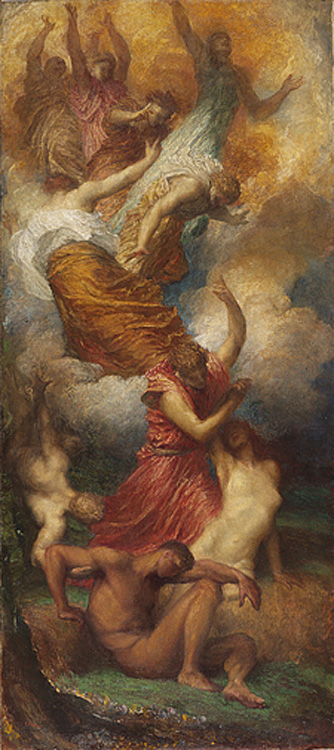
How Is Adam’s sin Described Differently than Eve’s?

020714-pope-2In yesterday’s blog post, I sought to explore the details Original Sin and to convey that there are subtleties and stages to the sin that have something to teach us. The sin was more than eating a piece of fruit, there were things that led up to it, both externally and internally, which the text reveals.

In yesterday’s post I also mentioned that it was worth exploring how the sacred text speaks of the Sin of Adam, and differentiates it to some extent from the sin that Eve commits. In fact, Original Sin, biblically, is properly denoted as the sin of Adam. It is Adam’ Sin not Eve’s that we denote as Original Sin (cf Rom 5:12 inter al).

It is not that Eve did not sin, or that her actions have no interest for us. Yesterday’s post focused a lot on the stages she goes through. But Rather, as the head of his household, and the human family it is Adam who bore the responsibility, and thereby incurs the sin that we call “Original Sin” or the “Sin of Adam” which comes down to all of us.

As you might be able to see, this blog post isn’t going to be very politically correct, and it is just going to get worse from here. For, in striving to differentiate Eve’s sin from Adam’s I would like to take up a very controversial text from St. Paul. While the specific text comports poorly with modern notions, two cautions are in order for those of us who read the text:

First, we ought to remember that it is a sacred text, and even if St. Paul may draw some of his reflections on the cultural experience of the time, he gives theological reason for what he rights, not just the practices of the time.

Secondly however we also remember that one verse from St. Paul is not all of St. Paul, and certainly not all of Scripture. What Paul says rather absolutely in the verse that follows, he qualifies to some extent and other places as we shall see.

With this in mind, let’s examine the controversial text and strive to see the distinctiveness of Adam’s sin from Eve’s. St. Paul writes:

A woman should learn in quietness and full submission. I do not permit a woman to teach or to assume authority over a man; she must be quiet. For Adam was formed first, then Eve. And Adam was not the one deceived; it was the woman who was deceived and became a sinner (1 Tim 2:11b-14)

Many, upon reading the text like this, so astonishingly out of step with modern thinking, are prone simply dismiss it as a disciplinary relic of some past dark age. It is debatable whether the edict that women should be silent, and have no teaching authority over a man are in fact mere disciplinary norms that we are not required to observe today. It is also debatable how absolute Paul’s words are. For Paul speaks elsewhere the women as catechists (e.g. Phoebe Rom 16:1) spiritual leaders and benefactors (eg. Lydia) in the early church communities. Elsewhere too he makes provisions for when a woman is to speak in the assembly and that if she does she is to cover her head (1 Cor 11:5) etc. So what St. Paul says here he distinguishes elsewhere in a way that allows for some provision that women both speak and teach the faith as Catechists etc.

In the quote from first Timothy above, the context seems rather clearly to be that of the family and marriage, wherein Paul affirms the headship of the husband, as he does elsewhere in Ephesians 5:22, Colossians 3:18, and also as does Peter (1 Peter 3:1-6)

There is another text where Paul speaks of women being silent in the Church. In 1 Corinthians 14. The context there seems to be liturgical, thus we read:

Women should remain silent in the churches. They are not allowed to speak, but must be in submission, as the law says. If they want to inquire about something, they should ask their own husbands at home; for it is disgraceful for a woman to speak in the church. (1 Cor 14:34-35)

Here again, there are legitimate debates about how strictly the silence is to be interpreted. Generally, Church practice has understood this to mean that women are not to give the official teaching in the liturgy that we refer to as the sermon or homily. And this stricture has been observed from antiquity down to the present day by reserving the homily to the bishop, priest or deacon. In more recent times there have been allowances for women to serve as  lectors, cantors, singers etc. But the official teaching moment of the homilies still reserved to the male clergy and the Magisterium still consists of Bishops and the Pope.

Prescinding from legitimate debates about how absolutely or strictly to interpret St. Paul’s restrictions, or whether or not some of these things are cultural artifacts that can be adjusted, what I really wish to focus on the theological reasoning regarding the difference between Adam and Eve’s sin of which St. Paul speaks. Again, he says

For Adam was formed first, then Eve. And Adam was not the one deceived; it was the woman who was deceived and became a sinner (1 Tim 2:13-14)

So, St Paul begins by saying that Adam was formed first, then Eve. And thus here he teaches that the husband has headship, authority, as he says elsewhere, The husband is head of his wife just as Christ is head of the the Church (Eph 5:22).

But in terms of Original Sin, which concerns us more here, Paul says that Adam was not the one deceived, it was the Eve who was deceived. Thus St. Paul speaks of Eve’s sin as different than Adam’s. She was deceived and so sinned, But Adam was not not deceived.  His sin lay elsewhere.

Of the fact of her deception, Eve or self as a witness, for she says, “The serpent tricked me and so I ate it.” (Gen 3:13) But of Adam’s sin, God says “Because you listened to your wife and ate fruit from the tree about which I commanded you, ‘You must not eat from it…” (Gen 3:17).  Thus, Adam’s sin lay in his willingness to allow his wife to tempt him.

Now course, dear reader, you were warned that this was not going to be a politically correct blog post. These sorts of teachings grate on modern ears. But of course this does not make them untrue.

Perhaps a little additional reflection may help to avoid knee-jerk reactions to either gloat or become angry. Adam and Eve’s sins are described differently and can also be understood as a kind of weakness that each of them was particularly susceptible to: she to deception, he to being swayed by Eve’s feminine mystique and beauty.

St. Paul does not simply locate these two weaknesses in Adam and Eve as individuals, but also as male and female. Hence St. Paul seems to teach that a woman ought not have a solemn teaching authority in the Church because of a woman’s tendency to be deceived.

Why might this be, that a woman could be more easily deceived? Perhaps it is rooted paradoxically in a woman’s strength. Among the strenghts that women more generally manifest is to be more naturally spiritual, and also to be more naturally prone to be a source of unity and peace in the heart of the family. And while these are wonderful strengths, they can, in certain circumstances, also open the person to deception. For if one seeks to easily to make peace, they may compromise with error and sin. And though being open to spiritual things is of itself good, there can be spiritual concepts that are erroneous, and to these one ought not be open.

Not only is a woman possibly more prone to these, but should she cede to them, she can also have undue power over her husband and men who may well be drawn by her beauty to set aside their better judgment.

And this is, to my mind what St. Paul is getting at here in saying even was deceived and Adam was not, therefore a woman cannot have teaching authority in the Church. There was also a warning in ancient Israel that men should not take foreign wives since they might confuse a man’s heart into the worship of their foreign gods. A man’s heart can easily be swayed by a beautiful and influential woman.

And thus, addressing a double threat, St. Paul forbids women to have teaching authority in the Church and ties it back to the archetypal incident of Adam and Eve. Eve was deceived, and then was able to turn and seduce her husband to sin.

In modern times it may well be that St. Paul’s caution is affirmed by the modern problem of Liberal Protestant denomination that have a large number of women leaders. It is these very denominations which have moved in this direction who also have departed significantly from the orthodox Christian faith, deny basic tenets of the Trinity, of moral teaching and biblical interpretation. It is not only women, but there is a high correlation between denominations that embraced women leaders and a departure from orthodox Christian belief.

Have I been politically incorrect enough for you? The combox is open. But recall that the chief focus I am interested here is on the different descriptions of the Sin of Adam and the Eve’s sin.


The Anatomy of Original Sin: The Sin of Adam was Far More than Eating a Piece of Fruit.

Many understandings of Original Sin, the sin committed by Adam and Eve, tend to describe the sin as the eating of a forbidden fruit. While this description is not inaccurate, it is incomplete and many rightly wonder as to how and why all this trouble came from the mere eating of a piece of fruit.

It may be helpful therefore to consider the Sin of Adam more richly. While the eating of the fruit is the external act, like any human act, it proceeds from the heart and admits of some complexity or stages.

Perhaps a quote from the Book of James will help frame our reflections since it describes the stages of sin:

Let no one say when he is tempted, “I am being tempted by God,” for God cannot be tempted with evil, and he himself tempts no one. But each person is tempted when he is lured and enticed by his own desire. Then desire when it has conceived gives birth to sin, and sin when it is fully grown brings forth death. (James 1:13-15)

And thus we can distinguish the following stages of sin:

1. The lure of Temptation
2. The engagement of desire
3. The conception of sin
4. The birth of sin
5. Spiritual Death

And thus when we consider the Sin of Adam and Eve we can see these stages at work. Perhaps we do well to examine these stages and also add in some of the subtleties and presumptions of the story.

Preamble- God had put Adam in the garden even before Eve was created. As the text says,

The LORD God took the man and placed him in the Garden of Eden in order to have him work it and guard it. And the Lord God commanded the man, “You are free to eat from any tree in the garden; but you must not eat from the tree of the knowledge of good and evil, for when you eat from it you will certainly die.”(Gen 2:15-17).

And therefore Adam’s task was to work the garden and also to guard, (to keep watch over) the Garden. There was also a boundary that God told him not to cross regarding the tree. Of the fuller meaning of that tree we will treat in a moment, but for now note that God does not explain why, but simply notes the danger and asks Adam to trust him that the tree is trouble.

Thus, in three words, Adam is to: tend, till and trust. As we shall see, Adam fell short in two of these, and they are aspects of what we have come to call Original Sin.

1. The Lure of Temptation – The story of Original Sin opens with the description of the serpent which is described as the most cunning of all the wild creatures God had made (3:1). While most of us imagine a snake of some sort, that description is given only after God curses Satan who is allegorically represented by this creature. Exactly what this creature looked like before the fall, is not stated, and hence we need not imagine a talking snake. Whatever the creature Satan made use of, (or what the author of Genesis allegorically made use of) it is the way in which Satan interacts with Eve.

Cunning and subtle, Satan uses intellectual arguments to appeal to aspects of what would later come to be called pride and sensuality. He also seeks to undermine her trust in God’s goodness.

He begins his temptation by attempting to make God seem unreasonable, suggesting that God had forbidden them to eat from any of the trees in the garden. Eve easily deals with this temptation and dismisses it, correctly stating that it is only one tree that has been proscribed. Of course this is a common tactic of Satan even to our own day; namely, that God is unreasonable, that He demands too many things, forbids too many things, etc. This accusation of course, wholly ignores that God has given incredible liberty to the human person,  who, unlike any other creature except the Angels, is able to say “no” to God.

Satan’s second attack is more successful. He declares that God is not telling them the truth. In effect he says that God who has given them everything, is holding something very important back. In effect Satan argues that God is restraining them from being the gods they deserve to be. In pointing to the fruit of this tree, Satan says,  in effect, “Why do you let anyone have power over you? Why do you let anyone tell you what to do? Why do you not instead say, “I will do what I want to do, and I will decide whether it is right or wrong!” Satan temps to an incredible pride, “You will be gods!”

And thus Eve is in the first stage of the sin, the lure of temptation. But we do well to ask where is Adam at this time? Satan has been speaking with Eve. Yes, but where is Adam? The text says he is right there with her (Gen 3:6)!

Now here’s a problem integral to the sin of Adam. He was told, among other things, to guard the garden; that is, to keep watch over it. It is arguable whether he could have prevented Satan from being present at all, (he probably could not), but surely he could have sought to protect and guard his wife! Satan is manifest, and Adam says nothing, and does nothing. He does not seek to ward off the evil one, neither does he assist his wife in refuting the tempting thoughts. No, he stands quietly by. Here is a passive husband.

As the head of his family he had every obligation to come to his wife’s help, to protect her, to assist her in this grave temptation and threat. But the text reports him doing nothing but standing quietly by; indeed, so quietly, that when I point out to many people the sixth verse which says he was “with her” they are surprised. Even many modern passive husbands would intervene when they see some strange individual speaking to their wife.

“But Father, but Father, are you saying that Adam has already sinned even before Original Sin is committed?” No, not necessarily, but the point here is that Original Sin is a more complicated reality than merely biting into a piece of fruit. It, like many sins, has layers. Adam may not yet have sinned, but his silence is surely puzzling, indeed troubling. To be tempted, is not sin, for even Jesus was tempted. But to do nothing in the face of temptation for ourself or others is to at least open the door to the next stage of sin.

2. The Engagement of Desire – The text says, the woman saw the tree was good for food, and that it was a delight to the eyes, and that the tree was to be desired to make one wise (3:6).

Temptation, is merely a thought that either occurs to us, or is presented to us by another. If I were to say to you, “Why don’t we go down to the corner store and rob it.” I have simply presented to you thought, or course of action, which may or may not appeal to you, based on your background and proclivity to daring and violent actions, greed etc. But temptation of itself is merely a thought.

But in the second stage of sin, the tempting thoughts of Satan now engage Eve’s desires. The fruit engages her sensual desires, for it looks tasty, and delights the eyes. It also engages her intellectual desires, for it has been described to her as a source of empowering wisdom.

Thus, temptation begins to move from being a mere thought, to becoming a kind of force or power. Her desires have been engaged and ignited. Things are a bit more difficult. Mere intellectual response will not be enough, the will must be engaged in such a way that the desires will be curbed and subject to truth and right reason. Either she will obey God who has given her everything, and thus decide reasonably, or she will yield to temptation and desire and unreasonably accept the proposal of Satan who has given her nothing except to appeal to her sensuality and pride.

Again, we can simply note the silence of Adam. How tragic this is. Eve seems quite alone and without support in this moment. One would hope in any marriage, that when one spouse is struggling, the other will be strong. Adam remains silent. He is no leader, he seems to wait and see what his wife will do. He is a passive husband.

3.  The Conception of Sin – The text simply says she took of its fruit (3:6). In reaching out to take hold and possess this fruit, she conceives sin in her heart. Her husband will do the same thing, taking hold of it before he eats it.

What are they taking hold of? Several things.

First, as we have seen, there is a colossal pride. Satan had said, “You will be gods.” Now they are laying hold of and conceiving of this idea. They are laying hold of the prideful and rebellious notion that “I will do what I want to do, and I will decide whether it is right or wrong. I will be under no one’s authority; I will do as I please; I answer to no one; I am god.”

They also sin against gratitude. For God had given them everything. But even paradise was not enough, they wanted more. Ungratefully, they reject God who has given everything, and turned to Satan who “promises” more, but has delivered nothing.

Finally, and most problematically,  they sin against trust. Note that the tree is called “The Tree of the Knowledge of Good and Evil.” To “know” in the Bible almost always means more than simple intellectual knowing. It means to know something by experience. Thus, in naming this tree “The Tree of the Knowledge of Good and Evil,” and commanding them to stay away from it, God is saying:

I am asking you to trust me to tell you what is good and what is evil, and not to demand to know this personally for yourselves. I want you to trust me,  and that I tell you this for your own good. But if you take from that tree, you are insisting on knowing for yourself what is good and what is evil; and more importantly, you are insisting on knowing and experiencing evil.

Thus, Adam and Eve refused to trust God, and insist on knowing, that is experiencing, for themselves the difference between good and evil. The Catechism describes Original Sin in this manner:

Man, tempted by the devil, let his trust in his Creator die in his heart and, abusing his freedom, disobeyed God’s command. This is what man’s first sin consisted of. All subsequent sin would be disobedience toward God and lack of trust in his goodness.(# 397)

So we see that at the heart of Original Sin and all other sin is a refusal to trust God, a refusal to trust his goodness and an abuse of our liberty.

All of this has been conceived in the heart of Adam and Eve as they lay hold of this fruit.

4. The Birth of Sin – Given all our work, little needs to be said of this stage, the sin is engaged. Note, that Eve eats first, and then entices her husband. More of this will be spoken of in a future post, probably tomorrow,  when I reflect on St. Paul’s commentary on the Sin of Adam. Here, suffice it to say that the sin of Adam and Eve are described somewhat differently here in the text. Eve is described as being deceived, and Adam is described as being, in effect, seduced. Neither of them are without blame, but the nature of their temptation, and the engagement of their desires, is slightly different. Again, more on this later.

5. Spiritual Death – Adam and Eve do not drop dead in physical death; but rather, they die spiritually. And this is symbolized in many ways in the verses ahead.

In their experienced nakedness they feel exposed, no longer innocent, they feel vulnerable, naked ashamed. Righteousness and integrity have died in their hearts, now they are dis-integrated and disoriented, turned away from God and turned in on themselves.

Most seriously, they are cut off from God. who is the source of their life. When God walks through the garden at the usual time, they do not run to him, but from him; they are afraid. Having died spiritually and embraced the darkness, they now fear He who is Life and Light. They cannot endure his presence.

Recriminations follow, and the prophecy of suffering, strife, and ultimately death. The wages of sin is death. God would spare them of this, had they been willing to trust him. But Adam and Eve wanted to know for themselves. Mysteriously, they sought a “better deal” than Paradise, even knowing the price of it would be death. So tragic, foolish, and horrifying.

Therefore, dear reader, pardon this rather long essay. But too often Original Sin is reduced to the mere eating of a piece of fruit. Far more was at stake, and far more was going on beneath the surface, in the subtleties of the story. There were many moving parts, and layers to the sad reality that we call Original Sin, and the sin of Adam.

The Mystery of Iniquity – A Meditation on the Deep Mystery of Rebelliousness

"Night Life in Cork, Ireland"  by Flickr user: Erik Charlton  Flickr  Licensed under  CC BY 2.0 via Wikimedia Commons
“Night Life in Cork, Ireland” by Flickr user: Erik Charlton Flickr Licensed under CC BY 2.0 via Wikimedia Commons

It is a phrase in the Scriptures that, while speaking of mystery, is itself a bit mysterious and debated among scholars, The “Mystery of Iniquity.” St. Paul mentions it in Second Thessalonians and ties it to an equally mysterious “Man of iniquity” who will appear before the Second Coming of Jesus. Many modern translators (accurately) render it “Mystery of Lawlessness” but it has less of a ring.

The Latin root of iniquity is  iniquitas, meaning “unjust,” or “harmful” is:  in (not) + aequus (equal). But the Greek μυστήριον τῆς ἀνομίας (mysterion tes anomias) is probably best rendered, “Mystery of lawlessness.”

Language issues aside, Paul almost seems to be writing in a kind of secret code. And thus, he writes:

Concerning the coming of our Lord Jesus Christ and our being gathered to him, we ask you, brothers and sisters, not to become easily unsettled or alarmed by the teaching allegedly from us—whether by a prophecy or by word of mouth or by letter—asserting that the day of the Lord has already come. Don’t let anyone deceive you in any way, for that day will not come until the rebellion occurs and the man of lawlessness is revealed, the man doomed to destruction. He will oppose and will exalt himself over everything that is called God or is worshiped, so that he sets himself up in God’s temple, proclaiming himself to be God. Don’t you remember that when I was with you I used to tell you these things? And now you know what is holding him back, so that he may be revealed at the proper time. For the mystery of lawlessness is already at work; but the one who now holds it back will continue to do so till he is taken out of the way. And then the lawless one will be revealed, whom the Lord Jesus will overthrow with the breath of his mouth and destroy by the splendor of his coming. (2 Thess 2:1-8)

Although St. Paul tells the Thessalonians that they know what is hold back the lawless one, we moderns struggle to know. Some modern scholars say he refers to the Roman Government (which I doubt). Others say it is the power of Grace and the decision of of God to “restrain” the evil one and thereby limit his power a bit, for now. Of course if Satan is limited now, what horrifying things will be set loose when he is no longer restrained!  Can it get worse? Apparently!

But there it is, in the seventh verse, even before the Lawless one be set loose, there already exists the “mystery of iniquity” the mystery of lawlessness. And that phrase also rings down the centuries even unto us, provoking a pondering of its rich meaning.

Yet the danger is that we can focus too much on “the man of iniquity” who is not yet fully here, and fail to ponder the present reality which is already operative. As St. Paul says, For the mystery of lawlessness is already at work. Yes, the danger is that we focus on the future, which is murky, and ignore the present which is here and operative.

Hence I propose we ponder a bit the “mystery of iniquity” which is already here. I’d like to explore how it effects us personally and collectively. Yet even as I propose this, we cannot ignore the operative word “mystery” which suggests here that whatever we ponder of it must be done with humility and the realization that we are confronting a mystery, something revealed but much of which lies hid. I therefore do not propose to to “explain’ this phrase to you, but to ponder its mystery and confront its questions, so as to draw us to reverence and a deeper sense of our need for salvation.

Lets look at the mystery of iniquity from three vantage points, wherein we can ponder the mysterious reality of lawlessness that seems so operative among us individually and collectively.

1. The Strange Mystery of “Rational Man’s” Irrationality – Why do we, who are otherwise rational creatures, choose to do that which we know is wrong?  Why do we choose to do that which we know causes harm to ourselves and others; which endangers us, threatens and compromises our future, and further weakens us?  Why do we choose an evil, know that it is evil? This is mysterious.

Some argue that, on account of Original Sin,  our will have been weakened and thus we easily give way to temptation. While this offers some further insight into what we do, it does not ultimately solve the mystery. For at the end of the day, there is still the deeply mysterious truth that we still choose to do that which we know is wrong and harmful; and that we do this consistently as a human family.

Some argue, that we are actually choose what we perceive to be good. But here too, despite our darkened intellects and our tendency  to lie to ourselves, deep down we really know better; that choosing evil leads to harm in the long run,  and our conscience tells us, “This is wrong, it’s a lie, don’t do it.” But knowing this, we still do it.

Weak? Yes, but this not the full answer, deep down we know this and thus, we stare once again into the face of “the mystery of iniquity.”

2. The Even Stranger Mystery of the Angelic Rebellion –  The mysteries only deepen when we consider that the problem is not merely a human one, it is also an angelic one. The presence of demons revealed to us by Scripture and by our own experience, speaks to the reality of fallen angels.

Yes, among the angels to there was a great rebellion. Scripture more than hints at the fact that the third of Angels fell from heaven in a war of rebellion, before the creation of Man (cf Rev 12:4).

Thus, the attempt above to ascribe iniquity and lawlessness to human weakness is not, and cannot be a complete answer.

It is exceedingly hard and mysterious to ponder how Angels, with a nature and intellects far more glorious than ours, would knowingly reject what was good, true and beautiful. Yes, here too is the deep “Mystery of Iniquity” having nothing to do with the flesh, or sensuality, or human limits. It is raw intellectual and willful rebellion against the Good, by intellects and creatures far superior to us. The mystery only deepens.

3. The Awful Mystery of the Corruption of What is Best and Brightest –  The intellect, and free will, are arguably God’s greatest gifts. But why then do they come with such a high price both for God and for us? Surely God for saw that huge numbers of angels and human beings would reject him. It is a seemingly enormous price for free intellect and will.

Some will answer, that God also saw the magnificent love and beauty that would be ushered in by those who accepted him and the glorious vision of his truth. And yes, perhaps God, who is Love, saw love as so magnificent, that even its rejection buy some cannot overrule its glory in those who accept it. Seeking beloved children rather than robots or merely instinctual animals was so precious to God that he risked loosing some, even many, to gain some.

Some others speculate that, at least in this fallen world, contrast is necessary to highlight glory of truth. For what is light if there is no darkness to contrast it? What is justice if there is no injustice to contrast it? What is the glory of our “yes” if there is not a “no” that can also be uttered?

But still, even these reasonable speculations, cannot fully address the mystery of why so many men and angels reject what is good, true, and beautiful; why so many prefer to reign in hell than serve in heaven; why so many obstinately refuse to trust in God, and obey even simple commands we know are ultimately good for us. The glory of our freedom and our intellect are abused. Our greatest strengths are also the locus of our greatest struggle. Liberty becomes license and lasciviousness  and intellect becomes insubordination and intransigence. Corruptio optime pessima!

4. The Deepest Part of Mystery – The final Refusal to Repent. Many today like to blame God for Hell, and particularly scoff at the notion that Hell is eternal. But as the Catechism teaches, the eternity of Hell is not due to defect in Divine Mercy (# 393). Rather Hell is eternal because the decision of the damned is irrevocable.

Mysteriously their stubbornness and hardness had reached a point of no return. How does a soul end up in this state? It is mysterious, but surely it grows little by little. Sin is added upon sin, and the hardness of heart grows. The demands of God’s justice come increasingly to seem obnoxious, and the hardened soul starts to sneer at God’s law as intolerant, backwards, simplistic and so forth. Of course God’s law is none of these things, but as the darkness grows in a heart the light seems obnoxious and hateful. Soon enough concepts such as forgiveness, love of enemies, generosity, and chastity seem wildly “unrealistic,” even ludicrous.

When does a soul reach the point of no return; is it death, or sometime before? It is hard to say. But here we reach the deepest part of the mystery of iniquity, the permanently unrepentant heart. It is very dark and very, very mysterious.

5. We are back to the “mystery of iniquity.” Our little tour of “explanations” has yielded only crumbs. We are back to confronting our mysterious rebelliousness, our stubbornness, and hardness of heart; back to our almost knee-jerk tendency to bristle when we are told what to do, even if we know it to be good for us and others. Even the smallest rule, or forbiddence makes it seemingly all the more desirable, and there lurks that strange rebellious voice that says:  “I will not be told what to do! I will do what I want to do, and I will decide whether it is right or wrong.”

Yes, at the end of the day, we are left looking squarely at a mystery, a deep, almost unfathomable mystery of iniquity, our very own iniquity, our lawlessness, our irrational refusal to be under any law or restraint.

Perhaps like all mysteries, it is not meant to be solved, is meant to be accepted and to cause us to turn to God who alone understands. Indeed, if we are honest, the mystery of iniquity that is so profound, is also terrifying and should send us running to God as fast as we can exclaiming: “Lord save me from myself, from my own obtuse and hardened heart,  from the deep mystery of rebelliousness, iniquity and lawlessness in me! I cannot understand it, let alone save myself from it! Only you Lord and save me from my greatest threat, my greatest enemy, my very self.

Yes, the great mystery of iniquity. St. Paul says only this, the mystery of iniquity is already at work. But he does not say why or even how. He only says God can restrain it.

Yes, only God can restrain and explain:

More tortuous than anything is the human heart, beyond remedy; who can understand it? I, alone, the LORD, explore the mind and test the heart (Jer 17:9-10).

Here is a song from my youth that celebrates rebellion, iniquity, and lawlessness. The refrain admits “Fooling no one, but ourselves.” But we (collectively) do it anyway. Foolish and mysterious!

If You don’t think you have the fear of death, think again. The Bible says it is the chief doorway that Satan uses.

020414-pope-2In Sunday’s Mass (Feast of the Presentation) there was an excerpt from the Letter to the Hebrews which describes our most basic and primal fear. The Hebrews text both names it and describes it as being the very source of our bondage: The Fear of Death

But I am not convinced that many of us understand the phrase as richly as possible, for “death” here is as much an allegory as referring to the actual and singular event of our passage from this world. In order to unlock the secret of the text I want to suggest to you an interpretation of the text that will allow its powerful diagnosis to have a wider and deeper effect.

Consider then this text from Hebrews:

Since the children have flesh and blood, [Jesus] too shared in their humanity so that by his death he might destroy him who holds the power of death—that is, the devil— and free those who all their lives were held in slavery by their fear of death. (Heb 2:14-15)

Now this passage is clear enough that the first origin of our bondage to sin is the devil. But it also teaches that the devil’s hold on us is the “fear of death.” This is what he exploits to keep us in bondage.

When I explore this teaching with people I find that it is difficult for many to understand it at first. For many, especially the young, death is rather theoretical. This is especially so today when medicine has so successfully pushed back the boundary of sudden death. Every now and then something may shake us out of our complacency about death (perhaps a brush with death) but as a general rule the fear of death is not something that seems to dominate the thoughts of many. So what is meant by the “fear of death” and how does it hold us in bondage?

Well, what if we were to replace the word “death” with “diminishment”? To be sure, this is an adaption of the text. The Greek text (φόβῳ θανάτου – phobo thanatou) is translated as “fear of death.” And yet, understanding death here also as “diminishment” can help us to see what this text is getting at in a wider sense. It doesn’t take long to realize that each diminishment we experience is a kind of “little death.” Diminishments make us feel smaller, less powerful, less glorious.

What are some examples of diminishments we might experience? At one level, a diminishment is anything that makes us feel less adequate than others. Maybe we think others are smarter, or more popular. Perhaps we do not feel handsome enough, pretty enough, we’re too tall, too short, too fat, wrong color hair. Maybe we hate that others are richer, more powerful, better spoken, better looking. Maybe we are older and wish we were younger and stronger, thinner and more energetic again. Maybe we are younger and wish were older, wiser, richer and more settled. Maybe we feel diminished because we think others have a better marriage, nicer home, better kids, or live in a better neighborhood. Maybe we compare ourselves to a brother or sister who did better financially or socially than we did.

Perhaps you can see how the fear of diminishment (the fear that we don’t compare well to others) sets up a thousand sins. It plugs right into envy and jealousy. Pride comes along for the ride too since we seek to compensate our fear of inadequacy by finding people whom we feel superior to. We thus indulge our pride or we seek to build up our ego in unhealthy ways. Perhaps we run to the cosmetic surgeon or torture ourselves with unhealthy diets. Perhaps we ignore our own gifts and try to be someone we really are not. Perhaps we spend money we really don’t have trying to impress people so we feel less adequate.

And think of the countless sins we commit trying to be popular and fit in. Young people, and older ones too, give in to peer pressure and do sometimes terrible things. Young people will join gangs, use drugs, skip school, have sex before marriage, pierce and tattoo their bodies, use foul language, gossip etc. Adults too have many of these things on their list. All these things in a quest to be popular and to fit in. And fitting in is about not feeling diminished. And diminishment is about the fear of death because every experience of diminishment is like a mini death.

Advertisers too know how to exploit the fear of death (diminishment) in effectively marketing their product. I remember studying this in the Business School at George Mason University. What advertisers do is to exploit our fear of diminishment. The logic goes something like this: you are not pretty enough, happy enough, adequate enough, comfortable enough, you don’t look young enough, you have some chronic illness (depression, asthma, E. D. diabetes), etc. So use our product and you will be adequate again, you won’t be so pathetic, incomplete and basically diminished. If you drink this beer you’ll be happy, have good times and friends will surround you. If you use this toothpaste or soap or cosmetics, beautiful people will be around you and sex will be more available to you. If you drive this car people will turn their heads and so impressed with you. Message: you are not adequate now, you do not measure up, you are not perfect (you are diminished) but our product will get you there! You will be younger, happier, healthier and more alive.

Perhaps you can see how all these advertising appeals plug into greed, pride, materialism, worldliness, and the lie that these things will actually solve our problem. They will not. In fact appeals like this actually feed our fear of diminishment and death even more because they feed the notion that we have to measure up to all these false or unrealistic standards.

It is my hope that you can see how very deep this drive is and how it enslaves us in countless ways.

This demon (fear of death, fear of diminishment) has to be named. Once named and brought to the light we must learn its moves and begin to rebuke it in the name of a Jesus. As we start to recognize and name the thought patterns that emerge from this most primal of fears we can gradually, by God’s grace, replace this distorted and “stinking thinking” with proper, sober and humble thinking. A thinking rooted in God’s love for us and the availability of his grace and mercy.

The text from Hebrews above is very clear to say that this deep and highly negative drive is an essential way in which Satan keeps us in bondage. The same text says that Jesus Christ died to save us and free us from this bondage. Allow the Lord to give you a penetrating and sober vision of this deep drive, this deep fear of diminishment and death. Allow the light of God’s grace and word to both expose and heal this deepest of wounds.

This Video pokes fun at the fad-centered culture that is always trying to make us feel inadequate:

A Dramatic Biblical Moment that almost Every one Missed

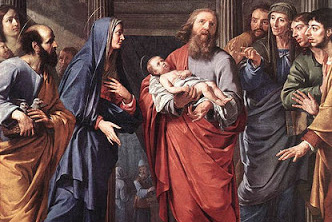
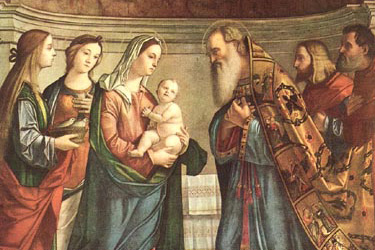
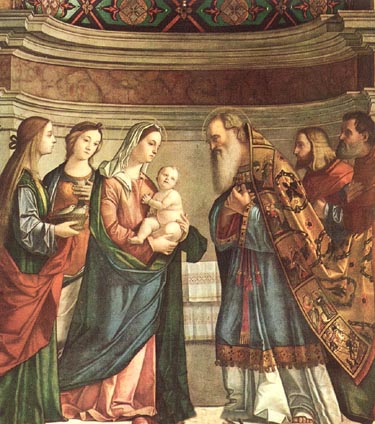
The Feast Yesterday of the Presentation of Jesus was a rich fare. In my homily I did not have time to cover all I wanted to. Frankly, the moment of the Presentation was one of the most dramatic in Biblical history, and yet almost no one noticed. Lets consider this astonishing moment.
The first part of this post is review for those of you who read regularly. To skip to the newer insights goo down to the red line.

Joseph and Mary have ascended to Jerusalem to fulfill two ancient mandates: the Rite of Purification for a woman after childbirth and the Rite of Presentation of their firstborn male child, Jesus. These rites set the stage for a dramatic moment in Biblical history, a moment missed by almost everyone. We shall explore this dramatic moment shortly but first a little background.

Jewish law considered that, after a woman gave birth she became ritually impure for a period. While this seems unjust to us, the Jewish notion was rooted in the flow of blood that occurred in childbirth and just about anyone who came in contact with blood incurred a ritual uncleanness for a period of time. The Book of Leviticus has this to say regarding a woman who has given birth:

The LORD said to Moses, “Say to the Israelites: ‘A woman who becomes pregnant and gives birth to a son will be ceremonially unclean for seven days, just as she is unclean during her monthly period. On the eighth day the boy is to be circumcised. Then the woman must wait thirty-three days to be purified from her bleeding. She must not touch anything sacred or go to the sanctuary until the days of her purification are over. If she gives birth to a daughter, for two weeks the woman will be unclean, as during her period. Then she must wait sixty-six days to be purified from her bleeding. ” ‘When the days of her purification for a son or daughter are over, she is to bring to the priest at the entrance to the Tent of Meeting a year-old lamb for a burnt offering and a young pigeon or a dove for a sin offering. He shall offer them before the LORD to make atonement for her, and then she will be ceremonially clean from her flow of blood.” ‘These are the regulations for the woman who gives birth to a boy or a girl. If she cannot afford a lamb, she is to bring two doves or two young pigeons, one for a burnt offering and the other for a sin offering. In this way the priest will make atonement for her, and she will be clean.’ ” (Lev 12:1-8).

As you can see, there is a fairly negative concept at work here from a modern viewpoint. A woman becomes ritually unclean by giving birth. This was due not to birth per se but to the flow of blood and/or other fluids at birth. Even more distressing to modern notions is that a woman who gave birth to a daughter was considered ritually unclean for even longer! Alas, it is well that the power of the Church to bind and loose has freed us from this thinking. Keep in mind that this was ceremonial law, not moral law and, hence, the Church is not setting aside immutable moral law in abrogating such notions of ritual impurity.

Obedient to the Law – Nevertheless Joseph and Mary, obedient to law make the dramatic ascent to the Temple, the Son of God carried in Mary’s arms. It is forty days since the birth of the Lord in fulfillment of the Law.

As they ascend the glorious steps to the Temple Mount they also fulfil another requirement of the Law:

You are to give over to the LORD the first offspring of every womb. All the firstborn males of your livestock belong to the LORD. Redeem with a lamb every firstborn donkey, but if you do not redeem it, break its neck. Redeem every firstborn among your sons. “In days to come, when your son asks you, ‘What does this mean?’ say to him, ‘With a mighty hand the LORD brought us out of Egypt, out of the land of slavery. When Pharaoh stubbornly refused to let us go, the LORD killed the firstborn of both people and animals in Egypt. This is why I sacrifice to the LORD the first male offspring of every womb and redeem each of my firstborn sons.’ (Ex 13:12-15)

But something even more dramatic takes place here. To understand what it is, let’s look back to 587 BC.

The Babylonians had invaded Jerusalem and the unthinkable had happened. The Holy City was destroyed and, along with it, the Temple of God. Inside the Temple something even more precious than the building had been housed: the Ark of the Covenant.

Recall what the Ark of Covenant was in the Old Testament. It was a box of Acacia wood, covered in gold. Inside it were placed: the two tablets on which God inscribed the Ten Commandments. Also in it was the staff of Aaron, and a vial of the Manna. More importantly, in this box, this ark, dwelt the very Presence of God in Israel. God mysteriously dwelt within, much as is the case today in our understanding of the tabernacle in our Catholic Churches.

The Lost Ark – Incredibly however, the Ark was lost when the Babylonians destroyed the temple and Jerusalem in 587 BC. It was never found again. Some thought Jeremiah had hid it in the Mountains, others that the priests had hastily hid it in the maze of caves beneath the Temple Mount. Others argue it was taken to Ethiopia. But in the end, the Ark had gone missing.

Empty Temple – When the Temple was rebuilt some eighty years later, the Holy of Holies was restored but the Ark was missing. The High Priest still performed the yearly ritual and entered the Holy of Holies, but the room was empty. Some argued for a spiritual presence in the Temple, but in fact the Ark and the certain presence of God were missing in the Temple after 587 BC. The Ark was never found and returned there. Something, someone, was missing. The very Holy of Holies was an empty room, the Ark, and the presence of God it carried were missing: the Ark, the mercy seat, gone. Would it ever be found? Would it ever be returned to the Temple? Would the Holy Presence of God ever find its way to the Temple again?

The ascent to Jerusalem is a steep one. The mountains surround Jerusalem and the City sits up at a higher altitude than the area around it. As the ancient Jews made the climb they sang the psalms of ascent: Psalms 120-134. As Joseph and Mary ascended they too sang the words that instilled joy: I Lift up mine eye to the mountains from whence cometh my help (121)…..I rejoiced when they said to me let us go up to the House of the Lord (122)…..To you O Lord I have lifted my eyes (123)….Like Mount Zion are those who trust in the Lord (125)….Out of the depths I call unto you O Lord! (130)…..Let us enter God’s dwelling, let us worship at the Lord’s footstool. Arise O Lord and enter your dwelling place, You and the Ark of your strength! (132)….Come and bless the Lord, You who stand in the House of the Lord Lift your hands to the Sanctuary and bless the Lord. The Lord bless you from Zion (134).

Singing these songs, Mary carried Jesus. The climb was even more difficult carrying a newborn babe. But the burden was sweet. A final ascent up the stairs to the Temple Mount. Likely they entered on the southern side through the Huldah gates. Going up the steep stairs, through the tunnel in the walls and emerging on to the bright Temple platform above.

God had returned to His Temple. He, and the Ark who carried him, were found. Mary the Ark, carrying Jesus in her arms. Jesus, very God, true God from True God. Yes, God and the Ark had been found and God was once again present among His people on the Temple Mount. Scripture says:

And the Lord, whom ye seek, shall suddenly come to his Temple, even the messenger of the covenant, whom ye delight in: behold, he shall come, saith the LORD of hosts. But who may abide the day of his coming? and who shall stand when he appeareth? (Mal 3:1-2)

What a dramatic moment. And yet what a remarkable understatement by God! If I were to direct the moment I would have called for trumpet blasts, peals of thunder and multitudes of angels! And everyone would fall to their knees in recognition of the great fulfillment and the great return of God to his Temple.

Yet, it would seem only an elderly Man and woman took any note at all: Simeon and Anna. They alone understood they were in the presence of greatness and beheld the drama of the moment:

Now there was a man in Jerusalem called Simeon, who was righteous and devout. He was waiting for the consolation of Israel, and the Holy Spirit was upon him. It had been revealed to him by the Holy Spirit that he would not die before he had seen the Lord’s Christ. Moved by the Spirit, he went into the temple courts. When the parents brought in the child Jesus to do for him what the custom of the Law required, Simeon took him in his arms and praised God, saying: “Sovereign Lord, as you have promised, you now dismiss your servant in peace. For my eyes have seen your salvation, which you have prepared in the sight of all people, a light for revelation to the Gentiles and for glory to your people Israel.” The child’s father and mother marveled at what was said about him. Then Simeon blessed them and said to Mary, his mother: “This child is destined to cause the falling and rising of many in Israel, and to be a sign that will be spoken against, so that the thoughts of many hearts will be revealed. And a sword will pierce your own soul too.” There was also a prophetess, Anna…Coming up to them at that very moment, she gave thanks to God and spoke about the child to all who were looking forward to the redemption of Jerusalem. (Luke 2)

Yes, here was the dramatic moment awaited for centuries. The ark of God was found (Mary), and God (Jesus) returned to his temple. But only a few noticed. Just a few understood and celebrated.

And what of us? At every Mass Jesus, God himself is present. Yet how many notice? Do they really see him? Or do they see only the human priest and the human elements of the Mass. Do you see? Do you notice? Are you Simeon? Anna? Mary? Joseph? Or are you just among those on the Temple Mount who miss the dramatic moment of God with us?

Perspectives on the Feast of the Presentation of Our Lord Jesus, the Light of the World

The Liturgical instinct of the Feast of the Presentation which we Celebrate today is “Light.” For Christ is our light and the people who walked in darkness have seen a great light! In the Gospel Simeon holds Jesus and calls him “A light for revelation to the Gentiles.” And thus, this feast has long featured the carrying of candles by the faithful in procession, and the blessing of candles. For this reason the feast was often called “Candlemas.”
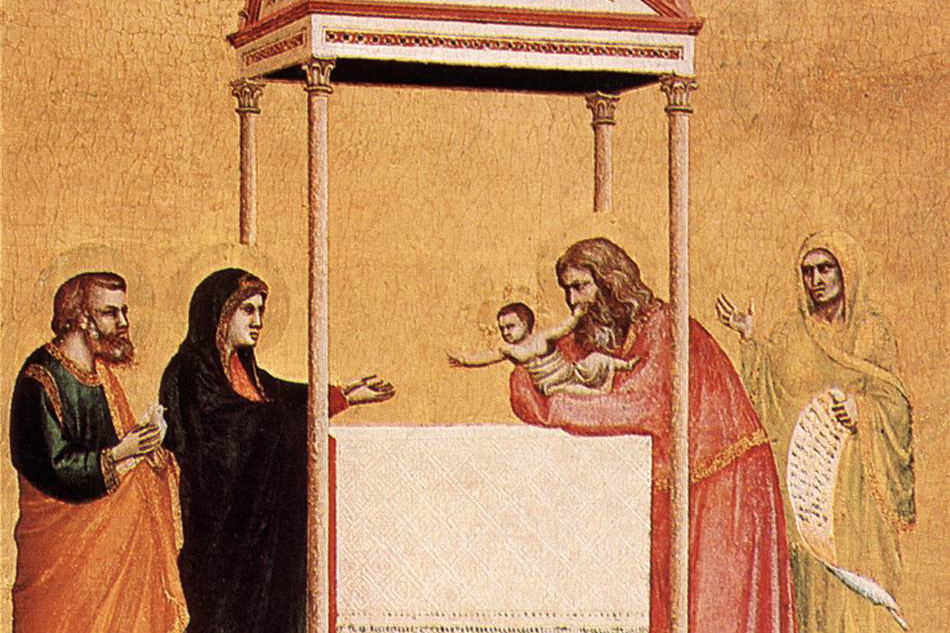
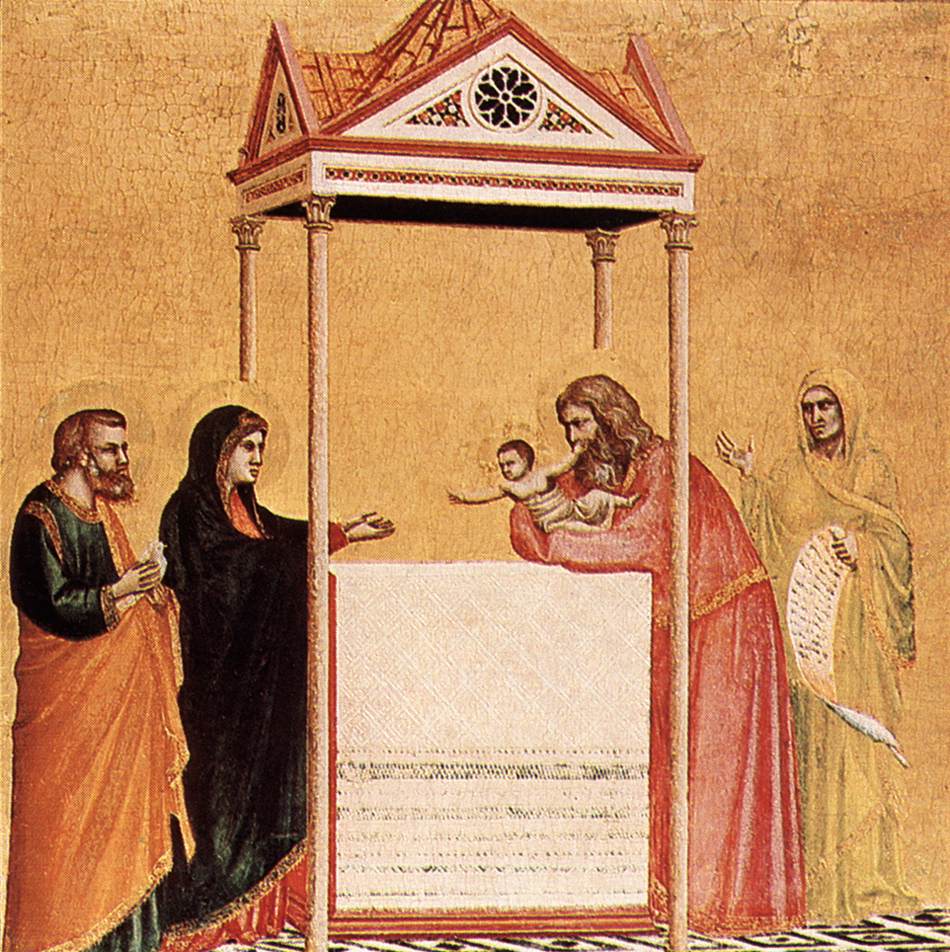
Biblically the feast celebrates the “purification” of our Lady when, as a Jewish woman, she would present herself forty days after giving birth to be welcomed back to the community and was blessed. I have written more the history of that here: The Churching of Women

For this reflection, perhaps we do well to attend to four teachings or perspectives we gain of Jesus our Light in the readings. We are taught that our relationship with Jesus is: Cleansing, Consoling, Compelling, and Communing.

I. Cleansing – The Gospel opens with this description: When the days were completed for their purification according to the law of Moses, Mary and Joseph took Jesus up to Jerusalem to present him to the Lord, just as it is written in the law of the Lord, Every male that opens the womb shall be consecrated to the Lord, and to offer the sacrifice of a pair of turtledoves or two young pigeons, in accordance with the dictate in the law of the Lord.

It might strike us as odd, even irritating that a woman or a couple would need to be purified after giving birth. But ancient Jewish practice exhibited great reverence for rituals of birth and death. And on account of the deep mysteries of life that were represented not only by these events, but also the fluids (e.g. blood, and amniotic fluids) that accompanied them, a kind of purification or blessing was deemed necessary for those who returned to the community after these events. (See more at the link above).

And while we may wonder at (or even scoff) at these notions, the fact is that all of us need purification and cleansing. We are sinners, and we live in a world tainted by sin. The Lord must purify us all; and unless this happens, we will never be able to endure the great holiness, glory and purity of God or heaven.

Jesus our savior alone can cleanse and purify us and make us able to endure the glory of God. The first reading both describes our need for purification and also points to Jesus, the one who purifies us:

But who can endure the day of [the Lord’s] coming? And who can stand when he appears? For he is like the refiner’s fire, or like the fuller’s lye. He will sit refining and purifying silver, and he will purify the sons of Levi, Refining them like gold or like silver that they may offer due sacrifice to the LORD. Then the sacrifice of Judah and Jerusalem will please the LORD, as in the days of old, as in years gone by. (Mal 3:2-4)

Yes, only the Lord himself can purify us to endure his glory. Thank you Jesus, our Light and Savior for the sanctifying grace by which, alone, we could ever hope to endure and rejoice in the glory that waits. Thank you Jesus for your grace and mercy by which we are able to stand before our Father and praise him for all eternity. Thank you Jesus our purifier, our savior and Lord.

The first gift our saving relationship with Jesus is cleansing.

II. Consoling – Well aware of the burden of sin, ancient Israel longed for a savior. The pious knew well that sin brought strife, pain, and deep grief. Among the pious who longed for the Messiah were Simeon and Anna, who frequented the Temple looking, and longing. Of Simeon we are told:

[He] was righteous and devout, awaiting the consolation of Israel, and the Holy Spirit was upon him. It had been revealed to him by the Holy Spirit that he should not see death before he had seen the Christ of the Lord.

And of Anna who is described as among those who were awaiting the redemption of Jerusalem, we are told she was:

a prophetess, the daughter of Phanuel, of the tribe of Asher. She was advanced in years, having lived seven years with her husband after her marriage, and then as a widow until she was eighty-four. She never left the temple, but worshiped night and day with fasting and prayer.

So here are two of the pious of Israel longing and looking for the consolation of the Messiah who would save the people and bring consolation and peace.

But what is true consolation and peace? It is to be reconciled to the Father, Abba; to once again see Him and be able to walk with him in the Garden in the cool of the morning. True consolation and peace are found only when the gates of heaven are opened and we look once again on the glorious and serene face of our Father who loves us.

Here too is a gift that can come only by the ministry of Jesus, for no one knows the Father but him and anyone to whom Jesus reveals Him. Jesus is our peace and our consolation by leading us back to his Father in and through his Sacred Heart, and by his Holy Passion.

Simeon, as he holds Jesus, is holding the Gift of the Father, and thus a tremendous gift of peace and consolation come to him in a kind of prevenient way. So he can say:

 Now, Master, you may let your servant go  in peace, according to your word, for my eyes have seen your salvation, which you prepared in the sight of all the peoples: a light for revelation to the Gentiles, and glory for your people Israel.

Such a consolation to hold the infant Jesus, and know that God so loved the world that he sent his only Son to save us. Yes, and now Simeon can go forth in peace from this world for he has beheld the light of God’s saving love in Jesus.

III. Compelling – Among the things were are told in this Gospel is that Jesus is no merely neutral figure. He is the one on whom all human history, both collective and personal, hinges. And the “hinge” is our choice for or against Jesus. Simeon says to Mary,

Behold, this child is destined for the fall and rise of many in Israel, and to be a sign that will be contradicted —and you yourself a sword will pierce— so that the thoughts of many hearts may be revealed.

Yes, all of human history, personal and collective hinges on Jesus. Jesus compels a choice. We are free to choose for or against him, but we must choose. And on this choice we must make depends the rise or fall of us all.

Here is a dramatic truth, Jesus our savior has come, and now we must choose. Choose wisely and carefully, for upon your choice depends your rise or fall.

Jesus says, Whoever is not with me is against me, and whoever does not gather with me scatters. (Matt 12:30).

St Paul says, In the past God overlooked ignorance, but now he commands all people everywhere to repent. For he has set a day when he will judge the world with justice by the man he has appointed. He has given proof of this to everyone by raising him from the dead. (Acts 17:30).  And again, We are therefore Christ’s ambassadors, as though God were making his appeal through us. We implore you on Christ’s behalf: Be reconciled to God! (2 Cor 5:20)

Where will you spend eternity? That depends on your stance toward Jesus. Your future rises or falls on Him. Will you choose him? You are free to choose, but you are not free not to choose! Jesus compels a choice, and on this choice your very life will rise or fall.

IV. Communing – It is a remarkable truth that Jesus did not merely save us from on high. He became flesh and lived among us. Today’s Gospel says,

When they had fulfilled all the prescriptions of the law of the Lord, they returned to Galilee, to their own town of Nazareth. The child grew and became strong, filled with wisdom; and the favor of God was upon him.

Imagine the intimacy of Jesus dwelling among us then, and still now “tabernacling” among us in the Blessed Sacrament and in the temples of our heart through His Spirit. Our Lord seeks communion with us, and is not ashamed to call us his brethren (Heb 2:11).

On this feast of the Presentation allow the allow the Lord into the temple of your heart. Give him access to your soul by receiving him in Holy Communion and seek his presence tabernacled in our Church. Today Jesus is not only presented in the temple, he is presented to you. Reach out to hold on to him and receive in your heart, like Simeon. Run and tell others to come, like Anna.

Jesus our Light and salvation is here. He brings with him cleansing, consoling, and communing. He also compels a choice. Choose him now, run to him, he is here and he is calling!

Judge carefully, slowly and humbly; As seen in a short Cartoon

The video below contains a surprise and thus reminds us that not all things are as they appear. We must be careful how we size things up, and do so, when required, with great humility. There is an old saying,

If your words are soft and sweet, they won’t be as hard to swallow if you have to eat them.

Before watching the video consider a few cautionary quotes from Scripture about sizing things and people up:

  1. 1 Sam 16:7 But the LORD said to Samuel [who seeking a king, was impressed with Jesse’s eldest son], “Do not consider his appearance or his height, for I have rejected him. The LORD does not look at the things people look at. Man looks at the outward appearance, but the LORD looks at the heart.”
  2. 2 Cor 5:16 So from now on we regard no one from a worldly point of view. Though we once regarded Christ in this way, we do so no longer.
  3. John 7:24 Stop judging by mere appearances, but instead judge correctly.”
  4. John 8:15-16 You judge by human standards; I pass judgment on no one. But if I do judge, my decisions are true, because I am not alone. I stand with the Father, who sent me.
  5. Luke 16:15 Jesus said to them, “You are the ones who justify yourselves in the eyes of others, but God knows your hearts.
  6. 1 Kings 8:39 [O Lord] Forgive and act; deal with everyone according to all they do, since you know their hearts (for you alone know every human heart).
  7. Sirach 11:28 Call no one happy before his death; by how he ends, a person becomes known

Enjoy the video!

The Churching of Women and it Relation to the Feast of the Presentation

013014As we prepare for the Feast of the Presentation (Sunday, February 2), I though it might be appropriate to describe a liturgy of the Church that is largely lost to most today, “The Churching of Women.” To some extent it is subsumed in the modern Rite of Baptism with the blessing of the Mother, but it is not what it used to be. We CAN still celebrate this for women who ask, and I often do celebrate it especially when I do extraordinary form Baptisms.

The Churching of Women is very rooted int he feast of the Presentation. Biblically this feast commemorates the Jewish practice of a woman presenting herself at the temple forty days after the birth of a male child in order to be “purified” and blessed by the priest. Mary as an observant Jew fulfilled this obligation and it is recorded in Luke 2:22-24:

When the time of their purification according to the Law of Moses had been completed, Joseph and Mary took him to Jerusalem to present him to the Lord (as it is written in the Law of the Lord, “Every firstborn male is to be consecrated to the Lord”and to offer a sacrifice in keeping with what is said in the Law of the Lord: “a pair of doves or two young pigeons.”

The Jewish practice of “purifying” a woman after childbirth was set forth in the Book of Leviticus 12:1-8:

The LORD said to Moses, “Say to the Israelites: ‘A woman who becomes pregnant and gives birth to a son will be ceremonially unclean for seven days, just as she is unclean during her monthly period. On the eighth day the boy is to be circumcised. Then the woman must wait thirty-three days to be purified from her bleeding. She must not touch anything sacred or go to the sanctuary until the days of her purification are over. If she gives birth to a daughter, for two weeks the woman will be unclean, as during her period. Then she must wait sixty-six days to be purified from her bleeding. ” ‘When the days of her purification for a son or daughter are over, she is to bring to the priest at the entrance to the Tent of Meeting a year-old lamb for a burnt offering and a young pigeon or a dove for a sin offering. He shall offer them before the LORD to make atonement for her, and then she will be ceremonially clean from her flow of blood.” ‘These are the regulations for the woman who gives birth to a boy or a girl. If she cannot afford a lamb, she is to bring two doves or two young pigeons, one for a burnt offering and the other for a sin offering. In this way the priest will make atonement for her, and she will be clean.’ “

As you can see, there is a fairly negative concept at work in the Old Testament concept. A woman becomes ritually “unclean” by giving birth. This was due to the flow of blood and/or other fluids at birth. Even more distressing to modern notions is that a woman who gave birth to a daughter was considered ritually unclean for even longer! Alas, it is well that the power of the Church to bind and loose has freed us from this thinking. Keep in mind that this was ceremonial law, not moral law and, hence, the Church is not setting aside immutable moral law in abrogating such notions of ritual impurity.

Nevertheless the custom and instinct of blessing women after childbirth was retained in the Church with an altered understanding from Jewish teaching. That rite came down through the centuries and was widely intact until very recent times and as we have said, was referred to in many places as the “Churching of Women.” (The official Latin title of the Rite was actually benedictio mulieris post partum – (the blessing of women after giving birth)). The rite was largely discontinued in the 1960s in the wake of the Second Vatican Council. The Book of Blessings published in 1984 does contain a “Blessing of a Woman after Childbirth” but it is seldom used and is significantly altered from the old rite in use until about 1965. There is also a blessing of the Mother at the Rite of Infant Baptism.

The reasons for the discontinuance are many. I remember my mother and other women of my mother’s generation saying they had been taught the Jewish history of this rite and thus rejected it for that reason. But the Catholic Church was clear to distinguish its practice from the Jewish roots. Pope Gregory as early as the 6th Century protested any notion that defilement was incurred by childbirth. Further, the prayers of the old “Churching of Women” Rite never mentioned a need for purification and spoke only of blessing and thanksgiving. So those who taught women of my Mother’s generation against this practice were probably engaged more in polemics than true Church history. Another reason for the discontinuance was probably and simply that so many things were dropped during the changes in the wake of the Council.

On this Feast of the Presentation I would like to recommend this beautiful ritual to your attention. In an extended sense it fulfills What Mary did at the presentation, forty days after the birth of Christ. Surely we do not understand it in an Old Testament way, but we rescue and fulfill the tradition with the beauty of Christian faith and the dignity of women who are mothers.

I have attached a PDF version of it here: The Churching of Women. Though it has never been required by the Church it is a beautiful way to welcome back and bless a woman who has perhaps been away for a few weeks giving birth. She has labored well for her family, her child and the Church and this ritual can serve simultaneously as a blessing and thanksgiving extended by the Church to the noble women who are our mothers. The blessing can be given after a baptism, after mass, collectively to recent mothers, or individually. It is true that the current baptismal rite contains a blessing for the mother but this older rite is a more single and special blessing. Pope Benedict’s  Motu Proprio Summorum Pontificum permitting the older forms of the sacraments to be used has made these older rituals also more available. Here is the concluding prayer of the rite:

Almighty, everlasting God, through the delivery of the blessed Virgin Mary, Thou hast turned into joy the pains of the faithful in childbirth; look mercifully upon this Thy handmaid, coming in gladness to Thy temple to offer up her thanks: and grant that after this life, by the merits and intercession of the same blessed Mary, she may merit to arrive, together with her offspring, at the joys of everlasting happiness. Through Christ our Lord.

I looked for a video depicting the Churching of Women but found none. Instead enjoy this video by Shirley Ceasar which celebrates the love of a mother as an image of God’s love: The full cost of my love is “no-charge”