In this week’s Office of Readings comes a crucial question from Elijah. It came at a time of widespread apostasy among the Jewish people. Elijah summoned a multitude to Mt. Carmel in the far north of Israel:
Elijah appealed to all the people and said, “How long will you straddle the issue? If the Lord is God, follow him; if Baal, follow him.” The people, however, did not answer him (1 Kings 18:21).
The Baals were the gods of the Canaanites. It had become expedient and popular to worship them because the ruling political leaders, the apostate King Ahab and his wicked wife Jezebel, had set forth the worship of the Baals by erecting altars and sacred columns. All who wished their life to go well and to have access to the levers of prosperity were surely “encouraged” to comply. Jezebel funded hundreds of prophets of Baal and the goddess Asherah. She also had many of the prophets of Israel killed and forced others into hiding. Through a policy of favoritism and fear, the true faith was being suppressed and false ideologies were being promoted.
At a critical moment Elijah thus asked his question. In effect he told them that they needed to decide whether to serve the Lord God out of courageous fidelity or the Baals out of cowardly fear.
We, too, must decide. In our times, the true faith has been undermined in the hearts of many by plausible liars, cultural war, and political correctness. Those who strive to hold to the true faith are called hateful, bigoted, and intolerant. A legal framework is growing that seeks to compel compliance to the moral revolution and abandonment of the biblical worldview. Social pressures are at work as well, seeking to force compliance through political correctness, through suppression of speech and ideas, and through the influence of music, cinema, and art.
The same question must be asked of us:
How long will you straddle the issue? If the Lord is God, follow him (whatever the cost). If Baal is your god, follow him! If you prefer what is popular, trendy, politically correct, and safe, go for it. But understand that if you do so, your decision is increasingly for Baal, not the Lord. In a culture that insists you celebrate fornication, homosexual acts, transgenderism, abortion, euthanasia, and all sorts of intemperance, realize that your decision to comply amounts to a choice for Baal.
Some claim that they are not really making a fundamental choice against God and for the modern Baals. Rather, they prefer to think that they are being “tolerant,” that they are pleasant moderates seeking to build bridges and keep the faith “mainstream.”
Today the lines are starkly drawn. The choices required of us are clear. The ancient maxim has never been more true: tertium non datur (no third way is given). Jesus says, You cannot serve God and mammon (Mat 6:24). James adds, Adulterers! Do you not realize that a friendship with the world is enmity at God? (James 4:4) Elijah’s question cannot be watered down. There are two sides in the moral battle of our times: choose a side.
In Elijah’s time, the people did not want to answer. The text says that they just stood there, silent. But silence does not make the question or the choice go away. Indeed, prolonged silence to so fundamental a question becomes an answer in itself. Silence and fence-sitting are not valid answers when the lines are so clearly drawn.
To the fence-sitters is directed this warning in the form of an old story:
A man once refused to take sides in the critical and disputed matters of his day, nobly declaring that he was tolerant of all views. Taking his seat on the fence he congratulated himself for his moderation and openness; others did too. One day the devil came and said, “Come along now, you’re with me.” The man protested, “I don’t belong to you. I’m on the fence!” The devil simply replied: “Oh, but you do belong to me. I own the fence.”
“How long will you straddle the issue? If the Lord is God, follow him; if Baal, follow him.”
What do you expect to happen as a result of reading and hearing God’s Word? Do you expect to encounter something that will change you? The response of most people is pretty tepid and uninspired. Most don’t really expect much nor have they ever. For them, reading or hearing God’s Word is more of a tedious ritual than a transformative reality.
The readings for this Sunday clearly set forth that God’s Word can transform, renew, encourage, and empower us. We ought to begin to begin to expect great things from the faithful and attentive reception of the Word of God. However, Jesus also spells out some obstacles that keep the harvest small or even nonexistent for some.
Let’s look at what the Lord teaches in three steps.
I. Promise – The first reading shows that the Word of God can utterly transform us and bring forth a great harvest in our life:
Just as from the heavens the rain and snow come down and do not return there until they have watered the earth, making it fertile and fruitful, giving seed to the one who sows and bread to the one who eats, so shall my word be that goes forth from my mouth; my word shall not return to me void (Isaiah 55:10-11).
God’s Word has power! If we listen to God’s Word authentically and attentively, it will refresh us and bring forth the fruit of transformation. No one can authentically attend to God’s Word and go away unchanged. If listened to with alertness, God’s Word can open our mind to new realities, give us hope, and teach us the fundamental meaning of our life. It can thrill us or frighten us. It can make us wonder, repent, or rejoice; it can also transform us. It can make us mad, sad, or glad. If we attend to it, however, it’s pretty hard to go away neutral. Of His Word, Scripture itself says,
• The word of God is living and active. Sharper than any double-edged sword, it penetrates even to dividing soul and spirit, joints and marrow; it judges the thoughts and attitudes of the heart (Heb 4:12).
• “Is not my word like fire,” declares the LORD, “and like a hammer that breaks a rock in pieces?” (Jer 23:29)
• Jeremiah himself said, But if I say, “I will not mention him or speak any more in his name,” his word is in my heart like a fire, a fire shut up in my bones. I am weary of holding it in; indeed, I cannot (Jer 20:9).
• My heart pounds within me, I cannot keep silent. For I have heard the sound of the trumpet; I have heard the battle cry! (Jer 4:19)
• Amos echoes, The lion has roared–—who will not fear? The sovereign LORD has spoken–—who can but prophesy? (Amos 3:8)
• The Apostles join the great company of preachers and declare, For we cannot help speaking about what we have seen and heard (Acts 4:20).
• [T]he Lord gave the Word, and great was the company of the preachers! (Ps 68:11)
• Through His preachers, the Lord wants to set us on fire: I will make my words in your mouth a fire and these people the wood it consumes (Jer 5:14).
• Yes, if we will let him, he will set us ablaze with his word. Thus he will also set the world on fire, through us.
Yes, if we will let Him, He will set us ablaze with His word. Thus He will also set the world on fire, through us. God’s word, effectively preached and thoughtfully attended to, is fire that transforms. Pray for fiery preachers. Pray for ears attentive to God’s Word. Pray for a soul alive and alert to sound of God’s trumpet. Pray for a mind capable of appreciating God’s Word’s in all its subtlety and all its plain meaning. It can change your life.
II. Problems – The Lord also alerts us to some problems that can arise in the human person. For while God’s Word does not lack power, neither does it violate His respect for our freedom and call to love. Consider that God speaks to inanimate objects and they must obey:
• And God said, “Let there be light.” And there was light (Gen 1:3).
• And [God] said: This far you may come and no farther; here is where your proud waves halt (Job 38:11). And the sea obeyed.
• And He says to the mountains, “Move!” and they shake and melt like wax before his glance (see Ps 97:5).
But the human person is not inanimate. We are possessed of a soul and gifted with freedom so that we may love. God speaks to us and, remarkably, we are free to say, “No.” The Lord Jesus warns us in today’s Gospel that our freedom is ultimately respected. The power of God’s Word remains, but God Himself has made it depend on our “Yes.”
Ponder, then, some issues that can cut off from or reduce the power of God’s Word:
No Reception– In today’s Gospel Jesus this about some people:[T]hey look but do not see and hear but do not listen or understand … Gross is the heart of this people, they will hardly hear with their ears, they have closed their eyes, lest they see with their eyes and hear with their ears and understand with their hearts and be converted, and I heal them.
The Greek word translated here as “gross” is παχύνω (pachuno), meaning fat, thick, or dull. By extension, it means having an insensitive or hardened heart. Hence there are some who have hardened their hearts to God and His Word.
God (through Isaiah) once observed this about us: I know that you are obstinate, and your neck is an iron sinew and your forehead brass (Is 48:4). This is another way of saying, I know that you are stubborn. Like iron, you are hardheaded. Like brass, your skull is thick; nothing can get through. For many of us, this tendency to be stiff-necked is gradually softened by the power of grace, the medicine of the sacraments, instruction by God’s Word, and the humility that can come from these.
For some, though, the stubbornness never abates. In fact, it grows even stronger as a descent into pride, and increasing hard-heartedness sets up. The deeper this descent, the more obnoxious the truth seems, and the less likely it is that they will be converted. As things progress, they shift from resistance to the truth to downright hostility. They harden their hearts and stiffen their necks. At some point, it would seem they reach the point of no return.
There are some texts in the Scriptures that speak of God Himself hardening the hearts of sinners. This is a very deep mystery and tied up in the deeper mystery that God is the primary cause of everything.
The text before us today, however, emphasizes the hardening of the heart from the human perspective: Those of hardened hearts have closed their eyes lest they see; They do not listen lest they be confronted with something they would rather not hear and sense the need for repentance and conversion. The Word of God can have no place in them because they reject it entirely; its offered power is cast aside.
No Reflection – The text speaks of the seed of God’s Word: The seed sown on the path is the one who hears the word of the kingdom without understanding it, and the evil one comes and steals away what was sown in his heart.
The Greek word translated here as “understand” is συνίημι (syniemi) which means literally, “to put (or set) together.” Figuratively, it means “to connect the dots, synthesize, understand.” In other words, the seed sown on the path refers to the person who gives little thought to the Word of God. He does not try to connect it to his life or to understand its practical application. He does not “set it together” (synthesize it) with his experience or seek to apply it in his life. The Word will not last due to his inattentiveness to its meaning and its deeper role in his life. Thus the Word stays only on the surface, in his short-term memory.
Encountering little resistance, Satan is able to take it away quickly from the man, who has not really connected God’s Word to his life anyway. Here, too, there can be little or no transformation, because the power of God’s Word is neither appreciated nor admitted into the deeper places of the man’s soul.
No Roots – The text says, The seed sown on rocky ground is the one who hears the word and receives it at once with joy. But he has no root and lasts only for a time. When some tribulation or persecution comes because of the word, he immediately falls away. The image here is of a plant that thrives when the weather is good and the wind calm, but blows away when the wind picks up, because of a lack of roots.
There are some who can rejoice in the Word of God, but only as long as it paints fair pictures and tickles their ears. But when the Word convicts them or causes them any negative experience within, or persecution without, they run away. When the wind blows, they are gone.
An old spiritual says, “Some go to church for to sing and shout. Before six months they’s all turned out.” As long as the preacher is talking about fair weather and there are no consequences to the Word, they’re shouting “Amen” and singing the refrains of the songs. But let that preacher step on their toes or someone in the world raise an eyebrow and they’re gone—gone with the wind. Here, too, the power of God’s Word to transform is cast aside.
No Recollection – The text says, The seed sown among thorns is the one who hears the word, but then worldly anxiety … chokes it off.
This describes people who are simply too distracted by the things of the world to spend time with the Word of God. They allow the water of their life to be disturbed; there is never enough calm for them to be reflective. They obsess over every small ripple that rocks the boat and do not trust God enough to relax and ponder His will and His Word. They are constantly busy with the details of their life and responding its “alarms.”
They allow the world to distract them from or draw them away from reflection on God’s world. This, too, limits the transformative power of God’s Word.
No Requirement – The text also speaks of the lure of riches [which] choke the word and it bears no fruit. Riches divide the heart.
People who want to get rich fall into temptation and a trap and into many foolish and harmful desires that plunge men into ruin and destruction. For the love of money is a root of all kinds of evil. Some people, eager for money, have wandered from the faith and pierced themselves with many griefs (1 Tim 6:9-10).
For where your treasure is, there your heart will be also (Matt 6:21).
Some of the rich feel less need for God in their life. They are better able to maintain the illusion of self-support. But as these scriptures teach, it is an illusion, because all they really do is to buy themselves deeper into trouble.
If our treasure is in riches, our heart will not be with God’s Word. Job said, I have esteemed the words of his mouth more than my necessary food (Job 23:12). Only with a heart set on God’s Word as a treasure will we hunger for it and reflect on it enough to be truly transformed by it.
III. Produce – The text says, But blessed are your eyes, because they see, and your ears, because they hear … the seed sown on rich soil is the one who hears the word and understands it, who indeed bears fruit and yields a hundred or sixty or thirtyfold.
Here, then, is the promise reiterated that the Word of God is powerful and will produce a radical transformation in us of thirty, sixty or even one hundredfold! Note that this promise is for those who receive the Word with understanding. That is, it is for those with συνίημι (syniemi), with a will to connect the dots, to synthesize, to seek to understand the Word and apply it to their life.
I am a witness to the power of God’s Word to transform and yield abundant fruit. I have learned to expect a lot from God’s Word: a new mind, a new heart, and a new life. God has not failed me. I have seen my life change dramatically for the better in so many ways. God has been good to me and has been true to His Word, which says, If anyone is in Christ, he is a new creation (2 Cor 5:17). I cannot take credit for this new life I have received. It is the gift of God and He has given it to me through the power of His Word and the grace of His Sacraments.
We in the West live in a place and at a time in which almost every burden of manual labor has been eliminated. Not only that, but creature comforts abound. Everything from air conditioning to hair conditioning, from fast food to high speed internet, from to indoor plumbing to outdoor grilling, from instant computer downloads to instant coffee machines. You don’t even have write letters anymore, just press send and a text or email is delivered nearly instantaneously. Yet despite all this it would seem that we still keenly experience life’s burdens, demonstrated by the widespread recourse to psychotherapy and psychotropic drugs.
It is increasingly clear that serenity is “an inside job.” Merely improving the outside and amassing creature comforts is not enough. A large fluffy pillow may cushion the body, but apparently not the soul.
Jesus wants us to work on the inside and presents us a teaching in today’s Gospel on being increasingly freed of our burdens. He doesn’t promise a trouble free life, but that if we will let Him go to work we can grow in freedom and serenity. Jesus gives a threefold teaching on how to do this: by filiation, imitation, and simplification.
I. Filiation – At that time Jesus exclaimed, “I give praise to you, Father, Lord of heaven and earth, for although you have hidden these things from the wise and the learned you have revealed them to little ones. Yes, Father, such has been your gracious will. All things have been handed over to me by my Father. No one knows the Son except the Father, and no one knows the Father except the Son and anyone to whom the Son wishes to reveal him.”
Note how Jesus contrasts the “wise and learned” from the “little ones.” In so doing, Jesus commends to us a childlike simplicity before our heavenly Father, our Abba, our “Daddy-God.” This is the experience of divine filiation, of being a child of God, of being one of God’s “little ones.” The wise, learned, and clever often miss what God is trying to do and say, and because of this, they feel anxious and stressed.
It is possible for a person to study a great deal, but if he doesn’t pray he isn’t going to get very far. The Greek word translated here as “revealed” is ἀπεκάλυψας (apekalupsas), which more literally means “to unveil.” Only God can take away the veil and He does so for the humble and simple. Thus Jesus commends to our understanding the need for childlike simplicity and prayerful humility.
Half of our problem in life, and the overwhelming cause of our stress, is that we think too much and pray too little. We have big brains but small hearts, and so we struggle to understand God instead of just trusting Him. Though our reason is our crowning glory, we must never forget how to be little children in the presence of God our Father. No matter how much we think we know, it isn’t really very much. Jesus’ first teaching is filiation, of embracing a childlike simplicity before our Daddy-God.
What does it mean to be childlike? Consider how little children are humble. They are always asking “Why?” and are unashamed to admit that they do not know. Children are also filled with wonder and awe; they are fascinated by the littlest and biggest of things. They know they depend on their parents and run to them instinctively when they’ve been hurt or at any sign of trouble. They trust their parents completely. Children are always asking, seeking, and knocking.
Thus Jesus teaches us that the first step to lessening our burdens isto have a childlike simplicity with the Father, wherein we are humble before him, acknowledging our need for Him and complete dependence upon Him. He teaches us to have a simplicity that is humble enough to admit that we don’t know much and want to learn from Him, a wonder and awe at all that God has done, and an instinct to run to God when we are hurt or in trouble. Above all, Jesus teaches us by this image to grow each day in our trust of Abba, and in our confidence to ask Him for everything we need. Scripture says, You have not because you ask not (James 4:2). An old spiritual says, “I love the Lord; he heard my cry; and pitied every groan. Long as I live and troubles rise; I’ll hasten to his throne.”
Yes, run, with childlike simplicity and trust.
So here is the first teaching of Jesus on letting go of our burdens: grow in childlike simplicity and trust before God, your loving Father and Abba.
II. Imitation – “Come to me, all you who labor and are burdened, and I will give you rest … for I am meek and humble of heart; and you will find rest for yourselves.” Jesus commends to us two characteristics of Himself that (if we embrace them) will give us rest and relief from our burdens. He says that He is meek and humble of heart.
What does it mean to be meek? The Greek word used is πραΰς (praus), but there is some debate as to how it is best interpreted. Aristotle defined “praotes” (meekness) as the middle ground between too much anger and not enough. Hence, the meek are those who have authority over their anger.
However, many biblical scholars contend that Jesus used this word most often as a synonym for being “poor in spirit.” What does it mean to be poor in spirit? It means to be humble and dependent upon God. By extension, it means that our treasure is not here. We are poor to this world; our treasure is with God and the things waiting for us in Heaven. This is a source of serenity for us, for when we become poor to this world, when we become less obsessed with success, power, and possessions, many of our anxieties go away. To the poor in spirit, the wealth of this world is as nothing. You can’t steal from a man who has nothing. A poor man is less anxious because he has less to lose, less at stake. He is free from this world’s obsessions and the fears and burdens they generate. Jesus calls us to accept his example and to grow in our experience of being poor in spirit.
Jesus also says that He is humble of heart. The Greek word use is ταπεινός (tapeinos), meaning lowly or humble, and referring to one who depends upon the Lord rather than himself. We have already discussed this at length above, but simply note here that the Lord Jesus is inviting us to learn this from Him and to receive it as a gift. The Lord can do this for us. If we will learn it from Him and receive it, so many of our burdens and so much of our anxiety will be lifted.
Here, then, is the second teaching Jesus offers us so that we will see life’s burdens lessened. He teaches us to learn from Him and to receive from Him the gifts of being poor in spirit and humble of heart. The serenity that comes from embracing these grows with each day, for we are no longer bound by the shackles of this world. It cannot intimidate us because its wealth and power do not entice us; we do not fear their loss. We learn to trust that God will see us through and provide us with what we need.
III. Simplification – Take my yoke upon you … For my yoke is easy, and my burden light. The most important word in this sentence is this one: “my.” Jesus says, my yoke is easy, and my burden is light.
What is a yoke? Essentially “yoke” is used here as a symbol for the cross. A yoke is a wooden truss that makes it easier to carry a heavy load by distributing the weight along a wider part of the body, or by allowing the weight to be shared by two or more people or animals. In the picture at left, the woman is able to carry the water more easily with the weight across her shoulders rather than in the narrow section of her hands. This eases the load by involving the whole body more evenly. Yokes are also used to join two animals and help them work together in pulling a load.
What is Jesus saying? First, He is saying that He has a yoke for us, that is, He has a cross for us. He is not saying that there is no burden in following Him. There is a cross that He allows, for a reason and for a season.
Easy? Jesus says that the cross He has for us is “easy.” The Greek word χρηστὸς (chrestos) is better translated as “well-fitting,” “suitable,” or even “useful.” The Lord is saying that the yoke He has for us is suited to us; it is well-fitting; it has been carefully chosen so as to be useful for us. God knows that we need some crosses in order to grow and He knows what they are. He also knows what we can bear and what we are ready for. Yes, His yoke for us is well-fitting.
Note again that little word: “my.” The cross or yoke Jesus has for us is well-suited and useful for us. The problem comes when we start adding things of our own doing to the weight. We put weight upon our shoulders that God never put there and did not intend for us. We make decisions without asking God. We undertake projects, launch careers, accept promotions, and even enter marriages without ever discerning if God wants this for us. Sure enough, before long our life is complicated and burdensome; we feel pulled in many different directions. But this is not the “my yoke” to which Jesus referred; this is largely the yoke of our own making. Of course it is not easy or well-fitting; Jesus didn’t make it.
Don’t blame God, simplify. Be very careful before accepting commitments and making big decisions. Ask God. It may be a good thing, but not good for you. It may help others, but destroy you. Seek the Lord’s will. Ask advice from a spiritually mature person if necessary. Consider your state in life; consider the tradeoffs. Balance the call to be generous with the call to proper stewardship of your time, talent, and treasure. Have proper priorities. It is amazing how many people put their career before their vocation. They accept promotions and special assignments, thinking more about money and advancement than their spouse and children. Sure enough, the burdens increase and the load gets heavy. This is what happens when we don’t ask God or even consider how a proposed course of action might affect the most precious and important things in our lives.
So stop “yoking around.” Jesus’ final advice to us is to “take my yoke,” but only that. Forsake all others. Simplify. Take only His yoke. If you do that, your burdens will be lighter. Jesus tells us to come and learn from Him. He will not put heavy burdens on us. He will set our heart on fire with love. And then, whatever yoke He does have for us will be a pleasure for us to bear. What makes the difference is love. Love lightens every load.
The Catholic approach to the end times is different from that in certain (but not all) Protestant circles, especially the Evangelicals, who have a strong and often vivid preoccupation with signs of the Second Coming of Christ. Many of the notions that are expressed there are either erroneous or extreme. Some of these notions are rooted in a misunderstanding of the various genres of Scripture; others are caused by reading certain Scriptures in isolation from the wider context of the whole of Scripture; and some are rooted in reading one text while disregarding others that balance it.
The Catholic approach to eschatology is perhaps less thrilling and provocative. It does not generate movie series like “Left Behind” or cause people to sell their houses and gather on hillsides waiting for the announced end. It is more methodical and seeks to balance a lot of notions that often hold certain truths in tension with one another.
What I offer here I do not propose to call a complete eschatology, only a sketch of basic principles rooted in the Catechism of the Catholic Church.
While we cannot know the exact time of His coming, there are things that both remind us of and signal His approach—if we have eyes to see them. These signs give indications only. The presence of such texts cannot be seen to overrule that He will come “on a sudden” and that many will be caught unawares.
Here are some notes from the Catechism (in black, the Blue and Red texts are my additions/comments).
1. Soon and Sudden – Since the Ascension, Christ’s coming in glory has been imminent (Rev 22:20), even though “it is not for you to know times or seasons which the Father has fixed by his own authority”(Acts 1:7). This eschatological coming could be accomplished at any moment, even if both it and the final trial that will precede it are “delayed” (Mat 24:44; 1 Thess 5:2; 2 Thess 2:3-12) (CCC # 673).
Of all the points the Catechism makes, this one sets the tone of balance that must be maintained. On the one hand Christ says that He is coming soon and that His coming could be both sudden and without warning, but this truth must be held in tension with other truths that set forth certain things that must be accomplished and certain signs that must appear before then. And these things are not easily or quickly accomplished.
2. Suspended – The glorious Messiah’s coming is suspended at every moment of history until his recognition by “all Israel” (Romans 11:20-26; Mat 23:39), for “a hardening has come upon part of Israel” in their “unbelief” (Romans 11:20-26) toward Jesus. St. Peter says to the Jews of Jerusalem after Pentecost: “Repent therefore, and turn again, that your sins may be blotted out, that times of refreshing may come from the presence of the Lord, and that he may send the Christ appointed for you, Jesus, whom heaven must receive until the time for establishing all that God spoke by the mouth of his holy prophets from of old. (Acts 3:19-21)” St. Paul echoes him: “For if their rejection means the reconciliation of the world, what will their acceptance mean but life from the dead?” (Rom 11:15) The “full inclusion” of the Jews in the Messiah’s salvation, in the wake of “the full number of the Gentiles” (Rom 11:12), will enable the People of God to achieve “the measure of the stature of the fullness of Christ”, in which “God may be all in all” (Eph 4:13; 1 Cor 15:27-28) (CCC # 674).
This going forth of the Gospel to all the nations and the acceptance of Christ by the Jews would seem to be matters that would take some time.
Has the Gospel really reached all the nations? Have the full number of Gentiles come in and are they serving God and repenting in sufficient numbers? Perhaps so, one might argue. There are very few places in the world where there is no Christian presence, and yet on a planet of seven billion people less than a third are Christian. And what is meant by the “full number” of Gentiles? That number is hidden from us and can surely be debated.
Has the “hardening” that has come upon the Israel been lifted? This, too, is debatable. Despite certain movements of “Messianic Jews,” it does not seem that the hardening that has come on Israel has been lifted in any wide sort of way or that Jesus has been recognized by “all Israel.”
3. Sufferingand Sedition– Before Christ’s second coming, the Church must pass through a final trial that will shake the faith of many believers (Luke 18:8; Mt 24:12). The persecution that accompanies her pilgrimage on earth will unveil the “mystery of iniquity” in the form of a religious deception offering men an apparent solution to their problems at the price of apostasy from the truth. The supreme religious deception is that of the Antichrist, a pseudo-messianism by which man glorifies himself in place of God and of his Messiah come in the flesh (2 Thess 2:4-12; 1 Thess 5:2-3; 1 Jn 2:18-22) (CCC # 675).
Clearly, many of these troubles have afflicted the Church in every age. There has always been persecution. Many have fallen away—most into schism, some into unbelief. There have also been times when the love of many has grown cold.
Clearly these are severe problems and they have grown to envelop most of the world today. Only God knows when these signs will be present in a definitive rather than merely prefigurative way.
4. Secular Utopianism Rejected – The Antichrist’s deception already begins to take shape in the world every time the claim is made to realize within history that messianic hope which can only be realized beyond history through the eschatological judgment. The Church has rejected even modified forms of this falsification of the kingdom to come under the name of millenarianism, especially the “intrinsically perverse” political form of a secular messianism (CCC # 676).
Many in human history, and especially in modern times, have advanced the notion that a secular utopia can be ushered in by human effort and by submitting to a government or worldly power or a charismatic figure.
Many repressive regimes and movements (often led by powerful or charismatic leaders) of the last century claimed the power to usher in such a utopia. The sad legacy of the 20th century shows how tragic and bloody such attempts have been.
The Church also rejects religious forms of this idea, which hold that prior to the Second Coming of Christ a period of a thousand years is set aside during which Christ will reign on earth or during which the Church will somehow attain a total victory prior to His Second Coming.
5. Second Coming follows a final unleashing of evil – The Church will enter the glory of the kingdom only through this final Passover, when she will follow her Lord in his death and Resurrection (Rev 19:1-9). The kingdom will be fulfilled, then, not by a historic triumph of the Church through a progressive ascendancy, but only by God’s victory over the final unleashing of evil, which will cause his Bride to come down from heaven (Rev 13:1ff; Rev 20:7-9; Rev 21:2-4). God’s triumph over the revolt of evil will take the form of the Last Judgment after the final cosmic upheaval of this passing world (CCC # 677).
A final and intense unleashing is envisaged by Scripture and the Church, and this cosmic conflict will usher in the great triumph and the Last Judgment. This unleashing of the full power of the Devil in the very end is mysterious and difficult to understand, but it is clearly set forth in Scripture—perhaps as a final test for the Church, perhaps as a definitive demonstration of the power of God.
Balance! Please note that while we may wish to focus on just one or two of the points above, each of the five points must be held in balance. In one sense all of these signs have been present in the Church’s history, yet not in the definitive and final sense.
Thus, while these are signs that do in fact signal, accompany, and usher in the last things, exactly when and how they come together in a definitive sense cannot be known by us. If we could know, then Christ’s clear words that He will come at an hour we do not expect (cfMat 24:44) and that no one knows the day or hour (cfMatt 24:36) would be violated.
The key point is that we must hold all five principles in balance and must accept the tension of knowing the signs but not the definitive timing.
Most errors in eschatology proceed from a lack of balance and a failure to appreciate that the final age in which we live is steeped in mysteries and meanings known fully only by God. Time itself is mysterious as are the deeper meanings of events and human history. The Lord, while giving us a framework that reminds us of His coming and signals us in a merciful way to remember, has insisted that it is not for us to know the time or season fixed by the Father, let alone the day and hour.
Humility, prayerful vigilance, readiness through obedience and the gift of holiness, along with an eager, longing heart for the Kingdom in all its glory, represent our best posture.
The Catholic approach may not be the stuff of movies or bestsellers, but it is the balanced and trusting faith to which we are summoned.
He who testifies to these things says, “Yes, I am coming soon.” Amen. Come, Lord Jesus. The grace of our Lord Jesus be with you all. Amen (Rev 22:20-21).
In Friday’s post, we reflected on some of the historical problems related to catechesis and how they have negatively impacted us in the aftermath of the cultural revolution that swept through beginning in the late 1960s. Even prior to that time, some of the strategies and pedagogical philosophies common were problematic in that they tended to remove catechesis entirely from the home, and also focused almost exclusively on the education of children. This left adults (including parents) little opportunity to deepen their own understanding and move to a more mature experience of the faith.
In this second part I present a model for parishes that includes the parents—indeed the whole family—in the catechetical process. I do not propose here an entire curriculum or program. Rather, I suggest a general model that can be adapted as necessary. My proposal is not original and has been presented by others in various forms, generally termed “whole-family catechesis.” I have applied this model in two parishes where I have pastored. In terms of content, the curriculum emphasizes a “back-to-basics” approach that focuses on the fundamental kerygma and its message of sin, redemption, and grace.
Perhaps it is best to begin with a story to serve as background.
About eight years ago, when I was speaking to sixth-grade Sunday school students, I mentioned Adam and Eve. Within a few minutes, it became evident that they didn’t really know who Adam and Eve were. One of the students was able to say that he thought they were “in the Bible or something,” but couldn’t provide any details.
It became clear to me in that moment that we could no longer do “business as usual” when it came to catechesis. Luckily, my Director of Religious Education (DRE) had similar concerns and did not resist my insistence we had to try something new, something radically different.
That “something new” was really “something old” and amounted to a back-to-basics approach that taught of sin, redemption, and grace—in that order.
Clearly, if God’s people have lost touch with the awful disaster of Original Sin and of all our personal sins, then the gift of redemption and the glory of grace are underappreciated—even dismissed—as being of no value. Further, how can people experience Jesus as their Savior if they don’t even think that they need to be saved?
So we have to go back to basics and tell the “old, old stories” again: the stories of mankind, lost in sin, living in the dark shadows of death, and ensnared in the mystery iniquity. Yes, it was time to re-read the Genesis account of Original Sin and all the old stories.
In order to avoid the pitfalls discussed in the first part of this article, we chose in my parishes to structure the Sunday school curriculum around the whole family. Sunday school would include the parents as well as the children and any other adults who wished to come. Frankly, the main goal was to teach the parents, who should be the chief educators of their children in the ways of faith. To that end, I drew from a number of home-school curricula such as the “Seton Program,” since they already have a curriculum and resources in place to assist parents.
At the heart of our “whole-family catechesis” approach is a structure in which every grade level is studying the same subject, reading the same Bible stories, and following the same curriculum. While the kids are in Sunday school class, I am out in the cafeteria teaching the same material to the parents.
I teach the parents both method and material. For source material I use the old classic, My Catholic Faith, which provides a great summary and curriculum of the faith in a kind of flyer format that is both handy and properly detailed. I give the teachers of the children the Religion 5 for Young Catholics book (Seton Press), in order to help them review the material for each class and make it relevant to younger children. I also teach and review the curriculum with the Sunday school teachers before the beginning of each segment of study, so that they will know what and how I will be teaching the parents.
Each Sunday all the families gather in the school cafeteria for prayer. The children then go to their classrooms while I remain with the parents and other adults in the cafeteria. Once again, at every level (including the adult level), the same subject matter is taught. The only brief exception to this is that the second-grade students spend time after January focusing on preparation for First Confession and First Holy Communion.
In each session we not only cover the subject for that day (e.g., the Sacraments or the Ten Commandments) but we also read a Bible story. One of the great losses in modern times is the loss of storytelling—and the Bible has great stories!
Frankly, standing instruction # 1 for parents is READ THE BIBLE TO YOUR CHILDREN—every day if possible! And I model that with the parents. In each class we spend the first 20 minutes or so reading a Bible story, usually from the Catholic Children’s Bible, which does a good job presenting the whole Bible in story form. Then, having read a story (e.g., the Tower of Babel, or David’s Battle with Goliath), we discuss its teaching and I link it to the catechetical material we are covering in the curriculum.
In modeling this, I hope to show the parents how they can do the same with their children at home. Bible stories are memorable and they teach fundamental truths in ways that reach deeper than merely the intellect. They touch the heart and draw the children into the world and mind of God.
Bible stories don’t just teach, they imbue. To imbue means “to inspire or permeate with a feeling or quality; to saturate, suffuse, or steep one in what is taught or presented.”
Thus Bible stories are essential if we want to communicate the culture and world of the Bible to our children and help them to make sense of our glorious faith.
In terms of an overall curriculum, our back-to-basics approach is broken into three main sections. The sections are based on the words of an old hymn that says,
“I once was lost in sin, but Jesus took me in, and then a little light from heaven filled my soul!”
Part 1 (Sept. to Jan.) – Sin– “I once was lost in sin” – We start with the story of Original Sin and read the early chapters that show how God made all things to be very good. But through Original Sin and all the other sins committed and described in the early chapters of Genesis, both creation and man were devastated. Sin and our conniving with the devil are responsible for most of the suffering in the world. Through Bible stories and about forty pages of the My Catholic Faith catechism, we learn of sin’s devastating effects. We distinguish between Original Sin, actual sin, mortal sin, venial sin, the seven deadly sins, and so forth. In so doing, we paint of picture of how we are lost in sin. But we always begin with a review of the story of Original Sin.
In some years we then go on to review the Ten Commandments. In other years we use notes from the My Catholic Faith material that explain specific sins (e.g., Original, personal, actual, mortal, and venial).
Part 2 (pre-Lent through early Easter) – Redemption –“but Jesus took me in” – Having welcomed Jesus as savior of the world at Christmas, we now look to the paschal mystery, wherein Jesus undertakes to save us from our wretched condition. Here, too, we read Bible stories and connect to the elements of Jesus’ ministry to heal, drive out demons, and ultimately ascend the hill of Calvary to engage Satan in battle, suffer, die, rise, and ascend for us. The goal here is to instill a sense of gratitude rather than just to provide information. We strive to “remember,” that is, to have so present in our mind and heart what Jesus has done for us that we are grateful and different because of it. In this module, depending on the year, we study the Sacraments, the public ministry of Jesus, and/or the four pillars of the Christian life (Scripture, active Church life, Sacraments, and prayer) from Acts 2:42 (They devoted themselves to the apostles’ teaching and to fellowship, to the breaking of bread, and to prayer). And thus we meditate on how the Lord Jesus takes us in and ministers to us.
Part 3 (early Easter through Pentecost) – Grace– “And then a little light from heaven filled my soul!” – In saving us, Jesus gives us a new mind and heart, a whole new life. The graces of the Christian life are explored: faith, hope, charity, patience, joy, chastity, forgiveness, mercy, and so many other virtues and gifts. We reflect on the whole new life that Jesus has given us and encourage testimony about the transformation brought about by God’s grace working through Scripture, Sacraments, fellowship, and prayer. If anyone is in Christ, he is a new creation.
It’s a back-to-basics approach, rooted in the basic kerygma. It is meant to draw people into the great drama of life: sin, redemption, and grace.
Its strength is that the entire family is asked to participate. As noted, the real goal is to equip parents to teach their children further at home. In this way the parish acts as a partner rather than seeking to replace the parents in teaching the faith to the children. As pastor I have an obligation to present the truth faith to all. This includes equipping parishioners to hand on the faith and to reach a full, adult (mature) faith. Having every age group present for Sunday school is the fundamental way I seek to accomplish this.
The drawback to this approach is clear: the program is very pastor-driven and pastor-centric. While my director of religious education is very much on board and supportive, who is to say that the next pastor will be willing or able to do the work each year of assembling a curriculum and teaching in the program each Sunday? Further, I have a parish whose size and Mass schedule permit this sort of Sunday morning approach. Not every parish has a sufficient gap between Masses to enable the pastor to be present and teach at that time or to that extent.
Thus this basic model needs to be adapted in different settings based on time and skill sets.
Also, I am unaware of a “spiral curriculum” that currently exists to meet our needs. Thus I have needed to assemble it and find resources working with my DRE.
A “spiral curriculum” refers to one that has all grades studying the same material and centers on the three themes of sin, redemption, and grace in a repeating three-year cycle.
Three-year cycle for sin:
the story of Original Sin and its aftermath,
the Ten Commandments,
and the species of sin.
Three-year cycle for redemption:
the paschal mystery,
liturgy and sacraments,
the ministry and miracles of Jesus.
Three-year cycle for grace:
the gifts of the Holy Spirit,
the fruits of the Holy Spirit,
the species of grace (sanctifying, actual, personal, the charisms, and so forth).
Perhaps another pastor would structure the program differently. But this is my approach and I have tried to teach it to other pastors and DREs. Many have been receptive and have adapted elements of it for their own use.
The key is that the whole family is educated and that parents and other adults must be assisted in their teaching of children.
So, back to basics! No more handing over catechesis to a “professional class.” Religious education must also take place in the home. Parents, are you reading Bible stories to your children? How are you growing in your own faith? And don’t be anxious. The basic curriculum is not that hard. It’s easily memorized in the words of an old song:
I once was lost in Sin
But Jesus took me in.
And then a little light from heaven filled my soul!
Sin, redemption, and grace. Keep it simple; don’t complicate it. The details may vary each year after the mastery of the basic elements.
Don’t wait for your parish to get on board. If you’re not already a homeschooler, get a children’s Bible and start reading the Genesis stories to your children (and to yourself)!
Here’s a kind of jazzed-up version of the hymn I referred to above. It looks as if it was filmed in the 1970s, so take that into consideration.
In the Gospel this Sunday, the Lord gives four important principles for a disciple. He also teaches on the concept of being worthy of Him. We tend think of being worthy as acting in a way that meets a certain standard, but the Greek word for “worthy” involves more than merely external behavior, important though that is. To be worthy of the Lord is to ascribe worth and give proper weight to who He is and what He teaches. Let’s take a look.
I. The priority of a disciple – The text says that Jesus said to His apostles, “Whoever loves father or mother more than me is not worthy of me, and whoever loves son or daughter more than me is not worthy of me; and whoever does not take up his cross and follow after me is not worthy of me.”
The Lord could not be clearer: we are to love Him more than we love anyone or anything else. There is to be no person or thing in our life that has greater importance than the Lord. So fundamental is the priority of our love and obedience to Him that it eclipses even the most fundamental relationships in our family. Our love and honor for our parents is very important; it is mandated by the Fourth Commandment: Honor your Father and your Mother. And yet, even it cannot overrule the most fundamental of all the commandments, the First Commandment: I am the Lord your God, You shall have no other gods before me.
Therefore, even the love and respect owed to parents and the love that parents should have for their children cannot be preferred to the love and obedience we owe to God. If a son or daughter, even while still a minor, were to hear a parent instructing him or her to disregard a clear teaching or commandment of God, the child would have to respond, “Sorry, Mom, Dad, but I love God more. I cannot obey you in this matter.”
The same is true for any other relationship. If a spouse, a sibling, a boss, or a government official were to try to compel us to act contrary to God’s truth and commands, the answer must always be the same: “I’m sorry but I cannot comply; I love God more. Even if I suffer at your hands as a result, I cannot and will not comply.”
The love of Jesus, who is Lord, supersedes every other love, respect, or honor due to others, be they persons, philosophies, nations, or political parties.
Truth be told, many Christians manifest greater allegiance to political parties, careers, and the opinions of men in general than to the Lord and His Church. Many prefer worldly thinking to what the Lord teaches. Many cave in and compromise to what others demand of them in order to ingratiate themselves to others, to gain access, or simply to preserve a false peace. Silencing the Gospel is never a recipe for true or lasting peace.
II. The Profundity of a Disciple – Jesus speaks strongly and says that such people as this are not “worthy” of me. As noted above, we tend to measure worthiness externally, by whether we live up to expectations of us. While this is proper, it overshadows the more internal dimensions that are the deeper part of being worthy.
The Greek word translated here as “worthy” is axios, and which is related to weights and scales. Most literally the word means “drawing down the scale,” and thus implies weighing as much or more than something else.
Internally, the concept of being worthy of the Lord here is that we assign a greater weightiness in our life to Him than to the passing treasures and trinkets of the world. We are to ascribe greater “worth” or “worthiness” to Him than to anything or anyone else. We take the Lord seriously. His teaching is to weigh on us and to carry a weight in our life. This internal disposition of being worthy of God produces the external behaviors that are worthy of Him.
The Lord paints a kind of picture for us to show that if we love anyone or anything more than we love him, the scales are tipped wrongly; we are not ascribing enough weight or worth to Jesus and are thus living in an unworthy way.
As we “size things up” in life and weigh the true importance of things, remember this: No person, no political party, no boss, no person at all who seeks our money, time, loyalty, or acquiescence ever died for us. None of them can ever save us, for none of them is God. If we esteem anyone or anything more than we do Him, then we are weighting His Blood and His saving love too lightly.
III. The passion of a disciple – The text says, … and whoever does not take up his cross and follow after me is not worthy of me. Whoever finds his life will lose it, and whoever loses his life for my sake will find it.
Every disciple must be willing to take up his cross; if he does so, there is ample reward. The Lord originally offered us paradise, but Adam and Eve wanted a better deal. Welcome to that better deal: Paradise Lost. In Paradise Lost, suffering is a reality. But suffering, by God’s gracious mercy, is also redemptive. The Lord teaches us that we must join our cross to His. Taking up the cross is a way of “losing” our life in the sense that it often diminishes our enjoyment of this earthly existence. But in dying to self and to this world, we find our true life: God and the things He offers!
It is interesting to note that we are often willing to take up crosses for worldly gain. We work hard for a paycheck or to earn a college degree. Why not then for the Lord? An old song says, “No cross, no crown.” The Lord asks of us no less than what the world demands for its trinkets. The Lord teaches that rewards far greater than worldly trinkets come with the cross He instructs us to take up. The Lord’s insistence on the need for the cross is not unreasonable, yet many of us bristle. Although we will gladly spend several years and a lot of money in order to obtain a college diploma, going to Church on Sundays or giving up some of our favorite sins is viewed as unreasonable, or just too much trouble.
In effect, the Lord demands that we take him seriously, that we give weight to His words and to His promise. If we dismiss His words lightly then we are not worthy of Him, if we do not give proper weight to His words then we do not take Him seriously. This is a bad idea because He who mercifully summons us now to His truth will one day be our judge.
Be worthy of the Lord. Give sufficient weight to what He says. Respect and obedience are the proper virtues for a disciple who accords worth (weight) to the Lord’s teaching and acts in such a manner.
IV. The prize of a disciple – The text says, Whoever receives a prophet because he is a prophet will receive a prophet’s reward, and whoever receives a righteous man because he is a righteous man will receive a righteous man’s reward. And whoever gives only a cup of cold water to one of these little ones to drink because the little one is a disciple—amen, I say to you, he will surely not lose his reward.
The Lord promises reward if we get our priorities and passions right, if we welcome His word and give weight to what He says and who He is!
Even now, we can enjoy the fruits of God’s Word as we listen to His prophets and see our life change. In welcoming the Word in my life, I have seen many positive changes. I am less anxious, more patient, and more loving than before. I have greater wisdom. I have seen sins and sinful attitudes reduced and graces come alive. Word and sacrament have had their effect; accepting the prophecy of the Church has given me a prophet’s reward. How about you?
Further, the Lord says that He will reward every work of mercy by us, which is in effect a small share in the cross. We pray that God will forget our sins, but it is said that God will never forget the good things we have done and will never be outdone in generosity.
The Lord does not demand the cross without pointing to its reward. The cross ushers in the crown. Do you believe this? Do you take the Lord seriously? Do you give weight to and count as worthy the Word that He speaks to you?
One of the great struggles in the Church today is effectively catechizing God’s people. In a world so full of error, distortion, and half-truths, this has never been more necessary.
I was asked recently to present my thoughts on this topic at a conference with Master Catechists. I did so from the perspective not only of a pastor but also of one who grew up at the end of the era of the “old Church” and through the cultural revolution of late 1960s. Today’s post is the first part of my presentation at the conference; I’ll be posting the remainder over the next several days.
Many approaches and experiments in catechesis have been tried over the past several decades and, frankly, all have ultimately failed. Though we need to try something new, that something new is really something old. We must go back to basics and tell the old stories again, within the family environment rather than just at the parish level.
In this first part of this article I’d like to reflect on four failed models of the past. I do not refer to specific programs, but more to some of the educational philosophies that underlie our practices then and now.
I. The professional class– At some point, especially in the immigrant years of Catholicism in this country, the task of catechesis shifted from the family and the culture experience of the home to a kind of “professional” class of teachers, largely priests and religious sisters.
In this system, religious education was almost always conducted away from the home. It took place in Catholic schools, which were being built in huge numbers in those years and staffed by ample numbers of religious nuns and brothers. In a largely Protestant culture, which also dominated in the public schools, the building of Catholic schools was considered a high priority for Catholics. Parents were strongly encouraged to enroll their children in Catholic schools.
Catholic schools and C.C.D. (Confraternity of Christian Doctrine) programs were remarkably effective, well-staffed, and well-attended in the immigrant years of the first half of the 20th century and well into the 1970s.
Religious education and upbringing became a task largely conducted away from the home. Children either attended Catholic school, or if that was not possible, went to C.C.D. classes (established to educate children who attended secular schools). The point was that the education of children in the faith was entrusted to professional religious educators, priests, sisters, and some lay teachers.
Surely there were many reasons that this scenario came to be. Industrialization, urbanization, and poverty often put great strains on immigrant families. Educational levels in general among largely poor Catholics were low and to some extent it made sense to entrust the critical task of religious education to the Church. But the effect was the marginalization of parents as the primary religious educators of their children.
And this would have lasting effects when the system of priests and religious collapsed in the 1970s. Religious sisters and priests, once a numerous and effective army of teachers, diminished and largely disappeared almost overnight. Despite this, parents were still kept on the periphery. But, frankly, how could catechesis have been redirected back to the home at that time? For at least three generations, Catholics had been led to relegate religious formation to the parish rather than the home. Attitudes change slowly and there was also little catechetical experience to rely on within the family.
In reaction to this, many well-meaning but at-first-untrained laity stepped into the gap to prop up the parish-based system. Despite the revolution of the late 1960s and the exodus of religious, parish-based religious instruction continued as usual.
Add to this problem the fact that “professional class” of religious leaders and teachers in the 1960s and later came to be infested by dissenters. Poorly trained adults were at first little equipped to resist those dissenters and were easily led astray.
So the first problem is that it is never good when parents and other adults are told to consign the religious education of their children to others. It tends to remove faith from the home and allows a class of dissenters too much access and influence. As we shall see, this left many chronological adults with a faith that was little more than elementary.
II. The priority was on children – In all the immigrant years and into the 1960s, the whole focus and priority was to teach children the faith. So critical was the Catholic education of children considered to be, that bishops often instructed pastors of new parishes to build the school first (holding Mass in the hall) and build the church later.
With the education of children in the faith such a priority, the education of adults suffered and in many places was non-existent. Certainly there was little attempt to teach parents to hand on the faith. Why should there be when the parish was handling the teaching of the children?
But something sets up when the faith is taught only to children and not “translated” to an adult audience. Children are great at learning the basics, but they are not always able to “connect the dots” or to discern the deeper meaning and relevance of what is taught. That sort of process requires ongoing formation as people progress through the various stages of life. Most parishes were so focused on the elementary education of children that few resources were left to devote to the ongoing formation of adults through the various stages of their lives.
Even if adults had some access to the “nuts and bolts” of elementary doctrine from their childhood instruction, there was little capacity for most to build upon this foundation and apply the faith to the increasingly complex moral issues of the modern world.
Frankly, most parents were poorly equipped to be spiritual leaders in the home (and their children did not look to them for instruction in the faith). Neither were they equipped to be spiritual leaders in the community or to apply their faith to the temporal orderor within the community. Some of this explains why, despite so many Catholics in this land, we have so little influence within the temporal order, the political realm, and so forth. Many Catholics make little or no connection between their faith and how they vote or how they think about any number of worldly topics or matters. Quite frankly, most were not taught to do so. Faith was something discussed “down at the parish” by priests, nuns, and catechists. At home and out in the world, the laity had not been encouraged to say or do much other than to engage in a few pious practices (e.g., saying the rosary, not eating meat on Fridays, and attending Mass on a few holy days here and there).
Living or discussing the faith outside the parish was minimal. And inside the parish, the faith was taught almost exclusively to children. Add to this the tendency, even the demand, for short sermons and Masses, and adults were left largely on the margins of educational outreach.
This child-centered focus of Catholic education was not only unhealthy but practically guaranteed that Catholics would be (and still are) sitting ducks when error and demanded compromise came knocking at ever increasing levels as the culture melted down.
III. The process was perfunctory – Rote learning through the use of memorized questions and answers was the common method of educating youngsters in the first half of the 20th century. Two factors influenced this: the focus on children and the size of parishes.
As we have seen, with the focus of religious education almost entirely on children, there developed an educational model that best fit children. The “rote learning” of the Baltimore Catechism was good in itself. It presented the basics of the faith well in a concise question and answer format. As a rule, children are much better at memorization than are adults. Further, it is appropriate to provide them with basic principles as a foundation on which to build.
But therein lies the weakness as well. If all that is done is to memorize pithy questions and answers, much is left undone. For example, what do the answers mean at a deeper level? What are the consequences for our spiritual, moral, social, and emotional lives? It is true that “God is everywhere,” but what are the implications of that? Jesus is the Second Person of the Blessed Trinity, who became flesh and dwelt among us. But more deeply, who is Jesus Christ and what does it mean to call him Lord and God, yet also our brother? How do we experience Him? The rote method of memorizing questions and answers can supply substance but is there time for adequate reflection? Usually there was not.
And that leads to the second factor that influenced this quick, rote method: huge parishes. Many of the parishes of the immigrant period and up to the middle of the 20th century were huge. Some of the ethnic parishes of Chicago had as many as 20,000 members. Some of the parishes took up an entire city block, with the parish and school buildings along with convents and rectories (housing armies of priests and religious). Many parishes had gymnasiums, credit unions, and social halls as well. Imagine the Mass schedules and confessions in parishes of this size! Many parishes had as many as 15 Masses on Sunday in the upper and lower churches and sometimes in the school hall—all celebrated before noon. Confessions were heard for as long as six hours on Saturdays with as many as six priests in the boxes. Parochial schools sometimes had double shifts in order to accommodate the large number of students, and there were as many as 60 children per classroom.
It’s an amazing picture, but it also shows how and why a “quick and basic” approach to just about everything took hold. These parishes were too easily like factories, quickly churning out product. Masses were usually low Masses, and the confessions were often hurried. Religious instruction had to be quick and focused. There is little time to go deeper in such a “factory system,” in which quantity too easily eclipses quality.
In reaction to this atmosphere, the Baltimore Catechism was pure genius. It captured a lot of content and memorably set it before students. But the questions posed in the catechism weren’t always the questions that the world was increasingly asking, as a cultural storm brewed heading toward the 1960s.
The depth of knowledge needed to apply the faith to changing and complex situations was not the strong point of the rote system. Add to this the fact that the home was seldom a place for further discussion of the faith and you get a generation or two that is schooled in the basics but has no model to apply them to daily life. Such models are best seen in family settings.
IV. The premise was authority, not truth itself– Before the cultural revolution that threw out (among other things) respect for authority, an argument made from a position of authority carried a certain amount of weight. One might be exhorted to go to Mass, or to believe a certain doctrine because “the Church said so.” Such exhortations were common because they worked.
But after the revolution, not only did the argument from authority carry little weight, it was often an additional reason not to accept something as true, even a reason to scorn it all the more. The argument from authority certainly has a place, but its effectiveness varies a lot from person to person and from culture to culture. Some believers are more prone than others to accept the simple weight of authority. Others seek evidence and demand more reasons.
In the end, the argument from authority has a flawed premise. Something is not true because the Church teaches it; rather, the Church teaches it because it is true. Authority is helpful because issues can be complex and disparate, and authorities or experts can present them coherently. But at the end of the day, something is true of itself, not merely because an authority says so. While the Church is an important vehicle for truth, the truth is from God, and the Church believes, teaches, and proposes something for belief because God has revealed it through the Scriptures, the Book of Creation, and Sacred Tradition.
Pedagogically, this argument from authority, which carried a lot of weight and was a common Catholic appeal, had the drawback of encouraging acceptance of a declaration without going deeper through questions such as these: Why is this so? How is this related to this other teaching that seems to say something different? Are there distinctions to be made and if so what are they? How do we know this is revealed by God and not mere human doctrine? These questions need not be asked in an impudent or contrary way; they are the stuff of rational inquiry, of faith seeking understanding. In the “because the Church says so” mode, one risks accepting a teaching and suffering the same fate as the seed that falls on rocky ground and withers for lack of root, or the seed that falls on the path and is taken away by the the birds of the air, or the seed that falls among thorns and is choked off.
And this is precisely what happened when the revolution hit. The beautiful, docile (docile meaning teachable, not gullible) faith of many Catholics lacked the depth necessary to endure the tsunami that came in successive waves. Thus the generations raised on rote, authority-based systems in which both the questions and the answers were supplied could not withstand the questions raised by a post-revolutionary world. Parents, especially, were ill-equipped to set up a wall of truth for their children, since catechesis had not been their bailiwick for generations and the catechesis they did have was rooted in the child-centered systems of Catholic parishes and schools.
Sadly, as we know, a lot of these structures remain in place today. Family-based catechesis is still rare; whatever religious education does occur is still mostly consigned to schools and parishes rather than taking place in the home. Opportunities for adult education have increased, but most parishes are still heavily focused on catechizing children (not a bad thing) and provide limited opportunities for adults. Further, there is almost no effort made to help parents to be better catechizers of their children at home.
So although the “old days” at least had good content, we know that by the 1970s the content had become quite poor—even in some cases erroneous and heretical.
As a way forward, we need both good content and better support structures. I’ll continue with more on this in Monday’s post.
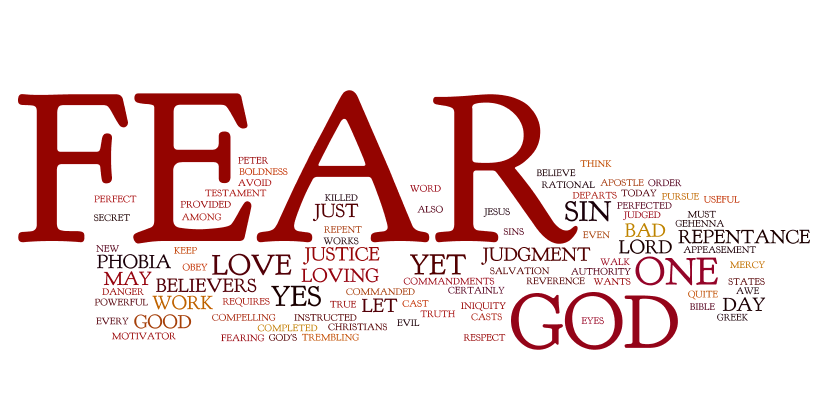
The Lord speaks to us today of one of the most central struggles in our life: fear. Yes, fear is one of our deepest drives and though it has a positive purpose, too often we miss the mark in directing its energy. The positive role of fear is to alert us that something is wrong and to divert us from danger. With our fallen nature, though, we often fear the wrong things while lacking a sober fear of the right things. We major in the minors of life; we get all worked up about passing things but do not have a sober and reverent fear of eternal things. We fear sinful and weak human beings, but not God, who is just, who sees all, and who will assign us our eternal destiny.
The Lord thus teaches us today in order to help us to “get fear right.” He sets forth the proper object of our fear, points to the outcome of succeeding or failing in this matter, and reminds us of our proper role in this world as we master our fear.
I. The Object of Fear–Jesus said to the Twelve: “Fear no one … And do not be afraid of those who kill the body but cannot kill the soul; rather, be afraid of the one who can destroy both soul and body in Gehenna … Are not two sparrows sold for a small coin? Yet not one of them falls to the ground without your Father’s knowledge. Even all the hairs of your head are counted. So do not be afraid; you are worth more than many sparrows.”
Wrong Fear– In speaking to the object of fear, Jesus is asking us to consider what and whom we fear most. We are going to fear someone and something. We are just too tiny and weak to be wholly free of fear. Yes, fear has its place and purpose; the problem is that we often fear the wrong things. We are a bit like Chicken Little, who was afraid of an utterly false threat (that the sky was falling) and in her panic ran right into the wolf, who devoured her.
Jesus is clear: Fear no man. The worst thing a human being can do to you is to kill you physically. Even if that happens, though, if you are faithful, dying is the path to Heaven; it’s a maximum promotion! Maybe people can steal your things or make your brief life here a little less pleasant, but life does not consist in our possessions. As an old gospel hymn says, “Trouble don’t last always.”
In a moment, Jesus will tell us whom we should fear. For now, consider again Jesus’ teaching: Fear no man. Yet the fact is that we do fear human beings. It’s incredible to find out how afraid we are. We’re afraid of everybody and everything! We’re more afraid of men than we are of God. We’re afraid of physical dangers, certainly, but even more so we’re afraid of being rejected by other people; of not being liked by others. We’ll do just about anything to ingratiate ourselves to others and to assuage our fear of being rejected or laughed at. We’ll gossip and lie; we’ll spend a lot of money on clothes, cosmetics, fancy cars, big houses, or the latest iPhone. Desperate to fit in, young people may join gangs, drop out of school, use drugs, fornicate, and/or engage in self-destructive behaviors, all in a desperate quest to be thought “hip” and loved.
Yes, too many of all ages have a mighty fear of rejection and humiliation by other human beings. And because we’re afraid of not being liked, we’ll do almost anything.
Not only does this fear drive us to do many things we shouldn’t, it also keeps us from doing many things we ought to do such as preaching the Gospel and insisting on what is right. Think of the martyrs of old who died professing the faith, and here we are afraid that someone will raise an eyebrow!
Fear is one of the chief habit patterns of sin, and it brings about countless other sins. It has to go.
Thus Jesus says, “Fear no one.” That is, fear no man. Whom do you fear more, men or God? Honestly?
Right Fear – God is the proper object of our fear.
Jesus teaches very provocatively, … rather, be afraid of the one who can destroy both soul and body in Gehenna …
Some think that this text refers to Satan, but it does not. Luke’s version makes this even clearer: But I will show you whom you should fear: Fear the One who, after you have been killed, has power to throw you into hell. Yes, I tell you, fear Him (Luke 12:5).
This cannot be Satan because Satan is not our judge. Although he can tempt us, he has no authority to determine our final destiny. Scripture says that Satan, our accuser, has been cast out (see Rev 12:10). Further, it declares, The Father judges no one, but has consigned all judgment to the Son that the world may revere him (Jn 5:22).
Many are uncomfortable thinking of the Lord in this way. They prefer to think of Him as an affable fellow, a harmless hippie who’s not all that concerned with things like holiness and conversion, and who in the end will just wave everyone through.
This is simply not what Scripture teaches. God is holy, and His holiness exudes a power and glory that we must be purified in order to endure, let alone enjoy. Frankly, Heaven would be a miserable place for anyone who has not been brought up to the temperature of Heaven or been accustomed to the bright light of God’s truth. Heaven is not our personal “designer paradise.” It is the Kingdom of God in all its fullness and with all its values: forgiveness, generosity, love of one’s enemies, chastity, and so forth. There are many who don’t want anything to do with some or any of these values. They are much like the older son in the parable of the prodigal son, the one who stands outside angry and unwilling to the enter the feast given by his father. He finds forgiveness untenable; he loathes the feast because his wayward brother is honored there. Judgment Day is something to have a holy fear about, for it is the day when God will ask this question: “Do you want the Heaven I offer on its terms or not?” On the Day of Judgment, God will assess what our decision has amounted. He will either welcome us into the feast or close the door and consign us to the “other arrangements” we ourselves have made and perversely preferred. Jesus says, As for anyone who hears My words and does not keep them, I do not judge him… The word that I have spoken will judge him on the last day (John 12:47-48).
Balanced Fear – This proper fear is not a cringing one, rooted only in the dread of punishment (though if that’s all you’ve got, go with it). Rather, it is a reverential fear that remembers God’s love for us and His desire to save us. Jesus says, Are not two sparrows sold for a small coin? Yet not one of them falls to the ground without your Father’s knowledge. Even all the hairs of your head are counted. So do not be afraid; you are worth more than many sparrows.
Although this proper fear remembers God’s love and does not give way to the imbalance of purely servile fear, neither does it swing to the other imbalance, which disregards the loving respect we should have for God and His holiness. God is who He is and Heaven is what it is. We simply cannot endure such realities without being purified and prepared for them first. God must have our repentance in order to do the work necessary to enable us for Heaven’s brightness and His fiery glory.
A reverential and balanced fear acknowledges God’s love and mercy, but also His awesome glory. Such a fear takes seriously our need to prepare for judgment and to avail ourselves of God’s graces in the sacraments, the Liturgy, His Word, and prayer.
II. The Outcome of Fear – Jesus adds, There is nothing that is concealed that will not be revealed, nor secret that will not be known … Everyone who acknowledges me before others I will acknowledge before my heavenly Father. But whoever denies me before others, I will deny before my heavenly Father.
Our fear is going to have an outcome for either good or ill. If we have the wrong fear (fearing man more than God), it will lead us to silence and even outright denial of God and His truth before others. Fearing the opinion of the world and human beings more than God makes us silent and too easily conformed to a world opposed to Him. This amounts to a tacit denial (by silence) or to an outright denial wherein we publicly scorn God and/or His revealed truth in order to ingratiate ourselves to this world. The consequence of this denial is Jesus’ affirmation of our denial of God the Day of Judgment. The martyrs and confessors of the faith shine brightly before God, but we cannot endure their brightness because we have hidden out in the dark places and preferred the darkness of error to the light of truth.
If we have the right fear, we want to please God rather than man. We delight in representing Him and His teachings before others, even joyfully enduring the world’s scorn. If we fear God, we fear no one else. If we can kneel before God, we can stand before any man. If we fearlessly, charitably, and joyfully acknowledge God before others, we will be acknowledged before God the Father as someone who truly sought Him and witnessed to Him. A proper and balanced fear brings an outcome of glory and happiness. An improper fear (of man rather than God) brings denial, because we fear and prefer the opinions of men and this world rather than God. On Judgment Day the Lord will acknowledge our preference to His Father.
For a good outcome, make sure you have the right and balanced fear!
III. The Office of Holy Fear –What I say to you in the darkness, speak in the light; what you hear whispered, proclaim on the housetops.
The Lord is summoning us to speak fearlessly to the world on account of a holy fear of Him.
1. But in the face of strong opposition, we were bold in our God to speak the gospel of God to you. … We speak … not in order to please men but God, who examines our hearts. As you know, we never used words of flattery or any pretext for greed. God is our witness! Nor did we seek praise from you or from anyone else (1 Thess 2:2-6).
2. Do you think I am seeking the approval of men, or of God?… I would not be a servant of Christ (Gal 1:10).
3. From henceforth let no man trouble me; for I bear in my body the brand marks of the Lord Jesus (Gal 6:17).
4. But Peter and John replied, “Judge for yourselves whether it is right in God’s sight to listen to you rather than God. For we cannot stop speaking about what we have seen and heard” (Acts 4:19-20).
What about you? Do you speak the word of God to an often-scoffing world? Or do you fear the world more than God, and therefore stay silent, hiding out? If we reverently fear God more than the world, then we will speak out even in the face of opposition. We love the Lord more than we love the world. Therefore, we speak!
Summation– Make sure you fear the right thing, in this case the right One. Here is what Jesus teaches: Do not fear man. Rather, have a holy reverent fear of God. Get fear right. Stop getting so anxious about what mere mortals think of you. Your destiny will hinge on getting fear right. Fear the Lord; acknowledge Him before men and proclaim His world, and you be acknowledged greatly by him in Heaven. If you fear men and the world, just watch how quickly cave in, compromise, and deny the Lord, preferring worldly trinkets and the praise to eternal glories. But if you go that route, that’s all you’ll get. Beware, the Lord will one day have to acknowledge your preference: “Father He denied. He said no to our offer.”
Decide now whom you will fear. Your destiny depends on that decision.