Lots of Lessons in a Brief Commercial

blog-10-14The commercial below both fascinates and troubles me. I am fascinated because of the opulence available on certain long flights. Some of these planes are starting to look like ocean liners!

I am troubled, however, by the picture it paints of the huge disparity between the very rich and “average” people. First class isn’t just a cut above; it’s a different world. The young boy who has wandered into this first-class world hints at this when he says that he is going to begin a journey back to his parents (who are flying “coach”). The folks back in coach probably can’t imagine spending thousands of dollars just to fly in luxury for a few hours. (I do not begrudge the wealthy their ability to do this, so please do not absolutize my concern.)

A second thing that troubles me is the undercurrent of adulterous desire and the behavior of the wife who, despite this, seems quite willing to leave her family in order to move up to a seat in first class.

One redeeming message of the commercial is that the lady in first class (Jennifer Anniston) seems to prefer being with the little boy to the luxury of her original accommodations. This illustrates that the most important things in life aren’t things at all.

Yes, there are a lot of layers in this commercial!

Some of you may wonder how I find the time to watch television and think about all these commercials. Actually, I watch very little TV; I subscribe to a site that sends out the latest commercials and then I watch the ones that seem interesting.

The Problem of Pretending in the Spiritual Life

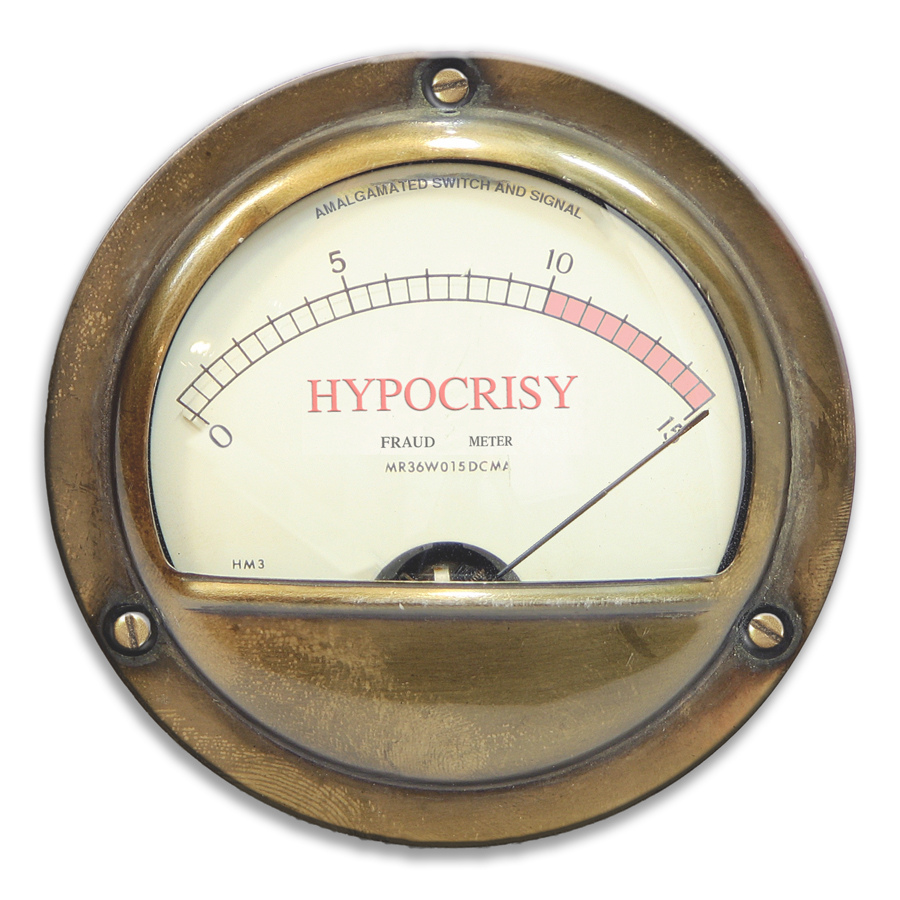
hypocrisyThe Gospel for today’s Mass (Friday of the 28th Week) opens up some important insights on the problem of “pretending” in the Christian life. One of the difficulties in arriving at these insights is the understanding we have today of the word hypocrisy. To some extent, it seems to have lost its subtler distinctions and nuances. To most of us, hypocrisy refers to our deeds not matching our truest beliefs, to saying one thing and doing another. While this is part of hypocrisy, it is not the whole story. I have written more on that here: Hypocrisy is more than we think.

Today’s Gospel speaks to the subtleties of hypocrisy. Here is the full text:

At that time:
So many people were crowding together
that they were trampling one another underfoot.
Jesus began to speak, first to his disciples,
“Beware of the leaven—that is, the hypocrisy—of the Pharisees.

There is nothing concealed that will not be revealed,
nor secret that will not be known.
Therefore whatever you have said in the darkness
will be heard in the light,
and what you have whispered behind closed doors
will be proclaimed on the housetops.
I tell you, my friends,
do not be afraid of those who kill the body
but after that can do no more.
I shall show you whom to fear.
Be afraid of the one who after killing
has the power to cast into Gehenna;
yes, I tell you, be afraid of that one.
Are not five sparrows sold for two small coins?
Yet not one of them has escaped the notice of God.
Even the hairs of your head have all been counted.
Do not be afraid.
You are worth more than many sparrows”
(Luke 12:1-7).

The Greek word that is translated as “hypocrisy” is ὑπόκρισις (hypocrisis). Its nominative form is ὑποκριτής (hypocrites), which most literally means “actor.”

Obviously, an actor is someone who plays a role. An actor who portrays Julius Caesar is not in fact Julius Caesar. In a certain sense, he is “pretending” to be Julius Caesar.

It is certainly fine for an actor to “pretend,” for a time, to be someone he is not. But in the spiritual sense, it is not good to act or pretend. When Jesus warns of hypocrisy, He is warning against pretending to be someone that we are not; or pretending to live in a world, in a time, or under a set of circumstances that is not in fact real.

With all this in mind, consider that the Lord warns us not to engage in hypocrisy. In effect, He is warning us not to pretend, to engage in fantasy, or to live in a make-believe world. This serves as the opening framework of all that is to follow in this Gospel.

And what does follow? Fundamentally, the Lord says that the pretend world denies the reality of judgment. He goes on to warn us that there is nothing that is concealed that will not one day be revealed, nothing that is secret that will not be made known. He warns that what we have said in the darkness is heard in the light and that everything we say or do is known to him (cf. Mk 4:22ff).

He then further warns us not to be worried by those who only have the ability to kill the body. Rather, He tells us that we should have greater fear of the one who after killing, has the power to cast into Gehenna.

Most people today live in outright fantasy. They deny or discount the reality that there will be a day of judgment, a day of reckoning. They simply gloss over the notion that they will have to render an account for every idle word (Mt 12:36), for what they’ve done in secret (Mk 4:22); that they will have to stand before Him who judges the intentions of the heart (Heb 4:12) and that nothing will lay hid from Him (Heb 4:13). In effect, they pretend. Pretending is acting; it is a form of hypocrisy.

When Jesus warned of the hypocrisy of the Pharisees, He was referring to their sense of self-righteousness. They thought that they had nothing to worry about because they were “good people,” unlike others around them. They had “checked off the God box.” They said their prayers, fasted on Wednesdays, and paid their tithes. On the day of judgment, they figured that they would just walk right on into Heaven.

Too many people today have this attitude of self-righteousness. They may invoke God’s grace and mercy, but they are not really willing to consider the fact that they may, by their own sinfulness, disqualify themselves. Perhaps they have been fortunate enough to avoid the shameful sexual sins of our day but have loved the poor and been merciful and forgiving. It is so easy to emphasize certain aspects of holiness while discounting others. This is acting; it is hypocrisy and self-righteousness.

Too many brush aside the notion that they will one day have to render an account to the Lord. “Oh yeah, I know there’s a day of judgment, but God is love so everything will be just fine. Nobody is really going to Hell.” The common attitude today is that Hell is but a remote possibility and only for the worst of the worst; judgment is a mere formality and nothing to be too anxious about. Never mind that this attitude is in direct contradiction to the whole of Scripture! Most today live in outright heresy on this topic. (Sadly, some hold the opposite, extreme attitude: one of despair.)

The Lord says that we should beware of hypocrisy, careful that we’re not living in a pretend world. Regarding Heaven, none but the pure in heart can just walk up there. We should not be so quick to presume that we have the purity of heart to simply walk into Heaven. God is very holy, and Heaven is a place of the souls of just men made perfect (Heb 12:23). Jesus says, you must be perfect just as your heavenly Father is perfect (Mat 5:48). This is reality; it is not “pretend.” But hypocrisy likes to “play act.” It thinks of holiness as a role to be played, a light matter in which a few lines are memorized. And the Lord warns against it.

When the Lord warns against hypocrisy, He is not merely speaking to the severe and pretentious religious leaders of the past; He is speaking to you and me. He is telling us to stop pretending, to stop play acting, and to accept that what He really wants is for us to change our lives. There is a real standard to meet, not just a pretend one. There is a real judgment to prepare for, not just a brief “play” to be performed before the throne of God. God is not playing games with us; He is not interested in the game of “Let’s Pretend.”

The Eight Stages of the Rise and Fall of Civilizations

blog10-12Cultures and civilizations go through cycles. Over time, many civilizations and cultures have risen and then fallen. We who live in painful times like these do well to recall these truths. Cultures and civilizations come and go; only the Church (though often in need of reform) and true biblical culture remain. An old song says, “Only what you do for Christ will last.” Yes, all else passes; the Church is like an ark in the passing waters of this world and in the floodwaters of times like these.

For those of us who love our country and our culture, the pain is real. By God’s grace, many fair flowers have come from Western culture as it grew over the past millennium. Whatever its imperfections (and there were many), great beauty, civilization, and progress emerged at the crossroads of faith and human giftedness. But now it appears that we are at the end of an era. We are in a tailspin we don’t we seem to be able to pull ourselves out of. Greed, aversion to sacrifice, secularism, divorce, promiscuity, and the destruction of the most basic unit of civilization (the family), do not make for a healthy culture. There seems to be no basis for true reform and the deepening darkness suggests that we are moving into the last stages of a disease. This is painful but not unprecedented.

Sociologists and anthropologists have described the stages of the rise and fall of the world’s great civilizations. Scottish philosopher Alexander Tyler of the University of Edinburg noted eight stages that articulate well what history discloses. I first encountered these in in Ted Flynn’s book The Great Transformation. They provide a great deal of perspective to what we are currently experiencing.

Let’s look at each of the eight stages. The names of the stages are from Tyler’s book and are presented in bold red text. My brief reflections follow in plain text.

  1. From bondage to spiritual growth – Great civilizations are formed in the crucible. The Ancient Jews were in bondage for 400 years in Egypt. The Christian faith and the Church came out of 300 years of persecution. Western Christendom emerged from the chaotic conflicts during the decline of the Roman Empire and the movements of often fierce “barbarian” tribes. American culture was formed by the injustices that grew in colonial times. Sufferings and injustices cause—even force—spiritual growth. Suffering brings wisdom and demands a spiritual discipline that seeks justice and solutions.
  2. From spiritual growth to great courage – Having been steeled in the crucible of suffering, courage and the ability to endure great sacrifice come forth. Anointed leaders emerge and people are summoned to courage and sacrifice (including loss of life) in order to create a better, more just world for succeeding generations. People who have little or nothing, also have little or nothing to lose and are often more willing to live for something more important than themselves and their own pleasure. A battle is begun, a battle requiring courage, discipline, and other virtues.
  3. From courage to liberty – As a result of the courageous fight, the foe is vanquished and liberty and greater justice emerges. At this point a civilization comes forth, rooted in its greatest ideals. Many who led the battle are still alive, and the legacy of those who are not is still fresh. Heroism and the virtues that brought about liberty are still esteemed. The ideals that were struggled for during the years in the crucible are still largely agreed upon.
  4. From liberty to abundance – Liberty ushers in greater prosperity, because a civilization is still functioning with the virtues of sacrifice and hard work. But then comes the first danger: abundance. Things that are in too great an abundance tend to weigh us down and take on a life of their own. At the same time, the struggles that engender wisdom and steel the soul to proper discipline and priorities move to the background. Jesus said that man’s life does not consist in his possessions. But just try to tell that to people in a culture that starts to experience abundance. Such a culture is living on the fumes of earlier sacrifices; its people become less and less willing to make such sacrifices. Ideals diminish in importance and abundance weighs down the souls of the citizens. The sacrifices, discipline, and virtues responsible for the thriving of the civilization are increasingly remote from the collective conscience; the enjoyment of their fruits becomes the focus.
  5. From abundance to complacency – To be complacent means to be self-satisfied and increasingly unaware of serious trends that undermine health and the ability to thrive. Everything looks fine, so it must be fine. Yet foundations, resources, infrastructures, and necessary virtues are all crumbling. As virtues, disciplines, and ideals become ever more remote, those who raise alarms are labeled by the complacent as “killjoys” and considered extreme, harsh, or judgmental.
  6. From complacency to apathy – The word apathy comes from the Greek and refers to a lack of interest in, or passion for, the things that once animated and inspired. Due to the complacency of the previous stage, the growing lack of attention to disturbing trends advances to outright dismissal. Many seldom think or care about the sacrifices of previous generations and lose a sense that they must work for and contribute to the common good. “Civilization” suffers the serious blow of being replaced by personalization and privatization in growing degrees. Working and sacrificing for others becomes more remote. Growing numbers becoming increasingly willing to live on the carcass of previous sacrifices. They park on someone else’s dime, but will not fill the parking meter themselves. Hard work and self-discipline continue to erode.
  7. From apathy to dependence – Increasing numbers of people lack the virtues and zeal necessary to work and contribute. The suffering and the sacrifices that built the culture are now a distant memory. As discipline and work increasingly seem “too hard,” dependence grows. The collective culture now tips in the direction of dependence. Suffering of any sort seems intolerable. But virtue is not seen as the solution. Having lived on the sacrifices of others for years, the civilization now insists that “others” must solve their woes. This ushers in growing demands for governmental, collective solutions. This in turns deepens dependence, as solutions move from personal virtue and local, family-based sacrifices to centralized ones.
  8. From dependence back to bondage – As dependence increases, so does centralized power. Dependent people tend to become increasingly dysfunctional and desperate. Seeking a savior, they look to strong central leadership. But centralized power corrupts, and tends to usher in increasing intrusion by centralized power. Injustice and intrusion multiplies. But those in bondage know of no other solutions. Family and personal virtue (essential ingredients for any civilization) are now effectively replaced by an increasingly dark and despotic centralized control, hungry for more and more power. In this way, the civilization is gradually ended, because people in bondage no longer have the virtues necessary to fight.

Another possibility is that a more powerful nation or group is able to enter, by invasion or replacement, and destroy the final vestiges of a decadent civilization and replace it with their own culture.

Either way, it’s back to crucible, until suffering and conflict bring about enough of the wisdom, virtue, and courage necessary to begin a new civilization that will rise from the ashes.

Thus are the stages of civilizations. Sic transit gloria mundi. The Church has witnessed a lot of this in just the brief two millennia of her time. In addition to civilizations, nations have come and gone quite frequently over the years. Few nations have lasted longer than 200 years. Civilizations are harder to define with exact years, but at the beginning of the New Covenant, Rome was already in decline. In the Church’s future would be other large nations and empires in the West: the “Holy” Roman Empire, various colonial powers, the Spanish, the Portuguese, and the French.  It was once said that “The sun never sets on the British Empire.” Now it does. As the West began a long decline, Napoleon made his move. Later, Hitler strove to build a German empire. Then came the USSR. And prior to all this, in the Old Testament period, there had been the Kingdom of David, to be succeeded by Babylon, Medo-Persia, Greece, and Rome.

The only true ark of safety is the Church, who received her promise of indefectibility from the Lord (Matt 16:18). But the Church, too, is always in need of reform and will have much to suffer. Yet she alone will survive this changing world, because she is the Bride of Christ and also His Body.

These are hard days, but perspective can help. It is hard to deny that we are living at the end of an era. It is painful because something we love is dying. But from death comes forth new life. Only the Lord knows the next stage and long this interregnum will be. Look to Him. Go ahead and vote, but put not your trust in princes (Ps 146:3). God will preserve His people, as He did in the Old Covenant. He will preserve those of us who are now joined to Him in the New Covenant. Find your place in the ark, ever ancient and yet new.

This video of psalm 121 is sung in an ancient language and manner, but its message is still current:

I lift mine eyes to the Mountains from whence cometh my help (Psalm 121).

What Does St. Paul Mean by “The Flesh”?

blog101116In the first reading at Mass today (Wednesday of the 28th Week), St. Paul enumerates the sins that proceed from the flesh. There are many references to “the flesh” in the New Testament, especially in the letters of St. Paul. The phrase is commonly misunderstood as being synonymous with the physical body or merely with sexual sin.

Although there are many places in Scripture in which the word “flesh” alone refers to the physical body, when it is preceded by the definite article (“the”), it usually refers to something more. (Here are some of the few examples of “the flesh” (ἡ σὰρξ (he sarx) in Greek) referring only to the physical body (e.g., John 6:53; Phil 3:3-4; 1 John 4:2).)

What then is meant by “the flesh”? Perhaps most plainly, it refers to the part of us that is alienated from God. It is the rebellious, unruly, obstinate part of our inner self that is always operative. It is the part of us that doesn’t want to be told what to do. It is stubborn, refuses correction, and doesn’t want to have a thing to do with God. It bristles at limits and rules. It recoils at anything that might cause us to be diminished or to be something less than the center of the universe. The flesh hates to be under authority or to have to yield to anything other than its own desires. The flesh often desires something simply because it is forbidden.

The recent Protestant translations of the Bible (such as the New International Version (NIV)) often call the flesh our “sin nature,” which is all right unless the term “nature” is understood in the stricter philosophical sense. (Sin is not something that we should posit as coming from our nature, but rather as emerging more from our fallen condition, from the fact that our nature has been wounded.)

In Catholic Tradition, “the flesh” is where concupiscence sets up shop. Concupiscence refers to the strong inclination to sin that is within us as a result of the wound of Original Sin. If you do not think that your flesh is strong, just try to pray for five minutes and see how quickly your mind tries to make you think of anything but God. Just try to fast or to be less selfish and watch how quickly your flesh goes to war.

The flesh is in direct conflict with the spirit. “The spirit” here refers not to the Holy Spirit, but to the human spirit. The (human) spirit is the part of us that is open to God, desires Him, and is drawn to Him. It is the part of us that is attracted by goodness, beauty, and truth; the part that yearns for completion in God; the part that longs to see His face. Without the spirit, we would be totally turned in on ourselves and consumed by the flesh. Thankfully, our spirit, assisted by the Holy Spirit, draws us to desire what is best, upright, and helpful.

Let’s examine a few texts that reference “the flesh” and in doing so learn more of its ways. This will help us to be on our guard, to rebuke it (by God’s grace), and to learn not to feed it. My comments are presented in red following each passage.

1. The flesh does not grasp spiritual teachings. [Jesus said] The Spirit gives life; the flesh counts for nothing. The words I have spoken to you are spirit and they are life (John 6:63).

Having heard Jesus’ teaching on the Eucharist, most of his listeners ridicule it and will no longer take Him seriously. Jesus indicates that their hostility to the teaching on the Eucharist is of the flesh. The flesh demands that everything be obvious to it on its own terms. The flesh demands to see physical proof for everything; it demands that it be able to “see” using its own power. And if it cannot see based on its own limited view, it simply rejects spiritual truth out of hand. In effect, the flesh refuses to believe at all since what it really demands is something that will “force” it to accept something. Absolute proof takes things out of the realm of faith and trust. Faith is no longer necessary when something is absolutely proven and plainly visible to the eyes.

2. The flesh is not willing to depend on anyone or anything outside its own power or control. For it is we who are the circumcision, we who worship by the Spirit of God, who glory in Christ Jesus, and who put no confidence in the flesh—though I myself have reasons for such confidence. If anyone else thinks he has reasons to put confidence in the flesh, I have more: circumcised on the eighth day, of the people of Israel, of the tribe of Benjamin, a Hebrew of Hebrews; in regard to the law, a Pharisee; as for zeal, persecuting the church; as for legalistic righteousness, faultless. … I [now] consider this rubbish, that I may gain Christ and be found in him, not having a righteousness of my own that comes from the law, but that which is through faith in Christ (Phil 3:3-9, selected).

The flesh wants to be in control rather than to have to trust in God. Hence it sets up its own observance, under its own control. And when it has met its own demands it declares itself to be righteous. Because the flesh hates being told what to do, it takes God’s Law and makes it “manageable” based on its own terms. For example, if I’m supposed to love, I’ll limit it to my family or countrymen; I’m “allowed” to hate my enemy. Jesus says that we must love our enemy. The flesh recoils at this, because unless the Law is manageable and within its own power to accomplish, the Law cannot be controlled. The flesh trusts only in its own power. The Pharisees were “self-righteous.” That is to say, they believed in a righteousness that they themselves brought about through the power of their own flesh. But the Law and flesh cannot save; only Jesus Christ can save. The flesh refuses this and wants to control the outcome based on its own power and terms.

3. The flesh hates to be told what to do. For when we were controlled by the flesh, the sinful passions aroused by the law were at work in our bodies, so that we bore fruit for death (Rom 7:5).

The disobedience and rebelliousness of the flesh roots us in sinful behavior and a prideful attitude. The prideful attitude of the flesh is even more dangerous than the sins that flow from the flesh, because pride precludes instruction in holiness and the possible repentance that leads to life. The flesh does not like to be told what to do, so it rejects the testimony of the Church, the Scriptures, and the conscience. Notice that according to this passage, the very existence of God’s Law arouses the passions of the flesh. The fact that something is forbidden makes the flesh want it all the more! This strong inclination to sin is in the flesh and comes from pride and from indignation at being told what to do. The flesh refuses God’s Law and sets up its own rules. Yes, the flesh will not be told what to do.

4. Flesh is as flesh does. Those who live according to the flesh have their minds set on what the flesh desires; but those who live in accordance with the spirit have their minds set on what the spirit desires. The concern of the flesh is death, but the concern of the spirit is life and peace (Rom 8:5-6).

The flesh is intent on the things of this world, on gratifying its own passions and desires. On account of the flesh, we are concerned primarily with ourselves and we seek to be at the center. The flesh is turned primarily inward. St. Augustine describes the human person in the flesh as incurvatus in se (turned in upon himself). But the spirit is the part of us that looks outward toward God and opens us to the truth and holiness that God offers. Ultimately, the flesh is focused on death, for it is concerned with what is passing away: the body and the world. The human spirit is focused on life, for it focuses on God, who is life and light.

5. The flesh is intrinsically hostile to God. The mind of the flesh is hostile to God. It does not submit to God’s law, nor can it do so. Those controlled by the flesh cannot please God (Rom 8:7-8).

The flesh is hostile to God because it is hostile to anyone more important than itself. Further, the flesh does not like being told what to do. Hence it despises authority or anyone who tries to tell it what to do. It cannot please God because it does not want to do so.

6. The flesh abuses freedom. You, my brothers, were called to be free. But do not use your freedom to indulge the flesh; rather, serve one another in love (Gal 5:13).

The flesh turns God-given freedom into licentiousness, demanding freedom without limits. Because the flesh does not like being told what to do, it demands to be able to do whatever it wants. In effect, the flesh says, “I will do what I want to do and I will decide if it is right or wrong.” This is licentiousness and an abuse of freedom. It results in indulgence and, paradoxically, leads to slavery to the senses and the passions.

7. The flesh demands to be fed. So I say, live by the Spirit, and you will not gratify the desires of the flesh. For the flesh desires what is contrary to the Spirit, and the Spirit what is contrary to the sinful nature. They are in conflict with each other, so that you do not do what you want (Gal 5:16-17).

Within the human person is this deep conflict between the flesh and the spirit. We must not be mistaken; the flesh is in us and it is strong. It has declared war on our spirit and on the Holy Spirit of God. When the spirit tries to obey, the flesh resists and tries to sabotage its best aspirations. We must be sober about this conflict and understand that this is why we often do not do what we know is right. The flesh has to die and the spirit become more alive. What you feed, grows. If we feed the flesh it will grow. If we feed the spirit it will grow. What are you feeding? Are you sober about the power of the flesh? Do you feed your spirit well through God’s Word, Holy Communion, prayer, and the healing power of Confession? What are you feeding?

8. The flesh fuels sin. The acts of the flesh are obvious: sexual immorality, impurity and debauchery; idolatry and witchcraft; hatred, discord, jealousy, fits of rage, selfish ambition, dissensions, factions and envy; drunkenness, orgies, and the like. I warn you, as I did before, that those who live like this will not inherit the kingdom of God (Gal 5:19-210).

This catalogue of sins that flow from the flesh is not exhaustive, but is representative of the offensive and obnoxious behavior that arise from it. Be sober about the flesh; it produces ugly children.

9. The flesh hates authority. This [condemnation by God] is especially true of those who follow the corrupt desire of the flesh and despise authority (2 Peter 2:10).

It’s clear enough: the flesh hates authority. And did I mention that the flesh does not want to be told what to do?

So here is a portrait of “the flesh.” It is ugly. You might think that I’ve exaggerated, that the flesh is not really that bad. I have not. Just read the news to see what the flesh is up to. You may, by God’s grace, have seen a diminishment in the power of the flesh in your life. That is ultimately what God can and will do for us. He will put the flesh to death in us and bring alive our spirit by the power of His Holy Spirit.

The first step is to appreciate what the flesh is and understand its moves. The second is to bring this understanding to God through repentance. Step three is (by God’s grace) to stop feeding the flesh and to start feeding the spirit with prayer, Scripture, Church teaching, Holy Communion, and Confession. And the last step is to repeat steps one through three for the rest of our lives! God will cause the flesh to die and the spirit to live, by His grace at work in us through Jesus Christ.

A Battle Plan from St. Paul

blog-10-10The epistle in the Extraordinary Form this past Sunday (21st Sunday after Pentecost) was particularly appropriate for our times. The Holy Spirit, writing through St. Paul, gives us important reminders of how to live and fight as true soldiers of Christ in a world increasingly gripped by satanic darkness. Let’s examine the whole passage and then reflect on its teachings:

Be strengthened in the Lord and in the might of His power. Put on the armor of God, that you may be able to stand against the wiles of the devil. For our wrestling is not against flesh and blood, but against the Principalities and the Powers, against the world rulers of this darkness, against the spiritual forces of wickedness on high. Therefore, take up the armor of God, that you may be able to resist in the evil day, and stand in all things perfect. Stand, therefore, having girded your loins with truth, and having put on the breastplate of justice, and having your feet shod with the readiness of the Gospel of peace, in all things taking up the shield of faith, with which you may be able to quench all the fiery darts of the most wicked one. And take unto you the helmet of salvation and the sword of the spirit, that is, the word of God (Ephesians 6:10-17).

I. The Required Resources The text says that this is no ordinary human conflict and so mere human solutions and tactics will not solve it. We are enduring an orchestrated attack by Satan, the father of lies and a murderer from the beginning. He has devoted all his resources and cunning to dividing and conquering us, to sowing darkness, moral confusion, and deception. He wants to destroy every vestige of godliness and order within us and to make us lower than the beasts.

Sadly, too many people are more than willing to connive and cooperate with him. But given the satanic origins of the meltdown of our culture, no mere human solution will win the day.

Thus the text bids us to [b]e strengthened in the Lord and in the might of His power. Put on the armor of God, that you may be able to stand against the wiles of the devil. … Therefore, take up the armor of God, that you may be able to resist in the evil day, and stand in all things perfect.

Yes, the battle is the Lord’s; it must be. Without Him, we are doomed. With Him, we have the strength to endure and to save others from Satan’s deceptions and cunning.

II. The Real Rival In war it is important to know your true enemy. It sometimes happens in the “fog of war” that we attack the wrong targets and lash out indiscriminately. The Holy Spirit, through St. Paul, cautions and reminds us that our true enemy is not our fellow human beings (flesh and blood), but rather Satanic powers and fallen angels in high and influential places: For our contention is not against flesh and blood, but against the Principalities and the Powers, against the world rulers of this darkness, against the spiritual forces of wickedness on high.

There is a satanic cause to this world’s woes. Although Satan has enlisted conniving human beings in his service, he and his minions of darkness are the true source of evil. In attacking one other, we only serve his ends.

When some of our brethren take up the cause of the devil, remember that they have been deceived. Our job is not to hate them, but rather to convert them and call them back. Our goal is to understand the true source of the problem and to direct our retaliation there, but only by God’s power.

III. The Rich Resources The Holy Spirit, through St. Paul, shows us the true arms on which we rely. Notice that the verb forms used in most of the instructions in this epistle are aorist participles in the middle voice. In other words, the qualities described, having been attained in the past by cooperation with grace, are active and ongoing. The individuals are portrayed as having girded their loins with truth, having put on the breastplate of righteousness, etc. So these are ongoing qualities, attained in the past, but operative now in the properly equipped warrior of God’s army.

Stand, therefore, having girded your loins with truth, – We are to stand, not crouch in hiding.

Girding the loins is the ancient equivalent of rolling up your sleeves. In other words, we are to be ready for work! In the ancient world, the loins of the garment referred to whatever was below the waist. Because long garments were easily tangled in the legs, one would pull up one’s garment and tie one’s belt (girdle) tight to secure them, thus freeing the legs and helping to avoid tripping. This permitted unrestricted work. Thus we are to roll up our sleeves and be ready for work.

But our work must be conformed to God’s truth, not merely to our worldly and political opinions. Too many Catholics permit politics and/or the culture and the world to govern their views. This will never win the day. The only winning strategy is to actively work to promote God’s truth. Yes, God’s truth will win, not my view or opinion. We must be rooted in the truth of God’s whole counsel, His full teaching. Partial or selective truth will not prevail; neither will lies or modern views. Only having girded our loins with God’s full truth can we hope to win the day.

and having put on the breastplate of justice,We moderns usually think of justice in terms of laws, but the ancient Greek and scriptural view is more relational. The Greek word used here is δικαιοσύνης (dikaiosynes), which means to be in a right relationship with God. Thus, those who would be soldiers in the army of the Lord must have on the breastplate of a right relationship with Him. They must be free of mortal sin through frequent, regular confession.

The breastplate protected the heart and torso, which were vulnerable to attack. If we are not protected by the breastplate of a right relationship with God, we are vulnerable to the retaliations of the evil one, who will not appreciate our work to free souls from his grip.

Frequent confession and daily repentance help to keep us in a right relationship with God: a relationship untainted by serious sin, pride, anger, hatred, and so forth. Without this right relationship, we are an easy target and we risk mortal wounding from the battle against the powers of darkness.

and having your feet shod with the preparation of the Gospel of peace, – What is peace? It is the presence within the relationship of everything that should be there. It is more than just the fact that we are not angry with one another or that do not seek to kill one another. It is the capacity that Gospel gives us to love one another, even those who are opposed to us. Instead of seeing enemies, we see brothers and sisters who have been deceived. Our goal is not to destroy them, but to win them back, to correct them and call them to saving repentance.

in all things taking up the shield of faith, with which you may be able to quench all the fiery darts of the most wicked one. – In addition to a breastplate, we need a shield. The errors and lies of the evil one are the fiery darts from which we must be shielded.

How can we protect ourselves from the erroneous views of the world (which are inspired by demonic forces) except with a shield of faith, through which we know what God teaches and can distinguish it from the errors, illusions, and deceptions of the world? Steeped in the truth of God, we are able to see modern errors for the deceptions and darkness they are. Thus, we can without doubt say, “That is not the mind of God!”

But too many today are poorly catechized and, having exposed themselves repeatedly to the errors and foolishness of this world, are lost in its deceptions and empty promises.

Only the shield of faith can protect us and keep us grounded enough to wage the battle to which we are called. Faith will help us to quench the fiery darts of Satan’s error.

And take unto you the helmet of salvation We must protect our minds against the widely promulgated errors of our day. The evil one targets our minds, wanting to sow error and rebellion there. (I have written more on this problem here: The Battleground of the Mind.)

There is just too much confusion and error today for us to assume that our minds are going to be anything but polluted and possessed by the all the wrong priorities if we do not regularly cleanse ourselves with a dose of God’s Word. His Word is like a helmet that protects our mind!

and the sword of the spirit, that is, the word of God. The Word of God is also our sword. Scripture says elsewhere, For the word of God is alive and active. Sharper than any double-edged sword, it penetrates even to dividing soul and spirit, joints and marrow; it judges the thoughts and attitudes of the heart. Nothing in all creation is hidden from God’s sight. Everything is uncovered and laid bare before the eyes of him to whom we must give account (Heb 4:12-13).

Thus the Word of God must be at the heart of our rebuff of error and evil, not human views, opinions, or political theories. When tempted by the devil in the desert, Jesus responded with Scripture. We must always have recourse to Scripture and Sacred Tradition, which emerge from the same font.

We are not going to win a battle with the world by using worldly arguments. The world is better at using its own views than we will ever be. We are soldiers in the army of the Lord and our chief weapon must be the Gospel.

While recourse to Natural Law has its place (as a kind of preparation for the Gospel), it is going to take the Word of God to bring about true conversion. St. Paul instructed Timothy, Preach the word; be prepared in season and out of season; correct, rebuke and encourage–with great patience and careful instruction (2 Tim 4:2). Yes, the Word of God is both shield and sword.

Take up your sword and shield! Likewise, be protected by the breastplate of a right relationship with God and the helmet that protects your mind from error. Peacefully and confidently refute errors with the Gospel, which bestows that very peace and confidence.

In times like these, be a solider in the army of the Lord.

What Is the Sign of Jonah and Has It Come Upon Us?

Newborn babyIn today’s Gospel the Lord says, This generation is an evil generation; it seeks a sign, but no sign will be given it, except the sign of Jonah (Lk 11:30). So what is the sign of Jonah and does it apply today?

The Gospels (Matthew and Luke) present two signs of Jonah, one of which particularly concerns us here.

  1. First Sign: In the Gospel of Matthew, Jesus invokes Jonah in a twofold way: For as Jonah was three days and three nights in the belly of the whale, so the Son of Man will be three days and three nights in the heart of the earth (Matt 12:40). In this image, Jonah’s descent into the belly of the whale is a sign of the Lord’s descent to Sheol. For the sake of brevity, I would like to set aside this first sign and go on to discuss the second sign of Jonah. (Matthew’s Gospel sets this second sign forth in essentially the same way as the Lucan version we heard today at Mass.)
  2. Second Sign: In the Lucan version, read at today’s Mass, the mention of the whale is omitted and only this second sign is declared: This generation is an evil generation; it seeks a sign, but no sign will be given it, except the sign of Jonah. Just as Jonah became a sign to the Ninevites, so will the Son of Man be to this generation. At the judgment the queen of the south will rise with the men of this generation and she will condemn them, because she came from the ends of the earth to hear the wisdom of Solomon, and there is something greater than Solomon here. At the judgment the men of Nineveh will arise with this generation and condemn it, because at the preaching of Jonah they repented, and there is something greater than Jonah here (Luke 11:29-32).

But the question remains, what exactly is this (second) sign of Jonah? On one level, the text seems to spell it out rather clearly. Jonah had gone to the Ninevites with this message: Forty days more and Nineveh shall be destroyed (Jonah 3:3). In response, the Ninevites (led by their King) repented, fasted, and prayed. Seeing their actions, God relented and did not destroy them. So on one level the sign of Jonah is the message “Repent or die.” Just as the Ninevites heard Jonah’s warning, put faith in it, and were spared, so the people of Jesus’ time should put faith in His warning to repent and believe the Good News. If they do not, they will meet with great disaster.

What would cause this disaster? The description of the sign of Jonah taps into the historical context of Jonah’s ministry, but applied to the people of Jesus’ time it has a polemical tone. Let’s consider why.

  1. When Jonah was told to go to Nineveh, he resisted. He must have thought that it was a no-win situation for him: either they would rebuff his prophecy (and likely kill him) or they would heed his message and grow stronger. (Nineveh was the capital of Assyria, the mortal enemy of Israel, and Jonah had no interest in seeing them strengthened.)
  2. When Jonah makes his announcement of imminent destruction, Assyria does In their strength they would become a rod in God’s hand to punish Israel. Isaiah the Prophet had well described Israel’s crimes and said that punishment would surely come upon her from Assyria. God would use Assyria to humble and punish His people, Israel. Here is a key passage in which Assyria is described in this way: … Assyria, the rod of my anger, in whose hand is the club of my wrath! I send him against a godless nation, I dispatch him against a people who anger me, to seize loot and snatch plunder, and to trample them down like mud in the streets (Isaiah 10:5-6).

Here, then, is a deeper meaning of the sign of Jonah: if Israel will not repent, then God will take their power and strength and give it to a foreign land that knows Him not. These foreigners will shame and humiliate Israel, inflicting God’s punishment on them.

This is humiliating to Israel on two levels. First, a pagan country would repent while God’s own people would not. Second, they are conquered by a foreign and unbelieving people. The destruction by Assyria was a devastating blow to the Northern Kingdom of Israel and resulted in the loss of the ten tribes living there. They became the “Ten Lost Tribes of Israel.” Only Judah and the Levites were left in the South as a remnant.

Let’s apply this understanding of the sign of Jonah, first to Jesus’ time and then to our own.

  1. In Jesus’ time the sign of Jonah meant that if Israel would not repent and accept the Gospel, God would take it from them and give it to the Gentiles. Jesus says elsewhere to his fellow Jews, Therefore I tell you that the kingdom of God will be taken away from you and given to a people who will produce its fruit (Matt 21:43). Just as ancient Israel’s refusal to repent led to its destruction by the Assyrians, so Israel’s refusal to repent in Jesus’ time would mean destruction by the Romans (in 70 A.D.). This was prophesied by Jesus in the Mount Olivet discourse (Matthew 24:1 – 25:46, Mark 13:1-37, and Luke 21:5-36). According to Josephus, more than a million Jews were lost in this horrible war.
  2. In our time, I suggest that the sign of Jonah may be active. I know that this may be controversial, but it seems to me that many Christians and Catholics in the decadent West have stopped loving life. Birth rates have dropped dramatically and are well below replacement level. We are on our way to aborting and contracepting ourselves right out of existence. God has loosed judgment on us in the form of the sign of Jonah. He seems to be saying this to us: “Fine, if you do not love life and are not zealous for the faith I have given you, then disaster is upon you. Others still do appreciate larger families and are zealous for their faith. And even if, like the Assyrians of old, they are not my people as you are, I will use them to humble and punish you. They will grow and increase while you decrease. Perhaps when you are punished by a people who do not respect your religious liberty, you who remain will repent and begin to love life.”

In the European Union today, the birth rate is about 1.6 children per woman. Globally, Muslim women average 3.1 children. Do the math and realize that Europe as we have known it is coming to an end. In the United States the birth rate is higher, but still only about 1.9 children per woman. In general, the Catholic world is in decline, both in terms of our birth rates and our zeal for the faith. We are surely being diminished by our culture of death and decadent sloth.

Is it the sign of Jonah? You decide.

How to Give God Perfect Thanks: A Homily for the 28th Sunday of the Year

blog-10816One of the great human inadequacies is our inability to give proper and adequate thanks to God. Perhaps the biggest problem is that we don’t even realize the vast majority of what He does for us; it is hidden from our eyes. 

A further problem is that in our fallen condition we seem to be wired to magnify our problems and minimize or discount the enormous blessings of each moment. God sustains every fiber of our being and every atom of creation. God’s blessings are countless and yet we get angry if our iPhone malfunctions or if a few of His myriad blessings are withdrawn.

An old gospel song says it well:

I’ve got so much to thank God for; So many wonderful blessings and so many open doors. A brand new mercy along with each new day. That’s why I praise You and for this I give You praise. For waking me up this morning, For starting me on my way, For letting me see the sunshine, of a brand new day. That’s why I praise You and for this I give You praise. So many times You´ve met my needs, So many times You rescued me. That’s why I praise You.

For every mountain You brought me over, For every trial you’ve seen me through, For every blessing, For this I give You praise.

Fundamental Question – The question at the heart of today’s Gospel is best expressed in the Book of Psalms: What return shall I make to the Lord for all the good he has done for me? The same psalm goes on to answer the question in this way: The cup of salvation I will take up and call on the name of the Lord (Psalm 116:12).

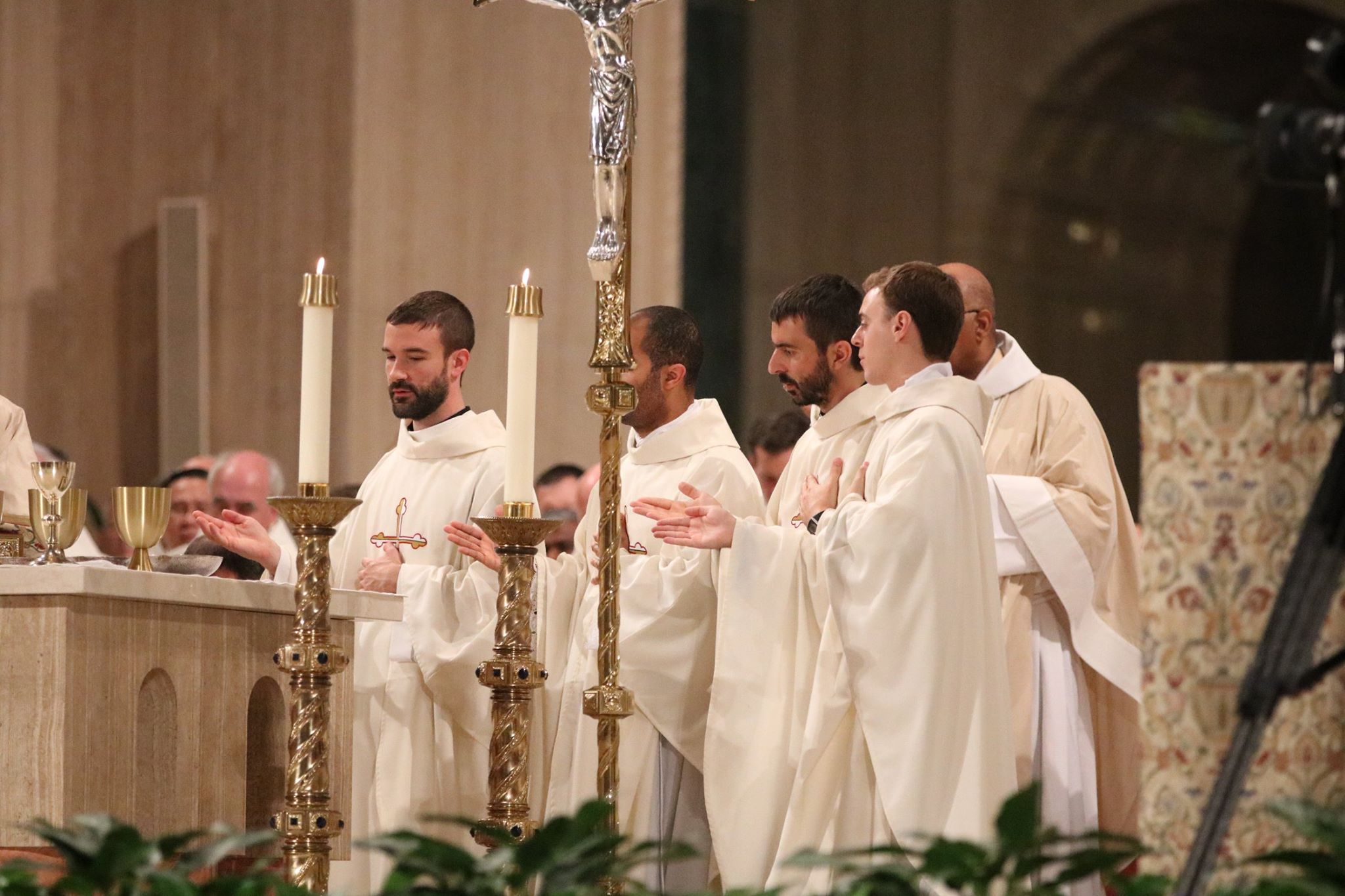
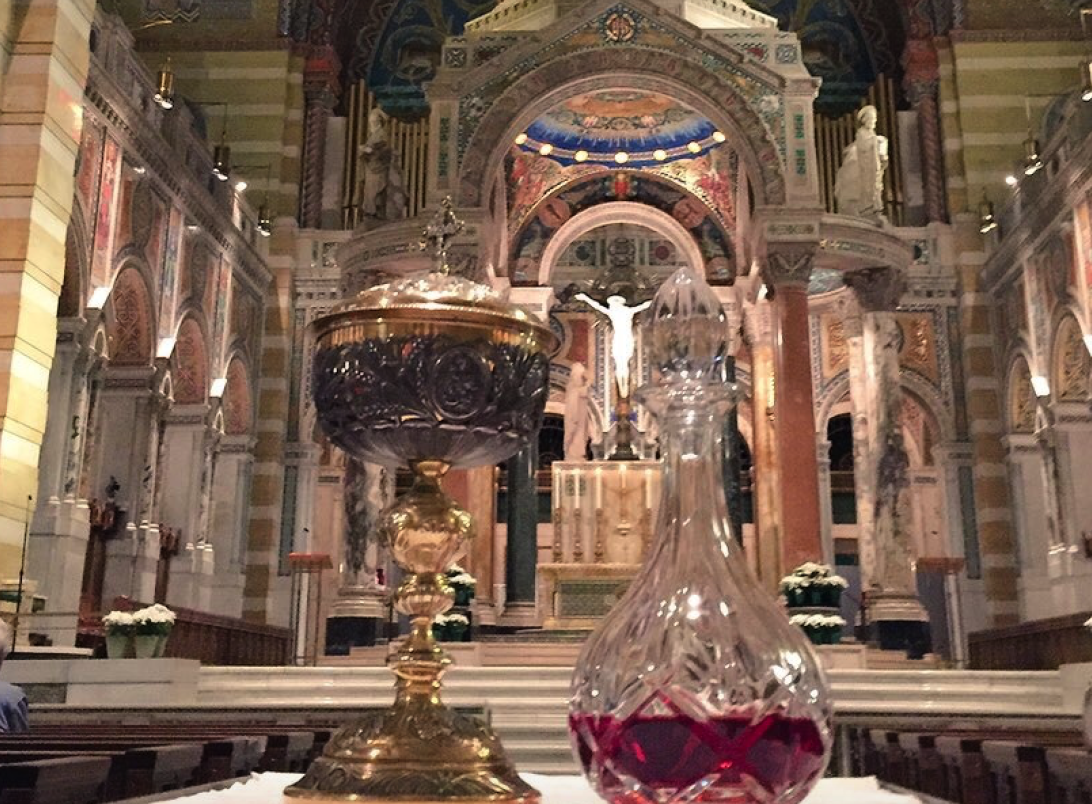
The Mass is signified – Indeed, how can I possibly thank the Lord for all the good He has done for me? Notice that the psalm points to the Eucharist in saying, The cup of salvation I will take up …” As you know, the word “Eucharist” is a Greek word meaning “thanksgiving.” We cannot thank God our Father adequately, but Jesus can. In every Mass, we join our meager thanksgiving to His perfect thanksgiving. Through the priest, Jesus takes up the cup of salvation and shows it to us at every Mass. This is the perfect and superabundant thanks to the Father that only Jesus can offer. In every Mass, Jesus joins us to His perfect sacrifice of thanks. That is how we give thanks in a way commensurate with the manifold blessings we have received. 

Hidden Mass! – The Gospel for today makes the point that the Mass is the perfect offering of thanks to the Father in a remarkable and almost hidden way. But for Catholics, it is right there for us to see if we have eyes to see it. Today’s Gospel contains all the essential elements of Holy Mass. It is about giving thanks and reminds us once again that it is the Mass that is the perfect thanksgiving, the perfect “Eucharist.”

Let’s look and see how it is a Mass:

  1. Gathering – Ten lepers (symbolizing us) have gathered and Jesus comes near as He passes on His way. We do this in every Mass: we gather and the Lord draws near. In the person of the priest, who is the sacrament, the sign of His presence, Jesus walks the aisle of our church just as He walked those ancient roads.
  1. Kyrie – The lepers cry out for mercy, just as we do at every Mass. Lord, have mercy! Jesus, Master, have pity on us!
  1. Liturgy of the Word – Jesus quotes Scripture and then applies it to their lives, just as He does for us at every Mass. (In saying, “Go show yourselves to the priests,” Jesus is referencing Leviticus 13, which gives detailed instructions on how the priests of old were to diagnose leprosy or its having been cured.) Yes, this is what we do at every Mass: we listen to the Lord Jesus, through the priest or deacon, proclaiming God’s Word and then applying it to our lives.
  1. Liturgy of the Eucharist – The Gospel relates that one of them fell at the feet of Jesus and thanked him. This is what we do during the Eucharistic prayer: we kneel and thank Jesus, and along with Him, give thanks to the Father. As we have noted, the word “Eucharist” comes from the Greek and means “thanksgiving.” Here is the perfect thanks rendered to the Father. Those who claim that they can stay home and give adequate thanks to God should be rebuked for being prideful. Only Jesus can give perfect thanks to the Father, and we can only give adequate thanks by following Jesus’ command to “Do this in memory of me.” We have to be at Mass.
  1. Ite, missa est – Finally, Jesus sends the thankful leper on his way, saying, Stand up and go; your faith has saved you. We, too, are sent forth by Jesus at the end of every Mass, when He speaks through the priest or deacon: “The Mass is ended, go in peace.”

So, there it is. Within this Gospel, which very clearly instructs us to give thanks to God, is the very structure of the Mass. If you want to give proper thanks to God, the right place to do it is at Mass. Only at Mass is perfect and proper thanks given to God.

It was all prefigured in the psalm long ago: What return shall I make to the Lord for all the good he has done for me? The cup of salvation I will take up and call on the name of the Lord (Psalm 116:12). Yes, it is the very cup of salvation, the chalice containing Christ’s blood, that is held up at every Mass. It is the perfect sacrifice of thanks. It is the prescribed sacrifice of praise. It is the proper sacrifice of praise.

Counting the Cost, As Seen in a Commercial

blog-10-7In the arena of the world, the flesh, and the devil, pleasure comes first and the bill comes later. But they don’t want you to think about that bill right now. If the thought occurs to us, “Gee, this indulgence or sin might have a cost,” the response is “Don’t worry; charge it!” But of course the bill does come due one day. The damage caused by sinful excess cannot be staved off forever.

The commercial below shows that indulgence has a cost. In this case, there is an offer to watch unlimited TV on your mobile device—without using up any of your data! Sure … until the “limited time offer” expires, by which time you’ll have acquired an expensive new habit that you think you can’t live without.

The problem isn’t merely money, as the commercial would suggest. The problem is a life wasted on mere diversions, a life spent staring at a screen instead of with people you love, a life centered on trivialities instead of on things that really matter.

Remember, fellow Christians, pleasure is the Devil’s bait; he wants to reel you in. Be careful. Count the cost. Ponder the consequences of: “Free!” “Charge it!” and “Limited time offer!”