How Can a Demon, Driven Out, Return with Seven More? A Meditation on a Puzzling Parable

houseThe Gospel for Friday of this week (27th Week of the Year) features the puzzling parable about the cast-out demon who returns with seven others. What is most puzzling, is that finding the house (soul) “swept and clean” brings further trouble. One would think that a house that is swept and clean would be a good thing!

For reference, here is the parable:

When the unclean spirit has gone out of a man, he roams through waterless places in search of rest; and finding none, he says, “I will return to my house which I left.” And when he has come to it, he finds the place swept and clean. Then he goes and takes seven other spirits more evil than himself, and they enter in and dwell there; and the last state of that man becomes worse that the first (Lk 11:24-25).

How can we understand this parable? As is often the case, recourse to both the subtleties of the Greek text and the context can help us.

1. The Greek Text

A puzzling aspect of examining the Greek text is that what some Greek texts describe with three adjectives, almost every English translation renders with only two. Why is this? Because some of the Greek manuscripts lack the third word, which translates as “empty.”

While I can read the Greek text of the New Testament with relative ease, I am not an expert in ancient Greek or in the relative value of differing Greek manuscripts. The translation as either “swept and clean” or “swept and ordered” is almost universal among English renderings of this text. (See HERE for an example.)

I happen to believe that the inclusion of the word “empty” is essential, because otherwise something very important is left out. Let’s look at the description of the “house” (soul) to which the demon returns:

καὶ ἐλθὸν εὑρίσκει σχολάζοντα, σεσαρωμένον καὶ κεκοσμημένον.
Kai elthon heuriskei scholazonta, sesarōmenon kai kekosmēmenon.
And having come, it finds (it) empty, swept, and put in order (ornate).

The fact that the house (soul) is empty is the chief problem. Empty things need filling. Sadly, if good things do not fill empty spaces, then evil things do. This seems to be at the heart of the Lord’s warning.

A second issue is the translation of the word “kekosmēmenon.” Does “ordered,” or “put in order” really capture what the word is trying to convey? Most of us hear the word “order” and think of either systematic or moral order.

However, the Greek lexicon defines the root of kekosmēmenon, kosméō, as “to beautify, having the right arrangement (sequence) by ordering; to adorn, make compellingly attractivevery appealing (invitingawesomely gorgeous).” Kosméō is also the root of the English word “cosmetics,” which are things that adorn or “order” the face.

Thus, the “order” described in this passage is more an order related to beauty. Hence the translation “ornate” may better capture what is meant by this word than either “clean” or “orderly.” So as we read this parable, we should consider that the description of the house as “swept and clean” may lack the subtlety of the Greek words. And while we should be wary of etymological fallacy, the original root meaning (kosméō = cosmetic = ornate, rather than merely “ordered”) ought not be wholly forgotten!

With these in mind, let’s consider the richer possibility that the Lord describes the “house” (an image for the soul) in three ways:

  1. Empty

This is the key description that some ancient manuscripts omit. And yet it is the main problem. An empty house is a vulnerable house. An empty house, devoid of human presence, can no longer repel threats or repair damage that make it vulnerable. But more significantly from the standpoint of grace, an empty house, devoid of the presence of God, is a vacuum ready to be filled with demons and with every form of human sin, pride, and confusion.

Empty buildings are vulnerable, open to attack by termites, extreme weather, mold, and rodents. Just as an uncultivated field goes to weed, so an unattended house slides into decline and decay. So, too, goes the empty human soul, a soul devoid of the presence of God, of gratitude to Him, and of openness to His satisfying presence.

Yes, here is the spiritual lesson: let the Lord and the good things of the Kingdom of God fill every void, every empty space! Emptiness is too easily filled with evil things.

Consider a man who gives up alcohol for Lent. He does well by ending a lawful pleasure and making greater room for God. But what if God, or something of God, does not fill the space? Usually something of the devil, or something of the flesh, will fill it. Perhaps he will think, “I am approved because I, by my own power, have given this up.” But sadly, pride fills the empty space rather than God. The man’s new state is worse than before he gave up the lawful pleasure!

  1. Swept

It is good if a person has, by God’s grace, been able to sweep sin from his life. But praise be to the Lord, not to the man or woman! Otherwise this is an open door for pride. Perhaps the sinner who succeeds in a Lenten observance will say, “Look what I have done! I am approved and am better than others who are less committed!” In this way grace is snatched by Satan. The house (soul), swept and in good order, must also be filled with humble gratitude to God. Thus the Lord warns of a house that is “swept,” but empty of humility and gratitude.

  1. Ornate

While some translate this as “ordered,” it would seem that, given the context, ornate would be a better rendering. Hence we are warned to beware of vanity and also of esteeming beauty more than charity. The warning is for those who, though they appreciate beauty, become smug and disdainful of all others who do not share their aesthetic preferences.

Thus a connoisseur of fine wine may scoff at people who enjoy wine sold in a box (“cow”) or who like White Zinfandel. And God forbid that they prefer beer! In this way, an appreciation for the finer things (like wine) becomes pride and leads to the last state of the man being worse than the first.

Beauty and the appreciation of it has its place, but if it cancels charity, the last state of the man is worse than the first.

One may appreciate the beauty of the Latin Mass, but if love for the aesthetic causes one to scorn a priest who forgets to bow at the Gloria Patri or who wears gothic vestments instead of the preferred Roman fiddlebacks, then the love of beauty (a good thing) destroys charity (a better thing).

2. The Context

It is edifying to consider the contextual setting in which the Lord places this parable: an answer to those who pridefully rebuked His casting out of a demon (attributing it to Beelzebub). Just prior to the parable of the empty house and the seven demons is this event and subsequent rebuke:

Jesus was casting out a devil, and the same was dumb; and when He had cast out the devil, the dumb man spoke. And the crowds marveled. But some of them said, “By Beelzebub, the prince of devils, He casts out devils.” And others, to test Him, demanded from Him a sign from heaven. But He, seeing their thoughts, said to them, “Every kingdom divided against itself is brought to desolation, and house will fall upon house. If, then, Satan also is divided against himself, how shall his kingdom stand? Because you say that I cast out devils by Beelzebub” (Lk 11:14-16).

These religiously observant people (a good thing) had allowed their lives, all swept and clean but empty, to be filled with doubt, scorn, and pride.

That they followed the Law was a beautiful thing. Their lives were swept clean and ornate, but empty. And the emptiness was filled with pride and cynicism.

All of us who are religiously observant should pay particular attention to this. During Lent, many undertake certain practices and purifications. Beware that these mortifications do not create a space that, though clean, is empty and vulnerable to being filled with pride, greed, lust, anger, gluttony, envy, and sloth … the seven ugly cousins of the sin we were trying to drive out in the first place! Failure to fill the gap with God opens us up to all seven deadly sins.

Watch out! The devil can use even our piety to ensnare us in his seven-fold bondage. Do you engage in some active purifications? If so, you do well. But be sure that the space opened, all swept and ordered, is filled with God, with humility, and with gratitude. Otherwise it will too easily be filled with seven ugly demons and sins: pride, greed, lust, anger, gluttony, envy, and sloth.

Is this a parable decoded or muddled? You decide. The comment section is open, swept and clean!

What Conscience Dreads and Prayer Dares Not Ask – A Consideration of a Powerful but Puzzling Prayer

prayerThe Collect (Opening Prayer) for this coming Sunday (27th Week of the Year), though directed to God, teaches us that our prayer is not always about things with which we are comfortable. Prayer sometimes leads us to look into areas of our life where we struggle with sin or we struggle to desire to be free of sin. Here is the prayer:

Almighty ever-living God,
who in the abundance of your kindness
surpass the merits and the desires of those who entreat you,
pour out your mercy upon us
to pardon what conscience dreads
and to give what prayer does not dare to ask.
Through our Lord Jesus Christ, your Son,
who lives and reigns with you in the unity of the Holy Spirit,
one God, forever and ever.

After asking for God’s mercy and acknowledging that God is offering more than our minds can grasp, we make the following two requests:

  1. [May you] pardon what conscience dreads.
  2. [May you] give what prayer does not dare to ask.

Let’s look at each.

[May you] pardon what conscience dreads.

The Catechism states the following regarding our conscience:

Deep within his conscience man discovers a law which he has not laid upon himself but which he must obey. Its voice, ever calling him to love and to do what is good and to avoid evil, sounds in his heart at the right moment. For man has in his heart a law inscribed by God. His conscience is man’s most secret core and his sanctuary. There he is alone with God whose voice echoes in his depths (# 1776).

Our conscience is not merely what we think or what it pleases us to think; it is the voice of God echoing in our depths. Whatever rationalizations we may wish to assemble in an attempt to suppress the conscience, there is still, deep within, that voice of God that is calling us. Deep down, we know what we are doing and we know when it is wrong. No matter how many “teachers” we assemble to tell us what our ears want to hear, that voice is still there.

I suspect that this is why the world and its devotees are so angry at the Catholic Church for reminding us what God says. If our teachings and corrections were merely regarded as outdated opinions, the world would not hate us, would not be at war with us. No matter how emphatically people deny that their consciences trouble them, deep down inside they know better. The louder these denials, the less we should be convinced. Why are they forever insisting that the Church change her teachings? If we’re just a pathetic and outdated institution, why do they care what we teach? Again, because deep down they know that we are right; they know what is right and do not like to be reminded of it.

Our words, the words of Christ, touch something; they “prick” the conscience and remind people of things they know inside but would rather forget. The voice of God echoes within, convicting them and inciting a godly dread of sin and its ultimate consequences.

And this is true for believers as well, who, though not intensely hostile, would still prefer to avoid the voice of their conscience and do not enjoy the holy dread of sin it incites. It is true that not all sorrow for sin is from God. St. Paul distinguishes godly sorrow (which draws one to God for healing) from worldly sorrow (which deflates the sinner and has him despair of being able to change or of God’s healing love). The proper dread that conscience incites is always a call of love from God, who bids us to repent and return to Him.

Still, we avoid what conscience dreads. Who likes to experience fear or negative feelings?

But prayer must often ask us to look honestly at the less pleasing and consoling things in our life. This prayer bids us to listen to the dread of conscience (dread of the sin and of its due punishments) and to seek pardon.

[May you] give what prayer does not dare to ask.

Some argue that the translation of this clause is not very exact. The Latin is quod oratio non praesumit. Some prefer a softer translation in which the phrase asks God to give us the things that we are not worthy of requesting, things we do not presume to ask for because it would be too bold for us to do so. Such a translation does not offend the Latin text, but does seem to miss the overall context of the prayer, which is asking God to help us to overcome personal resistance.

We have already seen how and why many of us resist what conscience dreads and would rather be done with the voice of God echoing in their depths. But consider that we resist asking for many things out of fear.

The classic example of this is St. Augustine’s stance when he asked God to make him chaste … but not yet! Though he could see the value of chastity, Augustine enjoyed his promiscuity and was fearful in asking the Lord to remove something that he liked.

And thus there are many things we dare not ask for because we fear actually getting them. The attitude is “Ask not, lest ye be answered”! Many are not ready to forgive, to be chaste, or to be more generous; they fear the changes that such things would bring.

Perhaps here one can at least pray, “Lord, at least give me the desire to be chaste if I don’t even have that.” “Give me the desire to share with and love the poor, which I don’t currently have.”

If we begin to desire what God is offering, we are more chaste, generous, and forgiving because we want to be. And thus the fear of what prayer does not dare to ask abates. Then we are ready to ask God for what He really wants to give us.

The prayer is asking us to look at our resistance and fear and to pray out of that very experience rather than seeking to suppress or deny it.

Consider well, then, the beautiful, though difficult and daring invitation of this prayer. Though directed to God, it also bids us to look within and to admit our fears and resistance.

What St. Paul’s Example Can Teach Us About Authority

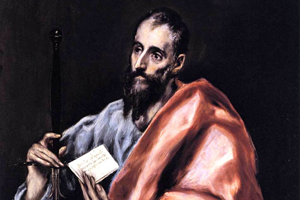
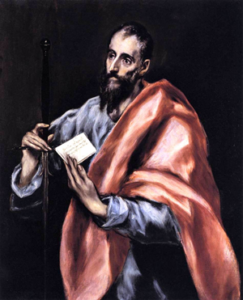
blog10-04In daily Mass we have been reading from second chapter of the Letter to the Galatians. In it, St. Paul recounts his personal history and describes his authority. the reviewing the faith journey of St. Paul, who describes his personal history and also his authority in the second chapter of the Letter to the Galatians. St. Paul’s story is interesting for three reasons.

  1. It can help to correct notions that some have that St. Paul’s ascended to the office of apostle (bishop) overly quickly, and affirm that he was not a “lone ranger apostle.” St. Paul was a man who was formed in the community of the Church for some length of time, and did not go on mission until he was sent.
  2. It spells out Paul’s relationship to authority within the Church.
  3. It shows an important aspect of being under authority and the prevailing need for fraternal correction within hierarchical structures.

Let’s take a look at each of these matters in turn.

1. On Paul’s conversion, formation, and ascent to the office of apostle (bishop). Many have oversimplified notions of Paul’s conversion and subsequent missionary activity. Many who have not carefully studied the texts of Acts, Galatians, and other references, assume that Paul went right to work as a missionary following his conversion. But this was not the case.

Near the time of his conversion, Paul was described as “a young man” (neanias). Sometime after the death of Stephen, St. Paul had his conversion, encountering the risen Christ on the road to Damascus. Immediately following that encounter, he was blinded for three days and eventually healed by a Christian named Ananias, who also baptized him (Acts 9:9-19).

At that point, Paul went into the Desert of Arabia (Gal 1:17). Why he went and for how long is not known. It is likely that he went there to reflect and possibly to be further formed in the Christian faith to which he had come so suddenly and unexpectedly. Was he there for several years as some scholars propose or just a brief time as others do? It is not possible to say with certainty, but it would seem that some amount of time would be necessary to pray, reflect, and experience formation in the Christian way, possibly with other Christians. A period of at least a year and perhaps as many as three years would seem reasonable. We can only speculate.

Paul then returned to Damascus, joining the Christian community there for a period of almost three years (Gal 1:18). While in Damascus, Paul took to debating in the synagogues. He was so effective in demonstrating that Jesus was the hoped-for Messiah, that some of the Jews there conspired to kill him.

St. Paul then fled Damascus and went to Jerusalem (Acts 9:20-25). He states that he went there to confer with Cephas (Peter) (Gal 1:18). Paul seems to imply that he thought it was time to confer with Peter because he had begun to teach and was gaining followers. Later, Paul would describe the purpose of another visit to Peter and the other leaders: to present the Gospel that I preach to the Gentiles … so that I might not be running, or have run in vain (Gal 2:2). While there on this first visit, Paul stayed for 15 days, also meeting James.

After this consultation, he went home to Tarsus for a period of about three years. What he did during this time is unknown.

Barnabas then arrived and asked Paul to come to Antioch to help him to evangelize there (Acts 11:25-26). He stayed there for about a year.

Paul made another brief visit to Jerusalem to deliver a collection for the poor.

Upon his return to Antioch, Paul (Saul) was ordained as a bishop. The leaders of the Church at Antioch were praying and received instruction from the Holy Spirit to Set apart for me Barnabas and Saul for the work to which I have called them (Acts 13:3). Thus, the leaders of the Church in Antioch laid hands on Barnabas and Saul and send them forth on their mission. This is Pauls’ ordination and the source of his status as apostle (bishop).

Notice, however, that this sending forth happens years after Paul’s conversion. Depending on how long we assume he spent in the desert, we are talking about 7-10 years during which Paul lived in community with other members of the Church and conferred with Peter. He was not a self-appointed missionary and his conversion required completion before the Church sent him forth. Paul only undertook this going forth after being sent.

2. On Paul’s submission to authority We can see, therefore, that Paul was not a lone ranger. He did submit what he taught, first to Peter and later to other apostles and leaders (Acts 11 and 15). He states that to preach something other than what the Church proposes would be to run “in vain” (Gal 2:2).

Here was a man who was formed by the community of the Church and who submitted his teachings to scrutiny by lawful authority.

Here was man who went forth on his missions only after he was ordained and sent.

He appointed other leaders. As they went through the towns and villages on their missionary journeys, Paul and Barnabas also established authority in each church community they founded by appointing presbyters in each town (Acts 14:23).

Upon completion of their first missionary journey, they reported back to the leaders at Antioch who had sent them (Acts 14:27) and later to the apostles in Jerusalem (Acts 15). Hence, we have an accountability structure in the early Church and a line of authority. Paul was no independent operator. He was not a self-appointed or self-ordained leader. He both respected authority and established it in the churches he instituted. He also made it clear to the Galatians and others that he had authority and that he expected them to respect it.

3. On true respect for authority. It is clear that Paul respected the authority of Peter; he conferred with him early on and later set forth the Gospel that Peter had preached. However, there is also this description of Paul offering fraternal correction to Peter:

When Peter came to Antioch, I opposed him to his face, because he was clearly in the wrong. Before certain men came from James, he used to eat with the Gentiles. But when they arrived, he began to draw back and separate himself from the Gentiles because he was afraid of those who belonged to the circumcision group. The other Jews joined him in his hypocrisy, so that by their hypocrisy even Barnabas was led astray. When I saw that they were not acting in line with the truth of the gospel, I said to Peter in front of them all, “You are a Jew, yet you live like a Gentile and not like a Jew. How is it, then, that you force Gentiles to follow Jewish customs? (Gal 2:11-14)

There is something refreshing about this understanding of authority. Having authority does not mean that one is above reproof. Too many people shy away from speaking honestly to those in authority. There is an old saying about bishops: “When a man becomes a bishop he will never again have a bad meal and he will never again hear the truth.” Too many of us flatter those in positions of authority. In so doing, we tend to isolate them. They do not have all the information and feedback they need in order to make good decisions. And then when they make questionable decisions, we criticize them. Of course we seldom do this to their faces, instead speaking ill of them behind their backs while remaining largely silent or flattering to their faces. Thus the cycle continues and everyone suffers.

But here Paul stands, face to face (κατὰ πρόσωπον αὐτῷ ἀντέστην) with Peter, and accuses him of a moral fault. Peter had taught rightly of the equality of the Gentiles, but drew back from keeping company with them. As Catholics, we teach of the infallibility of the Pope, but we do not teach that he is impeccable (sinless). Even those who teach rightly (as Peter did) sometimes struggle to fully live the truth they preach.

Accountability in the Church demands that we learn to speak the truth to one another in love, even if the one to whom we must speak has authority. People are often hesitant to speak frankly to their pastors. Bishops are very often isolated in this way; even their priests often refrain from discussion issues frankly. In my archdiocese, I know that Archbishop Wuerl is very serious about consultation and he enjoys a vigorous airing of issues with the priest council and other consultative bodies.

Clearly, correction and/or frank discussion should be done charitably, but it should be done. Paul is a little bolder here than I would be, but he also lived in a different culture than I do. As we can see from the Gospels and other writings, Jesus and the apostles really “mixed it up” with others. The ancient Jewish setting was famous for frank and vigorous discussion of issues, debate that often included a lot of hyperbole. Our own culture prefers a gentler approach. Perhaps the modern rule is best stated this way: “Clarity with charity.”

Clarity – We show far greater respect for authority figures by speaking clearly and directly than through false flattery, inappropriate silence, or sinfully speaking scornfully behind their backs.

Charity – The need for clarity does not exclude an accompanying need for charity and proper respect for office and age. Sadly, I have found that those who wish to correct priests and bishops today often go to the other extreme: using bold, disrespectful, and even insulting language, name calling, and impugning their motives. Not only is this unnecessary, it is ineffective, especially in our culture today.

St. Paul demonstrates a sort of refreshing honesty with Peter: acknowledging his authority while respecting him enough to speak to him directly and clearly, to his face and not behind his back.

This video is a brief summary of St. Paul’s life. Most scholars don’t agree with the concluding remark (that Paul made it out of Roman prison and then went to Spain), but there are two traditions in this regard.

St. Francis’ Feast Day and the Things We Can Learn from Cats and Dogs

blog103Here at Holy Comforter-St Cyprian Parish in Washington, D.C., we celebrate the Feast of St. Francis of Assisi with the blessing of the animals. Although most folks bring dogs to be blessed, there are usually some who bring cats and a few other animals like ferrets. Once, someone even brought a snake!

Over the years, I have shared with the dog owners a list of “Things we can learn from dogs.” When I was growing up, we always had a dog, so although I did not personally compose the list below, I can vouch for its accuracy.

But over my years of city living I have grown accustomed to having cats (they are great mousers in old rectories). So I set my thoughts toward composing a similar list of what I have learned from cats. They are such independent and self-assured animals! They really let you know who’s boss, but mitigate their arrogance somewhat with clownish play and affectionate “head-butts.”

God speaks to us in all of creation, including our pets, to whom we are often so close. What is God saying? Many things!

So here is my list of what I have heard God say through the cats I have adopted and loved over the years: Tupac, Katy Bell, Jenny June, Gracie Girl, Rita Hayworth, Ellen Bayne, Jerry McGuire, Benedict (Benny), Daniel, and Jewel. (That’s Jewel’s picture at the upper right.) Some of them have lived in the alley, a few in the house, but they have all taught me things. Here are a few pearls of wisdom they have conveyed:

  1. If you can’t get your way, lie across the keyboard until you do. (Be persistent.)
  2. Keep them guessing with meows and long looks to keep their attention. (Mystery attracts.)
  3. When you’re hungry, meow loudly so they feed you just to shut you up. (Get your needs met.)
  4. Always find a good patch of sun to lie in. (Simple pleasures have their place.)
  5. Life is hard and then you nap. (Be well-rested.)
  6. Climb your way to the top; that’s why the curtains are there. (Be resourceful and creative.)
  7. We are Siamese if you please. We are Siamese if you don’t please. (Be yourself.)
  8. Purr often and use head-butts judiciously. (Express gratitude.)
  9. Sleep on their clothes and personal items so as to leave your scent. (Forget-me-nots have their place.)
  10. Use your litter box. (Be clean and polite.)
  11. Be a mouser. (Earn your keep.)
  12. Clown around and do silly stuff. (Be humble.)
  13. Run around wildly for no apparent reason; chase toys and laser pointers. (Exercise often.)
  14. Rest in hidden places. (Solitude has its place.)

The following list of things we can learn from dogs has been making the rounds on the Internet for years, but it really is rather instructive. Dogs do have a lot to teach us, and I thank God for the dogs to whom I have been close over the years: Prince, Missy, Molly, Taco, Salsa, Chili, Kaila, Lucy, Clancy, and many others. And again, although others compiled this second list, I can affirm through much experience how true it is!

Fifteen things we can learn from dogs:

  1. Never pass up the opportunity to go for a joy ride.
  2. Allow the experience of fresh air and the wind in your face to be pure ecstasy.
  3. When loved ones come home, always run to greet them.
  4. Let others know when they’ve invaded your territory.
  5. Take naps and stretch before rising.
  6. Run, romp, and play daily.
  7. Eat with gusto and enthusiasm.
  8. Be loyal.
  9. If what you want lies buried, dig until you find it.
  10. When someone is having a bad day, be silent. Sit close by and nuzzle them gently.
  11. Thrive on attention and let people touch you.
  12. Avoid biting when a simple growl will do.
  13. When you’re happy, dance around and wag your entire body.
  14. No matter how often you’re scolded, don’t buy into the guilt thing and pout. Instead, run right back and make friends.
  15. Delight in the simple joys of a long walk.

Happy Feast of St. Francis!

All creatures of our God and king
Lift up your voice and with us sing,
Alleluia! Alleluia!

Never Give Up: St. Augustine’s Stirring Call to Pastors

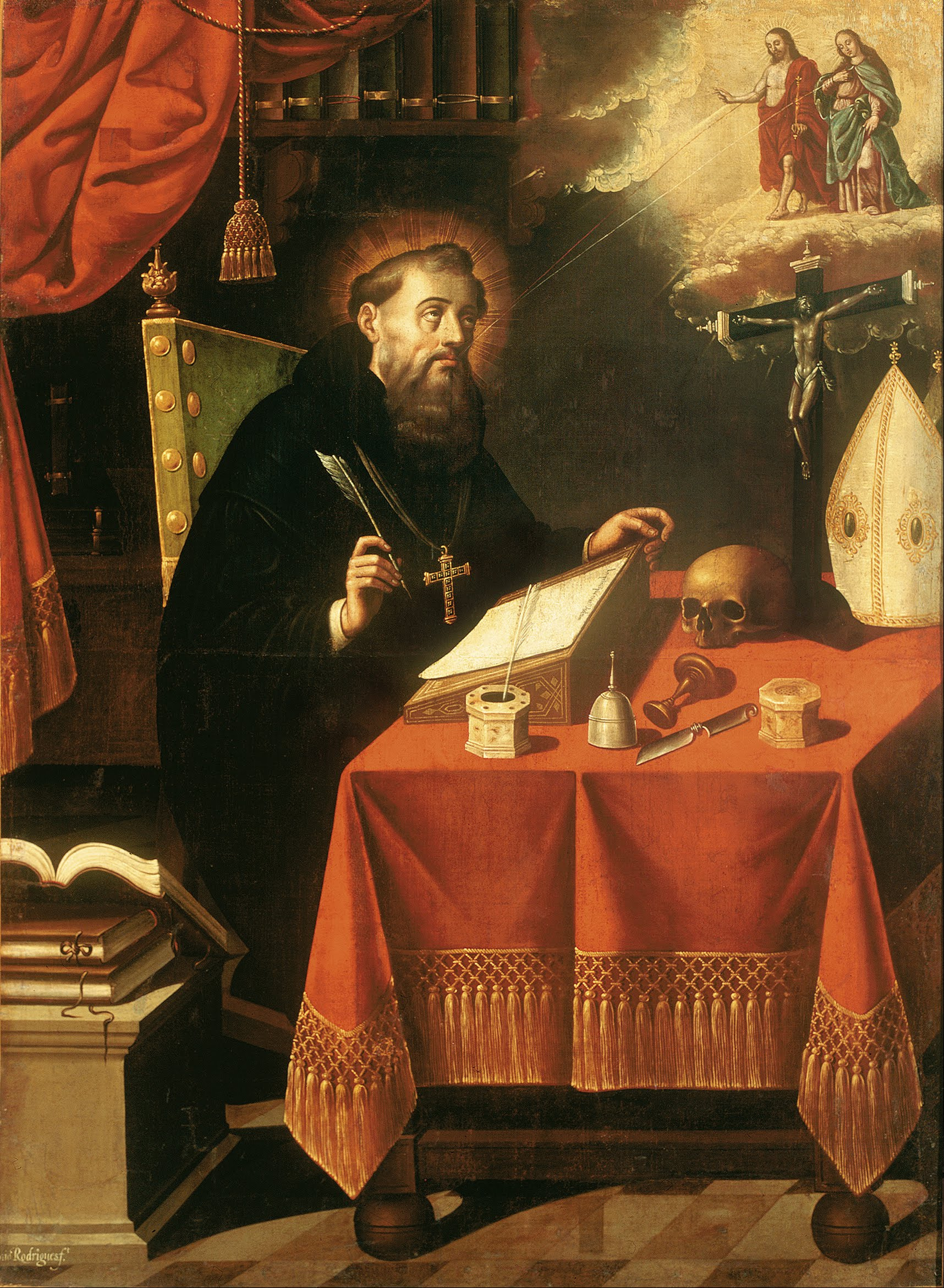
augustineToday I would like to present excerpts from a stirring sermon that St. Augustine delivered to the priests and people of Hippo. In times like these we must all be reminded of the need to preach the Word of God even if the recipients of that word revile us, labeling our very proclamation of love “hate speech.” This is not new; St. Augustine calls us to be resolute and to preach the Word of God in season and out of season. This encouraging message is particularly appropriate for clergy and for all might grow discouraged. Augustine’s words are shown in bold print, while my commentary is in plain text.

[The Lord says:] The straying sheep you have not recalled; the lost sheep you have not sought. In one way or another, we go on living between the hands of robbers and the teeth of raging wolves …. The sheep moreover are insolent. … And in light of these present dangers we ask your prayers [From a sermon on pastors by St. Augustine, Bishop (Sermon 46, 14-15: CCL 41, 541-542)].

Whatever the specifics of St. Augustine’s era, the difficulty of clergy today is to preside over a flock that on the one hand is pursued by the raging wolf of hostile and scoffing secularism, and on the other is robbed of strength by dissension from within. While a hostile world is to be expected, internal dissension is not and is thus even more painful.

In contentious times such as ours, the poison of the world infects the flock and some of God’s own people begin to take up the voice and demeanor of the wolf. In certain times and places, a priest who strives to disclose the errors of the world will be resisted and scorned, referred to as intolerant or hateful. Even some of his own parishioners will resist him and spread talk among the flock that he is not a good priest for the times or for his parish. He will be dismissed by some as out-of-touch or be discounted as “too political.” Some may even walk out as he speaks about controversial issues that are referred to as political but are in fact moral: abortion, euthanasia, same-sex “marriage,” and so forth. Others may write letters to the bishop criticizing him. And while the scoffing of the world is expected, the insolence of the flock is even more discouraging.

Thus St. Augustine says here, “We ask your prayers.” Some priests can fall prey to hostility in sinful ways. Some may give way to anger, which can infect evangelical joy. They will engage in mere argumentation and fall prey to indiscriminate sermonizing. They go from being the Church militant to being the Church belligerent.

More common, and usually more deadly, is when a priest reacts by withdrawing from the battlefield altogether and no longer preaching on any topic considered controversial. He does not seek to correct the straying sheep because it might make them angry, and he is not willing to bear the emotional burden of this resistance or to brave the stormy waters of controversy in order to call to them.

Silent pulpits are all too common today. A priest who is silent from the pulpit may tell himself that he is protecting his people’s feelings by not upsetting anyone. In reality, though, he more comes to resemble the false shepherds denounced by Jesus, the ones who do not really care for their sheep but rather run when the wolf approaches.

The effect on the flock (and the world) is devastating, because Catholics, who are called to be light in the darkness, have come to resemble the darkness. Catholics are indistinguishable from the general populace in terms of our views on the most critical moral issues of our times. Even Catholics who have not caved in to all aspects of the cultural revolution are often ill-prepared to make a defense for the hope and truth that is in them.

Augustine calls some of the sheep “insolent.” The Latin root of the word lends it a meaning of being unaccustomed to something. Thus one who is insolent scoffs at what he does not understand. The straying sheep are often insolent as a result of poor catechesis.

Ignorance of the faith in the pews, along with pressure from a culture that loudly and effectively proclaims its views, present an enormous challenge to pastors. Without persistence and fortitude, many of our clergy can become resigned to mediocrity and inaction.

Thus the urgent request of St. Augustine on behalf of all clergy: “We ask your prayers.”

Augustine then goes on to set forth a model of a shepherd’s heart for his sheep (especially the straying ones) that all clergy should emulate.

The shepherd seeks out the straying sheep, but because they have wandered away and are lost they say that they are not ours. “Why do you want us? Why do you seek us?” they ask, as if their straying and being lost were not the very reason for our wanting them and seeking them out. “If I am straying,” he says, “if I am lost, why do you want me?” You are straying, that is why I wish to recall you. You have been lost, I wish to find you. “But I wish to stray,” he says, “I wish to be lost.”

Yes, with the help of others a good priest seeks out the lost, the confused, and the broken. Many will say that they are not ours or that we should leave them alone. Others will say, “If you don’t approve of what I do and consider me lost and a sinner, why do you want me?” But it is precisely because they are lost that we seek them.

We do not “disapprove” of sinful behavior so that we can sinners off, but so that we can summon them, restore them to the flock from which they have strayed. Why would one search for what is not lost? It is what is lost that is sought. Our disapproval of sin (regardless of how others choose to interpret it) is no different than a doctor’s disapproval of toxic behavior that can lead to cancer; he will caution us to avoid such behavior and to come to him for healing if the cancer has already set in.

Sadly, many today base their fundamental identity in sinful behaviors and interpret our searching for them as an offense, rather than as an act of loving concern.

St. Augustine captures their attitude well: “But I wish to stray, I wish to be lost.” He then he sets an answer that summons us to perseverance:

So you wish to stray and be lost? How much better that I do not also wish this. Certainly, I dare say, I am unwelcome. But I listen to the Apostle who says, “Preach the word; insist upon it, welcome and unwelcome.” … I dare to say, “You wish to stray, you wish to be lost; but I do not want this.” For the one whom I fear does not wish this. And should I wish it, consider his words of reproach: “The straying sheep you have not recalled; the lost sheep you have not sought.” Shall I fear you rather than him? Remember, we must all present ourselves before the judgment seat of Christ.

This is a powerful reminder to every priest and every Christian. Do not lose your zeal for souls. Do not give up. Preach till the day you die, whether your words are welcomed or not.

And even should you lose your zeal, never forget that the Lord has not lost His. We will all report to Him one day to render an account of our lives. Priests, above all, must be stirred to zeal. And if our own love for God and for souls should flag, at least let a holy fear of the day of judgment move us!

Love is the better motive, but failing that, may we be moved by the fear of the Lord and of the day we shall be called to account for our ministry. Further, we must not fear the anger of men more than the indignation of God should we fail Him in the goal for which He ordained us.

Steeled and motivated by this, Augustine concludes with a stirring summons to resolve:

I shall recall the straying; I shall seek the lost. Whether they wish it or not, I shall do it. And should the brambles of the forests tear at me when I seek them, I shall force myself through all straits; I shall put down all hedges. So far as the God whom I fear grants me the strength, I shall search everywhere. I shall recall the straying; I shall seek after those on the verge of being lost!

Amen. Stir in us, O Lord, a zeal for souls. Give us your own love and strength. May we desire souls with your very desire for them!

Five Fundamentals for a Firm Faith – A Homily for the 27th Sunday of the Year

blog-10-01The readings for today’s Mass richly describe some essential qualities of faith. There are five fundamentals that can be seen:

1. Wanting The apostles said to the Lord, “Increase our faith” (Luke 17:5-6). There’s an old saying, “What you want, you get.” Many doubt this, thinking that they have wanted many things that they did not get. But it is likely that they just didn’t want it enough. When we really want something (provided it is not an impossibility) we usually get it. That’s because we work at it and have a passion for it.

Many people who say that they don’t have time to pray or to go to Mass still find time to golf, watch TV, and eat. They find the time because they want to do these things. They don’t find time to pray or to go to Mass because they do not want to do these things enough.

Hence, the apostles ask the Lord to increase their faith. In effect, they ask for a deeper desire to know the Lord. Too often we miss a step in our prayer. We might ask the Lord to help us to pray when we really should be asking Him to give us the desire to pray. For when we want to pray, we will pray. When we want to be holy, we will naturally strive for holy practices. It is about what we desire, what we want. Ask the Lord to help you want Him and His kingdom. Ask the Lord for a new heart that has proper wants and desires. Ask the Lord for a new mind that has proper priorities and that prefers to think on what is good, true, and beautiful. What you want, you get.

2. Waiting – Today’s first reading speaks of our need to wait for the Lord’s action: How long, O LORD? I cry for help but you do not listen! I cry out to you, “Violence!” but you do not intervene. Why do you let me see ruin; why must I look at misery? Destruction and violence are before me; there is strife, and clamorous discord. … Then the LORD answered me and said, Write down the vision clearly upon the tablets, so that one can read it readily. For the vision still has its time, presses on to fulfillment, and will not disappoint; if it delays, wait for it, it will surely come, it will not be late. The rash one has no integrity (Hab 1:2-3; 2:2-4).

Waiting is one of the great mysteries of the Christian life. It is not always clear why God makes us wait. Perhaps He is trying to strengthen our faith. Perhaps He is helping us to clarify or confirm our desires. Yes, waiting for the Lord has a lot of mystery about it. Nevertheless, Scripture consistently tells us that we must learn to wait for the Lord and that there are blessings for those of us who do. Here are some examples:

  1. Fret not yourself; it tends only to evil … those who wait for the LORD shall possess the land (Ps 37:8).
  2. Those who wait for me shall not be put to shame (Is 49:23).
  3. The LORD is good to those who wait for him, to the soul that seeks him. It is good that one should wait quietly for the salvation of the LORD (Lam 3:25).
  4. But they who wait for the LORD shall renew their strength, they shall mount up with wings like eagles, they shall run and not be weary, they shall walk and not faint (Is 40:31).

Yes, waiting is a fundamental of firm faith. Gospel music is replete with waiting themes. One song says, “You can’t hurry God, you just have to wait, trust and never doubt him, no matter how long it takes. He may not come when you want him but he’s always right on time.” Another song says, “Weeping may endure for a night but joy will come with the morning light.” Other songs counsel that we must hold on and hold out:

  1. “I promised the Lord that I would hold out, he said he’d meet me in Galilee.”
  2. “Hold on just a little while longer, everything’s gonna be all right.”
  3. “Keep your hand on the plow. Hold on!”
  4. “Lord help me to hold out until my change comes!”

The reading from Habakkuk above warns that the rash man has no integrity. That is another way of saying that waiting is integral to the Christian life; it is a fundamental of faith. To have integrity means to have all the necessary parts that make up the whole. To lack patience, then, is to lack integrity, to lack a fundamental of the Christian faith.

3. Withstanding – Today’s second reading counsels us, God did not give us a spirit of cowardice but rather of power and love and self-control. So do not be ashamed of your testimony to our Lord, nor of me, a prisoner for his sake; but bear your share of hardship for the gospel with the strength that comes from God (2 Tim 1:6-8).

This passage tells us that life has difficulties and challenges. Becoming a Christian does not necessarily make things easier. In fact, things often get harder, because we must endure the hatred and ridicule of the world. Thus a fundamental of the Christian Faith is that we be able to withstand such trials with courage.

Notice that this courage, power, and love come from God, not from us. Hence it is grace that is being described here. This is not a moralism or a slogan. Withstanding means that God is “standing with” us, and we with God. Such withstanding is only possible by the relationship with God that comes by faith. In this way, we discover the power, the capacity to withstand, to live the Christian faith courageously in a hostile world.

4. Working – Today’s Gospel teaches, Who among you would say to your servant who has just come in from plowing or tending sheep in the field, “Come here immediately and take your place at table”? Would he not rather say to him, “Prepare something for me to eat. Put on your apron and wait on me while I eat and drink. You may eat and drink when I am finished”? Is he grateful to that servant because he did what was commanded? So should it be with you. When you have done all you have been commanded, say, “We are unprofitable servants; we have done what we were obliged to do” (Luke 17:6-10).

This teaching of the Lord’s can irritate us and even seem hurtful if we misunderstand grace and seek to understand this text by the flesh. Our flesh is self-centered and thinks we deserve praise and good things from God in return for the good things we do. The flesh expects, even demands, rewards. But God can never be indebted to us, never. If we have good works, they are not our gift to God; they are His gift to us.

All our works of charity and faith, for which our flesh wants credit, are God’s work and God’s gift. This is made clear in this passage from the Letter to the Ephesians:

For by grace you have been saved through faith; and this is not your own doing, it is the gift of God– not because of works, lest any man should boast. For we are his workmanship, created in Christ Jesus for good works, which God prepared beforehand, that we should walk in them (Eph 2:8-10).

If I think that I did something deserving of praise and reward, I am thinking in terms of the flesh, not the Spirit. When I have done something good all I can really do is to say, “Thank you” to God. His grace alone permitted me to do it. God may speak elsewhere of rewarding us, but that is His business. He is not indebted to us in any way. When we have done everything we ought, our one disposition should be gratitude. We are useless servants in the sense that we can do nothing without God’s grace. We can only do what we are told and what He enables us to do.

That said, it is clear that work is a pillar of faith. The text from today’s Gospel and the text from Ephesians just above both make clear that work is something God has for us. So faith by itself, if it has no works, is dead (James 2:17). Likewise, Jesus says, “It was not you who chose me. It was I who chose you that you should go and bear fruit that will last” (Jn 15:16). Work is a fundamental of faith.

5. Winning – We conclude with a reference back to the first reading:  For the vision still has its time, it presses on to fulfillment and it will not disappoint. If it delays, wait for it, it will surely come, it will not be late (Hab 2:3).

See what the end shall be! It is true that we must want, wait, withstand, and work, but we do not do so for no reason. We have a cross to carry, but if we carry it with the Lord, we carry it to glory. There is an old gospel song that says,

Harder yet may be the fight, Right may often yield to might, Wickedness awhile may reign, Satan’s cause may seem to gain, There is a God that rules above, With hand of power and heart of love, If I am right, He’ll fight my battle, I shall have peace some day. I do not know how long ’twill be, Nor what the future holds for me, But this I know, if Jesus leads me, I shall get home someday.

This is just what Habakkuk describes: we will win with Jesus. He describes a victory that is

  1. Future – the vision still has its time; it presses on to fulfillment
  2. Fantastic – it will not disappoint
  3. Firm – it will surely come
  4. Fixed – it will not be late.

For all those who walk with Jesus on the way of the cross, there is victory ahead. Even here in this life we already enjoy the fruits of crosses past. Our withstanding in the past has given us strength for today. Our waiting in the past has had its fulfillment and provides the hope that our current waiting will also have its fruit. Our past work, by God’s grace, has already granted benefits to us and to others.

These are but a small foretaste of a greater glory to come, the glory that waits for us in Heaven. Yes, if we want, wait, withstand, and work, we will win! I promise it to you in the Lord Jesus Christ.

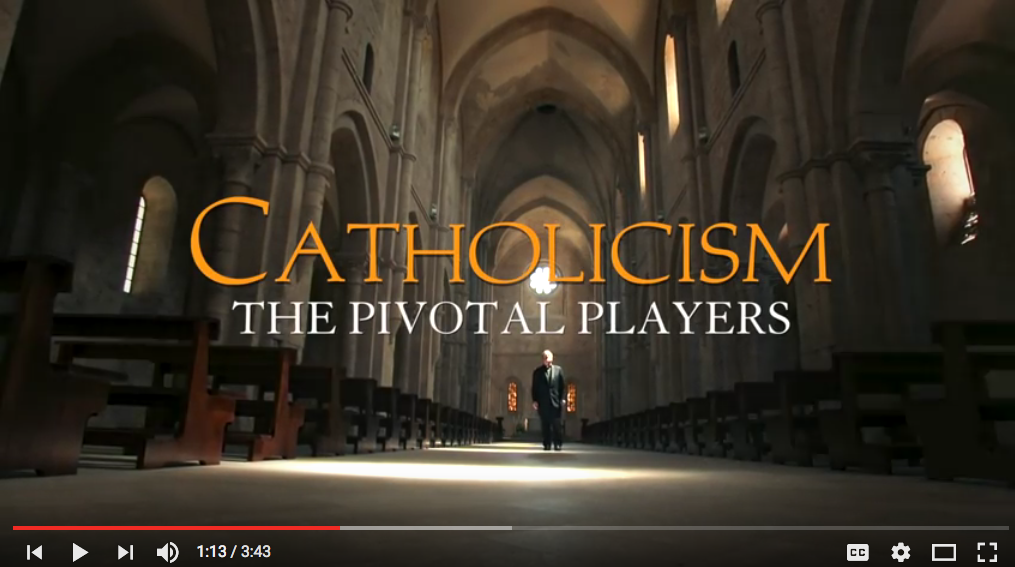
Beauty in Word and Image: A Short Review of Bishop Barron’s “Pivotal Players” Series

bog-09-30On Fridays, I typically feature a short video that illustrates the faith, usually in some unintentional ways. Today, I’d like to call to your attention to a new series of videos by Bishop Robert Barron, which intentionally set forth the faith: Catholicism: The Pivotal Players. The first volume of the series has been released and covers St. Francis of Assisi, St. Thomas Aquinas, St. Catherine of Siena, Michelangelo, Blessed John Henry Newman, and G.K. Chesterton. One or more future volumes will be forthcoming.

There are various ways of relating Church history. One can emphasize themes, take a strict chronological approach, or focus on key historical figures and the times in which they lived. It is this last approach that Bishop Barron takes.

As we have come to expect with Bishop Barron’s projects, “The Pivotal Players” is wonderfully done. The visuals are stunning. Beauty, goodness, and truth belong together, and Bishop Barron gets the balance right. Words and images support each other and summon us to goodness. For those who cannot afford pilgrimages to distant lands, Bishop Barron’s series provides a way to almost be there!

The biographical material presented is richly informative without being overwhelming. Word and image together paint a full picture. The material is broken up into manageable 12-15 minute segments, allowing a parish group or family to stop and discuss along the way.

There are the wonderful cutaways in which Bishop Barron speaks informally to a man off-camera, decoding the material and framing it well. He applies the material to modern times and helps us to understand the original context as well as its historical significance. These interludes are some of the best moments in the videos; he makes very memorable observations. As a small example, Bishop Barron likens St. Francis of Assisi to a bomb or a clanging bell that God used to wake up the Church. What a memorable, cogent remark!

I highly recommend that you watch the series. I am currently viewing it with a small group of parishioners. As we watch, a great deal comes alive for us: hagiography, to be sure, but also history, liturgy, ecclesiology, spirituality, and new perspective. It is a rich meal provided by the good Bishop—a feast for both the eyes and the soul. I’m glad to know this is just the first volume!

A Picture of the Spiritual Life from Job

blog929I am teaching out of the Book of Job for our parish bible studies. Consider the following insight by Job on the spiritual life:

God is wise in heart and mighty in strength;
who has withstood him and remained unscathed?
(Job 9:3)

At first glance, we might read this to mean that we don’t dare talk back to God or resist Him lest He punish us, but this would be a superficial interpretation. The text surely speaks more richly, of the spiritual life and the journey we must make with God.

It recalls a story about Jacob, told in the 32nd chapter of Genesis. Jacob is in the desert (often a place of testing and encounter) and is returning to make amends with his brother Esau, from whom is estranged. During the night Jacob has a mysterious encounter with God. The text recounts that he wrestles with a man, but is it a man, an angel, or God? Through the night, Jacob wrestles with this man. Even more mysteriously (if the “man” is God), the text says that Jacob “prevails,” or at least holds his own. To end the struggle, God disables Jacob by touching his hip. Out of respect, God then gives Jacob a new name:

Your name will no longer be Jacob, but Israel, because you have struggled with God and with humans and have overcome (Gen 32:28).

The name “Israel” means “he who wrestles (strives) with God.”

As a result of this encounter, Jacob would limp for the rest of his life, leaning on a staff for support. It was as if to say that he would have to learn to lean on God and strive with God rather than against Him. Injured or not, this would be a blessing for Jacob, a new and deeper stage in his walk with God.

And so Job rightly said, Who has withstood God and remained unscathed? Our spiritual life can be seen as this kind of struggle. God respects our freedom and is “glad” to engage us. At least we are willing to stay in a conversation with Him rather than running from Him or refusing to be engaged at all.

As for Job, Jacob, and countless others before us, so too for us. We will not emerge from this spiritual relationship with God unchanged or unscathed. This is because our life with God is no mere friendship, or only a source of consolation. God is Lord and Father, and He has a difficult work to accomplish in us, who (like Jacob) can be stubborn, prideful, and resistant.

As an example, consider how in this world the relationship between parents and children is one of love but also one that is filled with tensions. This is due to the nature of the relationship. Parents, in addition to giving good and pleasant things to their children, also have difficult tasks in their formation. Children must be disciplined and disabused of selfish or destructive behaviors. Children must be taught things that do not necessarily please them. Parents must often make demands on their children that summon them to greater things requiring sacrifice and effort.

None of this is easy—and neither is our relationship with God. Our relationship is not merely about pleasantries. God must work to break sinful, selfish, and harmful drives within us. He must often imbue us with teachings that go against our desires and priorities.

Are you willing to struggle and to strive with God? You will be blessed! No one goes away from Jesus unchanged. No one who has God for his true Father will be unchanged, or “unscathed” as Job puts it. Jacob limped and leaned on a cane for the rest of his life (as a sign of humility). How do you limp? Where are your healing wounds in the saving struggle with God?

The song in this video is a bit over the top; I don’t think Jesus was conflicted, as this song implies. But we often are. The struggle can be difficult, but stay in it!