The Perfect Gift – A Homily for the Third Sunday of Advent

blog12-10What is the perfect gift? We tend to answer this question more in terms of what we want, but today’s Gospel teaches us that the perfect gift is what God is offering. One of the goals of the spiritual journey is to come to value, more than our latest desire, more than our perceived need—more than all else—what God offers.

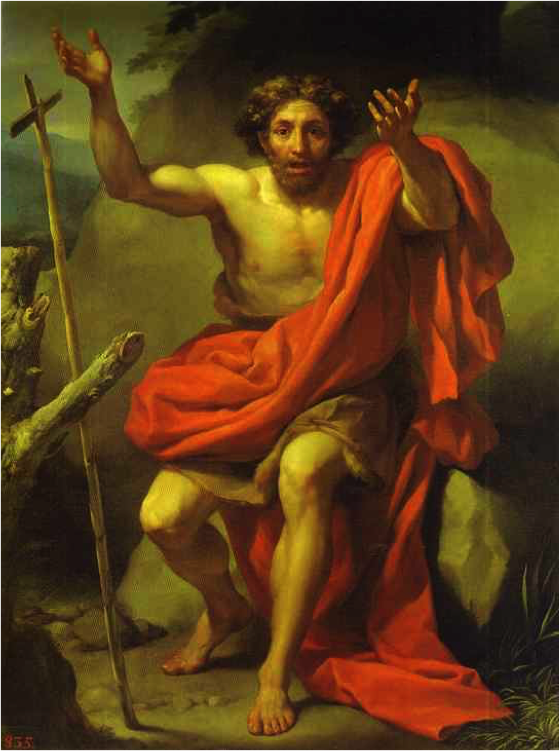
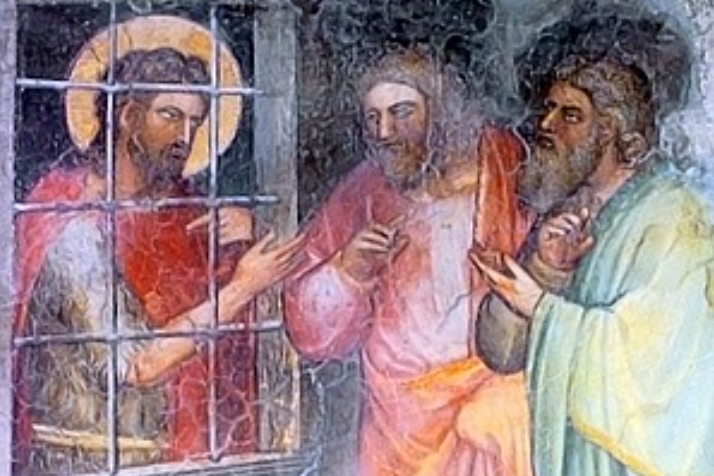
In reviewing today’s Gospel, I am going to take a stance regarding St. John the Baptist that I realize is not without controversy. The Gospel opens with John (who is in prison) sending his disciples to Jesus with a strange question: “Are you he who is to come, or should we look for another?” This is a strange question coming from the one who pointed Jesus out and spoke so powerfully of Him!

Many of the Fathers of the Church (e.g., John Chrysostom, Gregory the Great, Theodore of Mopsuestia) interpreted John’s question as a rhetorical one, designed to teach his reluctant disciples to follow Jesus.

I, however, would like to present a different interpretation: that John’s question is a sincere one, and manifests some puzzlement—even discouragement.

While some will take offense no matter how many disclaimers I provide, I still insist that I mean no impiety in my interpretation. It is a common biblical stance that even the greatest scriptural heroes are presented in very human terms. Abraham, Jacob, Moses, David, the judges and prophets, on down to the Apostles are all depicted as humans who are imperfect from the start, who struggle to understand and have perfect faith. Some of them committed great sins—even including murder. One of the most powerful themes of the Bible is that God is able to work with imperfect, struggling human beings and draw them to great sanctity and great accomplishments.

And thus out of respect for biblical tradition, I take today’s Gospel at what seems to me to be face value. If St. John is merely asking a rhetorical question, it seems odd that Jesus would not be aware of that. Instead, Jesus sends an answer back to John, asking him not to be scandalized (shocked) by the manner in which He goes about fulfilling Messianic texts.

I am not claiming that St. John is sinning or has failing faith; only that he, like all the prophets and patriarchs (and us), must sometimes struggle to understand God’s ways. Even Mother Mary, when Jesus was twelve and said that He must be in His Father’s house, did not understand what He was saying and had to ponder these things in her heart (cf Luke 2:50-51).

Today’s Gospel is best seen in three stages, as John the Baptist is encouraged to make a journey from puzzlement, through purification, to perfection; a journey to understand that the perfect is gift is not one of our own imagining but of God’s true offer. It is a Gospel that encourages us to find and appreciate the perfect gift.

I. Puzzlement When John the Baptist heard in prison of the works of the Christ, he sent his disciples to Jesus with this question, “Are you the one who is to come, or should we look for another?”

This is a strange question given what St. John had already done! With delight, John had pointed out Christ as He approached, saying, Behold, the Lamb of God (John 1:29). With humble hesitation, John had baptized the One who would change everything. He encouraged his disciples to follow after the One who was mightier than he. So why this unusual question?

Is John puzzled? Is he discouraged? It’s hard to say. Some argue that John doesn’t really mean the question seriously; he is just encouraging his disciples to ask it. But that had not been John’s approach in the past.

So perhaps John is puzzled or even struggling to understand. Consider that John had been looking for a Messiah who would root out injustice, crush the wicked, destroy the oppressors, and exalt the poor and the oppressed. Recall his words from last Sunday’s Gospel:

Even now the axe is laid to the root of the trees; every tree therefore that does not bear good fruit is cut down and thrown into the fire. “I baptize you with water for repentance, but he who is coming after me is mightier than I, whose sandals I am not worthy to carry; he will baptize you with the Holy Spirit and with fire. His winnowing fork is in his hand, and he will clear his threshing floor and gather his wheat into the granary, but the chaff he will burn with unquenchable fire (Mat 3:10-12).

John is now in prison, relegated there by a tyrant, an oppressor—the very sort of man John was sure that the Messiah would cut down and cast into the fire. Where was the hoped-for deliverance? Where was the exaltation of the lowly and the casting down of the mighty? Where was the axe being laid to the root of the tree? Jesus was not doing this sort of thing at all. Although He had some confrontations with religious leaders, His main work seems to have been healing the sick and summoning average people to repentance and faith.

So perhaps John’s question is genuine and he is puzzled or discouraged. The very one who had announced Jesus and pointed Him out when He came, sends his disciples to Jesus with a question: Are you he who is to come, or should we look for another?

John was not wholly off-base in his expectation of a Messiah coming in wrath. There are many texts that spoke of it. Here are a few:

  1. Wail, for the day of the LORD is near; as destruction from the Almighty it will come. … Behold, the day of the LORD comes, cruel, with wrath and fierce anger, to make the earth a desolation and to destroy its sinners from it! … I will punish the world for its evil, and the wicked for their iniquity; I will put an end to the pride of the arrogant, and lay low the haughtiness of the ruthless. Therefore, I will make the heavens tremble, and the earth will be shaken out of its place, at the wrath of the LORD of hosts in the day of his fierce anger (Is 13:6-10).
  2. Who can stand before his indignation? Who can endure the heat of his anger? His wrath is poured out like fire, and the rocks are broken asunder by him (Nahum 1:6).
  3. But who can endure the day of his coming, and who can stand when he appears? (Mal 3:2)

John had worked hard calling people to repentance in order to get them ready for the great and terrible day of the Lord. John’s puzzlement is thus understandable; Jesus goes about healing and preaching, and instead of slaying the wicked, endures scorn and ridicule from those in power.

The perfect gift for John would be to see all injustice rooted out, to see the threshing floor cleared and the distinction between the wheat and the chaff made obvious, to see the wicked burned with fire and the righteous shine like the firmament. Like many of the prophets, John sensed that the perfect gift was this: let judgment run down as waters and righteousness as a mighty stream (Amos 5:24).

Of itself this is a good and biblical vision that will one day be accomplished. But at this point is it the perfect gift? Is it the gift that Jesus wants to offer? What is the perfect gift?

II. Purification Jesus gives an answer to John’s disciples that draws from a different tradition of Messiah texts than those John had emphasized. The Old Testament texts that spoke of the Messiah were complicated and at times hard to interpret. While some texts spoke of His wrath toward the wicked and unjust, others spoke of His healing and mercy.

The differences in the description of the Messiah had a lot to do with the context, the audience, and also the possibility that the Messiah’s ministry might be accomplished in stages. Hence, while John the Baptist was not wrong in his application of the wrathful and vindicating texts to the Messiah, the New Testament tradition came to understand such texts more in terms of the Messiah’s second coming than his first.

Jesus thus gives the following answer to those sent by John:

Go and tell John what you hear and see: the blind regain their sight, the lame walk, lepers are cleansed, the deaf hear, the dead are raised, and the poor have the good news proclaimed to them.

In this answer, Jesus stitches together many quotes and prophecies about the Messiah, mostly from Isaiah. For example, consider the following:

  1. In that day the deaf shall hear the words of a book, and out of their gloom and darkness the eyes of the blind shall see. The meek shall obtain fresh joy in the LORD, and the poor among men shall exult in the Holy One of Israel (Isaiah 29:18-19).
  2. The Spirit of the Lord GOD is upon me, because the LORD has anointed me to bring good tidings to the afflicted; he has sent me to bind up the brokenhearted, to proclaim liberty to the captives, and the opening of the prison to those who are bound; to proclaim the year of the Lord’s favor, and the day of vengeance of our God; to comfort all who mourn (Is 61:1-3).
  3. The dead shall live, their bodies shall rise. O dwellers in the dust, awake and sing for joy! For thy dew is a dew of light, and on the land of the shades thou wilt let it fall (Is 26:19).
  4. Then the eyes of the blind shall be opened, and the ears of the deaf unstopped; then shall the lame man leap like a hart, and the tongue of the dumb sing for joy (Is 35:5-6).

There is a need to purify our sense of what is best for God to do, to come to a better appreciation of the perfect gift.

To those who are disappointed in His lack of wrathful vengeance, Jesus says something quite remarkable: And blessed is the one who takes no offense at me.

Many of us have been hurt by others or have been deeply troubled by the fact that the wicked seem to prosper while the just struggle. When will God act? Why doesn’t He do something? It is very easy for us to be puzzled, discouraged, or even offended by God’s seeming inaction.

To all this Jesus simply says, And blessed is the one who takes no offense at me.

It is essential to accept Jesus’ teaching in order to have our sense of the perfect gift purified. Rejoicing in any other gifts than grace and mercy is very dangerous. Hoping for a wrathful punishment to be inflicted on the proud and all sinful oppressors, or wishing this upon individuals or even whole segments of the world, is very dangerous. The last time I checked, all of us are sinners.

Here, then, is the necessary purification in our thinking: God’s greatest gift is not the crushing of our enemies; it is His Son, Jesus. He is the Perfect Gift.

Further, it is not Jesus’ wrath that is His greatest gift; it is His grace and mercy. That is the perfect gift from the Perfect Gift. Without Jesus and a whole lot of His grace and mercy, we don’t stand a chance.

Even John the Baptist, of whom Christ said, among those born of women there has been none greater than John the Baptist—even he needs lots of grace and mercy.

III. Perfection – And thus we see that the perfect gift is the grace and mercy of Jesus. It is not the destruction of our enemies. It is not a sudden, swift ushering in of justice before God’s chosen time. The perfect gift is the grace and mercy of Jesus, which all of us without exception desperately need.

In order to emphasize the absolute necessity of grace and mercy, and the perfect gift that they are, Jesus turns to the crowds and speaks of St. John the Baptist:

Jesus began to speak to the crowds about John, “What did you go out to the desert to see? A reed swayed by the wind? Then what did you go out to see? Someone dressed in fine clothing? Those who wear fine clothing are in royal palaces. Then why did you go out? To see a prophet? Yes, I tell you, and more than a prophet. This is the one about whom it is written: Behold, I am sending my messenger ahead of you; he will prepare your way before you. Amen, I say to you, among those born of women there has been none greater than John the Baptist.”

And thus St. John the Baptist is the best that this world has produced. But pay attention to what the Lord says next:

Yet the least in the kingdom of heaven is greater than he.

Do you see what grace and mercy can do? Do you see that they surpass any worldly excellence? The world can produce only human, worldly excellence. Grace and mercy produce heavenly excellence and make us like unto God. Without these gifts of God, we don’t stand a chance. John the Baptist needed grace and mercy; Mother Teresa needed grace and mercy. Grace and mercy are perfect and necessary gifts.

One day the perfect justice of God that we all seek will roll in. But unless and until you receive the perfect gift of grace and mercy through Jesus, you will not be able to endure the perfect justice of God. So until that time, it has pleased God to offer us the perfect gift of His Son, who by His grace and mercy will prepare us for that day.

If you are looking for the perfect gift this Christmas, look to Jesus. He alone can bestow the grace and mercy that we so desperately need. If even the holy St. John the Baptist was in need, how much more so you and I? Grace and mercy far exceed anything we can ask for or imagine.

Do you want to give the perfect gift to others? Then bring them to Jesus; bring them to Mass. Jesus awaits us in prayer, in the liturgy, in His Word proclaimed, and in the sacraments. Jesus is the perfect gift. The destruction of sinners is not the perfect gift; their conversion and salvation is.

Find the perfect gift this Christmas; find Jesus. Give the perfect gift this Christmas; give Jesus. Give Jesus the perfect gift this Christmas; give Him the give of your very self—the perfect gift.


What A Father Can Give His Daughter

screen-shot-2016-12-09-at-10-31-31-pmFor most people who view the commercial below, the focus is the Apple iPhone. But for us, I think the true focus should not be the Apple phone the man holds, but the apple of his eye, his daughter. Here is a father who delights in his daughter, and a daughter who is both affirmed by and happy in his delight.

A young girl naturally desires the love and appreciation of her father. She delights in being the apple of Daddy’s eye. If she does not find this from her father, she too easily seeks it from other men, whose love is less pure.

One of the great gifts that a father can give to his daughter is delighting in her for who she is without reference to mere sexual charms. A woman, however beautiful, is a person. She is someone’s daughter and certainly God’s daughter. She is to be loved for her own sake not merely for her charms. In delighting in his daughter, a father also models what she should expect from other men, and teaches her that mere attraction is not the same as pure or mature love.

Sadly, though, with the current crisis of fatherhood today, many young women do not receive this message; they easily confuse being the object of men’s lust with being the object of their proper esteem. Just because a man finds her beautiful does not mean that he respects her. Too many men will regard her body but not her soul.

A good father teaches these truths not only to his daughter, but to men who would be her suitors. Not so long ago, a young man was expected to meet the father of the young woman he dated. And even if few words were exchanged between them, the message from the father was clear: This is my daughter. She is a person, not just someone who exists for your pleasure. Treat her with respect; if you do not, you will have to answer to me!

Pray for fathers to be strong and loving. Daughters (and sons) need them desperately. Without strong and present fathers who show great love and set proper boundaries, many children develop what is often called “the father wound.” It is deep, sometimes subtle, and always harmful.

As you view this commercial, focus less on the Apple phone and more on the father and the apple of his eye—his daughter. With this appreciation from her father, she will be helped to judge every “Romeo” in the light of the proper self-esteem taught to her by her father.

https://youtu.be/qStdSMad6TY

Best Advent Hymn! I Wonder If You’ve Ever Heard of It

dec8-blogFor my money, the best Advent hymn ever is Veni Redemptor Gentium (Come Redeemer of the Nations), written by St. Ambrose in the 4th century. It is more widely known by the title “Come Thou Redeemer of the Earth.” Sadly, it is not often sung in Catholic parishes today. Most Catholics I’ve asked have never even heard of it.

One of the beautiful things about the ancient Latin hymns is how richly theological they are. Not content to merely describe an event, they give sweeping theological vision and delve into its more hidden mysteries.

Here we are in Advent and Jesus is coming. Get ready! Well, yes, but He’s not just coming; He’s redeeming, dying, rising, ascending, and reigning at the Father’s right hand! But how can you squeeze all of that into an Advent hymn? Well, just below you can read the text and see.

Full vision – For now, ponder the theological point that hymns like this make: no act of God can be reduced merely to the act in itself. Everything God does is part of His sweeping master plan to restore all things in Christ, to take back what the devil stole from us. Too often we see the events of our redemption in a disconnected sort of way. But it is all really one thing and the best theology connects the dots. It is not wrong for us to focus on one thing or another, but we must not forget that it is all one thing in the end.

Without this reminder, we can easily develop a kind of myopia that overemphasizes one aspect of redemption at the expense of others. In the 1970s and 1980s it was “all resurrection all the time,” but no passion or death.

Christmas, too, has its hazards. We get rather sentimental about the “baby Jesus” but miss other important aspects of his incarnation. The passion and death are present in His birth into homeless poverty, the swaddling clothes, the flight into Egypt, and so forth. The Eucharist is evident in His birth at Bethlehem (House of Bread) and His being laid in a manger (a feed box for animals). His glory as God and His ultimate triumph are manifested in the star overhead and the angels’ declaration of glory! You see, it is all tied together, and the best theology connects the dots.

With that in mind, I present this wonderful Advent hymn, so seldom sung in our Catholic parishes. It can be sung to any Long Meter (LM) tune but is usually sung to its own melody (“Puer Natus”). You can find this melody in the index of most hymnals. I provide below only the English translation, but both the Latin and the English are available in this document: Veni Redemptor Gentium. I think the poetic translation reprinted below is a minor masterpiece of English literature and hope that you’ll agree. Enjoy this sweeping theological vision of the mystery of Advent caught up into the grand and fuller vision of redemption.

Among the theological truths treated in this brief hymn are these: His title as Redeemer, His birth to a virgin, His inclusion of the Gentiles, His sinlessness, His two natures in one person, His incarnation at conception, His passion, His death, His descent into Hell, His ascension, His seat at the Father’s right hand, His divinity and equality with the Father, His healing and sanctification of our humanity so wounded by sin, His granting us freedom and eternal life, His renewing of our minds through the light of faith, and His opening of Heaven to us.

Not bad for a mere seven verses! St. Ambrose, pray for us!

Come, thou Redeemer of the earth,
Come manifest thy virgin birth:
All lands admire, all times applaud:
Such is the birth that fits our God.

Forth from his chamber goeth he,
That royal home of purity,
A giant in twofold substance one,
Rejoicing now his course to run.

The Virgin’s womb that glory gained,
Its virgin honor is still unstained.
The banners there of virtue glow;
God in his temple dwells below.

From God the Father he proceeds,
To God the Father back he speeds;
Runs out his course to death and hell,
Returns on God’s high throne to dwell. 

O Equal to thy Father, thou!
Gird on thy fleshly mantle now;
The weakness of our mortal state
With deathless might invigorate.

Thy cradle here shall glitter bright,
And darkness breathe a newer light,
Where endless faith shall shine serene,
And twilight never intervene.

All laud, eternal Son, to thee
Whose advent sets thy people free,
Whom with the Father we adore,
And Holy Ghost, for evermore.

This video below gives you an idea of what the tune for Veni Redemptor Gentium sounds like. The words in this version are slightly different from what is shown above, but the tune is perfect. Just try not to dance as it is sung!

A Teaching from the Lord on the Nature of Suffering and the Cross

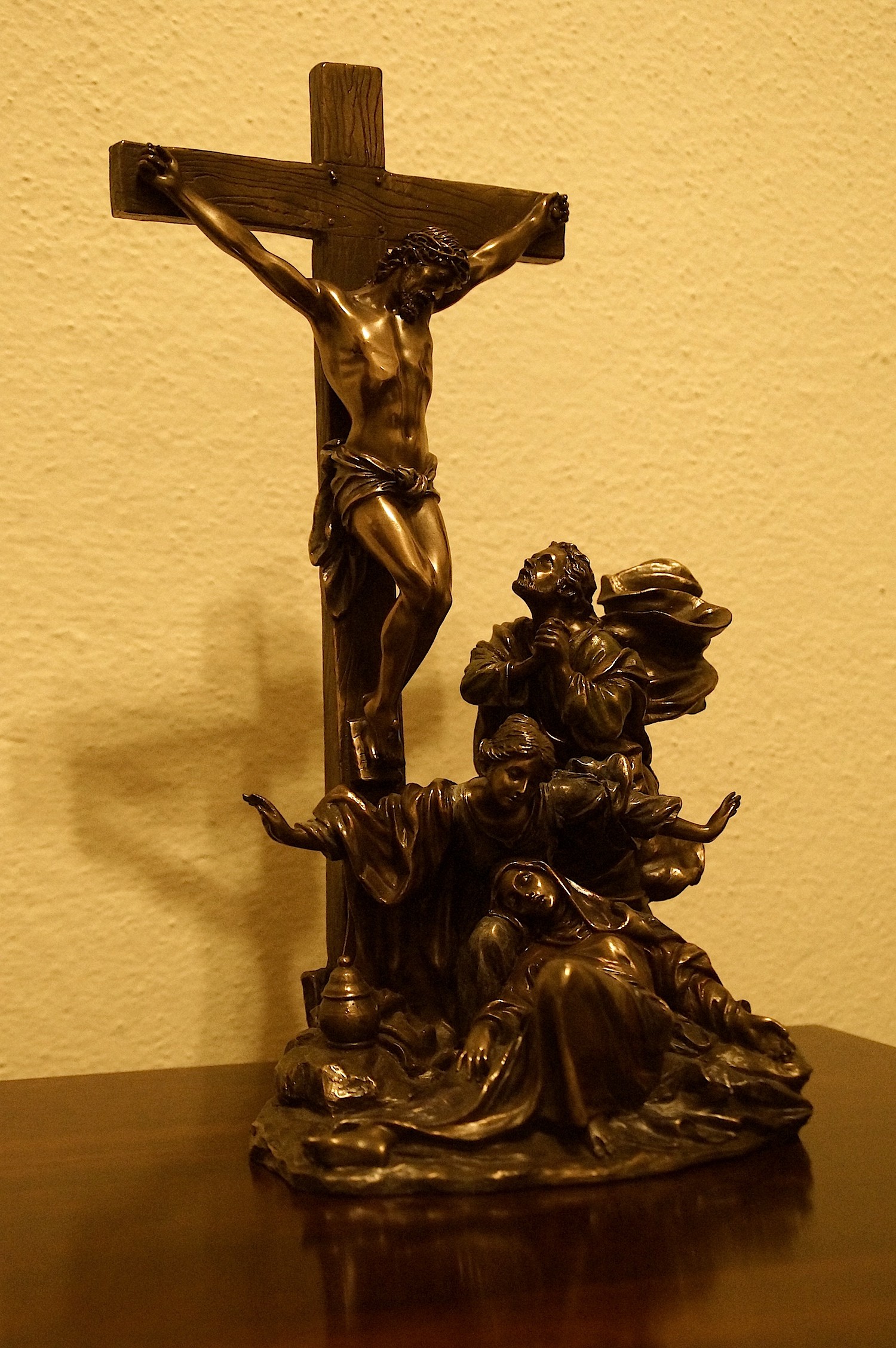
cross 1A familiar Gospel passage read recently in daily Mass gives us a short theological teaching on suffering and the cross:

Jesus said to the crowds:
“Come to me, all you who labor and are burdened,
and I will give you rest.
Take my yoke upon you and learn from me,
for I am meek and humble of heart;
and you will find rest for yourselves.
For my yoke is easy, and my burden light”
(Matt 11:28-30).

On reading a passage like this, two problematic reactions are possible. One is to react resentfully, thinking, “There’s nothing light or easy about the burdens I have to carry!” Another is to simplistically conclude that if one just follows Jesus, all one’s troubles will vanish. This is a recipe for future disappointment and resentment.

Both of these reactions should be avoided. Jesus gives us here a balanced teaching on the role of suffering and the cross that is best understood in its subtleties.

I There is a yoke and there is a burden in following Jesus

Jesus uses these very images; He does not exclude them. A burden is a weight that must be carried. We do not grow or gain in strength by reclining on a couch. We grow and gain in strength by carrying the weight of our duties. Burdens, though unpleasant, are necessary for growth.

A yoke is a device that helps us to carry our burdens. Consider an ox pulling a wagon. A rope around its neck would kill it, and so a wooden truss is built to distribute the weight across the front of its body. Some yokes permit two oxen to pull a load together. Horses sometimes wear a leather yoke that goes around their midsection. People who transport water from wells seldom carry pails with their hands as it is too painful for any extended period of time. Instead, they use a wooden beam, carved to fit their shoulders, with pails hanging from it.

A yoke does not lighten the load; it just makes it easier to carry. Jesus indicates that we who would follow Him will not have a life that is free of burdens; there are burdens and thus there is the need for a yoke.

II His yoke is “easy”

The common English translation of “easy” fails to capture the subtlety of what the Lord is conveying. The Greek word use is χρηστὸς (chrestos), and it refers to what is suitable, useful, well-fitted, or beneficial—not merely “easy.”

Consider how old shoes can be a blessing because they fit us perfectly; new shoes sometimes cause blisters until they (and our feet) adjust to each another. A good carpenter would work carefully to craft the yoke to the contours of the animal or to the shoulders of a human being. Only after these adjustments would the yoke be said to be chrestos (well-fitting).

One can almost picture Jesus, as a carpenter, doing this sort of work quite frequently. One can also whimsically imagine a sign hanging outside Jesus’ shop: “Well-Fitting Yokes Sold Here!”

Spiritually, Jesus is indicating in this text that while He does have a yoke (or cross) for us; it is suitable for us and will bring benefit. The burdens and yokes He has for us are not suffering merely for the sake of suffering. If carried and accepted with faith, they will benefit us. Each of us needs certain yokes and burdens, crosses and sufferings, in order to grow, be humbled, and gain wisdom. The Lord has crafted these yokes and burdens for us carefully. They are for good, not ill; for growth, not diminishment.

III. My yoke, my burden

Jesus is careful to refer to “my yoke” and “my burden.” For indeed, not every suffering we endure is from Him.

Frankly, we pile a lot of extra burdens on ourselves that He neither wills for us nor wants for us. Surely our sins bring us extra burdens, but beyond this there are many things that are good in and of themselves but which are not what God asked us to do.

Some of us undertake projects and efforts that are good and beneficial to others, but we do not ask God if it is His will that we do them. Perhaps God would tell us that He has other things for us to do, that He doesn’t want us to spend time doing things He has reserved for others and then end up not being able to do what He has designed for us.

And thus we must discern carefully what the true yokes and burdens are for us. God gives us the strength for those yokes and burdens, not for the yokes and burdens of our own design.

Here, then, is a brief teaching on burdens, suffering, and the cross. God does have these for us because we need them, but they are suited to us; they are possible for us to endure; they are carefully crafted to benefit us. “Beware,” says the Lord, “of what is not my burden and yoke, but is instead from you.”

Freedom Without the Truth Leads to Chaos and Slavery

december6blogTo most modern minds, freedom is a very detached concept; it is an abstraction of sorts, a free-floating power unmoored from any limits or defining standards. Freedom today is often viewed as personal and self-referential, with little consideration as to how one’s “freedom” might affect that of someone else. A healthy sense of the common good suffers mightily in a world of deeply conflicting personal freedoms.

I have written before on the paradoxes of freedom and will not repeat all of that here, but one point to reiterate is that for us (who are limited and contingent beings) the only true and healthy freedom is a limited one.

I was free to write this column and you are free to read it, but in order for shared communication to occur, we must each limit our respective personal freedom by following certain rules. I had to post the article in the expected place and you had to go there to read it. I had to follow many grammatical and linguistic rules in order to be intelligible, and you must apply similar norms in order to understand. As soon as either of us starts to cop an attitude and say, “I will not be told what to do; I will do whatever I please,” communication suffers. And thus each of us limits his freedom in order to communicate.

Another example can be found in the realm of sports. Rules, in a sense, make the game. The players and spectators limit their freedom by accepting that a given game has a specific goal. Further there are boundaries and rules of play. If some or all of these limits are removed, there is no framework. Players start moving aimlessly about the field and teams break apart. Spectators argue about everything and even forget why they are in the stadium at all. All order on the field and in the stands breaks down; even the distinction between the field and the stands starts to lose meaning. Chaos and conflict result.

To some degree this picture describes our modern age. Cultures, like the microcosm of a sports event, need agreed upon goals and rules of play in order to function properly. In the modern Western world, we are currently engaged in a misguided experiment as to whether a culture can exist without a shared cultus.

Obviously, the word cultus is at the heart of the word culture. In Latin, a cultus is something for which we care or are concerned, something of worth, something considered valuable. It describes the most central, fundamental values of a group. In later Latin, cultus came to describe the worth or value we attribute to God, who is our truest goal.

Remove the cultus from culture and you get the breakdown we have today. While pluralism and diversity have value, they must exist within a framework that is shared and agreed upon. Otherwise pluralism and diversity are unmoored and become like ships crashing about in a stormy bay.

In order for a culture to exist, there must be a shared cultus, a shared focus on what is good, true, beautiful, and sacred. Our modern experiment shows the failure of trying to have a culture without this.

Bishop Robert Barron, himself commenting on Pope Benedict’s analysis, writes the following:

The setting aside of God can take place both explicitly (as in the musings of the atheists) or implicitly (as in so much of the secular world where “practical” atheism holds sway). In either case the result is a shutting down of the natural human drive toward the transcendent and, even more dangerously, the elevation of self-determining freedom to a position of unchallenged primacy. [Pope Benedict elaborates] here a theme that was dear to his predecessor, namely, the breakdown of the connection between freedom and truth. On the typically modern reading, truth is construed as an enemy to freedom—which explains precisely why we find such a hostility to truth in the contemporary culture. Indeed, anyone who claims to have the truth—especially in regard to moral matters—is automatically accused of arrogance and intolerance. Society will be restored to balance and sanity, Benedict argued, only when the natural link between freedom and truth—especially the Truth which is God—is reestablished. … Behind all our arguments about particular moral and political issues is a fundamental argument about the centrality of God [Vibrant Paradoxes, pp. 217-218].

And thus freedom cannot be an abstraction. It cannot be unmoored; it is not an unlimited concept. It can only exist in a healthy and productive way when it is in reference to the truth—and truth is rooted in God and what He has revealed in creation, Sacred Scripture, and Tradition. This is the cultus necessary for every culture. True and healthy freedom is the capacity to obey God. Anything that departs from this necessary framework is a deformed freedom, on its way to chaos and slavery.

The more one does what is good, the freer one becomes. There is no true freedom except in the service of what is good and just. The choice to disobey and do evil is an abuse of freedom and leads to “the slavery of sin” (Catechism of the Catholic Church, 1733).

Seeing More As God Sees

blog12-5Today I’d like to reflect further on the Gospel from yesterday’s Mass (Monday of the second week of Advent). The Gospel tells of the paralyzed man whose friends lowered him through the roof in order to see Jesus. It is read during Advent because one of the prophecies about the Messiah was that He would make the lame walk. In a provocative way, this Gospel also helps us to focus on Jesus’ central mission for us.

The Gospel passage contains a rather peculiar and somewhat awkward moment: Jesus looks at the paralyzed man and says to him, As for you, your sins are forgiven (Lk 5:20). What a strange thing to say to a paralyzed man!

Now we might be tempted to tap Jesus on the shoulder and say, “Excuse me, Lord, but this man is paralyzed. His problem is paralysis, that’s what he needs healing for!” (The Pharisees and scribes get worked up for a different reason; they don’t think that Jesus has the authority to forgive sins.)

Of course Jesus is neither blind nor lacking in intelligence. But unlike us, Jesus looks at the man and does not consider his paralysis to be his most serious problem; to Jesus, the man’s biggest problem is his sin.

Living as we do in this world, most of us have the world’s priorities. The Lord sees something more serious than paralysis, while we wonder what could possibly be more serious than paralysis! But not as man sees does God see. For God, the most serious problem we have is our sin. We don’t think like this even if we are told we should think like this.

Influenced by the flesh as we are, most of us are far more devastated by the thought of losing our health, or our money, or our job, than we are by the fact that we have sin. Threaten our health, well-being, or money, and we’re on our knees begging God for help. Yet most people are far less concerned for their spiritual well-being. Most of us are not nearly so devastated by our sin (which can deprive us of eternal life) as we are by the loss of our health or some worldly possession.

Even many of us who have some sense of the spiritual life still struggle with this obtuseness, and with misplaced priorities. Even in our so-called spiritual life, our prayers are often dominated by requests that God fix our health, improve our finances, or help us to find a job. It is not wrong to pray for these things, but how often do we pray to be freed of our sins? Do we earnestly pray to grow in holiness and to be prepared to see God face-to-face? Sometimes it almost sounds as if we are asking God to make this world more comfortable so that we can just stay here forever. This attitude is an affront to the truer gifts that God offers us.

And so it is that Jesus, looking at the paralyzed man, says to him, Your sins are forgiven. In so doing, Jesus addresses the man’s most serious problem first. Only secondarily does He speak to the man’s paralysis, which He almost seems to have overlooked in comparison to the issue of his sin.

We have much to learn hear about how God sees, and about what are the most crucial issues in our life.

Joseph and Mary were told to call the child “Jesus,” because He would save His people from their sins. In his book Jesus of Nazareth: The Infancy Narratives, Pope Benedict XVI writes,

Joseph is entrusted with a further task: “Mary will bear a son, and you shall call his name Jesus, for he will save his people from their sins” (Matthew 1:21). … On the one hand, a lofty theological task is assigned to the child, for only God can forgive sins. So this child is immediately associated with God, directly linked with God’s holy and saving power. On the other hand, though, this definition of the Messiah’s mission could appear disappointing. The prevailing expectations of salvation were primarily focused upon Israel’s concrete sufferings—on the reestablishment of the kingdom of David, on Israel’s freedom and independence, and naturally that included material prosperity for this largely impoverished people. The promise of forgiveness of sins seems both too little and too much: too much, because it trespasses upon God’s exclusive sphere; too little, because there seems to be no thought of Israel’s concrete suffering or its true need for salvation.

Benedict then cites this same story of the paralytic and says,

Jesus responded [to the presence of the paralyzed man] in a way that was quite contrary to the expectation of the bearers and the sick man himself, saying: “My son, your sins are forgiven” (Mark 2:5). This was the last thing anyone was expecting; this was the last thing they were concerned about.

He concludes,

Man is a relational being. And if his first, fundamental relationship is disturbed—his relationship with God—then nothing else can be truly in order. This is where the priority lies in Jesus’ message and ministry: before all else he wants to point man toward the essence of his malady.

Yes, God sees things rather differently than we do. There is much to ponder about the fact that Jesus said to the paralyzed man, Your sins are forgiven you.

A Mid-Advent Picture of What Our Savior Offers

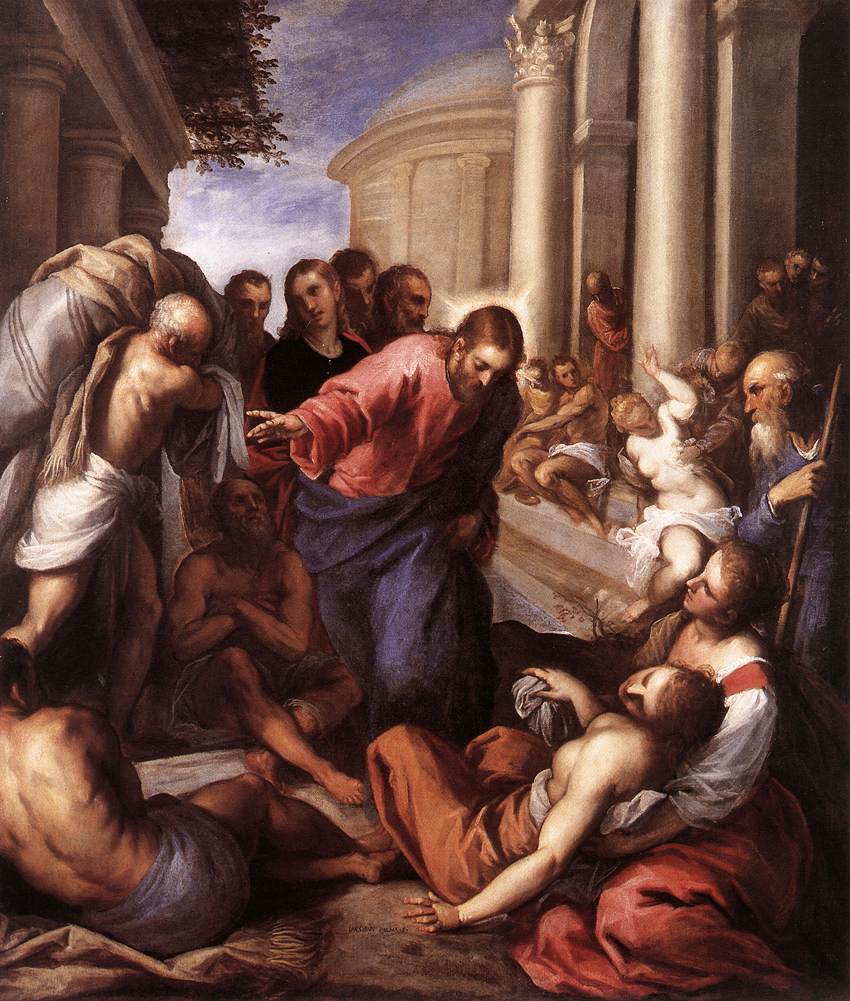
jesus-heals-the-paralyticThe Gospel for today’s Mass (Monday of the Second Week of Advent) is the well-known story of the paralytic. There are many wonderful details that I could discuss (e.g., the four friends who bring him to Jesus—talk about great friends!), but I’d like to focus today on Jesus’ command: “Rise, take up your stretcher, and go home.” It is a small picture of the grace unto salvation offered to us by the Lord. Here is a man who is powerless to help or heal himself, so the Lord helps and heals him. Though “dead in his sins,” he now rises and lays hold of a whole new life.

This is a mid-Advent picture of why we need a Savior, and what He offers. Note three aspects of what Jesus says to the paralytic:

Rise – In other words, receive new life, new capacities. No longer be weighed down by weakness. Be set free. Rise to new life! When Jesus called Lazarus from the tomb, he said to the bystanders, “Untie him and let him go free.” St. Paul says of us, “You were dead in your sins … but made alive through Christ” (Col 2:13). And thus the paralyzed man, once powerless to move or take control, is now strong and free. His paralysis represents our weakness, our spiritual palsy, our inability to walk uprightly and in justice. To all this, Jesus says, “Rise!” He bids us no longer to be in bondage to sin, Satan, the world, and the flesh.

Rule – The Lord tells the paralytic man to take up his stretcher. He wants him to take authority over that on which he once depended. Whatever crutch you once leaned on, be strong enough now to carry it; don’t lean on it any longer. If you once depended on sin for happiness, take authority over it now. If you once needed alcohol to calm your nerves, take authority over it now; don’t lean on it anymore. If you once depended on gossip and detraction to feel important, take authority over it. Don’t be dependent on any sin. By being healed, have the power to carry it off like a trophy of victory. While it is true that we will always need some help in this life, no longer should we be wholly dependent on anything or anyone in this world. The Lord has authority in our life and He grants us increasing authority over our passions, desires, struggles, and gifts. He tells us to take up the authority He has rightly granted us and command our soul in justice and truth.

Return – The Lord says to him, “Go home.” In other words, make your journey back to God, back to your true home in the heart of the Father. Sin had separated us from God and driven a wedge between us. But now the veil in the Temple has been torn from top to bottom. Through Jesus, we have access to the Father. Like prodigal sons, we are now heading home. Look off in the distance! It is the Father, running to us to greet us! By offering forgiveness for our sins, Jesus has opened the gates of Heaven and restored us to a right and just relationship with His Father. If we will accept this gift and celebrate it regularly, our return is well underway; it is just over the next hill (Calvary). And just beyond is the heavenly Zion. “I rejoiced when I heard them say, ‘Let us go up to the House of the Lord!’”

A Prophet Who Prepares

blog1203The Second Sunday of Advent usually features the ministry of St. John the Baptist. He was the prophet who fulfilled the Office of Elijah, of whom it was said, See, I will send the prophet Elijah to you before that great and dreadful day of the Lord comes. He will turn the hearts of the fathers to their children, and the hearts of the children to their fathers; or else I will come and strike the land with total destruction (Mal 4:4-6).

St. John was a prophet who prepared the people of his time for the coming of Jesus by summoning them to repentance and opening them to the Kingdom of God in all its fullness.

But of course the coming of Jesus for which St. John prepared them has now been fulfilled. For us who ponder St. John’s office today, the coming of Christ for which we must be ready is His Second Coming.

Whom does “John the Baptist” represent for us? Surely it is the Church, which Christ founded to prepare people and draw them (us) from darkness into light. We experience the Church, not as an abstraction, but in our local bishop, priests, and deacons, as well as in our parents and catechists. Through all of them, the Church fulfills her mission to be a prophet that prepares us.

Furthermore, you are also called to be a prophet who prepares others for the coming of Christ as Judge. You do not work independently of the Church (at least you’d better not!); rather, the Church works through you.

The Catechism of the Catholic Church speaks of our prophetic office in the following way:

[The baptized] must profess before men the faith they have received from God through the Church and participate in the apostolic and missionary activity of the People of God (CCC, 1270).

We have an obligation to evangelize and to be prophets who prepare others for Judgment Day.

How can we do this effectively? What are the some of the essential ingredients of a prophet who prepares others? The ministry of St. John the Baptist provides four:

I. Poise – I use poise here in its older sense, referring to balance. The text says, John the Baptist appeared, preaching in the desert of Judea and saying, “Repent, for the kingdom of heaven is at hand!”

Note that John says two things: He first says, “Repent!” and then adds, “for the Kingdom of Heaven is at hand.”

This is a balance that must be gotten right. The preacher and prophet must speak frankly of sin and call people to repentance, but also speak of the grace available to conquer that sin and to point out the good news that the Kingdom of Heaven is open and available. John the Baptist was willing and able to declare the reality of sin and the necessity of repenting from it, but he was also able to declare the availability of the Kingdom, wherein one is able to find the grace to overcome sin.

Too many preachers, catechists, and even parents lack this proper balance. Some would say that in the past, sermons were all fire and brimstone; today, it’s more often the steady diet of “God is love” with little reference to the need for repentance. This is one of the reasons that our Churches have emptied over the past 40-50 years.

This is because the good news only has relevance and significance if the bad news is understood. If you don’t know the bad news, then the good news is no news. To illustrate, suppose you see a headline announcing a cure for a deadly disease. If you’ve never heard of this disease, the article will probably only be of passing interest. But if you or someone you love has the disease, you would probably be overjoyed and read the article very carefully. Because you know very personally the bad news of the disease, the good news of the cure means a great deal to you.

It is the same with the Kingdom. We have to know the bad news of sin in a very personal and profound way to fully appreciate the good news of salvation. In the Church we have been soft-pedaling the bad news, and so the good news seems irrelevant to many people; the medicine of the cure seems pointless. Why pray, receive sacraments, or read Scripture if everything is just fine? Why bother coming to Mass? Our Churches have emptied in part due to a lack of proper balance between repenting and believing that the Kingdom of God is at hand.

In order to be powerful and effective prophets, we have to speak frankly to others about the reality of sin and balance it with the joyful announcement of the Kingdom, with its grace and mercy now available. Prophecy must have the right balance.

St. John the Baptist didn’t sugarcoat things. He was explicit: we need to repent, or else. He spoke of a coming day of wrath and judgment for those who did not do so. He spoke of the axe being laid to the root of the tree, of fiery judgment and unquenchable fire. And he was not afraid to call the self-righteous “vipers,” equating their pride with that of the ancient serpent.

Too many people today are afraid to speak like this, thus they lack the balance necessary to be true preparing prophets. St. John joyfully announced the breaking in of the Kingdom of God and the coming of the Messiah, but he spoke of repentance as the door of access. Do we have this balance, or do we preach mercy without repentance?

II. Product – The text says, At that time Jerusalem, all Judea, and the whole region around the Jordan were going out to him and were being baptized by him in the Jordan River as they acknowledged their sins.

Here is the desired product of powerful prophecy: repentance unto salvation for all who believe. Preparing prophets do not seek merely to scare people; they seek to prepare them. To repent, to come to a new mind and heart by God’s grace, is to be prepared. This is the central work of the prophet who prepares: repentance unto salvation.

St. Paul wrote to the Corinthians about this aspect of prophecy and preaching. He is aware that he grieved some of them with his strong rebuke of the community (cf 1 Cor 5), but he is glad that it produced a godly sorrow, which in turn produced repentance and holiness. St. Paul also distinguishes between godly sorrow and worldly sorrow:

Even if I caused you sorrow by my letter, I do not regret it. Though I did regret it—I see that my letter hurt you, but only for a little while—yet now I am happy, not because you were made sorry, but because your sorrow led you to repentance. For you became sorrowful as God intended and so were not harmed in any way by us. Godly sorrow brings repentance that leads to salvation and leaves no regret, but worldly sorrow brings death. See what this godly sorrow has produced in you: what earnestness, what eagerness to clear yourselves, what indignation [at sin], what alarm, what longing, what concern, what readiness to see justice done …. By all this we are encouraged (2 Cor 7:8-13).

An old priest once told me, “Never think you have preached well unless the line to the confessional is long.” Good preaching, among other things produces repentance unto salvation. It may cause some to be angry or sad, but proper prophecy will produce a godly sorrow such that anger and sadness give way to gladness. The expected product of proper preaching is repentance unto salvation.

III. Purity – The text says, When [John] saw many of the Pharisees and Sadducees coming to his baptism, he said to them, “You brood of vipers! Who warned you to flee from the coming wrath? Produce good fruit as evidence of your repentance. And do not presume to say to yourselves, ‘We have Abraham as our father.’ For I tell you, God can raise up children to Abraham from these stones. Even now the ax lies at the root of the trees. Therefore, every tree that does not bear good fruit will be cut down and thrown into the fire.

John the Baptist had no fear of people’s opinions. He would not compromise his message based on his audience. The credentials of the temple leaders did not impress him. The status of the Jews as the chosen people did not cause him to soften his message. John had no fear of human opinion and no need to ingratiate himself to others, especially the rich and powerful.

Because of this, his preaching was pure. He did not compromise the message out of fear or the need to flatter others. He spoke boldly, plainly, and with love, desiring the ultimate salvation of all. If that called for strong medicine, he was willing to do it.

The ancient martyrs went to their deaths proclaiming Christ, yet many of us moderns are afraid of someone raising his eyebrows at us. Fear is a great enemy of powerful prophecy, for it causes many to remain silent when they should speak. The fear of what other people might think causes many to compromise the truth, and even sin against it. We must let go of this kind of fear if our prophecy is going to have the purity necessary to reach the goal.

IV. Person – The text says, I am baptizing you with water, for repentance, but the one who is coming after me is mightier than I. I am not worthy to carry his sandals. He will baptize you with the Holy Spirit and fire. His winnowing fan is in his hand. He will clear his threshing floor and gather his wheat into his barn, but the chaff he will burn with unquenchable fire.

John’s disciples and his audiences were fascinated by him, drawn in by his charisma. They wanted to know more about him, but instead John talked about Jesus. That was his message: “Jesus, not me.” If we are going to be powerful prophets, our message must be about Jesus, not about us and what we think. We are not out to win an argument or boost our egos; our goal is not to become famous. We are about Jesus Christ, His gospel, His message, His truth. John said of Jesus, “He must increase; I must decrease” (John 3:30). A prophet speaks for the Lord, not for himself. A prophet announces God’s agenda, not his own. A prophet is about Jesus.

Here, then, are four important points about powerful prophecy: poise, product, purity, and person.

You are a preparing prophet whom the Lord seeks. Someone was John the Baptist for you. Someone brought you to Christ. Thank God for that person. But remember that you, too, are called to be John the Baptist for others. Learn from John. Apply his principles and make disciples for Jesus Christ.