To say that something is “necessary” is to declare that it is so essential that to be without it causes grave if not deadly harm. The word comes from Latin: ne- (not) + cedere (to withdraw, go away, yield). The root sense is that what is necessary is something from which we cannot stray, something from which there is no withdrawal, something we cannot evade. There is an expression in Latin, sine qua non, which literally means “without which not.” Its fuller meaning expresses something so essential that without it, other required things cannot proceed.
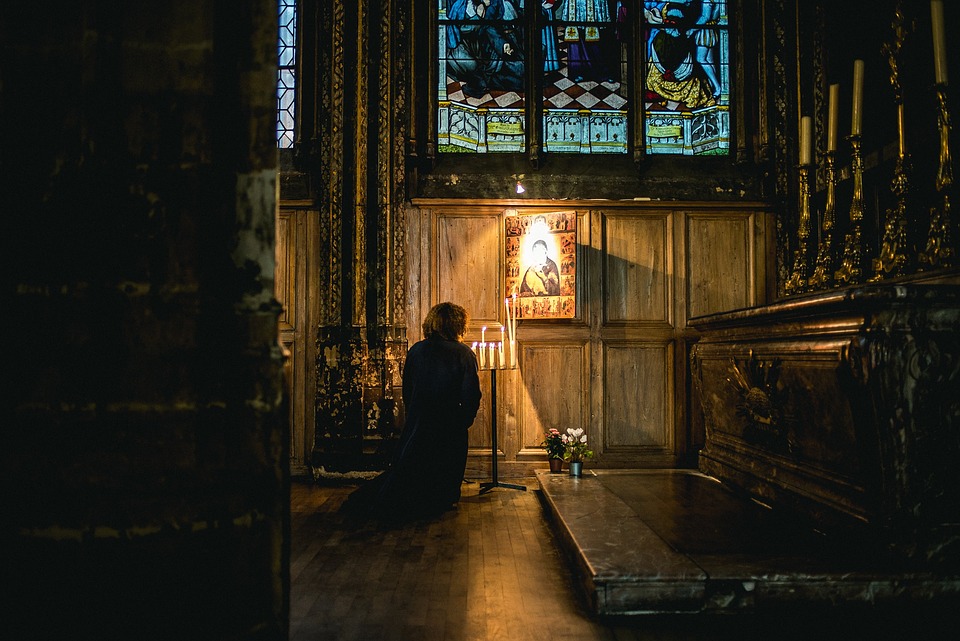
Do you see prayer in this way, as necessary, as essential? Do you view at something without which other things cannot happen? Sadly, it would seem that many do not. Prayer is something easily postponed. It’s something to be done if the mood is just right, or if we have an urgent need. It is seldom scheduled and easily skipped in favor of almost any other activity. We seem to be able find time for everything else, but prayer is easily set aside—I’m busy; I’m tired; I forgot; something came up.
These sorts of issues arise because most people don’t really view prayer as necessary.
But prayer is necessary. St. Augustine said, “God who made us without us, will not save us without us.” Jesus stands at the door and knocks (see Rev 3:21), but we must open the door of our heart for him to enter and feed us. Prayer is our way answering, of opening the door. Little else will happen until we open the door each day to Him.
This brief column is not intended as an exhaustive exposition on prayer. Rather, it is intended to remind us that we should see prayer as a necessity. To that end, here are just a few quick thoughts underscoring the essential nature of prayer.
Jesus said, This sort of demon can only be driven out by prayer (Mk 9:29). Those who do not pray and are not prayed over may suffer intractable demonic attacks.
Jesus said, Watch and pray so that you will not fall into temptation (Matt 26:41). Deadly temptations will certainly assail us if we do not pray. How can we expect to avoid serious temptations and Hell if we do not pray?
Jesus said that we must always pray and not lose heart (Lk 18:1). We must pray, we mustnot give way to discouragement.
James said, You have not because you ask not (James 4:3). How many gifts are lacking for us and others because we do not pray? Some gifts are only unlocked and sent forth by prayer.
John Chrysostom said, “As the body without the soul is dead, so the soul is dead without prayer” (Homily lxxvii). We are dead without prayer!
Augustine said, “God gives, without prayer, the first graces such as the vocation to faith and to repentance; but all other graces, and particularly the gift of perseverance, he gives only to those who ask them” (De Dono Persev, xvi). Notice that it is only to those who ask!
Thomas Aquinas said, “Now after baptism man needs to pray continually, in order to enter heaven: for though sins are remitted through baptism, there still remain the fomes of sin assailing us from within, and the world and the devils assailing us from without. And therefore it is said pointedly (Luke 3:21) that ‘Jesus being baptized and praying, heaven was opened’: because, to wit, the faithful after baptism stand in need of prayer” (Summa Theologica, III, q. 39 art. 5).
St Teresa of Avila reasoned, “Ask and you shall receive … then he who does not ask will not receive.” Now that is some straightforward wisdom!
Alphonsus said, “He who prays is certainly saved; he who does not pray is certainly lost” (Considerations on the Eternal Maxims 13.2). Prayer is necessary! It is the sinequanon.
Pray, my brethren; pray. Pray for the gift of prayer. Pray for the desire to pray. Pray! Prayer is necessary; it is essential.
We do not always know everything we should pray for; we do not always remember to pray for everything. God knows our weakness. But failing to pray as a general norm is deadly to our life and our salvation.
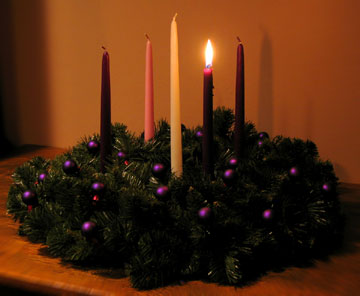
One of the goals of Advent (in many ways a penitential season) is to meditate on our need for a savior. In daily Mass and in the Liturgy of the Hours, we read lengthy passages from Isaiah and the other prophets, who speak boldly and bluntly about the people’s sin. Some of the passages are even a bit humorous. Here are a few:
Hear, O heavens! Listen, O earth! For the LORD has spoken: “I reared children and brought them up, but they have rebelled against me. The ox knows his master, the donkey his owner’s manger, but Israel does not know, my people do not understand.” Ah, sinful nation, a people loaded with guilt, a brood of evildoers, children given to corruption! They have forsaken the LORD; they have spurned the Holy One of Israel and turned their backs on him. Why should you be beaten anymore? Why do you persist in rebellion? Your whole head is injured, your whole heart afflicted. From the sole of your foot to the top of your head there is no soundness—only wounds and welts and open sores, not cleansed or bandaged or soothed with oil (Isaiah 1: 2-6).
Hear this, O House of Jacob, called by the name Israel, sprung from the stock of Judah. You swear by the name of the Lord and invoke the God of Israel, but without sincerity or justice. …. I know that you are stubborn, that you neck is like an iron sinew and you forehead is bronze (Isaiah 48:1, 4).
All of us have become like one who is unclean, and all our righteous acts are like filthy rags; we all shrivel up like a leaf, and like the wind our sins sweep us away. No one calls on your name or strives to lay hold of you; for you have hidden your face from us and made us waste away because of our sins. Yet, O LORD, you are our Father. We are the clay; you are the potter; we are all the work of your hand. … Oh, that you would rend the heavens and come down, that the mountains would tremble before you (Isaiah 64:6-8,1).
The problem is not just a collective one; each of us is personally sinful and needs a savior. If we are honest we must admit that we can be selfish, egotistical, rude, insensitive, prideful, lustful, greedy, unkind, and ungrateful. We can be dishonest, insincere, shallow, inconsistent, double-minded, and uncommitted. We can be stingy, selfish, petty, spiteful, hateful, wrathful, vengeful, and just plain mean. We struggle with laziness, indifference, worldliness, and lack of discipline. We routinely fail to give witness to Christ and to our faith. We fail to submit our will to God, to give good example, to act justly, to show mercy, and to repent. We fail to obey God, lead a holy life, stand up for justice, speak the truth, call sinners to Christ, and pray for others. Did I mention somewhere that we need a savior?
To a large extent, Advent lays out the bad news so that we appreciate the magnificence of the good news of a cure. This is to prepare us for a Christmas that is really the joyful “counterpoint” to sin. After a devoutly celebrated Advent, at Christmas we can declare with ancient Israel, Today is born our Savior, Christ the Lord! Advent sets the stage for Christmas joy by reminding us of the drama of sin that threatens to destroy us. Suddenly, Christ appears to cast out our ancient enemy! And then we can say, Today is born our Savior, Christ the Lord.
One of the great problems in the Church today is the suppression of the “bad news.” Many in the Church prefer not to talk clearly and directly about sin. If it is mentioned at all, it is usually by way of abstractions and generalities. The paradoxical result of this suppression is not a happier Church, but a lukewarm, in some ways sadder one. Largely gone are the religious festivals, the joyful processions, and the confident public expression of Catholic faith.
So, remember this: a good Advent sets the stage for a joyful Christmas. This joy is different from the sentimentality about snow, lights, and tinsel. It is a deep, grateful joy that comes from knowing we are loved and have been rescued despite our sin. Permanent joy and salvation await us if we persevere in running the race of faith. Paradoxically, it comes from being deeply aware of our sinful condition.
Make a good Advent. Listen carefully to its message: “You need a savior!” If you deny sin, you deny the Savior. If you deny the Savior and the need for salvation, then Christmas and the cross are emptied of meaning.
Will Christmas be for you a mere holiday, or will it be a holyday?
This song, “O Come, O Come, Emmanuel,” speaks of Israel as a captive in need of ransom, mourning in exile. But then comes this refrain: “Rejoice, Rejoice! Emmanuel shall come to thee, O Israel.”
The coming of Christ at Christmas was as an infant and thus we don’t usually think of wedding imagery. Yet since the first coming of Christ has certainly already been fulfilled, we now focus more on His second coming, of which the first coming is a sacramental reminder.
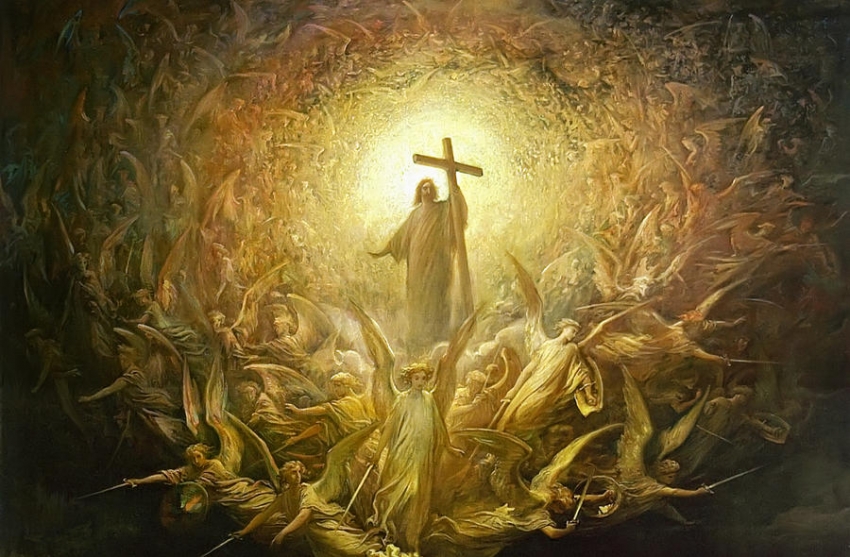
Thus, in Advent, our longing and excitement are also directed to His glorious second coming. Mother Church, the New Jerusalem, our Mother, looks for her groom Jesus to come again all His glory:
I saw the Holy City, the new Jerusalem, coming down out of heaven from God, prepared as a bride beautifully dressed for her husband. And I heard a loud voice from the throne saying, “Now the dwelling of God is with men, and he will live with them. They will be his people, and God himself will be with them and be their God. … I heard what sounded like the roar of a great multitude in heaven shouting, “Hallelujah! Salvation and glory and power belong to our God. Let us rejoice and be glad and give him glory! For the wedding of the Lamb has come, and his bride has made herself ready. Fine linen, bright and clean was given her to wear” (Rev 21:2-3; 19:7-8).
This longing remains until Mother Church, Christ’s beautiful bride, hears these words from Him:Surge amica mea, speciosa mea et veni! (Arise, my beloved, my beautiful one and come!) (Song of Songs 2:10). Her longing cannot be quenched until He comes again in all His radiant beauty and majesty. Until then she longs, looks, and waits.
Although some of her children have attained to this glory, she waits and longs until the number of her elect children are complete and she, in her fullness, will go to be with her spouse forever in beatific glory.
One of the great Advent hymns of the Protestant tradition, “Wake, O Wake,” picks up this bridal theme and “weds” it with Advent longing. This particular translation (from the German) is a masterpiece; it is both biblical and artistic:
Wake, O wake with tidings thrilling; The Watchmen all the air are filling; Arise, Jerusalem, Arise! Midnight strikes, no more delaying; “The hour has come,” we hear them saying; Where are ye all ye virgins wise?
The bridegroom comes in sight Raise high, your torches bright! Alleluia! The wedding song swells loud and strong; Go forth and join the festal throng.
Zion hears the watchman shouting; Her heart leaps up with joy undoubting; She stands and waits with eager eyes! She her love from heaven descending; Adorned with truth and grace unending; Her light burns clear her star doth rise!
Now come our precious crown; Lord Jesus, God’s own Son; Hosanna! Let us prepare to follow there Where in thy supper we may share.
Yes, there is a great wedding feast in every liturgy, and its culmination looks to the glorious second coming of Jesus. This Christmas, look to your wedding garment, which the Lord gave you at baptism to bring unstained to the great judgment seat of Christ. The Bridegroom comes! Let us go out to meet Christ the Lord (cf Matt 25:6).
Here is a performance of the great wedding song of Advent, “Wake, O Wake,” by the choir of Trinity College in Cambridge.
The old Roman Ritual (published in 1946) is a magnificent collection of blessings and prayers. It has some of the most amazing little blessings of things it would never occur to you to find in such a collection. Along with the blessings of expected objects (e.g., statues, religious medals) are blessings, often elaborately laid out, for things such as seismographs, typewriters, printing presses, fishing boats, fire engines, stables, medicine, wells, bridges, archives, lime kilns, automobiles, mountain-climbing equipment, and electric dynamos.
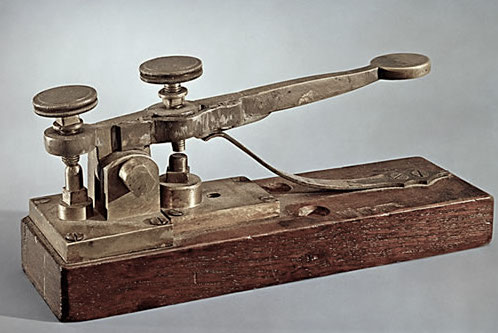
In that old ritual (which it is permitted to use), there is a remarkable prayer for a telegraph—yes, a telegraph. It quite elaborately lays out psalms and antiphons, but I will only present here the prayer of gratitude at the end, just before blessing it with Holy Water.
To my mind, it is also applicable as a prayer, expression of gratitude, and blessing for a computer or for the extended “cloud” of computers known as the Internet. The prayer is both thrilling and fitting. It is a minor masterpiece if you ask me. Though written sometime prior to 1945, and likely after 1830, its basic structure fits well what we do now with the Internet.
Without further ado, here is the prayer, first in the original Latin, and then translated by Father Philip Weller:
Deus qui ámbulas super pennas ventórum, et facis mirabília solus: concéde, ut per vim huic metállo índitam fulmíneo ictu celérius huc abséntia, et hinc álio praeséntia transmíttis; ita nos invéntis novis edócti, tua grátia opitulánte, prómptius et facílius ad te veníre valeámus. Per Christum Dóminum nostrum. Amen.
O God, who walkest upon the wings of the wind, and alone workest wonders; by the power inherent in this metal, thou dost bring hither distant things quicker than lightning, and transferrest present things to distant places. Therefore, grant that, instructed by new inventions, we may merit, by thy bounteous grace, to come with greater certainty and facility to thee. Through Christ our Lord. Amen.
Sign of the Cross + and sprinkling with Holy Water
Magnificent! It almost paints a picture in the mind. Yes, such beauty, and a picture of the swiftness of information going hither and yon, like lightning, or as on the wings of the wind. May this wondrous tool serve to draw us closer to God and not be corrupted by sinful curiosity, hostility, defamation, profanation, or prurient temptations.
One word, “metal,” may need adjusting in order to use it for a computer or the Internet. What word would you suggest (perhaps silicon)? Perhaps simply “computer” would work, but more is in mind: the whole Internet is part of what we are grateful for and ask blessings for. Of course we may not be in a position to bless the entire Internet, and our blessing or prayer of gratitude is only to be directed to our computer, our one portal to the vast communication network. Anyway, this is just a thought.
The video below of the history of the telegraph reminds us that the first telegraph message sent by Samuel Morse was “What hath God wrought?” This almost seems to have influenced the prayer in the ritual!
As Catholics, we open Advent with the New Testament. We read its earliest pages, and the light shows brighter than ever as one covenant passes on and the New Covenant begins. The Groom has found his Bride.
Catholics reverence the whole of the Scriptures and refuse Marcionism, a heresy that (among other things) rejected the Old Testament. However, not all of Scripture has equal authority in its application. We read the Old Testament in the light of the New Testament. Many of the things that the Old Testament pointed to are fulfilled and transposed in the New Testament. We no longer sacrifice lambs, because Christ Jesus is the Lamb of God, who takes away the sins of the world. We no longer require the Jewish temple and its rituals, because Jesus is the Temple. Many of its rituals have been taken up in a transposed way into our Liturgy with Him who is our High Priest.
Yet the searing assessments of the prophets and their warnings of the need to repent from injustice and infractions of the Law ring as true as ever. Jesus came to fulfill the moral Law, not to replace or cancel it—and fulfill it He did.
We are blessed by the Old Testament, but also blessed to be in the times of the New Testament. The author of the Letter to the Hebrews wrote,
On many past occasions and in many different ways, God spoke to our fathers through the prophets. But in these last days He has spoken to us by His Son, whom He appointed heir of all things, and through whom He made the universe (Heb 1:1-2).
I have always cherished the way this verse begins in the old Latin Vulgate: Multifarium multisque modis …. It is so stately in its cadence! But I digress …
As we prepare for Christmas, we ought to meditate on the glory of having the very Word by and through whom God the Father uttered all things into being, pitch His tent among us and speak to us. Jesus is no mere prophet; He is the very Word they heard. There is a glory to the Gospels and the New Testament that cannot be denied. The very Word of God speaks through His own Body, the Church.
St. Bernard of Clairvaux reflected on this truth and on the longing expressed in the Old Testament’s Song of Songs (note that Bernard uses hyperbole):
[The bride, The Church says] Let him kiss me with the kisses of his mouth …. No longer am I satisfied to listen to Moses for he is a slow speaker and not able to speak well (Ex 4:10). Isaiah is a man of unclean lips (Is 6:5). Jeremiah does not know how to speak, for he is but a youth (Jer 1:6). Not one of the prophets makes an impact on me with his words …. For they are a watery darkness and a dense cloud (Psalm 18:12). … But He, the one whom they proclaim, let Him speak to me, Let Him kiss me with the kisses of his mouth; let Him, whose presence is full of love, from whom exquisite doctrines flow in streams, let Him become a spring inside me welling up to eternal life (Jn 4:14). With good reason, then, I avoid trucking with visions and dreams; I want no part with parables and figures of speech. Even the very beauty of the angels can leave me only wearied. For my Jesus utterly surpasses these in majesty and splendor …. Let him kiss me with the kisses of his mouth [The Song of Songs, Sermon 2 by St. Bernard].
And thus as Advent opens we do well to ponder the gift of our Lord Jesus in the Incarnation, to celebrate the new and everlasting covenant wrought by Him and described in the Gospels. We do not discard the Old Testament, but rather interpret it even more nobly through Christ. Isaac, going up Moriah’s height, is a Christ figure; so is Joseph, betrayed by his brothers but also their savior. The crossing of the Red Sea is baptism. The ark of Noah is the Church. The Ark of the Covenant is a prefigurement of Mary, the ark who carried Jesus in her womb and later in her arms. The Scriptures begin in Genesis, in a garden with the tree of life, and they end in the garden described in Revelation, with the same tree of life. The Scriptures begin with a marriage and end with one. The list could go on and on.
This is our blessing: to know God not merely in words, but to know Him who is the Word made flesh. Ponder well the gift of the Word made flesh. The pursuit of lovers in the Old Testament has borne fruit. The lover has found his beloved. And the Bride, which is the Church, cries out in desire, “Let Him kiss me with the kisses of His mouth.”
A blessed Advent to one and all!
The beautiful Advent hymn in the video below summarizes well the joy of the Bride at the arrival of her Groom. It is also a quick summary of the Song of Songs.
The first weeks of Advent focus more on the Lord’s second coming in glory than on His first coming at Bethlehem. The Gospel clearly states that we must always be prepared, for at an hour we do not expect, the Son of Man will come. “Ready” is the key word. But how should we be ready?
The second reading from today’s Mass (Romans 13:11-14) gives us a basic recipe for readiness. We can distinguish five fundamental instructions in Paul’s recipe.
1. Wake up – The text says, … you know the time; it is the hour now for you to awake from sleep. For our salvation is nearer now than when we first believed; the night is advanced, the day is at hand. Let us then throw off the works of darkness and put on the armor of light; let us conduct ourselves properly as in the day, … St. Paul has more in mind here than physical sleep. But consider for a moment some of the aspects of physical sleep. When we sleep we are unaware of what is taking place around us or even of what we are doing. A family member might tell us, “When you were sleeping you were mumbling and snoring!” “Really?” we might reply, “I didn’t realize I was doing that!” Another time we might doze off in front of the television and miss the game-winning touchdown or the critical scene that helped the movie to make sense. Further, when we are asleep our minds are dreamy and confused. Some of the craziest things happen in dreams because the more rational part of the brain is asleep; any absurd thought might manifest itself and seem perfectly understandable. But when we finally do awake, we think, “What was that all about?”
This text, which tells us to wake up, refers to all of this in a moral and mindful sense. What St. Paul is really saying here is that we need to become more aware of what is happening in our life.
We cannot sleep through life like someone dozing on a couch. We need to be alert and aware of what is happening. We need to be morally awake and responsible for our actions. We cannot and must not engage in dreamy thinking that is not rooted in reality or is fundamentally absurd in its premises. Dreamy thinking has to go.
We need to be alert, rooted in what is real and what is revealed. We cannot go on calling good what God has called sinful. We need to wake up, drink the “coffee” of God’s Word, shake off the cobwebs of drowsiness, and start living in the light of holiness rather than in the darkness of deceit and sin.
Waking up also means taking responsibility and exercising authority over one’s life. When we sleep we toss and turn, having little control over our movements. But when we are awake, we take authority over our actions and are responsible for them.
The first instruction in the recipe for readiness is to wake up. The cobwebs of groggy and sleepy behavior have to give way to the alertness of a new mind. There are many scriptures that make a similar point:
Do not be conformed to this world but be transformed by the renewal of your mind, that you may prove what is the will of God, what is good and acceptable and perfect. (Rom 12:2).
Come to your right mind, and sin no more. For some have no knowledge of God. I say this to your shame (1 Cor 15:34).
Now this I affirm and testify in the Lord, that you must no longer live as the Gentiles do, in the futility of their minds; they are darkened in their understanding, alienated from the life of God because of the ignorance that is in them … put off your old nature, which belongs to your former manner of life and is corrupt through deceitful lusts, and be renewed in the spirit of your minds (Eph 4:17-18, 22-23).
Set your minds on things that are above, not on things that are on earth (Col 3:2).
2. Clean up– The text says, … not in orgies … not in promiscuity and lust … and make no provision for the desires of the flesh. Notice the emphasis in this passage on sexuality. This is because the pagan world at the time of Paul was sexually confused and immature. Promiscuity, fornication, homosexual activity, divorce, abortion, and infanticide were all rampant. Sound familiar? We have slipped right back into that pagan immaturity and immorality. This text tells us it is time to clean up, grow up, and take authority over our sexuality, by God’s grace. It’s time to act more like adults than like irresponsible teenagers.
In saying that we should make no provision for the desires of the flesh, the text is indicating we should avoid the near occasion of sin. We should not put ourselves in compromising and/or tempting situations. To make “provision” literally means to “see ahead” or to “look toward” something in such a way as to facilitate it. The text says to resolve ahead of time not to provide occasion for the flesh.
Many people make light of sexual sin today and say that “it’s no big deal” and that “everyone is doing it.” But God says otherwise and speaks very strongly against it in His Word. He does not do this because He is a prude, or wants to limit our fun. Rather, God wants to save us a lot of suffering and to protect the innocent.
What does promiscuity get us? Sexually transmitted diseases, abortion, teenage pregnancies, children born outside of the ideal nuclear and properly formed family, divorce, bitterness, jealousy, broken hearts, and discarded human beings. God is not out to limit our fun; He is trying to protect us. He is also trying to protect marriage and children. With all this promiscuity, it is children who suffer most. Many of them are simply killed by abortion. Those who do survive to be born are often raised in less-than-ideal settings, without both parents in a stable union of marriage. Many are born to teenage mothers who are not ready to raise them.
God says to all of us that in order to be ready, we have to clean up. We have to take authority over our sexuality, by His grace. Promiscuity, pornography, illicit sexual union, and lust have to go. Those who make light of sexual sin have been deceived; it is a very serious matter and God makes this clear in His word:
As for lewd conduct or promiscuousness or lust of any sort, let them not even be mentioned among you; your holiness forbids this. Nor should there be any obscene, silly or suggestive talk; all that is out of place. Instead, give thanks. Make no mistake about this: no fornicator, no unclean or lustful person—in effect an idolater—has any inheritance in the kingdom of God. Let no one deceive you with worthless arguments. These are sins that bring God’s wrath down upon the disobedient; therefore, have nothing to do with them (Eph 5:3-7).
Can you not realize that the unholy will not fall heir to the Kingdom of God? Do not deceive yourselves: no fornicators, idolaters, or adulterers, no sodomites, thieves, misers, or drunkards, no slanderers or robbers will inherit the kingdom of God … Flee fornication … You must know that your body is a temple of the Holy Spirit, who is within—the Spirit you have received from God. You are not your own. You have been purchased at a price. So glorify God in your body (1 Cor 6:9-11).
3. Sober up – The text says, … not in drunkenness … Physically, to be drunk means to have our mind confused due to the influence of alcohol. Conversely, to be sober is to have a clear mind that is capable of making sound judgments.
So much of our battle to be ready to meet God comes down to our mind. There are many fuzzy-headed, lamebrained, crazy, and just plain wrongful notions today that amount to a lack of sobriety. They emerge from the haze of un-sober thinking and from a world that increasingly resembles the Star Wars barroom scene (in a moral sense).
Don’t believe everything you think. Much of what we think has come from a drunken and confused world. Square everything you think with God’s Word and the teachings of the Church.
So, the third instruction in the recipe for readiness is to sober up, to request and receive from God a clear and sound mind. Here are some other Scripture passages that speak to this need:
Therefore, gird up your minds, be sober, set your hope fully upon the grace that is coming to you at the revelation of Jesus Christ (1 Peter 1:13).
Be sober, be watchful. Your adversary the devil prowls around like a roaring lion, seeking some one to devour. Resist him, solid in your faith (1 Peter 5:8).
Let the older men be sober, serious and temperate (Titus 2:2).
4. Lighten up– The text says, … not in rivalry and jealousy … An awful lot of our sins revolve around our sensitive egos. Paul warns elsewhere of other things that flow from this source: enmity, strife, anger, selfishness, dissension, factions, and envy (Gal 5:20).
These sorts of things have to go. We need to be more forgiving if we expect to be forgiven. We also need to be less stingy, more generous to the poor, and less prone to the kind of anger that comes from being thin-skinned or from a lack of humility.
Our biggest sin is pride; it is enemy number one. It has to go and along with it all its minions: envy, jealously, selfishness, hatred, fear, bitterness, a hard and unforgiving heart, and just plain old meanness.
The Lord wants to give us the gift of being more lighthearted and less serious about ourselves; a heart that is loving, generous, considerate, happy for the gifts of others, forgiving, truthful, patient, meek, and open to others; a heart that is less egocentric and more theocentric.
5. Dress up– The text says, But put on the Lord Jesus Christ … If we miss this point, then everything else is just a moralism, more rules about how to live. The moral life of the New Testament is not achieved; it is received. The moral life of the New Testament is not so much a prescription, as it is a description. It describes what we are like when Jesus Christ really begins to live His life in us.
St. Paul says, I have been crucified with Christ; and it is no longer I who live, but Christ lives in me (Gal 2:20). Jesus says, I am the vine; you are the branches. Those who remain in me, and I in them, will produce much fruit. For apart from me you can do nothing (John 15:5). St John says, But if anyone obeys his word, God’s love is truly made complete in him. This is how we know [experience] we are in him: Whoever claims to live in him must walk as Jesus did (1 John 2:5-6).
Hence the moral life is not imposed; it is imparted. It is not achieved; it is received. It is not demanded; it is delivered. There is surely a requirement that the moral law describes, but the requirement can only be met in a real or full sense when Jesus Christ is living in us. If we try to accomplish it solely by our flesh, we are destined to fail.
Hence we must put on the Lord Jesus Christ. We must humbly give Him our life and assent to His kingship and authority over us. The more we surrender, the more He renders us fit to the life He describes. If we really hope to wake up, clean up, sober up, and lighten up, it will have to be a work of His grace.
The Book of Revelation speaks of the garment, the long white robe that is given to each of the saints to wear (Rev 6:11). Later, Revelation 19:8 describes the long white robe (of the Bride of the Lamb) as the righteous deeds of all the saints. It is in this sense that St. Paul tells us to “put on the Lord Jesus Christ.”
Hence, righteousness is given to us like a precious wedding garment. In the baptismal ritual, the newly baptized are clothed in white and told that their garments represent their dignity, which they are to bring unstained to the judgment seat of Christ. In the funeral rite, the cloth placed over the casket recalls the baptismal garment. Yes, the final instruction in the recipe for readiness is to dress up, to “put on the Lord Jesus Christ.” Only Jesus can truly get us ready.
The movie trailer below is for the upcoming move Jackie, about the life of Jacqueline Kennedy. The trailer sets before us the question of what should be exposed and what should remain private in the lives of public figures.
We came to learn, well after John F. Kennedy’s death, that he was quite the womanizer. Although most of the White House press corps was aware of this, it was not reported. Franklin Roosevelt’s palsy was also not publicized; in fact, photographs were taken at angles specifically designed to conceal it. There are many other examples of significant issues in the private lives of public figures that were not disclosed at the time.
Was the past tendency to filter out this sort of information right or wrong? Was it discretion or deception? Is there a limit to the people’s “right to know” or is this right absolute? What issues in the moral lives of our leaders should and should not be disclosed? How public or private should their medical records be?
The trailer depicts a (likely fictional) conversation between Jacqueline Kennedy and a reporter shortly after the death of President Kennedy. Mrs. Kennedy remarks, “People like to believe in fairy tales.” The reporter comments, “People need their history. They need to know that real men actually lived here.” Mrs. Kennedy responds, “I’ve grown accustomed to a great divide between what people believe and what I know to be real.”
The trailer (and I suppose the film) places before us this difficult question: What should and should not be revealed about the lives of public figures?
As a Catholic priest, I observe a great deal of discretion. Many people come to me, not only in confession but also in counseling, and tell me things that I have no business repeating to others. To the degree I am able, I strive to forget what happens in such settings. Discretion and confidentially are critical to counseling, and absolute secrecy is required regarding the Sacrament of Confession. I am comfortable with these boundaries.
Many, however, believe discretion to be a thinly veiled form of hypocrisy. The current thinking seems to be that the public’s right to know is all but absolute. There is a demand for medical records, school records, and other private matters to be disclosed. It is considered respectable journalism to interview people who may have had bad or sinful interactions with public figures, even going back decades. Tell-all books are treated as appropriate reading material, often becoming bestsellers.
I’m not so sure that all of this is helpful. In fact, the public disclosure of highly personal information by the public figures themselves strikes me as a form of immodesty. It is also a strange way to get attention. Prying into the lives of public figures seems to be an example of sinful curiosity at the very least. Reputations are important. Harming someone’s reputation ought not to be done except for a very serious reason. None of us has a spotless record and most of us have done things that we would not want revealed to any but God.
How much is too much? How far is too far? What knowledge does a person (a voter, for example) really need in order to make a proper evaluation? I don’t have a precise answer, but count me among those who find our current norms too intrusive, harsh, and indiscreet.
Is there a drawback to my view? I’m sure that there are many. The discretion exercised in the past is now seen as a reason to be cynical about historical public figures. There may also seem to be varying standards. Why are the private lives of some public figures disclosed while others seemingly get off scot-free?
Despite this, I remain dubious about the value of so much private information being made public; I prefer greater discretion. It may be that many or even most public figures have some less-than-desirable things in their past, even in their present. But that is even more reason to pray for them. Nothing is hidden from God, but do I need to know the details? Often, I do not.
The Lord’s coming is near. And though we have all been well taught that the word “Advent” means “coming,” there is the danger that we think that we are only passively waiting for Him to come. It is not just that the Lord is coming to us; we are also journeying to Him. In fact, as the Advent prayers in the Roman Missal instruct, we ought to run, not walk, and hasten to greet Him as He draws near.
This notion of running to meet God is set forth as a consistent theme in the prayers of the Roman Missal. Consider the following prayers and how the theme of our hastening to go out to meet God, even as He is coming to us, is set forth:
Grant your faithful, we pray, almighty God, the resolve to run forth to meet your Christ with righteous deeds at his coming, so that, gathered at his right hand, they may be worthy to possess the heavenly kingdom (First Sunday of Advent).
Almighty and merciful God, may no earthly undertaking hinder those who set out in haste to meet your Son, but may our learning of heavenly wisdom gain us admittance to his company (Second Sunday of Advent).
Stir up your mighty power, O Lord, and come to our help with a mighty strength, so that what our sins impede, the grace of your mercy may hasten (Thursday of the First Week of Advent).
Grant that your people, we pray, almighty God, may be ever watchful for the coming of your Only Begotten Son, that, as the author of our salvation himself has taught us, we may hasten, alert with lighted lamps, to meet him when he comes (Friday of the Second Week of Advent).
May the reception of your sacrament strengthen us O Lord, so that we may go out to meet our savior, with worthy deeds when he comes, and merit the rewards of the blessed (Post-communion, Dec 22).
So, more than merely waiting passively, we should be running and hastening to meet the Lord.
The image of the prodigal son comes to mind. In this parable, the father sees his son and runs toward him. But at the same time, the son is hastening toward his father with contrition and hope. In the same way, we look for the Lord’s coming during Advent. But the Lord also looks for us to come to Him by faith. Like the prodigal son, we should consider our need for salvation. With contrition (have you been to confession recently?) we should hasten to meet our Lord, who by faith we know is coming to us.
Thus, we are not counseled to wait for the Lord in a passive sense, as though we were sitting around waiting for a bus to arrive. Rather, we are counseled to wait for the Lord in an active sense, in much the same way that a waiter in a restaurant waits on tables. Alert and aware, the waiter carefully observes the needs of the patrons in his care and serves them. Good waiters strive to avoid distraction and to do their job of serving well with an alert swiftness.
Notice, too, how the prayers above indicate what it means to run to the Lord. We should not run aimlessly or in circles. Rather, running to the Lord means
being engaged in righteous deeds (holiness) by God’s grace,
not being hindered by worldly preoccupations and distractions,
learning heavenly wisdom,
receiving the Lord’s mercy unto the forgiveness of our sins,
being alert and ready for the Lord’s coming, with the lamp of our soul trimmed (humble and purged of sin) and burning (alive with fiery love), and
being strengthened by the Eucharist, which is our food for the journey.
St. Paul also speaks of running:
Do you not know that in a race all the runners run, but only one gets the prize? Run in such a way as to get the prize. Everyone who competes in the games goes into strict training. They do it to get a crown that will not last; but we do it to get a crown that will last forever. Therefore I do not run like a man running aimlessly; I do not fight like a man beating the air. No, I discipline my body and make it my slave so that after I have preached to others, I myself will not be disqualified for the prize (1 Cor 9:24-27).
Are you running to meet the Lord or are you just waiting passively? Advent involves looking and waiting, but it also means running to meet the Lord, who is coming to us. Run, don’t walk, to the nearing Jesus!
The name of the piece in the clip below is Domine, ad adjuvandum me festina (Lord, make haste to help me). It was composed by Antonio Vivaldi and its series of eighth notes create the image of energetic, joyful running. Vivaldi loved to run a melody up and down the musical scale. In this piece he created a sense of running up and down the hills as we hasten to the Lord. (The video below goes on to include the Gloria Patri.) Just try not to tap your toe during the first and third movements of the Vespers of Vivaldi in G Major!

 To say that something is “necessary” is to declare that it is so essential that to be without it causes grave if not deadly harm. The word comes from Latin: ne- (not) + cedere (to withdraw, go away, yield). The root sense is that what is necessary is something from which we cannot stray, something from which there is no withdrawal, something we cannot evade. There is an expression in Latin, sine qua non, which literally means “without which not.” Its fuller meaning expresses something so essential that without it, other required things cannot proceed.