A Bishop Speaks To Call His Flock from Sin. Let’s Join Him!

One of the things we have lamented together on this blog is the silence of too many clergy, catechists and parents on the important moral issues of our day. Too many Catholics are uninstructed in basic moral principles.

Surely one of the critical moral issues in our sex-saturated culture is premarital sex and cohabitation (aka “shacking up”). We have discussed this topic on numerous occasions here in order to reiterate the biblical and Church teaching wherein we are commanded to live chastely. For example see:

Fundamentally all the biblical quotes about premarital sex (fornication) can be summarized by this quote from Ephesians:

Among you there must not be even a hint of sexual immorality, or of any kind of impurity, or of greed, because these are improper for God’s holy people. Nor should there be obscenity, foolish talk or coarse joking, which are out of place, but rather thanksgiving. For of this you can be sure: No fornicator, no impure or greedy person—such a man is an idolater—has any inheritance in the kingdom of Christ and of God. (Eph 5:3-5)

Now these are very strong and clear words. Fornication is a very serious sin which excludes one from heaven. Those who die unrepentant of it go to hell.

Yet, despite the clarity and gravity of this, I will say, that growing up in the church in the late 1960s and 70s I cannot recall ever hearing this clearly taught in a parish that I attended. I think we had some notions that adults might not approve of teenagers having sex, but we simply thought this had to do with the fact that they were old fuds who were uptight. Further, they did not listen to Rock music, so what did they know? But no one ever sat down and reasoned with me from Scripture, I never heard a sermon on it, and even my parents, good though they were, didn’t really talk about sex with us, except the “facts of life talk.”

We have to do better. I have tried as a priest to be clear from the pulpit about this. Further, I try each year to talk with 7th and 8th graders about the sinfulness of fornication. Last year I also preached to our local Catholic High School students. And I tried to give them the clear biblical teaching I never got.

More good news on this front is that Most Rev. Michael J. Sheehan Archbishop of Santa Fe has recently issued a pastoral letter on the question of premarital sex and cohabitation (i.e. living together outside marriage). In it he clearly calls cohabitation a mortal sin and instructs young people not to cohabitate. He calls on pastors to ensure proper instruction and formation of young people in this regard

Here are some excerpts:

We are all painfully aware that there are many Catholics today who are living in cohabitation. The Church must make it clear to the faithful that these unions are not in accord with the Gospel, and to help Catholics who find themselves in these situations to do whatever they must do to make their lives pleasing to God.

First of all, we ourselves must be firmly rooted in the Gospel teaching that, when it comes to sexual union, there are only two lifestyles acceptable to Jesus Christ for His disciples: a single life of chastity, or the union of man and woman in the Sacrament of Matrimony. There is no third way possible for a Christian. The Bible and the Church teaches that marriage is between one man and one woman and opposes same sex unions….

[Cohabitors] should marry in the Church or separate. Often their plea is that they “cannot afford a church wedding” i.e. the external trappings, or that “what difference does a piece of paper make?” – as if a sacramental covenant is nothing more than a piece of paper! Such statements show religious ignorance, or a lack of faith  and awareness of the evil of sin.

Christ our Lord loves all these people and wishes to save them – not by ignoring their sin, or calling evil good, but by repentance and helping them to change their lives in accordance with His teaching. We, as His Church, must do the same….

Many of these sins are committed out of ignorance. I ask that our pastors preach on the gravity of sin and its evil consequences, the 6th and 9th Commandments of God, and the sacramental nature and meaning of Christian marriage. Our catechetical programs in our parishes – children, youth, and adult – must clearly and repeatedly teach these truths.

The Full Document can be read here Pastoral Care of Couples Who are Cohabitating

Bravo for Archbishop Sheehan. Premarital sex, cohabitation and other forms of unchastity are just too serious and too common fro us to remain silent or unclear.

I am personally a fan of going right to the Scriptures and reading the texts to young people right out of the Bible. The texts are beautifully clear and unambiguous. To this end, I assembled some years ago a list of New Testament Scriptures on this subject. If it can be of some help to you I have put it in PDF format here: Biblical Texts On Premarital Sex (Fornication).

Please remember not merely to leave this important text to clergy. Clergy count on the help of parents, catechists and church elders to reinforce and personally testify to young people on this matter. Encourage your priests and deacons. Indeed, I would say pressure them, if they are not already teaching clearly on this topic. We absolutely must be clear on this topic and so many others. Consider printing out the PDFs in this post and make use of them in this great task of teaching and proclaiming the Kingdom of God.
Walking in the Footsteps: In Search of Truth

Honoring Christ’s Victory over Death

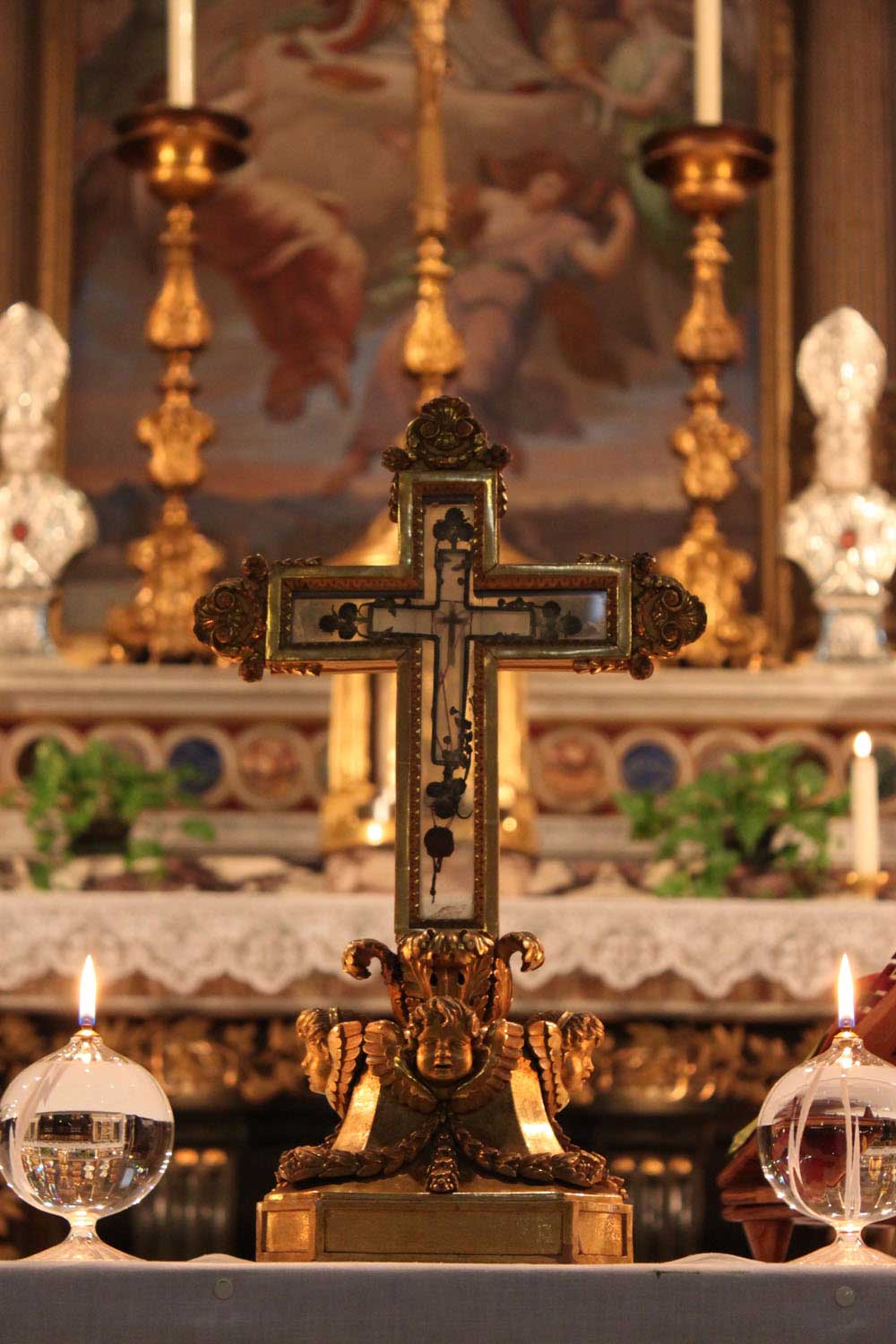
The church (San Marcello) we walked to today dates back to the late fourth century. Walking through the normally busy streets of Rome in the quiet morning helps us to meditate on what it might have been like for Saint Marcellus as he was taken prisoner shortly after he was named pope. In 308, during the Diocletian Persecution, he was arrested and taken to the imperial stables where he was forced to work until he died soon afterwards. Less then 100 years later, a church was built on this very sight in honor of the holy pope who gave his life rather than reject Christ. Today’s church is therefore a great reminder of Christ’s victory over evil.

Encountering the Cross

In today’s readings at Mass we also encounter young men who were willing to give their lives rather than reject their faith in the true God. Shadrach, Meshach, and Abednego were bound and thrown into a fiery furnace because they refused to worship a false god. Yet Jesus tells us in the Gospel that “the truth will set you free.” Though bound and thrown into the fire, the young men were saved by God and set free. God’s truth is greater than human wickedness. And this truth is encountered in the cross of Jesus Christ. By taking our sinfulness upon himself and nailing it to the cross, Jesus has destroyed sin and death. The truth is that through our baptism, we too have died with Christ and now live with him. God has set us free from our slavery to sin and death and has given us new life in Christ. Let us truly receive this gift He has given to us in our baptism so that as we approach Holy Week, we may let this new life affect every aspect of our lives.

Written by Chris Seith

Photos by Fr. Justin Huber

Freedom for What?

“I’m free, to do what I want, any old time!” insisted the Rolling Stones. Their song reflects how many people today understand freedom: It’s about doing whatever we want, whenever we want to.

Jesus, on the other hand, spoke in today’s gospel of a freedom not to do as we please, but the freedom to do what is pleasing to God; a freedom that involves not just the right to make choices, but the freedom to choose what is right; a freedom not from discipline but dependent on discipline; a freedom that doesn’t give us a license to sin, but a freedom that liberates us from sin; a freedom not just to “be you and me,” but a freedom to become all we were meant to be.

This freedom is rooted in a knowledge of the truth- a truth that is not just a body of knowledge, but a truth who is a person, Jesus Christ our Lord. What Jesus is saying to us today, then, is that if we follow him and live as he taught, we will truly be free- free from sin, free from unhappiness, free to love, free from fear, free to be his brothers and sisters, free to be sons and daughters of God.

Readings for today’s Mass: http://www.usccb.org/nab/041311.shtml

Photo Credit: tim geers via Creative Commons

A Request for Your Input on How We Should Address the Deficit and Debt

The public debate over our deficit and astonishing National Debt is only going to get more heated over the next months. As a priest and not an economist I want to limit my reflections to a few moral considerations involved and what might important to consider as the politics of the issue plays out. But, above all I would like to hear from you as to some of the practical and moral considerations you think should hold sway in this national debate.

In framing this particular post I would like to reference a blog post over at the Faith in Public Life site, a site generally left of center in the political world. It asks the question, “Will the Catholic Bishops Stand up Paul Ryan.” Here are some excerpts:

Rep. Paul Ryan of Wisconsin, the intellectual darling of the Republican Party, has proposed a 2012 budget plan that would end Medicare and Medicaid as we know it. Ryan frames his dismantling of bedrock social safety nets as a “moral imperative” to save us from spiraling debt. House Majority Leader Eric Cantor, pushing the plan this weekend, callously argues that “we have a safety net in place in this country for people who frankly don’t need one.”

Simply put, seniors and vulnerable families are being used as pawns in an ideological agenda whose end game is nothing less than wiping away the New Deal. Given that Ryan, a Catholic, has claimed the moral high ground, I’m challenging Catholic bishops to…speak out against this draconian proposal…..

Where is this Catholic voice today?

Bishops were influential (and controversial) actors during recent legislative battles over health care reform. They clearly have the stomach for tough political fights. Will they now take on Paul Ryan and a Republican Party pursuing a radical agenda that is antithetical to a Catholic vision of the common good?

The full article is here: Will Catholic Bishops Stand Up to Paul Ryan?

Well, OK, The article is somewhat polemical in tone using words such as callously ideological agenda, draconian, and radical agenda. The post does seem to admit of the existence of spiraling debt, yet its main purpose seems more to be anti-republican than to be proactive in suggesting specific practical solutions or particular budget cuts that are more acceptable.

For the record, Democrats too have had to make hard choices and don’t always get the priorities right. Here in the District of Columbia, an exclusively Democratic City, (there simply ARE no Republicans in City Leadership), the Mayor and certain City Council Members have  suggested the total elimination of the Neighborhood Investment Act (an affordable housing and blighted neighborhood redevelopment fund that is funded by a percentage of taxes in targeted areas such as entertainment corridors and the like).  At the same time the Washington Convention Center and Sports Authority retains 100% of its budget. This Democrat-dominated city easily finds money to build baseball stadiums, fund waterfront preservation, and do downtown redevelopment, while the poorer neighborhoods are simply being written out of the proposed budget. These are tough economic times, and those of us who support the the Neighborhood Investment Act understand that cuts are going to be necessary.  But a total elimination of the fund, while projects enjoyed by relatively wealthy citizens remain fully funded, is hardly having proper priorities. And in all this, there isn’t a Republican in sight.

So, partisan sparring aside, what might be some considerations in the budget tightening that seems inevitable? I can only suggest some and ask your help in completing the list.

1. Let’s admit that overspending is an American problem. The fact is we’ve been doing it for decades. And the problem isn’t just at the Government level. Most people in this country carry a frightening amount of debt: credit cards, home mortgages, auto loans, second mortgages, student loans, equity loans, and did I mention credit cards? Bankruptcy, once considered a disgrace, is now considered a viable financial strategy. Many of us are in, way over the top. Collectively speaking, we just don’t seem very good at curbing our desires and only buying what we can afford.  Scripture says, Owe no debt to anyone (Rom 13:8). I will admit that  home mortgages and car loans may be a necessary evil, but most other forms of debt are signs that we are living beyond our means.

2. The National Debt is over 14 Trillion Dollars. You want to see something scary, look here: Debt Clock I watched the debt clock for just one minute and watched the debt increase by 1.2 million dollars, in just a minute. Some argue today that this talk of the deficits and debts is just a ginned up crisis. “We’ve been talking about a collapse for decades now and its never happened.” But we’ve never seen anything like this. 14 trillion, and over a million a minute is simply not sustainable. No reasonable person can think this is nothing to worry about. We DO have to get serious about spending, and soon. I am not an economist, but I DO have common sense. We need to get serious. Morally speaking we are stealing from future generations and saddling them with an enormous burden. It isn’t right and we do need to take action to dramatically reduce spending

3. But we seem locked into a dependency/entitlement cycle that is hard to break. It is not just the poor who are dependent. There is a huge amount of corporate welfare. Certain powerful and certain “politically correct” industries receive large subsidies from the government. We pay farmers not to plant, we subsidize things like ethanol, prop up failing industries, rescue banks, and car manufacturers.  There may be an argument for cutting over all corporate taxes at times, but why should we be giving certain companies and industries lots of money in grants and subsidies?

We also do silly things like “cash for clunkers” programs,  we pay wealthy beach-front home owners to rebuild their homes when they are destroyed by hurricanes, even though it is foolish to build on sand (Matt 7:26), and so forth. Further we subsidize a lot of nice, but not critical things, like symphonies, art museums, performing arts centers, Public Television and the like.

Recently Wolf Trap (a performing Arts Center here in the DC area) sent out pleas for everyone to flood congress with protests that they might loose 30 million in annual funding due to proposed cuts. But why should taxpayers give that sort of money so that fairly wealthy people can bring picnic lunches and a bottle of wine to listen to music on the lawn of Wolf-Trap?

Wolf Trap argues they cannot survive without the money. But how has Wolf Trap, a high class destination performance site, gotten so dependent on the Government? How and why has corporate America become so dependent on subsidies? Why do we pay farmers not to plant? And so on.

Now, everyone involved argues that they need this funding. And so we seem quite locked into a dependency cycle and seem to feel entitled to a living, or at least that our favorite activities and causes be funded. Don’t cut my program, cut the other guy’s program. Don’t raise my taxes, raise his. Hello 14 Trillion.

4. The article above is baiting the Bishops to enter the fray. But it would seem they can only enunciate certain general Catholic principles such as care for the poor, an equitable sharing of the burden of cuts in other areas of the budget, and proper balance between subsidarity and solidarity.  I surely know that the genuinely poor should be cared for before things like Wolf Trap or the Washington Convention and Sports Authority. But there are many areas in the budget debate wherein reasonable men and women will differ and I think the bishops ought to be very careful before over addressing the specifics. The temporal order is more the domain of the laity. It is also a true fact that the Catholic faithful are politically divided and that this limits the bishops influence in the public policy debate.

5. I am interested in hearing your concerns and your sense of priorities as the budget battles heart up. I am particularly interested in hearing from you if you are a member of the laity, for the temporal order is especially your area. I would help if blatant political posturing be kept minimal here. Perhaps if we focused more on what areas of the budget should be protected and what areas might be able to be cut or eliminated.

Here are a couple of videos from the Faith in Public Life site mentioned above. The First video has a tone that I consider rather unhelpful in the debate as it seems to appeal to a sort of class-warfare mentality. The second video however I think is more appropriate in its tone for this sort of discussion. As Catholics, in a Church with a wide political spectrum, mutual respect and a careful moderation of our tone is helpful to having an authentic discussion.

Walking in the footsteps: In season and out

“When he entered Rome, Paul was allowed to live by himself, with the soldier who was guarding him.” (Acts 28:16)

Paul’s final days

The book of Acts ends with Paul’s arrival in Rome and his preaching of the Gospel of Jesus Christ there while he awaits trial before the Roman emperor. Paul had been arrested for treason in Jerusalem, but he appealed to the emperor and so was transported to Rome for trial. He was held under house arrest at a Christian house in Rome, where he may have penned his Letter to the Philippians. Although the Bible does not record it, tradition holds that he was tried, found guilty, and sentenced to death by beheading sometime in the mid-60s AD in Rome.

Today’s church, Santa Maria in Via Lata (St. Mary’s on Broad Street), lies adjacent to the Corso, from Roman times a major street running out the north side of the city. One tradition holds that this was the very site of Paul’s house arrest, the Christian home where he spent the last few years of his life. Archaeological studies have found remnants of a building dating back to the first century AD under the current church.

Spreading the Gospel in season and out of season

The ending of the book of Acts signifies the fulfillment of the words which Jesus had spoken to his apostles: “You will be my witnesses in Jerusalem, throughout Judea and Samaria, and to the ends of the earth.” (Acts 1:8) Indeed, Paul’s preaching of the Gospel in Rome – the Caput Mundi, the center of the world – started a chain of events which would end with the entire Roman Empire accepting the Christian faith. Paul, of course, could not have foreseen this. All he knew was that he had been entrusted with the Gospel of Jesus Christ, and that he was called to be faithful to that message even under the duress of his confinement. We, too, can promote the spread of the Kingdom by holding fast to that same Gospel and preaching it in season and out of season, knowing that God’s Providence will bring our efforts to fulfillment.

Written by Aaron Querishi

Photos by Fr. Justin Huber

Lifted Up; Arms Open Wide

Kevin and Chrissie were two individuals I became acquainted with during my seminary days. Chrissie was Kevin’s mother. At one time, Chrissie had been a nurse and Kevin an aspiring football player. But then Chrissie became an alcoholic, and Kevin soon followed suit. They became homeless, and when not in jail, they would roam the streets, shouting obscenities, getting into fights, and passing out on the sidewalk.

While praying one night, I shook my fist at God, demanding to know why he allowed something so terrible to have happened. But as I shouted, God answered by powerfully impressing upon my mind a vivid image of the cross. I felt chastised but peaceful, because this experience reminded me of an essential truth: To know God, we need to know the cross; without the cross, we can’t really understand God.

Jesus says as much in today’s gospel. People had asked, “Who are you?” To which Jesus replied, “You will know that I AM- you will know that I am God- when I have been lifted up” – lifted up on the cross.

To see Jesus on the cross is the key to understanding who Jesus really is. On the cross, we see humility, obedience, suffering, mercy, forgiveness, glory, kingship, sacrifice, priesthood, death, and victory over death. But most importantly, what we see on the cross is love. Because when Jesus was lifted up, he stretched out his arms, as if to welcome us into the eternal embrace of his love. Truly, to know the cross is to know Jesus. And to know Jesus is to experience his love.

Readings for today’s Mass: http://www.usccb.org/nab/041211.shtml

Photo Credit: iom_mark via Creative Commons

On the Connection between Greed, Theft and Sexual Immorality

Over the years, as I have taught on the matter of sexual morality, to both young people and also couples getting ready for marriage, I have noticed a pattern in the Biblical texts: sexual immorality is quite often linked or closely associated with references to greed and theft. This link has become clearer and more understandable to me over the years. For, greed is excessive desire to possess wealth or goods, it is the insatiable desire for more. This is closely linked to lust which is an inordinate desire for the pleasures of the body.

Thus the lustful, the sexually immoral and unrepentant person says, in effect: I want sexual pleasure for myself. I do not not want to pay any “price” for it by seeing it in relationship to other goods and people. I do not want to see it in relationship to the institution of marriage, or the love of a spouse,  or family, or children. I do not want commitments or responsibilities. I merely indulge in sex because I want it. All that matters is that I want it.

Many go further to accept few limits on what they want, despising norms that in any way seek to limit their access to sex, or to place it in a wider and more responsible context.

For many today, sex is simply something they want. And merely the fact that they want it makes it right. Never mind that lust and sexual immorality have had devastating effects on marriage and family, that as promiscuity has soared so have divorce rates, abortion, single parent families, children without intact families, AIDS, sexually transmitted diseases, broken hearts, and the like. Never mind all this. For many, the merely the fact that they want sex makes it right and excludes any one “telling them what to do.”

And this is greed, the insatiable desire for more, or the inordinate desire for things, such that they are considered apart from wider norms that limit desires with the boundaries of what is reasonable and in service of the common good. Greed cares little for the common good, for the needs and rights of others. Greed just wants what it wants. Lust is very close to greed in that it is also and inordinate desire for bodily pleasures apart from any consideration of the needs of others or of what it just, right and reasonable.

Let’s take a look at some of the texts wherein the Scriptures seemingly connect greed and sexual immorality. Commentary by me on each of them follows in red.

1. But among you there must not be even a hint of sexual immorality, or of any kind of impurity, or of greed, because these are improper for God’s holy people….For of this you can be sure: No sexually immoral, impure or greedy person….has any inheritance in the kingdom of Christ and of God. (Eph 5:3,5)

The connection here between greed and fornication (porneia), translated here as sexual immorality,  is not spelled out. Reading the text by itself might permit the possibility that it is only coincidentally connected to sexual immorality. But as seen below there are a good number of texts that connect sexual immorality to similar notions of greed and covetousness. Hence we ought to note the connection. That the connection was not developed or explained my signal us that the early Christians saw the connection as more implicit and obvious that we moderns.

2. Put to death, therefore, whatever belongs to your earthly nature: sexual immorality, impurity, lust, evil desires and greed, which is idolatry. (Col 3:5)

Here the list is broadened to include lust, and all evil desires. These are connected in the text to greed, and greed in turn is equated to idolatry.

Idolatry values something or someone in a way that hinders or surpasses the love, trust and obedience we owe to God. It wants the thing, rather than God who made the thing. Through greed we excessively desire things, such as sex, money, power, creature comforts, and they take on greater importance for us than God, or what God sets forth for us to obey. Through greed these things become idols since they surpass God in importance for us. We prefer them to God, we obey our desires more than God. God can take a number and wait, I want what I want, and that is all that matters.

And for many today, and apparently when these text were written, sex is more important than God. Hence the connection to greed.

3. You shall not covet your neighbor’s wife. (Ex 20:17)

The 6th Commandment had already forbidden the act of adultery. But note here, how this commandment goes deeper, indicating that we are not to covet. In speaking of what it means to covet the Catechism says: The sensitive appetite leads us to desire pleasant things we do not have…These desires are good in themselves; but often they exceed the limits of reason and drive us to covet unjustly what is not ours and belongs to another or is owed to him. The tenth commandment forbids greed and the desire to amass earthly goods without limit…..When the Law says, “You shall not covet,” these words mean that we should banish our desires for whatever does not belong to us. Our thirst for another’s goods is immense, infinite, never quenched. Thus it is written: “He who loves money never has money enough.” (CCC # 2535-2536).

Hence, to covet the wife of another includes both a sexual desire for her and a greed that wants to have her.

4. For from within, out of men’s hearts, come evil thoughts, sexual immorality, theft, murder, adultery, (Mk 7:21)

Here again note that in a verse that includes fornication and adultery, is included the word theft, referring to the unjust possession of something. The fornicator and adulterer  steals what does not belong to them. Sexual intimacy belongs to the marriage bed alone. Hence the unmarried person and adulterer take what is not theirs. Clearly antecedent to most, if not all theft, is greed.

5. For this is the will of God, your sanctification; that is, that you abstain from sexual immorality; that each of you know how to possess his own vessel in sanctification and honor, not in lustful passion, like the Gentiles who do not know God; and that no man overreach and defraud his brother in this matter because the Lord is the avenger in all these things, just as we also told you before and solemnly warned you. For God has not called us for the purpose of impurity, but in sanctification. So, he who rejects this is not rejecting man but the God who gives His Holy Spirit to you. (1 Thes 4:3-8).

This text not only links sexual immorality to greed but also to theft, and in a wider sense injustice. For, to fail to live chastely both overreaches and defrauds.

The Greek word here translated as overreach is υπερβαινειν (huperbainein). This word means, “to go over,” to overpass certain limits, to transgress; to go too far, i. e., to go beyond what is right or due. Hence again, we can see how greed is tied into sexual immorality, for it is desire overreaching, going too far, beyond what is reasonable, due or right. The lustful person is greedy because they want what they want no matter if it is excessive or wrong. All that matters is that they want it. And this is greed.

The word translated here as “defraud” πλεονεκτει (pleonektei) is related to covetousness and greed since it emphasizes gain as the motive of fraud. Thus, the sexually immoral person defrauds others, the sexual partner, families and society as a whole. They do this by thinking more of what they want, than what is right or what it might negatively do to others. They act fraudulently for they act as though they were married when they are not, and they do this to steal the privileges of marriage.

6. Do you not know that the wicked will not inherit the kingdom of God? Do not be deceived: Neither the sexually immoral nor idolaters nor adulterers nor male prostitutes nor homosexual offenders, nor thieves nor the greedy nor drunkards nor slanderers nor swindlers will inherit the kingdom of God. (1 Cor 6:9-10)

Again, simply note that sexually immoral persons are numbered among or along side thieves and swindlers. They are  akin to thieves for they take what does not belong to them, and they swindle because obtain through deceit. The deceit is that they implicitly claim the status of a married person by grasping its privileges and rights,  but they have not taken up the duties of marriage.

Hence the mention of thieves and swindlers along with the sexually immoral may not be coincidental, but may imply  “birds of a feather.”

7. Marriage should be honored by all, and the marriage bed kept pure, for God will judge the adulterer and all the sexually immoral. Let your manners be without covetousness, contented with such things as you have; for God has said: I will not leave you, neither will I forsake you. (Heb 13:4-5)

In other words, don’t be greedy and steal the privileges of marriage bed by adultery, premarital sex, or any indulgence of sexual pleasure outside marriage. If you are not married, it is not yours. If you are married, it is only yours with your spouse. Be content with what you have and stop being greedy or covetous.

Hence we see demonstrated a rather consistent scriptural connection between sexual immorality, greed and theft.

Sexual intimacy is a prerogative and privilege of marriage. It exists to build up marriage, to encourage recourse to marriage, and to help knit the spouses together in a fruitful love. To snatch sex away from its only proper place is to unjustly possess that which is not mine, it is theft. And scripture connects this stealing to greed and covetousness. Greed is the excessive desire to posses, beyond what is just or reasonable. If yielded to we take what is not ours, simply because we want it.

Many today claim they can do as they please in terms of sexuality and, many also boast of their sexual freedom and exploits. The entertainment media celebrates sexual freedom. But it would appear that scripture sees such sexual exploits not as liberation, but as theft and greed.

It is true some act in weakness, some fall, but are repentant. Surely God is rich in mercy for such souls as these.

But as for those who celebrate sexual immorality, they ought to consider that what they call good, God calls sin, God calls greed, God calls theft.

For those willing to see, God is waiting and God is willing. This video is a reminder of God’s saving mercy.

Walking in the Footsteps: Fidelity

The Witness of Martyrdom

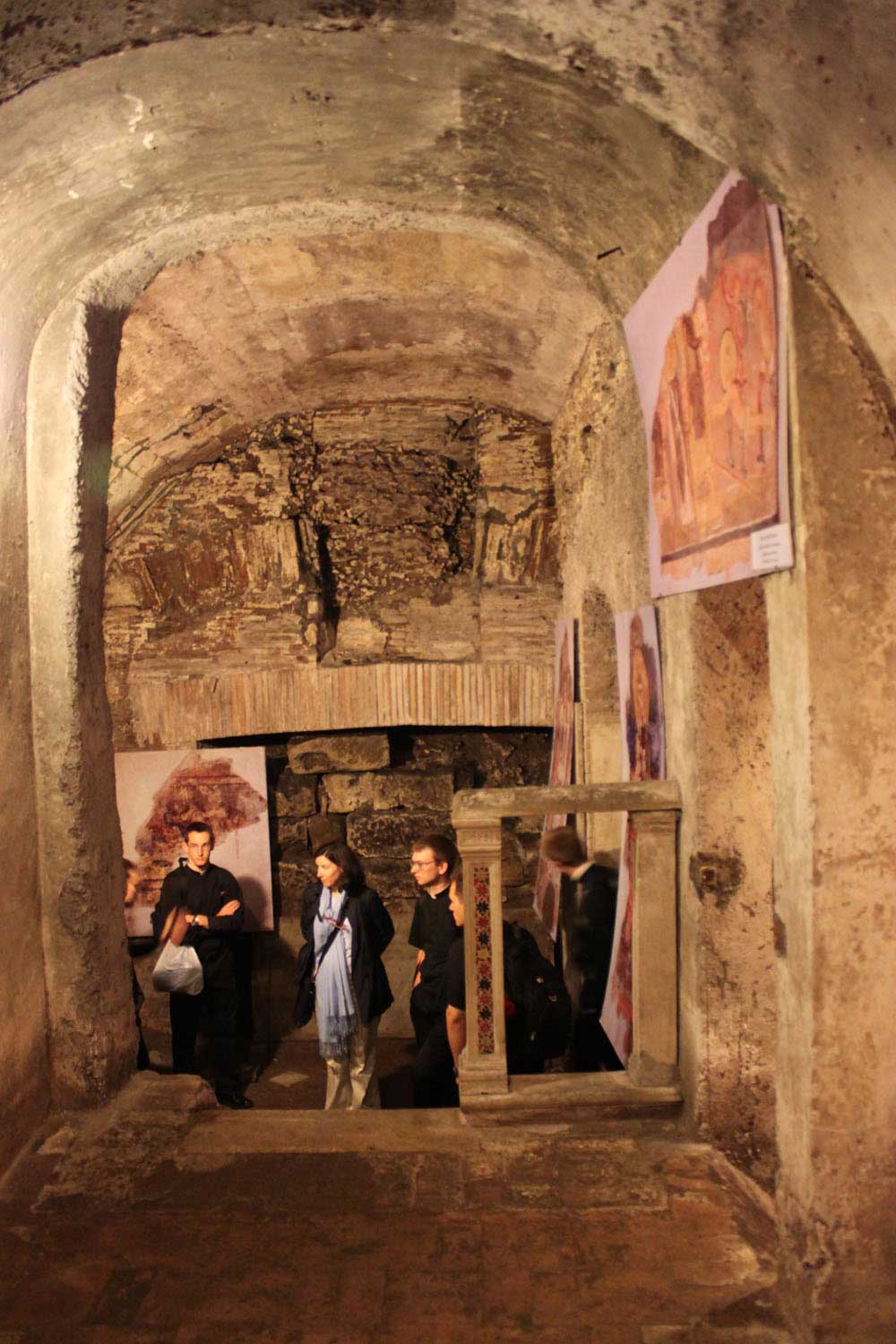
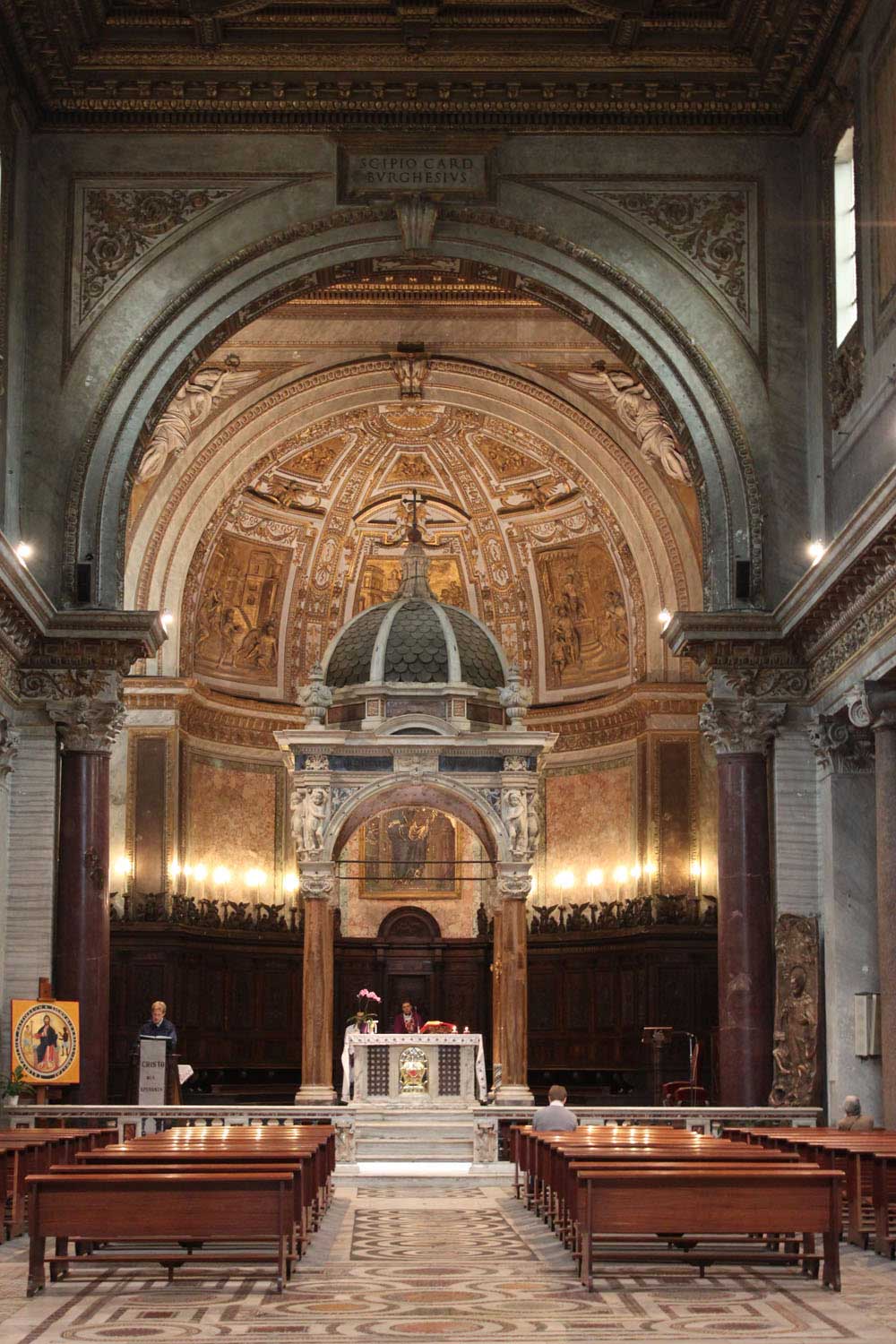
Today’s pilgrimage brings us to the Basilica of San Crisogono in Trastevere.  Situated on the site that is believed to have once been occupied by the oldest Church, built as such, in Rome.  The church honors the memory of Saint Chrysogonus, a Roman military officer who was martyred under Diocletian at the Northern Italian town of Aquileia in 304. His veneration in Rome dates back to at least the Roman Synod of 499, which mentions the church as the “Titulus Chrysogoni.” The church even has a Washington connection: it is administered by the Trinitarian Order, the same order that runs DeMatha high school. Saint Chrysogonus has the added distinction of being venerated by both the Catholic and Orthodox Churches.

Our Call to Fidelity

The theme of martyrdom ties in closely with the readings for the day, which recall two women accused of adultery: Susana, who is aided by the prophet Daniel and the unnamed woman, who is added by Jesus. One is innocent, the other guilty, but both find themselves attacked by those acting out of a lust for power and pleasure.  Their example provides us with lessons to consider as we make our way as pilgrims through the world. First, in the face of guilt, we must renew ourselves by acknowledging our guilt and asking for God’s forgiveness. Second, in the face to unjust attacks on faith and on the Church, we must continue to strive for holiness in witness to the Gospel of Christ, which infuses our lives with purpose and finality.  And finally, in the face of the uncertainties and challenges of life, we must stand undaunted, living with the hope that God’s grace will ultimately overcome and transform them.

Blog and Photos by Fr. Justin Huber