
Saint or Ain’t? A Homily for the 16th Sunday of the Year

We live in difficult times for the Church; from many sectors the very legitimate cry for reform goes up frequently. Beyond the sexual abuse scandal there are also deep concerns regarding the uncertain trumpet of Catholic preaching, lukewarm and nominal Catholics, an overall lack of self-discipline among Catholics, and a lack of disciplining by the bishops and clergy of those Catholics (lay and clergy) who cause scandal. The list of concerns is long, and in general I have been sympathetic on this blog to the need for reform and greater zeal in the Church.

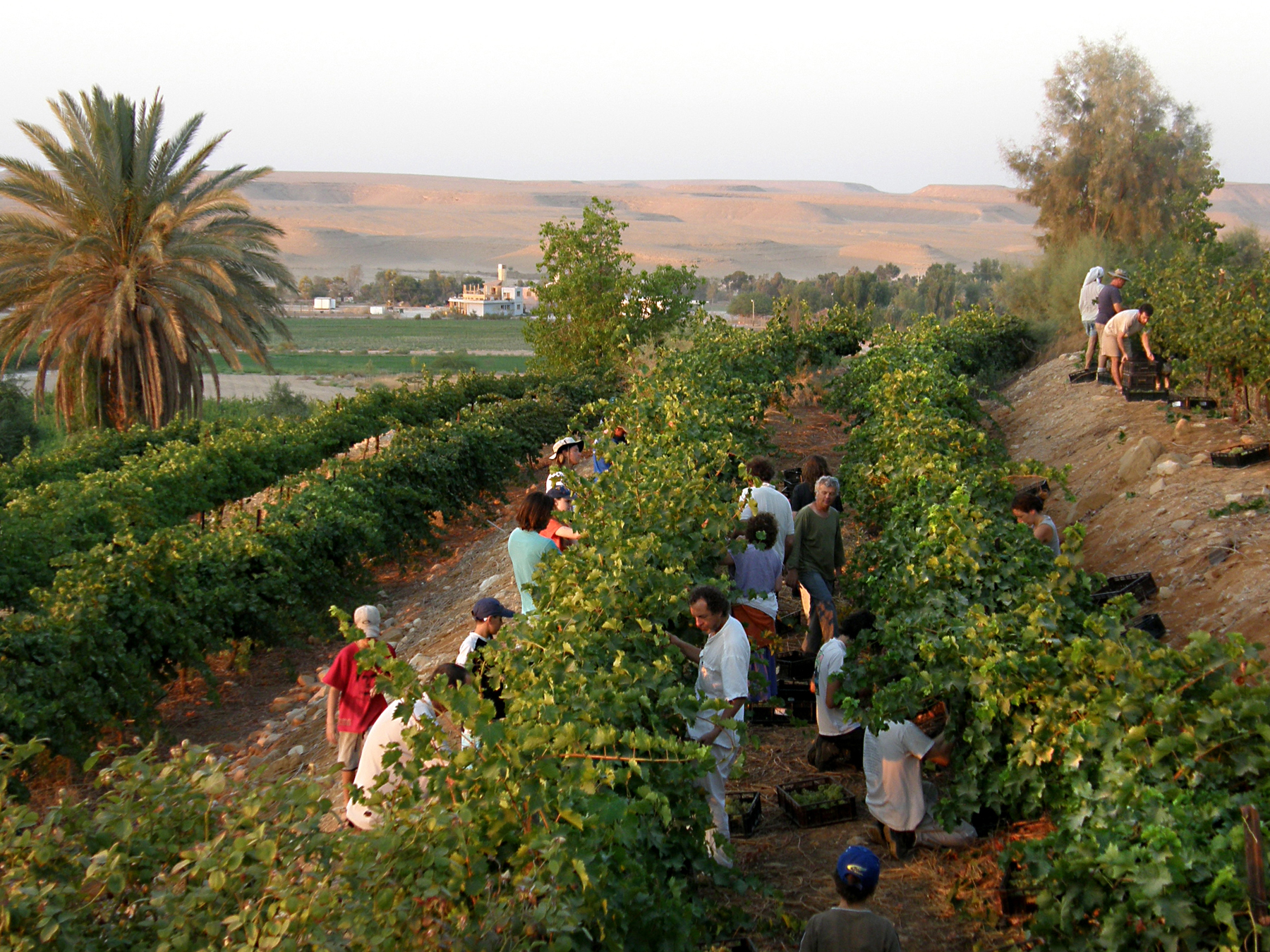
The Gospel this Sunday, however, featuring the Parable of the Wheat and Tares, cautions against overzealousness in the attempt to root out sin and sinners from the Church. The Lord’s warning to the farmhands who wanted to tear out the weeds was that they might harm the wheat as well. He wants them to wait until the harvest. There will come a day of reckoning, but it is not now.

This does not mean that we are never to take notice of sin or to rebuke a sinner. There is certainly the need for discipline in the Church; other texts call for it as well. But today’s Gospel is meant to warn against a scouring that is too thorough, a puritanical clean sweep that overrules God’s patience and seeks to turn the Church from a hospital for sinners into a germ-free (and hence people-free) zone.

We are going to need to depend on God’s patience and mercy if any of us are to stand a chance. People who summon the wrath of God upon (other) sinners may end up destroying themselves as well. We all have a journey to make from being an “ain’t” to being a saint.

Let’s allow today’s Gospel to give us some guidance in finding the right balance between the summons to reform and the summons to patience. The guidance comes in four steps.

I.  WAKE UP. Jesus proposed another parable to the crowds, saying: “The kingdom of heaven may be likened to a man who sowed good seed in his field. While everyone was asleep his enemy came and sowed weeds all through the wheat, and then went off.”

Notice that everyone was sleeping when the enemy sowed weeds. It is a great mystery as to why God allowed Satan to do this in the first place, but there is far less mystery as to why Satan has been so successful in our times. The weeds are numerous and are vigorously growing. Part of the reason for this is that we in the Church have been sleeping while Satan has been steadily sowing his weeds among us.

Don’t just blame the Church leadership (although we certainly share plenty of the blame). Many throughout the Church have been in a deep moral slumber. Too many Catholics will watch anything, listen to anything, and expose themselves to anything. We just “go with the flow,” living unreflective, sleepy lives. We also allow our children to be exposed to almost anything. Too many parents don’t know enough about what their children are doing: what they watch, what they listen to, where they are surfing on the Internet, and who their friends are. We rarely think of God or His plan for our lives. On the whole, our priorities are more worldly than spiritual. We are not awake and wary of sin and its incursions; we are not outraged. We take little action other than to shrug. We seem to be more concerned with fitting in than in living as a sign of contradiction to the ways of the world.

Church leadership, too, has been inwardly focused. While the culture was melting down beginning in the late 1960s, we were tuning guitars, moving the furniture in the sanctuaries, debating about Church authority, engaging in gender wars, and having seemingly endless internal squabbles about every facet of Church life. I do not deny that there were right and wrong answers in these debates and that rebellious trends had to be addressed, but while all this was going on Satan was sowing seeds and we lost the culture.

We are just now emerging from 50 years in a cocoon to find a world gone mad. We who lead the Church (clergy and lay) have to admit that this happened on our watch.

It is long past time to wake up to the reality that Satan has been working while we’ve been bickering and singing songs to ourselves.

Blaming one side of the Church or the other, faulting this kind of liturgy or that, is not very helpful because the focus is still inward.

It’s time to wake up and go out. There is work to be done in reclaiming the culture for Christ and in re-proposing the Gospel to a world that has lost it.

Step one in finding a balance between the need for reform and the need for patience is to wake up.

II.  WISE UP. When the crop grew and bore fruit, the weeds appeared as well. The slaves of the householder came to him and said, “Master, did you not sow good seed in your field? Where have the weeds come from?” He answered, “An enemy has done this.”

Part of the sobriety we have to regain is the understanding that we have an enemy who hates us—Satan. He is responsible for much of the spiritual, moral, and even physical ruin we see around us. We have been dismissive of his presence for far too long, as though he were a fairy tale. While we cannot blame everything on him, for we connive with him and also suffer from weakness of the flesh and susceptibility to the bad influence of the world, Satan is real; he is an enemy and he hates us. He hates our children. He hates the Church. He hates anything and anyone holy or even on the path to holiness.

We have to wise up and ask the Lord for an anointing. We need not utterly fear the devil, but we do need to understand that he is at work. We need to learn his moves, designs, tactics, and tools. Once we can recognize him, we need the grace to rebuke him at every turn.

Now be careful here. To wise up means to learn and understand Satan’s tactics, but it does not mean to imitate them in retaliation. Upon waking up and wising up, some want to go right to battle—but in worldly ways. The Lord often proposes paradoxical tactics that are rooted in the wisdom of the cross, not the world. Wising up to Satan and his tactics does not typically mean to engage in a full frontal assault. Often the Lord counsels humility to battle against pride, love to conquer hate, and accepted weakness to overcome strength.

To wise up means to come to the wisdom of the cross, not the world. The Lord is not nearly as warlike in His response to His enemy as some reformers propose to be. It is fine to be appropriately zealous for reform and to want to usher in change rapidly, but be very careful what wisdom you are appealing to. Scripture says, Do not deceive yourselves. If any one of you thinks he is wise by the standards of this age, he should become a “fool” so that he may become wise. For the wisdom of this world is foolishness in God’s sight (1 Cor 3:19-20).

Step two in a finding a balance between the need for reform and the need for patience is to wise up.

III.  WAIT UP. His slaves said to him, “Do you want us to go and pull them up?” He replied, “No, if you pull up the weeds you might uproot the wheat along with them. Let them grow together until harvest …”

We have already laid the groundwork for the Lord’s rebuke to these overly zealous reformers. Today in the Church we are well aware of the need for reform; so is the Lord. He says, clearly, an enemy has done this. Yet to those who want to go through the Church rooting out every sinner, ne’er-do-well, and bad theologian (and there are many), and who call for a severe clampdown by bishops across the board, the Lord presents a balancing notion.

There is need for discipline in the Church and even for punitive measures from time to time. The Lord himself proposes excommunication in certain instances (e.g., Matt 18:17); St Paul does, too (e.g., 1 Cor 5:5). Yet these texts need to be balanced by texts such as today’s Gospel. Fraternal correction is an essential work of charity but it must be conducted with patience and love.

The Lord is patient. In today’s Gospel, He directs us to be prepared to wait, and to not be overly anxious to pull out weeds lest we harm the wheat. Remarkably, the Lord says, let them grow together. Notice that now is the time to grow; the harvest comes later. In certain (rare) instances the harm may be so egregious that the Church must act to remove the sinner or to discipline him or her more severely, but there is also a place for waiting and allowing the wheat and tares to grow together. After all, sinners may repent; the Lord wants to give people the time they need to do that. Scripture says, God’s patience is directed to our salvation (2 Peter 3:9).

So while there is sometimes a need for strong discipline in the Church, there is also this directive to balance such notions. Leave it be; wait. Place this in the hands of God. Give the sinner time to repent. Keep working and praying for that but do not act precipitously.

We have had many discussions here on the blog about whether and how bishops should discipline Catholic politicians who, by their bad example and reprehensible voting patterns, undermine the Gospel and even cost lives through their support of abortion and euthanasia.

While I am sympathetic to the need for them to be disciplined, it remains a judgment for the bishop to make as to who, how, and when.

There are Scriptures that balance one another. In the end, we cannot simply make a one-size-fits-all norm. There are prudential aspects to the decision and the Lord Himself speaks to different situations in different ways.

In today’s Gospel the Lord says that we should wait. Generally, this is good advice to follow. After all, how do we know that we don’t or won’t need more time? Before we ask God to lower the boom on sinners we ought to remember that we are going to need His patience and mercy too. Scripture says, The measure that you measure to others will be measured back to you (Matt 7:2; Luke 6:38). Be very careful before summoning God’s wrath, for who may endure the Day of his coming? (Mal 3:2)

Step three in a finding a balance between the need for reform and the need for patience is to “wait up” and balance zeal with patience.

IV.  WASH UP. Then at harvest time I will say to the harvesters, “First collect the weeds and tie them in bundles for burning; but gather the wheat into my barn.”

So you see there is a harvest. Those who have sinned or led others to sin, and have not repented, are going to have to answer to the Lord for it.

The Lord is no pushover; He does not make light of sin. In telling us to wait, He does not mean to say that judgment will never come, but His general advice is to leave it to Him. To us He says, in effect, “As for you, wash up, get ready, and help others to get ready as well. Judgment day is surely coming and every knee will bend to me; everyone will have to render an account.”

That’s it. Wash up! You’re either going to be a saint or an “ain’t.” For now, the wheat and tares grow together. But later the tares and all the weeds will be gathered and cast into the fire.

Step four in a finding a balance between the need for reform and the need for patience is to “wash up,” to get ready.

So here’s the balance: God is patient, but there is ultimately a harvest. By God’s grace we have to get ready for it. To the overly zealous God says, “Wait,” but to the complacent He says, “Wake up, wise up, and wash up.”

If You Think You’re in a Hurry, You Have No Idea of How Fast You Are Getting There.

Have you been feeling a little rushed lately? Well, you might be surprised to find out how fast you’re actually moving even when you think you’re “standing still.”

  • Earth, at the latitude of Washington, D.C., is spinning at a rate of about 750 miles per hour [1].
  • At the same time, the spinning Earth is rotating around the Sun at approximately 67,000 miles per hour [2].
  • And the Sun around which we move so rapidly is itself rotating around the center of the Milky Way Galaxy at about 483,000 miles per hour [3].
  • Finally, the whole universe is spinning and moving outward at about 1,339,200 miles per hour [4].

It’s dizzying to consider our speed and motion: a spinning earth, rotating around a sun, which is rotating around a galaxy, which is rotating around a spinning universe. So, if you think you’re standing still, think again; we are actually hurtling through space at mind-boggling speed.

Yes, you’re on the move. You’re moving so fast you met yourself coming back! Don’t let anyone tell you you’re loafing.

Here are some biblical “speed texts.” Hurry up and read them!

  • Look! The Lord advances like the clouds, his chariots come like a whirlwind, his horses are swifter than eagles (Jer 4:13).
  • I will hasten and not delay to obey your commands, O Lord (Psalm 119:60).
  • Hurry! Go quickly! Don’t stop! (1 Sam 20:38)
  • God has told me to hurry (2 Chron 35:21).

Unless Your Faith Is Strong You Shall Not Be Strong

The first reading at Tuesday’s daily Mass presents a complex picture, but its fundamental message is clear. Isaiah announces that there will be a period of political stability among the nations and enemies surrounding Israel. It is a time of favor during which Israel can repent of its injustice and infidelity. If they do not, however, Israel will be destroyed within sixty-five years. Here is an excerpt from the reading:

Then the LORD said to Isaiah: Go out to meet Ahaz [King of Judah] … and say to him: Take care you remain tranquil and do not fear; let not your courage fail … Damascus is the capital of Aram, and Rezin is the head of Damascus; Samaria is the capital of Ephraim, and Remaliah’s son the head of Samaria. But within sixty years and five, Ephraim shall be crushed, no longer a nation. Unless your faith is strong you shall not be strong! (Isaiah 7:1-9)

Isaiah is warning Ahaz not to seek protection in foreign alliances and entanglements. He is not to follow the example of the Northern Kingdom of Israel, which has done this and already lost the faith to a large degree. Ahaz and Judah are summoned to firm faith in God; this is what will make them strong.

Note the final warning: Unless your faith is not strong you shall not be strong! While this is surely true for an individual, the context here is a nation. If the nation’s faith is not strong it will grow weak and fall to pieces.

The Northern Kingdom of Israel had already lost faith. Prophet after prophet had summoned her to repent of injustice and infidelity, but great wickedness still abounded. Weak and inwardly divided, it sought foreign alliances with pagan nations. This is what happens when a nation’s faith is no longer strong. As Isaiah predicted, within sixty-five years the Northern Kingdom of Israel was destroyed. The Assyrians delivered the lethal blow in 721 B.C.

What of us today? Our nation receives this same warning today: Unless your faith is strong you will not be strong.

How have we fared in the United States of America (and in the Western World in general)? We have collectively moved God and the faith to the margins. Few Americans attend Mass; agnosticism and atheism are on the rise; public prayer and religious displays are being limited by force of law. Religious liberty seems to be under constant attack. Secularism is surely on the rise, and it is more than a “lazy” secularism that regards God and faith as irrelevant. It is becoming more militant by the day, declaring that faith and God’s teachings are hateful, are dangerous, and in some cases should be criminalized.

To what has this led? Our moral lives are compromised, and our families are disintegrating. Sexual confusion of the deepest sort has proliferated. Addictions of all kinds abound. Divisions among fellow citizens are growing wider. Love for our country and for our fellow citizens are turning to hate. Violence is growing, both by individuals and more recently by mobs. We are also becoming fearful of one another. Gun purchases are skyrocketing. The current COVID-19 situation has made some fear the very presence of others anywhere nearby. The list could go on. All of this weakens us and stabs at the heart of the love and loyalty that must exist for a nation and culture to be strong.

This is not new; Isaiah and the prophets warned the ancient Jews of it. St. Paul also described the condition of a failing culture in several of his writings. Doesn’t this description of the crumbling Roman Empire sound familiar? 

For the wrath of God is revealed from heaven against all ungodliness and unrighteousness of men, who by their unrighteousness suppress the truth. For what can be known about God is plain to them because God has shown it to them. For his invisible attributes, namely, his eternal power and divine nature, have been clearly perceived, ever since the creation of the world, in the things that have been made. So they are without excuse. For although they knew God, they did not honor him as God or give thanks to him, but they became futile in their thinking, and their foolish hearts were darkened. Claiming to be wise, they became fools, and exchanged the glory of the immortal God for images resembling mortal man and birds and animals and creeping things. Therefore God gave them up in the lusts of their hearts to impurity, to the dishonoring of their bodies among themselves, because they exchanged the truth about God for a lie and worshiped and served the creature rather than the Creator, who is blessed forever! Amen.

For this reason, God gave them up to dishonorable passions. For their women exchanged natural relations for those that are contrary to nature; and the men likewise gave up natural relations with women and were consumed with passion for one another, men committing shameless acts with men and receiving in themselves the due penalty for their error. And since they did not see fit to acknowledge God, God gave them up to a debased mind to do what ought not to be done. They were filled with all manner of unrighteousness, evil, covetousness, malice. They are full of envy, murder, strife, deceit, maliciousness. They are gossips, slanderers, haters of God, insolent, haughty, boastful, inventors of evil, disobedient to parents, foolish, faithless, heartless, ruthless. Though they know God’s righteous decree that those who practice such things deserve to die, they not only do them but give approval to those who practice them (Romans 1:18-32).

If this doesn’t describe our very times, I don’t know what does! And why does all this happen? St. Paul said it clearly: they suppressed the truth; they refused to perceive God in what He has made; they did not honor Him or give him due thanks. This is a picture of the result when a nation kicks God to the curb, when its faith is not strong. Every sort of disorder and hostility prevails.

In Galatians, St. Paul listed the bad fruits of “the flesh,” which refers to an attitude hostile to the things of the Spirit and of God:

Now the works of the flesh are evident: sexual immorality, impurity, sensuality, idolatry, sorcery, enmity, strife, jealousy, fits of anger, rivalries, dissensions, divisions, envy, drunkenness, orgies, and things like these. I warn you, as I warned you before, that those who do such things will not inherit the kingdom of God (Gal 5:19-21).

This passage, too, describes our times in the United States and in the West, once the center of Christendom.

I do not contend that past decades or centuries were sinless, but there was a time—not so long ago—when people in our land married and mostly stayed married; when fornication, adultery, and homosexual acts were considered sinful; when there was no controversy about which bathroom to use; when abortion was illegal; when what makes a marriage was agreed upon; when the nuclear family was treasured; when the general ingredients for a healthy society were insisted upon. And though there has always been and will always be political division, our general discourse was more civil, open expression of hatred was less acceptable, and a general love of country prevailed even if differently understood. We had sectarian differences, but a generally biblical perspective drove the moral order, and the importance of faith and religion was recognized.

Much of this has eroded as we have allowed our faith to want and have collectively shown God the door. Are we stronger as a nation? Clearly not. And as our social morbidities increase, we are becoming another illustration of Isaiah’s warning, Unless your faith is strong you shall not be strong.

Not Peace but the Sword

In words that are nothing less than shocking, the Lord says in today’s Gospel

Do you think that I have come to establish peace on the earth? No, I tell you, but rather division. From now on a household of five will be divided, three against two and two against three; a father will be divided against his son and a son against his father, a mother against her daughter and a daughter against her mother, a mother-in-law against her daughter-in-law and a daughter-in-law against her mother-in-law.

The words shock, but they speak a truth that sets aside worldly notions of compromise and coexistence with evil. In order for there to be true peace, holiness, and victory over Satan, there must be distinction not equivocation, clarity not compromise. Fire and water do not mix; you can hear the conflict when they come together: hissing, popping, searing, and steaming. One must win; the other must lose. Compromise and coexistence are not possible.

In this there is a kind of analogy to a surgeon’s scalpel. The surgeon must wield this “sword” to separate out healthy flesh from that which is diseased. Coexistence is not possible; the diseased flesh must be removed. The moment one talks of “coexisting” with cancer, the disease wins. Were a doctor to take this stance he would be guilty of malpractice. When there is cancer, the battle must be engaged.

Thus, in this great and cosmic battle, the Lord cannot and will not tolerate a false peace based on compromise or an accepting coexistence. He has come to wield a sword, to divide. Many moderns do not like it, but Scripture is clear: there are wheat and tares, sheep and goats, those on the Lord’s right and those on His left, the just and wicked, the lowly and the proud, the narrow road to salvation and the wide road to damnation.

These distinctions, these divisions, extend into our very families, into our most intimate relationships. This is the battle. There are two armies, two camps. No third way is given. Jesus says, Whoever is not with me is against me, and whoever does not gather with me scatters (Matt 12:30).

While it is common that honor for one’s parents and family love are in conformity with God’s will, nothing and absolutely no one can or should take precedence over the Lord. His reign is absolute in our lives. Further commentary will tend only to obscure, so I stop here. 

Sobering Spiritual Truths According to St. John of the Cross

In today’s post I would like to ponder some hard and sobering spiritual truths, but ones that will set us free.

In calling them “hard truths”, I mean that they are not the usual cozy bromides that many seek. They speak bluntly about the more irksome and difficult realities we face. If we come to accept them, though, they have a strange way of bringing serenity by getting us to focus us on the right things rather than spending our time chasing after false dreams.

A person can spend his whole life being resentful that life isn’t perfect, forgetting all the while that we are all in exile. We are making a difficult journey to a life in which, one day, every sorrow and difficultly will be removed and death and sorrow will be no more—but not now.

There is a kind of unexpected serenity in living in the world as it is rather than resenting it for not being the way we want it to be. For now, the journey is hard and we have to be sober about our obtuse desires and destructive tendencies. That is why there is value in calling these insights “hard truths that will set us free.”

In the very opening section of his Spiritual Canticle, St. John of the Cross lays out a presumed worldview that the spiritually mature ought to have attained (because he presumes it of his reader, he states it only briefly).

We who live in times not known for spiritual maturity ought to slow down for a moment and ponder these truths, which are not only poorly understood but even actively resisted by many, including some who call themselves wise and spiritually mature.

Remember, now, these are hard truths. Many wish to bypass the harder teachings of God. Thus we do well to pay special attention to St. John, a spiritual master deeply immersed in Scripture, as a remedy for the soft excesses of our times.

Let’s first look at the quote from St. John and then examine his points. With the following preamble of sorts, St. John begins his Spiritual Canticle:

The soul … has grown aware of her obligations and observed that life is short (Job 14:5), the path leading to eternal life constricted (Mt. 7:14), the just one scarcely saved (1 Pet. 4:18), the things of the world vain and deceitful (Eccles. 1:2), that all comes to an end and fails like falling water (2 Sam. 14:14), and that the time is uncertain, the accounting strict, perdition very easy, and salvation very difficult. She knows on the other hand of her immense indebtedness to God for having created her solely for Himself, and that for this she owes Him the service of her whole life; and because He redeemed her solely for Himself she owes Him every response of love. She knows, too, of the thousand other benefits by which she has been obligated to God from before the time of her birth, and that a good part of her life has vanished, that she must render an account of everything—of the beginning of her life as well as the later part—unto the last penny (Mt. 5:25) when God will search Jerusalem with lighted candles (Zeph. 1:12), and that it is already late—and the day far spent (Lk. 24:29)—to remedy so much evil and harm. She feels on the other hand that God is angry and hidden because she desired to forget Him so in the midst of creatures. Touched with dread and interior sorrow of heart over so much loss and danger, renouncing all things, leaving aside all business, and not delaying a day or an hour, with desires and sighs pouring from her heart, wounded now with the love for God, she begins to call her Beloved …

Let’s examine these hard but freeing spiritual insights one by one. My commentary is in red.

The soul has grown aware of her obligations and observed  that life is short (Job 14:5)

More than in any other age, we today entertain the illusion that death can easily be postponed; it cannot. We are not guaranteed the next beat of our heart, let alone tomorrow! It is true that with advances in medical science sudden death is not as common today, but too easily this leads us to entertain the notion that we can cheat death; we cannot.

Life is short and we do not get to choose when we will die. Both my mother and sister died suddenly, swept away in an instant. They never got to say goodbye. You do not know if you will even finish reading this sentence before death summons you.

This is wisdom. It is a hard truth that gives us an important perspective. Life is short and we don’t have any way of knowing how short.

What are you doing to get ready to meet God? What do you get worked up about? What are you not concerned about? Are your priorities rooted in the truth that life is short? Or are you waging bets in a foolish game in which the house (death and this world) always wins on its terms and not yours?

There is a strange serenity and freedom in realizing that life is short. We do not get as worked up about passing things and we become more invested in lasting things and in the things to come.

[that] the path leading to eternal life [is] constricted ( 7:14)

Another illusion we entertain today is that salvation is a cinch, a done deal. The heresy of our time is a belief in almost-universal salvation, which denies the consistently repeated biblical teaching that declares, Enter by the narrow gate. For the gate is wide and the way is easy that leads to destruction, and those who enter by it are many. For the gate is narrow and the way is hard that leads to life, and those who find it are few (Matt 7:13-14 inter al).

In parable after parable, warning after warning, Jesus speaks with sober admonition about the reality of Hell and the finality of judgment. No one loves you more than Jesus does, and no one warned you more about Hell and Judgment than He did.

Salvation is not easy; it is hard. Jesus said this; I did not. He did not say this because God is mean but because we are stubborn, obtuse, and prefer darkness to light. We need to sober up about our stubbornness and our tendency to prefer “other arrangements” to what God offers and teaches. In the end, God will respect our choice. The day will come when our choice for or against the Kingdom and its values will be sealed forever.

This is a hard saying, but it sets us free from the awful sin of presumption, a sin against hope. It instills in us a proper focus on the work that is necessary to root us in God. Accepting this hard truth will make you more serious about your spiritual life and aware of the need for prayer, the Sacraments, Scripture, and the Church. It will help you to have more well-ordered priorities, ones that are less obsessed with the passing and more rooted in the eternal. It will make you more evangelical and urgent to save souls. It will turn you toward Jesus and away from Belial.

[that] the just one [is] scarcely saved (1 Pet. 4:18)

This is a further truth that sets aside modern errors about an almost-universal salvation. The fuller context of the quote is this: For it is time for judgment to begin with God’s household; and if it begins with us, what will the outcome be for those who do not obey the gospel of God? And, “If it is hard for the righteous to be saved, what will become of the ungodly and the sinner?” (1 Peter 4:17-18)

Despite this and many other quotes and teachings like it, we go one presuming that almost everyone will go to Heaven. We set aside God’s Word in favor of human error and wishful thinking. We substitute human assurances for God’s warnings. We elevate ourselves over St. Paul, who said that we should work out our salvation in fear and trembling (Phil 2:12) and spoke of disciplining himself, lest after preaching to others he himself should be lost (1 Cor 9:27). Are we really better and more enlightened than Jesus? Than Paul? Than Peter?

Salvation is hard. This is not meant to panic us, but it is meant to sober us to the need for prayer, the sacraments, Scripture, and the Church. Without these medicines we don’t stand a chance; we must persevere to the end.

This hard truth sets us free from illusion and sends us running to the Lord, who alone can save us. Smug presumption roots us in the world. Godly fear and sober awareness of our stubborn and unrepentant hearts send us to Jesus, freeing us.

[that] the things of the world [are] vain and deceitful ( 1:2)

Such a freeing truth! First, that the things of this world are vain. That is to say, they are empty, passing, and vapid. We so highly value power, popularity, and worldly glories, but those are gone in a moment. Who was Miss America in 1974? Who won the Heisman Trophy in that same year? If you by chance you do know, do you really care? Does it really matter? It’s empty show, glitter, fool’s gold; yet we spend billions on it and watch this stuff forever.

Although we should fight for justice, for the sake of the kingdom, even here the Scriptures counsel some perspective: I have seen a wicked, ruthless man, spreading himself like a green laurel tree. But he passed away, and behold, he was no more; though I sought him, he could not be found. (Ps 37:35-36).

And how deceitful is this passing world! The main deceit of this world is to say, “I am what you exist for. I am what matters. I am what satisfies.” These are lies and deceptions on all fronts. The form of this world is passing away; it cannot fulfill our infinite desires. Our hearts were made for God and only being with Him one day will satisfy us.

Yet so easily do we listen to the world’s seduction and lies! Too often we want to be lied to. We prefer to chase illusions and indulge vanity and deceit.

How freeing this truth is! We learn to make use of what we need and begin to lose our obsession with vain and passing things and with our insatiable desire for more. Yes, perhaps you can survive without that granite countertop.

This is a very freeing truth if we can accept its hard reality. Becoming more free, a deeper serenity finds us.

that all comes to an end and fails like falling water (2 Sam. 14:14)

The world is passing away. It can’t secure your future. The world’s cruel lie that it can fulfill you is on display in every graveyard. So much for the world’s empty promise: “You can have it all!” Yes, and then you die.

Meditate on death frequently. Indeed, the Church bids us to rehearse our death every night in prayer by reciting the Nunc Dimittis.

Scripture says, For here we have no lasting city, but we seek the city that is to come (Heb 13:14). Do you have your sights fixed where true joys are? Or are you like Lot’s wife?

Let this truth free you to have the proper perspective. Since, then, you have been raised with Christ, set your hearts on things above, where Christ is, seated at the right hand of God (Col 3:1).

that the time is uncertain

You have plans for tomorrow? Great, so do I. The only problem is that tomorrow is not promised or certain. Neither is the next beat of your heart. This is another hard but freeing truth.

[that] the accounting [is] strict

Jesus warns, But I tell you that everyone will have to give account on the day of judgment for every empty word they have spoken (Matt 12:36). St. Paul says, He will bring to light what is hidden in darkness and will expose the motives of the heart (1 Cor 4:5). He adds, So we make it our goal to please him, whether we are at home in the body or away from it. For we must all appear before the judgment seat of Christ, so that each of us may receive what is due us for the things done while in the body, whether good or bad (2 Cor 5:9-10). James says, So speak and so act as those who are to be judged by the law of liberty. For judgment will be merciless to one who has shown no mercy (James 2:12-13). What James says is particularly chilling because so many today are without mercy.

If God judges us with the same strict justice we often dish out to others, we don’t stand a chance. The accounting will be strict anyway, so don’t pile on unnecessary severity and wrath toward others. This is another freeing truth that helps us take heed of the coming judgment.

[that] perdition [is] very easy

I wonder why he might have repeated this; I just wonder!

[that] salvation [is] very difficult

And look, he repeated this, too! I wonder why. Maybe repetition is the mother of studies.

[that we are often and strangely ungrateful and unmoved] She knows on the other hand of her immense indebtedness to God for having created her solely for Himself, and that for this she owes Him the service of her whole life; and because He redeemed her solely for Himself she owes Him every response of love. She knows, too, of the thousand other benefits by which she has been obligated to God from before the time of her birth, and that a good part of her life has vanished

This is a sober truth that calls us to remember. What does it mean to remember? It means to have present in your mind and heart what the Lord has done for you so that you are grateful and different.

We live so many years and so many hours of each day in ingratitude. We get all worked up and resentful about the smallest setbacks while almost completely ignoring the incredible number of blessings we receive each day.

Our ingratitude is obnoxiously massive because of the easy manner in which we mindlessly receive and discount our numerous blessings while magnifying every suffering, setback, and trial. We spend so much of our life in the “Complaint Department.” We are often stingy, never even thinking to say, “Thank you, Lord, for all your obvious and hidden blessings. Thank you, Lord, for creating, sustaining, and loving me to the end, and for inviting me to know, love, and serve you.”

that she must render an account of everythingof the beginning of her life as well as the later partunto the last penny ( 5:25) when God will search Jerusalem with lighted candles (Zeph. 1:12)

Did he repeat himself again? Now why do you suppose he does that? You don’t think he considers us stubborn, do you?

[that] it is already lateand the day far spent ( 24:29)to remedy so much evil and harm [and that the unrepentant will experience the wrath to come] She feels on the other hand that God is angry and hidden because she desired to forget Him so in the midst of creatures

The wrath of God is really in us, not in Him. His wrath is really our experience of discomfort before the holiness of God. It is like being accustomed to a dark room and suddenly being brought into the bright afternoon sunlight. We protest and claim that the light is harsh, but the light is not harsh. We are incapable of tolerating the light due to our preference for and acclimation to the darkness. In the same way, God is not “angry.” He is not moody or harsh. He is God and God does not change.

St. John teaches here the hard but freeing truth that God is holy; no one is going to walk into His presence unprepared. If we prefer the world and its creatures to the Creator, we thereby prefer the darkness and cannot tolerate the light. Heaven is simply not possible for those who prefer the darkness. Thus Jesus says, And this is the judgment: the light has come into the world, and people loved the darkness rather than the light because their works were evil (John 3:19). That’s right; this occurs just three verses after the famous and oft-quoted John 3:16.

While the sinful soul may “feel” that God is angry and is hiding Himself, the problem is in the sinful soul, not God.

The freedom of this hard saying comes in reminding us and urging us to get ready to meet God. God is not going to change; He can’t change. So we must change, and by His grace, become the light of His holiness.

[that we need to call on the Savior] Touched with dread and interior sorrow of heart over so much loss and danger, renouncing all things, leaving aside all business, and not delaying a day or an hour, with desires and sighs pouring from her heart, wounded now with the love for God, she begins to call her Beloved.

Here is the real point of all of these hard truths: to make us love our Savior more, to learn to depend on Him and run to Him as fast as we can. Only when we know the hard truths are we really going to get serious.

After all, who is it that goes to the doctor? Is it the one who thinks he doesn’t have cancer (even though he does)? Or is it the one who knows he’s got it bad and that ain’t good?

Sadly, the answer is not clear enough to us in modern times, times in which—even within the Church—there are so many who don’t want to discuss any of the hard truths we need to lay hold of before we can really get serious.

A steady diet of “God loves you and all is well no matter what” has emptied our pews. Why? Well, who goes to the spiritual hospital if all he hears is that nothing is wrong and that his salvation is secure, almost no matter what?

The good news of the Gospel has little impact when the bad news is no longer understood. What does salvation mean if there is no sin and nothing to be saved from? Now of course the bad news should not be preached without pointing to the good news. The point is that both are needed.

St. John’s hard truths are not meant to discourage. They are meant to sober us and send us running to the doctor.

Now look, you’ve got it bad and that ain’t good. But the good news is, there’s a doctor in the house. Run to Him now; He’s calling you!

What Does It Mean to Trust in God?

We are often told to trust in God, and many of us have counseled others who are anxious or downcast to do so. But what does that mean?

In some cases, when people give this counsel they mean this: Don’t worry, God will eventually give you what want. God will come around to your way of thinking at some point. Hang in there and wait for God to answer (your way). He’ll take care of things (in a way that pleases you).

This is not trust.

To trust is to move to the stable conviction that whatever God decides to do is the right thing. It means being at peace with what He does, what He decides. It is to accept that God often acts in paradoxical ways, in ways that are different from, or even contrary to, our notions of what is best. God often permits evils for some greater good, even if this greater good is hidden from us.

At the foot of the cross, we realize that even a total disaster can produce immense good. We call that terrible day “Good Friday” for a reason. The apparent “total loss” of that day ushered in the New Covenant and made more than enough grace and mercy available to save the entire human race—if we but ask.

Many of us have experienced difficulties that were quite devastating to us at the time. In some cases, we have subsequently come to understand why God permitted them. We can see how we grew from the experience or how new opportunities were opened to us that, while not our preference at the time, were in fact best. In other cases, however, what went through still make little sense to us. But if we have learned to trust God, we can be at peace with His apparent “No” to our desired outcome. Trust says, “It is well with my soul.”

An old hymn with that title says,

When peace, like a river, attendeth my way,
when sorrows like sea billows roll;
whatever my lot, thou hast taught me to say,
It is well, it is well with my soul
.

That is trust: the ability to say, “Whatever my lot, it is well with my soul.” It is not wrong to present our wants and wishes to God, but trusting Him means being at peace with His answer, not resenting it.

We are forever asking God to bless what we are doing, but when do we ever seek what God is blessing and then do that?

Trusting God doesn’t mean thinking that He’ll eventually give me what I want. Trusting God means being at peace with whatever He wants; knowing that He wants it is enough for me; there is peace and it is well with my soul.

An Insight on Hope from St. Augustine

The word “hope” in modern English has lost much of the vigor assigned to what we call the theological virtue of Hope. In English hope often means merely a vague wish, as in, “I hope it doesn’t rain.” But the theological virtue of Hope (which I capitalize to distinguish it from worldly hope) is more vigorously defined as the confident expectation of God’s help in attaining eternal salvation. Notice therefore it is no mere wish, it is a confident expectation based on God’s promises and love for us.

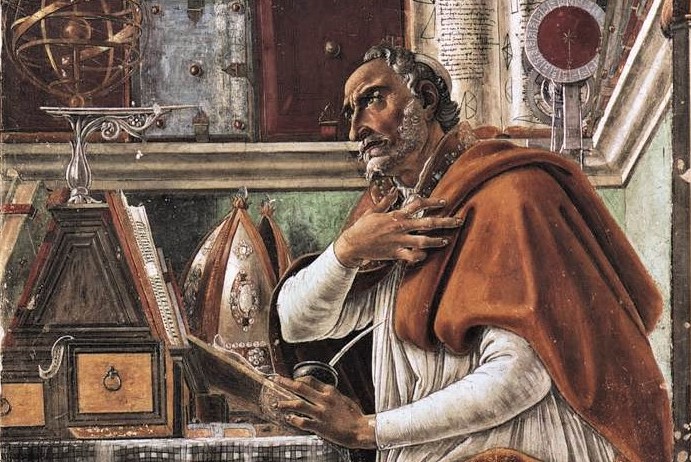
A reading from St. Augustine in the Breviary this week is rather well known and summons us to humility about our sins. But I want to briefly consider a subtlety in the text regarding hope. St. Augustine writes:

Let us never assume that if we live good lives we will be without sin; our lives should be praised only when we continue to beg for pardon. But men are hopeless creatures, and the less they concentrate on their own sins, the more interested they become in the sins of others. They seek to criticize, not to correct. Unable to excuse themselves, they are ready to accuse others. This was not the way that David showed us how to pray and make amends to God, when he said: I acknowledge my transgression, and my sin is ever before me. He did not concentrate on others’ sins; he turned his thoughts on himself. He did not merely stroke the surface, but he plunged inside and went deep down within himself. He did not spare himself, and therefore was not impudent (rude) in asking to be spared. (Serm. 19,2-3: CCL 41, 252-254)

Notice how he says, “But men are hopeless creatures…” Clearly, he speaks in a general sort of way, for not all people are hopeless. But consider his insight here in terms of how we defined Hope above. Too many people do not have a confident expectation of God’s help in attaining unto salvation and the holiness that precedes it. And hence, we tend to settle into a mediocrity at best and despair at worst. Thus, having little sense we can be free from our sins, especially our more serious ones, we seek to avoid thinking of them. This of course leads to the other behaviors St. Augustine describes above such as being more interested in the sins of others than our own, becoming the critic and so forth. We belittle others as a strange way of feeling better about ourselves.  We think, “At least I’m not as bad as so-and-so!” But we forget that being better than so-and-so is not the standard, being like Jesus is the standard. And this is why we need a lot of humility and Hope.

Consider then the role of Hope. If I have a vigorous and confident expectation of God’s help in attaining holiness and salvation then I can humbly admit that I am a sinner and turn to him for help; I can confidently engage the battle against sin. And this Hope prevails even if one perceives that the battle to overcome some very habitual sins may be a lengthy battle marked with setbacks, for Hope summons us to engage the battle with confidence of God’s help and love. In this way Hope interacts with fortitude. Fortitude is more than courage, it is the virtue whereby one is persevering despite obstacles, opposition and setbacks.

Therefore, note the subtlety in St. Augustine’s description of the gossipy and hypercritical world of hopeless people.  He teaches us of the great need for the vigorous and confident expectation of God’s help that we call Hope.   Hope (and humility) help us to stay in our own lane and work our own stuff and will not disappoint if we persevere in the battle for holiness.