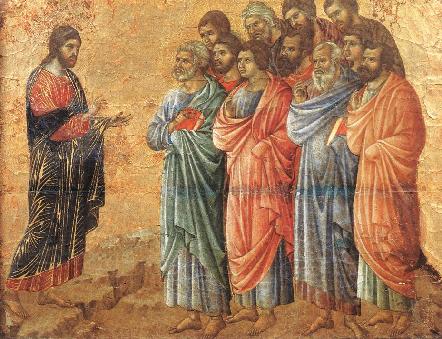
Finding Jesus where He actually is – A Meditation on the Gospel for the 2nd Sunday of Easter

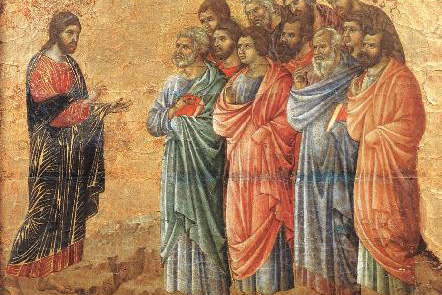
040613In today’s Gospel we see that the Risen Lord appeared to the apostles who were gathered together in one place. The fact that they were gathered in one place is not without significance, for it is there that the Lord appears to them. One of them, as we shall see, was not in the gathering and this missed the blessing of seeing and experiencing the risen Lord. It might be said that Thomas, the absent disciple, blocked his blessing.

Some people want Jesus without the Church. No can do. Jesus is found in his Church, among those who have gathered. There is surely a joy in a personal relationship with Jesus, but the Lord also announced a special presence whenever two or three are gathered in his name (cf Mat 18:20). It is essential for us to discover how Mass attendance, and walking in fellowship with the Church, is essential for us if we want to experience the healing and blessing of the Lord. This Gospel has a lot to say to us about the need for us to gather together find the Lord’s blessing in the community of the Church, in his Word and the Sacraments. Lets look at the gospel in five stages.

I. The Fearful Fellowship – Notice how the text describes the apostles gathering: On the evening of that first day of the week, when the doors were locked, where the disciples were, for fear of the Jews..… These men are frightened, but they are in the right place. It is Sunday, the first day of the week, and they have gathered together. The text says nothing of what they are doing, other than that they have gathered. But in a sense, this is all we need to know, for this will set the stage for blessings and for the presence of the Lord.

And these are men who need a blessing. The locked doors signify their fear of the Jewish authorities. One may also presume that they are discouraged, lacking in hope, even angry. For they have experienced the earthquake that Jesus’ crucifixion was for them. It is true that some of the women in their midst claimed to have seen him alive. But now it is night and there have been no other sightings of which they have heard.

But, thanks be to God, they have gathered. It is not uncommon for those who have “stuff” going on in their lives to retreat, withdraw, even hide. Of course this is probably the worse thing to do. And it would seem that Thomas may have taken this approach, though is absence is not explained. Their gathering, as we shall see, is an essential part of the solution for all that afflicts them. This gathering is the place in which their new hope, new heart and mind will dawn.

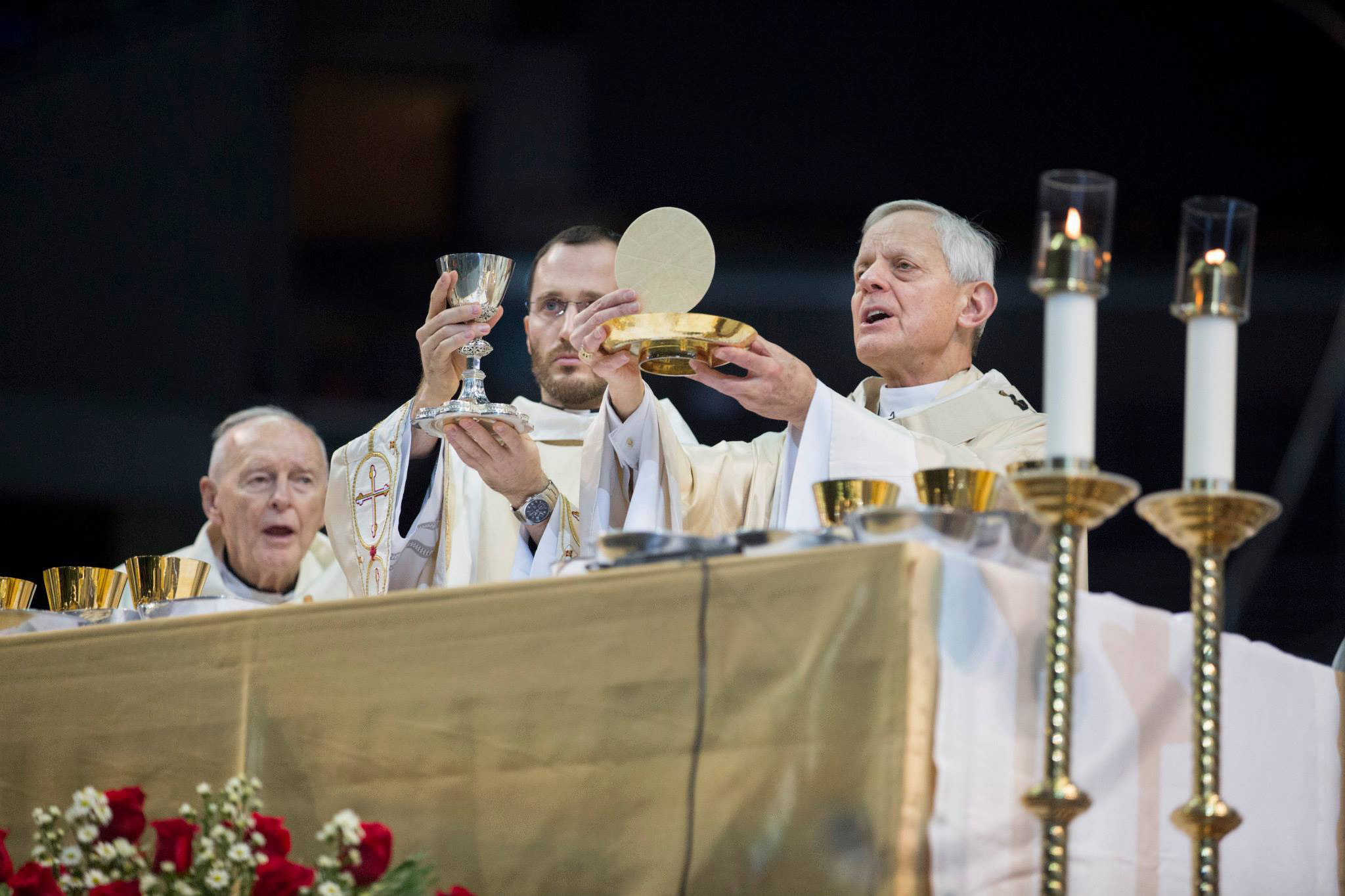
And for us too, afflicted in many ways, troubled at times, and joyful at others, there is the critical importance of gathering each Sunday, each first day of the week. Here too for us in every Mass, is the place where the Lord prepares blessings for us. I am powerfully aware at how every Mass I celebrate, especially Sunday Mass, is a source of powerful blessings for me. Not only does God instruct me with his Word, and feed me with his Body and Blood, but he also helps form me through the presence and praise of others, the people I have been privileged to serve. I don’t know where I’d be if it were not for the string and steady support of the People of God, their prayers, their praise, their witness and encouragement.

The Book of Hebrews states well purpose and blessing of our liturgical gatherings:

Let us hold fast the confession of our hope without wavering, for He who promised is faithful; and let us consider how to stir up one another to love and good deeds, not neglecting to meet together, as is the habit of some, but encouraging one another; and all the more as you see the Day drawing near. Heb 10:22-25

So here they are, meeting together, encouraging one another. As we shall see, the Apostles are about to be blessed. But the blessing occurs only the context of the gathering. Thomas, one of the apostles, is missing, and thus he will miss the blessing. This blessing is only for those who are there. And so it is for us who have also have blessings waiting, but only if we are present, gathered for holy Mass. Don’t block your blessings!

II. The Fabulous Fact – And sure enough here comes the blessing, For where two or three are gathered in my name, there am I among them (Matt 18:20). The text from today’s Gospel says, Jesus came and stood in their midst and said to them, “Peace be with you.” When he had said this, he showed them his hands and his side. The disciples rejoiced when they saw the Lord. Jesus said to them again, “Peace be with you.

Suddenly there is a completely new reality, a new hope, a new vision. Note too, there is also a new serenity, a peace, a shalom. For not only do they see and come to experience a wholly new reality, but they also receive an inner peace. Observe again, this is only to those who are present.

And here is a basic purpose of walking in Fellowship with the Church and of the gathering we call the sacred liturgy. For it is here that we are invited to encounter the Living Lord, who ministers to us and offers us peace. Through his word, we are increasingly enabled to see things in a wholly new way, a way which gives us hope, clarity and confidence. Our lives are reordered. Inwardly too, a greater peace is meant to come upon us in an increasing way as the truth of this newer vision begins to transform us, giving us a new mind and heart. And, looking to the altar we draw confidence that the Lord has prepared a table for me in the sight of my enemies and my cup is overflowing (Ps 23). The Eucharist is thus the sign of our victory and election and, as we receive the Body and the Blood of the Lord we are gradually transformed into the very likeness of Christ.

Elaboration: Is this your experience of the gathering we call the Mass? Is it a transformative reality, or just a tedious ritual?

As for me, I can say that I am being changed, transformed into a new man, into Christ, by this weekly, indeed, daily gathering we call the Mass. I have seen my mind and heart changed, and renewed. I see things more clearly, have greater hope, joy and serenity. I cannot imagine what my life would be like, were it not for this gathering of the Holy Sacrifice of the Mass where Jesus is present to me and says, “Shalom, peace be with you.” Over the years, I am a changed man.

Yes, the Mass works, it transforms, gives a new mind and heart. Don’t bloc your blessings, be there every Sunday.

III. Forgiving Fidelity – Next comes something quite extraordinary that also underscores the necessity of gathering and simply cannot take place in a privatistic notion of faith. The text says, As the Father has sent me, so I send you.” And when he had said this, he breathed on them and said to them, “Receive the Holy Spirit. Whose sins you forgive are forgiven them, and whose sins you retain are retained.”

In this remarkable moment, the Lord gives the apostles the power to forgive sin. Note that he is not simply giving the ability to announce that we are forgiven. He is giving them a juridical power to forgive, or in certain cases, to withhold or delay forgiveness. This is extraordinary. Not only has he given this authority to men (cf Matt 9:8), but he has also given it to men, all of whom but one, had abandoned him at his crucifixion. These are men well aware of their shortcomings! Perhaps only with this awareness can he truly trust them with such power.

Here is the heart of Divine Mercy Sunday: the Lord’s mercy for us, and that mercy available to us through his presence on earth, his mystical Body, the Church.

Elaboration: There are those who deny Confession is a Biblical sacrament.But here it is, right here in this biblical text. There are other texts in Scripture that also show confession to be quite biblical. For example:

  1. Also many of those who were now believers came, confessing and divulging their practices. (Acts 19:18).
  2. Is any one of you sick? He should call the presbyters of the church to pray over him and anoint him with oil in the name of the Lord. And the prayer offered in faith will make the sick person well; the Lord will raise him up. If he has sinned, he will be forgiven. Therefore confess your sins to one another and pray for each other so that you may be healed. The prayer of a righteous man is powerful and effective. (James 5:14-16).

Many consider it sufficient merely to speak to God privately about their sins. But the Scriptures once again instruct us away from a solitary notion and bid us to approach the Church. The Lord gives the apostles authority to adjudicate and then absolve or retain sin, but this presupposes that someone has first approach them interpersonally. Paul too was approached by the believers in Ephesus who made open declaration of their sins. The Book of James also places the forgiveness of sins in the context of the calling of the presbyters, the priests of the Church and sees this as the fulfillment of “declare your sins to one another…the prayer of the righteous man has great power.”

Thus, again, there is a communal context for blessing, not merely a private one. More on the biblical roots of confession here: Confession in Biblical

IV. Faltering Fellowship – We have already noted that Thomas blocked his blessing by not being present. The text says, Thomas, called Didymus, one of the Twelve, was not with them when Jesus came. So the other disciples said to him, “We have seen the Lord.” But he said to them, “Unless I see the mark of the nails in his hands and put my finger into the nail marks and put my hand into his side, I will not believe.”

Thomas exhibits faltering fellowship in two ways.

First he is not with the other apostles on resurrection evening. Thus he misses the blessing of seeing and experiencing the resurrection and the Lord.

Secondly, Thomas exhibits faltering fellowship by refusing to believe the testimony of the Church that the Lord had risen.

One of the most problematic aspects of many people’s faith is that they do not understand that the Church is an object of faith. In the Creed every Sunday, we profess to believe in God the Father, and to believe in Jesus Christ, his only Son, our Lord, and to believe in the Holy Spirit, the Lord and giver of life. But we are not done yet. We go on to say that we believe in one, holy, catholic and apostolic Church. We know and believe what we do about Jesus Christ on the basis of what the Church hands on from the apostles. Some say, “No, I believe in what the Bible says.” But the Bible is a Book of the Church. God has given it to us through the Church who, by God’s grace, collected and compiled its contents and vouches for the veracity of the Scriptures. Without the Church there would be no Bible.

So in rejecting the testimony of the Church, Thomas is breaking fellowship and refusing to believe in what the Church, established by Christ to speak in his name (e.g. Lk 24:48; Lk 10:16; Matt 18:17; Jn 14:26; 1 Tim 3:15; inter al.). And so do we falter in our fellowship with the Church if we refuse to believe the testimony of the Church in matters of faith and morals. Here too is a privatization of faith, a rejection of fellowship, and a refusal to gather with the Church and accept what she proclaims through her Scriptures, Tradition, and the catechism.

But note, as long as Thomas is not present, he has blocked his blessings. He must return to gather with the others in order to overcome his struggle with the faith.

V. Firmer Faith – Thomas returns to fellowship with the other Apostles. As we do not know the reason for his absence, his return is also unexplained. Some may want to simply chalk up his absence to some insignificant factor such as merely being busy, or in ill health or some other possible and largely neutral factor. But John seldom gives us details for neutral reasons. Further, Thomas DOES refuse to believe the testimony of the others, which is not a neutral fact.

But praise God, he is now back with the others and now in the proper place for a blessing. Whatever his struggle with the faith, he has chosen to work it out in the context of fellowship with the Church. He has gathered with the others. And now comes the blessing.

You know the story, but the point here for us is that whatever our doubts and difficulties with the faith, we need to keep gathering with the Church. In some ways faith is like a stained glass window that is only best appreciated when one goes inside the Church. Outside, there may seem very little about it that is beautiful. It may even look dirty and leaden. But once inside and adjusted to the light the window radiates beauty.

It is often this way with the faith. I have personally found that some of the more difficult teachings of the Church could only be best appreciated by me after years of fellowship and instruction by the Church in both here liturgy and in other ways. As my fellowship and communion have grown more intense, so has my faith become clearer and more firm.

Thomas, now that he is inside the room sees the Lord. Outside he did not see and doubted. The eyes of our faith see far more than our fleshly eyes. But in order to see and experience our blessings, we must gather, must be in the Church.

Finally, it is a provocative but essential truth that Christ is found in the Church. Some want Christ without the Church. No can do. He is found in the gathering of the Church, the ekklesia, the assembly of those called out. Whatever aspects of his presence are found outside are but mere glimpses, shadows emanating from the Church. He must be sought where he is found, among sinners in his Church. The Church is his Body, and his Bride. Here he is found. That his presence may be “felt” alone on some mountaintop can never be compared to the words of the priest, “Behold the Lamb of God.”

Thomas found him, but only when he gathered with the others. It is Christ’s will to gather us and unite us (Jn 17:21). Congregavit nos in unum Christi amor (the love of Christ has gathered us in one).

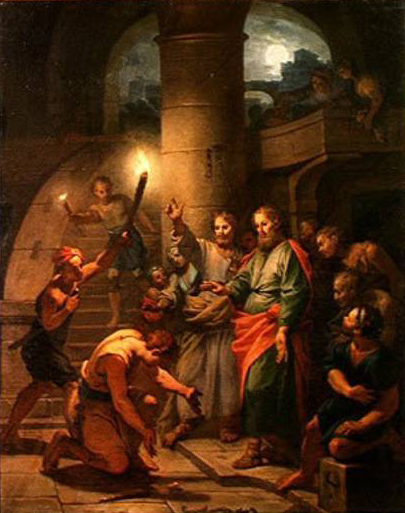
Image: From Florence

This song says that we “need each other to survive.” Don’t block you blessings, get to Church on Sunday

In this Video, Cardinal Dolan speaks of those who want Christ without the Church:

To God Who Gives Me the Joy of My Youth. A Meditation on a beautiful video.

For all the almost 25 years of my priesthood I have been privileged to say the Extraordinary Form of the Mass, known more widely as the “Traditional Latin Mass.” And one of the more memorable aspects of that form, remembered even by those who haven’t attended in years, are the prayers at the foot of the altar. Most prominent in those prayers is the recitation of Psalm 42. The key text which gives context to the moment are these lines:

Et introibo ad altare Dei: ad Deum qui laetificat juventutem meam.
And I will go to the altar of God: to God who gives the joy of my youth.

I will not wade in the waters of debate over how best to translate the Latin. The difficulty is rooted in the Hebrew word giyl which usually means joy, but is also used elsewhere (e.g. Daniel 1:10) to refer to youth. The Latin text elaborates both senses into the phrase “who gives joy to my youth” or by extension “who gives my youthful joy.”

I’ll be honest, my youth wasn’t all that joyful. I am happier now than then. God has been good to me and delivered me from many personal trials that originated even in my earliest days.

But that said, there is a great beauty in the line, indeed the whole psalm, which speaks of deliverance. The Psalmist asks himself, “Why are you cast down my soul, why groan within me? Hope in God, I will praise him still! My savior and my God!

And thus as we go to God’s altar, we seek to leave our troubles behind. We go to praise him, to forget our troubles, to lay down our burdens. And, coming now so close to him at his altar, he gives us a youthful joy, a gladness.

To me, the notion of a youthful joy is that of a joy that comes from innocence, from a time before the all to common cynicism and jadedness of this world has reached us. Here is a simple joy, a joy that is in the moment. Here is an innocent joy like that of a youth who, without pretension look wide-eyed at a gift and says, “Wow! Gee! Thanks!” and vigorously and exultantly enjoys it. Yes, a youthful joy, an innocent and unpretentious joy, a simple joy, A Christian son or daughter in the presence of Abba, our loving Father.

Et introibo ad altare Dei: ad Deum qui laetificat juventutem meam.
And I will go to the altar of God: to God who gives the joy of my youth.

I thought of all this as I saw the video below. As it opens, it is clear we are in the autumn of life. A song plays in the background called “The Last Song.” Our focus shifts to an elderly woman who, looking out on the world from her window, casts a whimsical look at the autumn scene. She shuts her window (for the last time).

She is clearly living more now on memories more than the present. A picture of her family from long ago hangs over the mantle and she grabs a photo of her dead husband, looking as he did when she first met and fell in love with him. Yes, her last thoughts are of love.

She sits in her chair and dozes off. Suddenly the radio goes dead, but it is really she who has died. Her final and fading memories, as she clutches the memory of her love are those of her youth, when she was strong and could dance to life’s rhythms.

And then it happens. God gives her the joy of her youth. She awakens, forever young.

Enjoy this beautiful video. It is told in secular terms but its message is of youthful joy, and the endurance of love.

One day, if we die thinking of Love and longing for Him, Our Lord will sing us to sleep and awaken us, forever young.

For now, I will go to the altar of God, to God who gives me youthful joy.

A Biblical Bucket List for Believers: Fifty Things for the Faithful to Fortify and Finalize According to Scripture

040413In the last few years the phrase “Bucket List” has come into the American lexicon. A bucket list is a list of this to accomplish before you die. There is some sort of TV show related to this that I have never seen, but from the few snips I have seen, it is mostly about frivolous, even unpleasant stuff.

But for the Christian the Scriptures announce a number of things that we well out to have either done or have up and running long before we die. Our goal is to die in an act of loving God, to die in the life giving transformation relationship we we call faith. And our prayer is that grace and mercy have had the necessary affects to make us ready to go home and be with God.

The list that I present here is modified by me a bit, but in essence not original to me. It comes from Joel Meredith’s Complete Book of Bible Lists: A One-of-a-Kind Collection of Bible Facts. Consider well this bucket list and share it with others. Are you ready to go meet God? Let’s see.

1.    It becomes us to fulfill all righteousness (Matthew 3:15).
2.    Live, not live by bread alone, but by every word that proceeds out of the mouth of God (Matthew 4:4).
3.    Worship the Lord your God, and him only shall you serve (Matthew 4:10).
4.    Seek ye first the kingdom of God, and his righteousness (Matthew 6:33).
5.    Repent and believe the Good News! (Mark 1:15)
6.    You must be born again through baptism (John 3:7).
7.    Worship God in spirit and in truth (John 4:24).
8.    Repent and be baptized (Acts 2:38).
9.    Take and Eat, This is my body, which is for you; do this in remembrance of me (Mark 14:22).
10.    Reckon yourselves dead unto sin, but alive unto God through Jesus Christ our Lord (Romans 6:11).
11.    Present your bodies a living sacrifice unto God (Romans 12:1).
12.    Glorify God in your body, and in your spirit (1 Corinthians 6:20).
13.    Desire spiritual gifts (1 Corinthians 14:1).
14.    Stand fast in the faith (1 Corinthians 16:13).
15.    Do not grieve the Holy Spirit of God (Ephesians 4:30).
16.    Be filled with the Spirit (Ephesians 5:18).
17.    Pray in the Spirit (Ephesians 6:18).
18.    Rejoice in the Lord (Philippians 3:1).
19.    Set your heart on things above, where Christ sits at the right hand of God, rather than things of earth  (Colossians 3:1–2).
20.    Let the peace of God rule in your heart (Colossians 3:15).
21.    Let the word of Christ dwell in you richly, in all wisdom (Colossians 3:16).
22.    Whatever you do in word or deed, do all in the name of the Lord Jesus, giving thanks to God and the Father through him (Colossians 3:17).
23.    Pray without ceasing (1 Thessalonians 5:17).
24.    In everything give thanks (1 Thessalonians 5:18).
25.    Do not neglect your spiritual gift (1 Timothy 4:14).
26.    Lay hold on eternal life (1 Timothy 6:12).
27.    Be not ashamed of the testimony of our Lord (2 Timothy 1:8).
28.    Strive to enter into the rest of the people of God (Hebrews 4:11).
29.    Hold fast to your profession of faith without wavering (Hebrews 10:23).
30.    The just shall live by faith (Hebrews 10:38).
31.    Keep Holy the Sabbath, do not neglect to Meet together each Sunday (Heb 10:25).
32.    Despise not the correction of the Lord, for whom the Lord loves he chastens, and scourges every son whom he receives (Hebrews 12:5–6).
33.    Make straight paths for your feet, Strive for peace with everyone, and for the holiness without which no one will see the Lord. (Hebrews 12:13-14).
34.    Refuse not Him who speaks and warns from heaven (Hebrews 12:25).
35.    Offer the sacrifice of praise to God continually, that is, the fruit of our lips giving thanks to his name (Hebrews 13:15).
36.    Receive with meekness the engrafted word, which is able to save your souls (James 1:21).
37.    Submit yourselves to God (James 4:7).
38.    Is any among you afflicted? Let him send for the priests of the Church, let them anoint him (James 5:13).
39.    Declare your sins by regular celebration of Confession (John 20:21-23; James 5:13).
40.    Declare with your lips that Jesus is Lord, and believe in your heart that God raised him from the dead. (Romans 10:9)
41.    Sanctify the Lord God in your heart (1 Peter 3:15).
42.    Commit the keeping of your soul to God in well doing (1 Peter 4:19).
43.    Cast all your care upon him, for he cares for you (1 Peter 5:7).
44.    Look for and hasten the coming of the Day of Lord (2 Peter 3:12).
45.    Devote yourself to the apostles’ teaching and to fellowship, to the breaking of bread and to prayer. (Acts 2:42)
46.    Build up yourselves on your most holy faith, praying in the Holy Ghost (Jude 20).
47.    Keep yourselves in the love of God (Jude 21).
48.    Remember from whence thou art fallen, and repent, and do the first works (Revelation 2:5).
49.    Fear God, and give glory to him (Revelation 14:7).
50.    Worship him that made heaven, and earth, and sea, and the fountains of waters (Revelation 14:7).

OK, there it is, the Bucket List. See to it now. If you would like to print it out, here is a PDF of the document: A Biblical Bucket List for Believers.

I am sure some of you will wish to add. But if you do add, what would you subtract? 50 is kind of a handy number. By the way, the short list is always Acts 2:42:

They devoted themselves to the apostles’ teaching (Scripture)
and to fellowship (Church attendance),
to the Breaking of Bread (Eucharist and all the Sacraments)
and to prayer (liturgical and private).

Finally the Book of James says, Adulterers! don’t you know that friendship with the world means enmity against God? Therefore, anyone who chooses to be a friend of the world becomes an enemy of God. (James 4:4) And in this light, the bucket list helps us to forsake our inordinate love of this world and turn to God our true Love.

And thus, for those who would love this world the bucket list of 50 items becomes a kind of “50 ways to leave your lover” (i.e. the world):

Total Loss File: A Prominent Episcopal Leader Denies the Need for the Bodily Resurrection of Jesus

040313It was sad to read the public comments of the Episcopal Bishop of Washington denying the importance, or need for the Bodily Resurrection of Jesus from the dead,  going so far as to imply this teaching was “outlandish. ” More on that in a moment, but first some background.

Some time ago I brought a former Episcopalian into the Catholic Church who, after the Rite of Reception gave a great sigh of relief and said, “I know the Catholic Church is not without problems, but at least I know the Bishops actually hold the Christian faith. It is such a relief to be in the harbor of truth.”

I remember at the time wondering with him if that wasn’t a bit of an exaggeration of how bad things were in the Episcopalian denomination (this was about 1990). But he showed me a scrapbook of article after article of dozens of Episcopal “Bishops” denying quite publicly the divinity of Christ, the Virgin birth, the miracles of Jesus, that there was any inherent conflict between Christianity and Unitarianism, etc., not to mention a plethora aberrant moral stances.

Most notable among them, but not at all alone, is now retired Episcopal bishop John Shelby Spong who still freely roams the halls of Episcopal parishes and openly calling the Nicene Creed “a radical distortion of the Gospel of John” and declaring that Jesus Christ did not die to redeem humanity from its sins, even going so far to say that we are not sinners at all [*], in outright contradiction to Scripture (e.g. 1 John 1:10) and, frankly, common sense.

The scrapbook was quite thick with painful articles of Episcopal bishops and clergy saying and doing the most incredible things, outright denying basic dogmas. Indeed, when a Christian leader publicly denies the divinity of Christ, or the Trinity, of the redemptive power of Jesus’ death he/she is no longer a Christian at all.

All these memories came back to me when a priest-friend sent me a link to the “Easter” Statement of the Episcopal Bishop of Washington, Mariann Budde, who quite plainly states that it wouldn’t bother her a bit if the tomb with the bones of Jesus were found.

Well, pardon me for being a bit old fashioned and “stuck” in biblical categories, But Rev. Budde, it darn well ought to bother you. And further, even to brook the notion that such a tomb could be found and then add it wouldn’t bother you is a pretty explicit denial of the faith . Here is what the bishop says in her own words, (pardon a few Red remarks from me). These are excerpts, the full remarks of Bishop Budde are here: Bishop Mariann’s blog

To say that resurrection is essential doesn’t mean that if someone were to discover a tomb with Jesus’ remains in it that the entire enterprise would come crashing down. The truth is that we don’t know what happened to Jesus after his death, [But we DO know what happened!] anymore than we can know what will happen to us [Here too I am puzzled, Scripture is actually quite clear as to what will happen after we die: death, judgement, heaven or hell, (likely a pit stop for some purgation for the saved)]. What we do know from the stories handed down is how Jesus’ followers experienced his resurrection. What we know is how we experience resurrection ourselves. [So their “experience wasn’t necessarily real? Then what was it? And if nothing necessarily or actually happened, then how do we “experience” a non-event or a dubious one? What is there to experience?]

That experience is the beginning of faith, not in the sense of intellectual acceptance of an outlandish proposition, but of being touched by something so powerful that it changes you, or so gentle that it gives you courage to persevere when life is crushingly hard…… [Ok, so, the most fundamental Christian dogma, the Resurrection of Jesus, is and “outlandish proposition” which apparently requires no “intellectual acceptance.” Yet despite this, it somehow has the power somehow to change our life. The logic is as mystifying as the denial of the faith is deep].

Well, it doesn’t get much worse than this. In fact, let us call this what it is, a total loss.

For one who denies the Bodily resurrection of Christ (and there is no kind of resurrection other than a bodily resurrection) such a person  really even qualify for the charge of heresy, one has to be a Christian to be a heretic.

Of a great tragic loss of faith like this, St. Paul says,

If Christ has not been raised, our preaching is useless and so is your faith. More than that, we are then found to be false witnesses about God, for we have testified about God that he raised Christ from the dead….And if Christ has not been raised, your faith is in vain; you are still in your sins….[and] we are of all people most to be pitied. But Christ has indeed been raised from the dead, the firstfruits of those who have fallen asleep!  1 Cor 15:12-20

Of the historicity of the Bodily resurrection of Jesus Christ the Catholic Catechism has this to say:

The faith of the first community of believers is based on the witness of concrete men known to the Christians and for the most part still living among them. Peter and the Twelve are the primary “witnesses to his Resurrection”, but they are not the only ones – Paul speaks clearly of more than five hundred persons to whom Jesus appeared on a single occasion and also of James and of all the apostles (1 Cor 15:5).

Given all these testimonies, Christ’s Resurrection cannot be interpreted as something outside the physical order, and it is impossible not to acknowledge it as an historical fact.

It is clear from the facts that the disciples’ faith was drastically put to the test by their master’s Passion and death on the cross, which he had foretold. The shock provoked by the Passion was so great that at least some of the disciples did not at once believe in the news of the Resurrection. Far from showing us a community seized by a mystical exaltation, the Gospels present us with disciples demoralized (“looking sad”) and frightened. For they had not believed the holy women returning from the tomb and had regarded their words as an “idle tale”. When Jesus reveals himself to the Eleven on Easter evening, “he upbraided them for their unbelief and hardness of heart, because they had not believed those who saw him after he had risen.”

Even when faced with the reality of the risen Jesus the disciples are still doubtful, so impossible did the thing seem: they thought they were seeing a ghost. “In their joy they were still disbelieving and still wondering.” Thomas will also experience the test of doubt and St. Matthew relates that during the risen Lord’s last appearance in Galilee “some doubted.”

Therefore the hypothesis that the Resurrection was produced by the apostles’ faith (or credulity) will not hold up. On the contrary their faith in the Resurrection was born, under the action of divine grace, from their direct experience of the reality of the risen Jesus.

(Catechism of the Catholic Church, 642-643).

Thanks be to God for the pure water of faith as expressed by Scripture and the Catechism. Indeed, as my convert friend from years ago said, it is such a relief to be in the harbor of truth.

Do pray for the kindly episcopal bishop of Washington. Pray too for good Episcopalians of Washington. May the truth one day reunite us all that there may be according to Christ’s will, one flock and one shepherd (John 10:16).

Careful with the comments. This is a great sadness, a tragedy really. Pray before submitting comments.

What does the Catholic Church offer to those with Same-sex Attraction?

Last week on this blog, in the aftermath of two highly covered hearings at the Supreme Court on same-sex unions, I posted on the problem of widespread sexual confusion and misbehavior in our culture, both heterosexual and homosexual.

As you may know, and can certainly imagine the combox lit up. There were many comments of support and agreement. There were also quite a large number of strong protests to the post. Some of those sed contras and objections were thoughtful, but, frankly most were not, and contained the all too usual name calling and ridicule that characterizes modern discourse, especially on the Internet.

But perhaps one aspect of the thread deserves some further attention is the what the Church offers homosexuals. For, the claim is often made that the Catholic Church has “nothing to offer” Gay persons, homosexuals or the slightly wider group often called the LGBT community.

Of course this claim has a kind of rhetorical flourish built in since it would appear that, in order to have “something to offer” we would have to meet a rather specific list of demands, wherein we essentially set aside biblical, theological and natural law teaching, and embrace homosexual activity as natural, normal, and even virtuous.

This we cannot do. And thus, many of our modern critics engage in kind of all-or-nothing approach which demands 100% approval, or by definition we have “nothing to offer.”

Nevertheless to some of good will who might still be willing to hear an answer of what the Church offers, I think it helpful to offer an answer to the question,

“What does the Church offer Gay People?”

To begin, the Church offers Gay people what she offers anyone else: the truth of God’s Word authoritatively interpreted, the Sacraments of Salvation, a vision for life, and the witness and support of the communal life, a communion with those now living as well as with the ancients whose voice and witness we still revere. We also offer respect rooted in truth.

Lets look at each of these areas in more detail:

1. As to the truth of God’s Word, St. Paul eloquently said to the critics of his own day:

We do not use deception, nor do we distort the word of God. On the contrary, by setting forth the truth plainly we commend ourselves to everyone’s conscience in the sight of God. (2 Cor 4:2)

Allow me to speak personally as a pastor of souls and say that to anyone who will listen (whatever their orientation or background), to anyone who draws near my parish, enters its doors and to all whom I can reach in anyway, I strive to speak the Word of God plainly, a Word set forth in Scripture and Sacred Tradition.

I will not, as St. Paul directs, distort the Word of God. I will not gainsay (deny) it, neither will I abbreviate it, seek to “expunge” it, nor can I permit it to be subsumed under human, political or cultural agendas.

To the very best of my ability I seek, as St. Paul says, to set it forth plainly, and commend myself to every person’s conscience. I seek the strength and courage to preach the Gospel, in season and out of season, (cf 1 Tim ) and to preach the whole counsel of God.

It is first of all this that Church offers the Gay Community, and every other believer as well: the unabridged truth, preached in conformity with the Sacred Text and Sacred Tradition.

In preaching I am not looking to offend, I am not seeking a fight. Rather, I am seeking to joyfully celebrate the truth of the Gospel that I have come to find compelling and life giving. And yet I realize that whatever my intentions, there are at time people who do take offense at what I preach or teach. But that they take offense, does not mean I have given offense, or intended to offend. Again, let me emphasize, I cannot, as St. Paul says, distort God’s Word as I have received it. I cannot and must not engage in deception or any misrepresentation of God’s Word.

Sadly today there are some denominations and preachers which do distort God’s word to conform to modern agendas such as affirming homosexual activity. They have been deceived and are leading others into deception by distorting God’s clear word on the sinfulness of homosexual acts (and many heterosexual acts such as fornication, adultery, incest, and other disordered and unnatural sexual practices that have become more common among heterosexuals today).

I do not have time here to give a full discourse on the Biblical teaching against homosexual acts, but I have written more on that here: Letter on Homosexuality

But for this post suffice it to say that there is nothing at all ambiguous about the clear and consistent condemnation of homosexual activity at every stage of Scripture, beginning in the earliest books, and going through every stage of Scripture, right through to the very last book, Revelation. Attempts to pretend that Scripture does not say what it clearly does say are fanciful at best, and gravely sinful at worst. It is to indulge in deception, and to likely lead others into that deception.

What the Catholic Church offers, in the first place to the Gay community and to every believer is the plain truth of Scripture. We commend ourselves and God’s word to the conscience of every person. We refuse to indulge in modern deceptions and speak the truth in love.

To those who will say I am being judgmental, I will say only what Scripture says. I do not need to make a judgment in this, God already has, and His judgment is consistently and clearly stated that homosexual acts are sinful and wrong. They cannot be approved of in any way. This is God’s judgement not mine.

And to those who insist on living at variance with God’s Word and even worse encouraging, teaching and affirming others in doing so, God’s word says that they have been deceived (2 Cor 4:2), that their minds have become darkened by the suppression of the truth (cf Rom 1:18,21), that The god of this age has blinded their minds, so that they cannot see the light of the gospel (2 Cor 4:4) and they have chosen to live as the Gentiles do, in the futility of their thinking (Eph 4:17).

Woe to those religious leaders who gainsay the word of God and mislead others. Of these Jesus says, Every plant that my heavenly Father has not planted will be pulled up by the roots. Leave them; they are blind guides.  If the blind lead the blind, both will fall into a pit. (Matt 15:13-14)

The Catholic Church offers to Gay Christians a refuge from all this deception and confusion in this matter. We do not use deception, nor do we distort the word of God. On the contrary, by setting forth the truth plainly we commend ourselves to everyone’s conscience in the sight of God. (2 Cor 4:2)

The Church can say nothing other than what she has heard from the Lord. And thus we teach:

Homosexuality refers to relations between men or between women who experience an exclusive or predominant sexual attraction toward persons of the same sex. It has taken a great variety of forms through the centuries and in different cultures. Its psychological genesis remains largely unexplained. Basing itself on Sacred Scripture, which presents homosexual acts as acts of grave depravity,141 tradition has always declared that “homosexual acts are intrinsically disordered.” They are contrary to the natural law. They close the sexual act to the gift of life. They do not proceed from a genuine affective and sexual complementarity. Under no circumstances can they be approved. (Catechism # 2357)

2. In addition we in the Church offer the help of the Sacraments which are like medicines to assist us in living in Christian freedom. No aspect of the moral life is simple or easy in this sin-soaked world. We are living in a fallen world, governed by a fallen angel, and we ourselves have fallen natures. Thrice fallen we are not without help. We have the Lord Jesus who speaks the truth to us and strengthens and heals us with his Sacraments.

Of this I am a witness. Having thus dedicated myself to prayer, scripture, the sacraments, and to fellowship (Acts 2:42) I have seen my life changed. I am a new man. I have seen sins put death and many graces come alive. I am more serene, and confident, I more patient, zealous, chaste, merciful and forgiving. I give God all the glory and praise him for this life he has given me from the Cross and through his Church.

3. A Vision of Chaste Life – All of this too the Church offers to the Gay community. Along with a vision for life. And what is that vision? It is stated in the Catechism:

Homosexual persons are called to chastity. By the virtues of self-mastery that teach them inner freedom, at times by the support of disinterested friendship, by prayer and sacramental grace, they can and should gradually and resolutely approach Christian perfection (Catechism # 2359)

¥es, freedom to live chastely! It is the same call that every other Christian has, Chasity. The married are to remain faithful in mind, heart and body. They are not to engaged in unnatural sexual practices in their marriage or to use contraception. The unmarried are to live chastity by embracing celibacy. Homosexuals cannot marry. There are also many heterosexuals who never find their way to marriage. Celibacy is the call in cases like these. This is the vision and this is the plan. The Church offers the celibate life to those who cannot marry.

Now to those who may scoff, I want to say, I am a big believer in celibacy! Although a heterosexual, I have, as priest, embraced celibacy as a way of life. I am happy, fulfilled, and I have been successfully celibate all my priesthood. I have never strayed with anyone, not once. I am a witness that celibacy is both possible and wonderful.

Jesus was celibate, Paul was celibate. And to those who are not now married, and to those who can never marry, I commend celibacy to you and promise you that you can and will live a full life, a happy life, and a satisfied life in Christ Jesus by embracing the life he offers. As a celibate, the door to marriage  and sexual activity is closed, but many other fulfilling things are opened, a life of service, and availability that might not otherwise be possible.

The Church offers the celibate and chaste life to the Gay community. The notion that happiness is not possible without sexual intercourse and/or marriage is a lie perpetrated by a sex-crazed culture. I am a witness that celibacy is good and fulfilling. I know also of many others, parishioners, both Gay and Straight who successfully live celibate lives and give witness to the grace of God in these matters.

4. Finally let me say, the Church offers respect and understanding rooted in truth to the Gay person. Now of course there are some people in this world who demand outright approval as the only way to show respect and understanding. With these there is no reasoning. But to those disposed to listen, and accept that understanding and respect are offered in the light of truth, the Church has this to say:

The number of men and women who have deep-seated homosexual tendencies is not negligible. This inclination, which is objectively disordered, constitutes for most of them a trial. They must be accepted with respect, compassion, and sensitivity. Every sign of unjust discrimination in their regard should be avoided. These persons are called to fulfill God’s will in their lives and, if they are Christians, to unite to the sacrifice of the Lord’s Cross the difficulties they may encounter from their condition. (Catechism # 2358)

There are some who would like to create that impression that the Catholic Church has people at the door trying to spot and keep Gay people out. Or that perhaps on discovery, they will be confronted and exposed to hate, or that they will be singled out for special ridicule and rebuke.

They are not. I’ve got a Church full of sinners, starting with the guy in the pulpit. And to those who come to the Catholic Church, there will be times where we are all challenged in one way or another by God’s truth regarding the sins to which we are most prone. There will also be times when we are greatly consoled by that same truth in the struggles and heartaches that most afflict us.

Good preaching comforts the afflicted and afflicts the comfortable. And we are all in both categories. I and others do not go up and down the aisles accusing or confronting people directly. I do not pry in people’s personal business. I do not ask every young couple if they are fornicating, or every business person if he is stealing.

I preach the gospel, I preach the gospel that God loves us, and that he, by that love and grace can save us from fornication, stealing, homosexual acts, unkindness, unforgiveness, greed and so forth.

We are all called to freedom, the glorious freedom of the Children of God. There are not separate rules for Gay people, Straight people, or any other category. We are all Children of God. Some of us are called to Marriage and child bearing, some are not. Sex is for marriage, no exceptions. There is a dignity and respect in the common call to live chastely, no matter who we are.

The Catholic Church has a lot to offer, to Gay people, to all people: the truth, the sacraments, a vision for a chaste life, and a fellowship of believers who offer support and encouragement to all who will walk with us poor fellow sinners.

Amazed and Afraid – The Journey to Resurrection Faith

040113Today’s Gospel, indeed, all the gospels of the Easter Octave describe not only an event, but even more so, a journey. For we are tempted to to think that, having seen the risen Lord, the disciples and apostles were immediately confirmed in faith and stripped of all doubt. Now that they saw the Lord they went from zero to 100.

But, this is not the case. Most all the resurrection accounts make it clear that, seeing the risen Lord was mind-blowing, but it was still only a beginning. Like any human experience, no matter how intense, the disciples still needed to process it and come to live its implications in stages.

This pattern of a journey, of a coming to resurrection faith in stages is presented in the resurrection accounts almost in painted form at the beginning. For we notice that the first awareness occur “when it was still dark” and “at the rising of the sun. But as we know, it is not suddenly full light at dawn. Rather the light manifests and grows in stages. And so it is with the resurrection. It begins to “dawn” on the early disciples that He is Risen, truly, he has a appeared to Simon.

But the first reports are murky and there is a lot of running around: Mary Magdalene to Peter and John, Peter and John to the tomb, the women to the rest of the apostles. Yes, there is a lot of running about. It is still dark and the “cobwebs” of recent sleep still assail, and the light is twilight, not noon.

They wonder what does this all mean and how has our life changed?! Answers like this will require a journey and are not to be answered in a mere moment.

In today’s Gospel there is a beautiful line that describes the experience well:

Mary Magdalene and the other Mary went away quickly from the tomb,
fearful yet overjoyed (Matt 28:8)

Yes, such a beautiful description: “fearful yet overjoyed,” Amazed and afraid, φόβου καὶ χαρᾶς μεγάλης, (fearful and of great joy). Or to put it in the classic Latin sense, Fascinosum et tremendum (amazed and afraid).

What to make of all this. He is alive! Yet what does this mean?! My life is changed, but how?! One is filled with joy, yet draws back in a kind of reverential fear at the unknown, the unexperienced.

And so we see the women, encountering the Risen Jesus on the road and they are both amazed and afraid. And again, while we might suppose that such an appearance would seal the deal, it is not that simple. Consider the following realities in the aftermath of the resurrection appearances and that a journey of sorts is required to sort it all out.

  1. Mary of Magdala doesn’t even recognize Jesus at first, but has to have her eyes adjusted by the faith that comes from hearing, in this case hearing her name “Mary” spoken by Jesus.
  2. She also has to make a journey from merely clinging to Jesus as “Rabboni” and running to others to proclaim him by saying, “I have seen The LORD.”
  3. The disciples on the Road to Emmaus don’t recognize Jesus at all until their eyes are opened in the Breaking of the Bread.
  4. When the Apostles first saw Jesus they drew back and thought they were seeing a ghost. He has to reassure them and clarify things for them.
  5. Simon Peter, even after seeing the Lord several times, falls away from his mission and announces to the others, “I am going back to fishing.” And the Lord has to stand in the shore an call him anew from his commercial nets to sacred shepherding of the Petrine Ministry.
  6. Even after forty days of of appearances, and having been summoned to the mountain of the ascension, some saw and believed but some doubted.
  7. Yet still after the ascension, the day of Pentecost still finds the apostles and disciples, huddled behind closed doors. Only after the coming of the Holy Spirit are they really empowered to go forth.

Yes, there is more to experiencing the resurrection than mere sight. Faith comes by hearing and deepens by experience. They have to make a journey to resurrection life and so do we.

And even for us, who were born in the teaching of the resurrection, the truer and deeper meaning of it all is not simply an answer the Catechism can supply, it is a journey we must make.

As a priest and disciple, I have both observed and experienced that Good Friday is powerful and moving for many people. Most of us know the cross, we have experienced its blows, and its presence is quite real and plain. On Good Friday there are often tears at the Stations, the Trae Horae, the Evening Service of the Lord’s Passion.

But come Easter Sunday morning the experience is less certain. People are joyful, but seem less certain why or how. The Joy of Easter seems more remote than than the brooding presence of Good Friday or the gloomy silence of Holy Saturday. They are unpleasant but familiar. But Easter Sunday is different. What does it mean to rise from the dead? What are we to do in response? In Lent we fasted and undertook focal practices. But Easter is more open and vacuous: JOY! Alleluia! Now what?

It remains for us to lay hold of this new life the Lord is offering to us. It is not enough to think of or see the resurrection as an event of 2000 years again. It IS that, but it is more. It is new life for us. We rise with Christ.

But how and what does this mean. That is the journey. It is the deeper and more personal experience of the historical event the Lord accomplished for us. He has raised us to new life.

In my own journey I have had to move from event, deeper to personal and true experience of that event. I have come to experience the new life Jesus died and rose to give me. I ahve seen sins put death and new graces come alive. I am more chaste, generous, joyful hopeful, serene and and zealous. My mind is clearer, new and I have better priorities and clearer vision. My heart is more spacious and I have learned more deeply of God’s love and mercy for me, and can thus share it more toward others.

Yes, this is the journey to the new life that the Lord died and rise to give me. Good Friday and the Cross are rather plain and obvious to most of us. But Easter Sunday takes more time to lay hold of. It requires a journey where we, like the early disciples go from fear to faith, from darkness to light, from sleepiness of the early morning to the alert faith of mid day.

It is the journey toward a true and lasting Easter. We never cease to be amazed and afraid. But our awe deepens from an bewildered awe of the unknown to a knowing wonder and awe at what the risen Lord is doing in our life. And cringing fear becomes the holier fear of reverence and love.

Easter is an event, but it is also a journey. The twilight of early dawn, gives way in stages to ever brighter awareness as we lay hold of the new Life Christ gives us. There is a beautiful line in the King James Translation that captures Simon Peter’s journey, which at that time was ust beginning:

Then arose Peter, and ran unto the sepulchre; and stooping down, he beheld the linen clothes laid by themselves, and departed, wondering in himself at that which was come to pass. (Luke 24:12)

Peter now knows, even as he is known, but for you and me, the journey of wonder, awe, and experience continue to unfold. For me, I know more today, than ever before, thank you Lord. But so much more needs to unfold. It will, by God’s grace, and in God’s time.

What is the very First New Testament Proclamation by the Church at the Great Easter Vigil and What is Announced to Us?

033113At the Great Easter Vigil, after a lengthy series of Old Testament readings, The lights come on full, the Gloria is intoned and the opening prayer is sung. Then all are seated for the first reading from the New Testament proclaimed in the new light of Easter glory. It is Romans 6, the opening text from the New Testament proclaimed by the Church as Christ steps forth from the tomb! It would seem the Church considers this an important reading for our consideration, given it’s placement.

Romans 6 is a kind of mini-Gospel where in the fact of our new status as redeemed transformed Children of God is declared. And within these lines is contained “Standing Order # 1” for the Christian who is a new creation: “No longer let sin continue to reign in your death directed bodies.”

Perhaps we can take a look at this central passage from the New Testament. Here it is in total and them some verse by verse commentary:

We died to sin; how can we live in it any longer? 3Or don’t you know that all of us who were baptized into Christ Jesus were baptized into his death? 4We were therefore buried with him through baptism into death in order that, just as Christ was raised from the dead through the glory of the Father, we too may live a new life. 5If we have been united with him like this in his death, we will certainly also be united with him in his resurrection. 6For we know that our old self was crucified with him so that the body of sin might be done away with,that we should no longer be slaves to sin— 7because anyone who has died has been freed from sin. 8Now if we died with Christ, we believe that we will also live with him. 9For we know that since Christ was raised from the dead, he cannot die again; death no longer has mastery over him. 10The death he died, he died to sin once for all; but the life he lives, he lives to God. 11In the same way, count yourselves dead to sin but alive to God in Christ Jesus. 12Therefore do not let sin reign in your mortal body so that you obey its evil desires. 13Do not offer the parts of your body to sin, as instruments of wickedness, but rather offer yourselves to God, as those who have been brought from death to life; and offer the parts of your body to him as instruments of righteousness. 14For sin shall not be your master, because you are not under law, but under grace. (Romans 6:1-14)

1. THE PRINCIPLE We have died to sin; how can we live in it any longer? – Here is a powerful and uncompromising statement. Paul is setting forth  the most fundamental principle for the Christian life. Namely that sin is not to have any power over us. This is the NORMAL (i.e. normative, to be expected) Christian life, a life that is victorious and that is seeing sin put to death and the blessings of grace come alive. Paul says, quite clearly, we have died to sin.

Before returning to this concept it might be important to consider what the word “sin” means here. The Greek word is ἁμαρτίᾳ (hamartia). In its root sin (ἁμαρτίᾳ) means “missing the mark” or falling short of a designated goal. In the Greek tragedies the hero often had a “fatal flaw” wherein he misses the mark, or fails to obtain what he sought due to a moral failing or error in judgment. In Scripture the word ἁμαρτίᾳ usually means something closer to what we mean by sin today, namely “a moral failing.” But we should not completely leave behind the notion that sin is a missing of the mark. It is not untrue to say that sin is not so much a reality unto itself as it is a “privation,” a lack of something that should be there. In every sin, something is missing that should be there.

Now St. Paul often describes sin (ἁμαρτίᾳ) at two levels: the personal experience with sin, but also as a “climate” in which we live. So we might distinguish between Sin (upper case) and sin (lower case). Hence, Sin is the climate in which we live that is hostile to God, that has values in direct opposition to what God values. It is materialistic, worldly in its preoccupations, carnal and not spiritual, lustful, greedy, self-centered, and alienated from the truth. It will not submit to God and seeks either to deny Him or to marginalize him. This is Sin. (We need to understand this distinction for in verse 10 of this passage Paul says Christ “died to Sin.” But clearly Christ had no personal sin. But he DID live in a world dominated by Sin and it was to THAT which he died).

As for sin (lower case), it is our personal appropriation of Sin. It is our internalization and acceptance of the overall climate of sin. For example, a Bosnian child is not born hating a Croat or Serbian child. That hatred is “in the air” and the child often (usually) internalizes and then acts upon it. Hence Sin becomes sin.

Now Paul says, we have DIED to all of this. That is to say the overall climate of Sin cannot any longer influence us, neither can the deep drives of our own sin continue to affect us.

But how can this be, most of us feel very strongly influenced by Sin and sin? Consider for a moment a corpse. You cannot humiliate or tempt, win an argument with or in anyway personally affect a corpse. The corpse is dead and you and I can no longer have any influence over it. Paul is saying that this is to be the case with us. We are dead to the world and its Sin. It’s influence on us is broken. Because of this, our personal sins and drives of sin are also broken in terms of their influence.

Ah but you say, “This does not seem true.” Nevertheless, it IS the principle of the Christian life. It is what is normative for us and what we should increasingly expect because of our relationship with Jesus Christ. It is true, death for us is a process, more than an event. But to the degree that the old Adam has been put to death in us, then his vital signs are diminishing. He is assuming room temperature and Christ Jesus is coming alive in us.

And here is the central question Is Jesus becoming more alive in you? It is a remarkable thing how little most Christians expect from their relationship with Jesus Christ. The best that most people hope for is to muddle through this life and just make it (barely) over the finish line to heaven. Mediocrity seems what most people expect. But this is not the normal Christian life! The normal Christian life is to be increasingly victorious over sin, to be experiencing the power of the Lord Jesus Christ at work in our lives. We have died to sin. It’s influence on us is waning, is diminishing. Increasingly the world and its values seem ludicrous to us and God’s vision becomes precious.

So here is the principle – have died and are dying to sin, it is increasingly impossible for us to live in it or experience it’s influence.

2. THE POWER Or don’t you know that all of us who were baptized into Christ Jesus were baptized into his death? 4We were therefore buried with him through baptism into death in order that, just as Christ was raised from the dead through the glory of the Father, we too may live a new life. If we have been united with him like this in his death, we will certainly also be united with him in his resurrection.

When Paul (and Scripture) use the word “know” it always means more that grasping something intellectually. To “know” in the Bible means to personally experience something and to have grasped it as true. The GReek verb translated as “know” is γινώσκω (ginosko) we means to know by experience, as contrasted with Greek very οἶδα (oida) where refers to intellectual knowing. Thus, what Paul is really saying here, “Or is it possible that you have not experienced that we died with Christ and risen with him to new life?” In effect he is saying, grab hold of yourself and come to experience that you have died to your old life and now received a completely new life. Start to personally experience this.

If anyone is in Christ, he is a new creation! (2 Cor 5:17). This is the normal Christian life and we ought to be experiencing it more and more.

But here again, we have to fight the sloth of low expectations. Do you think that Jesus Christ died for you so that you would continue to be in bondage to anger, or lust, or hatred? Surely he died to free us from this!

To see your life transformed is NOT your work, it is the work of the Lord Jesus. Since it is his power at work we ought to expect a lot. But low expectations yield poor results. So Paul is saying, come to know, come to personally experience and grasp his power at work in you. Have high expectations! How can we have anything less when the death and resurrection of Jesus are the cause of this?

3. THE PERSONAL WITNESS – For we know that our old self was crucified with him so that the body of sin might be done away with,that we should no longer be slaves to sin— because anyone who has died has been freed from sin. –

Once again Paul says we “know” this. This is the normal Christian life: to experience that our old self was crucified and has died and that increasingly we are no longer slaves to sin.

In my own life I have experienced just this. Have you? I have seen many sins and sinful attitudes put to death in me. My mind has become so much clearer in the light of Christian faith and I now see and experience how silly and insubstantial are many claims of this world. So, my mind and my heart are being transformed. I have died to many of my former and negative attitudes and drives.

I’m not what I want to be but I’m not what I used to be, praise God. A wonderful change has come over me.

How about you? Do you have a testimony? Do you “know” (experience) that your old self has been crucified and that you are being freed from sin?

4. THE PROCLAMATION – in various ways then in the verses that follow, Paul sets forth the essential proclamation of the Normal (normative) Christian life:

  1. count yourselves dead to sin but alive to God in Christ Jesus.
  2. Therefore do not let sin reign in your mortal body so that you obey its evil desires…..
  3. [you] have been brought from death to life….
  4. For sin shall not be your master, because you are not under law, but under grace.

Some final questions:

  • Do you believe this?
  • Do you know (experience) this?
  • What do you expect from your relationship with Jesus Christ?
  • How are you different from some one who lived under the Old Covenant?
  • How are you different from the unbelievers in this world?
  • Are you living the normal Christian life of dying to sin and rising to new life in Christ, or are you just muddling through?

Icon above is 18th Century Russian, and is available at most Icon Distributor. In this vision, is the Harrowing of Hades where Christ pulls Adam and Even from their tombs and summons them to new life.

This song says, Victory is mine, I told Satan, “Get thee behind” for victory today is mine.

From Fear to Faith in Four Steps: A Meditation on the Johannine Easter Gospel

One option for the Gospel for Easter Sunday morning is from John 20:1-8. And like most of the resurrection Gospels it paints a portrait of a journey some of the early disciples have to make out of fear and into faith. It shows the need to experience the resurrection and then come to understand it more deeply.

I have blogged before on the Matthean gospel option for Easter Sunday morning (HERE). This year I present John’s. Let us focus especially on the journey that St. John makes from fear to faith. While the Gospel begins with Mary Magdalene, the focus quickly shifts to St. John. Lets study his journey.

I. REACTION MODE – The text begins by describing every one is a mere reaction mode, quite literally running about in a panic! – The text says, On the first day of the week, Mary of Magdala came to the tomb early in the morning, while it was still dark, and saw the stone removed from the tomb. So she ran and went to Simon Peter and to the other disciple whom Jesus loved, and told them, “They have taken the Lord from the tomb, and we don’t know where they put him.”

Notice that the text describes the opening moments as “still dark.” And it is likely that John is doing more than giving us the time of day. The deeper point is that there is still a darkness that envelopes everyone’s mind.  The darkness makes it difficult for us to see and our fears and our sorrows can blind us.

Therefore also notice that she looks right at the evidence of the Resurrection but she presumes and concludes the worst: grave robbers have surely come and snatched the body of the Lord! It doesn’t even occur to her to remember that Jesus had said that he would rise on the third day and that this was that very third day. No she goes immediately into reaction mode, instead of reflection mode. Her mind jumps to the negative and worst conclusion and she, by reacting and failing to reflect looks right at the blessing and sees a curse.

And often we do this too. We look at our life and see only the burdens instead of the blessings. And thus:

  1. I clutch my blanket and growl when the alarm rings, instead of thinking, “Thank you, Lord, that I can hear. There are many who are deaf. Thank that I have the strength to rise, there are many who do not.”
  2. Even though the first hour of a day may be hectic, when socks are lost, toast is burned and tempers are short, the children are so loud! Instead of thinking, “Thank you Lord, for my family. There are many who are lonely.
  3. Yes, we can even be thankful for the taxes we pay, because it means we’re employed;  the clothes that fit a little too snugly, because it means we have enough to eat; our heating bill, because it means we are warm; and weariness and aching muscles at the end of the day, because it means we have been productive.

Yes, every day ten million things go right and a half a dozen things go wrong. What will you focus on? Will we look right at the signs of our blessings and call them burdens, or will we bless the Lord? Do we live lives that are merely reactive and negative, or do we live reflectively, remembering what the Lord says, that even our burdens are gifts in strange packages. Romans 8 says, And we know that all things work together for good to them that love God, to them who are the called according to his purpose. (8:28)

Do we know this, or are we like the disciples on that early morning, when it is still dark, looking right at the blessings but drawing only negative conclusions, reacting and failing to reflect?

II. RECOVERY MODE – The Text goes on to describe a certain move from reaction to reflection in a subtle way. The text says,  So Peter and the other disciple went out and came to the tomb. They both ran, but the other disciple ran faster than Peter and arrived at the tomb first; he bent down and saw the burial cloths there, but did not go in.

We start in reaction mode. Notice how Mary Magdalene’s anxiety is contagious? She comes running to the apostles, all out of breath, and says that “they” (whoever they are) have taken the Lord (she speak of him still as a corpse) and “we” (she and the other women who had gone out) don’t know where they put him (again she speaks of him as an inanimate corpse). And Mary’s panic and reactive mode, triggers that same reaction in the Apostles. They’re all running now!The mad dash to the tomb has begun.

But notice they are running to verify grave-robbery, not the resurrection. Had they but taken time to reflect, perhaps they would have thought to remember that the Lord had said he would rise on the third day, and this was the third day. Never mind all that, panic and running have spread and they rush forth to confirm their worst fears.

But note a subtlety.  John begins to pick up speed as he runs. And his speed, I would argue, signals reflection and hope. Some scholars say it indicates merely that he was the younger man. Unlikely. The Holy Spirit speaking through John is not likely interested in passing things like youth. Some of the Father’s of the Church see a greater truth at work in the love and mystical tradition that John the Apostle symbolizes. He was the Disciple whom Jesus loved, the disciple who knew and experienced that love of God. And love often sees what knowledge and authority can only appreciate and affirm later. Love gets there first.

There is also a Bible verse that I would argue decodes John’s  increasing strength as he runs:

But those who hope in the LORD will renew their strength. They will soar on wings like eagles; they will run and not grow weary, they will walk and not be faint. (Is 40:31).

Perhaps as John ran faster as he began to move from reaction to reflection and remembrance. When you run fast, even with others,  you can’t talk a lot. So you get alone with your thoughts. There is something about love that enlightens and recalls what the beloved has said. Perhaps John begins to think, to reflect and recall:

  1. Didn’t Jesus say he’d rise three days later?!
  2. Isn’t this that day?
  3. Perhaps he considered too:
  4. Didn’t my Lord deliver Daniel?
  5. Didn’t he deliver Noah from the flood?
  6. Joseph from the hands of his brothers, and from the deep dungeon
  7. Didn’t he deliver Moses and the people from Egypt
  8. David from Goliath and Saul
  9. Jonah from the whale
  10. Queen Esther and the people from wicked men
  11. Susanna from her false accusers
  12. Judith from Holofernes
  13. And didn’t Jesus raise the dead?!
  14. And Didn’t he promise to rise.
  15. Didn’t God promise to deliver the just from all their trial?
  16. Ah! As for me I know that my redeemer liveth!

And something started to happen in John. And I have it on the best of authority that he began to sing in his heart as he ran:

I don’t feel no ways tired. Come too far from where I started from. Nobody told me that the road would be easy but I don’t believe he brought me this far to leave me.

Yes, John is in recovery now. He’s moved from reaction to reflection and he is starting to regain his faith.

The text says he looked in and saw the grave clothes, but awaited Peter. Mystics and lovers may get there first, but the Church has a Magisterium that must be respected too. John waits, but as we shall see he has made his transition from reaction to reflection, from fear to faith.

III. REASSESSMENT MODE – In life, our initial reactions must often be reassessed as further evidence comes in. And now, Peter and John must take a fresh look at the evidence from their own perspective. The text says, When Simon Peter arrived after him, he went into the tomb and saw the burial cloths [lying] there, and the cloth that had covered his head, not with the burial cloths but rolled up in a separate place.

Mary Magdalene’s assessment had been, in effect, grave robbers. But the evidence for that seems odd. Usually grave robbers were after the fine linens that the dead were buried in. But here are the linens and gone is the body! Strange.

And there is something even stranger about the linens. If it had been grave robbers they wouldn’t have taken time to unwrap the body of valuable grave linens. The Greek text uses the word describes the clothes as κείμενα (keimena) – lying stretched out in place, lying in order. It is almost as if the clothes simply “deflated” in place when the body they covered disappeared!

Not only that, but the most valuable cloth of all, the σουδάριον (soudarion) is carefully folded. Grave robbers would not leave the most valuable things behind. And surely, even if for some strange reason they wanted the body, they would not have bothered to carefully unwrap and fold things, and leaven them all stretched out in an orderly way. Robbers work quickly, they grab and snatch and leave disorder behind them.

And life is like this. You can’t simply accept the first interpretation of things. Every reporter knows that “in the fog of war, the first reports are always wrong.” And thus we too have to be careful not to jump to all sorts of negative conclusions just because someone else is worried. Sometimes we need to take a fresh look at the evidence and interpret it as men and women of hope and faith, as men and women who know that God will not utterly forsake us, even if he tests us.

John is now looking at the same evidence as did Mary Magdalene, but his faith and hope give him a different vision. His capacity to move beyond fearful reaction to faithful reflection is changing the picture.

We know little of the reaction of Peter or Mary Magdalene at this point. The focus is on John. And the focus is on you. What do you see in life? Do you see grave robbers? Or are you willing to reconsider and move from knee-jerk fear to reflective faith?

Does your resurrection faith make you ready to reassess even the bad news you receive and look for a blessing even in crosses?

IV. RESURRECTION MODE – And now, though somewhat cryptically we focus on the reaction and mindset of St. John. The text says, Then the other disciple also went in, the one who had arrived at the tomb first, and he saw and believed. For they did not yet understand the Scripture that he had to rise from the dead.

At one level the text says, plainly that St. John saw and believed. Does the text mean only that he believed Mary Magdalene’s story that the body was gone? Well, as is almost always the case with John’s Gospel, there is both a plain meaning and a deeper meaning. The context here seems clearly to be that John has moved to a deeper level. The text says he ἐπίστευσεν (episteusen) “believed.” The verb here is in the aorist tense, a verb form  that generally portrays a situation as simple or undivided, that is, as having perfective (or completed) aspect. In other words, something has come to fruition in him.

And yet, what the text gives, it also seems to qualify, saying, they did not yet understand the Scripture that he had to rise from the dead. It is as if to say, “John came to believe that Jesus had risen, though he had not yet come to fully understand all the scriptural connections and how this had to be. He only knew in his heart by love and through this evidence that Jesus was risen. Deeper understanding would have to come later.

But for our purposes, let us observe that St. John has gone from fear to faith. He has not yet seen Jesus alive, but he believes based on the evidence, and what his own heart and mind tell him.

And now, at this moment John is like us. He has not seen, but believes. Neither have we seen, but we believe. John would seem him alive soon enough and so will we!

We may not have an advanced degree in Scripture but through love we too can know he lives. Why and how? Because of the same evidence:

  1. The grave clothes of my old life are strewn before me.
  2. I am rising to new life.
  3. I am experiencing greater victory over sin.
  4. Old sins and my old Adam are being put to death
  5. And the life of the new Adam, Christ is coming alive.
  6. I’m being set free and have hope and confidence, new life and new gifts.
  7. I have increasing gratitude, courage and a deep peace that says: Everything is alright.
  8. Yes, the grave clothes of my old way of life lie stretched out before me and I now wear a new robe of righteousness.
  9. I’m not what I want to be but I’m no what I used to be.

So we like John, see. We see not the risen Lord, not yet anyway. But we see the evidence and we believe.

St. John leaves this scene a believer. His faith may not be the fully perfected faith it will become, but he does believe. John has gone from fear to faith, from reaction to reflection, from panic to peace. This is his journey, and prayerfully, our too.