In the Office of Readings, we have been reading from the Prophet Micah. The book contains much in the way of both warning and consolation for the ancient Jewish people, who saw great destruction all around them. During Micah’s lifetime, he and his fellow Jews in Judah saw the whole of the northern Kingdom of Israel swept away by the Assyrians. In 721 B.C., ten of Israel’s tribes were destroyed; the survivors were scattered and all but lost. The southern Kingdom of Judah, which was also under attack, barely survived, as if by a miracle.
To be sure, the destruction was largely due to their own sin. In its weakened state, the Jewish people could not withstand their enemies; they collapsed from within as much as from external causes. The destruction was devastating; only a remnant was left.
Much of this is a parable for our own times. We in the Church have experienced enormous losses. Mass attendance has plummeted, churches and schools have closed, and the horrifying scandals up to the highest levels have not yet fully played out. It is a time of great uncertainty; many of the faithful, both clergy and lay, are afraid to teach boldly and live the faith. Some, even among the clergy, openly live and teach error; Church leaders seem to have no willingness or capacity to bring any discipline to bear.
The Lord has permitted a deep chastening to take place in the Church. He has seen fit to severely prune the once-luxuriant vine of the Church, and there seems to be little relief in sight; the cutting away of diseased branches goes on and on. We are certainly suffering for our collective sinfulness and sloth. Few of us or our leaders can arouse anything close to a repentant spirit, and there are few signs of deep conversion. It still seems to be “business as usual.”
The world watches our unraveling with scornful wonder. Perceiving our weakness, many are circling in for the kill. Grand jury investigations are multiplying, and statutes of limitations are being lifted; it is possible that many sectors of the church will lose almost everything—and the worst may be yet to come. While not all of us in the Church are equally to blame, few can claim that they have not contributed to the sins of the Church, even if by omission or silence in terms of preaching and living the gospel.
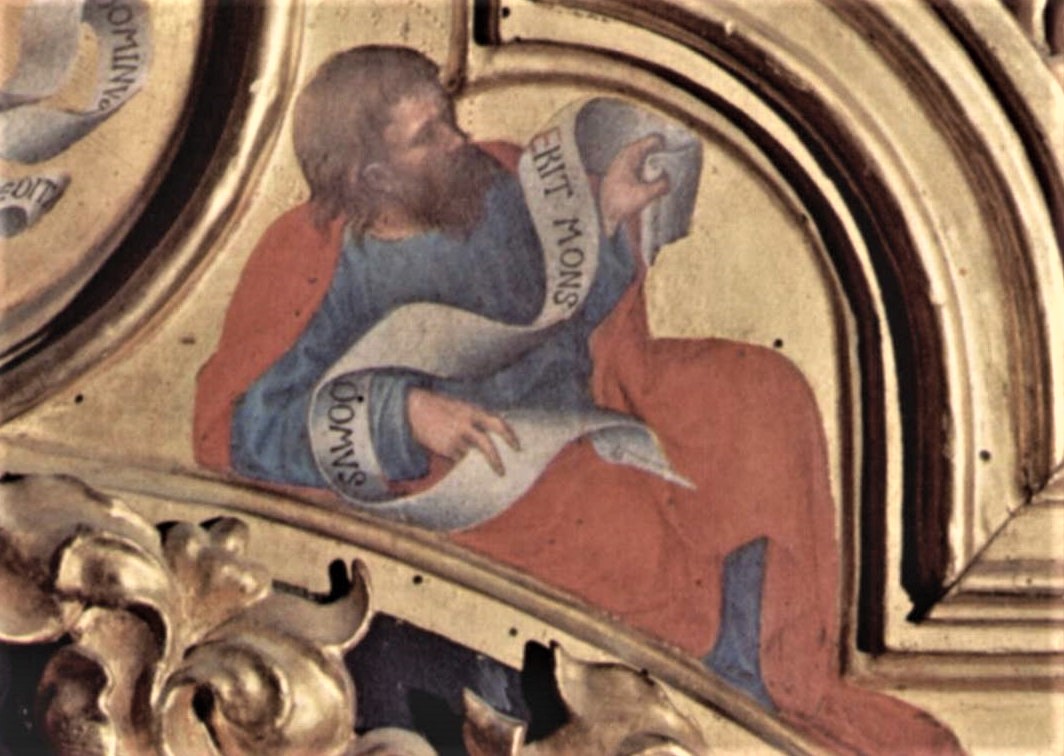
As Micah surveyed the destruction and severe pruning of ancient Israel, he did the only thing he could do; the same is true for us:
As for me, I will look to the Lord,
I will put my trust in God my savior;
my God will hear me! (Micah 7:7)
To the scornful world that delighted in Israel’s destruction, Micah wrote these words of warning:
Rejoice not over me, O my enemy!
though I have fallen, I will arise;
though I sit in darkness, the Lord is my light.
The wrath of the Lord I will endure
because I have sinned against him,
Until he takes up my cause,
and establishes my right.
He will bring me forth to the light;
I will see his justice.
When my enemy sees this,
shame shall cover her:
She who said to me,
“Where is the Lord, your God?”
My eyes shall see her downfall;
now shall she be trampled underfoot,
like the mire in the streets (Micah 7:8-20).
In the Church, this same faith must be recalled. We must say to this world: “We have been humbled on account of our sin, our rejection of discipline and devotion. God will finish with His purifications, and we shall arise by His grace. Our renewal will surely come, and the gospel will continue to go forth.”
Never forget, fellow Catholics, that empires and nations have risen and fallen, many enemies have tried to destroy us, countless heresies and errors have come and gone—all in the age of the Church. Yet here we are today, still preaching the same gospel we received. No weapon can annihilate us; the gates of Hell itself cannot prevail. This strength is surely not of us; it is proof of the divine constitution and indwelling of the Lord with His Bride the Church.
Take to heart Micah’s words. It may get worse before it gets better, but when God is finished purifying the Church, we will again rise, stronger and purer, to lead this collapsing culture away from ruin and destruction.
May it ever be so, O Lord, for as long as this world shall last.
We live in the age of the designer God, when many claim the right to imagine and craft their own version of god. Some of them refer to it as “the god within.” Others call it “the god of my understanding.” Still others speak of “the Jesus I know.” A consistent feature of these manufactured gods is that they just so happen to agree with the “believer” on almost everything. Another common characteristic is that they differ in significant ways from what the true God has given to us through biblical revelation. We used to call inventing and worshiping your own god “idolatry.” Today, the euphemism for this is being “spiritual but not religious.” In labeling themselves this way, people claim the virtue of faith; they speak of themselves in pious terms and even applaud themselves for being tolerant and open-minded, even while being dismissive (i.e., intolerant) of organized religion and the Scriptures.
Jesus spoke rather plainly of those who claim to be religious but are inwardly deceiving themselves and engaging in a game of “Let’s Pretend”:
Jesus began to speak, first to his disciples,
“Beware of the leaven—that is, the hypocrisy—of the Pharisees. There is nothing concealed that will not be revealed, nor secret that will not be known. Therefore whatever you have said in the darkness will be heard in the light, and what you have whispered behind closed doors will be proclaimed on the housetops.
I tell you, my friends, do not be afraid of those who kill the body but after that can do no more. I shall show you whom to fear. Be afraid of the one who after killing has the power to cast into Gehenna; yes, I tell you, be afraid of that one” (Luke 12:1-5).
The Greek word that is translated as “hypocrisy” is ὑπόκρισις (hypocrisis). Its nominative form is ὑποκριτής (hypocrites), which most literally means “actor.”
Obviously, an actor is someone who plays a role. An actor who portrays Julius Caesar is not in fact Julius Caesar. In a certain sense, he is “pretending” to be Julius Caesar.
It is certainly fine for an actor to pretend for a time, to be someone he is not, but in the spiritual sense, it is not good to act or pretend. When Jesus warns of hypocrisy, He is warning against pretending to be someone that we are not; or pretending to live in a world, in a time, or under a set of circumstances that is not in fact real.
When the Lord warns us not to engage in hypocrisy, He is cautioning us against pretending, engaging in fantasy, or living in a make-believe world. This serves as the opening framework of all that is to follow.
And what does follow? Fundamentally, the Lord says that the pretend world denies the reality of judgment. He goes on to warn that there is nothing that is concealed that will not one day be revealed, that there is nothing that is secret that will not be made known, that what we have said in the darkness will be heard in the light.
He then further cautions us not to be afraid of those who only have the ability to kill the body, but rather of the one who after killing, has the power to cast into Gehenna.
Most people today live in a fantasy world in that they deny or discount the reality that there will be a day of judgment, a day of reckoning. They simply gloss over the notion that they will have to render an account for every idle word (Mt 12:36), that they will have to stand before Him who judges the intentions of the heart (Heb 4:12), and that nothing will lay hidden from Him (Heb 4:13). In effect, they pretend. Pretending is acting; it is a form of hypocrisy.
Creating a designer god, a spiritual but not religious god is likewise a form of hypocrisy. A pretend god cannot save us; a designer god is of no use when going to meet the real God. If one has not allowed the true God to purify and ready him, he will be incapable of enduring the bright light of His glory and the searing insight of His truth. In fact, such a person will likely reject Him as hateful and harsh. To those who hate the truth, the truth seems hateful; to those who prefer the darkness, the light seems obnoxious.
This is why only the true God can ready us for beholding Him. Only He can accustom us to the brightness of His truth and the heat of His glory and love.
A second quality of the “spiritual but not religious,” those who claim the right to design their own god, is a subtle self-righteousness. They feel they are somehow above all this “organized religion stuff.” They don’t need doctrines or Bibles or Churches to tell them what to do; they have a direct connection of their own to the god of their (superior?) understanding. It is a kind of rehashing of tired old Gnosticism.
When Jesus warned of the hypocrisy of the Pharisees, He was referring to their sense of self-righteousness. They thought that they had nothing to worry about because they were “good people”—unlike others around them. They said their prayers, fasted on Wednesdays, and paid their tithes. On the Day of Judgment, they figured that they would just walk right on into Heaven.
Too many people today have this attitude of self-righteousness. They may invoke God’s grace and mercy, but they are not really willing to consider the fact that they may, by their own sinfulness, disqualify themselves. Emphasizing certain aspects of God while discounting others, they rework Him into their own god. This is acting; it is hypocrisy and self-righteousness.
Too many people brush aside the idea that they will one day have to render an account to the true Lord. “Oh yeah, I know there’s a day of judgment, but God is love so everything will be just fine. The god I know would never permit anyone to go to Hell.” Never mind that this is in direct contradiction to the whole of Scripture! Most today live in outright heresy on this topic. (Sadly, there are those who hold the opposite, extreme attitude: one of despair.)
The Lord says that we should beware of hypocrisy, careful that we’re not living in a pretend world. None but the pure in heart can walk into Heaven. We should not be so quick to presume that we have the necessary purity of heart. The real and true God is all holy, and Heaven is a place of the souls of just men made perfect (Heb 12:23). Jesus says, you must be perfect just as your heavenly Father is perfect (Mat 5:48). This is reality, but hypocrites like to pretend, to play act.
A contrived “god-within” of your “own understanding” cannot save you. Stop pretending; stop reciting lines like some actor (hypocrite). Get off the stage and down on your knees; call on the true God and savior, Jesus, the One described in Scripture, not the “Jesus” of your preferences. Yes, call on the true Lord, God, and Savior, who alone can save you.
The readings this Sunday speak of a great cosmic battle that is taking place all around us. In the Gospel, Jesus speaks of it vividly and of his own mission to engage our ancient foe and to gather God’s elect back from the enslaving clutches of Satan, who was a murderer and a liar from the beginning (cf John 8:44).
As Jesus approaches Jerusalem for the final time, He describes the battle that is about to unfold. It is a battle He wins at the Cross and Resurrection, but it is one whose parameters extend across time to our own era.
We also do well to examine the second reading, which describes what should be our stance in reference to the great cosmic battle. Though the victory is ours, we can only lay hold of it by clinging to Christ and walking with Him. The Hebrews text gives us a kind of battle plan.
Let’s begin by considering Jesus’ description in the Gospel of the cosmic battle and of his own great mission as the great Shepherd of the sheep and the Lord of armies (Dominus Deus Sabaoth).
I. A Passion to Purify – Jesus begins by saying, I have come to set the earth on fire, and how I wish it were already blazing!
Fire is powerful and transformative. Fire gives warmth and makes food palatable, but it also consumes and destroys. Nothing goes away from fire unchanged!
The Lord has come to purify us by the fiery power of His love, His grace, and His Word. He has a passion to set things right.
Purification is seldom easy or painless, though, hence the image of fire. In this great cosmic battle, fire must be cast upon the earth, not only to purify but to distinguish. There are things that will be made pure, but only if other things are burnt away and reduced to ashes.
This image of fire is important because many people today have reduced faith to seeking enrichment and blessings. Faith surely supplies these, but it also demands that we take up our cross and follow Christ without compromise. Many, if not most, enrichments and blessings come only through the fiery purification of God’s grace, which burns away sin and purifies us of our adulterous relationship with this world. Fire incites, demands, and causes change—and change is never easy.
Therefore, Jesus announces the fire by which He will judge and purify the earth and all of us on it, rescuing us from the power of the evil one.
This is no campfire around which we sit singing cute songs. Jesus describes it as a blaze that must set the whole world on fire!
II. A Painful Path – The text says, There is a baptism with which I must be baptized, and how great is my anguish until it is accomplished!
In coming among us, the Lord does not merely come to get us out of trouble, but to get into trouble with us. Though sinless, Jesus takes upon Himself the full weight of human sinfulness and manfully carries it to the cross. He accepts a “baptism” in His own blood on our behalf.
In waging war on our behalf against the evil one, Jesus does not sit in some comfortable headquarters behind the front lines; He goes out “on point,” taking the hill of Calvary and leading us over the top to the resurrection glory. He endures every blow, every hardship on our behalf.
Through His wounds we are healed by being baptized in the very blood He shed in the great cosmic war.
It is a painful path He trod, and He speaks of His anguish in doing it, but having won the victory He now turns to us and invites us to follow Him through the cross to glory.
III. A Piercing Purgation – In words that are nothing less than shocking, the Lord says, Do you think that I have come to establish peace on the earth? No, I tell you, but rather division. From now on a household of five will be divided, three against two and two against three; a father will be divided against his son and a son against his father, a mother against her daughter and a daughter against her mother, a mother-in-law against her daughter-in-law and a daughter-in-law against her mother-in-law.
The words shock, but they speak a truth that sets aside worldly notions of compromise and coexistence with evil. In order for there to be true peace, holiness, and victory over Satan, there must be distinction not equivocation, clarity not compromise. Fire and water do not mix; you can hear the conflict when they come together: hissing, popping, searing, and steaming. One must win; the other must lose. Compromise and coexistence are not possible.
In this there is a kind of analogy to a surgeon’s scalpel. The surgeon must wield this “sword” to separate out healthy flesh from that which is diseased. Coexistence is not possible; the diseased flesh must be removed. The moment one talks of “coexisting” with cancer, the disease wins. Were a doctor to take this stance he would be guilty of malpractice. When there is cancer, the battle must be engaged.
Thus, in this great and cosmic battle, the Lord cannot and will not tolerate a false peace based on compromise or an accepting coexistence. He has come to wield a sword, to divide. Many moderns do not like it, but Scripture is clear: there are wheat and tares, sheep and goats, those on the Lord’s right and those on His left, the just and wicked, the lowly and the proud, the narrow road to salvation and the wide road to damnation.
These distinctions, these divisions, extend into our very families, into our most intimate relationships. This is the battle. There are two armies, two camps. No third way is given. Jesus says, Whoever is not with me is against me, and whoever does not gather with me scatters (Matt 12:30).
If this be the case, how do we choose sides, practically speaking? And having chosen sides, how do we fight with the Lord in the cosmic battle?
For this it is helpful to turn to the Letter to the Hebrews from this Sunday’s Mass, a magnificent text that summons us to courage and constancy. Let’s examine the four prescriptions in this letter for a soldier in the army of the Lord.
1. Lay hold of the Proof of faith. The text begins, Since we are surrounded by a great cloud of witnesses.
What do witnesses do? They testify to what is true, to what they have seen, heard, and experienced. In the previous chapter of Hebrews, we were given a litany of witnesses from the Old Testament who learned to trust God and were rescued from ungodly men and innumerable snares. Individually and collectively they stand before us summoning us to courage and declaring that God can make a way out of no way, that He can move mountains and deliver His people, that He can do anything but fail.
We are to listen to their testimony, respond courageously to the summons to battle, and choose the Lord’s side, knowing that He has already won the victory. To the litany of Old Testament heroes can be added an innumerable number of saints in our Catholic experience who speak to us of victory and who summon us to faith and steadfast courage. Yes, there is the cross, but resurrection always follows!
These witnesses tell us to choose the Lord for He has already won the victory, to live the life of faith by adhering to the Scriptures and the teachings of the Church, to let the sacraments strengthen us, to rest in prayer, and to walk in fellowship with other Catholic believers in the army of the Lord.
Jesus is the Lord of Hosts; He is the King of Glory; He is the Head of the Body, the Church. We ought to listen to the testimony of these heroes and accept their witness as a proof of faith.
2. Live the Priority of faith. The text says, let us rid ourselves of every burden and sin that clings to us and persevere in running the race that lies before us while keeping our eyes fixed on Jesus, the leader and perfecter of faith.
We are given the example of a runner in a race. What does a runner do? He runs the race! Runners do not stop to watch television; they do not stop to make small talk; they do not take foolish detours or run in the wrong direction. They do one thing: they run the race. So, too, with our faith: it has priority. We should not let anything or anyone hinder us.
Runners also know where the finish line is; they know the goal. They do not run aimlessly. They keep their eyes on the prize and single-mindedly pursue the goal. Not one step is wasted. No extra baggage is carried that would hinder them or weigh them down.
3. Learn the Perspective of faith. The text says, For the sake of the joy that lay before him he endured the cross, despising its shame, and has taken his seat at the right of the throne of God.
It is clear that there are crosses, setbacks, disappointments, and suffering in life, but do you know where these lead? To glory, if we are faithful! The text reminds us that the Lord Jesus endured shame and the cross for the sake of the joy and glory that lay ahead.
There is no place in the Christian life for a discouraged, hangdog attitude of defeat. We’re marching to Zion, beautiful Zion! Glories untold await us. Scripture says, For our light and momentary troubles are producing for us an eternal glory that far outweighs them all. So we fix our eyes not on what is seen, but on what is unseen, since what is seen is temporary, but what is unseen is eternal (2 Cor 4:17-18).
Keep this perspective of faith. The devil wants you to be discouraged. Rebuke him and tell him you’re encouraged because no matter what you are going through, it is producing.
4. Last to the end through the Perseverance of Faith. The text says, Consider how [Jesus] endured such opposition from sinners, in order that you may not grow weary and lose heart. In your struggle against sin you have not yet resisted to the point of shedding blood.
It is not enough just to answer an altar call or to get baptized. It is necessary to persevere. In this cosmic battle Jesus says, At [the end] time many will turn away from the faith and will betray and hate each other, and many false prophets will appear and deceive many people. Because of the increase of wickedness, the love of most will grow cold, but the one who stands firm to the end will be saved (Matt 24:10-13).
In a cosmic war like this, endurance to the end is essential. We must make it over the hill of Calvary with Jesus and unto the resurrection. Victory is promised, but we must make the journey—and make it with Jesus.
Scripture says, Now I would remind you, brothers, of the gospel I preached to you, which you received, in which you stand,and by which you are being saved, if you hold fast to the word I preached to you—unless you believed in vain (1 Cor 15:1-2).
At the end of the day, there will be only two groups: the victors and the vanquished. You know the outcome by faith, so why not pick the winning team?
The battle is engaged. Choose sides!
This video shows images from my parish Church, which features the “Great Cloud of Witnesses” up on the clerestory level.
GEICO has a new commercial that, in addition to plugging their insurance, speaks to the importance of focus. Having the proper focus can change one’s outlook entirely.
In the commercial below, a youngster’s science fair project brings chaos. One of the parents at the fair barely notices, however, because he is focused on exciting news.
This is our goal: to remain astonished and joyful even in a world that is at times tumultuous and confusing. Astonished and joyful at what? The Good News that Christ has paid the price of our redemption, that God so loved the world that He sent His only Son so that whoever believes in Him would not perish but have everlasting life, that the Word of the Lord remains forever.
Allow this perspective and focus to keep you serene and joyful even in the current chaotic mess of our society, the failed social experiment of a cultural revolution gone wrong.
There are some who would have the Church step back to avoid persecution or giving offense. Perhaps there are assets like buildings and land to protect. And maybe some rapprochement with the world will attract more members. Or so the thinking goes.
But a study of earlier periods of persecution reveals a different plan for the way forward: confidence, courage, boldness, and love—even for our enemies. Let’s look at some texts.
Earlier this week we read from St. John Chrysostom, who knew all about exile and persecution. At a difficult time for him and his flock, he preached from the following text of St. Paul’s:
For the word of the cross is folly to those who are perishing, but to us who are being saved it is the power of God. For it is written, “I will destroy the wisdom of the wise, and the discernment of the discerning I will thwart.” Where is the one who is wise? Where is the scribe? Where is the debater of this age? Has not God made foolish the wisdom of the world? For since, in the wisdom of God, the world did not know God through wisdom, it pleased God through the folly of what we preach to save those who believe. For Jews demand signs and Greeks seek wisdom, but we preach Christ crucified, a stumbling block to Jews and folly to Gentiles, but to those who are called, both Jews and Greeks, Christ the power of God and the wisdom of God. For the foolishness of God is wiser than men, and the weakness of God is stronger than men (1 Cor 1:18-25).
Of this passage, St. John Chrysostom said,
How the foolishness of God is wiser than men, and his weakness stronger than men! In what way is it stronger? It made its way throughout the world and overcame all men; countless men sought to eradicate the very name of the Crucified, but that name flourished and grew ever mightier. Its enemies lost out and perished; the living who waged a war on a dead man proved helpless.
Therefore, when a Greek tells me I am dead, he shows only that he is foolish indeed, for I, whom he thinks a fool, turn out to be wiser than those reputed wise. So too, in calling me weak, he but shows that he is weaker still. For the good deeds which tax-collectors and fishermen were able to accomplish by God’s grace, the philosophers, the rulers, the countless multitudes cannot even imagine (from a homily by St. John Chrysostom, bishop, on the First Letter of St. Paul to the Corinthians (Hom. 4, 3. 4: PG 61, 34-36)).
Such words ought to encourage us as well, for many today gleefully report the decline of faith and of the influence of the Church. 2000 years of history bears witness to the fact that those forecasting the doom of the Church will be long gone, and the Church will still be preaching the gospel.
Indeed, to paraphrase G.K. Chesterton, the Church has read the funeral rights over everyone who has predicated her demise. Where is Nero? Where is Domitian? Where is Napoleon? Where is Mao? Where is the Soviet Socialist Republic? Indeed, the largest statue of Christ in the world is reportedly being built in Russia right now. Where are so many heresiarchs? What happened to the erroneous philosophies and destructive trends that have been proposed? These things have come and gone; empires and nations have risen and fallen. But the Church is still here. Often persecuted, sometimes growing and sometimes struggling, but here, still here, always here. Twelve fishermen and other commoners with Jesus have established a stronghold in the world.
Scripture says,
Some trust in Chariots or Horses,
But we in the name of the Lord.
They will collapse and fall,
But we shall hold and stand firm (Psalm 20:8).
But of course this will happen only to the extent that, by God’s grace, we DO hold and stand firm. It will not happen by adopting the world’s ways or fearfully caving in to its demands.
There is a powerful description in Scripture of the time when Peter and John were arrested for causing a commotion in the Temple area (by healing the lame beggar and proclaiming Jesus at the Beautiful Gate).
Now when [the Jewish leaders] saw the boldness of Peter and John, and perceived that they were uneducated, common men, they were astonished. And they recognized that they had been with Jesus (Acts 4:13).
Note that the Jewish leaders recognized that “they had been with Jesus.” Would anyone recognize this about you, or your parish, or your fellow parishioners, or even us clergy? This is our main goal in times like these: that others recognize that we have been with Jesus! In times like these, the Church must be the Church.
And notice this prayer in the Acts of the Apostles, of the early Church under persecution. It takes place just after the arrest of Peter and John, after they had been warned not to mention Jesus again.
“And now, Lord, look upon their threats and grant to your servants to continue to speak your word with all boldness, while you stretch out your hand to heal, and signs and wonders are performed through the name of your holy servant Jesus.” And when they had prayed, the place in which they were gathered together was shaken, and they were all filled with the Holy Spirit and continued to speak the word of God with boldness (Acts 4:29-31).
In her work on Acts, Dr. Mary Healy notes that they do not pray for safety or for their enemies to be vanquished; they pray to be able to continue to speak with boldness, to bring healing, and to announce Jesus and draw others to Him.
And this should be our prayer: Lord, keep us strong. Keep us bold and filled with love for our enemies and for all those who are troubled and in need of healing. Never allow us to hide or to be concerned for our own safety, but rather concerned only that your glorious and Holy Name bring healing and grace, conviction for our sins, repentance, and therefore mercy. Help us, Lord, to stay faithful, courageous, and bold no matter the threats, the hardships, the persecution, and even the ruthless attempts at suppression. May no one who looks at us conclude anything less than that we “have been with Jesus.”
Courage and holy boldness, fellow Catholics! The only way we will change the world (by grace) is to be Catholic through and through. The world does not know it, but Christ and His Body, the Church, are the only hope. Be authentically Catholic, and by that grace, save the world!
While the actual event of the Assumption of Mary into Heaven is not recorded in the Scriptures, there is a biblical basis for the teaching that, considered as a whole, confirms Catholic teaching as both fitting and in keeping with biblical principles. Let’s ponder this feast in stages:
The Assumption Explained – To be “assumed” means to be taken up by God bodily into Heaven. As far back as the Church can remember we have celebrated the fact that Mary was taken up into Heaven. We do not just acknowledge that her soul was taken to Heaven, as is the case with the rest of the faithful who are taken there (likely after purgation); rather, Mary was taken up, soul and body, after her sojourn on this earth was complete. There is no earthly tomb containing her body, neither are there relics of her body to be found among the Christian faithful. This is our ancient memory and what we celebrate today, Mary was taken up, body and soul, into Heaven.
The Assumption Exemplified – While Mary’s Assumption is not described in Scripture, several other “assumptions” are; thus the concept itself has a biblical basis. The actual event of the Assumption is not described in Scripture. However, there are “assumptions” recorded in the Scriptures and thus the concept is biblical.
Enoch – Enoch walked with God; then he was no more, because God took him away (Gen. 5:24). By faith Enoch was taken up so that he should not see death; and he was not found, because God had taken him. Now before he was taken he was attested as having pleased God (Hebrews 11:5).
Elijah – And as they still went on and talked, behold, a chariot of fire and horses of fire separated the two of them. And Elijah went up by a whirlwind into heaven … And he was seen no more (2 Kings 2:11).
Moses – Some say that because the location of Moses’ grave is not known, he too was taken up into Heaven. We read in Monday’s first reading at daily Mass: He was buried in Moab, in the valley opposite Beth Peor, but to this day no one knows where his grave is (Dt. 34:6). The text of course does not say that his body was taken up, and if it was, it occurred after death and burial. The Book of Jude hints at this: But even the archangel Michael, when he was disputing with the devil about the body of Moses … (Jude 1:9). Some further credibility is lent to the view of Moses being assumed by the fact that he appears with Elijah in the account of the Transfiguration. Some of the Church Fathers also held this opinion. Further, there is a Jewish work from the 6th century A.D. entitled The Assumption of Moses. In the end, though, the assumption of Moses is not officially held by the Church.
The Assumption Evidenced (John Sees Mary in Heaven)– There is one other scriptural account that may provide evidence of Mary’s whereabouts. Today’s second reading, a passage from the Book of Revelation, features John’s description of his sighting of the ark of God:
Then God’s temple in heaven was opened, and within his temple was seen the ark of his covenant. And there came flashes of lightning, rumblings, peals of thunder, an earthquake and a great hailstorm. A great and wondrous sign appeared in heaven: a woman clothed with the sun, with the moon under her feet and a crown of twelve stars on her head. She was pregnant and cried out in pain as she was about to give birth. Then another sign appeared in heaven: an enormous red dragon with seven heads and ten horns and seven crowns on his heads …. The dragon stood in front of the woman who was about to give birth, so that he might devour her child the moment it was born. She gave birth to a son, a male child, who will rule all the nations with an iron scepter (Rev 11:19 – 12:5).
The woman in the passage is clearly Mary, since the child is obviously Jesus (although she also likely represents Israel and Mother Zion). And where is Mary seen? In Heaven. Some argue that this does not necessarily indicate that her body is in Heaven; they say that it might be referring only to her soul. However, the physical description of her seems rather strong to support such a view.
Others believe that because John mentions the ark and then continues on to describe Mary (the woman clothed with the son), that he is in fact still describing the ark. (I have written on this elsewhere: Mary: The Ark of the New Covenant.) If Mary is the ark described, then she is clearly in Heaven.
So, the Bible, while not specifically recording Mary’s Assumption, does present other assumptions, thus showing it to be a biblical concept. Further, Mary’s physical presence in Heaven seems at least hinted at, if not directly described, in the Book of Revelation.
The Church does not rely solely on Scripture. In this case, what we celebrate is most fundamentally taught to us by Sacred Tradition; the memory of Mary’s Assumption goes back as far as we can remember.
The Assumption Extended to Us – The Feast of the Assumption is of theological interest and provides matter for biblical reflection, but eventually these questions are bound to arise: So what? How does what happened to Mary affect my life? What does it mean for me? The answers are bound up in nearly every Marian doctrine. Simply put, what happened to Mary will also happen to us in the end. As Mary bore Christ into the world, we bear Him in the Holy Communion we receive and in the witness of His indwelling presence in our life. As Mary is (and always was) sinless (immaculate), so too will we one day be sinless with God in Heaven. As Mary cared for Christ in His need, so do we care for Him in the poor, suffering, needy, and afflicted. Finally, as Mary was assumed, body and soul, into Heaven, so too will we be there one day, body and soul.
After our death and subsequent purification, our soul goes to Heaven; our body, though, lies in an earthly tomb. But one day, when the trumpet shall sound, our body will rise and be joined to our soul.
For we will all be changed—in a flash, in the twinkling of an eye, at the last trumpet. For the trumpet will sound, the dead will be raised imperishable, and we will be changed. For the perishable must clothe itself with the imperishable, and the mortal with immortality. When the perishable has been clothed with the imperishable, and the mortal with immortality, then the saying that is written will come true: “Death has been swallowed up in victory. Where, O death, is your victory? Where, O death, is your sting?” … Thanks be to God. He gives us the victory through our Lord Jesus Christ (1 Cor 15:51-57).
So our bodies shall rise; they shall be assumed and joined to our soul.
Improved model! An older woman once said to me, upon hearing that her body would rise, “Father if this old body has to rise, I’m hoping for an improved model!” Yes, indeed; me too! I want a full head of hair, a slim build, and knees that work! I want an upgrade from this old, general issue model to a luxury edition. In fact, God will do that. Scripture says,
He will take these lowly bodies of ours and transform them to be like his own glorified body (Phil 3:21).
But someone may ask, “How are the dead raised? With what kind of body will they come?” How foolish! What you sow does not come to life unless it dies. When you sow, you do not plant the body that will be, but just a seed, perhaps of wheat or of something else. But God gives it a body as he has determined, and to each kind of seed he gives its own body …. So will it be with the resurrection of the dead. The body that is sown is perishable, it is raised imperishable; it is sown in dishonor, it is raised in glory; it is sown in weakness, it is raised in power …. And just as we have borne the likeness of the earthly man, so shall we bear the likeness of the man from heaven (1 Cor 15:35-49).
I know that my Redeemer lives, and that in the end he will stand upon the earth. And after my skin has been destroyed, yet in my flesh I will see God; I myself will see him with my own eyes—I, and not another’s (Job 19:25-27).
The assumption of our bodies, prefigured by Christ in His own power and also in Mary by the gift of God, will one day be our gift too.
The following song is an African-American spiritual and describes that “great gettin’ up morning” when our bodies will rise. If we have been faithful, our bodies will rise to glory!
I’m gonna tell you about the coming of the judgement (Fare you well) There’s a better day a coming …. In that great gettin’ up morning fare you well! Oh preacher fold your Bible, For the last soul’s converted …. Blow your trumpet Gabriel …. Lord, how loud shall I blow it? Blow it right calm and easy Do not alarm all my people …. Tell them to come to the judgement …. In that great gettin’ up morning fare you well. Do you see them coffins bursting? Do you see them folks is rising? Do you see the world on fire? Do you see the stars a falling? Do you see that smoke and lightning? Do you hear the rumbling thunder? Oh Fare you well poor sinner. In that great gettin’ up morning fare you well.
Not so long ago the middle of August was still a lazy time to enjoy the last few days of summer. It used to be that Labor Day marked the unofficial end of summer—not so much any more in more places for more and more people.
The erosion of summer is driven mainly by the start of school. I have watched with sadness as the school year seems to begin earlier and earlier and earlier. In the Washington, D.C. area, parents are young people are preparing for that first day of school – and some schools have already started. College classes start even earlier, early August in some cases; and new students who need an “orientation” generally arrive on campus even before the general student population.
What’s the big rush? Why are some people in such a big hurry to get back to the grind? Families have so little time to spend time together as it is! I hope that the concerns I express today will be seen as having spiritual components and not just as the complaints of an old curmudgeon.
The purpose of rest, both the Sabbath rest and vacation, is to enjoy the fruit of our labors. We should work to live; many today live to work. What is the point of having a livelihood if we never get the time to enjoy life? God commanded the Sabbath for many reasons, but among them was justice. He set forth a particular day of the week (Saturday) as well as other times (feasts) when work was forbidden so that all could rest. Without the collective agreement and commandment (under pain of sin), the rich get time off but the poor must still work to facilitate the leisure of the rich. God set forth a system that sought to prevent that injustice. All, including slaves and even beasts of burden, were to refrain from all but the most necessary work.
In our culture, Sunday has been the day of rest. Most who have better paying jobs get that day off. Before 1970, even the poor typically had Sundays off because most retail establishments were closed. Today, for our convenience, lower-paid store workers and restaurant staff must work.
It is the same with holidays and holy days. It used to be that days like Christmas, Good Friday, and Thanksgiving were days off for just about everyone. Non-essential operations were generally closed.
Today almost nothing — no day, no time — is sacred. Market demand and the need to get ahead of the competition drive this. Work, work, work; compete and strive to win. It is usually the poorest among us, however, who pay the greatest price for this.
Families also suffer; time together has steadily eroded over the years. The tradition of eating evening and weekend meals is all but gone. Sunday and holiday gatherings seem to be shorter and more perfunctory—if they occur at all. Summer itself is now on the chopping block. Churches are affected because the window in which we have to conduct summer festivals and Vacation Bible school is more limited.
I have been given numerous explanations as to why schools are champing at the bit to begin the year.
School officials (in both secular and Catholic schools) tell me that many parents are delighted that their children are back in school earlier, thus freeing them to do other things rather than minding the children. But what does that tell you about the vision of family life today? Shouldn’t families want extended time to vacation together and to engage in other local activities, Church offerings, and so forth? Shouldn’t parents enjoy spending time with their children? Shouldn’t they want to use the extra time in the summer to form them? Do parents have children merely to send them off to school, happy to be rid of them for a few hours? I hope not. I know that we all get a little tired, but I find it alarming that parents would be as eager for school to start as school officials insist is the case.
I am told that teachers require more days for professional development, thus forcing schools to open earlier in the year and/or close later in order to meet the required minimum number of days of student instruction. But professional days and ongoing certification have always been necessary. My mother was a teacher for over twenty years and teachers had professional days and took certification courses (mainly in the summer) back then. Teachers already have two and a half months away from classes. That’s a lot more vacation than most of the rest of us have. Is there a reason that teachers could not have most of June and July off and then return at the beginning of August for these sorts of things? If schools opened after Labor Day that would still give them more than a month for these activities.
Further I would argue that the impact of such a system is not a good one. It sets up a “death by a thousand cuts” throughout the school year as half-days, teacher in-service days, and professional days seem to eat into most weeks of the school year. In some school systems nearly every Friday is a half day for one reason or another. Working parents must juggle schedules all year long, not just in the summer when vacations are already common. Schools even collect a lot extra money running “aftercare” programs on those half-days of classes. Parents are not only deprived of time with their children, but they are pressured financially as well.
The school system is supposed to serve children, parents, and families, but it seems instead that the school systems have started ruling our lives and dictating our schedules. Even in Catholic and other private schools, parents who are already struggling just to afford the tuition must now also pay for additional childcare on those days when school is not in session or closes early.
My final concern is that school schedules carving away more and more of the summer from family time means that the formation of children shifts from the families to the schools. Is that really what we want? I would hope that parents would want to play the most significant role in forming their children. Parents should ask themselves if they want to raise their children or increasingly hand that task over to strangers. Sadly, as we all can see, many schools have become less and less places of teaching basic academic skills and more and more places of indoctrination into values that are often inimical to Catholic and biblical teachings. Although there are exceptions, the infiltration of secular and immoral ideologies into the curriculum has made major inroads in public schools.
I recommend we attack this problem by starting simply. Can we at least have the month of August back? How about an agreement not begin school until the Tuesday after Labor Day? It’s just a little thing, but the steady erosion of rest, family time, Church time, and “downtime” has taken a toll on our society in many ways. Here’s to summer … all of it!
I am often approached by widows and widowers after the death of a spouse with a question similar to this one, which was submitted to me at my “Question and Answer” column in Our Sunday Visitor.
I recently lost my husband of 46 years and long to be reunited with him one day. But some people have told me that our marriage ended with his death and that Jesus says we will not be married or considered spouses in heaven. This is difficult for me to understand. Will we even know each other in heaven or have anything special there between us?
One can certainly hear the pain in her question. It is perhaps a needless pain, born out of an unnecessarily strict reading of Jesus’ words in the Gospel of Mark. Jesus was responding to a hypothetical question posed by the Sadducees about a woman who had been married to seven different brothers and bore no children to any of them. They raise this not so much as a marriage question but as a way to make the teaching of the resurrection appear ludicrous. Jesus sets aside their argument in the following way:
Some Sadducees, who say there is no resurrection, came to him and put this question to him, saying, “Teacher, Moses wrote for us, ‘If someone’s brother dies, leaving a wife but no child, his brother must take the wife and raise up descendants for his brother.’ Now there were seven brothers. The first married a woman and died, leaving no descendants. So the second married her and died, leaving no descendants, and the third likewise. And the seven left no descendants. Last of all the woman also died. At the resurrection, whose wife will she be? For all seven had been married to her.”
Jesus said to them, “Are you not mistaken because you do not know the scriptures or the power of God? When the dead rise, they will neither marry nor be given in marriage. Instead, they will be like the angels in heaven. As for the dead being raised, have you not read about the burning bush in the Book of Moses, how God told him, ‘I am the God of Abraham, the God of Isaac, and the God of Jacob’? He is not the God of the dead but of the living. You are badly mistaken” (Mk 12:18-27).
The Sadducees posed this not so much as a question about marriage but as a way to make the teaching of the resurrection seem ridiculous.
The first thing to note is that Jesus speaks of marriage only in a passing way. His response to the question about the highly unlikely scenario is designed to teach solemnly on the reality of the resurrection of the dead. In His response, Jesus does not fully develop a teaching on the experience of spouses toward each other in Heaven.
Hence, we ought not to conclude that a long marriage in this world will have no meaning at all in the age to come. In heaven our body and our soul will be perfected. So, too, our fundamental relationships, both spousal and familial. They will not be discarded or simply forgotten. Surely those who are spouses here will experience a far more perfect union in Heaven. They will enjoy mutual understanding, love, appreciation, and spiritual intimacy far greater than they could even imagine. They will have this because they have it first and foremost with God; and with, in, and through God they will enjoy this perfected union with each other. The same would be true of our other familial relationships and bonds of friendship, to each according to what is proper and perfect. The married will enjoy this supremely, because marital bonds on earth receive special divine graces.
The early Church writer Tertullian affirms this view:
All the more shall we be bound to our departed spouses because we are destined to a better estate … to a spiritual partnership …. Consequently, we who are together with God shall remain together…. In eternal life God shall no more separate those he has joined together than in this life where he forbids them to be separated (Tertullian, On Monogamy, 10).
To be sure, some aspects of marriage do end with the death of a spouse. The marital vows that bind the couple to an exclusive relationship, forsaking all others, are only operative until death do them part. Thus, the death of a spouse permits the surviving spouse to marry again. In some cases, especially before the modern age, such marriages for widows or widowers were necessary for financial and familial reasons.
That a marriage ends by the death of a spouse speaks more to worldly realities than to heavenly ones. It still does not follow that one’s earthly marriage will have no meaning in Heaven. Even if a person remarries after the death of his/her spouse, surely both relationships will be perfected in Heaven, not discarded. As the relationships are perfect, there will be no jealousy or resentment between the first spouse and the second.
In His response to the Sadducees, Jesus surely does mean that there will be no new marriages in Heaven. There will be no wedding bells, no marriage ceremonies, for Heaven is already one grand marriage feast of Christ with His Bride, the Church.
Further, marriage is given here in this world for the sake of propagating the human race through having children. This need will not exist in Heaven, where there is no death. The Fathers of the Church emphasize this in their commentary on this teaching:
“For when they shall rise from the dead, they neither marry, nor are given in marriage; but are as the angels which are in heaven” as if He had said, there will be a certain heavenly and angelic restoration to life, when there shall be no more decay, and we shall remain unchanged; and for this reason marriage shall cease. For marriage now exists on account of our decay, that we may be carried on by succession of our race, and not fail; but then we shall be as the Angels, who need no succession by marriage, and never come to an end (Theophylactus, as quoted in the Catena Aurea).
In the resurrection, men shall be as the Angels of God, that is, no man there dies, no one is born, no infant is there, no old men (Pseudo Jerome, as quoted in the Catena Aurea).
For marriages are for the sake of children, children for succession, succession because of death. Where then there is no death, there are no marriages; and hence it follows, But they which shall be accounted worthy, &c (Augustine, as quoted in the Catena Aurea).
As for us living like the angels, the Lord speaks to immortality, but He also teaches that there will no longer be any need for sexual intercourse. This may seem like a drawback to some people, particularly in this hypersexualized age, but the intimacy between spouses in Heaven will be far greater than any mere physical union. When a great joy comes between spouses it eclipses lesser ones. Here too, the Church Fathers affirm this meaning:
Our Lord shows us that in the resurrection there will be no fleshly conversation (Theophylactus, quoted in the Catena Aurea).
Since all fleshly lust is taken away … they resemble the holy angels (Cyril of Alexandria, Homily 136 on Luke).
Married couples should look forward to a relationship that is perfected in Heaven, not set aside. While the juridical aspects of marriage may end at death, the union of hearts and lives will not. In Christ there surely remains a spiritual connection and covenantal union that stretches from Heaven to earth through prayer, and in Heaven the Lord will surely perfect what He joined on earth, giving spouses unimaginable joy and unity.
Set me as a seal on your heart,
as a seal on your arm.
For stern as death is love,
relentless as the nether world is devotion;
its flames are a blazing fire.
Deep waters cannot quench love,
nor floods sweep it away.
Were one to offer all he owns to purchase love,
he would be roundly mocked (Song of Songs 8:6-7).