We live in a world of unprecedented comfort: electricity, indoor plumbing, heating and air-conditioning, medicine, healthcare, abundant food, myriad consumer products, and entertainment available with the click of a button. Despite this we do not seem more grateful or at ease than our forebears. If anything, we aremoreanxious. For example, though people have never lived so long nor been so healthy, we have never been more worried about our health.
One would think that such abundance and comfort would lead us to be exceedingly grateful and to overlook small setbacks, remembering how much more difficult life was for our ancestors—but the opposite seems more often to be the case. We seem to be easily frustrated and to have little tolerance for enduring even the most minor suffering. Our comfortable couches have made us soft and our countless options have made us overly particular and easily annoyed. There is an old saying that “Expectations are premeditated resentments.” We certainly have a lot of expectations these days, many of them unrealistic in the long run. The insistence on everything being perfect seems to rob us of the happiness we should enjoy. Everyone wants the ideal, and if there is any ordeal, they want a newdeal.
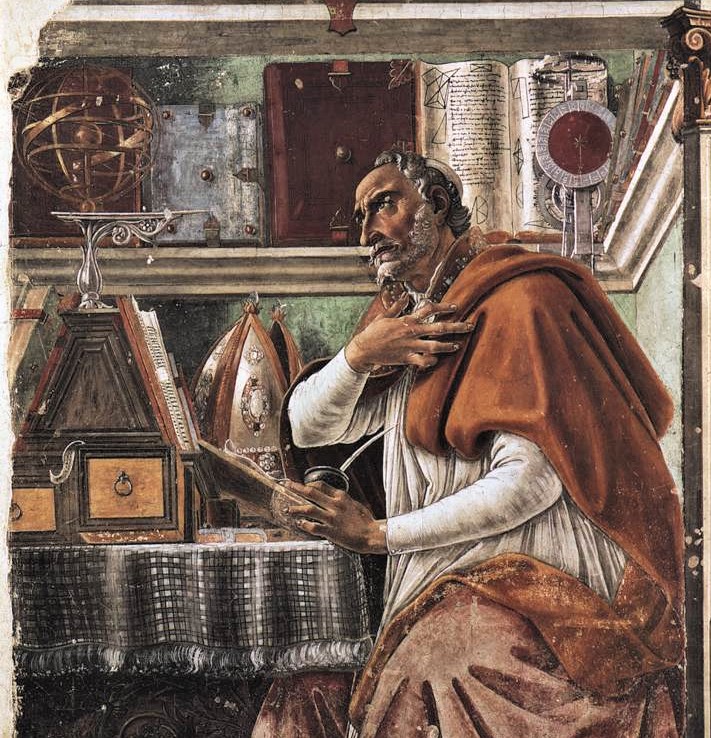
We seem to have lost the idea the idea that life is a time of testing for us. We live in paradise lost, and there are going to be difficulties. St. Augustine reminds us that trials have their purpose:
Our pilgrimage on earth cannot be exempt from trial. We progress by means of trial. No one knows himself except through trial, or receives a crown except after victory, or strives except against an enemy or temptations. [From a commentary on the psalms by Saint Augustine, bishop (Ps. 60, 2-3: CCL 39, 766)].
Yes, trials and tests help us to gain self-knowledge and self-mastery. Trials also have purifying and humbling effects. So good is God to us that He allows His graces to become our merits. For, having engaged the battle of life and undergone its trials, the crown of victory will be granted to us. St. Augustine surely has in mind St. Paul’s confident hope:
I have fought the good fight, I have finished the race, I have kept the faith. From now on the crown of righteousness is laid up for me, which the Lord, the righteous judge, will award to me on that day—and not only to me, but to all who crave His appearing(2 Tim 4:7-8).
Where would you and I be today without the trials of the past? We do not seek out suffering, but the suffering that inevitably comes in both small and large doses helps to form our character, make us stronger, and give us wisdom.
We who live in the developed world today have, for the most part, “First World problems,” and we do well to remember the inevitability of trials in this life. We don’t have to like them, but when they come, we should accept and endure them graciously. Resentment and anger at such trials do not bespeak spiritual maturity. Enjoy the good things and comforts of this life but beware the tendency to become soft and overly fussy. Remember, too, that this world is passing away.
The song “We’ll Understand It Better By and By” has these appropriate lyrics:
Trials dark on every hand
And we cannot understand,
All the ways that God will lead us
To that blessed Promised Land.
But He guides us with His eye,
And we follow till we die,
And we’ll understand it better by and by.
Most of the saints have written about the central battle of our life: desire. What we desire is crucial because in the end, we get what we want. Either we die wanting what God offers, or we die not wanting it. Either we love what and whom God loves, or we don’t.
We tend to think that everyone wants to go to Heaven, but that isn’t true. Heaven is not one’s personally designed paradise; it is the Kingdom of God with all of its values: forgiveness, chastity, love of all (including our enemies), and generosity, among many others. In addition, God is at the center, not us. Many people don’t desire some or all the values of the Kingdom of God and thus die in a state of indifference or opposition to what God is offering. For example, some do not want to love their enemies or live chastely. God will not force them to love what or whom he loves.
It is both foolish and presumptuous to think that when we die, we will suddenly start liking what we have disliked all our life or loving those whom we have not loved. When we die our decisions and desires are forever fixed. The saddest thing about those in Hell is that their earthly life demonstrated that they would be even more miserable in Heaven.
Life is a battle of desires. We must learn to want what God is offering and to eschew lesser or sinful things. St. Augustine wrote:
The entire life of a good Christian is in fact an exercise of holy desire. You do not yet see what you long for, but the very act of desiring prepares you, so that when he comes you may see and be utterly satisfied.
So, my brethren, let us continue to desire, for we shall be filled. Such is our Christian life. By desiring heaven we exercise the powers of our soul. Now this exercise will be effective only to the extent that we free ourselves from desires leading to infatuation with this world. (from the Tractates on the first letter of John by St. Augustine, bishop, Tract. 4: Pl 35, 2008-2009).
Because God offers more than we can possibly desire, not only must we adjust the object of our desire, we must increase the magnitude.
St. Augustine wrote of enlarging our desires. He also provided an insightful answer as to why God often makes us wait:
Suppose you are going to fill some holder or container, and you know you will be given a large amount. Then you set about stretching your sack or wineskin or whatever it is. Why? Because you know the quantity you will have to put in it and your eyes tell you there is not enough room. By stretching it, therefore, you increase the capacity of the sack, and this is how God deals with us. Simply by making us wait he increases our desire, which in turn enlarges the capacity of our soul, making it able to receive what is to be given to us [Ibid].
One of the psalms says, I have run the way of your commandments, when you did enlarge my heart(Ps 119:32). Hence, God not only changes our heart but enlarges it so it can contain even more blessings. Yes, God is the great cardiologist and the Church is His coronary care unit! He awaits our permission to perform His sometimes-painful work on us. It is not always easy to say yes because are attached to and prefer lesser things. St. Augustine wrote:
Let me return to the example I have already used, of filling an empty container. God means to fill each of you with what is good; so cast out what is bad! If he wishes to fill you with honey and you are full of sour wine, where is the honey to go? The vessel must be emptied of its contents and then be cleansed. Yes, it must be cleansed even if you have to work hard and scour it. It must be made fit for the new thing, whatever it may be[Ibid].
Therefore, pray that you will desire what God offers because it is not necessarily easy to do so. Speak to the Lord from the depths of your soul:
Lord, please heal me. Too often I desire lesser, passing things rather than what You want to give me. Grant me the grace to hunger and thirst for righteousness and for all that You offer. Help me to win in this great battle of desire by loving You above all things and all people. Heal my wounded heart and its twisted desires; then enlarge it so that it can contain the incomparable gifts You want to grant, in Christ Jesus, my Lord. Amen.
In today’s Gospel the Lord is teaching us, by His grace, to break the cycle of hatred and retribution. When someone harms me I may well become angry, and in my anger seek to get back at the offender. If I do that, though, then Satan has earned a second victory and brought the anger and retribution to a higher level. Most likely, the one who originally harmed me will then take exception to my retribution and try to inflict more harm on me. And so the cycle continues and escalates. Satan loves this.
Break the cycle. The Lord has dispatched us onto the field to turn the game around and break this cycle of retribution and hatred. The “play” He wants us to execute is the “it ends with me” play.
Don’t play on Satan’s team. To hate those who hate me, to get back at those who harm me, is to work for Satan, to play on his team. Why do that?
To advance the ball for Jesus is to break the cycle of retribution and hatred by taking the hit and not returning it. By loving our enemy, we break the cycle of hate. By refusing retribution, we rob Satan of a double victory.
Recall the words of Dr. Martin Luther King, Jr.:
Darkness cannot drive out darkness; only light can do that. Hate cannot drive out hate; only love can do that. Hate multiplies hate, violence multiplies violence, and toughness multiplies toughness in a descending spiral of destruction. … The chain reaction of evil—hate begetting hate, wars producing more wars—must be broken, or we shall be plunged into the dark abyss of annihilation (From Strength to Love, 1963).
Christ, living in us, wants to break the cycle.
The Necessity of Grace – Recall as well a point made in last Sunday’s reflection: that the antitheses contained in chapter 5 of the Gospel of Matthew are pictures of the transformed human person. Jesus is describing here what happens to a person in whom He has begun to live through the Holy Spirit. The verses are a description more so than a prescription. Jesus is not merely telling us to stop being so thin-skinned, easily offended, and retaliatory. He’s not just telling us to stop hating people. If that were the case, it would be easy for us to get discouraged or to write them off as some impossible ideal. No, the Lord is doing something far greater than just giving us a set of rules. He is describing what will happen to us more and more as His grace transforms us.
With this in mind, let’s look at the particulars in three sections.
I. Regarding Retaliation – The first of the antitheses reads as follows:
You have heard that it was said, “An eye for an eye and a tooth for a tooth.” But I say to you, offer no resistance to one who is evil. When someone strikes you on the right cheek, turn the other one to him as well. If anyone wants to go to law with you over your tunic, hand him your cloak as well. Should anyone press you into service for one mile, go with him for two miles. Give to the one who asks of you, and do not turn your back on one who wants to borrow.
Behind this text is the gift from the Lord of a generous heart. Psalm 118 says, In the ways of your precepts I run O Lord for you have enlarged my heart. It takes a large heart not to retaliate, to go the extra mile, to give alms. The transformed mind and heart that Jesus gives us is like this. It is a big heart, able to endure personal slights and attacks, refuse retaliation, and let go of personal possessions in pursuit of a higher goal.
That said, there are surely many questions that arise out of these sayings of Jesus’. Most of them, however, come from seeing Jesus’ words as a legalistic prescription rather than as a descriptive example. Nevertheless, they are important questions.
What does it mean to offer no resistance to injury?
Does it mean that there is no place for a criminal justice system?
Should police forces be banned?
It there no place for national defense or armed forces?
Should all punishment be banned?
Should bad behavior never be rebuked?
Am I required to relinquish anything anyone asks me for?
Must I always give money to beggars?
Is it always wise to give someone whatever he asks for?
Should I agree to accept every task that is asked of me?
To answer some of these questions, we do well to recall that the Lord is speaking to us as individuals. The state, which has an obligation to protect the innocent from enemies within and without, may be required to use force to repel threats. Further, it has an obligation to secure basic justice and may therefore be required to impose punishment on those who commit crimes. This has been the most common Catholic understanding of this passage. The New Testament seems to accept that the state does have punitive powers, to be used for the common good.
But don’t miss Jesus’ main point, which is directed to us as individuals. He testifies that, to the degree that we are transformed, we will not seek to retaliate or avenge personal injuries. Rather, due to our relationship with God the Father, we will be content to leave such matters to God. As Scripture testifies, Beloved, never avenge yourselves, but leave it to the wrath of God; for it is written, “Vengeance is mine, I will repay, says the Lord” (Rom 12:19). Further and even more important, to the degree that Jesus lives in us, we will be less easily offended. This is because our sense of our dignity is rooted in Him, not in what some mere mortal thinks, says, or does.
Jesus goes on to give four examples of what He means by us becoming less vengeful and retaliatory.
When someone strikes you on the right cheek, turn the other one to him as well.In ancient times, striking someone in this manner was a sign of disrespect, just as it would be today. There is an intended humiliation when someone strikes another on the cheek. By turning the other cheek, one would then be struck with the back side of the striker’s hand. This was an even greater indignity in the ancient world! But as a Christian in whom Christ is really living, who can really dishonor me? God is the source of my dignity; no one can take it from me. By this grace, I can let any slight pass, because I have not been stripped of my dignity. The world did not give me my dignity and the world cannot take it away. From this perspective, Jesus is not offering us merely the grace to endure indignity, but the grace not to suffer or experience indignity at all.
If anyone wants to go to the law with you over your tunic, hand him your cloak as well.In ancient times, it was forbidden to take someone’s tunic in pledge for a loan. Thus Jesus would seem to be using this example as a symbol of our rights. There are some people who are forever demanding and clinging to their rights. They clutch their privileges and will not let them go even if the common good would require it. They will go to the law rather than suffer any infringement upon their rights. The true Christian thinks more in terms of duties than rights, more of responsibilities than privileges. All this
“personal honor” stuff is unimportant when Christ lives in us. To be sure, there are some rights necessary for the completion of our duties or for meeting our basic needs. It is unlikely that Jesus has in mind to forbid this. But as a general rule, Jesus is indicating that we can be freed of obsession over our “rights,” “dignity,” and also our personal possessions. Increasingly, we can be freed of the anger that can arise when someone might even think of touching anything that is “ours.” The more we are detached from earthly possessions, the less we get anxious or angry when these things are somehow threatened or used without our permission, or when our precious “rights” are trampled upon.
Should anyone press you into service for one mile, go with him for two miles.It was legal for a Roman solider to press a person into service for one mile to carry things. Some might be bent out of shape over such indignities. Jesus offers us a generous heart that will go the extra mile. Jesus came as the servant of all; He came to serve rather than to be served. To the degree that He lives in us, we will willingly serve and not feel slighted when someone asks us to do something. Neither will we cop the “Why me?” attitude that commonly afflicts the ungenerous soul. The key gift here is a generous heart, even in situations in which others do not assign work to us fairly or appreciate our efforts sufficiently. This is of little concern for us, because we work for God.
Give to the one who asks of you, and do not turn your back on one who wants to borrow.Many questions arise related to indiscriminate giving. In some cases, it may not be wise thing to give money simply because someone asks. But don’t miss the main point here: when Jesus lives in us, we will be more generous. We will give cheerfully and assist others gladly. We will not get bent out of shape when someone asks us for help. We may not always be able to help, but our generous heart will not begrudge the beggar; we will remain cheerful and treat him or her with respect.
Here, then, is a description of a transformation of the mind and heart. We will view things differently. We will not be so easily bent out of shape, retaliatory, or vengeful. We will be more patient, more generous, less grasping, and more giving. This is what happens when we live in a transformative relationship with Jesus.
II. Radical Requirement – Love your enemy.
You have heard that it was said, “You shall love your neighbor and hate your enemy.” But I say to you, love your enemies, and pray for those who persecute you, that you may be children of your heavenly Father, for he makes his sun rise on the bad and the good, and causes rain to fall on the just and the unjust. For if you love those who love you, what recompense will you have? Do not the tax collectors do the same? And if you greet your brothers only, what is unusual about that? Do not the pagans do the same?
This is the acid test, the hallmark of a true Christian: love of one’s enemy. Note that the Lord links this to being a true child of God. Why? Because God loves everyone and gives gifts of sun and rain to all. If we are a “chip off the old block,” we will do the same. It’s easy to love those who love us, but a Christian is called to fulfill the Law and exceed it.
If Christ lives in us, then we will love even our enemy. Recall that Jesus loved us even when we hated Him and killed Him. Jesus said, Father, forgive them; for they know not what they do (Luke 23:34). Elsewhere in Scripture is written, While we were his enemies we were reconciled to God by the death of his Son (Rom 5:10).
We should be careful not to make love an abstraction. The Lord is talking about a real transformation of our hearts. Sometimes we say silly things like this: You don’t have to like everyone but you have to love them. This turns love into something of an abstraction. God doesn’t just love me; he even likes me. The Lord is talking about a deep love that wills good things for our enemy and even works toward them.
We are called to have compassion, understanding, and even affection for those who hate us and will us evil. We may wonder how this can happen in us. How can we have affection for those who hate us? It can be so when Christ lives His life in us. We will good and do good to them who hate us, just as Jesus did.
It is also important not to sentimentalize this love. Jesus loved His enemies but did not coddle them. He spoke the truth to the Scribes and Pharisees of His day, often forcefully and uncompromisingly. We are called to a strong love, one which wants the truth for everyone, but we must give this testimony with understanding and true (not fake or false) compassion.
III. Remarkable Recapitulation – Finally, the Lord says,
So be perfect, just as your heavenly Father is perfect.
Here is the fundamental summary, the recapitulation: God-like perfection! Nothing less will do. How could there be anything less when Christ lives His life in us? To the degree that He lives in us and the old Adam dies, we become perfect. This is the state of the saints in Heaven: they have been made perfect. Christ’s work in them is complete. The Greek word used here is τέλειός (teleios) which means complete or perfect. Thus, the emphasis is on the completion of a work in us more so than mere excellence in performance. Paul writes to the Philippians, And I am sure that he who began a good work in you will bring it to completion at the day of Jesus Christ (Phil 1:6).
This sentence also serves as an open-ended conclusion to the antitheses today’s Gospel. It’s almost as if Jesus says, “I’ve only given you a few examples here. The point is to be perfect, complete in every way, totally transformed in your mind, heart, and behavior.”
And thus we return to the original theme: it ends with me. In these final two antitheses the Lord wants to break the cycle of anger, retribution, and violence. He wants the downward spiral of hatred and vengeance to end with me. When, on account of His grace, I do not retaliate, I break the cycle. When I do not escalate the bitterness or return the spite, when I refuse to allow hate to take possession of me, the cycle ends with me. Only God can do this for me.
But He does do it. I promise you in the Lord Jesus Christ that He can deliver us from anger, wrath, vengefulness, and pettiness. I can promise you because He is doing it in me. I do not boast; I am only telling you what the Lord has done. For the most part, I have been delivered from my anger, something that was once a major struggle for me. It is not any longer. I did not deliver myself—Jesus did. The promise of the Lord here is true. Only God can do it. He has said it and He will do it—if we let Him.
This song says, “I Look to you. After all my strength is gone, in you I can be strong. I look to you!”
In the commercial below, a man is easily talked out of his meal by Yoda, the Star Wars Jedi Master. However, when the Jedi Master continues on to try to talk him out of his Pepsi, the man realizes that this is a bridge too far. He refuses to give way any longer.
I wonder if this is not an image for Christians in their battle against the world and the devil. Indeed, too often we are willing to give way to those in the world (and the devil himself), who ask us to surrender our dignity, make compromises, and give way to sin. So easily we surrender our serenity to a world that provokes anxiety and anger; we surrender our chastity to a world that exalts lust; we give over our generosity to a world that instills in us a fear that drives us to hoard; we hand over our prophecy to a world that demands our silence; we neglect our soul and hand over its care to a world that demands we be fixated on our body, on good looks and our physical health; we hand over prayer and the celebration of the sacraments to a world that demands all of our time.
In effect, the world and the devil say to us, “All you have is mine … now hand it over.”
After surrendering his meal, the man wakes up to what is happening and stops handing things over. For him, it is prospect of losing his Pepsi that brings about this awakening. But what about us? Have you reached this point? How? When? What was the “bridge too far” for you? For addicts, this point is called “hitting bottom,” when the insanity of their lifestyle finally becomes too much to handle and they are finally willing to say “No!” or “Enough!”
For most of us, perhaps the wake up moment comes when we finally begin to see that the world asks too much of us, takes too much of us without offering us anything of real or lasting value in return. Perhaps we, like the man in the commercial, start to recognize the lies, deception, and theft taking place as the world tries to have us ignore our true hunger and give away the Eucharistic meal and Holy Communion that is our baptismal right.
Yoda tries to mesmerize the man in the commercial, saying about the meal, “You do not want.” The world and the devil also say of God, “You do not want.” It’s as if to say, “Your desires are not about God and the things awaiting you in Heaven; they are about me. Give me your heart, your loyalty, your life.”
When the man in the commercial finally does wake up, it’s because of a drink. In this I am reminded of the woman at the well in the Gospel of John. Jesus finally reaches her through thirst and teaches, Everyone who drinks this water will be thirsty again. But whoever drinks the water I give him will never thirst. Indeed, the water I give him will become in him a spring of water welling up to eternal life (Jn 4:13-14). For her and for the man in the commercial, it is thirst that awakens them to the lies and deceptions of the world.
In the commercial below, a man is easily talked out of his meal by Yoda, the Star Wars Jedi Master. However, when the Jedi Master continues on to try to talk him out of his Pepsi, the man realizes that this is a bridge too far. He refuses to give way any longer.
<strong>I wonder if this is not an image for Christians in their battle against the world and the devil.</strong> Indeed, too often we are willing to give way to those in the world (and the devil himself), who ask us to surrender our dignity, make compromises, and give way to sin. So easily we surrender our serenity to a world that provokes anxiety and anger; we surrender our chastity to a world that exalts lust; we give over our generosity to a world that instills in us a fear that drives us to hoard; we hand over our prophecy to a world that demands our silence; we neglect our soul and hand over its care to a world that demands we be fixated on our body, on good looks and our physical health; we hand over prayer and the celebration of the sacraments to a world that demands all of our time.
<strong>In effect, the world and the devil say to us, “All you have is mine … now hand it over.”</strong>
<strong>After surrendering his meal, the man wakes up to what is happening</strong> and stops handing things over. For him, it is prospect of losing his Pepsi that brings about this awakening. But what about us? Have you reached this point? How? When? What was the “bridge too far” for you? For addicts, this point is called “hitting bottom,” when the insanity of their lifestyle finally becomes too much to handle and they are finally willing to say “No!” or “Enough!”
<strong>For most of us, perhaps the wake up moment comes when we finally begin to see that the world asks too much of us,</strong> takes too much of us without offering us anything of real or lasting value in return. Perhaps we, like the man in the commercial, start to recognize the lies, deception, and theft taking place as the world tries to have us ignore our true hunger and give away the Eucharistic meal and Holy Communion that is our baptismal right.
<strong>Yoda tries to mesmerize the man in the commercial, saying about the meal, “You do not want.” </strong>The world and the devil also say of God, “You do not want.” It’s as if to say, “Your desires are not about God and the things awaiting you in Heaven; they are about me. Give me your heart, your loyalty, your life.”
<strong>When the man in the commercial finally does wake up, it’s because of a drink.</strong> In this I am reminded of the woman at the well in the Gospel of John. Jesus finally reaches her through thirst and teaches, <em>Everyone who drinks this water will be thirsty again. But whoever drinks the water I give him will never thirst. Indeed, the water I give him will become in him a spring of water welling up to eternal life</em> (Jn 4:13-14). For her and for the man in the commercial, it is thirst that awakens them to the lies and deceptions of the world.
A while back on this blog we reflected on the puzzling truth that we can endure more pain than pleasure. We seem to be able to endure a lot of pain, but we can endure only a little pleasure at a time. In fact, too much pleasure actually brings pain: sickness, hangovers, obesity, addiction, laziness, and even boredom. You can read more of that HERE. But the point is that pleasures and good things are only enjoyed in moderation.
Something similar may be said for wisdom and knowledge. We learn best in small portions. For example, consider a teaching by St. Bernard, who is reflecting on a verse from Sirach:
If you have found wisdom, you have found honey. But do not eat so much that you become too full and bring it all up. Eat so that you are always hungry. Wisdom says: Those who eat me continue to hunger (Sirach 24:31). Do not think you have too much of it, but do not eat too much or you will throw it up. If you do, what you seem to have will be taken away from you… Solomon says: A man who eats too much honey does himself no good. – From a sermon by Saint Bernard, abbot (Sermo de diversis 15: PL 183, 577-579)
And so it is that we learn and gain wisdom slowly and in stages. A kind of four-fold moderation is suggested here.
The Moderation of Material– Too much, all at once, overwhelms us. It is a little like the image of trying to fill a small paper cup from an open fire hydrant. Most of water escapes and is wasted. The cup is better filled at a small faucet. Learning occurs best in small bite-sized potions.
The Moderation of Time– Most teachers know that an hour-long class is best, and ninety minutes is the maximum. Any longer and eyes glaze over and the diminishing returns set in quickly. Further, we all need time to reflect on what we learn. Acquiring information is not the same as learning. Reflection and consideration as to what something means and how it relates to other things is what makes for knowledge and wisdom.
The Moderation of Mastery – We learn in stages. Foundational principles must be mastered before more complex realties can be understood. Personal development also plays a role. I have found, for example, that certain scriptures suddenly make sense to me, or stand out in ways they did not before. This is often due both to our growth in knowledge and also to our personal growth in maturity and holiness. The Latin Fathers of the Church said of Scripture that it is non nova, sed nove(It is not a knew thing but it is understood newly). And thus, as we make our journey and if we are faithful, our understanding of Scripture deepens.
The Moderation of Novelty– There is a saying, “Repetition is the mother of studies.” While learning new things is important, so is remembering and recapitulating what we already know. One of the things that most deeply ingrained Scripture in my soul are the repeating cycles of readings in the Mass and in the Divine Office.
Yes, moderation is the key, even in learning the things of God. A slow steady, life-long learning is what makes for a wise soul. Though wisdom comes from God, it, like all graces, interacts which our nature, and it is our nature to grow slowly and in stages. There are surely growth spurts, but the general rule is slow, steady and in stages. Thus in your prayer and spiritual reading, a little each day adds up. But always remember to spend time reflecting on what you read and reviewing from time to time what you have read and learned in the past. Yes, a little each day helps keep the devil away.
One of the problems with modern Western culture is the tendency to prioritize feelings and emotions over truth and reason. This has infected the Church as well; not offending often takes precedence over the unambiguous teaching of doctrine and the truth of the faith.
In his recent book, Christus Vincit,Bishop Athanasius Schneider writes,
The crisis in the Church today is due to a neglect of the truth and specifically a reversal of the order of truth and love. Today a new principle of pastoral life is being propagated in the Church, which says: love and mercy are the highest criteria and truth has to be subordinated to them. According to this new theory, if there is a conflict between love and truth, truth must be sacrificed. This is a reversal and a perversion in the literal sense of the word (p. 166).
This makes an important point about the order of truth and love. As the Bishop reminds us, truth precedes love. It also serves as the foundation of true and perfect love.
Bishop Schneider roots this insight not just in the nature of things but in the action of God. God first sends forth his truth in the Law, through the prophets, and, perfectly, through His Son, the Word made flesh. Then, having rooted and established us in the truth, He sends forth the Holy Spirit, the Person of the Holy Trinity most associated with love. God has poured out His love into our hearts through the Holy Spirit, whom He has given us(Rom 5:5). Thus, truth precedes love and frames its demands and blessings.
The precedence of truth is important for another reason: today, love is often reduced to kindness. While kindness is one aspect of love, so are correction and rebuke. In our culture, if we do not kindly approve of anything others want to do, we risk being called hateful. Love is often equated with approval, with being “nice.”
This attitude that has infected the Church holds that upsetting people, hurting their feelings, or making them feel “excluded,” is almost the worst thing we can do. Never mind that the biblical Jesus upset more than a few people; he “excluded” those who “[could not] be [His] disciples” because they would not carry their cross and would not love Him above all others. In the Church today, we walk on eggshells to avoid giving offense and talk endlessly about being a “welcoming community.” In order to achieve this, too many clergy and leaders of every rank in the Church seem willing to deform the truth of our doctrine through selective teaching, silence, or even outright misrepresentation of what the Lord and Scriptures teach. Mercy is frequently taught without any reference to repentance—but repentance is the very key that unlocks the door to mercy! The Lord links the summons to repentance with the good news of salvation (e.g.,Mark 1:5).
Of course, it is not our goal to offend, but the Gospel has a strange way of afflicting the comfortable and comforting the afflicted; each of us is a little of both. We cannot forget that we serve a Lord who was killed for what He said even though no one ever loved His enemies more than He.
We need to summon clergy, parents, and all leaders in the Church to beware of the problem so accurately described by Bishop Schneider.We must not ignore the proper order: truth precedes love and is its foundation. Things in the wider Church are often disordered, for by reversing the order, things become—by definition—disordered.
All of us must be more courageous in speaking the truth. When I am preaching on a difficult or controversial issue, I often prepare my listeners by saying, “I love you too much to lie to you.” I then go on to speak the truth of God’s teachings even if they are “out of season.” I do this not only to prepare them but to illustrate that the truth of the Gospel precedes and frames my love for them. I cannot really say I love them apart from the truth of the Gospel. To lie or to be silent as the wolf of deception devours them is not love; it is hate, or even worse, indifference. It is neither loving nor merciful to deprive people of the truth that can set them free.
Love and mercy are beautiful, but they must be preceded by the truth. I am grateful to Bishop Schneider for this reminder.
When my father lay dying, I remember that one of the losses I began to grieve was that he was the keeper of so many family stories. He was the one who could look at an old family photograph, identify all the people, and tell you something about each one. As I saw him lying there, no longer able to talk much, I thought of all the memories stored up in his mind, all the stories, all the people he once knew and had spoken of so vividly.
And it was not just the family stories he held; he was also a great historian and a great wellspring of the classics. He had read all of the “Great Books,” all of Shakespeare, all of Sacred Scripture, and so many other worthy writings. And he had memorized many lengthy quotes from each.
Such an encyclopedic mind! He was full of vivid thoughts and vivid memories. He was the keeper of our family story. And though I knew he would take it with him in his soul, I grieved that his magnificent mind was now closing to me. I regret that I did not more carefully retain all he told me over the years.
Thankfully, he wrote a family history that stays with us. All his many photos and family films, that we worked to preserve, stay with us. We, his sons, are moving much of this to the digital realm, but it took Dad’s living presence to really bring these things home.
The video below put me in this reflective mood. It depicts an old man who lies dying in a hospital bed. In various flashbacks we see his life, told almost as if from God’s perspective. We see his story, his good moments and his tragedies—and then he passes.
I remember a Bible verse my father jotted down on the frontispiece of a book he was reading at the time of his own father’s death:
But as for man, his days are like the grass, or as the flower that flourishes in the field. The wind blows, and he is gone, and his place never sees him again (Psalm 103:16).
Reading that as a young teenager, I realized for the first time that the Bible was very beautiful. And I was startled to think that the house in which I was sitting would one day “never see me again.” All the stories, all the memories would be gone with the proverbial winds.
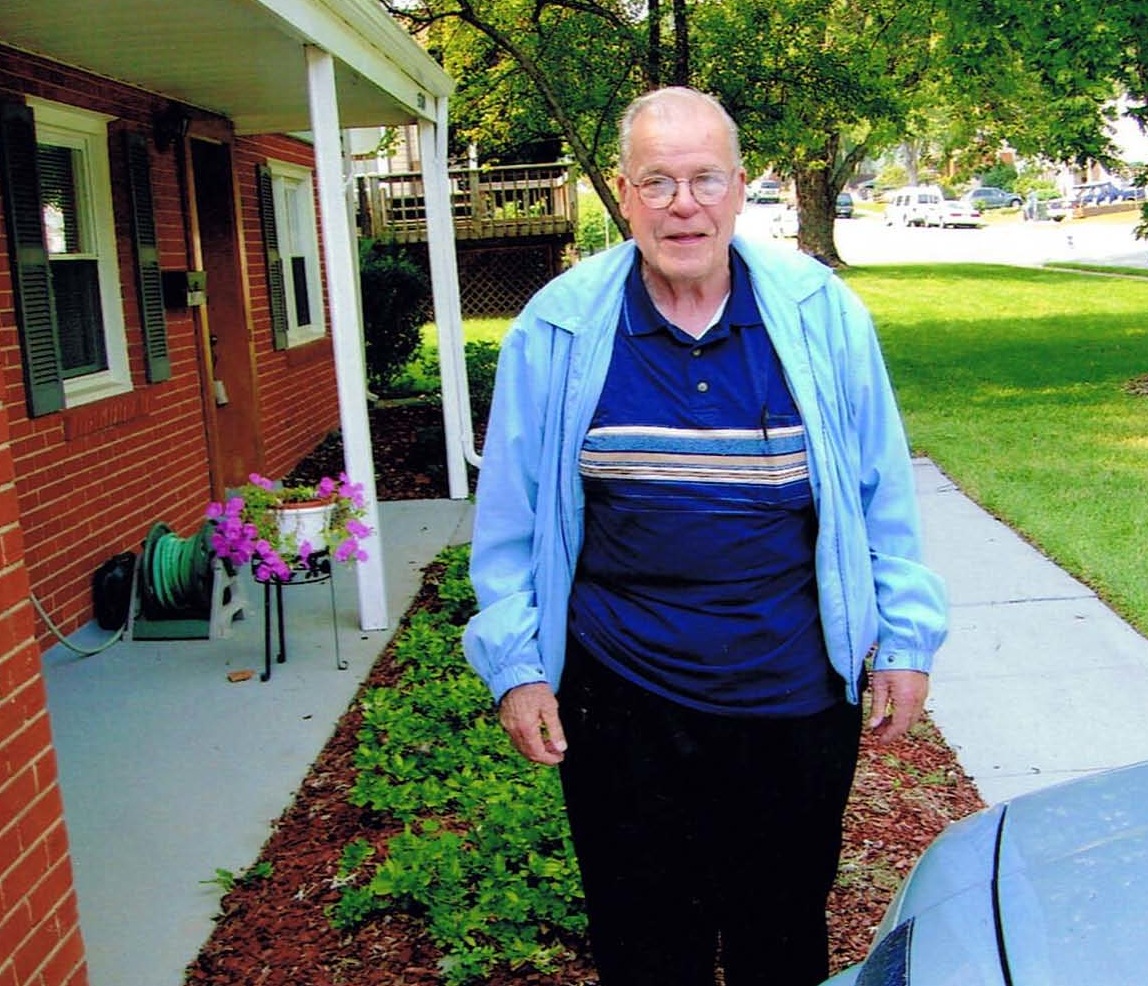
The photo at the upper right is the last one I ever took of my father. He standing in front of our family home. I took the picture as he was leaving it for the last time. He moved into a retirement community for a brief time, but was not much longer for this world. There he is, standing in front of the place that would “never see him again.”
Yes, there is something very precious about our memories, our stories. They are meant to be shared, handed down. But there is something irreplaceable, something that dies with each person: a personal glimpse of history, a personal story, something that can never be fully shared with anyone but the Lord.
Only the Lord really knows our story, and he knows it better than we ourselves do:
O LORD, you search me and you know me. You yourself know my resting and my rising; you discern my thoughts from afar. You mark when I walk or lie down; you know all my ways through and through.Before ever a word is on my tongue, you know it, O LORD, through and through …For it was you who formed my inmost being, knit me together in my mother’s womb. I thank you who wonderfully made me;My frame was not hidden from you, when I was being fashioned in secret and molded in the depths of the earth. Your eyes saw me yet unformed; and all my days were recorded in your book, before one of them came into being …at the end I am still at your side … (Ps 139:varia)
An old spiritual says, “Nobody knows the trouble I seen, nobody but Jesus.” For in the end, He is the keeper of every story: my father’s, mine, and yours. And whatever is lost in death will be restored a hundredfold, with understanding besides, in the great parousia. Not a story, not a word will be lost. We shall recover it all and tell the old, old stories once again.
Enjoy this poignant and moving video of a man’s life, told almost as if from the standpoint of God, the God who knows. Though the man seems to die alone, someone is remembering his story. Maybe it’s God who is doing the remembering.
One of the great mysteries of our life in this world is that we can endure more pain than pleasure. Indeed, we can endure only a little pleasure at a time. In fact, too much pleasure actually brings pain: sickness, hangovers, obesity, addiction, laziness, and even boredom. Yet we seem to be able to endure a lot of pain. Some of our pain, whether physical or emotional, can be very intense and go on for years.
Why is it that we can endure more pain than pleasure?
Physiologists and anthropologists might focus their answer on the fact that we are wired for survival and being able to endure pain helps us more than being able to enjoy pleasure. Fair enough. But I would like to offer an additional answer from a spiritual point of view.
The spiritual answer is that pain is for now while pleasure is for the hereafter. In this world, this exile, this valley of tears, we are being tested; we are meant to fill up our quotient of pain. And while we do enjoy some pleasures here, they are only a foretaste of what will be fully ours only in Heaven. In this world the foretaste seems limited to bite-sized morsels. Otherwise (as noted) we are overwhelmed by pleasure, distracted by it, and even sickened and enslaved by it. Until pain has had its proper effect within us, we are not disciplined or pure enough to properly enjoy large amounts of pleasure.
Pain is thus our first assignment here in this world, this paradise lost. Pain both purifies and teaches.
We should recall that God offered us the paradise of Eden with the proviso that we trust Him to teach us what is best. But we insisted on the knowledge of good and evil for ourselves and the right to decide what was right and wrong. We wanted a better deal than Eden. Here we are now in that “better deal.” Adam and Eve chose to eat from the Tree of the Knowledge of Good and Evil, even knowing that God had said it would usher in suffering and death. And we have all ratified their choice on countless occasions.
God, respecting our freedom, did not undo our choice. Rather, He said, in effect, “Fine, I will meet you at the cross of suffering and death, and allow that very suffering and death to be the way back to me.” And thus the way back to paradise, and to an even higher and heavenly glory, is through the cross.
This is why our tolerance for pain is greater now than is our capacity for pleasure. God has equipped us in this way because pain is for now; pleasure is for later.
Frankly, we need a high tolerance for pain, because it is a needed remedy for a very serious malady. Our condition is grave and requires strong medicine. The cross and its pain is the strong medicine needed. And thus our tolerance for pain must be certainly be greater than our capacity for pleasure.
Pain, despite its unpleasant qualities, has many salutary effects. It teaches us limits and helps conquer our pride. It purifies us. It reminds us that this world is passing and cannot ultimately be our answer. It intensifies our longing for Heaven and the shalom of God. If we endure pain with faith, it draws us to seek help and to trust God more. Pain endured with faith is like being under the surgeon’s scalpel. The scalpel inflicts pain but only to cut away what is harmful. It is a strong but healing medicine.
For now, our assignment is clear. Pain has the upper hand and is the strong medicine we need. When in pain, seek relief from God. But if he says no, remember that God promises that His grace will be sufficient for us (see 2 Cor 12:9), and that pain has a healing place for now. It is indeed a gift in a strange package.
Yes, it is a mysterious truth that we have a higher tolerance for pain than for pleasure. But given our current location in paradise lost, it makes sense. One day when suffering, pain, and death have had their full effect, we will enter into the Heaven of God, where pain will be no more and where our capacity for pleasure will blossom like a rose. Having been purified by our pain, our capacity for pleasure will now be full and there will be joys unspeakable and glories untold.
Here is pathos set to music. It is William Byrd’s treatment of a text from Isaiah lamenting the destruction of Jerusalem in 587 BC

 We live in a world of unprecedented comfort: electricity, indoor plumbing, heating and air-conditioning, medicine, healthcare, abundant food, myriad consumer products, and entertainment available with the click of a button. Despite this we do not seem more grateful or at ease than our forebears. If anything, we aremoreanxious. For example, though people have never lived so long nor been so healthy, we have never been more worried about our health.