On Going to Our Own House

The Gospel for Mass this past Saturday contains one line that deserves some attention from us, especially in a time like this. On one level it seems like a mere scene-ender, a line that ends the section and has the dramatis personae (cast of characters) walk off the stage. But as most who are familiar with Scripture know, there is rarely a wasted syllable, particularly in John’s Gospel. There is not one word or syllable that should be dismissed as “filler” when the Holy Spirit is at work inspiring the sacred authors.

The line in question appears in the 7th Chapter of John’s Gospel, at the end of a debate among the temple leaders as to the identity of Jesus. They wrestle with the question of who Jesus is: is the coming Messiah, and whether He or not He is the eternal Son of the Father as He claims.

The majority of the interlocutors reject Jesus out of hand because He comes from Galilee and “no Prophet has ever come from Galilee!” One of their number, Nicodemus, encourages them to be more open to the possibilities and to have greater command of the facts before rendering judgment. The pericope (passage) ends in this way:

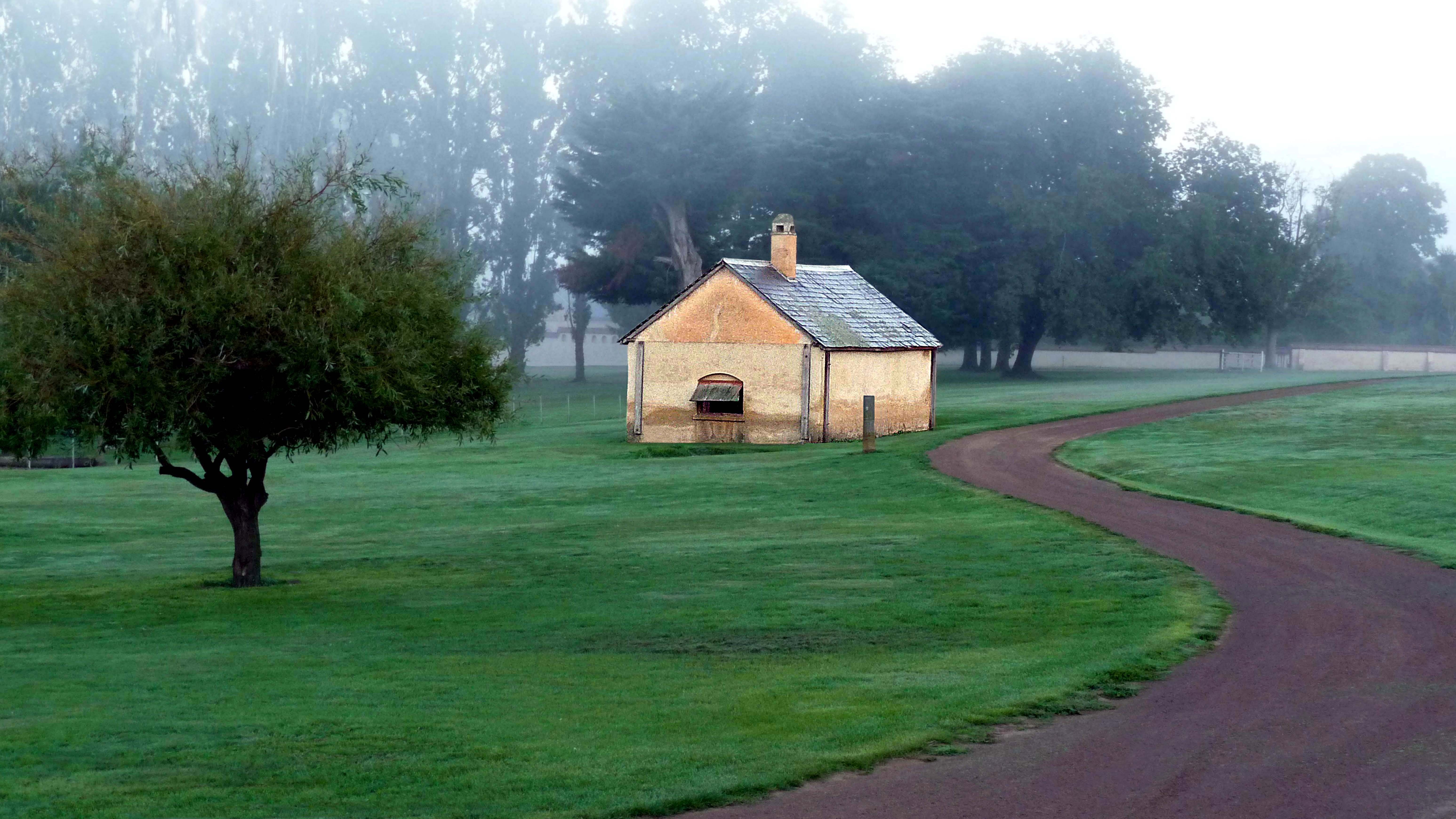
Then each went to his own house (John 7:53).

This sentence ought not to be overlooked because it invites great significance. We can distinguish three rather separate understandings of the line: an inward meaning, and outward meaning, and an eternal meaning.

1. Inward – Each one returning to his own house can be understood as describing how we must ultimately enter into the “house” of our soul. We must all go into the inner room of our heart and mind; that place where we are alone with God; where we ponder, reflect, deliberate, and discern. Many of us have more time to do this just now and it is surely more important than ever to do so. 

It is in this place that we must answer for ourselves the deepest questions of life: Who am I? Who is God? What is the meaning of my life? What am I doing and why? Who is the man/woman God made me to be? Yes, this is the inner sanctum, the holy place where we are alone with God.

When we are with others we tend to posture. We seek to conform in response to peer pressure or other social influences. There is often undue influence from persuasion, excessive human respect, group pressure, and group dynamics.

But there comes a moment when we are summoned by the Lord to separate from others, to go into our own house, to enter into that quiet place inside us and listen carefully to voice of God that echoes in our heart (cf Catechism # 1776).

At the point in the Gospel cited above, the temple leaders have had their debate. They have sought to influence one another. Some have experienced pressure and persuasive argumentation. Many of them probably exhibited the human tendency we all have: to try to ingratiate ourselves to others by speaking so that others will think highly of us.

Now that all the posturing is over, it is time for each man to go to his own house and there privately ponder and decide what he really thinks. Yes, it is decision time. The Lord is asking a question: Who do you say that I am? It is time for each man to go to his own house and be face-to-face with God.

Sadly, many today reject this requirement to go to our own “house” and reflect deeply. Most take little time to enter the room of their own soul. In our modern world, with its myriad distractions, most prefer to flip on the television instead.

Ultimately we cannot evade this call from God to decide, in that inner room of our own “house,” who God is and how we will respond to Him. And for those who go on for too long refusing to go to their own house, God has ways of forcing the issue. Maybe it’s one of those sleepless at 3:00 AM. Maybe it’s a time of crisis that provokes soul-searching. But ultimately, at some point, each of us must go to his own house and reflect quietly with God, away from social pressures, away from posturing. There, alone with God, each must face the deepest questions.

2. Outward – There is a different perspective from which one can read this text, and it provides an insight that is almost exactly opposite. For while it is of critical importance to go to that secret place, that house of our own soul and there reflect with God, it is also of vital to stay connected to the reality that is outside our house. Thus, this passage may also be viewed as a commentary on the human tendency to retreat into our own little world, to shrink from any evidence we don’t like, to avoid anything that challenges our worldview.

Jesus had earlier confronted these temple leaders with evidence of His divinity and His identity as Messiah and Lord. He spoke to them of His miracles, of His fulfillment of prophecy, of the testimony of John the Baptist, and of the Father’s voice echoing in their hearts (cf John 5:31-47).

But we all share the human tendency to retreat into our own world, our own house, despite the evidence. In effect, we retreat from reality into our own made-up little world.

There is an old saying, “Don’t believe everything you think.” We tend to believe that something is so just because we think it.

There is another saying, “Who is an adviser to himself has a fool for a counselor.” Yet too easily we take only our own counsel. Or, we surround ourselves only with teachers who “tickle our ears.”

Thus, though these temple leaders have been confronted with many facts pointing to the veracity of Jesus’ identity as Lord and Messiah, they choose instead to brush off the evidence and retreat into their own houses, their own little worlds.

Further, they err with the facts: they argue that the Messiah was to come from Bethlehem whereas Jesus came from Galilee. But of course Jesus was born in Bethlehem.

But never mind all that; each just goes off to his own house, to his own little world. And too often many do exactly this.

The challenge for us all is to live in reality, not merely in the confines of our own house, our own little world, our own (sometimes flawed or incomplete) thoughts.

3. Eternal – The third interpretation of the “house” referred to in this line is our ultimate home, the destination to which we all journey. Thus, when the text says they all went each to his own house, it may also refer to that place where they will dwell for all eternity. Where that house is, in Heaven or Hell, depends on each man’s stance regarding Jesus.

Having scoffed at Jesus, each of the temple leaders now heads off to his own home. But no one comes to the Father except through Jesus, and thus their home is somewhere other than the heart of the Father.

There is an old saying, “You made your bed, now lie in it.” You and I must choose where to make our home. Where that home is will depend upon our acceptance or rejection of Jesus.

There will come a day when each of us will have said of us, Then [he] went to his own house. Where will your house be?
Mulier Fortis – A Homily for the Feast of the Annunciation

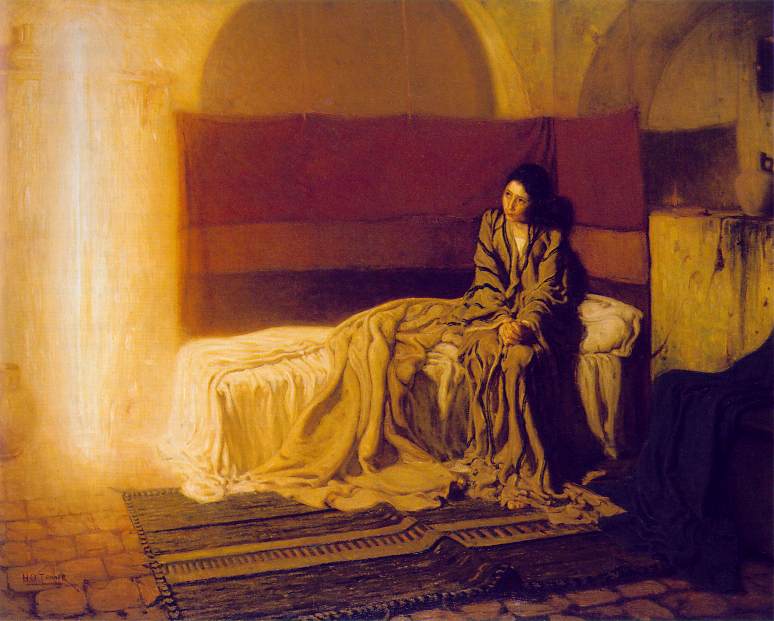
In preparation for the Feast of the Annunciation I picked up Jesus of Nazareth, Vol. 3 (The Infancy Narratives), by Pope Emeritus Benedict. I was very moved by a brief reflection that he made on Mary as the Angel Gabriel left her. His remarks consider her faith in a very touching manner.

I must say that I have always been moved—and intrigued—by the faith of the Blessed Mother. She is mulier fortis (a strong woman) and  “a woman wrapped in silence,” a phrase that forms the title of an excellent book by Fr. John Lynch. The pope’s words capture both her faith and her mystery:

I consider it important to focus also on the final sentence of Luke’s Annunciation narrative: “And the angel departed from her” (Luke 1:38). The great hour of Mary’s encounter with God’s messenger—in which her whole life is changed—comes to an end, and she remains there alone, with a task that truly surpasses all human capacity. There are no angels standing around her. She must continue along the path that leads to many dark moments–from Joseph’s dismay at her pregnancy, to the moment when Jesus is said to be out of his mind (cf. Mark 3:21; John 10:20) right up to the night of the cross.

How often in these situations must Mary have returned inwardly to the hour when God’s angel had spoken to her, pondering afresh the greeting: “Rejoice, full of grace!” And the consoling words: “Do not be afraid!” The angel departs; her mission remains, and with it matures her inner closeness to God, a closeness that in her heart she is able to see and touch (Jesus of Nazareth, The Infancy Narratives, Kindle edition (loc 488-501)).

I am moved by this image of Mary, there all alone, perhaps wondering how it would all unfold and whether what she just experienced had really happened. The angel departs and she is alone (and yet never alone).

As background, I would like to say that I have read some accounts of Mary’s life that placed her in such rarefied air that I could no longer relate to her. I vaguely remember reading some accounts of visionaries saying that Mary did not even have to do housework because the angels swept the house, did the dishes, and so forth. Some other accounts spoke of how she had detailed foreknowledge of everything that would take place in her life as well as in Jesus’ life. I even recall one purported visionary who wrote that Mary had extensive theological discussions with Jesus even while He was still an infant. I do not remember who these alleged visionaries were or if any of them were even approved visionaries. Yet in the early 1980s a large number of books were published containing the observations of various “visionaries.”

Such accounts often left me cold and made me feel distant from our Blessed Mother. They also did not seem to comport with the Scriptures, which present Mother Mary as a woman of great faith, but one who has to walk by faith and not by perfect sight, just as all of us do. She wonders at Gabriel’s greeting, is troubled, and does not understand how it will all work out (cf Luke 1:29).

Yet she presses on and we next see her having made haste to the hill country, rejoicing in ecstatic praise with her cousin: My spirit rejoices in God my savior! She still does not know how it will all work out, but in spite of that she is content to know the One who holds the future; it is enough for now.

Years later, when she finds Jesus teaching in the Temple after days of agonized searching for the “missing” boy, she does not fully understand His explanation (Luke 2:48-50), but ponders these things within her heart (Luke 2:51).

At the wedding feast at Cana, Jesus seems almost to rebuke His mother. Although the text omits many of the details, there must have been something in her look, something of the look that only a mother can give to a son. By now, Mary’s understanding of her son has surely deepened; she has known Him and pondered and reflected in her heart over Him for more than thirty years. She simply looks at Him, and He at her—a look that only the two would have known. Something passed between them, a look of understanding. Whatever it was remains wrapped in silence; it’s none of our business, something that only she and her Son could know. Whatever it was, it prompts her to turn and with confidence, knowing the situation will be well-handled, says to the stewards, “Do whatever he tells you” (Jn 2:5).

Of the three years to follow we know very little. We know that she is not far away. We see her in Mark 3:31 as she asks after Jesus, seemingly concerned that others are saying “He is beside himself!”

Now we find her gently and supportively present at the foot of the Cross. The sword that Simeon had prophesied (Lk 2:35) is thrust through her heart. More than thirty years earlier she could only wonder what Simeon meant when he said that her child was destined for the fall and the rise of many in Israel and that a sword would pierce her heart (Luke 2:33). In the intervening years her faith had surely deepened; now, here she is at the foot of the Cross. It is her darkest hour, but surely all those years of pondering and reflecting on these things in her heart helps to sustain her.

Yes, Mother Mary is a woman wrapped in silence. We know so little, for she is reflective and quiet. She says little, silently standing by, silently supportive of Jesus in His public ministry. Now, again silently, she is at the foot of the Cross.

Yes, this is the Mary, this is the Mother that I know: a woman of faith but also a human being like you and me. As the Pope Benedict suggested, she is a woman who had to make a journey of faith without knowing how everything would work out, without the omniscience that some visionaries ascribe to her. She knew what the angel had said, but it seems clear that she did not know how it would all come to pass. She, like us, walked by faith and not by earthly sight.

Mary is the perfect disciple, the woman of faith, the one who presses on, not knowing all, but pondering and reflecting everything in her heart.

Cross-posted at the Catholic Standard: A Woman Wrapped in Silence – A Meditation for the Feast of the Annunciation

Stopping by the First Station of the Cross in Time of National Crisis

We might do well at a moment like this to ponder the First Station of the Cross, in which Jesus is tried before Pilate. At a critical moment Pilate said, “Do you not know that I have authority to release you and authority to crucify you?” Jesus answered, “You would have no authority over me if it were not given to you from above”(John 19:10-11). Jesus thus acknowledges Pilate’s authority as governor but reminds him of its true origin.

Most of us right now are experiencing increasing restrictions on our movement; policies have been put into place that have changed how we live, work, and even pray. Some people are understanding and supportive of the measures; others are concerned about the erosion of civil liberties. Still others believe that more should have been done. My view on this does not matter; I write as a priest, not an expert in public policy. One thing I would like to say is that you and I have the luxury of “armchair quarterbacking,” whereas those in civil authority must make extremely difficult and complex decisions. I, for one, am glad I don’t have to make them.

Citizens certainly have the right to question their leaders, but right now for my own peace of mind, I need to spend some time accepting the First Station of the Cross. The point of the First Station is not that Pilate is just or good but that his authority was granted to him by God. In Romans we read,

Everyone must submit himself to the governing authorities, for there is no authority except that which is from God. The authorities that exist have been appointed by God. Consequently, the one who resists authority is opposing what God has set in place … Therefore, it is necessary to submit to authority, not only to avoid punishment, but also as a matter of conscience. This is also why you pay taxes. For the authorities are God’s servants, who devote themselves to their work. Pay everyone what you owe him: taxes to whom taxes are due, revenue to whom revenue is due, respect to whom respect is due, honor to whom honor is due(Rom 13:1-7).

This sort of talk shocks most modern Americans. To be sure, St. Paul is giving a general norm, not an absolute one. There are times when a ruler commands obedience to what is evil; in such a case he must be resisted. As a general rule, though, we have a duty to obey just laws and policies. We might also remember that Nero was the emperor when St. Paul wrote this. Hence, St. Paul does not give this norm simply for good leaders or leaders whom we like. The Catechism of the Catholic Church says this about authority:

Every human community needs an authority to govern it. The foundation of such authority lies in human nature. It is necessary for the unity of the state. Its role is to ensure as far as possible the common good of the society. The authority required by the moral order derives from God: [see Romans 13:1-2 above]. The duty of obedience requires all to give due honor to authority and to treat those who are charged to exercise it with respect, and, insofar as it is deserved, with gratitude and good-will. …If rulers were to enact unjust laws or take measures contrary to the moral order, such arrangements would not be binding in conscience (CCC 1898–1900,1903).

In our current situations, citizens can and should stay in vigorous discussion with government leaders and officials, but as we do so we must remember the principles set forth above, which are so contrary to the modern, adversarial approach.

When bishops began suspending public Masses, many of us were alarmed. We wondered if less severe methods would have been more appropriate (e.g., limiting the number of people at each Mass). As the maximum number of people permitted in public gatherings has dropped (from 250 to 100 to 25 to 10) even that option became essentially unworkable. The bishops cannot simply defy public authority in this matter. For most of us, the decision has been made: public Masses are suspended for the near future.

As for me, I need to spend time at the First Station of the Cross. Note that I am not comparing our leaders to Pilate. Rather, I am focusing on St. Paul’s astonishing words, The authorities that exist have been appointed by God (Rom 13:1). In writing this, he echoes Jesus’ words to Pilate: You would have no authority over me if it were not given to you from above. At this astonishing moment of upheaval and fear, unprecedented in my lifetime, I can only pray for our leaders, both civil and ecclesial.

Lord, at this point it is out of my hands. Help me to be at peace with that. I know that ultimately everything is in Your hands; everything will ultimately be all right. But I also know that You have placed difficult matters into the hands of our leaders. I do not envy the difficult choices they must make. I only ask that You guide them, Lord. May they be neither too severe nor too lax, neither too fearful nor too bold. We seem to be heading into some difficult days. Help us. Save us. Have mercy on us, and keep us by Your grace. And because you said, “You have not because you ask not” (James 4:2), I’ll ask, “How about a miracle cure, Lord?” Meanwhile, grant me the trust in You that is the only source of my peace. Thank you, Jesus.

Here’s another William Byrd classic lamenting the suffering of the Catholic Church in England. Translated the text reads: 

Be not angry, O Lord, enough,
neither remember our iniquity for ever.
Behold, see, we who beseech thee, we are all thy people.
The holy cities are a wilderness.
Sion is a wilderness, Jerusalem a desolation.


Five Hard Truths That Will Set You Free

Given our current profound troubles, it occurs to me to republish an article from some years back. Like most, I have been through difficulties in my life: violent storms, an earthquake, and the loss of several loved ones. But I have never seen something quite like what we are experiencing now. It is unclear how long things will last, and the restrictions get more severe by the day. With all that in mind, I think it is important to recall the five hard truths that follow. I hope you won’t think I am trying to pour salt in our collective wounds. The message of this post is this: accepting that life has sufferings and setback is a freeing notion. Acceptance is a middle ground between resignation and approval. To accept something is be willing to pick it up and carry it for now, like a cross. Because we have not had to endure the large-scale suffering of previous eras, we have come to expect that things should be convenient and go smoothly. This actually increases our sorrow and anger when they don’t. Acceptance of the five hard truths described below can provide strange consolation. Following is the reprinted post:

The five truths  that follow are indeed hard. They rock our world and stab at the heart of some of our most cherished modern notions. If they can be accepted for the truth they convey, however, they bring great peace. These truths are not only good medicine for our collective self-absorption but they also help us to have more realistic expectations as we live out our lives in this imperfect and limited world. Study these truths well. If they irritate you a bit, good; they’re supposed to. They are meant to provoke thought and reassessment.

I did not originate the following five principles, but the commentary is my own. So thank the one to whom the Holy Spirit first spoke them and tolerate my meager commentary.

1.  Life is hard. We live in times of comfort and convenience. Medicine has removed a lot of pain and suffering from our lives. Consumer goods are readily available and we have a wide array of choices. Entertainment comes in many varieties and is often inexpensive. Hard labor is something that few of us are familiar with. Obesity is common due to overconsumption and underactivity.

All of these creature comforts have led us to expect that life should always be just peachy. We become outraged at the slightest suffering, inconvenience, or delay.

Our ancestors lived lives that were far more “brutish and short,” to borrow a phrase from Thomas Hobbes. Life was a “vale of tears.” They understood that suffering was a part of life. When we suffer today, we start thinking about lawsuits and who is to blame. Suffering seems obnoxious to us and hard work unreasonable! We are angered and flung into anxiety at the mere threat of suffering.

This principle reminds us that suffering and difficulty are part of life; they should be expected. Accepting suffering does not mean we have to like it. Acceptance of the fact that life will be hard at times means that we get less angry and anxious when it is; we do not lose serenity. In fact, it brings a strange sort of peace. We are freed from unrealistic expectations that merely breed resentment. We also become more grateful for the joys we do experience.

2.  Your life is not about you. If you want to make God chuckle, tell Him your plans. If you really want to give him a belly laugh, tell Him His plans! We often like to think that we should just be able to do what ever pleases us and maximizes our “self-actualization.” However, we do not decide alone what course our life will take.

In this age of “nobody tells me what to do,” it is important to remember that our true happiness comes from getting not what we want, but what God wants. Our destiny is not to follow our star; it is to follow God. True peace comes from careful discernment of God’s will for us.

It is sad how few people today ever really speak ahead of time with God about important things like careers, entering into a marriage, or pondering a large project. We just go off and do what we please, expecting God to bail us out if it doesn’t go well. You and I do not exist merely for our own whims; we have a place in God’s plan. We have greater serenity when we discern that place and humbly seek God’s will. Accepting the fact that we are not the masters of our own destiny, not the captains of our own ship, gives us greater peace. It also usually saves us a lot of mileage.

Humbly accepting that our life is not simply about us and what we want is a freeing truth. We often don’t get what we want; if we can allow life to just unfold and not demand that everything be simply the way we want it, we can be more serene and free.

3.  You are not in control. Control is something of an illusion. We may have plans for tomorrow but there are many things between now and tomorrow over which we have no control. For example, we cannot even control or guarantee the next beat of our heart. I may think I have tomorrow under control, but tomorrow is not promised; it may never come.

Because we think that we control a few things, we think that we can control many things. Not really. Our attempts to control and manipulate outcomes are comical, sometimes even harmful.

Thinking that we can control things leads us to think that we must control them. This in turn leads to great anxiety and often anger as well.

We usually think that if we are in control we will be less anxious. This couldn’t be further from the truth. In fact, the more we think we can control, the more we try to control, which increases our burdens and anxiety. We end up getting angry because we discover that there many things and people we cannot control after all. This causes frustration and fear.

We would be freer and less anxious if we would simply accept the fact that there are many things—most things, in fact—over which we have no control. Our expectation of everything being under control is unrealistic. Life comes at you fast. Brooding over unpredictable and uncontrollable things amounts to bondage. Simply accepting that we are often not in control is freeing.

4.  You are not that important. This one hurts. We often think that the whole world should revolve around us. We think it is only our feelings that matter and our well-being that is important. We are loved by God in a very particular way, but that does not change the fact that we must often yield to others who are also loved by God in a very special way.

Sometimes other people are more important than we are. We might even be called upon to give our life so that others may live. We must yield to others whose needs are more crucial than our own. The world doesn’t exist just for us and what we want.

There is great peace and freedom in coming to accept this. We are often made so anxious if we are not recognized while others are, or if our feelings and preferences are not everyone’s priority. Accepting the truth that we are not that important allows us to relax and enjoy caring about other people and celebrating their importance.

5.  You are going to die. We get all worked up about what this world dishes out, but just take a walk in a cemetery. Those folks were all worked up too. Now their struggles are over. If they were faithful, they are with God; they are now experiencing that “trouble don’t last always.”

This truth also helps us to do the most important thing: get ready to meet God. So many people spend their lives clowning around and goofing off, ignoring our most urgent priority. In the end, this is freeing because we are loosed from the many excessive and often conflicting demands of the world; we can concentrate on doing the one thing necessary. Our life simplifies and we don’t take this world too seriously because we understand that it is passing away. There is great peace and freedom in coming to accept this.

So there you have them: five hard truths that will set you free. Think about them. Memorize them. Pull them out when life comes at you fast and hard with its agenda of self-importance and the empty promise of perfect comfort here on earth. A simple, sober, humble, and focused life brings great serenity.

Some Teachings on Hell

Given today’s Gospel on Lazarus and the rich man (Dives), we do well to ponder some of the teachings we have on Hell, most of which come from St. Thomas Aquinas.

The teachings of the Lord on Hell are difficult, especially in today’s climate. The most difficult questions that arise relate to its eternal nature and how to square its existence with a God who is loving and rich in mercy.

1. Does God love the souls in Hell? Yes.

How could they continue to exist if He did not love them, sustain them, and continue to provide for them? God loves because He is love. Although we may fail to be able to experience or accept His love, God loves every being He has made, human or angelic.

The souls in Hell may have refused to empty their arms to receive His embrace, but God has not withdrawn His love for them. He permits those who have rejected Him to live apart from him. God honors their freedom to say no, even respecting it when it becomes permanent, as it has for fallen angels and the souls in Hell.

God is not tormenting the damned. The fire and other miseries are largely expressions of the sad condition of those who have rejected the one thing for which they were made: to be caught up into the love and perfection of God and the joy of all the saints.

2. Is there any good at all in Hell? Yes. Are all the damned punished equally? No.

While Heaven is perfection and pure goodness, Hell is not pure evil. The reason for this is that evil is the privation or absence of something good that should be there. If goodness were completely absent, there would be nothing there. Therefore, there must be some goodness in Hell or there would be nothing at all. St. Thomas Aquinas teaches,

It is impossible for evil to be pure and without the admixture of good …. [So]those who will be thrust into hell will not be free from all good … those who are in hell can receive the reward of their goods, in so far as their past goods avail for the mitigation of their punishment (Summa Theologica, Supplement 69.7, reply ad 9).

This can assist us in understanding that God’s punishments are just and that the damned are neither devoid of all good nor lacking in any experience of good. Even though a soul does not wish to dwell in God’s Kingdom (evidenced by rejection of God or the values of His Kingdom), the nature of suffering in Hell is commensurate with the sin(s) that caused exclusion from Heaven.

This would seem to be true even of demons. In the Rite of Exorcism, the exorcist warns the possessing demons, “The longer you delay your departure, the worse your punishment shall be.” This suggest levels of punishment in Hell based on the degree of unrepented wickedness.

In his Inferno, Dante described levels within Hell and wrote that not all the damned experience identical sufferings. Thus, an unrepentant adulterer might not experience the same suffering in kind or degree as would a genocidal, atheistic head of state responsible for the death of millions. Both have rejected key values of the Kingdom: one rejected chastity, the other rejected the worship due to God and the sacredness of human life. The magnitude of those sins is very different and so would be the consequences.

Heaven is a place of absolute perfection, a work accomplished by God for those who say yes. Hell, though a place of great evil, is not one of absolute evil. It cannot be, because God continues to sustain human and angelic beings in existence there and existence itself is good. God also judges them according to their deeds (Rom 2:6). Their good deeds may ameliorate their sufferings. This, too, is good and allows for good in varying degrees there. Hell is not in any way pleasant, but it is not equally bad for all. Thus God’s justice, which is good, reaches even Hell.

3. Do the souls in Hell repent of what they have done? No, not directly.

After death, repentance in the formal sense is not possible. However, St. Thomas makes an important distinction. He says,

A person may repent of sin in two ways: in one way directly, in another way indirectly. He repents of a sin directly who hates sin as such: and he repents indirectly who hates it on account of something connected with it, for instance punishment or something of that kind. Accordingly, the wicked will not repent of their sins directly, because consent in the malice of sin will remain in them; but they will repent indirectly, inasmuch as they will suffer from the punishment inflicted on them for sin (Summa Theologica, Supplement, q 98, art 2).

This explains the “wailing and grinding of teeth” in so far as it points to the lament of the damned. They do not lament their choice to sin without repenting, but for the consequences. In the Parable of Lazarus, the rich man in Hell laments his suffering but expresses no regret over the way he treated the beggar Lazarus. Indeed, he still sees Lazarus as a kind of errand-boy, who should fetch him water and warn his brothers. In a certain sense the rich man cannot repent; his character is now quickened and his choices forever fixed.

4. Is eternal punishment just? Yes.

Many who might otherwise accept God’s punishment of sinners are still dismayed that Hell is eternal. Why should one be punished eternally for sins committed over a brief time span, perhaps in just a moment? The punishment does not seem to fit the crime.

This logic presumes that the eternal nature of Hell is intrinsic to the punishment, but it is not. Rather, Hell is eternal because repentance is no longer available after death. Our decision for or against God and the values of His Kingdom values becomes forever fixed. Because at this point the will is fixed and obstinate, the repentance that unlocks mercy will never be forthcoming.

St. Thomas teaches,

[A]s Damascene says (De Fide Orth. ii) “death is to men what their fall was to the angels.” Now after their fall the angels could not be restored [Cf. I:64:2]. Therefore, neither can man after death: and thus the punishment of the damned will have no end. … [So] just as the demons are obstinate in wickedness and therefore have to be punished for ever, so too are the souls of men who die without charity, since “death is to men what their fall was to the angels,” as Damascene says (Summa Theologica, Supplement, q 99, art 3).

5. Do the souls in Hell hate God? No, not directly.

St. Thomas teaches,

The appetite is moved by good or evil apprehended. Now God is apprehended in two ways, namely in Himself, as by the blessed, who see Him in His essence; and in His effects, as by us and by the damned. Since, then, He is goodness by His essence, He cannot in Himself be displeasing to any will; wherefore whoever sees Him in His essence cannot hate Him.

On the other hand, some of His effects are displeasing to the will in so far as they are opposed to any one: and accordingly a person may hate God not in Himself, but by reason of His effects. Therefore, the damned, perceiving God in His punishment, which is the effect of His justice, hate Him, even as they hate the punishment inflicted on them (Summa Theologica, Supplement, q 98, art 5).

6. Do the souls in hell wish they were dead? No.

It is impossible to detest what is fundamentally good, and to exist is fundamentally good. Those who say that they “wish they were dead” do not really wish nonexistence upon themselves. Rather, they wish an end to their suffering. So it is with the souls in Hell. St. Thomas teaches,

Not to be may be considered in two ways. First, in itself, and thus it can nowise be desirable, since it has no aspect of good, but is pure privation of good. Secondly, it may be considered as a relief from a painful life or from some unhappiness: and thus “not to be” takes on the aspect of good, since “to lack an evil is a kind of good” as the Philosopher says (Ethic. v, 1). In this way it is better for the damned not to be than to be unhappy. Hence it is said (Matthew 26:24): “It were better for him, if that man had not been born,” and (Jeremiah 20:14): “Cursed be the day wherein I was born,” where a gloss of Jerome observes: “It is better not to be than to be evilly.” In this sense the damned can prefer “not to be” according to their deliberate reason (Summa Theologica, Supplement, q 98, art 3).

7. Do the souls in Hell see the blessed in Heaven?

Some biblical texts say that the damned see the saints in glory. For example, the rich man in the parable can see Lazarus in the Bosom of Abraham (Lk 16:3). Further, Jesus says, There will be weeping and gnashing of teeth when you see Abraham, Isaac, Jacob, and all the prophets in the kingdom of God, but you yourselves are thrown out (Lk 13:28). However, St Thomas makes a distinction:

The damned, before the judgment day, will see the blessed in glory, in such a way as to know, not what that glory is like, but only that they are in a state of glory that surpasses all thought. This will trouble them, both because they will, through envy, grieve for their happiness, and because they have forfeited that glory. Hence it is written (Wisdom 5:2) concerning the wicked: “Seeing it” they “shall be troubled with terrible fear.”

After the judgment day, however, they will be altogether deprived of seeing the blessed: nor will this lessen their punishment, but will increase it; because they will bear in remembrance the glory of the blessed which they saw at or before the judgment: and this will torment them. Moreover, they will be tormented by finding themselves deemed unworthy even to see the glory which the saints merit to have (Summa Theologica, Supplement, q 98, art 9).

St Thomas does not cite a Scripture for this conclusion. However, certain texts about the Last Judgment emphasize a kind of definitive separation. For example, in Matthew 25 we read this: All the nations will be gathered before [the Son of Man], and he will separate the people one from another as a shepherd separates the sheep from the goats. … Then they will go away to eternal punishment, but the righteous to eternal life (Mat 25:32, 46).

Clearly, Hell is a tragic and eternal separation from God. Repentance, which unlocks mercy, is available to us; but after death, like clay pottery placed in the kiln, our decision is forever fixed.

Choose the Lord today! Judgment day looms. Now is the time to admit our sins humbly and to seek the Lord’s mercy. There is simply nothing more foolish than defiance and an obstinate refusal to repent. At some point, our hardened hearts will reach a state in which there is no turning back. To die in such a condition is to close the door of our heart on God forever.

Somebody’s knocking at your door.
Oh sinner, why don’t you answer?
Somebody’s knocking at your door!

Three Teachings on Temptation

Sunday’s Gospel about the temptation of Jesus in the desert by Satan evokes several questions. The answers I propose are not intended to be a theological treatise, but rather a pastoral reflection.

I. Why does God permit temptation? God does not permit any evil or problem unless it can serve some greater good. In the case of temptation, He permits it because it summons us to love Him while giving us the freedom to reject or accept that call. God seeks sons and daughters who can love Him freely.

Of God’s creatures, only angels and humans possess free will. We are summoned to love, but love requires the freedom to make choices. In giving us freedom, God permits alternatives to saying “yes” to Him. These alternatives present themselves as temptations.

Temptation existed even in Eden, in paradise; and prior to that, the angels had a sweeping choice for or against God. Scripture hints that one third of them fell to the earth and are what now called demons (see Rev 12:4). Our “yes” to God must be very precious indeed, because in granting this freedom He permits that some, indeed many, choose to reject Him.

A second reason God permits temptation is that it tests and strengthens us. An old saying reminds us, “Things do by opposition grow.” Temptation is a kind of opposition we must learn to endure. In enduring, though, we become stronger. The spiritual life is like the physical life in that we grow stronger through repeated action. After lifting weights repeatedly, our physical strength increases and we can overcome increasingly more difficult physical challenges. It is the same with the spiritual life. An old gospel song says, “Yield not to temptation, for yielding is sin. Each victory will help you, some other to win.” Scripture says, Resist the devil and he will flee (James 4:7). Resisting implies ongoing effort, standing up to the devil repeatedly. It’s not a one-time battle, but an ongoing war in which each small victory makes us stronger and the devil more discouraged. As we grow stronger, the devil eventually stops wasting his time tempting us in certain areas. At times the battle may weary us, but in the long run, it strengthens us. Jesus illustrates this in his three-fold battle with Satan in the desert.

II. What are the sources of temptation? There is a tendency to attribute temptation and struggles to the devil, but tradition speaks to two additional sources: the world and the flesh. (Note that the flesh is not merely our body; it is a term that describes our rebellious tendency to sin and be prideful.) Scripture affirms these different sources, for not only are there passages in which the devil directly tempts (e.g., Adam and Eve in the Garden, Jesus in the desert), but there are ones that speak to the temptations of the world and the flesh: For all that is in the world—the desires of the flesh and the desires of the eyes and pride of life—is not from the Father but is from the world (1 John 2:16).

Frankly, many people do not need direct demonic temptation; they do a pretty good job of exposing themselves to temptation by indulging the flesh and embracing the world. The devil can pretty much leave them alone and monitor their self-destruction from a distance.

This is one reason those striving to convert and return to the Lord are often the target of demonic attacks. As long as they were traveling on the road to destruction and Hell, they barely noticed the devil, because he was walking right behind them. When they began to turn around, though, they ran right into him. While the devil can and does manipulate and influence both the flesh and the world, we do better to look first to these two sources before ascribing temptations directly to the devil himself.

The influence of the flesh and the world are more under our control and thus should be the main focus of our battle. We do well to limit our exposure to the world and to spend more time with heavenly influences such as Scripture, the liturgy, prayer, and healthy, godly relationships. We should also focus more attention on self-mastery, through frequent confession, practicing virtue, and keeping careful custody of our mind and heart. Thus we see that Jesus is in the desert engaged in deep prayer, mortifying the flesh, and stepping away from the world.

III. What is the chief weapon Jesus uses in refusing temptation and how can it help us? Temptation is ultimately about influence and the battlefield is the mind. In the story of Jesus’ temptations, he answers every sinful suggestion by the devil with Scripture.

  1. It is written: One does not live on bread alone, but on every word that comes forth from the mouth of God.
  2. Again it is written: You shall not put the Lord, your God, to the test.
  3. It is written: The Lord, your God, shall you worship and him alone shall you serve.

To every foolish and sinful thought Jesus replies, “It is written …”

Because the battle in temptation is about influence, the following question arises: What most influences you: the world, the flesh, the devil, or God?

We must actively seek to be influenced by God, by godly thoughts and godly truth.

There is an old saying, “Sin makes you stupid.” And indeed it does. Sin darkens our intellect and leads us to make convoluted justifications and rationalizations of attitudes and behaviors that any child can see are wrong and defy common sense. St. Paul describes sin-induced stupidity when writing about the people of his time who suppressed the truth about God; claiming to be wise, they became fools, and their senseless minds were darkened (see Rom 1:18-22). He also advises us, Do not be conformed to this world, but be transformed by the renewal of your mind, that by testing you may discern what is the will of God, what is good and acceptable and perfect (Rom 12:2). Nothing can so renew our minds as the very Word of God. By it we are called to see and judge all other things.

Thus, an essential antidote to temptation is to be deeply rooted in the truth of God. This does not mean merely mechanically quoting verses during an argument. Rather, it means being transformed by God’s Word and watching how it performs in our life. I have been reading Scripture every day for the last thirty years. The Word of God has changed me and has been instrumental (along with sacraments, prayer, and godly fellowship) in putting down sin and resisting the temptations that precede it. Some things that used to tempt me no longer do; other temptations that were once strong are now weaker. Still other temptations remain, but the battle is engaged! Jesus is right: the Faith and the Word of God are a strong shield to protect against the fiery darts of the world, the flesh, and the devil.

Temptation is an ongoing battle for all of us until the day we die. All the more reason to permit the Lord to teach us its causes, the way it operates, and the ways to resist it.