Praying for the Living and the Dead – A Spiritual Work of Mercy

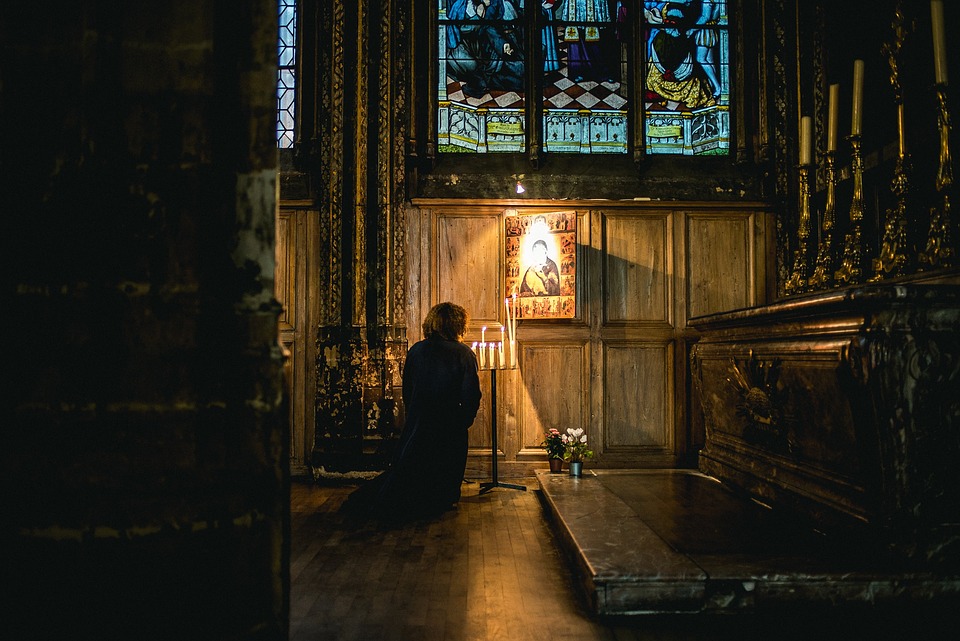
all-soulsWhat is the value of one prayer? I suspect it is far greater than any of us imagine. Prayer changes things, sometimes in obvious ways, more often in subtle and even paradoxical ways. But prayer is surely important, even when we don’t experience its immediate effects. Perhaps this is why Jesus taught us to pray always and never to lose heart (cf Luke 18:1). St. Paul echoed this with the simple exhortation, “Pray without ceasing” (1 Thess 5:17). St. James also warned, “You have not because you ask not” (James 4:2).

Perhaps one of the greatest joys of Heaven will be seeing how much of a difference our prayers made, even the distracted and perfunctory ones. Perhaps our simple utterances at the end of a decade of the rosary to “Save us from the fires of Hell” and “Lead all souls to Heaven” will reach the heart of one lost soul, prompting him to answer the gentle call of God to return. Imagine that in Heaven that very sinner comes up to you and says, “Though we never met, your prayer reached me and God applied His power to me.” Imagine the joy of many such meetings in Heaven. Imagine, too, whom you will joyfully thank for their prayers, people you know and some you never met. But they prayed and the power of their prayers reached you.

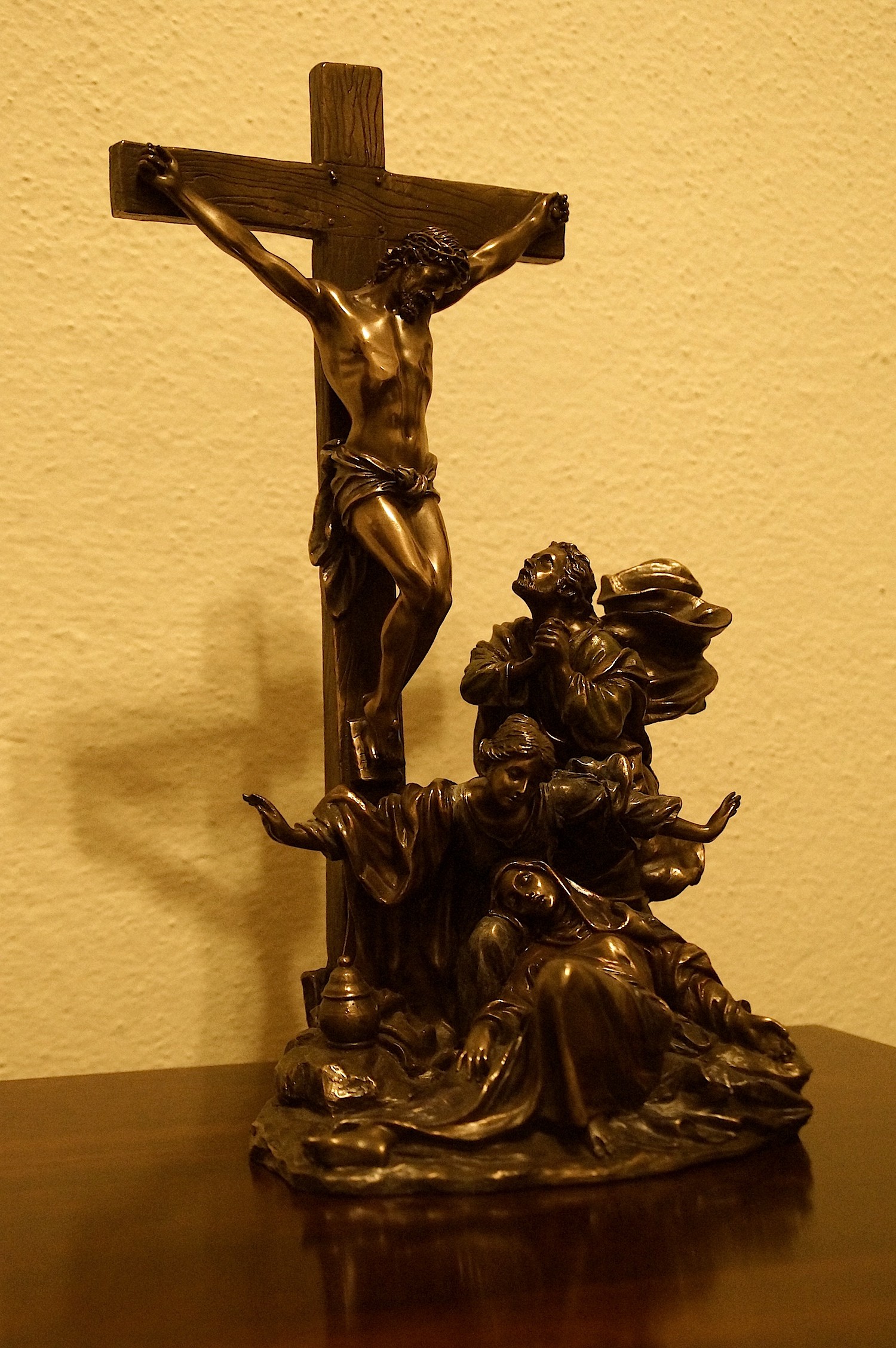
To pray for the living is a great and wondrous spiritual work of mercy; its value is beyond that of gold or pearls. Yes, what is the value of one prayer? The effectual fervent prayer of a righteous man is powerful in in its effects (James 5:16). Prayer can avert war, bring healing, cause conversion, bestow peace and serenity, and call down mercy—sweet, necessary, and beautiful mercy. Prayer is inestimable; its value can never be told.

Praying for the dead, however, is a spiritual work of mercy that has suffered in recent decades. Too many Catholics today “miss a step” when a loved one dies. There are often immediate declarations that the deceased is “in Heaven” or “in a better place.” But Scripture doesn’t say that we go right to Heaven when we die. No, indeed, there is a brief stopover at the judgment seat of Christ.

The Letter to the Hebrews says, It is appointed for men to die once and after this comes judgment (Heb 9:27). And St. Paul writes, For we must all appear before the judgment seat of Christ, so that each of us may receive what is due us for the things done while in the body, whether good or bad (2 Cor 5:10).

Our deceased loved ones go to the judgment seat of Christ, and that is worth praying about!

But what is the judgment for those who lived faithful lives? In such cases, the judgment is not merely about the ultimate destination of Heaven or Hell. The judgment would seem to be “Is My work in you complete?”

Indeed, the Lord has made all of us a promise: You therefore must be perfect, as your heavenly Father is perfect (Mat 5:48). Such a beautiful promise! And yet most of us know that we are not in such a state now. If we were to die today it is clear that much work would still be required. Thus when we send our faithful loved ones to judgment, although we send them with hope, we are aware that finishing work may be necessary. Purgation and purification are necessary before entering Heaven, of which scripture says, Nothing impure will ever enter it (Rev 21:27).

Again, this is worth praying about. It is a great work of mercy we can extend to our deceased loved ones, to remember them with love and to pray, in the words of St. Paul, May God who has begun a good work in you bring it to completion (Phil 1:6). Pray often for the souls in Purgatory. Surely there are joys there for them, knowing that they are on their way to Heaven. But surely there are also sufferings that purgation must cause. St Paul says of Purgatory, Each one’s work will become manifest, for the Day will disclose it, because it will be revealed by fire, and the fire will test what sort of work each one has done. If the work that anyone has built on the foundation survives, he will receive a reward. If anyone’s work is burned up, he will suffer loss, though he himself will be saved, but only as through fire (1 Cor 3:13-15). Yes, there is fire, but thank God it is a healing fire. There are tears, too, for Scripture says (regarding the dead) that Jesus will wipe every tear from their eyes (Rev 21:4).

How consoling and merciful our prayers must seem to our beloved who have died! How prayers must seem like a gentle wind that speeds them along, onward and upward toward Heaven!

Praying for the dead, then, is the last and greatest spiritual work of mercy. By the grace of it, and through its help, souls attain the glory God has prepared for them from the foundation of the world.

The Modern Tendency to Get Lost in Our Devices

cell-phoneSome years ago it was popular to say of television, “It’s not the medium, it’s the message.” This was in answer to critics who claimed that watching it “rotted the brain.” The retort was that there was nothing wrong with the medium (television) per se, but with the message (vapid sitcoms, etc.). Television could be used to great ends if the message was right.

While television can be used to broadcast good material, there is significant evidence that watching it is in fact deleterious, especially for more than an hour a day. The flickering screen, with the picture angle that changes every eight seconds or so (according to an industry guideline), is devastating to the attention span of the viewer. The fact that it is a purely passive medium, used more often to entertain than to teach, does not help either. At least with radio, the imagination is engaged. No so with television, which supplies just about everything to the passive viewer. None of this helps us or prepares us for true human interaction, in which changing the channel is not an option, entertainment is not always the goal, and the viewing angle isn’t constantly changing. Most teachers will tell you that the average attention span of today’s youth seems to be dismally short.

And now we have added to the mix our cell phone screens and earbuds. The tune-out from real relationships has deepened, attention spans are even shorter, and a kind of particularism has set in wherein I reject you or tune you out because you aren’t exactly what I want right now. Forget reality, bring on the virtual reality!

We see it everywhere:

  1. Bored children sit in classrooms, almost incapable of staying focused to listen to the simplest instruction, sneaking peeks at their phones for something more interesting.
  2. Teenagers at family gatherings barely speak to one another, let alone to the adults; they sit alone in a corner with their earbuds in, lost in games or videos on their phones. Trying to break in with a simple “Hi” yields a grunt or irritable glance in return. And don’t expect any eye contact!
  3. Even in public places like the subway or the sidewalk of a city street, many people are lost in their devices, inwardly focused, barely noticing the humanity around them.
  4. I recently asked a priest personal director what he thought was the biggest difference between younger and older clergy. I expected him to say something about theological differences, but he surprised me by replying, “Younger clergy do not answer their phones. They just text.” It seems that real conversations, even if only by phone, are on the outs with a generation raised on electronic devices.

In a thoughtful article published in First Things, Patricia Snow writes about the effects on high school and college students of extended immersion in cell phones (and other devices). I want to take up her call: “Look at me!” She begins by describing the problem and its symptoms:

Inevitably, in some of our young people espe­cially, we are reaping deficits in emotional intelligence and empathy; loneliness, but also fears of unrehearsed conversations and inti­macy; difficulties forming attachments but also difficulties tolerating solitude and boredom. … The teachers tell … that their students don’t make eye contact or read body language, have trouble listening, and don’t seem interested in each other, all markers of autism spectrum disorder. … Students are so caught up in their phones, one teacher says, “they don’t know how to pay at­tention to class or to themselves or to another person or to look in each other’s eyes and see what is going on.” Another says uneasily, “It is as though they all have some signs of being on an Asperger’s spectrum …. [Yet] we are talking about a school wide problem.”

That’s right, the effects of becoming lost in our devices lead to semi-permanent problems and symptoms we usually attribute to autism spectrum disorders. This affects not only human conversation, but even more so the conversation with God that we call prayer. Snow writes,

For all the current concern about technology’s effects on human relationships, little or nothing is being said about its effects on man’s relationship with God. If human conversations are endangered, what of prayer, a conversation like no other? All of the qualities that human conversa­tion requires—patience and commitment, an ability to listen and a tolerance for aridity—prayer requires in greater measure. Yes, here is the one conversation Satan most wants to end.

So here is the problem: there is an increasing loss in our ability to relate to other people and to God. The virtual is prized over the real, fantasy over reality. What God actually offers us is dismissed as of lesser value and we become more deeply locked in our own little world. It is a perfect recipe for Hell since it also describes it: turned in on oneself and away from God and others.

What is the way out of this descent into a self-enclosed virtual world?

Simply put, the solution is in the eyes. Ms. Snow details one therapeutic approach in the treatment of autism as follows:

In the protocols developed by Ivar Lovaas for treating autism spectrum disorder, every discrete trial in the therapy, every drill, every interaction with the child, however seemingly innocuous, is prefaced by this clear command: “Look at me!” If absence of relationship is a defining feature of autism, connect­ing with the child is both the means and the whole goal of the therapy. … Eye contact—which we know is essential for brain development, emotional stability, and so­cial fluency—is the indispensable prerequisite of the therapy, the sine qua non of everything that happens …. There are no shortcuts to this method; no medica­tions or apps to speed things up; no machines that can do the work for us. This is work that only human be­ings can do, with their human eyes and human voices …. In this work of restoration, the child’s gaze comes back first. In intermediate, breakthrough moments, she greets her father when he comes home from work, and calls her mother for the first time ever in the night.

There is a need for all of us to have extended “unplugged” time, time spent with no phones or screens. Power the devices down or put them away. Leave the virtual world and re-enter the real world. Look one another in the eye and have conversations. Eat dinner with your family; sit in the living room together and just talk.

Most cell phones have a feature (sometimes called sleep or do-not-disturb mode) that silences the phone unless a call comes in from someone on a defined list. This permits calls from close family members to get through, but nothing else. I set my phone in this mode from 10:00 PM until 9:00 AM. During this time, I take no calls or texts; I’m unplugged.

Eye contact is so important! Really looking at the people in your life is essential for wholeness and holiness. To us who are collectively straying into these autistic manifestations, the cry must go up, “Look at me!” This is a summons to the person inside, too often lost in his device or listening through his earbuds, to look up and out. The summons is tied to the concept of human respect. The word “respect” means literally “to look again” (re + spectare).

Consider well what you must do, lest you get lost inward. Our life cannot merely revolve around the device screen. It isn’t just the message that can harm us; it’s the medium as well. We were made by God for relationships—true personal relationships, not just virtual ones. Our relationships with one another are meant to enrich and complete us. And how much worse it is if our relationship with God fails. The very purpose of our life is to be related to God to an ever-greater degree, and one day to be perfectly united to Him. It is, of course, Satan’s dream to sabotage our relationships on every level.

Consider these questions:

  1. When do you unplug each day and for how long?
  2. Is there a consistent time each day when you are not interacting with your device?
  3. How frequently do you check your device when you are in meetings or with others?
  4. Do you ever just turn your phone off and put it away?
  5. How often do you eat a meal with your family? Are family members on their devices during these meals?
  6. How much of your day involves silence?
  7. Are you able to fall asleep in a dark, silent room, or do you need a light on and/or something playing in the background?

I suspect that the answers to questions like these will vary quite a bit with age. But to some extent, the concerns expressed here affect us all.

Give some serious thought to what our devices have done to us personally and collectively. Relationships and their quality matter a great deal. The most important things in life aren’t things at all. Yes, “Look at me” is a powerful and necessary corrective. Our eyes are too easily fixed on what mesmerizes us, rather than on what heals us, challenges us, and helps us to become more whole, more complete, more holy, and more human.

Look at me!

Some Thoughts on the Feast of All Saints

communion-of-saintsToday is the Feast of All Saints. Some saints of the Church have a particular day on the calendar associated with them and are commonly recognized by name. Many more, though not as familiar to us, are still known by God and have been caught up with Him to glory. Today is their day, the day of the countless multitude who have made it home to glory by God’s grace and by their “Amen” to the gracious call of God. Let’s consider these saints under three headings, based on today’s readings.

I. Their Privileged Place: The first reading today, from Revelation, speaks to us of saints: from every nation, race, people, and tongue. They stood before the throne and before the Lamb, wearing white robes and holding palm branches in their hands. They cry out in a loud voice, “Salvation comes from our God, who is seated on the throne, and from the Lamb.” … They prostrated themselves before the throne, worshiped God, and exclaimed, “Amen. Blessing and glory, wisdom and thanksgiving, honor, power, and might be to our God forever and ever. Amen.”

Note how liturgical the description is. In fact, the most common way that Heaven is described is in liturgical imagery. The liturgy is a kind of “dress rehearsal” for Heaven. To those who find Mass “boring,” this description can be challenging.

Indeed, many people today have rather egocentric notions of Heaven. Heaven is a place where I will be happy, where I will see my family, where I will take leisure. I will have my mansion; I will no longer get sick; I can play all the golf I want, etc. Heaven is a “better place.” But this better place is generally understood in very personal terms; it’s a kind of “designer Heaven.” But Heaven is what it is, not what we conceive it to be.

As for the real Heaven, the heart of it is being with God, looking upon His glorious face and thereby having all our inexpressible longings satisfied. In Heaven, the saints behold the glorious face of God and rejoice. It is their joy to praise Him and to rejoice in His truth, goodness, and beauty.

Note, too, both the sense of communion of the saints with God and with one another. The biblical portraits present a multitude, a vast crowd. The biblical way to understand the multitudes in Heaven is not to envision physical crowding but rather deep communion. In other words, the Communion of Saints is not just a lot of people standing around talking or moving about.

St Paul teaches, So we, who are many, are one body in Christ, and individually members, one of another (Rom 12:5). And though we experience this imperfectly here on earth, we will experience it perfectly in Heaven. As members of one another, we will have deep communion, knowing and being known in a deep and rich way. Your memories, gifts, and insights will be mine, and mine will be yours. There will be profound understanding and appreciation, a rich love, and sense of how we all complete one another and are one in Christ.

Imagine the glory of billions of new thoughts, stories, and insights that will come from being perfectly members of Christ and of one another. Imagine the peace that will come from understanding and being understood. This is deep, satisfying, wonderful communion—not crowds of strangers.

St. Augustine had in mind the wonderful satisfaction of this deep communion with God and with one another in Christ when he described Heaven as Unus Christus amans seipsum (One Christ loving Himself). This is not some selfish Christ turned in on Himself. This is Christ, the Head, in deep communion with all the members of His body. This is all the members in Christ experiencing deep mystical communion with Him and one another, all swept up into the life of the Trinity. Again, as St. Paul says, and you are Christ’s, and Christ is God’s (1 Cor 3:23).

II. Their Prize of Perfection: The second reading, from the First Letter of John, says, Beloved, we are God’s children now; what we shall be has not yet been revealed. We do know that when it is revealed we shall be like him, for we shall see him as he is.

We cannot even imagine the glory of the saints in Heaven. The Heavenly Father once said to St. Catherine that if she were ever to see a saint in his or her transformed heavenly glory, she would fall down and worship because she would think she was looking at God.

This is our future, if we are faithful. We will reflect the glory of God and be transformed by the look of love and glory. Just one look, and oh, the glory we will reflect, God’s very own glory!

III. The Picture to Ponder: The Gospel today (the Matthean beatitudes) sets forth a kind of picture of what sanctity looks like. The beatitudes are the description of the transformed human person; they describe what happens to us as Jesus begins to live His life in us through the Holy Spirit.

This picture is not one that merely waits for Heaven, but one that is true of us even now as we grow into the likeness of Christ.

I have written more on the beatitudes HERE and HERE. For the purposes of today’s feast, we need to acknowledge that a beatitude is not something we do but rather something we receive. A beatitude declares an objective reality as the result of a divine act.

The present indicative mood of the beatitudes should be taken seriously and not transformed into an imperative of exhortation, as though Jesus were saying, “Start being poor or meek and then God will bless you.” Rather, He is saying that when the transformative power of the cross brings about in us a greater meekness, poverty of spirit, and so forth, we will experience that we are being blessed.

Beatitude is a work of God and results when we yield to His saving work in us. We are blessed when we accept and yield to the work that God alone can do. With this understanding, we see the beatitudes not as a prescription of what we must do per se, but as a description of what a human being is like whom Jesus Christ is transforming into a saint! And this transformation is a growing, stable, deep, and serene beatitude and holiness.

Therefore, today’s feast of all saints does not merely point to the completed saints in Heaven, but to us who would be saints, not just someday in the future but beginning now and in increasing degree.

At the end there will be saints and ain’ts. Which do you choose?


A Sobering Scriptural Warning to Rulers and Leaders

Photo by Jacyln Lippelmann for the Catholic Standard.

During the current political period, when many leaders will be elected, we do well to recall the strong admonitions of God to those who attain to leadership, whether as politicians, community leaders, teachers, or others of significant influence.

The Book of Wisdom (6:1-25) contains a stern warning for those of authority and influence. I present it here along with a few comments (in red) of my own.

In my commentary, I deliberately do not mention specific leaders or parties. This problem is older than the current year; it is a human problem that has beset every age. But I would also argue that it is a particularly serious issue today. To be fair, though, it has been emerging in stages and growing in severity for several decades now, since the cultural revolution.

With those disclaimers in mind, consider with me this admonition from the Lord in the Book of Wisdom.

Hear, therefore, kings, and understand;
learn, you magistrates of the earth’s expanse!
Hearken, you who are in power over the multitude
and lord it over throngs of peoples!
Because authority was given you by the Lord
and sovereignty by the Most High,
who shall probe your works
and scrutinize your counsels!

We live in times when government officials often rule more than they serve. Laws are passed that are increasingly burdensome. And many of these laws are coming, not from elected officials who must answer to their voters, but from unelected judges and government bureaucrats. Some of these new policies violate religious liberty and impose obligations that violate the consciences of many. But these considerations are set aside and those in power lord it over the people they serve, forcing them to comply with unjust and immoral laws or else face fines and/or jeopardize their careers. To the degree that those leaders transgress the proper bounds for a ruler, they will answer to God for what they do.

Because, though you were ministers of his kingdom,
you judged not rightly, and did not keep the law,
nor walk according to the will of God,

Consider how many laws are proudly passed today that are direct violations of God’s moral law (e.g., legalization of abortion, same-sex “marriage,” and euthanasia/assisted suicide). Those who craft such laws, support them, and/or fund them, will answer to God.

Terribly and swiftly shall he come against you,
because judgment is stern for the exalted—
For the lowly may be pardoned out of mercy
but the mighty shall be mightily put to the test.
For the Lord of all shows no partiality,
nor does he fear greatness,
Because he himself made the great as well as the small,
and he provides for all alike;
but for those in power a rigorous scrutiny impends
.

Yes, many seek power in this world without recalling the important truth proclaimed here. Judgment is indeed weightier for those who are powerful, wealthy or influential. We seek these things even though the Scriptures warn that it is hard for the rich to inherit the kingdom (Matthew 19:23), that not many of us should be teachers (James 3:1), and that to whom much is given much is expected (Luke 12:48). Those who attain to such levels must be very humble before God, seek his help and remember that they will answer to him.

To you, therefore, O princes,  are my words addressed
that you may learn wisdom and that you may not sin.
For those who keep the holy precepts hallowed shall be found holy,
and those learned in them will have ready a response.
Desire therefore my words;
long for them and you shall be instructed
.

Fear God, not man. Seek his wisdom, not what is merely politically advantageous. Yet sadly most of our leaders, powerful though they are, do fear man more than God. To attain to high positions, many have made serious moral compromises and been willing to dismiss divine mandates in favor of often immoral demands of sinful human beings. Rare indeed is the ruler that recalls divine judgments and refuses to compromise God’s law, or teaches his people to do the same.

If, then, you find pleasure in throne and scepter, you princes of the peoples,
honor Wisdom, that you may reign as kings forever….
A great number of wise men is the safety of the world,
and a prudent king, the stability of his people;
so take instruction from my words, to your profit
.

How are we doing, America? Not so well, if you ask me. Our current leaders (political, judicial, and academic) have diverged severely from the Law and Wisdom of God. Any examination of recent legislation, legal decisions, or academic offerings will reveal this. A tyranny of relativism has been created and leaders lord it over others through law and political correctness. Punitive laws and executive fiats oppress. College campuses are beginning to resemble indoctrination camps rather than places where debate and discussion of ideas can take place.

Even more sadly, our leaders indicate the moral condition of our country. True leaders should lead and answer to God, but our modern leaders often cater to the whims and unseemly demands of their people. Americans are demanding many excessive and immoral things; we get the leaders we deserve because they emerge from who and what we are.

This is tragic on two counts. It is tragic for the leaders, who will answer to God for what they do; it is also tragic for us, who can only be further dragged down by poor and immoral leaders.

Consider, well, this admonition from Sacred Scripture. Consider its message to us, both as individuals and as a country.

Pray and heed!

To Make a Long Story Short – A Homily for the 31st Sunday of the Year

blog10-29-2016The Gospel today features the familiar and endearing story of Zacchaeus, a man too short to see Jesus, but who climbs a tree (of the cross), encounters Him, and is changed.

The danger with familiar stories is that because they are familiar and we can easily miss their remarkable qualities. Perhaps it is well that we look at today’s Gospel anew, searching for the symbolic in the ordinary details.

I. Shortsighted Sinner – Zacchaeus is physically short, so short that he cannot see the Lord. Do you think that this detail is provided merely to describe his physical stature? I don’t think so. As a preacher I’m counting on the fact that there is more here than a physical description.

I suspect it is also a moral description. Zacchaeus cannot see the Lord because of the blindness brought by sin. Consider some of the following texts from Scripture, which draw parallels between sin and blindness:

  • My iniquities have overtaken me, till I cannot see (Ps 40:12).
  • I will bring distress on the people and they will walk like blind men, because they have sinned against the LORD (Zeph 1:17).
  • They know not, nor do they discern; for God has shut their eyes; so that they cannot see, and their minds so that they cannot understand (Is 44:18).
  • Because of the sins of her prophets and the iniquities of her priests, who shed within her the blood of the righteous, now they grope through the streets like men who are blind (Lam 4:13).
  • Unless one is born again by water and the Spirit, he cannot see the Kingdom of God. (John 3:5).
  • Blessed are the pure of heart for they shall see God (Matt 5:8).

So sin brings blindness, an inability to see the Lord. Zacchaeus has fallen short through sin and hence he cannot see Jesus. How has he sinned? Well, he is the chief tax collector of Jericho. Tax collectors were wicked men. The Romans recruited the mobsters of that day to collect taxes. They roughed people up and extorted money from them. The Romans permitted the collectors to charge in excess of the tax due as their “cut” of the deal. They were corrupt, exploited the poor, and schmoozed with the powerful. These were men who were both feared and hated, and for good reason. They were wicked and unjust.

Zacchaeus is not just any tax collector; he is the chief tax collector. He’s a mafia boss, a Don, a “Godfather.” Got the picture? Zacchaeus isn’t just physically short. He’s the lowest of the low; he doesn’t measure up morally. He’s a financial giant but a moral midget. Zacchaeus is well short of a full moral deck. His inability to see the Lord is not just a physical problem; it is a moral one.

Now I am not picking on Zacchaeus. Truth be told, we are all Zacchaeus. You say, “Wait a minute, I’m not that bad.” Maybe not, but you’re not that good either. We’re all a lot closer to being like Zacchaeus than to being like Jesus. The fact that we’re still here is evidence that we are not yet ready to look on the face of the Lord. We’re not righteous enough to look upon His unveiled face. How will Zacchaeus ever hope to see the Lord? How will we?

II. Saving Sycamore – Zacchaeus climbs a tree in order to be able to see Jesus; so must we. The only tree that can really help us to see the Lord is the tree of the cross. Zacchaeus has to cling to the wood of an old sycamore to climb it; we must cling to the wood of the old rugged cross.

Only by the wood of the cross and the power of Jesus’ blood can we ever hope to climb high enough to see the Lord. There is a Latin chant that says, Dulce lignum, dulce clavos, dulce pondus sustinet (sweet the wood, sweet the nails, sweet the weight (that is) sustained). By climbing a tree and being able to get a glimpse of Jesus, Zacchaeus foreshadows for us the righteousness that comes from the cross.

III. Sanctifying Savior – Jesus stops by that tree, for we always meet Jesus at the cross. There at that tree, that cross, He invites Zacchaeus into a saving and transformative relationship. It is not surprising that Jesus essentially invites himself to Zacchaeus’ house. Though dinner is not mentioned, it was a basic aspect of Jewish hospitality. But remember, it is Jesus who ultimately serves the meal. Consider these texts:

  • Here I am! I stand at the door and knock. If anyone hears my voice and opens the door, I will come in and eat with him, and he with me (Rev 3:20).
  • And I confer on you a kingdom, just as my Father conferred one on me, so that you may eat and drink at my table in my kingdom (Luke 22:29).
  • As they approached the village to which they were going, Jesus acted as if he were going farther. But they urged him strongly, “Stay with us, for it is nearly evening; the day is almost over.” So he went in to stay with them. When he was at the table with them, he took bread, gave thanks, broke it and began to give it to them (Luke 24:28-30).

Yes, Zacchaeus has now begun to see the Lord, and the Lord invites him into a Holy Communion, a relationship, and a liturgy that will begin to transform him. Zacchaeus and we are one and the same. We, too, have begun to see the Lord through the power of the cross to cast out our blindness; and the Lord draws us to sacred Communion with Him. The liturgy and Holy Communion are essential for this, as the Lord invites himself to our house, that is to say, our soul and our parishes.

IV. Started Surrender – Zacchaeus is experiencing the start of a transformative relationship. But it is just the start. Zacchaeus promises to return four-fold the money he has extorted and to give half his money to the poor. There’s a Christian hymn entitled “I Surrender All.” Zacchaeus hasn’t quite reached that point yet, and neither have most of us.

Eventually Zacchaeus will surrender all, and so will we. For now, he needs to stay near the cross so that he can see and continue to allow Jesus to have communion with him. One day all will be surrendered.

So this is the start for Zacchaeus and for all of us. The best is yet to come. You might say that the Gospel ends here, to make a long story short. 🙂

Reform Comes Out of Nowhere, As Seen in a Commercial

blog-10-28-2016Reform in the Church seldom comes from a committee of clergy, or from the clergy at all. It usually comes from the laity and from religious communities. In a way, reform in the Church “comes out of nowhere.” During the often-corrupt periods of the Church (e.g., the Middle Ages)—when many of the clergy were more like aristocrats and landowners than true pastors, when wealthy clergy often collected parishes and posts like stocks and bonds and hired poorly trained people to do their work—reform came out of nowhere. It came in the person of St. Catherine of Siena, St. Francis of Assisi, St. Dominic, the mendicant orders, and many others. In later periods, it came in the person of great saints like St. Teresa of Avila and St. John of the Cross.

These reformers came as if out of nowhere. They defied the usual expectations of what leadership in the church should be like. They broke the rules, not the moral law or rules, but the “business as usual” rules. God sent them to the Church at critical moments. Ecclesia semper reformanda (the Church is always in need of reform).

All of this occurred to me as I watched this commercial:

Why Is a Psalm of Creation Proclaimed on the Feasts of the Apostles?

faith and scienceThe Mass for today’s feast of Saints Simon and Jude, like that for almost all of the Apostles, contains passages from Psalm 19. This has always intrigued me because this psalm is not a reference to human preaching or witness at all, but rather a reference to the wordless witness of creation.

The heavens declare the glory of God, and the sky above proclaims his handiwork. Day to day pours out speech, and night to night reveals knowledge. There is no speech, nor are there words, whose voice is not heard. Their voice goes out through all the earth, and their words to the end of the world (Psalm 19:2-3; 4-5).

And while it is true that the voice of the Apostles has gone out to all the earth, that is not what this psalm is really about. There is a kind of daring and glorious transposition of meaning. The witness through the words of the Apostles is joined to the wordless witness of creation. Why? Well, are not the Apostles—indeed all humans—part of creation? And if the lower parts of creation proclaim the glory of God, do not we as well?

Here, then, is a beautiful reminder of the two books of revelation: Scripture and Creation. It is also a reminder that we are part of that creation. Yes, creation is revelation, as St. Paul reminds: For God’s invisible attributes, namely, his eternal power and divine nature, have been clearly perceived, ever since the creation of the world, in the things that have been made (Romans 1:20).

Yes, the whole universe shouts Order! Consistency! Intelligibility! Our bodies and all of the delicately functioning systems on this planet echo back this refrain. And while I do not ask scientists (as scientists) to specifically affirm the biblical and Christian God, the existence of consistent order in the universe is obvious and serves as the basis of the whole scientific method.

If things were truly random, scientists could not propose theories, test results, or verify them; repeated experiments would not turn out similar results. The scientific method presupposes order and consistency within a verifiable range. Thus, while scientists need not draw conclusions as to how this order came about, it is wholly inappropriate for them to be dismissive of believers who conclude from this order that someone must have ordered it so.

Yes, what a glorious and magnificent thing creation is! To this believer, it loudly proclaims the existence of God, who made it.

The beautiful hymn “The Spacious Firmament on High,” which I have seldom heard in Catholic parishes, takes up the voice of creation—especially that part of creation we call the heavens or the sky. It is based on Psalm 19, and to me it is a minor masterpiece of English poetry. It was written by Joseph Addison in 1712.

The hymn was written before skeptical agnosticism and hostility to the very notion (let alone existence) of God had taken deep root in our culture. And, frankly, it also comes from a more sober time, when it was accepted as obvious that creation is ordered and therefore ordered by someone in a purposeful and intelligent manner. We believers call that “someone” God.

Consider the beautiful words of this song, and its reasoned conclusion that creation shouts the existence of its Creator.

The spacious firmament on high,
with all the blue ethereal sky,
and spangled heavens, a shining frame,
their great Original proclaim.
The unwearied sun from day to day
does his Creator’s power display;
and publishes to every land
the work of an almighty hand.

Soon as the evening shades prevail,
the moon takes up the wondrous tale,
and nightly to the listening earth
repeats the story of her birth:
whilst all the stars that round her burn,
and all the planets in their turn,
confirm the tidings, as they roll
and spread the truth from pole to pole.

What though in solemn silence all
move round the dark terrestrial ball?
What though no real voice nor sound
amid their radiant orbs be found?
In reason’s ear they all rejoice,
and utter forth a glorious voice;
forever singing as they shine,
“The hand that made us is divine.”

Yes, the hand that made us is divine, and He has done a marvelous thing!

Here is a performance of this wonderful hymn:

Encouragement from Jesus in the Face of Worldly Threats

jesus-and-the-gentile-woman-300x232Today’s Gospel features a strange dialog; it is hard not to rejoice in Jesus’ aplomb.

In it, some Pharisees (likely disingenuous) approach Jesus, warning Him to leave immediately: Go away, leave this area because Herod wants to kill you. Probably more for their benefit than for Herod’s, Jesus responds,

“Go and tell that fox, ‘Behold, I cast out demons and I perform healings today and tomorrow, and on the third day I accomplish my purpose’” (Lk 13:32).

Surely Jesus has more in mind here than the next three days. He is obviously speaking of the Paschal mystery: His passion, death, and resurrection. To any who would threaten His life, He is saying that in so doing they only serve to undermine their own power and cause Him to fulfill His own purpose.

Nailed to a cross, He will be casting out demons and bringing healing. The next day He will descend to Sheol to awaken the dead, summon them to righteousness, and bring healing in life. And on the third day He will arise, fully accomplishing His purpose and casting off death like a mere garment.

There is no way that Herod, the Pharisees, or Satan can win; for in winning, they lose.

So also for those who would align themselves with the darkness rather than the light. No matter how deep the darkness, dawn inevitably comes and scatters it; the darkness cannot win. Scripture says, The light shines in the darkness, and the darkness has not overcome it (Jn 1:5).

In this strange and provocative saying of Jesus’ from the Gospel of Luke is an important perspective for all of us: no matter how powerful it may seem, evil cannot stand; it will ultimately self-destruct and be overcome by the light. No matter how awful Good Friday seemed to those first disciples, Jesus was casting out demons and bring healing in that very act of suffering. And His apparent disappearance into death and down into Sheol was only for the purpose of bringing life into the place of the dead and healing to the deep wounds caused by sin.

While Resurrection Sunday manifested Jesus’ obvious triumph, even Good Friday and Holy Saturday were already displaying His great victory.

In this saying of Jesus’ and in the facts of the Paschal mystery, two things are taught to us about evil: we should never glamorize it and we should not utterly fear it.

As for glamorizing evil, we love our movies and other things in culture that often glorify evil, whether it’s “The Untouchables,” “The Godfather,” “Goodfellas,” or other fare that in a general way celebrate wrongdoing and equate it with power and glory.

This is illusion. Evil may have its day, but the Word of the Lord remains forever. Scripture says,

I have seen the wicked triumphant, towering like a cedar of Lebanon. I passed by again; he was gone. I searched; he was nowhere to be found (Psalm 37:35-36).

We should neither glamorize evil nor inordinately fear its passing power. We should confront it soberly and resist its demands, but we should not fear it.

No, evil cannot stand. To glorify evil or to fear it inordinately is to miss the lesson of both Scripture and history. At the end of the day, evil does not last.

What does last is God’s holy Word and His Church. Despite repeated attempts to persecute, diminish, and destroy the Church, she has outlived every one of her opponents. Her history extends back more than 2000 years into the heritage of God’s people, the Jews. For His word to Abraham persists, and God rescued them from slavery in Egypt and gave His Word on Mount Sinai. Despite every attempt to ridicule, reduce, and redefine God’s Word, His promise to Abraham, His Word from Sinai, and His Word from the Sermon on the Mount all persist to this day.

This is what lasts: God’s Word and the Church He founded. This is verifiable through the study of history. Empires have come and gone, wicked philosophies have come into favor and disappeared, scoffers and persecutors have arrived and departed, all throughout the age of the Church. Here we are still; they are gone. And those who claim power today and who laugh at us and say our day is done should know this: when they are gone we will still be here.

Evil, error, and perversion do not last. God does last, and so does His Word and the Church to which He has entrusted it.

And so Jesus, when threatened by the Pharisees and indirectly by Herod, simply says,

“Go and tell that fox, ‘Behold, I cast out demons and I perform healings today and tomorrow, and on the third day I accomplish my purpose’” (Lk 13:32).

In effect, Jesus says, “Neither you nor Herod can thwart my plans. In killing me you merely assist me in accomplishing my plan; I will break the back of your power. When you persecute my disciples or shed the blood of my Church members you are sowing seeds for the Church by the very blood of the martyrs you spill. Whatever victory you claim is hollow, for it is really my victory.”

Yes, “Go and tell that fox, ‘Behold, … I accomplish my purpose.’” By these words the Lord decodes history for us. It doesn’t matter how we might wish to obsess over this seeming loss or that apparent defeat. It doesn’t matter how the world and the devil might wish to gloat over an apparent victory. In the end, the Lord holds all the cards. The house, His house, always wins.

It is true; read history. Do not admire evil or fear its apparent ascendance. Jesus has won and His victory is shown time and time again. Don’t let the Devil deceive you. Evil cannot stand. The devil is a liar.

Indeed, in the name and power of Jesus, “Go and tell that fox, ‘Behold, I cast out demons and I perform healings today and tomorrow, and on the third day I accomplish my purpose’” (Lk 13:32).