Is It Time to Restore the Full Psalter to the Liturgy of the Hours?

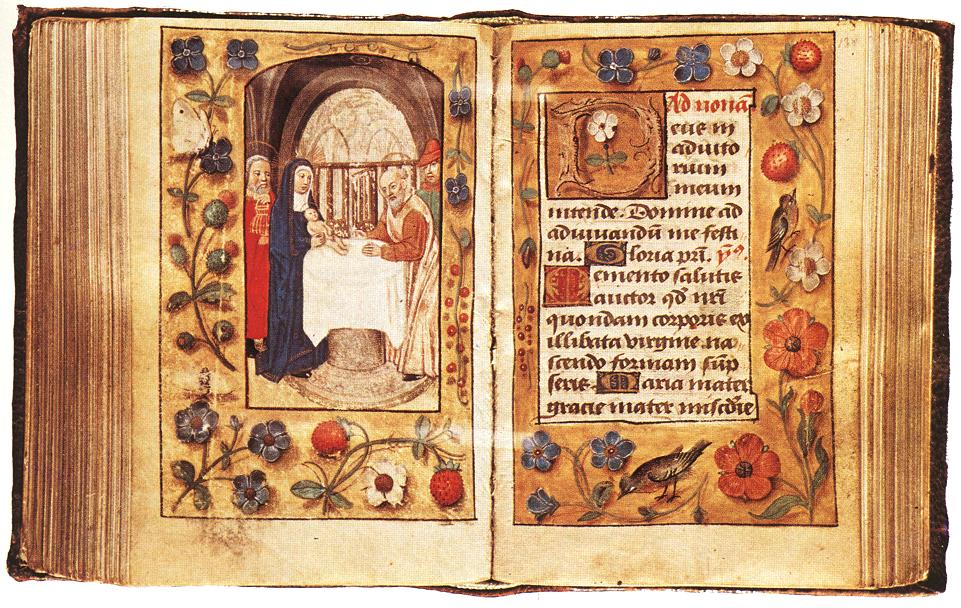
liturgy-of-hoursOne of the great gifts of reading the Liturgy of the Hours (also called the Breviary) faithfully over the years faithfully is that the Scriptures become deeply impressed upon the mind, heart, memory, and imagination. This is especially true of the psalms that are repeated every four weeks, all year long, every year.

But there are significant omissions in the modern Breviary. This is true not merely because of the loss of the texts themselves, but that of the reflections on them. The verses eliminated are labeled by many as imprecatory because they call for a curse or wish calamity to descend upon others.

Here are a couple of examples of these psalms:

Pour out O Lord your anger upon them; let your burning fury overtake them. … Charge them with guilt upon guilt; let them have no share in your justice (Ps 69:25, 28).

Shame and terror be theirs forever. Let them be disgraced; let them perish (Ps 83:18).

Prior to the publication of the Liturgy of the Hours, Pope Paul VI decreed that the imprecatory psalms be omitted. As a result, approximately 120 verses (three entire psalms (58[57], 83[82], and 109[108]) and additional verses from 19 others) were removed. The introduction to the Liturgy of the Hours cites the reason for their removal as a certain “psychological difficulty” caused by these passages. This is despite the fact that some of these psalms of imprecation are used as prayer in the New Testament (e.g., Rev 6:10) and in no sense to encourage the use of curses (General Instruction # 131). Six of the Old Testament Canticles and one of the New Testament Canticles contain verses that were eliminated for the same reason.

Many (including me) believe that the removal of these verses is problematic. In the first place, it does not really solve the problem of imprecation in the Psalter because many of the remaining psalms contain such notions. Even in the popular 23rd Psalm, delight is expressed as our enemies look on hungrily while we eat our fill (Ps 23:5). Here is another example from one of the remaining psalms: Nations in their greatness he struck, for his mercy endures forever. Kings in their splendor he slew, for his mercy endures forever (Ps 136:10, 17-18). Removing the “worst” verses does not remove the “problem.”

A second issue is that it is troubling to propose that the inspired text of Scripture should be consigned to the realm of “psychological difficulty.” Critics assert that it should be our task to seek to understand such texts in the wider context of God’s love and justice. Some of the most teachable moments come in the difficult and “dark” passages. Whatever “psychological difficulty” or spiritual unease these texts cause, all the more reason that we should wonder as to the purpose of such verses. Why would God permit such utterances in a sacred text? What does He want us to learn or understand? Does our New Testament perspective add insight?

While some want to explain them away as the utterances of a primitive, unrefined, or ungraced people and time, this seems unwise and too general a dismissal. So easily does this view permit us to label almost anything we find objectionable or even unfashionable as coming from a “more primitive” time. While it is true that certain customs, practices, punishments, and norms (e.g., kosher) fall away within the biblical period or in the apostolic age, unless this is proposed to us by the sacred texts or the Magisterium, we should regard the sacred text as being of perennial value. Texts, even if not taken literally, should be taken seriously and pondered for their deeper and lasting meaning.

St. Thomas Aquinas succinctly taught that an imprecatory verse can be understood in three ways:

First, as a prediction rather than a wish that the sinner be damned. Unrepentant sinners will indeed be punished and possibly forever excluded from the Kingdom of the Righteous.

Second, as a reference to the justice of punishment rather than as gloating over the destruction of one’s enemies. It is right and proper that unrepented sins and acts of injustice be punished; it is not wrong to rejoice that justice is served.

Third, as an allegory of the removal of sin and the destruction of its power. We who are sinners should rejoice to see all sinful drives within us removed. In these verses, our sinful drives are often personified as our enemy or opponent.

So, as St. Thomas taught, even troubling, imprecatory verses can impart important things. They remind us that sin, injustice, and all evil are serious and that we are engaged in a kind of war until such things (and those who cling to them) are put away. (For St. Thomas’ fuller reflections, see the Summa Theologica, II-IIae, q. 25, a. 6, ad 3. You can also read a thoughtful essay by Gabriel Torretta, O.P., which served as a basis for my reflections.)

To all of this I would like to add a further reflection on the value and role of imprecation in the Psalter (including the omitted verses).

Because the general instruction speaks to “psychological difficulty” in regard to imprecation, I think it is good to recall that the overall context of prayer modeled in the Scriptures is one of frank disclosure to God of all of our emotions and thoughts, even the darkest ones. Moses bitterly laments the weight of office and even asks God to kill him at one point (Num 11:15). Jonah, Jeremiah (15:16), and other prophets make similar laments. David and other psalm writers cry out at God’s delay and are resentful that sinners thrive while the just suffer. At times they even take up the language of a lawsuit. Frequently the cry goes up in the psalms, “How much longer, O Lord” in the psalms. Even in the New Testament, the martyrs ask God to avenge their blood (Rev 6:10). Jesus is later described as slaying the wicked with the sword (of his word) that comes from his mouth. Yes, anger, vengeance, despair, doubt, and indignation are all taken up in the language of prayer in the Scripture. It is an earthy, honest sort of prayer.

It is as if God is saying,

I want you to speak to me and pray out of your true dispositions, even if they are dark and seemingly disrespectful. I want you to make them the subject of your prayer. I do not want phony prayers and pretense. I will listen to your darkest utterances. I will meet you there and, having heard you, will not simply give you what you ask but will certainly listen. At times, I will point to my final justice and call you to patience and warn you not to avenge yourself (Rom 12:19). At other times, I will speak as I did to Job (38-41) and rebuke your perspective in order to instruct you. Or I will warn you of the sin that underlies your anger and show you a way out, as I did with Cain (Gen 4:7) and Jonah (4:11). At still other times I will just listen quietly, realizing that your storm passes as you speak to me honestly. But I am your Father. I love you and I want you to pray to me in your anger, sorrow, and indignation. I will not leave you uninstructed and thereby uncounseled.

It is not obvious to me that speaking of these all-too-common feelings is a cause of psychological distress. Rather, it is the concealing and suppressing of such things that causes psychological distress.

As a priest, I encounter too many people who think that they cannot bring their dark and negative emotions to God. This is not healthy. It leads to simmering anger and increasing depression. Facing our negative emotions—neither demonizing them nor sanctifying them—and bringing them to God as Scripture models is the surer way to avoid “psychological distress.” God is our healer, and just as we must learn to speak honestly to a doctor, even more so to the Lord. Properly understood (viz. St. Thomas), the imprecatory verses and other Scriptures model a way to pray in this manner.

Discussions of this sort should surely continue in the Church. The imprecatory verses may one day be restored. For now, the Church has chosen to omit the most severe of the imprecations. I think we should reconsider this. The complete Psalter given my God the Holy Spirit is the best Psalter.

Listen to this reading of one of the omitted psalms (109 [108]) and note its strong language. But recall St. Thomas’ reflections and remember that such verses, tough though they are, become teaching moments. Finally, recall that these psalms were prayed in the Church until 1970.
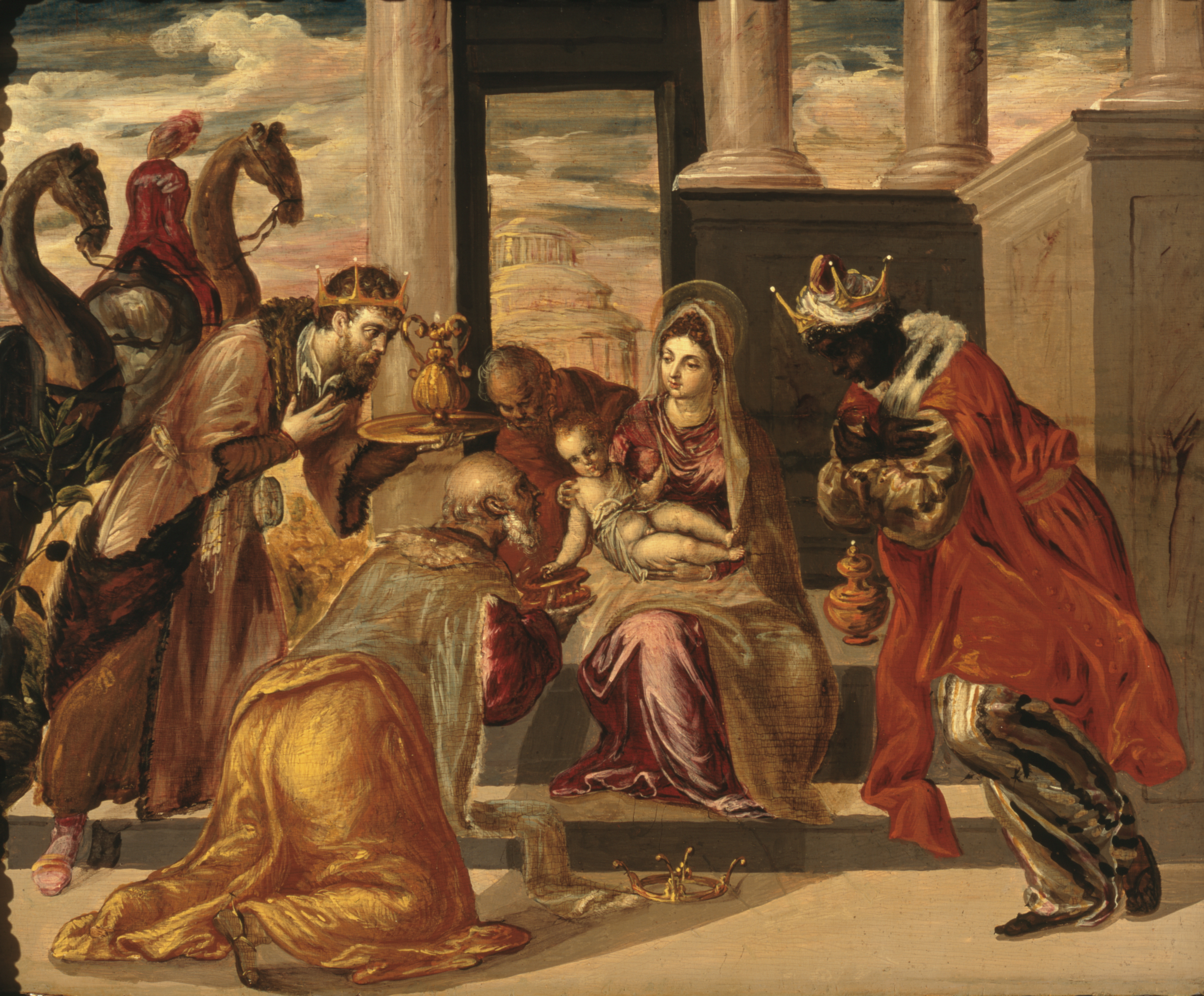

The Journey of Faith – A Homily for the Feast of Epiphany

epiphany2017There are so many wonderful details in the Epiphany story: the call of the Gentiles, their enthusiastic response, the significance of the star they seek, the gifts they bring, the dramatic interaction with Herod, and their ultimate rejection of Herod in favor of Christ.

In this meditation, I would like to follow these Magi in their journey of faith to become “Wise Men.” As magi, they followed the faint stars, distant points of light; as wise men, they follow Jesus, who is the ever glorious Light from Light, true God from true God.

We can observe how they journey in stages from the light of a star to the bright and glorious Light of Jesus Christ. And, of course, to authentically encounter the Lord is to experience conversion. All the elements of this story ultimately serve to cause them to “return to their country by another route.” Let’s look at the stages of their journey from being mere magi to becoming, by God’s grace, wise men.

Stage 1: The CALL that COMPLETES – The text says, When Jesus was born in Bethlehem of Judea, in the days of King Herod, behold, magi from the east arrived in Jerusalem, saying, “Where is the newborn king of the Jews? We saw his star at its rising and have come to do him homage.”

Notice the identity of these individuals: they are labeled magi (μάγοι (magoi) in Greek) and are from the East.

Exactly what “magi” are is not clear. Perhaps they are learned men; perhaps they are ancient astronomers. We often think of them as kings, though the text of this passage does not call them that. It also seems likely that Herod would have been far more anxious had they been actual potentates from an Eastern kingdom. We often think of them as kings because Psalm 72 (read in today’s Mass) speaks of kings coming from the East bearing gifts of gold and frankincense. However, for the record, the text in today’s Gospel does not call them kings, but rather “magi.”

Yet here is their key identity: they are Gentiles who have been called. Up until this point in the Christmas story, only Jews had found their way to Bethlehem. This detail cannot be overlooked, for it is clear that the Gospel is going out to all the world. This call completes the Church, which needs both Jews and Gentiles.

In today’s second reading, St. Paul rejoices in this fact, saying, the Gentiles are coheirs, members of the same body, and co-partners in the promise in Christ Jesus through the gospel (Eph 3:6). Because most of us are not Jewish by ancestry we ought to rejoice, for the call of these Magi prefigures our call.

Notice that God calls them through something in the natural world: a star. God uses something in creation to call out to them.

We do well to wonder what is the “star” that God uses to call each of us? Perhaps it is Scripture, but more typically God uses someone in our life in order to reach us: a parent, a family member, a friend, a priest, a religious sister, or a devoted lay person. Who are the stars in your life through whom God called you?

God can also use inanimate creation, as he did for these Magi. Perhaps it was a magnificent church, or a beautiful painting, or an inspirational song that reached you. Through something or someone, God calls each of us; He puts a star in our sky. These Wise Men, these Magi, followed the call of God and began their journey to Jesus.

Stage 2: The CONSTANCY that CONQUERS – Upon arriving in Jerusalem, the Magi find a rather confusing and perhaps discouraging situation. The reigning king, Herod, knows nothing of the birth of this new King. The Magi likely assumed that the newborn King would be related to the current king, so Herod’s surprise may have confused them. And Herod seems more than surprised; he seems threatened and agitated.

Even more puzzling, Herod calls in religious leaders to get further information about this new King. They open the sacred writings and the Magi hear of a promised King. Ah, so the birth of this King has religious significance! How interesting!

But these religious leaders seem unenthusiastic about the newborn King, and after providing the location of His birth, make no effort to follow the Magi. There is no rejoicing, no summoning of the people to tell them that a longed-for King has finally been born, not even further inquiry!

So the wicked (Herod and his court) are wakeful while the saints are sleepy. How odd this must have seemed to the Magi! Perhaps they even thought about abandoning their search. After all, the actual king knew nothing of this new King’s birth, and those people who did know about it seemed rather uninterested.

Ah, but praise the Lord, they persevered in their search; they did not give up!

Thanks be to God, too, that many today have found their way to Christ despite the fact that parents, clergy, and others who should have led them to Jesus were either asleep, ignorant, or just plain lazy. I am often amazed at some of the conversion stories I have heard: people who found their way to Christ and His Church despite some pretty daunting obstacles (e.g., poor religious upbringing, scandalous clergy, and poor role models). God sometimes allows our faith and call to be tested, but Those who persevere to the end will be saved (Matt 24:13).

To persevere is to open the door to wisdom, which often must be sought in spite of obstacles. This constancy is often what it takes to overcome the darkness and discouragements of the world.

Stage 3: The CONDESCENSION that CONFESSES – The text says, After their audience with the king they set out. And behold, the star that they had seen at its rising preceded them, until it came and stopped over the place where the child was. They were overjoyed at seeing the star, and on entering the house they saw the child with Mary his mother. They prostrated themselves and did him homage.

With what little information they have, the Magi set out and continue to follow the call of God through the star.

Note that they enter a “house.” We often think of the Magi as coming that same Christmas night to the cave or stable, but it seems not; Mary, Joseph, and Jesus are now in a house. Apparently they have been able to find decent lodging. Has it been days or weeks since Jesus’ birth? Regardless, it is likely not Christmas Day itself.

Notice, too, that they “prostrate” themselves before Jesus. The Greek word used is προσεκύνησαν (prosekunēsan), which means “to fall down in worship” or “to give adoration.” This word is used twelve times in the New Testament and each time it is clear that religious worship is the reason for the prostration.

This is no minor act of homage or sign of respect to an earthly king; this is religious worship. It is a confession of faith. The Magi manifest faith! The beginning of wisdom is the fear of the Lord. And these Magi are well on their way from being mere magi to being wise men!

But is their faith a real faith or just a perfunctory observance? It is not enough to answer an altar call or to get baptized. Faith is never alone; it is a transformative relationship with Jesus Christ. So let’s look for the effects of a real and saving faith.

Stage 4: The COST that COMES – There is a cost to discipleship. The Magi are moved to give three symbolic gifts that show some of what true faith includes. They are costly gifts.

Gold symbolizes all of our possessions. In laying this gift before Jesus, they and we are saying, “I acknowledge that everything I have is yours. I put all my resources and wealth under your authority and will use them only according to your will.” A conversion that has not reached the wallet is not complete.

Frankincense is a resin used in incense and symbolizes the gift of worship. In the Bible, incense is a symbol of prayer and worship (e.g., Psalm 141). In laying down this gift, we promise to pray and worship God all the days of our life, to be in His holy house each Sunday, to render Him the praise and worship He is due, to listen to His word and consent to be fed the Eucharist by Him, to worship Him worthily by frequent confession, and to praise Him at all times.

Myrrh is a strange gift for an infant; it is usually understood as a burial ointment. Surely this prefigures Jesus’ death, but it also symbolizes our own. In laying this gift before Jesus we are saying, “My life is yours. I want to die so that you may live your life in me. May you increase and may I decrease. Use me and my life as you will.”

Yes, these three gifts are highly symbolic.

The Magi manifest more than a little homage to Jesus. They are showing forth the fruits of saving faith. And if we can give these gifts, so are we.

In their holy reverence for God is wisdom in its initial stage!

Stage 5: The CONVERSION that is CLEAR – The text says, And having been warned in a dream not to return to Herod, they departed for their country by another way.

Here, then, is essential evidence for faith: conversion. It is not enough to get “happy” in Church; we have to obey. These Wise Men are walking differently now. They are not going home by the same way they came. They’ve changed direction; they’ve turned around (conversio). They are now willing to walk the straight and narrow path that leads to life rather than the wide road that leads to damnation. They are going to obey Christ. They are going to exhibit what St. Paul calls the “obedience of faith” (Rom 1:5; 16:26). They have not just engaged in perfunctory worship; they are showing signs of a true and saving faith. They are not just calling out to Jesus, “Lord, Lord!” They are doing what He tells them (cf Luke 6:46).

No longer mere magi, they are now wise men!

So there it is. Through careful stages, the Lord has brought the Gentiles (this means you and me) to conversion. He called these Magi to wisdom. They remained constant, confessed Him to be Lord, accepted the cost of discipleship, and manifested conversion. Have you? Have I?

Walk in the ways of these Wise Men! Wise men still seek Him; even wiser ones listen to and obey Him. Are we willing to go back to our country by another route? Is ongoing conversion part of our journey home to Heaven? Epiphany means “manifestation.” How is our faith made manifest in our deeds and conversion?

I have it on the best of authority that as the (now) Wise Men went home by another route, they were singing this gospel song:

It’s a highway to heaven!
None can walk up there
but the pure in heart.
I am walking up the King’s highway.
If you’re not walking,
start while I’m talking.
There’ll be a blessing
you’ll be possessing,
walking up the King’s highway.

Practice and Perseverance Make Perfect – As Seen in a Video

pongWhat do shots in the game of Pong have to do with holiness? Very little! But what if holiness isn’t so impossible after all and what it really takes is grace interacting with some practice and perseverance? Maybe then the seemingly impossible would be seen by our very eyes.

Think about it and get started. No, not with practicing Pong, but with virtue.

It’s amazing what daily practice and steady effort can produce. I marvel at what the Lord has done for me over the years I’ve practiced the sure and steady discipline of prayer, sacraments, Scripture, and fellowship (cf Acts 2:42). Day by day, my growth has been almost imperceptible and there have even been setbacks, but looking back over the past twenty-plus years, I’m astonished at what the Lord has done.

As you watch this video, consider that these young men did not just wake up one day and film this in one take. I’m sure their skill took years to develop. And while we may wish that they had spent their time on something more noble, the principle still applies: consistent, persistent practice produces can produce wonders.

A Daring Image of the Reason for the Incarnation

blog-1-5Saints can be daring in their words. For example, St Athanasius said that God became man so that man might become God (De inarnationis c. 54, 3). And St. Thomas Aquinas said that pride is such a serious sin that, as a remedy for it, God permits other sins to humble us:

From this indeed the gravity of pride is made manifest. For just as a wise physician, in order to cure a worse disease, allows the patient to contract one that is less dangerous, so the sin of pride is shown to be more grievous by the very fact that, as a remedy, God allows men to fall into other sins.(Summa Theologica II IIae, 162,6).

These are daring—even dangerous—assertions if they are not properly understood. And of course they can be properly understood. We do not become gods, but we do share in the divine nature by God’s gift. God may permit our sins, but He does not cause them and we have no right to indulge them on the pretext that it will help to humble us.

But I suspect that saints, having mastered certain topics, state their case quickly so as to move on to other subjects. I suppose they trust the Holy Spirit, working through Scripture and the Magisterium, to supply what their brevity points to but does not develop. Good teachers do not answer every question; they inspire a thirst in their students to further ponder mysteries and seek deeper answers and understanding.

In the Office of Readings this week St. Maximus the Confessor supplies what I would call a daring image. It is daring not so much doctrinally as in terms of piety. He compares the sacred humanity of Christ to bait that has been set out by a fisherman or hunter. Consider his words and marvel at the insight:

Here is the reason why God became a perfect man, changing nothing of human nature, except to take away sin (which was never natural anyway). His flesh was set before that voracious, gaping dragon as bait to provoke him: flesh that would be deadly for the dragon, for it would utterly destroy him by the power of the Godhead hidden within it. For human nature, however, his flesh would restore human nature to its original grace.

Just as the devil had poisoned the tree of knowledge and spoiled our nature by its taste, so too, in presuming to devour the Lord’s flesh he himself is corrupted and is completely destroyed by the power of the Godhead hidden within it.

(From the Five Hundred Chapters by Saint Maximus the Confessor, abbot (Centuria 1, 8-13: PG 90, 1182-1186))

Over the years, I have found that some (though not all) of the faithful are shocked or offended by daring images, humor about divine or sacred things, or the discussion of the flaws of saints and biblical figures. An old Latin phrase speaks of certain things that are offensiva pii aurium (offensive to pious ears). There are surely limits that should not be transgressed, but reasonable people differ on the exact location of those lines.

I call this image provided by St. Maximum daring because bait is a lowly and even gruesome image: a worm or fly on a hook, bloody chum cast on the water to attract fish, or a piece of meat thrown on the ground to attract a predator. This is not my first way of thinking of the sacred humanity of Christ on the cross: the cross as the hook and Jesus as the bait?

How bold and yet how true. Perhaps it should offend our sensibilities. For what is more offensive than the Son of God nailed by us to a piece of wood, bloody and dying outside the city gates of Jerusalem, the Holy City?

St. Maximus takes up this bloody, horrible theme and reminds us that God has always been in control. He was baiting and luring Satan all the while, defeating him through his own lust for blood and death. No sooner did Satan draw near and lay hold of this prey than the Lord defeated him. By dying He destroyed our death and in rising He restored our life.

It is bold, daring, and true.

On the Necessary Order of Love

Hand emerging from the darkA reading in the breviary this week from the preaching of St. Augustine offers sound advice on what theologians often call “the order of love.”

It is a general obligation that that we must love all our fellow human beings. It is also true that we must love God with our whole heart and mind, above all people and things. Loving all humanity presents problems, though, because we have not met most other people on the planet, nor have we met those who lived and died before we were born. Loving God fully also presents problems because we cannot possibly return Him the love that He is due. Due to our wounded hearts, we also struggle to love Him above all people and things.

These difficulties speak to the practical need for an ordered love that helps us to deepen and perfect the love to which we are called.

The word “order” refers to putting or doing things in a proper sequence. It also means directing something or someone to the proper end or purpose.

In both these ways, love must be ordered. We learn to love greater things by properly loving lesser things. And thus there is a sequence to love and also a goal for love. We often love certain things too much and other things not enough. Spending our love on foolish or inappropriate things dissipates it. Focusing our love on what is good and proper for us enriches us and makes our love grow higher and broader.

While we are obliged to love all others, our capacity to do that requires a proper order. We are first and foremost obliged to love people we know and to whom we have natural obligations. As we learn to love our family members, benefactors, friends, and neighbors, our love can grow outward to include an ever-wider number. Charity begins at home, but it does not end there. The growing love of neighbor also equips us to love God more deeply.

Some of these insights are taken up by St. Augustine in a short, practical treatise on love:

The Lord, the teacher of love, full of love, came in person with summary judgment on the two commandments of love. … Love God with your whole heart, your whole soul, and your whole mind, and your neighbor as yourself.

Love of God is the first to be commanded, but love of neighbor is the first to be put into practice. … Since you do not yet see God, you merit the vision of God by loving your neighbor. By loving your neighbor, you prepare your eye to see God. Saint John says clearly: “If you do not love your brother whom you see, how will you love God whom you do not see!”

In loving your neighbor and caring for him you are on a journey. Where are you traveling if not to the Lord God, to him whom we should love with our whole heart, our whole soul, our whole mind? We have not yet reached his presence, but we have our neighbor at our side. Support, then, this companion of your pilgrimage if you want to come into the presence of the one with whom you desire to remain forever.

Begin, then, to love your neighbor…. What will you gain by doing this? Your light will then burst forth like the dawn. Your light is your God; he is your dawn, for he will come to you when the night of time is over. He does not rise or set but remains forever (from a treatise on John by Saint Augustine, bishop (Tract 17, 7-9, CCL 36, 174-175)).

Thus, we see how our love is to be increasingly set in order, to be ordered to an ever wider and higher goal. Paradoxically, if we are to love God with our whole heart (the first commandment), we do so more fully by better observing the second commandment (loving our neighbor as our self). We go to the highest love by mastering (through grace) the lesser or secondary love. The highest things are mastered through the humbler things.

In loving our neighbor, who has great dignity but is still a fellow creature, we enlarge our hearts to love God, who is the creator of all. St. Augustine teaches elsewhere, Quod minimum, minimum est. Sed in minimo fidelem esse, magnum est (De Doctrina Christiana, IV,35). (What is a little thing, is (just) a little thing. But to be faithful in a little thing is a great thing.) The lesser prepares us for the greater.

St. Augustine alludes to a text from Isaiah. Here it is in context:

Share your bread with the hungry, and bring the homeless poor into your house; when you see the naked, to cover him, and not to hide yourself from your own flesh? Then shall your light break forth like the dawn, and your healing shall spring up speedily; your righteousness shall go before you; the glory of the Lord shall be your rear guard. Then you shall call, and the Lord will answer; you shall cry, and he will say, “Here I am” (Isaiah 58:7-9).

To this I would only add that today the corporal works of mercy are fairly well accepted as important, but we ought not to forget the spiritual works of mercy; we have to care for the spiritually poor of our times with similar intensity. We must instruct the ignorant, counsel the doubtful, admonish the sinner, bear wrongs patiently, forgive offenses, console the afflicted, and pray for the living and the dead.

Love has many aspects: physical, spiritual, emotional, and intellectual. May our love for one another grow in abundance and overflow in great love for God each day. Grant us the graces, Lord!

Incarnation and the First Letter of John

In the weekday Masses following the Christmas octave we celebrate the Word becoming flesh. We read from the First Letter of John, which emphasizes the Incarnation of Jesus and demands that we experience the Word becoming Flesh in a practical way in our own lives.

Fundamentally, the Incarnation, the Second Person of the Trinity becoming flesh, means that our faith is about things that are real and tangible. As human beings, we have bodies. We have a soul that is spiritual, but it is joined with a body that is physical and material. Hence it is never enough for our faith to be about only thoughts, philosophies, concepts, or historical facts. Their truth must also touch the physical part of who we are. Our faith must become flesh; it has to influence our behavior. If that is not the case, then the Holy Spirit, speaking through John, has something to call us: liars.

God’s love for us in not just a theory or idea. It is a flesh and blood reality that can be seen, heard, and touched. The challenge of the Christmas season is for us to allow the same thing to happen to our faith. The Word of God and our faith cannot simply remain on the pages of a book or in the recesses of our intellect. They must become flesh in our life. Our faith has to leap off the pages of the Bible and the Catechism and become flesh in the way we live our life, the decisions we make, and the way we use our body, mind, intellect, and will.

Consider this passage read at Mass during the Christmas season. This excerpt is fairly representative of the tone of entire First Letter of John.

The way we may be sure that we know Jesus is to keep his commandments. Whoever says, “I know him,” but does not keep his commandments is a liar, and the truth is not in him. But whoever keeps his word, the love of God is truly perfected in him. This is the way we may know that we are in union with him: whoever claims to abide in him ought to walk just as he walked (1 John 2:3ff).

Note some teachings that follow from it:

1. Faith is incarnational. What a practical man John is! Faith is not an abstraction; it is not merely about theories and words on a page. It cannot be reduced to slogans or pious sayings. It is about a transformed life; it is about truly loving God and making His Commandments manifest in the way we live. It is about the loving of my neighbor. True faith is incarnational, that is to say, it takes on flesh in my very “body.”

Human beings are not pure spirit. We are not just intellect and will; we are also flesh and blood. What we are cannot remain merely immaterial. What we are must also be reflected in our bodies, in what we physically do.

Many people spout this phrase too often: “I’ll be with you in spirit.” Perhaps an occasional physical absence is understandable, but after a while the phrase rings hollow. Showing up physically and doing what we say is an essential demonstration of our sincerity. Our faith must include a physical, flesh-and-blood dimension.

2. A sure sign – John said, The way we may be sure that we know Jesus is to keep his commandments. Now be careful of the logic here. The keeping of the commandments is not the cause of faith; it is more the fruit of it. It is not the cause of love; it is the fruit of it.

In Scripture, “knowing” refers to knowing on more than an intellectual level. It refers to deep, intimate, personal experience of the thing or person. It is one thing to know about God, it is another thing to “know the Lord.”

John is saying here that in order to be sure we have deep, intimate, personal experience of God, it must change the way we live. An authentic faith, an authentic knowing of the Lord, will change our behavior in such a way that we keep the commandments as a fruit of that authentic faith and relationship with the Lord. It means that our faith becomes flesh in us. Theory becomes practice and experience. It changes the way we live and move and have our being.

For a human being, faith cannot be a mere abstraction; in order to be authentic, it has to become flesh and blood. In a later passage, John uses the image of walking: This is the way we may know that we are in union with him: whoever claims to abide in him ought to walk just as he walked (1 John 2:6). Now walking is a physical activity, but it is also symbolic. The very place we take our body is physical, but it is also indicative of what we value, what we think.

3. Liar? – John went on to say, Whoever says, “I know him,” but does not keep his commandments is a liar. This is strong language. Either we believe and thus keep the commandments, or we are lying about really knowing the Lord and we fail to keep the commandments.

Don’t all of us struggle to keep the commandments fully? John seems so “all or nothing” in his words. His math is clear, though. To know the Lord fully is never to sin (cf 1 John 3:9). To know Him imperfectly is still to experience sin. Hence, the more we know Him (remember the definition of “know”) the less we sin. If we still sin, it is a sign that we do not know Him enough.

It is not really John who speaks too absolutely. It is we who do so. We say, “I have faith. I am a believer. I love the Lord. I know the Lord.” Perhaps we would be better saying, “I am growing in faith. I am striving to be a better believer. I am learning to love and know the Lord better and better.” Otherwise, we risk lying. Faith is something we grow in.

Many in the Protestant tradition have a tendency to reduce faith to an event: answering an altar call, or accepting the Lord as “personal Lord and savior.” But we Catholics do it, too. Many Catholics think that all they have to do is be baptized; they don’t bother to attend Mass faithfully later. Others claim to be “loyal” or even “devout” Catholics, yet dissent from important Church teachings. Faith is about more than membership. It is about the way we walk, the decisions we make. Without this harmony between faith and action, we live a lie. We lie to ourselves and to others. The bottom line if we really come to know the Lord more and more perfectly, we will grow in holiness, keep the commandments, and be of the mind of Christ. We will walk just as Jesus walked and our claim to faith will be the truth and not a lie.

4. Uh oh, is this salvation by works? No, but it is a reminder that we cannot separate faith and works. The keeping of the commandments is not the cause of saving or of real faith. Properly understood, the keeping of the commandments is the result of saving faith actively present and at work within us. It indicates that the Lord is saving us from sin and its effects.

The Protestant tradition erred in dividing faith and works. In the 16th century, the cry when up from Protestants that we are saved by “faith alone.” But faith is never alone; it always brings effects with it.

Our brains can get in the way here and tempt us to think that just because we can distinguish or divide something in our mind we can do so in reality. But this is not always the case.

Consider, for a moment, a flame. It has the qualities of heat and light. We can separate the two in our mind, but not in reality. I could never take a knife and divide the heat of the flame from the light of the flame. They are so interrelated as to be one reality. Yes, heat and light in a flame are distinguishable theoretically, but they are always together in reality.

This is how it is with faith and works. Faith and works are distinguishable theoretically, but the works of true faith and faith itself are always together in reality. We are not saved by works alone, or by alone. They are together. Faith without works is dead (James 2:14). In other words, faith without works is a nonexistent concept; it is not a saving or living faith. Rather, as John teaches here, to know the Lord by living faith is always accompanied by keeping the commandments and walking as Jesus did.

So faith is incarnational. The Word became flesh and dwelt among us, really and physically. So, too, our own faith must become flesh in us, in our actual behavior.

Below are the words to a Christmas carol that is unknown to most Americans (unless you happen to be very familiar with Renaissance music). It is an early Spanish carol by an unknown 16th century composer. The gist of the carol is that the Word (Jesus) has shown His love for us by becoming flesh. Mary, who has real faith, would do anything for Jesus, but has nowhere even to lay Him down. The song rebukes this rich world for its lack of faith manifested in love and cries out, in effect, “Won’t you at least offer some swaddling clothes to the one you have forced to be born in a stable?” The world’s true faith must be made manifest by its acts of love. Here are the original words and the English translation of this incarnational Christmas carol:

Verbum caro factum est                      (The Word was made flesh)

Porque todos hos salveis.                   (for the salvation of you all.)

Y la Virgen le dezia:                            (And the Virgin said unto him:)

‘Vida de la vida mia,                           (‘Life of my life,)

Hijo mio, ¿que os haria,                     (what would I [not] do for you, my Son?)

Que no tengo en que os echeis?’         (Yet I have nothing on which to lay you down’)

O riquezas terrenales,                                    (O wordly riches,)

¿No dareis unos pañales                    (will you not give some swaddling clothes)

A Jesu que entre animals                    (to Jesus, who is born among the animals)

Es nasçido segun veis?                       (as you can see?)


Resolution: Remember That the World Will Not Satisfy

Here’s another New Year’s resolution: Remember that the world has only trinkets; God has treasure. It’s amazing how much effort we put into pursuing things that are like sand running through our fingers. In the end they cannot satisfy or last. In this new year, resolve to remember that world we know cannot satisfy us and it is passing away. Teach this to your children as well.

The video below is good for teaching both children and adults. It is a humorous depiction of the utter frustration of seeking fulfillment in or from this world. The video features a pig, Ormie, who goes to ridiculous lengths to obtain some cookies that are just beyond his reach.

Many people are like this, sparing no expense in search of illusory happiness. Some practically self-destruct in their quest to fill the God-sized hole in their heart.

But it never works, because our desires are infinite; a finite world will always leave us unsatisfied. Complete fulfillment can only be found with God. For now, we walk by faith toward Him of whom our heart says, “Seek His face. Seek always the face of the Lord!”

Seeking the Lord does several things for us. It helps us to stop thinking that finite things can really satisfy us. It increasingly ends our frustrating, futile, intense pursuit of those things. As our prayerful union with God deepens, our satisfaction with Him also increases and He becomes more desirable than the things of this world. More and more we can say that God really does satisfy us.

In the video, Ormie is a very unhappy pig because no matter how hard he tries, he can’t get what he wants. And the world seems to taunt him as he tries again and again. Frankly, even if he did get the cookies, they would probably only satisfy him for about twenty minutes.

Allow the cookies to represent happiness. Ormie expends all his effort on pursuing something that this world can’t give him. An awful lot of people live like Ormie, forever chasing butterflies. Somehow they think that if they can just get the thing they seek, then they will be happy. They will not—at least not in the infinite sense their heart really desires. Wealth brings comfort, not happiness. The finite world just can’t provide what many want it to provide.

Enjoy this amusing video. Often humor registers in us because it contains an element of truth that we recognize in our own self. Laugh and learn with Ormie the Pig!

New Year’s Suggestions Regarding Your “Device”

Device pileMost of us have those handheld “devices.” The antiquated cell phone has become a multifunction unit. It’s an internet portal, camera, computer, emailer, texting device, music and game center, GPS unit, and advisor (“Hey Siri!”). You might even use it to make a phone call! Devices, can’t live with them, can’t live without them.

But we can learn to set proper boundaries and avoid the rudeness that can accompany their use. Too often, we allow the virtual to eclipse the actual and we pay insufficient attention to those physically present with us.

The word “device” comes from the Old French word, devis, meaning division or separation. Without doubt, our hand-held devices divide our attention, separating us from the people with whom we should be interacting.

In a typical meeting, many in attendance are gazing down frequently at their little units. Soon enough, thumbs are typing away and attention is waning. The same is often the case during conversations, walks, meals, movies, and car rides. We are often divided from those with whom we should be present and unified.

Our devices also drive a sense of urgency, a feeling that information has to be shared at once. This is especially true with texting. There is a general expectation that a text will elicit a quick reply. When this doesn’t happen we’re often either irritated or anxious: “I hope he’s all right; I texted him and he didn’t answer!” Never mind that the person might be busy; there’s still the expectation that he’ll reply quickly regardless of what he’s doing.

Do you remember the old “busy signal”? If you called someone who was on the phone with someone else you got the busy signal, which in effect said, “I can’t talk to you right now, I’m busy talking to someone else.” Imagine that!

Then came “call waiting,” that irritating clicking sound indicating that someone is trying to reach you. This created distraction, stress, and even the expectation that you should interrupt your current conversation and multitask or break away from the current caller entirely in order to talk to someone more deserving of your attention.

Today it seems that nothing can or should wait. Everyone needs your immediate attention, or such is the prevailing expectation. Resentment can follow quickly when expectations are not met.

In addition, many people have developed a kind of obsession with staying informed and connected. Not only are there the personal messages, but also the constant alerts indicating “breaking news” or something else of which you must be immediately aware.

Group text messages can be especially obnoxious, with dozens of replies and replies to replies back and forth between all the recipients. In short order, the text message queue is filled with long threads of often extraneous commentary.

The demand for instant information and quick response can cause a number of other problems such as impatience, imprudence, rash judgment, and becoming gossips and busybodies.

Somehow we have to get back to a more reasonable pace in our life. Many things can wait. Most interruptions we accept as necessary are not. It really is possible to go to a meeting or to Mass with your device turned off; you don’t need to be checking your messages or emails constantly. Your presence and your undivided attention is a great gift to those you are with.

Here are some New Year’s resolutions you might want to consider:

  1. Be less anxious or angry if someone doesn’t text or email you back right away. Remember, he or she might be busy.
  2. Don’t feel the need to apologize so much for not getting back to someone right away. Nearly instant access to people is a fairly new concept; not so long ago we managed to survive just fine without it.
  3. Turn off some or all of the sounds that signal a new text, e-mail, or the availability of some other information. Do this permanently if possible, or at least with enough frequency that you can break the obsession with always knowing what is going on.
  4. Check for text and email messages a reasonable number of times each day, but not when you are in meetings, in conversations with others, at lunch with friends, etc.
  5. Take out those earbuds as often as you can and just walk the old fashioned way: greet people, make eye contact, give some indication to people you pass by that you care that they exist, rediscover background noises or the sounds of nature, maybe even enjoy a little silence.
  6. Designate an occasional day when you completely unplug from your device and just “chill.”
  7. Make use of the “do not disturb” feature on your device. Most devices allow you to specify a limited set of people/circumstances under which the device will alert you to incoming calls or notifications. Carefully consider who belongs on the list and let the rest of the messages wait.

Sometimes less is more. We ought to consider pacing our day, having times when we gather information, times when we do our work without a lot of distraction, and times when we rest. It is too easy to allow the urgent to eclipse the important.

Consider making a resolution to do a little more triage. Many things that seem urgent or requiring immediate attention can in fact wait. Although God could solve everything all at once with the snap of His fingers, He does not do so; He has His reasons. Learn from God; let things have their time. Waiting and silence are key concepts in the spiritual life and in God’s world.