As we prepare for the March for Life this Friday, I am led to ponder some of the subtler psychological roots of abortion. Beyond the legal problems and the moral issues such as unrestrained lust, greed, and selfishness, there are several other trends in our culture that should be recognized. They all tend to feed upon one another.
Addiction to comfort
In the modern Western world, we have attained very “comfortable” lives. Our homes are heated and air-conditioned. We have clean running water; access to advanced medical care; an abundant, diverse, and inexpensive food supply; and access to technological inventions that have removed much of the tedious work from our lives.
Aversion to discomfort
All of this has made us extremely sensitive to the slightest discomfort; many are practically terrified of suffering. We react with great drama to the slightest inconvenience. It can be something as minor as having to sit and wait because of a delayed flight, or a computer that is slow to bring up a web page. We also don’t like the discomfort brought on by strong words or challenging ideas. Many complain about what they term “micro-aggressions” and demand that colleges provide “safe spaces” to protect students from the “suffering.”
In an age of near addiction to comfort (and extreme aversion to discomfort), suffering is not only deemed meaningless, it has become the worst thing imaginable. St. Paul said that the cross is an absurdity to the world; that is surely evident today.
Ashamed of the Cross
Today it is not merely unbelievers who shun the cross and reject its wisdom and power; it is also many Catholics, who should know better. Not only do we fear the slightest suffering ourselves, but we also are extremely hesitant to summon anyone else to carry a cross. Thus, many are embarrassed to defend the “hard” teachings of the faith because they might upset someone.
Almost everyone knows that Jesus commanded us to take up our cross and follow Him, and that we should help others to carry their crosses, but at the end of the day, we are too weak, fearful or ashamed to proclaim that the cross is the wisdom and power of God at work in hidden and often paradoxical ways. We have crosses displayed in our parishes and we sing about lifting high the cross, but we don’t really mean it. We are more often embarrassed by any practical application of the command to carry the cross.
Our silence and shame as Christians has allowed our addiction to comfort to grow. Any form of self-denial or call to resist sinful and excessive attachments is considered too hard and mean-spirited. Anyone who is challenged or made uncomfortable is now considered a victim who should be accorded sympathy and understanding.
Appalling Solutions
Absent any theology of the cross, suffering loses its meaning. Serious sufferings so appall us that many actually suggest death as a remedy. Our culture of death increasingly proposes the killing (through abortion and euthanasia) of human beings as a solution to problems. Nowadays, people don’t have problems, they are the problem and their lives seem “meaningless” and worth ending. Eliminate the person and you eliminate the problem; or so the thinking goes. This is the culture of death, and it has happened on our watch, fellow Christians.
When we march, we are confronted by supporters of abortion who contend that abortion is a good thing if the baby might be deformed, raised in poverty, or endure difficult family or social situations. Death, the killing of the patient, is promoted as a kind of therapy—the strangest therapy of all! It is a horrifyingly twisted notion of compassion. Abortion advocates of this sort, claiming to “care” for the unborn child, actually lead them off to execution.
They also claim to care for the mother, who they think might suffer in some way if she gives birth to a child. But instead of really assisting her or offering to facilitate adoption, they lead her into a “clinic” to have an act of violence performed on her.
And thus the combination of our obsession with comfort and our fear of the cross ushers in the greatest cruelty of all. Perhaps no one has more effectively described the cruelty of abortion on every level than Fr. Paul Marx, who wrote the following many years ago:
America has serious problems of poverty, discrimination, and homelessness. But no Americans are poorer, or more discriminated against, or more homeless than the aborted babies: nameless, helpless, defenseless, penniless, naked, abandoned by their parents, forced out of their uterine homes, forsaken by society, stripped of all legal rights, labeled as sub-humans, denied baptism, denied the last rites, denied anesthesia, tortured, murdered, cannibalized for their organs, denied decent burials, cremated, or discarded with the trash, and then totally forgotten (Fr. Paul Marx, OSB, PhD).
This is why we must march. To those children who have suffered the supreme cost of our collective malaise, we must say, You are not forgotten. Our obsession with comfort, our fear of the cross, our darkened intellects, our hardened hearts, our lust and greed, have done this to you. Some of us have acknowledged our personal and collective sinfulness and commit to reminding this world that your lives mattered and that you are not forgotten. We will march for you this Friday and work daily until the time when we can look back and, with converted hearts, recognize the evil our age has wrought.
In the secular world, a “mystery” is something that baffles or eludes understanding, something that lies undisclosed. And the usual attitude of the world toward mystery is to solve it, get to the bottom of, or uncover it. Mysteries must be overcome! The riddle, or “who-done-it” must be solved!
In the Christian and especially the Catholic world, “mystery” is something a bit different. Here, mystery refers to the fact that there are hidden dimensions in things, people, and situations that extend beyond their visible, physical dimensions.
One of the best definitions I have read of “mystery” is by the theologian and philosopher John Le Croix. Fr. Francis Martin introduced it to me some years ago in one of his recorded conferences. Le Croix says,
Mystery is that which opens temporality and gives it depth. It introduces a vertical dimension and makes of it a time of revelation, of unveiling.
Fr. Martin’s classic example of this to his students is the following:
Suppose you and I are at a party, and Smith comes in the door and goes straightaway to Jones and warmly shakes his hand with both of his hands. And I say, “Wow, look at that.” Puzzled, you ask, “What’s the big deal, they shook hands. So what?” And then I tell you, “Smith and Jones have been enemies for thirty years.”
And thus there is a hidden and richer meaning than meets the eye. This is mystery, something hidden, something that is accessible to those who know and are initiated into the mystery and come to grasp some dimension of it; it is the deeper reality of things.
In terms of faith there is also a higher meaning to mystery. Le Croix added the following to the definition above: It [mystery] introduces a vertical dimension, and makes of it a time of revelation, of unveiling.
Hence we come to appreciate something of God in all He does and has made. Creation is not just dumbly there. It has a deeper meaning and reality. It reveals its Creator and the glory of Him who made it. The heavens declare the glory of God; the skies proclaim the work of his hands (Psalm 19:1).
In the book of Sirach, after a long list of the marvels of creation, is this magnificent line: Beyond these, many things lie hid; only a few of God’s works have we seen (Sirach 43:34).
Indeed, there is a sacramentality to all creation. Nothing is simply and dumbly itself; it points beyond and above, to Him who made it. The physical is but a manifestation of something and Someone higher.
In the reductionist world in which we live, such thinking is increasingly lost. Thus we poke and prod in order to “solve” the mysteries before us. And when have largely discovered something’s physical properties we think we have exhausted its meaning. We have not. In a disenchanted age, we need to rediscover the glory of enchantment, of mystery. There is more than meets the eye. Things are deeper, richer, and higher than we can ever fully imagine.
Scripture, which is a prophetic interpretation of reality, starts us on our great journey by initiating us into many of the mysteries of God and His creation. But even Scripture does not exhaust the mystery of all things; it merely sets us on the journey ever deeper, ever higher. Mysteries unfold; they are not crudely solved.
For the Christian, then, mystery is not something to be solved or overcome so much as to be savored and reverenced. To every person we know and everything we encounter goes up the cry, O magnum et admirabile mysterium (O great and wondrous mystery)! Now you’re becoming a mystic.
Of all the prophets, Jonah is perhaps the most reluctant, and his struggle with sin is not hidden. In the story of Jonah, we see a portrait of sin and of the love of God for sinners. Psalm 139 says, beautifully,
Whither shall I go from thy spirit? Or whither shall I flee from thy face? If I ascend into heaven, thou art there; if I descend into hell, thou art present. If I take my wings early in the morning, and dwell in the uttermost parts of the sea, Even there also shall thy hand lead me, and thy right hand shall hold me (Ps 139: 7-10).
Let’s look at the story of Jonah and allow its teachings to reach us.
I. Defiance –This is the word of the LORD that came to Jonah, son of Amittai: “Set out for the great city of Nineveh, and preach against it; their wickedness has come up before me.” But Jonah made ready to flee to Tarshish away from the LORD.
To defy means to resist what one is told to do, openly and boldly. Defiance also indicates a lack of faith because it comes from the Latin “dis” (against) and “fidere” (believe). Hence Jonah is not just insubordinate; he is unbelieving and untrusting.
His scoffing and defiance likely result from hatred or excessive nationalism. Nineveh is the capital of Syria, the mortal enemy of Israel. Jonah instinctively knows that if they repent of their sinfulness, they will grow stronger. Rather than trusting God, he brazenly disobeys, foolishly thinking he can outrun God.
II. Distance –He went down to Joppa, found a ship going to Tarshish, paid the fare, and went aboard to journey with them to Tarshish, away from the LORD.
Tarshish is widely held to refer to the coastline of modern-day Spain. In order to avoid going 500 miles into God’s will, Jonah flees some 1500 miles away. It’s always a longer journey when you disobey God.
Note that he also puts down good money in order to flee. Indeed, many people spend lots of money and go miles out of their way in order to be able to stay in sin. Yes, sin is usually very expensive, but many seem quite willing to pay the price.
The simplicity of holiness is often far less onerous and less costly as well. Like Jonah, though, many line up to pay the price and take the long, painful journey deeper into defiance and sin.
How much of our trouble comes from our sin? The great majority of it. So much suffering, so much expense, so much extra mileage could be avoided if we just obeyed God. The bottom line (if you’ll pardon the financial pun) is that sinful choices are usually very costly.
III. Disturbance –The LORD, however, hurled a violent wind upon the sea, and in the furious tempest that arose the ship was on the point of breaking up. Then the mariners became frightened and each one cried to his god. To lighten the ship for themselves, they threw its cargo into the sea.
Jonah’s defiance puts him and others headlong into a storm that grows ever deeper. The teaching is clear: persistent and unrepentant sin brings storms, disturbances, and troubles. And as our defiance deepens, the headwinds become ever stronger and the destructive forces ever more powerful.
Note that Jonah’s defiance also endangers others. This is another important lesson: in our sin, our defiance, we often bring storms not only into our own life but also into the lives of others. What we do, or fail to do, affects others.
The mariners, fearing for their lives, also lose wealth and suffer great losses (by throwing their cargo overboard) on account of Jonah’s sinfulness.
So, too, in our own culture, much pain is caused and much loss is experienced from the defiant, selfish, and bad behavior of many. On account of selfishness and sexual misbehavior, many families have been shredded. There is abortion, disease, teenage pregnancy, children with no fathers, and all the grief and pain that comes from broken or malformed families. It is of course the children who suffer the most pain and injustice as a result of so much bad adult behavior.
To all this pain can be added many other sufferings caused by our greed, addiction, lack of forgiveness, pride, impatience, and lack of charity. These and many other sins unleash storms that affect not only us, but others around us as well.
No one is merely an individual; we are also members of the Body, members of the community, whether we want to admit it or not.
Jonah is a danger and a cause of grief to others around him. So, too, can we become so when we defiantly indulge sinfulness.
IV. Delirium –Meanwhile, Jonah had gone down into the hold of the ship, and lay there fast asleep.
While all these storms (which he caused) are raging, Jonah is asleep. Often the last one to know or admit the damage he does is the sinner himself. Too many wander around in a kind of delirium, a moral sleep, talking about their rights and insisting that what they do is “nobody else’s business.” And yet all the while the storm winds buffet, and others suffer for what they do. So easily they remain locked in self-deception and rationalizations, ignoring the damage they are inflicting on others.
Many people today talk about “victimless sins,” actions that supposedly don’t hurt anyone. Those who are morally alert do not say such things; those who are in the darkness of delirium, in a moral slumber, say them. Meanwhile, the gales grow stronger and civilization continues to crumble. All the while, they continue to ramble on about their right to do as they please.
V. Dressing Down –The captain came to him and said, “What are you doing asleep? Rise up, call upon your God! Perhaps God will be mindful of us so that we may not perish.” Then they said to one another, “Come, let us cast lots to find out on whose account we have met with this misfortune.” So they cast lots, and thus singled out Jonah. “Tell us,” they said, “what is your business? Where do you come from? What is your country, and to what people do you belong?” Jonah answered them, “I am a Hebrew, I worship the LORD, the God of heaven, who made the sea and the dry land.” Now the men were seized with great fear and said to him, “How could you do such a thing?” They knew that he was fleeing from the LORD, because he had told them.
In a remarkable turn in the story, those who are not believers in the God of Israel dress down Jonah, who is to be God’s prophet, unto repentance! It’s a pretty bad day for a prophet when those he is supposed to address, must turn and call him to conversion. They seem to fear God more than he does!
First there comes the pointed question, “What are you doing asleep?” Yes, what are you doing? Do you have any idea how your behavior, your sins, are affecting the rest of us? Wake up from your delusions. Stop with your self-justifying slogans and look at what’s really going on!
Next they say to him, “Pray!” In other words, get back in touch with God, from whom you’re running. If you won’t do it for your own sake, then do it for ours. But call on the Lord!
This is what every sinner, whether outside the Church or inside, needs to hear: wake up; look at what you’re doing; see how you’re affecting yourself and all of us. Turn back to God lest we all perish.
VI. Despair –They asked, “What shall we do with you, that the sea may quiet down for us?” For the sea was growing more and more turbulent. Jonah said to them, “Pick me up and throw me into the sea, that it may quiet down for you; since I know it is because of me that this violent storm has come upon you.”
Jonah is now beginning to come to his senses, but not with godly sorrow, more with worldly sorrow. Godly sorrow brings repentance that leads to salvation and leaves no regret. Worldly sorrow brings death (2 Cor 7:10). Somewhat like Judas, Jonah and many other sinners do not repent to the Lord but rather are merely ashamed of themselves.
In effect, he says to them, “Kill me. I do not deserve to live.” This is not repentance; it is despair.
VII. Dignity –still the men rowed hard to regain the land, but they could not, for the sea grew ever more turbulent.
Surprisingly, the men are not willing to kill him, at least not as a first recourse. Despite his sin, Jonah does not lose his dignity. Even the fallen deserve our love and respect as fellow human beings. It is too easy for us to wish to destroy those who have harmed us, returning crime for crime, sin for sin.
But God would have us reach out to the sinner, to correct with love.
It is true, however, that not everyone is willing or able to be corrected. Some things must ultimately be left to God. Our first instinct should always be to respect the dignity of every person, even great sinners, and strive to bring them to the Lord with loving correction.
VIII. Deliverance –Then they cried to the LORD, “We beseech you, O LORD, let us not perish for taking this man’s life; do not charge us with shedding innocent blood, for you, LORD, have done as you saw fit.” Then they took Jonah and threw him into the sea, and the sea’s raging abated. Struck with great fear of the LORD, the men offered sacrifice and made vows to him. But the LORD sent a large fish, that swallowed Jonah; and Jonah remained in the belly of the fish three days and three nights. From the belly of the fish Jonah prayed to the LORD, his God. Then the LORD commanded the fish to spew Jonah upon the shore.
In the end, the men must hand Jonah over to the Lord. Somehow, they somehow sense His just verdict, yet they fear their own judgment and ask for God’s mercy.
In many American courtrooms, upon the pronouncement of a death sentence, the judge says, “May God have mercy on your soul.” Even in the sad situation in which we can do little but prevent people from ever harming others, we ought to appreciate their need for God’s mercy as well as our own.
God does deliver Jonah. After his “whale” of a ride, a ride in which he must experience the full depths and acidic truth of his sinfulness, Jonah is finally delivered by God right back to the shore of Joppa, where it all began.
IX. Determination –Then the word of the Lord came to Jonah a second time: “Go to the great city of Nineveh and proclaim to it the message I give you.” Jonah obeyed the word of the Lord and went to Nineveh (Jonah 3:1-3).
Yes, God works with the sinner, drawing him back. He is the God of the second chance. Thank you, Lord, for your grace and mercy. He remembers our sins no more. In effect, God says to Jonah, “Now, where were we?”
God does not save us merely for our own sake, but also for the sake of others with whom our life is intertwined. Jonah will go finally to Nineveh and there proclaim a message that will be heeded by those who are so lost in sin that they do not know their right hand from their left (see Jonah 4:11. Hmm, now why does this description seem so familiar?).
Here is a video of a performance of the Peccavimus (we have sinned) from the oratorio “Jonas,” by Giacomo Carissimi. It is a luscious, heartfelt piece depicting the repentance of the Ninevites. I wonder if (and hope that) the young people who sang it understood its significance for them, too.
I would like to take a line from Wednesday’s Gospel and apply to it to us today:
When Jesus heard that John had been arrested, he withdrew to Galilee. … He went to live in Capernaum by the sea, in the region of Zebulun and Naphtali (Matt 4:12-13).
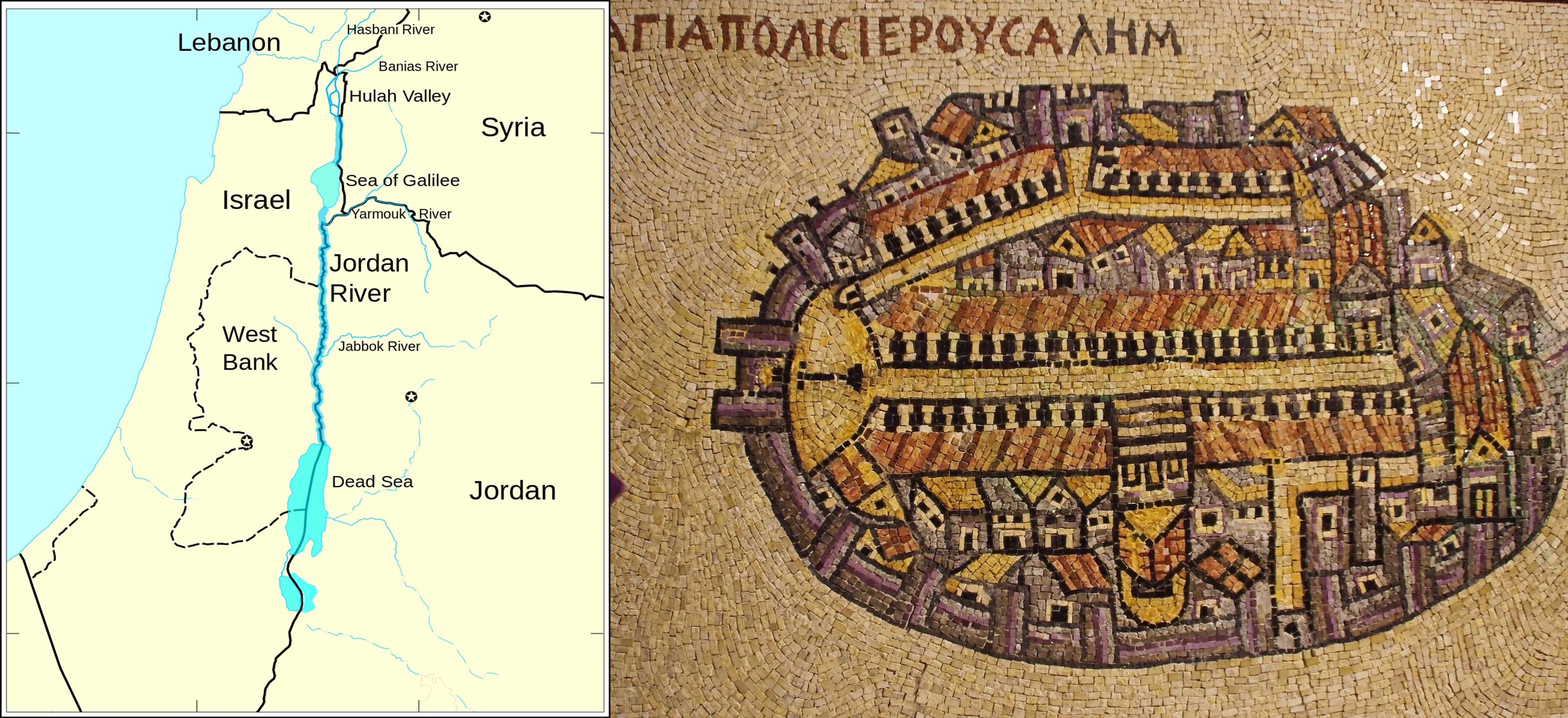
John had been ministering well south of Galilee, in a region many scholars think is now on the West Bank. These were desert regions not far from Jericho and Jerusalem. It is this area in which Jesus likely spent forty days preparing for His ministry.
Regions near Jerusalem were troublesome at that time; the arrest of John the Baptist simply confirmed this. John had been arrested for telling Herod that he had no business living in adultery with his brother’s wife. Soon enough, he would lose his life because of it. With John the Baptist under arrest, the Lord Jesus concluded that it would not be prudent to fill that gap. Instead, He headed to the area north and west of the Sea of Galilee, the regions named for the Jewish tribes of Zebulun and Naphtali.
It amounts to a tale of two cities (or regions), Jerusalem and Galilee.
Jerusalem represents a hardened heart. It was a place of great contention, of unyielding positions and spiritual pride. It was the religious and political center as well as a kind of university town. There were good people to be found there, but overall the region had a hostile and poisonous mix of political and religious factions, of stubbornness, dispute, violence, and scorn. Regarding Jerusalem, Jesus lamented, Nevertheless, I must keep going today and tomorrow and the next day, for it is not possible for a prophet to perish outside of Jerusalem. O Jerusalem, Jerusalem, who kills the prophets and stones those sent to her! How often I have longed to gather your children together as a hen gathers her chicks under her wings, but you were unwilling (Luke 13:33-34). Yes, Jerusalem was stubborn, contentious, hard-hearted, and prideful.
Galilee, though not free from sin or without stubborn tendencies (e.g., John 6:66, Luke 4:29), represents a softer heart, one open to teaching; less contentious, political, elitist, and stubborn. Surely some did contend with Jesus, but He felt the region was a better environment in which to plant the Gospel. Thus, Jesus went there to begin the work of gathering disciples. In the synoptic tradition, He went to Jerusalem to die, encountering increasing resistance the nearer He got. Galilee seemed a bit more open. Galileans were less cosmopolitan. They lived close to the earth and the rhythms of life. They were farmers, fishermen, shepherds, vine dressers, laborers, tradesmen, and shop owners. They had less time to debate the details of the Mosaic law and divide into contentious factions.
The people of Jerusalem often looked down on those from Galilee. Among other things, the Galileans spoke with what many in Jerusalem considered a “hick” accent. Peter was called out by a servant girl for having such an accent. This, along with the fact that Galileans were not well-educated in religious matters, led to a dismissive condescension by those living in the region of Jerusalem toward those from the north. The religious leaders in Jerusalem scoffed at Nicodemus’ suggestion that they actually investigate what Jesus was teaching before condemning Him. They replied, Are you from Galilee too? Search and see that no prophet arises from Galilee (Jn 7:52).
So here is a tale of cities: one is prideful, arrogant, unbending in its views, and unteachable; its soil is hard. The other is more open and teachable; its soil is better able to nurture the seed of the Gospel.
You may argue that this is too simplistic; symbols often are. If you do, though, then please propose your own explanation as to why Jesus did not go to the very heart of the Jewish religion and its religious and political capital, Jerusalem, instead withdrawing to Galilee to begin His ministry and gather His disciples.
But for us, let’s take and apply this image to ourselves and allow it speak to our times.
In the first place we must ask, which city best reflects my heart? Is my heart the rich and softer soil of Galilee or is it Jerusalem, hardened, unreasonably certain, and elitist?
Too many people are like Jerusalem. They are not docile or teachable; they have hardened their hearts against any teaching of God that does not agree with their ideas. Too many do not want to be told what to do or think. They are dismissive of biblical and Church teaching without ever having really taken the time to examine the reasons that such things are taught or even considering that they might be true. They simply reject them because such teachings do not fit in with their views or are not convenient to their preferred behavior. They likely have not likely read the catechism or consulted a priest, catechist, or apologist; they just reject the teaching because someone or something in the world scoffs at or disagrees with it. This behavior is “Jerusalem,” figuratively speaking. Such hearts are not fertile soil for the gospel; and if Jesus goes there, it more likely means death to Him and His word, than converted minds or hearts.
Fewer today are like Galilee, with its fertile, receptive soil; open to being taught and willing to accept the need for conversion.
So, the first question is, which city are you? If we are honest, we will likely see a little of both in us. In some ways we are easily taught, but in others we are stubbornly resistant. But overall, are you in a humble conversation with the Lord? Do you seek to better understand the teachings that challenge you and your views?
This tale of two cities also speaks to our times, which increasingly resemble the Jerusalem mentality: proud, hardened, factious, and highly political. Too often we collectively think that we have “come of age”, scoffing at previous eras as unenlightened, less intelligent, sexually immature, and repressed. We confuse technology with wisdom and conclude that because we can split the atom, have been to the moon, and carry incredibly advanced gadgets, that we can simply dismiss the collected wisdom of the ages. Ancient biblical and Church teaching, which has stood the test of time, is dismissed as irrelevant, even scoffed at as merely the teachings of “dead white men.”
The various “academies” of ancient Jewish law (the scribes, Pharisees, and Sadducees) scoffed at whatever was not theirs and scornfully rejected the Messiah from Galilee. Many today also reject the Lord from Galilee. He’s not one of them. He doesn’t belong to the right party or hold the right views. Therefore, He is dismissed, and if He continues to pester, He must be marginalized, discredited, and destroyed.
We are clearly living in times in which political lines have become very hardened. Many opponents barely speak to one another, instead seeking legally and even physically destructive ways to silence them.
Yes, welcome to Jerusalem. Ponder what an ancient and perhaps obscure text has to teach us about our hearts, our culture, and our nation. The Lord withdrew from Jerusalem as a prudential judgment that there were more fertile fields elsewhere. And when He rose, He told His brothers to meet Him in Galilee (e.g., Mat 28:10).
Where do you chose to live? What is the condition of your heart? What will your stance be?
In these early weeks of “ordinary” time, we are being introduced to Jesus and the beginnings of His public ministry. Matthew’s Gospel today describes how Jesus began His public ministry in the wake of the arrest of John the Baptist. Matthew tells us four things about Jesus’ ministry: its context, its content, its call, and its comprehensiveness. Let’s look at each in turn.
I. The CONTEXT – When Jesus heard that John had been arrested, he withdrew to Galilee. He left Nazareth and went to live in Capernaum by the sea, in the region of Zebulun and Naphtali, that what had been said through Isaiah the prophet might be fulfilled: Land of Zebulun and land of Naphtali, the way to the sea, beyond the Jordan, Galilee of the Gentiles, the people who sit in darkness have seen a great light, on those dwelling in a land overshadowed by death light has arisen.
The relocation of Jesus northward from Judea up to Galilee coveys some important truths. First, it tells us of the hostility of the southern regions to the message of John the Baptist and Jesus. The area in and around Judea (which included, principally, Jerusalem) was controlled by a sort of religious ruling class (the Sadducees, especially, and to a lesser extent, the Pharisees). Because they were in strong but often controversial control in these areas, they were far less open to ideas that in any way threatened their leadership or questioned the rituals related to the Temple.
As we know, Jesus did not come to abolish the Law; He came to fulfill it. This was threatening to those tied to the status quo, most of whom did not distinguish fulfillment from abolition. Further, the Herodian dynasty was also a danger, especially in the south, and had arrested John the Baptist.
And so Jesus moved north to more fertile territory in order to begin His public ministry; the Jewish people in Galilee were less hostile. In fact, the people of Jerusalem often looked down upon them for their simple, agrarian ways and their “rural accent.” But it was more fertile ground for Jesus to begin His work.
There is an important lesson in this: While we must carefully preserve Christian orthodoxy and only accept doctrinal development that is organic and faithful to the received Apostolic Tradition, we can sometimes inadvertently stifle the Holy Spirit, who speaks to us through unexpected people and in unexpected ways.
The Pharisee leaders simply rejected the notion that any prophet could come from Galilee. When Nicodemus encouraged them to give Jesus a hearing they scoffed, Are you from Galilee too? Search and see that no prophet arises from Galilee (Jn 7:52). Sometimes we can insist upon a single position in matters in which Christians are allowed freedom. For example, there are various degrees of expression permitted in the liturgy; there are also different schools of theological thought that are allowed by the Church.
Balance is required of us. We may prefer Thomistic formulations, Carmelite spirituality, charismatic worship, or the traditional Latin Mass. Such things are legitimate matters for discussion; we ought not to feel threatened by what the Church currently deems to be legitimate diversity. Discovering the range and limits of diversity is an ongoing matter for the Church; we should not permit the field of our own soul to be hostile to Jesus and His ministry, which may come to us in more diverse ways than we would prefer.
How tragic it was for Judea that Jesus thought He had to move on to more fertile territory, and what a blessing it was for Galilee that He moved there. Unfounded stubbornness can hinder the Word of God in us. Jesus moved on to a more accepting area where His ministry could bear the most fruit. St. Gregory the Great had this to say about the context for preaching and necessary fertility of the field:
For frequently the preacher’s tongue is bound fast on account of his own wickedness. as the psalmist says: But God asks the sinner: Why do you recite my commandments? (Ps 50:16) On the other hand it sometimes happens that because of the people’s sins the word of preaching is withdrawn from those who preside over the assembly as the Lord tells Ezekiel: I will make your tongue cleave to the roof of your mouth, so that you shall be dumb and unable to reprove them, for they are a rebellious house (Ez 3:26). He clearly means this: the word of preaching will be taken away for they are unworthy to hear the exhortation of truth. It is not easy to know for whose sinfulness the preacher’s word is withheld, but it is indisputable that the shepherd’s silence while often injurious to himself will always harm his flock (St. Gregory the Great Homily 17,3, 14).
For Galilee there was this boon: The people who walked in darkness have seen a great light; those who dwelt in a land of deep darkness, on them has light shined Is 9:2). But for others, Jesus had only this to say, Therefore I tell you that the kingdom of God will be taken away from you and given to a people who will produce its fruit (Matt 21:43).
II. The CONTENT –From that time on, Jesus began to preach and say, “Repent, for the kingdom of heaven is at hand.”
We have discussed before the careful balance of Jesus’ preaching. He is willing to challenge and so to say, “Repent.” But He also declares the good news that the Kingdom of Heaven is at hand. Accepting the ministry of Jesus requires that we avoid the two extremes of presumption and despair.
To those who make light of sin and their condition as sinners, Jesus says, “Repent.” It is wrong to presume that we do not need continual healing power from the Lord in order to overcome our sin. Perhaps our greatest sin is our blindness to it. Most do not seem to comprehend how serious their condition is. The word translated here as “repent” is μετανοεῖτε (metanoeite), which means more literally “to come to a new mind,” or “to come to a new way of thinking.” In our sin-soaked world, a world in which sin is so pervasive as to almost go unnoticed, Jesus says, “Come to a new mind. Understand your condition and your need for mercy and grace. Come to understand that without the rescue that only God can provide, you are lost.” And hence we are told to reject presumption.
But we are also told to reject despair, for the Kingdom of God is at hand. In other words, the grace and mercy of God are available to rescue us from this present evil age and from our carnal condition. Through Christ we are granted admittance to the Kingdom. The Spirit of God can overcome our carnal, sinful nature and bring us to true holiness.
The proper balance between presumption and despair is the theological virtue of hope. By hope we confidently expect God’s help in attaining eternal life. By proper metanoia (repentance) we know that we need that help; by hope we confidently reach for it.
In our own proclamation of the Kingdom we also need the proper balance exhibited by Jesus. Consider that if children hear nothing but criticism they become discouraged (they despair), but if all they hear is praise they become spoiled and prideful, presuming that everything should be just as they want it.
For the Church, too, balance is necessary. Many people expect the Church only to affirm and “be positive.” This leads to a selfish and incorrigible world and to the presumption that nothing matters (as we can plainly see today). Thus the Church must announce the call to repentance, but must also offer hope and mercy to sinners. She must offer grace though the Sacraments and her preaching, which, with God’s power, makes the Kingdom of God to be “at hand.”
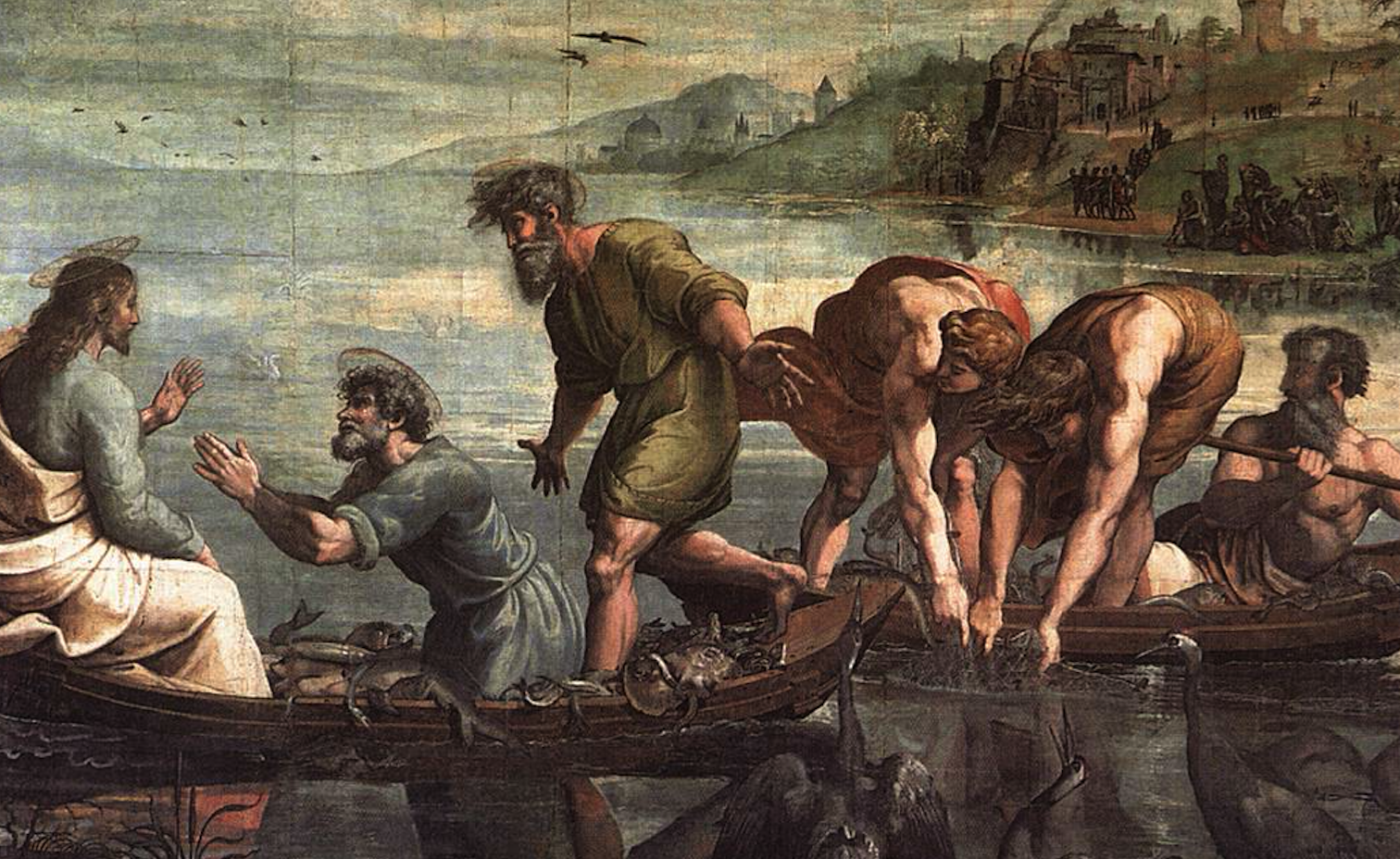
III. The CALL – As he was walking by the Sea of Galilee, he saw two brothers, Simon who is called Peter, and his brother Andrew, casting a net into the sea; they were fishermen. He said to them, “Come after me, and I will make you fishers of men.” At once they left their nets and followed him. He walked along from there and saw two other brothers, James, the son of Zebedee, and his brother John. They were in a boat, with their father Zebedee, mending their nets. He called them, and immediately they left their boat and their father and followed him.
In building His Kingdom, Jesus summons men to follow Him. He will train them to be the leaders of His Church as Apostles. The Kingdom of God is not just concerned with calling disciples, but also with developing leaders to provide order and authority in the Church.
Even the most “democratic” of organizations requires authority and leadership. Without these there is anarchy and a battle of wills. Hence, in the early stages of His public ministry, the Lord calls disciples and also grooms leaders. Consider three things about the Lord’s call.
A. His ARTICULATENESS – He says to these apostles, Come, Follow me. His announcement is unambiguous. Good leaders make clear what they ask, indeed, what they demand. Jesus is clear to set the course and point the way; He is that way.
B. His APPEAL – Jesus must have had tremendous personal appeal and exuded a strong, reassuring authority. His appeal to them was personal: “Come, follow Me.” He did not merely say come and “learn my doctrine,” or “accept my vision.” He said, “Follow Me.” So, as we hand on the faith to our children and others, we cannot simply say, “Here is the Catechism; follow it.” Each of us must also take the next step and tell them to follow the Lord with me. We cannot simply parrot what a book says, correct though that book might be. Ultimately we must be able to say, “I am a personal witness to the fact that God is real and that the truth He has given to the Church is authentic and is changing my life.” Our appeal must include the personal testimony that what we proclaim is real and is changing our life: “Come, and go with me to my Father’s house.”
C. His APPROACH– Note that the Lord builds on something they know: fishing. He starts with the familiar in order to draw them to the less familiar. In a way, He is saying that the gifts they are currently using are just the ones they need to use as leaders in God’s Kingdom. Fishermen are
Patient – They often wait long hours for the fish to bite. Apostles and bishops must also be patient and have the ability to wait for long periods before there is a catch for the Lord.
Perceptive – They learn to know the fish, their behavior, and what attracts them. Apostles and clergy must learn about their people and what will attract them to Christ.
Persevering – They must go through many days in which they catch very little; only through perseverance is there real gain in fishing. So it is with the work of the clergy, who may go long stretches with little to show for it. The Gospel may go “out of season,” even for decades in certain cultures (like our own). The good leader will persevere, will stay at the task.
IV. The COMPREHENSIVENESS – He went around all of Galilee, teaching in their synagogues, proclaiming the gospel of the kingdom, and curing every disease and illness among the people.
Note that all of Galilee was His mission field and He covered it comprehensively. He also cured people of every disease and illness. And thus the Church is catholic, and must address every part of the world, providing a comprehensive vision for life. We may not have the power to solve every problem, but we can provide the vision of the Paschal mystery, which sheds light and brings spiritual healing to every affliction. If we are suffering and dying, we must remember that Jesus did as well, but only to rise and be glorified on account of his fidelity and obedience.
For the Church and for the Christian, the comprehensive answer to every affliction is that we are always carrying about in our bodies the dying of Christ so that the rising of Christ may also be manifest in us (2 Cor 4:10). We seek to bring healing to everyone we can, and where physical remedies are not possible, the truth of the Gospel reassures us that every Friday, faithfully endured, brings forth an Easter Sunday.
Here, then, are four crucial insights from the beginning of Jesus’ public ministry. They are important for us to acknowledge and to imitate.
Journey with me back to 1971 (a year of funny hair, to be sure) and listen to this old classic: “Come and Go with Me to My Father’s House.”
I miss the snow this year. All the cold air is staying out West and Washington DC is just wet a dreary most days. Maybe February will bring a pattern change. For now, I miss the cold and snow.
Call me crazy if you wish. I know that not everyone likes snow but it is an amazing work of God. He takes a barren winter landscape and creates it anew. I can almost hear the Lord saying, “Behold, I make all things new!”
In the modern world we often walk past the glory of God hardly noticing the gifts that He provides every day. Tonight and tomorrow I don’t want to miss God’s gifts. It is true that these gifts come along with weather-related hardships, but maybe—just maybe—God can get a few of us here on the East Coast to stop for just a minute, rest a while, and behold His glory.
Getting “snowed in” provides a wonderful chance to become reacquainted with our family and even with our very selves. Just looking out the window and marveling at the snow as it falls with hypnotic and calming steadiness can be a prayer, if we think of God who sends it. Wherever you are, don’t walk through life and miss the glory of God!
In the Book of Sirach there is a beautiful and poetic description of God and the majestic work He creates even in the “dead” of winter. Enjoy this excerpt from Sirach and reflect spiritually on the glory of God in winter.
A word from God drives on the north wind.
He scatters frost like so much salt;
It shines like blossoms on the thornbush.
Cold northern blasts he sends that turn the ponds to lumps of ice.
He freezes over every body of water,
And clothes each pool with a coat of mail.
He sprinkles the snow like fluttering birds.
Its shining whiteness blinds the eyes,
The mind is baffled by its steady fall.
(Sirach 43, selected verses)
Enjoy this video, which reminds many of us of the joy and wonder of a snowfall like some of the ones we experienced when we were young.
These are tense times both in the Church and in America. Proper critique of those in authority is essential in order that they understand how their decisions affect those they are supposed to serve. It is also necessary for accountability; authority figures must be accountable to those whom they serve; they will surely have to account to God one day.
Too often today, critique devolves into personal attacks, wrath, and even hate. This is especially evident in America today, particularly when it comes to the upcoming presidential inauguration. The recent contentious campaigns were the ugliest we’ve seen in a long time. There’s plenty of blame to go around for this: both major parties and their followers, the news media, and social media, just to name a few.
As of noon on January 20th, 2017 a new president is in office. Some have been saying, “He’s not my president,” but this is fantasy. He will be our President whether we like it or not. And God’s word instructs—even commands—us to pray for him and all other leaders, both in the Church and in the government. St. Paul wrote,
First of all, then, I urge that supplications, prayers, intercessions, and thanksgivings be made for all people, for kings and all who are in high positions, that we may lead a peaceful and quiet life, godly and dignified in every way. This is good, and it is pleasing in the sight of God our Savior, who desires all people to be saved and to come to the knowledge of the truth (1 Timothy 2:1-4).
This is enjoined on us whether or we like the leader or not, whether we agree with him or not. At the time St. Paul wrote this, Nero was the Roman emperor—hardly a pleasant fellow and likely deranged. All the more reason to pray for him!
Some of President Trump’s stated policies align with Catholic teachings and others do not. We are going to have to deal with him as we have with every President: work with him when we can and oppose his policies when they do not conform to our teaching.
But above all, we must pray for him. Given the ugliness of current discourse and the tendency toward personal attack, we as Christians have to distinguish ourselves by speaking respectfully and turning frequently to prayer.
It is easy to disparage our political opponents, but have we prayed for their conversion if necessary? Have we prayed that God will grant them wisdom and infuse special graces upon them?
Perhaps in the current climate this is the voice of one crying in the wilderness. But be very careful, fellow Christians, constructive criticism and vigorous advocacy is good, but it is not appropriate for us to engage in vengeful, gleeful, or destructive discourse.
I do not intend to be sanctimonious. I, too, struggle in the current climate. But let us all remember to pray first, then act, and finally speak.
There are many questions related to the problem of suffering and of evil: Why does God permit evil? Why does He not intervene? Why does He delay? Is God really good if He permits such things? Is He really omnipotent?
I have covered some of them in the past (e.g., HERE and HERE).
The answers we can propose address some but not all aspects of the problem of evil. Suffering and evil are not meaningless, as the cross of our Lord shows, but we must humbly and reverently acknowledge that there will remain mysterious aspects.
One of our chief problems is that we often rush to call something “bad,” “unfortunate,” or “evil,” without recognizing that there are some aspects of it that bring blessings. For example, one cause of suffering and tragedy in our world is the fiery center of our planet. We live on a thin crust of cooled rock that floats on top of a cauldron of melted rock or magma; this causes suffering but also brings blessings. Volcanoes, earthquakes, and occasional climatic shifts are among the effects of living above a molten sea; they can bring suffering and loss of life. And yet without these realities life would not be possible here. Volcanic explosions produce important gases for our atmosphere, essential for life. They also produce valuable nutrients to the surrounding soil. Even more, the movement of the molten mantle beneath us is essential in developing the magnetic field that surrounds Earth and helps to deflect the harmful effects of solar winds.
So the burden of volcanic activity also brings blessings. Fearful as eruptions and earthquakes can be, we probably wouldn’t be here without them. One might still ask, “Could not God have come up with a less deadly way of dispensing blessings?” Arguably He did: in offering us the paradise of Eden, where we would be protected. But as we know, Adam and Eve sought a “better deal.” Ever since, we’ve been living in a “Paradise Lost.”
In this “Paradise Lost,” we must learn to look for blessings in strange packages; we should not assume that things or events that cause suffering are wholly lacking in value or bereft of any good at all. God may close one door as a way to open others. He permits affliction in order to bestow other blessings. We do well to avoid hasty conclusions when pondering the problem of evil.
This leads me to a memorable story from the tradition of the Eastern Desert Fathers. I am indebted to Bishop Robert Barron for reminding me of the story via his book, Vibrant Paradoxes (p. 233). I recount the story here in slightly greater detail than did the good Bishop, but I would recommend you read his thoughtful commentary. The story teaches on the often ambiguous qualities of events and problems:
There was a man who was a farmer, and one day the wind blew the gate of his field open and his valued and only horse escaped, and was not to be found. His friends came to commiserate with him at this loss, but he only said to them, “We’ll see.”
Several days later, the horse returned with a wild stallion and a mare. And his friends came to rejoice with him in his good fortune, but he only said to them, “We’ll see.”
Several days later, his son was breaking in the new horses and was cast from the back of the wild stallion and suffered a broken arm and leg. And the farmer’s friends came and commiserated with him at the injuries of his son, but he only said to them, “We’ll see.”
Several days later, troops of the emperor came to the area to draft and compel the young men of the village in the army. But the farmer’s son was exempted due to his injuries. And the farmer’s friends came to rejoice with him that his son was not taken away, but he only said to them, “We’ll see.”
Yes, in so many events of life we lack the comprehensive view to sit in judgment on their full meaning. Blessings are not always as they seem; neither are burdens. Sometimes the best we can do is to say, “We’ll see.”

 As we prepare for the March for Life this Friday, I am led to ponder some of the subtler psychological roots of abortion. Beyond the legal problems and the moral issues such as unrestrained lust, greed, and selfishness, there are several other trends in our culture that should be recognized. They all tend to feed upon one another.