A Homily for the Feast of the Holy Family

Here in the middle of the Christmas Octave, the Church bids us to celebrate the feast of the Holy Family. On the old calendar, the feast of the Holy Family falls on the Sunday after Epiphany, which makes some sense. It is a bit odd to read, a mere five days after celebrating Jesus’ birth, a Gospel in which He is 12 years old. And then, next week, we have the Feast of Epiphany in which Jesus is an infant again.

Nevertheless, here we are. Perhaps, it is a good time to reflect on family life, as immediate and extended family often gather together during the Christmas season. Let us consider the family and marriage along three lines: structure, struggles, and strategy.

I. Structure All through the readings for today’s Mass we are instructed on the basic form, the basic structure of the family.

  • God sets a father in honor over his children; a mother’s authority he confirms over her sons (Sirach 3:2).
  • May your wife be like a fruitful vine, in the recesses of your home; your children like olive plants, around your table (Psalm 128:3).
  • Wives, be subordinate to your husbands, as is proper in the Lord. Husbands, love your wives, and avoid any bitterness toward them. Children, obey your parents in everything, for this is pleasing to the Lord. Fathers, do not provoke your children, so that they may not become discouraged (Colossians 3:20–21).
  • Each year, Jesus parents went to Jerusalem for the feast of Passover … Your father and I have been looking for you with great anxiety … (Luke 2:45, 51).
  • And he was obedient to them … And Jesus advanced in age and wisdom and favor before God and man (Luke 2:51–52).

In these passages we see the basic structure of the family:

  • A father in honor over his children
  • A wife and mother who is supportive of her husband and his authority
  • A husband who supports, loves, and encourages his wife
  • A mother in authority over her children
  • Children who honor and obey their parents
  • Fathers, and by extension mothers, who instruct and admonish their children, not in a way that badgers or discourages them, but rather encourages them and builds them up
  • A family structure that helps children to advance in wisdom and age and in favor before God and man
  • A father, a mother, and children, all reverential and supportive of one another in their various roles and duties

Here, then, is God’s basic teaching on family and marriage. Here is the basic structure for the family as God sets it forth: a man who loves his wife and a woman who loves her husband. Within this stable, lasting, and faithful union of mutual support and love, they conceive and raise their children in the holy fear of the Lord.

Add to this the principal description of the book of Genesis, which describes how God sets forth marriage: A man shall leave his father and mother, cling to his wife, and the two of them shall become one flesh (Genesis 2:24). To this first couple, God gave the mandate, Be fruitful and multiply (Genesis 1:22).

Thus, we have set forth biblically the basic structure of the family: a father, a mother, and children, all reverential and supportive of one another in their various roles and duties.

Note how the structure of the family take its basic form in terms of its essential fruit: procreation and rearing of children. Why should marriage be a stable and lasting union? Why is Adam told to cling to his wife and to form a stable and lasting union with her?

Because this is what is best and most just for children! Children both need and deserve the stable and lasting union of a father and a mother, the complementary influences of the two sexes. This is the best environment in which to raise and form children. Hence, the family structure of a father and a mother, a male and female parent, flows from what is best and most just for children. The structure of the family, as set forth by God, is rooted in what is best and most just for children. It is what is sensible and what is best, sociologically and psychologically, for the proper development of children.

Even without looking in the Bible, one can see how sensible it is for a child to have the influence and teaching of both a father and a mother, a male and a female. There are things that a father can teach and model for his children that a mother is not as well-suited to impart; conversely, a mother can teach and model for her children things that only she knows best.

This much is clear: both male and female influences are essential for the proper psychological and sociological development of children. Clearly, then, God’s biblical mandate that marriage should consist of a father and a mother is not without basis in simple human reason and common sense.

To intentionally deprive a child of this environment is both unwise and unjust to children. Hence, we see that the basic structure for marriage takes its shape from what is best and most just for children. Both God and nature provide for a father and a mother, a male and a female, to conceive and raise a child.

It also makes sense based on simple human reasoning that the marital relationship should be stable, something that children can depend on from day to day, month to month, and year to year.

Here, then, is the proper structure for marriage. It is set forth both by God and supported by human reason.

II. Struggles – Yet what should be obvious seems to be strangely absent from the minds of many. Sin clouds our judgment and makes some think that what is sinful and improper is in fact acceptable or even good. It is not. In our current modern culture, we gravely sin against God and against our children through consistent misconduct and by refusing to accept what is obviously true. The words of St. Paul are fulfilled in our modern times: their senseless minds were darkened, and they became vain and foolish in their reasoning (Rom 1:21).

It is clear that the family is in crisis today, and it is also clear that it is children who suffer the most. The modern Western world displays a mentality that is both deeply flawed and gravely harmful to children.

Marriage and family are in crisis due the willfully sinful habits of many adults in the areas of sexuality, marriage, and family life. This includes sins such as cohabitation, fornication, abortion, adultery, homosexual acts, pornography, the sexualization of children, and the sexual abuse of children. Add to this the widespread acceptance of contraception, which has facilitated the illusion of sex without consequences and promoted the lie that there is no necessary connection between children and sexual relations. The rebellion of adults against the plan and order of God has caused endless grief and hardship and created a culture that is poisonous to the family, the dignity of the individual, and the proper raising and blessing of children.

III. Strategy What are we to do? Preach the Word! Whatever the sins of this present generation (and there are many), we must be prepared to unambiguously re-propose the wisdom of God’s Word to our children, grandchildren, and great-grandchildren.  Even if we have fallen short personally, we cannot hesitate to announce God’s plan for sexuality, marriage, and family.

Our strategic proclamation must include these key elements:

  • There must be no sex before marriage, ever, under any circumstances. Sexual intercourse is rooted in the procreation of children and there is no legitimate engagement in it outside of the bonds of marriage. There are no exceptions to this.
  • Children deserve and have the right to expect two parents, a father and mother, committed to each other until death do them part. Anything short of this is a grave injustice to children and a mortal sin before God.
  • Neither homosexual unions, nor single parent households are an acceptable alternative to biblical marriage. To allow children to be subjected to such environments for the sake of political correctness does them a grave injustice.
  • Marriage is about what is best for children, not adults.
  • Married couples must learn to work out their differences (as was done in the past) and not resort to divorce, which offends God (cf Malachi 2:16).
  • The needs of children far outweigh the preferences, “rights,” and needs of adults.

Whatever the personal failings of any of us in this present evil age (cf Gal 1:4), our strategy must be to preach the undiluted plan of God for sexuality, marriage, and family to our children, grandchildren, and great-grandchildren.

 Back to the Bible! Back to the plan of God! Away with modern experiments and unbiblical schemes! God has given us a plan. Thinking that we know better, we have caused great sorrow and hardship for our descendants. We have acted unjustly; we have murdered our children through abortion. Sowing in the wind, we have caused those who have survived our misbehavior to inherit the whirlwind. It is time to repent and help our heirs to rejoice in chastity, marriage, and biblical family. Otherwise, we are doomed.

God has a plan and it must be our strategy, our way out of our struggles and back to His structure for our families.

On Time Warps and Missing Feasts – A Critique of the Puzzling Cycle of Christmas Feast

123013I must admit that I have a few concerns about the Christmas Liturgical Calendar and I am interested in your thoughts on the matter.

1. In the First place I think that having the Feast of the Holy Family inside the Octave is a mistake. This is due, not to the feast per se, but especially to the Gospel readings that are selected for the Feast.

In cycle A we read of the flight to Egypt, an event that takes place after the Epiphany which we have yet yet to  celebrate! In effect, we jump forward in time either weeks, or even two years, (depending on when we reckon Epiphany to have taken place historically, (for some scholars think the Epiphany may have take place up to two years after the birth, which I personally doubt)). After having jumped forward in time and place (Egypt), we then go back in time and place, (Bethlehem), to celebrate Epiphany on January 6th or the nearest Sunday.

If this were not bad enough Cycle B takes us forty days forward in time for the Feast of the Presentation (also called the Purification). This too is a jump forward in time for the Rite of Purification was to take place forty days after birth by Jewish law and custom. That is why we celebrate the Feast of the Presentation on February 2nd.

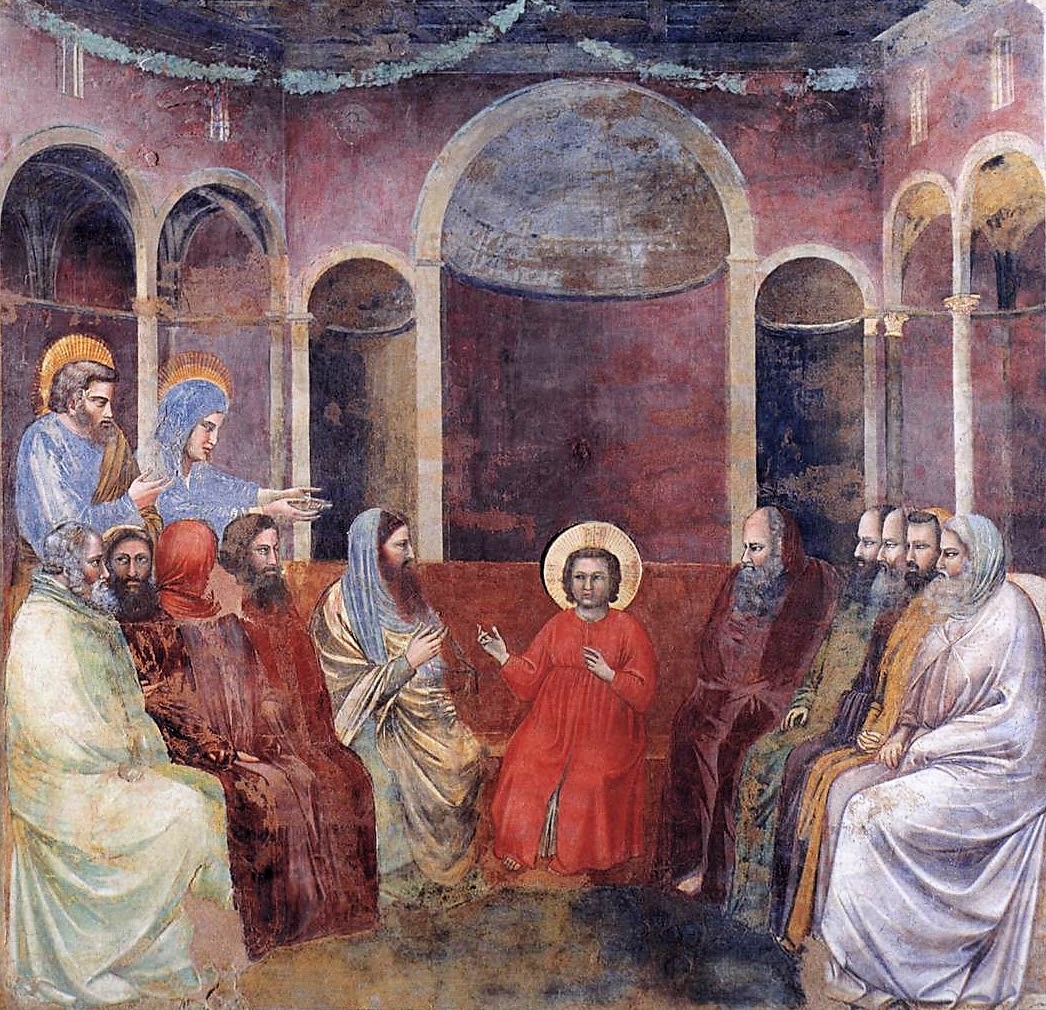
Even worse, Cycle C takes us 12 years into the future as we read of the finding of Jesus in the Temple. Then suddenly we are back to the infant Jesus for the feast of Epiphany.

All this temporal displacement could be avoided if we returned the Feast of the Holy Family back to the Sunday after Epiphany where it was prior to 1970. Indeed the Traditional Latin Mass still has the feast located there and uses the Gospel of the Finding of Jesus in the Temple. As such it provides a nice bridge from the infant Jesus we had at Epiphany to the Adult Jesus we have and the Baptism of the Lord and the Sundays following. It also avoids the temporal whiplash which the calendar and Christmas cycle causes by celebrating the Feast of the Holy Family on the Sunday inside the Christmas Octave.

2. A second concern I have is the loss of the Feast of the Circumcision and the giving of the Lord’s Name. As you likely know, Jewish boys were circumcised on the 8th Day, and their name was announced. Until 1960 we celebrated the octave day of Christmas as the Feast of the Circumcision of the Lord. More than the Circumcision we also celebrated the giving of Jesus’ name. However in 1960 Pope John XXIII renamed January 1st as simply, “the Octave Day of Christmas,” though the Gospel of the Circumcision continued to be read. In 1970, the Feast came to be designated as the Solemnity of Mary, Mother of God.

However! – Now in this matter, my preference for the Feast of the Circumcision is rooted in my preference for a proper chronology that follows the Biblical Data as close as possible. But to be fair, the designation of the Octave Day as “Mary Mother of God” has some very strong arguments for it, I must say.

Evidence for the celebration of this feast goes back in the Roman Church all the way to the 7th Century. Prior to that, there is evidence of this feast being celebrated in other parts of Europe, but usually on the Fourth Sunday of Advent. By the 13th and 14th Centuries, however, the Feast of the Circumcision of the Lord came to replace this feast, and the Feast of Mary Mother of God was eventually moved to October 11th and renamed the feast of the “Maternity of the Blessed Virgin Mary.” Just after Vatican II The more ancient feast of Mary Mother of God was restored to January 1st. So, in the first place we see that the Feast of Mary Mother of God on January 1st is the more ancient practice and this is a strong argument in its favor.

The feast also commemorates a very central dogma, most appropriate for the Christmas season: that since Christ is one person with two natures (human and Divine), then Mary is rightly called the Mother of God. Mary is Mother of God because Jesus is God. Some had wanted to argue that she only gave birth to his human nature and, hence, is only mother of what is human in him. But Jesus is ONE PERSON with two natures. This is something called in theology the “hypostatic union” and it is an essential teaching on Christ. He unites, in one person, the human nature and the divine nature. There are not two “Jesuses.” Neither is it true that his Divine nature came upon him at a later time such as his baptism. No, his two natures were united in his one person from the moment of of his human conception. And since Jesus is one, Mary gives birth, and is mother to the whole Christ. Mary is Mother of God because Jesus is God and Jesus is one. This title was given to Mary at the Council of Ephesus in 431 in defense of Christ’s divinity. The Greek form of this title is Θεοτόκος (Theotokos) translated more literally as “God Bearer.”

Still! – I love the Blessed Mother, and surely affirm her under this proper title. But I regret the loss of the Feast of the Circumcision. As stated, I generally prefer to stick as close to the Biblical narrative as possible. In this case Scripture is clear, on the eighth day (i.e. January 1st for us), Jesus was circumcised and his name given. Three important truths and events are celebrated here. First that Jesus was born under the law and submitted himself to it so that he might fulfill it. Secondly there is the first shedding of blood, and this refers to the passion. Thirdly his name is announced: Jesus, a name which means “God saves.” There is no other name given to men by which we are to be saved, there is no other blood that can atone for our sins than the blood of Jesus and there is no one who can fulfill the Law as Jesus does. It seems a bit of a loss not to explicitly celebrate these truths about Jesus on the very day (the eighth day) they happened.

3. A third concern is the moving of Epiphany in many parts of the world to the nearest Sunday. This troubles me greatly. Epiphany is a very important feast of the Church and completes the the 12th day of the Christmas feast. January 6th is the proper day for this feast going back to the 4th Century. Now many argue that the Feast is important and that is why it should be moved to the nearest Sunday so that many more will experience it. However, it is a fact that this inevitably shortens the Christmas Cycle. The liturgical calendar sets forth sacred time, and it seems a very bad idea to allow the demands of the secular world for convenience to intrude on sacred time. Christmas is OUR time and OUR feast. It seems as though the tail is wagging the dog here. Too many Catholics allow the world to influence how they celebrate Christmas. Christmas does not end December 26th or January 2nd. It ends January 6th. Better that we should catechize our faithful as to the importance of this feast and even set it as a holy day of obligation than to move it. It is true that fewer will experience the feast, even if we oblige it, but at least the Church will speak more clearly to full mystery of the Christmas feast rather than rush its completion and cave to worldly schedules. IMHO.

4. Lastly, the Christmas Octave is quite “interrupted” by feasts that are often extraneous to it: St. John Apostle, St. Stephen, St. Thomas Becket. Here too the feast of St. Stephen on December 26 is quite ancient, probably predated the celebration of Christmas liturgically. St. John’s Feast is also quite ancient. Less, so St. Thomas Becket, though his feast may predate the declaration of Christmas as an “octave.” Thus, there may be little we can do about these feasts due to their ancient origins in the late December calendar. Even the Feast of the Holy Innocents (Dec 28), while part of the Christmas story, is celebrated out of proper temporal order and belongs somewhere after Epiphany if we were to try and restore some order to the temporal whiplash of the Christmas cycle.  At any rate, the upshot of the Christmas Octave is that it is Chaotic and temporally unsettling.

You may wish to dispute these regrets of mine and I hope you will use the comments section to advance your points. Obviously, greater minds in the Church than I have decided on these matters and do not agree with yours truly.

I suppose though, if I had it my way, here is what I would do:

  1. Celebrate the Feast of Mary Mother of God on the Sunday Between Christmas and January 1st (where we celebrate Holy Family now).
  2. Move the Feast of the Holy Family to the Sunday after Epiphany (where it used to be before 1970). This Feast seems better celebrated after Epiphany as a kind of bridge: Jesus at 12 years of age links the infant Christ and the adult Christ as we return to Ordinary time.
  3. Restore the Feast of the Circumcision to January 1st.
  4. Return Epiphany to January 6th where this is not currently the case.
  5. Holy Innocents could be celebrated sometime after the Feast of the Presentation or at least after Epiphany, but before Holy Family.

But nobody is asking me from Rome what I think! 🙂 So enjoy my “rant” for what it is: , just a slight case of temporal whiplash, grief for a feast that is missing in action and a wish to tweak the Christmas calendar so it flows a little better.

Enjoy The Ave Maria by Rachmaninoff.

And for those of you who prefer a more modern Christmas, here is a virtual and iPad Christmas:

North Point’s iBand from North Point Web on Vimeo.

A Meditation on the Bloody Octave of Christmas

Many are shocked to walk into daily Mass on December 26 and instead of hearing more of the “Baby Jesus” we are confronted with Martyrdom, “The Feast of Stephen” is ancient on the Church’s calendar. More ancient than the Christmas cycle and hence it was not removed to another time.

Bu the martyrdom does not stop there. We are in the midst of the Christmas Octave, an Octave filled with blood as we shall see.

What is an Octave? But first, there may be some of you who wonder what is meant by and “Octave.” An Octave is a period of eight days wherein a feast of the Church is celebrated for that whole period as though it were all the same day. In the modern liturgical calendar we only observe two octaves explicitly: Christmas and Easter.

During the week following Christmas many of the prayers speak of each day as though it were still Christmas. For example some of the prayers and antiphons say, “Today is born our savior, Christ the Lord.” A purist might say, but it is NOT today that he is born, it was back on Saturday the 25th that he was born. But, in certain sense this IS still Christmas day. Christmas Day is one long day of eight days from Saturday the 25th to Saturday January 1st.

It is the same with Easter where for one whole week we announce: “This is the day the Lord has made…”

Why eight days? Some say it is a reference to the eighth day on which Christ rose. I know, you thought it was the third day. But it was also the eighth day! For God made the world in seven days, resting on the seventh (Sabbath or Saturday). But Christ rose on the 8th day (Sunday). So resurrection morning is both the third day AND the eighth day! Others say the practice of the octave goes to Jewish times where some of the feasts (e.g. Dedication and Tabernacles (Booths)) were celebrated over 8 days.

In the old calendar there were more Octaves such as: Epiphany, Pentecost, All Saints, Immaculate Conception, Ascension Sacred Heart and others). Not all of these were privileged Octaves in which no other feasts could be celebrated. Easter and Pentecost were really the only two that blocked out all other feasts entirely. Others, like the Christmas Octave, allowed the celebration of other feasts but still referred to the feast of the octave as well.

So here we are in the Christmas Octave and, in a strong sense it is thus still Christmas Day. TODAY is born our savior Christ the Lord. This feast is so important that we stretch its observance a completed week and into the eighth day.

Bloody Octave – But one of the striking things about the Christmas octave is its bloodiness. It is one of the bloodiest weeks of the Church’s years. Thus, on December 26th, when we have hardly digested our Christmas dinner, we celebrate the Feast of St. Stephen, the Martyr who was stoned to death. On December 28th we celebrate the Feast of the Holy Innocents, the young and infant boys who were murdered by Herod seeking to kill Christ. On December 29th we celebrate the feast of St. Thomas Becket who was murdered in Canterbury Cathedral. Even St. (King) Wenceslaus of whom we happily sing “on the Feast of Stephen” was brutally killed by his brother.

Why all this blood, why this martyrdom? It is almost as though the red poinsettias that we put out in festive Christmas spirit look back to us in testimony. For it is clear that Jesus came to this world, ultimately to die. His crib (likely of wood) in which he was laid, arms and feet bound by swaddling clothes, points inevitably to the wood of his cross where, once again, his arms and legs were bound by nails and, after dying, he was wrapped tightly in a linen shroud.

The blood of the Christmas octave also reminds us that many of us too will share in Christ’s lot. This world hated Christ and had “no room for him.” Neither does this world have room for true Christians and the blood of martyrs stretches down through the centuries in testimony to the world’s hatred for authentic disciples of Christ and the truth they propose.

From this bloody octave the words of Christ ring out: If you belonged to the world, it would love you as its own. As it is, you do not belong to the world, but I have chosen you out of the world. That is why the world hates you (Jn 15:19). The martyrs of the Christmas Octave say, Amen.

And even St. John the Apostle, whose feast also occurs in the Octave (Dec 27), also says Amen. For, though he did not suffer martyrdom he proclaimed his Amen also from his prison cell on Patmos: I, John, your brother and companion in the suffering and kingdom and patient endurance that are ours in Jesus, was on the island of Patmos because of the word of God and the testimony of Jesus (Rev 1:9).

Victory – But all these martyrs and sufferers (St. Stephen, St. John, the Holy Innocents, St. Thomas Becket, and St Wenceslaus) proclaim too the victory that is theirs with Jesus Christ who also said, In the world ye shall have tribulation: but be of good cheer; I have overcome the world (Jn 16:33). And again, Do not be afraid of what you are about to suffer. I tell you, the devil will put some of you in prison to test you, and you will suffer persecution for ten days. Be faithful, even to the point of death, and I will give you life as your victor’s crown. (Rev 2:10) Yes, Lord, the Spirit and the Bride say, Amen.

Did I wish you a merry Christmas?

The fourth verse of this carol says, 

Myrrh is mine; its bitter perfume
    Breathes a life of gathering gloom;—
               Sorrowing, sighing,
               Bleeding, dying,
    Sealed in the stone-cold tomb.

The Humility of Christmas

The Christmas Gospel from Luke provides us with many teachings. One thing that surely stands out, however, is the theme of humility. Throughout the account, God confounds our prideful expectations and insists on being found in the lowest of places.

The newborn Christ is not found where we expect Him to be nor does His birth conform to any script we would design. Right from the start, He gives us many lessons in humility and begins His saving work of healing our wound of pride. Let’s look at these lessons, each in turn in.

The first lesson in humility is our surprise, and even indignation, at the events surrounding Jesus’ birth. The text from St Luke says,

In those days, a decree went out from Caesar Augustus that the whole world should be enrolled….So, all went to be enrolled, each to his own town. And Joseph too went up from Galilee from the town of Nazareth to Judea, …Bethlehem, because he was of the house and family of David, to be enrolled with Mary, his betrothed, who was with child.

For many of us, this offends our sense of what should justly happen. Jesus, who is Lord and Savior, should be born in comfort; Mary should be surrounded by loving family and in the care of midwives. Why does God permit this emperor to interfere with the Birth of his Son. Why does he not intervene to prevent the kind of hardship and inconvenience that Joseph and Mary will endure? Imagine having to walk nearly eighty miles when Mary is nine months pregnant! Could not God have arranged something better for the Holy Family? Our indignation at this inconvenience and hardship are likely rooted in our prideful notion that we know what is best in terms of where and in what conditions the Lord should be born.

However, God’s way are not our ways. He is neither surprised nor stymied by the emperor’s decree. All this fits into His plan to get Jesus, Mary, Joseph, and all of us to the place of blessing in Bethlehem. Whatever evil the emperor intends, God intends it for good (see Genesis 50:20). The Messiah, it was prophesied, would be called a Nazarene (Matt 2:23), be born in Bethlehem (Micah 5:2), and die in Jerusalem (Lk 13:33). God is setting things in place for the blessing. See already the humility of the Lord who is willing to be inconvenienced for our sake.

The second lesson in humility is: Your life is not just about you. You and I are part of something far larger. Consider that there is a “cast of thousands” that will lead Mary, Joseph, and Jesus to be in Bethlehem, as was prophesied. The distant Caesar Augustus sends out a decree affecting millions. He wants a census taken in order to update his tax rolls. He also likely wants to measure his power. Soon enough, dozens of governors deploy thousands of troops to enforce the edict. Even in the small town of Nazareth, a town of barely 300 people, Roman troops enforced the decree. So, even the birth of the Messiah is caught up in the bigger picture of the world’s events and people by God’s own design. Their lives are also caught up in the plans of God to save billions of people now living, countless others who have lived, and still others who will live in the future. God sees the bigger picture, yet not one detail is lost to Him. So, humility! God has more in mind than our comfort and personal agendas and our vision of the way things “ought to be.” We are part of something bigger, our lives are not just about us.

The third lesson in humility is that God must get us to certain places in order to bless us. And they may be strange places, ones we would not choose. Getting us there may involve hardship for us: disappointment that our own plans have not come through, and the painful loss of places, things, and people we love. Yet, God has blessings waiting for us in strange places, involving circumstances we never imagined.

For Joseph and Mary, the procession to the place called Bethlehem involved hardship. But this procession is necessary for them and for us. Bethlehem was where the blessing would be found—there, and no other place. And the same is true for us in so many ways.

This is a paradigm for our lives. Where is your Bethlehem? Where does God need to get you in order to unlock your blessings? Are you humble and teachable enough to go there? Remain humble and don’t quickly despair when the surprises and vicissitudes of life emerge. God may be up to something. He can make a way out of no way and write straight with crooked lines.

The fourth lesson in humility is the paradox of poverty. The text from Luke says,

While they were there, the time came for her to have her child, and she gave birth to her firstborn son. She wrapped him in swaddling clothes and laid him in a manger, because there was no room for them in the inn.

Don’t miss the poverty that is manifest here—it is a chosen poverty. St. John Chrysostom said,

Surely if [the Lord] had so willed it, He might have come moving the heavens, making the earth to shake, and shooting forth His thunderbolts; but such was not the way of His going forth; His desire was not to destroy, but to save… And, to trample upon human pride from its very birth, therefore He is not only man, but a poor man, and has chosen a poor mother, who had not even a cradle where she might lay her new born Child; as it follows, and she laid him in the manger (Quoted in the Catena Aurea – Lection 2 ad Luc 2:6).

We who are worldly think that poverty is the worst thing, but it is not—pride is the worst thing. And thus the Lord teaches us from the start that greatness and blessings are not found merely in what is high, mighty, pleasant, or pleasing. Blessings are often found in unusual ways and under unexpected circumstances.

The greatest blessing ever bestowed is not found in a palace, or in Bloomingdales, or on beachfront property; He is not even found in a humble Bethlehem home. He is found in a lowly manger underneath a home, where the animals were sheltered. It is poor and smelly and He rests in a feeding trough. But there He is, in the least expected place, the lowest imaginable circumstances. In this way He confounds our pride and our values because he chooses this poverty.

Whatever its unpleasant realities, poverty brings a sort of freedom if it is embraced. The poor have less to lose and thus the world has less of a hold on them. Wealth has many spiritual risks. It is hard for the rich to inherit the Kingdom of Heaven. Wealth is too easily distracting and enslaving. And even knowing all this, we still want it. In choosing poverty, Jesus humbles our pride, greed, lust, and gluttony.

Bede, the 7th century Church Father, wrote,

He who sits at His Father’s right hand, finds no room in an inn, that He might prepare for us in His Father’s house many mansions; He is born not in His Father’s house, but [under] an inn and by the way side, because through the mystery of the incarnation He was made the way [for us back to our Father’s House] [Catena, Ibidem].

“Paradox” refers to those things that surprise and upset the normal way of thinking. Paradox always summons us to humility.

The fifth lesson in humility throws into question our overemphasis on politics and worldly power. This section of the nativity narrative serves to strongly remind us that our salvation is not to be found in the statehouse, the courthouse, or the White House. We are not to put our trust in princes. Our salvation is in Jesus, only in Jesus. Are we humble enough to admit this and stop exalting worldly power?

Note that in this Gospel, lots of “emperor words” are used to describe this newborn infant, Jesus. Yet here He is in a lowly manger!

      • Emperors had heralds that preceded their arrival and summoned their subjects. The infant Jesus has the angel of the Lord to announce Him.
      • Later, this heralding angel will be joined by a “host” (or army) of angels. The Emperor Augustus has his Legions, but Jesus has His army of angels.
      • The angel also uses words appropriate for an emperor. He says, “I proclaim to you good news of great joy that will be for all the people.” This is how the declarations of emperors began.
      • The angel uses the word “evangelion” (which means good or life-changing news). This word for “evangelize” was associated especially with an edict or announcement from the emperor and it meant that when the emperor spoke, it was a word of power and your life was changed. But what the emperors questionably claimed for their edicts is really true with Jesus! And so Luke appropriates the emperor language for Jesus.
      • The emperors also claimed the titles “savior” and “lord.” The angel calls Jesus Savior (σωτὴρ – Soter) and Lord (κύριος – Kyrios), and He alone deserves these titles.

Here is the irony that we must humbly accept: this true Lord and Savior, this God of Armies with plenary authority, is not in some palace drinking from goblets and being fanned by slaves. He is lying in a lowly feed box, attended to by animals.

It is a divine comedy. One can almost imagine the shepherds wrinkling their noses or scratching their heads as they hear this great announcement of a King, Savior, Lord and Messiah, and then hearing that He is to be found in a stable, lying in a feeding trough.

He is King and Lord to be sure, but He is humble and comes to serve and to save. He will wash the feet of the worst sinners and die for the love of them. Humility!

Our final lesson in humility is to be amazed at the humility our Lord embraced in joining our human family and to accept that it alone is the source of our dignity.  The text from Luke says,

And suddenly there was a multitude of the heavenly host with the angel, praising God and saying: “Glory to God in the highest and on earth peace to those on whom his favor rests.”

Note the praises of the angels! Who or what could ever match them? They are a multitude. They are perfected in their glory and acclaim God’s praises more gloriously than any human choir could ever hope to do.

Yet even here there is humility to consider. For the Lord has taken human nature to Himself, not an angelic one! In the order of creation, angels are far higher and more noble than we are. Their mere appearance overwhelms us and strikes fear in us. Yet to none of these did God ever say, “You are my Son. This day I have begotten you” (See Hebrews 1:5).

God humbly takes up our human nature and bestows on us an astonishing dignity that comes only from Him. It is due to His choice, not our merits. And though the angels can surely praise the Lord in far more glorious way than we, they cannot say, “One of us is God.”

And glorious though the angel’s praise is, there is a perfect praise that only we can give to God. It was beautifully expressed by the poet Christina Rossetti:

Angels and Archangels may have gathered there.
Cherubim and Seraphim thronged the air.
But only his mother in her maiden bliss
could worship the beloved with a kiss
.

And thus, We have no glory to give that is even close to what the Lord deserves, but a simple kiss will do, a simple act of love. It is our lowly and sinful hearts that the Lord seeks, so as to heal and exalt them. Our palaces, honors, and titles are of no interest or value to Him. It is our humility that pleases Him most, and He desires to meet us there.

Humility!


Crisis At Christmas – A Homily for the 4th Sunday of Advent

j-and-m-and-jToday’s Gospel gives us some background for the Christmas feast that we need to take to heart. It speaks to us of a crisis at Christmas.

We tend to sentimentalize the Christmas story as we think of the baby Jesus in the manger. It is not absolutely wrong to be sentimental, but we must also be prayerfully sober about how difficult that first Christmas was, and about the heroic virtue required of Mary and Joseph in order to cooperate with God in making it come to pass.

Let’s look at this Gospel in three stages: distress, direction, and decision.

  1. DISTRESS This is how the birth of Jesus Christ came about. When his mother Mary was betrothed to Joseph, but before they lived together, she was found with child through the Holy Spirit. Joseph her husband, since he was a righteous man, yet unwilling to expose her to shame, decided to divorce her quietly.

The marriage is off. When we read that Mary was found to be with child before she and Joseph were together, we need to understand how devastating and dangerous this situation was. Pregnancy in this circumstance  brought forth a real crisis for both families involved in Joseph and Mary’s marriage plans. Quite simply, it put all plans for the continuation of the marriage permanently off.

Why is this? We read that Joseph was a “righteous man.” To our ears this like saying that he was a “good man.” Most of the Fathers of the Church interpreted “righteous” here to refer to Joseph’s gracious character and virtue where he steps back from a sacred situation. And we surely suppose all this of him. More recent biblical scholarship includes the idea that it meant Joseph was also an “observer of the Law.” He would thus do what the Law prescribed. This explains his decision to divorce Mary because of her apparent lack of virginity prior to their coming together in the  marriage. Here is an example of the Mosaic Law in reference to such a matter:

But if the tokens of virginity were not found in the young woman, then they shall bring out the young woman to the door of her father’s house, and the men of her city shall stone her to death with stones, because she has wrought folly in Israel by playing the harlot in her father’s house; so you shall purge the evil from the midst of you (Deut 22:20-21).

While this seems quite extreme to us, we can also recognize how far we have gone in the other direction in modern times, making light of promiscuity. I doubt that anyone would argue that we should stone such a woman today, and rightly so, but this was the landscape in Joseph’s time.

What about stoning? It would seem that Jews of the first century had varying interpretations about whether stoning was required or whether it was simply permitted (cf John 8). As a virtuous and patient man, Joseph looks for and senses some freedom in not “exposing” Mary to the full effects of the Law (stoning). But it does not seem he can find a way that he can take her into his home. Thus, as a “righteous man” (i.e., follower of the Law) he decides that divorce is required even if stoning is not.

This leads us to two important reflections, one about Mary and one about Joseph.

Mary – We can see into what a difficult and dangerous position her yes (her fiat) to the angel placed her. She risked her very life by being found with child outside the normal marital act with her husband. We know that it is by the Holy Spirit she conceives, but her family and Joseph and his family do not yet, or at least cannot verify it. And even if Mary explained exactly how she conceived, do you think you would accept such a story? Mary’s fiat placed her in real danger. It is a great testimony to her faith and trust in God that she said yes to His plans.

Joseph – We can also see the kind of pressure he would be under to do what the Law and custom required. There is no mention of Joseph’s feelings at this point, but we can assume that when Mary was found to be with child prior to their being together in marriage, the social pressure on him to be legally freed from Mary were strong, regardless of his feeling or plans.

  1. DIRECTION Such was his intention [to divorce] when, behold, the angel of the Lord appeared to him in a dream and said, “Joseph, son of David, do not be afraid to take Mary your wife into your home. For it is through the Holy Spirit that this child has been conceived in her. She will bear a son and you are to name him Jesus, because he will save his people from their sins.”

Be not afraid. The principal exhortation of the angel was that Joseph “not be afraid” to take Mary as his wife. This exhortation is powerful because fear was a very big factor. Joseph had much to fear in taking Mary. Some of the Fathers of the Church believed that what the angel meant was that Joseph should not fear God’s wrath, since he would not actually be taking an adulterer or fornicator into his home. Others think that the angel meant that Joseph should not fear taking God’s chosen instrument (Mary) as his wife.

One can also imagine some other fears that needed to be allayed by the angel. For example, Joseph could easily be rejected by his family for taking Mary in. The community could likewise shun him, and as a businessman, Joseph needed a good reputation to be able to ply his trade. All of these threats loom if Joseph “brings evil” into his house rather than purging the (apparent) evil from the midst of his house. But the angel directs him not to fear; this will take courageous faith.

The angel’s explanation is unusual to say the least. What does it mean to conceive by the Holy Spirit? It’s not exactly a common occurrence! Would his family buy such an explanation? What about the others in the small town of Nazareth? Yes, people were more spiritual in those days, but it all seems so unusual!

Further, Joseph hears all this in a dream. We all know what dreams can be like. They can seem so real at the time, but when we are fully awake we wonder if what we experienced was real at all. Joseph has to trust that what he was told is real, and that he should not be afraid because God has given him direction. As is often the case with things spiritual, we have to carefully discern and walk by faith, not by fleshly sight and certitude. Joseph has a decision to make.

  1. DECISION When Joseph awoke, he did as the angel of the Lord had commanded him and took his wife into his home.

We can see the strong faith of Joseph and the kind of trust he had to put in God. He had been told not to be afraid, to rebuke fear. Manfully, Joseph does this. He makes the decision to obey God whatever the cost. We are given no information about how his family and others in the town reacted. However, the fact that the Holy family later settles back in Nazareth indicates that God did come through on His promise that Joseph need not be afraid.

Heroes of Faith! Recognize the crisis of that first Christmas and the powerful faith of Joseph and Mary. Their reputations were on the line, if not their very lives. They had great sacrifices to make in the wondrous incarnation of our Lord. Quite simply, Mary and Joseph are great heroes of the faith. For neither of them was their “yes” easy. It is often hard to obey God rather than men. Praise God that they made their decision and obeyed.

Mary and Joseph’s difficulties were not yet over. There was a badly timed census, which required a journey to Bethlehem in the ninth month of Mary’s pregnancy. Imagine walking 70 miles through mountainous terrain in such a condition! There may or may not have been a donkey, but I doubt that riding a donkey in the ninth month of pregnancy is all that comfortable either. And then there was no room in the inn; Jesus had to be born in a smelly stable. Shortly thereafter they had to flee through the desert to Egypt because Herod sought to kill Jesus.

Jesus is found in a real Christmas, not a “Hallmark” one. The crisis of the first Christmas prefigures the passion. This where Jesus is found: in the crisis of the first Christmas. You may wish for the perfect Christmas, but there is no perfect Christmas. Jesus will find you where you are, in real life, in the imperfect Christmas, where loved ones have passed away and there is grief, where a job has been lost and there is anxiety, where health is poor and there is stress, where families are experiencing strife. That’s where Jesus will be found, in your real Christmas. A Christmas of joy, yes, but also of imperfections, even crises. He is there waiting for you to find Him, in the real Christmas of your life.

This is an old African-American spiritual that reflects on the fact that true discipleship isn’t always easy. Joseph and Mary surely experience and exemplify what these words express.

I tol’ Jesus it would be all right
If He changed my name

Jesus tol’ me I would have to live humble
If He changed mah name

Jesus tol’ me that the world would be ‘gainst me
If He changed mah name

But I tol’ Jesus it would be all right
If He changed mah name

The Perfect Gift: A Homily for the 3rd Sunday of Advent.

What is the perfect gift? We tend to answer this question more in terms of what we want, but today’s Gospel teaches us that the perfect gift is what God is offering. One of the goals of the spiritual journey is to come to value, more than our latest desire, more than our perceived need—more than all else—what God offers.

The Gospel opens with John (who is in prison) sending his disciples to Jesus with a strange question: “Are you he who is to come, or should we look for another?” This is a strange question coming from the one who pointed Jesus out and spoke so powerfully of Him! Many of the Fathers of the Church (e.g., John Chrysostom, Gregory the Great, Theodore of Mopsuestia) interpreted John’s question as a rhetorical one,designed to teach his reluctant disciples to follow Jesus.

Essentially it does not matter if it is John or his disciples that are puzzled. It is we readers who really have this question. It is us that must accept the Messiah, Jesus as he is, not as we would wish him to be.

Today’s Gospel is best seen in three stages, as we are encouraged to make a journey from puzzlement, through purification, to perfection; a journey to understand that the perfect is gift is not one of our own imagining but of God’s true offer. It is a Gospel that encourages us to find and appreciate the perfect gift.

Puzzlement When John the Baptist heard in prison of the works of the Christ, he sent his disciples to Jesus with this question, “Are you the one who is to come, or should we look for another?”

This is a strange question given what St. John had already done!With delight, John had pointed out Christ as He approached, saying, Behold, the Lamb of God(John 1:29). With humble hesitation, John had baptized the One who would change everything. He encouraged his disciples to follow after the One who was mightier than he. So why this unusual question?

If John or his disciples seem puzzled, Consider that John’s comments in last week’s gospel had spoken of a Messiah who would root out injustice, crush the wicked, destroy the oppressors, and exalt the poor and the oppressed. Recall his words from last Sunday’s Gospel:

Even now the axe is laid to the root of the trees; every tree therefore that does not bear good fruit is cut down and thrown into the fire. “I baptize you with water for repentance, but he who is coming after me is mightier than I, whose sandals I am not worthy to carry; he will baptize you with the Holy Spirit and with fire. His winnowing fork is in his hand, and he will clear his threshing floor and gather his wheat into the granary, but the chaff he will burn with unquenchable fire(Mat 3:10-12).

John is now in prison, relegated there by a tyrant, an oppressor—the very sort of man John was sure that the Messiah would cut down and cast into the fire. Some might have wondered, based on that, Where was the hoped-for deliverance? Where was the exaltation of the lowly and the casting down of the mighty? Where was the axe being laid to the root of the tree? Jesus was not doing this sort of thing at all. Although He had some confrontations with religious leaders, His main work seems to have been healing the sick and summoning average people to repentance and faith.

Hence the question of some: Are you he who is to come, or should we look for another?

Other Old Testament texts had spoken of a wrathful coming of the Messiah. Here are a few:

        • Wail, for the day of the LORD is near; as destruction from the Almighty it will come. … Behold, the day of the LORD comes, cruel, with wrath and fierce anger, to make the earth a desolation and to destroy its sinners from it! … I will punish the world for its evil, and the wicked for their iniquity; I will put an end to the pride of the arrogant, and lay low the haughtiness of the ruthless. Therefore, I will make the heavens tremble, and the earth will be shaken out of its place, at the wrath of the LORD of hosts in the day of his fierce anger(Is 13:6-10).
        • Who can stand before his indignation? Who can endure the heat of his anger? His wrath is poured out like fire, and the rocks are broken asunder by him(Nahum 1:6).
        • But who can endure the day of his coming, and who can stand when he appears? (Mal 3:2)

John had worked hard calling people to repentance in order to get them ready for the great and terrible day of the Lord. Hence the  puzzlement is thus understandable from him or his disciples; Jesus goes about healing and preaching, and instead of slaying the wicked, endures scorn and ridicule from those in power.

The “perfect gift” for John or his followers would be to see all injustice rooted out, to see the threshing floor cleared and the distinction between the wheat and the chaff made obvious, to see the wicked burned with fire and the righteous shine like the firmament. Like many of the prophets, John sensed that the perfect gift was this: let judgment run down as waters and righteousness as a mighty stream(Amos 5:24).

Of itself this is a good and biblical vision that will one day be accomplished. But at this point is it the perfect gift? Is it the gift that Jesus wants to offer? What is the perfect gift?

Purification Jesus gives an answer to John’s disciples that draws from a different tradition of Messiah texts than those John had emphasized. The Old Testament texts that spoke of the Messiah were complicated and at times hard to interpret. While some texts spoke of His wrath toward the wicked and unjust, others spoke of His healing and mercy.

The differences in the description of the Messiah had a lot to do with the context, the audience, and also the possibility that the Messiah’s ministry might be accomplished in stages. Hence, while the comments John the Baptist last week were not wrong,  these wrathful and vindicating texts of the Messiah, the New Testament tradition came to understand such texts more in terms of the Messiah’s second coming than his first.

Jesus thus gives the following answer to those sent by John:

Go and tell John what you hear and see: the blind regain their sight, the lame walk, lepers are cleansed, the deaf hear, the dead are raised, and the poor have the good news proclaimed to them.

In this answer, Jesus stitches together many quotes and prophecies about the Messiah, mostly from Isaiah. For example, consider the following:

        • In that day the deaf shall hear the words of a book, and out of their gloom and darkness the eyes of the blind shall see. The meek shall obtain fresh joy in the LORD, and the poor among men shall exult in the Holy One of Israel(Isaiah 29:18-19).
        • The Spirit of the Lord GOD is upon me, because the LORD has anointed me to bring good tidings to the afflicted; he has sent me to bind up the brokenhearted, to proclaim liberty to the captives, and the opening of the prison to those who are bound; to proclaim the year of the Lord’s favor, and the day of vengeance of our God; to comfort all who mourn(Is 61:1-3).
        • The dead shall live, their bodies shall rise. O dwellers in the dust, awake and sing for joy! For thy dew is a dew of light, and on the land of the shades thou wilt let it fall(Is 26:19).
        • Then the eyes of the blind shall be opened, and the ears of the deaf unstopped; then shall the lame man leap like a hart, and the tongue of the dumb sing for joy(Is 35:5-6).

There is a need to purify our sense of what is best for God to do, to come to a better appreciation of the perfect gift.

To those who are disappointed in His lack of wrathful vengeance, Jesus says something quite remarkable: And blessed is the one who takes no offense at me.

Many of us have been hurt by others or have been deeply troubled by the fact that the wicked seem to prosper while the just struggle.When will God act? Why doesn’t He do something? It is very easy for us to be puzzled, discouraged, or even offended by God’s seeming inaction.

To all this Jesus simply says, And blessed is the one who takes no offense at me.

It is essential to accept Jesus’ teaching in order to have our sense of the perfect gift purified.Rejoicing in any other gifts than grace and mercy is very dangerous. Hoping for a wrathful punishment to be inflicted on the proud and all sinful oppressors, or wishing this upon individuals or even whole segments of the world, is very dangerous. The last time I checked, all of us are sinners.

Here, then, is the necessary purification in our thinking: God’s greatest gift is not the crushing of our enemies; it is His Son, Jesus. He is the Perfect Gift.

Further, it is not Jesus’ wrath that is His greatest gift; it is His grace and mercy. That is the perfect gift from the Perfect Gift.Without Jesus and a whole lot of His grace and mercy, we don’t stand a chance.

Perfection – And thus we see that the perfect gift is the grace and mercy of Jesus. It is not the destruction of our enemies. It is not a sudden, swift ushering in of justice before God’s chosen time. The perfect gift is the grace and mercy of Jesus, which all of us without exception desperately need.

In order to emphasize the absolute necessity of grace and mercy, and the perfect gift that they are, Jesus turns to the crowds and speaks of St. John the Baptist:

Jesus began to speak to the crowds about John, “What did you go out to the desert to see? A reed swayed by the wind? Then what did you go out to see? Someone dressed in fine clothing? Those who wear fine clothing are in royal palaces. Then why did you go out? To see a prophet? Yes, I tell you, and more than a prophet. This is the one about whom it is written: Behold, I am sending my messenger ahead of you; he will prepare your way before you. Amen, I say to you, among those born of women there has been none greater than John the Baptist.”

And thus St. John the Baptist is the best that this world has produced. But pay attention to what the Lord says next:

Yet the least in the kingdom of heaven is greater than he.

Do you see what grace and mercy can do? Do you see that they surpass any worldly excellence? The world can produce only human, worldly excellence. Grace and mercy produce heavenly excellence and make us like unto God. Without these gifts of God, we don’t stand a chance. John the Baptist needed grace and mercy; Mother Teresa needed grace and mercy. Grace and mercy are perfect and necessary gifts.

One day the perfect justice of God that we all seek will roll in. But unless and until you receive the perfect gift of grace and mercy through Jesus, you will not be able to endure the perfect justice of God. So until that time, it has pleased God to offer us the perfect gift of His Son, who by His grace and mercy will prepare us for that day.

If you are looking for the perfect gift this Christmas, look to Jesus. He alone can bestow the grace and mercy that we so desperately need. If even the holy St. John the Baptist was in need, how much more so you and I? Grace and mercy far exceed anything we can ask for or imagine.

Do you want to give the perfect gift to others?Then bring them to Jesus; bring them to Mass. Jesus awaits us in prayer, in the liturgy, in His Word proclaimed, and in the sacraments. Jesus is the perfect gift. The destruction of sinners is not the perfect gift; their conversion and salvation is.

Find the perfect gift this Christmas; find Jesus. Give the perfect gift this Christmas; give Jesus. Give Jesus the perfect gift this Christmas; give Him the give of your very self—the perfect gift.

A Prophet Who Prepares. A Homily for the Second Sunday of Advent

The Second Sunday of Advent usually features the Ministry of St. John the Baptist. He was the Prophet who fulfilled the Office of Elijah of whom it was said: See, I will send the prophet Elijah to you before that great and dreadful day of the Lord comes. He will turn the hearts of the fathers to their children, and the hearts of the children to their fathers; or else I will come and strike the land with total destruction (Mal 4:4-6).

Therefore St. John is a prophet who prepared the people of his time for the coming of Jesus, by summoning them to repentance and opening them to the Kingdom of God in its fullness.

But of course the coming of Jesus for which St. John prepared them has been fulfilled. And thus, for us who ponder John’s office, we need to realize that the coming of Christ for which we must be ready is his Second Coming.

Who is “John the Baptist” for us? Surely it is the Church, which Christ founded to prepare a people for him and draw us from darkness to light. But of course we experience the Church, not as an abstraction, but more locally in our Bishop, priests and deacons. Further we experience the Church in our parents and catechists. Through them all, the Church fulfills her mission to be a Prophet who prepares us.

And further, if you are prepared to accept it, YOU are also called to be a prophet who prepares others for the coming of Christ as judge. You do not work independent of the Church (at least you better not!). Rather the Church works through you.

The Catechism of the Catholic Church speaks of our prophetic office in the following way:

[the baptized] must profess before men the faith they have received from God through the Church” and participate in the apostolic and missionary activity of the People of God. (CCC, 1270)

So, we have an obligation to evangelize and to be prophets in this world who prepare others for judgement day. We are called to go before the Judge who is to follow and prepare the hearts of people we know.

But how can we do this effectively? What are the some of the essential ingredients of being a prophet who prepares? The ministry of St. John the Baptist in today’s Gospel provides four principles for prophets who prepare.  Let’s look at the elements that are displayed

I. Poise . Poise here refers to balance. The text says, John the Baptist appeared, preaching in the desert of Judea and saying, “Repent, for the kingdom of heaven is at hand!” Note the content of John’s preaching is twofold. He first says, “Repent!” And then adds, “For the Kingdom of God is at hand.”

Here is a balance to get right. The preacher and the prophet must speak frankly of sin and call people to repentance. But the prophet must also speak of the grace available to conquer that sin and the Good News that the Kingdom of Heaven is now open and available. Hence John the Baptist is willing and able to declare the reality of sin and the necessity of repenting from it. But he is also able to declare the availability of the Kingdom wherein one is able to find the grace to overcome sin.

Too many preachers, catechists and even parents lack this balance. In the past, some argue, that sermons were all fire and brimstone. Today it is too often, the steady diet “God is love” with little reference to the need to repent. This is one explanation of why our Churches have emptied in the past 40 years.

This is because the good news only has relevance and significance if the bad news is first understood. If you don’t know the bad news, the good news is no news. To illustrate, suppose you are looking at a newspaper and see a headline that announces a cure for a deadly disease has been found. But what if you have never heard of this disease and don’t even know you have it? It is not likely you will read the article, it will be only of passing interest. But, now suppose you know of this disease, and that you have it, and you know others who have it. Suddenly this headline jumps out, is very relevant, causes joy and is an article to read very carefully by you! Because you know very personally the bad news of the disease, the good news of the cure now means everything to you.

It is the same with the Kingdom. We have to know the bad news of sin in a very personal and profound way if the Good News of Salvation is going to be appreciated. But in the Church we have lately soft-pedaled the bad news. Thus the Good News is irrelevant to people and the medicine of the cure is pointless. Why pray, receive sacraments or read scripture if everything is really fine? Why bother coming to Church for all that stuff? Hence our Churches have emptied, in part, due to a lack of the proper balance of repent and the Kingdom of God is at hand.

If we are going to be powerful and effective prophet we are going to have to be able to speak frankly to others about the reality of sin and balance it with the joyful announcement of the Kingdom with its grace and mercy now being available. Prophecy must be proper by having the right balance.

Notice the St. John the Baptist wasn’t messing around and sugar-coating things. He was explicit, we need to repent or else. He spoke of a coming day of wrath and judgement for those who did not do so. He spoke of the axe being laid to the root of the tree. He spoke of fiery judgment, and unquenchable fire. And to the self-righteous he was not afraid to equate their pride with that of the ancient serpent, calling them vipers.

Too many are afraid to speak like this today, and therefore lack the balance necessary for a true preparing prophet. St. John joyfully announced the in-breaking of the Kingdom of God and the coming of the Messiah, but he spoke of repentance as the door of access. Do we have this balance, or do we preach mercy without repentance?

II. Product –  The text says, At that time Jerusalem, all Judea, and the whole region around the Jordan were going out to him and were being baptized by him in the Jordan River as they acknowledged their sins.

Here is the desired product of powerful prophecy: repentance unto salvation for all who believe. Prophets want to save people by drawing them to God’s grace, this is goal, the salvation of souls! Preparing prophets do not seek merely to scare people, they seek to prepare people.

To repent, to come to a new mind and heart by God’s grace, is to be prepared. This is the central work of the prophet who prepares and thus works to save others: repentance is unto salvation.

St. Paul wrote to the Corinthians about this aspect of prophecy and preaching. He is aware that he grieved some of them due to a strong rebuke he gave the community (cf 1 Cor 5) but he is glad that it produced a godly sorrow which in turn produced repentance and holiness. He also distinguishes between godly sorrow and worldly sorrow:

Even if I caused you sorrow by my letter, I do not regret it. Though I did regret it—I see that my letter hurt you, but only for a little while—yet now I am happy, not because you were made sorry, but because your sorrow led you to repentance. For you became sorrowful as God intended and so were not harmed in any way by us. Godly sorrow brings repentance that leads to salvation and leaves no regret, but worldly sorrow brings death. See what this godly sorrow has produced in you: what earnestness, what eagerness to clear yourselves, what indignation [at sin], what alarm, what longing, what concern, what readiness to see justice done…..By all this we are encouraged. (2 Cor 7:8-13)

An old priest once told me, “Never think you have preached well unless the line to the confessional is long.” Good preaching, among other things produces repentance unto salvation. It may cause some to be mad or sad, but if it is proper prophecy, it will produce a godly sorrow and the madness and sadness gives way to gladness. Here is the expected product of proper preaching: repentance unto salvation.

III. Purity – The text says: When [John] saw many of the Pharisees and Sadducees coming to his baptism, he said to them, “You brood of vipers! Who warned you to flee from the coming wrath? Produce good fruit as evidence of your repentance. And do not presume to say to yourselves, ‘We have Abraham as our father.’ For I tell you, God can raise up children to Abraham from these stones. Even now the ax lies at the root of the trees. Therefore every tree that does not bear good fruit will be cut down and thrown into the fire.

John the Baptist had no fear of people’s opinion and would not compromise the message based on his audience. All the credentials of the temple leaders did not impress him. Neither did the status of the Jews as the chosen people cause him to soften his message. John had no fear of human opinion, no need for the good favor of others, especially the rich and powerful.

Because of this his preaching had purity. He did not compromise the message out of fear or the need to flatter others. He spoke boldly, plainly and with love and desire for the ultimate salvation of all. If that called for strong medicine he was willing to do it.

The ancient martyrs went to their death proclaiming Christ but many of us moderns are afraid even of someone raising their eyebrows at us. Fear is a great enemy of powerful prophecy for by it many remain silent when they should speak. The fear of what other people may think causes many to compromise the truth and even sin against it. This sort of fear has to go if our prophecy is going to have the purity necessary to reach the goal.

IV. Person –  The text says, I am baptizing you with water, for repentance, but the one who is coming after me is mightier than I. I am not worthy to carry his sandals. He will baptize you with the Holy Spirit and fire. His winnowing fan is in his hand. He will clear his threshing floor and gather his wheat into his barn, but the chaff he will burn with unquenchable fire.

John’s audience and disciples were fascinated by him, and drawn by his charisma. But as they want to know more about him, John talks instead about Jesus. That’s the message, “Jesus, not me.” If we are going to be powerful prophets the message has got to be about Jesus, not about me and what I think. We are not out to win an argument and boost our own egos. We are not out to become famous. We are about Jesus Christ and his gospel, his message, his truth. John said of Jesus, “He must increase, I must decrease” (John 3:30). A prophet speaks for the Lord, not himself. A prophet announces God’s agenda not his own. A prophet is about Jesus.

Here then are four Principles of Powerful Prophecy: Poise, Product, Purity, Person.

You are now a preparing prophet whom the Lord seeks. Someone was John the Baptist for you. Someone brought you to Christ. Thank God for that individual or those individuals. But you too are to be John the Baptist for others. Learn from John, apply his principles and make disciples for Jesus Christ.