A Sobering Scriptural Warning to Rulers and Leaders

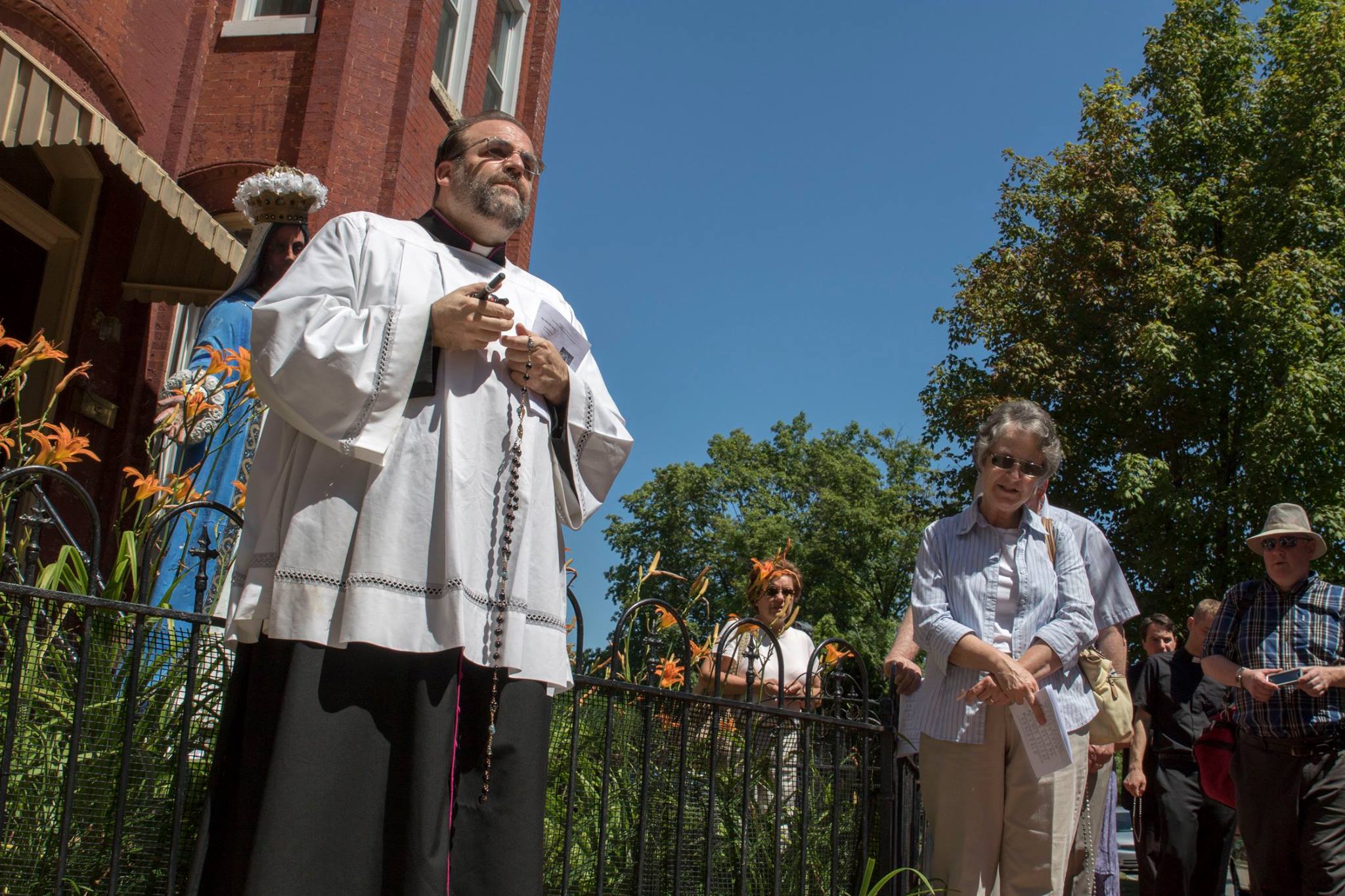
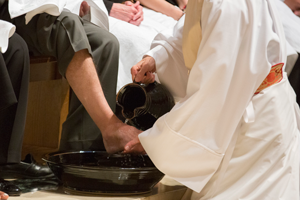
Photo by Jacyln Lippelmann for the Catholic Standard.

During the current political period, when many leaders will be elected, we do well to recall the strong admonitions of God to those who attain to leadership, whether as politicians, community leaders, teachers, or others of significant influence.

The Book of Wisdom (6:1-25) contains a stern warning for those of authority and influence. I present it here along with a few comments (in red) of my own.

In my commentary, I deliberately do not mention specific leaders or parties. This problem is older than the current year; it is a human problem that has beset every age. But I would also argue that it is a particularly serious issue today. To be fair, though, it has been emerging in stages and growing in severity for several decades now, since the cultural revolution.

With those disclaimers in mind, consider with me this admonition from the Lord in the Book of Wisdom.

Hear, therefore, kings, and understand;
learn, you magistrates of the earth’s expanse!
Hearken, you who are in power over the multitude
and lord it over throngs of peoples!
Because authority was given you by the Lord
and sovereignty by the Most High,
who shall probe your works
and scrutinize your counsels!

We live in times when government officials often rule more than they serve. Laws are passed that are increasingly burdensome. And many of these laws are coming, not from elected officials who must answer to their voters, but from unelected judges and government bureaucrats. Some of these new policies violate religious liberty and impose obligations that violate the consciences of many. But these considerations are set aside and those in power lord it over the people they serve, forcing them to comply with unjust and immoral laws or else face fines and/or jeopardize their careers. To the degree that those leaders transgress the proper bounds for a ruler, they will answer to God for what they do.

Because, though you were ministers of his kingdom,
you judged not rightly, and did not keep the law,
nor walk according to the will of God,

Consider how many laws are proudly passed today that are direct violations of God’s moral law (e.g., legalization of abortion, same-sex “marriage,” and euthanasia/assisted suicide). Those who craft such laws, support them, and/or fund them, will answer to God.

Terribly and swiftly shall he come against you,
because judgment is stern for the exalted—
For the lowly may be pardoned out of mercy
but the mighty shall be mightily put to the test.
For the Lord of all shows no partiality,
nor does he fear greatness,
Because he himself made the great as well as the small,
and he provides for all alike;
but for those in power a rigorous scrutiny impends
.

Yes, many seek power in this world without recalling the important truth proclaimed here. Judgment is indeed weightier for those who are powerful, wealthy or influential. We seek these things even though the Scriptures warn that it is hard for the rich to inherit the kingdom (Matthew 19:23), that not many of us should be teachers (James 3:1), and that to whom much is given much is expected (Luke 12:48). Those who attain to such levels must be very humble before God, seek his help and remember that they will answer to him.

To you, therefore, O princes,  are my words addressed
that you may learn wisdom and that you may not sin.
For those who keep the holy precepts hallowed shall be found holy,
and those learned in them will have ready a response.
Desire therefore my words;
long for them and you shall be instructed
.

Fear God, not man. Seek his wisdom, not what is merely politically advantageous. Yet sadly most of our leaders, powerful though they are, do fear man more than God. To attain to high positions, many have made serious moral compromises and been willing to dismiss divine mandates in favor of often immoral demands of sinful human beings. Rare indeed is the ruler that recalls divine judgments and refuses to compromise God’s law, or teaches his people to do the same.

If, then, you find pleasure in throne and scepter, you princes of the peoples,
honor Wisdom, that you may reign as kings forever….
A great number of wise men is the safety of the world,
and a prudent king, the stability of his people;
so take instruction from my words, to your profit
.

How are we doing, America? Not so well, if you ask me. Our current leaders (political, judicial, and academic) have diverged severely from the Law and Wisdom of God. Any examination of recent legislation, legal decisions, or academic offerings will reveal this. A tyranny of relativism has been created and leaders lord it over others through law and political correctness. Punitive laws and executive fiats oppress. College campuses are beginning to resemble indoctrination camps rather than places where debate and discussion of ideas can take place.

Even more sadly, our leaders indicate the moral condition of our country. True leaders should lead and answer to God, but our modern leaders often cater to the whims and unseemly demands of their people. Americans are demanding many excessive and immoral things; we get the leaders we deserve because they emerge from who and what we are.

This is tragic on two counts. It is tragic for the leaders, who will answer to God for what they do; it is also tragic for us, who can only be further dragged down by poor and immoral leaders.

Consider, well, this admonition from Sacred Scripture. Consider its message to us, both as individuals and as a country.

Pray and heed!
To Make a Long Story Short – A Homily for the 31st Sunday of the Year

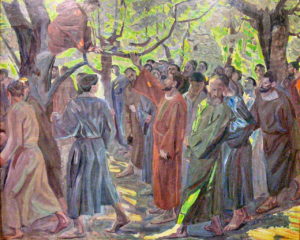
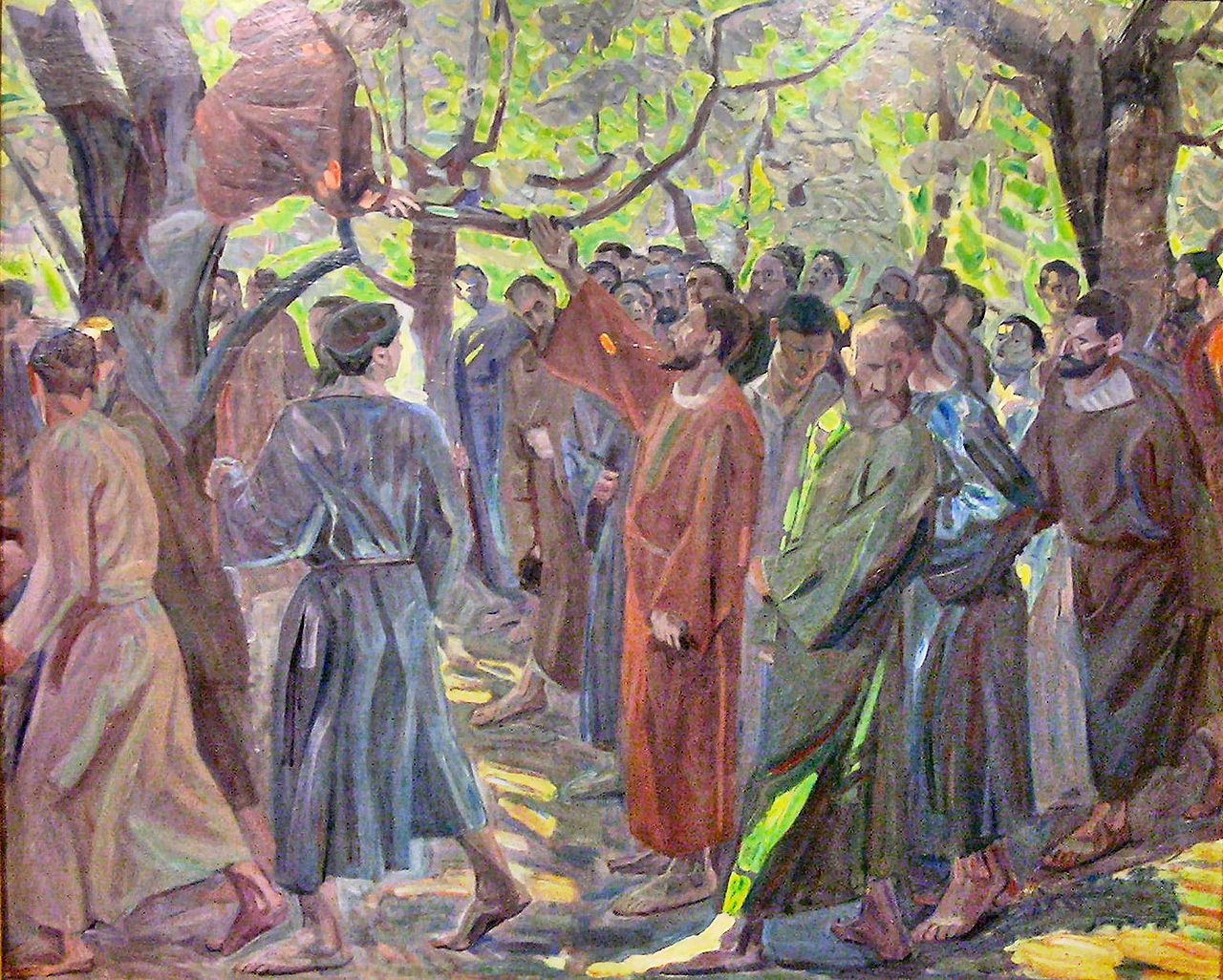
blog10-29-2016The Gospel today features the familiar and endearing story of Zacchaeus, a man too short to see Jesus, but who climbs a tree (of the cross), encounters Him, and is changed.

The danger with familiar stories is that because they are familiar and we can easily miss their remarkable qualities. Perhaps it is well that we look at today’s Gospel anew, searching for the symbolic in the ordinary details.

I. Shortsighted Sinner – Zacchaeus is physically short, so short that he cannot see the Lord. Do you think that this detail is provided merely to describe his physical stature? I don’t think so. As a preacher I’m counting on the fact that there is more here than a physical description.

I suspect it is also a moral description. Zacchaeus cannot see the Lord because of the blindness brought by sin. Consider some of the following texts from Scripture, which draw parallels between sin and blindness:

  • My iniquities have overtaken me, till I cannot see (Ps 40:12).
  • I will bring distress on the people and they will walk like blind men, because they have sinned against the LORD (Zeph 1:17).
  • They know not, nor do they discern; for God has shut their eyes; so that they cannot see, and their minds so that they cannot understand (Is 44:18).
  • Because of the sins of her prophets and the iniquities of her priests, who shed within her the blood of the righteous, now they grope through the streets like men who are blind (Lam 4:13).
  • Unless one is born again by water and the Spirit, he cannot see the Kingdom of God. (John 3:5).
  • Blessed are the pure of heart for they shall see God (Matt 5:8).

So sin brings blindness, an inability to see the Lord. Zacchaeus has fallen short through sin and hence he cannot see Jesus. How has he sinned? Well, he is the chief tax collector of Jericho. Tax collectors were wicked men. The Romans recruited the mobsters of that day to collect taxes. They roughed people up and extorted money from them. The Romans permitted the collectors to charge in excess of the tax due as their “cut” of the deal. They were corrupt, exploited the poor, and schmoozed with the powerful. These were men who were both feared and hated, and for good reason. They were wicked and unjust.

Zacchaeus is not just any tax collector; he is the chief tax collector. He’s a mafia boss, a Don, a “Godfather.” Got the picture? Zacchaeus isn’t just physically short. He’s the lowest of the low; he doesn’t measure up morally. He’s a financial giant but a moral midget. Zacchaeus is well short of a full moral deck. His inability to see the Lord is not just a physical problem; it is a moral one.

Now I am not picking on Zacchaeus. Truth be told, we are all Zacchaeus. You say, “Wait a minute, I’m not that bad.” Maybe not, but you’re not that good either. We’re all a lot closer to being like Zacchaeus than to being like Jesus. The fact that we’re still here is evidence that we are not yet ready to look on the face of the Lord. We’re not righteous enough to look upon His unveiled face. How will Zacchaeus ever hope to see the Lord? How will we?

II. Saving Sycamore – Zacchaeus climbs a tree in order to be able to see Jesus; so must we. The only tree that can really help us to see the Lord is the tree of the cross. Zacchaeus has to cling to the wood of an old sycamore to climb it; we must cling to the wood of the old rugged cross.

Only by the wood of the cross and the power of Jesus’ blood can we ever hope to climb high enough to see the Lord. There is a Latin chant that says, Dulce lignum, dulce clavos, dulce pondus sustinet (sweet the wood, sweet the nails, sweet the weight (that is) sustained). By climbing a tree and being able to get a glimpse of Jesus, Zacchaeus foreshadows for us the righteousness that comes from the cross.

III. Sanctifying Savior – Jesus stops by that tree, for we always meet Jesus at the cross. There at that tree, that cross, He invites Zacchaeus into a saving and transformative relationship. It is not surprising that Jesus essentially invites himself to Zacchaeus’ house. Though dinner is not mentioned, it was a basic aspect of Jewish hospitality. But remember, it is Jesus who ultimately serves the meal. Consider these texts:

  • Here I am! I stand at the door and knock. If anyone hears my voice and opens the door, I will come in and eat with him, and he with me (Rev 3:20).
  • And I confer on you a kingdom, just as my Father conferred one on me, so that you may eat and drink at my table in my kingdom (Luke 22:29).
  • As they approached the village to which they were going, Jesus acted as if he were going farther. But they urged him strongly, “Stay with us, for it is nearly evening; the day is almost over.” So he went in to stay with them. When he was at the table with them, he took bread, gave thanks, broke it and began to give it to them (Luke 24:28-30).

Yes, Zacchaeus has now begun to see the Lord, and the Lord invites him into a Holy Communion, a relationship, and a liturgy that will begin to transform him. Zacchaeus and we are one and the same. We, too, have begun to see the Lord through the power of the cross to cast out our blindness; and the Lord draws us to sacred Communion with Him. The liturgy and Holy Communion are essential for this, as the Lord invites himself to our house, that is to say, our soul and our parishes.

IV. Started Surrender – Zacchaeus is experiencing the start of a transformative relationship. But it is just the start. Zacchaeus promises to return four-fold the money he has extorted and to give half his money to the poor. There’s a Christian hymn entitled “I Surrender All.” Zacchaeus hasn’t quite reached that point yet, and neither have most of us.

Eventually Zacchaeus will surrender all, and so will we. For now, he needs to stay near the cross so that he can see and continue to allow Jesus to have communion with him. One day all will be surrendered.

So this is the start for Zacchaeus and for all of us. The best is yet to come. You might say that the Gospel ends here, to make a long story short. 🙂

Reform Comes Out of Nowhere, As Seen in a Commercial

blog-10-28-2016Reform in the Church seldom comes from a committee of clergy, or from the clergy at all. It usually comes from the laity and from religious communities. In a way, reform in the Church “comes out of nowhere.” During the often-corrupt periods of the Church (e.g., the Middle Ages)—when many of the clergy were more like aristocrats and landowners than true pastors, when wealthy clergy often collected parishes and posts like stocks and bonds and hired poorly trained people to do their work—reform came out of nowhere. It came in the person of St. Catherine of Siena, St. Francis of Assisi, St. Dominic, the mendicant orders, and many others. In later periods, it came in the person of great saints like St. Teresa of Avila and St. John of the Cross.

These reformers came as if out of nowhere. They defied the usual expectations of what leadership in the church should be like. They broke the rules, not the moral law or rules, but the “business as usual” rules. God sent them to the Church at critical moments. Ecclesia semper reformanda (the Church is always in need of reform).

All of this occurred to me as I watched this commercial:

Why Is a Psalm of Creation Proclaimed on the Feasts of the Apostles?

faith and scienceThe Mass for today’s feast of Saints Simon and Jude, like that for almost all of the Apostles, contains passages from Psalm 19. This has always intrigued me because this psalm is not a reference to human preaching or witness at all, but rather a reference to the wordless witness of creation.

The heavens declare the glory of God, and the sky above proclaims his handiwork. Day to day pours out speech, and night to night reveals knowledge. There is no speech, nor are there words, whose voice is not heard. Their voice goes out through all the earth, and their words to the end of the world (Psalm 19:2-3; 4-5).

And while it is true that the voice of the Apostles has gone out to all the earth, that is not what this psalm is really about. There is a kind of daring and glorious transposition of meaning. The witness through the words of the Apostles is joined to the wordless witness of creation. Why? Well, are not the Apostles—indeed all humans—part of creation? And if the lower parts of creation proclaim the glory of God, do not we as well?

Here, then, is a beautiful reminder of the two books of revelation: Scripture and Creation. It is also a reminder that we are part of that creation. Yes, creation is revelation, as St. Paul reminds: For God’s invisible attributes, namely, his eternal power and divine nature, have been clearly perceived, ever since the creation of the world, in the things that have been made (Romans 1:20).

Yes, the whole universe shouts Order! Consistency! Intelligibility! Our bodies and all of the delicately functioning systems on this planet echo back this refrain. And while I do not ask scientists (as scientists) to specifically affirm the biblical and Christian God, the existence of consistent order in the universe is obvious and serves as the basis of the whole scientific method.

If things were truly random, scientists could not propose theories, test results, or verify them; repeated experiments would not turn out similar results. The scientific method presupposes order and consistency within a verifiable range. Thus, while scientists need not draw conclusions as to how this order came about, it is wholly inappropriate for them to be dismissive of believers who conclude from this order that someone must have ordered it so.

Yes, what a glorious and magnificent thing creation is! To this believer, it loudly proclaims the existence of God, who made it.

The beautiful hymn “The Spacious Firmament on High,” which I have seldom heard in Catholic parishes, takes up the voice of creation—especially that part of creation we call the heavens or the sky. It is based on Psalm 19, and to me it is a minor masterpiece of English poetry. It was written by Joseph Addison in 1712.

The hymn was written before skeptical agnosticism and hostility to the very notion (let alone existence) of God had taken deep root in our culture. And, frankly, it also comes from a more sober time, when it was accepted as obvious that creation is ordered and therefore ordered by someone in a purposeful and intelligent manner. We believers call that “someone” God.

Consider the beautiful words of this song, and its reasoned conclusion that creation shouts the existence of its Creator.

The spacious firmament on high,
with all the blue ethereal sky,
and spangled heavens, a shining frame,
their great Original proclaim.
The unwearied sun from day to day
does his Creator’s power display;
and publishes to every land
the work of an almighty hand.

Soon as the evening shades prevail,
the moon takes up the wondrous tale,
and nightly to the listening earth
repeats the story of her birth:
whilst all the stars that round her burn,
and all the planets in their turn,
confirm the tidings, as they roll
and spread the truth from pole to pole.

What though in solemn silence all
move round the dark terrestrial ball?
What though no real voice nor sound
amid their radiant orbs be found?
In reason’s ear they all rejoice,
and utter forth a glorious voice;
forever singing as they shine,
“The hand that made us is divine.”

Yes, the hand that made us is divine, and He has done a marvelous thing!

Here is a performance of this wonderful hymn:

Encouragement from Jesus in the Face of Worldly Threats

jesus-and-the-gentile-woman-300x232Today’s Gospel features a strange dialog; it is hard not to rejoice in Jesus’ aplomb.

In it, some Pharisees (likely disingenuous) approach Jesus, warning Him to leave immediately: Go away, leave this area because Herod wants to kill you. Probably more for their benefit than for Herod’s, Jesus responds,

“Go and tell that fox, ‘Behold, I cast out demons and I perform healings today and tomorrow, and on the third day I accomplish my purpose’” (Lk 13:32).

Surely Jesus has more in mind here than the next three days. He is obviously speaking of the Paschal mystery: His passion, death, and resurrection. To any who would threaten His life, He is saying that in so doing they only serve to undermine their own power and cause Him to fulfill His own purpose.

Nailed to a cross, He will be casting out demons and bringing healing. The next day He will descend to Sheol to awaken the dead, summon them to righteousness, and bring healing in life. And on the third day He will arise, fully accomplishing His purpose and casting off death like a mere garment.

There is no way that Herod, the Pharisees, or Satan can win; for in winning, they lose.

So also for those who would align themselves with the darkness rather than the light. No matter how deep the darkness, dawn inevitably comes and scatters it; the darkness cannot win. Scripture says, The light shines in the darkness, and the darkness has not overcome it (Jn 1:5).

In this strange and provocative saying of Jesus’ from the Gospel of Luke is an important perspective for all of us: no matter how powerful it may seem, evil cannot stand; it will ultimately self-destruct and be overcome by the light. No matter how awful Good Friday seemed to those first disciples, Jesus was casting out demons and bring healing in that very act of suffering. And His apparent disappearance into death and down into Sheol was only for the purpose of bringing life into the place of the dead and healing to the deep wounds caused by sin.

While Resurrection Sunday manifested Jesus’ obvious triumph, even Good Friday and Holy Saturday were already displaying His great victory.

In this saying of Jesus’ and in the facts of the Paschal mystery, two things are taught to us about evil: we should never glamorize it and we should not utterly fear it.

As for glamorizing evil, we love our movies and other things in culture that often glorify evil, whether it’s “The Untouchables,” “The Godfather,” “Goodfellas,” or other fare that in a general way celebrate wrongdoing and equate it with power and glory.

This is illusion. Evil may have its day, but the Word of the Lord remains forever. Scripture says,

I have seen the wicked triumphant, towering like a cedar of Lebanon. I passed by again; he was gone. I searched; he was nowhere to be found (Psalm 37:35-36).

We should neither glamorize evil nor inordinately fear its passing power. We should confront it soberly and resist its demands, but we should not fear it.

No, evil cannot stand. To glorify evil or to fear it inordinately is to miss the lesson of both Scripture and history. At the end of the day, evil does not last.

What does last is God’s holy Word and His Church. Despite repeated attempts to persecute, diminish, and destroy the Church, she has outlived every one of her opponents. Her history extends back more than 2000 years into the heritage of God’s people, the Jews. For His word to Abraham persists, and God rescued them from slavery in Egypt and gave His Word on Mount Sinai. Despite every attempt to ridicule, reduce, and redefine God’s Word, His promise to Abraham, His Word from Sinai, and His Word from the Sermon on the Mount all persist to this day.

This is what lasts: God’s Word and the Church He founded. This is verifiable through the study of history. Empires have come and gone, wicked philosophies have come into favor and disappeared, scoffers and persecutors have arrived and departed, all throughout the age of the Church. Here we are still; they are gone. And those who claim power today and who laugh at us and say our day is done should know this: when they are gone we will still be here.

Evil, error, and perversion do not last. God does last, and so does His Word and the Church to which He has entrusted it.

And so Jesus, when threatened by the Pharisees and indirectly by Herod, simply says,

“Go and tell that fox, ‘Behold, I cast out demons and I perform healings today and tomorrow, and on the third day I accomplish my purpose’” (Lk 13:32).

In effect, Jesus says, “Neither you nor Herod can thwart my plans. In killing me you merely assist me in accomplishing my plan; I will break the back of your power. When you persecute my disciples or shed the blood of my Church members you are sowing seeds for the Church by the very blood of the martyrs you spill. Whatever victory you claim is hollow, for it is really my victory.”

Yes, “Go and tell that fox, ‘Behold, … I accomplish my purpose.’” By these words the Lord decodes history for us. It doesn’t matter how we might wish to obsess over this seeming loss or that apparent defeat. It doesn’t matter how the world and the devil might wish to gloat over an apparent victory. In the end, the Lord holds all the cards. The house, His house, always wins.

It is true; read history. Do not admire evil or fear its apparent ascendance. Jesus has won and His victory is shown time and time again. Don’t let the Devil deceive you. Evil cannot stand. The devil is a liar.

Indeed, in the name and power of Jesus, “Go and tell that fox, ‘Behold, I cast out demons and I perform healings today and tomorrow, and on the third day I accomplish my purpose’” (Lk 13:32).

Pondering the Mystery of Providence and Predestination

blog2-25Today, let’s wade into the waters of a difficult, mysterious subject. Predestination, and in a wider sense, God’s providence, raises a lot of conundrums in our mind, bound as we are by time and the limits of human language.

Many people ask questions about God’s providence that are rooted in faulty premises, either about time or causality. For example, the following questions are often asked:

If God predestines someone for Heaven or Hell, doesn’t this merely reduce us to a fate we cannot control?

Why exhort people to make good choices or to pray if we are all simply acting out a script for our life, written by God long before we were ever made?

There are three important distinctions to make.

Distinction 1: God does not predestine anyone for Hell.

The stated desire or purpose of God is that all come to know Him through faith and thus are saved: God our Savior … desires all men to be saved and to come to the knowledge of the truth (1 Tim 2:4). While it is true that Scripture speaks of predestining us for Heaven (e.g., Eph 1:5; Rom 8:29), this is not the same as saying that we are locked into a fate. St. Thomas Aquinas said, “Thus, as men are ordained to eternal life through the providence of God, it likewise is part of that providence to permit some to fall away from that end” (Summa Theologica I, 23, art. 3). And thus while we are ordained or ordered for Heaven, God, who made us free, permits that those who freely reject Him and His Kingdom will be lost.

Distinction 2: Knowing is not the same as willing.

The second question above fails to distinguish between God knowing something and God willing it (and thereby causing it). Even we mortals can know something before it happens, but our knowing it does not cause it. Suppose you were on a hillside and saw two trains on opposite sides of a blind curve, heading for each other on the same track. You know what will happen, but your knowing it does not cause it to happen.

God can know things that will happen without willing or forcing them to happen. God knowing “ahead of time” that some will go to Hell and others will go to Heaven does not mean that He wills it. For God says,

Say to them, “As surely as I live, declares the Sovereign LORD, I take no pleasure in the death of the wicked, but rather that they turn from their ways and live. Turn! Turn from your evil ways! Why will you die, people of Israel?” (Ez 33:11)

God wants all to be saved but foresees that some will be lost. Why does God exhort Ezekiel to tell the Israelites to turn from their sinful ways? What good will it do? After all, God already knows who will and will not be saved.

Distinction 3: Primary causes do not eliminate secondary causes.

God wants all to be saved but foresees that some will be lost. In the previous passage, why does God exhort Ezekiel to tell the Israelites to turn from their sinful ways? What good will it do? After all, God already knows who will and will not be saved.

The answer leads us to a distinction between primary and secondary causes.

God is the primary cause of all things, of all reality. Whatever effect things like people, animals, and trees have on one another, God is still the primary cause of those effects, because God is creating and sustaining them all. Thus for them to act and to cause other effects, God must first create, equip, and empower them to exist at all. Because God must “first” do this, He is the primary cause of every effect.

But, as St. Thomas explains, that God is the primary cause of everything does not eliminate secondary causes:

Concerning this question, there were different errors. Some, regarding the certainty of divine predestination, said that prayers were superfluous (unnecessary), as also anything else done to attain salvation; because whether these things were done or not, the predestined would attain, and the reprobate would not attain, eternal salvation. But against this opinion are all the warnings of Holy Scripture, exhorting us to prayer and other good works. 

Others declared that the divine predestination was altered through prayer. …Against this also is the authority of Scripture. For it is said… that “the gifts and the calling of God are without repentance (unalterable)” (Romans 11:29).

Wherefore we must say … it is not due to their prayers that anyone is predestined by God. [But it is also true that] … predestination is said to be helped by the prayers of the saints, and by other good works; because providence, of which predestination is a part, does not do away with secondary causes but so provides effects, that the order of secondary causes falls also under providence … [T]he salvation of a person is predestined by God in such a way, that whatever helps that person towards salvation falls under the order of predestination; whether it be one’s own prayers or those of another; or other good works … without which one would not attain to salvation. Whence, the predestined must strive after good works and prayer; because through these means predestination is most certainly fulfilled. For this reason it is said: “Labor more that by good works you may make sure your calling and election” (2 Peter 1:10) (Summa Theologica I, 23, art 8).

In other words, God in His providence knows not only the end of a person but also all the things he will freely contribute to that end. Why bother praying? Because God has always known what prayers you would utter and what difference they would make. We should pray to fulfill the role and supply the help that God has always known we would. The same holds for good works and other forms of cooperating with God’s grace. In one of his sermons, St. Augustine said, “God, who made you without you, will not save you without you.”

A final observation is that predestination is caught up in the mystery of time. God does not live in time as we do; He lives in the eternal now. God’s name is, “I AM.” Past, present, and future are all equally present to Him. And though we can grasp in a small way what this means, we cannot really know what it is like. Deliberating, discerning, and considering—which occur over time for us—are not the same for God. We might ponder why at time ‘A’ God would consider creating a person at time ‘B,’ even knowing that at time ‘C’ that person would be lost. But this is simplistic; it tries to put God within our framework of time, which He is not.

Great humility is necessary when pondering the mystery of predestination and providence. We know for certain that God is in control, but His control mysteriously interacts with and considers human freedom in a way that harms neither truth. He tells us to pray and to cooperate with and earnestly work for our salvation and that of others. God knows everything, including our cooperation (or lack thereof). His knowing is sovereign, complete, and absolute—but it does not cancel our freedom.

So remember that all things depend on God and are known by Him. Nothing surprises God. But remember, too, that He Himself has ordained that we should freely cooperate with Him as His providence unfolds in our life. His knowing what we will do does not cancel our freedom, but rather interacts with it in a mysterious way.

Within Our Darkest Night, You Kindle a Fire That Never Dies Away

blog10-24And old song from the Taizé Community says, “Within our darkest night [, Lord], you kindle a fire that never dies away, that never dies away.” Something of this “light in darkness” has come to me in the deep winter of moral collapse that is present-day America. For this I can only thank the Lord and marvel at His paradoxical providence.

In my parish, the darkness was made very local and very real when Planned Parenthood announced the opening of their “flagship” center, right here in our neighborhood.

To add insult to injury, the center would be located next door to an elementary school and directly across the street from a middle school. On that street, many children would enter through school doors to be educated for life. But through other doors, children would enter to have their lives snuffed out, some by chemical burning, others by dismemberment.

To add irony to injury, the facility would be located on 4th St. NE at number 1225 (12/25 is Christmas Day). Coincidence? I doubt it. Even if men are not so clever, the Evil One is. 1225 … a kind of mockery of the Incarnation.

Our darkest night was upon us.

“Within our darkest night [, Lord], you kindle a fire that never dies away, that never dies away.”

Pro-life action was not a signature of the parishes surrounding Capitol Hill. But with the looming threat of the new “flagship” center, all that was about to change.

As a local pastor, I knew that if I did nothing about this abortion “clinic,” my parish and I would face severe judgment one day. A prayer discussion began in my heart and in the hearts of others as well. My own heartfelt awareness sounded something like this:

“What must I do, O Lord? Few of the parishes in the Capitol Hill neighborhood have active prolife ministries!”

And whose fault is that? the Lord asked me.

“Mine (and others), I suppose.”

Well, skip the blame game and get started. You know what to do; you’ve done it before.

“Ah. Get people to walk, people to pray, and people to cook!”

Yes! Form a community of life. Gather leaders and get started. I have 7,000 people on Capitol Hill who have never bent the knee to Baal (1 Kings 19:18; Rom 11:3-5). Go to them, anoint leaders, and summon them to witness.

Five parishes, stirred from their slumber, switched on the light, began to pray, and prepared to act.

Yes, in this dark hour, God kindled a light. Sometimes it seems dark, but dawn is not far away; it’s just beneath the horizon. It was time to assemble a community of life to call the culture of death to reconsider and to repent. As the local dean at that time, I was commanded by the Lord to act.

Through my experience with evangelization, I had learned that witnesses require support from others. Due to advanced age, failing health, or perhaps just a reserved demeanor, some people find it difficult to engage others. But even so, they can do other things such as praying for those who witness or helping to sustain those witnesses by providing a meal. In previous outreach efforts by my parish, we evangelized the neighborhood in such a way that the whole parish could participate. Some walked from door to door. Others prayed in the church while we walked. Still others prepared a meal so that all could debrief, rejoice, and build a unified community at the end of the day.

God gave me this message:

Do it here. I want a community of life to come forth from the parishes surrounding this dark clinic. Some will walk in witness, some will pray in church at the same time, some will prepare a meal to help all to give thanks and build a supportive community. I have appointed leaders already. Call the diocese; they will help. I will be with you; just get started!

God sent so many people to help from the five parishes and all around the diocese. He sent Teresa, Mary, Maggie, Yajaira, Susan, Linda, Molly, Fr. Hyacinth, Chris, and Elisa, just to name a few (this isn’t meant to be an exhaustive list, and I don’t mean to belittle anyone’s contributions). He sent many others who provided wisdom and experience.

Five parishes together supplied both experienced and new pro-life leaders. By God’s grace, we gathered together to build a community of life. It was still dark, but God was kindling a light. Our meetings began.

Just before I went to a key meeting, I prayed, “Give us a sign, Lord. We want to be sure that we’re doing your will. We need to hear from you. Give us a charge and a name, O Lord!”

I opened up the Bible at random and put my finger down on the page, near the top. Though I usually give the Lord one “do over,” it was not necessary this time. When I looked down, my finger was pointing to this text from Proverbs:

If you faint in the day of adversity, your strength is small. Rescue those who are being taken away to death; hold back those who are stumbling to the slaughter. If you say, “Behold, we did not know this,” does not God who weighs the heart perceive it? Does not he who keeps watch over your soul know it, and will he not repay man according to our work? (Proverbs 24:10-12)

I was astounded; I couldn’t wait to share it!

When I arrived at the meeting, I told the group what had happened. We all sat in silence. God could not have been any clearer. Though we had wondered what to call our new community of life, one of our leaders, Mary, now suggested, “Why not call it ‘Proverbs 24’?”

I wondered aloud whether the name was too vague, but we decided that it was a name that would make people ask about it and then we’d have a teaching opportunity.

And so we had our name: “Proverbs 24: A Community of Life.”

We began to recruit actively from the five parishes. We asked for people who would witness, people who would pray in church for us, and people who would prepare a communal meal. Two Sundays during Respect Life Month in October featured our announcements. We had sign-up tables where people could indicate their willingness to attend an orientation and commit to three Saturdays of witness in front of the Planned Parenthood “clinic,” prayer in the church at the same time, or help in preparing a communal meal.

Meanwhile, we tried legal means to prevent the opening. Surely the zoning laws would require a hearing before such a facility was opened right next to a school! At such a site, no liquor store would be able to be opened without public notice. Yet we, the citizens of the neighborhood, were not informed until the project was well underway. We requested and were granted an appeal, but unfortunately, on Oct. 4th, our appeal was denied. And so, shortly before the 100th anniversary of Planned Parenthood in mid-October, the center opened.

But all is not lost. As a result of our recruiting effort at Sunday Masses, ninety people across the five parishes expressed interest in helping and forty-five showed up this past Saturday for training.

Please pray for us. Although Satan has made a move in our community, God never fails. He will bring good even from this dreadful abortion center. If our parishes were sleepy in this regard in the past, shame on us. But God has a way of awakening a faithful remnant. Pray that we will grow. Pray that we will persevere. And please pray that we will never fail to witness to the glory of human life, no matter the challenges.

“Within our darkest night Lord, you kindle a fire that never dies away, that never dies away.”

On Straining Out Gnats but Swallowing Camels

camelToday’s Gospel (Mat 12:1-8), in which Jesus is rebuked for violating the Sabbath, reminded me of the video below. It illustrates how we sometimes follow smaller rules while overlooking bigger ones in the process.

The Lord Jesus was often scorned by the people of His day, who claimed that He overlooked certain details of the law (often Sabbath observances). But those who rebuked him for this were guilty of far greater violations. For example,

  1. [Jesus] went into the synagogue, and a man with a shriveled hand was there. Some of them were looking for a reason to accuse Jesus, so they watched him closely to see if he would heal him on the Sabbath. Jesus said to the man with the shriveled hand, “Stand up in front of everyone.” Then Jesus asked them, “Which is lawful on the Sabbath: to do good or to do evil, to save life or to kill?” But they remained silent. He looked around at them in anger and, deeply distressed at their stubborn hearts, said to the man, “Stretch out your hand.” He stretched it out, and his hand was completely restored. Then the Pharisees went out and began to plot with the Herodians how they might kill Jesus (Mk 3:1-6).
  2. Woe to you Pharisees, because you give God a tenth of your mint, rue and all other kinds of garden herbs, but you neglect justice and the love of God. You should have practiced the latter without leaving the former undone (Luke 11:42).
  3. Indignant because Jesus had healed on the Sabbath, the synagogue ruler said to the people, “There are six days for work. So come and be healed on those days, not on the Sabbath.” The Lord answered him, “You hypocrites! Doesn’t each of you on the Sabbath untie his ox or donkey from the stall and lead it out to give it water? Then should not this woman, a daughter of Abraham, whom Satan has kept bound for eighteen long years, be set free on the Sabbath day from what bound her?” (Lk 13:14-16)
  4. You blind guides! You strain out a gnat but swallow a camel. Woe to you, teachers of the law and Pharisees, you hypocrites! You clean the outside of the cup and dish, but inside they are full of greed and self-indulgence. Blind Pharisee! First clean the inside of the cup and dish, and then the outside also will be clean (Matt 23:24-25).

Yes, they are straining out gnats but swallowing camels, maximizing the minimum but minimizing the maximum. Note that in the first passage above they are actually planning to kill Jesus for healing on the Sabbath!

Perhaps my all-time favorite illustration of this awful human tendency is in the Gospel of John: 

Then the Jews led Jesus from Caiaphas to the palace of the Roman governor. By now it was early morning, and to avoid ceremonial uncleanness the Jews did not enter the palace; they wanted to be able to eat the Passover. So Pilate came out … (John 18:28-29).

They are plotting to kill a just and innocent man, indeed they are plotting to kill God. They are acting out of wickedness, envy, jealousy, hatred, and murderous anger, but their primary concern is avoiding ritual uncleanliness! Yes, they are straining out gnats but swallowing camels.

We who are pious and observant need to be wary of this tendency. Sometimes in congratulating ourselves over adherence in lesser matters, we can either offend or neglect in weightier ones. Perhaps I attend Mass each Sunday (a grave obligation); perhaps I pray the rosary (a highly commendable practice); perhaps I tithe (a commendable precept). These are all things that ought to be done (one is commanded, one is commended, and one is a precept). But what if at the same time I am hateful toward someone at the office, unforgiving to a family member, and/or insensitive to the poor?

The danger could be that I let my observance of certain things allow me to think that I can “check off the God box” and figure that because I went to Mass, prayed the rosary, and gave an offering, I’ve “got this righteousness thing down.” Too often, very significant and serious things like love, mercy, forgiveness, and charity are set aside or neglected as I am busy congratulating myself over my adherence to other, sometimes lesser, things. 

This oversight can happen in the other direction as well. Someone may congratulate himself for spending the day working in a soup kitchen, and think that he therefore has no need to look at the fact that he is living unchastely (shacked up, for example) or not attending Mass.

We cannot “buy God off,” doing certain things (usually things that we like) while ignoring others we’d rather not. In the end, the whole counsel of God is important.

We must avoid the sinful tendency to try to substitute or swap, to observe a few things while overlooking others.

We see a lot of examples of this in our culture as well. We obsess over people smoking because it might be bad for their health while ignoring the health consequences of promiscuous behavior, which spreads AIDS and countless venereal diseases and leads to abortion. We campaign to save the baby seals while over a thousand baby humans are killed each day in the United States. We deplore (rightfully) the death of thousands each year in gun homicides while calling the murder of hundreds of thousands of babies each year a constitutional right. The school nurse is required to obtain parental permission to dispense aspirin to students but not to provide the dangerous abortifacient “morning after pill.” We talk about the dignity of women and yet pornography flourishes. We fret endlessly about our weight and the physical appearance of our bodies, which will die, and care little for our souls, which will live. We obsess over carbon footprints while flying on jets to global warming conferences at luxurious convention center complexes.

Yes, we are straining gnats but swallowing camels. As the Lord says, we ought not to neglect smaller things wholly, but simply observing lesser things doesn’t give us the right to ignore greater ones.

Salus animarum suprema lex. (The salvation of souls is the highest Law.) While little things mean a lot, we must always remember not to allow them to eclipse greater things. 

The ideal for which to aim is an integrated state in which the lesser serves the greater and is subsumed into it. St. Augustine rightly observed,

Quod Minimum, minimum est, Sed in minimo fidelem esse, magnum est (De Doctrina Christiana, IV,35).

(What is a little thing, is (just) a little thing. But to be faithful in a little thing is a great thing.)

Notice that the lesser things are in service of the greater thing—in this case fidelity. And thus we should rightly ask whether some of the lesser things we do are really in service of the greater things like justice, love, mercy, fidelity, kindness, and generosity. Otherwise we run the risk of straining out gnats but swallowing camels.

Enjoy this commercial, which illustrates how one rule (no loud voices in the library) is observed while violating nearly every other.