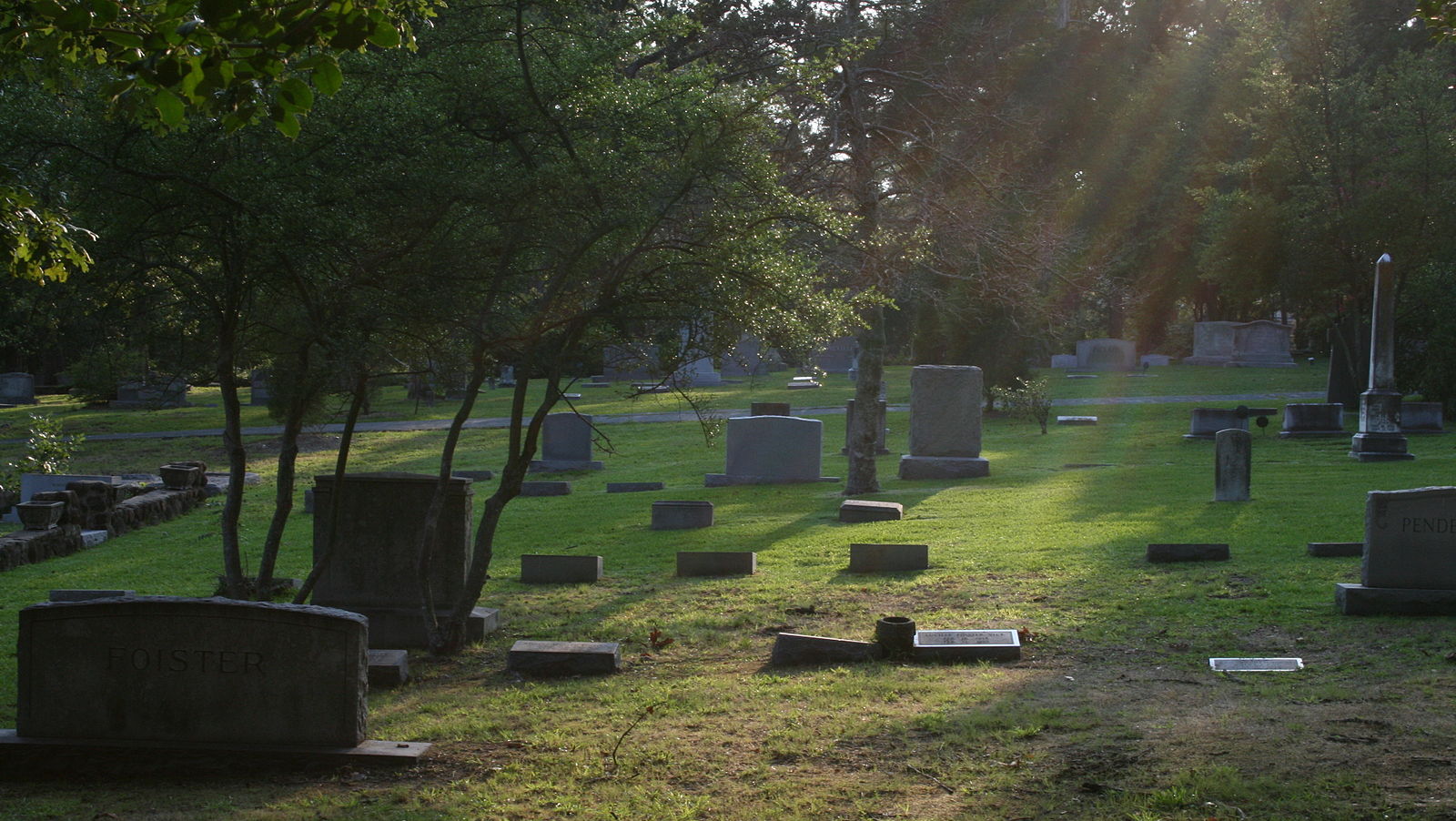
I was happy to hear that the Vatican recently reminded the world’s Catholics of some important matters concerning cremation. As cremation has become more common in recent decades, many significant problems have emerged.
Cremated remains not being buried or placed in a mausoleum,
Cremated remains being scattered,
Cremated remains being divvied up among relatives,
And strangest of all, cremated remains being fashioned into or incorporated within jewelry.
Cremated remains should be treated with the same respect and reverence as bodily remains. For indeed cremated remains are in fact what does remain of the body. While many people refer to them merely as “ashes,” they are remains of a human body and should be treated as such.
Notably, the new instructions reiterate the consistent norms of the Church in the following ways:
Cremated remains, must be laid to rest in a sacred place, that is, in a cemetery or, in certain cases, in a church or an area, which has been set aside for this purpose, and so dedicated by the competent ecclesial authority.
With rare exceptions requiring the permission of the bishop, the conservation of the ashes of the departed in a domestic residence is not permitted.
It is not permitted to scatter the ashes of the faithful departed in the air, on land, at sea, or in some other way, nor may they be preserved in mementos, pieces of jewelry or other objects.
Grateful though I am for these reminders, I know that the Church too often begins to permit once-forbidden things (things forbidden for many good reasons) without providing a real pastoral plan that both sets limits and educates God’s people. And while our norms are published in various liturgical books, most people don’t read liturgical books let alone the norms that are tucked away in the introduction and instructions. All they hear is that something that used to be forbidden is now allowed. This can lead to abuses cropping up that get overlooked by weary or obsequious clergy and norms being are unevenly enforced from parish to parish. A pastoral plan needs to be diocesan and nationwide.
As a pastor, I think that some of the following things will be helpful going forward:
Bishops should ensure that clergy are properly instructed in the norms and then insist that those norms are enforced and the faithful are educated.
Dioceses should consider enacting a policy requiring parishes to ensure that proper interment of cremated remains is arranged before the celebration of the funeral Mass.
Catholic cemeteries should consider “amnesty” offers, wherein inexpensive communal burial sites are made available for the interment of cremated remains for families that might have trouble affording a private niche or gravesite. Many families have kept cremated remains on mantles or in closets for years. Even if they know they should provide a decent burial for these remains, some resist due to the cost. We can work with them to end this problem. My own parish owns several burial sites at a local Catholic cemetery and I am pursuing an arrangement to offer at least one of them for this very purpose. In the Archdiocese of Washington, our cemeteries offer space for cremated remains. We have also begun offer burial space for miscarried infants.
The bottom line is that these norms need a national and diocesan focus as well as enforcement. Leaving it all up to the individual parishes leads to uneven practices that confuse the faithful and cause factions to develop. A pastoral plan is necessary both at the level of the local bishop and the Bishop’s Conference. Otherwise, I am convinced that abuses (intentional or not) will continue.
I have published a flyer on this subject (for use in my own parish) that you might find helpful (Considering Cremation?).
As most of you know, the Washington, D.C. City Council recently took a step toward legalizing physician-assisted suicide for those with less than six months to live.
Although I have written elsewhere about the dangerous implications of this legislation, in today’s post I want to stand up for the dying, at home and in nursing homes, the fully lucid and those with advanced Alzheimer’s, those who are moving toward death relatively painlessly and those who are suffering.
As a priest, it has been my privilege to accompany many people as they prepare for death. Some have gone quickly; others have lingered for years. From a pure worldly perspective, death seems little more than a calamity and a cause for great sadness. But from the perspective of faith, there is something beautiful going on.
I know you may think it bold that I describe it this way, but in the dying process something necessary and quite beautiful is taking place. It is born in pain, but if we are faithful it brings forth gifts and glory.
I have seen these gifts unfold for the many I have accompanied in death, both parishioners and members of my own family. They forgave people, said and heard important things like “I love you” for the first time in years, let go of stubborn attachments, began (perhaps for the first time) to long for God and Heaven, and experienced many other healing and powerful things. Death focuses gives perspective like nothing else. In all this there is beauty as well as needed healing before judgment day.
I shudder to think that so many today fail to recognize these necessary fruits of dying and would so easily jettison its critical gifts, which come in an admittedly strange package.
In addition, in many who are dying I see two Scriptures essentially fulfilled.
I. Jesus said, “Unless you change and become like little children you will never enter the kingdom of heaven”(Matt 18:3). When I walk the halls of nursing homes I behold a rather astonishing thing: Many men and women who raised families, ran businesses, protested bravely in the Civil Rights Movement, fought wars, gave sage advice to their children, and commanded respect in their communities have become like small children.
Some can no longer walk. Some need to be fed. Some cry and need consolation. Some clutch dolls. Some wear diapers, Some can no longer talk. Many need constant care. “How tragic,” the world says. But I see a beauty, for they are changing and becoming like children again. A kind of innocence is being restored, a complete dependence, without which they might never make it to Heaven. Their status as children is fully evident and they become humble enough for Heaven.
It’s painful but beautiful—very beautiful.
Some years ago, a very dear friend of mine died. Catherine had been the pastoral assistant and business manager of the parish of my first pastorate. She had been at the parish for more than 50 years and seemed to know just about everything, and I depended on her for practically everything. Rather suddenly, she came down with a rare and aggressive form of Alzheimer’s disease. Within six months of the diagnosis she no longer recognized anyone. And yet there was a childlike joy that came over her. She had a favorite doll she hugged closely and when I would walk into the room she would light up. She did not seem to recognize me but she loved company. She would sing, and although I couldn’t make out the words, it seemed to be some sort of nursery song.
It was a remarkable thing to witness. Here was a woman on whom I had so thoroughly depended, now in such a dependent state. And yet she was happier than I had ever seen her. She had become like a little child, and it was clear that God was preparing her for Heaven. That was a gift, though a painful one.
Another great gift was this: Almost to her last day, she never failed to recognize Jesus in the Eucharist. Long after she had stopped recognizing anyone else, she still received Holy Communion with great devotion. She might be humming or looking around, but as soon as I reached in my pocket for the pyx, she stopped, looked, made the sign of the cross, and folded her hands. That was the result of years of training and faithfulness. It was a beautiful testimony to her undying faith in the Eucharist and it was her last lesson to all of us.
II. There is only one thing I ask of the Lord, this alone I seek, that I may dwell in the house of the Lord all the days of my life and gaze on the beauty of the Lord within his temple (Psalm 27:4).
Most of us who are still healthy and reasonably active would have a hard time praying this prayer absolutely. The fact is, we want a lot of things: good health, creature comforts, a pay raise, and for our pet project to go well. And oh yes, somewhere in all that, God and Heaven, but later; Heaven can wait.
How obtuse we can be in our desires! It’s really quite strange to want anything more than God and Heaven. And yet many struggle to want God more than the things of this world. Somehow God has to purge us of earthly desires gradually until all we want is Him.
And here, too, the dying process is so important and so beautiful. Little by little in life we give back to God our abilities, our health, and many of our loved ones. Finally, we are led to the point during our dying days when we are given the grace to give everything back.
I remember my father saying to me in his final weeks, “I just want to be with God.” I heard my grandmother say that too. Many others I have accompanied on their final journey have said the same thing: “I just want to be with God.” And they meant it, too; it wasn’t just a slogan. They had given everything back; their treasure was now in Heaven. They had sold all they had for the “pearl of great price.” Now they could sing the words of the old spiritual, “You may have all this world, just give me Jesus.” They had given away everything they had and were now ready to follow Jesus.
For most of us it, will take the dying process to get us to the point when we can say,“There is only one thing I ask of the Lord, this alone I seek, that I may dwell in the house of the Lord all the days of my life and gaze on the beauty of the Lord within his temple.”
And so there it is, the “beauty” of dying. It is a strange and painful beauty to be sure, but a beauty nonetheless. In this age of increasing acceptance of suicide, that sees no value or purpose or value in the dying process, we do well to behold and proclaim its strange but true beauty. We must recognize the dignity of the dying, who fulfill Scripture as they make their final passage.
Surely we grieve, but through faith we also recognize this strange and wonderful beauty.
One of the finest hymns about dying, “Abide with Me,” was written by Henry F. Lyte in 1847, as he lay dying from tuberculosis.
Abide with me; fast falls the eventide;
The darkness deepens; Lord, with me abide;
When other helpers fail and comforts flee,
Help of the helpless, oh, abide with me.
Swift to its close ebbs out life’s little day;
Earth’s joys grow dim, its glories pass away;
Change and decay in all around I see—
O Thou who changest not, abide with me.
Hold Thou Thy cross before my closing eyes;
Shine through the gloom and point me to the skies;
Heav’n’s morning breaks, and earth’s vain shadows flee;
In life, in death, O Lord, abide with me.
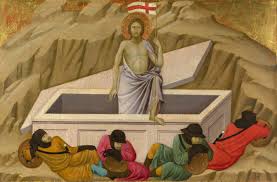
In the readings today the Church presents us with a strong reminder and teaching on the resurrection. Jesus Himself leads the charge against those who would deny the resurrection from the dead, and the seven brothers and their mother from the first reading bring up the rear. Let’s take a look at what we are taught.
I. Ridicule of the Resurrection – The Gospel opens with the observation that Some Sadducees, who deny there is a resurrection, came forward and put [a] question to Jesus. They propose a hypothetical situation in which a woman is married seven times, to brothers who successively die, having no children by any of them. They suggest that at the resurrection there will be confusion as to whose wife she really is! We’re supposed to laugh, according to these Sadducees, and conclude that the idea of resurrection is absurd.
Jesus will dismiss their absurdity handily, as we shall see in a moment, but let’s consider why the Sadducees disbelieved the resurrection.
Fundamentally, they rejected the resurrection because they only accepted the first five books of the Bible: Genesis, Exodus, Leviticus, Numbers, and Deuteronomy. This is point is debated among scholars, but we can surely say that if something was not explicitly in the Law of Moses, the Sadducees were unlikely to accept it. All the other Old Testament books such as the prophets, the historical books, the psalms, and the wisdom tradition, were not considered authoritative sources.
They claimed that the resurrection of the dead was not taught in these first five books. While most other Jews of Jesus’ time did accept the complete Old Testament (and teachings such as the resurrection of the dead which are set forth there), the Sadducees simply did not. They were a small party within Judaism (Josephus said that they were able to persuade none but the rich). Nevertheless, they were influential due to their wealth and to the fact that they predominated among the Temple leadership. You can read more about them here: Sadducees.
Hence, the Sadducees approached Jesus to poke fun at Him and all others who believed that the dead would rise.
They are no match for Jesus, who easily dispatches their arguments using the Book of Exodus (a book they accept) to do it. In effect, Jesus’ argument proceeds as follows:
You accept Moses, do you not?
(To which they would surely reply yes)
But Moses teaches that the dead will rise.
(Jesus must have gotten puzzled looks but He presses on).
You accept that God is a God of the living and not the dead?
(To which they would surely reply yes).
Then why does God (in Exodus) identify Himself as the God of Abraham, Isaac, and Jacob, all of whom have been dead some 400 years? How can He call himself their God if they are dead?
Obviously they are alive or He could not call Himself their God, for He is not a God of the dead but of the living.
Therefore, they are alive to God; they are not dead.
In this way, Jesus dispatches their view. For us, the point is to see how forcefully and clearly Jesus upholds the fact that the dead are alive in the Lord. He powerfully asserts an essential doctrine of the Church. We should rejoice at how firmly Jesus rebukes their disbelief in the resurrection of the dead.
Rejoice, for your loved ones are alive before God! To this world they may seem dead, but Jesus tells us firmly and clearly that they live. And we, who will also face physical death, will live on. Let the world ridicule this, but hear what Jesus says and how he easily dispatches them. Though the idea is ridiculed, the resurrection is real.
II. Resplendence of the Resurrection – Jesus also sets aside the absurd hypothetical scenario that the Sadducees pose, by teaching earthly realities cannot simply be projected into Heaven. Marriage scenarios, perceived in earthly ways, cannot be used to understand heavenly realities. The saints in Heaven live beyond earthly categories.
Heaven is more than the absence of bad things and the accumulation of good things. It is far beyond anything this world can offer. Scripture says, No eye has seen, no ear has heard, and no human mind has conceived—the things God has prepared for those who love him (1 Cor 2:9). The sufferings of this world cannot compare to the glory that will be revealed in us (Rom 8:18).
Do you see the majesty of this teaching? We have a glory waiting for us beyond imagining. Consider your greatest pleasure, your happiest experience, your most fulfilled moment. Then multiply it by a thousand, or a million, or a trillion, and you are still not even close understanding the glory that awaits.
And this glory will transform us. The Lord once told Catherine of Siena that if she ever saw the glory of a saint in Heaven she would fall down and worship, because she would think she was looking at God. This is our dignity: to be transformed into the very likeness of God and reflect His glory. The following is a summary of St. Catherine’s vision of the soul of a saint in Heaven:
It was so beautiful that she could not look on it; the brightness of that soul dazzled her. Blessed Raymond, her confessor, asked her to describe to him, as far as she was able, the beauty of the soul she had seen. St. Catherine thought of the sweet light of that morning, and of the beautiful colors of the rainbow, but that soul was far more beautiful. She remembered the dazzling beams of the noonday sun, but the light which beamed from that soul was far brighter. She thought of the pure whiteness of the lily and of the fresh snow, but that is only an earthly whiteness. The soul she had seen was bright with the whiteness of Heaven, such as there is not to be found on earth. “My father,” she answered. “I cannot find anything in this world that can give you the smallest idea of what I have seen. Oh, if you could but see the beauty of a soul in the state of grace, you would sacrifice your life a thousand times for its salvation. I asked the angel who was with me what had made that soul so beautiful, and he answered me, “It is the image and likeness of God in that soul, and the Divine Grace which made it so beautiful.” [1].
Yes, Heaven is glorious and we shall be changed. Scripture says, we shall be like the Lord for we shall see him as he is (1 John 3:2). He will change our lowly body to conform with his glorified Body by the power that enables him also to bring all things into subjection to himself (Phil 3:19). I have written more on our resurrected bodies here: What will our resurrected bodies be like?
Too many people have egocentric notions of Heaven, where I will have a mansion, I will see my relatives, and I will be able to play all the golf I want. But the heart of Heaven is to be with God, for whom our heart longs. In God we will experience fulfillment and peace that is beyond earthly imagination. Heaven is far greater than golf, mansions, and family reunions. There is certainly more to it than clouds and harps. Heaven can never be described because it is beyond words. St Paul speaks of a man (himself) who was caught up into Heaven; he affirms that it cannot be described; it is ineffable; it is unspeakable.
I know a man in Christ who fourteen years ago was caught up to the third heaven …. And I know that this man—whether in the body or apart from the body I do not know, but God knows—was caught up to paradise and heard inexpressible things, things that no one is permitted to tell (2 Cor 12:2-3).
Do you long for heaven? Do you meditate on it? Is there a part of you that can’t wait to get there? There’s an old spiritual that says, “I’m gonna ride the Chariot in the morning, Lord. I’m gettin’ ready for the judgment day, my Lord, my Lord!”
III. Response to the Resurrection – What difference does the resurrection make other than to give us joy if we meditate upon it? To see that answer, consider today’s first reading, in which the seven brothers are willing to accept torture and death rather than violate God’s Law. If there is a great reward awaiting those who remain faithful, then we will endure anything to get there. Notice how the vision of Heaven inspires them stand firm in their refusal to deny their faith:
We are ready to die rather than transgress the laws of our ancestors. … [Y]ou are depriving us of this present life, but the King of the world will raise us up to live again forever. It is for his laws that we are dying. … Even the king and his attendants marveled at the young man’s courage, because he regarded his sufferings as nothing (2 Maccabees, 7:2,9, 12).
Their vision of the rewards awaiting them motivated them to endure the awful sufferings described in the 7th Chapter of 2nd Maccabees.
And what of us? Do we meditate on Heaven and value its reward enough to be willing to endure suffering to get there? We need a strong vision of Heaven to be able to endure and stand firm. Too many people today have lost a deep appreciation of Heaven. Too many pray to God merely for worldly comforts and rewards—but these will pass. We ought to ask God for a deep desire for Heaven and the things awaiting us there.
What athlete would discipline his body as severely as he does without the deep motivation of the satisfaction and rewards that will come upon meeting his goals? What college student would attend hundreds of hours of classes, read scores of books, and write lengthy papers if it were not for the rewarding career at the end of the trail? Who of us will endure the trials of faith if we are not deeply imbued with the vision of glory and deeply desirous of its fulfillment no matter the cost? Without this, our spiritual life becomes tepid and our willingness to endure trials falls away. An old hymn says,
When peace, like a river, attendeth my way, When sorrows like sea billows roll; Whatever my lot, Thou has taught me to say, It is well, it is well, with my soul.
And Lord, haste the day when my faith shall be sight, The clouds be rolled back as a scroll; The trump shall resound, and the Lord shall descend, Even so, it is well with my soul.
Meditate on Heaven often. Although we can never fully grasp its glory, we ought not to let that stop us from imagining it as best we can. In particular, read Revelation chapters 4,5, 8, 21, and 22. But above all, ask God for an ever-deepening desire for Him and the good things that await you in Heaven. Look to Heaven; long for Heaven. Desire God and deeply root your life in Him. Heaven will not disappoint!
This African-American spiritual says,
I’m gonna ride the chariot in the morning, Lord.
I’m getting’ ready for the judgment day, my Lord, my Lord!
Are you ready my brother? (Oh yes!)
Are you ready for the journey? (Oh Yes!)
Do you want to see Jesus (Yes, Yes!)
I’m waiting for the chariot ’cause I ready to go.
I never can forget that day,
(Ride in the chariot to see my Lord!).
My feet were snatched from the miry clay!
(Ride in the chariot to see my Lord!)
Pacifism can be understood in various ways. In one way it is the refusal to engage in any violent or armed conflict. In this sense, it is a refusal to take part in a certainkind of battle. This sort of pacifism has little appeal and comes off as unrealistic at best and cowardly at worst.
But there is another understanding of pacifism: actively resisting evil in a nonviolent way. With this sort of pacifism one does engage in the battle, but paradoxically. Clearly, Jesus engaged in His final showdown with Satan in this manner. He refused to enter Satan’s world and use his tactics. Darkness cannot drive out darkness; only light can do that. Hatred cannot drive out hatred; only love can do that. Pride cannot drive out pride; only humility can do that. The Lord engaged in the battle and won the victory by being the Lord; He was victorious on His terms, not Satan’s.
There are certain people gifted to engage in battle in this way and we usually recognize their genius only later. We also revere soldiers and police of the more traditional sort, who at the risk of their own lives go forth to defend against the violent assaults of a dangerous foe. The point is to engage in the battle, to resist evil and stop its advance.
I have not seen the movie promoted in this trailer, but of all the trailers I have seen, this one does the best job of exemplifying the better understanding of pacifism: active resistance to evil.
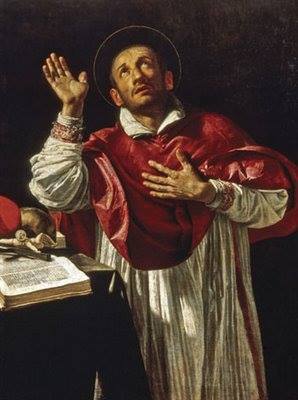
Today is the feast day of my patron saint, Charles Borromeo. The times in which he lived were not so different from the current ones and the leadership he exemplified is sorely needed today. And although I am not a bishop as he was, I am a pastor; I pray that in some small way I may be like him.
St. Charles Borromeo was born in 1538, a time when the Church was in the midst of perhaps her greatest crisis. Martin Luther had begun his revolt in 1522 with the publication of his 95 Theses. In the aftermath of the Protestant revolt, some 12 million Europeans (a very large number for those days) left the Church; more would follow in successive waves.
The medieval Church was breaking up and suffering schism. Indeed, the whole medieval synthesis of Christendom was in turmoil, hopelessly intertwined with politics and intrigue both within the Church and outside.
The clergy especially were in great crisis and in tremendous need of reform. It was an era of absentee bishops and clergy. Wealthy European families collected parishes, monasteries, and other benefices more as a kind of stock portfolio rather than out of any spiritual love or interest. It was common that these benefices were given to the sons in these families. And although ordained as priests, they seldom served as such; instead they farmed out the pastoral duties of their many parishes (and even dioceses) to other priests (often poorly trained ones). Knowledge of Latin, Scripture, and indeed the Lord Himself, was notably absent in many of these “clergy for hire.” Preaching was poor, the moral life of the clergy was degraded, and the faithful had little leadership.
In this climate it is no wonder that Luther and other so-called reformers were so easily able to attract large numbers of the laity, who were not only poorly served, but also poorly catechized.
The Council of Trent – Recognizing the criticality of the revolts (by Luther and others) and her own need for internal reform, the Church summoned the Council of Trent, which met sporadically between 1545 and 1563.
Into this period of crisis for both Europe and the Church, St. Charles Borromeo was born. He was the third of six children in a noble family in Milan. His parents were notably pious and well known for their care for the poor. Their sober and religious demeanor goes a long way toward explaining the piety and appetite for reform that St. Charles would later develop.
Reform starts at home. All that said, the wealthy and prominent Borromeo family were well woven into the difficulties and problems of the late medieval Church, themselves owning large numbers of ecclesiastical benefices. At a very young age Charles Borromeo was given a large and wealthy Benedictine abbey by his uncle, Julius Caesar Borromeo. And so at the tender age of 12, Charles Borromeo found himself the abbot of a large monastery. His age and the fact that he was not even an ordained priest are representative of the serious abuses that were common at the time.
Despite these impediments, St. Charles showed an inclination for reform. He specified that his income from the abbey should only be enough to support his education, with the sizeable remainder given to the poor. Further, he promoted reform at the monastery by insisting on a return to a purer monastic environment.
At the age of 16, he was sent to Pavia to study Canon Law. Although he found his studies difficult, he was noted for his piety, his refusal to indulge in the frivolities of university life, and his devotion to the rosary and private prayer. He even dismissed two of his tutors (both of them priests) because he considered them too secular, found them lax in saying their Office, and objected to the fact that they did not wear clerical attire.
Papal Secretary of State at age 22! Just after Charles completed his studies, Pope Pius IV was elected. The new pope was Charles’ uncle and as a gift to his nephew, summoned him to Rome to be his Secretary of State. And so at the age of 22 (and only a sub-deacon, not a priest) Charles Borromeo became the Secretary of State at the Vatican and personal assistant to the pope, and was named a cardinal deacon. It is perhaps ironic that all this was technically as a result of nepotism, because Charles would become one of the leading proponents of Church reform.
Perhaps his chief work (under the direction of Pope Pius IV) was to reconvene the Council of Trent, which had been suspended due to war. After many months of difficult negotiation and political intrigue, the Council reconvened in 1561. Charles Borromeo not only coordinated the activities of the Council sessions but also engaged in many delicate negotiations as the Pope’s personal representative. He had to work carefully to overcome the differences among certain delegates. The Council of Trent finally concluded in December of 1563, just prior to the death of Pope Pius IV.
The importance of the Council of Trent cannot be overstressed. Its decrees rejuvenated the huge and complex medieval Church and would serve as a guiding light for the next four centuries. But then, as now, the decrees of a council are not always welcomed, understood, or well applied. The work of Charles Borromeo was just beginning.
St. Charles lost no time in applying the decrees of the Council wherever his authority extended.
The next step for Cardinal Borromeo was to have a catechism written and published. He appointed three Dominican theologians to work under his supervision and the Catechism of the Council of Trent was completed within a year. He then ordered it translated into the vernacular in order that it be taught to the faithful by all pastors. Charles also set to work founding seminaries and colleges for the clergy, who were woefully undertrained.
St. Charles was also involved in implementing liturgical norms and even took a hand at reforming the music, encouraging the development of sacred polyphony. It needed a guiding hand to ensure that it did not become too florid and that the sacred text did not become buried in musical flourish and performance. In this matter he worked closely with Palestrina.
Time to get personal – Having used his position of influence in Rome to help implement the Council, he now petitioned Pope Pius V that he might implement it in his own life. For although Pius IV had named him Cardinal Archbishop of Milan, he had been an absentee bishop, remaining in Rome as papal Secretary of State.
This was a common abuse at the time, as already noted. In fact, it was rare in the larger cosmopolitan dioceses that the bishop would be present at all. These larger dioceses were usually benefices for rich families whose sons merely collected the income and did not actually serve in any pastoral capacity. Dioceses were usually administered by underlings.
It does not take much to understand why abuses flourished under this system. With no actual resident bishop, no true shepherd in place, errors went unaddressed and corruption abounded.
After some months of negotiation with the new Pope Pius V (who was resistant to the idea), St. Charles was finally permitted to take up residence in his diocese of Milan. He went with great eagerness to implement the reforms of the Council of Trent. He called several local councils of the church there and set up seminaries for the training of clergy. Charles insisted that priests be present in, and minister to, their own parishes. He also established the Confraternity for Christian Doctrine (CCD) for the training of children in the faith, enrolling some 40,000 children in the first few years. He set about visiting every parish in his archdiocese, even the small ones up in the remote alpine regions.
Not everyone appreciated the reforms Charles sought to institute. Some of the greatest resistance came from his own clergy and monks, one of whom pulled out a gun and shot him at Vespers (luckily, the bullet only grazed him)! Despite the resistance, St. Charles began many successful reforms in the Church at Milan. These reforms centered on the liturgy; the life, training and discipline of the clergy; and the training of the laity in the ways of faith.
As can be seen, St. Charles lived during difficult times for the Church. Millions had left and corruption abounded in what remained. Many people would have despaired in the face of so many deep problems. Indeed, many would have wondered how the Church could ever recover from such losses in numbers and regain her capacity to preach the Gospel and reach the faithful.
And yet, as the example of St. Charles shows, reformers can and do make a lasting difference. Changes for the better may come slowly, but they do come.
Pray for zealous pastors and reformers like St. Charles Borromeo. It goes without saying that the Church is in a great crisis today. Millions have left the Church. Confusion among the faithful and the clergy abounds. Many of the faithful are poorly catechized. And there are often grave moral, spiritual, and leadership issues among the clergy. At times the situation seems bad—very bad.
Yet inside the Church things are already better now than they were in the late 1970s and the 1980s. The reform-minded Pope St. John Paul II and his successor Pope Benedict XVI, along with many zealous clergy and faithful, have begun a reform that may take many years to see fully. But God has not forsaken his Church; He will purify her and ensure her ultimate indefectibility.
God still has His saints, His reformers, His St. Charles Borromeos. Many of them are already known to us and many more are yet to come. But come they will, for God will reform, establish, and cause to flourish, the Church He loves.
At the age of 46, St. Charles Borromeo died in the early hours of November 4th, 1584. He had been on his way to visit a parish in the Alps and was stricken with a high fever. I have written more of him here: St Charles Borromeo.
What is the value of one prayer? I suspect it is far greater than any of us imagine. Prayer changes things, sometimes in obvious ways, more often in subtle and even paradoxical ways. But prayer is surely important, even when we don’t experience its immediate effects. Perhaps this is why Jesus taught us to pray always and never to lose heart (cf Luke 18:1). St. Paul echoed this with the simple exhortation, “Pray without ceasing” (1 Thess 5:17). St. James also warned, “You have not because you ask not” (James 4:2).
Perhaps one of the greatest joys of Heaven will be seeing how much of a difference our prayers made, even the distracted and perfunctory ones. Perhaps our simple utterances at the end of a decade of the rosary to “Save us from the fires of Hell” and “Lead all souls to Heaven” will reach the heart of one lost soul, prompting him to answer the gentle call of God to return. Imagine that in Heaven that very sinner comes up to you and says, “Though we never met, your prayer reached me and God applied His power to me.” Imagine the joy of many such meetings in Heaven. Imagine, too, whom you will joyfully thank for their prayers, people you know and some you never met. But they prayed and the power of their prayers reached you.
To pray for the living is a great and wondrous spiritual work of mercy; its value is beyond that of gold or pearls. Yes, what is the value of one prayer? The effectual fervent prayer of a righteous man is powerful in in its effects (James 5:16). Prayer can avert war, bring healing, cause conversion, bestow peace and serenity, and call down mercy—sweet, necessary, and beautiful mercy. Prayer is inestimable; its value can never be told.
Praying for the dead, however, is a spiritual work of mercy that has suffered in recent decades. Too many Catholics today “miss a step” when a loved one dies. There are often immediate declarations that the deceased is “in Heaven” or “in a better place.” But Scripture doesn’t say that we go right to Heaven when we die. No, indeed, there is a brief stopover at the judgment seat of Christ.
The Letter to the Hebrews says, It is appointed for men to die once and after this comes judgment (Heb 9:27). And St. Paul writes, For we must all appear before the judgment seat of Christ, so that each of us may receive what is due us for the things done while in the body, whether good or bad (2 Cor 5:10).
Our deceased loved ones go to the judgment seat of Christ, and that is worth praying about!
But what is the judgment for those who lived faithful lives? In such cases, the judgment is not merely about the ultimate destination of Heaven or Hell. The judgment would seem to be “Is My work in you complete?”
Indeed, the Lord has made all of us a promise:You therefore must be perfect, as your heavenly Father is perfect (Mat 5:48). Such a beautiful promise! And yet most of us know that we are not in such a state now. If we were to die today it is clear that much work would still be required. Thus when we send our faithful loved ones to judgment, although we send them with hope, we are aware that finishing work may be necessary. Purgation and purification are necessary before entering Heaven, of which scripture says, Nothing impure will ever enter it (Rev 21:27).
Again, this is worth praying about. It is a great work of mercy we can extend to our deceased loved ones, to remember them with love and to pray, in the words of St. Paul, May God who has begun a good work in you bring it to completion (Phil 1:6). Pray often for the souls in Purgatory. Surely there are joys there for them, knowing that they are on their way to Heaven. But surely there are also sufferings that purgation must cause. St Paul says of Purgatory, Each one’s work will become manifest, for the Day will disclose it, because it will be revealed by fire, and the fire will test what sort of work each one has done. If the work that anyone has built on the foundation survives, he will receive a reward. If anyone’s work is burned up, he will suffer loss, though he himself will be saved, but only as through fire (1 Cor 3:13-15). Yes, there is fire, but thank God it is a healing fire. There are tears, too, for Scripture says (regarding the dead) that Jesus will wipe every tear from their eyes (Rev 21:4).
How consoling and merciful our prayers must seem to our beloved who have died! How prayers must seem like a gentle wind that speeds them along, onward and upward toward Heaven!
Praying for the dead, then, is the last and greatest spiritual work of mercy. By the grace of it, and through its help, souls attain the glory God has prepared for them from the foundation of the world.
Some years ago it was popular to say of television, “It’s not the medium, it’s the message.” This was in answer to critics who claimed that watching it “rotted the brain.” The retort was that there was nothing wrong with the medium (television) per se, but with the message (vapid sitcoms, etc.). Television could be used to great ends if the message was right.
While television can be used to broadcast good material, there is significant evidence that watching it is in fact deleterious, especially for more than an hour a day. The flickering screen, with the picture angle that changes every eight seconds or so (according to an industry guideline), is devastating to the attention span of the viewer. The fact that it is a purely passive medium, used more often to entertain than to teach, does not help either. At least with radio, the imagination is engaged. No so with television, which supplies just about everything to the passive viewer. None of this helps us or prepares us for true human interaction, in which changing the channel is not an option, entertainment is not always the goal, and the viewing angle isn’t constantly changing. Most teachers will tell you that the average attention span of today’s youth seems to be dismally short.
And now we have added to the mix our cell phone screens and earbuds. The tune-out from real relationships has deepened, attention spans are even shorter, and a kind of particularism has set in wherein I reject you or tune you out because you aren’t exactly what I want right now. Forget reality, bring on the virtual reality!
We see it everywhere:
Bored children sit in classrooms, almost incapable of staying focused to listen to the simplest instruction, sneaking peeks at their phones for something more interesting.
Teenagers at family gatherings barely speak to one another, let alone to the adults; they sit alone in a corner with their earbuds in, lost in games or videos on their phones. Trying to break in with a simple “Hi” yields a grunt or irritable glance in return. And don’t expect any eye contact!
Even in public places like the subway or the sidewalk of a city street, many people are lost in their devices, inwardly focused, barely noticing the humanity around them.
I recently asked a priest personal director what he thought was the biggest difference between younger and older clergy. I expected him to say something about theological differences, but he surprised me by replying, “Younger clergy do not answer their phones. They just text.” It seems that real conversations, even if only by phone, are on the outs with a generation raised on electronic devices.
In a thoughtful article published in First Things, Patricia Snow writes about the effects on high school and college students of extended immersion in cell phones (and other devices). I want to take up her call: “Look at me!” She begins by describing the problem and its symptoms:
Inevitably, in some of our young people especially, we are reaping deficits in emotional intelligence and empathy; loneliness, but also fears of unrehearsed conversations and intimacy; difficulties forming attachments but also difficulties tolerating solitude and boredom. … The teachers tell … that their students don’t make eye contact or read body language, have trouble listening, and don’t seem interested in each other, all markers of autism spectrum disorder. … Students are so caught up in their phones, one teacher says, “they don’t know how to pay attention to class or to themselves or to another person or to look in each other’s eyes and see what is going on.” Another says uneasily, “It is as though they all have some signs of being on an Asperger’s spectrum …. [Yet] we are talking about a school wide problem.”
That’s right, the effects of becoming lost in our devices lead to semi-permanent problems and symptoms we usually attribute to autism spectrum disorders. This affects not only human conversation, but even more so the conversation with God that we call prayer. Snow writes,
For all the current concern about technology’s effects on human relationships, little or nothing is being said about its effects on man’s relationship with God. If human conversations are endangered, what of prayer, a conversation like no other? All of the qualities that human conversation requires—patience and commitment, an ability to listen and a tolerance for aridity—prayer requires in greater measure. Yes, here is the one conversation Satan most wants to end.
So here is the problem: there is an increasing loss in our ability to relate to other people and to God. The virtual is prized over the real, fantasy over reality. What God actually offers us is dismissed as of lesser value and we become more deeply locked in our own little world. It is a perfect recipe for Hell since it also describes it: turned in on oneself and away from God and others.
What is the way out of this descent into a self-enclosed virtual world?
Simply put, the solution is in the eyes. Ms. Snow details one therapeutic approach in the treatment of autism as follows:
In the protocols developed by Ivar Lovaas for treating autism spectrum disorder, every discrete trial in the therapy, every drill, every interaction with the child, however seemingly innocuous, is prefaced by this clear command: “Look at me!” If absence of relationship is a defining feature of autism, connecting with the child is both the means and the whole goal of the therapy. … Eye contact—which we know is essential for brain development, emotional stability, and social fluency—is the indispensable prerequisite of the therapy, the sine qua non of everything that happens …. There are no shortcuts to this method; no medications or apps to speed things up; no machines that can do the work for us. This is work that only human beings can do, with their human eyes and human voices …. In this work of restoration, the child’s gaze comes back first. In intermediate, breakthrough moments, she greets her father when he comes home from work, and calls her mother for the first time ever in the night.
There is a need for all of us to have extended “unplugged” time, time spent with no phones or screens. Power the devices down or put them away. Leave the virtual world and re-enter the real world. Look one another in the eye and have conversations. Eat dinner with your family; sit in the living room together and just talk.
Most cell phones have a feature (sometimes called sleep or do-not-disturb mode) that silences the phone unless a call comes in from someone on a defined list. This permits calls from close family members to get through, but nothing else. I set my phone in this mode from 10:00 PM until 9:00 AM. During this time, I take no calls or texts; I’m unplugged.
Eye contact is so important! Really looking at the people in your life is essential for wholeness and holiness. To us who are collectively straying into these autistic manifestations, the cry must go up, “Look at me!” This is a summons to the person inside, too often lost in his device or listening through his earbuds, to look up and out. The summons is tied to the concept of human respect. The word “respect” means literally “to look again” (re + spectare).
Consider well what you must do, lest you get lost inward. Our life cannot merely revolve around the device screen. It isn’t just the message that can harm us; it’s the medium as well. We were made by God for relationships—true personal relationships, not just virtual ones. Our relationships with one another are meant to enrich and complete us. And how much worse it is if our relationship with God fails. The very purpose of our life is to be related to God to an ever-greater degree, and one day to be perfectly united to Him. It is, of course, Satan’s dream to sabotage our relationships on every level.
Consider these questions:
When do you unplug each day and for how long?
Is there a consistent time each day when you are not interacting with your device?
How frequently do you check your device when you are in meetings or with others?
Do you ever just turn your phone off and put it away?
How often do you eat a meal with your family? Are family members on their devices during these meals?
How much of your day involves silence?
Are you able to fall asleep in a dark, silent room, or do you need a light on and/or something playing in the background?
I suspect that the answers to questions like these will vary quite a bit with age. But to some extent, the concerns expressed here affect us all.
Give some serious thought to what our devices have done to us personally and collectively. Relationships and their quality matter a great deal. The most important things in life aren’t things at all. Yes, “Look at me” is a powerful and necessary corrective. Our eyes are too easily fixed on what mesmerizes us, rather than on what heals us, challenges us, and helps us to become more whole, more complete, more holy, and more human.
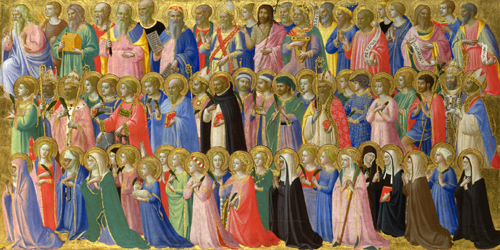
Today is the Feast of All Saints. Some saints of the Church have a particular day on the calendar associated with them and are commonly recognized by name. Many more, though not as familiar to us, are still known by God and have been caught up with Him to glory. Today is their day, the day of the countless multitude who have made it home to glory by God’s grace and by their “Amen” to the gracious call of God. Let’s consider these saints under three headings, based on today’s readings.
I. Their Privileged Place: The first reading today, from Revelation, speaks to us of saints: from every nation, race, people, and tongue. They stood before the throne and before the Lamb, wearing white robes and holding palm branches in their hands. They cry out in a loud voice, “Salvation comes from our God, who is seated on the throne, and from the Lamb.” … They prostrated themselves before the throne, worshiped God, and exclaimed, “Amen. Blessing and glory, wisdom and thanksgiving, honor, power, and might be to our God forever and ever. Amen.”
Note how liturgical the description is. In fact, the most common way that Heaven is described is in liturgical imagery. The liturgy is a kind of “dress rehearsal” for Heaven. To those who find Mass “boring,” this description can be challenging.
Indeed, many people today have rather egocentric notions of Heaven. Heaven is a place where I will be happy, where I will see my family, where I will take leisure. I will have my mansion; I will no longer get sick; I can play all the golf I want, etc. Heaven is a “better place.” But this better place is generally understood in very personal terms; it’s a kind of “designer Heaven.” But Heaven is what it is, not what we conceive it to be.
As for the real Heaven, the heart of it is being with God, looking upon His glorious face and thereby having all our inexpressible longings satisfied. In Heaven, the saints behold the glorious face of God and rejoice. It is their joy to praise Him and to rejoice in His truth, goodness, and beauty.
Note, too, both the sense of communion of the saints with God and with one another. The biblical portraits present a multitude, a vast crowd. The biblical way to understand the multitudes in Heaven is not to envision physical crowding but rather deep communion. In other words, the Communion of Saints is not just a lot of people standing around talking or moving about.
St Paul teaches, So we, who are many, are one body in Christ, and individually members, one of another (Rom 12:5). And though we experience this imperfectly here on earth, we will experience it perfectly in Heaven. As members of one another, we will have deep communion, knowing and being known in a deep and rich way. Your memories, gifts, and insights will be mine, and mine will be yours. There will be profound understanding and appreciation, a rich love, and sense of how we all complete one another and are one in Christ.
Imagine the glory of billions of new thoughts, stories, and insights that will come from being perfectly members of Christ and of one another. Imagine the peace that will come from understanding and being understood. This is deep, satisfying, wonderful communion—not crowds of strangers.
St. Augustine had in mind the wonderful satisfaction of this deep communion with God and with one another in Christ when he described Heaven as Unus Christus amans seipsum (One Christ loving Himself). This is not some selfish Christ turned in on Himself. This is Christ, the Head, in deep communion with all the members of His body. This is all the members in Christ experiencing deep mystical communion with Him and one another, all swept up into the life of the Trinity. Again, as St. Paul says, and you are Christ’s, and Christ is God’s (1 Cor 3:23).
II. TheirPrize of Perfection:The second reading, from the First Letter of John, says, Beloved, we are God’s children now; what we shall be has not yet been revealed. We do know that when it is revealed we shall be like him, for we shall see him as he is.
We cannot even imagine the glory of the saints in Heaven. The Heavenly Father once said to St. Catherine that if she were ever to see a saint in his or her transformed heavenly glory, she would fall down and worship because she would think she was looking at God.
This is our future, if we are faithful. We will reflect the glory of God and be transformed by the look of love and glory. Just one look, and oh, the glory we will reflect, God’s very own glory!
III. The Picture to Ponder: The Gospel today (the Matthean beatitudes) sets forth a kind of picture of what sanctity looks like. The beatitudes are the description of the transformed human person; they describe what happens to us as Jesus begins to live His life in us through the Holy Spirit.
This picture is not one that merely waits for Heaven, but one that is true of us even now as we grow into the likeness of Christ.
I have written more on the beatitudes HERE and HERE. For the purposes of today’s feast, we need to acknowledge that a beatitude is not something we do but rather something we receive. A beatitude declares an objective reality as the result of a divine act.
The present indicative mood of the beatitudes should be taken seriously and not transformed into an imperative of exhortation, as though Jesus were saying, “Start being poor or meek and then God will bless you.” Rather, He is saying that when the transformative power of the cross brings about in us a greater meekness, poverty of spirit, and so forth, we will experience that we are being blessed.
Beatitude is a work of God and results when we yield to His saving work in us. We are blessed when we accept and yield to the work that God alone can do. With this understanding, we see the beatitudes not as a prescription of what we must do per se, but as a description of what a human being is like whom Jesus Christ is transforming into a saint! And this transformation is a growing, stable, deep, and serene beatitude and holiness.
Therefore, today’s feast of all saints does not merely point to the completed saints in Heaven, but to us who would be saints, not just someday in the future but beginning now and in increasing degree.
At the end there will be saints and ain’ts. Which do you choose?

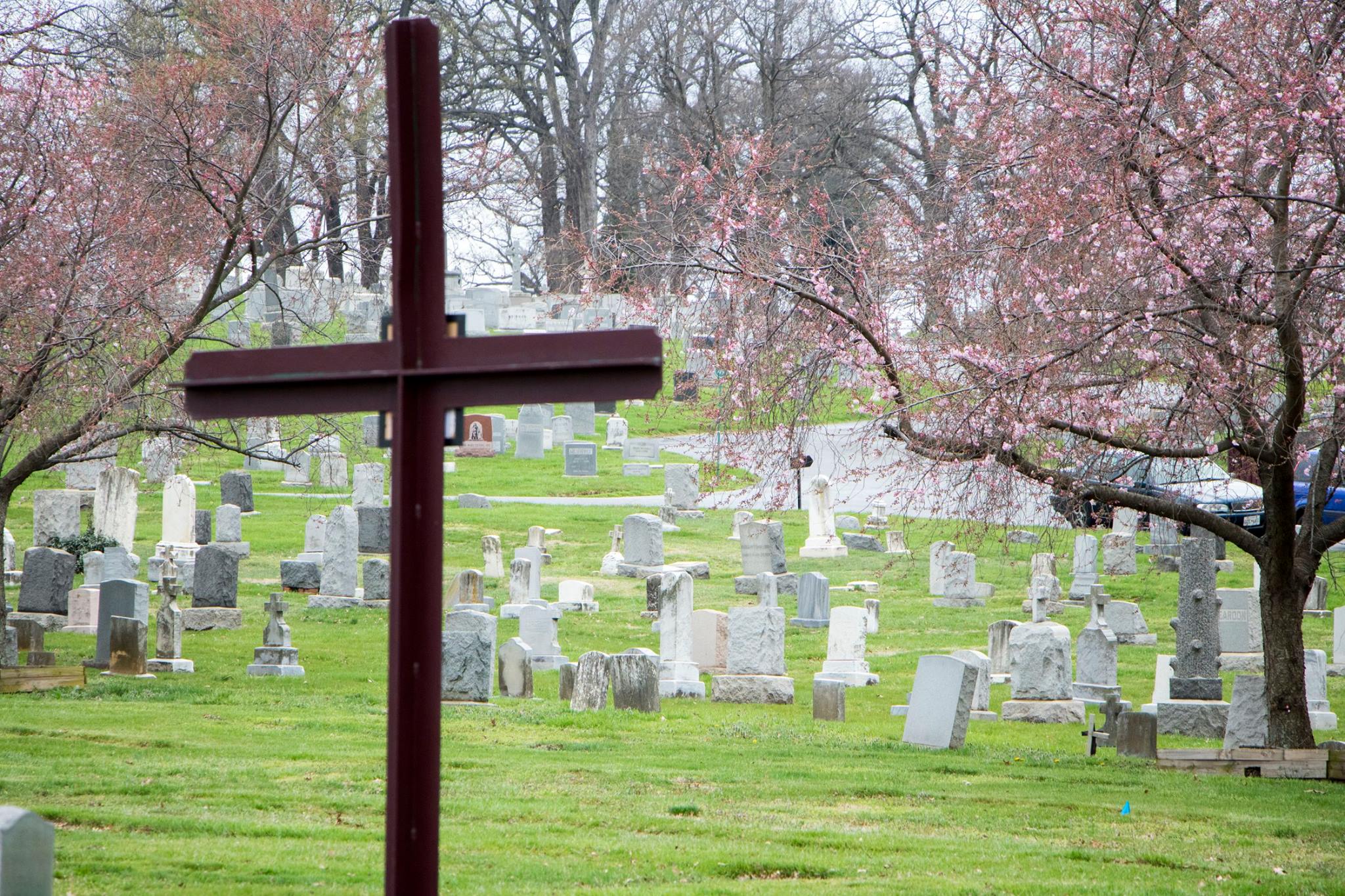 I was happy to hear that the Vatican recently reminded the world’s Catholics of some important matters concerning cremation. As cremation has become more common in recent decades, many significant problems have emerged.