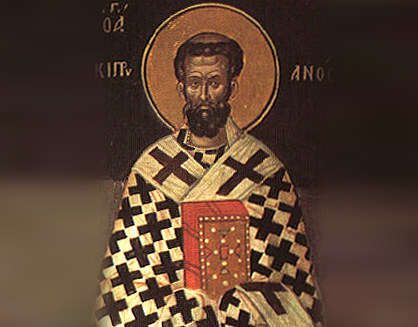
Love of the World Fuels the Fear of Death – A Meditation on a Teaching of St. Cyprian

112414As November winds down and Advent still looms, the traditional meditation we make on the four last things (death, judgment, Heaven, and Hell) is still operative. A classic writing by St. Cyprian comes to mind. It is a meditation on the fundamental human struggle to be free of undue attachment to this world and to have God (and the things waiting for us in Heaven) as our highest priority.

In this meditation, St. Cyprian has in mind the Book of James and the Epistle of St. John. Yes, surely these dramatic texts are present in his mind as he writes. Hence, before pondering St. Cyprian, it may be good to reference these forceful and uncompromising texts:

You adulterous people, don’t you know that friendship with the world is hatred toward God? Anyone who chooses to be a friend of the world becomes an enemy of God … Draw near to God, and he will draw near to you. Cleanse your hands, you sinners, and purify your hearts, you double-minded (James 4:4,8).

The Lord Jesus, of course, had first said,

No one can serve two masters. Either he will hate the one and love the other, or he will be devoted to the one and despise the other. You cannot serve both God and Money (Matt 6:24).

And St. John also adds,

Do not love the world or anything in the world. If anyone loves the world, the love of the Father is not in him. For everything in the world–the cravings of sinful man, the lust of his eyes and the boasting of what he has and does–comes not from the Father but from the world. The world and its desires pass away, but the man who does the will of God lives forever (1 John 2:15-17).

Nothing is perhaps so difficult to imagine, especially for us moderns, as being wholly free of the enticements of the world. These texts, so adamant and uncompromising, shock us by their sweeping condemnation of “the world.” For who can really say that he has no love for the world?

We may, however, be able to find temporary refuge in some distinctions. The adulterous love of attachment and the preference for the world over its creator is certainly to be condemned. Yet surely the love for what is good, true, and beautiful in the world is proper. St. Paul speaks of those things “which God created to be received with thanksgiving by those who believe and who know the truth. For everything God created is good, and nothing is to be rejected if it is received with thanksgiving, because it is consecrated by the word of God and prayer” (1 Tim 4:3-5).

However, our distinction, though proper, cannot provide most of us with full cover, since we also know that the adulterous love of this world is still aplenty in our soul, however much noble love we also have. And the lust of the world is more than willing to sacrifice the good, the true, and the beautiful (not to mention God himself) for baser pleasures.

Only God can free us. And while some are gifted to achieve remarkable poverty of spirit long before departing this world, most of us are not ultimately freed from the lust of this world until God uses the dying process itself to free us. Slowly we die to this world as we see our skills, strength, and looks begin to fade as we age. And as old age sets in, we say farewell to friends, perhaps a spouse, and maybe the home we owned. Our eyesight, hearing, and general health begin to suffer many and lasting assaults; complications begin to set in.

For those who are faithful (and I have made this journey with many an older parishioner as well as some family members), it begins to become clear that what matters most is no longer here in this world, that our true treasure is in Heaven and with God. A gentle longing for what is above grows. For those who are faithful, slowly the lust of this world dies as we let God do His work.

Yet too many, even of those who believe, resist this work of God. While a natural fear of death is to be expected, too many live in open denial of and resistance to what is inevitably coming. Our many medicines and creature comforts help maintain the illusion that we can hold on to this world, and some people try to tighten their grip on it. A natural fear of death is supplanted by a grasping, clinging fear, rooted in a lack of faith and little desire for God.

And this is where we pick up with St. Cyprian:

How unreasonable it is to pray that God’s will be done, and then not promptly obey it when he calls us from this world!

Instead we struggle and resist [death] like self-willed slaves and are brought into the Lord’s presence with sorrow and lamentation, not freely consenting to our departure, but constrained by necessity.

And yet we expect to be rewarded with heavenly honors by him to whom we come against our will! Why then do we pray for the kingdom of heaven to come if this earthly bondage pleases us? What is the point of praying so often for its early arrival if we should rather serve the devil here, than reign with Christ.

The world hates Christians, so why give your love to it instead of following Christ, who loves you and has redeemed you?

John is most urgent in his epistle when he tells us not to love the world by yielding to sensual desires. Never give your love to the world, he warns, or to anything in it. A man cannot love the Father and love the world at the same time. All that the world offers is the lust of the flesh, the lust of the eyes and earthly ambition. The world and its allurements will pass away, but the man who has done the will of God shall live for ever.

Our part, my dear brothers, is to be single-minded, firm in faith, and steadfast in courage, ready for God’s will, whatever it may be.

Banish the fear of death and think of the eternal life that follows. That will show people that we really live our faith.

We ought never to forget, beloved, that we have renounced the world. We are living here now as aliens and only for a time. When the day of our homecoming puts an end to our exile, frees us from the bonds of the world, and restores us to paradise and to a kingdom, we should welcome it.

What man, stationed in a foreign land, would not want to return to his own country as soon as possible? Well, we look upon paradise as our country, and a great crowd of our loved ones awaits us there, a countless throng of parents, brothers and children longs for us to join them. Assured though they are of their own salvation, they are still concerned about ours. What joy both for them and for us to see one another and embrace! O the delight of that heavenly kingdom where there is no fear of death! O the supreme and endless bliss of everlasting life!

There is the glorious band of apostles, there, the exultant assembly of prophets, there, the innumerable host of martyrs, crowned for their glorious victory in combat and in death. There, in triumph, are the virgins who subdued their passions by the strength of continence. There the merciful are rewarded, those who fulfilled the demands of justice by providing for the poor. In obedience to the Lord’s command, they turned their earthly patrimony into heavenly treasure.

My dear brothers, let all our longing be to join them as soon as we may. May God see our desire, may Christ see this resolve that springs from faith, for he will give the rewards of his love more abundantly to those who have longed for him more fervently (Treatise on Mortality: Cap 18:24, 26: CSEL 3, 308, 312-314).

Amen.

As November ends but Advent begins, remember the four last things: death, judgment, Heaven, and Hell. Prepare to meet God eagerly; run toward Him with joy and confidence, calling on Him who made you for Himself. Death will surely come. Why not let it find you joyful, victorious, and confident—eager to go and meet God?
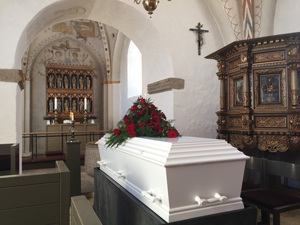
Funeral Foibles – Problems in the Celebration of Catholic Funerals

blog11-14In this month of All Souls, it is good to reflect on funerals. It concerns me that very few people today seem to understand the real purpose of a funeral. The way in which we conduct ourselves at funerals, the manner of preaching at funerals, and other visible attitudes expressed at funerals not only teach poorly, but are often a countersign of biblical and Church teaching on death, judgment, Heaven, and Hell.

There are many problems, both sociological, and liturgical, that combine to create an environment that not only obscures Catholic teaching on death, but often outright contradicts it.

In today’s post, I would like to lay out what I think are some of the issues that surround typical funerals today. I do not claim that every family or parish exhibits all or even any of these problems, only that they are common.

1. There is basic confusion about the purpose of a funeral. Many people arrive at the parish to plan a funeral, presuming that the funeral should be all about “Uncle Joe,” who he was, what he liked, etc. This leads to a series of requests, some of them inappropriate. For example,

  1. Uncle Joe’s favorite song was My Way, so we want a soloist to sing it at the funeral.
  2. Uncle Joe had three favorite nieces who would each like to speak after Communion to say “a few words” about what a great uncle he was.
  3. Uncle Joe was a big football fan; he never missed a game. So we’d like to have flowers in the team colors and a football displayed on a table near the altar. We received a letter from the team’s front office and we’d like to have it read in tribute after Communion (after the nieces).
  4. Father, in your sermon please remember to mention Joe’s great concern for such-and-such cause. Oh, and don’t forget to mention that he was a founding member here at St. Esmerelda’s and was the president of the parish men’s club.

Well, you get the point. Of course none of this is the real purpose of a funeral at all. Like any celebration of the Sacred Liturgy, the Funeral Mass is primarily for the worship of God, the proclamation of the Gospel, and the celebration of the paschal mystery. Secondarily, the Mass is offered for the repose of the soul the deceased, inviting prayer for the judgment he faces and for his ultimate and happy repose after any necessary purification.

The sacred liturgy exists to glorify God, not man; to praise the Lord, not Uncle Joe. No matter how great a guy Uncle Joe was, he doesn’t stand a chance if not for Jesus and lots of grace and mercy. Uncle Joe needs prayer more than he needs praise. Whatever gifts he did have were from God. God should be thanked and praised for them.

Too many funerals focus on man, not God. Too many funerals focus on human achievements rather than the need for grace, mercy, and gratitude for all that has been received.

As a practical matter, in my parish we do not allow relatives or friends to speak during the Funeral Mass. If someone wants to say a few words, it is done before Mass starts. Once the Funeral Mass begins, though, it is the Mass and only the Mass.

2. A step is skipped at most funerals. Upon the death of a loved one there is often the instant declaration that “He’s in Heaven now.” Sometimes it’s worded a little differently: “She’s in a better place” or “He’s gone home.”

Of course such statements are grossly presumptive and in making such declarations, people attempt to sit in the judgment seat that belongs only to Jesus. If I were to say, “Uncle Joe is in Hell now,” people would be justifiably angry and accuse me of being “judgmental.” But of course those who say “Uncle Joe is in Heaven now” are doing the very same thing.

Further, Scripture doesn’t teach that people, even believers, die and go straight to Heaven. No, there is little “pit stop” first, an appointment to keep. Scripture says,

  1. It is appointed for man to die once, and after that comes judgment (Hebrews 9:27).
  2. For we must all appear before the judgment seat of Christ, so that each one may receive what is due for what he has done in the body, whether good or evil (2 Cor 5:10).
  3. Always speak and act as those who are going to be judged under the law of liberty (James 2:13).

Thus instant promotion of the deceased to the realm of Heaven is inappropriate. Instead, we should give them to the Lord with our prayers, asking for a merciful and kindly judgment, and that any necessary purification be accomplished soon. The prayers for, and comments about, the deceased can include gratitude for their life and the gifts they brought. But we should never to fail to mention that the deceased goes to judgment and that we should pray for them, more than praise them.

3. Purgatory and the concept of purification after death are rarely mentioned at funerals, but should be. Purgatory is the likely destination of most of the dead, for at least some purification after death.

The whole point of praying for the dead is Purgatory! If the dead are in Heaven, then they don’t need our prayers. Sadly, if they are in Hell, they can’t use them either. It is those in Purgatory who both need and can use our prayers.

Jesus said, You must be perfect as the Heavenly Father is perfect (Mat 5:41). This is a promise, not a threat. And St. Paul said, May God who has begun a good work in you bring it to completion (Phil 1:16).

Most of us know that we are not perfect and that God’s work in us in not complete. If we were to die today, God would still have some work to do in us. Purgatory just makes sense; clergy ought not to be so hesitant to preach it clearly, particularly at funerals. We are not just here to pray for the family; we are here to pray for the deceased because he or she has gone to judgment. Even if the judgment isn’t for Hell (thanks be to God), there is almost certainly some finishing work needed, some purgation; our prayers make a difference in this regard.

4. The immediate family should not be the only object of concern and ministry at a funeral. While every priest and deacon who preaches is aware that a funeral is a sensitive moment for the family, he cannot minister only to them. Present at most funerals (in great abundance, frankly) are many who are unchurched and need to be called to Jesus. Often some of these people are in the immediately family of the deceased.

Clergy should not let this opportunity pass. The only time many of us see a lot of these people is at funerals. Waiting for “another time” to call them to repentance and to follow Jesus should not be an option. They are here now and must be called now.

At the Funeral Mass we clergy should seek to minister not only to the immediate family, but to all in attendance who are in varying states of spiritual health or disease.

Pastoral experience tells me that the overwhelming majority of attendees at funerals are in grave spiritual condition. Most of them are not serious about their spiritual life. They are not praying; they are not reading Scripture. They are not attending Mass or going to any service on Sundays. Many are in very serious and unrepentant mortal sin.

To have that many lost souls at a funeral and to say nothing at all to them about the need to repent and call on Jesus, is downright malpractice on the part of the clergy. Whether they like it or not, priests are watchmen for the house of Israel. They must go on ahead of the Judge to summon people to repentance and saving faith.

This can be and should be done at funerals. It is possible to do so with loving conviction and a passionate cry.

I have done this for many years at funerals and have almost never received complaints. On the contrary—I have received many expressions of gratitude from people who are desperate for their wayward relatives to hear such a message. I have also joyfully received back into the practice of the faith a number of people as a result of such preaching.

We must minster to everyone at funerals. They are moments that are pregnant with meaning and possibilities. They are evangelical opportunities.

It is generally agreed that things are out of balance at most Catholic funerals. Our silence about important matters such as judgment, Purgatory, and proper preparation for death makes a good deal of what we do unintelligible. Why are we offering Mass? Why do many of our prayers ask for mercy and beseech the Lord to received our deceased loved one into Heaven? If it’s all certain and perhaps even a done deal (e.g., Joe is already “in a better place”) why do we do any of this at all?

The priest should surely speak with confidence about the love and mercy of God, assuring the family in this regard, especially if the deceased had faith. The Lord Jesus loves sinners and died for us. Surely He will have mercy on those who seek it.

But God’s mercy cannot be preached without reference to human freedom and choice. Neither can judgment be understood without reference to the promise of perfection and the need for it before we can enter Heaven. Regarding Heaven, Scripture says, Nothing impure will ever enter it (Rev 21:27). The denizens of Heaven are described as the spirits of the righteous made perfect (Heb 12:23). And we are admonished, Strive for peace with everyone, and for the holiness without which no one will see the Lord (Heb 12:14).

All of these notions must balance and frame our discussion of mercy and the confident hope that we can give our loved ones back to God.

But too many Catholic funerals lack this balance. This lack is on the part of both the families, who often speak of salvation without reference to judgement, grace, or mercy; and the clergy, who often fail to preach in a way that sets forth a clear teaching on death, judgment, Heaven, (Purgatory), and Hell.

On Wednesday I will post a sermon typical of what I preach at funerals. If I do say so myself, it tries to articulate all of these themes.

Avoiding Extremes – A Post-Election Reflection

In the aftermath of the recent election I have noticed a tendency toward extremes. I’d like to point them out and counsel something of a via media.

There is no doubt that we have been through a difficult and painful election cycle. There were many strong, acidic, and even hateful things said by the candidates and their supporters; the knives were surely out. Even within the parties there were strong differences. It is clear that we are a very divided land.

And thus there are very different reactions to the results. Sadly, at least among the most vocal, two extremes are apparent. Some see catastrophe while others think that all of our country’s problems will be solved. Some demonize; others canonize. Neither extreme is helpful or accurate.

To those who see catastrophe and those who see utopia, I would point out that this is not the first political earthquake in the United States nor will it be the last. But we did not elect an autocrat; we elected a president. And like others before him, he is going to have to deal with our political process within a divided land. He will encounter resistance and will be forced to negotiate and compromise; the founding fathers deliberately designed it this way. Previous elections considered as great upheavals (e.g., the election of Ronald Reagan in 1980 and the 1994 shift to a Republican majority in the House of Representatives) did bring about change, but not overly dramatic change. Whatever the campaign rhetoric of the candidates, political reality tends to temper the results.

To those who would canonize the President-elect or any political leader, or who would see him as “God’s choice,” I say, beware. Some people can become inordinately devoted to a candidate, so much so that they seem to believe that he or she can usher in the Kingdom of God! Every leader is flawed, some more deeply than others. Frankly, Donald Trump is a hard man to categorize—politically or otherwise. Mr. Trump’s campaign promises are in accord with the Church’s position on abortion and religious liberty, but he is not with us on other key matters such as euthanasia, immigration, and likely LBGTQ-related issues. I’m sure that we will have to deal with his administration and Congress on an issue-by-issue basis. That a candidate is right on certain important issues does not mean that we should be unquestioning of his views on others. When we grow too devoted to a candidate, reflection often shuts down and we don’t issue the challenges we should. This is true with respect to political parties as well. No party perfectly reflects Catholic teaching; Catholics in both parties have many reasons to challenge their candidates and the parties with which they are affiliated. And yet there is only marginal evidence that such challenges take place. Mr. Trump is not aligned with the Church on some important issues. Even those who support him and are pleased with the outcome of this election should be prepared to issue challenges. I will be publishing an article at the National Catholic Register with more detail in this regard.

To those who would demonize our next president, I admonish that no Christian should succumb to the temptation to use the sort of vitriolic language we saw during the campaign, both from the candidates themselves and their respective supporters. There are legitimate concerns about the character and behavior of the President-elect as well as his stated views and policies, but comparing him to Hitler or using demonic terms to attack the man and/or his family is lamentable. Neither should the language and behavior at some of the anti-Trump rallies over the last few days infect our own speech and conduct. The scriptural stance from St. Paul regarding our leaders is clear: I urge that petitions, prayers, intercessions, and thanksgiving be offered on behalf of all men for kings and all those in authority, so that we may lead tranquil and quiet lives in all godliness and dignity. This is good and pleasing in the sight of God our Savior (1 Tim 1:1-3). And remember—when St. Paul wrote this, Nero was Caesar! When it comes to Mr. Trump, we ought to skip the invective and start the prayers.

Finally, with all this outward focus on the federal election cycle, it is time to rebalance our priorities. For most Americans, Washington is a world far away. Perhaps now is the time to devote more attention to the things and people closer to home. We ought to tend more the vineyard of our own soul. The problems and sins of the world are not isolated to Washington; they exist in our own souls, too. We should focus more on our families and communities and seek to improve them; Washington should not get all of our attention. Washington is not irrelevant, but neither is it all-important. It is time to find the proper balance.

These are just a few of my thoughts as a pastor. Avoid the extremes and find a via media, a middle way.

Our Journey Through a Passing World – A Homily for the 33rd Sunday of the Year

nov12-blogDuring the month of November, the Church has us ponder the Four Last Things: death, judgment, Heaven, and Hell. As the golden gown of autumn gives way to the lifeless look of winter, we are encouraged to see that our lives are on a trajectory that leads to autumn and then to the winter of death. But those who have faith know that this passage to death ultimately leads to glory. Scripture says, And the world passes away, and the lust of it; but he who does the will of God abides forever (1 John 2:17).

In today’s Gospel, the Lord Jesus gives us a kind of road map of life and calls us to be sober about the passing and perilous nature of this world.

There is an historical context in which our Lord speaks. There were political rumblings in Israel in the early 30s AD that would eventually lead to war. Hatred of the Romans was growing among the Jews. The Zealot party and other factions were gaining power. In today’s Gospel, Jesus prophesies that war will come and lead to Jerusalem’s ultimate destruction; everything that the people know will pass away. By the summer of 66 AD, a three-and-a-half-year war was underway that resulted in the complete destruction of Jerusalem and the death of 1.2 million Jews. Josephus recorded the war in great detail in his work The Jewish War.

That is what this text meant historically. But we also need to understand what it means for us today. So let’s look at the text from that perspective. Today’s Gospel can be seen in three major sections.

I. Portrait of Passing ThingsWhile some people were speaking about how the temple was adorned with costly stones and votive offerings, Jesus said, “All that you see here—the days will come when there will not be left a stone upon another stone that will not be thrown down.” Then they asked him, “Teacher, when will this happen? And what sign will there be when all these things are about to happen?” Notice how they admire the temple and its beauty. But the Lord reminds them that although it is glorious now, it will all be destroyed. We, too, must understand that whatever glory we see or experience in this world will not last; in the end it will all pass away.

The Temple is a symbol of passing things. Just as it was once in splendor and now is gone, so everything we see today will pass. This is a sober truth that we must come to accept, difficult though it may be. Other Scriptures also remind us of this truth: The world as we know it is passing away (1 Cor 7:29). And the world passes away, and the lust of it; but he who does the will of God abides forever (1 John 2:17). This world is passing and we, too, will pass from it one day.

Note, however, that for them as well as for us, although one world ends, another begins. The Old Testament, Old Covenant, and ritual order of the Temple was ending, but the New Testament age of the Church was beginning. It was already breaking forth even as the old was coming to an end.

And so we should not lament the end of this world or even our own death. A newer, greater world—that of Heaven—awaits those who are faithful. In fact, through the liturgy and the sacraments, that new world is already breaking forth for those who partake of it.

II. Points of Passage to Promised Things – Having been informed that all things will pass, the disciples ask for signs that will precede the coming end. We can learn from what Jesus teaches them and apply it to our own lives today.

Jesus warns them of four perils on the passage to the promised land of the New Testament age of the Church. We, too, will experience dangers in our journey to the promised land of Heaven.

A. False Messiahs “See that you not be deceived, for many will come in my name, saying, ‘I am he,’ and ‘The time has come.’ Do not follow them!” If you want Jesus Christ to be the Lord of your life, then you’ve got to get rid of false messiahs.

Too many people give greater authority in their life to people and worldly things than they do to Jesus Christ and His teachings. We submit our lives to all sorts of fads, fashions, philosophies, and people in hopes that we will be happy.

Perhaps it is someone in power whom we admire, or someone in the media whom we allow to influence us inordinately. Perhaps it is political positions that we allow to trump the Scriptures and the teachings of the Church. Perhaps it is just our personal convictions or ideas that we allow to overrule God’s teachings.

A false messiah is anything or anyone other than Jesus Christ telling you how to organize your life. Before Christ can reign unambiguously in your life, false powers and influences have to go.

Too many people look only to science, popular culture, economics, medicine, education, politics, and the like for guidance; they have been deceived.

It is not that we can’t use these things at all, but they are not a replacement for the Messiah. None of these things or people died for you. Only Jesus did that.

The power to save you is not in the statehouse, the courthouse, or the White House—it is in the saving blood, of the Lamb, our Lord Jesus Christ.

B. Fierce Militarism “When you hear of wars and insurrections, do not be terrified; for such things must happen first, but it will not immediately be the end.” Then he said to them, “Nation will rise against nation, and kingdom against kingdom.” A war was looming for those ancient people.

We, too, are in a war, a battle. Before Christ can reign unambiguously within you, the false powers in you must be defeated. But they will not go without a fight. The world, the flesh, and the devil can be expected to wage a fierce battle in order to keep their power.

Are you in a battle? You should be! Too many Christians have lost the sense of battle. Scripture says, Resist the devil and he will flee from you (James 4:7). Yet not only do too many people not resist him, they welcome him! Scripture also says, Stand therefore, having girded your loins with truth, and having put on the breastplate of righteousness, and having shod your feet with the equipment of the gospel of peace; besides all these, taking the shield of faith, with which you can quench all the flaming darts of the evil one. And take the helmet of salvation, and the sword of the Spirit, which is the word of God (Eph 6:14).

An old hymn says, I’ve seen lightning flashing, and hear the thunder roll, I’ve felt sin-breakers dashing, which tried to conquer my soul; I’ve heard the voice of my savior, he bid me still to fight on. He promised never to leave me never to leave me alone.

On our way to the promised land of Heaven, we will encounter necessary battles: battles for what is right, battles against sin, battles for proper priorities.

C. Far-flung Marvels“There will be powerful earthquakes, famines, and plagues from place to place; and awesome sights and mighty signs will come from the sky.” In the time of Jesus and the era just preceding the war, there were in fact many earthquakes, droughts, and even heavenly signs. Historians of the time wrote of a comet and strange views of what we know today as the Aurora Borealis.

But what of us? What are the earthquakes of our life? Earthquakes involve the shaking of the ground, the shaking of that which seems most stable to us. What is the foundation of your life?

For most of us, the foundations of this world are things like money, politics, friends, family, and our own skills. All of these things are shaken in life and all of them will eventually fail. Our talents and abilities fade as we age. Friends and family members move away, fail us, and eventually die. Political power and worldly access ultimately fails. Haven’t we all experienced our world shaken, our soul famished, the plagues of sin infecting our world and ourselves?

Furthermore, haven’t stars grown cold, meteors fallen from the sky, the sun been hidden from our eyes from time to time? Has not our world at times been “turned upside down”? Maybe it was the sudden death of a loved one, the loss of a job, or a diagnosis of cancer.

This is why God must be our ultimate foundation, the star by which we navigate. If Jesus is not our foundation, then something else is. Without God as our foundation, we cannot last. The foundations of this world will all ultimately crumble. Christ must be our sure foundation.

D. Fearful Malice Before all this happens, however, they will seize and persecute you, they will hand you over to the synagogues and to prisons, and they will have you led before kings and governors because of my name. It will lead to your giving testimony. Remember, you are not to prepare your defense beforehand, for I myself shall give you a wisdom in speaking that all your adversaries will be powerless to resist or refute. You will even be handed over by parents, brothers, relatives, and friends and they will put some of you to death. You will be hated by all because of my name, but not a hair on your head will be destroyed.” The early Christians were greatly persecuted. Most of us in the Christian West have had less to suffer, more difficult days may well be ahead as the secular West grows increasingly hostile to traditional Christianity.

Persecution, however, is an expected part of the Christian journey to the promised land of Heaven. Even if we are not “handed over,” many of us today are not taken seriously, are written off, or are called names even by our friends and family.

Christ tells us not to worry about such things because they are part of the normal Christian life. Even if some of us eventually lose our life for the faith, the Lord promises that not a hair of our head will be harmed. That is, our souls will be saved. The world can only harm our body; it cannot harm our soul unless we allow it to do so.

III. Prescription for the Passage to Promised Things By your perseverance you will secure your lives.” We must always journey on and not lose faith or lose heart. There is glory waiting for us if we persevere.

Scripture says, But he who endures to the end will be saved (Mat 10:22). For yet a little while, and the coming one shall come and shall not tarry; but my righteous one shall live by faith, and if he shrinks back, my soul has no pleasure in him.” We are not of those who shrink back and are destroyed, but of those who have faith and keep their souls (Heb 10:37).

An old spiritual says, “Hold on just a little while longer; everything’s gonna be all right.”

In this regard, the end of the Book of Daniel also seems pertinent: [Daniel asked the Archangel Gabriel], My lord, what will the outcome of all this be?” He replied, “Go your way, Daniel, because the words are rolled up and sealed until the time of the end. Many will be purified, made spotless and refined, but the wicked will continue to be wicked. None of the wicked will understand, but those who are wise will understand. … As for you, go your way till the end. You will die, yet at the end of the days you will rise to receive your reward” (Daniel 12:8-10, 13).

Yes, on our journey through this passing world it is necessary to persevere unto the end. If we do not, greater woes will come. If we do, there will be glory for us on the other side.

A Glimpse of Our Common Enemy, As Seen in a Commercial

The commercial below is a good illustration of a description of reality supplied by St. Paul.

Finally, be strong in the Lord and in the strength of his might. Put on the whole armor of God, that you may be able to stand against the schemes of the devil. For we do not wrestle against flesh and blood, but against the rulers, against the authorities, against the cosmic powers over this present darkness, against the spiritual forces of evil in the higher realms (Ephesians 6:10-12).

As the video opens we see a man and woman approaching each other, each surrounded by cartoonlike demons. I call them demons because although they appear to be “cute” they are nothing of the sort. Like the biblical “wolves in sheep’s clothing,” they are influencing the two humans in the video in a hidden but very real way. Demons surely do this to all of us, tempting us to sin and seeking to influence our thoughts and actions. The two people in the commercial seem oblivious to the presence of these creatures, just as we are often unaware of the demons who seek to influence us.

When they meet, the man and woman confront each other with hostility. St. Paul would remind us that they ought to set aside their petty “turf war” and realize that they are being manipulated by dark forces from higher realms.

But they do not do so; much as we often do, they begin to fight.

In a moment of revelation, though, they both see their common enemy and join forces against him. There’s an old saying, “Warring brothers reconcile when there is a maniac at the door.”

As St. Paul says, our battle is not so much against one another, but against powers and dark forces from higher realms. Would that we could all see this more clearly.

Scripture is a prophetic declaration of reality; it tells us what is really happening. Enjoy this brief depiction of an archetypal biblical teaching. Even if the commercial’s creators did not intend to convey this understanding, the eyes of faith can see it.

https://youtu.be/uIFHLYtP7pM

Who Is Your Real Enemy and What Are His Tactics?

nov10-blogIn the aftermath of the recent election, our country and our parishes are divided. Some people are hurt and angry while others are jubilant and hopeful. But although we often square off in opposing corners and stare fearfully at each other, we should remember our common enemy, the Devil. There’s a saying that warring brothers reconcile when there’s a maniac at the door; and the Devil is surely a maniacal and cunning opponent.

One of the key elements in any battle is understanding the strategy and tactics of your opponent. In the spiritual battle of life, we need to develop some sophistication in recognizing, naming, and understanding the strategies and common tactics of the Devil.

A 2011 book by Fr. Louis J. Cameli, The Devil You Don’t Know, can be of great assistance in this matter. In the book, Fr. Cameli breaks the Devil’s tactics down into four broad categories. I highly recommend reading the book, where Fr. Cameli expounds on the topic much more fully than I can do here.

While the categorization comes from Fr. Cameli, the reflections that follow are largely my own, although surely rooted in his excellent work.

I. Deception Jesus says, The Devil was a murderer from the beginning he does not stand in the truth, because there is no truth in him. When he lies he speaks according to his own nature, he is a liar and the father of lies (John 8:44).

The Devil attempts to deceive us with many false and empty promises. Most of these center around the lie that we will be happier and more fulfilled if we sin or deny aspects of the truth. Whatever passing pleasures come with sin, they are just that—passing. Great, accumulated suffering eventually comes with almost all sinful activity. Yet, despite this experience, we human beings remain very gullible; we seem to love empty promises and put all sorts of false hopes in them.

The Devil also tries to deceives us by suggesting that we introduce all sorts of complexities into our thinking. He seeks to confuse us and to conceal the fundamental truth about our action from us. Our minds are very wily; we love to indulge complexity as a way of avoiding the truth and/or making excuses. Conniving with the Devil, we entertain endless complications in our minds by asking “But what if this?” or “What about that?” Along with the Devil, we project all sorts of possible difficulties, exceptions, or potential sob stories, in order to avoid insisting that we (and/or others) behave well and live according to the truth.

The Devil also seeks to deceive us with “wordsmithing.” The dismemberment and murder of a child through abortion becomes “reproductive freedom” or “choice.” Engaging in sodomy is called being “gay” (a word which used to mean happy). Our luminous Faith and ancient wisdom is called “darkness” and “ignorance.” Fornication is called “cohabitation.”  The redefinition of marriage as it has been known for some 5000 years, is labeled “marriage equality.”  And thus through exaggerations and outright false labeling, the Devil deceives us. We too easily connive by calling “good,” or “no big deal,” what God calls sinful.

Finally, the Devil deceives us through the sheer volume of information and with selective use of it. Information is not the same is truth, and data can be assembled very craftily in order to make deceptive points. Further, certain facts and figures can be emphasized while other balancing truths are omitted. And thus even information that is true in itself can become a means of deception. The news media and other sources sometimes exercise their greatest influence in what they choose not to report.

We do well to assess very carefully the many ways Satan seeks to deceive us. Do not believe everything you think or hear. While we ought not to be cynical, we should be sober, seeking to verify what we see and hear and square it with God’s revealed truth.

II. Division One of Jesus’ final prayers for us was that we would be one (cf John 17:22). He prayed this at the Last Supper, just before He went out to suffer and die for us. This highlights that a chief aspect of His work on the cross was to overcome the divisions intensified by Satan. Some argue that the Greek root of the word “diabolical” (diabolein) means to cut, tear, or divide. Jesus prays and works to reunify what the Devil divides.

The Devil’s work of division starts within each one of us, as we experience many contrary drives: some noble, creative, and edifying; others base, sinful, and destructive. So often, we struggle within and feel torn apart, much as St. Paul describes in Romans chapter 7:  The good that I want to do, I do not do …, and when I try to do good, evil is at hand. This is the work of the Devil, to divide us within. And as St. Paul lays out in Romans chapter 8, the chief work of the Lord is to establish within us the unity of soul and body, in accordance with the unity of His truth.

The Devil’s attack against our inner unity of course spills out into many divisions among us externally. So many things help to drive this division and the Devil surely taps into them all: anger, resentment, fear, misunderstanding, greed, pride, and arrogance. There is also the impatience that we so easily develop with those we love, as well as the flawed notion that we should seek out other more perfect and desirable people instead. This leads many to abandon their marriages, family, churches, and communities; always in search of the elusive goal of finding better, more perfect people and situations.

Yes, the Devil has a real field day tapping in to a plethora of sinful drives within us. His goal is always to divide us within and to divide us among ourselves. We do well to recognize that regardless of our struggles with others, we all share a common enemy who seeks to divide and destroy us. St. Paul writes, For our struggle is not against flesh and blood, but against the rulers, against the authorities, against the powers of this dark world and against the spiritual forces of evil in the heavenly realms (Eph 6:12). Yes, feuding brothers reconcile when there’s a maniac at the door. Step one is to notice the maniac and step two is to set aside our lesser divisions.

III. Diversion For all of us, our most critical focus is God and the good things awaiting us in Heaven. Faith, obedience to the truth, love of God, and love of neighbor lead us on the path toward Heaven. The Devil does all that he can to divert us away from our one true goal.

Perhaps he will do this by making us overly absorbed in the passing things of this world. So many people claim that they are too busy to pray, attend Mass, or seek other forms of spiritual nourishment. They become absorbed in worldly things, which pass, ignoring the lasting reality that looms.

Anxieties and fears also cause us to be distracted. The Devil causes us to fixate on fears about passing things while neglecting to have a proper fear of the judgment that awaits us. Jesus says, Do not be afraid of those who kill the body but cannot kill the soul. Rather, be afraid of the One who can destroy both soul and body in hell (Matt 10:28). In other words, we should have a holy reverence and fear directed towards the Lord. If we do this, many of our other fears will be put into better perspective or will go away altogether. In this matter of fear, the Devil says just the opposite: we should fear the myriad things that might afflict us in this passing world and not think at all about the most significant thing that awaits us—our judgment.

At the heart of all diversion is the fact that the Devil wants us to focus on lesser things so that we avoid focusing on greater things, such as making moral decisions and attending to the proper overall direction of our life.

We must learn to focus on what matters most and decisively refuse to be diverted by lesser things.

IV. Discouragement As human beings, and certainly as Christians, we ought to have high aspirations; this is good. But as with all good things, Satan often seeks to poison them. With our high aspirations, sometimes we lack the humility to recognize that we must make a journey in order to achieve that which is good or best. Too easily, Satan tempts us to impatience with our own self or with others. Expecting to achieve our aspirations unreasonably quickly, we can be uncharitable toward our own self or others. Some grow discouraged with themselves or with others and just give up on the pursuit of holiness. Others give up on the Church because of the imperfections found there, as are found in any institution with humans.

The Devil discourages us with open-ended aspirations. There is always room for improvement; we can always do more. When we can always do more, it is easy to think that we’ve never done enough. And thus the Devil discourages us, sowing thoughts of unreasonable demands within us about we can or should be able to achieve each day.

The Devil also discourages us through simple things like fatigue, minor personal failings, setbacks, and other obstacles that are common to our human condition living in a fallen world with limited resources.

In all these ways the Devil seeks to discourage us, to make us want to give up. Only a properly developed sense of humility can save us from this discouragement by Satan. Humility—which is reverence for the truth about ourselves—teaches us that we grow slowly and in stages and helps us to recognize that we will always have setbacks and that we live in a world that is hard and far from perfect. With humility we can learn to lean more on the Lord and trust in His providential help, which grows in us incrementally.

Here, then, are four common tactics of the Devil. Learn to recognize and name them. In this way, we can start to gain authority over them. Consider reading Fr. Cameli’s book to learn more.

Why Do So Many Miss Experiencing Jesus in Our Parishes and How Can We Change This?

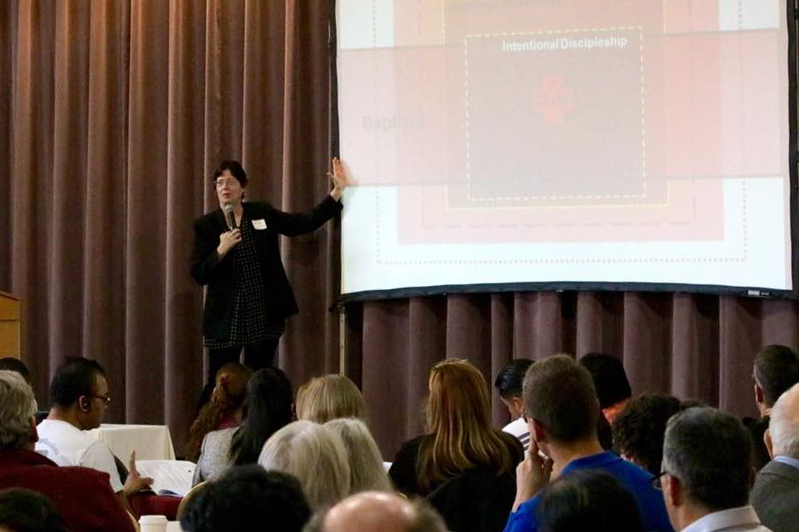
We were blessed this past weekend to have Sherry Weddell, author of Forming Intentional Disciples, visit the Archdiocese of Washington and speak to priests and lay leaders. Her work is a great blessing to the Church in calling us back to “job one,” which is to make disciples. In Catholic parishes evangelization is too often relegated to committees or tossed into the “we’ll get to that next year” file. Weddell’s mission is to create greater urgency in this most central work of the Church.

Rather than present her thoughts (which are admirably stated in her books) in this blog, I would like instead to put forth a few of my own (which echo hers, and I would argue, those of Jesus Himself). Sadly, there are many issues that keep people from experiencing Jesus powerfully in our parishes. There are also some practices we ought to better observe in order to better manifest the presence and person of Jesus. Let’s consider first some problems and then some remedial practices.

I. Problems – If Jesus is present in His Church, then this is most evident in His action and presence in the Liturgy and Sacraments of the Church. Yet any cursory look into the typical Catholic parish would reveal little to indicate an awareness of this.

A. Bored and disengaged The assembled people, including the clergy, often look bored, distracted, and mildly irritated at having to endure the event. Where is the alert joy that one sees at sporting events or at the appearances of celebrities? If people believe that Jesus is alive and ministering in this moment, why do so many of them look as if they’re waiting for a root canal? It’s as though they wish the whole thing would be over as quickly and painlessly as possible.

Some argue that many people are just reserved by nature, but most of these same people are animated enough at football games or in political discussions. The answer seems to be more due to a lack of vivid faith and a failure to understand that the Liturgy and Sacraments are encounters with the Risen Lord Jesus.

B. Perfunctory Further, in terms of the spiritual life of many of the faithful, it seems that even where there is observance of norms (e.g., attendance at Sunday Mass, or confession on at least an annual basis), it is done more out of a sense of duty than with eager love. The bare minimum is all that is done, only enough to “check off the God box.” It is almost as though they are placating the deity rather than worshipping and praising the God to whom they are grateful and whom they love. The upshot is that the sacraments are considered tedious rituals rather than transformative realities or true encounters with Jesus.

C. Low Expectations Many people place more trust in Tylenol than they do in the Eucharist. When they take Tylenol they expect something to happen; they expect there to be healing, for the pain to go away or the swelling to go down. But do these same people have any real expectations about the Eucharist or the other sacraments? Almost never.

Much of the blame for these low expectations lies with priests and catechists who have never really taught the faithful to expect much. At best there are vague bromides about “being fed.” Little is taught about radical transformation and healing.

D. Unevangelized The general result is that many in the pews have received the sacraments, but have not been evangelized. Many have gone through Catholic rites of passage but have never really met Jesus. They have gone through the motions for years but are not really getting anywhere when it comes to being in a life-changing, transformative relationship with Jesus Christ. To a large degree, the Lord is a stranger to them. They are far from the normal Christian life of being in personal, living, and conscious contact with the Lord.
Given these common problems, what are we to do?

II. Principles and Practices

A. Clarity as to the fundamental goal of the Church – The fundamental mission of the Church is to go to all the nations, teach them what the Lord commands, and make disciples of them through Baptism and the other sacraments (cf Matt 28:20).

But making disciples and being disciples is about more than just “membership.” To become a true disciple is to have a personal, life-changing, transformative relationship with Jesus Christ. It is to witness to the power of the cross to put sin to death, to bring every grace alive, and to make of us a new creation in Christ. We cannot and should not reduce discipleship to mere membership.
The goal is to connect people with the Lord Jesus Christ so that He can save them and transform their lives in radical and powerful ways.

B. Conviction in Preaching – Those who preach, teach, and witness to others cannot simply be content to pass on formulas or to merely quote others. Priests, parents, catechists, and others must begin to be firsthand witnesses to the power of God’s Word, not only to inform, but to perform, and to transform. They must bear witness to how the Lord is doing this in their own lives.

If they are in touch with God, they ought to exhibit joy, conviction, and real change. They must be able to preach and teach with “authority,” in the richer Greek sense of the word. Exousia (authority) means more literally to preach “out of one’s own substance.” The summons is to speak from one’s own experience as a firsthand witness who can say with conviction, “Everything the Church and Scriptures have always announced is true, because in the laboratory of my own life I have tested them and found them to be true and transformative. I who speak these things to you, along with every saint, swear to you that they are true and trustworthy.”

A firsthand witness knows what he saying; he does not merely know about it. The video below from Fr. Francis Martin speaks to this practice. Preaching, teaching, and witnessing with conviction are essential components of renewal in the Church.

C. Cultivate Expectation! – Most people expect to meet, and have met, people who have changed their lives, and yet they don’t expect much from their relationship with Jesus Christ.

If ordinary people can change our lives, then why can’t the Lord Jesus Christ? Most people seem to think that having a tepid spiritual life, experiencing spiritual boredom, and having only a vague notion about the truths of faith are all normal. Really? Is that the best that the death of the Son of God can do for us? That we should be bored, lukewarm, uncertain, and mildly depressed? Of course not!

We need to lay hold of the glorious life that Jesus died to give us, to have high expectations, and to start watching our lives be transformed.

Consider the woman who came up to Jesus in the crowd thinking that if she just touched the hem of His garment she would get well. Jesus was amazed that one woman among the large crowd had actually touched Him. After she explained He said to her, “Your faith has healed you” (Luke 8:47). Who has such faith? Who has the expectation to be healed, to be delivered? King Jesus is a-listenin’ all day long!

D. Catechetical refocus – We have tended to teach the faith more as an academic subject than as a relationship. And hence we have focused on and measure success based on whether we can do things like list the seven gifts of the Spirit or the four marks of the Church. Certainly there is content that must be mastered, but without relationship to Jesus, most people lose command of the facts shortly after the test.
We need to begin with relationship. We need to get people (children and adults) excited about Jesus and joyful about what He has done. Then the motivation to learn will come naturally.

Back in the late 1960s I became a fan of Star Trek. Captain James Tiberius Kirk was all the world to me. Even though he was a fictional character, I wanted to know all about him: where he was born, what he did, and what he thought. When I discovered the actor who played Kirk, I joined the William Shatner fan club. Then I wanted to know all about Shatner: what he thought about important issues, when he was born, and what his favorite hobbies were. Fascination drew me to a mastery of all sorts of facts about Captain Kirk and William Shatner. You didn’t have to make me learn this stuff; I sought it out eagerly!

Do people think this way about Jesus? Usually not. And why not? Because we do very little to cultivate this fascination and joy. We teach more about structures, rules, and distinctions than about Jesus. Although our intellectual tradition is important and essential, without starting from a relational interest, we might as well be attempting to build on no foundation at all.

Jesus said, “Come and see” as an initiation. The details of the creed came later and were important, but relationship was first. Friendship precedes all the facts; they can come later.

Where in our catechism do we inculcate a love for, respect of, and fascination with Jesus?

E. Come on, Testify! – Catholics are terrible at testimony and witness. What is your story? How did you meet Jesus? What has He done in your life? What is He doing in your life now? Have your children ever heard you say that you love Jesus? Do they know what He has done for you? Do parishioners ever hear their priests testify? Arguments and proof have their place, but without personal testimony and conviction, these truths remain abstractions.
There may come a time when, through argument, you are actually get someone to “buy in.” But then comes the tough question: “Well, that’s all good news, but how do I know it’s true?” And that is when you have to be able to answer, convincingly, “Look at me!” It’s not enough to state the facts and to quote others. You have to know what you’re talking about, and relate it personally and convincingly to others.

The bottom line is that we have to be converted, and having experienced conversion, go forth as those who know the Lord, not just know about Him.

Enigmatic Yet Enduring – A Homily for the Feast of the Dedication of the Lateran Basilica in Rome

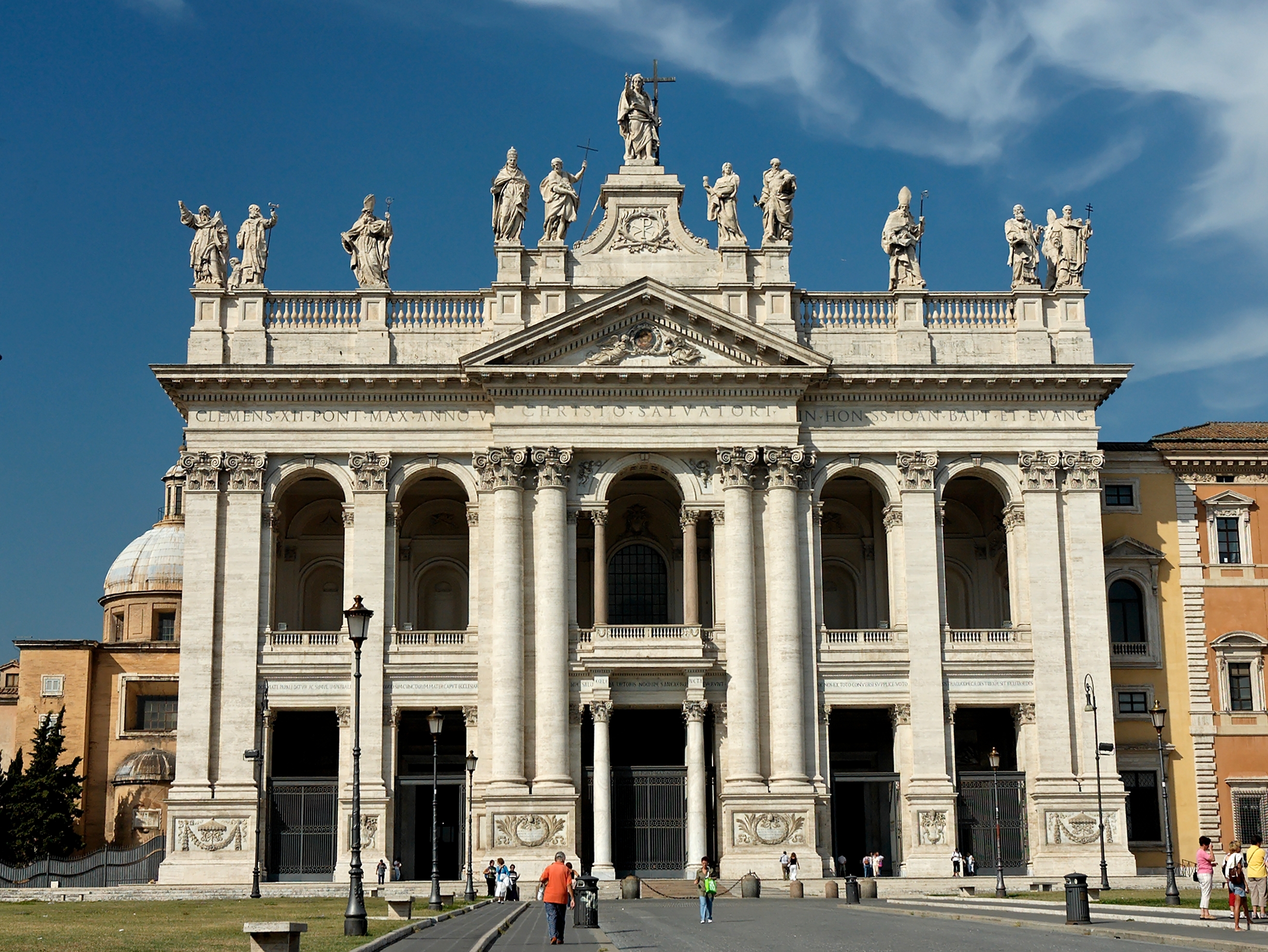
st-john-lateran-basilica-in-romeToday is the Feast of St. John Lateran Basilica in Rome. This, not St. Peter’s is the Pope’s true Cathedral. And thus in celebrating this Feast, we celebrate the unity of the Church. The Pope’s work is to unite and strengthen the members of the Church, whom the devil would like to sift (divide) like wheat (see Lk 22:31ff). On this feast, we do well to examine a few teachings about the Church from today’s readings.

I. The Shock of the Church One of the more puzzling aspects of God’s approach to reaching us is His subtlety. Considering that God could thunder from the heavens and visibly, forcefully interject Himself into the doings of this world, His quiet and more subtle methods surprise and even shock us. In terms of entrusting His message to the world, His methods seem even stranger to us. Jesus never wrote a book or left anything physical behind that related to His person. Instead, He taught disciples and entrusted His teachings specifically to twelve rather ordinary men, telling them to go out into the whole world! So much of the Lord’s plan seems to depend upon weak human beings. Scripture says,

For, “everyone who calls upon the name of the Lord will be saved.” But how are men to call upon him in whom they have not believed? And how are they to believe in him of whom they have never heard? And how are they to hear without a preacher? And how can men preach unless they are sent? … So faith comes from what is heard, and what is heard comes by the preaching of Christ (Rom 10:13,14).

But what if preachers are unholy or lazy? What if they are weak or ineffective? Are you shocked and scared that God would make your faith depend upon the preaching of the Church? Or do you trust that God can work even through weak, sinful, inconsistent human agents to accomplish His mission?

We might speculate that the Lord chooses not to overwhelm us (as Satan does) since His call is one of love. He seeks sons and daughters who love Him, not slaves who cower in fear and say yes more to escape His wrath than to enjoy His love. Perhaps He uses this quieter and less overwhelming way so as to propose rather than impose. The Feast of St. John Lateran Basilica commemorates the Pope’s Cathedral in Rome and is a symbol of the endurance of this unlikely system. During the age of the Church, nations have risen and fallen, and empires have come and gone, yet we are still here. The Psalm today says, The LORD of hosts is with us; our stronghold is the God of Jacob (Ps 46:8).

Many today express shock and horror at sin and weakness within the Church. And it is a disgrace when the charges are accurate. But remember, Jesus was found in some pretty strange company as He walked this earth. He dined with sinners and spoke the truth to them. He compared Himself to a doctor caring for the sick. It is no surprise, then, that the Church (a hospital, really) would care for sick sinners.

Whatever His reasons, the Lord does not follow the usual “marketing plan” of the world, what with all its loud and intrusive methods. He did not write a book; rather, He founded a community, the Church, which is His body. It is quite a shocking departure from worldly ways and expectations. It requires a lot of trust to understand how such an unlikely method could succeed.

II. The Surety of the Church Another shocking truth that we express every Sunday in the Nicene Creed is that the Church is an object of faith. We say, “I Believe in one, holy, catholic, and apostolic Church.” Many will say that they have faith in God, not in man. And yet every Sunday, there it is: I believe in the Church. How and why can we say this? Because the Church is not merely a human institution; the Church is also divine. The Church is the Body of Christ; He is the head of the Body, the Church, and the Holy Spirit indwells it.

Others say, “I don’t believe in the Church, I believe in the Bible.” But of course we would not have a Bible without the Church. Scripture itself speaks of the Church, not the Bible, as the pillar of the truth. St. Paul wrote, If I am delayed, you may know how one ought to behave in the household of God, which is the church of the living God, the pillar and bulwark of the truth (1 Tim 3:15).

So again, the Church is an object of faith. But how can we trust the Church, the Apostles, and their successors? Here, too, Scripture is replete with teachings showing that the Lord will guide His Church and preserve her from error:

  • But the Counselor, the Holy Spirit, whom the Father will send in my name, he will teach you all things, and bring to your remembrance all that I have said to you (John 14:26).
  • When the Spirit of truth comes, he will guide you into all the truth; for he will not speak on his own authority, but whatever he hears he will speak, and he will declare to you the things that are to come (John 16:13).
  • He who hears you hears me, and he who rejects you rejects me, and he who rejects me rejects him who sent me (Luke 10:16).
  • And Jesus answered him, “Blessed are you, Simon Bar-Jona! For flesh and blood has not revealed this to you, but my Father who is in heaven. And I tell you, you are Peter, and on this rock I will build my church, and the powers of death shall not prevail against it. I will give you the keys of the kingdom of heaven, and whatever you bind on earth shall be bound in heaven, and whatever you loose on earth shall be loosed in heaven” (Mat 16:17).
  • Simon, Simon, behold, Satan demanded to have you, that he might sift you like wheat, but I have prayed for you that your faith may not fail; and when you have turned again, strengthen your brethren (Luke 22:31).
  • Go therefore and make disciples of all nations, baptizing them in the name of the Father and of the Son and of the Holy Spirit, teaching them to observe all that I have commanded you; and lo, I am with you always, to the close of the age (Mat 28:19).

So here is a call to faith. Do you believe that Christ speaks through His Church? Works through His Church? Teaches through His Church? If not, you are an orphan; you don’t even have Scriptures, because although the Scriptures derive their origin and delineation from God, it is through the Church.

Stand with Jesus today and say of the Church, “Zeal for your house will consume me.”

III. The Sanctification of the Church The Gospel today clearly shows that the Church, like any group that includes human beings, is always in need of cleansing and purification. Ecclesia semper reformanda. (The Church is always in need of reform.) On one level we can become too worldly; on another we can allow the sins of our own members and clergy to go unaddressed. On yet another level we can become timid and fearful, not living the radical call to the Gospel or proclaiming it to others.

Frankly, Jesus needs to “rough us up” at times. He needs to come in and tip over a few tables, even slaughter a few “sacred cows.”

It is hard to know exactly the origin of our current struggles. Some of us who are older remember the times of packed churches, Catholic schools with waiting lists, and filled convents and seminaries. Some blame Vatican II; others think we would be worse off without it. Whatever the case, the robust Church of 1950s and 1960s collapsed quickly and seemed ill-prepared for the cultural tsunami that hit in multiple waves. The Church did not have the loyalty of the faithful, who largely departed to the ranks of the revolutionaries.

Today, a painful purification is going on. The answers as to why and how much longer this will continue are not clear. But in my own life I can say that the persecution has sharpened my faith and forced me to be clearer about what I believe and why. I know many others who have had the same experience.

But just as on the day that Jesus overturned the tables, the purification is painful and unsettling. Let Him do His work. Stay faithful and do not lose heart. Some—indeed many—have departed. But as for you, stay faithful; stay in the conversation with Jesus and His Church.

IV. The Situation of the Church Where is the Church to be found? Jesus was once asked this same sort of question by the Pharisees. Scripture records, Being asked by the Pharisees when the kingdom of God was coming, he answered them, “The kingdom of God is not coming with signs to be observed; nor will they say, ‘Lo, here it is!’ or ‘There!’ for behold, the kingdom of God is in the midst of you” (Lk 17:20-22). And in today’s second reading, St Paul says, You are God’s building … Do you not know that you are the temple of God, and that the Spirit of God dwells in you? (1 Cor 3:16)

Therefore, travel on a plane to find the Church. It is as near as our very self. As we shall see, that is not all that the Church is, but remembering that the Church does not start and end in some distant land, or reside merely among the clergy, is an important summons to responsibility. Sometimes we let the concept of the Church become abstract or institutional. But in a very real way, you and I are the Church.

And how have you done? Have you proclaimed the faith to your children and grandchildren? To your spouse? Have you been a good influence on friends and co-workers? Or do you think that is that the job of the clergy?

But note, too, that St. Paul warns us that our membership in Christ and His Body the Church is not an individualistic notion: But each one must be careful how he builds upon it, for no one can lay a foundation other than the one that is there, namely, Jesus Christ (1 Cor 3:11). In other words, as members of Christ’s Body, we must function under the authority of the Head of the Body, Jesus. We are not to be among those who simply cast aside what He has taught.

This is especially important today because many demand that the Church reflect the views of its members. Some will, with great indignation, cite polls that x% of Catholics do not agree with this or that teaching. But such polls are irrelevant in determining what the Church should teach. The job of the Church is not to reflect the views of its members. The job of the Church is to reflect the views of its Head and Founder, Jesus Christ.

Consider that in a physical body, if the members were not following the directives of the head, we would rightly assume that the body was sick with epilepsy or some neuromuscular disease. And so it is with the Church. A group (or individual) within the Church cannot really say “We are the Church” unless, as St. Paul says, they are building on the foundation of Christ, unless they are following the directives of the Head of the Body, Christ.

These are four basic teachings on the Church. I pray you, do not consider such things as being merely esoteric. So many problems today center on questions of ecclesiology. What is the Church? What is her nature and purpose? Who has authority to teach and speak in Jesus’ name? How do we sort out the competing claims of some groups to be or speak for the Church? What are the different gifts and roles in the Church? These are just a few teachings to help us reflect more accurately on the Church.

I know that the Church is not buildings, but we do have some very nice ones! Enjoy these videos.