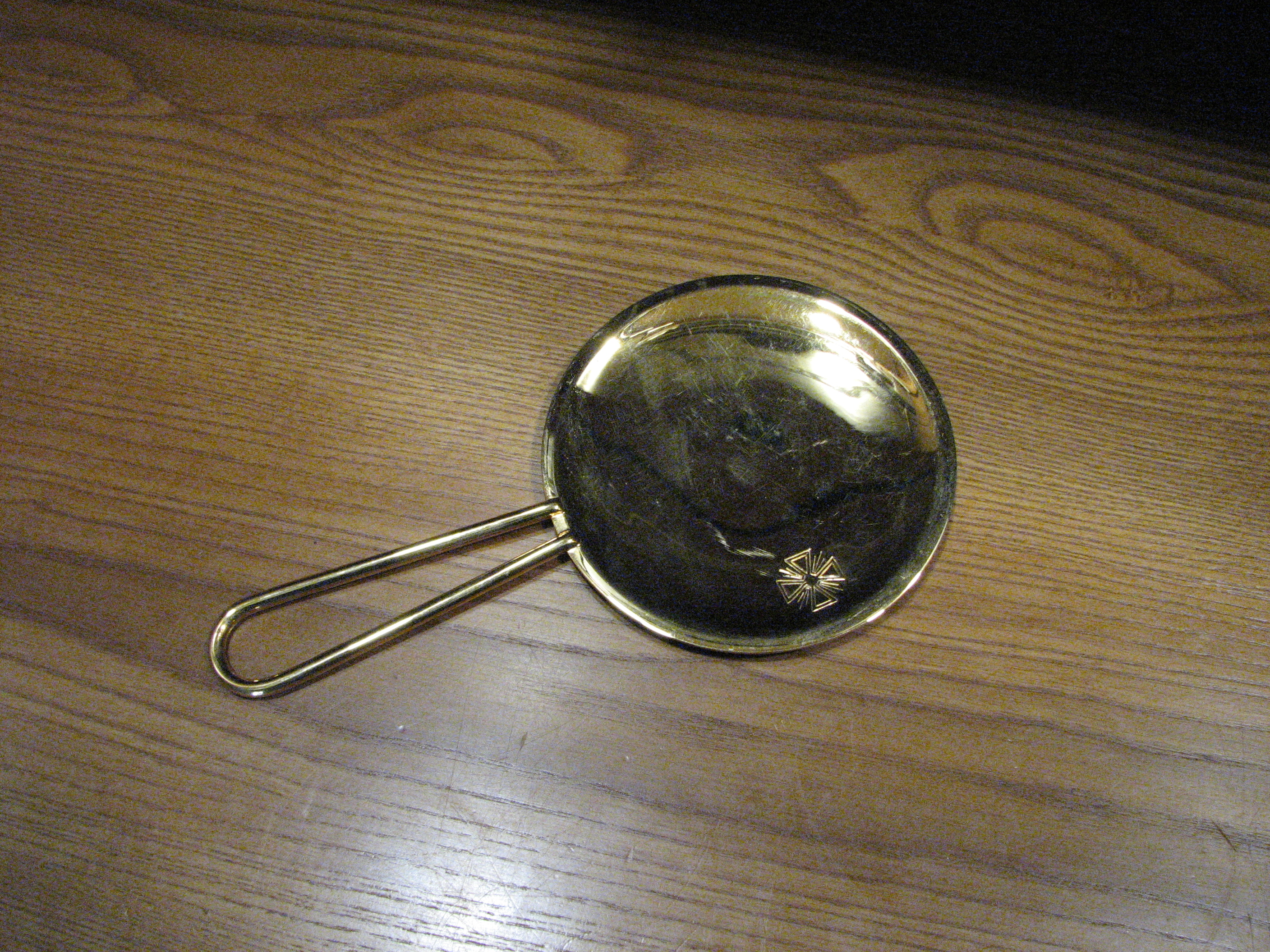
On the Chin Paten and How It Was Once Thought Impious

Communion_PatenSuch a small but highly significant thing, the chin paten. It is used is to catch a host or piece of a host that might otherwise fall to the ground. It is another reminder of the real, true, and substantial presence of Christ in even the smallest particle of the host.

Today, the chin paten (also called a communion paten) is also symbolic. When one sees one today it is a pretty clear sign that it’s a more traditional parish. Their use has declined over time, especially when communion in the hand became widespread beginning in the 1970s. Today chin patens are always used in the Traditional Latin Mass; they are part of the emphasis on reverent reception of the Eucharist and they also contribute to the overall ambiance. Some parishes even use them in the Ordinary Form.

Given that background, it is fascinating to learn that chin patens are actually rather new “inventions.” In fact, their use was barely tolerated when they first emerged about 100 years ago. Let’s take a look at some history.

First of all, I’d like to give a little credit to the researcher. Fr. George Stuart, an archivist for the Archdiocese of Washington, is a great collector of things great and small—surely a handy trait for an archivist! Among the projects with which he has assisted was the compilation of an excellent manual for the Archdiocese entitled Liturgical Norms and Policies. As part of his research, he investigated the history of the many liturgical practices and implements, among them the chin or communion paten. In a footnote, Fr. Stuart notes the following:

GIRM 188 lists the communion plate among the things on the credence table. The only other mention of the communion plate in the GIRM is at 287, in connection with reception of an intincted host. See also ADW, Liturgical Norms and Policies, 2010, 6.40.5.

It is interesting that the communion plate has been in use (in place of the traditional communion cloth) only for about 120 years, and as recently as 1918—even in Rome—it was “tolerated, but not recommended.”

In 1887, a priest asked the editor of a journal about the legitimacy of its use; he was careful to state that the altar server held the plate indirectly by a wooden handle, and not directly. (The literature indicated a concern over whether such patens required consecration as sacred vessels.)

The editor responded, “We do not think that there is force in the objection that the acolyte who carries it by the wooden handle is usurping the position of a deacon or priest. But neither can we recommend this special contrivance. It is novel, having been introduced but recently into certain dioceses. It is unnecessary; for the Church still continues to prescribe the use of the cloth only. But we cannot say that it is a practice to be abolished as wrong, for the Sacred Congregation has not forbidden it in dioceses in which such a custom has been established. Yet we do not think that it is right to introduce it into a church without the sanction of the bishop.”

The editor quoted a response of the Sacred Congregation of Rites from 20 March 1875. “Substitute for the Usual Communion Cloth,” Irish Ecclesiastical Record 8 (1887) 370-372. See also “Communion Cloth or Plate,” American Ecclesiastical Review 56 (1917) 49-57, 194-195, 293-296; “Communion Plate Tolerated,” ibid., 59 (1918) 307.

Within a few years, however, the use of the communion plate was not merely tolerated, but required. In 1929, the SCS [AAS 21 (1929) 631-639] “ordered that a small metal plate, gilt on the inner surface, must be held beneath the chin of persons receiving Holy Communion. No shape was prescribed, but for convenience it is better that there are two small handles at each side. Should it be the custom for the server to hold the plate, one long handle is more convenient. The plate should be about the size of an ordinary paten used at Mass, and without a rim, so that it can be purified easily.” Peter F. Anson, Churches, Their Plan and Furnishing (Milwaukee: Bruce Publishing Company, 1948) 183.

Since they were held by lay people, whether servers or communicants, communion plates were not consecrated, for (with the tolerated exception of sacristans) only those in orders could touch sacred vessels. The rubrics of the Roman Missal of 1962 listed among the vessels placed on a side table the “patina pro fidelium communione,” but omitted the house cloth altogether (n. 528).

At age fifty-five I can say that I can only barely remember the use of the altar rail cloth. It was a cloth draped along the inside of the altar rail that was flipped over the rail just before communion (see photo at left). As the communicants knelt, they were expected to scoop up the cloth and hold it under the chin at about shoulder height. Its purpose was to catch a falling host or any small fragments thereof. I never could figure out how it was that any small fragments didn’t end up on the ground once the cloth was released! But we didn’t ask a lot of questions in those days and the practice was already fading. Chin patens were the main tool at the time, and were usually used even if there was an altar rail cloth as well.

I also remember the altar rail cloths looking wrinkled, and seemed to me to detract from the beauty of the rail itself, which was often exquisitely carved marble or wood.

It is fascinating to think that chin patens were seen by the editor of a prominent Roman Liturgical journal as a “contrivance,” the implication being that it represented a loss in reverence and a kind of reductionist solution. Today, we consider them to be just the opposite!

Another interesting point is the insistence that such patens, if consecrated, not be touched by an ordinary server. Hence, a server had to use a wooden handle so that he did not actually touch the paten. Older priests tell me that the practice of not allowing non-clerical hands to touch consecrated vessels was honored more in the breach than in the observance. After Mass, numerous lay people (e.g., sacristans who put things away, women who cleaned and polished) touched them. Generally, the norm was only followed in the Mass itself. After Mass, practicalities kicked in. Even in the Extraordinary Form Masses I celebrate today, while we are always very careful that only the priest or deacon touches the sacred vessels during Mass, after Mass is another story! 🙂 It just has to be.

I’m interested in learning what is done in your parishes. Communion (chin) patens are rare today outside the Traditional Latin Mass, but they are still used. I haven’t seen a communion cloth in decades, but perhaps some of you have, perhaps at a Mass in the Extraordinary Form.

A final thought: I have often thought that altar cards must have been considered irreverent when they first emerged, considering that the central altar card blocks the Tabernacle or sometimes the altar cross. How strange, really. Today altar cards are used only at the Traditional Latin Mass and once again they are part of the ambiance of that Mass. But, to be honest, I have always had trouble with the way the Tabernacle is blocked. Yet to celebrate a Latin Mass without them would almost be thought nontraditional.

Reverence is an interesting thing; there are lots of twists and turns. Don’t get me wrong; reverence does exist and we should follow the norms, but there have been some fascinating changes over time.

In this video from 2008, Pope Benedict is giving Holy Communion. The communicants kneel and receive on the tongue, which Pope Benedict preferred even though it is not required of the universal Church. When I watched the clip, I noted with some amusement that the Monsignor who is serving in the video had improvised a communion paten by turning a ciborium lid upside down. I admit that, in a pinch, I have done the same!

Our Dying Universities

universityThe last vestiges of the once impressive institution known as the “university” are disappearing as our culture continues to crumble. Perhaps it is poetic justice, since the universities themselves have been a central cause of the cultural collapse that is burying them.

The recent riots at the University of California at Berkeley and on other campuses are the result of a decades-long process that has increasingly sought to silence opinions or facts that are at odds with liberalism. Most universities have become indoctrination centers that tolerate little if any dissent. Ideas are not considered. Rather, the usual approach is that of excoriating dissent from liberal or progressive orthodoxy with ad hominem attacks, calling those who disagree bigoted, intolerant, hateful, or (fill-in-the-blank)-phobic.

The discussion and critique of different ideas is a proper notion in a university, but more often today, the person or group holding an opposing idea is attacked, stereotyped, or ridiculed. Protests are a long tradition on college campuses, but protests were once held to show opposition to a speech as it was actually happening or to the ideas that were being presented. Now, protests are aimed at preventing speeches from occurring or ideas from being articulated.

This, of course, is completely counter to what universities should be doing. Once upon a time, young people were sent off to college in order to expand their minds. Ideas from widely divergent positions would be presented and critiqued using principles of philosophy, theology, logic, history, and science. Even Catholic universities, which existed to hand on the faith, would ponder all sorts of views while also vigorously defending or critiquing them based on Catholic teaching. The point of a college education was to become aware of the wider world and to be trained in critical thinking.

Today, most college campuses are a witch’s brew of hypersensitivities, political correctness, language police, “safe zones,” and all sorts of intolerance masquerading as “diversity” and “inclusiveness.” Despite the talk, though, such settings are anything but diverse or inclusive, when one considers the increasing list of views and topics that are banished.

This problem has been growing for decades and it is evidence of what Pope Benedict XVI called the “tyranny of relativism.” When we can no longer point to a reality or a set of truths that all can agree upon as first principles, a struggle ensues that cannot be resolved with an appeal to reason. The one who prevails is not the one who is best able to appeal to reason or principles, but rather the one who has the most power, money, or influence, or the one who shouts the loudest or is better able to intimidate. In this way, relativism has led to the kind of tyranny we see on college campuses today.

Add to this a strangely opposite “daintiness,” such that people are offended by even the most modest rebuttals. “Safe zones” that proliferate on campuses presuppose some sort of deep psychological damage caused by being exposed to different or challenging ideas, and that there exists some sort of right not be offended or challenged. Not only is this fanciful, it is poor training for life.

This has been brewing for decades and has turned universities into exactly the opposite of what they are supposed to be.

In the world of Catholic universities, a line was crossed in 1967 at the Land O’ Lakes conference, at which the assembled leaders of Catholic institutions of higher learning concluded that Catholic identity and faith were inimical to “academic freedom.” As a result, the large majority of Catholic universities shifted to secular models that were not merely neutral to the faith, but often hostile to it.

Universities first began emerging during the high water mark of Christendom, in the 12th and 13th centuries. Perhaps the greatest example of what universities once were can be seen in St. Thomas Aquinas’ Summa Theologica. It contains a pondering of the great questions of that time. A premise or idea is stated, objections are set forth, voices from antiquity are quoted, a response is presented, and then each objection is respectfully answered. As a genre, the “summa” is a kind of written summary of academic debates common among the students and teachers of the day. At the time, it was recognized that the quest for the truth is often facilitated by lively debate, interaction, and ongoing discussion. Even ideas that one opposed were helpful because they assisted in refining one’s own view and better articulating it.

Young people once emerged from universities acquainted with the great ideas, equipped with the skills to critique ideas and philosophies, and educated in both Latin and Greek. It was not a perfect system, but it edified and expanded the students; it gave them the tools to engage in critical thinking.

Such an atmosphere seems long gone on most college campuses today. Rather than expanding the students’ universe of ideas, it has narrowed them. Many young people emerge from their college experience less mature and less prepared for life than when they entered. In fact, many universities today do precisely the opposite of what they were founded to do. The horrifying moral atmosphere that exists on most campuses is another dagger to the life of the mind and to proper human formation and maturity. To be sure there are exceptions, Catholic and non-Catholic, but they are rare jewels among the rubble.

It is a very sad situation, with only a few exceptions that shine brightly in an otherwise bleak sky. Be sober, fellow Catholics. Search diligently for those universities that still fulfill their mission to raise up young adults to higher and better things.

Pass the Salt and Put on the Light – A Homily for the 5th Sunday of the Year

salt and light

In the Gospel today the Lord describes metaphorically what a Christian is and what He expects of us. Note five things about what God says:

I The Definitiveness of His Proclamation The text says, You are the Salt of the earth. … You are the light of the World. … But if salt goes flat it is good for nothing. … No one lights a lamp and puts it under a basket.

The Lord is definitive in two ways. First, He says, “You.” He is not talking just to people long ago or to the person next to you. He is not merely talking to your pastor or the Saints. He is talking to you. You are salt. You are light. You. It’s too easy to say, “Look at what the Lord is saying to those people long ago near the lakeside.” It’s not long ago; it’s now. It’s you.

The second way that the Lord is definitive is in saying that both images depend on us; if we are not salt and light then no one else will be and we will have utterly voided our worth.

  1. The metaphor of salt: You are either salt or you are nothing; in fact, you are good for nothing. As Christians, we have signed up to be specialists. This means is that if we go off and do something else instead, we are nothing and are good for nothing. It’s an all-or-nothing scenario. Jesus says that if you have decided to be His disciple you are either going to do that or else be nothing. You may go on to be a doctor, lawyer, teacher, laborer, or social worker, but the Lord has plenty of those (and so does the devil). Your first and only mission is to be a true and uncompromised Christian; everything else is mere commentary. You may be a great doctor, but if you don’t do it as a clear and visible Christian you are nothing. You may be a skilled social worker, but if you don’t do it as a Christian you are good for nothing. Any non-believer can be socially useful as a doctor or social worker, but only a Christian can be a Christian. If you don’t do “job one,” you are nothing. If you supply your children with every good thing, but do not act as a Christian witness to them and bring them to Christ, you are good for nothing. Any parent can provide his children with material things, but only a Christian can give them Christ. Got it? You’re either salt (a true Christian) or you are nothing.
  2. The metaphor of light: The Lord says that you are the light of the world, not merely a light. What this means is that if we do not shine, the world is darker; no one can take our place. If we don’t shine by living our faith and proclaiming it, the world is in darkness. Buddha can’t help. Mohamed can’t pull it off. Science and humanism can’t substitute. Either we are light or there is none. Some may call this arrogant, but I just call it Scripture. The Lord said it, not us. We are either light or else the world is dark. And if the world is getting darker, whose fault is that? We need not go far. Too many Christians fulfill Isaiah 56:10, which says, Israel’s watchmen are blind, they all lack knowledge; they are all dumb dogs, they cannot bark; they lie around and dream, they love to sleep. You may be an exception, but too many Christians are not.

Therefore, notice the definitive pronouncement the Lord makes here. We Christians are either with the Lord or we’re nothing. We’re either light or the world is in darkness.

II The Dynamics of Salt When Jesus says that we are the salt of the earth, what are some of the lessons we can learn? Consider these four things:

  1. Salt seasons. Christians are called to add spice to life, to bring beauty, joy, and hope to the world. Joy is the surest sign of a Christian. Even our keeping of the Commandments is a source of joy, as we experience God’s power to put sin to death in us and bring forth order, self-discipline, and holiness. Hope, too, ought to distinguish us from a world that is often cynical and thinks sin is inevitable. To this world we are not only to declare that the Commandments are possible and bring joy, but to demonstrate it in our lives. We are to be zesty, passionate, alive, and free from sin in Christ. Yet, sadly, we Christians are known more for what we are against. Too many Christians are not spicy; they do not really add flavor. They are more like bored believers, depressed disciples, fearful faithful, and frozen chosen. In our best moments, look what spicy things the faith has contributed: Art, music, churches, hospitals, universities, the scholastic and scientific methods, and holidays (a mispronunciation of Holy Days). Our tradition and Scriptural teaching of justice, mercy, love, and the dignity of the human person has blessed the world. Do you bring spice to the lives of others? Do you bring hope and joy? Scripture says, Always be prepared to make a defense to anyone who calls you to account for the hope that is in you (1 Peter 3:15). That means that people notice hope in you! Do they? How?
  2. Salt preserves. Before refrigeration, people often used salt to cure or preserve meat. The salt killed bacteria and other microorganisms that caused rot and decay. As Christians, we are called to prevent further decay in this sin-soaked world. The truth that we proclaim is meant to preserve people from the decay of sin and overindulgence. Chastity, justice, generosity, and the proclamation of the truth, are like salt that preserves this world from decay. We must be salt. If we are not, nothing else is. You are the salt.
  3. Salt heals. In the ancient world, salt was used on wounds. It helped to stop bleeding, killed bacteria, and prevented further infection. So, too, the Christian faith. Through our doctrinal and moral teaching, and our living of it, we are called to bring healing to this world, which is wounded by sin, strife, war, jealousy, anger, bitterness, retribution, promiscuity, unfaithfulness, greed, and countless other errors. The Word of God and His plan is a healing medicine for what ails this world.
  4. Salt burns. Yes, salt stings when applied to wounds. We Christians aren’t just sugar and spice and everything nice. When salt is applied to wounds it burns and often brings out loud protest. The truth stings, too. The truth of the Gospel can be irritating to a world that is wounded by sin. But despite the protests of the world, the sting is a healing one. It is driving out the disease of the world and preventing further infection. Just because people protest the Church and howl in complaint at the truth of the Gospel does not mean we have done anything wrong. In fact, protests often show that we are doing exactly what we must.

III. The Destination of Salt – The Lord says that you are the salt of the earth. He did not say that you are the salt of the Church. For salt to be effective it has to get out of the shaker! Too many Christians are bold in the pew but cowards in the world. They will speak of the faith in the relative security of the Church and among certain friends, but don’t ask them to preach to their spouse, their co-worker, or even their children; that’s too scary. And don’t even think about asking them to knock on doors, or to go to the local mall and witness, or to stand in front of an abortion clinic.

Salt in the shaker is useless. It has to come out of the shaker in order to make any difference. You don’t salt salt. Witnessing to fellow Christians may have a limited benefit, but it is not really the true destination of salt. The salt has to go forth. When the priest or deacon says “The Mass is ended go in peace,” he might as well be holding up a salt shaker and shaking it!

It’s long past time for the salt (you and me) to go forth. Consider these observations about life in our country today:

  • In the last fifty years there has been an increase of more than a 500% in violent crime.
  • There are more than half a million abortions each year.
  • Since 1970, the divorce rate has quadrupled. The overall number of divorces may have declined recently, but it is due more to people not getting married in the first place.
  • More than 40% of children today do not live with both their biological parents. Since the 1970s, the percentage of children living in single-parent homes has tripled.
  • As the family has broken down, here is what has been happening to our young:
    • a quadrupling in juvenile arrests,
    • a 400% increase in births outside of wedlock,
    • one million teenage pregnancies annually,
    • three million teenagers treated annually for sexually transmitted diseases,
    • a 200% increase in the rate of teenage suicide,
    • a drop in average SAT scores,
    • two-thirds of high school students have experimented with illegal drugs.
  • In the schools, one cannot pray or mention religion, yet condoms are freely available and all sorts of aberrant and alternative lifestyles and philosophies are openly promoted.
  • Parental consent is required for a child to go on a field trip or to get an aspirin, but in many states abortion referrals can be made without parental consent.
  • Our neighborhoods are devastated by poverty, injustice, crime, and despair.

All of this has happened on our watch. It’s time for the salt to work. The world needs the salt to get out of the shaker and do its work of seasoning, purifying, and preserving.

IV. The Details of Light Jesus goes on to say, Let your light shine before others, that they may see your good deeds and glorify your heavenly Father. Let’s consider four things about this light:

  1. The CAUSE of the light – Notice that little word: “Let.” We are to yield to Christ, to allow Him to shine through us. He is the cause of our light. Let your light shine. There’s an old gospel song that says, “When you see me trying to do good, trying to live as a Christian should, it’s just Jesus, Jesus in me.”
  2. The COST of the light – The light is to shine, but there is no shining without burning. Shining costs us something. It may be Christ’s light, but it shines through us. This means sacrifice. It means letting Him use you. It means not always sleeping when you want to. It means not just sitting at home and saying, “Ain’t it awful.” It means getting out and getting involved. It means getting “out there” and risking a few things. It means being visible, targeted, and identified with someone (Jesus) who is hated by many. And in a world that prefers the darkness to light (cf. John 3:19-21), it means being called harsh, out-of-touch, and hateful. There is no shining without burning.
  3. The CONCRETENESS of the light – Letting our light shine is no mere abstraction. Jesus speaks of deeds. Shining involves concrete behavior. Your light shines by the way you live, the choices you make, the behavior you exhibit. It shines when Christians get married and stay married, stay faithful to their commitments, and are people of their word. Our light shines when we tell the truth instead of lying, live chastely instead of fornicating, are courteous and respectful instead of rude. It shines when we respect life, drive safely, and shun reckless and risky behavior. Our light shines when we clean up our language, give to the poor, and work for justice. It shines when we refuse to purchase pornographic, violent, or other degrading materials. Our light shines when we love instead of hate, seek reconciliation instead of revenge, and pray for our enemies instead of cursing them. It shines when we walk uprightly and speak the truth in love, without compromise. That’s when our light begins to shine.
  4. The CONSEQUENCE of the light – God is glorified when our light shines. We do not act or get involved merely to vent our own anger or to fight for our own sake. We are light to glorify God. It is not about our winning, it is about God shining and being glorified. When we do get involved, too often we seek merely to win the argument rather than to glorify God. Often we act in order to garner praise rather than to have God glorified. We need to pray for good intentions, for it is possible to do the right thing for the wrong reason. The desired result is God’s glory not our glory.

OK, now pass the salt and turn on the light!

Not All Things Are as They First Appear, as Seen in a Commercial

Blog-07-22In the video below, things are not as they initially appear. Our eyes are easily deceived. Further, we tend to make rash judgments. Enjoy being fooled for a moment and then consider the need for deliberation and a patient spirit until all or most of the facts are in.

Here are some appropriate references from Scripture:

Call no one blessed before his death, for by his end shall a man be known (Sir 11:28).
Remember, the sins of some men are obvious, leading them to certain judgment. But there are others whose sins will not be revealed until later (1 Tim 5:24).
So we have stopped evaluating others from a human point of view. At one time we thought of Christ merely from a human point of view. How differently we know him now (2 Cor 5:16).

Enjoy the video!

Advice on Punishment from St. John Bosco

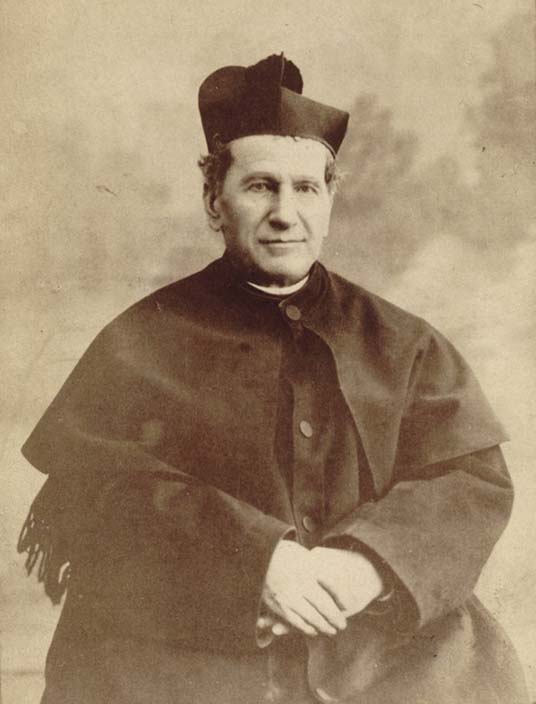
Carlo Felice Deasti, Don Bosco, Torino, 1887

Part of a healthy, well-ordered love is correction of the sinner. Admonishing the sinner is one of the spiritual works of mercy. St. Thomas numbers fraternal correction among the works of charity.

Getting correction right is often difficult. Too often our ego gets in the way or our anger taints this necessary work.

Parents have the particular responsibility of punishing their children. To be sure, punishment should come after teaching and necessary warnings and admonishments.

The purpose of punishing youngsters is to teach them. It is to help them to experience, in a small way, the consequences of bad choices so that they do not suffer far worse repercussions and have to “learn the hard way” in the future. Thus, punishment is an act of mercy and love.

Just as with correction, in punishing children there is the danger that parents can intermix their own anger, ego, or desire to control.

This week we celebrated the Feast of St. John (Don) Bosco. For his feast, we read a letter in which he warned of punishments tainted with anger and offered advice and caution for those (such as parents) who undertake the necessary but “dangerous” act of punishing children. Here are some excerpts from his advice to his fellow Salesians:

My sons, in my long experience very often I had to be convinced of this great truth: [That] it is easier to become angry than to restrain oneself, and to threaten a boy than to persuade him…. We must be firm but kind, and be patient with them.

I give you as a model the charity of Paul which he showed to his new converts. They often reduced him to tears and entreaties when he found them lacking docility and even opposing his loving efforts.

This was the method that Jesus used with the apostles. He put up with their ignorance and roughness and even their infidelity. He treated sinners with a kindness and affection that caused some to be shocked, others to be scandalized, and still others to hope for God’s mercy. And so, he bade us to be gentle and humble of heart.

It is difficult to keep calm when administering punishment, but this must be done if we are to keep ourselves from showing off our authority or spilling out our anger. See that no one finds you motivated by impetuosity or willfulness.

… Let us not rule over them except for the purpose of serving them better. There must be no hostility in our minds, no contempt in our eyes, no insult on our lips. We must use mercy for the present and have hope for the future, as is fitting for true fathers who are eager for real correction and improvement.

In serious matters it is better to beg God humbly than to send forth a flood of words that will only offend the listeners and have no effect on those who are guilty (Epistolario, Torino, 1959, 4, 201-203).

Far be it from me to add to the words of this saint except to recall that truth and charity must work together. Without love, the truth can bludgeon and thereby wound both charity and truth. But without truth, love can be too soft and permissive. It can spoil and consign others to unloving and lonely experiences such as selfishness, addiction, and error.

Punishment has its place, but special care must be taken to avoid venting our anger lest we punish too severely and/or humiliate the one who needs our care. When this happens, punishment, which is meant to be an act of love, becomes a countersign of love. May love be at the root of any punishment. Correct with care!

Many Titles of Christ from Scripture

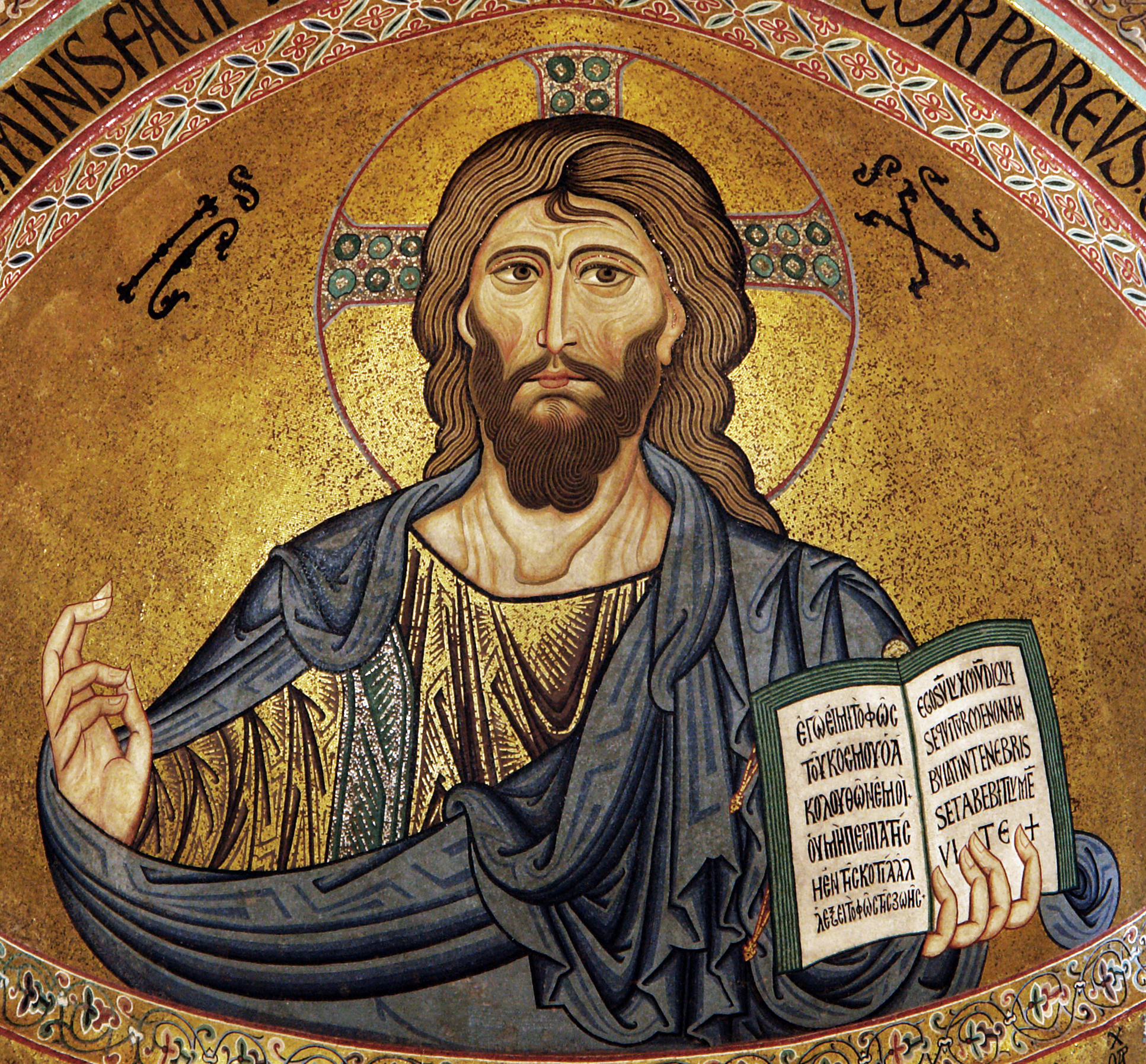
JesusThere are many, many different titles of Christ in both the New and Old Testaments. If one studies them carefully, they can provide a “mini-catechesis” of the Lord Jesus.

Presented below are more than 150 different titles of Christ. For each title, I have included a link to the Scripture from which it was drawn. The list was compiled from various sources, but most come from The Catholic Source Book, which was compiled and edited by Fr. Peter Klein. In addition, some years ago my readers helped me to expand the list to its current state.

I have placed the list in PDF format here, in case you’d like to save it for future reference.

Titles of Jesus Christ in Scripture:

Advocate – 1 John 2:1

Alpha and Omega – Revelation 1:8; 22:13

The Almighty – Revelation 1:8

Amen – Revelation 3:14

Ancient of Days – Daniel 7:22

Apostle and High Priest of our Confession – Hebrews 3:1

Arm of the Lord –Isaiah 53:1

Author and Finisher of our Faith – Hebrews 12:2

Beloved – Matthew 12:18

Beloved Son – Colossians 1:13

Bread of God – John 6:33; 50

Bread of Life – John 6:35

Living Bread – John 6:51

Bridegroom – John 3:29

Bright Morning Star – Revelation 22:16

Brother – Matthew 12:50

Captain of Our Salvation – Hebrews 2:10

Carpenter – Mark 6:3

Carpenter’s Son – Matthew 13:55

Chief Shepherd – 1 Peter 5:4

Chosen One – Luke 23:35

Christ – Matthew 16:20

Christ Jesus – 1 Timothy 1:15; Colossians 1:1

Christ of God – Luke 9:20

Christ the Lord – Luke 2:11

Christ Who Is Above All – Romans 9:5

Consolation of Israel – Luke 2:25

Chief Cornerstone – Ephesians 2:20; 1 Peter 2:6

Dayspring – Luke 1:78

Deliverer – Romans 11:26

Deliverer from the Wrath to Come – 1 Thessalonians 1:10

The Desire of All Nations – Haggai 2:7

Eldest of Many Brothers – Romans 8:29

Emmanuel – Matthew 1:23

Faithful and True Witness – Revelation 1:5; 3:14

Father Forever – Isaiah 9:6

First and Last – Revelation 1:17; 2:8

Firstborn Among Many Brothers – Romans 8:29

Firstborn from the Dead – Revelation 1:5

Firstborn of All Creation – Colossians 1:15

First Fruits – 1 Corinthians 15:20

Friend of Tax Collectors and Sinners – Matthew 11:19

Gate of the Sheepfold – John 10:7

Glory – Luke 2:32

Good Shepherd – John 10:11; 14

Grain of Wheat – John 12:24

Great Shepherd of the Sheep – Hebrews 13:20

Head – Ephesians 4:15

Head of the Church – Colossians 1:18; Ephesians 1:22

Hidden Manna – Revelation 2:17

High Priest – Hebrews 3:1; 4:14; 7:26

He Who Holds of the Keys of David – Revelation 3:7

He Who Is Coming Amid the Clouds – Revelation 1:7

Heir of all things – Hebrews 1:2

Holy One – Acts 2:27

Holy One of God – Mark 1:24

Holy Servant – Acts 4:27

Hope – 1 Timothy 1:1

Horn of Salvation – Luke 1:69

I Am – John 8:58

Image of the Invisible God – 2 Corinthians 4:4; Colossians 1:15

Indescribable Gift – 2 Corinthians 9:15

Intercessor – Hebrews 7:25

Jesus – Matthew 1:21

Jesus the Nazarene – John 18:5

Judge of the World – 2 Timothy 4:1; Acts 10:42

Just One – Acts 7:52

Just Judge – 2 Timothy 4:8

King – Matthew 21:5

King of Israel – John 1:49

King of Kings – Revelation 17:14; 19:16; 1 Timothy 6:15

King of Nations – Revelation 15:3

King of the Jews – Matthew 2:2

Lamb of God – John 1:29

Last Adam – 1 Corinthians 15:45

Leader – Matthew 2:6; Hebrews 2:10

Leader and Perfecter of Faith – Hebrews 12:2

Leader and Savior – Acts 5:31

Life – John 14:6; Colossians 3:4

Light – John 1:9; John 12:35

Light of All – Luke 2:32; John 1:4

Light of the World – John 8:12

Light to the Gentiles – Is 49:6, Lk 2:32

Lion of the Tribe of Judah – Revelation 5:5

Living Bread Come Down From Heaven – John 6:41

Logos – John 1:1

Lord – Luke 1:25

One Lord – Ephesians 4:5

My Lord My God – John 20:28

Lord Both of the Dead and the Living – Romans 14:9

Lord God Almighty – Revelation 15:3

Lord Jesus – Acts 7:59

Jesus Is Lord – 1 Corinthians 12:3

Lord Jesus Christ – Acts 15:11

Lord of All – Acts 10:36

Lord of Glory – 1 Corinthians 2:8

Lord of Lords – 1 Timothy 6:15

Lord of Peace – 2 Thessalonians 3:16

The Man – John 19:5

Man of Sorrows –Isaiah 53:3

Master – Luke 5:5

Mediator – 1 Timothy 2:5

Messenger of the Covenant – Malachi 3:1

Messiah – John 1:41; 4:25

Mighty God – Isaiah 9:6

Morning Star – 2 Peter 1:19; Revelation 2:28; Revelation 22:16

Nazarene – Matthew 2:23

Passover – 1 Corinthians 5:7

Power and Wisdom of God – 1 Corinthians 1:24

Power for Salvation – Luke 1:69

Priest Forever – Hebrews 5:6

Prince of Life – Acts 3:15

Prince of Peace – Isaiah 9:6

Prophet – John 4:19; John 9:17

Rabboni – John 20:16

Ransom – 1 Timothy 2:6

Redeemer – Isaiah 59:20

Rescuer from This Present Evil Age – Galatians 1:4

Radiance of God’s Glory – Hebrews 1:3

Resurrection and Life – John 11:25

Righteous One – Is 53:11

Rising Sun – Luke 1:78

Root of David – Revelation 5:5

Root of David’s Line – Revelation 22:16

Root of Jesse – Isaiah 11:10

Ruler – Matthew 2:6

Ruler of the Kings of the Earth – Revelation 1:5

Ruler and Savior – Acts 5:31

Savior – 2 Peter 2:20; 3:18

Savior of the World – 1 John 4:14; John 4:42

Second Adam – Romans 5:14

Servant of the Jews – Romans 15:8

The Servant of the Lord – Isaiah 52:13

Shepherd and Guardian of Our Souls – 1 Peter 2:25

Slave – Philippians 2:7

Son – Galatians 4:4

Beloved Son – Colossians 1:13

Firstborn Son – Luke 2:7

Son of Abraham – Matthew 1:1

Son of David – Matthew 1:1

Son of God – Luke 1:35

Son of Joseph – John 1:45

Son of Man – John 5:27

Son of Mary – Mark 6:3

Son of the Blessed One – Mark 14:61

Son of the Father – 2 John 1:3

Son of the Living God – Matthew 16:16

Son of the Most High – Luke 1:32

Son of the Most High God – Mark 5:7

Only Son of the Father – John 1:14

Source of God’s Creation – Revelation 3:14

Spiritual Rock – 1 Corinthians 10:4

Living Stone – 1 Peter 2:4

Stone Rejected by the Builders – Matthew 21:42; 1 Peter 2:8

Stumbling Stone – 1 Peter 2:8

Suffering Servant, Servant of Yahweh – Is 42:1, 49:3

Sun of Righteousness – Malachi 4:2

Teacher – Matthew 8:19; Matthew 23:10

Testator of the New Covenant – Hebrews 9:16

The Glory of the Lord – Isaiah 40:5

The Rose of Sharon and the Lily of the Valleys – Song of Songs 2:1

The Lord our Righteousness – Jeremiah 23:6

True God – 1 John 5:20

True Vine – John 15:1

The Way, the Truth, and the Life – John 14:6

The One Who Is, Was, and Who Is to Come – Revelation 3:7

Wisdom of God – 1 Corinthians 1:24

Wonderful Counselor – Isaiah 9:6

Word – John 1:1; 14

Word of God – Revelation 19:13

Word of Life – 1 John 1:1

I would also ask for your help. There may be other titles of Christ that are not on the list. I would be grateful if you would use the comments section to add any titles you notice are missing. If you know the scriptural reference, it would be helpful if you could include it, but if not I will try to locate it.

When considering an addition please consider whether it is truly a title or just a description. For example, “kind” is an adjective, and certainly describes Jesus, but it is not a title per se. Nouns show usually show better promise as titles of Christ, but even nouns do not always amount to a title. For example, “walker” is a noun, and surely Christ did a lot of walking, but again it is not a title per se.

What Is the “Sin of Human Respect”?

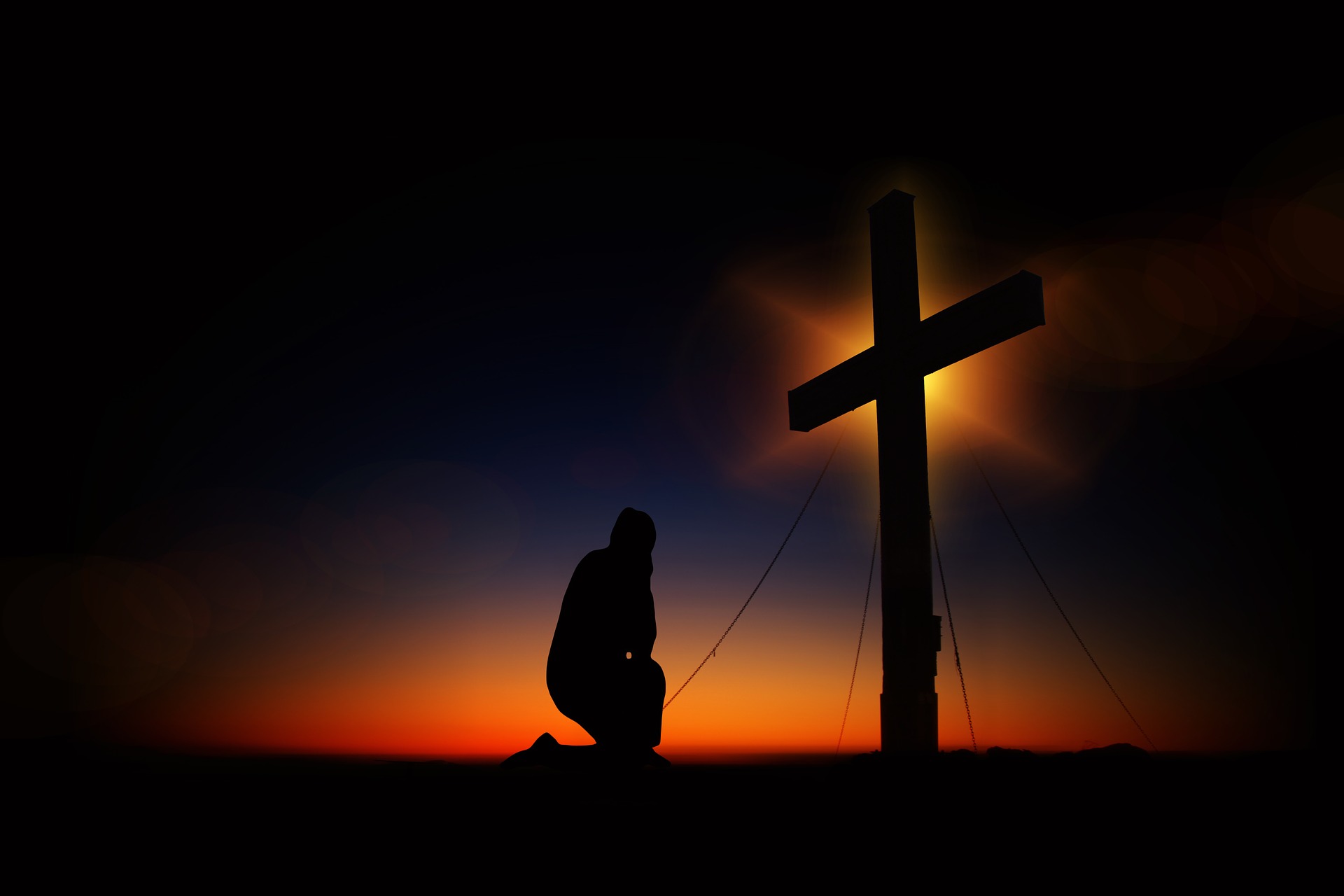
cross-1448946_1920On one level “human respect” seems like a good thing. After all, we ought to respect, honor and appreciate one another. What then is meant by the “sin of human respect”? It is that sin wherein we fear man more than God; we are more concerned with what people think of us than what God thinks of us. This is an unholy, sinful fear, and is at the root of many of our sins, both of commission and of omission.

Consider some examples:

  1. A man goes up to a group of other men who are talking about the boss and also speaking inappropriately about some women in the office. He knows that their disparaging comments about the boss are unfair or even untrue. He also knows that talking about the women in the office using crude sexual imagery and lustful references is wrong. But because he wants to “fit in,” he joins in the conversation and contributes to what he knows is wrong. He laughs at the off-color jokes and makes no attempt to steer the conversation in a more appropriate direction. He does this because he fears rejection and is more concerned about what his co-workers think of him than what God thinks of him. He fears man more than he does God. That God is displeased with his actions is less important to him than that any of these men should be displeased.
  2. A young woman knows that sex before marriage is wrong and that this displeases God. However, she has dated a number of men now and has slept with most of them. She does this partly because she fears rejection. Perhaps if she does not give in to the desires of the young men she dates they will reject her and she will be alone. She thinks that a woman “has to do this” in order to be popular and desirable. She fears man more than she does God. What human beings think is more important to her than what God thinks. She may well minimize the importance of God’s displeasure by saying to herself, “Oh well, God understands.” But at the same time, she maximizes in her mind the importance of the displeasure of weak and fallible human beings, thinking that displeasing them would lead to catastrophe. She respects—that is, fears—man more than she does God.
  3. A pastor of a parish has a mandate from God and the Church to preach the whole counsel of God but he struggles to preach the “hard” things. After all, teaching on things like abortion, fornication, divorce, contraception, homosexual activity, euthanasia, and capital punishment causes some people to be upset. He fears this anger, fears offending people, fears being misunderstood. Once, when he spoke about abortion (because the Bishop mandated it), a few parishioners came up to him and told him that he should not bring politics into the pulpit. Once, when he had preached about the problem of divorce (the topic of that day’s Gospel), a (divorced) woman approached him after Mass saying that she felt hurt and “excluded.” Experiences like these have led the priest to “play it safe.” He always starts the homily with a joke and the people seem to love him for it. He chooses to preach only in abstractions and generalities. He exhorts people to be a little more kind, a little more generous, but avoids specificity. He does this because he fears man more than he does God. That God might be displeased that His people are not hearing the truth about important moral issues or receiving proper instruction in discipleship is a vague and distant fear to this priest. But one person raising an eyebrow at what he says is enough to ruin his whole week. Thus he goes silent as a prophet and becomes a people-pleaser instead. He respects—fears—man more than he does God.
  4. A mother knows that she is to raise her children in the fear of the Lord and train them in godly way, but oh, the protests when she tells them to do their chores, or go to bed, or do their homework! It’s just such a hassle to endure their anger and disappointment. She also remembers how stern her parents were and how she had vowed she would be nicer to her own children. So, little by little, she lets her authority erode and the children more often than not get their way. Her husband is not a strong disciplinarian and he wants to be thought of as “cool” by his children and their friends. God’s insistence on prayer, discipline, and respect for elders, gives way to what the children want. The oldest, a teenager, doesn’t want to go to Mass anymore. But after all, “You can’t force religion on kids,” they think. Here, too, the parents fear their children more than they do God. They have greater respect for their children than they do for God.

So these are some examples of the “sin of human respect.” It runs very deep in our wounded nature and leads to many other sins as well. Many people are desperate for attention, respect, acceptance, and approval from other human beings. Many of these same individuals, though (even the religiously observant), struggle to be nearly as concerned with what God thinks of them or whether He approves of their behavior.

God has a straightforward solution to this: we should fear Him and no one else. There is an old saying, “If I kneel before God I can stand before any man.” It makes sense that it is a lot easier to fear (respect) one, than many. The more we learn to fear (respect) God, the less concerned we become with what others think. This is not an invitation to become a sociopath who cares not a whit what others think. We are to remain polite, groom ourselves, and not intentionally pick fights. But in the end, we are instructed by the Lord to be freed of all the fearful trepidation of what others think.

Calling this is a straightforward solution refers more to its description than its execution. It is not easy to extract ourselves from this very deep drive; in fact, it takes a life time. But the first step to healing is admitting we have a problem. Then we begin to see it for what it is, understand its moves, and let the Lord steadily free us.

Let us also be clear: the fear of the Lord that is counseled here is not a cowering and servile fear. If this is all one can muster, though, it is better than having no fear at all! But the real goal is to have a filial fear of God, fearing to offend Him because we love Him. This type of fear of the Lord holds Him in awe. It is to have a reverence for Him rooted in deep love and gratitude. Out of this love and gratitude we fear to offend Him more than offending any other.

Perhaps some Scripture quotes that address various aspects of the problem of human respect and the remedy of holy fear will be a fitting conclusion to this reflection:

  1. Through the fear of the LORD a man avoids evil (Prov 16:6).
  2. Do not let your heart envy sinners, but always be zealous for the fear of the LORD (Prov 23:17).
  3. Better a little with the fear of the Lord than great wealth with turmoil (Prov 15:16).
  4. The fear of God will be with you to keep you from sinning (Ex 20:20).
  5. You alone are to be feared O Lord (Psalm 76:7).
  6. God is more awesome than all who surround him (Psalm 89:7).
  7. I lie down and sleep; I wake again, because the LORD sustains me. I will not fear the tens of thousands drawn up against me on every side (Psalm 3:4-5).
  8. I will give them singleness of heart and action, so that they will always fear me for their own good and the good of their children after them (Jer 32:39).
  9. The Pharisees came to Jesus and said, “Teacher, we know you are a man of integrity. You aren’t swayed by men, because you pay no attention to who they are; but you teach the way of God in accordance with the truth” (Mark 12:14).
  10. Woe to you when all men speak well of you, for that is how their fathers treated the false prophets (Luke 6:26).
  11. If anyone is ashamed of me and my words, the Son of Man will be ashamed of him when he comes in his glory and in the glory of the Father and of the holy angels (Luke 9:26).
  12. And do not be afraid of those who kill the body but cannot kill the soul; rather, be afraid of the One who can destroy both soul and body in Gehenna (Matt 10:28).
  13. If the world hates you, realize that it hated me first. If you belonged to the world, the world would love its own; but because you do not belong to the world, and I have chosen you out of the world, the world hates you (Jn 15:18-19).
  14. It does not concern me in the least that I be judged by you or any human tribunal; I do not even pass judgment on myself; I am not conscious of anything against me, but I do not thereby stand acquitted; the one who judges me is the Lord (1 Cor 4:3).
  15. From now on, let no one make troubles for me; for I bear the marks of Jesus on my body (Gal 6:17).
  16. We know what it is to fear the Lord, we try to persuade men. What we are is plain to God, and I hope it is also plain to your conscience (2 Cor 5:11).

A Meditation on the Brevity of Life, As Seen in a Video

January 30 BlogMy cousin, John Clem, died suddenly last week at the age of 52. It was likely a pulmonary embolism. The suddenness of his death shocked and deeply saddened many. He was dearly loved and was a great servant of God and man in the Charlottesville, Virginia area.

At the funeral today, my mind drifted back to a photo album my father once assembled not long before his death. In the frontispiece he inscribed a passage from Psalm 103:

But as for man, his days are like the grass,
or as the flower of the field.
The wind blows and he is gone,
And his place never sees him anymore.

Indeed, our lives do pass swiftly. I often think about the many men who once lived in my rectory, this place that never sees them anymore. One day, I too will be swept from here, becoming a distant memory peering out from some old photographs in the archive.

In Psalm 90 there are some other painfully beautiful lines:

O Lord, you have been our refuge
from one generation to the next.
Before the mountains were born
or the earth or the world brought forth,
you are God, without beginning or end.

You turn men back to dust
and say, “Go back, sons of men.”
To your eyes a thousand years
are like yesterday, come and gone,
no more than a watch in the night.

You sweep men away like a dream,
like the grass which springs up in the morning.
In the morning it springs up and flowers:
by evening it withers and fades. …

Our life is over like a sigh.
Our span is seventy years,
or eighty for those who are strong.

Make us know the shortness of our life
that we may gain wisdom of heart.
Lord, relent! Is your anger forever?
Show pity to your servants.

In the morning, fill us with your love;
we shall exult and rejoice all our days.
Give us joy to balance our affliction
for the years when we knew misfortune.

Show forth your work to your servants;
let your glory shine on their children.
Let the favor of the Lord be upon us.

Yes, lines like these went through my mind at the funeral and also this past weekend as I saw this beautiful video—a commercial, really. The short video below shows the span of one woman’s life, some seventy years, in less than two minutes. How quickly she moves through the stages of her life, from infancy to her golden years!

At the end of the video, the woman walks off into the distance as the setting sun casts its orange and gold rays. Here, too, I recalled the moving lines of an old hymn:

The golden evening brightens in the west;
Soon, soon to faithful warriors comes their rest;
Sweet is the calm of paradise the blessed.
Alleluia.

Our years number seventy—or perhaps eighty for those who are strong. Or as the old Douay beautifully put it, The days of our years are threescore and ten. But if in the strong they be fourscore …