In the commercial below, a man is easily talked out of his meal by Yoda, the Star Wars Jedi Master. However, when the Jedi Master continues on to try to talk him out of his Pepsi, the man realizes that this is a bridge too far. He refuses to give way any longer.
I wonder if this is not an image for Christians in their battle against the world and the devil. Indeed, too often we are willing to give way to those in the world (and the devil himself), who ask us to surrender our dignity, make compromises, and give way to sin. So easily we surrender our serenity to a world that provokes anxiety and anger; we surrender our chastity to a world that exalts lust; we give over our generosity to a world that instills in us a fear that drives us to hoard; we hand over our prophecy to a world that demands our silence; we neglect our soul and hand over its care to a world that demands we be fixated on our body, on good looks and our physical health; we hand over prayer and the celebration of the sacraments to a world that demands all of our time.
In effect, the world and the devil say to us, “All you have is mine … now hand it over.”
After surrendering his meal, the man wakes up to what is happening and stops handing things over. For him, it is prospect of losing his Pepsi that brings about this awakening. But what about us? Have you reached this point? How? When? What was the “bridge too far” for you? For addicts, this point is called “hitting bottom,” when the insanity of their lifestyle finally becomes too much to handle and they are finally willing to say “No!” or “Enough!”
For most of us, perhaps the wake up moment comes when we finally begin to see that the world asks too much of us, takes too much of us without offering us anything of real or lasting value in return. Perhaps we, like the man in the commercial, start to recognize the lies, deception, and theft taking place as the world tries to have us ignore our true hunger and give away the Eucharistic meal and Holy Communion that is our baptismal right.
Yoda tries to mesmerize the man in the commercial, saying about the meal, “You do not want.” The world and the devil also say of God, “You do not want.” It’s as if to say, “Your desires are not about God and the things awaiting you in Heaven; they are about me. Give me your heart, your loyalty, your life.”
When the man in the commercial finally does wake up, it’s because of a drink. In this I am reminded of the woman at the well in the Gospel of John. Jesus finally reaches her through thirst and teaches, Everyone who drinks this water will be thirsty again. But whoever drinks the water I give him will never thirst. Indeed, the water I give him will become in him a spring of water welling up to eternal life (Jn 4:13-14). For her and for the man in the commercial, it is thirst that awakens them to the lies and deceptions of the world.
In the Gospel for today’s Mass (Thursday of the First Week of Lent) Jesus says,
If you then, who are wicked, know how to give good gifts to your children, how much more will the Father in heaven give good things to those who ask him? (Mt 7:11)
A similar verse occurs in the Gospel of Luke: If you then, though you are wicked, know how to give good gifts to your children, how much more will your Father in heaven give the Holy Spirit to those who ask him? (Lk 11:13)
I received an e-mail once regarding this verse:
“This line bugs me. I think I know the larger point that Jesus makes here, and/or perhaps it’s poorly translated, but it seems a bit harsh for Jesus to refer to mankind as ‘evil’. Evil? That’s tough stuff! But perhaps, to Jesus, we are evil.”
So what is going on here? Why does Jesus call us evil?
First let’s make sure that the translation from the Greek is a good one. The Greek expression used in Luke’s version (the Matthean uses very similar language) is πονηροὶ ὑπάρχοντες (poneroi hyparchontes). Poneroi is defined as “bad, of a bad nature or condition,” but it is also defined as “full of labors, annoyances, hardships.” Hyparchontes is defined as “from the very beginning” or “being inherently.”
Thus the translation “you who are evil” is accurate. It might be more precisely translated as “If you, then, being inherently bad (or evil) …” Or perhaps it could be rendered as “If you, then, being bad (or evil) from the beginning …”
If we use the secondary definition of poneroi, the phrase could be rendered this way: “If you, then, being full of labors (or hardships) …” However, I checked over a dozen different translations on biblos.com and none of them render it in this way; all of them simply say, “If you, then, who are evil …”
So it seems that we’re stuck with the fact that the Lord is calling us “evil.”
What do the commentaries say? It is interesting that of the seven modern commentaries I consulted, not one of them mentions this phrase. However, some of the ancient Fathers did:
Cyril of Alexandria wrote,When he says, “You who are evil” he means, “You whose mind is capable of being influenced by evil and not uniformly inclined to good like the God of all” (Commentary on Luke, Homily 79).
In one of his homilies, Bede had this to say:Any human mortal, weak and still burdened with sinful flesh, does not refuse to give the good things which he possesses, although they are earthly and weak, to the children whom he loves (Homilies on the Gospel 2.14).
Elsewhere Bede is quoted as follows:He calls the lovers of the world evil, who give those things which they judge good according to their sense, which are also good in their nature, and are useful to aid imperfect life. Hence he adds, “[They] know how to give good gifts to [their] children.” The Apostles even, who by the merit of their election had exceeded the goodness of mankind in general, are said to be evil in comparison with Divine goodness, since nothing is of itself good but God alone (Quoted in the Catena Aurea at Luke 11:13).
Athanasius said,Now unless the Holy Spirit were of the substance of God, Who alone is good, He would by no means be called good, since our Lord [Jesus] refused to be called good, inasmuch as He was made man (Quoted in the Catena Aurea at Luke 11:13).
Therefore, if I can be so bold as to enter into the company of these ancient and approved Fathers of the Church, I would like to draw a conclusion on the meaning of this phrase.
Jesus seems to be speaking by comparison or degree. He may not mean that we are evil in an absolute sense, rather that we are evil in comparison to God, who is absolute good. The Hebrew and Aramaic languages have fewer comparative words, so the ancient Jews would often use absolute categories to set forth comparison or degree. For example, elsewhere Jesus tells us that we must hate our father, mother, children, and even our very self and that we must love Him (e.g., Luke 14:26). This does not mean that we are literally to despise our family and others; it means that we are to love Jesus more than we love them. Because of the paucity of comparative words available, the ancient Jews used a lot of what we would consider to be hyperbole. Hence, in calling us “evil,” the Lord may be setting forth a comparison in the way the ancient Jews would. In modern English we might say, “If you, then, who are not nearly as holy as God and are prone to sin, know how to give good gifts to your children, how much more will God, who is absolutely good and not prone to sin, give the Holy Spirit to those who ask Him?”
However, we ought to be careful not to simply discount Jewish hyperbole and rewrite the words as I have done. The point of the hyperbole cannot be completely set aside. Created things may share in God’s goodness, but God alone is absolutely good. So good is God, that everything else is practically evil in comparison to Him. The hyperbole places the emphasis on God’s absolute goodness. We have no goodness apart from God’s goodness. If we do share in His goodness, it is infinitesimal in comparison. Hence, as Bede says above, The Apostles even, who by the merit of their election had exceeded the goodness of mankind in general, are said to be evil in comparison with Divine goodness, since nothing is of itself good but God alone.
Even Jesus refused the label “good” for Himself in terms of His humanity. The Gospel of Mark contains the following dialogue: As Jesus started on his way, a man ran up to him and fell on his knees before him. “Good teacher,” he asked, “what must I do to inherit eternal life?” “Why do you call me good?” Jesus answered. “No one is good except God alone (Mk 10:17-18). As God, Jesus is good—absolute good. One could also argue that in His sinless humanity Jesus is also good; but Jesus, presuming the man merely regarded Him as ordinarily human, rebukes him and declares that God alone is good.
In the end, it’s time for us to eat some humble pie. Jesus probably does not mean we are absolutely evil and have nothing good in us, but God alone is absolutely good. He is so good that we can barely be thought of as anything but evil in the face of His immense goodness. Humble pie doesn’t have much sugar in it, does it?
In the Gospel for Wednesday (Wednesday of the First Week of Lent) the Lord says, This generation is an evil generation; it seeks a sign, but no sign will be given it, except the sign of Jonah (Lk 11:30). What is the sign of Jonah? Does it apply today?
The Gospels of Matthew and Luke present two signs of Jonah, one of which particularly concerns us here.
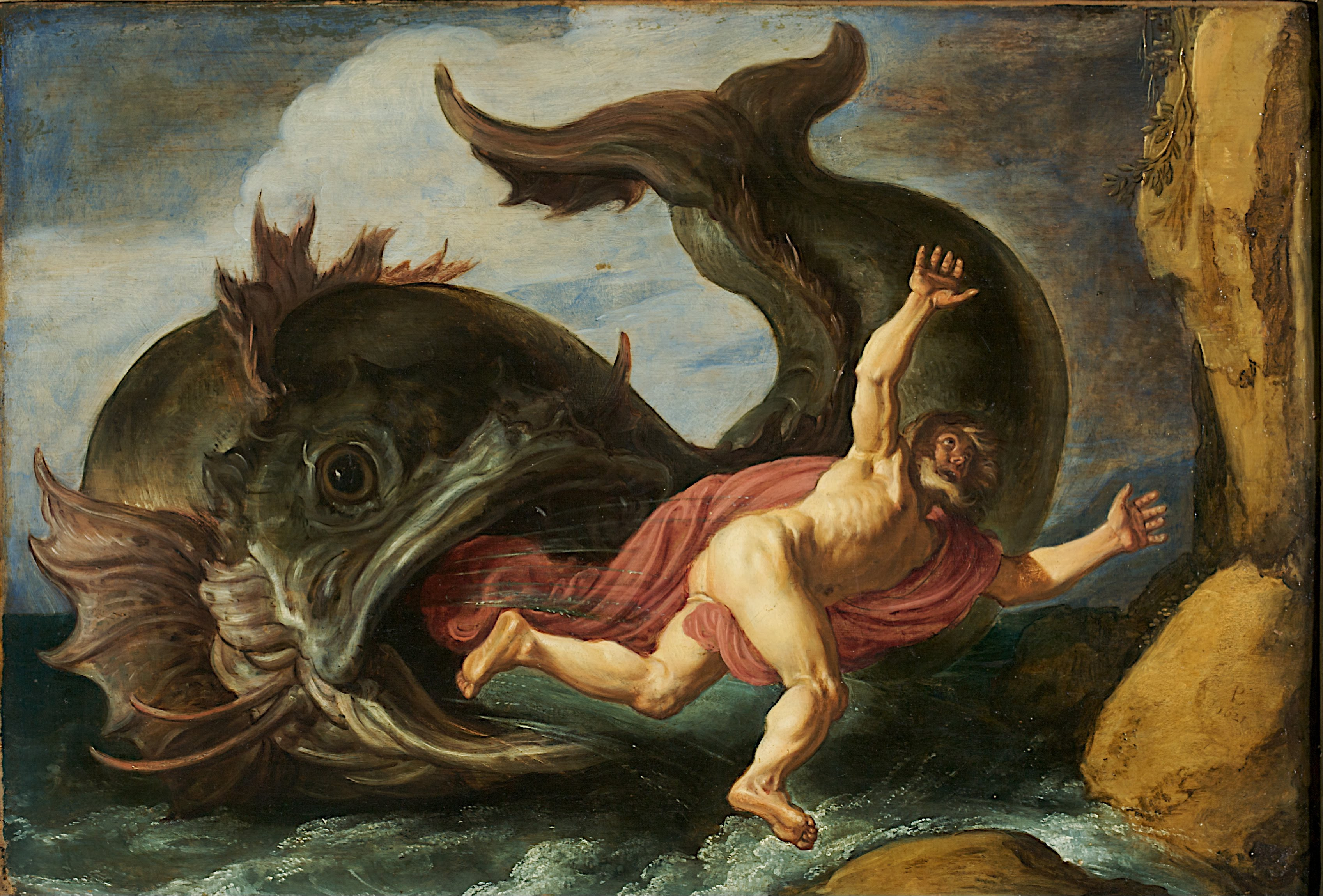
First Sign: In the Gospel of Matthew, Jesus invokes Jonah in a twofold way: For as Jonah was three days and three nights in the belly of the whale, so the Son of Man will be three days and three nights in the heart of the earth (Matt 12:40). In this image, Jonah’s descent into the belly of the whale is a sign of the Lord’s descent to Sheol. For the sake of brevity, I would like to set aside this first sign and go on to discuss the second sign of Jonah. (Matthew’s Gospel sets this second sign forth in essentially the same way as does the Lucan version.)
Second Sign: In the Lucan version, read at today’s Mass, the mention of the whale is omitted and only this second sign is declared: This generation is an evil generation; it seeks a sign, but no sign will be given it, except the sign of Jonah. Just as Jonah became a sign to the Ninevites, so will the Son of Man be to this generation. At the judgment the queen of the south will rise with the men of this generation and she will condemn them, because she came from the ends of the earth to hear the wisdom of Solomon, and there is something greater than Solomon here. At the judgment the men of Nineveh will arise with this generation and condemn it, because at the preaching of Jonah they repented, and there is something greater than Jonah here (Luke 11:29-32).
But what exactly is this (second) sign of Jonah? On one level, the text seems to spell it out rather clearly. Jonah had gone to the Ninevites with this message: Forty days more and Nineveh shall be destroyed (Jonah 3:3). In response, the Ninevites (led by their King) repented, fasted, and prayed. Seeing their actions, God relented and did not destroy them. So on one level the sign of Jonah is the message “Repent or die.” Just as the Ninevites heard Jonah’s warning, put faith in it, and were spared, so the people of Jesus’ time should put faith in His warning to repent and believe the Good News. If they do not, they will meet with great disaster.
What would cause this disaster? The description of the sign of Jonah taps into the historical context of Jonah’s ministry, but applied to the people of Jesus’ time it has a polemical tone. Let’s consider why.
When Jonah was told to go to Nineveh, he resisted. He must have thought that it was a no-win situation for him: either they would rebuff his prophecy (and likely kill him) or they would heed his message and grow stronger. (Nineveh was the capital of Assyria, the mortal enemy of Israel, and Jonah had no interest in seeing them strengthened.)
When Jonah made his announcement of imminent destruction, Assyria did repent, and in their strength they would become a rod in God’s hand to punish Israel. Isaiah the Prophet had well described Israel’s crimes and said that punishment would surely come upon her from Assyria. God would use Assyria to humble and punish His people, Israel. Here is a key passage in which Assyria is described in this way: … Assyria, the rod of my anger, in whose hand is the club of my wrath! I send him against a godless nation, I dispatch him against a people who anger me, to seize loot and snatch plunder, and to trample them down like mud in the streets (Isaiah 10:5-6).
Here, then, is a deeper meaning of the sign of Jonah: if Israel will not repent, then God will take their power and strength and give it to a foreign land that knows Him not. These foreigners will shame and humiliate Israel, inflicting God’s punishment on them.
This is humiliating to Israel on two levels. First, a pagan country would repent while God’s own people would not. Second, they are conquered by a foreign and unbelieving people. The destruction by Assyria was a devastating blow to the Northern Kingdom of Israel and resulted in the loss of the ten tribes living there. They became the “Ten Lost Tribes of Israel.” Only Judah and the Levites were left in the South as a remnant.
Let’s apply this understanding of the sign of Jonah, first to Jesus’ time and then to our own.
In Jesus’ time the sign of Jonah meant that if Israel would not repent and accept the Gospel, God would take it from them and give it to the Gentiles. Jesus says elsewhere to his fellow Jews, Therefore I tell you that the kingdom of God will be taken away from you and given to a people who will produce its fruit (Matt 21:43). Just as ancient Israel’s refusal to repent led to its destruction by the Assyrians, so Israel’s refusal to repent in Jesus’ time would mean destruction by the Romans (in 70 A.D.). This was prophesied by Jesus in the Mount Olivet discourse (Matthew 24:1-25:46, Mark 13:1-37, and Luke 21:5-36). According to Josephus, more than a million Jews were lost in this horrible war.
In our time, I suggest that the sign of Jonah may be active. I know that this may be controversial, but it seems to me that many Christians and Catholics in the decadent West have stopped loving life. Birth rates have dropped dramatically and are well below replacement level. We are on our way to aborting and contracepting ourselves right out of existence. God has loosed judgment on us in the form of the sign of Jonah. He seems to be saying this to us: “Fine, if you do not love life and are not zealous for the faith I have given you, then disaster is upon you. Others still do appreciate larger families and are zealous for their faith. And even if they (like the Assyrians of old) are not my people as you are, I will use them to humble and punish you. They will grow and increase while you decrease. Perhaps when you are punished by a people who do not respect your religious liberty, you who remain will repent and begin to love life.”
In the European Union today, the birth rate is about 1.6 children per woman. Globally, Muslim women average 3.1 children. Do the math and realize that Europe as we have known it is coming to an end. In the United States the birth rate is higher, but still only about 1.9 children per woman. In general, the Catholic world in the West is in decline, both in terms of our birth rates and our zeal for the faith. We are surely being diminished by our culture of death and decadent sloth. Is it the sign of Jonah? You decide.
Sunday’s Gospel about the temptation of Jesus in the desert by Satan evokes several questions. The answers I propose are not intended to be a theological treatise, but rather a pastoral reflection.
I. Why does God permit temptation? God does not permit any evil or problem unless it can serve some greater good. In the case of temptation, He permits it because it summons us to love Him while giving us the freedom to reject or accept that call. God seeks sons and daughters who can love Him freely.
Of God’s creatures, only angels and humans possess free will. We are summoned to love, but love requires the freedom to make choices. In giving us freedom, God permits alternatives to saying “yes” to Him. These alternatives present themselves as temptations.
Temptation existed even in Eden, in paradise; and prior to that, the angels had a sweeping choice for or against God. Scripture hints that one third of them fell to the earth and are what now called demons (see Rev 12:4). Our “yes” to God must be very precious indeed, because in granting this freedom He permits that some, indeed many, choose to reject Him.
A second reason God permits temptation is that it tests and strengthens us. An old saying reminds us, “Things do by opposition grow.” Temptation is a kind of opposition we must learn to endure. In enduring, though, we become stronger. The spiritual life is like the physical life in that we grow stronger through repeated action. After lifting weights repeatedly, our physical strength increases and we can overcome increasingly more difficult physical challenges. It is the same with the spiritual life. An old gospel song says, “Yield not to temptation, for yielding is sin. Each victory will help you, some other to win.” Scripture says, Resist the devil and he will flee (James 4:7). Resisting implies ongoing effort, standing up to the devil repeatedly. It’s not a one-time battle, but an ongoing war in which each small victory makes us stronger and the devil more discouraged. As we grow stronger, the devil eventually stops wasting his time tempting us in certain areas. At times the battle may weary us, but in the long run, it strengthens us. Jesus illustrates this in his three-fold battle with Satan in the desert.
II. What are the sources of temptation? There is a tendency to attribute temptation and struggles to the devil, but tradition speaks to two additional sources: the world and the flesh. (Note that the flesh is not merely our body; it is a term that describes our rebellious tendency to sin and be prideful.) Scripture affirms these different sources, for not only are there passages in which the devil directly tempts (e.g., Adam and Eve in the Garden, Jesus in the desert), but there are ones that speak to the temptations of the world and the flesh: For all that is in the world—the desires of the flesh and the desires of the eyes and pride of life—is not from the Father but is from the world (1 John 2:16).
Frankly, many people do not need direct demonic temptation; they do a pretty good job of exposing themselves to temptation by indulging the flesh and embracing the world. The devil can pretty much leave them alone and monitor their self-destruction from a distance.
This is one reason those striving to convert and return to the Lord are often the target of demonic attacks. As long as they were traveling on the road to destruction and Hell, they barely noticed the devil, because he was walking right behind them. When they began to turn around, though, they ran right into him. While the devil can and does manipulate and influence both the flesh and the world, we do better to look first to these two sources before ascribing temptations directly to the devil himself.
The influence of the flesh and the world are more under our control and thus should be the main focus of our battle. We do well to limit our exposure to the world and to spend more time with heavenly influences such as Scripture, the liturgy, prayer, and healthy, godly relationships. We should also focus more attention on self-mastery, through frequent confession, practicing virtue, and keeping careful custody of our mind and heart. Thus we see that Jesus is in the desert engaged in deep prayer, mortifying the flesh, and stepping away from the world.
III. What is the chief weapon Jesus uses in refusing temptation and how can it help us?Temptation is ultimately about influence and the battlefield is the mind. In the story of Jesus’ temptations, he answers every sinful suggestion by the devil with Scripture.
It is written: One does not live on bread alone, but on every word that comes forth from the mouth of God.
Again it is written: You shall not put the Lord, your God, to the test.
It is written: The Lord, your God, shall you worship and him alone shall you serve.
To every foolish and sinful thought Jesus replies, “It is written …”
Because the battle in temptation is about influence, the following question arises: What most influences you: the world, the flesh, the devil, or God?
We must actively seek to be influenced by God, by godly thoughts and godly truth.
There is an old saying, “Sin makes you stupid.” And indeed it does. Sin darkens our intellect and leads us to make convoluted justifications and rationalizations of attitudes and behaviors that any child can see are wrong and defy common sense. St. Paul describes sin-induced stupidity when writing about the people of his time who suppressed the truth about God; claiming to be wise, they became fools, and their senseless minds were darkened (see Rom 1:18-22). He also advises us, Do not be conformed to this world, but be transformed by the renewal of your mind, that by testing you may discern what is the will of God, what is good and acceptable and perfect (Rom 12:2). Nothing can so renew our minds as the very Word of God. By it we are called to see and judge all other things.
Thus, an essential antidote to temptation is to be deeply rooted in the truth of God. This does not mean merely mechanically quoting verses during an argument. Rather, it means being transformed by God’s Word and watching how it performs in our life. I have been reading Scripture every day for the last thirty years. The Word of God has changed me and has been instrumental (along with sacraments, prayer, and godly fellowship) in putting down sin and resisting the temptations that precede it. Some things that used to tempt me no longer do; other temptations that were once strong are now weaker. Still other temptations remain, but the battle is engaged! Jesus is right: the Faith and the Word of God are a strong shield to protect against the fiery darts of the world, the flesh, and the devil.
Temptation is an ongoing battle for all of us until the day we die. All the more reason to permit the Lord to teach us its causes, the way it operates, and the ways to resist it.
In Monday’s first reading (Monday of the First Week of Lent) there is a recitation of the law that features the refrain “I am the Lord.” What does this expression mean and why is it appended to each command?
When we think of God’s law, there is a danger that we might think of it as we do of any secular law: as a sort of impersonal code written by nameless legislators or bureaucrats. We have not met them; we do not love, trust, or even know them. They are an abstraction we call “the government,” or just “they,” as in, “They don’t let you park here,” or “They’ll arrest you for that.”
If we have faith, God’s Law is personal, for it is given by someone we do love, trust, and know. Further, we believe that He loves us and wants what is best for us.
God’s law is not the equivalent of a no-parking sign put up by some nameless, faceless government agency. Rather, it is a personal exhortation, an instruction and command given by someone we know and who knows and loves us.
Consider this example: Suppose you pull in front of my church to park and you see a no-parking sign. Now suppose further that you decide to ignore it. You have broken a law—not a big one, but a law nonetheless. You’ve chosen to ignore a sign put there by “the government.” Now consider a slightly different scenario: You pull in front of my church to park and I, your beloved blogger and the pastor of the church you are attending, am standing out there by the curb and I say to you, “Please don’t park here.” This situation is different in that I, someone you know and love 🙂 , am personally requesting that you leave the space open for some reason unknown to you.
An old rabbinic saying makes this same point:
You want to know why so many of God’s laws end by saying “I am the Lord”? I will tell you! When God says, “I am the Lord,” he is saying, “Now look, I am the one who fished you out of the mud, so come over here and listen to me.”
When you experience the law in this personal way, you are far more likely to follow it, because someone you know and trust is asking and/or directing you. Now what if, despite this, you still choose to ignore the instruction not to park there. In this case, the law is personal, so your refusal to follow it becomes personal and is a far more serious situation.
Here are two (of many) examples of the “I am the Lord” phrase from Scripture:
You shall not defraud or rob your neighbor.
You shall not withhold overnight the wages of your day laborer.
You shall not curse the deaf,
or put a stumbling block in front of the blind,
but you shall fear your God. I am the LORD.
You shall not act dishonestly in rendering judgment.
Show neither partiality to the weak nor deference to the mighty,
but judge your fellow men justly.
You shall not go about spreading slander among your kin;
nor shall you stand by idly when your neighbor’s life is at stake. I am the LORD (Lev 19:11-14).
Note how each ends with, “I am the Lord.” On the one hand, it lends solemnity to the pronouncement, but on the other, God is saying, “Hey, this is God talking! It is I, your Father, who speak to you; I who created you, led you out of slavery, parted the Red Sea for you, dispatched your enemies, fed you in the desert, and gave you drink from the rock. It is I; I who love and care for you; I who have given you everything you have; I who want what is best for you; I who have earned your trust. It is I, your Father, speaking to you and giving you this command.”
God’s law is personal. Do we see and experience it this way? This will happen only if we come to know the Lord personally. Otherwise, the danger is that we see the Law of God as merely an impersonal code, an abstract set of rules to follow. They might as well have been issued by the deity, the godhead, or even just the religious leaders of the day.
A gift to pray for in terms of keeping God’s Law is a closer walk with the Lord and an experience of His love for us. Such an experience is a great help in loving the Law of the Lord, for when we love the Lord we love His Law, seeing it not as an imposition, but as a personal code of love meant to protect us. When we offend against it, either willfully or through weakness, we are able to repent with a more perfect contrition, for we understand that we have offended someone we love and who is deserving of all our love.
Abba – St. Paul indicates that one of the gifts of the Holy Spirit is to be able to experience God as Abba. Abba is the Hebrew and Aramaic family word for father. It is translated by some as “Papa,” or “Dad,” but regardless of how it is translated, it indicates a deep love and tender affection. He is not merely “the Father” in some abstract or titular sense. He is someone I experience as my own dear Father, as someone who loves me. It is a personal, familial relationship that the Holy Spirit wants to grant us.
This personal relationship brings God’s law alive, makes it personal. And so God says, as He reminds of His Law, “I am the Lord. It is I speaking; I, the one who loves you.”
I might add that we also need to experience this with regard to the Church. Many see the Church in an impersonal way, as an institution. The real gift is to see the Church as Christ’s beloved bride and our Mother. In this sense, we love the Church and grow daily in affection for her, not seeing her “rules” as impersonal, but rather as the guidance and direction of a loving mother.
In this video, Fr. Francis Martin beautifully describes the gift of loving the Father with deep affection:
There is an interesting passage in Isaiah, in which God turns the tables on us and reminds us of the truer purpose of fasting. The key verses come in Isaiah 58, but in order to see them in context, let’s first consider the whole passage.
Thus says the Lord GOD: Cry out full-throated and unsparingly, lift up your voice like a trumpet blast; Tell my people their wickedness, and the house of Jacob their sins. They seek me day after day, and desire to know my ways, like a nation that has done what is just and not abandoned the law of their God; They ask me to declare what is due them, pleased to gain access to God. Why do we fast, and you do not see it? Afflict ourselves, and you take no note of it?
Lo, on your fast day you carry out your own pursuits, and drive all your laborers. Yes, your fast ends in quarreling and fighting, striking with wicked claw. Would that today you might fast so as to make your voice heard on high! Is this the manner of fasting I wish, of keeping a day of penance: That a man bow his head like a reed and lie in sackcloth and ashes? Do you call this a fast, a day acceptable to the LORD? This, rather, is the fasting that I wish: releasing those bound unjustly, untying the thongs of the yoke; Setting free the oppressed, breaking every yoke; Sharing your bread with the hungry, sheltering the oppressed and the homeless; Clothing the naked when you see them, and not turning your back on your own. Then your light shall break forth like the dawn, and your wound shall quickly be healed; Your vindication shall go before you, and the glory of the LORD shall be your rear guard. Then you shall call, and the LORD will answer, you shall cry for help, and he will say: Here I am! (Is 58:1-9)
At the heart of this passage is the essential complaint of God’s people: Why do we fast, and you do not see it? Afflict ourselves, and you take no note of it? In other words, why aren’t you listening to us? We’re praying, fasting, and abstaining, but we’re not getting what we ask!
God is not deaf; neither is He blind. He is not unware of what is being asked and sought. The purpose of fasting and other such mortifications is not to get God’s attention; He hears us just fine. Rather, the purpose is to get us to hear and better understand what God seeks of us. Fasting is meant to help us to pay better attention to God. Its goal is to make room for God in our busy lives.
God continues on to teach the ancient Jews and us that there is absolutely no problem with his hearing, but rather with ours. He says to them, in effect (paraphrasing His remarks from above),
Listen, you come to me as if you are just and have carefully followed my ways but it doesn’t seem as if you’ve heard a word I’ve said. There is wickedness, quarrelling, fighting, and selfish ambition among you. There is injustice and neglect of the poor and needy. You claim to be seeking my ways, but I have already told them to you repeatedly. Are you deaf? You know what I have told you. But you do not do it.
True fasting will open the ears of your memory and draw forth obedience from your hearts. I am not deaf, such that fasting will suddenly make me hear you. No, fasting does not make me hear; it helps you to hear.
So listen to what I have been teaching you. May your fasting help you to hear. May it soften your hearts to say ‘yes,’ limber your stiffened necks to obey. Fasting is for you, not for me.
The truest answer to your many prayers is already contained in what I have taught you to do. If you listen and obey it, light shall break forth for you. Your many wounds will be healed and you will experience victories over enemies and over every temptation.
If you would just listen, you would see that the answer to your prayers is already among you. Allow fasting to help you to see and hear and know that I have already answered you. Fasting will unstop your hearts and obedience will release your blessings.
And so it is that God teaches us the truer purpose of fasting. It is not to get God to hear, but to get us to hear, listen, and obey.
Do not fast and abstain in order to be heard and to get God to do your will; do so in order to hear and better do God’s will.
Here is a performance of In Jejunio et fletu (In fasting and tears), written by English composer Thomas Tallis:
The Gospel today says that Jesus was tempted by the devil in the desert. Hebrews 4:15 also affirms, For we do not have a high priest who cannot sympathize with our weaknesses, but one who has been tempted in all things as we are, yet without sin.
How exactly a divine person, with a sinless human nature, experiences temptation is somewhat mysterious, and yet the text affirms that He does. A Lenten antiphon from the Breviary teaches that He did this, or allowed this, for our sake: Come, let us worship Christ the Lord, who for our sake endured temptation and suffering (Invitatory Antiphon for Lent). Hence, even without pondering too deeply the mystery of how He was tempted or experienced it, we can still learn what Jesus teaches us about how to endure temptation and be victorious over it. (More on the question of how Christ was tempted is available here.)
Before we look at each temptation, we might learn a few general aspects of what the Lord teaches us in electing to endure temptation.
Temptation and Sin – The fact that the Lord is tempted yet did not sin tells us that there is a distinction to be made between temptation and sin. Too often the very experience of temptation makes us feel sinful, as if we have already sinned, but that is not necessarily the case. Jesus, who never sinned, experienced temptation. Therefore, experiencing temptation is not to be equated with sin. One of the tactics of the devil is to discourage us into thinking that way. Some of our past sins may influence the degree to which we feel tempted, but we need not conclude that we have already sinned, or newly sinned, merely because we are tempted. Rather than to feel shame and run from God, we ought to run to Him with confidence and seek his Help.
Temptation and Scripture – Notice that Jesus responds to every temptation with Scripture. This is not to be equated with proof-texting or pronouncing biblical slogans. Rather, it indicates that Jesus was deeply rooted in Scripture, in the wisdom of the Biblical vision. In rebuking temptation in this way, Jesus is teaching us to do the same. It will not be enough for us to know a few biblical sayings, but to the degree that we are deeply rooted in the wisdom of God’s truth available to us through Scripture and the teachings of the Church, we are able to strongly rebuke unholy, worldly, or fleshly thinking. Half the battle in defeating temptation is knowing instinctively its erroneous vision. Having our minds transformed by the teachings of Scripture and the Church is essential in fighting temptation. Scripture says, Do not be conformed to this world, but be transformed by the renewal of your mind, that by testing you may discern what is the will of God, what is good and acceptable and perfect (Romans 12:2). Ephesian 6:17 speaks of the Word of God as the sword of the Spirit, with which we are properly armed for spiritual warfare. Thus, we are taught here by the Lord to be deeply rooted in His Word.
Temptation and Strength – Jesus is tempted three times, after which the devil leaves Him. In a certain way, the spiritual life is like the physical life, in that we grow stronger through repeated action. After lifting weights repeatedly, our physical strength increases and we are able to overcome increasingly difficult challenges. It is the same with the spiritual life. An old gospel song says, “Yield not to temptation, for yielding is sin. Each victory will help you, some other to win.” Scripture says, Resist the devil and he will flee (James 4:7). We need not conclude from this that Jesus needed to be strengthened (He did not) in order to understand that He is still teaching us what we need to do. The battle against temptation is not a “one and you’re done” scenario, but an ongoing battle in which each victory makes us stronger and the devil more discouraged. As we grow stronger, the devil eventually stops wasting his time tempting us in certain areas. At times the battle may weary us, but in the long run, it strengthens us. Jesus illustrates this with his three-fold battle with Satan.
Having review a few general principles, let’s look at the three temptation scenes.
Scene I: The Temptation of Passions – At that time Jesus was led by the Spirit into the desert to be tempted by the devil. He fasted for forty days and forty nights, and afterwards he was hungry. The tempter approached and said to him, “If you are the Son of God, command that these stones become loaves of bread.” He said in reply, “It is written: One does not live on bread alone, but on every word that comes forth from the mouth of God.”
Hunger, as a desire, is a passion. It is not evil per se, for without it we would perish. The same is true of other natural desires for things like life, drink, and procreation (sexuality). We have other sorts of passions such as anger, love, joy, aversion, hatred, hope, despair, fear, and courage. Of themselves, these passions are neither good nor bad. Passions become bad only in relation to their object or insofar as we allow them to become inordinate.
Hence there is nothing wrong with Jesus as He experiences hunger. What the devil tries to do is to draw Jesus into the sin of yielding to His hunger and using His power inappropriately. Remember, Jesus had been led into the desert by the Spirit in order to fast and pray. This is His call. His hunger is real and without sin, but now He is tempted to set aside His call and to yield to His hunger in an inappropriate way, by rejecting his call to fast. Jesus is tempted to serve Himself. He obviously has the power to turn stones into bread, so a second temptation is to use His power inappropriately, to gratify and serve Himself rather than to glorify His Father.
What about us? We have passions, too. They are not wrong in themselves, but we can allow them to become inordinate or gratify them in unlawful ways. Remember that we, like Jesus, are called to fast. Our fast is from things like sin, injustice, unrighteousness, sexual impurity, unlawful pleasures, and excessive indulgence. We have it have it in our power to choose to reject our fast and to gratify our desires by rejecting our call to serve God. The devil tempts us to reject our call and to use our power to gratify our passions by lying, cheating, stealing, venting our anger, fornicating, and being gluttonous or greedy.
Jesus has recourse to God’s Word:Man does not live on bread alone, but on every Word that comes from the mouth of God. Jesus tells Satan that He would rather live and be sustained by the Word than by food; His food is doing the will of His Father.
What about us? Can we say,Neither have I gone back from the commandment of his lips; I have esteemed the words of his mouth more than my necessary food (Job 23:12)? Can we say that God’s Word is more important to us than my desires for satisfaction, sex, self-preservation, popularity, worldly joys, power, prestige, or possessions? Can we say that our strongest desire is for God and the things awaiting us in Heaven and that we will gladly forsake everything for it?
Scene II. The Temptation of Presumption – Then the devil took him to the holy city, and made him stand on the parapet of the temple, and said to him, “If you are the Son of God, throw yourself down. For it is written: He will command his angels concerning you and with their hands they will support you, lest you dash your foot against a stone.” Jesus answered him, “Again it is written, You shall not put the Lord, your God, to the test.”
It is important to trust God, but this is not an invitation to act recklessly. There will come a time when Jesus will throw himself down on the cross with the complete assurance that the Father will raise Him. He has this command from His Father. But now is not that time and Jesus must act to preserve and protect His life so that he can accomplish His full mission.
Presumption is a terrible problem today. Too many people think that they can go on sinning and that there will be, or should be, no consequences. This is true in both worldly and spiritual ways. Too many engage in risky and ruinous behavior and think, “I’ll be OK. I’ll escape. I won’t be a statistic. I won’t get caught. I won’t lose my job.” Many think, “I can use drugs without becoming addicted. I can have evil friends and still stay good and live morally. I can skip school and still get good grades. I can be promiscuous and won’t get a disease or become pregnant. I can drive recklessly and won’t have an accident. I can be disrespectful and still command respect.” In all this people are simply “cruisin’ for a bruisin’.”
Regarding the moral presumptiveness of thinking that no matter what we do, Heaven will still be the result, the Lord warns,
Say not I have sinned, yet what has befallen me? For the Lord bides his time. But of forgiveness be not overconfident adding sin upon sin. … Delay not your conversion to the Lord, put it not off from day to day for mercy and justice are alike with him (Sirach 5:4).
Do not be deceived; God is not mocked, for whatever a man sows, that he will also reap. For he who sows to his own flesh will from the flesh reap corruption; but he who sows to the Spirit will from the Spirit reap eternal life. And let us not grow weary in well‑doing, for in due season we shall reap, if we do not lose heart (Gal 6:7).
For they have sown the wind, and they shall reap the whirlwind. (Hosea 8:7).
But my people would not listen to me; Israel would not submit to me. So I gave them over to their stubborn hearts to follow their own devices. If my people would but listen to me, if Israel would follow my ways, how quickly would I subdue their enemies and turn my hand against their foes! (Psalm 81:11)
God clearly warns us that sin sets us on a path that hardens our heart and makes our final conversion increasingly unlikely. In this Lenten season, He is pleading with us to be serious about sin and its consequences. Sin renders us not only unfit for Heaven, but incapable of entering it.
A bad idea – Presuming that everything will be fine is not only a poor strategy, it is a snare of the devil, who seeks to cloud our mind with false hope and unreasonable expectations. Jesus has a very clear message for the devil and for any of us who would engage in presumption: Don’t you dare put the Lord your God to the test in this way. Obey Him out of love, but do not put Him to the test. Yes, presumption is a very foolish idea.
Scene III. The Temptation of Possessions– Then the devil took him up to a very high mountain, and showed him all the kingdoms of the world in their magnificence, and he said to him, “All these I shall give to you, if you will prostrate yourself and worship me.” At this, Jesus said to him, “Get away, Satan! It is written: The Lord, your God, shall you worship and him alone shall you serve.”
Here is the obvious temptation of worldly possessions. Everything, everything, is offered to Jesus in exchange for a little worship of the devil. Tt may seem strange to us that having an abundance of things would be linked to worshiping the devil and forsaking God, but Scripture attests to this connection elsewhere:
Adulterous people! Do you not know that friendship with the world is hatred toward God? Whoever therefore wants to be a friend of the world makes himself an enemy of God (James 4:4).
Do not love the world or anything in the world. If anyone loves the world, the love of the Father is not in him (1 John 2:15).
No one can serve two masters. Either he will hate the one and love the other, or he will be devoted to the one and despise the other. You cannot serve both God and Money (Matt 6:24).
This is all pretty blunt. We want to have both, but the Lord is clear in rebuking this temptation by insisting that we must serve God alone, adore God alone. The inordinate love of this world causes us to hate God more and more and to bow before Satan in order to get it. Don’t kid yourself. If this position seems extreme to you then you are calling God an extremist. The Lord is warning us that there is a major conflict here that steals our heart. For where a man’s treasure is, there is his heart (Matt 6:21). It is not wrong to desire what we really need to live, but our wants get us into trouble. The desire for riches ruins us and makes God seem as a thief rather than a savior. This is a very severe temptation and Jesus rebukes it forcefully. Him along shall you serve.
We need to beg God for single-hearted devotion to him. The Book of Proverbs has a nice prayer in this regard: Give me neither poverty nor riches, lest in my poverty I steal or in my riches I say “Who is the Lord?” (Prov 30:8-9, gloss)
In the end, temptations are real; we either accept God’s grace to fight them or we are going down. The Lord wants to teach us today about the reality of temptation and how to fight it, by His grace. Remember, the battle is the Lord’s and no weapon waged against us will prosper if we cling to His grace. In the end, the choice is clear: either tackle temptation (by God’s grace) or risk ruination (by Satan’s “ministrations”).
This song says,
“Yield not to temptation, for yielding is sin. Each victory will help you, some other to win. Fight valiantly onward. Evil passions subdue. Look ever to Jesus, He will carry you through. Ask the Savior to help you, comfort strengthen and keep you; He is willing to aid you, He will carry you through.”
truth word in mixed vintage metal type printing blocks over grunge wood
Even in a relativistic culture we like to think categorically about a lot of things. Is a person good or bad? Is an idea liberal or conservative? Are we a divided nation or a united one?
Truth be told, we are all a mixed bag, individually and collectively. God alone is wholly good. Even in the midst of our struggles and flaws there still lurks something good, something true and beautiful. There are also many times when we must frankly admit that some things are true and some are false, some are right and some are wrong.
The genius of Catholicism, often not appreciated by our opponents, is that careful distinctions are a hallmark of our Sacred Tradition and teachings. We insist that there are absolute and immutable truths, but we also hold that some teachings are not absolute and admit of distinctions or need to be balanced by other truths. For example, Jesus said that He came to give us peace (Jn 14:27), but He also said, “I have not come to bring peace, but a sword” (Mat 10:36). Thus, context and distinctions are often important, but they are in service of an absolute truth. In this case, the absolute truth is that no real or lasting peace can exist apart from the Truth, which is Jesus Christ, for He says, “I am the Truth” (Jn 14:6).
As we navigate an increasingly tense and divided world, our insistence on absolute truths as well as distinctions becomes more important. When are discussions fruitful and when are they not? What can we tolerate and what must we refuse to tolerate? What is the distinction between acceptance and approval?
The questions could go on, but the point is that we must be very thoughtful in such matters. Knee-jerk reactions must give way to reflection and careful consideration.
The following video does a good job of reminding us of the complexity of division and unity.