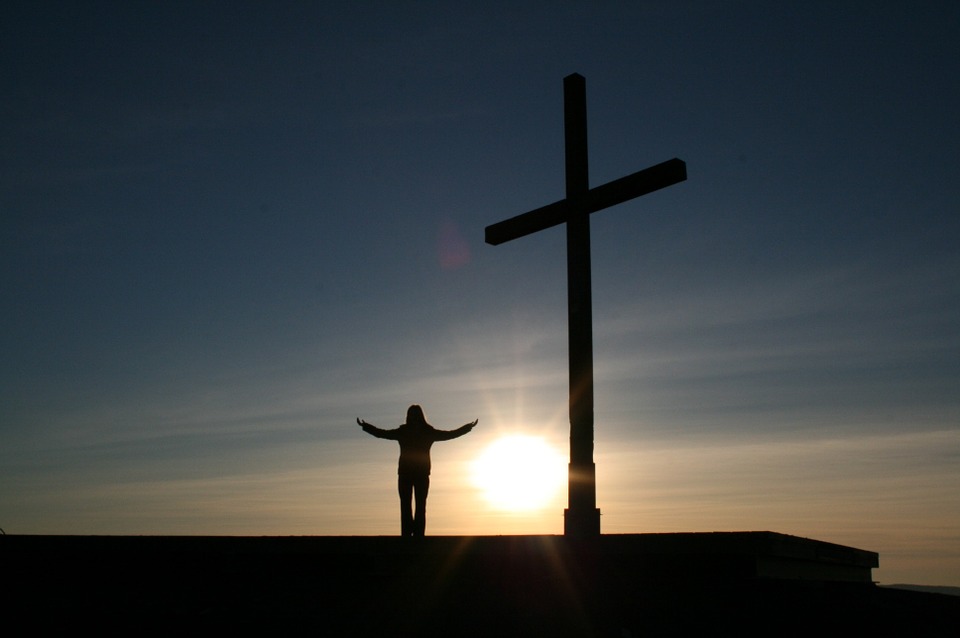
The Gospel in Miniature

Most of us are familiar with this famous passage from the Gospel of John: For God so loved the world that he gave us his only begotten Son, that whosoever believes in him might not perish but might have everlasting life (John 3:16). For many people it serves as a kind of mini-gospel.

There is something of that same quality in St. Paul’s beautiful summary of salvation and of the gospel message: For we were, by nature, children of wrath, like the others. But God, who is rich in mercy, on account of the great love with which he loved us, even when we were dead in our sins, gave us life in Christ. It is by this grace that you are saved (Ephesians 2:3-5).

There is a compact beauty to this text from Ephesians. It paints a beautiful picture of the love of God the Father for us despite our terrible condition: we are children of wrath and are dead in our sins. The breakthrough begins with two simple words: “But God ….” From there, love comes to the rescue.

Let’s examine some of the teachings in this mini-gospel, this summary of salvation.

The Condition of our Salvation Salvation presupposes there is something from which we must be saved. This brief text lists two fundamental conditions from which we must be snatched and saved: disaffection and death.

Disaffection – The text says, By nature, we were children of wrath. The word wrath seems to be a synonym for anger, but in the New Testament it points to an ongoing state of aversion to or disaffection with the holiness of God. Wrath speaks to our inability to endure the holiness of God in our present sinful state. Only the grace of God can adequately prepare us to endure the day of his coming and stand when he appears (Malachi 3:2).

The Greek word translated here as “wrath” is orgḗ, and it speaks to a settled anger or aversion arising from an ongoing or fixed opposition; it is different from a sudden outburst of anger. Wrath is a disposition that steadfastly opposes or recoils from someone or something that cannot be endured.

Experientially, “wrath” speaks to the utter incompatibility of the Lord’s holiness and our current condition. To speak of the wrath of God does not mean that God is angry. Rather, it speaks to our inability to endure the light of His truth and heat of His love. It is like a man who emerges from a dark room into the bright sunshine and finds the light of day too harsh to handle. The problem is not with the sunlight; it is internal to the man, who has become accustomed to the darkness. Nevertheless, he continues to protest that it is the light that is harsh. This is our human condition without grace. We simply cannot endure the light and heat of God, who is like a blazing sun of love and truth. Only Jesus Christ, by His grace, can prepare us to enter into the full presence of God.

Before Christ, we were children of wrath, like the rest. Even to the great and holy Moses, God had to say, You cannot see my face, for no one can see me and live (Ex 33:20). Only Jesus can enable us to see the Father’s beautiful face.

Death – The text says that we were dead in our sins. Thus, this problem was not going to go away through any action of ours. A few more spiritual push-ups or alms for the poor were not going to be enough—or even possible—because we were dead in our sins. Dead people cannot do anything but lie there and be acted upon by others. It doesn’t get more serious than being dead in our sins. Only God, who is life and existence Himself, can resolve this for us.

The Cause of our Salvation – The text speaks to the primary cause of our salvation: But God, who is rich in mercy, on account of the great love with which he loved us ….

To love is to will the good of the other. We who are human almost always have imperfect love. We love others, but we also expect to get something in return. If we don’t think we are getting enough back, we easily become resentful and may begin to withhold our love. God’s love, however, is perfect and gratuitous. All that God got back in return for loving us was the cross!

This is the beauty of the text: we are saved by God on account of the great love with which He loved us.

Why does God love us? Because God is love and that is what love does—it loves. Love is more than an emotion, something we feel—it is willing the good of the other. Loving does not always involve affirmation; at times it will involve rebuke and correction. Sin and error are never the good that God wills for us. Thus, even when he must punish us or allow us to endure tribulations, it is only for our greater good, that we come to wisdom, repentance, goodness, and truth.

Love and richness in mercy are also connected in this passage. Even our imperfect love for others brings forth an understanding and a compassion that makes us more patient and more willing to presume good faith on the part of those we love. Due to our imperfections, our mercy can err by excess or defect. We may grow overly angry with those we love and be more severe with them because the blows they inflict upon us are more painful. On the other hand, sometimes we are overly merciful to those we love, becoming too tolerant and overlooking serious issues. Thus, imperfect love and imperfect mercy are often our lot.

Of course, God is perfect love. While He is rich in mercy, His mercy is His willingness to suffer on our behalf, but not in a way that harms us or inhibits our freedom. That is why one of the great evils of our time is the preaching of mercy detached from necessary repentance. Repentance is the key that unlocks mercy. It is the door we freely open to God, admitting our need for mercy and allowing Him to apply its healing affects. His rich mercy is freely offered, not imposed.

As the Parable of the Prodigal Son teaches, if we take one step by God’s grace, the Father takes two steps and starts running toward us. Yes, our Heavenly Father loves us and is rich in mercy, rejoicing in our return and summoning the angels and saints in Heaven to the celebratory feast!

Here, then, is the cause of our salvation: God’s great love for us and the richness of His mercy. We have but to say yes by turning the key of repentance and opening the door of our heart to His rich, necessary, freely-offered mercy.

The Cure of our Salvation The text says that God gave us life in Christ. It is by this grace that you are saved.

We who were dead in our sins and who were children of wrath like the rest are brought back to life in Christ. Notice that it is in Christ that we are saved. That is to say, Jesus does not act upon us in a merely extrinsic way. Rather, He takes us to Himself and makes us members of His Body. He is the Life as well as the Way and the Truth. He incorporates us, makes us members of His body, so that we live in Him and through Him.

  • Now you are the body of Christ, and each of you is a member of it (1 Cor 12:27).
  • Are you unaware that all of us who were baptized into Christ Jesus were baptized into His death? We therefore were buried with Him through baptism into death, in order that, just as Christ was raised from the dead through the glory of the Father, we too may walk in newness of life. For if we have been united with Him like this in His death, we will certainly also be united with Him in resurrection. … Now if we died with Christ, we believe that we will also live with Him (Romans 6:2-8).
  • Whoever eats My flesh and drinks My blood remains in Me, and I in him … so also the one who feeds on Me will live because of Me (Jn 6:54-55).

So, the Father gives us life in Christ not just by Christ. To be saved and no longer be dead in our sins, to live, is to be in union with Him. This is more than a juridical act, more than an imputed righteousness; it is a saving relationship and incorporation into Christ’s Body. Christ’s Body is no mere abstraction or allegory; it is the Church. The Church is the Body of Christ. It is the living, active presence of Christ in the world (see Eph 5:23, Col 1:18, Eph 1:23, Eph 4:12, 1 Cor 12:22ff, inter al).

It by this grace that we are saved, but by what grace? By the grace of a life-changing transformative relationship with Jesus Christ. The grace by which we are saved is Christ Himself and our incorporation into Him. It our remaining with Him through the relationship that is the grace of faith. He saves us by the rebirth and washing of baptism, strengthens us in the Sacrament of Confirmation, feeds us with His Body and Blood in Holy Communion, and heals our wounds in the Sacraments of Confession and Anointing of the Sick.

Here, then, is a kind of mini-Gospel or a summary of our salvation from St. Paul. It is beautiful and compact, worthy of a framed copy in a special place—or better yet, hanging on your refrigerator door.

Cross-posted at the Catholic Standard: The Gospel in Miniature

Can Anything Good Come Out of 2018?

It is hard to describe 2018 as anything short of a disaster for the Church, both in the United States and around the world. I will not recite every gory detail here but suffice it to say that this year will go down in history for its high-stakes drama and the discouragement that ensued among both clergy and the faithful.

Can anything good possibly come from 2018? None of us can say for certain, but we do know that God can write straight with crooked lines; He can make a way out of no way. Though I am a known critic of many of the events of the past year, I would like to point out some positive effects that have occurred. I pray that these do not become overcorrections, which can sometimes be as bad as the evils they replace.

The laity has found its collective voice.

Many of us can remember a time when it was almost unthinkable to say anything negative about a priest or bishop. Even if one saw evidence of problematic behavior by a clergyman, mentioning it was verboten. There was a kind of excessive deference to Church authority. Because the priest was holy and had given his life to God, questioning or opposing him was tantamount to questioning or opposing God.

Though this began changing in the 1970s and ’80s, there has still been a sometimes-unhealthy submissiveness to the clergy, especially bishops. For traditional Catholics, disrespect for the clergy—especially the pope—was a mark of dissent and highly frowned upon. A true and orthodox Catholic had a filial love for the pope and, as general rule, for the bishops in union with him.

Although we call priests “Father” and think of bishops as shepherds, most of us are adult children. The Catholic faithful have equal dignity before God and have both the right and the duty to work with their clergy in manifesting the Church. The roles are distinct, but the responsibility is shared.

While not rejecting the divine constitution of the Church (wherein the Lord established his clergy with the power to teach, govern, and sanctify in a unique and authoritative way), God’s faithful people are to work with their clergy so that the clergy are responsible and accountable for the gifts and roles God has given them. Canon 212.3 says this of the lay faithful:

According to the knowledge, competence, and prestige which they possess, they have the right and even at times the duty to manifest to the sacred pastors their opinion on matters which pertain to the good of the Church and to make their opinion known to the rest of the Christian faithful, without prejudice to the integrity of faith and morals, with reverence toward their pastors, and attentive to common advantage and the dignity of persons.

A fawning and overly deferential attitude toward the clergy does not help them or the Church.

The bishops and other clergy have been humbled in a way that may have salutary effects.

Over the past thirty years, many Catholics have become more comfortable giving feedback to their local priests, even confronting them when necessary. Bishops, however, have continued to be well-insulated; they are often surrounded and protected by several layers of staff. Most lay people indicate that they have no hope of ever getting through to the bishop. Even letters addressed to the bishop are answered by subordinates. In some larger dioceses, even priests can have difficulty meeting or speaking with their bishop.

Many bishops have become aware that they are too distant from their people and must get better at listening to them, taking their concerns seriously, and participating more in the everyday life of the flock.

Clergy are more likely to correct one another and speak more honestly to their bishop.

Priests are not immune from showing excessive deference to and flattery of higher-level Church officials. Priests are people and most people are hesitant to speak clearly and forthrightly to those in authority over them.

We priests need to overcome this tendency and learn to speak more frankly, yet still respectfully, to our bishops. A priest has a shared responsibility with his bishop, acting as his eyes and ears in the parish as well as being his voice to the parishioners. Priests must become more willing to say things to their bishop that he would rather not hear but needs to hear.

This recent crisis has helped some priests, even if only a minority, to become more willing to speak out, to the bishop and to the laity, with clarity and charity. Priests owe respect and obedience to their bishop. This is not obsequiousness and fawning deference, but manly and respectful interaction that has the best interests of the bishop and the wider Church at heart.

We have learned the price of silence and compromise.

The sexual revolution was simmering through the early 1960s and reached a boil in the last few years of the decade. Sadly, most clergy and parents remained far too silent as the body count grew. It is estimated that there are more than 40 million abortions per year around the world. Most children are now raised without the benefit of a father and mother in a stable marriage. Sexual promiscuity (and the resultant sexually-transmitted diseases) and sexual confusion are rampant. Yet the silence from many pulpits on these matters is deafening.

In 1968 many clergy, embarrassed by the prophetic encyclical Humanae Vitae, simply stepped away from any teaching on human sexuality. It became too politicized and controversial for their tastes. In sowing the wind, we have reaped the whirlwind.

We have been reminded that “tactful” silence is foolish and compromise with the world brings a false peace rooted in lies. The world will never be satisfied with any compromise we make. In fact, it derides us when we do so! The world will only be satisfied with total surrender. The sexual sin and confusion, up through the highest ranks of clergy, shows forth the price of such compromise. The world is not changed by our compromise, but we are corrupted, weakened, and confused by it. We have earned no converts, only derision and moral debilitation.

It’s time to get back to the uncorrupted and pure teaching of Scripture, which is more concerned with people’s salvation than with their feelings.

Some are now speaking more plainly about the central issues of homosexuality and the abuse of power.

The connection of homosexuality to sexual abuse by clergy has been a forbidden topic, but the current crisis has forced it out into the open. (I have written in detail about this topic in other posts, here and here.) When 80 percent of the victims of sexual abuse by clergy are males, we must investigate why that is the case; remaining silent about this fact has only caused further damage. An honest assessment is going to be necessary for any credible solution.

Clearly, those with deep-seated homosexual tendencies are going to face unique problems in the same-sex settings of seminaries, rectories, and religious houses. The Pope himself recently raised these concerns. The current crisis has encouraged more to speak out about these issues, realizing that continued silence will only make matters worse.

The common good and the spiritual welfare of those with same-sex attraction require a truthful assessment of this matter no matter how unpopular such observations and prescriptions may be. Besides, the world isn’t going to love us no matter what we do!

We are now more aware that the victims of sexual abuse are not just pre-pubescent children and post-pubescent minors, but vulnerable adults as well.

Although seminarians and newer priests are adults, an older priest or bishop can use his power, authority, and influence over their future to make it difficult for them to resist sexual advances.

Further, because priests are called “Father,” any sexual interaction with the faithful—male or female, young or old—can rightly be called “spiritual incest.” All this talk about “consenting adults” ignores the fact that many relationships are not ones between equals. The #MeToo movement has brought this out in the business, media, and Hollywood worlds.

There is a growing awareness in the secular world of the damage that can be caused by caretakers, therapists, counselors, and others in positions of influence who take sexual advantage of vulnerable adults. In the Church, a priest who does this is guilty not only of violating a professional boundary but also of sacrilege, because he violates his sacred vows.

The current crisis has caused the Church to take a much clearer look at this aspect of the problem. If even the secular world is beginning to understand this, we can do no less.

Here, then, are some positive outcomes, even if painful in their initial unfolding. They can be helpful trends for the Church provided they do not become overcorrections. This is one of the dangers of any response to a crisis: that we simply swing to a perhaps-equally-undesirable extreme. For example, overcorrections might result in some of these:

  • A laity that is so bold as to be incorrigible, unteachable, and disrespectful of clergy and bishops.
  • Bishops that are so anxious for the approval of their flock that they stop leading and prophetically challenging the faithful to follow Christ, especially in matters that challenge popular ways of thinking.
  • Neglecting mercy and the pastoral need to be patient in leading people out of habitual sin.
  • Forgetting that 20 percent of the victims of sexual abuse by clergy have been female.
  • Demonizing sexual attraction such that even appropriate flattery and outreach (e.g., asking someone out for a date) is considered abuse. Attraction between men and women is normal and healthy and should not be criminalized. Obviously, clergy should never signal sexual interest, but a mere look or an expression of concern does not amount to a boundary violation.

Ultimately, we must lovingly summon all to chaste living in accordance with the Sixth Commandment and God’s overall teaching. If we can be serious and loving about this, something good may come of the crises of 2018.

Cross-posted at the Catholic Standard: cathstan.org/posts/can-anything-good-come-out-of-2018

The Rich Tapestry Faith On New Years Day

The feast day of January 1st is a very complex tapestry, both culturally and liturgically. Perhaps we can use the second reading by St. Paul to the Galatians as a way to weave through some of the many details. We can look at it in three parts.

I. The chronology of our celebration– The text from St. Paul’s letter to the Galatians says, When the fullness of time had come …

Most people are going about today saying, “Happy New Year!” And rightfully so, for it is the beginning of a new year; but most people think of New Year’s Day in almost wholly secular terms. Sadly, it is best known as an occasion for loud parties and excessive drinking.

It is a mistake to view New Year’s Day simply as a secular holiday. In speaking of “the fullness of time,” St. Paul reminds us that all time and all ages belong to God.

It is not simply 2019; it is 2019 Anno Domini (A.D.). Even the most unbelieving of people in the Western world denote their place in time in relation to Jesus Christ. It is 2019 years since the birth of Christ. Every time we write the date on a check or at the top of a letter, every time we see it at the top of the newspaper or on our computer screen, that number, 2019, points back to Christ. He is the Lord of history. Jesus sets the date; He is the clock by which we measure. All time belongs to Him.

Jesus says in the book of Revelation, I am the Alpha and the Omega, the first and the last, The beginning and the end. He who is, and who was, and who is to come (Rev 22:13).

If it is true that 2019 references the birth of Christ, then why is Christmas Day not also New Year’s Day? The fact that it is not actually makes a lot of sense if we understand liturgical and spiritual sensibilities.

In the Church and stretching back into ancient Jewish times, it was customary to celebrate the high feasts of faith over the period of a week. In Christian tradition this came to be known as the “octave.” Although we think of a week as comprising seven days, consider that we celebrated Christmas this past Tuesday and now this week we celebrate New Year’s Day on Tuesday; Tuesday to Tuesday, inclusive, is eight days.

Tuesday, January 1, 2019 is the eighth day of Christmas. In the Christian tradition, the octave is considered as one long “day” that lasts for eight days. Therefore, Tuesday, January 1, 2019 completes Christmas day; it is fulfilled. Or, as St. Paul says, the “fullness of time” in terms of Christmas day has come. At the end of this eight-day Christmas day, our calendar flips from 2017 to 2019 A.D.

The rest of the secular world has largely moved on already, barely thinking of Christmas anymore. As I walk in my neighborhood, I see Christmas trees already set out at the curb waiting to be picked up by the recycling trucks. Yes, for many in our hurried world, Christmas is over. We in the Church, however, continue to celebrate the great Christmas feast and cycle. Having completed the octave, we move on to Epiphany week.

This New Year’s Day we contemplate the “fullness of time.” The passage of another year reminds us of the magnificent truth that to God all time—past, present, and future—is equally present. He holds all things together in Himself. He is the same yesterday, today, tomorrow, and forever. Whenever He acts, He acts in our time, out of the fullness of time. This is a very deep mystery and we should ponder in silence the mystery that for God, all things are. He is not waiting for things to happen. For Him, everything is accomplished.

II. The content of our celebration – St. Paul goes on to say, God sent forth his son born of a woman. This statement again reminds that we are still in the Christmas cycle.

While it is New Year’s Day, there is also a complex tapestry of religious meanings to this day as well. It is still Christmas day, the eighth day of the one long day that we call Christmas.

Historically, this is also the day of Christ’s circumcision. For a long period in Church history, today was the feast of “The Circumcision of the Lord.” As I have written previously, I regret the loss of this feast, at least in terms of its title.

Today is the day when Joseph and Mary brought Christ to be circumcised. In this, Jesus as man and as God reverences the covenant He has made with His people. It is a beautiful truth that God seeks relationship with His people. In this covenantal act of the circumcision is the moving truth that Jesus is not ashamed to call us His brothers (Heb 2:11).

There is the first shedding of Jesus’ blood. It is also a sign of His love for us.

This feast day also celebrates the Most Holy Name of Jesus, for not only was a Jewish boy circumcised on the eighth day, but he was also given his name; all heard that name for the first time on that day.

The name Jesus means “God saves.” Indeed, this Most Holy Name of Jesus, when used in reverence, has saving power. We are baptized in His Holy Name along with that of the Father and the Holy Spirit, and all of our prayers conclude with His Holy Name. Scripture says this of His great and holy name:

Therefore, God exalted him to the highest place and gave him the name that is above every name, that at the name of Jesus every knee should bow, in heaven and on earth and under the earth, and every tongue acknowledge that Jesus Christ is Lord, to the glory of God the Father (Phil 2: 9-11).

Yet another meaning of today’s feast day is shown in its current, formal title: “The Solemnity of Mary, Mother of God.” This replaced the title of “The Feast of the Circumcision of the Lord” in 1970. However, it is the most ancient title for this feast day. Again, you may read more on this topic in a previous blog post.

We note in the second reading that St. Paul says that God sent forth his Son, born of a woman. Jesus is the eternal Son of the Father; He is God from God, Light from Light, True God from True God. Jesus is God, and because Mary gave birth to Him, she is the Mother of God because Jesus is not two different persons.

Mary did not just give birth to part of Jesus, she gave birth to Jesus. Thus, the title “Mother of God” speaks to us as much about Jesus as it does about Mary. She has that title because of the Church’s insistence that Jesus cannot be divided up into two different people. We cannot say that Mary gave birth to one Jesus but not to “the other one.” Although He has two natures, human and divine, there is only one Jesus.

Thus, on this feast of Christmas, on this eighth day of Christmas, we are reminded and solemnly taught that Jesus is both human and divine. In taking a human nature to Himself from His mother Mary, He remains one person. God has sent forth his son, born of woman.

III. The consolation of our celebration– St. Paul goes on to say, Born under the law to ransom those under the law so that we might receive adoption as sons. As proof that you are sons, God sent the Spirit of his Son in our hearts crying out Abba, Father! So you are no longer a slave, but a son, and, if a son, also an heir through God. Note three things about this passage:

Our Adoption– We have already noted that on the eighth day Jesus is circumcised and enters into the Covenant, into the Law. In the Incarnation, He joins the human family; in the Covenant, He joins our family of faith. He will fulfill the old Covenant and inaugurate the new one. By this New Covenant, by baptism into Him, we become members of His Body and are thereby adopted as sons.

We become sons in the Son. When God the Father looks at His Son, loving Him, He is also looking at us and loving us, for we are in Christ Jesus, members of His Body through baptism. God is now our Father, not in an allegorical sense, but in a very real sense. We are in Jesus and therefore God really is our Father.

Our Acclamation– St. Paul says that the proof of our sonship is the movement of the Holy Spirit in us that cries out Abba! In Aramaic and Hebrew, Abba is the family term for father. It is not baby talk, like “Dada.” However, just as most adults call their father “Dad” or some other endearment rather than the more formal “Father,” so Abba is used in a similar way. It would be quite a daring thing for us to call God “Dad” unless we were permitted to do so and instructed to do so by Christ.

St. Paul speaks of this word, Abba, as proof that we are sons. In so doing, he emphasizes that it is not merely the saying of the word that he refers to. Even a parrot can be taught to say the word. Rather, St. Paul is referring to what the word represents: an inner movement of the Holy Spirit wherein we experience a deep affection for God the Father. By our adoption, our baptism into Christ, by our reception of the Holy Spirit, we love the Father! We develop a deep affection for Him and dread offending Him. By this gift of the Spirit, God is our Father, whom we deeply love!

Our Advancement– Notice that St. Paul then speaks of how we have moved from being slaves to being sons, heirs. In Jesus, we are not just any son; we are the only Son of the Father. As Jesus has a kingdom from His Father, so do we as we too inherit it with Him. As sons in the Son, we are heirs with Jesus to the Kingdom!  Jesus speaks of His disciples as reigning with Him one day: And I confer on you a kingdom, just as my Father conferred one on me (Lk 22:29). In Jesus, all Heaven will be ours and we will reign with Him forever. This is not our doing, not our glory; it is Christ’s doing and His glory in which we share.

Thus we have a very rich tapestry on this New Year’s Day, this feast of the Octave of Christmas, this Feast of the Circumcision of the Lord, this Feast of the Most Holy Name of Jesus, this Feast of Mary, Mother of God. We are given this feast wherein the glory of Christ is held before us and we who are members of His Body are told of the gifts that we receive by His holy incarnation and His passion, death, and resurrection.

It’s not a bad way to start the new year: being reminded of God’s incredible love for us and of His rich blessings and promises.

Does Anybody Really Know What Time It Is? A Meditation on the Mystery of Time

I open our New Year’s Eve late night Mass (11:15 PM) with the observation that we begin Mass in one year and end in the next. New Year’s Eve highlights the mysterious passage between years. In a way I suppose it is no more mysterious than the passage from Thursday to Friday or from 10:00 AM to 10:01 AM.

In one sense, nothing could be simpler than time. I might ask you, “What time is it?” You might reply, “It’s 1:15.” Simple! But time has mysteries about it.

What is time? Some say it’s merely a measure of change. But that doesn’t really make a lot of sense because change doesn’t occur at a steady pace at all.

Some say it’s just another way of measuring distance in the space-time continuum. Time and distance are certainly related. To look out at the stars at night is to look into the past; it has taken millions of years for the light from some stars to reach us over vast distances through the vacuum of space. Even the light from our sun is eight minutes old before it reaches us.

But there’s more to time than distance and we all know it. There are several different words for time in Greek. Chronos refers to clock time. Kairos encompasses a complex notion of time experienced subjectively. Sometimes ten minutes can seem like an hour, but there are other times when an hour can pass by swiftly. Further, things can seem fitting at certain times but not at others. Kairos thus expresses an elastic notion of time. Lastly, there is aeon (eternity, or the fullness of time). I’ll comment more on aeon below.

Every year at this point I ponder the mystery of time, probably because time is so much on our minds. As I do so, I am mindful that most of us think we know what time is until we’re asked to define it in some meaningful way. It reminds me of what St Augustine once said about another mystery: the Trinity. If someone asks me to define time I am tempted quote St. Augustine: “If you don’t ask me, I know. If you ask me, I don’t know.” So time, while plain and simple at one level is mysterious at others.

I cannot list all such mysteries, but consider a few:

  1. The Mystery of Time’s Elasticity – We like to think that time is unvarying, that 10 minutes here is the same as 10 minutes there. But science has largely disproved that. For example, as an object approaches the speed of light, time slows down. Further, strong gravitational forces also slow down time. On a very large planet with strong gravitational forces I would age less rapidly than on a smaller planet. Granted, it would take a huge difference in speed or gravity to be able to observe much of a difference, but the law of relativity does demonstrate that time does not pass equally everywhere. In a way, it is almost like a comparing a large, lumbering elephant to a tiny mouse. As the mouse scurries across the floor (pursued by my cat!) its speed is amazing, almost as if the mouse were operating in a different time frame.
  2. The Mystery of Life Spans – Why are the life spans of different species so different? Like me, my cat Daniel is a mammal; our physiology is quite similar in most respects. Yet his clock is likely to expire after about 15 years while mine is more likely to make it closer to 80 years. Certain turtles can live up to 150 years. Many types of parrots can live to be over 100, while other birds live only 10 to 15 years. Most fish live only a few years, but carp can live up to 100 years. We all seem to have a clock, a designated life span. But that life span seems quite variable even among very similar animals. We seem to carry the mystery of time within us. I have never heard a satisfying explanation of the wide variability in life spans.
  3. The Mystery of our “Inner Clock” – Most of our demarcations of time are clearly rooted in the celestial cycle. A day is the cycle of the earth rotating on its axis. A year is the cycle of the earth orbiting the sun. A month (a least originally) is rooted in the cycle of the moon orbiting the earth (“month” is just a mispronunciation of “moonth”). Seasons result from the earth’s trajectory around the sun as well as the tilt of the earth’s rotational axis in relation to the plan of its orbit. More mysterious is the 7-day cycle we call the “week.” Where does it come from? Human beings in most cultures seem to have a need to “reset the clock” every seven days. The Genesis account of creation in seven days, surely influenced the Judeo-Christian culture, but other cultures show a similar tendency toward seven days. Where does the seven-day week come from? It’s mysterious. As humans, we seem have some inner clock that needs resetting at about that frequency.
  4. The Mystery of Eternity – Lastly, there is the mystery of what we call “eternity.” Most people misunderstand the word simply to mean a very long time. But that is not what is meant by the word. When the Greeks coined the word eternity (aeon) they meant by it “the fullness of time.” Eternity is the past, present, and future all being experienced at once. I cannot tell you what this is like but I can illustrate it. Look at the graphic of the clock at the upper right. It shows 2:00 (let’s assume in the afternoon). That means that 10:00 AM is in the past while 6:00 PM is in the future. But consider the dot at the center of the clock. At that spot, 10:00 AM, 2:00 PM, and 6:00 PM are all the same; they are equally present to the center. We live our life in serial time, on the outer edge of the clock. But God does not; He lives in eternity. God lives in the fullness of time. For God, the past and the future are the same as the present. God is not “waiting” for things to happen. All things just are. God is not waiting and wondering whether you or I will get to Heaven. He is not watching history unfold like a movie. In eternity, thousands of years ago is just as present as is thousands of years from now. Scripture hints at God’s eternity in numerous passages.

But do not ignore this one fact, beloved, that with the Lord one day is like a thousand years and a thousand years like one day (2 Peter 3:8).

Your eyes foresaw my actions; in your book all are written down; my days were shaped, before one came to be (Ps 139, 15).

For a thousand years in your sight are like a day that has just gone by, or like a watch in the night (Ps 90:4).

And then there is simply the God’s name: “I AM.” In this name there is no past and no future, just an eternal now (the present tense). Jesus declared to the crowds, Before Abraham ever was, I AM (John 8:58). So here is the most awesome mystery of time: the fullness of time, eternity.

Ponder God’s glory and the mystery of time!

Here’s a remarkable video on the mystery of time:

A Homily for the Feast of the Holy Family

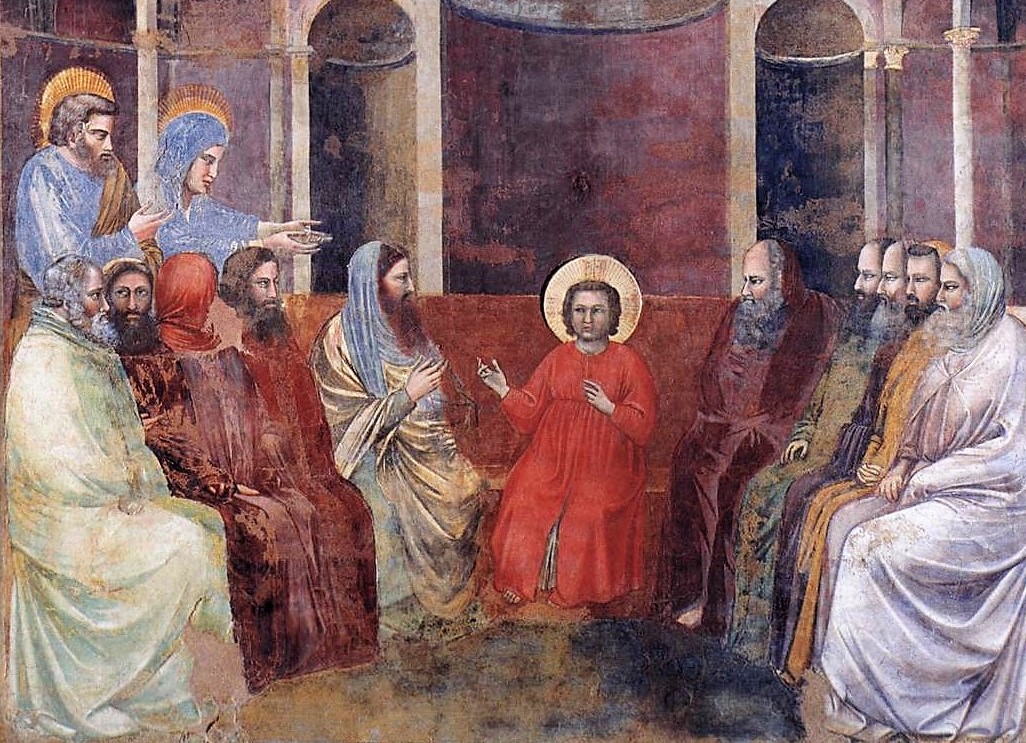
Christ Among the Doctors of the Temple, by Giotto (1304-06)

Here in the middle of the Christmas Octave, the Church bids us to celebrate the feast of the Holy Family. On the old calendar, the feast of the Holy Family falls on the Sunday after Epiphany, which makes some sense. It is a bit odd to read, a mere five days after celebrating Jesus’ birth, a Gospel in which He is 12 years old. And then, next week, we have the Feast of Epiphany in which Jesus is an infant again.

Nevertheless, here we are. Perhaps, it is a good time to reflect on family life, as immediate and extended family often gather together during the Christmas season. Let us consider the family and marriage along three lines: structure, struggles, and strategy.

I. Structure All through the readings for today’s Mass we are instructed on the basic form, the basic structure of the family.

  • God sets a father in honor over his children; a mother’s authority he confirms over her sons (Sirach 3:2).
  • May your wife be like a fruitful vine, in the recesses of your home; your children like olive plants, around your table (Psalm 128:3).
  • Wives, be subordinate to your husbands, as is proper in the Lord. Husbands, love your wives, and avoid any bitterness toward them. Children, obey your parents in everything, for this is pleasing to the Lord. Fathers, do not provoke your children, so that they may not become discouraged (Colossians 3:20–21).
  • Each year, Jesus parents went to Jerusalem for the feast of Passover … Your father and I have been looking for you with great anxiety … (Luke 2:45, 51).
  • And he was obedient to them … And Jesus advanced in age and wisdom and favor before God and man (Luke 2:51–52).

In these passages we see the basic structure of the family:

  • A father in honor over his children
  • A wife and mother who is supportive of her husband and his authority
  • A husband who supports, loves, and encourages his wife
  • A mother in authority over her children
  • Children who honor and obey their parents
  • Fathers, and by extension mothers, who instruct and admonish their children, not in a way that badgers or discourages them, but rather encourages them and builds them up
  • A family structure that helps children to advance in wisdom and age and in favor before God and man
  • A father, a mother, and children, all reverential and supportive of one another in their various roles and duties

Here, then, is God’s basic teaching on family and marriage. Here is the basic structure for the family as God sets it forth: a man who loves his wife and a woman who loves her husband. Within this stable, lasting, and faithful union of mutual support and love, they conceive and raise their children in the holy fear of the Lord.

Add to this the principal description of the book of Genesis, which describes how God sets forth marriage: A man shall leave his father and mother, cling to his wife, and the two of them shall become one flesh (Genesis 2:24). To this first couple, God gave the mandate, Be fruitful and multiply (Genesis 1:22).

Thus, we have set forth biblically the basic structure of the family: a father, a mother, and children, all reverential and supportive of one another in their various roles and duties.

Note how the structure of the family take its basic form in terms of its essential fruit: procreation and rearing of children. Why should marriage be a stable and lasting union? Why is Adam told to cling to his wife and to form a stable and lasting union with her?

Because this is what is best and most just for children! Children both need and deserve the stable and lasting union of a father and a mother, the complementary influences of the two sexes. This is the best environment in which to raise and form children. Hence, the family structure of a father and a mother, a male and female parent, flows from what is best and most just for children. The structure of the family, as set forth by God, is rooted in what is best and most just for children. It is what is sensible and what is best, sociologically and psychologically, for the proper development of children.

Even without looking in the Bible, one can see how sensible it is for a child to have the influence and teaching of both a father and a mother, a male and a female. There are things that a father can teach and model for his children that a mother is not as well-suited to impart; conversely, a mother can teach and model for her children things that only she knows best.

This much is clear: both male and female influences are essential for the proper psychological and sociological development of children. Clearly, then, God’s biblical mandate that marriage should consist of a father and a mother is not without basis in simple human reason and common sense.

To intentionally deprive a child of this environment is both unwise and unjust to children. Hence, we see that the basic structure for marriage takes its shape from what is best and most just for children. Both God and nature provide for a father and a mother, a male and a female, to conceive and raise a child.

It also makes sense based on simple human reasoning that the marital relationship should be stable, something that children can depend on from day to day, month to month, and year to year.

Here, then, is the proper structure for marriage. It is set forth both by God and supported by human reason.

II. Struggles – Yet what should be obvious seems to be strangely absent from the minds of many. Sin clouds our judgment and makes some think that what is sinful and improper is in fact acceptable or even good. It is not. In our current modern culture, we gravely sin against God and against our children through consistent misconduct and by refusing to accept what is obviously true. The words of St. Paul are fulfilled in our modern times: their senseless minds were darkened, and they became vain and foolish in their reasoning (Rom 1:21).

It is clear that the family is in crisis today, and it is also clear that it is children who suffer the most. The modern Western world displays a mentality that is both deeply flawed and gravely harmful to children.

Marriage and family are in crisis due the willfully sinful habits of many adults in the areas of sexuality, marriage, and family life. This includes sins such as cohabitation, fornication, abortion, adultery, homosexual acts, pornography, the sexualization of children, and the sexual abuse of children. Add to this the widespread acceptance of contraception, which has facilitated the illusion of sex without consequences and promoted the lie that there is no necessary connection between children and sexual relations. The rebellion of adults against the plan and order of God has caused endless grief and hardship and created a culture that is poisonous to the family, the dignity of the individual, and the proper raising and blessing of children.

III. Strategy What are we to do? Preach the Word! Whatever the sins of this present generation (and there are many), we must be prepared to unambiguously re-propose the wisdom of God’s Word to our children, grandchildren, and great-grandchildren.  Even if we have fallen short personally, we cannot hesitate to announce God’s plan for sexuality, marriage, and family.

Our strategic proclamation must include these key elements:

  • There must be no sex before marriage, ever, under any circumstances. Sexual intercourse is rooted in the procreation of children and there is no legitimate engagement in it outside of the bonds of marriage. There are no exceptions to this.
  • Children deserve and have the right to expect two parents, a father and mother, committed to each other until death do them part. Anything short of this is a grave injustice to children and a mortal sin before God.
  • Neither homosexual unions, nor single parent households are an acceptable alternative to biblical marriage. To allow children to be subjected to such environments for the sake of political correctness does them a grave injustice.
  • Marriage is about what is best for children, not adults.
  • Married couples must learn to work out their differences (as was done in the past) and not resort to divorce, which offends God (cf Malachi 2:16).
  • The needs of children far outweigh the preferences, “rights,” and needs of adults.

Whatever the personal failings of any of us in this present evil age (cf Gal 1:4), our strategy must be to preach the undiluted plan of God for sexuality, marriage, and family to our children, grandchildren, and great-grandchildren.

 Back to the Bible! Back to the plan of God! Away with modern experiments and unbiblical schemes! God has given us a plan. Thinking that we know better, we have caused great sorrow and hardship for our descendants. We have acted unjustly; we have murdered our children through abortion. Sowing in the wind, we have caused those who have survived our misbehavior to inherit the whirlwind. It is time to repent and help our heirs to rejoice in chastity, marriage, and biblical family. Otherwise, we are doomed.

God has a plan and it must be our strategy, our way out of our struggles and back to His structure for our families.

This song says,

So, humbly I come to you and say
As I sound aloud the warfare of today
Hear me, I pray
What about the children?

Who Is This King of Glory?

At Christmas, we ponder the fact that we are now able to see God in human terms.

By taking to Himself a human nature, God made His divine attributes visible in human form.

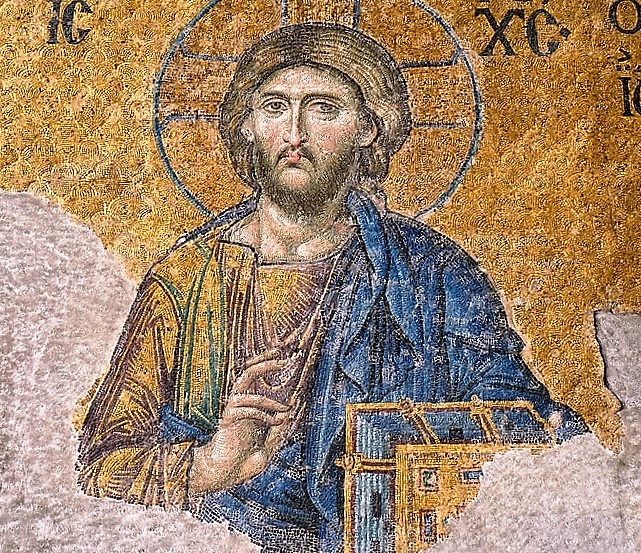
The video below shows different images of Christ as well some of the many names/titles by which He is known.


Stairway to Heaven: A Whimsical Look at a 1970s Song

In the Office of Readings for December 26th (Feast of St. Stephen, Martyr) there is a meditation by Saint Fulgentius of Respe describing love and forgiveness as the way by which the heavens were opened for St. Stephen. Saint Fulgentius commends the forgiving love of St. Stephen for his enemies and calls love a stairway to heaven:

My brothers, Christ made love the stairway that would enable all Christians to climb to heaven. Hold fast to it, therefore, in all sincerity, give one another practical proof of it, and by your progress in it, make your ascent together…. He who walks in love can neither go astray nor be afraid: love guides him, protects him, and brings him to his journey’s end (St. Fulgentius of Ruspe, bishop, Sermo 3, 1-3, 5-6: CCL 91A, 905-909).

This is solid biblical advice, for God is love, and Heaven is union with God. Hence, we must walk in love and become God’s love to enjoy the perfect communion with God that is Heaven.

The 1971 Led Zeppelin song “Stairway to Heaven” is among the most popular rock songs of all time. When asked about the lyrics, the author, Robert Plant, said that he thought that their popularity stemmed from the fact that they are an “abstraction.” He added, “Depending on what day it is, I still interpret the song a different way — and I wrote the lyrics” [*].

Some of us back then wanted the almost mystical opening section of the song to have religious meaning. After all, it spoke of a stairway to heaven and of the “May queen.” If there really were a stairway to Heaven but a highway to hell, it would explain life well. However, there are many problems with the song’s lyrics. Its notion of that stairway to Heaven is ambiguous at best and antithetical to religious and biblical teaching at worst.

The lyrics of “Stairway to Heaven” are shown below in bold italics, while my commentary (much of it lighthearted) is presented in plain red text.

There’s a lady who’s sure
All that glitters is gold
And she’s buying a stairway to heaven

One can’t buy a stairway to Heaven with mere gold, and even if it were theoretically possible, we would never be able to accumulate enough. So maybe the lady should be less sure in her gold and more trusting in and dependent on God. Maybe she should concentrate on loving the light that makes her gold glitter rather than the glittering gold itself. There’s an old gospel song that says, “I’d rather have Jesus than silver and gold.”

When she gets there she knows
If the stores are all closed
With a word she can get what she came for

No, actually, she can’t. Only Jesus opens the door, and He will be our judge. No one forces the heavenly gates open. Of Jesus, Scripture says, What he opens no one can shut, and what he shuts no one can open (Rev 3:7). The woman’s gold is no good in Heaven; all that matters is knowing the gatekeeper, Jesus.

Oh oh oh oh and she’s buying a stairway to heaven.

No, she isn’t. She can’t afford it.

There’s a sign on the wall
But she wants to be sure
’Cause you know sometimes words have two meanings
In a tree by the brook
There’s a songbird who sings
Sometimes all of our thoughts are misgiving.

To some degree we love ambiguity because it allows us to avoid making decisions and being obedient to what is taught. However, sometimes words are very clear in their meaning and we must decide either to accept and live by them or to reject them and suffer any consequences. This is especially the case with God’s revealed word. As for our thoughts, we love to rationalize and make excuses, but deep down we hear the voice of God echoing; we know what we are doing and whether it is right or wrong.

Ooh, it makes me wonder.

Well, don’t wonder forever. Sooner, rather than later, we have to make some decisions. Do you want what God is offering or not? Do you want to be holy or not?

There’s a feeling I get
When I look to the west
And my spirit is crying for leaving

Don’t look to the west; Look to the east where you will see Christ come again in glory. The west is the land of sunset and darkness. The east is the land of sunrise and light, Jesus, the Light of World. Above all, make sure that when your spirit is leaving it leaves to the east, to the light! Do not yearn for the darkness.

And it’s whispered that soon,
If we all call the tune

Then the piper will lead us to reason

And a new day will dawn
For those who stand long
And the forests will echo with laughter.

Yikes! Don’t ever think that if we call the tune we will be led to utopia. No, no, no! Let God call the dance; let Him set the tune and the path. Utopianism led to the horrifying killing fields of the 20th century. The forests are certainly not echoing with laughter; if anything, they are being consumed by the lustful blazes of a world insistent upon marching to its own tune rather than God’s.

If there’s a bustle in your hedgerow
Don’t be alarmed now
It’s just spring clean
for the May queen

Well, I suppose that alarming movements in our life can alert us to trouble and summon us to positive change. Let’s let this verse stand, but the May queen referred to here can’t be Mary because she doesn’t need spring cleaning.

Yes, there are two paths you can go by
But in the long run
There’s still time to change the road you’re on

It is true that there are just two paths; there is no third way given! Conversion is still possible if you’re on the wrong path. But be sure to switch paths only if you’re not walking with Jesus.

And it makes me wonder
Your head is humming and it won’t go

In case you don’t know
The piper’s calling you to join him

Danger, Will Robinson! We learned that the piper is a symbol for the world. Do not follow this piper. Ignore his tunes!

And as we wind on down the road
Our shadows taller than our soul
There walks a lady we all know
Who shines white light and wants to show

Ah, here is Mary! See, I told you this is a religious song!

How everything still turns to gold

Oops, where did that come from? I guess this isn’t Mary—unless she’s into the prosperity gospel.

And if you listen very hard
The tune will come to you at last

Now there’s that crazy piper again with his worldly tune, still trying to mesmerize me and give me an earworm of earthly tunes!

When all are one and one is all
To be a rock and not to roll

No, sorry, only God can be all in all. We might all be one, but even together we could never be all. It’s great to be a steady rock, but that is only accomplished by building our house on the solid rock of Christ’s teachings.

And she’s buying the stairway to heaven

No, she isn’t. She can’t afford it—but she can ask Jesus!

Well, I guess we’re just going to have to accept that “Stairway to Heaven” isn’t the religious song we’d like it to be. Whatever “Heaven” is alluded to, it isn’t our heaven.

It’s better to listen to St. Fulgentius of Ruspe, who reminds us that the true stairway to Heaven is the way of love—and not mere human love, but divine love infused in the soul. It is God’s love that animates our actions and lifts us higher as we accept its movements in our heart. This love cannot be bought; it is offered freely.

It does “cost” us, however, as our favorite sins fall away, and our priorities and passions change for the better. As the fruit of love, these changes are accepted not because we must but because we want to.

Yes, love is the stairway to Heaven. An old song, older than this 1970s song says, “Love lifted me … When nothing else could help, love lifted me.” There is our stairway to Heaven, not purchased with gold but with the precious blood of Jesus.

https://youtu.be/D9ioyEvdggk

Paradoxes of Christmas

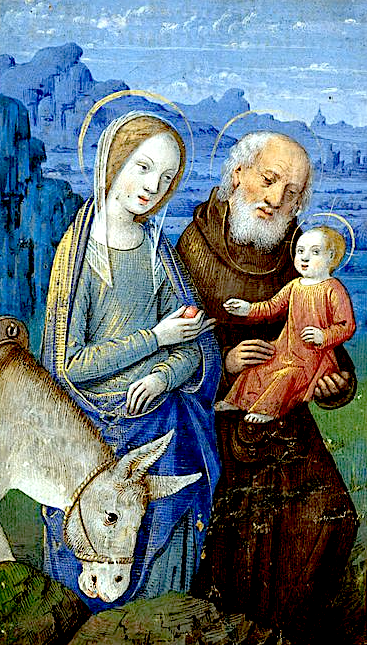
j-and-m-and-jIn the ancient Church and up until rather recently, one genuflected at the two references to the Incarnation during the Mass: during the Creed and in the Last Gospel (John 1). Why was this done? It was explained to me that the mystery of the Incarnation is so deep, one can only fall in silent reverence.

There are many paradoxes and seeming impossibilities in the Incarnation. They cannot be fully solved, so they claim our reverence. We genuflected in the past, and today we bow at the mention of the Incarnation in the Creed, for it is a deep mystery.

As we continue to celebrate Christmas, I would like to list some of the paradoxes of Christmas. I want to say as little about them as possible—just enough to make the paradox clear. This paucity of words (not common with me) is in reverence for the mystery and also to invite your reflection.

  1. The Infinite One becomes an infant.
  2. An antiphon for the Christmas season says, How can we find words to praise your dignity O Virgin Mary, for he whom the very heavens cannot contain, you carried in your womb.
  3. An old Latin carol (in Dulci Jublio) says, Alpha et O, Matris in Gremio (Alpha and Omega, sitting in Mommy’s lap).
  4. He who looks down on all creation looks up to see His Mother. The most high looks up from a cradle. Of this moment, even the pagans wrote with longing and tenderness: Incipe, parve puer, risu cognoscere matrem … ipsa tibi blandos fundent cunabula flores, occidet et serpens, et fallax herba veneni occidet (Begin, little boy, to recognize the face of your mother with a smile … for you, your own cradle will bear delightful flowers; the serpent will die and the plant that hides its venom) – Virgil 4th Eclogue.
  5. He who indwells all creation is born in homelessness, no place to dwell.
  6. He, to whom all things in Heaven and on earth belong, is born in poverty and neediness.
  7. He is the mighty Word through whom all things were made. He is the very utterance of God, the Voice which summons all creation into existence. Of this Word, this Utterance, this Voice, Scripture says, The voice of the LORD is upon the waters; the God of glory thunders, the LORD, upon many waters. The voice of the LORD is powerful, the voice of the LORD is full of majesty … The voice of the LORD flashes forth flames of fire. The voice of the LORD shakes the wilderness … The voice of the LORD makes the oaks to whirl, and strips the forests bare; and in his temple all cry, “Glory!” (Ps. 29) Yet this voice is now heard as the cooing and crying of an infant.
  8. His infant hand squeezes His mother’s finger. From that infant hand, the universe tumbled into existence. That same hand is steering the stars in their courses.
  9. He who holds all creation together in Himself (Col 1:17) is now held by His Mother.
  10. He who is the Bread of Life is born in Bethlehem (House of Bread) and lies in a feeding trough (manger).
  11. He who is our sustainer and our food is now hungry and fed by His Mother.
  12. Angels and Archangels may have gathered there, Cherubim and Seraphim thronged the air! But only his mother in her maiden bliss, could worship the beloved with a kiss (Christina Rosetti “In the Bleak Midwinter”).

Each of these is meant to be a meditation on the great mystery of the Incarnation. Please chime in with your additions to this list!

A paradox is something that defies intuition or challenges the common way of thinking. It unsettles us or startles us into thinking more deeply. The word paradox comes from the Greek para (beside, off to the side, or above) and dokein (to think or to seem). Hence a paradox is something “off to the side” of the usual way of seeing or thinking about things. If you’re going to relate to God you’re going to deal with a lot of paradox, because God’s ways and His thinking often defy those of humans. God is not irrational but He often acts in ways that do not conform to worldly expectations.

This Christmas, consider these paradoxes and learn from them. Remember, though, that mysteries are to be lived more so than solved. Reverence is a more proper response to mystery than is excessive curiosity. More is learned in silence than by many words.