
Patience… a reflection on the need to trust the slow work of God.

Today’s reading from the Office of Readings strikes deeply within me as I see my beloved Bride, the Church so struck with confusion, doubt, division and ambiguity. Even those who ought to be the source of our unity are divided and ambiguous, and speak in riddles. The reading from today cries out this understandable lament :
How long, O Lord? I cry for help
but you do not listen!
I cry out to you, “Violence!”
but you do not intervene.
Why do you let me see ruin;
why must I look at misery?
Because the wicked circumvent the just;
this is why judgment comes forth perverted.
For a work is being done in your days
that you would not have believed, were it told.
However…The reading from Habakkuk also reminds us that impatience is a human problem, but we moderns must surely suffer from it more acutely. This is because many of our modern conveniences create the illusion, and to some extent the reality, of instant results. Flip a switch and the lights come on. Instant downloads supply our computers with music, games, software, and almost instant information.
Any delay in this process almost certainly infuriates us. The journey from east to the west coast used to take many months in a wagon train. And now it is accomplished in four to five hours. Despite this marvel, even a 20 minute flight delay infuriates us.
I remember as a child that we would be enticed to buy a certain product, say cereal, by being able to cut off the box tops. And, having saved four of them, I could mail them in to the address, to get a certain die cast or plastic toy, or other promotional product offered by the cereal company. Instructions always said, “Allow 3 to 4 weeks for delivery.” This is almost unthinkable today. What child would spend months eating cereal, clipping boxtops, and then wait 3 to 4 weeks for delivery?!
Yes, patience is a human problem, but it has a certain modern intensity about it. Expectations are premeditated resentments, and we have a lot of expectations about instant results. Thus resentments are always near at hand.
In the spiritual life especially and in personal growth we must learn to slow down to a more human pace, and also the pace of God. To many of us moderns, God is infuriatingly patient and slow. He, and the Church seem to think in terms of centuries, not a 24 hour news cycle.
And He leaves many things unresolved for quite a long time. Where was he when Hitler and Stalin and Mao and any number of unjust rulers were plying their wares? Why does he not thunder from heaven more often, as we sometimes read in the Old Testament?! Why does He not send jagged lightning bolts to destroy sinners from the face of the earth? (are you so sure you would escape?) And when will the Church he founded “get with the program” and start denouncing and excommunicating those who sinfully dissent?
Of course, while there is a place for discipline, even excommunication, the Lord warned of acting too hastily in the parable of the weeds and the wheat. The impatient field hand zealously wanted to rip out all the weeds, but the owner warned that the wheat might be harmed as well.
Many of us may well wonder what harm could come from wiping out a few sinners from the face of the Earth or expelling a few more heretics. The Lord does not explain why, but simply warns that hasty and severe actions may cause harm even to the wheat.
Yes, we are an impatient lot, no only with others, but also with ourselves. Why, we wonder can we not simply overcome certain sins by sheer force of will? Why are we not instantly more chaste, more generous, more kind, more zealous, simply by deciding to be so!? Why do prayers of deliverance and exorcism not have instant effects? Why does confession not solve sin at once by its grace?
In an instant result society, discouragement is right at hand. And even when we do make progress, suddenly setbacks are at hand. “I was doing so well!” We think.
Most confessors know by experience that perseverance is good and holy, but impatience is devilish. It is especially devilish because it tries to masquerade as piety, saying “You ought to be a saint by now!” But it is really pride. Yes it is pride to think you can go from 0 to 100 and skip all the steps the rest of us poor slobs need to make. Who am I to think I can simply lay hold of holiness by a few decisions? Holiness is far higher than I imagine in my reductive insistence that I ought to be able to lay hold of it in a moment. No, this is a journey, a journey with setbacks, and progress in fits and starts. Frankly even a lifetime may not be enough and purgatory is a likely pit stop for most of us after death.
Why so slow? Because grace builds on nature. And it is our nature to change slowly, almost imperceptibly. When I was an infant I looked nothing like I do today. Frankly my mother was grateful that I did not come forth from the womb at six feet tall and 200 lbs. No, I came forth at six pounds, sickly and dying. I was baptized immediately since I was not expected to survive. But having recovered, I have progressed today to what and who I am. But at no point could my growth be perceived. It was slow, steady, and also marked by setbacks, injury, and also growth spurts.
If this is the case with our bodies, it is also with our soul, which is the form of our body. I have made remarkable spiritual progress in the last thirty years of my life. But day by day, I noticed little change. Yet, by the grace of God I am what I am.
Sudden a rapid growth seldom lasts an is usually called cancer, a deadly disease. Healthy growth is organic, steady, slow, and almost imperceptible.
Impatience is a form of pride and it is not in wisdom that we indulge it. Scripture says,
Write down the revelation and make it plain on tablets so that a herald may run with it. For the revelation awaits an appointed time; it speaks of the end and will not prove false. Though it linger, wait for it; it will certainly come and will not delay. See, the rash have no integrity; but the just one who is righteous because of faith shall live. (Habakkuk 2:2-4).
So, trust in the slow work of God.
We are quite naturally impatient in everything
to reach the end without delay. skipping the intermediate stages.
and impatient of being on the way to something unknown, and new.
And yet the law of all progress, passes through stages of instability,
and it may take a very long time.
Our understanding matures gradually; let it grow,
let it shape itself, without undue haste.
Don’t try to force what will be tomorrow.
Accept the anxiety of being in suspense and wonder. – Source unknown
A Meditation on the Scriptural Connection between Sexual Immorality and Injustice.

In the reading for Friday Mass St Paul links the matter of sexual morality to justice:
This is the will of God, your holiness: that you refrain from sexual immorality, that each of you know how to acquire a wife for himself in holiness and honor, not in lustful passion as do the Gentiles who do not know God; not to take advantage of or exploit a brother or sister in this matter, for the Lord is an avenger in all these things (1 Thess 4:2-6)
In our times there are many who divide out the Church’s teaching on sexuality and her teachings on (social) justice. Some are even dismissive of what they see as an excessive focus on sexual matters, calling them “pelvic issues” and implying that we should focus more on matters of social justice. But here we can see that St. Paul connects sexual sin with injustice, greed and even theft.
As for “social justice” (all justice is actually social), note that St. Paul says that sexual sin or lust is a form of exploitation wherein one takes advantage of another person, in effect, using their body for pleasure but not respecting their whole person. For example a man may seek sexual pleasure from a woman, an act that may change her whole life, but if he is not married to her he has not rendered her a just return, namely the gift of his whole life to her. Further, unmarried couples who fornicate commit an injustice against a child who may be conceived since children who are conceived in this matter are at high risk of not being raised in a properly formed family. They are also at high risk of being killed through abortion, another grave injustice of our time. Further, those who fornicate view pornograhpy and so forth also contribute to the destruction of family life, the spread of sexually transmitted diseases, a climate of sexual abuse and exploitation, human trafficking and so forth.
As for Greed, it is the excessive desire to possess wealth or goods; it is the insatiable desire for more. This is closely linked to lust, which is an inordinate desire for the pleasures of the body.
Thus, the lustful, sexually immoral, unrepentant person says, in effect, “I want sexual pleasure for myself. I do not want to pay any ‘price’ for it by having to see it in relationship to other goods and people. I do not want to see it in relationship to the institution of marriage, or to the love of a spouse, or to family, or to children. I do not want commitments or responsibilities. I want to indulge in sex because I want it. All that matters is that I want it.”
Many go further in accepting few, if any limits on what they want, despising norms that in any way seek to limit their access to sex, or to place it in a wider, more responsible context.
For many today, sex is simply something they want. And the mere fact that they want it makes it right. Never mind that lust and sexual immorality have had devastating effects on marriage and family, that as promiscuity has soared so have divorce rates, abortion, single parent families, children without intact families, AIDS, sexually transmitted diseases, broken hearts, and the like. Never mind all this. For many, wanting sex makes it right, and precludes anyone from “telling them what to do.”
And this is greed, the insatiable desire for more, or the inordinate desire for things such that they are considered apart from wider norms that limit desires within the boundaries of what is reasonable and in service of the common good. Greed cares little for the common good, for the needs and rights of others. Greed just wants what it wants. Lust is very close to greed in that it is also an inordinate desire, one for bodily pleasures apart from any consideration of the needs of others or of what it just, right, and reasonable.
Let’s take a look at some of the texts wherein the Scriptures seem to connect greed and sexual immorality. Commentary by me on each of them follows in red.
1. But among you there must not be even a hint of sexual immorality, or of any kind of impurity, or of greed, because these are improper for God’s holy people….For of this you can be sure: No sexually immoral, impure or greedy person….has any inheritance in the kingdom of Christ and of God. (Eph 5:3,5)
The connection here between greed and fornication (porneia), translated here as sexual immorality, is not spelled out. Reading the text by itself might permit the possibility that it is only coincidentally connected to sexual immorality. But as seen below there are a good number of other texts that connect sexual immorality to similar notions of greed and covetousness. Hence, we ought to note the connection. That the connection was not developed or explained may signal to us that the early Christians saw the connection as more implicit and obvious than we moderns do.
2. Put to death, therefore, whatever belongs to your earthly nature: sexual immorality, impurity, lust, evil desires, and greed, which is idolatry. (Col 3:5)
Here the list is broadened to include lust and all evil desires. These are connected in the text to greed, and greed in turn is equated with idolatry.
Idolatry values someone or something in a way that hinders or surpasses the love, trust, and obedience we owe to God. It wants the thing, rather than God who made the thing. Through greed, we excessively desire things, such as sex, money, power, and creature comforts, and they take on greater importance to us than God, or what God sets forth for us to obey. Through greed, these things become idols, since they surpass God in importance to us. We prefer them to God; we obey our desires more than God. God can take a number and wait, I want what I want, and that is all that matters.
For many today, and apparently for many back in the time when these texts were written, sex is more important than God, hence the connection to greed.
3. You shall not covet your neighbor’s wife. (Ex 20:17)
The 6th Commandment had already forbidden the act of adultery. But note here, how this commandment goes deeper, indicating that we are not to covet. In speaking of what it means to covet the Catechism says: The sensitive appetite leads us to desire pleasant things we do not have…These desires are good in themselves; but often they exceed the limits of reason and drive us to covet unjustly what is not ours and belongs to another or is owed to him. The tenth commandment forbids greed and the desire to amass earthly goods without limit…..When the Law says, “You shall not covet,” these words mean that we should banish our desires for whatever does not belong to us. Our thirst for another’s goods is immense, infinite, never quenched. Thus it is written: “He who loves money never has money enough.” (CCC # 2535-2536).
Hence, to covet the wife of another includes both a sexual desire for her and a greed that wants to have her.
4. For from within, out of men’s hearts, come evil thoughts, sexual immorality, theft, murder, adultery, (Mk 7:21)
Here again, note that in a verse that includes fornication and adultery, is also included the word theft, referring to the unjust possession of something. The fornicator and the adulterer both steal what does not belong to them. Sexual intimacy belongs to the marriage bed alone. Hence, the unmarried person and the adulterer both take what is not theirs. Clearly, antecedent to most, if not all theft, is greed.
5. For this is the will of God, your sanctification; that is, that you abstain from sexual immorality; that each of you know how to possess his own vessel in sanctification and honor, not in lustful passion, like the Gentiles who do not know God; and that no man overreach and defraud his brother in this matter because the Lord is the avenger in all these things, just as we also told you before and solemnly warned you. For God has not called us for the purpose of impurity, but in sanctification. So, he who rejects this is not rejecting man but the God who gives His Holy Spirit to you. (1 Thes 4:3-8).
This text, already mentioned above, not only links sexual immorality to greed, but also to theft, and in a wider sense injustice. For, to fail to live chastely both overreaches and defrauds.
The Greek word here translated as overreach is υπερβαινειν (huperbainein). This word means, “to go over,” to overpass certain limits, to transgress, to go too far, to go beyond what is right or due. Hence again we can see how greed is tied into sexual immorality; for it is desire overreaching, going too far, beyond what is reasonable, due, or right. The lustful person is greedy because he wants what he wants no matter if it is excessive or wrong. All that matters is that he wants it. And this is greed.
The word translated here as “defraud” πλεονεκτει (pleonektei) is related to covetousness and greed since it emphasizes gain as the motive of fraud. Thus, sexually immoral persons defraud others: the sexual partner, families, and society as a whole. They do this by thinking more of what they want than of what is right, or of how it might harm others. They act fraudulently, for they act as though they are married when they are not, and they do this in order to steal the privileges of marriage.
6. Do you not know that the wicked will not inherit the kingdom of God? Do not be deceived: Neither the sexually immoral nor idolaters nor adulterers nor male prostitutes nor homosexual offenders, nor thieves nor the greedy nor drunkards nor slanderers nor swindlers will inherit the kingdom of God. (1 Cor 6:9-10)
Again, simply note that sexually immoral persons are numbered among or alongside thieves and swindlers. They are akin to thieves for they take what does not belong to them, and they swindle because they obtain through deceit. The deceit is that they implicitly claim the status of married persons by seizing the privileges and rights of marriage without taking up its duties.
Hence, the mention of thieves and swindlers along with the sexually immoral may not be coincidental, but may imply “birds of a feather.”
7. Marriage should be honored by all, and the marriage bed kept pure, for God will judge the adulterer and all the sexually immoral. Let your manners be without covetousness, contented with such things as you have; for God has said: I will not leave you, neither will I forsake you. (Heb 13:4-5)
In other words, don’t be greedy and steal the privileges of the marriage bed through adultery, premarital sex, or any indulgence of sexual pleasure outside marriage. If you are not married, it is not yours. If you are married, it is yours only with your spouse. Be content with what you have and stop being greedy or covetous.
Hence, we see demonstrated a rather consistent scriptural connection between sexual immorality, greed and theft.
Sexual intimacy is a prerogative and privilege of marriage. It exists to build up marriage, to encourage recourse to marriage, and to help knit husband and wife together in a fruitful love. To snatch sex away from its only proper place is to possess unjustly that which is not yours; it is theft. And scripture connects this stealing with greed and covetousness. Greed is the excessive desire to possess, beyond what is just or reasonable. If this desire is yielded to, we take what is not ours simply because we want it.
Many today claim that they can do as they please in terms of sexuality and many even boast of their sexual freedom and exploits. The entertainment media celebrate sexual freedom. But it would appear that Scripture sees such sexual exploits not as liberation, but rather as theft and greed.
It is true that some act in weakness. Some fall, but are repentant. Surely, God is rich in mercy for such souls as these.
But as for those who celebrate sexual immorality, they ought to consider that what they call good, God calls sin, God calls greed, God calls theft and that it is all a form of social injustice.
Does God Harden Human Hearts?
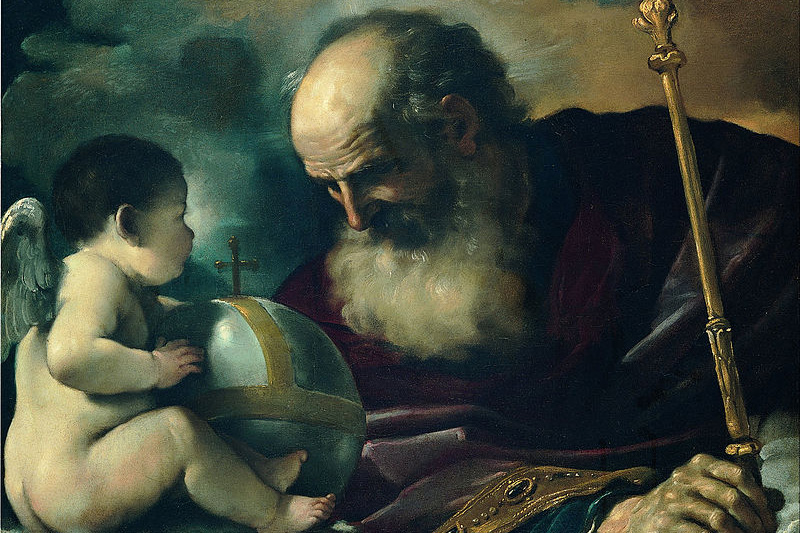
One of the more difficult Biblical themes to understand is the concept of God hardening the hearts and minds of certain human beings. Here are some examples where it seems he does:
-
-
- The LORD said to Moses, “When you return to Egypt, see that you perform before Pharaoh all the wonders I have given you the power to do. But I will harden his heart so that he will not let the people go. (Ex 4:21)
- Moses and Aaron performed all these wonders before Pharaoh, but the LORD hardened Pharaoh’s heart, and he would not let the Israelites go out of his country. (Ex 11:10)
- Why, O LORD, do you make us wander from your ways and harden our hearts so we do not revere you? Return for the sake of your servants, the tribes that are your inheritance. (Is 63:17)
- He [God] has blinded their eyes and deadened their hearts, so they can neither see with their eyes, nor understand with their hearts, nor turn–and I would heal them. (Jesus quoting Isaiah Isaiah 6:9-10, at John 12:40)
- They perish because they refused to love the truth and so be saved. For this reason God sends them a powerful delusion so that they will believe the lie (2 Thess 2:11)
- Therefore God gave them over in the sinful desires of their hearts to sexual impurity for the degrading of their bodies with one another…..Furthermore, since they did not think it worthwhile to retain the knowledge of God, he gave them over to a depraved mind, to do what ought not to be done. (Rom 1:24, 28)
-
What are we to make of texts like these? How can God, who does no evil, be the source of a sinful mind or heart? Why would God do such a thing since he has said elsewhere:
-
-
- As surely as I live, declares the Sovereign LORD, I take no pleasure in the death of the wicked, but rather that they turn from their ways and live. Turn! Turn from your evil ways! Why will you die, O house of Israel?’ (Ez 33:11)
- God our Savior…wants all men to be saved and to come to a knowledge of the truth. (1 Tim 2:4)
-
To be sure, these questions involve very deep mysteries, mysteries about God’s sovereignty and how it interacts with our freedom, mysteries of time, and mysteries of causality.
But some distinctions can and should be made, and some context supplied. We do not want to understand the “hardening texts” in simplistic ways, or in ways that use one truth to cancel out other important truths that balance it. So please permit only a modest summary of the ancient discussion.
I propose we examine these sorts of texts along four lines:
-
-
-
- The Context of Connivance.
- The Mystery of Time
- The Mystery of Primary Causality
- The Necessity of Humility
-
-
Point I. – THE CONTEXT OF CONNIVANCE – In properly assessing texts like these we ought first to consider the contexts in which they were made and written. Generally speaking, most all of these declarations that God hardens the heart, come after a significant period of disobedience on the part of those hardened. In a way, God “cements” the deal and gives them fully what they really want. For having hardened their own hearts to God, God determines that their disposition is a permanent one, and in a sovereign exercise of his will, (for nothing can happen without God’s allowance), declares and permits their heart to be hardened in a definitive kind of way. In this sense, there is a judgement of God upon the individual that recognizes their definitive decision against him. Hence, this hardening can be understood as voluntary, on the part of the one hardened, for God hardens in such a way that he uses their own will, whom he hardens, for the executing of his judgment and his acceptance that their will against him is definitive.
A. For example, in the case of Pharaoh, it is true, as the Exodus 4:21 text says above, God indicated to Moses that he would harden Pharaoh’s heart. But the actual working out of this is a bit more complicated than that. We see in the first five plagues, it is Pharaoh who hardens his own heart (Ex. 7:13; 7:22; 8:11; 8:28; & 9:7). It is only after this repeated hardening of his own heart, that the Exodus text shifts, and speaks of God as the one who hardens (Ex 9:12; 9:34; 10:1; 10:20; 10:27). Hence the hardening here is not without Pharaoh’s repeated demonstration of his own hardness, and God, if you will, “cements the deal” as a kind of sovereign judgment on Pharaoh.
B. The Isaiah texts, many in number, that speak of a hardening being visited upon Israel by God, (e.g. #s 3 and 4 above), are also the culmination of a long testimony, by the prophet, of Israel’s hardness. At the beginning of the Isaiah’s ministry, Israel’s hardness was described as of their own doing by God who said through Isaiah: For the LORD has spoken: “I reared children and brought them up, but they have rebelled against me. The ox knows his master, the donkey his owner’s manger, but Israel does not know, my people do not understand.” Ah, sinful nation, a people loaded with guilt, a brood of evildoers, children given to corruption! They have forsaken the LORD; they have spurned the Holy One of Israel and turned their backs on him. (Is 1:2-4). There follows a long list of their crimes, their hardness and their refusal to repent.
1. St. John Chrysostom – of the numerous texts Later in Isaiah (and also referenced by Jesus (e.g. Jn 12:40), that speak of Israel as being hardened by God, and having him shut their eyes, St John Chrysostom says, That the saying of Isaiah might be fulfilled: that here is expressive not of the cause, but of the event. They did not disbelieve because Isaias said they would; but because they would disbelieve, Isaias said they would…. For He does not leave us, except we wish Him….Whereby it is plain that we begin to forsake first, and are the cause of our own perdition. For as it is not the fault of the sun, that it hurts weak eyes, so neither is God to blame for punishing those who do not attend to His words. (on a gloss of Is. 6:9-10 at Jn 12:40, quoted in the Catena Aurea).
2. St Augustine also says, This is not said to be the devil’s doing, but God’s. Yet if any ask why they could not believe, I answer, because they would not…But the Prophet, you say, mentions another cause, not their will; but that God had blinded their eyes, and hardened their heart. But I answer, that they well deserved this. For God hardens and blinds a man, by forsaking and not supporting him; and this He makes by a secret sentence, for by an unjust one He cannot (Quoted in the Catena Aurea at Jn 12:40).
C. Of the text of 2 Thessalonians, God sends them a powerful delusion so that they will believe the lie quoted in # 5 above, while the text speaks of God as having sent the delusion, the verse before and after make clear the sinful role of the punished saying: They perish because they refused to love the truth and so be saved….so that all will be condemned who have not believed the truth but have delighted in wickedness ( 2 Thess 2:10,12).
1. Of this text, St. Augustine says, From a hidden judgment of God comes perversity of heart, so that the refusal to hear the truth leads to the commission of sin, and this sin is itself a punishment for the preceding sin [of refusing to hear the truth]. (Against Julian 5.3.12).
2. St John Damascus says, [God does this] so that all may be condemned who did not believe the truth but had pleasure in unrighteousness (The Orthodox Faith 4.26).
D. The texts from Romans 1 speak of God handing them over only after they have suppressed the truth (1:18), persevered in their wickedness (1:18) and preferred lust and idolatry (1:23-24), hence, as a just judgement, he hands them over to sexual confusion (homosexuality) and to countless other destructive drives. So here too, though it is said God hands them over, it is really not that simple. God has, in effect, cemented the deal. They do not want to serve them and so He, knowing their definitive decision, gives them what they want.
E. Thus, our first point of distinction in understanding the “hardening” texts is that the context of connivance is important in assessing them. It is not asserted by Scripture that God takes a reasonably righteous man and, out of the blue, hardens his heart, confuses his mind or causes him, against his will, to become obstinate. The texts are usually presented as a kind of prevenient judgement by God, that the state of the person’s hardness has now become permanent. They refuse and so God cements the deal and “causes” them to walk in their own sinful ways since they have insisted so.
Point II. – THE MYSTERY OF TIME – In understanding these hardening texts, which we have seen, are akin to judgment texts, we must strive to recall that God does not live in time in the same we do. Scripture speaks often of God’s knowledge and vision of time as being comprehensive, rather than speculative or serial (e.g. Ex 3:14; Ps 90:2-4; Ps 93:2; Is 43:13; Ps 139; 2 Peter 3:8; James 1:17; inter al.).
A. To say that God is eternal and that he lives in eternity is to say that he lives in the fullness of time. For God, past, present and future are all the same. God is not wondering what I will do tomorrow, neither is he waiting for it to happen. For Him, my tomorrow has always been present to Him. All of my days were written in His book before one of them ever came to be (Ps 139:16). Whether, and how long I live, has always been known to him. Before he ever formed me in my mother’s womb he knew me (Jer 1:4). My final destiny is already known and present to him.
B. Hence, when we strive to understand God’s judgments in the form of hardening the hearts of certain people, we must be careful not to think he lives in time like we do. It is not as though God is watching my life like a movie. He already knows the choice I will make. Thus, when God hardens the hearts of some, it is not as though he were merely trying to negatively influence the outcome, and trip certain people up. He already knows the outcome and has always known it, he knows the destiny they have chosen.
C. Now be very careful with this insight, for it is a mystery to us. We cannot really know what it is like to live in eternity, in the fullness of time, where the future is just is present as the past. If you think you know, you really don’t. What is essential for us is that we realize that God does not live in time like we do. If we try too hard to solve the mystery (rather than merely accept and respect it) we risk falling into the denial of human freedom, or double predestination, or other wrong-headed notions that sacrifice one truth for another, rather than to hold them in balance. That God knows what I will do tomorrow, does not destroy my freedom to actually do it. How this all works out is mysterious. But we are free, Scripture teaches this, and God holds us accountable for our choices. Further, even though God knows my destiny already, and yours as well, does not mean that He is revealing anything about that to us, as though we should look for signs and seek to call ourselves saved or lost. We ought to work out our salvation in a reverential fear and trembling (Phil 2:12).
D. The Key point here is mystery. Striving to understand how, why and when God hardens the heart of anyone is caught up in the mysterious fact that he lives outside of time and knows all things before they happen. Thus he acts with comprehensive knowledge of all outcomes.
Point III. – THE MYSTERY OF CAUSALITY – One of the major differences between the ancient and the modern world is that the ancient world was much more comfortable in dealing with something known as primary causality.
A. Up until the Renaissance God was at the center of all things and people instinctively saw the hand of God in everything, even terrible things. Job of old said, The LORD gave and the LORD has taken away; may the name of the LORD be praised….if we have received good things at the hand of God, why should we not receive evil?” (Job 1:21; 2:10). Thus the ancients would commonly attribute everything as coming from the hand of God, for he was the “first cause” of everything that happened. This is what we mean by primary causality. The ancients were thus more comfortable attributing things to God that we are not. In speaking like this, they were not engaged in a form of superstitious or primitive thinking, but they emphasized that God was sovereign, omnipotent and omnipresent and that nothing happened apart from his sovereign will, He is the Primary Cause of all that is.
1. Of this ancient and scriptural way of thinking the Catechism says, And so we see the Holy Spirit, the principal author of Sacred Scripture, often attributing actions to God without mentioning any secondary causes [e.g. human or natural]. This is not a “primitive mode of speech”, but a profound way of recalling God’s primacy and absolute Lordship over history and the world, and so of educating his people to trust in him. (CCC # 304)
2. The Key point here is understanding that the ancient Biblical texts while often speaking of God as hardening the hearts of sinners, did not, as we saw above, mean that man had no role, or no responsibility. Neither did it mean that God acted in a merely arbitrary way. Rather, the emphasis was on God’s sovereign power as the first cause of all that is and hence he is often called the cause of all things and his hand is seen in everything. We moderns are uncomfortable in speaking this way as we shall see.
B. After the Renaissance man moved to the center and God was gradually “escorted” to the periphery. Thus our manner of thinking and speaking began to shift to secondary causes (causes related to man and nature). If something happens we look to natural causes, or in human situations, to the humans who caused it. These are secondary causes however, since I cannot cause something to happen unless God causes me. Yet increasingly the modern mind struggles to maintain a balance between the two mysteries of our freedom, and responsibility and God’s Sovereignty and omnipotence.
C. In effect we have largely thrown primary causality overboard as a category. Even modern believers unconsciously do this and thus exhibit three issues related to this.
1. We fail to maintain the proper balance between two mysteries: God’s Sovereignty and our freedom.
2. We exhibit shock at things like the “hardening texts” of the Bible because we understand them poorly.
3. We try to resolve the shock by favoring one truth over the other. Maybe we just brush aside the ancient biblical texts as a “primitive mode of speech” and say, inappropriately, “God didn’t have anything to do with this or that.” Or we go to the other extreme and become fatalistic, deny human freedom, deny secondary causality (our part) and accuse God of everything; as if he were the only cause and had the sole blame for everything. Thus, we either read the hardening texts with a clumsy literalism, or dismiss them as misguided notions from an immature, primitive, and pre-scientific age.
D. The point here is that we have to balance the mysteries of primary and secondary causality. We cannot fully understand how they interrelate, but they do. Both mysteries need to be held. The ancients were more sophisticated in holding these mysteries in the proper balance. We are not. We handle causality very clumsily and do not appreciate the distinctions of primary causality (God’s part) and secondary causality (our part, and nature’s too). We try to resolve the mystery rather than hold it in balance and speak to both realities. As such, we are poor interpreters of the “hardening texts.”
Point IV – THE NECESSITY OF HUMILITY – By now it will be seen that we are dealing with a mysterious interrelationship of God and Man, between our freedom and God’s sovereignty, between primary and secondary causality. In the face of such mysteries we have to be very humble. We ought not think more of the details than is proper for us, for, frankly they are largely hidden from us. Too many moderns either dismiss the hardening texts or accept them and sit in harsh judgment over God, as if we could do such a thing. Neither approach bespeaks humility. Consider a shocking but very humbling text where Paul warns us in this very matter:
What then shall we say? Is God unjust? Not at all! For he says to Moses, “I will have mercy on whom I have mercy, and I will have compassion on whom I have compassion.” It does not, therefore, depend on man’s desire or effort, but on God’s mercy. For the Scripture says to Pharaoh: “I raised you up for this very purpose, that I might display my power in you and that my name might be proclaimed in all the earth.” Therefore God has mercy on whom he wants to have mercy, and he hardens whom he wants to harden. One of you will say to me: “Then why does God still blame us? For who resists his will?” But who are you, O man, to talk back to God? “Shall what is formed say to him who formed it, ‘Why did you make me like this?’” (Romans 9:14-20)
In effect, none of can demand an absolute account of God for what he does. Even if he were to tell us, could our small and worldly minds ever really comprehend it? My thoughts are not your thoughts, and my ways are not your ways, says the Lord (Is 55:8).
Summary – In this post, rather too long, we have considered the “hardening texts” where it seems that God is said to harden the hearts of certain people and groups. And so he does. But texts like these must be carefully approached with proper distinctions, appeal to the scriptural and historical context, and deep humility. There are profound mysteries at work here: mysteries of God’s sovereignty, our freedom, his mercy and also his justice.
We ought to careful to admit the limits of our knowledge when it comes to such texts. As the Catechism so beautifully stated, when it comes to texts like these, they are to appreciated as a profound way of recalling God’s primacy and absolute Lordship over history and the world, and so of educating his people to trust in him. (CCC # 304)
This song says, “Lord I’ve sinned, But you’re still calling my name…”
Owning the Truth

If you are interested, a talk I gave a few years ago was featured recently on EWTN’s The Choices We Face. It was a talk I gave to priests and deacons in Michigan on preaching the “hard stuff.” Too many of us fear proclaiming and “owning” the truth. This must end if many souls are going to be saved. I am grateful for Ralph Martin, Peter Herbeck who have been great mentors to me over the years!
By the way, the injuries to my forehead were due to a fall I took in the airport that morning. Someone cut in front of me suddenly and I tripped over their bag. Alas, but it was a mere flesh wound; the devil is a liar.
Here’s the video:
Are These the End Times? What the Catechism Says

The Catholic approach to the end times is different from that in certain (but not all) Protestant circles, especially the Evangelicals, who have a strong and often vivid preoccupation with signs of the Second Coming of Christ. Many of the notions that are expressed there are either erroneous or extreme. Some of these notions are rooted in a misunderstanding of the various genres of Scripture; others are caused by reading certain Scriptures in isolation from the wider context of the whole of Scripture; and some are rooted in reading one text while disregarding others that balance it.
The Catholic approach to eschatology is perhaps less thrilling and provocative. It does not generate movie series like “Left Behind” or cause people to sell their houses and gather on hillsides waiting for the announced end. It is more methodical and seeks to balance a lot of notions that often hold certain truths in tension with one another.
What I offer here I do not propose to call a complete eschatology, only a sketch of basic principles rooted in the Catechism of the Catholic Church.
While we cannot know the exact time of His coming, there are things that both remind us of and signal His approach—if we have eyes to see them. These signs give indications only. The presence of such texts cannot be seen to overrule that He will come “on a sudden” and that many will be caught unawares.
Here are some notes from the Catechism (in black, the Blue and Red texts are my additions/comments).
1. Soon and Sudden – Since the Ascension, Christ’s coming in glory has been imminent (Rev 22:20), even though “it is not for you to know times or seasons which the Father has fixed by his own authority”(Acts 1:7). This eschatological coming could be accomplished at any moment, even if both it and the final trial that will precede it are “delayed” (Mat 24:44; 1 Thess 5:2; 2 Thess 2:3-12) (CCC # 673).
Of all the points the Catechism makes, this one sets the tone of balance that must be maintained. On the one hand Christ says that He is coming soon and that His coming could be both sudden and without warning, but this truth must be held in tension with other truths that set forth certain things that must be accomplished and certain signs that must appear before then. And these things are not easily or quickly accomplished.
2. Suspended – The glorious Messiah’s coming is suspended at every moment of history until his recognition by “all Israel” (Romans 11:20-26; Mat 23:39), for “a hardening has come upon part of Israel” in their “unbelief” (Romans 11:20-26) toward Jesus. St. Peter says to the Jews of Jerusalem after Pentecost: “Repent therefore, and turn again, that your sins may be blotted out, that times of refreshing may come from the presence of the Lord, and that he may send the Christ appointed for you, Jesus, whom heaven must receive until the time for establishing all that God spoke by the mouth of his holy prophets from of old. (Acts 3:19-21)” St. Paul echoes him: “For if their rejection means the reconciliation of the world, what will their acceptance mean but life from the dead?” (Rom 11:15) The “full inclusion” of the Jews in the Messiah’s salvation, in the wake of “the full number of the Gentiles” (Rom 11:12), will enable the People of God to achieve “the measure of the stature of the fullness of Christ”, in which “God may be all in all” (Eph 4:13; 1 Cor 15:27-28) (CCC # 674).
This going forth of the Gospel to all the nations and the acceptance of Christ by the Jews would seem to be matters that would take some time.
Has the Gospel really reached all the nations? Have the full number of Gentiles come in and are they serving God and repenting in sufficient numbers? Perhaps so, one might argue. There are very few places in the world where there is no Christian presence, and yet on a planet of seven billion people less than a third are Christian. And what is meant by the “full number” of Gentiles? That number is hidden from us and can surely be debated.
Has the “hardening” that has come upon the Israel been lifted? This, too, is debatable. Despite certain movements of “Messianic Jews,” it does not seem that the hardening that has come on Israel has been lifted in any wide sort of way or that Jesus has been recognized by “all Israel.”
3. Suffering and Sedition– Before Christ’s second coming, the Church must pass through a final trial that will shake the faith of many believers (Luke 18:8; Mt 24:12). The persecution that accompanies her pilgrimage on earth will unveil the “mystery of iniquity” in the form of a religious deception offering men an apparent solution to their problems at the price of apostasy from the truth. The supreme religious deception is that of the Antichrist, a pseudo-messianism by which man glorifies himself in place of God and of his Messiah come in the flesh (2 Thess 2:4-12; 1 Thess 5:2-3; 1 Jn 2:18-22) (CCC # 675).
Clearly, many of these troubles have afflicted the Church in every age. There has always been persecution. Many have fallen away—most into schism, some into unbelief. There have also been times when the love of many has grown cold.
Clearly these are severe problems and they have grown to envelop most of the world today. Only God knows when these signs will be present in a definitive rather than merely prefigurative way.
4. Secular Utopianism Rejected – The Antichrist’s deception already begins to take shape in the world every time the claim is made to realize within history that messianic hope which can only be realized beyond history through the eschatological judgment. The Church has rejected even modified forms of this falsification of the kingdom to come under the name of millenarianism, especially the “intrinsically perverse” political form of a secular messianism (CCC # 676).
Many in human history, and especially in modern times, have advanced the notion that a secular utopia can be ushered in by human effort and by submitting to a government or worldly power or a charismatic figure.
Many repressive regimes and movements (often led by powerful or charismatic leaders) of the last century claimed the power to usher in such a utopia. The sad legacy of the 20th century shows how tragic and bloody such attempts have been.
The Church also rejects religious forms of this idea, which hold that prior to the Second Coming of Christ a period of a thousand years is set aside during which Christ will reign on earth or during which the Church will somehow attain a total victory prior to His Second Coming.
5. Second Coming follows a final unleashing of evil – The Church will enter the glory of the kingdom only through this final Passover, when she will follow her Lord in his death and Resurrection (Rev 19:1-9). The kingdom will be fulfilled, then, not by a historic triumph of the Church through a progressive ascendancy, but only by God’s victory over the final unleashing of evil, which will cause his Bride to come down from heaven (Rev 13:1ff; Rev 20:7-9; Rev 21:2-4). God’s triumph over the revolt of evil will take the form of the Last Judgment after the final cosmic upheaval of this passing world (CCC # 677).
A final and intense unleashing is envisaged by Scripture and the Church, and this cosmic conflict will usher in the great triumph and the Last Judgment. This unleashing of the full power of the Devil in the very end is mysterious and difficult to understand, but it is clearly set forth in Scripture—perhaps as a final test for the Church, perhaps as a definitive demonstration of the power of God.
Balance! Please note that while we may wish to focus on just one or two of the points above, each of the five points must be held in balance. In one sense all of these signs have been present in the Church’s history, yet not in the definitive and final sense.
Thus, while these are signs that do in fact signal, accompany, and usher in the last things, exactly when and how they come together in a definitive sense cannot be known by us. If we could know, then Christ’s clear words that He will come at an hour we do not expect (cf Mat 24:44) and that no one knows the day or hour (cf Matt 24:36) would be violated.
The key point is that we must hold all five principles in balance and must accept the tension of knowing the signs but not the definitive timing.
Most errors in eschatology proceed from a lack of balance and a failure to appreciate that the final age in which we live is steeped in mysteries and meanings known fully only by God. Time itself is mysterious as are the deeper meanings of events and human history. The Lord, while giving us a framework that reminds us of His coming and signals us in a merciful way to remember, has insisted that it is not for us to know the time or season fixed by the Father, let alone the day and hour.
Humility, prayerful vigilance, readiness through obedience and the gift of holiness, along with an eager, longing heart for the Kingdom in all its glory, represent our best posture.
The Catholic approach may not be the stuff of movies or bestsellers, but it is the balanced and trusting faith to which we are summoned.
He who testifies to these things says, “Yes, I am coming soon.” Amen. Come, Lord Jesus. The grace of our Lord Jesus be with you all. Amen (Rev 22:20-21).
A Response to Past Problems in Catechesis

In Friday’s post, we reflected on some of the historical problems related to catechesis and how they have negatively impacted us in the aftermath of the cultural revolution that swept through beginning in the late 1960s. Even prior to that time, some of the strategies and pedagogical philosophies common were problematic in that they tended to remove catechesis entirely from the home, and also focused almost exclusively on the education of children. This left adults (including parents) little opportunity to deepen their own understanding and move to a more mature experience of the faith.
In this second part I present a model for parishes that includes the parents—indeed the whole family—in the catechetical process. I do not propose here an entire curriculum or program. Rather, I suggest a general model that can be adapted as necessary. My proposal is not original and has been presented by others in various forms, generally termed “whole-family catechesis.” I have applied this model in two parishes where I have pastored. In terms of content, the curriculum emphasizes a “back-to-basics” approach that focuses on the fundamental kerygma and its message of sin, redemption, and grace.
Perhaps it is best to begin with a story to serve as background.
About eight years ago, when I was speaking to sixth-grade Sunday school students, I mentioned Adam and Eve. Within a few minutes, it became evident that they didn’t really know who Adam and Eve were. One of the students was able to say that he thought they were “in the Bible or something,” but couldn’t provide any details.
It became clear to me in that moment that we could no longer do “business as usual” when it came to catechesis. Luckily, my Director of Religious Education (DRE) had similar concerns and did not resist my insistence we had to try something new, something radically different.
That “something new” was really “something old” and amounted to a back-to-basics approach that taught of sin, redemption, and grace—in that order.
Clearly, if God’s people have lost touch with the awful disaster of Original Sin and of all our personal sins, then the gift of redemption and the glory of grace are underappreciated—even dismissed—as being of no value. Further, how can people experience Jesus as their Savior if they don’t even think that they need to be saved?
So we have to go back to basics and tell the “old, old stories” again: the stories of mankind, lost in sin, living in the dark shadows of death, and ensnared in the mystery iniquity. Yes, it was time to re-read the Genesis account of Original Sin and all the old stories.
In order to avoid the pitfalls discussed in the first part of this article, we chose in my parishes to structure the Sunday school curriculum around the whole family. Sunday school would include the parents as well as the children and any other adults who wished to come. Frankly, the main goal was to teach the parents, who should be the chief educators of their children in the ways of faith. To that end, I drew from a number of home-school curricula such as the “Seton Program,” since they already have a curriculum and resources in place to assist parents.
At the heart of our “whole-family catechesis” approach is a structure in which every grade level is studying the same subject, reading the same Bible stories, and following the same curriculum. While the kids are in Sunday school class, I am out in the cafeteria teaching the same material to the parents.
I teach the parents both method and material. For source material I use the old classic, My Catholic Faith, which provides a great summary and curriculum of the faith in a kind of flyer format that is both handy and properly detailed. I give the teachers of the children the Religion 5 for Young Catholics book (Seton Press), in order to help them review the material for each class and make it relevant to younger children. I also teach and review the curriculum with the Sunday school teachers before the beginning of each segment of study, so that they will know what and how I will be teaching the parents.
Each Sunday all the families gather in the school cafeteria for prayer. The children then go to their classrooms while I remain with the parents and other adults in the cafeteria. Once again, at every level (including the adult level), the same subject matter is taught. The only brief exception to this is that the second-grade students spend time after January focusing on preparation for First Confession and First Holy Communion.
In each session we not only cover the subject for that day (e.g., the Sacraments or the Ten Commandments) but we also read a Bible story. One of the great losses in modern times is the loss of storytelling—and the Bible has great stories!
Frankly, standing instruction # 1 for parents is READ THE BIBLE TO YOUR CHILDREN—every day if possible! And I model that with the parents. In each class we spend the first 20 minutes or so reading a Bible story, usually from the Catholic Children’s Bible, which does a good job presenting the whole Bible in story form. Then, having read a story (e.g., the Tower of Babel, or David’s Battle with Goliath), we discuss its teaching and I link it to the catechetical material we are covering in the curriculum.
In modeling this, I hope to show the parents how they can do the same with their children at home. Bible stories are memorable and they teach fundamental truths in ways that reach deeper than merely the intellect. They touch the heart and draw the children into the world and mind of God.
Bible stories don’t just teach, they imbue. To imbue means “to inspire or permeate with a feeling or quality; to saturate, suffuse, or steep one in what is taught or presented.”
Thus Bible stories are essential if we want to communicate the culture and world of the Bible to our children and help them to make sense of our glorious faith.
In terms of an overall curriculum, our back-to-basics approach is broken into three main sections. The sections are based on the words of an old hymn that says,
“I once was lost in sin, but Jesus took me in, and then a little light from heaven filled my soul!”
Part 1 (Sept. to Jan.) – Sin – “I once was lost in sin” – We start with the story of Original Sin and read the early chapters that show how God made all things to be very good. But through Original Sin and all the other sins committed and described in the early chapters of Genesis, both creation and man were devastated. Sin and our conniving with the devil are responsible for most of the suffering in the world. Through Bible stories and about forty pages of the My Catholic Faith catechism, we learn of sin’s devastating effects. We distinguish between Original Sin, actual sin, mortal sin, venial sin, the seven deadly sins, and so forth. In so doing, we paint of picture of how we are lost in sin. But we always begin with a review of the story of Original Sin.
In some years we then go on to review the Ten Commandments. In other years we use notes from the My Catholic Faith material that explain specific sins (e.g., Original, personal, actual, mortal, and venial).
Part 2 (pre-Lent through early Easter) – Redemption – “but Jesus took me in” – Having welcomed Jesus as savior of the world at Christmas, we now look to the paschal mystery, wherein Jesus undertakes to save us from our wretched condition. Here, too, we read Bible stories and connect to the elements of Jesus’ ministry to heal, drive out demons, and ultimately ascend the hill of Calvary to engage Satan in battle, suffer, die, rise, and ascend for us. The goal here is to instill a sense of gratitude rather than just to provide information. We strive to “remember,” that is, to have so present in our mind and heart what Jesus has done for us that we are grateful and different because of it. In this module, depending on the year, we study the Sacraments, the public ministry of Jesus, and/or the four pillars of the Christian life (Scripture, active Church life, Sacraments, and prayer) from Acts 2:42 (They devoted themselves to the apostles’ teaching and to fellowship, to the breaking of bread, and to prayer). And thus we meditate on how the Lord Jesus takes us in and ministers to us.
Part 3 (early Easter through Pentecost) – Grace – “And then a little light from heaven filled my soul!” – In saving us, Jesus gives us a new mind and heart, a whole new life. The graces of the Christian life are explored: faith, hope, charity, patience, joy, chastity, forgiveness, mercy, and so many other virtues and gifts. We reflect on the whole new life that Jesus has given us and encourage testimony about the transformation brought about by God’s grace working through Scripture, Sacraments, fellowship, and prayer. If anyone is in Christ, he is a new creation.
It’s a back-to-basics approach, rooted in the basic kerygma. It is meant to draw people into the great drama of life: sin, redemption, and grace.
Its strength is that the entire family is asked to participate. As noted, the real goal is to equip parents to teach their children further at home. In this way the parish acts as a partner rather than seeking to replace the parents in teaching the faith to the children. As pastor I have an obligation to present the truth faith to all. This includes equipping parishioners to hand on the faith and to reach a full, adult (mature) faith. Having every age group present for Sunday school is the fundamental way I seek to accomplish this.
The drawback to this approach is clear: the program is very pastor-driven and pastor-centric. While my director of religious education is very much on board and supportive, who is to say that the next pastor will be willing or able to do the work each year of assembling a curriculum and teaching in the program each Sunday? Further, I have a parish whose size and Mass schedule permit this sort of Sunday morning approach. Not every parish has a sufficient gap between Masses to enable the pastor to be present and teach at that time or to that extent.
Thus this basic model needs to be adapted in different settings based on time and skill sets.
Also, I am unaware of a “spiral curriculum” that currently exists to meet our needs. Thus I have needed to assemble it and find resources working with my DRE.
A “spiral curriculum” refers to one that has all grades studying the same material and centers on the three themes of sin, redemption, and grace in a repeating three-year cycle.
-
- Three-year cycle for sin:
- the story of Original Sin and its aftermath,
- the Ten Commandments,
- and the species of sin.
- Three-year cycle for redemption:
- the paschal mystery,
- liturgy and sacraments,
- the ministry and miracles of Jesus.
- Three-year cycle for grace:
- the gifts of the Holy Spirit,
- the fruits of the Holy Spirit,
- the species of grace (sanctifying, actual, personal, the charisms, and so forth).
- Three-year cycle for sin:
Perhaps another pastor would structure the program differently. But this is my approach and I have tried to teach it to other pastors and DREs. Many have been receptive and have adapted elements of it for their own use.
The key is that the whole family is educated and that parents and other adults must be assisted in their teaching of children.
So, back to basics! No more handing over catechesis to a “professional class.” Religious education must also take place in the home. Parents, are you reading Bible stories to your children? How are you growing in your own faith? And don’t be anxious. The basic curriculum is not that hard. It’s easily memorized in the words of an old song:
I once was lost in Sin
But Jesus took me in.
And then a little light from heaven filled my soul!
Sin, redemption, and grace. Keep it simple; don’t complicate it. The details may vary each year after the mastery of the basic elements.
Don’t wait for your parish to get on board. If you’re not already a homeschooler, get a children’s Bible and start reading the Genesis stories to your children (and to yourself)!
Here’s a kind of jazzed-up version of the hymn I referred to above. It looks as if it was filmed in the 1970s, so take that into consideration.
Four Disciplines of Worthy Disciples – A Homily for the 13th Sunday of the Year
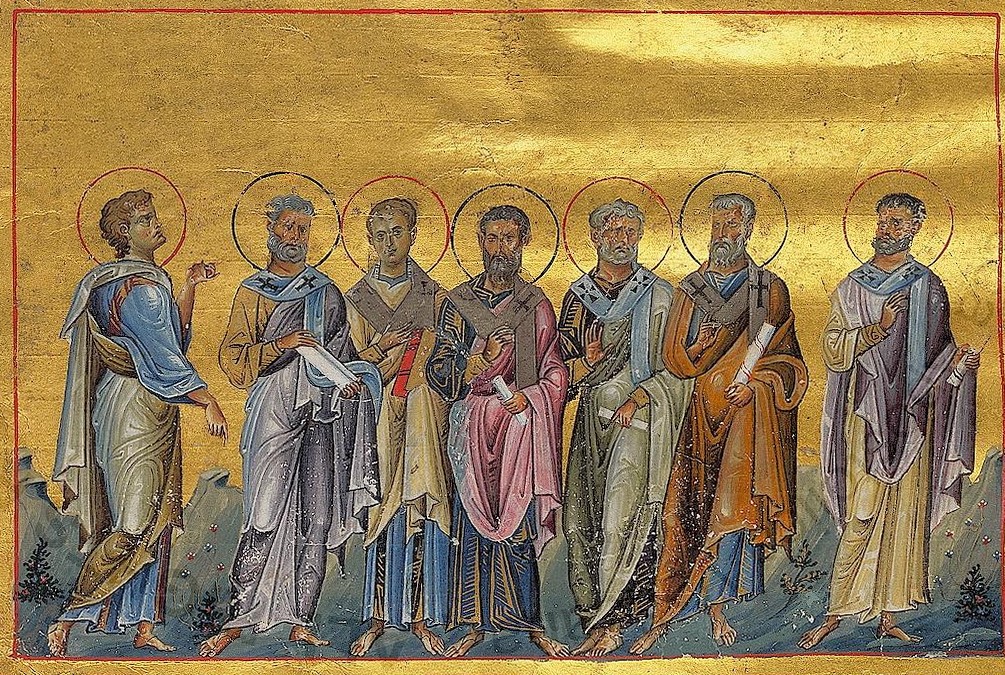
In the Gospel this Sunday, the Lord gives four important principles for a disciple. He also teaches on the concept of being worthy of Him. We tend think of being worthy as acting in a way that meets a certain standard, but the Greek word for “worthy” involves more than merely external behavior, important though that is. To be worthy of the Lord is to ascribe worth and give proper weight to who He is and what He teaches. Let’s take a look.
I. The priority of a disciple – The text says that Jesus said to His apostles, “Whoever loves father or mother more than me is not worthy of me, and whoever loves son or daughter more than me is not worthy of me; and whoever does not take up his cross and follow after me is not worthy of me.”
The Lord could not be clearer: we are to love Him more than we love anyone or anything else. There is to be no person or thing in our life that has greater importance than the Lord. So fundamental is the priority of our love and obedience to Him that it eclipses even the most fundamental relationships in our family. Our love and honor for our parents is very important; it is mandated by the Fourth Commandment: Honor your Father and your Mother. And yet, even it cannot overrule the most fundamental of all the commandments, the First Commandment: I am the Lord your God, You shall have no other gods before me.
Therefore, even the love and respect owed to parents and the love that parents should have for their children cannot be preferred to the love and obedience we owe to God. If a son or daughter, even while still a minor, were to hear a parent instructing him or her to disregard a clear teaching or commandment of God, the child would have to respond, “Sorry, Mom, Dad, but I love God more. I cannot obey you in this matter.”
The same is true for any other relationship. If a spouse, a sibling, a boss, or a government official were to try to compel us to act contrary to God’s truth and commands, the answer must always be the same: “I’m sorry but I cannot comply; I love God more. Even if I suffer at your hands as a result, I cannot and will not comply.”
The love of Jesus, who is Lord, supersedes every other love, respect, or honor due to others, be they persons, philosophies, nations, or political parties.
Truth be told, many Christians manifest greater allegiance to political parties, careers, and the opinions of men in general than to the Lord and His Church. Many prefer worldly thinking to what the Lord teaches. Many cave in and compromise to what others demand of them in order to ingratiate themselves to others, to gain access, or simply to preserve a false peace. Silencing the Gospel is never a recipe for true or lasting peace.
II. The Profundity of a Disciple – Jesus speaks strongly and says that such people as this are not “worthy” of me. As noted above, we tend to measure worthiness externally, by whether we live up to expectations of us. While this is proper, it overshadows the more internal dimensions that are the deeper part of being worthy.
The Greek word translated here as “worthy” is axios, and which is related to weights and scales. Most literally the word means “drawing down the scale,” and thus implies weighing as much or more than something else.
Internally, the concept of being worthy of the Lord here is that we assign a greater weightiness in our life to Him than to the passing treasures and trinkets of the world. We are to ascribe greater “worth” or “worthiness” to Him than to anything or anyone else. We take the Lord seriously. His teaching is to weigh on us and to carry a weight in our life. This internal disposition of being worthy of God produces the external behaviors that are worthy of Him.
The Lord paints a kind of picture for us to show that if we love anyone or anything more than we love him, the scales are tipped wrongly; we are not ascribing enough weight or worth to Jesus and are thus living in an unworthy way.
As we “size things up” in life and weigh the true importance of things, remember this: No person, no political party, no boss, no person at all who seeks our money, time, loyalty, or acquiescence ever died for us. None of them can ever save us, for none of them is God. If we esteem anyone or anything more than we do Him, then we are weighting His Blood and His saving love too lightly.
III. The passion of a disciple – The text says, … and whoever does not take up his cross and follow after me is not worthy of me. Whoever finds his life will lose it, and whoever loses his life for my sake will find it.
Every disciple must be willing to take up his cross; if he does so, there is ample reward. The Lord originally offered us paradise, but Adam and Eve wanted a better deal. Welcome to that better deal: Paradise Lost. In Paradise Lost, suffering is a reality. But suffering, by God’s gracious mercy, is also redemptive. The Lord teaches us that we must join our cross to His. Taking up the cross is a way of “losing” our life in the sense that it often diminishes our enjoyment of this earthly existence. But in dying to self and to this world, we find our true life: God and the things He offers!
It is interesting to note that we are often willing to take up crosses for worldly gain. We work hard for a paycheck or to earn a college degree. Why not then for the Lord? An old song says, “No cross, no crown.” The Lord asks of us no less than what the world demands for its trinkets. The Lord teaches that rewards far greater than worldly trinkets come with the cross He instructs us to take up. The Lord’s insistence on the need for the cross is not unreasonable, yet many of us bristle. Although we will gladly spend several years and a lot of money in order to obtain a college diploma, going to Church on Sundays or giving up some of our favorite sins is viewed as unreasonable, or just too much trouble.
In effect, the Lord demands that we take him seriously, that we give weight to His words and to His promise. If we dismiss His words lightly then we are not worthy of Him, if we do not give proper weight to His words then we do not take Him seriously. This is a bad idea because He who mercifully summons us now to His truth will one day be our judge.
Be worthy of the Lord. Give sufficient weight to what He says. Respect and obedience are the proper virtues for a disciple who accords worth (weight) to the Lord’s teaching and acts in such a manner.
IV. The prize of a disciple – The text says, Whoever receives a prophet because he is a prophet will receive a prophet’s reward, and whoever receives a righteous man because he is a righteous man will receive a righteous man’s reward. And whoever gives only a cup of cold water to one of these little ones to drink because the little one is a disciple—amen, I say to you, he will surely not lose his reward.
The Lord promises reward if we get our priorities and passions right, if we welcome His word and give weight to what He says and who He is!
Even now, we can enjoy the fruits of God’s Word as we listen to His prophets and see our life change. In welcoming the Word in my life, I have seen many positive changes. I am less anxious, more patient, and more loving than before. I have greater wisdom. I have seen sins and sinful attitudes reduced and graces come alive. Word and sacrament have had their effect; accepting the prophecy of the Church has given me a prophet’s reward. How about you?
Further, the Lord says that He will reward every work of mercy by us, which is in effect a small share in the cross. We pray that God will forget our sins, but it is said that God will never forget the good things we have done and will never be outdone in generosity.
The Lord does not demand the cross without pointing to its reward. The cross ushers in the crown. Do you believe this? Do you take the Lord seriously? Do you give weight to and count as worthy the Word that He speaks to you?