One of the great spiritual battles/journeys is being able to get beyond and outside our own self. St. Augustine wrote that one of the chief effects of sin is making man curvatus in se (turned in on himself, turned inward). Forgetful of God, we lose our way. Called to look outward and upward, to behold the Lord and His glory, we instead focus inward and downward, on things that are passing, noisy, troubling, and far less noble. No longer seeing our Father’s face and experiencing joyful confidence, we cower with fear, foolishly thinking that things depend on us. Yes, we are turned inward and downward. Scripture bids us, If then you have been raised with Christ, seek the things that are above, where Christ is, seated at the right hand of God (Col 3:1).
One of the graces of deeper prayer, if we persevere through the years, is that the Lord turns us upward and outward. Gradually, our prayer turns more toward God and is less anxious about our own aches and pains. It is enough to give them over to God and trust in His providence. Gradually, we simply prefer to experience the Lord quietly, in increasingly wordless contemplation. As we advance along the ways of prayer, we are drawn by God into a kind of silence during prayer. But that silence is more than the absence of sound; it is a state characterized by us being turned more toward God. An old monastic tale (from I know not where) relates,
Sometimes there would be a rush of noisy visitors and the silence of the monastery would be shattered. This would upset the disciples; but not the Abbot, who seemed just as content with the noise as with the silence. To his protesting disciples he said one day, “Silence is not the absence of sound, but the absence of self.”
Yes, as prayer deepens and becomes more contemplative, the human person is turned more toward God. A kind of holy silence becomes private prayer’s more common pattern. This does not mean that nothing is happening. Rather it means that the soul has a communion with God that is deeper than words or images. It is heart speaking to heart (cor ad cor loquitur). This is a deep communion with God that results from our being turned outward toward God. The gift of silence comes from resting in God, from being less focused on ourselves and more and more focused on God. From the ancient hymn, “Let all mortal flesh keep silence, and with (holy) fear and trembling stand, ponder nothing earthly minded.” Yes, there is a time for intercessory prayer, but not now. Don’t just do something, stand there. Don’t rush to express; rest in order to experience. Be still and know that He is God. An old spiritual says, “Hush … Somebody’s callin’ my name.” Yes, pray for holy silence; pray beyond words and images. These are the beginnings of contemplative prayer.
Another gift that is given to those who experience deeper prayer is a sense of spaciousness, a sense of openness. As the soul is turned less inward and more outward, it makes sense that one would experience a kind of spaciousness. Those who have attained a deeper level of prayer often speak of this. Scripture does as well. Consider some of the following passages:
For the Lord has brought me out to a wide-open place. He rescued me because he was pleased with me (Ps 18:19).
I called on the LORD in distress: the LORD answered me, and set me in a large place (Ps 118:5).
The Lord brought me out into a spacious place; he rescued me because he delighted in me (2 Sam 22:20).
You have not handed me over to the enemy but have set my feet in a spacious place (Psalm 31:8).
Hear me when I call, O God of my righteousness: you have enlarged me when I was in distress; have mercy on me, and hear my prayer (Ps 4:1).
And I shall walk in a wide place, for I have sought your precepts (Psalm 119:45).
And he moved from there and dug another well, and they did not quarrel over it. So he called its name Rehoboth (which means latitude or width), saying, “For now the LORD has made room for us, and we shall be fruitful in the land” (Gen 26:22).
Yes, as we are turned outward and upward to God we soon experience the spaciousness and latitude of knowing God. No longer confined by the experience of being turned inward (curvatus in se), the soul has room to breathe. Although many people who begin to experience contemplative prayer are not able to reduce the experience to words, they describe an experience of the spaciousness of God. But this spaciousness is more than a physical sense of space. It is a sense of openness, of lightness, of freedom from burden and from being pressed down; it is an experience of relief. But nearly all who experience it agree that words cannot really express it adequately.
St. Paul writes of the unspeakable quality of deep prayer as well, though his experience likely goes beyond what we call contemplative prayer:
I know a man in Christ who fourteen years ago was caught up to the third heaven. Whether it was in the body or out of the body I do not know—God knows. And I know that this man—whether in the body or apart from the body I do not know, but God knows—was caught up to paradise. He heard inexpressible things, things that man is not permitted to tell (2 Cor 12:2-4).
Yes, it is “unsayable.” Words fail. St. Augustine was said to remark of the Christian mysteries, “If you don’t ask me I know. If you ask me, I don’t know.”
So here is another gift of deepening prayer to be sought: spaciousness, the openness that comes from being turned outward and upward toward God. An old spiritual says, “My God is so high, you can’t get over him, He’s so low, you can’t get under him, he’s so wide, you can’t get ’round him. You must come IN, by and through the Lamb.”
Silence and spaciousness: two gifts of the deeper level of prayer we call contemplative prayer, prayer that moves beyond words and images, beyond the self to God Himself.
We live in times in which mercy, like so many other things, has become a detached concept in people’s minds, separated from the things that really help us to understand it. For indeed, mercy makes sense and is necessary because we are sinners in desperate shape. Yet many today think it unkind and unmerciful to speak of sin as sin. Many think that mercy is a declaration that God doesn’t really care about sin, or that sin is not a relevant concept.
On the contrary, mercy means that sin does exist. Thanks be to God for the glory, the beauty, and the gift of His mercy! Without it, we don’t stand a chance. I don’t know about you, but I’m certainly going to need boatloads of grace and mercy to make it. Only through grace and mercy can we be freed from sin and healed from its effects, or ever hope to enter the presence of God’s glory in Heaven, of which Scripture says, But nothing unclean will ever enter it, nor anyone who does what is detestable or false (Rev 21:27). Somebody say, “Lord, have mercy!”
Mercy does not mean there is no judgment; mercy exists because there is a day of judgment. Mercy does not mean there is no Hell; mercy exists because Hell does. Somebody say, “Lord, have mercy!” Without mercy we are lost. With it we stand a chance, but only if we accept our need for it. Mercy, Lord, have mercy!
Oh, thanks be to God for mercy! So let’s consider the glory and the gift of mercy on this Sunday of divine mercy. The Gospel for today’s Mass speaks both to the need for mercy and the glory of it. Let’s look at four teachings on mercy, God’s perfect mercy.
I. The Prelude to Mercy – There is an old saying that if you don’t know the bad news, the good news is no news. And thus as this Gospel opens we enter a room where ten Apostles are gathered in fear; the doors are locked. These are broken, troubled, and disturbed men. All of them but John had fled, deserting the Lord. One of them had denied even knowing Jesus, not once but three times. Here they are, humiliated, downcast, and sinfully without faith. Never mind that Jesus had told them on numerous occasions that He would rise on the third day. Even though several women and two disciples from Emmaus had said they had seen Him alive, on this the third day, these men persist in sinfully rejecting this news that conformed to His promise. Yes, we enter a locked room of fearful men who are downcast, disgraced, and disbelieving.
But it is here that we find the prelude to mercy! They are about to blessed and to experience profound mercy. But don’t miss this prelude. Again, if you don’t know the bad news, the good news is no news; so don’t miss this picture.
One of the great errors of our day is the proclamation of mercy without repentance, without reference to our sinful condition. So many pulpits have gone silent on sin! And therefore are silent on the true glory of mercy and the astonishing gift that it is! Ah, mercy! Divine mercy! Perfect mercy!
But the point of mercy is not to go out and tell others how terrible they are, but rather to tell them about the forgiveness of sin! Now this is why we need a mercy Sunday. On the one hand we’re living in rebellious times, times in which many are dismissive of sin and have refashioned God into just a nice fellow who doesn’t really care all that much about sin (despite what His own scriptures say to the contrary), reducing mercy is to mere kindness and a sort of blindness on God’s part.
On the other hand these are also times when many are scared and angry with God, rejecting His judgments and glorious moral vision. A lot of people know that their lives are in disorder: their families are broken; they are confused; greed, materialism, lust, and other sinful drives are taking a heavy toll. Many are angry with the Church because deep down they know we are right; they don’t like being reminded that people don’t have any business calling good what God calls sinful.
But most of all, many are confused and angry because they don’t know forgiveness. Consider what Psalm 32 says so beautifully:
Blessed is the one whose fault is taken away, whose sin is forgiven, to whom the Lord imputes no guilt! … As long as I would not speak of my sin, my bones wasted away and your hand was heavy upon me. Then I acknowledged my sin to you, my guilt I did not hide, and you took away the guilt of my sin!
You see, the key to having this blessed state is the acknowledgement of sin.
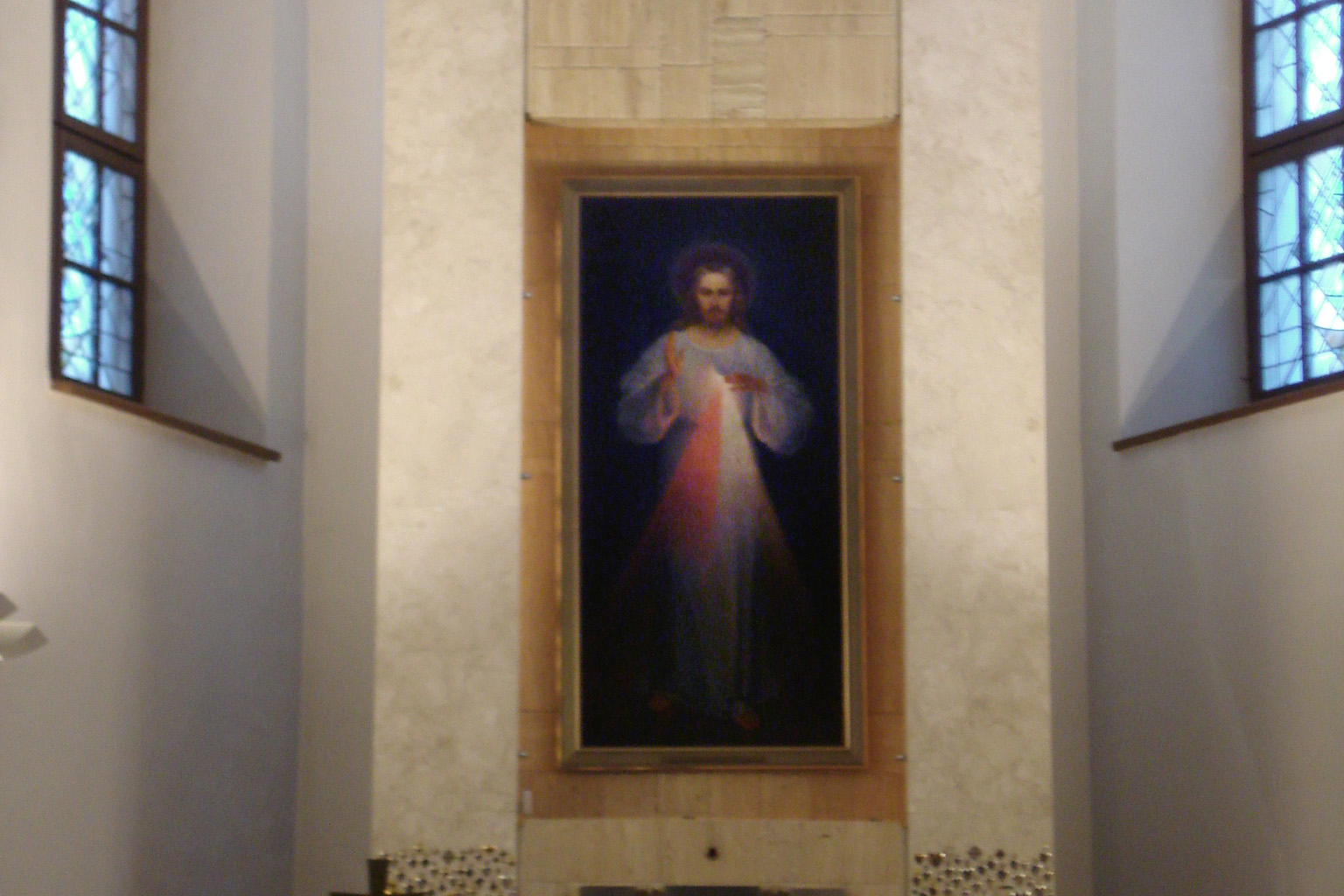
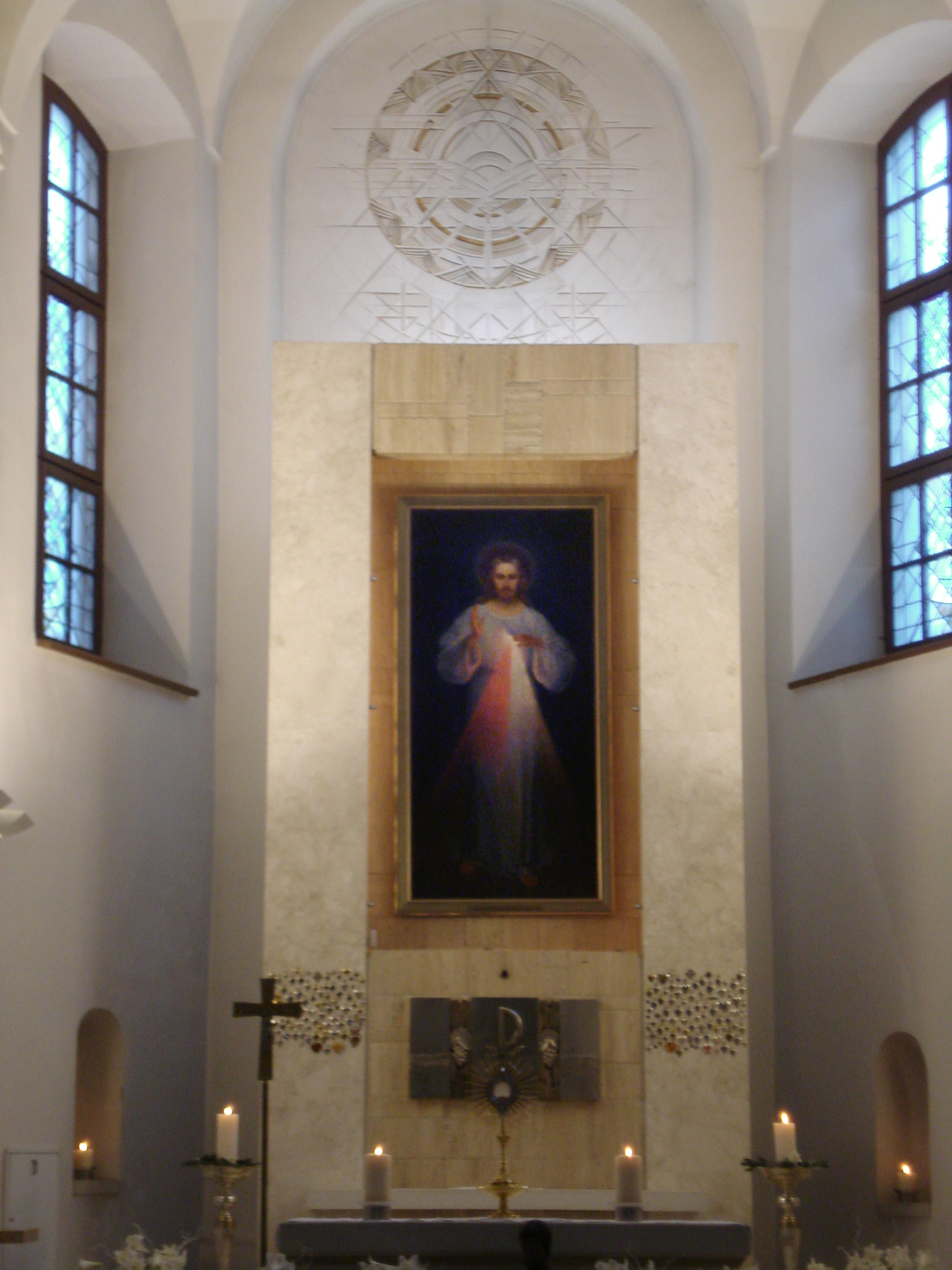
The Lord said to St. Faustina,
You see what you are of yourself, but do not be frightened at this. If I were to reveal to you the whole misery that you are, you would die of terror. … But because you are such great misery I have revealed to you the whole ocean of my mercy (Diary II. 718).
Now some reading this sort of text think, “There goes that Catholic guilt thing again.” But let’s be honest, it’s not really an exaggeration. The truth is that most of us can be thinned-skinned, egotistical, unforgiving, unloving, unkind, mean-spirited, selfish, greedy, lustful, jealous, envious, bitter, ungrateful, smug, superior, vengeful, angry, aggressive, unspiritual, un-prayerful, stingy, and just plain mean. And even if all the things on the list don’t apply to you, many of them do. In addition, even that long list is incomplete. We are sinners with a capital ‘S’ and we need serious help.
And thus, just as Psalm 32 says, the glory of mercy is unlocked by the acknowledgment of sin. Jesus said further to St. Faustina,
My love and my mercy [for you] know no bounds! … The graces I grant are not for you alone, but for a great number of other souls as well. … The greater the sinner the greater the right he has to my mercy (Diary II.723).
Do not forget this necessary prelude to mercy: the acknowledgement of our sin. If you don’t know the bad news, the good new is no news.
II. The Peace of mercy – Into this upper room filled with men who are dejected, disgraced, doubting, humiliated, hurt, sinful, and sorrowful, the Lord came. The text says, Jesus came and stood in their midst and said to them, “Peace be with you.” When he had said this, he showed them his hands and his side. The disciples rejoiced when they saw the Lord. Jesus said to them again, “Peace be with you.”
Do you see the glory and the gift of this moment? The Lord says to them, “Peace be with you.” Now I don’t know about you, but if I had been hiding out, denying Him, and running from responsibility at the critical moment, and then suddenly the Lord whom I had let down and offended appeared, I might be a little nervous! But what does the Lord say to these embarrassed and dejected men? “Peace be with you!”
What is peace? It is more than the absence of conflict or division. Peace is the presence in a relationship of all that should be there: justice, integrity, reciprocity, mutuality, and so forth. The Greek word used is eirḗnē, which is from the root eirō meaning “to join or tie together into a whole.” So it means wholeness, a state in which all essential parts are joined together. Peace is God’s gift of wholeness.
Do you see the glory of this moment? The Lord does not merely say, “I will not punish you for what you have done.” He says, “Between you and my Father there is now peace, there is wholeness, there is completeness, there is present in the relationship all that should be there, there is justice.” The Lord does not merely overlook what a mess we are, He makes us whole and pleasing to His Father.
All is well, all is complete, all that is necessary is supplied by my atoning death and resurrection!
Such mercy, such a grace, such a gift!
In English, the text says that they rejoiced. But here, too, the English translation does not capture the richness of the Greek word ἐχάρησαν (echarēsan), which means to delight in God’s grace. It means to powerfully experience God’s grace (favor), to be conscious of and astonished by (glad for) His grace! This is no mere passing happiness. This is abiding astonishment at the sheer gift of God’s mercy and grace. The Apostles do not just get happy for a moment; they are given the gift of stable, serene, confident joy at the unfathomable gift of God’s mercy and goodness. They had sinned and yielded to fear; they had run from the Lord and ignored His teaching; but the Lord stands before them and says “Shalom, Peace be with you. May the full favor of the Lord be with you. May you experience that God is pleased that you are well and seeks to draw you more deeply into His love.”
Here is mercy; sweet, beautiful, soul-saving mercy; and astonishing and unexpected grace! There is shalom; there is peace; there is deep, abiding, and confident mercy. It is a joy and mercy that is unmerited. It is stable because it is rooted in the stable and abiding love of God.
III. The Priesthood of Mercy – The text says, “As the Father has sent me, so I send you.” And when he had said this, he breathed on them and said to them,“Receive the Holy Spirit. Whose sins you forgive are forgiven them, and whose sins you retain are retained.”
There is not time here to develop a full apologetic of the Sacrament of Confession entrusted to the Church. But to those who say, “I don’t have tell my sins to any priest, I can just go straight to God,” the Lord Jesus never got your little memo. He gave the power to forgive sins to the Apostles and their successors. That is clear in this passage. The Lord does not do pointless, foolish things; what He says here is to be taken seriously. He tells these imperfect men, “Whose sins you forgive are forgiven them, and whose sins you retain are retained.”
There is something deeply personal, even if imperfect (on account of the imperfection of priests), in the way the Lord wants us to experience his mercy. But the emphasis is on the personal.
There is a beautiful story of St. John Paul and a fallen bishop. The bishop had fallen from grace; he had had an affair with a woman, and although he ended it, the story came out later and he resigned. Some months later he was called to Rome to meet with Pope John Paul. As he waited to see the Pope, he was nervous. Had the Pope called him to rebuke him? He sat alone, waiting for the Pope to enter. The door opened and the sainted pope walked across the room and greeted the fallen bishop. “I have one question to ask you,” said Pope John Paul. “Are you at peace?” “Yes,” he replied. “Thanks be to God!” said Pope John Paul. The fallen bishop took the joy of that mercy into the remainder of his life and went on to care quietly for the spiritual needs of religious who were underserved in a certain part of this country. He never forgot the mercy he experienced and the story was told at his funeral, for he himself told it often.
There is just nothing that surpasses the way the Lord can convey his mercy in the deeply personal way of the confessional. There is nothing more precious than those words that conclude every confession: “I absolve you of your sins, in the name of the Father and of the Son and of the Holy Spirit. Go in peace. Thanks be to God!”
The Lord did not want his mercy to depend on some self-generated notion that mercy was extended. He wanted us, for whom faith comes by hearing, to hear those precious words: “I absolve you from your sins … Go in peace.” There is nothing more wonderful and certain than those words spoken by the Lord through His priests.
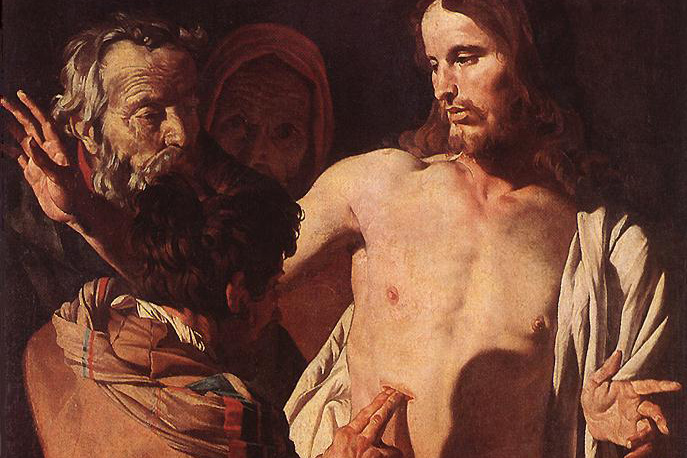
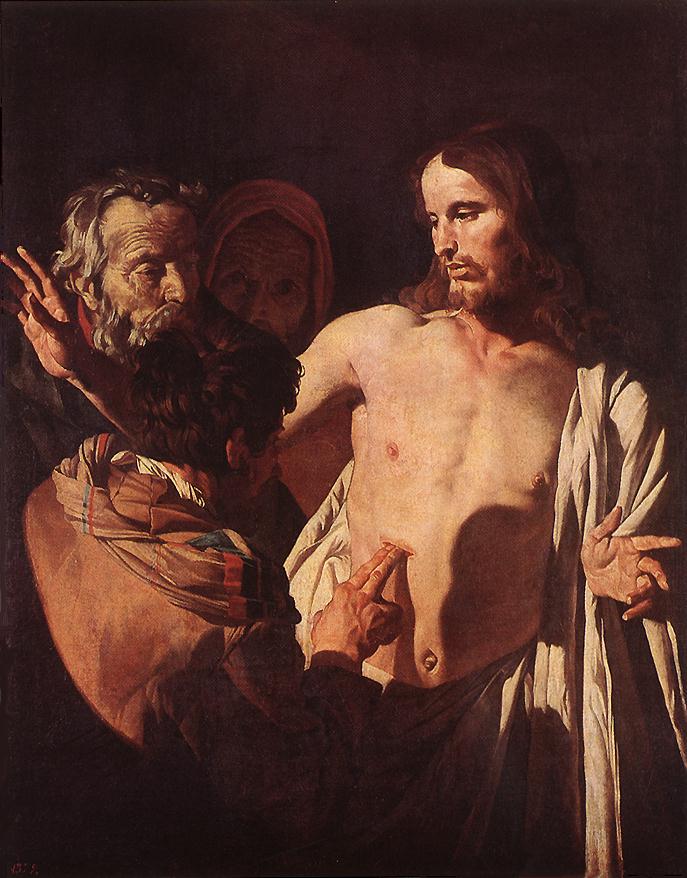
IV. The Prerequisite of Mercy– But one of the Apostles, Thomas, was missing. Here was the most wounded of all the Apostles, so wounded that he drew back from the only place mercy could be found, for where two or three were gathered the risen Lord appeared in the midst of them. In drawing back, Thomas blocked his blessings.
The point is this: the Lord unfailingly offers His mercy. He says, No one who calls on me will I ever reject (Jn 6:37).
The question is, will we call on him? There is only this one need, this one requirement for mercy: that we ask for it. Jesus says, Behold, I stand at the door and knock. If anyone hears my voice and opens the door, I will come in to him and eat with him, and he with me (Rev 3:20). The door to our heart and to repentance must be opened from the inside. The Lord will not force His mercy. This is why there is a Hell. Without God’s mercy we are doomed; we don’t stand a chance. His mercy is free except for this price: we must surrender our pride, admit our need, and open the door.
Thanks be to God that St. Thomas did not persist in his impenitent stance, but instead rejoined the community where mercy and the Lord were to be found. Sure enough, where two or three were gathered the Lord appeared once again and St. Thomas found mercy. The Lord rebuked Thomas’ lack of faith but rewarded his penitence.
St. Thomas opened the door from the inside of his heart. The Lord lovingly entered and built up his faith so that never again would Thomas think that he could find the Lord on his own terms. Rather, Thomas would seek the Lord where He could be found: in the Church, among those gathered in His name. Mercy is found where God is found. He knocks but it is we who must open the door and receive Him into our hearts on His terms not ours.
St. Thomas fell to his knees, astonished by the Lord’s mercy; such mercy, such a glorious gift. “My Lord and my God!” The Lord never stopped calling Thomas. The Lord did not give up but waited until Thomas answered the door. “Peace, Shalom, Thomas. I am glad you are here. Now never again stop believing in my mercy and love for you. Never again draw back thinking I am lost to you. I love you with an everlasting Love. I have called you and you are mine. Peace to you, and mercy, Thomas.”
Mercy! So great, so divine, so perfect. It is a mercy that does not deny the need for its own existence. When humbly received, it conveys peace through the priesthood that Christ Himself established. It is a mercy which, as a prerequisite, respectfully knocks and waits for our “yes.” Lord, give us your perfect mercy.
I have it on the best of authority that Thomas sang a song later that night, a song that sang of the Lord’s mercy and persistence, of His abiding call when we would give up. Yes, I have it on the best of authority that he sang,
I almost let go; I felt like I just couldn’t take life any more. My problems had me bound; Depression weighed me down; But God held me close so I wouldn’t let go. God’s mercy kept me; so I wouldn’t let go
I almost gave up; I was right at the edge of a break through, but couldn’t see it. The devil really had me, but Jesus came and grabbed me, and He held me close, so I wouldn’t let go. God’s mercy kept me, so I wouldn’t let go.
So I’m here to day because God kept me I’m A live today only because of His grace Oh He kept me, God kept me God’s mercy kept me, so I wouldn’t let go
In recent decades scientists were in search of what many of them called the “grand unified theory.” The concept was that there was one thing, one theory, that explained everything. I am not sure if this is still a pursuit among scientists or not, but I have to say, as a believer and a theologian of sorts, that there is already a grand unified theory, there is one thing that explains everything. And that one thing is love—more precisely, the Love of God.
Everything you see exists as a manifestation of the expansive and glorious love of God. You exist because God thought of you, loved you and set into motion all that was necessary for you to exist. Even now He is holding you in existence, and you will exist forever as a fruit of God’s loving “yes.” Even the souls and demons in Hell do not lose God’s loving yes. God never removes His love, His “yes.”
Love is the foundation of our grand unified theory. There are mysteries of evil admixed, which seem to belie love’s being the basis of a grand unified theory. But even there, God paradoxically permits freedom to His rational creatures, since for them truly to experience love presupposes their freedom. And physical “evils” such as death and loss may still mysteriously foster love, since one door closes in order that others may open, one dies that another may live, and the circle of life continues.
Love is the one answer to everything. Physical scientists may not be able to weigh love on a scale or predict its every outcome. But the believer and theologian in me insists that love is the solution to the puzzle of the grand unified theory. I will stake my whole vision and future on it.
Enjoy this humorous commercial where “the answer” is found that unlocks everything. Mystically the answer is “11.” But what is “11” if not two ones (individuals) paired in love, bearing the fruit of a third. 1 and 1 is love (the answer to everything): the Father and Son bearing the fruit of love in the Holy Spirit, and the great divine perichoresis (the movement or dance of love in God) radiating this love in all that exists. Love explains all.
In the early hours of the first Easter Sunday, the news began to circulate that Jesus was alive and had been seen. These reports were at first disbelieved or at least doubted by the Apostles. They dismissed various reports from both women and men. But suddenly that evening there was a change, a declaration by the Apostles that the Lord “has truly risen!” What effected this change? We will see in a moment. But first, note the early reports of the resurrection and how they were largely disregarded:
The women who go to the tomb first discover that it is empty (Mat 28:6; Mk 16:6; Luke 24:5; John 20:2). The Gospel of John, which is the most specific, indicates that Mary Magdalene went straight away to Peter and John, speaking anxiously not of resurrection, but of a stolen body. Peter and John hurry to the tomb to investigate. Meanwhile, the other women have a vision of angels, who declare that Jesus has risen and instruct them to inform the Apostles. The women depart to do so. This is the first evidence of the resurrection, though at this point the risen Lord has yet to appear.
John sees and believes – Peter and John arrive at the tomb after the women have already departed. They see only the empty tomb, but it was clearly not due to grave robbers, for the expensive burial linens are lying outstretched. Peter’s reaction is unrecorded but the text says that John saw (the burial clothes outstretched) “and believed” (Jn 20:8). Exactly what he believed is not clear. Did he believe what Mary had told them? Or does the text mean that he came to believe that Jesus had risen? It is not clear, but let us suppose that he has come to believe that Jesus has risen. Does the fact that one of the Apostles (one of the first bishops) believes Christ has risen mean that the Church now officially believes it? It would seem not. That will have to wait until later in the day. At this point, Peter and John leave the tomb.
Mary Magdalene had followed Peter and John back to the tomb and after they leave Jesus appears to her. This is the first appearance of the risen Christ. Does this appearance now mean that the Church officially believes that Jesus is risen? It would seem not. That will have to wait until later in the day. For Scripture testifies that Jesus appeared elsewhere to the other women who had gone to the tomb, but that when Mary Magdalene and the other women reported His appearances, the Apostles would not believe it (Mk 16:11; Luke 24:11). Hence, though we have appearances, we cannot yet say that there is any official declaration by the Church that Christ is truly risen.
Jesus appears to two disciples (not Apostles) who are journeying to Emmaus late that afternoon. At the conclusion of that appearance, the two men run to tell the Apostles who, once again, do not believe it (Mark 16:13). So now we have had at least three appearances but no official acceptance by the Church’s leaders (the Apostles) that there is any truth to these sightings.
So when does the resurrection become the official declaration of the early Church? Up until now the stories have been rejected by the Apostles as either fanciful or downright untrue. Even the possible belief of one of the them (John) was not enough to cause an official declaration from the early Church.
So what causes this to change? It would seem that after the early evening report from the disciples returning from Emmaus, Peter slipped away, perhaps for a walk. According to both Paul (1 Cor 15:5) and Luke (Lk 24:34) the risen Lord then appeared to Peter privately, prior to making Himself known to any of the other Apostles. Peter reports Jesus’ appearance to the others and it is at this point that the resurrection moves from being doubted to being the official declaration of the community, the Church. The official declaration is worded as follows:
The Lord has truly risen, he has appeared to Simon!” (Luke 24:34)
The resurrection is now officially declared. Notice the world “truly” (some texts say, “indeed”). It is now an officially attested fact that Jesus has risen. Neither Mary Magdalene, nor the women in general, nor the disciples from Emmaus, nor even John could make this declaration for the Church. It took the College of Apostles in union with Peter to do this. Hence the dogma of the resurrection becomes so in a very Catholic way: the first bishops (the Apostles) in union or in council with the first pope (Peter) make this solemn declaration of the faith.
When I wrote a similar article some years back, some argued that the Church “did not exist at this time” since Pentecost “is the birthday of the Church.” I do not accept that “the Church did not exist at this time.” I think she did exist but had simply not been commissioned to go forth to the nations as yet; that would wait for Pentecost. Further, even if one holds Pentecost as the birthday of the Church, since our existence precedes our birth by at least nine months, surely the Church’s existence also precedes her “birth.”
We could sidestep the whole debate by saying that the exercise of the Church’s teaching authority in this event is “proleptic.” That is to say, what would fully be the case later is here seen operative in an earlier, yet real manner. The Apostles and their office, which were fully operative after Pentecost, are here active as the result of a prevenient grace, an anticipation of the future reality of the Church teaching authoritatively out of her basic structure, and of the charism given to Peter and the Apostles more fully at a later time. But I stand by my contention that the Church did exist at this time and that we do not have a prolepsis, but in fact a proper action of the Magisterium at this very point.
Pope Benedict, writing as Joseph Ratzinger (that is to say not claiming to exercise the Papal Magisterium), speaks to the ecclesiological aspect of the early Church’s declaration. “The Lord is truly risen; He has appeared to Simon.” and “He appeared first to Cephas and then to the Twelve” (1 Cor 15:4). Benedict writes,
… This indication of names [Cephas and then the Twelve], … reveals the very foundation of the Church’s faith. On the one hand “the Twelve” remain the actual foundation stone of the Church, the permanent point of reference. On the other hand, the special task give to Peter is underlined here. … Peter’s special witnessing role is confirmation of his commission to be the rock on which the Church is built. … So the resurrection account flows naturally into ecclesiology. … and it shapes the nascent Church [Jesus of Nzareth Vol 2., pp. 259-260].
But did the women’s and the laymen’s declarations mean nothing? The Lord upbraids the Apostles later for being so reluctant to accept the testimony of the others (Mk 16:14). He calls them “hard of heart” for this reluctance. But He does not undermine their authority to make the official declaration, for in the very next verse He commissions the Apostles to go forth, preaching and teaching in His name. Surely the Lord was not pleased when, after He had promised many times to rise from the dead, they were so slow to listen to the voices of the first witnesses. Should they not have realized that it was the third day and that the Lord had promised to rise? Should they not have “connected the dots”? Did He have to personally appear to them before they would believe?
Alas, it would seem so. Jesus’ first bishops were not perfect men—far from it. But they were the leaders He had chosen, even knowing their weakness. And so, too, today. The Church’s leaders are not perfect; at times they may take too long to make decisions, give clearer teachings, or impose necessary discipline. But in the end it is they who are nonetheless commissioned to teach officially.
This whole event also teaches us that the bishops and even the Pope himself are not always the first to hear what the Spirit is saying to the Church. The more frequent pattern is that the Lord begins reforms and sends apparitions not to the leaders, but to some among the faithful. Reform movements and messages are often received there first and only later does the Church, through her anointed and appointed leaders, affirm or uphold certain things as worthy of belief and set aside others as problematic.
Finally it should be noted that one of the Apostles, Thomas, was absent. Even after the official declaration of the Church went forth, he refused to believe (Jn 20:25). But the Lord is merciful to him. In the end, though, it is clear that Thomas has fallen short, egregiously so. Not only has he disbelieved the testimony of one or more disciples, he has refused the collective and solemn declaration of the Church. Jesus goes on to declare as blessed those who accept the solemn testimony of the Church though they have not seen him with earthly eyes (Jn 20:29). So we are blessed!
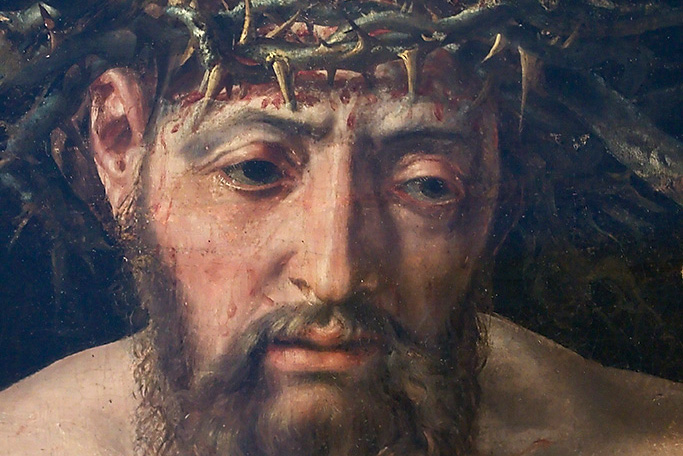
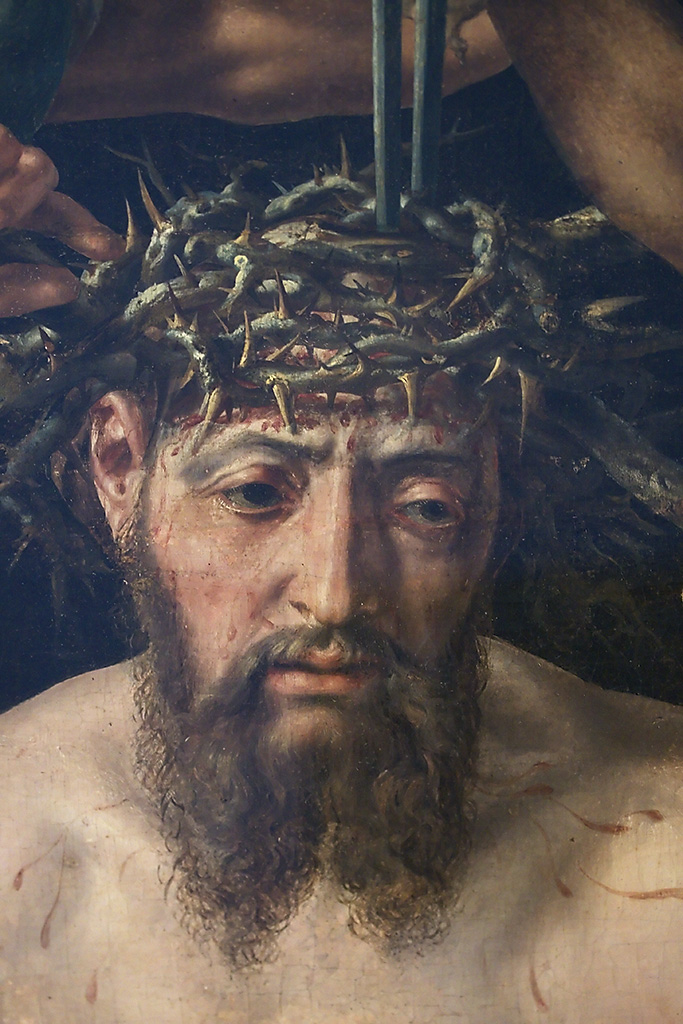
When I was in the seminary, my Moral Theology Professor, Fr. Robert Zylla (R.I.P.), encouraged us to meditate on the sins of the intellect during the third sorrowful mystery (The Crowning with Thorns). In his years of teaching he had surely witnessed the intellectual pride that could beset theologians and seminary students who figured they knew a few things. And added to this human tendency to intellectual pride was the rather prideful sense of the 20th century that we had somehow “come of age.” Dissent from church teaching was rampant and what came to be called the “hermeneutic of rupture and discontinuity” was in full flower. Many dismissed things merely because they were “old” and “pre-Vatican II.” Our advanced technology, tall buildings, terrifying weapons of war, and astonishing techniques of medicine had mesmerized us; we confused mere knowledge with wisdom. Knowing how to get to the moon and back is impressive, but only wisdom and humility, with lots of grace and mercy, can get us to Heaven.
Yes, the sins of the intellect must be consistently monitored and curbed with proper humility and docility (the Latin root docile means to be teachable) to the teachings of the Church. Garry Wills, a noted dissenter during those heady times, coined the phrase Mater si, Magistra no (Mother yes, Teacher no) to indicate that there was no need for him or others to accept the Church’s teaching authority. So sad, yet so emblematic of our times. Many today simply sniffle and dismiss the need for any teaching from the Church.
Our intellect is our greatest strength yet also our biggest struggle. We think we know a few things. And we do know a few things, very few. And insisting that we know so much, we shut down and will no longer listen to the Wisdom of God in His Church, time-tested, stretching back for millennia, the glory of the saints, and a treasure more precious than gold for those who love the Law of the Lord.
For meditation during Holy Week, I read through Jesus of Nazareth, Part II (Holy Week) by Joseph Ratzinger. In it, he writes of the dangers and sins of the intellect as he meditates on Jesus’ words from the cross, “Father forgive them, for they know not what they do.” Consider this teaching on the sins and limits of the intellect from one of the great intellects of our time:
Father forgive them, for they know not what they do” (Lk 23:34). … The theme of “not knowing” returns in St. Peter’s sermon in the Acts of the Apostles … “Now, brethren, I know that you acted in ignorance, as did also your rulers” (3:17). … The theme of not knowing also appears in one of St. Paul’s autobiographical reflections. He recalls that he himself “formally blasphemed and persecuted and insulted Jesus” then he continues, “But I received mercy because I had acted ignorantly in unbelief” (1 Tim 1:13).
This combination of expert knowledge and deep ignorance certainly causes us to ponder. It reveals the whole problem of a knowledge that remains self-sufficient and does not arrive at Truth itself.
We encounter the same combination of knowledge and failure to understand in the story of the wise men from the East. The chief priests and the scribes know exactly where the Messiah is to be born. But they do not recognize him. Despite their knowledge, they remain blind (Matthew 2:4–6).
Clearly this mixture of knowledge and ignorance, of material expertise and deep incomprehension occurs in every period of history. For this reason, what Jesus says [from the cross] about ignorance … is bound to be unsettling for the supposedly learned today. Are we not blind precisely as a people with knowledge? … Ignorance diminishes guilt, and it leaves open the path to conversion. But it does not simply excuse, because at the same time it reveals a deadening of the heart that resists the call of Truth [pp. 206-208].
Consider well, especially as you pray the third sorrowful mystery (the Crowning with Thorns), the sins of the intellect; it would make Fr. Zylla happy. As a parting thought, I ask you to ponder the danger described by St. Paul: For although they knew God, they did not honor him as God or give thanks to him, but they became futile in their thinking, and their senseless minds were darkened. Claiming to be wise, they became fools (Rom 1:21-22).
Save us, Lord, from our foolishness and transform our minds!
I’ll admit this video is a little on the light side given the topic, but the point is that we don’t even understand those closest to us. How, then, can we understand that which is above us?
A conference is being planned in August to ponder an authentic pastoral response in ministering to those with same-sex attraction. Dr. Janet Smith is the organizer; Courage International and the Archdiocese of Detroit are the sponsors. It looks to be a fine gathering of solid speakers. Though I am clearly a “back-bencher” among the fine speakers being lined up, I was asked to submit a paper for possible inclusion in the book that will likely be published by Ignatius Press just prior to the conference.
As a kind of followup to yesterday’s post, I would like to publish a draft of the paper I submitted (Dr. Smith has permitted this). It is only a draft, but I have tentatively titled it “Equal in Dignity and Responsibility.” In it I explore some of the pastoral challenges and opportunities presented in ministering to those with same-sex attraction. Since the article is rather long (3500 words) I include a link to the PDF in case you would prefer to print it and read it later (Equal in Dignity and In Responsibility).
Equal in Dignity and Responsibility: A Pastoral Consideration of Ministering to Those With Same-Sex Attraction
The very public emergence of those among us with same-sex attraction and other self-described orientations presents many pastoral challenges for the Church. To a large degree much of this public emergence has taken up the premise that those with same-sex attraction have been victims of unjust discrimination and unequal treatment. The charges of inequality and injustice are also laid at the feet of the Church.
In this article I would like to argue that the Church does not treat those with same-sex attraction unfairly, either in terms of her teachings or her expectations. On the contrary, we insist on one standard for every person: to live chastely according to our state in life. For the married man and woman this means being faithful to each other in body, mind, and heart. For the unmarried, living chastely means refraining from all genital sexual activity, immodest touching, and lustful thinking rooted in pornography and/or masturbation. There are no exceptions to this standard, which is rooted in a biblical vision and in natural law. This one standard is just and equitable in that it binds all and blesses all. That those with same-sex attraction cannot marry someone to whom they are sexually attracted is unfortunate (there are many unfortunate factors in life), but there are also many who do not have same-sex attractions who for various reasons are not married and may never marry.
As a pastoral stance in ministering to those with same-sex attraction and in addressing our culture, it would seem wise that the Church emphasize the equanimity of our teaching, since allegations of unfairness and discrimination are pervasive. We have one standard and one teaching that is for all and applies to all without exception. We are all equal in dignity and responsibility.
This stance is also helpful in terms of how we handle the increasingly complex situations presented to us. Simply put, we should handle these situations in the same way we handle irregular situations involving heterosexual persons. One standard exists and must be applied to all. We ought learn to see these complex situations more simply and to apply our norms equitably to those who present them to us. They are equal in dignity and equal in responsibility.
Below we will apply this principle in four pastoral examples. But first we do well to examine a couple of things in the culture that make the task of demonstrating our equanimity more difficult.
The first matter is the notion of reducing one’s identity to one’s sexual attraction. Sexuality is an important component of who we are, but surely it is not the only component or even the most significant one. Yet in a hyper-sexualized culture there are increasing numbers who want their sexual attraction to be front and center, and who see this facet as almost the sole way they want to be understood. Never mind that they may like classical music, or be a car mechanic, or even a child of God. Many want to be known first and foremost as “gay” and be identified with a behavior that both Scripture and human tradition see as deeply problematic and sinful.
I leave it to other authors to develop the case for why it is problematic and sinful. The main point here is that if people identify sexual orientation as central to their identity, then they are bound to take very personally the rejection of the behavior with which they identify. This presents special challenges to us who say that we reject the sin but not the sinner.
But this is all the more reason that we in the Church must emphasize the equanimity of our teaching and strive to ensure that our policies reflect what we teach: that all are equal in dignity and responsibility; all are called to live according to the one chaste standard articulated in Scripture and Tradition.
The second matter is the rapidity of the change, the revolutionary quality of the issue. Less than ten years ago our current president spoke against so called gay “marriage” and suffered no political harm; he may even have benefitted from his stance. Even in a generally liberal state like California, a bill to approve marriage for same-sex couples was struck down in 2008. Since that time dramatic changes in the perception of those with same-sex attraction and in attitudes toward recognizing their unions as “marriages” can only be called stunning. Almost overnight, demands, now even coupled with threats of legal sanctions, have been directed at the Church to conform and regularize approval at every level for same-sex activity, same-sex “marriages,” and so forth.
Here is the special challenge presented by issues related to same-sex attraction: its sudden appearance on the scene with a “take no prisoners” approach. The message seems to be this: “Comply quickly or experience condemnation, possible legal action, and/or being labeled unkind, intolerant, and ‘homophobic’.”
This rapid change of climate is important to acknowledge because to some extent it also helps explain why our simple, equal standard for everyone is not up and running in every diocese. There are many complicated rules and exceptions that seem to set up, which are interpreted as either unfairly targeting those with same-sex attraction, or as bending over backward to make exceptions for them in a way that compromises the moral requirements of Scripture and Tradition.
In contrast other matters such as single motherhood, divorce and remarriage, and cohabitation (all “common” sins among heterosexuals) showed up more subtly and gradually over the course of several decades. First there was one “single mother” and we handled it quietly; then there were a few, then dozens, and so on. But this occurred over time, decades. The awareness that we had a problem was (sadly) very slow in coming. The same can be said for cohabiting couples and for divorce and remarriage. In these cases as well, the effects extended over a longer period time, disguising the fact that we had a real problem on our hands.
Some with same-sex attraction claim that it was only when they appeared on the scene that the Church suddenly concluded we were in a crisis. I believe this is a fundamentally unfair accusation. I do, however, understand what has given rise to this charge. For decades now “divorce and remarriage” has gone on with relative silence from Catholic pulpits. Cohabitation, fornication, contraception, and pornography are also seldom the subject of sermons or statements from the Church. But enter gay “marriage” and suddenly it would seem the hierarchy has awakened and statements, court briefs, and other concerns abound. The “gay community” is cynical that our level of outrage is consistent across these issues. Fifty years of heterosexual misbehavior and redefining of marriage (through no-fault divorce and contraception) have seemingly been ignored. But the sleeping giant of the Church suddenly awakens when homosexual misbehavior appears. Or so the charge goes.
There are priests and bishops who have consistently preached against all sexual misconduct and spoken about the complex issues of divorce, but in general our pulpits have been too silent.
Our stance now cannot be to continue or deepen our silence but must be to proclaim without ambiguity the one chaste standard that binds and blesses us all. Bishops, priests, and deacons who preach on issues related to same-sex attraction must carefully present it as part of a whole teaching. I do not think I have ever preached or taught on the sinfulness of homosexual acts without also laying out the sinfulness of fornication and adultery. No one is or should be singled out. The point is that there is one standard.
If we have been sleepy and silent, shame on us. But the task before us now is to be clear, consistent, and charitable, announcing equal dignity and equal responsibility to follow the one standard for sexuality and marriage given to us all by God.
Some in the Church will also argue, with proper concern, that homosexual acts are not only sins against purity but also sins contrary to nature (St. Paul calls them “paraphysin” (Rom 1:26-27)) and that Scripture consigns them to the category of sins that “cry to heaven for vengeance” (cf Gen 17:20-21). And this is true and surely valid in a theological discussion.
But from a pastoral point of view, fornication, adultery, and homosexual acts are all serious violations against purity and are all objectively immoral. None of these acts can be reconciled with a proper understanding and living of the Catholic faith. Pastorally and practically when such situations arise in our parishes and schools, the decisions we make about giving sacraments, accepting children in our schools, employment issues, etc. are going to be handled in a similar manner.
As we go forward, I would argue that this is the key We must do a better job of presenting our objections to issues related to same-sex attraction in the light of our received teachings on sexuality, teachings that bind and bless everyone equally. There are not different standards for homosexual and heterosexual persons, neither are there different versions of human nature at work. Sexuality has a proper purpose and place; this vision, given to us by God and Natural Law, applies to all of us without exception.
Having set forth the principles of equality and simplicity, and having acknowledged the difficulties of the current climate, let’s look at some real-life situations and see how our teachings, properly applied, are fair and respectful to all involved.
Scenario 1: Two men present an infant they have adopted for baptism. The men are living in a same-sex relationship and have had their “marriage” recognized by the State. They claim to be parishioners and the pastor does recognize them, though he never knew of their relationship, living arrangements, or the existence of their civil “marriage” license. In the baptism of infants and young children there is to be some well-founded hope that the child will be raised in the Catholic faith (cf Canon 868.2). This highly irregular situation makes the pastor wonder as to the proper course of action.
Reply: In a fairly straightforward way, this scenario can be handled like that of a cohabiting heterosexual couple or a couple in an invalid marriage. When irregularities exist in the presenting family, the pastor must balance the fundamental need of the child for baptism with the likelihood of him or her actually being raised in the faith given those irregularities.
Some irregularities, such as validating a marriage, can be easily resolved; others cannot. Some cohabiting couples are planning to marry, but for others marriage is either not in the near future or is unlikely to occur at all. The faith of some heterosexual couples is vigorous despite the irregularities, but for others their faith is tepid and their practice of it is tangential to their lives.
And then there is the large number of single mothers presenting children for baptism. Some have had a one-time fall, others are prone to promiscuity or serial relationships that are unhealthy. Some are actively practicing their faith; many are not.
And yet here is a child in need of baptism. Given the urgent need for baptism, the historical tendency of the Church has been to baptize even the children of prostitutes. The “well-founded” hope that children will be raised in the faith has more often been understood to mean even a glimmer of hope. The fact is, whatever the irregular situation, the parent(s) are coming to the Church and requesting baptism. That means there is some faith.
Some pastors are far more restrictive in their interpretation, but the usual and historical stance has been to be generous in seeing a well-founded hope, given the necessity of baptism for salvation.
My own approach in cases of irregularities among heterosexuals is to use this as a teachable moment, a call to repentance; I use it as an opportunity to summon the parent(s) to faith. I don’t just stay silently “nice. ” I exhort cohabiting couples to separate if reasonable and not deleterious to the child. I tell them that they should prepare to marry if this is advisable, and that they should most certainly stop fornicating right away. I tell those in invalid marriages that they should be validated. I tell those who are not coming to Mass to do so faithfully starting right away.
I also instruct them that they are going to be making a promise to God (and I read it right from the baptismal rite) to raise their children in the faith. This means that they cannot go on living in a way that is at odds with that faith. I ask them to soberly consider whether they are really ready to make this promise (which includes working to eliminate the irregularities). I tell them that if they are not, they should delay the baptism. It is difficult to imagine how they can avoid being sentenced to Hell if they fail to follow through on such a promise; I am very clear with them on this.
I would not change a thing with a same-sex couple. It is unlikely that I would refuse to baptize the child. However I would make it clear that they, too, have a decision to make in terms of the promise they will make to God. If they are going to raise this child in the Catholic faith, like any cohabiting couple, they need to stop having sexual intimacy, possibly separate entirely, and most certainly never teach the child that homosexual acts are anything other than sinful, as God’s Word teaches. If they are not able to make these changes and begin to conform to Catholic teaching (which their promise in the baptismal rite indicates) I recommend they delay the baptism until they are ready. But the decision is theirs.
In cases where baptisms involving any of the irregular situations described above go forward, I recommend that every parish handle them discreetly. In other words, celebrate them more privately, at times other than Masses or regularly scheduled baptisms. They ought not to be done alongside baptisms where properly married parents present their children. If such a practice has developed it should be discontinued so that further scandal and desensitization to irregularity are avoided. The baptism of a child presented by a same-sex couple at Mass or alongside proper situations would shock most congregations. And while unmarried heterosexual parents at baptisms are less apparent (and so cause less shock) these sorts of baptism also ought to be done more discreetly.
This may mean more work for clergy, but it must be done going forward if we are to assert, as I think we ought, that those with same-sex attraction are treated with equanimity.
Scenario 2: A reliable parishioner has reported to the pastor that a long-time, popular teacher in the parish school has begun living with a same-sex partner. How should the pastor deal with this situation?
Reply: No pastor should ever handle such a situation alone. Consultations with the diocese and with legal staff are important in any decision that results in the termination of employment. Even apart from matters related to same-sex attraction, hiring and firing have become highly litigious matters. Clear evidence, including an interview with the teacher, must be assembled. Policies and procedures will have to be carefully followed.
There are also different expectations of those in roles of teaching and ministry as compared to other staff such as maintenance employees. Given the complexities, a pastor or principal who foresees a possible termination of employment must never do this alone at any stage; the diocese should be consulted.
However, from a moral standpoint, how is the situation described above any different from a teacher openly living together with her boyfriend? We reasonably expect the teachers in our Catholic schools not to live in open opposition to the teaching of the Church. If perchance a teacher has a disagreement with our teachings, we cannot force him or her to believe, but we can rightly insist that he or she remain discreet and not openly support or do what the Church teaches against. This applies to every person and to all our doctrinal teachings equally. So again, equality is essential. The standard is the same for heterosexual persons and homosexual persons.
Several major dioceses in this country have already undertaken measures to spell out reasonable norms and apply them equally to all teachers. Such norms have also been carefully crafted to avoid legal challenges and to respect the civil and constitutional rights of employees, even as the Church legitimately seeks to ensure that our schools hand on the faith in word and deed.
Scenario 3: A known lesbian “couple” want to enroll their adopted daughter in kindergarten at the parish elementary school. The principal approaches the pastor for guidance. Perhaps it will good for the child to be in be in a religious environment where the Church’s teachings on marriage and the family are upheld. But perhaps, too, it could cause harm to the other children who would be exposed to a confusing situation that might imply the Church’s approval.
Reply: Here, too, no pastor or principal should ever handle this alone. A proper and equitable response is going to require a diocesan-level decision that is followed in all our schools. Different schools with different policies convey the message that the teaching is really up for grabs or that it just represents personal opinion.
A situation like this occurred recently in a large archdiocese in this country. The diocese had reason to suspect that homosexual activists may have orchestrated this as a “set up” since three same-sex couples all applied at once, to three different schools in the archdiocese.
The archdiocese convened a panel of pastors, principals, legal experts, and others to consider the applications and develop a response to them and a policy going forward.
The solution was essentially to place the matter squarely in the hands of the applicants. Application forms for every school were enhanced to indicate that, in enrolling their children in the archdiocese’s Catholic schools, parents were expected to live in a way that did not express opposition to Catholic moral teaching. Currently they are asked to sign a statement certifying that they can meet this requirement. This puts the onus on the applicant and does not require principals and pastors to go down some sort of checklist that, no matter how long, might be called selective and be subject to the parsing of every word.
Again, everyone is treated equally: equal in dignity, equal in responsibility.
Scenario 4: A student preparing for the Sacrament of Confirmation has just publicly supported same-sex marriage. After ongoing discussions, his pastor advises him that he is not ready to receive the sacrament and should delay it until he can resolve his differences with the Church. Further, the student intends to make public the intervention by his pastor, according to his side of the story.
Reply:Confirmation is a Sacrament of Initiation given by the Lord to strengthen one in the proclamation of the Faith. As such, those who are confirmed publicly affirm the Creed and by extension whatever truths the Catholic Church believes, teaches, and proclaims to be revealed by God. The public support of same- sex marriage is directly contrary to biblical and Church teaching. Hence the student would, in effect, be publicly lying were he to proceed with the Rite of the Sacrament of Confirmation. Nothing is being denied the student. He is excluding himself from being able to receive the sacrament since he does not share the faith in which he seeks to be confirmed. Further, unlike baptism, confirmation is not necessary for salvation.
The student is free to make public his side of the story and to relate what the pastor said. The pastor is not free to report what the student said in their meetings but he can issue a generally worded statement about what confirmation is (and what it is not) and what the recitation of the Creed means in the context of the celebration of the sacrament.
This might also allow the pastor an opportunity to teach the congregation that the reception of Holy Communion each Sunday also involves an affirmation of communion with the Church and with her doctrinal and moral teachings.
So the priest can use this as a teaching moment but would be advised not to allow the matter to be reduced to the questions surrounding same-sex attraction. Instead this can permit him to apply the principle of equality and remind all Catholics to seek communion with the Church on all matters, doctrinal and moral.
So again, here is a clear application of the principle of equanimity wherein Church teaching on matters related to same-sex attraction is seen in the light of wider teaching that applies to all.
In summary, though a new landscape confronts us, our teachings have not changed. They continue to apply to all equally. We do not single out certain groups or acts for special condemnation or praise. In such matters as our moral teaching on human sexuality and the call to purity, no one is exempt; no one exists in a special category. There is one Lord, one Faith, one Baptism. It applies to us all; it binds us all; it blesses us all. We stand before God as equals. We all receive the grace to be holy whatever temptations particularly assail us, whatever sinful attractions draw us. We are equal in dignity and responsibility.
Last week was Holy Week, so sure enough there were many critical issues in the news that needed attention but we in the Church were off doing more important things like worshipping God and pondering our need for salvation. Permit a brief summary and some predictions from me based on the latest unpleasantness in Indiana last week.
I am not a lawyer and neither know nor understand all the legal implications of the law signed by the Indiana governor and then later amended. I speak more to the cultural concerns raised by same-sex attraction, the redefinition of marriage in civil justification, and the rapidity of all of these things and how they affect the Church.
Regarding cultural concerns and the political landscape, as is often the case, Ross Douthat summarizes the situation best:
One of the difficulties in this discussion, from a conservative perspective, is that the definition of “common sense” and “compromise” on these issues has shifted so rapidly in such a short time: Positions taken by, say, the president of the United States and most Democratic politicians a few short years ago are now deemed the purest atavism [a recurrence of or reversion to a past style, manner, outlook, or approach, something strikingly archaic], the definition of bigotry gets more and more elastic, and developments that social liberals would have described as right-wing scare stories in 2002 or so are now treated as just the most natural extensions of basic American principles. … But the pace involved is unusual, and its rapidity makes it very easy to imagine that scenarios that aren’t officially on the table right now will become plausible very, very soon. the only remaining question in the same-sex marriage “debate” [is] what kind of space, if any, an ascendant cultural liberalism would leave to Americans with traditional views on what constitutes a marriage. … [T]he choice of exactly how far to push and how much pluralism to permit would [seem to] be almost entirely in the hands of liberals and supporters of same-sex marriage. That’s … basically how it looks to me today. [1]
Indeed, as an “American with traditional views on what constitutes a marriage”it is hard not to feel bullied and outgunned. Most of our opponents feel secure politically, culturally, and legally in labeling us the worst sort of bigots and threatening legal sanctions. It is not merely that we must be “pitied” or considered “out-of-date”; we must be removed from the scene or forced to comply. The high horses are out in force and those who ride them seek a clean sweep of all who utter so much as a word of dissent. I wonder with Terry Mattingly if the horses would be quite so high if a “gay” Episcopalian caterer refused to cater a convention of “ex-Gay” Americans; outrage and coverage thereof by the mainstream media might be very selective.
From the few reports I heard, it seems many reporters are poor at distinguishing Catholic views from those of some (not all) Evangelicals. The Catholic position distinguishes same-sex attraction from same-sex behavior (i.e., homosexual acts) in ways that many Evangelicals do not. We should not countenance any business turning a “gay” American away simply because he or she is known to be “gay.” And I do not know anyone who says that someone should be turned away simply because he or she self-identifies as “gay.” That would be unjust discrimination, which the Catechism speaks against. However, when a Catholic is asked to contribute to or benefit from an event that celebrates same-sex acts or same-sex “marriage,” the situation is much different.
There are some situations in which a Catholic business owner’s cooperation/participation in such an event would be remote and thus not construed as approving sinful activity. In such cases the owner can proceed with a clear conscience. However, when cooperation in such an event would indicate support or approval of what Scripture and the Church teach as sinful, Catholics have duties and rights to stand back and not cooperate. To some degree there are prudential judgements involved in determining what constitutes remote vs. direct material cooperation. However, the norm remains: Catholics should not directly materially cooperate in doing what is sinful or wrong in any matter, be it issues of invalid marriages, illicit sexual union, or any number of other moral issues forbidden by Scripture and Church teaching.
For the record, this is the Catholic position on same-sex attraction is stated in the Catechism:
Homosexuality refers to relations between men or between women who experience an exclusive or predominant sexual attraction toward persons of the same sex. It has taken a great variety of forms through the centuries and in different cultures. Its psychological genesis remains largely unexplained. Basing itself on Sacred Scripture, which presents homosexual acts as acts of grave depravity, [Cf. Gen 191-29; Rom 124-27; 1 Cor 6:10; 1 Tim 1:10], tradition has always declared that “homosexual acts are intrinsically disordered.” [CDF, Persona humana 8]. They are contrary to the natural law. They close the sexual act to the gift of life. They do not proceed from a genuine affective and sexual complementarity. Under no circumstances can they be approved.
The number of men and women who have deep-seated homosexual tendencies is not negligible. This inclination, which is objectively disordered, constitutes for most of them a trial. They must be accepted with respect, compassion, and sensitivity. Every sign of unjust discrimination in their regard should be avoided. These persons are called to fulfill God’s will in their lives and, if they are Christians, to unite to the sacrifice of the Lord’s Cross the difficulties they may encounter from their condition.
Homosexual persons are called to chastity. By the virtues of self-mastery that teach them inner freedom, at times by the support of disinterested friendship, by prayer and sacramental grace, they can and should gradually and resolutely approach Christian perfection (Catechism 2357-2359).
This teaching is not going to change no matter how much pressure this latest cultural juggernaut brings to bear. Individual Catholics [and even some bishops] may cave in to the pressure, but the teaching cannot and will not change; it is firmly held in the sacred deposit of faith and consistently taught by the Magisterium.
But as for the Church, I think predictions of our demise (if we do not comply with current social pressures) lack historical understanding. More specifically, many say that if we don’t update our teachings on same-sex attraction, contraception, divorce and remarriage, etc. we are going to become “irrelevant” and our pews will empty. I have a few thoughts on these gloomy predictions:
1. The Catholic Church has endured 2000 years of “social pressure” to change almost every one of our teachings, dogmatic and moral. Consider the Judaizers of St Paul’s day. Consider the Trinitarian and Christological heresies of the first few centuries. Consider the great Eastern Schism of the 11th century. Consider the Soteriological and Ecclesiological errors of the 16th Century. Consider modernism in our own time and all its offshoots such as relativism, discontinuity, reductionism, scientism, deconstructionism, and any other “ism” you can think of that takes one thing and makes it the whole thing. But here we still are. Empires have come and gone, nations have risen and fallen, philosophies and fancies have been tried and found wanting. Here we still are. Where are Nero, Julian the Apostate, Napoleon, Marx, and Stalin? Where is the USSR? All these political forces, people, and movements had an agenda they pressured us to adopt. They are gone and the Church and the Gospel are still here. All flesh is like grass and all its glory like the flower of grass. The grass withers, and the flower falls, but the word of the Lord remains forever” (1 Peter 1:24-25). And from Luke, Heaven and earth will pass away, but my words will never pass away. So, be careful, or your hearts will be weighed down with carousing, drunkenness and the anxieties of life, and that day will close on you suddenly like a trap (Luke 21:33-34). So this age has its agendas and is warning the Church that she will fade and die if she does not conform. I think I’ve heard that one before!
2. The denominations that have adopted the “give the people what they want” stance (be it women clergy, approval of abortion, approval of homosexual acts, approval of gay “marriage,” etc.) are far emptier than is the Catholic Church, which by the way continues to grow worldwide. Surely secularism has taken a toll on the Church in many parts of the country, especially the old cities of the Northeast. But in the South many parishes are bursting at the seams and new parishes are being built. Most of the old, mainline Protestant denominations that have taken the “be relevant and permissive” advice are now quite divided and increasingly empty, whereas Catholic parishes and Evangelical denominations that have resisted this (though the Catholic position distinguishes attraction from sinful acts) are either holding their own or growing.
3. Many say that the Catholic Church’s own members do not follow Catholic teachings on sexuality. This is true in varying degrees depending on the specific area. But many also do not follow our teaching against greed. Very few confess it and many seem to think it never applies to them. Should we change this teaching? Many fail to be as generous as they should be to the poor and very few confess this. Perhaps this teaching should be set aside as well since it doesn’t seem very popular and the poor are still with us. And boy, I’ll tell you a lot of Catholics struggle with the forgiving thing and loving their enemy! When forgiveness is preached many think that they have a good reason not to forgive and that God will understand in their particular case. So is it out with forgiveness, too? And despite many decades of dissent and scoffing at her teaching on contraception, the Church has not changed her position and it looks more right than ever given the confusion that contraception has caused about the purposes of sex. Right now our culture’s big obsession is with sexual misbehavior and thus the demands that we change the ancient, tested, biblical teaching on sexuality loom large. But when the current madness is finished or (more sadly) this culture exits the scene (by sexual suicide) the Church will still be here and the Gospel will remain unchanged.
4. Despite the charges against her of bigotry and unfairness, the Catholic Church has one standard for everyone based on Scripture: chastity. (I will write more on this tomorrow.) For the married this means fidelity of mind, heart, and body. For the unmarried it means no genital sexual contact, ever. Those of same-sex attraction may protest that marriage is not possible for them under our teaching. This is true unless they are able to develop an attraction to the opposite sex. But even many who are not same-sex attracted either delay marriage significantly or never find a suitable marriage partner. They might object to simply being told that they have “options.” And frankly, as a vowed heterosexual celibate, I find objectionable the notion that living without sexual intercourse is worse than a death sentence. My life is full and happy. I have good friendships and can say firsthand that the Lord and the Church do not ask too much of the unmarried to refrain from sexual intimacy. Such a continence is not impossible. In the 26 years of my vowed commitment, I have never strayed with anyone, not even once. So the Church has one standard for everyone. And this is a sign of respect that is in contrast to the “soft bigotry” that would ask less of someone because he or she has an attraction that does not conform to the purposes of sexual activity.
The Church does have work to do in reaching out to those of same-sex attraction with a message of compassion that does not contradict the truth of God as revealed in Scripture and Natural Law. In August I will be attending a conference organized by Dr. Janet Smith that seeks to address this very task. Though I will be a mere “back-bencher” among many fine scholars and clerics, I was asked to submit a paper on pastoral challenges related to same-sex attraction. I will present excerpts from that paper tomorrow on the blog.
Meanwhile, I would like Cardinal George to have the last word. Please pray for the good Cardinal, who is currently hospitalized with extensive cancer. Always so careful but clear, Cardinal George writes,
In recent years, society has brought social and legislative approval to all types of sexual relationships that used to be considered “sinful.” Since the biblical vision of what it means to be human tells us that not every friendship or love can be expressed in sexual relations, the Church’s teaching on these issues is now evidence of intolerance for what the civil law upholds and even imposes. What was once a request to live and let live has now become a demand for approval. The “ruling class,” those who shape public opinion in politics, in education, in communications, in entertainment, is using the civil law to impose its own form of morality on everyone. We are told that, even in marriage itself, there is no difference between men and women, although nature and our very bodies clearly evidence that men and women are not interchangeable at will in forming a family. Nevertheless, those who do not conform to the official religion, we are warned, place their citizenship in danger [1].
Amen. More tomorrow on our need as a Church to present an effective response at the parish level to the cultural challenges related to same-sex attraction.
The photo above is of St. John Cathedral in Indianapolis.
When we encounter the resurrection accounts in the New Testament, we face a challenge in putting all the pieces together in such a way that the sequence of events flows in logical order. This is due to the fact that no one Gospel presents all or even most of the information. Some of the accounts seem to conflict. I have opined before (HERE) that these apparent conflicts are usually not in fact true conflicts. Another difficulty with putting all the facts together in a coherent manner is that the timeline of the events is unclear in some of the accounts. Luke and John are the clearest as to the timing of the events they describe; Matthew and Luke give us very few parameters. Both Acts and Paul also supply accounts in which the timeline is not always clear.
Nevertheless, I want to propose to you a possible, dare I claim even likely, sequence of the resurrection events. The work is my own and I make no claim that this scenario is certain or backed up by recognized ancient authority. St Augustine has done quite a lot of work in this matter and you can read that by clicking HERE. My proposition here is simply the fruit of 25+ years of praying over and pondering the events of those forty days between the Lord’s resurrection and His ascension. My reflections are based as solidly as possible on the Bible, with a sprinkling of speculation.
I realize that my attempt to do this will irritate some modern biblical scholars who seem to insist that it is wrong to attempt any synthesis of the texts since the authors intended no such synthesis.
Nevertheless, I press on boldly, hoping that the average believer will benefit from it and find such a synthesis interesting. Take it for what it is: the work of an obscure pastor who has prayed and carefully sought to follow the sequence of the forty days. You may wish to offer correction or an alternative interpretation; I encourage you to do so in the comments. I have posted a PDF of this document here: The Resurrection Appearances Chronologically Arranged.
In this year’s version I have included hyperlinks to the biblical texts so that you can simply click on them to read the text and then press back to return here.
I. The morning of day one
A. Very early in the morning a group of several women, including Mary Magdalene, approach the tomb to complete burial customs on behalf of Jesus (Matt 28:1; Mk 16:1; Jn 20:1).
B. They behold the tomb opened and are alarmed.
C. Mary Magdalene runs off to Peter and John with the distressing news of likely grave robbers (Jn 20:2).
D. The women who remain at the tomb encounter an angel, who declares to them that Jesus has risen and that they should tell this to the brethren (Mk 16:5Lk 24:4; Mt 28:5).
E. At first the women are filled with fear and depart from the tomb afraid to speak (Mk 16:8).
F. Recovering their courage they decide to go to the Apostles (Lk 24:9; Mt 28:8).
G. Meanwhile Peter and John go to the tomb to investigate Mary Magdalene’s claim. Mary follows behind them, arriving back at the tomb while Peter and John are still there. Peter and John discover the empty tomb; they encounter no angel. John believes in the resurrection; Peter’s conclusion is not recorded.
H. The other women report to the remaining Apostles what the angel at the tomb said to them. Peter and John have not yet returned from the tomb and these remaining apostles are at first dismissive of the women’s story (Lk 24:9-11).
I. Mary Magdalene, lingering at the tomb, weeps and is fearful. Peering into the tomb, she sees this time two angels who wonder why she weeps. Jesus then approaches her from behind. Not looking directly at Jesus, she supposes Him to be the gardener. When He calls her by name, Mary recognizes His voice, turns, and sees Him. Filled with joy she clings to Him (APPEARANCE 1) (Jn 20:16).
J. Jesus sends Mary back to the Apostles with the news to prepare them for His appearance later that day (Jn 20:17).
K. The other women have now departed from the Apostles and are on their way, possibly back home. Jesus appears to them (Mt 28:9) (after having dispatched Mary). He also sends them back to the Apostles with the news that He has risen and that He will see them (APPEARANCE 2).
II. The afternoon and evening of day one
A. Later that day, two disciples on their way to Emmaus are pondering what they have heard about rumors of Jesus’ resurrection. Jesus comes up behind them but they are prevented from recognizing Him. First Jesus breaks open the word for them; then He sits at table with them and celebrates the Eucharist, whereupon their eyes are opened and they recognize Him in the breaking of the bread (APPEARANCE 3) (Lk 24:13-30).
B. The two disciples return that evening to Jerusalem and go to the Eleven. At first the Eleven disbelieve them just as they had the women (Mk 16:13). Nevertheless they continue to relate what they have experienced. At some point, Peter draws apart from the others (perhaps for a walk?). The Lord appears to Peter (APPEARANCE 4)(Lk 24:34; 1 Cor 15:5). Peter informs the other ten, who then believe. Thus the disciples from Emmaus (still lingering with the Apostles) are now told (perhaps by way of apology) that it is in indeed true that Jesus has risen (Lk 24:34).
C. Almost at the same moment, Jesus appears to the small gathering of Apostles and the two disciples from Emmaus (APPEARANCE 5). Thomas is absent (although the Lucan text describes the appearance as being to “the eleven,” this is probably just shorthand for the Apostles as a group). They are startled but Jesus reassures them and opens the scriptures to them (Lk 24:36ff).
D. There is some debate as to whether He appeared to them a second time that night. The Johannine and Lucan accounts have significantly different descriptions of the appearance on that first Sunday evening. Is it merely a different recounting of the same appearance or is it a wholly separate appearance? It is not possible to say for sure. Nevertheless, since the descriptions are so different we can call it APPEARANCE 6 (Jn 20:19ff), though it is likely one and the same as “Appearance 5.”
III. Interlude
A. There is no biblical account of Jesus appearing to anyone during the week that followed. The next account of the resurrection says, “Eight days later,” namely the following Sunday.
B. We do know that the apostles exclaimed to Thomas that they had seen the Lord, but that he refused to believe it (Jn 20:24).
C. Were the apostles nervous that Jesus had not appeared again each day? We do not know; there are no accounts of what happened during this interlude.
IV. One week later, Sunday two
A. Jesus appears once again (APPEARANCE 7) to the gathered Apostles. This time Thomas is with them. He calls Thomas to faith, and Thomas now confesses Jesus to be Lord and God (Jn 20:24-29).
V. Interlude two
A. The apostles had received instructions to return to Galilee (Mt 28:10; Mk 16:7) where they would see Jesus. Thus they spent some of this interlude journeying 60 miles to the north, a trip that would have taken a considerable amount of time. We can imagine them making the trek north during the intervening days.
VI. Sometime later
A. The time frame of the next appearance is somewhat vague. John merely says “after this.” It is likely a matter of days or a week at best. The scene is at the Sea of Galilee; not all of the Twelve are present. They have gone fishing and Jesus summons them from the lakeside. They come to shore and see him (APPEARANCE 8). Peter has a poignant discussion with Jesus and is commissioned to tend the flock of Christ (Jn 21).
B. The Appearance to the 500 – Of all the appearances, you might think that this one would have been recorded in some detail since it was the most widely experienced. It would seem that many accounts would have existed and that at least one would have made its way into the Scriptures. Yet there is no account of it other than that it did in fact happen. Paul records the fact of this appearance in 1 Cor 15:6: Then he appeared to more than five hundred brethren at one time, most of whom are still alive, though some have fallen asleep(APPEARANCE 9). Where did this take place? What was it like? What was the reaction? We simply do not know. Proof once again that the Bible is not a history book in the conventional sense. Rather, it is a highly selective telling of what took place, not a complete account. The Bible makes no claim to be something it is not. It is quite clear that it is a selective book (Jn 20:30).
C. The Appearance to James. Here again we do not have a description of this appearance, only a remark by Paul that it did in fact happen 1 Cor 15:7: Then he appeared to James(APPEARANCE 10). The time frame of this appearance is not clear, only that it happened after the appearance to the five hundred and before the final appearance to the apostles.
VII. The rest of the forty days
A. Jesus certainly had other appearances to/with the disciples. Luke attests to this in Acts when he writes, To them he presented himself alive after his passion by many proofs, appearing to them during forty days, and speaking of the kingdom of God (Acts 1:3).
B. During this time there is perhaps the one appearance we can attribute specifically to this time period as recorded by both Matthew (Mt 28:16ff) and Mark (Mk 16:14ff). It takes place on “a mountaintop in Galilee.” Mark adds that they were reclining at table. I refer to this appearance (time frame uncertain) as APPEARANCE 11. It is here that Jesus gives the great commission. Although Mark’s text may seem to imply that Jesus was taken up from this mountain, such a conclusion is rash since Mark only indicates that Jesus ascended only “after he had spoken to them” (Mk 16:19).
C. Evidently Jesus had also summoned them back to Jerusalem at least toward the end of the period of the forty days. There they would be present for the feast of Pentecost. We can imagine frequent appearances with ongoing instruction, for Luke records that Jesus “stayed with them.” Most of these appearances and discourses are not recorded. Luke writes in Acts, And while staying with them he charged them not to depart from Jerusalem, but to wait for the promise of the Father, which, he said, “you heard from me, for John baptized with water, but before many days you shall be baptized with the Holy Spirit” (Acts 1:4).
VIII. The final appearance and ascension
A. After forty days of appearances and instructions we have a final account of the last appearance (APPEARANCE 12) wherein He leads them out to a place near Bethany and gives them final instructions to wait in Jerusalem until the Holy Spirit is sent. And then He is taken up to Heaven in their very sight (Lk 24:50-53; Acts 1:1-11).
So here is a possible, and if I do say so myself likely, chronology of the resurrection appearances. It is a synthesis that attempts to collect all the information and present it in a logical sequence. There are limits to what we can expect of the Scriptural accounts; fitting perfectly into a logical sequence is not what the texts primarily propose to do. Yet such a chronological sequence can prove helpful and it is in that spirit which I present it.
Here is a video I put together based on a song performed here at my parish on Good Friday. It is sung by one of our Sopranos, Marjorie Boursiquot. It is arranged by our director, Kenneth Louis, and composed by Long and Pote. The song is entitled “You Love Me.” Prepare yourself for a real treat!


 One of the great spiritual battles/journeys is being able to get beyond and outside our own self. St. Augustine wrote that one of the chief effects of sin is making man curvatus in se (turned in on himself, turned inward). Forgetful of God, we lose our way. Called to look outward and upward, to behold the Lord and His glory, we instead focus inward and downward, on things that are passing, noisy, troubling, and far less noble. No longer seeing our Father’s face and experiencing joyful confidence, we cower with fear, foolishly thinking that things depend on us. Yes, we are turned inward and downward. Scripture bids us, If then you have been raised with Christ, seek the things that are above, where Christ is, seated at the right hand of God (Col 3:1).