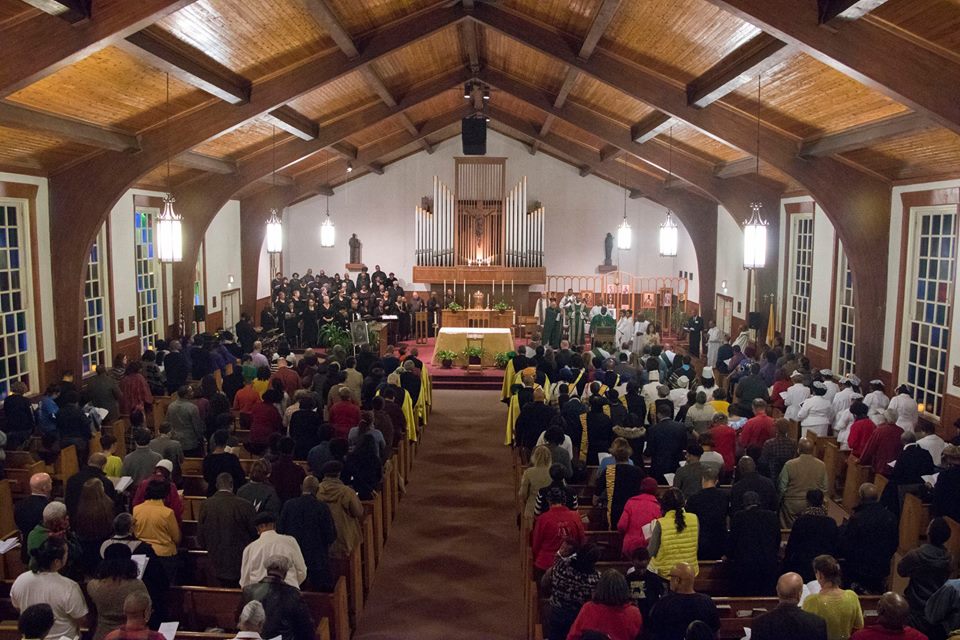
The Obligation of Clear, Compassionate Correction of the Sinner – A Homily for the 23rd Sunday of the Year

We live in times in which there is a widespread notion that to correct sinners is to “judge” them. Never mind that it is sin that we judge, not the sinner. Never mind that in accusing us of judging, the worldly-minded are themselves doing the very judging they condemn. Never mind any of that; the point of the charge is to try to shame us into silence. Despite the fact that Scripture consistently directs us to correct the sinner, many Catholics have bought into the notion that correcting the sinner is “judging” him. In this, the devil, who orchestrates the “correcting is judging” campaign, rejoices; for if he can keep us from correcting one another, sin can and does flourish.

Today’s Gospel is an important reminder and explanation of our obligation, as well instruction on how we should correct the sinner and be open to correction ourselves. Let’s look at it in four steps.

I. PRESCRIPTIONJesus said to his disciples: “If your brother sins (against you), go and tell him.” I placed “against you” in parentheses because although some ancient manuscripts contain this phrase, many do not. While some interpret this Gospel to command correction only when someone sins “against you,” none of the other texts we will review today contain this restriction. For the purpose of this reflection, I will favor those manuscripts that do not include the phrase “against you.”

Notice the brief but clear advice that when we see someone in sin, we ought to talk with him or her about it. Many, probably due to sloth, prefer to say that it’s none of their business what others do. Jesus clearly teaches otherwise.

In this teaching, Jesus is obviously speaking to the general situation; some distinctions are helpful and admissible in specific instances. For example, one generally has a greater obligation to correct people in grave matters than in less serious ones. One is more compelled to correct those who are younger than those who are older. One is more obligated to correct subordinates, less so, superiors. Parents are strongly duty-bound to correct their children, but children are seldom obligated to correct their parents. The general rule, however, remains: all other things being equal, there is an obligation to engage in Christian correction. Jesus says, “If your brother sins, go and tell him.”

There are many other Scriptures that also advise and even obligate us to correct the sinner. Some of the texts also speak to the way in which we should correct.

  • My brothers, if one of you should wander from the truth and someone should bring him back, remember this: Whoever turns a sinner from the error of his way will save him from death and cover over a multitude of sins (James 5:19).
  • Brethren, if a man is overtaken in any sin, you who are spiritual should recall him in a spirit of gentleness. Look to yourself, lest you too be tempted. Bear one another’s burdens, and so fulfill the law of Christ (Gal 6:1).
  • Let the word of Christ dwell in you richly, teach and admonish one another in all wisdom. (Col 3:16)
  • And we exhort you, brethren, admonish the unruly, encourage the fainthearted, help the weak, be patient with them all (1 Thess 5:14).
  • Thou shalt not hate thy brother in thine heart: thou shalt in any wise rebuke thy neighbor, and not suffer sin upon him (Lev 19:17).
  • Son of man, I have made you a watchman for the house of Israel; whenever you hear a word from my mouth, you shall give them warning from me. If I say to the wicked, ‘You shall surely die,’ and you give him no warning, nor speak to warn the wicked from his wicked way, in order to save his life, that wicked man shall die in his iniquity; but his blood I will require at your hand (Ez 3:17).

Hence, in charity, we have an obligation to correct someone who has gone over into sin. In correcting we ought to be gentle but clear. Further, we ought to correct with humility and not fall into the temptation of acting as if we are “superior.” Our goal is to limit sin’s effects and to apply necessary medicine to the problem of sin.

We will see more “correction texts” in a moment, but for now, let the first point be repeated: if your brother sins, talk with him about it.

II. PURPOSEIf he listens to you, you have won over your brother. Here, let us just briefly note that the point of this correction is to win a brother or sister back to the Lord; it is not to win an argument or to show superiority. The point is to contend with Satan, by God’s grace, and to win the person, who is in Satan’s grasp, back for God.

III. PROCESS – The Lord next sets forth a process for fraternal correction. It would seem that the process here is generally for more serious matters and that all these steps might not be necessary for lesser ones. For addressing the general situation in which a brother or sister is in a state of serious and unrepentant sin, the following process is set forth:

1.  Go and tell him his fault between you and him alone. This first step is often omitted in our fallen, gossip-prone, human condition. If a person is in sin, too frequently we will talk to everyone except the actual sinner about it. This is usually not helpful and in fact merely compounds the sin: the sinner goes uncorrected and sin multiplies through gossip. Satan gets a high return on his investment, often netting many sinners for the price of one.

Jesus is clear: speak to the sinner himself, first. There may be situations in which we need to seek advice from someone we trust about how best to approach the sinner, and sometimes we may need to check a few facts first, but such lateral discussions ought to be few and only with trusted individuals. The Lord is clear: step one is to go first to the sinner himself.

2.  If he does not listen, take one or two others along with you, so that ‘‘every fact may be established on the testimony of two or three witnesses.” This sort of option may seem difficult today in our cosmopolitan settings, but such things can occur in the right circumstances. Often these sorts of team efforts are called “interventions” and they are frequently done in the cases of addicts who resist treatment. Sometimes, too, it is used when a certain family member is engaging in hurtful practices such as demonstrating severe anger, refusing to forgive, or causing division within the family. Such interventions are usually conducted by several family members whom the person trusts and they often receive training of some sort before doing so. Depending on the gravity of the matter, these interventions are both necessary and counseled by the Lord as part of a method to end destructive and sinful behaviors.

3.  If he refuses to listen to them, tell the Church. This presupposes that the Church is experienced in a personal way and that the individual is connected to a body of believers who matter to him in some way. The presumption is that these are people he knows (e.g., pastors, parish leaders). This is not always the case in modern parishes, which can be large and impersonal and where many can attend yet stay on the fringes. Rather than simply dismissing this step as unrealistic, we ought to see it as setting forth an ideal of what parishes ought to be.

For those who have some relationship to the Church, this step needs to be considered in cases of grave sin. As a pastor, I have sometimes been asked to speak to someone’s family member who is in serious sin. Presuming other measures have been taken, I often do speak to him or her to warn about such things as fornication, cohabitation, abortion, drug use, anger issues, and disrespect for parents.

To be honest, though, unless the individual has more than a superficial membership in the parish, such talks are of limited effectiveness. Further, the word “Church” here should not be seen merely as meaning clergy. Sometimes there are others in the Church who ought to be engaged, such as leaders of organizations to which the person belongs, older parishioners (to speak to younger ones), and so forth. I have often engaged a team to speak, especially to younger people.

4.  If he refuses to listen even to the church, then treat him as you would a Gentile or a tax collector. Here we come to a matter of some controversy: excommunication. Treating someone as tax collector or Gentile is a Jewish way of saying, “Have nothing more to do with such a one; let him be expelled from the community.”

Some today object to the use of excommunication and often suggest, with some superiority, that “Jesus would never do such a thing.” Yet Jesus Himself is teaching us here to do this very thing. Excommunication is not a punishment to be inflicted upon someone simply to be rid of him or her, but rather as a medicine to bring forth repentance. In addition, excommunication comes only at the end of a long process; it is not something that that Church rushes to do. But it is taught here as well as elsewhere in Scripture. Consider some of the following examples:

  • We instruct you, brethren, in the name of our Lord Jesus Christ, to shun any brother who walks in a disorderly way and not according to the tradition they received from us (2 Thess 3:6).
  • If anyone refuses to obey what we say in this letter, note that man, and have nothing to do with him, that he may be ashamed. Do not look on him as an enemy, but warn him as a brother (2 Thess 3:14).
  • It is actually reported that there is immorality among you, and of a kind that is not found even among pagans; for a man is living with his father’s wife. And you are arrogant! Ought you not rather to mourn? Let him who has done this be removed from among you. For though absent in body I am present in spirit, and as if present, I have already pronounced judgment in the name of the Lord Jesus on the man who has done such a thing. When you are assembled, and my spirit is present, with the power of our Lord Jesus, you are to deliver this man to Satan for the destruction of the flesh, that his spirit may be saved in the day of the Lord Jesus (1 Cor 5:1).
  • Do not be deceived: “Bad company ruins good morals.” Come to your right mind, and sin no more. For some have no knowledge of God. I say this to your shame (1 Cor 15:33).
  • But rather I wrote to you not to associate with anyone who bears the name of brother if he is guilty of immorality or greed, or is an idolater, reviler, drunkard, or robber—not even to eat with such a one. Is it not those inside the church whom you are to judge? (1 Cor 5:11)

So there is a fairly strong, clear biblical mandate from both Jesus and St. Paul that excommunication may at times have to be used. It would seem from the texts we have surveyed that the purpose of excommunication is two-fold: to protect the community from the influence of serious sinners and to be a medicine to urge the wayward Christian unto saving repentance.

If any would doubt the seriousness of excommunication or think nothing of the Church’s solemn declaration of it, note that Jesus indicates that He will recognize the Church’s authoritative declaration: Whatever you bind on earth shall be bound in heaven, and whatever you loose on earth shall be loosed in heaven. Thus, let no one make light of the Church’s solemn declaration in such matters.

Today there is increasing demand for bishops to use this measure more often, especially for those who openly support and help fund abortion. It seems clear from the Scriptures we have surveyed that such a measure can, and at times should, be used at the end of a process such as Jesus describes. If one is directly involved in abortion—either by having one, performing one, paying for one directly, or directly assisting a woman to have one—he or she is automatically (self) excommunicated.

What of “Catholic” politicians and jurists who advance the availability of abortion and vote funding for it? Most (but not all) bishops have made a prudential decision not to make use of this measure for “Catholic” politicians who support abortion (or same-sex “marriage,” for that matter). Most of them say that they are concerned that it would be perceived as a political act rather than a moral shepherding of these wayward souls, and because the action would likely be misinterpreted and falsely portrayed by the media, they consider it unwise to excommunicate.

Bare minimum – It is not my role as a priest to critique bishops on whether or not they choose to excommunicate; bishops must make prudential judgments. At a bare minimum, I would hope that every Catholic (politician or not) who even comes close to procuring an abortion or advancing its availability to others has been privately instructed and warned by his pastor (or bishop in the case of prominent individuals) that if he does not change, and dies unrepentant, he will almost certainly go to Hell. Likewise, those of any prominence who help to advance other serious moral evils should be strongly admonished by pastors/bishops to return to the truth.

It is simply too serious a situation to leave a sinner of this magnitude uninstructed, unrebuked, or in any way unclear as to the gravity of the matter. The sinner should be instructed—yes, warned vividly—to repent at once and to refrain from Holy Communion until confession can be celebrated following true repentance.

IV. POWERAgain, amen, I say to you, if two of you agree on earth about anything for which they are to pray, it shall be granted to them by my heavenly Father.

The Lord is showing here how our unity will bring strength. How can we have unity in the Church if there isn’t agreement on basic moral principles and behavior? Thus fraternal correction not only helps the sinner, it helps the Church by helping to preserve our unity in the truth of the Gospel. Central to the truth that unites us is the moral law of Christ and His Church. Fraternal correction increases our unity and makes us and our prayer stronger.

Sadly, today it is evident that our unity and the power of our prayer as a Church is greatly diminished by the disunity among us and the way in which many continue for too long without being corrected by the Church. We are not a force for change because we are divided on the very truth that is supposed to unite us. Much of our division is further rooted in our failure to teach with clarity and correct the sinner.

Much work and prayer are necessary today to unlock the power of which the Lord speaks in today’s Gospel.

Earth, Air, Fire, and Water: Great and Yet Terrifying Blessings

Given the terrible storm that has devastated parts of the Caribbean and is bearing down on Florida as I write, it is possible that questions come to mind. There is certainly a violent component to life on this planet. We might even play on the words of an ancient hymn Dies Irae, dies illa. Yet what we experience as violent in one region can usher in blessings for the wider planet. Among other things, severe storms help to moderate the large difference in temperature between the equator and the poles. Regardless of any positive impacts, though, the local effects can be devastating.

Still, we ought to consider that some of God’s gifts come in strange and terrifying packages. The book of Job says,

The earth, though out of it comes forth bread,
is in fiery upheaval underneath (Job 28:2).

Yes, we live just above a fiery cauldron, separated from us by a thin membrane of earthly crust rife with cracks through which fire routinely flares, a crust that is always shifting and even shaking violently in earthquakes.

Yet were it not for this violent cauldron beneath us, it seems unlikely that we would have life here at all. Volcanoes and other tectonic activity keep our soil rich and recycled. In this fiery cauldron are brewed some of our most useful minerals and beautiful gems. Whole island chains and land masses are formed by eruptions and geothermal energy is a resource we have only just begun to tap. Many scientists think that volcanoes had a profound influence on the formation of an atmosphere in the early Earth period and that the molten core of the earth has an important influence on the Van Allen belt, a magnetic field that keeps the harmful portion of the sun’s radiation away from the earth’s surface.

Job had it right: some of God’s gifts come strange packages. The earth’s capacity to bring forth bread is directly connected to the fact that it is on fire beneath. Yet what a strange and terrifying package this gift comes in! Volcanoes and other seismic activity have claimed an enormous number of lives and a huge amount of property.

Water, such a rich source of life and blessing, can turn in a moment to utterly destroy life in huge numbers. Floods and tsunamis can sweep away vast areas in a flash.

Yet who can deny that without water, life would be impossible? Ah, water; nothing more life-giving and nothing more deadly. Yes, some of God’s gifts come in strange and terrifying packages.

I have often wondered why so many cities throughout the world are built on or near floodplains and along the “ring of fire,” with its volcanoes and fault lines. Of course the answer is plain enough: it is in these very areas that some of the richest soil and the greatest resources are to be found.

God’s and nature’s most life-giving gifts are but a few degrees separated from disaster and instant death. We live on the edge of an abyss because that is where life is found.

It’s such a thin line, really. Mors et vita duello, conflixere mirando! (Death and life compete in a stupendous conflict!)  To live is to cheat death.

All of the basic elements and forces: earth, air, water, and fire, are so death-dealing and yet so life-giving; somehow they are all part of the great cycle of living and dying that God intends.

Only God is existence itself; the rest of us are contingent beings and part of a cycle. Only in union with Christ, who said, I am the life, will we ever cheat death. As Bishop Fulton Sheen once said, “Christ gave the earth the only serious wound it ever received, the wound of an empty tomb.” With Christ—and only with Christ—will we one day give the earth that same wound.

For now, we live above the cauldron upon a thin crust; beneath us burns a tremendous fire. Somehow, mysteriously, it is the source of our bread.

The earth, though out of it comes forth bread,
is in fiery upheaval underneath (Job 28:2).

Yes, some of God’s greatest gifts come in strange and terrifying packages.

Distinguishing Between Healthy and Unhealthy Guilt

One of the trickier terrains to navigate in the moral world is the experience of guilt, in its sense of sorrow for sin.

On the one hand, we should experience an appropriate for sorrow, but on the other there are types of guilt that are self-destructive and inauthentic; these come either from our flesh or from the devil. Some forms of guilt can cause great harm and actually increase the frequency of sin due to the way they engender discouragement and self-disparagement rather than a chastened attitude confident of mercy, healing, and help. It is valuable to make some distinctions so that we can discern what sort of guilt is healthy and what sort is not.

St. Paul makes an important initial distinction in the Second Letter to the Corinthians. Paul had rebuked the Corinthians in an earlier letter (esp. 1 Cor 5) both for sinning and for tolerating sin their midst. Evidently his rebuke stung many of them and caused them significant sorrow. Paul writes,

Even if I caused you sorrow by my letter, I do not regret it. Though I did regret it—I see that my letter hurt you, but only for a little while—yet now I am happy, not because you were made sorry, but because your sorrow led you to repentance. For you became sorrowful as God intended and so were not harmed in any way by us. Godly sorrow brings repentance that leads to salvation and leaves no regret, but worldly sorrow brings death. See what this godly sorrow has produced in you: what earnestness, what eagerness to clear yourselves, what indignation, what alarm, what longing, what concern, what readiness to see justice done (2 Cor 7:8-11).

Notice how Paul distinguishes between “Godly sorrow” and “worldly sorrow.” The way we can distinguish them, according to Paul, is by their fruits.

Godly sorrow has these fruits:

  1. Repentance
  2. Earnestness to do what is right – the Greek word used is σπουδή (spoude), which refers also to a kind of swiftness rooted in enthusiasm.
  3. Longing for what is right – the Greek text speaks of how this Godly sorrow gave them ἐπιπόθησις (epipothesis), which is not just an eager longing but also a strong affection for what is good and just.
  4. Indignation for sin
  5. Holy fear of sin

It’s not a bad harvest, to be sure! Godly sorrow brings forth good things and will be known by its fruits. Paul goes on to say that Godly sorrow is a sorrow that God intends and that does not harm us in any way. Further, it leaves no regrets.

We might also add that Godly sorrow is rooted in love: love for God and others and our experience of God’s love for us. The sorrow is real and often quite sharp, but since it is rooted in love, it makes us run to the beloved whom we have offended, rather than from Him (as we sulk).

“Godly sorrow” would also seem to be related to perfect contrition, to which we refer in the Act of Contrition when we say, I detest all of my sins, not only because I fear the loss of Heaven and the pains of Hell, but most of all, because I have offended Thee, my God, who art all good and deserving of all my love. Perfect contrition regards love whereas imperfect contrition is related to fear of punishment. Hence Godly sorrow would also seem to assist and increasingly to perfect contrition.

What of “worldly sorrow,” as Paul calls it? He says only that it “brings death.” Here we must surmise that whereas Godly sorrow gives life and restores relationship and love, worldly sorrow and guilt sever these things. When we have this kind of guilt or “worldly sorrow” it is not our sins that we hate so much as our own self.

In worldly sorrow, Satan has us where he wants us. Indeed, worldly sorrow is most often a fraud, for though it masquerades as humility it is often really pride, wherein a person thinks, in effect, how could I have done such a thing?

If we can know something by its fruits, then we should note that worldly sorrow often makes us run from God in avoidance rather than to Him in love. Further, it often provokes anger in us, making us resentful of God’s law and of the fact that we should have to seek mercy and humble ourselves to God or to a person whom we have offended. Rather than making us eager to repent, it often causes us to delay repentance out of embarrassment or resentment. Further, these sorts of attitudes can lead us to rationalizing our sin and minimizing its significance.

Other people go in a very different direction, one of self-loathing and despair. They may magnify what they have done or overcorrect by descending into an unhealthy scrupulosity, rooted in fear of punishment more than in the love of God.

These negative fruits, though they often masquerade as piety, tend to make sin even more frequent. If a person is self-loathing, despairing of his capacity to live in God’s love and experience His correction, then he has little strength upon which to draw. He sees only weakness and guilt, missing the love and the splendor of grace. Perceiving no basis from which to get better, he descends deeper into sin, running further from God in unholy fear; the cycle just gets deeper and darker. Thus St. Paul describes worldly sorrow as bringing death.

When one starts to see “fruits” of this sort, it is increasingly likely that it is worldly sorry, which produces all these death-directed drives. A confessor or spiritual director will often have to work long and hard to break these negative cycles and help the person to find and experience Godly sorrow, which brings with it real progress. Godly sorrow is a sorrow to be sure, but one rooted in love.

Discernment in regard to guilt, to sorrow for sin, is essential. St. Paul gives us some good principles by which to distinguish the very different sorrows, Godly and worldly: by their fruits. Satan loves cheap imitations. Wolf that he is, he loves to masquerade in sheep’s clothing. Learn to recognize Satan’s cheap, “imitation sorrow” by its fruits, which are death-directed rather than God-directed.

On Priestly Discretion

To be discreet most commonly means to be careful, prudent, or circumspect, especially in terms of speech. The word discreet comes from Latin discretus, meaning separate or distinct. To be discreet is not to be secretive; it is to make a prudent discernment about what to say to whom and when to say it. Personal, private conversations ought to stay that way.

For a priest, discretion is obviously essential. This is true not only because we hear confessions (in which case absolute secrecy is mandatory) but also because many seek our counsel about things that are personal and confidential. We hear a lot of things that we have no business repeating, even to the person who sought our counsel or pastoral advice, without express provision and permission. Both pastoral and professional discretion are necessary.

There is a broader sort of discretion that is also important for priests, because we are public figures and represent not just ourselves, but the Church. This discretion involves being prudent and careful about expressing our personal views on topics such as politics, economics, and legislative policies.

This is particularly difficult today because many moral issues have been politicized. Economics and legislative policies often touch on important moral and spiritual truths. In such cases, to be discreet is to preach and teach the moral principles while avoiding merely partisan or ideological speech.

Another reason it is so difficult is because we live in contentious times and in a noisy, blabbermouth culture. Social media and other platforms such as YouTube and television talk shows encourage a lot of indiscreet and indiscriminate sermonizing and publishing of opinions. In this overall climate of indiscretion, priests can easily fall prey to the tendency to say too much about too many things. We can lose our focus on the Gospel and become too influenced by our opinionated culture.

Oftentimes priests feel baited or pressured to disclose their views. “What you think about that election, Father? What’s your view on all this global warming talk?” I’d like to make a humble request: please don’t bait us; we’re already too talkative as it is! 🙂 When I sense I am being drawn into such a conversation I have learned to say, “Why do you ask me this?”

Yes, discretion is so important for priests. Please help us stay on message and in our own field. Please help us to preach the Gospel. Please help us to learn the value of holy silence, not just in the moment, but in prayer as well, wherein we listen carefully to voice of God.

Cardinal Robert Sarah beautifully sets forth the need for priestly silence, in both prayer and in daily discretion. His words are critically important for all of us, but especially for priests:

The narcissism of excessive speech is a temptation from Satan. It results in a form of detestable exteriorization in which man wallows on the surface of himself, making noise so as not to hear God. It is essential for priests to learn to keep to themselves words and opinions they have not taken the trouble to meditate on, interiorize, and engrave in the depth of their heart. We must preach the word of God and certainly not our petty thoughts!

… Now this preaching implies silence. Otherwise it is a waste of time—petty, sententious chatter. Spiritual exhibitionism, which consists of exteriorizing the treasures of the soul by setting them forth immodestly, is the sign of a tragic human poverty and the manifestation of our superficiality. We [priests] often speak because we think that others expect us to do so. We end up no longer knowing how to be quiet because our interior dike is so cracked that it no longer holds back the floods of our words. Gods own silence, however, should teacher us that is often necessary to be quiet [Cardinal Robert Sarah, The Power of Silence, pp. 194-195].

Pray for priests. Help us, that we may be discreet and speak only after prayerful silence.

When Jesus Said No

One of the difficulties that many Christians experience is that although the needs around us are great, we are limited in both personal strength and resources. Lurking in the back of our minds is the idea that whatever the problem, Jesus would always help and therefore we should as well. Is it always wrong to say “no” when there is a need?

Jesus was quite generous with His time, attention, and resources. We are counseled to be rich in mercy and kindness, expansive in charity, and willing to forsake everything to follow Christ. For limited human beings, though, often with many competing obligations, are there no limits? Of course; there have to be. Well, what did Jesus do? Did He ever say no?

Many think that Jesus always said yes, especially to the poor and needy, but in fact there were times when Jesus said no. I’d like to look at three of them in particular. I chose these three because to some extent they deal with the needy. (Other examples of Jesus saying no pertain more to specialized circumstances or inappropriate requests (e.g., James and John asking for seats of honor, or Peter wanting to use a sword to defend Jesus).)

I. No to the sick? The Gospel for Wednesday of the 22nd week takes place in Capernaum. Jesus and His apostles have made quite an impression. He cured a demon-possessed man in the synagogue and word has spread. Jesus is lodging at the house of Simon Peter and has just cured Peter’s mother-in-law of a great fever. The story is picked up in the Gospel of Luke:

At sunset, all who had people sick with various diseases brought them to him. He laid his hands on each of them and cured them (Luke 4:40).

Clearly the Lord is helping a lot of people, as was His custom. The crowd has grown quite large and He continues to cure until sundown. Then comes a twist:

At daybreak, Jesus left and went to a deserted place. The crowds went looking for him, and when they came to him, they tried to prevent him from leaving them. But he said to them, “To the other towns also I must proclaim the good news of the Kingdom of God, because for this purpose I have been sent” (Luke 4:42-44).

Here we have what seems an unusual occurrence: The fact that the people of Capernaum are still distraught and searching for Him, implies that there are many sick still waiting for Jesus’ ministrations. Jesus, however, says no to their request that He return. He also indicates His intention to go on to other villages to preach, for that is what He has come to do.

Why does Jesus say no? For two reasons it would seem.

First, in terms of His humanity, He is limited. He has not come to save only Capernaum; therefore, He must devote attention to other places as well. In effect, He must allocate His “limited” (humanly speaking) resources justly and effectively. This is also the case with us. We must help the poor, but we must also feed our own children as well as meet other obligations. Saying no is not necessarily un-Christlike; rather, it is a humble admission of our limitations.

A second reason Jesus likely says no is that He will not allow Himself to be pigeon-holed as a medical miracle worker. He has come to preach and ultimately to take up His cross. Part of what He preaches is the role of the cross in life. It is not always appropriate to alleviate every burden. To be labeled as “Mr. Fix-it” is to be diminished. The Lord did not come merely to heal the body, but even more so to heal the soul. Jesus saying no is therefore also a teaching moment.

We who would imitate Christ should not think that alleviating burdens is our only mission. Sometimes it is more loving to let others carry the crosses that God intends for them. We are not necessarily being callous or un-Christlike as long as our intent is to allow people to experience necessary growth or to understand the consequences of their choices.

We must be careful not to excuse ourselves too easily from our duty to help others, but neither should we become enablers, causing others to become too dependent. In most cases, we should not do for others what they can do for themselves.

The good should not eclipse the best. The Lord would not allow himself to be drawn into a situation where what was good about Him (healing) eclipsed what was best (salvation and the preaching of the Kingdom). Hence, He sometimes said no.

II. “No” on a matter of social justice? On another occasion (during Jesus’ Sermon on the Plain) a man called out from the crowd,

“Teacher, tell my brother to share the inheritance with me.” [But] Jesus replied, “Man, who appointed me a judge or an arbiter between you?” Then he said to them, “Watch out! Be on your guard against all kinds of greed; a man’s life does not consist in the abundance of his possessions” (Luke 12:13-15).

Here, too, we have a bit of an unexpected twist. We might expect Jesus to side with this man. After all, isn’t sharing the family inheritance with potentially needy siblings a just and charitable thing to do? But Jesus says no and then warns the man of greed.

Jesus seems to have two reasons for saying no in this situation. First, He doesn’t want to get roped into being a legal arbiter in worldly matters. Second, He can see into the man’s heart and wants to rebuke his greed.

Jesus teaches us two things with his no. Sometimes people try to draw us into what does not concern us. They may ask us to take sides in a family dispute or on some issue on which it is not right for us to take sides. On other occasions, we may be asked to resolve matters involving two adults who should be expected to work out their own differences. Supervisors, pastors, and other leaders often experience such inappropriate attempts. There are surely times when leaders should help to arbitrate disagreements, especially if they pertain to specific matters over which they have authority; but there are also many occasions when requested help in such matters deserves a no in response.

We are also taught that we are not always required to give people exactly what they ask for. Although we are not gifted with Jesus’ ability to see into people’s heart and understand their motives fully, we can sometimes see that no is the best answer in a particular situation. Perhaps what a person is requesting is inappropriate or will harm others. Perhaps it will offend against the common good. Perhaps the request involves an unwise use of resources or is contrary to agreed-upon goals and priorities. There are many reasons we can and should say no. This may be so even if the one asking insists that it what he is requesting is just and fair. It may cause disappointment or incite anger, but that does not necessarily mean that we are doing anything wrong. Jesus did sometimes say no.

III. No to the hungry? The final example brings us to the shores of the Sea of Galilee. Jesus has just finished multiplying the loaves and fishes, feeding thousands of people. News of this has spread and the word of free food is drawing a crowd. Some of the crowd is not dispersing, so Jesus draws apart to pray and sends the apostles to the other side of the lake where He promises to join them later. After Jesus walks on the water (!) to meet the apostles in the boat, they all arrive on the other shore. News that Jesus headed in that direction reached some in the crowd, who then ran around the lake to meet Him. As Jesus disembarks, they greet Him with false surprise: “Rabbi! When did you get here?” Jesus was not born yesterday; He knows that they are merely looking for more free food. He says to them,

I tell you the truth, you are looking for me, not because you saw miraculous signs but because you ate the loaves and had your fill. Do not work for food that spoils, but for food that endures to eternal life, which the Son of Man will give you (John 6:26-27).

In effect, Jesus refuses to produce again the food of this world and instead summons them to faith. In the remainder of John 6, He goes on to teach extensively on the Holy Eucharist and insists that this food is more necessary for them. They are unimpressed and reject His teaching as a “hard saying” (Jn 6:60). In effect, this is another no from Jesus.

Feeding the hungry is usually something commended, even commanded, but in the end, Jesus will not allow them to seek only that which is good (bread) while refusing what is best (the Bread of Life).

As a priest, I have had this problem with some of the poor who come to me. When someone first comes to me asking for financial assistance, I give it wholeheartedly and inquire as to the story behind the need. The person almost always admits that he or she has no real church home. I then proceed to say that coming to Church and receiving Holy Communion are absolutely essential for salvation. If the people seeking help are not Catholics, I ask them to at least come and see if they are ready to accept the faith. Most of them do not follow up on this invitation and yet still come back looking for more money and resources. I then begin to place a condition upon continued assistance: they must either start coming or I must be sure that they are attending somewhere. I will not continue to give worldly food to those who refuse heavenly food.

Some have argued that this is not what Jesus would do, but in fact this is exactly what He did. He said no to those who wanted only their bellies filled but not their hearts. Of course in an emergency, or if little children are involved, this approach may have to be adapted. Furthermore, there are other places to get food and essentials in this country besides this one Catholic parish. Perhaps I can refer an individual somewhere else. In the end, though, I have to summon people not merely to the good, but to the best. This is not un-Christlike.

The essential point is that it is not always wrong to say no. Jesus did so even in some classic situations of social justice and charity. We should never refuse casually or be unnecessarily hurtful, but there are times when no is the best and in fact most Christlike answer.

Your additions, distinctions, and rebuttals are encouraged and appreciated in the comments section.

This song says, “Some of God’s greatest gifts are unanswered prayers.” Actually they are answered, I suppose, and the answer is no.

Who is the Thief? Exploring One of Jesus’ More Provocative Images

One of the more interesting and surprising images the Lord used for Himself was “thief.” There is an indirect reference to this in the first reading for Tuesday of the 22nd week of the year. I’ll comment more on that passage in a moment, but first here are some other texts in which He used this imagery:

  • But understand this: If the owner of the house had known at what time of night the thief was coming, he would have kept watch and would not have let his house be broken into. So you also must be ready, because the Son of Man will come at an hour when you do not expect him (Matt 24:33; Lk 12:39).
  • Remember, then, what you received and heard. Keep it, and repent. If you will not wake up, I will come like a thief, and you will not know at what hour I will come against you (Rev 3:3).
  • “Behold, I am coming like a thief! Blessed is the one who stays awake, keeping his garments on, that he may not go about naked and be seen exposed” (Rev 16:15).

St. Peter also used the image of a thief, but perhaps out of reverence for Christ, applied it more to the Day of Judgment.

  • But the day of the Lord will come like a thief, and then the heavens will pass away with a roar, and the heavenly bodies will be burned up and dissolved, and the earth and the works that are done on it will be exposed. (2 Peter 3:10).

In today’s first reading, which we will discuss in more detail, St. Paul used a similar image.

  • Now, brothers and sisters, about times and dates we do not need to write to you, for you know very well that the day of the Lord will come like a thief in the night. While people are saying, “Peace and safety,” destruction will come on them suddenly, as labor pains on a pregnant woman, and they will not escape. But you, brothers and sisters, are not in darkness so that this day should surprise you like a thief … let us be sober, putting on faith and love as a breastplate, and the hope of salvation as a helmet. For God did not appoint us to suffer wrath but to receive salvation through our Lord Jesus Christ (1 Thess 5:1-4; 8-9).

It is provocative and even shocking that Lord would compare Himself to a thief. Let’s consider some of the implications.

1. By this image the Lord turns the tables. Thievery suggests unjust possession. In this sense, the Lord is clearly not a thief; He is using a simile. He says that He is like a thief, not that He is a thief. Indeed, how can the owner of all things unjustly possess what is already His?

The impact and indictment of the reference is on us, not on the Lord. That He would seem to any of us to be like a thief is indicative of our injustice, not His. Too easily we forget that the things we call our own are God’s and God’s alone. We are stewards, not owners. When the Lord comes to take what is rightfully His—and has always been—we should be grateful to hand it back with interest (see the Parable of the Talents). To those who have forgotten that they are mere stewards, the Lord will seem to come to steal from them. They will see His coming as threatening because He will put an end to their schemes and worldly wealth.

Because they wrongly see these things as theirs, they will see Him as a thief—or worse, a robber. In the Parable of the Vineyard (Matthew 21:30ff) the Lord says that they will beat His prophets and even kill His Son. The injustice and crime is theirs. God cannot steal what He already owns. The vineyard was His and He rightly sought His portion. Murderously, they sought to withhold what they thought was theirs but in fact was not.

The Lord’s ways are justice and truth. God will take back all that is His. We will pay for what we have stolen through greed, injustice, selfishness, lust, and gluttony. To some who forget that He is the true owner of the vineyard, He may appear to be like a thief, but it is really we who are thieves. We will cry “Thief!” but the Lord will simply reply, “You are the man; it is you who have said it” (see 2 Sam 12:7; Matt 26:64).

2. By this image the Lord speaks to the hidden quality of His presence to some. In using the image of a thief (Κλέπτης (kleptes) in Greek) the Lord speaks of a stealthy, hidden presence. Thieves do their work in hiding or when we are unaware. A robber, on the other hand, confronts you, taking what he wants with violence while you can only watch helplessly.

The word thief here is indicative of the Lord’s hidden presence. The Lord is not a thief, but He seems like one to those who are forgetful of His presence. Don’t fool yourself, thinking that He is not in the house of your life; He sees and knows everything.

3. By this image the Lord puts to the lie the illusion of our own hiddenness. Thieves work in hiding. Many people who sin and misuse what the Lord owns often forget that to God, nothing is hidden. Thus they meet the definition of a thief because they attempt to take or misuse secretly what is not theirs to begin with.

God may seem hidden and distant, but He is not. He sees everything, knows everything, and is reckoning everything. Every “hidden” deed of ours is written in the book. An ancient hymn says,

Lo the Book exactly worded
Wherein all has been recorded
Thence shall judgment be awarded.

When the Judge his seat attaineth
And each hidden deed arraigneth
Nothing unavenged remaineth (Dies Irae).

God is watching and He is closer to you than you are to yourself.

4. By this image the Lord exhorts us to remember and to be ready. A recent break-in at my rectory motivated me and the staff to become more careful and vigilant. But why should the loss of passing goods cause us more concern than the certain arrival of the Lord, the true owner of all things? Although He may seem to come like a thief, He is not a thief. The real questions I should be asking myself are these: Am I a thief? Have I used what God owns in ways that are against His will or that displease Him? If so, He will come when I least expect it and take what I wrongfully think is mine. I may think Him a thief, but He is not. As true owner, He cannot unjustly possess what is already His.

We had better think about this now because the Lord is already in the house and His presence will be disclosed at any moment. Are you ready? Are you watching? Be vigilant. The Judge stands at the gate, but He has the key, not you.

Is He a thief? No. Are you a thief? Am I?

Epilogue: There came a moment in Jesus’ life when He was praying in the Garden of Gethsemane and Judas, who was a thief (see John 12:6), led a band of brigands to arrest Him. Stepping forward, Jesus turned the tables on them and said, “Have you come out as against a robber, with swords and clubs to capture me?” (Mk 14:48) Yes, He turned the tables on them and on the temple leaders who sponsored them. They saw Jesus as a usurper, as one who came to steal their priesthood and leadership. He was no thief, no robber. He was the great High Priest, the One who came to fulfill everything that they were supposed to be preaching. It was they who sought to kill him and unjustly possess the vineyard for themselves. To thieves, robbers, and murderers, Jesus was like a thief, but He was not. They were thieves—and even worse, robbers and murderers.

When Jesus says that He may be coming like a thief, be careful; He may be holding up a mirror to you!

Labor Day Reflection: We Need One Another to Survive

blog-09-04Labor Day makes me mindful of our interconnectedness; we need one another in order to survive. Consider how we are each called to contribute as well as how we benefit from the labor of others:

Even that simple can of corn you pull from the grocery store shelf has thousands of people standing behind it: from those who stock the shelves to the truckers who transport the product to the store; from the regional warehouse workers to the rail operators who supply the warehouse; from the farmers and harvesters to the granary workers. Then there are others such as those who supply fertilizers that aid in growth and those who developed innumerable agricultural technologies over the years. People also labored to build the roads and rails over which the products travel. Others supply fuel for the trucks, combines, and locomotives. Coal miners work hard to supply the electricity needed all along the way. Still others in banking and business take risks and supply the funds to run agricultural, transportation, and food distribution businesses and networks. The list of people who have worked so that you and I can buy that can of corn at the store is almost endless.

Thanks be to God for human labor; we help each other to survive!

As today is Labor Day in the United States, it seems good to reflect on some teachings about human labor from the Catechism of the Catholic Church (CCC). In the list below, the text from the catechism is italicized while my comments appear in plain red text.

1. Human labor precedes Original Sin and hence is not an imposition due to sin but rather part of our original dignity.

God places [Man] in the garden. There he lives “to till it and keep it.” Work is not yet a burden, but rather the collaboration of man and woman with God in perfecting the visible creation (CCC #378).

Note that our dignity is that we are to work with God to perfect creation. Adam and Eve were told by God to fill the earth and subdue it (Gen 1:28). Radical environmentalism often presents a far more negative view of humanity’s interaction with the environment. While we have not always done well in treating the environment, it is wrong to think of the created world as better without humanity’s presence. Rather, it is our dignity to work with God in perfecting nature. Note also the description of work as not burdensome prior to the advent of sin. Man and woman did have work to do, but it was not experienced as a burden. Only after Original Sin did work come to be perceived in this way: Eve would bring forth her children in pain and Adam would only get his food by the “sweat of his brow” (Gen 3:16, 19).

2. Human work is a duty and prolongs the work of creation.

Human work proceeds directly from persons created in the image of God and called to prolong the work of creation by subduing the earth, both with and for one another. Hence work is a duty: “If anyone will not work, let him not eat” [2 Thess 3:10]. Work honors the Creator’s gifts and the talents received from him (CCC #2427).

See again the emphasis on our dignity as collaborators with God in the work of creation and in perfecting what God has begun! Not everyone can work in the same way. Age and handicap may limit a person’s ability to perform manual labor. Further, talents and state in life tend to focus one’s work in specific areas. All, however, are called to work in some way. Even the bedridden can pray and offer their suffering for the good of others.

3. Work can be sanctifying and redemptive.

[Work] can also be redemptive. By enduring the hardship of work in union with Jesus, the carpenter of Nazareth and the one crucified on Calvary, man collaborates in a certain fashion with the Son of God in his redemptive work. He shows himself to be a disciple of Christ by carrying the cross, daily, in the work he is called to accomplish. Work can be a means of sanctification and a way of animating earthly realities with the Spirit of Christ (CCC #2427).

In his mercy God has not forsaken sinful man. The punishments consequent upon sin, “pain in childbearing” and toil “in the sweat of your brow,” also embody remedies that limit the damaging effects of sin (CCC # 1609).

Sin has brought upon us many weaknesses and selfish tendencies. Work can serve as a remedy through which we are strengthened unto discipline, contribution to the common good, and cooperation with others in attaining good ends.

4.  Work is an acceptable sacrifice to God.

[The] laity, dedicated as they are to Christ and anointed by the Holy Spirit, are marvelously called and prepared so that even richer fruits of the Spirit maybe produced in them. For all their works, prayers, and apostolic undertakings, family and married life, daily work, relaxation of mind and body, if they are accomplished in the Spirit—indeed even the hardships of life if patiently borne—all these become spiritual sacrifices acceptable to God through Jesus Christ. In the celebration of the Eucharist these may most fittingly be offered to the Father along with the body of the Lord (CCC # 901).

5. To work is to participate in the common good.

Participation [in the common good] is achieved first of all by taking charge of the areas for which one assumes personal responsibility: by the care taken for the education of his family, by conscientious work, and so forth, man participates in the good of others and of society (CCC # 1914).

We work not only to benefit ourselves but also to contribute to the good of others and society in general. We do this first by caring for our own needs to the extent possible, thus not burdening others unnecessarily. We also contribute to the common good by supplying our talent and work in such a way as to contribute to the overall availability of goods and services in the community. We supply our human talent and the fruits of our labor to others, while at the same time purchasing the goods and services of others.

The key word seems to be “dignity.” Human work proceeds from our dignity as collaborators with God in perfecting and completing the work of creation. Everyone can work and should do so in the ways possible for him or her, not merely out of a sense of duty but also because it is the essence of dignity.

To return to our opening theme, here are some lyrics from the song “I Need You to Survive”:

I need you, you need me.

It is God’s will that every need be supplied.
You are important to me, I need you to survive.

Trademarks of the True Messiah – A Homily for the 22nd Sunday of the Year

In Sunday’s Gospel the Lord firmly sets before us the need for the cross, not as an end in itself, but as the way to glory. Let’s consider the Gospel in three stages.

I.  The Pattern that is Announced – The text says, Jesus began to show his disciples that he must go to Jerusalem and suffer greatly from the elders, the chief priests, and the scribes, and be killed and on the third day be raised.

The Lord announces not only the Cross but also the Resurrection. In effect, He announces the pattern of the Christian life, which we have come to call the “Paschal Mystery.”

The expression “Paschal Mystery” refers to the suffering, death, resurrection, and glorification of Jesus as a whole. The word “Paschal” is related to the Hebrew word for Passover, “Pesach.” Just as the shed blood of a lamb saved the people from the angel of death and signaled their deliverance, so does Jesus’ death, his Blood, save us from death and deliver us from slavery to sin.

So He is announcing a pattern: the Cross leads somewhere; it accomplishes something. It is not an end in itself; it has a purpose; it is part of a pattern.

St. Paul articulates the pattern of the Paschal Mystery in this way: We always carry around in our body the death of Jesus, so that the life of Jesus may also be revealed in our body (2 Cor 4:10). It is like an upward spiral in which the cross brings blessings we enjoy. We often circle back to the crosses God permits, but then there come even greater blessings and higher capacities. Cross, growth, cross, growth—so the pattern continues until we reach the end, dying with Christ so as to live with Him.

This is the pattern of our life. We are dying to our old self, to this world, to our sins; but rising to new life, rising to the Kingdom of God and becoming victorious over sin. The cross brings life; it is a prelude to growth. We die in order to live more richly. An old spiritual says of this repeated pattern that “every round goes higher, higher.”

Do you see the pattern that Jesus announces? Neither the Lord not the Church announces the cross so as to burden us. No, the cross is part of a pattern that, if accepted with faith, brings blessing, new life, and greater strength.

II.  The Prevention that is Attempted – The text says, Then Peter took Jesus aside and began to rebuke him, “God forbid, Lord! No such thing shall ever happen to you.” He turned and said to Peter, “Get behind me, Satan! You are an obstacle to me. You are thinking not as God does, but as human beings do.”

Notice Peter’s exact wording: “No such thing shall ever happen to you.” We ought to ask, “What such thing?” Peter, in precluding that Jesus suffer and die, also implicitly blocks the rising and glorification of Jesus, for Christ cannot rise unless He dies.

Peter, of course, is not thinking this all the way through—but neither do we when we seek to avoid crosses for ourselves or to hinder others improperly from accepting their crosses. The cross brings glory and growth; we run the risk of depriving ourselves and others of these if we rush to eliminate all the demands and difficulties of life. We may do this through enabling behaviors or perhaps by spoiling our children.

We also hinder our own growth by refusing to accept the crosses of self-discipline, hard work, obedience, suffering, consequences, limits, and resistance of temptation. In rejecting the cross we also reject its fruits.

All of this serves to explain Jesus’ severe reaction to Peter’s words. He even goes so far as to call Peter, “Satan,” for it pertains to Satan to pretend to befriend us in protesting our crosses while really just wanting to thwart our blessings. Peter may not know what he is doing, but Satan does—he seeks to become an obstacle to Jesus’ work.

Jesus’ severe reaction is rooted in protecting our blessings.

III. The Prescription that is Awarding – Jesus goes on to teach further on the wisdom of and the need for the cross. The text says, Then Jesus said to his disciples, “Whoever wishes to come after me must deny himself, take up his cross, and follow me. For whoever wishes to save his life will lose it, but whoever loses his life for my sake will find it. What profit would there be for one to gain the whole world and forfeit his life? Or what can one give in exchange for his life? For the Son of Man will come with his angels in his Father’s glory, and then he will repay all according to his conduct.”

The heart of Jesus’ teaching here is the deep paradox that in order to find our life we must lose it. More specifically, in order to gain Heaven, we must die to this world. That dying is a process more so than just an event at the end of our physical life here. Although we cling to life in this world, it is really not life at all. It is a mere spark compared to the fire of love that God offers; it is a single note compared to the great symphony God directs.

Jesus instructs us to be willing to exchange this tiny, dying life for that which is true life. The Lord says that whatever small blessings come from clinging to this life and this world are really no benefit at all.

Of course what the world’s cheap trinkets offer is immediate gratification and evasion of the cross. We may feel relief for a moment, but our growth is stunted and those cheap little trinkets slip through our fingers. We gain the world (cheap little trinket that it is) but lose our souls. It’s a total loss, or to use a modern expression, it’s a FAIL!

Jesus’ final words, however, remind us that the choice is ours. The day will come when He will respond to our choice. Either we accept true life and win or we choose the passing, dying life of this world and lose.

This song speaks of life as a kind of spiraling climb between cross and glory. As the spiritual says, “Every round goes higher, higher, soldiers of the Cross.”

Addendum:

Hedonism – This is the doctrine that pleasure or happiness is the sole or chief good in life. It comes from the Greek word hēdonē, meaning “pleasure” and is akin to the Greek hēdys, meaning “sweet.”

Of course pleasure is to be desired and to some degree sought, but it is not the only good in life. Indeed, some of our greatest goods and accomplishments require sacrifice: years of study and preparation for a career; the blood, sweat, and tears of raising children.

Hedonism seeks to avoid sacrifice and suffering at all costs. It is directly opposed to the theology of the Cross. St. Paul spoke in his day of the enemies of the cross of Christ. Their end is destruction, their god is the belly, and they glory in their shame, with minds set on earthly things (Php 3:18–19). He also taught that the cross was an absurdity to the Gentiles (1 Cor 1:23).

Things have not changed, my friends. The world reacts with great indignation whenever the cross or suffering is even implied. So the world will cry out with bewildered exasperation and ask incredulously of the Church, are you saying that a woman who was raped must carry the child to term and cannot abort? Yes, we are. Are you saying that a “gay” person must live celibately and may never “marry” his or her same-sex lover? Yes, we are. Are you saying that a handicapped child in the womb must be “condemned” to live in the world and cannot be aborted and put out of his (more accurately our) “misery”? Yes, we are. Are you saying that a suffering person cannot be euthanized to avoid the pain? Yes, we are.

The shock expressed in these sorts of questions shows how deeply hedonism has infected the modern mind. The concept of the cross is not only absurd, it is downright “immoral” in the hedonist mentality, which sees pleasure as the only true human good. To the hedonist, a life without enough pleasure is a life not worth living, and anyone who would seek to set limits on the lawful (and sometime unlawful) pleasures of others is mean, hateful, absurd, obtuse, intolerant, and just plain evil.

When pleasure is life’s only goal or good, how dare you, or the Church, or anyone seek to set limits on it let alone suggest that the way of the cross is better or required! You must be banished, silenced, and destroyed.

Many faithful Catholics in the pews are deeply infected with the illusion of hedonism and thus take up the voice of bewilderment, anger, and scoffing whenever the Church points to the cross and insists on self-denial, sacrifice, and doing the right thing even when the cost is great. The head wagging in congregations is often visible if a priest dares to preach that abortion, euthanasia, in vitro fertilization, and contraception are wrong regardless of the cost, or if he speaks about the reality of the cross. The faithful who swim in the waters of a hedonistic culture are often shocked at anything that might limit the pleasure that others want to pursue.

Hedonism makes the central Christian mysteries of the cross and redemptive suffering seem like something from a distant planet or a parallel and strange universe. The opening word from Jesus’ mouth, “Repent,” seems strange to the hedonistic world, which has even reconstructed Jesus Himself to be someone who just wants us to be happy and content. The cry goes up, even among the faithful, doesn’t God want me to be happy? On this basis, all kinds of sinful behavior is supposed to be tolerated because insisting on the opposite is “hard” and because it seems “mean” to speak of the cross or of self-discipline in a hedonistic culture.

Bringing people back to the real Jesus and to the real message of the Gospel, which features the cross as the way to glory, takes a lot of work and a long conversation. We must be prepared to engage in that extended conversation with people.