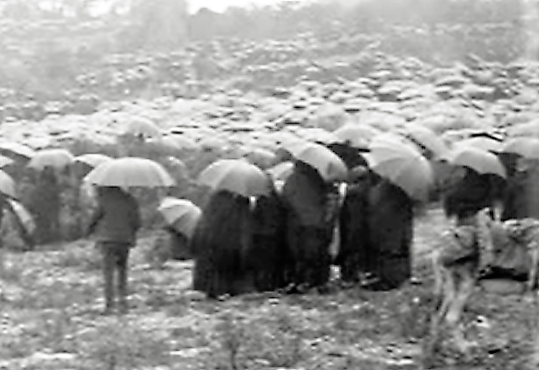
On at least two different occasions, Sr. Lucia gave the following instruction to the crowd at Fatima: “Close your umbrellas. Our Lady is coming!” In the pictures of the throngs gathered on the 13th of each month in Fatima, one can often see umbrellas. They were sometimes used to shield people from the rain, but even more often to provide shade from the strong sunlight.
“Close your umbrellas” isn’t exactly one of the more famous aspects of the message of Fatima. However, the instruction has something important to say to us, especially in these days of ease when we seem so inconvenienced by the slightest hint of sacrifice or even minor discomfort.
An umbrella is used to ward off the heat of a hot day or the soaking of the rain. The call to close our umbrella is a call to accept the sacrifices that are often necessary to purify us so that we can receive greater blessings. How many of us who are concerned with the condition of our culture and our world are willing to make sacrifices for the conversion of souls? We want things to get better, but are we willing to do things such as fast or pray the rosary daily? For us who are called to be prophets in this unbelieving time, are we willing to close our umbrella and endure the heat of scorn from those who resist our witness? Are we willing to endure the discomfort of annoyance, ridicule, indignation, or scoffing indifference raining down on us? Closing our umbrella involves accepting the sacrifices necessary to preach the Gospel.
To lower our umbrella is also a sign of humility, for in lowering it we lower ourselves; we experience our frailty, unprotected from the elements. Humility is the key to unlocking greater blessings, for if we do not lower the umbrella of our pride and close the umbrella of illusory self-sufficiency we will miss the miracle and glory of greater blessings.
Consider a mere physical fact: October 13, 1917 was a dreary, rainy day. Photos of the nearly 70,000 who gathered in Cova da Iria at Fatima show an abundance of umbrellas, testifying to the poor weather. At the critical moment, just before the miracle of the sun, when the rosary beads were finished, Lucia said, “Close your umbrellas. Our Lady is coming!” The miracle of the Sun was about to happen, but in order to see it, the people had to come out from under their umbrellas. They had to submit themselves to the rain and take up the momentary sacrifice, in order to dispose themselves to see the miracle.
Now humbly uncovered and having made the sacrifice they could see what the Lord would show. Here is an account of that day:
As if like a bolt from the blue, the clouds were wrenched apart, and the sun at its zenith appeared in all its splendor. It began to revolve like the most magnificent fire wheel that could be imagined, taking on all the colors of the rainbow and sending forth multicolored flashes of light, producing the most astounding effect. This was repeated three distinct times, lasted for about ten minutes. The immense multitude, overcome by the evidence of such a tremendous prodigy, threw themselves on their knees. … The sun, whirling, seemed to loosen itself from the firmament and advance threateningly upon the earth as if to crush us with its huge fiery weight. The sensation during those moments was terrible. … Then the light turned a beautiful blue, as if it had come through the stained-glass windows of a cathedral, and spread itself over the people who knelt with outstretched hands … people wept and prayed with uncovered heads, in the presence of a miracle they had awaited.
Thus we see that the people had to close their umbrella in order to see the miracle of the sun. This is a kind of paradigm for the whole spiritual life. If we are to see glory and experience graces it is often necessary to accept sacrifices and hardships and to humble ourselves by setting aside our self-designed protections. As long as we insist on hunkering down within our own enclosed world, we are turned inward and downward. Self-reliance too easily replaces faith and trust. We cling to our comforts rather than to the cross, which is our true ladder to glory and the key to Heaven’s gate.
What does it mean for you to close your umbrella? You will have to discern, with God, and see what it means. Perhaps it means discovering what things you are unreasonably relying on. Perhaps it means accepting some discomfort for the salvation of souls. Perhaps it means taking up a sacrificial practice such as voluntary abstinence, fasting, or additional prayers. Perhaps it is accepting a cross you already endure, but with less grumbling and complaining. Perhaps it means being willing to endure heat of other’s anger beating down upon you or the scorn of others raining down upon you as you speak up for what is true.
As an additional hint to help you discern, recall that Our Lady asked for the daily rosary. On May 13, 1917, Our Lady asked the three children, “Are you willing to offer yourselves to God and bear all the sufferings He wills to send you as an act of reparation for the conversion of sinners?”
In the end, we close our umbrella not only for our own sake, but also for the conversion of sinners. Find out what it means to close your umbrella.
Every now and then a word suddenly catches your ear, and suddenly you notice it several times in one day. You’re tempted to say, “There it is again!”
Recently, such was the case with the word “consider.”It’s just an ordinary, every-day word. Or is it? Why did it suddenly strike me so?
With my knowledge of Latin, it occurred to methat the word “consider” might have something to do with the stars, because the Latin word sidera means “stars” or “heavenly bodies.” How interesting! I’ve used the word for years and yet that thought had never crossed my mind before. As often happens, I forgot about it and didn’t investigate further.
But then in this morning’s reading from the Office, there it was again, in St. Paul’s Letter to the Romans: You must consider yourselves dead to sin but alive for God in Christ Jesus (Rom 6:11).
Okay, Lord, I got the message. You want me to consider the word “consider.”There’s something mystical and spiritual about it, isn’t there?
After prayer, I spent some time checking out my hypothesis. Sure enough, the word “consider” comes from the Latin words cum (with) and sidera (stars), yielding a meaning of “with the stars.”
Then I consulted a few dictionaries and collected the following definitions: to think about carefully, to think of especially with regard to taking some action, to take into account, to regard or treat in an attentive or kindly way, to gaze on steadily or reflectively, to come to regard.
The literal translation “with the stars” brings the word so much more alive, doesn’t it? If I were to create one, I would include this notion in my definition: to reflect on as if pondering the stars, to gaze as if with wonder and awe, to think carefully and reflectively as when one looks up and out at the night sky.
Yes, to look up and out, billions of miles out into the vastness of space, filled with innumerable stars.
To consider is to root our thoughts in the perspective of the stars. Doing so fills us with wonder and awe, reminds of the extravagance of God’s love, humbles us by the sheer vastness of all that God has done. To consider is to see by the light of God’s glory and His expansive love. To consider is to think in a way that sees the present moment as caught up in something far more than the here and now; it is to experience this moment, this place and time, as part of something far greater than we can imagine.
Thus, in Romans 6:11 St. Paul is inviting us to grasp that God’s mercy and love are bigger than any sin we may have committed. We are being summoned to look beyond the present moment and behold with wonder and awe the perfection that God has already accomplished for us.
As we behold and understand that reality, we start to live out of it now. As we cast our thoughts out among the stars, as we consider, we look outward and upward from the present reality to the glory awaiting us in Heaven. Making this consideration helps that reality begin to break into the present moment and become ever more real to us and for us.
As it breaks in, sins begin to be put to death and virtues come alive. Our life begins to change as we see beyond the present moment, where there may be weakness and pain, to the victory that is ours and is so much bigger than this mere moment. Thus we become alive to God in Christ Jesus.
All of this from one little word:consider. To reflect as if pondering the stars, to gaze as if with wonder and awe, to think carefully and reflectively as when one looks up and out at the night sky.
Yes, words are wonderful and many of them are mystical. Think about it; the stars encourage you to look up and out, to gaze beyond with wonder and awe, to consider.
It’s not a bad thing to do when seeking perspective or pondering paths, when searching for answers or meaning, when searching for God.
I was meditating on time today, precipitated by some things I have recently learned about the light of the Sun that reaches Earth.
I have long known that to look up into the night sky is to look far into the past. Looking up at the star Sirius, I am seeing 9 years into the past. Looking over at the star Antares, I am seeing 250 years into the past. And when I look the star Rigel, I am seeing 600 years into the past. Looking farther still at the Andromeda galaxy, I am seeing a million years into the past. That is how long it takes the light of these stars and galaxies to reach us! We are not seeing them as they are now, but as they were then. The past—even the distant past—is very present to us.
The light of the Sun takes 8.25 minutes to reach us. Thus we see its surface not as it is now, but as it was more than 8 minutes ago.
Yesterday, I learned that the light of the Sun is even older than I had thought. A little research on my part revealed this astonishing fact: the photons of light that reach the surface of the Sun (and then reach us 8+ minutes later) were actually generated 100,000 years ago in its core.
Emerging from the Sun’s core as the result of nuclear fusion, a photon of light enters the radiative zone. The plasma in that zone creates quite a maze for the photon to get through; it takes the better part of 100,000 years to make the journey to the convective zone and the photosphere where it finally begins a rapid journey out into the vacuum of space.
Why does it take this long? Imagine being in a large room filled with people, trying to get to the door on the other side the room. But as you try to make your way across the room, person after person strikes up a conversation with you, delaying your progress. It won’t take you 100,000 years to get to the door, but you get the idea.
Thus, the sunlight we currently bask in is much more than 8 minutes old; it’s actually 100,000 years old! The light we see today was made in the Sun’s core back during the beginning of the last ice age.
The great mystery of time is on display for us at every moment. The past is present in many ways. And our past is on display and still present as well. If anyone on a planet near Rigel were looking back through a telescope at Earth right now, he would not see us as we are today but as we were in the 15th century. The light of our “today” will not reach Rigel for 600 years.
What is the present? It depends on where you are. God, who is just as present at Rigel as He is here, has the same access to the images of 1417 as he does to those of 2017. Indeed, He is present at Andromeda just as much as here on Earth; and a million years ago is just as accessible to Him as is today.
The future is even more mysterious, but to God, the future is just as available as is the past.
Do not miss the irony of the fact that the light of the Sun (and the reflected light of the Moon), by which we measure the passage of time and tell what time it is now, is about 100,000 years old.
Does anybody really know what time it is? Only God, only God. Time is very mysterious. It seems that the more we think we know, the less we really do.
All the days ordained for me were written in your book before one of them came to be. How precious to me are your thoughts, God How vast is the sum of them! Were I to count them, they would outnumber the grains of sand—when I awake, I am still with you (Psalm 139:16-18).
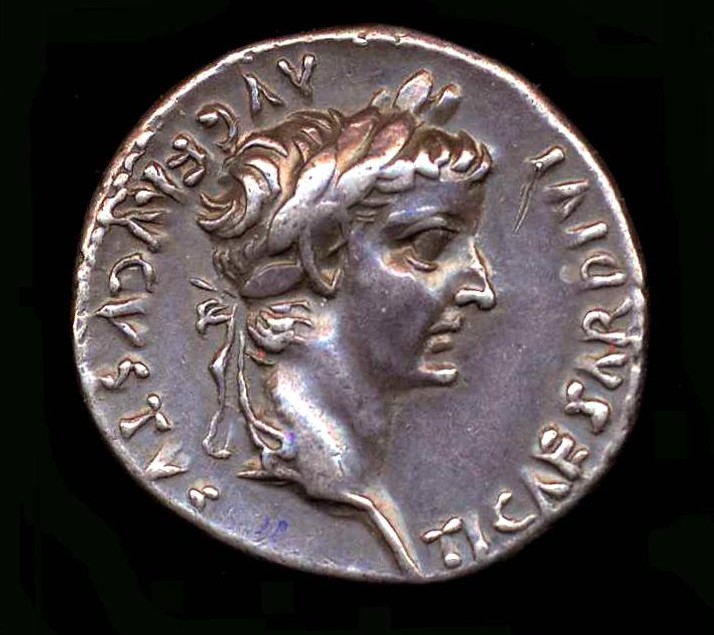
The Gospel for Sunday contains lots of interesting juxtapositions: hatred for Jesus but grudging respect, real questions vs. rhetorical ones, politics and faith, duties to Caesar and duties to God. The word “juxtaposition” comes from the Latin juxta, meaning “near” and positio, meaning “place” or “position”. Juxtaposition is the placing of two things near to each other, usually in order to see how they are similar yet different. Most often the differences are emphasized more than the similarities.
Let’s look at the juxtapositions in today’s Gospel, concentrating most of our attention on our duties to God as compared to our duties to “Caesar.”
I. The Plotting of the Peculiar Partners – The Gospel begins by describing an extremely unlikely set of “bedfellows.” The text says, The Pharisees went off and plotted how they might entrap Jesus in speech. They sent their disciples to him, with the Herodians. A very unlikely set of allies indeed. The Pharisees hated the Herodians. It was a combination of political and racial hatred, just about as poisonous as you could get in the ancient world, yet they both agreed that this Jesus fellow had to go.
Here is an important teaching: if you’re going to be a true Christian, the world will hate you. Too many Christians think that some segment of the world will agree to live in peace with us and so we strive to forge allegiances with it. In the modern American milieu, some think that the Republicans or the Democrats are natural allies, but we really don’t fit well into either party nor any worldly “club.”
Catholicism is an “equal-opportunity offender” in its unabridged form. Issue by issue We may appeal to one political party or another on a particular issue, but on the whole we’re a nuisance: we’re pro-life, traditional family values, immigrants’ rights, and affordable housing. We both please and annoy, which is another way of saying we don’t fit neatly into the world’s categories; everyone has some reason to hate us.
Welcome to Jesus’ world, in which groups who seemed to agree on nothing were aligned when it came to hating Jesus.
II. The Praise that is actually a Perilous Provocation – In their opening remarks to Jesus, His enemies give Him grudging respect. They do so not to praise Him, however, but rather to provoke Him. They say, Teacher, we know that you are a truthful man and that you teach the way of God in accordance with the truth. And you are not concerned with anyone’s opinion, for you do not regard a person’s status. Tell us, then, what is your opinion … Is it lawful to pay the census tax to Caesar or not?
The praise is largely a pretext that is used to provoke. In effect, they think they can they can force a definition on Jesus: “You’re ‘the Man.’ You’re the prophet. You’re the only one around here who tells the truth no matter what.” Now none of these things are false and they bespeak a grudging respect for Jesus.
However, they are only using this to draw Jesus into a worldly debate that is well “below his pay grade.” They want Jesus to take sides in a silly human debate over politics and worldly power. They want him to get arrested and killed over something that is not worth dying for.
Prophets die for the truth revealed by God not for who the “big cheese” should be in human affairs. They want Jesus to opine as if He were some sort of talking head on TV rather than the prophet and Lord that He is. A question of this sort is not worthy of Jesus’ attention. Ask this of the local senator or mayor but leave God out of human political distinctions and camps; do not expect Him to take sides. He is beyond our distinctions and will not be confined by party lines, national boundaries, or political philosophies.
We may well contend that certain systems of government better reflect the Kingdom than others, but in the end, God cannot be reduced to being a Republican, a Democrat, or for that matter an American. He is God and He transcends our endless debates and camps. He is not a talking head; He is God.
Generally speaking, rhetorical questions are statements or arguments posed in the form of a question. If I say to you, “Are you crazy?” I’m not really looking for an answer; I’m making statement that I think you are crazy. This is what takes place in today’s Gospel. The questioners already have their own opinions and aren’t change their minds no matter how Jesus answers. They don’t really want an answer; they want something to use against Him.
If Jesus says, “Yes, pay the taxes,” it will make Him unpopular with the crowds. If He says “No, don’t pay the taxes,” He will be arrested and likely executed.
In the end, Jesus calls them what they are: hypocrites, a Greek word meaning “actor.” And that is what they are. This whole thing is an act. This is not about discovering the truth; it is about setting a trap.
But Jesus will have none of it. He will not be reduced to human distinctions and categories. The truth He proclaims transcends the passing political order and any human power struggles. He will not be drawn into choosing sides. Rather, He will apply the rule of truth evenly to all.
Jesus is reality in the face of rhetoric, perfection in the face of politics, divinity in the face of division.
III. The Protesting of their Pretext and Pretense – Knowing their malice, Jesus said, “Why are you testing me, you hypocrites?” Not everyone who engages us is truly looking for an answer or for the truth. We cannot always know things, but Jesus surely could. Often, when engaged in a discussion about the truth of the Gospel, one discovers that authentic dialogue is not actually taking place. In that case it is permissible to merely proclaim the truth firmly, clearly, and with due charity, and then end the conversation. Jesus called them on their pretense and authoritatively announced the principle with the goal of ending the conversation and sending them away to think.
IV. The Pointed Proclamation of the Principle – Jesus says, simply, and in a way that transcends worldly “all-or-nothing” scenarios, Then repay to Caesar what belongs to Caesar and to God what belongs to God.
Such an answer elicits in us a desire for elaboration, but in our demands for more detail, we too often seek to conceal the fact that we really know the answer. We also betray the need of the flesh to specify everything so as to control and limit its impact.
If we really need a list, we might include some of the following things we ought to do in order “repay” to Caesar:
1. Obey all just laws. 2. Pay legally assessed taxes. 3. Pray for our country and its leaders. 4. Participate in the common defense based on our abilities and state in life. 5. Take an active and informed role in the political process. 6. Engage in movements for necessary reform. 7. Contribute to the common good through work (domestic or market-based) and through the sharing of our abilities and talents with others. 8. Maintain strong family ties and raise disciplined children who are well-prepared to contribute to the common good and to the good order of society. 9. Encourage patriotic love of our country. 10. Strive for unity and love rooted in Truth.
Here are some things we might include in a list of what we owe to God:
1. Adoration, love, and gratitude 2. Obedience to His Word and His Law 3. Worship 4. Repentance 5. Support of His Church by attendance at sacred worship, financial support, and sharing of our gifts and talents 6. Proclamation of his Word both verbally and by witness 7. Devoted reception of the sacraments 8. Raising our children in His truth and in reverence of Him 9. Evangelization (making disciples) 10. Preparing for death and judgment through a holy and reverent sojourn in this world.
A glance at these lists reveals that there is some overlap. One would expect this with God because He defies our human categories and distinctions. In the overlap, we see a setting forth of the great commandment of Love: that we should love the Lord our God with all our soul, strength, and mind, and our neighbor as our self (e.g., Matt 22:37). For while God is not Caesar and Caesar is not God, love unites both categories.
To love our country is to love our neighbor. To work for, support, and be involved in the common good is to love our neighbor. And to love our neighbor, whom we see, is to begin to love God, whom we do not see. Further, to seek to reform our land, secure justice, and ensure unity rooted in truth is to help usher in the Kingdom of God. To be rooted in God’s law, walk in His truth, and raise our children as strong and disciplined disciples of the Lord is to bless this country. To obey God and to walk in sobriety, love, and self-discipline is not only to render to God but also to be a good citizen.
However, it must be clear that God is and must be our supreme love. Jesus is not setting forth an equivalence here. This world is often at odds with God and thus we who would be His disciples must accept the fact that we will often be seen by this world as though we are aliens from another planet. Neither Jesus nor we should expect to fit precisely into any worldly category or club. We will be an equal-opportunity irritant to any large group. If we are going to be faithful Catholics then we must expect to be outsiders, outliers, and outcasts.
Rendering to God comes first. Too many people today, however, are more passionate about their politics than their faith. They tuck their faith underneath their politics and worldview. They are more inclined to agree with their party than with the Church or even the Scriptures. If you point that out, though, they’re likely to accuse you of violating the separation of Church and State (a phrase that does not appear in the Constitution, by the way) or tell you that unless something is infallibly defined (as they determine it) they are free to ignore the teaching of the bishops, the Pope, and/or the Catechism.
Here is the question we must ask ourselves: Do we really put God first? Is His Word really the foundation of our thoughts and views or are we just playing games? Loving this world and working for the common good are not at odds with our love for God, but submitting to worldly categories and human divisions and permitting them to drive our views is most often opposed to God, who will not simply be conformed to human political movements.
God has set forth the Catholic Church to speak for Him but He has not anointed any political movement or worldly organization to do so. No Catholic should surrender to artificial and passing distinctions or to organizations. No Catholic should permit worldly allegiances to trump what Scripture and the Church clearly proclaim. Sadly, today many seem far more willing to render to some version of “Caesar” than to render obedience and allegiance to God and to the Church, which speaks for Him. The Church is an object of faith; a political party is not. Render to God what is God’s.
This song in the video below says that God and God alone is fit to take the universe’s throne.
One of the most basic human passions is anger. Not all anger is sinful, however. One way different types of anger can be distinguished is by their object.
If the object of the anger is appropriate (e.g., injustice), then anger is an appropriate response. In the case of reacting to injustice, anger is like an energy that the soul delivers in order to address the injustice with zeal and persistence.
On the other hand, if the object of the anger is inappropriate, then so is the anger. Some examples of this would be anger generated by something petty such as a perceived slight or anger resulting from someone pointing out that we are wrong. In such cases anger is to some degree sinful because its cause is tainted.
Anger can also become sinful if it is inordinate. Even if anger’s object is appropriate, we don’t have the right to rage, strike out, or excessively vent our anger.
Anger is a passion that is hard to master. It has its place, but we must learn to curb it and uses its force for good.
In the video below, there is a humorous illustration of appropriate anger vs. excessive anger. In the first scene, a football player stirs up anger in his teammates (about an opposing team who “dares” to enter their home stadium) in order to win a football game. I know that a football game is a petty object, but allow it for illustration.
In the second scene, one of the players uses excessive anger to rid his house of a mere fly. Although the object of his anger is somewhat appropriate, the anger is excessive and ends up causes a lot of collateral damage. Be careful with your anger, even when it is just!
Scripture says, Be angry but sin not (Ephesians 4:26).
Every Person Has Unique Gifts and Belongs as a Full and Equal Participant in the Community by Mary O’Meara
As a society, there is a renewed awareness of the need to acknowledge the value of the diversity of our human family. It is encouraging to see more and more people calling for our culture to embrace all people, to draw them into the fabric of social life, and treat them as equal, full and active participants in the community. Yet, perhaps the most marginalized segment of society has been largely left out of the discussion.
Historically, persons with disabilities have found themselves if not excluded, then limited from society – on the outside looking in and seen as “other,” rather than as members of the community. Too often are they made to feel unwelcome in places and activities that are routine parts of everyday life for their “typical” neighbors. Too often do they face in society attitudes that disregard their human dignity and the positive contributions they have to offer.
While some progress has been made, much more needs to be done. For a long time we talked about persons with disabilities in terms of access, such as providing sign interpreters or ramps under the Americans With Disabilities Act, but what we need to see now is a culture of belonging and full inclusion. Our neighborhoods, schools, government agencies and our entire community should be places where everyone in their diversity – including physical, intellectual, cognitive and mental diversity – feels welcomed as contributing members without limiting or patronizing them.
One step in that process is the annual White Mass hosted by the Catholic Archdiocese of Washington, which will be held at 11:30 a.m. on Sunday, October 22, at the Cathedral of St. Matthew the Apostle.
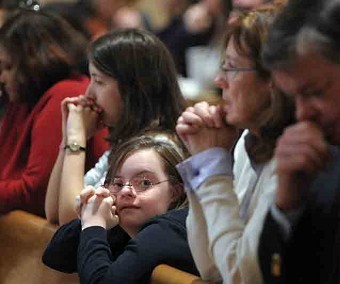
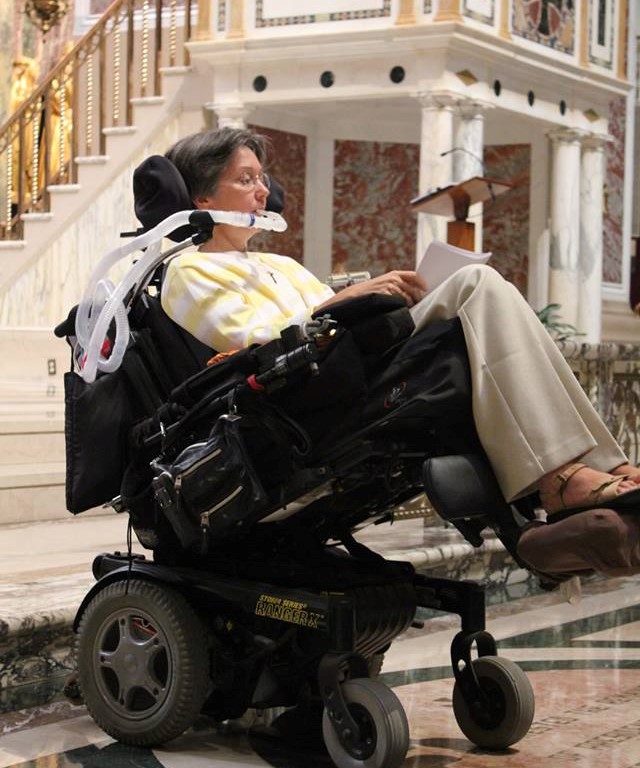
Named for the white garment worn at baptism, this liturgy celebrates the gifts and giftedness of all persons in their physical, intellectual or developmental uniqueness as integral members of the community. It is a beautiful expression of a welcoming culture where no one is an afterthought and everyone participates in the life of the community: People who are Deaf or have a disability serve as lectors, extraordinary ministers of Holy Communion, gift bearers and they lead prayers.
Beyond being a celebration of the harmony of God’s family, the White Mass is also a summons to dialogue and action to promote human dignity and inclusivity in the greater community. Human life is like a great orchestra, marked by variety and also marked by limitations. We are all different in the way we look or sound. We each have things we can do and things we cannot do. Each of us has our own qualities. And in this is beauty which benefits us all.
This difference is precious, Pope Francis reminds us. “Everyone brings his or her own, what God gave them, to enrich others.” As public awareness is raised to the need to overcome prejudice and exclusion in society, it is crucial that we treasure too as full and equal participants those who might differ in certain ways physically or cognitively.
Belonging starts here. We are all equal in dignity and we all have gifts to offer, even if some of us need support to participate more fully. We want all persons to belong. We need all persons to belong. Persons with disabilities are a positive presence in society. Ensuring that everyone with their uniqueness truly belongs starts with each one of us.
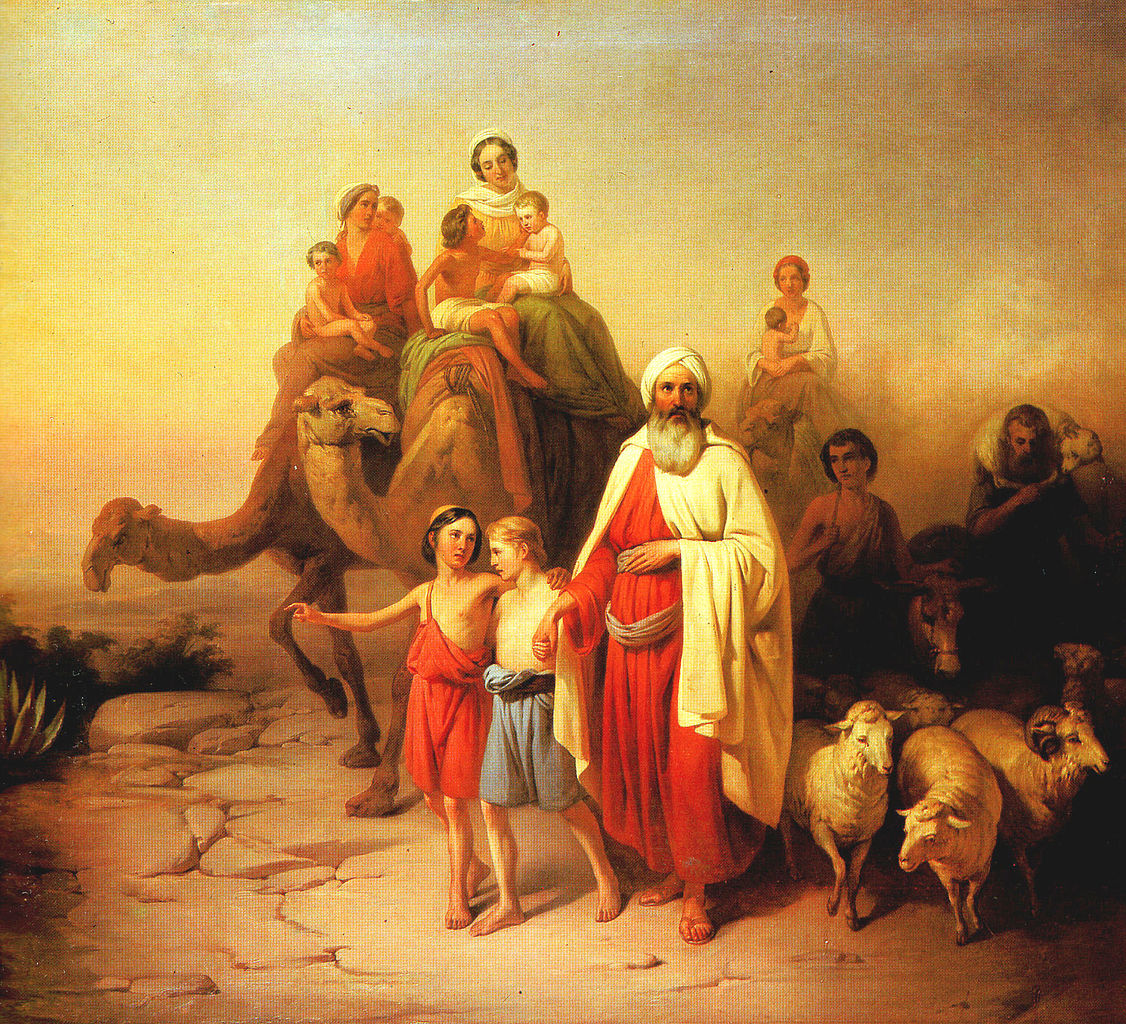
In the reading at daily Mass for Friday of the Twenty-eighth Week in Ordinary Time, St. Paul speaks of Abraham’s faith. Abraham did come to strong faith, but it took time!
One of the beautiful things about the Bible is that it does not present epic figures who never fell. Rather, it presents us with authentic human beings who struggled and eventually “got there.” As an example, I was talking the other day with someone who remarked, “Too bad we can’t all be strong in faith like Abraham.” Ah, Abraham, the paragon of faith! Well that was true eventually, but Abraham had some very bad moments in his journey that we ought not to overlook. Surely he became strong in faith, but only after some pretty bad falls along the way. Consider some of Abraham’s struggles.
ImperfectInitiation – Abram (God called Abraham later on) was told, “Leave your country, your people, and your father’s household and go to the land I will show you” (Gen 12:1). And he does. On one level this is remarkable because God didn’t give him any directions; He just said, go, and Abram went, trusting that God would direct him. Notice a little detail, though, that I would argue amounts to a lack of total obedience: So Abram left, as the LORD had told him; and Lot went with him (Gen 12:4). How did his nephew Lot get included? Some may argue that this is no big deal, but for the record, God did not mention Lot in His instructions to Abram. Sure enough, Lot’s presence causes trouble later on. There is always trouble lurking when we do not obey God completely.
WaywardWanderer – Abram gets to the Holy Land and God shows him its beauty. He reconnoiters the land and eventually pitches his tent near Bethel, a name that means “house of God.” So there he is right where he ought to be: in the House of God, on the Land God showed him (cf Gen 12:5-9). There is only one problem: there is a famine in the land. Will Abram trust God, who called him to this land? No! He goes off to Egypt (Gen 12:10), trusting Pharaoh—not God—to feed him. God never said, “Go to Egypt.” It is quite ironic that Abram leaves a place called Bethel (house of God) to go to the house of Pharaoh.
Fearful Foolishness – In Egypt, Abram does something awful. His wife Sarai (only called Sarah later in the narrative) is very beautiful; Abram is worried that men will want her and thus kill him, her husband, so that they can have her. Abram lies and claims that Sarai is his sister; he convinces her to say the same (Gen 12:11-13). Abram even goes so far as to allow her to be placed in Pharaoh’s harem (Gen 12:14-16). This is all to protect his own hide and to gain influence. Let’s just make it plain: he “pimps out” his own wife! Pharaoh eventually discovers the lie and, suffering its consequences (severe plagues), denounces Abram (Gen 12:17-19). In effect, Pharaoh fears God more than he does Abram. It takes Pharaoh to get Abram to go back to where he belongs. Abram returns to the Holy Land, to Bethel, not because of his faith but because of Pharaoh’s threats (Gen 12:19-20).
Confusing Consequences – At least Abram is back where he needs to be, in Bethel, right? Well, now the Lot mistake manifests itself. Abram and Lot actually did quite well in Egypt; they with flocks so large that the land cannot sustain them both together (Gen 13:1-8). Notice that Holy Land could sustain Abram, but not Abram and Lot together. This hearkens back to the original disobedience of Abram in bringing Lot in the first place. Lot and Abram agree to part company and Lot picks the choicer part of the land (where the Dead Sea is now) (Gen 13:8-12). Problem solved, right? Not exactly. The text says that Lot pitched his tent toward Sodom (Gen 13:12). You know where all that is going to lead! In the end, it will be another distraction for Abram, who brought Lot along when he shouldn’t have. Lot shows bad judgement; he shouldn’t be associating with the wicked in Sodom and Gomorrah. All of this draws Lot into a big mess in which his family is corrupted. Lot’s wife cannot turn her back on Sodom and is killed; his daughters later trick him into impregnating them (Gen 19:30ff). All of this is a distraction for Abram, who should never have brought Lot along in the first place.
Faltering Faith – God promises Abram and Sarai many descendants, but both of them falter in faith several times with regards this. Abraham’s first struggle comes when, after many years of promises from God, no child has yet been born. Abram says “… what good will your gifts be, if I keep on being childless and have as my heir the steward of my house, Eliezer? … [Y]ou have given me no offspring, and so one of my servants will be my heir.” God responds, “No, that one shall not be your heir; your own issue shall be your heir” (Gen 15:1-4). Later, Sarah, also despairing that God can ever deliver on His promise, suggests adultery to Abraham, and proposes that he sexually exploit Hagar, her slave girl, and have a child by her. And he does! (Gen 16:1-4) Hagar gives birth to Ishmael, setting off ugliness between Hagar and Sarah (imagine that!) (Gen 16:4-6). God once again has to rebuke Abraham and remind him of His promises. Later, Sarah, paranoid over Hagar’s exalted position as the mother of Abraham’s first born child demands that Abraham commit an act of great injustice and to drive Hagar and Ishmael into the desert (Gen 21:9-14). And he does!
Derisive Doubt – God renews His promises to Abram and Sarai and changes their names (to Abraham and Sarah) by entering into a covenant with them (Gen 17:1-15). As God renews His promises for many descendants, Abraham prostrates himself and laughs (Gen 17:17). Later, Sarah laughs at the promise as well (Gen 18:12). Finally, Sarah gives birth to Isaac (a name that means “He laughs”), which commemorates the struggle of Abraham and Sarah to believe what God told them.
Do you see? Abraham’s journey was marred by some pretty ugly setbacks, but ultimately Abraham did come to believe God. He receives the fruit of faith in his son Isaac. God prepares one final test to strengthen Abraham’s faith (Gen 22). He tells him to offer his son as a sacrifice. This time, Abraham does not hesitate. He sets out for Moriah, determined to obey God. Isaac asks, Where is the lamb for sacrifice? (Gen 22:7) Abraham has finally made it to faith; he simply responds, God himself will provide the lamb for the sacrifice (Gen 22:8). Abraham has arrived. He has come to trust God and knows that obeying Him will not be without its reward. And God did provide the lamb, as you well know.
Abraham didn’t simply “have faith.” He had to get there through years of struggle, setbacks, and hard lessons. He had to learn that to obey God brings blessings, but to disobey God brings trouble. Abraham learned that God means exactly what He says and that he should trust Him in all things. If Abraham, the great hero of faith, had to go through all of this to arrive at faith, maybe there is hope for us! We, too, are summoned to learn of faith and grow in it. We are called to obey more and more perfectly and to stop trying to improve on God’s plan. Abraham’s example isn’t just a relief for us who struggle; it is also a road map, telling us what we must do. Faith has to grow and we have to let it.
Here’s an old gospel song that says, “A saint is just a sinner who fell down and got up.” Maybe there is hope for us, too—provided we get back up.
We continue to read from St. Paul’s Letter to the Romans in daily Mass. In today’s reading, we learn that we are justified by faith apart from the Law. The debates about faith and works are often the result of varied interpretations of today’s text.
One of the sources of confusion is a failure to understand the deeper point: that we are saved by Jesus Christ. It is by being put into a saving relationship with Him that we are saved. This relationship changes us; it affects what we do and do not do. Thus our works change, but it is as a result of the relationship with the Lord. Catholics and Protestants often talk past each other on this topic. It is not simply faith, or faith and works, it is Jesus to whom we must look.
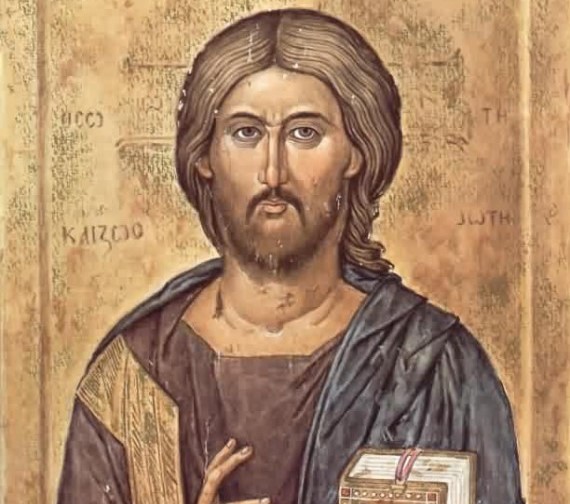
Another confusion is over what we mean by the Word of God. It does not just refer to a book we call the Bible. Reading the Bible is a good thing, but meeting the Lord there is deeper and better. Many people think of the Word of God as an “it” when in fact the Word of God is a person, Jesus Christ. Jesus did not come merely to give us information and to exhort us. He came to give us His very self. Jesus is the “Word made Flesh.”
Pope Emeritus Benedict XVI made this point in his post-synodal apostolic exhortation, Verbum Domini.
[There is a] statement made by the author of the Letter to the Hebrews: “In many and various ways God spoke of old to our fathers by the prophets; but in these last days he has spoken to us by a Son, whom he appointed the heir of all things, through whom also he created the world” (1:1-2). … Here the Word finds expression not primarily in discourse, concepts, or rules. Here we are set before the very person of Jesus. His unique and singular history is the definitive word which God speaks to humanity. We can see, then, why “being Christian is not the result of an ethical choice or a lofty idea, but the encounter with an event, a person, which gives life a new horizon and a definitive direction.” … “the Word became flesh and dwelt among us” (Jn 1:14a). These words are no figure of speech; they point to a lived experience! Saint John, an eyewitness, tells us so: “We have beheld his glory, glory as of the only Son from the Father, full of grace and truth” (Jn 1:14b). … Now the word is not simply audible; not only does it have a voice, now the word has a face. (Verbum Domini 11-12).
The Word of God is not merely words on the pages of a book. The Word of God is not just an idea or an ethical system. The Word of God is not just a set of teachings or doctrines. The Word of God is Jesus Christ. In order to really grasp this Word, we cannot read ink spots on a page, we must come to know Him, and experience Him and His power active in our lives.
It is dangerous to turn Scripture into an abstraction or to treat it as just a text. St Thomas Aquinas wrote, The Son is the Word, not any sort of word, but one Who breathes forth Love. Hence Augustine says (De Trin. ix 10): “The Word we speak of is knowledge with love.” Thus the Son is sent not in accordance with [just] any kind of intellectual perfection, but according to the intellectual illumination, which breaks forth into the affection of love, as is said (John 6:45): “Everyone that hath heard from the Father and hath learned, comes to Me” (Summa Prima Pars, 43.5 ad 2).
Hence we cannot really grasp Scripture unless we come to know Jesus Christ. Further, to authentically read Sacred Scripture is to encounter Jesus Christ there. Before we analyze a passage from Scripture we are summoned to encounter the One who is speaking to us.
It is surely possible for some people, even secular scholars, to analyze a Greek text of Holy Writ and translate it into English (or another language). Some scholars can analyze the idioms used or the historical context. Such research can help us to understand what a particular passage is saying on one level, but only a deep, personal knowledge of Jesus Christ can help us to know what the text really means. It is this personal, communal, historical, and ongoing encounter with Jesus Christ that distinguishes true theology from mere literary analysis or religious study.
Indeed, theologians and Scripture scholars can be dangerous if they do not personally know Jesus Christ. Knowing Jesus is not the same as knowing about Him. I might know about Jesus Christ from reading a book or from being told by someone, but this is not enough; I must know Him. Being a true authority in Scripture requires meeting and knowing the author. Do you notice that the word “author” is in the word “authority”?
Note how Pope Emeritus Benedict quotes the Prologue of John’s Gospel: “the Word became flesh and dwelt among us” (Jn 1:14a) and then continues on to say, These words are no figure of speech; they point to a lived experience! He also says, in reference to the passage from Hebrews 1, Here we are set before the very person of Jesus.
In the liturgical context of Scripture, this fact is enshrined in our ritual. As the priest or deacon proclaims the Gospel, the congregation stands out of respect. For it is Christ Himself who speaks to them and whom they encounter in this proclamation of the Word. At the conclusion of the proclamation of the Gospel, they acknowledge that they are encountering Jesus as they say to Him personally, Laus tibi Christe (Praise to you Lord Jesus Christ).
Scripture and the wider concept of the Word of God authentically interpreted by the Church, is not merely a book or a set of ideas. It is an encounter with a living God, the Lord Jesus Christ. The Word of God is a person, Jesus Christ.
Perhaps a couple of short stories will help to illustrate the difference between seeing Scripture as merely a text, and seeing it as an encounter with the Word made Flesh, Jesus.
A rural Appalachian community was visited by a Shakespearean actor. They were amazed at his elegant but strange way of speaking. At one point in his public recital he recited the 23rd Psalm. His speech was elegant, the words pronounced in finest King James English and presented with great drama and flair. At the end of his recitation a strange, awkward silence filled the room rather than the usual applause. Finally, a poor farmer in the back of the room stood up and apologized, saying that the only reason no one had applauded was that they weren’t sure he was done. “See, out in these parts we say it a little different.” The poor farmer began, “The Loerd is mah shayperd …” When he finished, the room was filled with shouts of “Amen” and “Praise the Lord.” The Shakespearean actor then told the poor farmer, “I was elegant, but your words had greater power. That is because I know only the technique, but you know the author.”
Some years ago I heard an African Methodist Episcopal Church (AME) preacher address an ecumenical gathering. He said to those in attendance, “You know I heard some strange stuff in seminary! The professors said that Jesus never really walked on water, that He didn’t really multiply loaves and fishes, He just got folks to be generous. They said that He didn’t really know He was God, that He didn’t really rise from the dead. He just lives on in our thoughts or something. Can you believe they taught me that in a Christian seminary?” Throughout his description of these wretched “teachings,” the disapproval in the gathering of Protestants and Catholics was audible. As he relayed this litany of faulty scholarship you could hear people saying, “Lord have mercy!” and “Mah, mah, mah.” Then the preacher stopped, mopped his brow, looked at them, and said, “I’ll tell you what. The problem with them wasn’t that they read the wrong books, y’all. The problem with them was that they ain’t never met my Jesus!” Well the house just about came down; folks were on their feet for ten minutes praising God. The choir stood up and began this familiar chorus: “Can’t nobody do me like Jesus; He’s my Lord!”
Well, you get the point. When you’ve met Jesus Christ you just don’t doubt that He walked on the water, multiplied loaves, raised Lazarus, knew perfectly well that He was God, and stepped out of the tomb on Easter morning.
The Word of God is not merely a text; It is a person, Jesus Christ, the Logos, the Word made Flesh. Once you’ve met Him, His spoken (and later written) Word begins to make greater and greater sense and there is just no doubt that this Word is true and powerful.
I’ll let Pope Emeritus Benedict provide the concluding words to today’s post: … the Word finds expression not primarily in discourse, concepts, or rules. Here we are set before the very person of Jesus. … These words are no figure of speech; they point to a lived experience! Saint John, an eyewitness, tells us so: “We have beheld his glory, the glory as of the only Son from the Father, full of grace and truth.”

 On at least two different occasions, Sr. Lucia gave the following instruction to the crowd at Fatima: “Close your umbrellas. Our Lady is coming!” In the pictures of the throngs gathered on the 13th of each month in Fatima, one can often see umbrellas. They were sometimes used to shield people from the rain, but even more often to provide shade from the strong sunlight.



.jpg)