With the Feast of St. Francis upon us we do well to thank God for many things. It is a tradition in many parishes to bless animals on this feast. It is also a good time to ponder what our pets and animals can “teach” us.
In the past I have shared a list of things we can learn from dogs. When I was growing up, we always had a dog, so although I did not compose the list below, I can vouch for its accuracy.
Over my years of city living as an adult, I have grown accustomed to having cats (they are great mousers in old rectories). So, I set my thoughts toward composing a similar list of what I have learned from cats. They are such independent and self-assured animals! They really let you know who’s boss but mitigate their arrogance somewhat with clownish play and affectionate head-butts.
God speaks to us in all of creation, including our pets, to whom we are often so close. What is God saying? Many things!
Here is my list of what I have heard God say through the cats I have loved over the years: Tupac, Katy Bell, Jenny June, Gracie Girl, Rita Hayworth, Ellen Bayne, Jerry McGuire, Benedict (Benny), Daniel, and Jewel. Some of them lived in the alley and a few in the house, but they have all taught me things. Here some pearls of wisdom they conveyed:
If you can’t get your way, lie across the keyboard until you do. (Be persistent.)
Keep them guessing with meows and long looks to keep their attention. (Mystery attracts.)
When you’re hungry, meow loudly so they feed you just to shut you up. (Get your needs met.)
Always find a good patch of sun to lie in. (Simple pleasures have their place.)
Life is hard and then you nap. (Be well-rested.)
Climb your way to the top; that’s why the curtains are there. (Be resourceful and creative.)
We are Siamese if you please. We are Siamese if you don’t please. (Be yourself.)
Purr often and use head-butts judiciously. (Express gratitude.)
Sleep on their clothes and personal items so as to leave your scent. (Forget-me-nots have their place.)
Use your litter box. (Be clean and polite.)
Be a mouser. (Earn your keep.)
Clown around and do silly stuff. (Be humble.)
Run around wildly for no apparent reason; chase toys and laser pointers. (Exercise often.)
Rest in hidden places. (Solitude has its place.)
The following list of things we can learn from dogs has been making the rounds on the Internet for years, but it really is rather instructive. Dogs do have a lot to teach us, and I thank God for the dogs to whom I have been close over the years: Prince, Missy, Molly, Taco, Salsa, Chili, Kaila, Lucy, Clancy, and many others. And again, although others compiled this second list, I can affirm through much experience how true it is!
Fifteen things we can learn from dogs:
Never pass up the opportunity to go for a joy ride.
Allow the experience of fresh air and the wind in your face to be pure ecstasy.
When loved ones come home, always run to greet them.
Let others know when they’ve invaded your territory.
Take naps and stretch before rising.
Run, romp, and play daily.
Eat with gusto and enthusiasm.
Be loyal.
If what you want lies buried, dig until you find it.
When someone is having a bad day, be silent. Sit close by and nuzzle them gently.
Thrive on attention and let people touch you.
Avoid biting when a simple growl will do.
When you’re happy, dance around and wag your entire body.
No matter how often you’re scolded, don’t buy into the guilt thing and pout. Instead, run right back and make friends.
Delight in the simple joys of a long walk.
Happy Feast of St. Francis!
All creatures of our God and king
Lift up your voice and with us sing,
Alleluia! Alleluia!
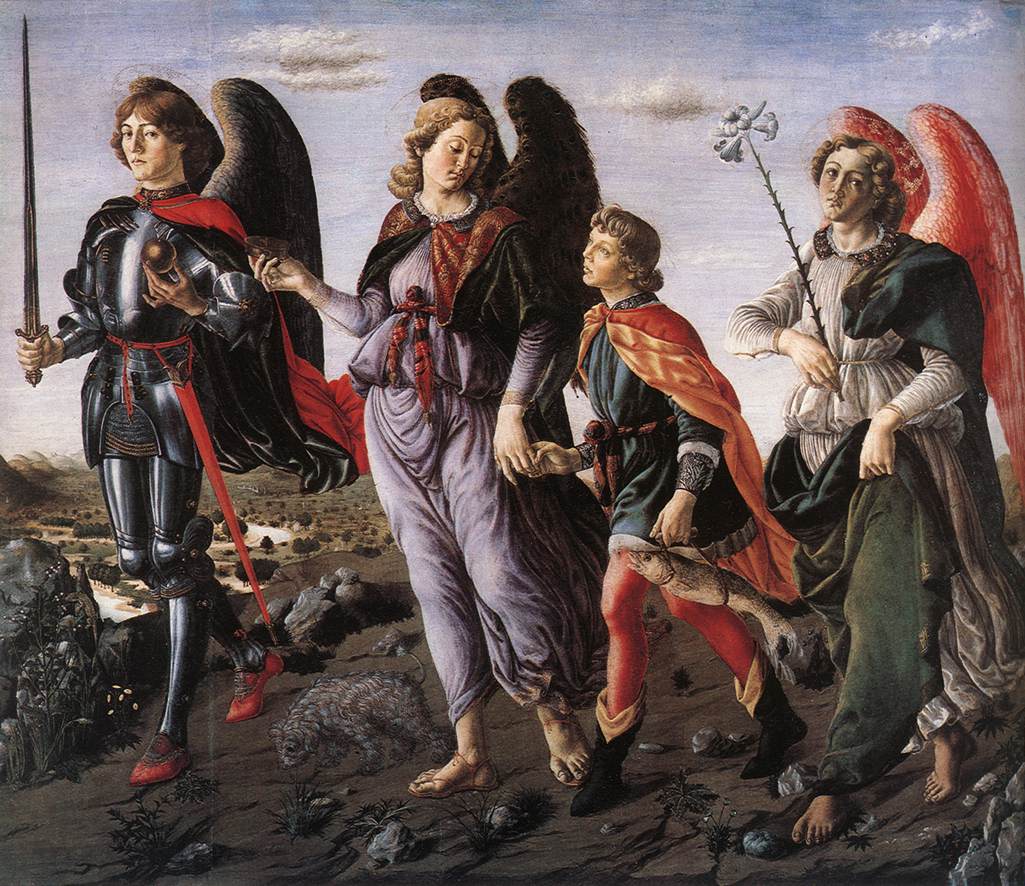
The Feast of the Guardian Angels, celebrated on Tuesday, seems an appropriate time to point out that the common practice of naming one’s guardian angel should be avoided.
A document authored by the Congregation for Divine Worship and the Discipline of the Sacraments in 2001 states, “The practice of assigning names to the holy angels should be discouraged, except in the cases of Gabriel, Raphael, and Michael, whose names are contained in Holy Scripture” (Directory on Popular Piety in the Liturgy: Principles and Guidelines, # 127).
While the Congregation does not offer reasons for discouraging the practice, I would like to offer two of my own.
First, there is the understanding of what a name is. For most of us in the modern Western world, a name is simply a sound by which we are addressed. In the ancient biblical world, and even in many places today, a name has a far deeper meaning; it describes something of the essence of the person. This helps to explain the ancient Jewish practice of naming an infant on the eighth day. The delay gave the parents some time to observe the baby’s nature before deciding on a name. Most biblical names are deeply meaningful and descriptive. It is presumptuous to think that we can know enough of the essence of a particular angel that we can assign a name. Hence, naming our guardian angel seems inappropriate.
Second, assigning a name indicates some superiority over the one named. Parents rightly name their children because they have superiority over them. Angels, however, are superior to us. Even though we often speak of angels as serving us, they do this on account of their superior power and to act as our guardians. Thus, God commands us to heed the voice of our guardian angel (cf Ex 23:20-21).
Whenever I mention this admonition to refrain from naming guardian angels, it seems to stir up controversy. Nevertheless, naming an angel seems problematic and is to be discouraged. As for the name being revealed to you, let me respectfully offer that this is not likely the case. It seems unlikely that an angel or the Holy Spirit would act contrary to the directive of the Church herself, graced to speak for Christ. Further, I would be willing to bet that we could not even pronounce the true names of our angels because their names are mysterious!
Consider, too, the silence in the following Scripture passage, when Jacob asked the name of the angel who wrestled with him: Then Jacob asked him, “Please tell me your name.” But he said, “Why is it that you ask my name?” And there he blessed him (Gen 32:29).
In other words, if you ask the name of your angel the likely response is a rebuke followed by silence. There are some things we need not know.
Interestingly enough, God entrusts us with His name and some of His titles. Enjoy this old classic, but notice that the actual name of God, יְהֹוָה, is not uttered.
God most often works through His angels; He mediates His presence through them. Why is this? He is of course all-powerful and therefore does not need the mediation of the angels, but He does seem to will it. It is common in both Scripture and doctrinal traditions to ascribe to the angels the work of mediating God’s presence and messages.
Scriptures assert this. At times, such as when Jacob wrestles with God, it is not clear whether it is an angel or God (Genesis 32:22-32); Abram greats three angels but calls them “Lord” (Genesis 18). At other times, it is clearly an angel that people such as Joshua (Joshua 5:13-15), Tobit (Tobit 12), and Mary (Luke 1) encounter. These angels speak for God and mediate His presence but are not God. Throughout the Book of Revelation, angels are sent forth to mediate God’s justice. In many places in Scripture, we are told by the Lord heed the voice of the angels who are sent to guard and guide us.
In the sacred Liturgy (Roman canon), the ministry of the angels is spoken of in connecting our sacrifice to the true altar in Heaven. The Book of Revelation describes how the heavenly and earthly liturgy is the work of angels and men. Angels bring the prayers of the saints before God and minister at the altar of incense.
There are numerous other passages and teachings that I could present, but suffice it to say that God, though almighty, all-powerful, and omniscient, most often chooses to mediate His presence to creation through the work of the angels.
An example may help to illustrate a likely reason. The laptop computer on which I am typing is not plugged directly into the wall outlet; its delicate circuitry cannot endure the 110-120 volt alternating current; it would blow out. Instead, an adaptor between the laptop and the wall outlet mediates, reducing the voltage to 19 V. direct current. Similarly, direct encounters with God may well be impossible for us on this side of the veil unless God hides His face or mediates His presence through the angels and/or the sacraments.
For us and for all of His creation, the ministry of the angels is a great mercy of God. Doctrinal traditions emphasize the ministry of the angels in mediating all of God’s providence. The highest angels minister in God’s Heaven, other ranks of angels minster the cosmos, and still other ranks minister here on earth. Nations, cities, local churches, and individuals have presiding angels. The Book of Revelation describes angels controlling winds and earthquakes as well as executing God’s justice and authority over history and events. Angels mediate God’s providence and sustenance throughout the whole of creation. We seldom talk or even think this way today.
Let’s consider another example. In explaining how a large passenger airplane rises off the runway, a scientist would speak of lift and thrust. The angle of the wing creates an area of lower air pressure above the wing and higher pressure beneath. Combine this with enough thrust to overcome gravity and you have the lift required for the plane to take off. However, a theologian from the Middle Ages might simply say, “the angels lift the plane.” In a certain sense both explanations are correct. If God sustains all of creation, and if He mediates His actions through the angels, it is not incorrect to say that the angels lift the plane, just as they serve God in all His creation. The theologian speaks to the metaphysical while the physicist speaks to the physical/material.
Yet there are many today, even among believers, who scoff at ascribing so much (or anything at all) to angels. To them one must point out that physics and mechanics alone cannot fully answer the legitimate questions that arise as we watch the plane take off into the sky. Science is good at answering mechanical questions and quantifying things such as force and lift but it is not able to answer deeper questions such as why, from what, or for what ultimate reason things exist. Why are things the way they are and not some other way? Where does the order and intelligibility of the material world come from? How is the world sustained in a steady-enough state that we can interact with it reliably and depend upon its laws and order? In fact, why is there anything at all?
There are deeper realities to things than the mere mechanics, and many of the mechanics are not even fully explained or understood. Science still has not explained all the physical mysteries of a plane’s vertical rise.
Perhaps the deepest mystery at the physical level is gravity. We can quantify this force, but its presence in the physical order is mysterious and even counterintuitive. Why do objects attract one another? How does this attractive force work? Are there invisible strings that pull us toward the earth or other large bodies? What is it about gravity that affects time, as it seems that it does? There are not definitive answers. That gravity exists and can be measured is clear, but precisely what it is and how it works is not.
We may one day uncover gravity’s secrets, but this still does not satisfy our legitimate metaphysical questions. Simply scoffing at or being dismissive of the ministry and existence of angels (or demons, for that matter) does not do away with our questions. The existence of order, intelligibility, and predictability present questions that cannot be sidestepped. Who or what ordered creation so that we can discover its order and its laws? If creation can speak to our intelligence by its intelligibility, what intelligence introduced it there to be discovered? If creation moves from simplicity to complexity, how do we explain this when it seemingly violates the physical principle that entropy always increases?
Granted, simply saying, “the angels do this” amounts to a kind of “God of the gaps” argument (wherein every unknown thing is simply ascribed to God), but completely dismissing the role of the angels (and ultimately the role of God) is to fall into the opposite error of scientism, which holds that everything can and must be explained by physical/mechanical causes. This cannot explain why things exist at all, nor can it speak to metaphysical concepts that are real but nonphysical such as justice, beauty, infinite longing, or our sense of good and evil.
God interacts with His creation. It is revealed to us that He does this most often, if not exclusively, through His angels. This is not to deny that the material order has observed laws and that chains of material causalities can be measured and observed. The theological world would remind us to reverence all the orders of creation: physical and metaphysical, material and spiritual.
Blessed be God, who created all things through His Word, His Son Jesus, who holds all creation together in Himself (Col 1:17). Blessed, too, be the angels, who mediate God’s interaction with His creation and are His ministers. Blessed also is the created world, from the tiniest parts of atoms to the largest galaxies. Yes, blessed be God, all His angels and saints, and all that He has ordered and sustained. Blessed are we, who by God’s gift of our intellect, can observe and understand the beauty, order, and laws of His creation.
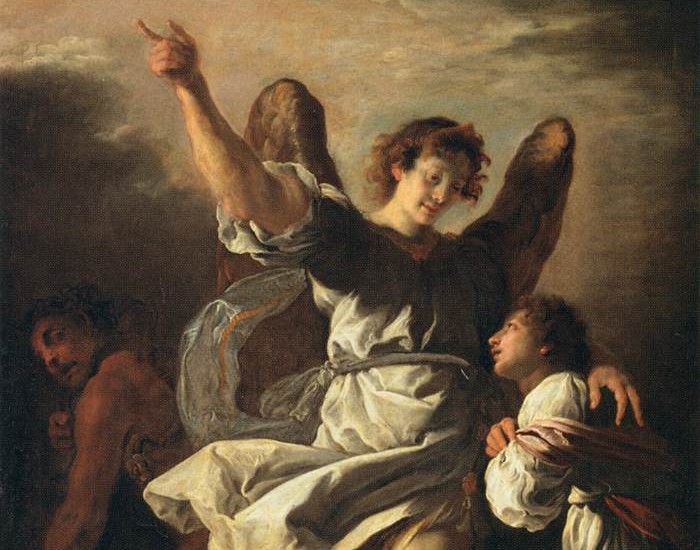
May you, O Lord, keep us humble and fill us with wonder and awe. Help us remember that knowledge puffs up, but love builds up. (1 Cor 8:1). Thank you for your angels. Keep us mindful that although they are hidden from our eyes, myriad angels mediate your presence to this world and are at work all about us in your creation and unto your highest heavens. May Raphael and all the angels witness to our prayers and actions before you, and may they bring your graces to us swiftly. May the angels one day lead us to paradise.
Recently I wrote about the need to recover a vocabulary of sin and posted an example related to lying. A good number of readers asked for the other lists I have been compiling. I include them here along with introductory material similar to that in the first post. These lists are always a work in progress, so please feel free to send me any additions you have.
Indeed, over the years we have steadily been losing the vocabulary of sin. Saying “I have sinned” is often replaced by “I made a mistake,” or “I made a poor decision,” or “I’m sorry if my behavior was hurtful in some way.”
Not only are we slow to say we have sinned, we are also ignorant of the subtleties of sin, in part because our vocabulary about sin is so limited. In this state we lose a certain advantage over sin because to name something is the beginning of isolating it and having increasing authority over it. When I can name something, I can focus on it and work on it. It moves from the realm of the abstract and theoretical to the real world.
Over the years I have been compiling lists of the names for various sins. I do this as an outgrowth of deliverance ministry, in which the importance of naming demons cannot be overestimated. Most demons resist disclosing their names mightily because once the exorcist knows the name of a demon, his authority over it is magnified in Jesus.
This is also true in the ordinary situations of life, where demons tempt us, and where the world and our own flesh compound the problem. The more we can name the subtleties of sin the less difficult it is to gain mastery over them.
There are not many people who will call themselves sinners easily. They have very little awareness of subtleties of sin. Most will say things like this: “I don’t tell lies—at least not big ones,” “I’m not really that prideful,” or “I’m not that narcissistic, at least not as much as so-and-so is.” In the case of fear or low self-esteem, many don’t see it as sinful at all. We consider ourselves victims of these drives and fail to recognize how many sinful actions proceed from them. It’s hard to get far into these lists without realizing that such drives are alarmingly common to us, even if by other means and words. Don’t be discouraged; pick a few and work on overcoming them. Naming them gives us focus and power; by God’s grace, progress can be made by naming the demons that serve these evils.
Pray this prayer: “All evil thoughts and demon-spirits, we name you and reject you in the name of Jesus. We ask every grace from God to be rooted in His truth about who we are and out of this proper vision to do and say what is right, not what is evil, self-serving, or harmful. Jesus, you said, ‘I am the Truth.’ Live in us and drive from us all that is not true.”
Many exorcists use lists like the ones below against demons that refuse to state their name. In effect, the exorcist says, “If you won’t tell me your name then I will name you.” This typically causes the demon great pain in addition to that caused by the reading of the Rite of Exorcism itself.
For all of us, naming the drives of sin has a similar effect. It brings them out of obscurity and into the light of reason where their darkness can be scattered. It takes time, but these drives will surely diminish if we name them and consistently rebuke them when they arise.
Here, then, are all the lists of words and phrases I am currently compiling:
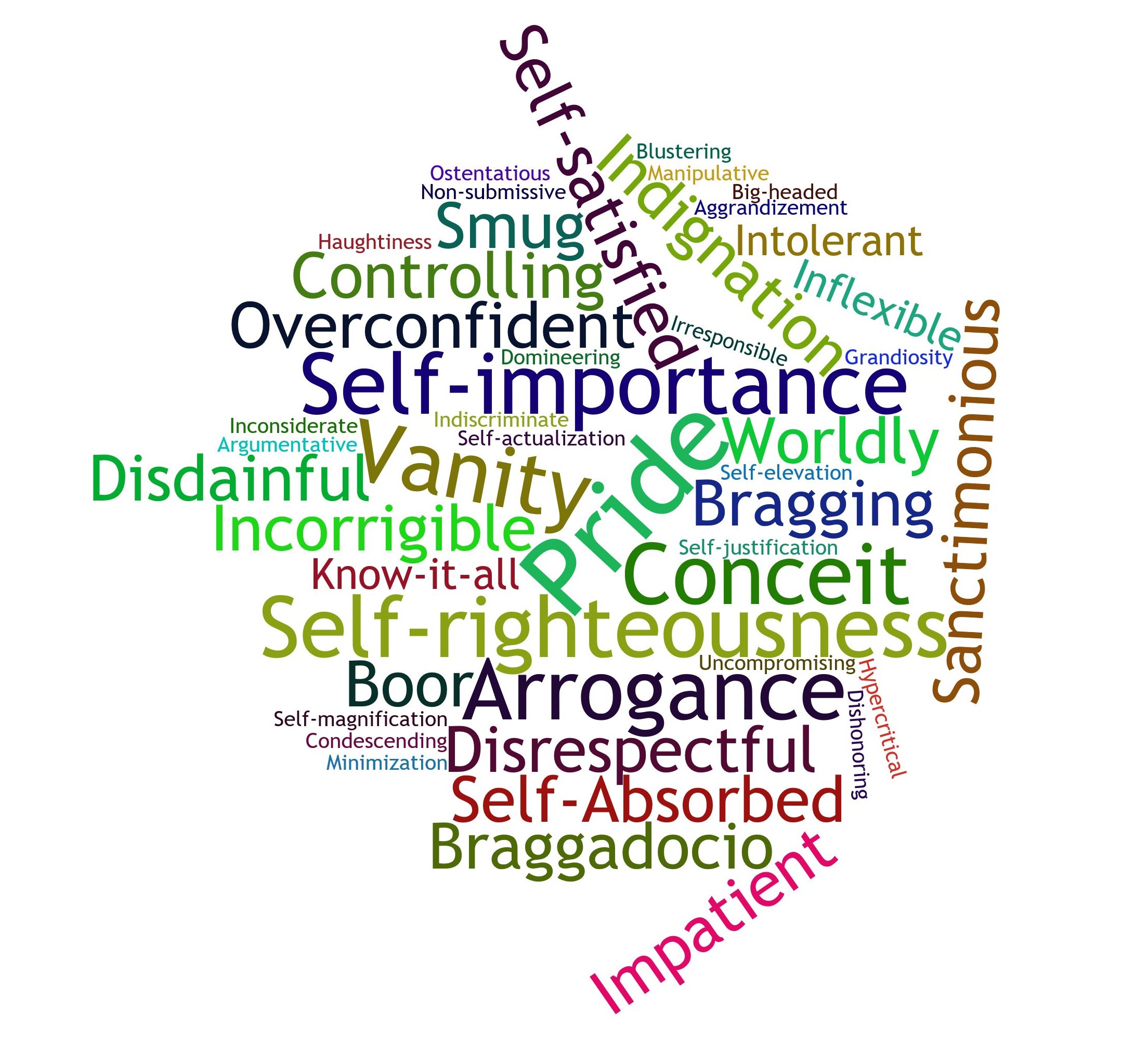
Pride:
Boasting, Conceit, Bragging, Haughtiness, Arrogance, Detraction, Aggrandizement, Braggadocio, Puffery, Grandiosity, Self-importance, Imposing, Obdurate, Judgmental, Wrath at God, Pride of vocation, Pride of place, Nursing wounds, Insolence, Rudeness, Vanity, Vainglory, Superiority, Indignation, Self-righteousness, Resistance, Non-submissive, Repelling, Open ears to evil, Politicizing, Polarization, Supremacy, Preeminence, Defiance, Challenge, Opposition, Antagonism, Spoiled, Snooty, Incorrigible, Willfulness, Worldly success, Worldly achievement, Prowess, Fanaticism, Radicalism, Self-magnification, Self-satisfied, Overconfident, Opinionated, Machismo, Egotism, Unspiritual, Competitive, Bloated, Controlling, Manipulative, Dominating, Domineering, Raw power, Exalted feelings, Scheming, Plotting, Dishonoring, Disproving, Discrediting, Argumentative, Contrarian, Playing devil’s advocate, Cunning, Conniving, Condescending, Idolatry, Intellectualizing, Self-actualization, Self-elevation, Comparison, Envy, Party factions, Minimization of sin, Unruly, Wild, Shocking, Ostentatious, Portentous, Pretentious, Showy, Free-spirited, Indignation, Spiritual superiority, Supervisory, Regulatory, Grandiose, “It’s beneath my dignity,” Self-justification, Refusal to forgive, Indiscriminate sermonizing, Excessive correction of others, Touchy, Hypercritical, Sacrilegious, Blithe, Unconcerned, Dismissive, Disdainful, Disrespectful, Flippant, Trivializing, Exorbitant, Scornful, Poverty of Judas, Pharisaical, Sanctimonious, Contemptuous, Smug, Lawlessness, Supercilious, Grudging, Big-headed, Patronizing, Pompous, Stubborn, Immovable, Inflexible, Intransigent, Obstinate, Uncompromising, Unyielding, Controlling, “Only I can do it,” Workaholic, Arrogant expertise, Sinful curiosity, Demand to know, Insistent on rights, Bullying, Aggressive, Pig-headed, Impatient, Refusing to wait, “I am more important,” Bigotry, Racism, Chauvinism, Inconsiderate, Careless, Intolerant of others’ weaknesses and foibles, Noncompliant, Dissenting, Recalcitrant, Incorrigible, Unreasonable, Ungrateful, Arbitrary, Churlish, Coarse, Impolite, Truculent, Aggressively defiant, Self-Absorbed, Sociopathic, Know-it-all, Blustering, Vociferous, Loudmouth, Boor, Unrepentant, Shameless, Unremorseful, Unapologetic, Irresponsible, Unaware.
All pride and prideful spirits depart!
Narcissism:
Egotistical, Insistent, Picky, Fussy, Choosy, Particular, Demanding, Nitpicking, Hyper-independence, Hypersensitivity, Antipathy, Daintiness, Thin-skinned, Pettiness, Willfulness, Preconceived notions, Presumptions, “Because I say so,” “That’s not fair,” “Me first,” “Why are you taking so long?”, “Who do you think you are?”, “It’s not my fault,” “I can do it myself,” “Gimme,” “Mine,” Unreflective, Unapologetic, Unashamed, Unrepentant, Perfectionism, Rigidity, Paranoia, Suspicion, Irrationality, Instability, Fickle, Immovable, Moody, Unpredictable, Inconsistent, Careless, Complex, Unbalanced, Deaf, Distorted hearing, Perverted judgment, Perverted (selfish) thinking, Refusal to be taught, Ill-formed conscience, Spiritual blindness, Hardness of heart, Duality, Imprudence, Impulsiveness, Compulsiveness, Recklessness, Interruption, Cutting off, Dismissal, Entrenchment, Excessively self-aware, Excessive self-love, Self-seeking, Self-gratification, Self-glorification, Self-aggrandizement, Self-absorbency, Self-idolatry, Self-indulgence, Self-reliance, Self-sufficiency, Self-promotion, Self-importance.
Restless, Agitated, Edgy, Terror, Fright, Worry, Apprehension, Trepidation, Dismay, Shock, Anguish, Anxiety, Uneasiness, Darkness, Grief, Trauma, Troubled, Weeping, Oppression, Conflict, Morbidity, Fixation, Nervousness, Jumpiness, Mania, Hysteria, Obsession, Preoccupation, Helplessness, Vulnerability, Feeling naked and exposed, Defenseless, Hopeless, Insomnia, Nightmares, Commotion, Disturbances, Disorders, Troubles, Shaky, Tense, Excitement, Turmoil, Confusion, Mayhem, Horror, Overcome, Over my head, Dread, Disgust, Gloom and doom, Desperation, Disappointment, Distraction, Negativity, Tremors, Tension, Headaches, Roaming around, Rumination, Nervous habits, Shackled, Bound, Pressured, Squeezed, Captive, Frozen, Isolated, Restricted, Paralyzed, Immobilized, Shut down, Walls, Coldness, Listlessness, Sluggishness, Sleepiness, Stress, Fatigue, Lethargy, Withdrawal from others and God, Discouragement, Loneliness, Foreboding, Ominous, Threatening, Ruining, Sadness, Despair, Despondency, Distressed, Disheartened, Powerless, Melancholy, Joyless, Crisis, Implosion, Recoiling, “I’m not able,” “I’m not worthy,” Self-condemnation, Perfectionism, Fear of pain, Fear of the cross, Fear of being hurt, Repression, Depression, Panic, Hurt, Rehearsing trouble, Paranoia, Suspicion, Fear of condemnation, Fear of judgment, Scrupulosity, Disordered fear of God, Excessive fear of Hell, Pessimism, Filtering out good news, Ingratitude, Discounting blessings and praise, Staying alone, Abandonment, Betrayal, Untrusting, Indifference, Blockages, Numbness, Closed up/in, Shut up/in, Locked up/in, Stupor, Separation anxiety, Strangulation, Suffocation, “Leave me alone,” Heaviness, Neglect, Loss, Defeat, Weakness of will, Excessive sentimentality, Drama, Blues, Bondage, Bound and gagged, Overly serious, Tied up in knots, Chained, Caught, Snared, Barbed wire, Imprisoned, Impossible, Nettling, Webbing, Avoidance, Humiliation, Inability to overcome, “All is lost.”
Phobias related to Heights, Crowds, Bridges, Planes, Water, Elevators, Hospitals, Close spaces, etc.
All demons and spirits of fear, depart!
Low self-esteem:
Insecurity, Ineptness, Shy, Nervous, Wary, Inhibited, Lonely, Cowardly, Inability to accept or give love, Inability to accept praise, Shame, Embarrassment, Humiliation, Guilt, Feeling accused or blamed, Feeling ugly, Aversion, Avoidance, Feeling unloved, Feeling unwanted, Pessimism, Indifference, No pity, Lukewarmness, Defeat, Inadequacy, Labor, Toil, Drudgery, Self-rejection, Self-pity, Self-contempt, Self-destruction, Self-doubt, Self-abandonment, Lack of confidence, Poor self-image, Self-deprecation, Inferiority, Feeling useless, Disordered or excessive feelings of responsibility, Disordered or misplaced compassion, Introspection, Incredulity at Praise or accomplishment, Unforgiving of self and God, Indecisiveness, Scrupulosity, Sloth, Procrastination, Postponement, Anesthetized, Numbness, Building walls, Dazed, Forgetful, Indecision, Obstruction, Hyper-analytical, Distorted thinking, Wounded heart, Disconnectedness of thoughts and feelings, Disjointed spirit, Past wounds, Paralysis, Passivity, Forgetfulness, Attention deficit, Memory lapse, Memory loss, Obsessive-compulsive, Hesitancy, Compromise, Drama, Transferred feelings, Projection, Negativity, Noncreative, Dimorphic, Preoccupation with appearance, Overly focused on body, Controlling, Overly concerned with things out of one’s control, Passive-aggressive, Dead end, Holding in, Hiding, Avoiding, Dodging, Masks, Resentments, “I must be punished,” “I’m not allowed,” “This can’t happen for me,” “I’m not worthy,” “I can’t,” “I won’t,” “God can’t,” “God won’t,” “You can’t help me,” “I can’t be healed,” “They don’t like me,” “I’m not as able,” “I’m not as good”, “I’m not as attractive,” “They’re all laughing at me,” “I’m unwanted.”
Demons of low self-esteem, depart! I am a gifted child of God; even my weaknesses serve His purposes. I reject your defeatism!
In this Sunday’s Gospel there is a certain tension between legitimate freedom and truths we must insist upon. We also have a lot to learn in sorting out friends and foes.
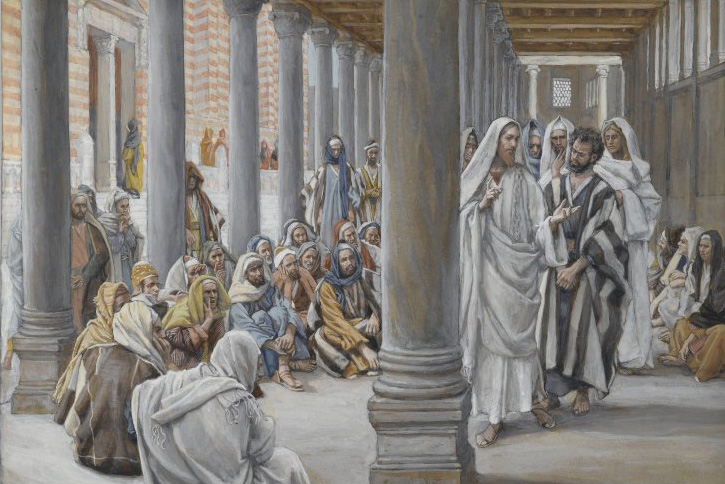
I.Foe or Friend? – The text begins, John said to Jesus, “Teacher, we saw someone driving out demons in your name, and we tried to prevent him because he does not follow us.” Jesus replied, “Do not prevent him. There is no one who performs a mighty deed in my name who can at the same time speak ill of me. For whoever is not against us is for us.”
The Apostle John’s consternation bespeaks confused priorities. Task number one is to advance the Kingdom of God, taking back territory from the Evil One. If someone can drive out demons in Jesus’ name, we ought to praise the Lord! Such a one is not a foe; the enemy of my enemy is my friend.
The apostles seem more concerned with pedigree and control. Perhaps notions of personal advancement, power, prestige, and pride beset them as well. Souls being set free seems to have been a secondary concern.
Misplaced priorities! There should be more about Jesus and His Kingdom, less about me and my glory. Don’t stop others from driving out demons. Help them, or at least get out of the way!
This command not to prevent him is of course a general norm not an absolute one. There are certain things that the Lord gave only for the apostles to do. It was they, not just anyone, who were to preach and formally teach in Jesus’ name, to baptize, to confirm, to celebrate the Eucharist, to forgive sins, to lead with authority, and to appoint successors and helpers by the laying on of hands. In addition, the Rite of Major Exorcism is reserved to appointed priests, though many lay people have charisms to heal and to drive away the influence of demons through approved methods such as unbound and other forms of deprecatory prayers.
Thus, even though priests have certain exclusive duties, it is foolish to think that every gift is reserved for the priesthood. Lay people bring many gifts: prayer, holiness, and the abilities to teach and to share leadership in parishes. They bring practical skills, too, such as administration, organization, and works of charity.
“Furthermore, many elements of sanctification and of truth” are found outside the visible confines of the Catholic Church: “the written Word of God; the life of grace; faith, hope, and charity, with the other interior gifts of the Holy Spirit, as well as visible elements.” Christ’s Spirit uses these Churches and ecclesial communities as means of salvation, whose power derives from the fullness of grace and truth that Christ has entrusted to the Catholic Church. All these blessings come from Christ and lead to him, and are in themselves calls to “Catholic unity” (Catechism of the Catholic Church, #819).
Indeed, I have found that many wonderful Catholics come to us from the evangelical denominations. They bring some many gifts with them. They love Scripture. They love Jesus. They have a wealth of zeal. In the Rite of Reception, we thank God for the communities where they first learned of Christ even as we welcome them to full unity with the Church.
Thus, some whom we see as foes are actually friends in the Lord’s eyes. We should rejoice in the graces of Christ wherever we find them and seek to find full unity in the one, holy, Catholic, and apostolic Church.
II. Friends are Fundamental– The Lord admonishes the apostles, Whoever is not against us is for us. Anyone who gives you a cup of water to drink because you belong to Christ will surely not lose his reward.
This, of course, implies that the apostles will in fact need help, encouragement, and basic necessities as they undertake to proclaim the gospel. Scripture says, Woe to the solitary man! For if he should fall, he has no one to lift him up (Ecclesiastes 4:10).
The attitude of wanting to do everything oneself is not only prideful, it is foolish and impossible. We must accept that one of the provisions necessary for those who would be prophets is the help and support of others.
Neither can the Church blithely reject the help of medical science, psychotherapy, or of the business or government sectors. Other things being equal, there can and should be a proper partnership with these areas of human knowledge and expertise. While distinctions must be made and errors rejected, there is a partnership that should not be rejected. When the ship is sinking (and it is, since the fall of man) it’s all hands on deck.
III. Falsehood is the Fiercest Foe – Through the use of several analogies, the Lord illustrates just how serious it is to lead others into sin by scandal or false teaching: Whoever causes one of these little ones who believe in me to sin, it would be better for him if a great millstone were put around his neck and he were thrown into the sea. If your hand causes you to sin, cut it off. It is better for you to enter into life maimed than with two hands to go into Gehenna, into the unquenchable fire. And if your foot causes you to sin, cut if off. It is better for you to enter into life crippled than with two feet to be thrown into Gehenna. And if your eye causes you to sin, pluck it out. Better for you to enter into the kingdom of God with one eye than with two eyes to be thrown into Gehenna, where ‘their worm does not die, and the fire is not quenched.’
Here, then, are the worst enemy of all: false teachers and those who give scandal. The “little ones” Jesus refers to here are not just children; all of his disciples are His “little ones.” The Lord uses the strongest language possible here to express His wrath at those who lead His disciples into sin by false teaching or seduction. It would be better for them to die or be maimed than to do such a thing. The Lord says in Jeremiah, Woe to the shepherds who destroy and scatter the sheep of my pasture, declares the LORD. … You have scattered my flock and have driven them away, and you have not attended to them. Behold, I will attend to you for your evil deeds, declares the LORD (Jeremiah 23:1-3). My people have been lost sheep; their shepherds have led them astray and caused them to roam on the mountains. They wandered over mountain and hill and forgot their own resting place (Jeremiah 50:6).
Yes, to mislead or give scandal to God’s people is so awful that Jesus says being cast into the sea with a millstone around one’s neck is a better option. Otherwise, hellfire and worms will be their lot. Jesus says that it is more serious to sin in this way than to lose a hand or a foot or an eye! Elsewhere, Jesus calls false shepherds “wolves.”
The ancient prophets held up the sins of the people before them and called them to return to the Lord wholeheartedly. What about us? In the midst of a moral meltdown and a cultural collapse there are too many silent pulpits. Even more deplorable are those shepherds who outright mislead the faithful through false teaching, deliberate ambiguity, and bad example. Too many today make light of, or excuse, what God calls sin. These problems are not limited to the clergy. They are found in Catholic schools where the faith is contested rather than taught. They are also found among parents who have strayed from the faith and mislead their children.
All of us in any leadership position should consider the strong language Jesus uses here. We do well to ponder whether we are a friend of the Lord or an enemy. The Book of James warns, You adulterous people! Do you not know that friendship with the world is enmity with God? Therefore, whoever wishes to be a friend of the world makes himself an enemy of God (James 4:4). A false or misleading teacher or one who gives scandal to God’s people is the worst sort of enemy to God.
The Gospel opened with John seeing a foe where there was really a friend. Jesus says, in effect, “That’s not what an enemy looks like. He’s driving out demons, and that’s good work for the Kingdom. Do you want to know what an enemy really looks like? Anyone who causes one of my disciples to sin is an enemy in my eyes.”
True friends of the Lord drive out demons by holy teaching, good example, and prayer. Enemies of the Lord drive in demons by false teaching, bad example, and outright seduction. True friends of the Lord lift Him up for all the world to see.
Enjoy this old hymn; try not to tap your toe while you listen!
Don’t exalt the preacher,
don’t exalt the pew,
Preach the Gospel simple,
full, and free;
Prove Him and you will find his promise is true,
“I’ll draw all men unto Me.”
Lift Him up, lift Him up;
Still He speaks from eternity:
“And I, if I be lifted up from the earth,
Will draw all men unto Me.”
The commercial below is humorous, albeit preposterous. Here is the scenario: the earth has stopped rotating on its axis and “scientists” say that if everyone runs in the same direction we can restart the rotation, much like hamsters running in an exercise wheel.
Of course, as the standard disaster movie format requires, the news anchor both explains everything to us and gives us our orders from the scientists. In the end, mankind triumphs; crisis averted; roll credits. (Oh, and don’t forget to buy Nike shoes).
It’s rather amusing and pokes fun at the predictable disaster movie recipe.
There is a point to ponder in this standard disaster movie plot. Peter Kreeft once said, “When a maniac is at the door, feuding brothers reconcile.” Many disaster movies use this insight and present us with some sort of universal threat, some outside enemy that threatens all of mankind. Suddenly, partisan politics disappear; nations stop fighting one another and unite to solve the shared problem or repulse the common enemy.
But of course this is the reality. Every human person does have a common enemy: Satan. St. Paul writes,
For our struggle is not against flesh and blood, but against the rulers, against the authorities, against the powers of this dark world and against the spiritual forces of evil in the high realms (Eph 6:12).
In other words, our real battle is not against one another, but against Satan and his demonic army. Sadly, this truest of battles is hidden from most, who instead focus their attention on other, lesser ones.
What will God need to do to refocus our attention? Let’s hope it’s something less than a worldwide disaster! Something tells me that we are so distracted and divided these days that nothing short of the catastrophic will get our attention. Oremus.
There is always much to ponder in the Book of Proverbs, from which we have been reading at daily Mass this week (25th Week of the Year). Consider the following proverb, which speaks to the glory of the Word of God and of our need to preserve its purity.
Every word of God is tested; he is a shield to those who take refuge in him. Add nothing to his words, lest he reprove you, and you will be exposed as a deceiver (Proverbs 30:5-6).
From this we can discern four aspects of the Word of God.
Pure – The text says, Every word of God is tested. The Hebrew word used here is צָרַף (tsaraph), which means to smelt, refine, purge, or test.
There are many today who are dismissive of the Word of God as something ancient, irrelevant to modern times, and unenlightened. However, it is precisely its ancient quality that speaks to its enduring truth. It has been tested by time and found to be a true and wonderful guide. Were it foolish or useless it would have been discarded long ago.
The Word of God remains, while empires have come and gone, nations have risen and fallen, trends have arisen and then become passé. Yet here, still reading this text, still judging things by it, still finding it wise, still marveling in its enduring purity. It has been refined by God in the crucible of time. It alone has endured as pure. All else has been burned away, refined, smelted, and purged. Yes, the Word of God alone remains.
Protective– The text says, he is a shield to those who take refuge in him. Yes, through His Word, God shields us from the errors and foolishness of our times. By the Word of God, we can test all things, all ideas, and see if they conform to God’s ways or not. This protects us not only from errors of our time, but from the sinful wounds and addictions that proceed from them.
There are many who propose ever-stranger ways to freedom and dignity. By God’s Word in the Scriptures and the teachings of the Church, we can see that these paths are dead ends. We are protected from going down many rabbit holes and from adopting misguided notions that seem wise to the world but are disclosed as foolishness by God.
God’s Word and His Law are like the defending walls of a city. Within, we are protected from worldly and devilish errors and from wolves masquerading as sheep.
Plenary – The text says, Add nothing to his words, lest he reprove you. There are many who believe that they can improve on God’s revelation. Some think that perhaps God forgot to reveal something or to make necessary distinctions. They believe that perhaps He was too harsh at some points or too lenient at others. Some seek to subtract from God’s word or to explain it in such a way that its plain meaning as set forth by the text and the Magisterium is obscured.
The text says that God will reprove those who do this. It is never a good thing to be accused by God of distorting His Word. The Lord seldom expressed more anger than when He referred to those who might mislead His disciples. He warned that they would be better off being cast into the sea with a millstone around their neck (e.g., Mark 9:42). Be careful, do not distort God’s Word. He will avenge such things!
Proving – The text says,and you will be exposed as a deceiver. The Hebrew text is more blunt, using the word “liar” כָּזַב (Kazab). If the Word of God is true, then those who deform it are liars, plain and simple.
The word deceiver is important as well. To deceive literally means “to carry off.” Thus, deceivers are like wolves who stalk their prey and carry them off hanging limply from their mouth. Jesus warned of such wolves (see John 7:15) as did St. Paul (see Acts 20:29). Scoffers, deceivers, and adulterators of the Word of God might gain audiences for a time, but soon they will answer to God. Do not admire them; do not be like them. Humbly accept the Word of God as faithfully preached and delivered by the saints and codified in the magisterial teachings of the Church.
At Mass for Wednesday of the 25th Week of the Year, we read this passage:
Give me neither poverty nor riches; Feed me [only] with food that I need for today: Lest I be full, and deny you, and say, Who is the LORD? or lest I be poor, and steal, and take the name of my God in vain. (Proverbs 30:9-10).
One of the great problems of our time is satiation. Because of our own inordinate drives, we accumulate and indulge beyond reason. Filled, we have little room for God or others for that matter.
The more affluent we become in material things, the more spiritually poor we seem to become. The higher our standard of living, the lower our overall morals. The more filled our coffers, the emptier our churches. The numbers demonstrate clearly show that over the past 60 years our standard of living has risen while church attendance and other signs of belief and spirituality have plummeted—so has family time and the developing of deep human relationships. Marriage rates have plummeted while divorce has soared. Birthrates are down. Children are considered a burden in a satiated world with a high standard of living. These are the evils of our times.
It isn’t just wealth, either; it’s all the things that distract and divert us. There are so many pleasures available to us, most of them lawful, but often it’s just too much of a good thing.
One might imagine another scenario in which we were astonished by God’s providence and fell to our knees in gratitude; in our riches and possession of so many good things we prayed and went to Mass even more often out of sheer gratefulness. Alas this is seldom the case today.
Our affluence creates the illusion of self-sufficiency and self-fulfillment.
St. Augustine sadly noted, in a time far less satiated than our own, I, unlovely, rushed heedlessly among the things of beauty You made. You were with me, but I was not with You. Those things kept me far from You, which, unless they were in You, would not be (Confessions 10.27).
Many other Scriptures warn of the spiritual danger posed by wealth and worldly satiation:
But those who desire to be rich fall into temptation, into a snare, into many senseless and hurtful desires that plunge men into ruin and destruction. For the love of money is the root of all evils; it is through this craving that some have wandered away from the faith and pierced their hearts with many pangs (1 Tim 6:9-10).
No servant can serve two masters. Either he will hate the one and love the other, or he will be devoted to the one and despise the other. You cannot serve both God and Money! (Luke 16:13)
But woe to you who are rich, for you have already received your comfort. Woe to you who are well fed now, for you will go hungry. Woe to you who laugh now, for you will mourn and weep (Luke 6:24-25).
But many that are first will be last, and the last first (Mat 19:30).
How hard it is for the rich to enter the kingdom of God … It is easier for a camel to go through the eye of a needle than for a rich man to enter the kingdom of God (Mk 10:23-25).
It is amazing that despite all of this most of us still want to be rich and would jump for joy if we won the lottery; instead we should soberly cringe with fear and look for good ways to shed our excess.
Alas, this is the human condition, or at least the fallen version of it. It isn’t very pretty and is proof positive that we are going to need a lot of grace and mercy to get home.
Think of that this as you watch this video. It’s a stark portrait of modern man. Consider how full, yet lonely, the man in the video is. He speaks only of himself and seems to interact with almost no one. He’s lost in a self-referential world of excess, filled with every good thing, but too full for God. Somehow the man knows that the worldly things fill him for only a moment and then pass, but still the answer is more! It’s quite a commentary on too many of us today.
As the Proverb says, he is rich and says, “Who is the Lord?”


 With the Feast of St. Francis upon us we do well to thank God for many things. It is a tradition in many parishes to bless animals on this feast. It is also a good time to ponder what our pets and animals can “teach” us.