
OK. Christ is Risen and it’s time to dance a jig. There is no better way to do this than to dance to J.S. Bach’s Jig Fugue and also to sample one of the nice aspects of traditional Church liturgy, The Pipe Organ. It has been said that the greatest virtuoso is the organist and you’ll see why when you view this video of Diane Bish playing the Jig Fugue. Not only are both hands and all fingers going at rapid pace but so are both feet as she literally dances a jig on the pedal board. The piece starts out with hands only and then builds and gets more complicated as it goes on. Christ is risen, Dance a Jig.
Resurrexit Sicut Dixit (He has risen as he said)!
Today we acknowledge Jesus’ triumph over death. Just when all seemed a total loss, the disciples experienced his resurrected glory. To those of us who remain faithful, Jesus’ story is our story too. Whatever our crosses, trials, disappointments or set-backs, the truth is that troubles don’t last always. The Book of Psalms reminds us, Weeping may endure for a night, but joy will come with the morning light (Ps 30:5). The Easter message is one of victory for us. Whatever situation you may be going through just say, I’ll rise! Tell Satan, “Victory is mine!” Address every fear with the words of an old song: Because he lives, I can face tomorrow! This is the feast of Jesus’ victory and ours too. Rejoice today that you’re on the winning team!
Here is a video of Resurrection Scenes from the Movie The Gospel of John The movie is well worth the purchase price and ought to be on your shelf. The music is Mozart: Regina Caeli (Queen of Heaven rejoice, the SOn whom you merited to bear has risen as he said, Alleluia!)
Nothing Good Comes From…Leviticus?
 Yesterday morning I was doing my daily Lectio Divina when I came across the passage in Matthew 8 where Jesus heals a man of leprosy then tells him “go show yourself to the priest, and offer the gift that Moses prescribed.”
I had no clue what Moses had prescribed but was curious, so I looked in the margin where it said, See Leviticus 14. Being a new Bible-reading Catholic, I had to look up the table of contents to see where Leviticus was located and felt a little stupid that it’s the 3rd book in the Bible.
There, I found this passage:
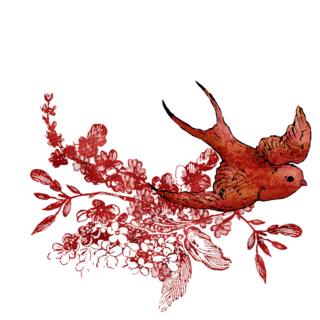
“If the priest finds that the sore of leprosy has healed in the leper, he shall order the man who is to be purified, to get two live, clean birds, as well as some cedar wood, scarlet yarn, and hyssop. The priest shall then order him to slay one of the birds over an earthen vessel with spring water in it. Taking the living bird with the cedar wood, the scarlet yarn and the hyssop, the priest shall dip them all in the blood of the bird that was slain over the spring water, and then sprinkle seven times the man to be purified from his leprosy. When he has thus purified him, he shall let the living bird fly away over the countryside.”
What struck me was the second bird who is is freed only by the blood of the sacrificed one. Sound familiar?
I always thought Leviticus was just a list of random rituals and all the dos and don’ts that got replaced by the New Covenant. But maybe there is more to Leviticus than I thought!
And to end this blog…a little Lynyrd Skynyrd just for fun.
On Spy Wednesday a Look at the Sins of the Clergy
Wednesday of Holy Week is traditionally called “Spy Wednesday” since it is this day when Judas conspired with the Temple Leadership to hand Jesus over. He would accomplish his task the evening of the next day, but today he makes arrangements to hand Jesus over.
One way to reflect on this terrible sin is to reflect that Judas was among the first priests called by Jesus. We see in the call of the Apostles the establishment of the ministerial priesthood. Jesus called these men to lead his Church and minister in his name. But one of these priests went wrong, terribly wrong, and turned against the very one he should have proclaimed. Among the other “first priests” we also see great weaknesses evident. Peter in weakness denied Jesus, though he repented later. All the others except John fled at the time of the passion. And so here we see the “sins of the clergy” made manifest. Christ did not call perfect men. He promised to protect his Church from officially teaching error but this does not mean that there is no sin in the Church and among those who are called to lead. The story of Judas shows that even among those who were called, one went terribly wrong.
In recent years there has been much focus on the sins of Catholic Priests who went terribly wrong and sexually abused the young. The vast majority of priests have never done such things, but those who did so inflicted great harm. There are other sins of the clergy that have nothing to do with sexuality that may also have caused great harm. Maybe it was an insensitive remark. Perhaps it was the failure of a priest to respond at a critical moment such as a hospital visit. Whatever it might be that has caused you harm or alienation please don’t give up on God or the on the Church. If a priest or Church leader has caused you grief or to feel alienated please know that there are other priests, deacons, and lay leaders who stand ready to hear your concerns and offer healing. Let the healing begin. Ask among your Catholic family and friends for recommendations about helpful and sensitive priests or Church leaders who can listen to your concerns, address them where possible, and offer another opportunity for the Church to reach out to you with love.
On this “Spy Wednesday” pray especially for priests. We carry the treasure of our priesthood in earthen vessels. As human beings we struggle with our own issues. We have many good days and some less than stellar moments too. The vast majority of Priests are good men, though sinners, who strive to do their very best. But some among us have sinned greatly and caused harm to the Body of Christ, as did Judas. Some of us may have casued harm to you. Please accept an invitation to begin anew. If you have stayed away through some hurt or harm caused by any leader of the Church strive on this “Spy Wednesday” to still find Christ where he is found. Among sinners and saints too, in the Church he founded: Perfect in her beauty as the Bride of Christ but consisting of members who are still “on the way” to holiness.
As usual, after all my verbiage, a music video offers this message better than I ever could. Allow this powerful video to move you if you have ever been hurt or know someone who has.
Given-Never Earned
Reviewing Lent
With my apologies to the Marine Corps and their excellent “Earned-Never Given” motto, I want to share the Easter Homily of St. John Chrysostom. You may wonder if I am breezing by the passion and death to get to the resurrection. I offer the homily now because this is the time in which in which we come face to face with how well we lived Lent this year. This is the time in which we sometimes regret that we let Lent get away. This is the time in which we are feeling pretty good about our discipline and thinking we deserve a great Easter.
It’s all about Grace
I do think that there is a correlation between how well we have prepared in Lent and our celebration of the Triduum, but it is grace at work in us that is the is the cause of new found insight and discipline. The following homily captures perfectly the right Easter disposition.
In the words of St. John Chrysostom
If any man be devout and love God, let him enjoy this fair and radiant triumphal feast. If any man be a wise servant, let him rejoicing enter into the joy of his Lord. If any have labored long in fasting, let him now receive his recompense. If any have wrought from the first hour, let him today receive his just reward. If any have come at the third hour, let him with thankfulness keep the feast. If any have arrived at the sixth hour, let him have no misgivings; because he shall in nowise be deprived therefor. If any have delayed until the ninth hour, let him draw near, fearing nothing. If any have tarried even until the eleventh hour, let him, also, be not alarmed at his tardiness; for the Lord, who is jealous of his honor, will accept the last even as the first; he gives rest unto him who comes at the eleventh hour, even as unto him who has wrought from the first hour.
And he shows mercy upon the last, and cares for the first; and to the one he gives, and upon the other he bestows gifts. And he both accepts the deeds, and welcomes the intention, and honors the acts and praises the offering. Wherefore, enter you all into the joy of your Lord; and receive your reward, both the first, and likewise the second. You rich and poor together, hold high festival. You sober and you heedless, honor the day. Rejoice today, both you who have fasted and you who have disregarded the fast. The table is full-laden; feast ye all sumptuously. The calf is fatted; let no one go hungry away.
Enjoy ye all the feast of faith: Receive ye all the riches of loving-kindness. let no one bewail his poverty, for the universal kingdom has been revealed. Let no one weep for his iniquities, for pardon has shown forth from the grave. Let no one fear death, for the Savior’s death has set us free. He that was held prisoner of it has annihilated it. By descending into Hell, He made Hell captive. He embittered it when it tasted of His flesh. And Isaiah, foretelling this, did cry: Hell, said he, was embittered, when it encountered Thee in the lower regions. It was embittered, for it was abolished. It was embittered, for it was mocked. It was embittered, for it was slain. It was embittered, for it was overthrown. It was embittered, for it was fettered in chains. It took a body, and met God face to face. It took earth, and encountered Heaven. It took that which was seen, and fell upon the unseen.
O Death, where is your sting? O Hell, where is your victory? Christ is risen, and you are overthrown. Christ is risen, and the demons are fallen. Christ is risen, and the angels rejoice. Christ is risen, and life reigns. Christ is risen, and not one dead remains in the grave. For Christ, being risen from the dead, is become the first fruits of those who have fallen asleep. To Him be glory and dominion unto ages of ages. Amen.
In the Orthodox Tradition
It is the custom in Orthodox traditions to read the homily at the Easter Sunday liturgy. Click here to listen
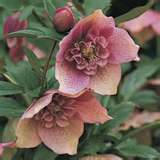
The flower in the picture is nick-named the Lenten Rose and you can spot them in gardens all over our area. They really are well-matched in color and in the early bloom to the Lent-Easter cycle.
On Fixing a Dreadful Error And Taking a Graceful Bow
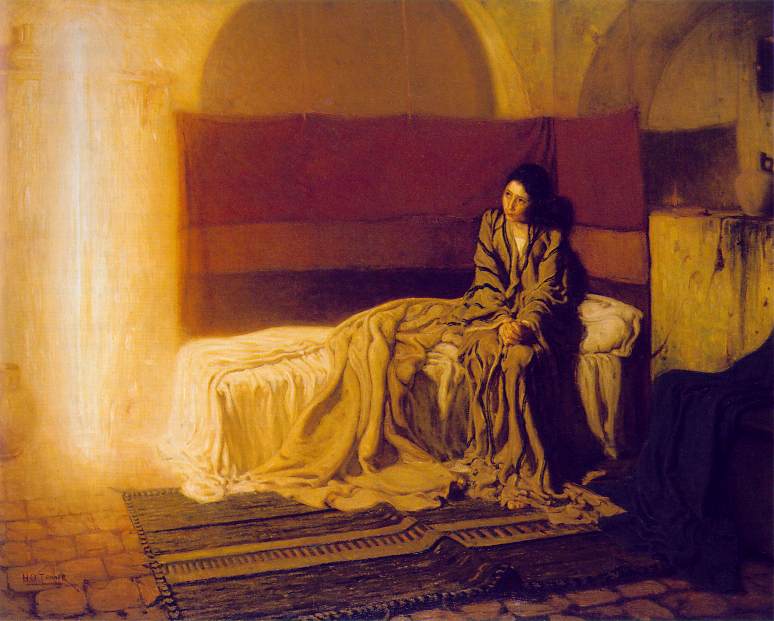 We are in the heart of Lent but for one day we step back into the Christmas cycle. It is nine months before Christmas and today we celebrate the true feast of the Incarnation. December 25 is the Lord’s birth but today is His incarnation as he is conceived in his Mother’s womb. TODAY the Word becomes flesh.
This needs to be emphasized in an age of abortion where some in our culture deny explicitly or implicitly that human life begins at conception. You are aware that a new translation of the Mass will soon come to us in the English speaking world. It is long needed and treasures of the faith kept hidden for long decades (except for those know Latin) will become visible again.
Among the most egregious errors of the current English version is in the Creed which erroneously indicates that Jesus became man at his birth, rather than his conception. Here is what the current version says:
For us men and our salvation He came down from heaven: by the power of the Holy Spirit, He was born of the Virgin Mary , and became man.
Notice that the text says he became man when he was born. As a poor translation of the Latin text it is irritating enough but to have this mistranslation exist when abortion is thought a legal right is a complete disaster. The Latin text does not say that Jesus became man at his birth (celebrated December 25), but rather at His incarnation (celebrated March 25). Here is what the the Latin text says:
Qui propter nos homines et propter nostram salutem descendit de caelis. Et incarnatus est de Spiritu Sancto ex Maria Virgine, et homo factus est.
The New Translation which will be implemented in a little over a year renders it correctly in the following way:
For us men and for our salvation he came down from heaven, and by the Holy Spirit was incarnate of the Virgin Mary, and became man.
I for one am grateful for the accuracy. The whole translation is going to take some getting used to but it will be of great benefit to see our Holy Faith, so beautifully articulated in the Latin text, properly translated and conveyed at last. Since 1970 the text has been really little better than a paraphrase and so much is lost. This mistranslation of the Creed is but one of ten thousand examples where the current translation is woefully inaccurate and/or incomplete. But surely the mistranslated Creed is most egregious for the reasons stated.
 A final thought on this section of the Creed – The Bow. The Congregation is instructed to bow at the words: and by the Holy Spirit was incarnate of the Virgin Mary, and became man. This is in recognition of the great mystery that the incarnation is. How can God, whom the very heavens cannot contain dwell in the womb of the Virgin Mary? How can the infinite become an infant? It is a mystery too great and so we bow in reverence. In the Traditional Latin Mass the practice is to kneel at these words. Such was the practice until about 1970 when it was replaced by a bow. Personally I think we Americans are terrible at bows and would be happy if the genuflection returned. In other cultures bowing is graceful and natural. For most of us here it is awkward and usually lacks proportional and graceful movement. But bow we are told and bow we should. One ought to fold the hands and bow at the waist. Think of your waist as the hinge, not the neck and shoulders which should not move in proportion to the shoulders. The bow is a reverent acknowledgment of the mystery of the Incarnation we celebrate today. Interestingly enough there are still two days in the year when we still kneel at the words of the incarnation. We kneel and pause at these words on Christmas and today, March 25, The Feast of the Annunciation. Otherwise we bow, as gracefully as possible 🙂
I am curious if you bow at these words in the Creed and if it is common in your parish. Does your clergy bow, do they teach others to do so? Just asking!
Happy Feast Day!
“There was no one to help me.”

Yesterday, I attended a book signing for the publication of When they Come Home. Written by Melanie Rigney and Anna Lanave, the book has terrific how-to advice for parishes interested in being intentional about welcoming back inactive Catholics.
Starting and Stopping
One of the authors shared her own experience. Though having received the sacraments as a child her family did not regularly attend Mass or participate in parish life. As she grew up there was not much encouragement or reason to go to church herself. A marriage to man who was not Catholic was the final step away from the church. Or so she thought. Over the years she felt drawn back to Mass and she would go and it would be fine except that no one ever greeted her or drew her into conversation. She said she had questions, she wanted to talk, and yet, there did not seem to be a place or people for the conversation. She tried other denominations, she made some terrific friends and she had some serious conversations about God and faith and she continued to give the Catholic Church another try.
Not a Unique Experience
I do not think this experience is unique to this author. I do think our churches over the next ten days will be filled with just such people. People who are responding to the Spirit at work in them, people who just can’t seem to stay away from church but who sure don’t feel like they really belong and wonder if they really are still part of the family. What struck me in yesterday’s presentation and in conversations I have had with other Catholics returning to the church is that all they really need–at first– is to be greeted and welcomed! They do not expect the experience to be perfect or to discover that everything that didn’t like about the church has changed. They want to feel welcomed and to be invited to come again.
Say Hello
I decided driving home last night that I will do two things over the course of Holy Week. Today, I invited two friends who are inactive and not quite ready to come to Mass to a Tenebrae Service at the Dominican House of Studies. It is a beautiful evening of chant and music and prayer which sets the right tone for Holy Week. Next week, when I see an unfamiliar face at one of the services I am going to say hello and whatever else may seem appropriate. In some cases the person I greet may end up being a fellow parishioner who goes to a different Mass but odds suggest that if I do this a couple of times, I will encounter a less regular church-goer. Really, how difficult can this be!
Perhaps why I am so taken with these authors’ experience is because I spend a lot of my day thinking about evangelization on the grand scale of Archdiocesan initiatives and emerging trends and new programs and yet at the core of evangelization is a friendly encounter of two people who both feel drawn to Jesus. It can be the start of a great relationship.
Todah: Learn Somethin’New Every Day!
 Have you ever heard of the todah? No? Neither had I until last night! I was reading “Graced and Gifted: Biblical Wisdom for the Homemakers Heart” by Kimberly Hahn, and while discussing the importance and significance of the Eucharist in family life, she explained the todah.
I did a little more research on the internet today and…check this out!
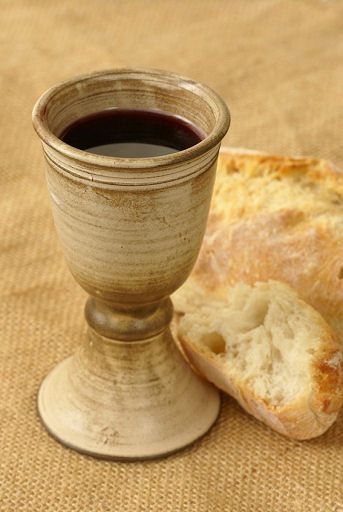
“A todah sacrifice would be offered by someone whose life had been delivered from great peril, such as disease or the sword. The redeemed person would show his gratitude to God by gathering his closest friends and family for a todah sacrificial meal. The lamb would be sacrificed in the Temple and the bread for the meal would be consecrated the moment the lamb was sacrificed. The bread and meat, along with wine, would constitute the elements of the sacred todah meal, which would be accompanied by prayers and songs of thanksgiving, such as Psalm 116.”
(from Catholic Education Resource Center)
Does that sound like the Eucharist or what?! The article goes on to explain the todah, the Eucharist, and The Last Supper Passover meal, and is definitely worth a read.
So this Holy Thursday or Easter Sunday when your non-Catholic friends or Catholic friends who haven’t been to church in a while ask, “Why do you do all that stuff? What does it mean?” teach them about the todah!