In downtown Washington, I noticed this sign on the side of a bus stop. It seems that a group of atheists has purchased advertising space throughout the Washington Metro system with this depressing message.
“To spray paint or not to spray paint?”; Thatwas my question.
I had immediate thoughts of how I could possibly blunt this foolish message. Though I would never actually do such as thing, the use of spray paint came to mind. I was outraged to say the least. But, the most comforting part of my reaction was that I was not alone in my anger.
Don’t believe in Atheists? Join the Club!
I do not exactly have a poker face so my disgust was fairly obvious to others at the bus stop. Immediately, another of my fellow Washingtonians shared his disgust. Soon enough, several people at bus stop were praising God by talking about the ridiculousness of such an ad campaign. It should be noted that not one atheist was in sight to defend the sign.
“No weapon formed against you shall prosper!” – Isaiah 54:17
Here is the irony. A sign designed to insult our faith in God and turn others further away from Christ prompted a bunch of strangers to share our testimony of the goodness of God. It was almost like we were having church while waiting for a Metro bus. Now, admittedly, most church services don’t start with a deacon exclaiming, “Can you believe this mess?!” but, it was church nonetheless. This experience was proof to me that God’s prophecy to Isaiah was true – “No weapon formed again you can prosper. Every tongue you shall prove false that launches an accusation against you. This is the lot of the servants of the LORD, their vindication from me, says the LORD.” – Is 54:17.
The weapon in this case was a sign at a bus stop insulting our faith. The result was a group of Christians exclaiming their faith. When something like this happens, how could you NOT believe in God?
“The New Evangelization”
The Archbishop of Washington recently released a letter entitled “The New Evangelization.” As the title suggests, it concerns itself with the need to spread our faith as well as strengthen the faith of those who already call themselves Catholic. The need for evangelization takes on a new urgency when one realizes that the enemy is hard at work doing the exact opposite – just read the signs. And remember, if you don’t believe in God, you are more alone than you think!
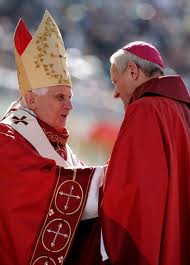
In case you have not heard the news, I share with you the press release announcing the elevation of Archbishop Wuerl to the College of Cardinals.
Pope Benedict XVI today named Washington’s Archbishop Donald W. Wuerl, 69, to the College of Cardinals. As a Cardinal, Cardinal-designate Wuerl will serve as an advisor to the Pope and will be eligible to vote in a Papal election until his 80th birthday. A consistory to formally elevate the new Cardinals will be held at the Vatican on November 20. A Mass with the Pope will be held the following day.
Cardinal-designate Wuerl said, “This truly is an honor for the Archdiocese of Washington, the Church in the nation’s capital, and for all of the clergy, religious and parishioners of this local Church who every day live out their faith in commitment and deep love for Christ. I am humbled by our Holy Father Pope Benedict XVI’s trust in me as shepherd of this flock and pledge to him my renewed fidelity, affection and loyalty.”
Cardinal-designate Wuerl will celebrate Mass today, October 20, 2010, 8:00 a.m. at the Cathedral of St. Matthew the Apostle, 1725 Rhode Island Avenue, NW, Washington, DC. He will be available to speak with the media immediately following Mass.
This evening, he will deliver the keynote address for the Center for Faith and Culture at the University of Saint Thomas in Houston, Texas at 7:30 p.m. The topic is Religious Faith’s Role in Building a Good and Just Society. (You can see this via live-stream at http://www.ustream.tv/channel/archbishopwuerl).
Cardinal-designate Wuerl is the fifth Archbishop of Washington since the archdiocese was founded in 1939 to have received this honor. The others were Cardinals Patrick A. O’Boyle, William W. Baum, James A. Hickey and Theodore E. McCarrick.
Cardinal-designate Wuerl became the leader of the Archdiocese of Washington on June 22, 2006 after 18 years as the Bishop of Pittsburgh. A leader in community, ecumenical and interfaith activities, he regularly works with civic and business leaders on educational and community-service initiatives. He is the author of several books and numerous articles on the Catholic faith and has headed numerous committees at the United States Conference of Catholic Bishops, including Education, Evangelization and Catechesis. He currently is the chair of the Committee on Doctrine and recently was named by the Congregation for the Doctrine of the Faith as the Vatican’s delegate for Anglican parishes in the United States who are seeking unification with the Roman Catholic Church.
In April 2008, he hosted Pope Benedict XVI during the Holy Father’s visit to Washington, DC. In September 2010, he released a pastoral letter calling upon Catholics to renew their faith as part of a New Evangelization. Disciples of the Lord: Sharing the Vision is online at www.adw.org. Earlier this week, he announced the Archdiocese will open a new seminary in fall 2011 due to an increase in the number of seminarians in college and pre-theology studies.
Wuerl is chancellor of The Catholic University of America in Washington, DC, chairman of the board of the Basilica of the National Shrine of the Immaculate Conception, and past chairman of the National Catholic Educational Association and the National Catholic Bioethics Center. A native of Pittsburgh, he received graduate degrees from The Catholic University of America, Gregorian University in Rome, Italy and the University of St. Thomas in Rome, where he received a doctorate in theology in 1974. Ordained to the priesthood in 1966, he was ordained a bishop by Pope John Paul II in 1986 and will celebrate his 25th anniversary as a bishop in January 2011.
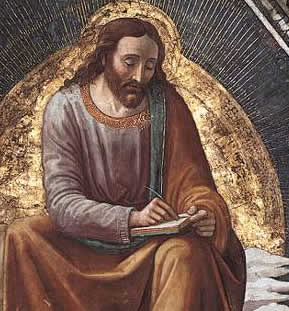
Today, the church celebrates the feast of St. Luke, one of the four evangelists and author of the Gospel of Luke and Acts. There is this stereotype that Catholics do not know Scripture. It is true that many Catholics are not in the habit of praying with Scripture or involved in Scripture study groups. The false part of the stereotype is that Catholics do not emphasize Scripture.
Catholics are people of the Word. Catholics believe that Sculpture is at the heart of God’s revelation. In our celebration of the Eucharist, we proclaim that Jesus is present in the Word, in the Eucharist, in the person of the priest and in the community. Scripture is a living word!
Scripture and the New Evanglization
As part of the New Evangelization, we want all Catholics to grow in their relationship with our Lord, to love the Lord more deeply and more fully. Like any relationship rooted in love, the better we know a person, the more we love a person and the more we love a person, the better we come to know that person.
Lectio Divina
To celebrate today’s feast, I am offering an adapted version of Lectio Divina. Lectio Divina is the ancient practice of praying with Scripture, traced back to Saint Benedict and the founding of Western monasticism. What I love about Lectio is that is really helps one discover in Scripture words, images and insights that can be overlooked because the stories have become so familiar to us or because at this moment, this word or this image has real meaning for the place in which we find ourselves. While Lectio Divina invites us to take up Scripture in a quiet contemplative exercise, for many of us, those moments are hard to find in the course of our day. I would hate for us to think we can’t do it because we do not have 20 or 30 minutes of quiet for prayer.
In one of my diaconate classes, a deacon candidate shared a very creative approach to Lectio on the run. He is a bus driver for the Montgomery County School System. He starts his day at daily Mass and listens to the Gospel. He listens for the word or image that seems to shout out to him or really captures his attention and then at each stop his bus makes he recalls that image or word and thinks a little more about it. So, his Lectio unfolds in the course of his day. However it makes sense in your life, do practice this ancient and yet ever new form of Catholic prayer.
Modified Lectio Divina
Readthe passage through twice; slowly and deliberately, with a pause between the first reading and the second reading. What word or phrase catches your attention or is meaningful to you?
Reflectfor 1-2 minutes in silence on the reading. Identify the word or phrase that has settled in your mind.
Reflect for 2-3 minutes on the meaning of the word or passage in your life today.
Request a grace from the Lord that relates to your reflection. Ask the Lord to help you recognize the fruit of your reflection in action.
Read the passage a third time. Sit silently for 1-2 minutes.
I posted a couple of days ago on Genesis and the comments really lit up. As always the Genesis accounts of creation provide a rich field for controversy and discussion. The last post focused on the question of the genre of the Genesis texts. In this post I would like to ponder another point for discussion: The theory of evolution’s relationship to the Genesis text. Tomorrow I’d like to post on the question of polygensism (the theory that Adam was not one historical man but, rather, a euphemism for “mankind”).
Disclaimer– I do not intend to answer all the questions about evolution and Genesis here. This is a blog, not a theological or scientific journal. I am not a dogmatic theologian, neither do I have an advanced degree in Scripture. Neither am I a trained biologist. My MA is in moral theology. What I intend to do here is open a discussion. I would like to suggest some parameters to the topic which Catholicism requires of us. But in the end, I am going to depend on the comments section to broaden the discussion, make distinctions, suggest further limits, or clarify and quote other sources. Many of the commenters on this blog are theologically skilled and provide a valuable service to the rest of us. Likewise there are some with a scientific background who read here and can help clarify on the topic of evolution. I would only ask that all of us not rush to use words like heresy etc. and that the science folks not treat me or the rest of us like a bunch of ignoramuses. The Genesis accounts are very prototypical and archetypal. It is a true fact that the Church gives us guidance on how to interpret them but there is also some freedom to differ with each other as well. So let me set the table and then open the comments.
Sobriety about Evolutionary Theory – It is common to experience a rather simplistic notion among Catholics that the Theory of Evolution can be reconciled easily with the Biblical accounts and with our faith. Many will say something like this: “I have no problem with God setting things up so that we started as one-celled organisms and slowly evolved into being human beings. God could do this and perhaps the Genesis account is just simplifying evolution and telling us the same thing as what Evolution does.”
There are elements of the truth in this sort of a statement. Surely God could have set things up to evolve and directed the process so that human beings evolved and then, at some time he gave us souls. God could have done that.
The problem with the statement above is less theological than scientific because there is a word in that sentence that is “obnoxious” to evolutionary theory: “God.” The fact is that most Catholics who speak like this over-simplify evolutionary theory and hold a version of it that most Evolutionary Theorists do not hold. They accept the Theory of Evolution uncritically.
But, at the heart of evolutionary theory are the concepts of natural selection and genetic mutation. Notice the word “natural” and notice the word “mutation.” Generally speaking, evolutionary theory sees these processes as random, (though influenced by the environment). It sees them as chance mutations that happen to survive because they confer some benefit. But the process is natural, random and not directed by any outside intelligence with a design or purpose in mind.
Mutations in DNA are random, and in natural selection, the environment determines the probability of reproductive success. The end products of natural selection are organisms that are adapted to their present environments. Natural selection does not involve progress towards an ultimate goal. Evolution does not necessarily strive for more advanced, more intelligent, or more sophisticated life forms. Organisms are merely the outcome of variations that succeed or fail, dependent upon the environmental conditions at the time.[1]
Now what this means is that God is excluded as a cause by evolutionary theory. It would be fine if evolutionists (as natural scientists) were either silent on the question of God. Or, perhaps if they simply stated that things may be acted upon by an outside force or intelligence but that is beyond the scope of their discipline. But that is not what is being said by most proponents of evolutionary theory. They are saying that biodiversity results MERELY from natural selection and random (i.e. non intended or non-purposeful) genetic mutations. They are saying that observable effects of biodiversity are wholly caused by something natural, random and without any ultimate goal or plan.
But a Catholic cannot accept all of this. Even if a Catholic wants to accept that things have evolved in some way (whether through macro or microevolution) a Catholic cannot say that this process is simply random, chance, blind, or with no purpose. We believe that God alone created all things, and that he sustains all things. Neither do we confess some sort of “deist” God who merely started things off and then lets them take their own course. Rather, God sustains and carries out every detail.
The Book of Genesis depicts God as being personally involved in every stage of creation. “In the beginning, God created the heavens and the Earth” (Genesis 1:1). The text says further “God made the wild animals, each, according to their kinds (Gen 1:25). In other words, God specifically created each animal and person that is in an intentional way. The text of Genesis, while not scientific, states a truth that we cannot set aside: That God created (and sustains) all that we see. That what is, cannot MERELY be explained (as most evolutionists state) by blind, random natural selection. The Genesis text is clear to state that God alone creates and in doing so he is present at every stage, is personal, purposeful and acts with intelligence and goal in mind. He creates everything according to its kind.
This is our faith and we cannot simply accept evolutionary theory without some distinctions. Evolutionary theory proposes itself as a complete and closed explanation for the biodiversity of this planet. Catholics ought to be sober about who and what we are dealing with here. This theory sets aside important things we believe about creation and God, which are described in Genesis and believed by the Church. The theory sets aside God. Things are not the result of a rational, orderly and directed processes, they result from a process that is merely random, blind and tending to no purpose or end. We cannot accept such a theory merely on these terms. If we accept aspects of the theory, such as that things gradually evolved, we have to carefully distinguish this from mainstream evolutionary theory. But a simple, uncritical acceptance of evolutionary theory is for a Catholic untenable.
This does not mean that Catholics therefore run to the creationist school of thought. There are important insights of science in the matter of creation and the material world that Catholics are free to accept and wise to accept. The Catechism stakes out a middle ground wherein a Catholic may be able to accept certain aspects of evolutionary theory in terms of secondary causality. But this must always be balanced with a deep reverence for God as the first cause of all that is:
God is the sovereign master of his plan. But to carry it out he also makes use of his creatures’ co-operation. This use is not a sign of weakness, but rather a token of almighty God’s greatness and goodness. For God grants his creatures not only their existence, but also the dignity of acting on their own, of being causes and principles for each other, and thus of co-operating in the accomplishment of his plan…..The truth that God is at work in all the actions of his creatures is inseparable from faith in God the Creator. God is the first cause who operates in and through secondary causes: “For God is at work in you, both to will and to work for his good pleasure.” Far from diminishing the creature’s dignity, this truth enhances it. Drawn from nothingness by God’s power, wisdom and goodness, it can do nothing if it is cut off from its origin, for “without a Creator the creature vanishes.” Still less can a creature attain its ultimate end without the help of God’s grace. (CCC 306-309).
Hence, a Catholic ought to be very careful to avoid an uncritical acceptance of the Theory of Evolution. An old maxim comes to mind: Seldom Affirm, never deny, always distinguish. Not a bad approach when it comes to this great debate about Evolution, the Bible and faith.
OK Have at it. I know much needs to be added. But that’s the point of a blog. To start a discussion, not end it.
The readings today speak to us of the power of persistent prayer. In particular the first reading from Exodus pictures prayer powerfully:
In those days, Amalek came and waged war against Israel. Moses, therefore, said to Joshua, “Pick out certain men, and tomorrow go out and engage Amalek in battle. I will be standing on top of the hill with the staff of God in my hand.” So Joshua did as Moses told him: he engaged Amalek in battle after Moses had climbed to the top of the hill with Aaron and Hur. As long as Moses kept his hands raised up, Israel had the better of the fight, but when he let his hands rest, Amalek had the better of the fight. Moses’hands, however, grew tired; so they put a rock in place for him to sit on. Meanwhile Aaron and Hur supported his hands, one on one side and one on the other, so that his hands remained steady till sunset. And Joshua mowed down Amalek and his people with the edge of the sword. (Ex 17:-8-13)
We can notice here six practices related to prayer, six fundamental teachings on prayer:
The Problem for Prayer. In those days, Amalek came and waged war against Israel. None of us like problems, but one thing about problems is that they help to keep us praying. Israel is at war and their enemies are strong. It was time to pray. In the Gospel for this weekend’s Mass, a widow is troubled about something and it keeps here coming back to the judge. Sometimes God allows us problems to keep us praying. Problems also keep us humble and remind us of our need for God and others. Problems aren’t the only reason we pray but they are one important motivator. It shouldn’t be necessary that problems would cause us to pray. But if we’re honest, we’ll probably admit that problems have a way of summoning prayer from us.
The Priority of Prayer. Moses, therefore, said to Joshua, “Pick out certain men, and tomorrow go out and engage Amalek in battle. I will be standing on top of the hill with the staff of God in my hand.” So Joshua did as Moses told him: he engaged Amalek in battle after Moses had climbed to the top of the hill with Aaron and Hur. Notice that Joshua and the army did not go forth until Moses took up his prayer place. Prayer ought to precede any major work or decision. Too often we rush into life without praying. Each day should begin with prayer. Important decisions are a time for prayer. Prayer needs to precede, it has a priority over and before action. Too many people use prayer as a kind of rear-guard action wherein they ask God to clean up the messes they have made by bad decisions. We end up doing a lot of things we shouldn’t because we don’t pray first. We also end up doing a lot of things poorly that prayer might have clarified or enriched. And prayer isn’t just about praying for this or that specific thing. Prayer involves an on-going relationship with God in which we gradually begin to receive a new mind and heart, where our priorities and vision are clarified and purified. This new mind and heart we get from prayer and study of our faith are also to be considered as a part of the prayer that precedes decisions and actions.
The Power of Prayer. As long as Moses kept his hands raised up, Israel had the better of the fight, but when he let his hands rest, Amalek had the better of the fight. As long as Moses prayed, Israel got the best of the battle. But when fatigue caused his prayer to diminish Israel began to lose. The fact is, prayer changes things. We may never fully know here how our prayer helped to change world history but I am sure that one of the joys of heaven will be to see what a real difference our prayers, even the distracted and poor ones, made. We’ll tell stories in heaven of prayer’s power and appreciate what difference it made for us and what a difference we made for others. For now, much of this is hid from our eyes. But, one day, by and by, we will see with a glorious vision what prayer did. I suppose too that one of the pangs of purgatory might be to see how our failure to pray also had negative effects and how only God’s mercy could over-rule our laziness and failure to pray. Moses is struggling to pray here in this story. So do we. But remembering prayer’s power is an important motivator to keep us on our knees and at our beads. Pray!
The Partnership of Prayer. Moses’ hands, however, grew tired; so they put a rock in place for him to sit on. Meanwhile Aaron and Hur supported his hands, one on one side and one on the other. Moses, because of his fatigue, knows he needs to get Aaron and Hur to assist him in praying. As a team they pray together and once again Israel is strengthened and begins to win through. Prayer is not supposed to be a merely “lone-ranger” experience. It is true that personal prayer is important but so is communal and group prayer. The Lord says, Where two or three are gathered in my name, there am I in the midst of them (Matt 18:20). Likewise he says, Again, I tell you that if two of you on earth agree about anything you ask for, it will be done for you by my Father in heaven(Matt 18:19). Hence, we are taught to gather in prayer liturgically and also to find partners for prayer. Since prayer is so essential and we are individually weak we ought not have it all depend on us. We need our own Aaron and Hur to support us in prayer and make up for our weakness. Do you have some spiritual friends who help you not only to pray but also to walk uprightly? Scripture says, Woe to the solitary man! For if he should fall, he has no one to lift him up….where a lone man may be overcome, two together can resist. A three-ply cord is not easily broken. (Ecclesiastes 4:10,12) Do pray or journey alone. Find some good spiritual friends to accompany you on your journey and to pray along with you.
The Persistence of Prayer. so that [Moses] hands remained steady till sunset. The text says that, with Aaron and Hur to help him, Moses prayed right through to sunset. They prayed right until the end and so must we. There is a mystery as to why God sometimes makes us wait. But pray on anyway. We may at times get frustrated by the delay, pray on anyway. We may get fatigued or even lose heart, but pray on anyway. Like Moses, get some friends to help you, but pray on anyway. Pray, pray, pray. Be like the woman in today’s Gospel who just kept coming to that old judge until he rendered justice for her. Pray until the sunset of your life. I have brought people into the Church long after their spouse or mother who prayed for them has died. Just keep praying till sunset.
The Product of Prayer. And Joshua mowed down Amalek and his people with the edge of the sword. The text says that the enemies of Israel were utterly defeated. This is the product and the power of persistent prayer. This is what prayer does. We have already discussed above that we may not fully see prayer’s power and product on this side of the veil. But one day we will on glory’s side. We may not need God to mow down an foreign enemy. But how about the enemies like fear, poverty, illness, and sin? Yes, we have enemies and God still answers prayers. Pray and wait for the product of prayer.
Six practices and teaching on prayer.
This song says, “I Can Go To God in Prayer”
This song says, Somebody prayed for me. Had me on their mind, took the time and prayed for me. I’m so glad they prayed for me!
I have already mentioned the Center for Applied Research in the Apostolate (CARA) that collects and reports a good deal of data about the Church. Combing through the data I came across a surprising report on the attitudes of Catholics regarding premarital sex. I knew we had a lot of re-catechizing and re-evangelizing to do on this topic but until now I didn’t have a lot of clear numbers on Catholic attitudes about pre-marital sex (fornication). But this study from CARA provides some pretty basic and startling numbers that show just how much work we have to do. Let’s look at the data.
The Table at the left depicts Responses over the years to the following question: “If a man and a woman have sexual relations before marriage, do you think it is always wrong?” You can click on the chart to make it bigger and clearer. Now it can be seen by the trend lines that the numbers are going in the undesirable direction. In 1972, 39% of adult Catholics responded that premarital sex was “always wrong.” Among Catholics attending Mass at least once a week, 54% responded as such that year. In the most recent survey, conducted in 2008, only 14% of Catholics responded that premarital sex is “always wrong.” Among Catholics attending Mass at least once a week, 30% responded as such.
In other words, more than 70% of Church-going Catholics do not hold or agree to the teaching the Church and Scripture that premarital sex (fornication) is always wrong. Among Catholics who do not go to Mass the number is even higher at 86%.
I knew it was bad, I did not know it was this bad. We have a lot of work to do.
But here is what is even more surprising. The Protestant numbers are much higher than the Catholic ones. Again, lets look at the data. The table at the right depicts the Protestant answers to the same question: “If a man and a woman have sexual relations before marriage, do you think it is always wrong?” You can click on the chart to make it bigger and clearer. For Church-going Protestants, the number of those who agree with the Biblical teaching on premarital sex is between 53 and 62%. For non-Church going Protestants the numbers are between 30 and 40%. You will note too that the trend lines on this graph are going in the right direction, upward toward greater Biblical fidelity. I suspect that the polling was done more heavily in the Evangelical and Fundamentalist segments of Protestantism since I doubt the numbers would be as high in the liberal or mainline Protestant branches.
So it is clear that we have a lot of work to do in our Catholic parishes to re-evangelize the faithful on this important moral topic. It is important not only because sexuality is important, but it is also important because many young people make important and life-changing decisions around this matter. Sexually transmitted diseases are spread and many of them are becoming resistant to antibiotics. Surprise pregnancies often lead to abortion. And college and career can be adversely affected by those who, thankfully, do not abort. Hence this is an important topic to teach and to insist upon.
I know by personal experience that we have done a minimal and poor job of teaching on this matter in the Church. When I was growing up in the 1960s and 70s we got little or nothing in Sunday School in terms of instruction about sexual morality Most of us had some awareness that there were teachings against premarital sex but why it was considered wrong was vague to us. We just sort of figured the Church had “hang-ups” and was in general “hopelessly out of date.” Our parents too were from a different, more repressed time, so what did they really know? Or so we thought. The generation of the 1960s just before us had blown the roof off everything. They were hip and free. Most of us took our clues from them. After all, when you’re a teenager, you usually look for the more permissive opinions.
Through most of the sexual revolution the Church, at least at the the parish level, was silent. I really regret that no one ever took the Scriptures and read me what God had written. I figured there was nothing wrong with premarital sex since God had only said not to commit adultery. I wasn’t married and so couldn’t break that rule, or so I wrongly thought. I just figured the prohibitions against premarital sex were hang ups of adults and clergy. But that God had something to say directly to me was never shown me. I think it would have made a real difference in my attitude had I seen premarital sex forbidden by God, right there in black and white, in the Bible. But it was not until years later, in the seminary, that I was finally shown such texts.
I would like to exhort teenagers and young adults to be familiar with what God teaches about pre-marital sex(or fornication, as the Bible calls it). I would also like to admonish adults who are parents to be sure to teach their children what the Scriptures say about sex and sexuality. To that end, I have a attached a PDF document (see below) which summarizes about a dozen New Testament texts wherein God speaks clearly to the questions of sexual morality, in particular pre-marital sex. As I have noted, the Biblical word “fornication” is the word that corresponds to what we call today “premarital sex.” Hence, “Fornicator” means one one engages in premarital sex. There are a very few places in the Scriptures where the word fornication (in Greek Porneia) is understood to mean sexual misconduct in general. But usually fornication simply means premarital sex since there are other terms for adultery (moichao); and homosexual acts (arsenkoites). The passages in the PDF document all treat of fornication (premarital sex) and in each case God spells out very clearly that God it is wrong and a serious sin. Please share these texts:
We can turn the poor numbers back, I am convinced, if we teach right out of God’s Word. I suspect this is why the Protestant numbers are better than our. Please review and share these texts.
It is common for all of us to have to struggle as to the great mystery of God’s providence and will. If it is not our own struggle then we must often commiserate with others who are in distress. One person is losing her young daughter to cancer, a friend is struggling to find work, still another has a husband who is drinking. Some will say to me, “I’ve been praying, Father. Nothing seems to happen.” I am not always sure what to say and God doesn’t often explain why we must suffer, or why he delays, or why he says, “No.”
Just think of how he answered Job. Job wanted answers as to why he was suffering. And God spoke from the whirlwind and upbraided Job with provocative questions meant to humble him. But in the end he gave him no real answer. He DID restore Job though. And somehow in the midst of God’s mysterious ways we DO have to remember that if we are faithful God is going to more than restore us one day. But in the midst of trials, future restoration seems pretty theoretical.
So, often in the midst of trials, the best we can do is to be still. To breathe, to sigh and yearn, and to weep with those who weep. Scripture says, The LORD is good to those who wait for him, to the soul that seeks him. It is good that one should wait quietly for the salvation of the LORD (Lam 3:25).
Scripture does give some answers as to God’s delay and to his “No.” And while these explanations may not always emotionally satisfy us, they do provide a teaching which can ultimately assist us in not allowing our sorrow, anger or disappointment to interact with our pride and lead us away from faith. Let’s look at a few of these explanations as to God’s “No” and his delay. Some of these explanations pertain to God and some to us. I place the word “sometimes” before most of these since they do not all apply to all of us, all the time.
1. Sometimes, “No” is the Best Answer – We often think we know what is best for us. We want to have this job, or we want that person to fall in love and marry us. We want to be delivered from a certain illness or receive a financial blessing. We see these as good outcomes and are sure that God must also see them this way. But God may not, in fact agree with our assessment as to what is best for us. And thus his “No” is really the best answer to our prayers.
For example we may always prefer that God answer our prayer that none of our children be born with any disabilities. But God may see that the experience of disability may be just the thing that we or the child may need in order to be saved ultimately. St. Paul prayed for deliverance from some sort of physical affliction: Three times I begged the Lord about this, that it might leave me, but he said to me, “My grace is sufficient for you, for power is made perfect in weakness.” I will rather boast most gladly of my weaknesses, in order that the power of Christ may dwell with me. Therefore, I am content with weaknesses, insults, hardships, persecutions, and constraints, for the sake of Christ; for when I am weak, then I am strong (2 Cor 12:7-10).
The fact is, we really don’t know what is best for us or for someone else. We may think we know, but we do not. God’s “No” to Paul helped to save him for it helped him better understand the power of the cross in his life and how we must learn to depend on God. So too for us. We may prefer certain outcomes, but God alone really knows if our preference is truly good for us or just apparently good.
2. God is love – Many confuse love with kindness. Kindness is a common attribute of love but it is not the same as love. Any parent knows that they must often times discipline their children, and that it is the loving thing to do. A parent who is always kind and never punishes, spoils that child and does not exhibit true love. Parents will sometimes inflict pain on a child by limiting their freedom and insisting that they do what is right. They will bring an unwilling child to the doctor for shots, they will insist that they finish their homework before play. They may give a firm “no” to certain requests that they know are harmful or interfere with greater duties. Kindness always wants to say yes, but love sometimes says no and even inflicts hardships where necessary.
God is a Father. Kindness has its place but love is more essential for us than mere kindness which is but an attribute of love. Scripture says, My son, do not make light of the Lord’s discipline, and do not lose heart when he rebukes you, because the Lord disciplines those he loves, and he punishes everyone he accepts as a son….God disciplines us for our good, that we may share in his holiness. No discipline seems pleasant at the time, but painful. Later on, however, it produces a harvest of righteousness and peace for those who have been trained by it. (Heb 12:5-6, 11). And Again: Endure hardship with us like a good soldier of Christ Jesus….Reflect on what I am saying, for the Lord will give you insight into all this (2 Tim 2:3,7)
3. Sometimes our request cannot be affirmed without violating another’s freedom– It is a common thing that we may pray for the conversion of another person. Or we may pray that they make some decision that we prefer. God is all powerful and could force outcomes, but this would violate the freedom of others to truly decide. If freedom is contingent upon God’s whim then it is not really freedom. God can exhort through his Church and the Scriptures. He can send special graces to be of influence, but in the end, we are free and he will not generally force an individual to choose what we want or ask in prayer. The scriptures affirm our freedom. For example: There are set before you fire and water; to which ever you choose, stretch forth your hand. Before man are life and death, which ever he chooses shall be given him (Sirach 15:16-17).
4. Sometimes our request cannot be granted due to the harm it might cause to others– We can sometimes fall into the trap of thinking that we are the most important things on God’s agenda. We want a sunny day for our picnic but the farmers are in desperate need of rain. Whose need is more important? It would seem that the farmers might be a bit higher on God’s list than my picnic, however, even this, I leave up to God.
The prophet Jonah went reluctantly to the Ninevites to preach. And he didn’t want them to be converted. He want them to refuse repentance and be destroyed within 40 days. He had good reasons to want this. The Ninevites (Assyrians) were amassing an army that was a great threat to Israel and if they were destroyed Israel would be spared any further threat. But the Ninevites DID repent. And Jonah was sullen and bitter. God rebuked him with these words: Nineveh has more than a hundred and twenty thousand people who cannot tell their right hand from their left, and many cattle as well. Should I not be concerned about that great city?(Jonah 4:9) We may not be praying for another’s harm but it may sometimes be the case that what we ask for would adversely affect others.
5. Sometimes our faith is not strong enough – Jesus said: “If you believe, you will receive whatever you ask for in prayer.” (Matthew 21:22) And the Book of James says, But when he asks, he must believe and not doubt, because he who doubts is like a wave of the sea, blown and tossed by the wind. That man should not think he will receive anything from the Lord; (James 1:6-7) There is also the sad fact of Nazareth where the Lord could work few miracles so much did their lack of faith disturb him (Matt 13:58)
6. Sometimes we ask for improper things or with wrong motives – The Book of James says : “When you ask, you do not receive, because you ask with wrong motives, that you may spend what you get on your pleasures”
7. Sometimes unrepented sin sets up a barrier between us and God so that our prayer is blocked – “Surely the arm of the Lord is not too short to save, nor His ear too dull to hear. But your iniquities (sins) have separated you from God; your sins have hidden his face from you so that He will not hear” (Isaiah 59:1-2).
8. Sometimes we have not been generous with the requests and needs of others – “If a man shuts his ears to the cry of the poor, he too will cry out and not be answered” (Proverbs 21:13)
9. Sometimes God cannot trust us with blessings for we are not conformed to his word or trustworthy with lesser things – If you remain in me and my word remains in you, ask whatever you wish and it will be given to you” (John 15:7) and Again: So if you have not been trustworthy in handling worldly wealth, who will trust you with true riches? And if you have not been trustworthy with someone else’s property, who will give you property of your own? (Lk 16:11-12)
In this video a pastor and his cat explain suffering and the mind of God.