Preparing to receive grace

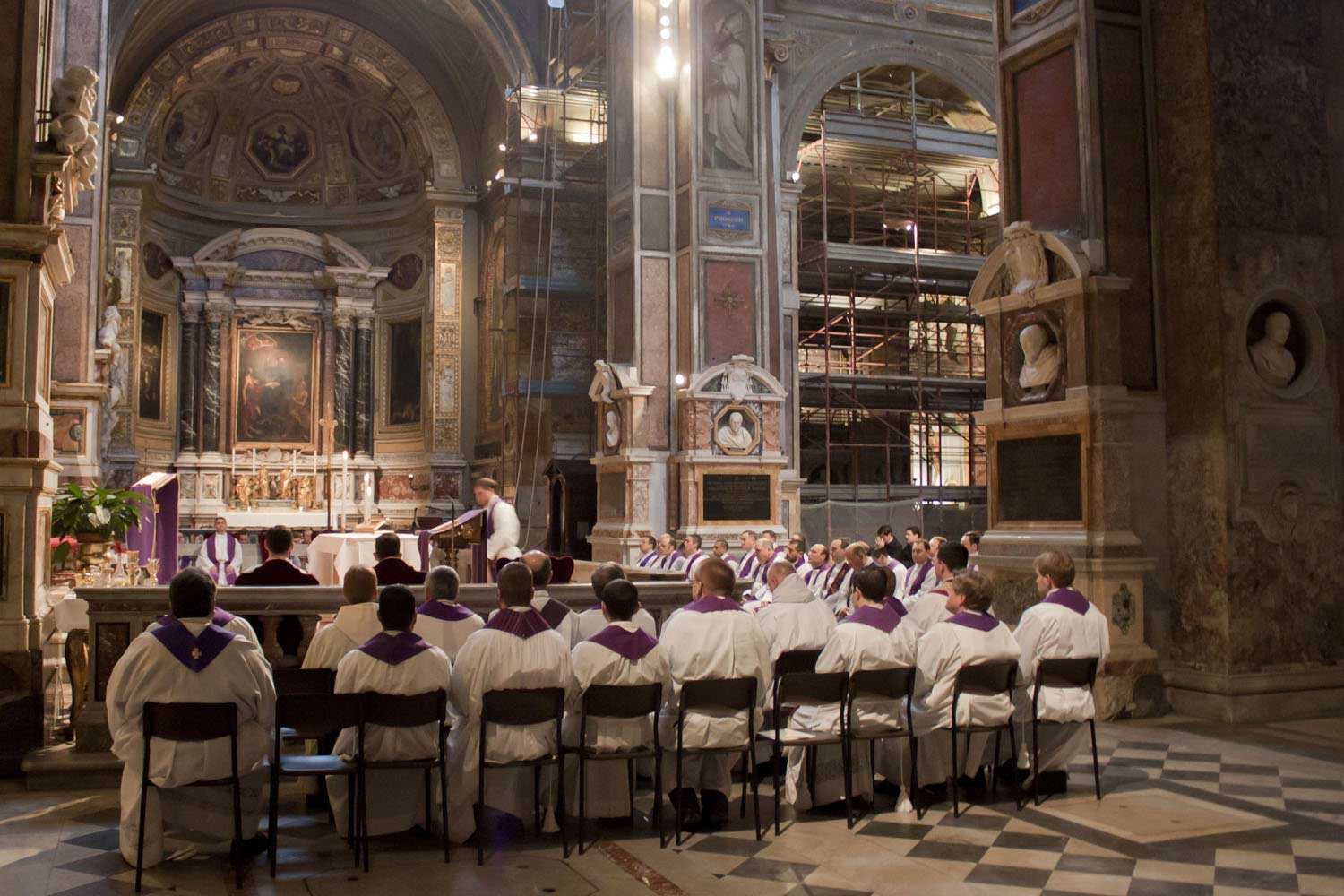
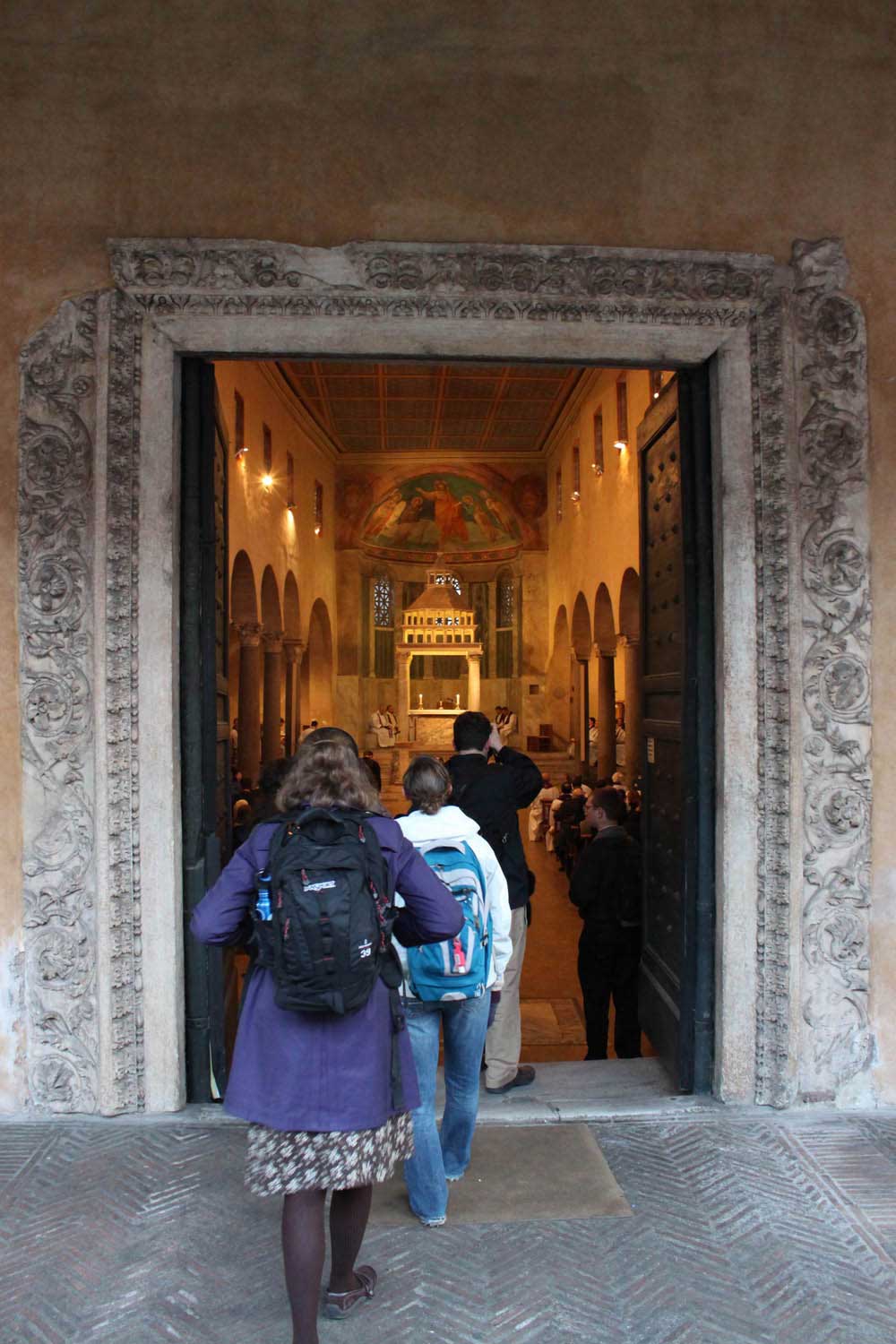
While doing my doctoral studies in Rome, I would go to daily Mass at Sant’Agostino, a parish where the Augustinian community and local parishioners could not have been more welcoming or more patient as I struggled to learn the mass in Italian. Early on in my stay, I happened upon what would be one of what seemed like a thousand novenas we would pray a year! My fellow parishioners prayed novenas in preparation for big feasts like St. Joseph and their favorite feasts, like St. Rita. It gave me a new appreciation for and understanding of the novena tradition. Novenas are nine days of public or private devotion to obtain a special grace (Catholic Encyclopedia).

 I began to find novenas really helpful in meditating on the particular grace of a feast or liturgical season. Because the world does not live by the liturgical calendar, I find novenas a way to prepare me to more fully enter into God’s time and to live by the liturgical calendar even as I carry a Google calendar in my pocket.

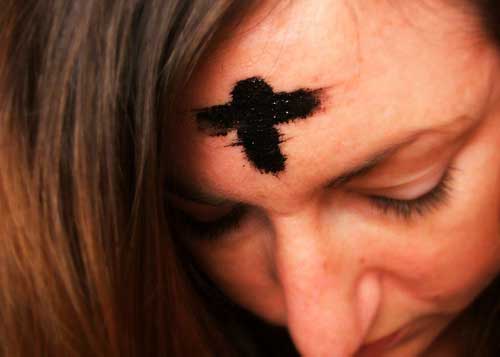
 Today, we are nine days away from the beginning of Lent and why not decide to pray a novena to prepare to receive the special graces the Lord showers upon us during Lent. In his 2011 Message for Lent, Pope Benedict writes “through the personal encounter with our Redeemer and through fasting, almsgiving and prayer, the journey of conversion towards Easter leads us to rediscover our Baptism. This Lent, let us renew our acceptance of the Grace that God bestowed upon us at that moment, so that it may illuminate and guide all of our actions. What the Sacrament signifies and realizes, we are called to experience every day by following Christ in an ever more generous and authentic manner.”

 This Lent, we have an opportunity to reflect on the meaning of our Baptism, to discover in what ways I live and act out of my Baptismal identity and in what ways I may need to strengthen this identity. You can prepare for this forty-day journey in prayer with a novena and in reflection as we think about how you will practice the disciplines of prayer, fasting and almsgiving. Here is one I found at Catholic traditions.com.

FATHER, all-powerful and ever-living God,
During the Holy Season of Lent
You call us to a closer union with Yourself.
Help me to prepare to celebrate
The Paschal Mystery
With mind and heart renewed.
Give me a spirit of loving reverence
For You, our Father,
And of willing service to my neighbor.
As I recall the great events
That gave us new life in Christ,
Bring the image of Your Son
To perfection within my soul.

This great season of grace is Your gift
To Your family to renew us in spirit.
Give me strength to purify my heart,
To control my desires,
And so to serve You in freedom,
Teach me how to live
In this passing world with my heart set
On the world that will never end.

I ask for the grace
To master my sinfulness
And conquer my pride.
I want to show to those in need
Your goodness to me by being kind to all.

Through my observance of Lent,
Help me to correct my faults
And raise my mind to You,
And thus grow in holiness
That I may deserve
The reward of everlasting life.

In Your mercy grant me this special favor [name a special intention]

The days of the life-giving Death
And glorious Resurrection of Jesus Christ,
Your Son, are approaching.
This is the hour
When He triumphed over Satan’s pride,
The time when we celebrate
The great event of our Redemption.
The Suffering and Death of Your Son
Brought life to the whole world,
Moving our hearts to praise Your glory.

The power of the Cross reveals
Your judgment on this world
And the kingship of Christ crucified.
Father, through His love for us
And through His Sufferings, Death and Resurrection,
May I gain eternal life with You in heaven

Smaller Camels, Bigger Needles?

G. K. Chesterton joked that ever since Jesus said it’s easier for a camel to pass through a needle’s eye than for the rich to enter heaven, we’ve been frantically trying to breed smaller camels and make bigger needles. Our Lord’s words in today’s gospel can make us very uncomfortable indeed, especially as we live in a culture that equates one’s worth with one’s wealth.

We all need money- there’s no question about that! Yet money can easily disrupt our discipleship, as it tempts us to greed, envy, pride, gluttony, workaholism, anxiety, indifference to other’s needs, and the illusion of self-sufficiency. It can lead us to forget God when we have it, and curse God when we don’t.

Money itself isn’t the problem. The problem is how we view it and use it. As Christians, our challenge is not to let our use of money keep of out of God’s kingdom, but use it to build that kingdom up. As Mother Teresa once said, “Money is useful only if it is used to spread the love of Christ.”

Readings for today’s Mass: http://www.usccb.org/nab/022811.sht

Becoming Like Children

The two were best-selling authors, but their books could not have been more different. Rick Warren wrote The Purpose-Driven Life about Christian discipleship; Sam Harris’ work, The End of Faith, advances atheism. When they met to debate, Warren was direct: “You’re more spiritual than you think,” he insisted to Harris. “You just don’t want a God telling you what to do.”

But isn’t the same true for many of us who find ourselves at Mass on Sunday? Unlike Sam Harris, we believe in God. But that doesn’t mean we want God telling us what to do. We hesitate to trust; we assume we know what’s best; we struggle to be in control; we prefer to do things our way.

To be a Christian, however, is not to be independent. It’s to be dependent upon the Lord, just as a child is dependent upon parents. This is what Jesus meant in today’s gospel when he insisted that we need to become like children to enter God’s kingdom. Put very simply, to be in God’s kingdom is to accept that God is king, and surrender ourselves in faith and obedience.

The world may dismiss this as weakness- and in a sense they’d be right! But we know that accepting our weakness is the beginning of wisdom. “No one needs God more than I do,” explained Mother Teresa, “because I am so weak. I rely on him twenty-four hours a day.”

Readings for today’s Mass: http://www.usccb.org/nab/022611.shtml

Nobody Said it was Going to be Easy…

Married life can be hard. It can be hard for 21st century Americans, and it could be hard for 1st century Judeans. If it weren’t, the Pharisees wouldn’t have pressed Jesus on the subject of divorce, as they did in today’s gospel. In response, Jesus explained that marriage was intended by God to be permanent. Yet to some then and to some now, this seems to be an unreasonable standard, because marriage can indeed be so hard.

Jesus spoke of husband and wife becoming one flesh. This refers to much more than a physical union. Instead, it’s a call to an intimate union of two persons which requires personal change, self-sacrifice, honest communication, openness to new life, and a desire to meet one another’s needs, heal each other’s hurts, and help one’s spouse become the person God intended him or her to be.

To do this is hard, and God knows it. He knows our selfishness, our neediness, and our fear of conflict. And God knows that it’s tempting for us to run away from problems instead of facing them head on, and to imagine that the grass is always greener on the other side of the fence.

This is precisely why God designed marriage the way he did. It takes a permanent commitment for marriage to flourish and grow, instead of it being crushed by our “hardness of heart.”

Readings for today’s Mass: http://www.usccb.org/nab/022511.shtml

The Devil Made Me Do It?

When Jesus tells us to cut off offending hands and feet and pluck out sinful eyes, he’s using the exaggeration that was characteristic of Jewish speech in his day. It isn’t meant to be taken literally. It is, however, an effective means of communication, as it sure wakes us up and grabs our attention!

Jesus’ point is that we’re to be absolutely ruthless in eradicating sin from our lives, because he knows our tendency to become too comfortable with them.

Sometimes we rationalize our behavior, saying things like, “Everybody does it” or “I’m not really hurting anyone!” or “I’m too set in my ways to change” or “God has bigger things to worry about” or “C’mon! This was the only fun I had all week!”

At other times, we blame our actions on others. We complain: “It’s my job that’s driving me to drink” or “My parents made me the way I am” or “I’m not cheating on my taxes- the government’s stealing my money” or the classic, “The devil made me do it!”

All such excuses are masks for laziness, a fear to change or accept responsibility, or a presumption of God’s mercy. And it’s precisely these attitudes Jesus challenges in today’s gospel. He doesn’t expect that we’ll completely change overnight, or that we’ll ever completely eloiminate sin from our lives. But he does expect us to struggle- a struggle demanded by love, and the fruit of which is holiness and peace.

“Christian holiness does not mean being sinless,” wrote Pope John Paul II, but rather it means struggling not to give in, and always getting up after every fall.”

Readings for today’s Mass: http://www.usccb.org/nab/022411.shtml

Witness and Testimony

At Baptism, every Catholic is anointed with oil to share in the priestly, prophetic and kingly mission of Jesus. As priestly people we are called to offer back to God the gift of our lives in love and service; as prophets we are called to give witness to the faith—at  home—on the job—and in the world and as stewards(kingly) we are called to be about the work of building the kingdom of God. These charisms were in full gear on Monday night as more than 400 Catholics from around the state of Maryland and seven bishops from the Archdiocese of Washington and the Archdiocese of Baltimore gathered in Annapolis to lobby for bills coming before the Maryland House and Senate that we think are critical for our communities and our church.

I am not talking about 400 professional lobbyists, which would not be an unusual gathering in the Washington metro region! I am talking about Catholics who by day, are business people, at-home moms, lawyers, active duty military, educators and retirees who come together, on a Federal holiday to gather by district, study the issues, prepare talking points and meet with legislators and their staffs for discussion and dialogue.

400 constituents gets the attention of any group of politicians but even more than the number is that for 27 years Catholics have come to Annapolis to speak to issues that not only affect us directly, (BOAST Tax credits that gives businesses a tax credit for their support of K-12 education or the Textbook program that makes books and computer hardware and software available to nonpublic schools ) but as noted by legislators, often we are speaking up in support of those who have no voice and bills that don’t affect the “Catholic lobbyists” directly. This gets people’s respect and attention and so our state senators’ and state house members’ doors are open to us on this night.

I could not have been more proud to be a Catholic as I watched my fellow Catholics give concise, articulate and passionate position statements. In some cases the senator or delegate or staffer would state strongly their opposition to our position and our lobbyists came back with tough questions and more detail. In one meeting a Catholic from Carroll County shared the seven principles of Catholic Social teaching to explain why we wanted to address such a wide cross-section of bills. In another case, two of the bills were new to house members. They had not seen anything about them yet, so we had a chance to frame the bill for them.

If you follow Maryland politics, you know that there is a bill to redefine marriage and we raised strong opposition to that.  This is not a surprise. Many however were surprised that we are supporting a bill that calls for the licensing and inspecting of abortion clinics. Maryland clinics are not licensed or inspected by the state and women have died or have been injured as a result. While in no way supporting abortion, we do always and everywhere want to promote and protect the life and dignity of women. Abortion clinics do neither. We are also opposing a bill that wants to cut program that serve those most in need.

It is not too late for you to participate. If you are a resident of Maryland, take some time this week to read over the bills on which we are taking a stand and contact your delegates to voice your support or opposition.

On St. Polycarp- Jesus and Me, Jesus and We

Christian faith is a deeply personal thing. At its heart is a personal relationship with a personal God. We’re unique, as is the story of our friendship with the Lord.

At the same time, Christian faith is more than “Jesus and me.” It’s also a matter of “Jesus and we.” Faith in Jesus involves our being joined with Jesus’ body- the Church. And that Church has particular beliefs about who Jesus is.

These days, however, it’s tempting to think: “I’ll believe about Jesus what I want to believe. You can have your beliefs, and I’ll have mine.” That seems like such an inclusive and reasonable approach. Unfortunately, it leads many to have a “mistaken identity” about Jesus. And that’s not good, because to see the face of Jesus properly is to see the face of God himself.

Confusion about Jesus’ identity is nothing new. It was certainly true of the earliest centuries of the Church, when beliefs about Jesus were being ironed out. Those involved appreciated how critical that process was. One opinion was not considered as good as another. Some were correct, others were not.

St. Polycarp, a second century bishop, found himself in the midst of those debates. He was a gentle and kind man. His teaching about Jesus, however, was uncompromising. St. Ignatius challenged him to be “firm as an anvil under a hammer” about those beliefs. St. Polycarp took that advice. He ultimately died for it.

As St. Polycarp’s witness reminds us, our personal faith in Jesus, and what the Church says is true about Jesus, are meant to go hand-in-hand. After all, as Jesus himself taught- only the truth will set us free.

Readings for today’s Mass: http://www.usccb.org/nab/022311.shtml

The Chair of St. Peter – Faith, not Furniture!

A Christian website I’ve come across boasts that its reach extends to over 36,000 different denominations. I did a double-take when I saw that number, but on reflection realized that it’s a sad testament to Christian disunity in our day. At the same time, it made me grateful to be a member of the Catholic Church, united in belief under the teaching authority of the Pope and our bishops.

We celebrate this teaching authority today, the memorial of the Chair of St. Peter. When we speak of Peter’s “chair,” we speak of the teaching authority Jesus gave to Peter and the popes who followed him, an authority we call the “Magisterium,” from the Latin word for “teacher.”

As someone who began his Christian life and professional ministry outside the Catholic Church, I’ve come to cherish the Magisterium as a precious gift. Firsthand experience has made it clear to me that without a divinely-instituted teaching authority, what results is fragmentation, disunity, and schism. In other words, over 36,000 Christian denominations.

That’s certainly not our Lord’s will. He wants us to be one, which is why he established the Magisterium in first place. Today, let’s celebrate the unity of faith we have, and pray for reunion with those who don’t.

Readings for today’s Mass: http://www.usccb.org/