During the month of February to celebrate African American History Month we focus on the ‘Spirituals’ and the impact they have on lives and faith. In this post we look to the theme of READINESS.
One of the great qualities of the African-American Spirituals is to treat serious subjects in a clear, memorable, and almost joyful way. This is true even of very weighty matters like sin and readiness for judgment day. They cover the judgment, but in a way that is playfully bright while at the same time deeply soulful.
Let us remember that Spirituals were written in the cauldron of great suffering. If any people might be excused from thinking that the Lord would exempt them from judgment day, it is surely the enslaved in the deep South. And yet the Spirituals are almost wholly devoid of self-righteousness. Enslaved blacks sang in ways that looked also to their own sins and need to be prepared. If they were prepared, God, who knew their trouble, would help them to steal away to Jesus. They did not see themselves as exempt from the need to be ready.
So let’s sample some of these lines from numerous spirituals that speak to judgment. Some of these first quotes occur in many of the Spirituals:
I would not be a sinner, I’ll tell you the reason why. I’m afraid my Lord might call my name and I wouldn’t be ready to die.
Some go to Church for to sing and shout, before six months they’s all turned out!
Better watch my brother how you walk on the cross! Your foot might slip and your soul get lost!
God gave Noah the rainbow sign, no more water but the fire next time!
Old Satan wears a hypocrite’s shoe, If you don’t watch he’ll slip it on you!
Knock at the window knock at the door, Callin’ brother Noah, can you take more?! No said Noah cause you’re full of sin! God’s got the key you can’t get in!
Oh sinner man better repent! Oh you’d better repent for God’s gonna call you to judgment There’s No hiding place down there!
Sinner please don’t let this harvest pass And die and lose your soul at last.
The words as one can see are memorable and poetic; they are playful and piercing. Other memorable songs of readiness and judgment are some of the following:
Most of these songs are deeply scriptural and make serious appeals to the human soul, but they do so in a way that is creative. They get you tapping your foot and invite you to a joyful consideration of the need to repent before it’s too late. Others are more soulful, even mournful, in their pentatonic scale. Given all the reluctance to discuss the four last things (death, judgment, Heaven, and Hell), songs like these may help to reopen the door to necessary conversations between preacher and congregation, parents and children. They are a valuable masterpieces and the great treasure for the Church and for the world.
Note too, some of these Spirituals had a double meaning we should not ignore. The Gospel Train surely referred to the journey to heaven, but it too many it was also code for the Underground Railroad. Michael Row the Boat ashore speaks also the journey to the other side but it also images crossing the river from slave states to the free North.
We cannot conclude this reflection on readiness Spirituals without reference to one of the greatest and most spirited of them all: In Dat Great Gettin’ Up Morning. It is a tour de force of the last Day when the trumpet blows and the dead rise. It is joyful—a real toetapper—and makes a serious point along with a wish:
“In That Great Gettin’ Up Mornin Fare You Well!” I’m Gonna tell ya ’bout da comin’ of da judgment! Der’s a better day a comin’, Fare you well, fare you well! Chorus: In dat great gettin’ up mornin’, Fare you well, fare you well In dat great gettin’ up mornin’, Fare you well, fare you well Oh preacher fold yo’ bible, For dat last souls converted, Fare you well, fare you well Blow yo’ trumpet Gabriel, Lord, how loud shall I blow it? Blow it right and calm and easy, Do not alarm all my people, Tell dem all come to da judgment, Fare you well, fare you well! Do you see dem coffins burstin, do you see dem folks is risin’ Do you see dat fork of lightenin’, Do you hear dat rumblin’ thunder ?!? Fare you well, fare you well! Do you see dem stars a fallin’, Do you see da world on fire?!? Fare you well, fare you well Do you see dem Saints is risin’, Fare you well, fare you well See ’em marchin’ home for heaven, Fare you well, fare you well Oh! Fare you well po’r sinners, fare you well, fare you well Fare you well po’r sinners, fare you well, fare you well!
Thank God for the Spirituals, and thank those he inspired to craft them!
This is the second in a series of four postings on African American Spirituals.
In this second article on the Spirituals lets review of some of the general history of the Spirituals and then, we look to the theme of HOPE.
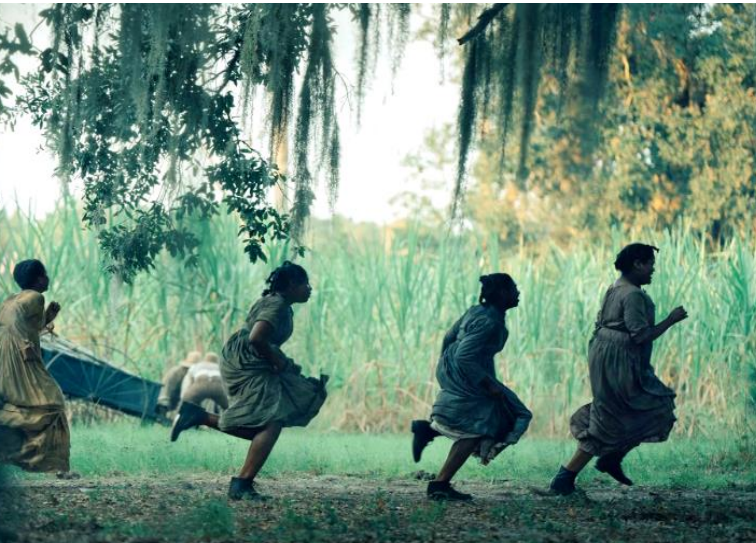
The Spirituals of the African-American tradition, sometimes called the “Negro spirituals” are songs created by enslaved Africans in the decades prior to the Civil War. They do not have individual composers, but emerged from the whole community. They were passed orally from person to person and improvised as suited the singers. They were crafted in the fields where the slaves would sing to pass the day and ease the often tedious work of planting, tending and harvesting the crops. Some were simple work songs that were sung in a call and response style. Over the years, the slaves and their descendants adopted Christianity, the religion of their masters, and they began to include religious themes into their field songs. They re-shaped it into a deeply personal way of dealing with the oppression of their enslavement. These songs, became known as spirituals and reflected the slaves’ expression of their faith. The songs told stories, from Genesis to Revelation: Adam and Eve in the Garden, Moses and the Red Sea. They sang of the battle of Jericho, Ezekiel seeing a wheel, Mary, Jesus, the blind man seeing, God troubling the water, and yes, the Devil, as one to avoid!
Some of the best known spirituals include: “Sometimes I Feel Like a Motherless Child,” “Nobody Knows The Trouble I’ve Seen”, “Steal Away,” “Swing Low, Sweet Chariot,” “Go Down, Moses,” “He’s Got the Whole World in His Hand,” “Every Time I Feel the Spirit,” “Let Us Break Bread Together on Our Knees,” and “Wade in the Water.”
The Spirituals have great authority since they were written in the cauldron of great suffering. If any people might be excused from thinking that the Lord had forsaken them or, that they would be exempt from judgment day, it was surely the enslaved in the Deep South. If any people might be excused from crying out for vengeance, it was those enslaved in the South. And yet the spirituals are almost wholly devoid of condemning language. Enslaved blacks sang in ways that looked also to their own sins and need to be prepared. If they were prepared, God, who knew their trouble, would help them to steal away to Jesus. They did not see themselves as exempt from the need to be ready and to persevere in the faith. In the years following Slavery, these songs were collected and given choral form that included elaborate harmonies and swift rhythms. The spirituals are wonderfully creative and contain a wisdom that comes from suffering and a hope that comes from faith in God’s promises. The African American Spirituals are a national treasure and gift to the Church of immeasurable value.
Now we turn to the theme of Hope.
There is an old story told of a young slave girl who lamented to her mom, “Mama, all the White folks got shoes, why don’t we?” Her mother replied, “Oh, we got shoes alright. See,
And then Mama said “Remember child,” Everybody talkin’ ‘bout heaven ain’t a goin’ there.”
(NOTE: Click on the songs in blue text for links to the internet to hear versions of these Spirituals).
So, songs and sayings like these got taken into the field by the slaves and became the foundation of the Spirituals. In the midst of great injustice and oppression with no end in sight, one can become depressed and angry. The message of the Spirituals drew on biblical stories and themes of life to convey the hope of ultimate victory in Jesus and the reward for faith. They were a kind of “Balm in Gilead to heal the wounded soul.” The oppressed looked beyond this valley of tears to heaven where joys unspeakable and glories untold awaited the faithful Christian. One spiritual says,
These songs gave hope in the midst of great sorrow and oppressive slavery. And this hope was not only in heaven after death, it was now as well. Many of the songs had double meanings. The city called heaven that I am “trying to make my home” was also code for the North where freedom could be found. “Marchin’ up to freedom land” could mean heaven but it could also mean the land of freedom up north. The slaves knew that not every blessing had to wait for heaven. God is in the blessing business right now. The spirituals sought to give courage to fellow slaves to forsake fear and look for opportunities to lay hold of their God-given freedom.
This is part one of a four part Series I am doing on the Spirituals
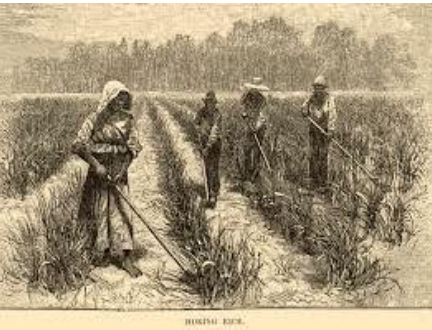
The Spirituals of the African-American tradition, sometimes called the “Negro spirituals” are songs created by enslaved Africans in the decades prior to the Civil War. They do not have individual composers, but emerged from the whole community. They were passed orally from person to person and improvised as suited the singers. They were crafted in the fields where the slaves would sing to pass the day and ease the often tedious work of planting, tending and harvesting the crops. Some were simple work songs in a call response style. Here is an example:
Refrain: Hoe Emma Hoe! You turn around dig a hole in the ground.
Call: O Emma help me to pull these weeds!
Response: Hoe Emma Hoe! You turn around dig a hole in the ground.
Call: O Emma worked harder than two strong men!
Response:Hoe Emma Hoe! You turn around dig a hole in the ground.
Over the years, the slaves and their descendants adopted Christianity, the religion of their masters, and they began to include religious themes into their field songs. They re-shaped it into a deeply personal way of dealing with the oppression of their enslavement. These songs, became known as spirituals and reflected the slaves’ expression of their faith. The songs told stories, from Genesis to Revelation: Adam and Eve in the Garden, Moses and the Red Sea. They sang of the battle of Jericho, Ezekiel seeing a wheel, Mary, Jesus, the blind man seeing, God troubling the water, and yes, the Devil, as one to avoid!
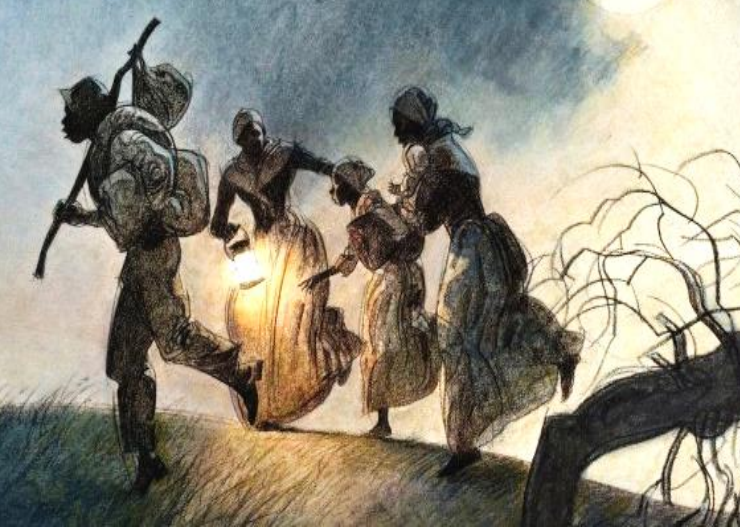
The songs were also used to communicate with one another in a kind of code, without the knowledge of their masters. This was particularly the case when a slave was planning to escape bondage and to seek freedom via the Underground Railroad. For example the well-known “Steal Away to Jesus” was not merely a song about death and the journey to a heavenly homeland; and, “I ain’t got long to stay here” in the song didn’t refer simply to death, but also to escaping to the north and out of slavery.
There were thousands of spirituals. However, the oral tradition of the slaves’ ancestors — and the prohibition against slaves learning to read or write—meant that the actual number of songs is unknown. Some of the best known spirituals include: “Sometimes I Feel Like a Motherless Child,” “Nobody Knows The Trouble I’ve Seen”, “Steal Away,” “Swing Low, Sweet Chariot,” “Go Down, Moses,” “He’s Got the Whole World in His Hand,” “Every Time I Feel the Spirit,” “Let Us Break Bread Together on Our Knees,” and “Wade in the Water.”
The Spirituals have great authority since they were written in the cauldron of great suffering. If any people might be excused from thinking that the Lord had forsaken them or, that they would be exempt from judgment day, it was surely the enslaved in the Deep South. If any people might be excused from crying out for vengeance, it was those enslaved in the South. And yet the spirituals are almost wholly devoid of condemning language. Enslaved blacks sang in ways that looked also to their own sins and need to be prepared. If they were prepared, God, who knew their trouble, would help them to steal away to Jesus. They did not see themselves as exempt from the need to be ready and to persevere in the faith.
During these last days of Black History month I would like to write several articles on the ‘Spirituals’ and the impact they have on our lives and faith. Each week, we will look at a specific theme and provide some history and clarity in relations to scripture.
I this column I want to focus on songs of sorrow. Frederick Douglas said of these spirituals: “Slaves sing most when they are most unhappy. The songs of the slave represent the sorrows of his heart; and he is relieved by them, only as an aching heart is relieved by its tears.” These songs were not mere self pity, they were an exhaling of their souls and a confident expectation of God’s ultimate deliverance.
They sang words and themes like: (You can click on each song to hear the song).
NOTE: You can hear the actual songs listed above by clicking on the song title which contains a link.
In the first years after the Civil War, most former slaves grew distant from the music of their captivity. Many wondered if this musical treasure would be lost. Thank God, no. The performance of spirituals was revived when a group of students from Fisk University in Nashville, Tennessee, began to tour in an effort to raise money for the school. They performed wonderfully scored choral versions of the spirituals that we are most familiar with now. The Fisk Jubilee Singers carried spirituals to many parts of the United States and also made tours of Europe in the 1870s. Their success encouraged other Black colleges to learn and perform more and more spirituals. Large collections of spirituals were collected, scored and published to meet the public demand.
The spirituals are wonderfully creative and contain a wisdom that comes from suffering and a hope that comes from faith in God’s promises. The African American Spirituals are a national treasure and gift to the Church of immeasurable value.
I write to you in the midst of a semi-“religious” event: the Super Bowl. People have donned their sacred attire and are shouting praises. I enjoy football, but see it a lot less than most since I’m a priest and tend to be busy on Sundays! Yet I remain quite fascinated at how passionate and dedicated many Americans are to their team and to the game.
Would that more Catholics had the same dedication to the Mass and the Church that true football fans have to the game. (Fan is short for fanatic.) Would, too, that all priests and religious had the same sacrificial dedication that football players have.
Consider for a moment the players. They spend years coming up through a system of high school, college, and professional levels. Priest and religious do as well. Football players give their all to the game; their whole life is centered on it. Exhausting, year-round practice, weightlifting, and punishing games. They risk injury and suffer many pains, all for the game. Do priests and religious show the same dedication? Are they willing to make the same kind of sacrifices for Jesus? Will they risk injury and attack? I pray we will and do, but I wonder. True, we are not paid millions, but we don’t do it for the money. Are we as dedicated and sacrificial?
And what of the faithful? So many Catholics are dedicated to the game of football. They even come to Church wearing the jersey of their team, often sporting someone else’s name on their back! Let’s compare and contrast some of the aspects of football and see if the same thrill and dedication are exhibited for our Lord, the Mass, and the Church.
Disclaimer – I write a lot of this “tongue in cheek.” I am not brooding over this, just observing. I am also using a technique known as hyperbole. Hyperbole uses exaggeration to make a point. For example the phrase, “There must have been a million people there” is an exaggeration that is not literally true but does convey the idea that a lot of people were present. Please take these comparisons in the light-hearted manner in which they are intended.
That said, the point remains a serious one: we often exhibit unusual priorities when it comes to worldly vs. spiritual matters. We do well to look at ourselves with humor in order to ask God for greater passion for what matters most. Football is about a bag full of air going up and down a field. Faith is about our eternal destiny.
Consider the following Super Bowl behaviors and contrast them to Mass and the faith:
Super Bowl– Many fans prepare for the game for weeks. They follow the playoffs, review stats, and listen to commentaries and predictions. They make sure they are “up on” the game.” At a bare minimum, they know who is playing, and usually a great deal more. They often plan parties and invite others to join them. They discuss with fellow fans their wishes and the likely outcome of the game. They often boast of their team and loudly proclaim their intent to watch the game and see their team emerge victorious! They anticipate the game and look forward to it joyfully.
Mass – Little preparation is evident on the part of most who go to Mass. Generally, they do not review the readings or spiritually prepare by frequent confession. Fasting has disappeared from the Catholic landscape. In fact, ¾ of Catholics don’t go to Mass at all. And even of those who do, many don’t anticipate it joyfully. Many even dread going; they try to “fit it in” at the most convenient time and hope for the shortest possible Mass. This is true even on the great feasts like Christmas, Easter, and Holy Week. Most Catholics do not talk to others about going to Mass or invite them to join them.
Super Bowl – Many fans wear special clothes for the occasion, even at regular-season football games. They wear jerseys, hats with insignias, and other “sacred” apparel. Some even paint their faces and bodies.
Mass – Sacred apparel for Mass is all but gone. There isn’t much special attire and little care is given to display one’s faith through clothing or other marks of faith. Sunday clothes were once special. Women wore hats and veils; men wore suits and ties and would never dream of wearing a hat into Church. But all that is gone. “Come as you are” seems to be the only rule.
Super Bowl– People who go to football games often spend hundreds of dollars for tickets. Those who are fortunate enough to go to the Super Bowl spend thousands, gladly. Those who stay home often spend a lot of time and money on parties.
Mass – Most Catholics give on average 5-7 dollars per week in the collection plate. Many are resentful when the priest speaks of money.
Super Bowl – Most fans arrive early for the game, and do so eagerly. At regular-season games, many have tailgate parties. Fans at home joyfully anticipate the kick off and spend time in preparatory rites such as parties and beer. Even ordinary games find the fans watching pre-game shows and gathering well before the kickoff.
Mass– Many Catholics time their arrival for just before the Mass begins. Many—as high as 50%—arrive late. Arriving early to pray or to greet fellow worshippers is generally not something that is planned for.
Super Bowl– People LOVE the game. They are enthusiastic; they shout, cheer, and are focused and interested in each play. They are passionate, alive, and celebratory. They also care a great deal, exhibiting joy at good plays, and sorrow at bad ones. They are alive, exhilarated, and expressive. They care passionately about what is happening on the field.
Mass – Many look bored at Mass. In many ways, the expressions on people’s faces remind one more of a funeral than of a resurrected Lord. Rather than a sea of joyful faces, it looks like everyone just sucked a lemon: bored believers, distracted disciples, frozen chosen. One finds exceptions in many Black parishes, at charismatic Masses, and in some Latino parishes. But overall, little joy or even interest is evident. It is true that many would not think of loud cheers as appropriate in Church, but even a little joy and interest would be a vast improvement.
Super Bowl – Many fans sing team songs. Here in Washington we sing, “Hail to the Redskins, Hail victory! Braves on the warpath! Fight for ol’ D.C.!”
Mass – Most Catholics don’t sing.
Super Bowl– Even a normal football game lasts four hours including the pre- and post-game shows. Toward the end of each half, the game is often intentionally slowed down; incomplete passes stop the clock, etc. Fans gladly accept this slowdown and are even happy and excited if the game goes into overtime.
Mass – Frustration and even anger are evident in many of the faithful if Mass begins to extend beyond 45 minutes. Some people even begin to walk out. Many leave right after Communion even if the Mass is “on time.”
Super Bowl – Fans understand and accept the place of rules and expect them to be followed. Often they are angry when they are broken or when penalties are not called. They respect the role of the referee and the line judges and, even if they are unhappy, accept the finality of their judgments. They seem to understand that a recognized and final authority is necessary for the existence of the game.
Mass – Some Catholics resent rules and routinely break them or support those who do. They also resent Church authorities who might “throw a flag” or assess a penalty of any sort. Often they do not respect bishops or the authority of the Church. Many refuse to accept that recognized and final authority is necessary for the existence of the Church. Many Catholics resent pointed sermons at Mass in which the priest speaks clearly on moral topics. Praise God, many Catholics are faithful and respect Church authority. Sadly, though, others do not.
Super Bowl– Many who go to a football game endure rather uncomfortable conditions for the privilege: hard seats, freezing cold, pouring rain. Often the game is hard to see and the sound system is full of echoes. Still the stadium is full and few fans complain.
Mass – Many complain readily at any inconvenience or discomfort. It’s too hot; it’s too cold; the Mass times aren’t perfectly to my liking. Why aren’t the pews cushioned? (They’re harder to keep clean, that’s why.) Why wasn’t the walk to my usual door shoveled clear of snow? When will the sound system be better? Why do they ask me to move to the front in an empty Church?
OK, that’s enough. Remember, I use hyperbole here and intend this in a lighthearted manner. We humans are funny, and what we get excited about is often humorous. The truth is, people love their football. But this one point is serious: would that we who believe were as passionate as football fans. We need to work at this on two levels.
Clergy and Church leaders need to work very hard to ensure that the liturgy of the Church is all that it should be. High-quality, sacred music, good preaching, and devout and pious celebration are essential. Perfunctory, hurried liturgy with little attention to detail does not inspire.
The faithful, too, must realize more essentially what the Mass really is and then ask God to anoint them with a powerful and pious awareness of the presence and ministry of Jesus Christ. They must ask for a joy and zeal that will be manifest on their faces, in their deeds, and in their dedication.
Here’s one of the better Superbowl commercials from this year:
One of the more common concerns that young adults express to me is the difficulty in meeting and dating. Once adulthood is reached, of course, the purpose of dating is to look for a spouse. Hence, their problem is a problem for all of us because marriage and family are central to the life of the Church as well as the foundation of our culture and nation.
When I was a young priest, more than thirty years ago, I had numerous weddings to celebrate, and most of the couples were in their early twenties. Today, I have far fewer weddings, and the average age seems to be early thirties. In 1990 there 326,079 weddings in Catholic parishes. In the last year before the plague (i.e. 2019) there were 137,885, a 58% drop.
While there are many practical reasons for the delay of marriage (college debt, longer time spent in college, the rise of the virtual world, etc.) we must consider that we who are older aren’t doing much to help them to “pair up.”
In the video below, an older couple notices that a young man and woman live next to each other but are seemingly lost in their own worlds. Through a series of mysterious mailings, they get them to meet. The old expression calls this “pairing them up.”
Adults used to take a more active role in getting their children to meet potential spouses. My parents’ families knew each other before my parents married and had helped make the introduction. In our parish, we often sponsored dances and other youth and young adult activities. Far fewer colleges were co-ed in those days, and so the faculty was much more intentional about sponsoring activities between the women’s and men’s colleges. Frankly, there was an expectation that young people should get married soon after high school or college was completed. It was “time to settle down.”
Every now and then, as a priest, I try to make introductions between young adults. At other times I try to coach them into introducing themselves. I also advise many of them to work through other friends to meet someone. I tell them that when I was young I remember asking a friend if he thought his sister might go to the junior prom with me. He laid the groundwork, found out that she had some interest, and set up the occasion for me to ask her. I met my college sweetheart when a friend told me, “She likes you and wants you to ask her out!” I was surprised because she was so pretty; I would never have had the nerve to ask her out on my own. I gladly took the hint and asked her that very evening.
At any rate, we older folks need to do a better job of pairing ‘em up. Elders, families, Church leaders, friends—they all have a role to play; we used to do it more frequently. See if this video gives you any ideas.
The gospel for this Sunday is continued next week, so I will postpone the analysis of it until then. Instead, I will focus on the first reading, from Nehemiah 8. It is a wonderful meditation on the glory and wonder of the Word of God and it deserves our attention.
The background of the text is that in 587 BC, Israel had been conquered by the Babylonians and the survivors of the war were led into exile in Babylon. After 80 years the Persians conquered the Babylonians. Cyrus, King of Persia, permitted the Jews to return to the Promised Land. Sadly, only a small number chose to return and rebuild the ruined land and city. Among them was Nehemiah, a Jew and a royal official, who led the small band back and oversaw the rebuilding of Jerusalem.
Along with Ezra the priest, he also led a spiritual renewal that was spurred on not only by the purification of exile, but also by the rediscovery of certain lost or forgotten sacred books. On one occasion the people gathered to hear the proclamation of one of the lost books. That is where we pick up today’s reading.
I. HUNGER for the Word of God – The text says, And all the people gathered as one man into the square before the Water Gate; and they told Ezra the scribe to bring the book of the Law of Moses which the LORD had given to Israel.
Note that the people are hungry for the Word of God. They have gathered together and now make the unified request (as one man) that the Book of the Law be brought and proclaimed to them.
The book that is likely referred to here is the Book of Deuteronomy. It would seem that the book had either been lost or at least severely neglected in the preaching of the time prior to the Babylonian exile of Israel. In Deuteronomy was contained not only a development of the Law but also a list of blessings for following it and grave warnings for not doing so. After the painful experience of exile, the people who gathered are aware that, had they heard and heeded Deuteronomy, they could have avoided the terrible events of the Babylonian conquest and the captivity of Israel.
So now, chastised and sober, they are hungry for this Word from God. As the Book of Psalms says, Before I was afflicted I went astray, but now I obey your word (Psalm 119:67).
Are you hungry for the Word of God? More so than for money? More so than for bodily food? Scripture says,
The ordinances of the LORD are true, and righteous altogether. More to be desired are they than gold, even much fine gold; sweeter also than honey and drippings of the honeycomb (Psalm 19:19).
Man does not live by bread alone, but that man lives by everything that proceeds out of the mouth of the LORD (Deut 8:3).
I have esteemed the words of his mouth more than my necessary food (Job 23:12).
I rejoice at thy word like one who finds great spoil (Psalm 119:162).
Are we hungry for the Word like this? It seems that we won’t miss a meal for our bodies, but we’ll go days without the Word. Our bodies gain weight and obesity is widespread in our culture. But our souls too easily languish and endure famine from the Word of God and the Sacrament of Holy Communion.
Are you hungry for his Word? An old song says, “More about Jesus in his word, holding communion with my Lord, hearing his voice in every line, making each faithful saying mine. More, more about Jesus, more of his saving fullness, see more of his love who died for me.”
II. HEARING of the Word of God – The text says, And Ezra the priest brought the law before the assembly, both men and women and all who could hear with understanding, on the first day of the seventh month. And he read from it facing the square before the Water Gate from early morning until midday, in the presence of the men and the women and those who could understand; and the ears of all the people were attentive to the book of the law. And Ezra the scribe stood on a wooden pulpit which they had made for the purpose
Notice these two things:
ASSEMBLY – There is a communal dimension to the celebration of God’s Word here. It’s not just a private celebration or reading. And while there is today in a more literate culture the possibility of reading the Scriptures alone, we should not neglect to gather with the Church and be taught the Word of God by others, especially the clergy, who are trained and anointed unto this task. Scripture says, And let us consider how to stir up one another to love and good works, not neglecting to meet together, as is the habit of some, but encouraging one another, and all the more as you see the Day drawing near (Heb 10:24). Too many think that all they need is the Bible alone. But notice that the proclamation of the Word is communal here. We’ll develop more on this topic in a later portion of the text.
AMOUNT of time – The text says that the proclamation and explanation of this Word took place from “morning to mid-day.” This is no “say it in seven minutes” sermon. It is an extended time spent studying, praying, and hearing the Word of God. Many today consider a Mass that runs longer than 45 minutes to be counterproductive. It’s funny how we excited we get when a three-hour football game goes into overtime, but then we complain when a sermon lasts longer than “regulation” time. We find so much time for other things and our attention span for them is long, yet we have so little time for the Word of God and we are so impatient that the reflection be over sooner rather than later. Yes, we find time for everything else. You can blame the preacher, and we may deserve it, but there’s usually more to the picture than just the preacher.
III. HONOR for the Word of God – The text says, And Ezra opened the book in the sight of all the people, for he was above all the people; and when he opened it all the people stood. And Ezra blessed the LORD, the great God; and all the people answered, “Amen, Amen,” lifting up their hands; and they bowed their heads and worshiped the LORD with their faces to the ground.
Note the remarkable honor given to the Word through active listening. While it is true that many today, especially more traditional Catholics, see silent and passive listening as the proper, pious, and respectful demeanor during the readings and sermon, this is not the cultural setting described in this passage. Neither is a quiet demeanor the ubiquitous norm in the Church today. It is not a question of which is right and which is wrong, but of whether or not the Word of God is being honored.
The listeners that morning some 2,500 years ago stood and said “Amen, Amen!” They lifted up their hands and even prostrated themselves on the ground while the Word was read. They were engaged in active listening, giving the Word their undivided attention and interacting with its sounds as it resonated within them. This is attentive listening, reflective and responsive, hearing with thoughtful attention.
There are different cultural expression of attentiveness, but you can tell a lot by looking at peoples faces. Even in cultures in which people exhibit a prayerful silence, these same people get excited at football games, even jumping to their feet. Excitement and exuberant joy are not unknown in cultures in which religious reserve is the norm. One would hope to rule out that such reservation is merely indicative of boredom. For those of us who are more reserved, we don’t want to be sour-faced saints, bored believers, distracted disciples, or cold Christians. While reverence is expressed by many through prayerful and attentive silence, we want to be sure it is not simply the face of the “frozen chosen.”
And for those of us who are more demonstrative, we want to be sure those outpourings are not a merely formulaic recitations of “Amen” or a sort of egocentric, theatrical acting. Neither should one simply seek to exalt the preacher or the pew just to get everyone “pumped up.” The “Amen corner,” where it exists, should be sincere.
The key point is to honor the Word of God, whether by reverent silence or exuberant response. But in no way should the Word of God leave one bored and unmoved.
IV. HELP unto the Word of God – The text says, The Levites also, helped the people to understand the law, while the people remained in their places. And they read from the book, from the law of God, clearly; and they gave the sense, so that the people understood the reading.
The Word is not alone. It is explained and interpreted. We need the Church in order to properly understand the Word of God, to have it authentically interpreted. And while devotional reading is to be encouraged, the Word of God is not meant to be read apart from the Church. As the Protestant experiment has shown, an attempt to have the Scriptures without the Church and the Magisterium, from whence the Holy Spirit uttered them, is to usher in disastrous, never-ending division. This truth is expressed well in the story about the Ethiopian official: So Philip ran to him, and heard him reading Isaiah the prophet, and asked, “Do you understand what you are reading?” And he said, “How can I, unless some one guides me?” And he invited Philip to come up and sit with him (Acts 8:30).
The authoritative preachers of God’s Word; the Bishops, priests, and deacons; have the task to read, analyze, organize, illustrate, and apply the Word of God in the liturgical setting.
In the task of proclaiming the Word of God, there is a need beyond that for authoritative teachers; there is also the need for the pastoral assistance of others. In my own community there are excellent lectors who often read the Word with such power and inflection that I hear it as I have never heard it before. Further, I have a wonderful choir that often sings hymns and passages rooted in the Scripture such that I come to know them as never before. It’s really pressed to my heart. My congregation, too, by its vivid response to the proclaimed Word and the preaching, brings forth insight and makes the Word of God an experienced reality.
V. HEARTFELT reaction to the Word of God– The text says, And Nehemiah, who was the governor, and Ezra the priest and scribe, and the Levites who taught the people said to all the people, “This day is holy to the LORD your God; do not mourn or weep.” For all the people wept when they heard the words of the law. Then he said to them, “Go your way, eat the fat and drink sweet wine and send portions to him for whom nothing is prepared; for this day is holy to our Lord; and do not be grieved, for the joy of the LORD is your strength.” So the Levites stilled all the people, saying, “Be quiet, for this day is holy; do not be grieved.”
They are so moved by what is proclaimed that they weep. Their weeping is due to the realization of what their past stubbornness has brought about: disaster, decline, and exile. Had they but heard and heeded God’s Law, this terrible period of Israel’s history could have been avoided.
True listening to the Word of God should bring forth a response. The desired outcome of preaching the Word is to elicit a response. The purpose of the Word of God is not only to inform, but to transform. It might make you mad, or sad, or glad, but if you are really listening to the authentic Word of God, you cannot remained unmoved. Scripture says,
For the word of God is living and active, sharper than any two-edged sword, piercing to the division of soul and spirit, of joints and marrow, and discerning the thoughts and intentions of the heart. And before him no creature is hidden, but all are open and laid bare to the eyes of him with whom we have to do (Heb 4:12).
VI. HEEDING of the Word of God – Nehemiah chapter 8 continues beyond the passage in the lectionary today. It goes on to say, On the second day the heads of fathers’ houses of all the people, with the priests and the Levites, came together to Ezra the scribe in order to study the words of the law. And they found it written in the law that the LORD had commanded by Moses that the people of Israel should dwell in booths during the feast of the seventh month, and that they should publish and proclaim in all their towns and in Jerusalem, “Go out to the hills and bring branches of olive, wild olive, myrtle, palm, and other leafy trees to make booths, as it is written.” So the people went out and brought them and made booths for themselves, each on his roof, and in their courts and in the courts of the house of God, and in the square at the Water Gate and in the square at the Gate of Ephraim. And all the assembly of those who had returned from the captivity made booths and dwelt in the booths; for from the days of Jeshua the son of Nun to that day the people of Israel had not done so. And there was very great rejoicing. And day by day, from the first day to the last day, he read from the book of the law of God. They kept the feast seven days; and on the eighth day there was a solemn assembly, according to the ordinance.
Among the things they discovered was that Israel had not been celebrating an important and appointed feast day: the Feast of Tabernacles (or Booths). This feast, while a harvest festival, was also a celebration that acknowledged the gift of the Law on Mt. Sinai. It is quite symbolic that they had stopped celebrating this particular feast. The leaders, having studied the Word of God, reestablished it and commanded the people to observe it carefully. This illustrates heeding of the Word of God.
Notice all the respect we’ve seen for the Word of God: they hungered for it, heard it, honored it, helped in its proclamation, and had a heartfelt reaction to it. But here’s where the real honor is given: now they heed it. There’s a lot of “lip service” paid to the Word of God, a lot of praise. Some even shout “Amen” in Church. But the real acid test is whether we heed the Word. An old spiritual says, “Some go to Church for to sing and shout. Before six months they’s all turned out.” Another says, “Some seek God don’t seek him right, they fool all day and pray at night.”
We are warned of the danger of failing to heed:
And every one that hears these sayings of mine, and does them not, shall be likened unto a foolish man, who built his house upon the sand: And the rain descended, and the floods came, and the winds blew, and beat upon that house; and it fell: and great was the fall of it (Mat 7:26).
And that servant who knew his master’s will, but did not make ready or act according to his will, shall receive a severe beating. But he who did not know, and did what deserved a beating, shall receive a light beating. Every one to whom much is given, of him will much be required; and of him to whom men commit much they will demand the more (Luke 12:47).
An hour is coming, has indeed come, when the dead shall hear the voice of the Son of God, and those who have heeded it shall live (John 5:25).
There is wonder in the Word of God, but only if we heed it.
This week at daily Mass we have been reading various Gospels. To some they may appear as arbitrarily selected. But they are not; they are an extension of the Feast of the Epiphany and this week that we are in is called “Epiphanytide.” Epiphany, as many know, means, “manifestation.” As such, the gospels of this past week bid us to reflect on the way Christ is manifest to us and to the early disciples. There is here, no attempt to provide a full Christology. Rather certain “windows” or images of Christ are given to us that we may more fully recognize who he is.
In the Breviary, the Antiphon to the Magnificat links three “Epiphanies” of the Lord:
Three mysteries mark this holy day: “Today the star leads the Magi to the infant Christ; today water is changed into wine for the wedding feast; today Christ wills to be baptized by John in the river Jordan to bring us salvation.”
The Gospels of Epiphanytide include these Gospels and others as well. What follows here is a brief summary of each day of Epiphanytide and its teaching or manifestation of Christ Jesus. I do not provide here a full exegesis of each passage, only how it is, in some way an Epiphany of Christ.
In Monday of Epiphanytide the Gospel, manifests Jesus as Messiah in the fulfillment of two Messianic promises. In the first place there is his Galilean ministry where Matthew notes that Jesus left Nazareth and went to live in Capernaum by the sea, in the region of Zebulun and Naphtali. This identifies him with the Messiah, for Isaiah the prophet had said,
Land of Zebulun and land of Naphtali,the way to the sea, beyond the Jordan, Galilee of the Gentiles, the people who sit in darkness have seen a great light, on those dwelling in a land overshadowed by death light has arisen. (Is 9:1-2).
Later, in the same Chapter of Isaiah, comes the familiar text of Isaiah:
For unto us a child is born, unto us a son is given, and the government will be upon His shoulders. And He will be called Wonderful Counselor, Mighty God. The everlasting Father, the Prince of Peace. (Is 9:6)
In the second place Jesus is manifest as the Messiah through his actions of healing and preaching. Matthew notes,
He went around all of Galilee, teaching in their synagogues, proclaiming the Gospel of the Kingdom, and curing every disease and illness among the people. His fame spread to all of Syria, and they brought to him all who were sick with various diseases and racked with pain, those who were possessed, lunatics, and paralytics, and he cured them.
And great crowds from Galilee, the Decapolis, Jerusalem, and Judea, and from beyond the Jordan followed him.
And these actions fulfill numerous prophecies of Isaiah including: Isaiah 29:18; Isaiah 35:5; and Isaiah 61:1 Indeed, when the Messiah came the the eyes of the blind wouldbe opened, the deaf would hear, the lame would walk, lepers be cleansed, and the poor would have the good news preached to them.
Jesus, especially in Matthew’s Gospel, is presented as the new and greater Moses. As God gave the Law through Moses and fed the people in the wilderness with Manna, so Jesus gives the Law and feeds the multitudes in the wilderness. Moses himself pointed to Christ when he told the Jewish people, A prophet like me will the LORD, your God, raise up for you from among your own kindred; that is the one to whom you shall listen. (Dt 18:15). And in today’s Gospel we see Jesus teaching, giving and interpreting the Law and feeding the multitude.
When Jesus saw the vast crowd, his heart was moved with pity for them, for they were like sheep without a shepherd; and he began to teach them many things…. Then, taking the five loaves and the two fish and looking up to heaven, he said the blessing, broke the loaves, and gave them to his disciples to set before the people; he also divided the two fish among them all. They all ate and were satisfied.
The Gospel for Wednesday of Epiphanytide is the familiar Gospel of Jesus walking on the water. Two things in this gospel point to Jesus divinity and title as Lord. Here is an excerpt:
[Jesus] came toward them walking on the sea. He meant to pass by them. But when they saw him walking on the sea, they thought it was a ghost and cried out. They had all seen him and were terrified. But at once he spoke with them, “Take courage, it is I, do not be afraid!” He got into the boat with them and the wind died down. They were completely astounded. They had not understood the incident of the loaves. On the contrary, their hearts were hardened.
Note first that the expression, “He meant to pass by them.” This is phrase in the Scriptures is a common one in the theophanies of the Old Testament. I develop this matter more fullyhere: What does it mean that Jesus meant to pass by his disciples? In that article I present numerous examples of the use of this when God appears. Here, for our purposes it underscores Jesus identity as Lord and God.
Note secondly the observation that they are completely astounded. They were surely astounded that he could walk on the water. Earlier in Mark, the Apostles spoke more fully of their astonishment: Overwhelmed with fear, they asked one another, “Who is this, that even the wind and the sea obey Him?” (Mark 4:41). Their question is rhetorical since every Jew would agree, the wind and sea only obey God.
Thursday Lk 4:14-22 He is the Messiah whom they have awaited.
Today’s Gospel of Epiphanytide is:
[Jesus] unrolled the scroll and found the passage where it was written: The Spirit of the Lord is upon me, because he has anointed me to bring glad tidings to the poor. He has sent me to proclaim liberty to captives and recovery of sight to the blind, to let the oppressed go free, and to proclaim a year acceptable to the Lord. Rolling up the scroll, he handed it back to the attendant and sat down, and the eyes of all in the synagogue looked intently at him. He said to them, “Today this Scripture passage is fulfilled in your hearing.”
Here, reiterated, is the manifestation, by his own testimony, that he is the long awaited Messiah as Isaiah had prophesied. This manifestation is straight-forward, admits of no ambiguity and is solemn: Jesus is the Christ, the Messiah and Lord.
It happened that there was a man full of leprosy in one of the towns where Jesus was; and when he saw Jesus, he fell prostrate, pleaded with him, and said, “Lord, if you wish, you can make me clean.” Jesus stretched out his hand, touched him, and said, “I do will it. Be made clean.” And the leprosy left him immediately. Then he ordered him not to tell anyone, but “Go, show yourself to the priest and offer for your cleansing what Moses prescribed; that will be proof for them.” The report about him spread all the more, and great crowds assembled to listen to him and to be cured of their ailments, but he would withdraw to deserted places to pray.
Here too as in yesterday’s manifestation is the fulfillment of Messianic prophesies. In Isaiah 35:5-6, the prophet speaks of the day of salvation this way: “Then the eyes of the blind shall be opened, and the ears of the deaf unstopped; andspeaks also of the lame, and the mute. Isaiah 26:19 says, “Your dead shall live”; Isaiah 29:18 also refers to the healing of the deaf and the blind; while Isaiah 61:1 speaks of bringing good news to the poor (quoted by Jesus in yesterday’s Gospel in the synagogue of Nazareth (Luke 4:18-19).
Saturday – Jn 3:22-30 – John the Baptist Confessed him to be Messiah and Lord.
In today’s Manifestation, John makes it clear to his jealous disciples that Jesus is Messiah (Christ).
John answered and said, “No one can receive anything except what has been given from heaven. You yourselves can testify that I said that I am not the Christ, but that I was sent before him. The one who has the bride is the bridegroom; the best man, who stands and listens for him, rejoices greatly at the bridegroom’s voice. So this joy of mine has been made complete. He must increase; I must decrease.”
So revered was John the Baptist among First Century Christians, that many wondered if he were not, in fact, the Messiah. But the Scriptures attest he strongly denied this and pointed to Jesus, not himself. In John 1:20, there is an emphatic testimony attributed to John: “And he said and did not deny, but said, “I am not the Christ.””
And the Holy Spirit descended upon [Jesus] in bodily form like a dove. And a voice came from heaven, “You are my beloved Son; with you I am well pleased.”
Thus, in fulfillment of Psalm 2:7 “You are my Son, this Day I have begotten you,” Jesus shares the Father’s nature since he is eternally begotten not made. He is not a creature distinct from God the Father. Since Jesus is begotten he shares his Father’s nature.
And, though not strictly in Epiphanytide, Cycle A adds the Gospel of the water changed to wine in recognition of the ancient linking of this miracle to Epiphany. This miracle manifests his glory:
Jesus did this as the beginning of his signs at Cana in Galilee and so revealed his glory, and his disciples began to believe in him.
And thus we see the extension of the Feast of Epiphany into the weeks following Epiphany in something of an intensive way. Some will note that the old Missal extended Epiphany unto Septuagesima Sunday as we shifted gears into Lent. And this is true enough. In the new Missal, epiphanytide is not as long, but it should not be missed.
The gospel for daily Mass on Wednesday recounted the familiar story of Jesus walking on the water after having multiplied the loaves and fishes.
There is an odd turn of phrase (to modern ears) midway through the gospel: About the fourth watch of the night, [Jesus] came toward them, walking on the sea. He meant to pass by them (Mark 6:48).
This seems odd. Why would Jesus approach them, walking on the water (astounding miracle that it is), and simply mean to pass on by?
We may think that this means that Jesus will not to stop, but will keep on walking past them. However, this is not what it means.
This expression of God “passing by” is a common one in the theophanies of the Old Testament. For example, when Moses was up on the mountaintop, God revealed himself by “passing by.” The text says,
Then Moses said, “Now show me your glory.” And the Lord said, “I will cause all my goodness to pass in front of you, and I will proclaim my name, the Lord, in your presence. I will have mercy on whom I will have mercy, and I will have compassion on whom I will have compassion. But,” he said, “you cannot see my face, for no one may see me and live.” Then the Lord said, “There is a place near me where you may stand on a rock. When my glory passes by, I will put you in a cleft in the rock and cover you with my hand until I have passed by. Then I will remove my hand and you will see my back; but my face must not be seen” (Exodus 33: 18-23).
Another example of this is in the appearance the Lord made to Elijah, who was hiding in a cave after his flight from Jezebel. At one point, God called him out of the cave so that He could “pass by.” The text says,
The Lord said, “Go out and stand on the mountain in the presence of the Lord, for the Lord is about to pass by.” Then a great and powerful wind tore the mountains apart and shattered the rocks before the Lord, but the Lord was not in the wind. After the wind there was an earthquake, but the Lord was not in the earthquake. After the earthquake came a fire, but the Lord was not in the fire. And after the fire came a gentle whisper. When Elijah heard it, he pulled his cloak over his face and went out and stood at the mouth of the cave (1 Kings 19:11-13).
Here are some other example of this “passing by.”
When John the Baptist saw Jesus passing by, he said, “Look, the Lamb of God!” (Jn 1:36)
Now hearing a crowd going by, [the Blind Man] began to inquire what this was. They told him that Jesus of Nazareth was passing by. And he called out, saying, “Jesus, Son of David, have mercy on me!” (Lk 18:37-38)
Hence, for Jesus to “pass by” is not for Him to walk past us in hiding. Rather, it is for Him to reveal Himself to us and summon us to faith. Similarly, in the Old Testament texts God “passes by” not to hide but to reveal Himself and summon us to faith.
Some may argue that these phrases should be translated differently so that we can better grasp their meaning. Why not just say, “He came toward them to reveal himself to them?”
Perhaps there is some merit in this argument. But I would counter that a text often has a greater effect on us if it causes us to ponder and pray. Consider that in trying to “decode” this text, we have looked at four other passages. Further, we have deepened our appreciation of what it means for God to “pass by.”