Patience… a reflection on the need to trust the slow work of God.

091813Impatience is a human problem, but we moderns must surely suffer from it more acutely. This is because many of our modern conveniences create the illusion, and to some extent the reality, of instant results. Flip a switch and the lights come on. Instant downloads supply our computers with music, games, software, and almost instant information.

Any delay in this process almost certainly infuriates us. The journey from east to the west coast used to take many months in a wagon train. And now it is accomplished in four to five hours. Despite this marvel, even a 20 minute flight delay infuriates us.

I remember as a child that we would be enticed to buy a certain product, say cereal, by being able to cut off the box tops. And, having saved four of them, I could mail them in to the address, to get a certain die cast or plastic toy, or other promotional product offered by the cereal company. Instructions always said, “Allow 3 to 4 weeks for delivery.” This is almost unthinkable today. What child would spend months eating cereal, clipping boxtops, and then wait 3 to 4 weeks for delivery?!

Yes, patience is a human problem, but it has a certain modern intensity about it. Expectations are premeditated resentments, and we have a lot of expectations about instant results. Thus resentments are always near at hand.

In the spiritual life especially and in personal growth we must learn to slow down to a more human pace, and also the pace of God. To many of us moderns, God is infuriatingly patient and slow. He, and the Church seem to think in terms of centuries, not a 24 hour news cycle.

And He leaves many things unresolved for quite a long time. Where was he when Hitler and Stalin and Mao and any number of unjust rulers were plying their wares? Why does he not thunder from heaven more often, as we sometimes read in the Old Testament?! Why does He not send jagged lightning bolts to destroy sinners from the face of the earth? (are you so sure you would escape?) And when will the Church he founded “get with the program” and start denouncing and excommunicating those who sinfully dissent?

Of course, while there is a place for discipline, even excommunication,  the Lord warned of acting too hastily in the parable of the weeds and the wheat. The impatient field hand zealously wanted to rip out all the weeds, but the owner warned that the wheat might be harmed as well.

Many of us may well wonder what harm could come from wiping out a few sinners from the face of the Earth or expelling a few more heretics. The Lord does not explain why, but simply warns that hasty and severe actions may cause harm even to the wheat.

Yes, we are an impatient lot, no only with others, but also with ourselves. Why, we wonder can we not simply overcome certain sins by sheer force of will? Why are we not instantly more chaste, more generous, more kind, more zealous, simply by deciding to be so!? Why do prayers of deliverance and exorcism not have instant effects? Why does confession not solve sin at once by its grace?

In an instant result society, discouragement is right at hand. And even when we do make progress, suddenly setbacks are at hand. “I was doing so well!” We think.

Most confessors know by experience that perseverance is good and holy, but impatience is devilish. It is especially devilish because it tries to masquerade as piety, saying “You ought to be a saint by now!” But it is really pride. Yes it is pride to think you can go from 0 to 100 and skip all the steps the rest of us poor slobs need to make. Who am I to think I can simply lay hold of holiness by a few decisions? Holiness is far higher than I imagine in my reductive insistence that I ought to be able to lay hold of it in a moment. No, this is a journey, a journey with setbacks, and progress in fits and starts. Frankly even a lifetime may not be enough and purgatory is a likely pit stop for most of us after death.

Why so slow? Because grace builds on nature. And it is our nature to change slowly, almost imperceptibly. When I was an infant I looked nothing like I do today. Frankly my mother was grateful that I did not come forth from the womb at six feet tall and 200 lbs. No, I came forth at six pounds, sickly and dying. I was baptized immediately since I was not expected to survive. But having recovered, I have progressed today to what and who I am. But at no point could my growth be perceived. It was slow, steady, and also marked by setbacks, injury, and also growth spurts.

If this is the case with our bodies, it is also with our soul, which is the form of our body. I have made remarkable spiritual progress in the last thirty years of my life. But day by day, I noticed little change. Yet, by the grace of God I am what I am.

Sudden a rapid growth seldom lasts an is usually called cancer, a deadly disease. Healthy growth is organic, steady, slow, and almost imperceptible.

Impatience is a form of pride and it is not in wisdom that we indulge it. Scripture says,

Write down the revelation and make it plain on tablets so that a herald may run with it. For the revelation awaits an appointed time; it speaks of the end and will not prove false. Though it linger, wait for it; it will certainly come and will not delay. See, the rash have no integrity; but the just one who is righteous because of faith shall live. (Habakkuk 2:2-4).

Finally some words of reminder and comfort. I am not going to say who wrote these words because I have sometimes discovered that we care more who said something, than what is said. You can Google a phrase and find easily enough who wrote this. But for now let the words themselves have the necessary impact. I have little doubt these words will bless you as they have often blessed me.

Above all, trust in the slow work of God.
We are quite naturally impatient in everything
to reach the end without delay.

We should like to skip the intermediate stages.
We are impatient of being on the way to something
unknown, something new.

And yet it is the law of all progress
that it is made by passing through
some stages of instability,
and that it may take a very long time.

And so I think it is with you;

your ideas mature gradually—let them grow,
let them shape themselves, without undue haste.
Don’t try to force them,
as though you could be today what time
(that is to say, grace and circumstances
acting on your own good will)
will make of you tomorrow.

Only God could say what this new spirit
gradually forming within you will be.
Give Our Lord the benefit of believing
that his hand is leading you,
and accept the anxiety of feeling yourself
in suspense and incomplete.

This video pokes fun at our impatience in modern culture and how it breeds resentment:

The Cross is Pregnant with Victory! A Brief Ecclesiology for the Downcast

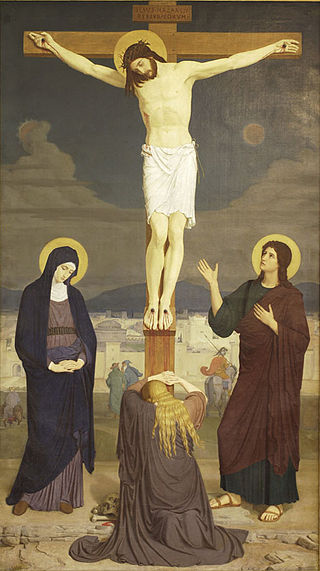
091713In the parlor of my rectory where I meet with most of my spiritual directees, and others who come to me for counseling or instruction, there is a crucifixion scene, (see photo at right).

Among the many things means, it is for me something of a paradigm of the Church at her darkest moment. How tiny the Church had suddenly become. Gone were the crowds of Galilee which followed the Lord. Gone were the crowds of Palm Sunday shouting Hosanna. Gone were all but one of her first bishops, St. John. One of them (St. Peter) had followed at a distance, and then three times denied he knew the Lord, the rest of those first bishops fled to God knows where.

And now the tiny infant Church was gathered around her Lord at the foot of the cross. Yes, there is the Church, so tiny; only St. John, Mother Mary, Mary Magdalene, Mary Clopas, and perhaps one other. So tiny now, so few.

Yet here was one of her greatest moments. The bride of Christ, the Church mystically united to her groom.

And strange,  though even in this reduced and horribly suffering condition of the Church, Satan’s back was being broken, his power undermined. It is almost a Trojan Horse incident. For, even as Satan gloats over his apparent gift, a surprise waits within, a hidden power that will send him reeling.

And small though the Church has become, she will gain two surprising converts that Good Friday: the good thief, and the centurion. Perhaps not a bad day for a Church reduced to five or six: two converts, plus the breaking of the back of Satan’s power.

I often point to the statute in my parlor. For many come to me at times with great struggles, perhaps feeling defeated, or at least discouraged. I point and remind them that, for those with faith, there is something about being in the crucible, something about the cross that is pregnant with victory. Satan still has his incursions, and his apparent victories. But they are only temporary, they cannot stand. His back was broken Good Friday, and not by a large and triumphant Church, but by a tiny and suffering Church, the Church in the crucible, The Church at the foot of the cross with Christ her groom and head.

Many of us who share this blog together, are often dismayed at the condition of the Church today, and even more, the condition of culture. For those of us who are little older, our discouragement is deepened by the fact that many of us can remember a time when things at least seemed to be greater repair. Our families were largely intact, our churches filled, people seemed generally more able to make commitments and keep them…

The list could go on, but you get the point. Things were far from perfect, but things did seem to be more orderly, and the basic fundamentals necessary for culture, civilization and for the Church were more in place.

Yet, our mind should never stray far from that Good Friday afternoon, the Church so reduced, betrayed by most of her members, even her leaders; yet never more powerful.

There have been days of triumph of the Church, only to see collapse! And then, Victory again! The early days were so marked by suffering and martyrdom, and then suddenly the Edict of Constantine and the Church emerged victorious. Resurrection!

And yet, finally set free, Arianism reared its ugly presence and so many other endless fights ensued, perhaps necessary, over basic doctrines of Christology and the Trinity.

And then the sudden loss of the western flank, as the Roman Empire collapsed and moved to the east, as so-called barbarian tribes swept in to what we call Europe today. St. Augustine was so troubled that he wrote the City of God trying to explain how his beloved Roman Empire, finally having embraced the faith would now fall. St. Jerome, depressed, went to live in a cave. The Cross again.

But the Church struck up a conversation with those barbarians, and began to convert them, first in small numbers, then in waves. Resurrection!

And then, just as things seemed to be improving, all of North Africa, the great cradle of the Church, was lost, almost overnight, laid waste and mowed down by the edge of the Muslim sword. There were once 500 bishops in North Africa, some of the greatest Fathers of the Church had lived there: Augustine, Cyprian, Tertullian, Athanasius, and so many others. And now the great North African part of the Church lay beneath the sand. The Muslims made it across Gibraltar and into the Portugal and Spain before they were turned back. All of Asia Minor so beautifully evangelized by St. Paul, was also lost, lost to the Church! The Muslim invaders made it all the way to the gates of modern Vienna before they were turned back. The Cross again.

But now that North Africa was tragically lost, Europe began to flourish as a kind of Christian civilization was built there: Universities were founded, hospitals too, and the great cathedrals rose. Something called the great “Medieval synthesis” took hold. Resurrection!

And then, all of this to begin to erode with the rise of Nominalism and the Cartesian revolution it would eventually usher in. With intellectual confusion, came an epistemological revolution that severed the connection of the mind to reality, ushered in radical doubt, decadence, the rise of the individual autonomous self, and the rejection of any lawful authority within the Church. The revolution that some called the “Reformation” led to a break of unity, and the Church was once again firmly cast to the foot of the cross to search her own soul and begin a counter reformation. Ecclesia semper reformanda (The Church is always being reformed). The cross again.

Yet even as a million people left the Church in Germany in the Lutheran revolt, our Lady ushered in nine million Mexicans at Guadalupe. Resurrection!

Back in Europe, as wars, rebellion and confusion raged the Church was wracked by division, more Protestant revolts, and the hundred years war. A great darkness was gathering there that would lead to the bloodbath known as the 20th Century: two World Wars, bloody ideological revolutions, an iron curtain and an almost complete loss of faith. The lights were going out in Europe.  The Cross!

Yet, even so, faith began to take hold in the New World, And, though early persecuted, waves of immigrants escaping Europe brought the Catholic faith to the United States in numbers too big to ignore. Even though Europe was racked with confusion and doubt, many fled from there and found in America a remarkable synthesis of faith and culture held in tight knot ethic communities built around parish churches….(With healthy persecution besides!)  Resurrection!

But even America could not ultimately withstand the decadence of Europe and its decline in the post Cartesian centuries. America was eventually drawn into two European World Wars, and the poison of modernism reached our shores. And now there seems to be bewildering, almost demonic decline. The cross again!

And, suddenly, Africa is abloom again. There is a 7,000% increase in the number of Catholics in Africa in the last fifty years. Resurrection!

Yes, it would seem that the Church must often find herself back at the cross. Yet even as we are there now in the West, we must never forget that the Cross is pregnant with victory.

Many look to the Church now with ridicule and declare that we are done and defeated. But they have not studied history, nor do they know the power of God, and that the Cross is pregnant with victory.

Even within the Church there are naysayers who point to glory days and, in fear, announce great woe, and seek to assign blame for the current decline. “Things have never been worse,” they declare. But they too have not studied history (things have been far worse) nor do they seem to remember the power of God.

That the Church is at the foot of the Cross in many ways, at least in the West, in hard to deny, but the Cross is pregnant with victory. Just you wait and see!

Ecclessia semper reformanda! Sed Christus Resurrexit tertia die! Semper! Ubique!

Some simple ways for priests to enhance the beauty of the Mass

091613These are times when many of the clergy have (properly) insisted on returning to a strict following of the General Instruction of the Roman Missal (GIRM).These instructions are found in two essential places: the instructions at the beginning of the Sacramentary and the red instructions interspersed within the prayers of the Mass. These last instructions are called the rubrics. Fr. Zuhlsdorf is famous for the simple instruction, “Say the black and do the red.” That is to say, the prayers, written in black ought to be said, just as written, and the red instructions are to be followed exactly. To this I say a hearty “Amen.”

However, I would like to point to a step beyond in the celebration of the Mass wherein we celebrants might also re-learn some old habits that lent grace to the Mass, particularly in terms of the movements of the celebrant. While such suggestions are not strictly required, they can lend a real grace to the actions of the celebrant and to the Mass in general.

Helpful norms – I have learned these things largely by saying the Traditional Latin Mass which described the motions of the celebrant in great detail. However, I have also tired to observe what I can in the Ordinary Form of the Mass as well. If matters such as these are observed, though not in a robotic fashion, there can be a greater grace of movement and a deliberateness that lends to the solemnity of the Mass. Here are a few suggestions from the “old days” that can help:

1. When making the sign of the cross upon himself at the beginning of mass the Celebrant uses his right hand. But his left hand should not be left suspended in the air or dangling. He ought to place it on on his chest, just at the bottom of the breast bone as he makes the sign of the cross with his right hand. When finished his hands should be rejoined in the center.

2. The same is true when blessing the people at the end. The celebrant places his left hand at the bottom of his chest and he blesses the people with his right hand: fingers joined and straight. His right and left motions should reach far enough, to his left and right shoulders. Again, when finished, his hands should join in the center.

3. The hands – In general when the celebrant is standing and his hands are not in use they are joined, fingers straight and thumbs crossed at his breast. When the celebrant is seated, his hands should rest, separated, palms down, one on each thigh, near the knee.

4. When the celebrant moves somewhere in the sanctuary, he ought to turn in that direction, hands joined at the chest, prior to moving in that direction. In general simply stepping laterally to the left or right should be avoided.

5. The bowing of the head – It is appropriate at Mass to bow the head at certain times, such as after the priest says, “Let us pray,” or at the name of Jesus. The simple bow of the head is accomplished entirely by the neck. The shoulders do not lunge and the torso does not move at all. The neck is like a hinge and the bow of the head is accomplished entirely at the neck and above.

6. Turning pages – When the priest is at the altar and turns the page of the missal, he does so (usually) with his left hand, while his right hand rests on the altar, not suspended in the air or dangling.

7. Epiclesis – Likewise when the priest makes the sign of the cross over the bread and wine just prior to the consecration he does so with his right hand, while his left hand rests on the altar, just outside the corporal. The left hand is not dangling in the air etc.

Well this is enough, since most of you are not priests. However, it is always good for the laity to encourage those of us who are priests when you observe reverence. We are human and can become forgetful of things in the Mass. Sometimes too we are not aware of how we come across. So, encourage us when you observe devotion and piety. Some years ago it was called to my attention that I tended to fiddle with my glasses a good bit when at the altar and that sometimes my fingers moved a lot when I was praying the Eucharistic prayer. I was unaware of these things and was (kindly) informed by the deacon.

In the end I have found some of the old “rules” helpful. They need to be done with manner that is not robotic or contrived, otherwise they may come across as affectations.

Perhaps you would like to add to the list or raise some concerns of things you have noticed at Mass. Please remember, be kind and constructive in the observations you make. Also, this need not become a post wherein we battle about forms of the Liturgy either. I am trying to emphasize matters that pertain to both forms of the liturgy.

The following video shows a priest making use of some of what we have discussed here. Notice that he places his left hand on his chest while he confers the blessing with his right hand. Though it is not required in the newer liturgy to do the circular action of “gathering” the blessing, it is not forbidden either and, if done well can add solemnity. Note too how he turns fully before he moves to his right. This is more elegant than simply pealing off to his right.

Are we willing to pay the financial cost of Faith….or not? And what does our answer say about what we value?

091513There is an interesting, albeit at times concerning, article over at Marketwatch.com that reports the simple fact that being a member of a believing community “costs” you something. And while the article is directed to a Jewish context, its implications reach all of us who believe and belong to the Church.

Underlying the article and those it interviews is a not so subtle premise that it is somehow wrong for faith to “cost” much. Never mind that just about anything in life costs something, involves tradeoffs and that the things we value are often where we chose to spend more. Somehow the implication of the article is that faith should be free, or less demanding financially.

Here are few excerpts from the article by Charles Passay with commentary from me in red and more substantial comments. The full article is here: The Financial Cost of Religious Faith

With the onset of Yom Kippur this evening, Jews will begin a day of fasting, prayer and reflection — all key parts of this holiest of holy days on the religion’s calendar. But this Day of Atonement often comes with another ritual of sorts — namely, a pitch from synagogue leaders for contributions….[It] may strike some as distasteful, but it underscores the reality that faith of any kind — Judaism, Christianity, Islam — often has a literal price. Houses of worship solicit donations in order to pay the bills…..

True enough, there are real costs to maintaining buildings and staffs related to houses of worship. But why should it be any more “distasteful” that a house of worship has costs and bills than say, a public school, a local recreation facility or city stadium, such that we are taxed to pay for their upkeep? The simple fact is that things we value have costs that need to be covered, churches are no different except that we are not forced to pay for them like the government does with taxes.

Beyond such fees, various religious practices, from adhering to certain dietary laws to avoiding certain types of investments, also have costs associated with them….The Jewish practice of keeping kosher — that is, adhering to a way of eating in which meats have been butchered and prepared a certain way, among other dietary matters — can translate into a 20% increase in a family’s food costs, according to one study….Some of the faithful say the financial burden has become harder to bear, especially in light of the slumping economy of late.

But again, it also costs money to go to a football game (often a LOT of money). And that money could be spent elsewhere too. But for people who value football, it is (apparently) a price they are willing to pay, along the the “privileges” of standing in long lines, sitting out in the cold rain on some game days, and paying 15 dollars for a tiny beer and hotdog. But people line up for it.

It’s about what people value. If I value my faith I accept that there are going to be some costs and inconveniences associated with it. If I want to keep my beautiful church open and in good repair, I accept that I will be asked to contribute to that, and will not have that money to spend on a movie or something else. If I want to be a true Christian, I am going to be generous to the poor and needy, and that means I can’t spend my money of some other things.

But If I love God, I value what he values and I want to do it. It’s called tradeoffs, and most people make them everyday for things they value. For Jewish people Kosher is important, and like anything important, it has some costs and tradeoffs associated with it. Welcome to life, filled with tradeoffs and with the need to decide what you value most. You can’t have it all, and almost none of it is free.

“I wish it wasn’t so expensive,” says Judy Safern, a Jewish resident of Dallas who runs a strategic consulting firm. In the past couple of years, Safern has cut back on what might be dubbed her “religion budget,” pulling her two children out of a Jewish day school in favor of a public one (a savings of $16,000) and foregoing membership to her local synagogue (a savings of $1,800). Safern’s hope is that she can maintain her faith without emptying her pocketbook. “I refuse to continue to be squeezed,” she adds.

While it is true that all of us might “wish” that things weren’t expensive, insisting on such wishes is not really a sign of maturity. A football fan might wish that the tickets in the nosebleed section behind the pillar weren’t $450 a piece, but (mysteriously) that is what the market will bear and he has to decide to pay it or not, whatever he wishes were not the case.

It is a worthy consideration, as Ms. Safern implies, to ponder if every expense is necessary. But at the end of the day faith does have costs in time, treasure, and tradeoffs. Does she value her faith so as to bear this cost…or not? From her remarks it seems doubtful that she values her faith much, since the “cost” is not worth it.

Regardless of the religion, Safern is far from alone in expressing such sentiments….A 2012 study by the Barna Group, a market research firm, found that 33% of Protestants and 41% of Catholics had reduced their contributions to churches or religious centers because of the economy….. Actually, Barna Group Vice President Clint Jenkin says it may be more than just the economy at play. He argues that a new generation of the faithful sees religion in an entirely different — and decidedly isolationist — way. “Faith is becoming much more something you do privately rather than something at an institution,” he says.

Exactly. Money and other resources are ultimately about what we value and what we do not value. The complaint about cost is not really all that much about money, it is about faith, it is about what we value. Many have devalued faith and decided that it isn’t “worth” much.

And, as the article suggests,  one can try and reinvent the faith into a “private” matter. But at the end of the day it is clear that the driving force behind most theological syncretism and designer religion is not deep faith at all. It is about making faith less demanding, less costly, more convenient, more about “me” and what pleases me.

A few concluding thoughts. At one level, faith need not cost much at all. We could just meet in a local park on Sundays, expect that clergy be volunteer, and that very few implements such as books, bread and wine, candles, etc be used. But of course such an attitude seems foreign to people who value their faith more than that.

Traditionally it has been the instinct of the faithful to honor their belief with substantial buildings, and dignified implements. Further, since the faith is something weighty, the faithful do not simply depend on rookies or volunteer clergy for the most central matters of teaching the faith and leading the faithful in worship and governance. Rather, given the respect due to Holy Faith, clergy are expected by the faithful to be well trained. (I spent five years of post graduate and attained to two Master’s Degrees, then spent almost ten years in the internship of being a vicar rather than a pastor). This is par for the course and, yes, its costs money. But this is the instinct of the faithful.

So, faith, just like everything else we value does cost. And while there are legitimate discussions to be had about whether every cost is necessary, at the end of the day it is going to cost. If you want to find out what people value, find out what they spend their money and time on. In our increasingly secular and faithless world, many (including some believers) lament what faith “costs” even as we spend exorbitantly on many other things.

As I write this, it is a Sunday afternoon and quite literally billions of dollars and millions of hours have been spent today in an obsession known as “football,” a game having to do with the movement of  a bag full of air on a field. Some fans (short for fanatic) spend as much as four to eight hours glued to the screen, or in loud uncomfortable stadiums. Hundreds of dollars are spent on tickets or parties. And yet many of these same people scoff at the “cost” of a Mass that lasts more than an hour, and would, if they went at all, consider themselves generous contributors if they put five or ten dollars in the basket.

Yes, Sunday is a day of great contrast.

What should faith cost? It is clear that the answer to this is for us to decide.

In the end however, the “lament” of the cost of faith reported in the article above is not about the money. It is about faith and what we really value. Everything “costs” it’s just what you decide to spend your money on that reveals what you most value. Do you value the faith? You decide, and you show it by what you are willing to pay. Where a person’s money and time is, there is their heart.

Video: the immigrants to this country were poor. But they combined nickels and dimes to build beautiful churches. Why? I suspect because they valued their faith and thought the cost to be worth it. Here are a couple of videos I put together of their gifts to us:

Crazy! A Homily for the 24th Sunday of the Year

091413Crazy! – The three parables of today’s lengthy Gospel challenge our conventional thinking. All three of them are quirky and describe people doing things that we most likely would NOT do. In fact all three of them, especially the first two, seem crazy. Who would ever do what the shepherd of the lost sheep and the woman of the lost coin do? No one, really. Likewise the Father in the Story of the Prodigal Son breaks all the rules of “tough love.” His forgiveness has an almost reckless quality. No father of Jesus’ time would ever tolerate such insolence from his sons. It just wasn’t accepted. So all three of these parables, at one level, are just plain crazy.

But that is one of the most fundamental points Jesus seems to be making here. The Heavenly Father’s love for us is just plain “crazy.” I do not mean it is irrational by using this word, but it does stretch the limits of our human thinking. Neither do I intend irreverence by using the word “crazy.” Permit a preacher’s hyperbole so that we can enter into the astonishing quality of God’s love and mercy. It cannot be understood or really explained in human terms. Who really understands unlimited and unconditional love? Who can really grasp the depths of God’s mercy? His grace is “amazing” in that it goes completely beyond my ability to comprehend. It transcends merely human concepts. Thank God! If God were like us we’d all be in trouble, frankly, we’d all be in Hell.

Let’s look at each Parable. The Gospel texts are too lengthy to reproduce here. But you can read the whole of it here: Luke 15

I. The Parable of the Lost Sheep The Lord speaks of a shepherd who leaves ninety-nine sheep to search for one who is lost. Would a shepherd likely do this? Probably not! The passage drips with irony, even absurdity. Perhaps if the lost sheep was near at hand he might venture over the next hill. But the average human shepherd would cut his losses and stay with the ninety-nine. Many of us might even consider it irresponsible to leave ninety-nine to search for one.

Some people try and make sense of this parable by appealing to possible shepherding practices of the First Century. And while theories abound, this seems to miss the point that God’s love is extravagant, personal, and puzzling. In the end, it would seem that God loves us for “no good reason.” He seems to love us even “more” when we stray. He intensifies his focus on the one who strays. To us this is not only crazy, it is dangerous, possibly enabling. But don’t try to figure it out. Don’t analyze it too much. Just be astonished, be amazed. Yes, this is crazy. That God loves me is crazy, unexplainable.

II. The Woman and the Lost coin A woman loses a drachma. It is a small coin. Not worth that much really, perhaps one day’s wages for an agricultural worker. In modern terms less than $100. Not insignificant, but not really huge amount either. She sweeps diligently for it. So far, this seems reasonable. I’d probably look around a while for a missing “Benjamin” ($100 bill).

But then it gets crazy. She finds it and rejoices to such an extent that she spends most, if not all of it, on a party celebrating the found coin! Crazy!

But that is exactly the point. God doesn’t count the cost. He doesn’t weigh his love for us in terms of if it is “worth it.” Some commentators try to explain the craziness away by suggesting that perhaps the coin had sentimental value as part of her dowry or ceremonial head-dress of ten coins. But here too, over analyzing and trying to explain or make sense of it may well miss the point.

This woman is crazy because God is “crazy.” His love for us is extravagant beyond what is humanly reasonable or explainable. Don’t try to figure it out. Don’t analyze too much. Just be astonished, be amazed. Yes, this is crazy. That God loves me is crazy, unexplainable.

III. The Prodigal Son A young son, entitled by law to a third of the Estate (since he was the younger son) tells his Father to drop dead. He wants his inheritance now and the old man isn’t dying fast enough. Incredibly the father gives it to him!

Crazy! No father in the ancient world would ever tolerate such irreverence and insolence from a son. The Father is a nobleman (land owner) and could hand his son over to serious retribution for such dishonor. The son leaves his father and goes off to “a distant land” where he sinks so low, he ends up looking up to pigs. He comes to his senses, rehearses a speech and returns to his father, hoping only to be a hired worker.

But here’s where it gets even crazier! The Father sees him a long way off (meaning he was looking for him). He does something a nobleman would not do: he runs. Running was considered beneath the dignity of a nobleman since it would imply he was either a slave on an errand or a fugitive running. Further, in order for a person to run in the ancient world, they had first to gird the loins of their garments. Since the garments were long flowing robes they had to be “hiked up.” Otherwise, the legs would get tangled in the garment and the person would trip. But for a nobleman to show his legs was considered an indignity.

Get the picture? This nobleman, this father, is debasing himself, humbling himself. He is running and his legs are showing. This is crazy. Do you know what this son has done? Does he deserve this humble love? No! This father is crazy! –

Exactly! The heavenly Father is “crazy” too. He actually loves me and humbles himself for me. He even sent his own Son for me. Do you and I know what we have done? Do we deserve this? No! It’s crazy.

The second son is also a handful. When he hears of the party for the wayward brother he refuses to enter. Again this is unthinkable in the ancient world for a son to refuse to report when summoned by a father. What does the father do? He comes out and pleads with him!

Again, crazy! Unthinkable. No father in the ancient world would ever permit a son to speak to him in the way this second son spoke. The son basically calls him a slave-driver who issues orders and refuses to enter the party that his father is hosting. He says he’d rather celebrate with his friends than with his father. But (pay attention here), the goal in life is not celebrate with your friends. The goal in life is to celebrate with the Father in heaven.

This father is crazy. He is crazy because God the Father is crazy. Do you know what it is to refuse to do what God says? And yet we do it every time we sin! The heavenly Father should not have to tolerate this. He is God and we are creatures. If he wanted, he could squash us like a bug. But he does not. The father in this parable is almost “dangerously” merciful. Shouldn’t his sons learn a lesson here? Shouldn’t he punish them both for their insolence? Yes, all our human thinking kicks in.

But God is God, not man. There are other scriptures that speak of his punishments. But in the end, none of us get what we really deserve. The point of Jesus here is that God is merciful and his love is crazy. It makes no human sense. His love for us is extravagant beyond what is humanly reasonable or explainable. Don’t try to figure it out. Don’t analyze too much. Just be astonished, be amazed. Yes, this is crazy. That God loves me is crazy, unexplainable.

Crazy!


And here is a video just because I couldn’t resist:

Do the Math! Learning the Mathematics of the Kingdom is important for Salvation

091213There is a remarkable set of sayings of Jesus, in Luke’s sermon on the plain that we have been reading recently at daily mass (Click here to See Gospel). These things present a kind of mathematics of the kingdom of God. In effect the Lord says to us, “Pay attention! You are going to be judged by the same standard by which you treat and judge others. So do the math, and realize that you were storing up for yourselves a kind of standard by which I will judge you.”

The key statement from today’s Mass comes at the very end, wherein the Lord says the measure with which you measure will in return be measured out to you (Luke 6:38). But this statement comes at the end of a long string of statements were in the Lord summons us to be generous, forgiving, merciful, patient, and reluctant to condemn others.

In effect, the Lord says “Do the math, and realize it if you are merciful you’ll be judged with mercy. But if you are harsh and critical you will be judged with a harsh and critical standard. If you have refused to forgive, you will not be forgiven.

Like it or not, this is the mathematics of the Kingdom of God that does not mean that we earn salvation, but it does mean that we have a lot of influence over the standard by which we will be judged.

So, if you are going to need mercy and grace on that day, (and we all are) it is good to do the math of the Kingdom, and store up mercy and grace for that day.

We will all, one day, answer to God. And that day, as Scripture repeatedly teaches, it is a day about which we should be sober. Sadly, there are many who give little thought to this truth, and some who outright scoff at it.

Remarkably we can influence the manner in which God will judge us, the standard he will use! Now here, we speak of the manner of God’s judgment, that is whether he will be strict or merciful. We do not refer here to the content. It is an obvious, and axiomatic truth, that God will judge our deeds. Hence, we should avoid grave sins and wickedness, and repent quickly when we commit such sins.

But again here, we ponder the manner of God’s judgment, the standard which he will use. Namely, whether he will judge us strictly, and or severely, or with lenience, and great mercy.

On the one hand, it would seem that we could have no influence on this. For, it would also seem that God is no respecter of persons, and judges with perfect justice.

And yet, there are passages which do speak of ways that we can influence the standard God will use, the a manner of His judgment. Let’s consider a few scripture passages wherein we are taught that we can have some influence over the manner in which God will judge us. Lets look at four related areas that will have influence:

I. Whether we show mercy –

Jesus says, Blessed are the merciful, for they shall obtain mercy (Matthew 5:7). James says something similar, and develops a bit when he says Always speak and act as those were going to be judged under the law of freedom, because judgment without mercy will be shown to anyone who has not been merciful. So mercy triumphs over judgment! (James 2:12 – 13). And thus we are taught that by observing mercy, and patience, in our relations with one another, we will influence the manner in which we are judged.

It is a fact that, sometimes in life, it will be required of us, especially if we are parents, or in leadership roles, that we will need to punish, and/or assign consequences for those who transgress moral laws, or legal limits. Hence, texts like these do not mean we should never correct with punitive measures. Such a way of living is unwise, and often confirms people in bad behaviors. But even when corrective or punitive measures are needed, it makes sense that we should seek to be lenient where possible, and use lesser measures before firmer ones are employed.

It is also clear from these biblical texts, that it is highly foolish to go through life with severity toward others, with a lack of compassion, or a harsh unyielding attitude. We are all going to need a lot of grace and mercy at our judgment. Therefore, how misguided, how foolish it is for us to be harsh and unmerciful toward others. For indeed, these text tell us the merciful are blessed, and warn that the unmerciful will be shown no mercy. Can you or I really expect, that we will make it on the day of judgment, without boatloads of Mercy?

Now therefore is the time for us to seek to invoke the promise of the Lord, Blessed are the merciful for they shall obtain mercy.

II. Whether we have been strict or lenient

In a related text, the Lord Jesus says, The measure that you measure to others, will be measured back to you (Mark 4:24). Here again, if we hope for, and need a merciful judgment, if we want a merciful measure or standard to be used, the Lord makes it clear that he will use the measure or standard that we have used for others. Have we been strict? He will be strict. Have we been merciful? He will be merciful, and so forth. Be very careful before demanding that sinners and others who transgress receive the strongest penalties. There may be a time for penalties, but it is not always true that the most severe punishments be used.

In John 8 the Pharisees wanted to invoke the most severe penalty for a woman caught in adultery (stoning to death). Jesus reasons with them that before they demand he throw the book at her, they might want to recall there are a few things about them that are also written in the book. One by one they drift away, seemingly considering the foolishness of their demands for the most severe penalty. Somehow they realize that the measure they want to measure to her, will be measured back to them.

III. Whether we are generous to the poor

Luke, relates this text more specifically to our generosity: Give and it will be given to you, good measure, pressed down, shaken together, and running over, will be poured into your lap. For the measure that you measure to others will be measured back to you (Luke 6:38). And this leads us to a second area which the Scriptures teach us that we can influence the day of our judgment.

Jesus, after rebuking the Scribes Pharisees for their severity, and their extreme legalism, says to them, who obsessed about cleaning the outside of the dish, You fools, did not the one who made the outside of the cup make the inside also? But if you give what is inside the cup as alms to the poor, everything will be made clean for you (Luke 11:40 – 41). It is a daring text, in the light of the theology of Grace, and almost implies that we could somehow “purchase” forgiveness. But of course, it is the Lord himself who says it, and he does not say we can somehow purchase forgiveness. But surely, he does teach that generosity to the poor will in fact influence the day of our judgment.

Later in Luke’s Gospel, Jesus develops the thought saying, I tell you, use your worldly wealth to gain friends for yourselves, so that when it is gone, you will be welcomed into trouble dwellings (Lk 16:9). It is a complicated text, but Jesus seems to be saying that our generosity to the poor, will surely gain for us advantages at the day of our judgment. Indeed, blessing the poor gives us powerful intercessors, for the Lord hears the cries of the poor. And on the day of our death, and our judgment, the picture that is painted here is of those very poor welcoming us into eternal dwellings.

Scripture elsewhere warns, If a man shuts his ears to the cry of the poor, he too will cry out and not be heard (Proverbs 21:13). So once again, it would seem that we can have some influence over the manner, measure or standard that will be used by God at our judgment. To the merciful, mercy will be shown. The generous too will experience that their cries are heard, for they heard the cries of the poor. And the Lord more than implies that those who have been generous to the poor will have powerful advocates praying and interceding for them on the day of judgment. Indeed, a number of the Fathers of the Church remind us that, in this life, the poor need us, but in the life to come, we will need them.

IV. Whether we have been forgiving –

A final area to explore in terms of how we might have influence over the manner of our judgment is the matter of forgiveness. Just after giving us the “Our Father,” the Lord Jesus says the following, For if you forgive others when they sin against you, your heavenly Father will also forgive you. But if you do not forgive others their sins, your Father will not forgive your sins (Matthew 6:14 – 15).

Later in Matthew, Jesus tells a terrifying parable of a man who had huge debt, a debt that was forgiven him. But when he refused to forgive his brother a much smaller debt, the king grew angry and threw him into debtors prison. Jesus concludes the parable by saying, This is how my heavenly Father will treat each of you, unless you forgive your brother from your heart (Matthew 18:35).

So yes, it would seem that we can have some influence over the manner in which God will judge us, over the standard he will use. And while it is true, God will judge will judge us by our deeds (cf Romans 2:6), yet the manner in which God judges us, whether with strictness or leniency, does seem to be a matter over which we have influence.

As we have already considered, it is a plain fact that we are all going to need lots of grace and mercy, for if God judges with strict justice and strict standards, who can stand? We will all have much to answer for. All the more reason for us to follow the teachings of the Lord, in his Scripture, and be sure that on the day of our judgment, mercy, and the grace of leniency will prevail in abundance. Do we want mercy? Then show mercy. Do we want a gentle standard? Then we must measure out gentleness. Do we want forgiveness? Then we must offer forgiveness. Recruit some good intercessors for the day of judgment, by giving to the poor. They will be the most powerful intercessors for us as we leave this life and go to judgment.

Indeed, God has shown us how we can store up a treasure of mercy, waiting for us in heaven, at the judgment seat of Christ. Some good lessons here to heed.

Perhaps you might like to add some other ways we can influence the standard God will use to judge us.

Photo credit: I have come for division – The Curt Jester

Here’s a funny video that illustrates that the measure we measure to others will be measured back to us:

But worldly sorrow brings death… What is the Difference between healthy and unhealthy Guilt?

091113On of the trickier terrains to navigate in the moral world is the experience of guilt. Guilt is understood here as a kind of sorrow for sin.

On the one hand there is an appropriate sorrow for sin we ought to experience. Yet there are also types of guilt that can set up, either from our flesh or from the devil which are self destructive and inauthentic. Some forms of morbid or harmful guilt can cause great harm and actually increase the frequency of sin due to the way they render a person discouraged and self disparaging rather, rather than chastened but confident of mercy, healing and help. It may be of some value to make some distinctions so that we can discern what sort of guilt is healthy, and what is not.

St. Paul makes an important initial distinction for us to consider in the Second Letter to the Corinthians. Paul had rebuked the Corinthians in an earlier letter (esp. 1 Cor 5) for sinning, and tolerating sin their midst. Evidently his rebuke stung many of them significantly with sorrow. Paul writes:

Even if I caused you sorrow by my letter, I do not regret it. Though I did regret it—I see that my letter hurt you, but only for a little while—yet now I am happy, not because you were made sorry, but because your sorrow led you to repentance. For you became sorrowful as God intended and so were not harmed in any way by us. Godly sorrow brings repentance that leads to salvation and leaves no regret, but worldly sorrow brings death. See what this godly sorrow has produced in you: what earnestness, what eagerness to clear yourselves, what indignation, what alarm, what longing, what concern, what readiness to see justice done. (2 Cor 7:8-11)

Notice how Paul distinguishes between “Godly sorrow” and “worldly sorrow.” And the way we can distinguish them, according to Paul is by their fruits.

For Godly sorrow has for it fruits:

  1. A repentance
  2. An earnestness to do what is right. The Greek word is σπουδή (spoude) which refers also a kind of swiftness rooted in enthusiasm.
  3. A longing for what is right. The Greek text speaks of how this Godly sorrow gave them ἐπιπόθησις (epipothesis): not just an eager longing but also understood as a strong affection for what is good and just.
  4. It also produced in them a kind of indignation for sin,
  5. And a kind of holy fear of it.

So, not a bad harvest, to be sure. Godly sorrow brings forth good things and will be known by its fruits. Paul goes on to say that Godly sorrow is a sorrow that God intends and that it does not harm us in any way. Further it leaves no regrets.

We might also add that Godly sorrow is rooted in love, our love for God and others, and our experience of God’s love for us. The sorrow is real and often quite sharp, but since it is rooted in love, it makes us run to the beloved we have offended, rather than from Him, as we sulk.

“Godly sorrow” would also seem to be related to the perfect contrition, which we refer to in the traditional Act of Contrition when we say, I detest all my sins, not only because I fear the loss of heaven and the pains of Hell, but most of all , because I have offended you, my God, who art all good and deserving of all my love. Perfect contrition regards love, whereas imperfect contrition regards fear of punishment. Hence Godly sorrow would also seem to assist and increasingly perfect contrition.

I think I once experienced something close to Godly sorrow, approaching perfect contrition, as a child, but somewhat in relation to a human person, my mother. It was my 8th birthday, and Mom knew I loved tall buildings. So she took me to the top of the new John Hancock building in Chicago where we lived and I was thrilled to look out from the 100th floor visitors’ center. Then we had a nice lunch and returned home. I remember going to the cookie jar and reaching for one, but mom said, “Not now, you’ll spoil your birthday dinner.” I must have been tired from the long day for I looked at her and said, “You’re mean and I hate you!” As I ran from the room I realized what I had done, and was deeply sorry. I was not afraid she would punish me, I just knew I had said something terrible to my mother, something I didn’t mean. In my love and sorrow I cried and went back to tell her how sorry I felt. But love, made my sorrow a Godly sorrow and it drew me back to my mother in a way that increased my love and made me adverse to ever speaking to her like that again. I eagerly helped her set the table and told her I really loved her.

What of “worldly sorrow” as Paul puts it? He says only it “brings death.” Here we must surmise that, whereas Godly sorrow gives live, restores relationship and love, worldly sorrow and guilt sever these things. When we have this kind of guilt or “worldly sorrow” it is not our sins we hate, so much as our self that we hate.

In worldly sorrow, Satan has us where he wants us. Indeed, worldly sorrow is most often a fraud. For, though it masquerades as humility it often pride wherein a person may think, in effect, “How could I have done such a thing?”

If we can know something by its fruits, then we also do well to observe that worldly sorrow will often make us run from God in avoidance, rather than to him in love. Further it will often provoke anger in us making us resentful of God’s law, and that we should have to seek mercy and humble ourselves to God, or to another person we have offended. Rather than make us eager to repent, we will often delay repentance out of embarrassment or resentment. Further, these sorts of attitudes can lead us to rationalizing sin and minimizing its significance.

Others go in a very different direction of self-loathing and despair. They may hyper-magnify what they have done or over-correct by descending into an unhealthy scrupulosity, rooted in fear of punishment, more than love of God.

All of these negative fruits, though they often masquerade as something pious, tend only to make sin even more frequent. For if one is self-loathing and despairing of one’s capacity to live in God’s love, and experience his correction, then there is little strength for them to draw on. They see only weakness and guilt, but miss love and the splendor of grace. Perceiving no basis out of which to get better, they descend deeper into sin, run further from God in unholy fear, and the cycle gets deeper and darker. Thus St. Paul describes worldly sorrow as bringing death.

When one starts to see “fruits” of this sort, it is increasingly certain we are dealing with worldly sorrow which produces all these death-directed drives. A confessor or spiritual director will often have to work long and hard to break some of these negative cycles and help a person find and experience Godly sorrow which brings with it real progress. Godly sorrow is a sorrow to be sure, but one rooted in love.

Discernment in regard to guilt, to sorrow for sin, is essential. Thankfully we are given some good principles by St. Paul and encouraged to distinguish these very different sorrows (Godly and worldly) by their fruits. Satan loves cheap imitations. He, wolf that he is, loves to masquerade in sheep’s clothing. But learn to know his cheap “imitation sorrow” by its fruits, which are death-directed, rather than God-directed.

After a serious topic here is a a humorous and remarkable video depicting “guilt” in a dog. I have to say, I remain fascinated how the dogs and cats I have had all seem to know when they’ve messed up. Their guilt, I am sure is rooted more in fear of punishment than love of me, God or the truth. But one nice thing about animals, they run back pretty fast and make friends again. Enjoy this remarkable video that has over 12 million views.

Is the Syria of Today the Assyria of the Bible?

091013Given all the talk of Syria in the news lately, I was asked if Syria is the same “Assyria” that is mentioned in the Bible. The answer is no from a political perspective. The modern state of Syria was formed after World War I and became independent after World War II.

However, there are historical connections to ancient Assyria, including some similar territory. Given the recent news, perhaps we can take a brief look at ancient Assyria and the role it played in Biblical history. As with everything in Scripture, there are important teachings and admonitions for us.

Assyria was one of the Great Mesopotamian powers along with the Babylonians and the nearby Persians. The areas they occupied are roughly close to the borders of modern day Syria (Assyria), Iraq (Babylon) and Iran (Persia). Assyria in particular, was located to the east and Northeast of the Northern Kingdom of Israel stretching into Mesopotamia (the broad plain between the Tigris and Euphrates rivers). See map at upper right, click to enlarge.

Assyria as a nation began a rise to power in the 13th Century BC and contended with Egypt and Babylon for control of the area of Palestine. During this time, The Jewish people were in bondage in Egypt.

Assyria enjoyed a kind of “Golden age” from 12th – 10 Centuries BC. but became weakened through corruption and increasing hostilities with Babylon to its south. It was during this time that the Jews reentered Palestine and reached their own “Golden Age” under King David. Even after David, Omri the King of Israel had conquered part of Assyria and the Land of Aram near modern day Damascus and Made an alliance with the Phoenicians to the North (modern day Lebanon). This was the height of the North Kingdom’s (Israel) power, and the Assyrian armies were largely held in check.

But, beginning in the 9th Century BC Assyria began a reform that led to it arising once more as a formidable power. During that same period, (9th – 8th Centuries BC), The Jews were in a decline as the Northern Kingdom of Israel and the Southern Kingdom of Judah had divided and were engaged in increasing conflict and even outright war with one another.

Assyria grew stronger, and by the early 8th Century and began to dominate the nations of the Ancient Near East, with Israel still being its most formidable foe.

Among the newer weapons the Assyrians employed were the battering ram, along with ladders to scale ancient walls. The Assyrians were also great charioteers, having some 2,ooo chariots, most of them large enough to carry two or three men with weapons. Assyria also had a reputation for great bowmen, slingers and even some cavalry.

Israel by comparison at the time had only 10 chariots and tended to win more through superior tactics than by lots of equipment.

By the late 8th Century (c.a. 725 BC) Assyrian had reconquered Babylon and was dominating Israel, demanding tribute. The Prophets had been warning Israel that due to her sins, she was growing weaker and her enemies were growing stronger. God sent Elijah and Elisha, Amos and Hosea. Each in their own way warned that power had corrupted the northern Kingdom of Israel.

Elijah and Elisha warned of the extreme spiritual danger posed by the false worship of the Baals by many in Israel and the toleration of this by many more. Hosea depicted Israel as a false Bride who in her infidelity had become an adulterer and prostitute. He poured out God’s heart and reminded Israel of its first Love and that God’s was calling her back. Amos minced no words and denounced Israel for her injustice to the poor, violence and of even being willing to sacrifice her children to false gods!

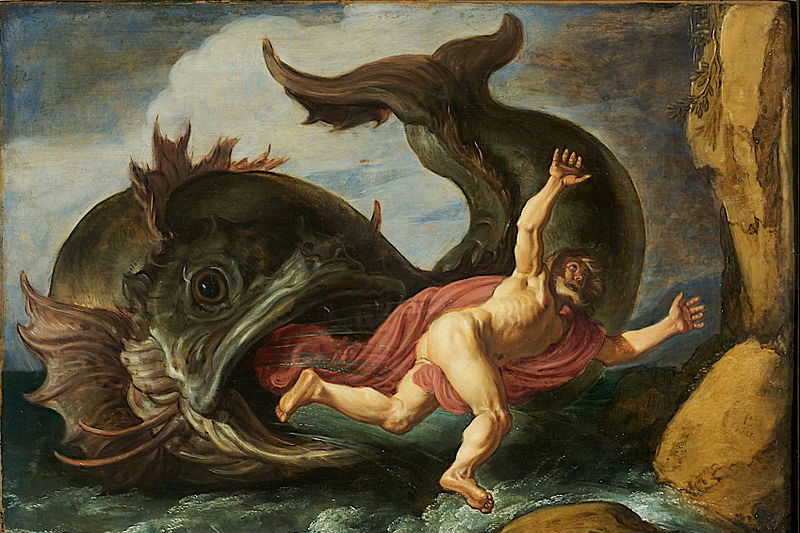
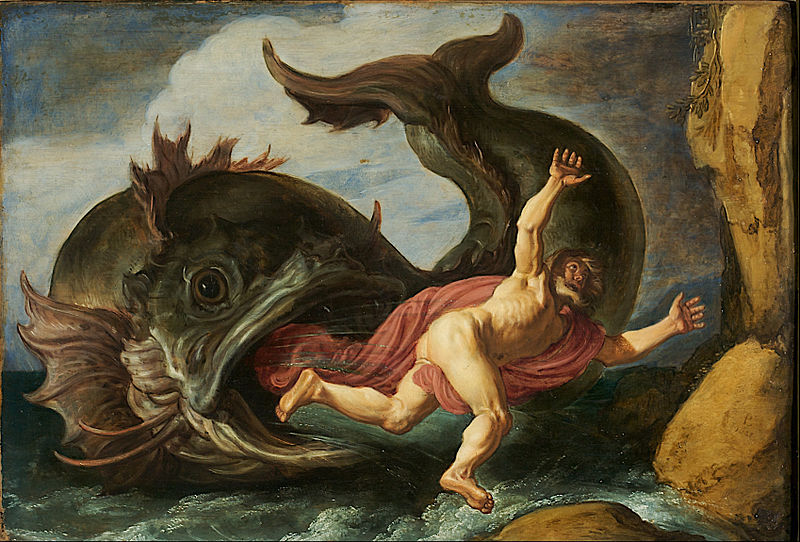
Yet there was a consistent refusal to heed the call to repent. This period is the background for the story of the Prophet Jonah who was sent by God to Nineveh, the Capitol of Assyria to preach repentance. Jonah knew that if they repented they would grow stronger, so he fled and refused the mission. God pursued him, and after the storm at sea and a whale of a ride, Jonah did go, and the Assyrians of Nineveh did repent, and thereby grew stronger.

The final showdown with Israel came in 721 B.C. during the reign of King Hoshea who foolishly and against prophetic instruction made a pact with Egypt and refused to pay tribute to Assyria. Shalmanesar,  King of Assyria attacked the Northern Kingdom of Israel utterly destroying it (cf 2 Kings 17). Those who survived disappeared into exile (the so-called “10 Lost Tribes” of Israel).  The few who remained intermarried with the Assyrians and became the Samaritan people.

An attempt to destroy the Southern Kingdom of Judah was miraculously turned back at the gates of Jerusalem when a likely case of dysentery afflicted the Assyrian army. Further conflicts in the decades ahead with Egypt and Babylon eclipsed Assyrian power once again. By the close of the 7th Century Assyria was little more than a loose confederation of Scythian Tribes.

The Modern State of Syria, though occupying Land similar to ancient Assyria, is not equivalent to or even a direct descendent of ancient Assyria. Syria was established after the first World War and was governed by the French who replaced the Ottomans. Syria gained independence in April 1946, as a parliamentary republic. But the  post-independence period has been stormy, with a large number of military coups especially in the years  1949–1971.

A final thought. Jesus warned the people of his own day, This is a wicked generation. It asks for a sign, but none will be given it except the sign of Jonah (Lk 11:29)  Jesus was harkening back to the historical paradox that when Israel would not repent, he frequently used the pagan nations around them to humble and purify them. Since Israel would not repent, God sent Jonah to strengthen the Assyrians and God eventually used Assyria to prune Israel, and execute justice for its failure to repent.

And thus for the people of Jesus time, if they would not repent, and come to believe, they, in their foolishness like Hoshea of old, would wage war, this time against the Romans, and suffer a horrible blow. That in fact happened in 70 AD when the Temple was destroyed and 1.2 million Jews died in the war.

It is a mysterious providence but it is also written to warn us. If we do not repent, we cannot be strong, and our enemies will surely overwhelm us. And what will our Assyria, our Rome be? It could be radical Islam, it could be our debt crisis, it could be our demographic winter. But by failing to repent, by our injustice, our refusal to keep commitments, our rising unbelief and ingratitude, by our sacrificing our children on the “altars” of our lust and our burning incense to the “gods” of this age, we are calling a just punishment and grave consequences that cannot forever wait.