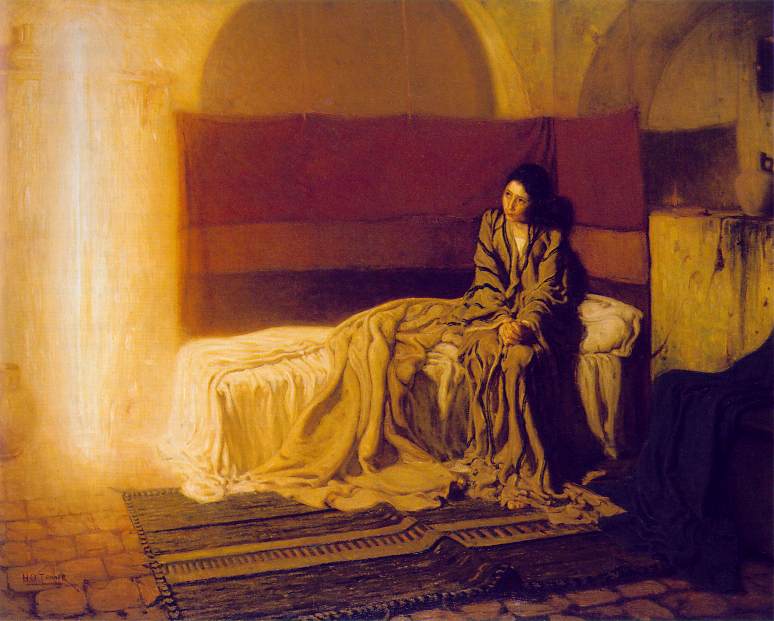
Walking with Jesus in Holy Week – A daily Calendar

At the heart of our faith is the Paschal Mystery: the Passion, Death, Resurrection, and Ascension of Jesus Christ. All of salvation history leads up to and goes forth from these saving events. The purpose of this post is to describe Jesus’ Final week. We call this “Holy Week” for Jesus’ public ministry culminates with his suffering, death and resurrection. What follows is a brief description of each day of Holy Week. It is hoped that you might print out the pdf flyer (Walking-with-Jesus-In-Holy-Week) and read it each day of this week. Prayerfully walk with Jesus in his most difficult and yet glorious week. Plan to attend some or all of the special liturgies of Thursday, Friday and Saturday at your parish. By celebrating them in community, we make them present today and learn again, in a new way, the reality of our Risen Lord alive in our midst.

PALM SUNDAY – Our celebration of Holy Week begins this Sunday as we remember and make present the triumphal entrance of Jesus into Jerusalem to begin his final week and initiate his Passion. All four Gospels recount this triumphant entry that Sunday Morning so long ago, but made present to us today. As you receive your palms, consider that you are part of that vast crowd. How will you journey with Jesus this week? Let the palm remind you to praise him with your prayerful presence during the sacred Triduum. According to Mark 11:11 Jesus returned that evening to Bethany, a suburb of Jerusalem. Perhaps he stayed with his friends Martha, Mary and Lazarus. Pray with Jesus this evening as he considers the difficult days ahead of him.

Monday of Holy Week  According to Matthew 21, Mark 11 and Luke 19, Jesus returns to Jerusalem today and, seeing shameful practices in the Temple area, he cleanses the Temple. John’s Gospel also records that he rebuked the unbelief of the crowds. Mark 11:19 records that he returned to Bethany that night. Pray with Jesus as he is zealous to purify us.

Tuesday of Holy Week According to Matthew, Mark and Luke, Jesus again returns to Jerusalem where he is confronted by the Temple leadership for what he did yesterday. They question his authority. He also teaches extensively using parables and other forms. There is the parable of the vineyard (cf Mt 21:33-46), the parable of the wedding banquet, (cf Mt. 22:1). There is also the teaching on paying taxes (cf Mt 22:15) and the rebuke of the Sadducees who deny the resurrection (cf Mt. 22:23). There is also the fearful prophecy about the destruction of Jerusalem if the inhabitants do not come to faith in him. He warns that not one stone will be left on another (cf Mt 24). Continue to pray with Jesus and listen carefully to his final teachings just before his passion.

Wednesday of Holy Week. Traditionally this day was called “Spy Wednesday” for it was on this Wednesday before the crucifixion that Judas conspired to hand Jesus over. For this he was paid thirty pieces of silver (cf Mt. 26:14). Jesus likely spent the day In Bethany. In the evening Mary of Bethany anoints Jesus with costly perfumed oil. Judas objects but Jesus rebukes him and says Mary has anointed him for his burial! (cf Mt 26:6). The wicked are besetting Jesus and plotting against him. Are you praying?

HOLY THURSDAY, marks the beginning of the sacred Triduum, or “three days.” Earlier this day Jesus had given instructions to the disciples on how to prepare for this most holy meal, which will be his last supper. Through the day they make these preparations (cf Mt 26:17). In the Mass of the Lord’s Supper conducted at our parishes, we remember and make present that Last Supper which Jesus shared with his disciples. We are in the upper room with Jesus and the Apostles and do what they did. Through the ritual of washing the feet (Jn 13:1) of 12 parishioners, we unite in service to one another. Through our celebration of this first Mass and Holy Eucharist (Mt 26:26), we unite ourselves to Jesus and receive his Body and Blood as if for the first time. At this Eucharist, we especially thank God for his gift of the ministerial priesthood. After the Last Supper (First Mass) the apostles and Jesus made a short journey across the Kidron Valley to the Garden where he asks them to pray and he experiences his agony (cf Mt 26:30). We too will process in Church with Jesus in the Blessed Sacrament to a garden (the altar of repose) which has been prepared. The liturgy ends in silence. It is an ancient custom to spend an hour before the reposed Blessed Sacrament tonight. We are with Jesus in the Garden and pray as he goes through his agony. Most of our parish churches remain open until close to midnight. It was near Midnight that Jesus was betrayed by Judas, was arrested and taken to the house of the High Priest (cf Mt. 26:47).

GOOD FRIDAY, All through the night Jesus has been locked in the dungeon of the high priest’s house. Early this morning he was bought before a Pilate who transferred his case to Herod. Herod sent him back to Pilate who, sometime in the mid-morning, bowed to the pressure of the Temple leadership and the crowds, and condemned Jesus to a horrible death by crucifixion. In the late morning Jesus was taken by the soldiers through the city and up the hillside of Golgotha. By noon he is nailed to the cross where he hangs in agony for some three hours. He dies around three in the afternoon. He is taken down from the cross and placed in the tomb hastily before sundown. Today is a day of prayer, fasting and abstinence. Whenever possible, Christians are urged to keep today free of work, of social engagements, of entertainment, and to devote themselves to communal prayer and worship. At noon many parishes gather for stations of the cross for recollections of the seven last words of Jesus. Many parishes also offer staions of the cross at 3pm the hour of Jesus death. In the evening, we gather quietly in our parish Churches to enter into time of prayer as we reflect on Jesus death on the cross. We also pray for the needs of the world. To acknowledge the power of the cross in our lives today, we one by one come forward to venerate the cross with a kiss. Our hunger from this day of fasting is satisfied with Holy Communion distributed at the end of this liturgy.Consider too how the apostles might have gathered that night together in fear and prayer reflecting on all that happened.

HOLY SATURDAY – The body of Jesus is in the tomb but His soul is among the dead to announce the kingdom. The hour is coming, and now is, when the dead will hear the voice of the Son of God, and those who hear it will Live (John 5:25). Consider what it must have been like for the dead in Sheol to awaken to the voice of Jesus! Meanwhile The Disciples, heartbroken at the death of Jesus, observed the Jewish Sabbath in sorrow. They had forgotten the promise of Jesus that He would rise. We cannot forget His promise. We cannot forget. Tonight in our parishes after sundown we gather for the Great Easter Vigil where we will experience Jesus rising from the dead. We gather in darkness and light the Easter fire which reminds us that Jesus is light in the darkness. He is the light of the world. We enter into the church and attentively listen to Bible stories describing God’s saving work of the past. Suddenly, the church lights are lit and the Gloria is sung as we celebrate the moment of Christ’s resurrection. He Lives! In the joy of the resurrection we then celebrate the Sacraments of Baptism, Confirmation and Eucharist for our Catechumens and Candidates who have prepared for many weeks for this night. As a Church we sing Alleluia for the first time in forty days. Do everything you can to be present on this evening and invite friends and family to join. Our Vigil ushers in an Easter joy that never ends!
Palm Sunday

Today is Palm Sunday. We remember and make present the triumphal entrance of Jesus into Jerusalem to begin his final week and initiate his Passion. All four Gospels recount this triumphant entry that Sunday Morning so long ago, but made present to us today. As you receive your palms, consider that you are part of that vast crowd. How will you journey with Jesus this week? Let the palm remind you to praise him with your prayerful presence during the sacred Triduum.

According to Mark 11:11 Jesus returns this evening to Bethany, a suburb of Jerusalem. Perhaps he stayed with his friends Martha, Mary and Lazarus who also lived there. Pray with Jesus this evening as he considers the difficult days ahead of him.

Here is an excerpt from the Movie “The Gospel of John” The movie is a worthy production which is taken exactly from the text of the Fourth Gospel with no additions or deletions. You can order the movie here: The Gospel of John

The View from the Top

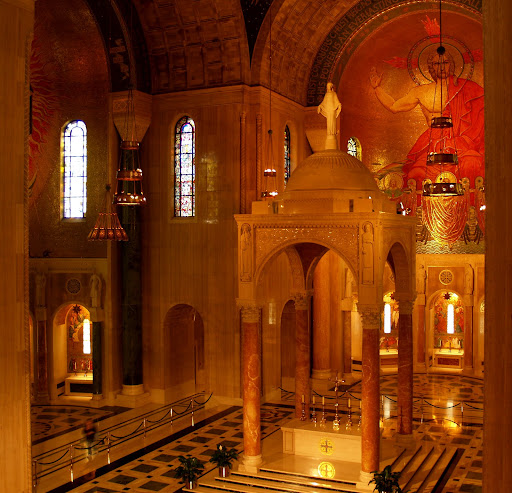
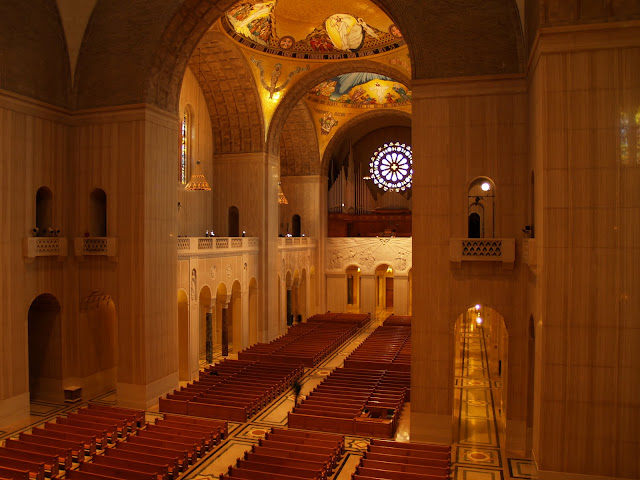
On Friday I was permitted to go up into the Clerestory level of the Basilica of the National Shrine of the Immaculate Conception here in Washington. I brought my camera and took some unique photos of the Basilica. I am posting a few of them here but you can see the rest of what I took here: Clerestory Views.  I think they turned out pretty well considering that very few lights were on in the Basilica. I had to open the lens wide and give lengthy exposure to each shot but in the end I think they turned out well. Thanks to TJ Dhanagom and Msgr. Rossi for the privilege of ascending to the clerestory.

Basilica High Altar
Nave from the Northwest Clerestory
Great Organ in the Choir Loft

On Fixing a Dreadful Error And Taking a Graceful Bow

We are in the heart of Lent but for one day we step back into the Christmas cycle. It is nine months before Christmas and today we celebrate the true feast of the Incarnation. December 25 is the Lord’s birth but today is His incarnation as he is conceived in his Mother’s womb. TODAY the Word becomes flesh.

This needs to be emphasized in an age of abortion where some in our culture deny explicitly or implicitly that human life begins at conception. You are aware that a new translation of the Mass will soon come to us in the English speaking world. It is long needed and treasures of the faith kept hidden for long decades (except for those know Latin) will become visible again.

Among the most egregious errors of the current English version is in the Creed which erroneously indicates that Jesus became man at his birth, rather than his conception. Here is what the current version says:

For us men and our salvation He came down from heaven: by the power of the Holy Spirit, He was born of the Virgin Mary , and became man.

Notice that the text says he became man when he was born. As a poor translation of the Latin text it is irritating enough but to have this mistranslation exist when abortion is thought a legal right is a complete disaster. The Latin text does not say that Jesus became man at his birth (celebrated December 25), but rather at His incarnation (celebrated March 25). Here is what the the Latin text says:

Qui propter nos homines et propter nostram salutem descendit de caelis. Et incarnatus est de Spiritu Sancto ex Maria Virgine, et homo factus est.

The New Translation which will be implemented in a little over a year renders it correctly in the following way:

For us men and for our salvation he came down from heaven, and by the Holy Spirit was incarnate of the Virgin Mary, and became man.

I for one am grateful for the accuracy. The whole translation is going to take some getting used to but it will be of great benefit to see our Holy Faith, so beautifully articulated in the Latin text, properly translated and conveyed at last. Since 1970 the text has been really little better than a paraphrase and so much is lost. This mistranslation of the Creed is but one of ten thousand examples where the current translation is woefully inaccurate and/or incomplete. But surely the mistranslated Creed  is most egregious for the reasons stated.

A final thought on this section of the Creed – The Bow. The Congregation is instructed to bow at the words: and by the Holy Spirit was incarnate of the Virgin Mary, and became man.  This is in recognition of the great mystery that the incarnation is. How can God, whom the very heavens cannot contain dwell in the womb of the Virgin Mary? How can the infinite become an infant? It is a mystery too great and so we bow in reverence. In the Traditional Latin Mass the practice is to kneel at these words. Such was the practice until about 1970 when it was replaced by a bow. Personally I think we Americans are terrible at bows and would be happy if the genuflection returned. In other cultures bowing is graceful and natural. For most of us here it is awkward and usually lacks proportional and graceful movement. But bow we are told and bow we should. One ought to fold the hands and bow at the waist. Think of your waist as the hinge, not the neck and shoulders which should not move in proportion to the shoulders. The bow is a reverent acknowledgment of the mystery of the Incarnation we celebrate today. Interestingly enough there are still two days  in the year when we still kneel at the words of the incarnation. We kneel and pause at these words on Christmas and today, March 25, The Feast of the Annunciation. Otherwise we bow, as gracefully as possible 🙂

I am curious if you bow at these words in the Creed and if it is common in your parish. Does your clergy bow, do they teach others to do so? Just asking!

Happy Feast Day!

What do You Think of Catholic Preaching?

When I talk with Catholics who have left the Church, the number one reason I get that they left was poor preaching.This is especially true of those who left for the Evangelical Churches. Catholic priests as a group have the reputation of being poor preachers. I think there are several reasons for this.

  1. The expected length of a Catholic sermon is 7-10 minutes. This is far too brief a time to really develop well a biblical or doctrinal theme. It results in a  slogan based and brief exhortation. In this matter the people of God have to work with us. Most Catholics are upset if the liturgy goes more than 50 minutes. We all need to agree to take more time to be with the Lord. Longer sermons are necessary to really develop and break open most passages. Most Protestant sermons are about a half and hour. True, I don’t want a preacher to go longer unless he really has something to say but it is also true that most priests have to wrap up when they’ve barely gotten started. It’s not a good context for preaching. The old “say it in seven” rule needs to be re-evaluated
  2. I think many confuse exhortation for preaching. Most of the sermons I grew up with could be summarized in two sentences:  “1. Jesus is challenging us to do better today.” And 2. “Let us try to do better” (Now please stand for the creed).”  This is exhortation but true preaching takes the Word of God and does four things: Analyzes, organizes, illustrates, and applies it. It doesn’t just exhort us to do better it shows how, and sets for the why and wisdom of God’s Word. This as you might guess takes a little more than 7 minutes.
  3. Teaching is often lacking– When I ask Catholics who have gone on to the “Word churches” why they like the preaching there more they usually say it is because the minister teaches the Word of God. Perhaps he shows the stages of the faith journey of  a biblical character, or Five aspects of a healthy marriage from Ephesians 5. Maybe he expounds on the Four Disciplines of Devoted Discipleship in Matthew and so forth. But the Word of God is both taught, and applied to life in memorable ways.
  4. The Three Essential questions often go unaddressed – It  would seem that every sermon should ask and answer three  questions: What? So What? and Now What? I think we Catholic Priests do alright with the “what” but not so well with the other two questions. Homilies are not just about information (the What) they also aim at transformation. Addressing the “What” can help to inform but the “So what” and “Now What” aim more for transformation.
  5. Good preaching is edgy. It comforts the afflicted and afflicts the comfortable. But too many priests are afraid of offending or upsetting. Despite the fact that we serve a Lord who got killed  for what he said, too many of us are not willing to suffer even the raised eyebrows of our congregation. We have to be willing  to talk forthrightly about serious issues today, about sin, about injustice, about promiscuity and so forth. We have to speak the truth in love but the “Jesus loves you sermons”  are not enough. Jesus loved us enough to speak the truth to us even when we killed him for it.  We priests have to get a spine, and a heart and be willing to preach  even the difficult stuff. It has been my experience that Catholics respond well to tough sermons. They don’t want angry priests but they do want priests who are zealous for the truth.
  6. How about a little enthusiasm? If you really care about what you are saying shouldn’t it be reflected in your mannerisms and tone of voice? Too many priests have a kind of lecture like discursive approach instead of a fiery Charismatic approach. True enough there are different personalities but a fiery enthusiasm is hard to hide. But being on fire can’t be faked. It comes only from prayer and a deep love for God and His people.

I know you can add to the list  above. Perhaps your feed back will help some of us priests improve. So have at it. Be kind and constructive but speak the truth. We priests can use it. And pray, pray, pray. You get the priests and the sermons you pray for.  Also encourage us when we do well and gently admonish when we need improvement.

Perhaps we do well to end with the Words of St. Gregory the Great who exhorts the faithful to pray for the Priests in their preaching role:

Pray for us so that we may have the strength to work on your behalf, that our tongue may not grow weary of exhortation, and that after we have accepted the office of preaching, our silence may not condemn us before the just judge.  For frequently the preacher’s tongue is bound fast on account of his own wickedness; while on the other hand it sometimes happens that because of the people’s sins, the word of preaching is withdrawn from those who preside over the assembly.  With reference to the former situation, the psalmist says: But God asks the sinner: Why do you recite my commandments? (PS 50:16) And with reference to the latter, the Lord tells Ezekiel: I will make your tongue cleave to the roof of your mouth, so that you shall be dumb and unable to reprove the, for they are a rebellious house.  (Ez 3:26) He clearly means this: the word of preaching will be taken away from you because as long as this people irritates me by their deeds, they are unworthy to hear the exhortation of truth.  It is not easy to know for whose sinfulness the preacher’s word is withheld, but it is indisputable that the shepherd’s silence while often injurious to himself will always harm his flock. (As quoted in the Liturgy of the Hours, Vol 3)

This video is an excerpt of a sermon by Fr. Bill Casey, it’s powerful.

The Only Cure for Our Spiritual Blindness is Holiness

Over 21 years ago I made my canonical retreat that was required before being ordained a transitional deacon. We were studying the Letter to the Romans in the retreat conferences and came upon a particularly difficult passage early in the retreat. The retreat master, an older priest and well known scripture scholar stopped his train of thought, perhaps perceiving we were having difficulty and said, “Do you know what is the biggest obstacle for us in understanding the Word of God?” I was expecting a geeky answer like, “We don’t know enough Greek,”  or “We haven’t studied the Historical Critical Method carefully enough.” But the priest pleasantly surprised me we he paused, looked around the room and then said, “The biggest obstacle we have to understanding the Word of God is our sin.”  He was (and still is) Fr. Francis Martin. He went on to encourage us in the discipline of study but warned us that all the study in the world could not be of great help, indeed it could be of harm, if we did not have a clean heart. I have respected him ever since and listened on tape  to probably two dozen other priest conferences and courses he preached and taught. He became one of my principal teachers through his tape ministry though I was never formally enrolled in a class he taught.

Scholars, academicians, even unbelievers to some extent can tell you what a biblical text is talking about, but only the holy, the Saints, can tell you what it means. Fulton Sheen was famous for saying toward the end of his life something to the effect, that we have tried in modern times every possible way to build up the Church: committees, study groups, task forces, seminars, advanced degrees in every sort of theology and religious study. But there is only one thing that we have not tried and that is holiness. He went on to recommend that every priest commit to make a daily Holy Hour.

This past week in the Office of Readings from the Breviary the following reading reminded me of all these things:

If you say, “Show me your God,” I will say to you, “Show me what kind of person you are, and I will show you my God.” …..God is seen by those who have the capacity to see him, provided that they keep the eyes of their mind open. All have eyes, but some have eyes that are shrouded in darkness, unable to see the light of the sun. Because the blind cannot see it, it does not follow that the sun does not shine. The blind must trace the cause back to themselves and their eyes. In the same way, you have eyes in your mind that are shrouded in darkness because of your sins and evil deeds. A person’s soul should be clean, like a mirror reflecting light. If there is rust on the mirror his face cannot be seen in it. In the same way, no one who has sin within him can see God. But if you will you can be healed. Hand yourself over to the doctor, and he will open the eyes of your mind and heart. Who is to be the doctor? It is God, who heals and gives life through his Word and wisdom…. If you understand this, and live in purity and holiness and justice, you may see God. But, before all, faith and the fear of God must take the first place in your heart, and then you will understand all this. When you have laid aside mortality and been clothed in immortality, then you will see God according to your merits.— From the book addressed to Autolycus by Saint Theophilus of Antioch, bishop

So there it is, holiness, a the fear of the Lord are the only way to really see at all.

There was an option this past Sunday in Parishes where the Second Scrutiny was celebrated to the Gospel of the Man Born Blind. In a pivotal moment Jesus smeared  his eyelids with clay and sends him to the Pool of Siloam to wash. He comes back able to see. When asked how he came to see he says, in effect, “I went, I washed and now I see.”  This is Baptismal theology even if in seminal form. We cannot see until we are washed. In the end it is Baptism, Confession and a holy life by God’s grace that give the greatest light. One of the great theologians and Fathers of the Church St. Cyprian experienced the vision that Baptism and holiness brings:

And I myself was bound fast, held by so many errors of my past life, from which I did not believe I could extricate myself. I was disposed therefore to yield to my clinging vices; and, despairing of better ways, I indulged my sins…But afterwards, when the stain of my past life had been washed away by means of the waters of rebirth, a light from above poured itself upon my chastened and now pure heart; afterwards, through the Spirit which is breathed from heaven, a second birth made of me a new man. And then in marvelous manner, doubts immediately clarified themselves, the closed opened…and what had been thought impossible was able to be done(“Letter to Donatus,” 4).

Only after baptism did some things make sense and seem possible for Cyprian. For me too, I have come to understand some things only after many years of prayer and growth. Daily Holy Hours, daily mass and the liturgy of the hours, weekly confession, only then do some things clarify and does that which had been in darkness come to light. Studies have had their place in my life to be sure, But only the path to holiness (combined with study) can ever really bring light.

We’ve tried everything! How about holiness? …..Prayer anyone?

Here’s a video I put together on the beauty of prayer especially before the Blessed Sacrament. It is set to the words of a beautiful Eucharistic Hymn “Jesus My Lord, My God, My All”  directed by the late Richard Proulx.

The Diagnosis is Dire But The Doctor Is In

The Diagnosis is in. The situation looks grave. From the test results, we’ve got some serious stuff wrong with us!  You might say we’ve got a few issues!  Yes, I’ve  got your spiritual “medical chart” and mine open and I’m looking at the test results and the numbers don’t look good.  We’ve tested positive for a number of things: It says we can be dishonest, egotistical, undisciplined, weak, immature, arrogant, self-centered, pompous, insincere, unchaste, grasping, judgmental, inpatient, and shallow.  It looks like we’ve tested positive for being inconsistent, unfaithful, immoral, ungrateful, disobedient, selfish, lukewarm, slothful, unloving, uncommitted, and just plain sinful.  Further tests indicate the presence of fear, indifference, contempt, impurity, hatred, laziness, cowardice, and anger.  Likewise, greed, jealousy, revenge fullness, disobedience, hardheartedness, pride, envy, stinginess, selfishness, pettiness, spite, self-indulgence, lust, careless neglect, and prejudice. Our “spiritual” medical history indicates that we have sinned against justice, modesty, purity, and the truth. We have committed sins against the human person, the children and the young, innocent and the trusting, the frail and elderly, the unborn in infants, weak and powerless, immigrants and strangers, and those who are disadvantaged.   A set of further test results indicates that we have failed to give witness to Christ, we have failed to join our will to God or give good example to others.  We have failed to seek God above all things, to act justly you show mercy, and to repent of our sins.  We’ve failed to obey the commandments and curb our earthly desires.  We have failed to lead a holy life and to speak the truth. We have failed to pray for others and assist those in need;  neither have we consoled the grieving.

Well, you can see that we’re kind of in bad shape. You might say that I’m exaggerating but I suspect, if you’re honest, that you like me have committed many of  these sins if not most of them.  Without a lot of grace and mercy we are in very bad shape!  The diagnosis is dire.

But here’s the good news: the doctor is in! Jesus! Likewise, the doctor has a cure! Jesus refers us to the Physician’s Desk Reference (PDR)- Spiritual Edition (also called the Holy Book) for  a cure to this condition. It is to be found in section Acts 2.42:

They devoted themselves to the apostles’ teaching and to the fellowship, to the breaking of bread and to prayer. (Acts 2:42)

The cure is thus ancient and well attested and consists of a consistent regime of four basic medicines which must be taken as the text says “Devotedly”:

  1. The Apostles’ Teaching– This medicine supplies daily doses of Scripture which helps to cleanse the mind of worldly thinking and to deliver remedial amounts of God-like thinking. It removes the tendency to be conformed to this world and begins a process of transformation by the renewing of the mind (Rom 12:4). While the term “apostles teaching”  is here used, this is medicine is inclusive of all Sacred Scripture of which the Apostles’ teaching is the pinnacle. Studying carefully another manual known as the Catechism also delivers healthy doses of Scripture (aka the Apostles Teaching).
  2. The Fellowship– This gathering or fellowship is also referred to as “The Church” and refers to the prescribed medicine of gathering frequently with the Church for instruction, edification, encouragement, necessary rebuke, exposure to truth, helpful friendships and proper worship of God known as the “Liturgy”. The regular and necessary dosage is once per week. Taking more is advantageous but missing the necessary weekly dose leads to a deadly condition known as “mortal sin.”
  3. The Breaking of the Bread– Also known as Holy Communion. This medicine supplies necessary nourishment to sustain the Christian on the journey across the desert of this life to the Promised Land of Heaven. Regular reception helps ensure being raised up on the last day to eternal life (Jn 6:54). Neglect of this medicine leads to spiritual death which the PDR – Spiritual Edition refers to as “having no life in you”  (Jn 6:53). While this medicine is called the “breaking of the bread” it actually refers to a series of seven medicines known as the “sacraments” of which Holy Communion is the greatest. Some medicines in this series are taken but once, others may require on-going doses. Most notable is the medicine called “confession” wherein, through salutary conversation with a properly licensed doctor in Jesus’ practice, one is healed from the wounds of sin through the laying on of hands and the words of absolution. The usual recommended dosage of this medicine of confession  is four to six times per year but more for those who wound easily.
  4. Prayer– Regular and substantial conversation with the Doctor (aka Jesus) is essential for healing. Herein symptoms are discussed and solutions are proposed. Given the grave condition, these visits must be daily. Failure to take this medicine daily leads to a serious complex known as “temptation” (cf  Mk 14:38) which leads the patient to further wounding and death-directed actions. The medicine of prayer comes in a variety of  forms: meditation, devotional reading of Scripture, contemplation, reading the lives of the saints and devotions such as the rosary, and novenas.

Well there it is.  We need help; we’ve got stuff going on that will kill us eternally. But Jesus has a hospital: the Church, and Medicine: the Sacraments. Likewise there is spiritual “medical” advice available, the Word of God, sermons, the teachings of the Church and the presence of encouraging doctors and nurses such as the priests, religious, and fellow Catholics.  Whether you and  like to  admit it or not we need regular check-ups and serious medicine. And Jesus is guiding his Church to give skillful advice and distribute powerful medicine. Do you think of the sacraments that way? Many simply think of them as rituals but the truth is they are powerful medicine. I’m a witness. After twenty-five years of seeing the doctor, Jesus and letting him minister to me through Sacraments, the Word and his Church a wonderful change has come over me. I’m not what I want to be but I’m not what I used to be.

The doctor is in and you know you need him! Reach out for him what ever your struggles.  He’s waiting to minister to you especially in the liturgy and the sacraments. You can’t do it alone. Join us every Sunday at the “holy hospital”, the Church. The Doctor is in!

Reverencing Mystery

In the secular world a mystery is something which baffles or eludes understanding, something which lies hidden or undisclosed. Now the usual attitude of the world toward mystery is to resolve it, get to the bottom of or uncover it. Mysteries must be overcome! The riddle or “who-done-it” must be solved.

In the religious world mystery is something a bit different. Here mystery refers to something revealed by God which largely or completely escapes what we can know by our intellect alone and unaided by God through grace and revelation. These are not worldly mysteries but mysteries of the faith.  From the perspective of faith it is also usually that case that a mystery is something partially revealed by God but much more of which lies hidden. So something is seen, but much more is unseen.

For the Christian then, mysteries are not something to solved or overcome so much as to appreciate and reverence. In worldly mystery it is something to approach and with daring, perseverance and smarts to conquer. But the mysteries of faith are something to be considered with humility and reverence realizing we can never exhaust their meaning or capture and conquer their full essence.  A few thought on the mysteries of faith:

  1. Consider the picture at the upper right of the iceberg and allow it to be an image for the mysteries of faith. Above the water line we see something of the iceberg, but beneath the waterline, remains much more, hid from our eyes (except in a picture like this).
  2. Consider the mystery of creation. In the book of Sirach, after a long list of the marvels of creation there comes this magnificent line: Beyond these, many things lie hid; only a few of God’s works have we seen. (Sirach 43:34) This is mystery, what we see is far surpassed by what we do not see!
  3. Consider the mystery of the human person. Think of someone you know rather well, perhaps a spouse, family member or close friend. There is much about them that you see and know, but even more of which lies hid. You can see their body, but only the external parts of it. Much more lies active and intricate beneath the skin. You “see” aspects of who they are in terms of their personality and mannerisms and so forth but much more lies hid from your knowledge such as their inner thoughts, aspects of their history, and deeper drives and motivations that may lie hidden even to them in many ways. As time goes on and relationships deepen the “mystery” of the human person unfolds and more is revealed. Yet the mystery of the human person is never “solved” and it would be irreverent to assume we ever could or should do so. No, this  mystery must be reverenced and approached with humility and if we ever really think we have some one (even our selves) “figured out” we are badly mistaken and transgress the dignity of the person. Scripture says, More tortuous than all else is the human heart, beyond remedy; who can understand it? I, the LORD, alone probe the mind and test the heart (Jer 17:9-10). Surely we are on a journey to understand and the discover as the mystery of our selves and the others as our life unfolds but the mystery must always be respected and reverenced, not solved in order to be controlled and manipulated.
  4. Herein lies a problem with modern American culture that should be critiqued and that is the tendency to lack modesty. One definition of modesty is “reverence for mystery.”  Part of the dignity of the human person is not simply to be on open display in an indiscreet way. In deeper relationships more is revealed in increasingly appropriate ways. Close friends share more and understand more. Spouses, ideally, share even more to include the deep intimacy of the body. The disclosing of the mystery of the human person in appropriate ways based on the depth of relationship is at the heart of modesty. But today too many things of a private nature  are too easily sought and disclosed. A nosey media is partially to blame along with an increasingly odd tendency for many today to want to disclose matters that should remain private. Talk shows come to mind wherein a person or celebrity “tells all.” In today’s physcotherapeutic culture there is also the tendency to request and also to provide too much information about personal things. Surely close friends and family may be an appropriate audience for such disclosures but immodesty causes many to reveal indiscreetly  what should remain private. Clearly too, physical immodesty is epidemic and we have discussed it here before. And this also fails to reverence the mystery due the human person by putting on display that would should only be revealed in the most intimate and appropriate settings. Mystery is at the heart of the dignity of the human person. Modesty is reverence for that mystery, immodesty is a lack of reverence  (cf 1 Cor 12:22ff).
  5. Consider the mystery of the Liturgy and the Sacraments– We see much in the Liturgy and the celebration of the Sacraments but far more remains hidden from our eyes as these mysteries are celebrated. (You may well know that the Eastern Churches and especially the Orthodox Churches refer to the sacraments as the “Mysteries”). Consider a baby being baptized. We see the water poured and hear the words. Perhaps there is a cry. But what remains unseen is even greater: The child dies, is buried with Christ and rises to new life with him in an instant (Rom 6:1-4). Sin is washed away, an inheritance is received, true membership into the Body of Christ is conferred, the office of Priest Prophet and King are received, divine sonship is conferred and on and on. Far more is actually happening that we see or even know. This is mystery, something seen, yet far, far more unseen.  Consider the Liturgy, the altar is there,  a priest, the faithful gathered, words and gestures perceived. But far more is unseen: Christ the high priest is the true minister, the physical church building gives way to the truth that we are mysteriously caught up into heaven and the heavenly liturgy surrounded by countless saints and angels worshipping the Father and we as members of the Body of Christ render the Father perfect praise and thanks through, with and in Jesus our head.
  6. Herein lies a problem with the Liturgy in modern times– In recent decades there has been a laudable attempt to make the Liturgy more intelligible to people. However there is a trade off to be careful of. The mystery of the Liturgy and the sacraments must be reverenced. In our attempt to make everything intelligible and accessible we risk offending the dignity of the liturgy and sacraments which are ultimately NOT fully intelligible or explainable. They are  mysterious (in the way we are using the word) and ineffable (not reducible fully to words). In the ancient Church the Liturgy was surrounded by the disciplina arcanis (discipline of the secret) wherein only fully initiated Catholic Christians were permitted to witness it. Sacramental catechesis was carried on largely AFTER the celebration of the Sacraments (Mysteries) in a process called mystagogia (a Greek word meaning “Education in the mysteries”).  I do not argue here for a complete return to those days but one of the characteristics of the modern age and the manner in which liturgy is often celebrated is the lack in a sense of mystery. It often seems that everything has to be “seen” and “understood” to be authentic or relevant, or so the thinking goes with some. But this is wrong on two levels. First, everything CANNOT be seen. Most of the liturgy in fact lies hid from our earthly eyes. Secondly most of the liturgy cannot be understood. It is mystery to be reverenced and appreciated as such. It is “other” and beyond what this world can ever fully appreciate. We can grow in our appreciation of it as the years go by but never solve or understand it fully here on this side of the veil. Somehow this appreciation of the mystery of the Liturgy and Sacraments must be balanced with the attempt to render our worship “intelligible.” I put intelligible in quotes for we can only use that term in a relative manner.
  7. Finally it remains true that our longing to enter fully the mystery of God and our very selves will one day be fulfilled. St. Paul speaks of this when he writes: Now we see but a poor reflection as in a mirror; then we shall see face to face. Now I know in part; then I shall know fully, even as I am fully known ( 1 Cor 13:12). You may be aware that the Greek word (title) for the last book of the Bible is  Ἀποκάλυψις (Apocalupsis) which means “unveiling.”  One day, the great mystery of this world, of ourselves, and God’s plan will be fully unveiled. For now, we reverence these mysteries of our self, others, the liturgy, the sacraments, creation itself and God’s plan. One day they shall be revealed. A caution here. I do not think we will ever exhaust the mystery of God (and perhaps not even ourselves). I do not think all eternity will ever be enough to exhaust the full mystery of God who is infinite and can never be fully comprehended in essence  by his finite creatures.

Reverence mystery, relish mystery, respect mystery. Magnum mysterium, admirabile sacramentum!