Making a Quiet Place for Our Lord This Lent – A Meditation on a Teaching from Diadochus of Photice

2.8blogThere is a remarkable passage in the breviary from Diadochus of Photice (pronounced Di-áh-do-cuss of Fóe-tah-chee). Little is known of his life. He lived from around 400 to 485 A.D. He was a mystic and theologian who particularly refuted Christological heresies and upheld the teachings of the Council of Chalcedon. He became bishop of Photice, a region in northwestern Greece. His writings emphasized the stillness, rest, or quiet that is necessary for spiritual insight and growth. The excerpt we shall examine here is surely part of that tradition. It is all the more necessary in today’s loud and hectic times, in which most people struggle to find the time and/or place to reflect and thus fail to live reflective lives.

In Catholic and biblical tradition there is a balanced insight concerning the human person that acknowledges the great and crowning gift of our intellect and the capacity to reason, to know truth, and to have insight. It is, along with our freedom to choose and to love, our most God-like quality. As such, it is esteemed and serves as a basis for our capax Dei (our capacity to know and be addressed by God and to make a personal response to Him).

On the other hand our intellect is wounded by the effects of Original Sin and the accumulated effects of our personal sins, which tend to darken our mind. Thus, while it is possible for the mind unaided by grace to come to knowledge of God’s existence and of His attributes and laws, grace is useful—even necessary—to overcome the difficulties due to sin. The Catechism puts it this way:

In the historical conditions in which he finds himself, however, man experiences many difficulties in coming to know God by the light of reason alone:

Though human reason is, strictly speaking, truly capable by its own natural power and light of attaining to a true and certain knowledge of the one personal God, who watches over and controls the world by his providence, and of the natural law written in our hearts by the Creator; yet there are many obstacles which prevent reason from the effective and fruitful use of this inborn faculty. For the truths that concern the relations between God and man wholly transcend the visible order of things, and, if they are translated into human action and influence it, they call for self-surrender and abnegation. The human mind, in its turn, is hampered in the attaining of such truths, not only by the impact of the senses and the imagination, but also by disordered appetites which are the consequences of original sin. So it happens that men in such matters easily persuade themselves that what they would not like to be true is false or at least doubtful.

This is why man stands in need of being enlightened by God’s revelation, not only about those things that exceed his understanding, but also “about those religious and moral truths which of themselves are not beyond the grasp of human reason, so that even in the present condition of the human race, they can be known by all men with ease, with firm certainty and with no admixture of error (CCC 37-38).

Yes, so much grace is needed to assist our minds in grasping the deeper things of God and of what He has revealed and done. Our minds do have the capacity to grasp the basics, but even the basics sometimes escape us due to the weight our sin, our disordered desires, and the darkness caused by these things. Our minds are like a battleground and though they are wired for truth, the world, the flesh, and the devil sow discordant thoughts in us that compete for our attention and distract us from the higher and better things. It is something like a computer that is capable of processing the finest and most sophisticated mathematical algorithms, but is instead used to play silly, violent, and/or lurid video games.

Along with grace, much effort is needed to purify our intellects and direct them to things that enrich us, and to the One whom we really seek.

That leads us to this teaching of Diadochus of Photice who, out of respect for the glory of our minds, directs us to the healing remedies of God’s grace and revelation. His words are presented below in bold, black italics, with my poor comments following in plain red text.

The light of true knowledge makes it possible to discern without error the difference between good and evil. Then the path of justice, which leads to the Sun of Justice, brings the mind into the limitless light of knowledge, since it never fails to seek the love of God with all confidence.

Note that he speaks of the remedy of true knowledge. True knowledge is what God has revealed in Sacred Scripture and Sacred Tradition. These are a sure guide that opens the path of the intellect to God Himself and to all He has revealed to us, in an ever-deepening and more confident understanding.

Therefore, we must maintain great stillness of mind, even in the midst of our struggles. We shall then be able to distinguish between the different types of thoughts that come to us: those that are good, those sent by God, we will treasure in our memory; those that are evil and inspired by the devil we will reject.

A comparison with the sea may help us. A tranquil sea allows the fisherman to gaze right to its depths. No fish can hide there and escape his sight. The stormy sea, however, becomes murky when it is agitated by the winds. The very depths that it revealed in its placidness, the sea now hides. The skills of the fisherman are useless.

These are powerful words for us in this age of almost constant noise. So overstimulated are we that many cannot even fall asleep unless the radio or TV is on in the background. Silence and the slower pace of normal human life comes close to terrifying many today. Silence is deafening, even terrifying, to a world used to such a chaotic pace and loud volume. If I leave a little room for silence after the homily or after communion I can almost feel the tension. I can imagine the thoughts of the congregation: “When will this end? When is he finally going to get up and say, ‘Let us pray’?”

But our author summons us to reacquaint ourselves with holy silence, with being still. And in this stillness reflection can happen.

He uses the image of still waters, which permit us to see into the depths, to carefully discern and slowly ponder what is true, good, and beautiful, and to distinguish it from the things that merely masquerade as such. When the waters are stirred and stormy, nothing can be seen—nothing. Only in silence, in disciplined quiet and reflection, can many things be seen, experienced, and discerned.

Some axioms from Scripture come to mind: Be still and know that I am God (Ps 46:10) and Silence! God stirs from his holy throne! (Zech 2:17).

These Scriptures and our author point to a discipline that is possible to us, but we must cultivate it. Holy silence and peace of mind do not just happen. Even though these gifts can be assisted by the Holy Spirit, there is also a discipline we must learn and acquire by habit.

Have you ever driven to work in silence? Have you ever unplugged from your cell phone? Perhaps this is something to try for Lent, even if only for 15 minutes. Become accustomed to more silence. Is it really necessary to turn on the TV or radio the first thing in the morning?

Everything is hard at first. Try just five minutes of quiet. Ask for the gift from God. See if you can grow it. Silence is essential if we hope to hear the quiet whispers of God, and to reach that place where insight and recollection are possible.

Only the Holy Spirit can purify the mind: unless the strong man enters and robs the thief, the booty will not be recovered. So by every means, but especially by peace of soul, we must try to provide the Holy Spirit with a resting place. Then we shall have the light of knowledge shining within us at all times, and it will show up for what they are all the dark and hateful temptations that come from demons, and not only will it show them up: exposure to this holy and glorious light will also greatly diminish their power.

Only the Holy Spirit alone can really purify the mind. But we have to open the door. The Holy Spirit can do His work, but He will not turn off the radio, TV, video games, or cell phone for you; that’s your job. The Holy Spirit will not barge in. He respectfully waits for you to give Him a place in your life. Diadochus emphasizes that cultivating peace of soul, by God’s grace, gives permission to the Holy Spirit to enter and do His work. And once having a place, He will crowd out that which is dark and demonic.

This is why the Apostle says: Do not stifle the Spirit. The Holy Spirit is the Spirit of goodness: do not grieve him by your evil actions and thoughts, and so deprive yourself of the defense his light affords you. In his own being, which is eternal and life-giving, he is not stifled, but when he is grieved he turns away and leaves the mind in darkness, deprived of the light of knowledge.

Wow, it would be bad news if we turned the Spirit away with a stifling no. And thus the darkness and anxiety remain in our minds. And if the light in you is darkness, how deep will the darkness be! (Mat 6:23) And yet this explains exactly the state of many today: in an ever-deepening darkness. The noise of this world is all they know; the quiet light of truth seems both dull and obnoxious.

The mind is capable of tasting and distinguishing accurately whatever is presented to it. Just as when our health is good we can tell the difference between good and bad food by our bodily sense of taste and reach for what is wholesome, so when our mind is strong and free from all anxiety, it is able to taste the riches of divine consolation and to preserve, through love, the memory of this taste. This teaches us what is best with absolute certainty. As Saint Paul says: My prayer is that your love may increase more and more in knowledge and insight, and so enable you to choose what is best (from the treatise On Spiritual Perfection, by Diadochus of Photice, bishop (Cap. 6, 26. 27. 30: PG 65, 1169. 1175-1176)).

Amen, Lord. May it be that when in quiet and trust our minds find peace, we become strong and lightsome and savor the beauty of your truth and the delights of your kingdom! May this Lent find us more quiet and watchful, giving a place to your Holy Spirit.
Walking in the footsteps: In season and out

“When he entered Rome, Paul was allowed to live by himself, with the soldier who was guarding him.” (Acts 28:16)

Paul’s final days

The book of Acts ends with Paul’s arrival in Rome and his preaching of the Gospel of Jesus Christ there while he awaits trial before the Roman emperor. Paul had been arrested for treason in Jerusalem, but he appealed to the emperor and so was transported to Rome for trial. He was held under house arrest at a Christian house in Rome, where he may have penned his Letter to the Philippians. Although the Bible does not record it, tradition holds that he was tried, found guilty, and sentenced to death by beheading sometime in the mid-60s AD in Rome.

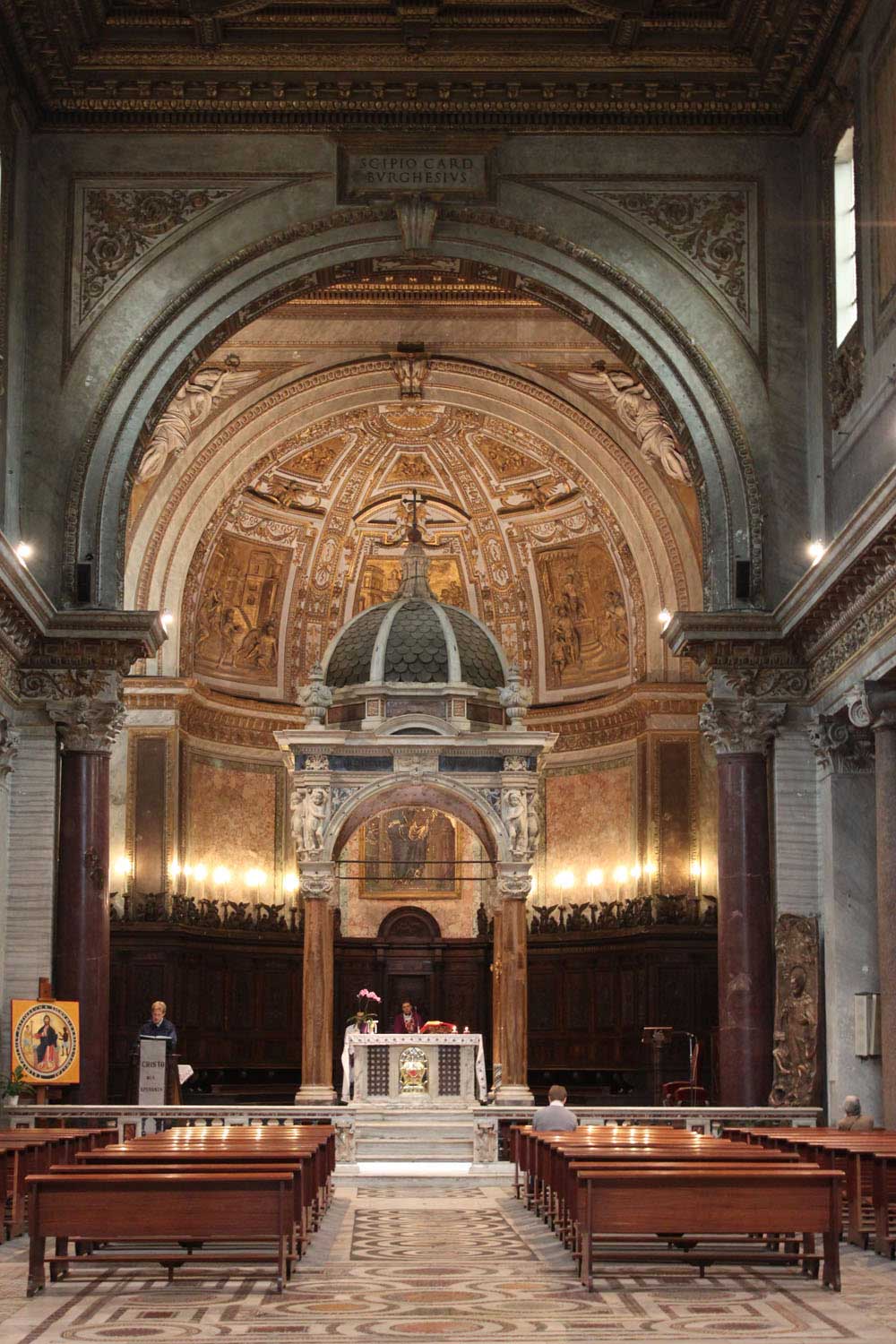
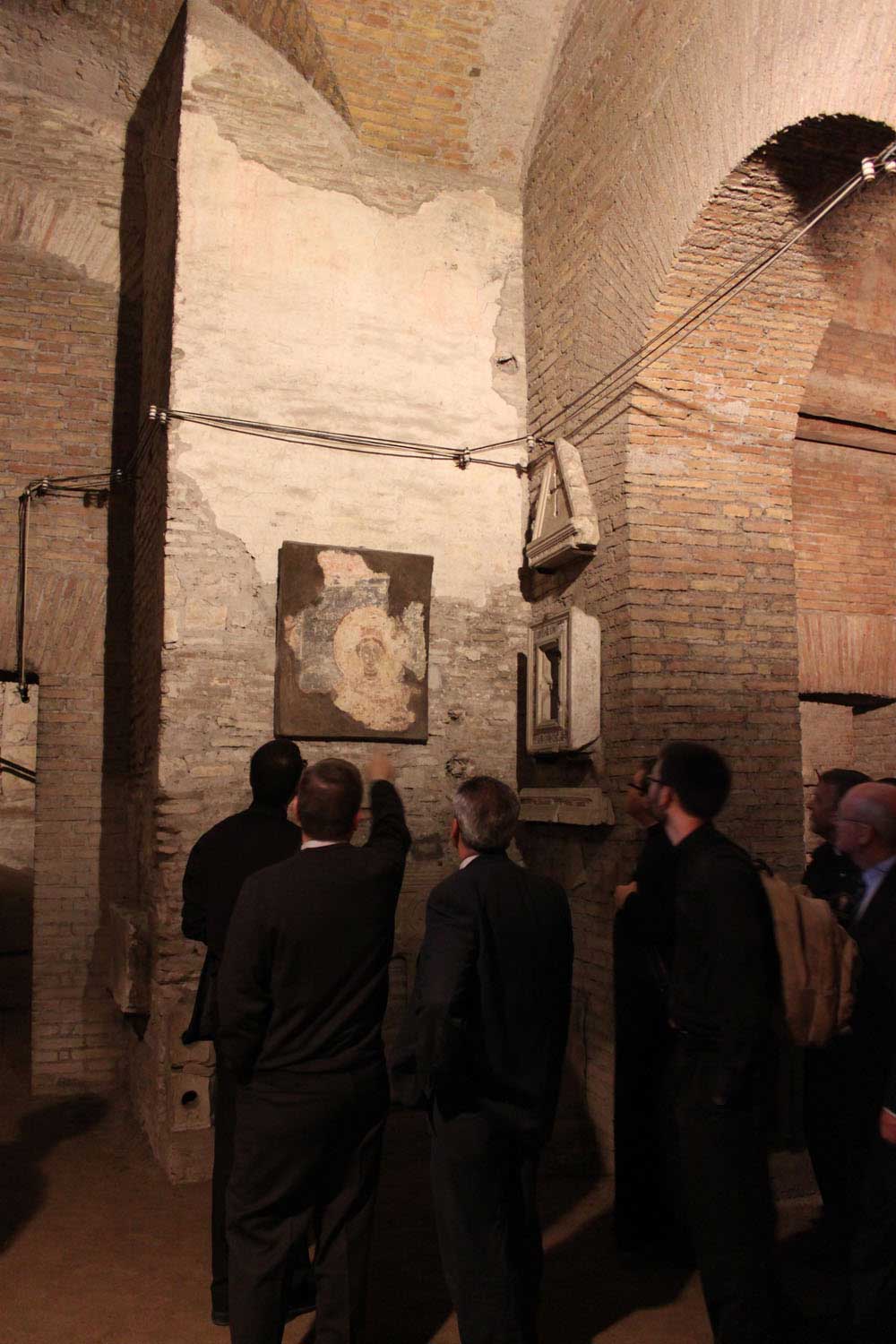
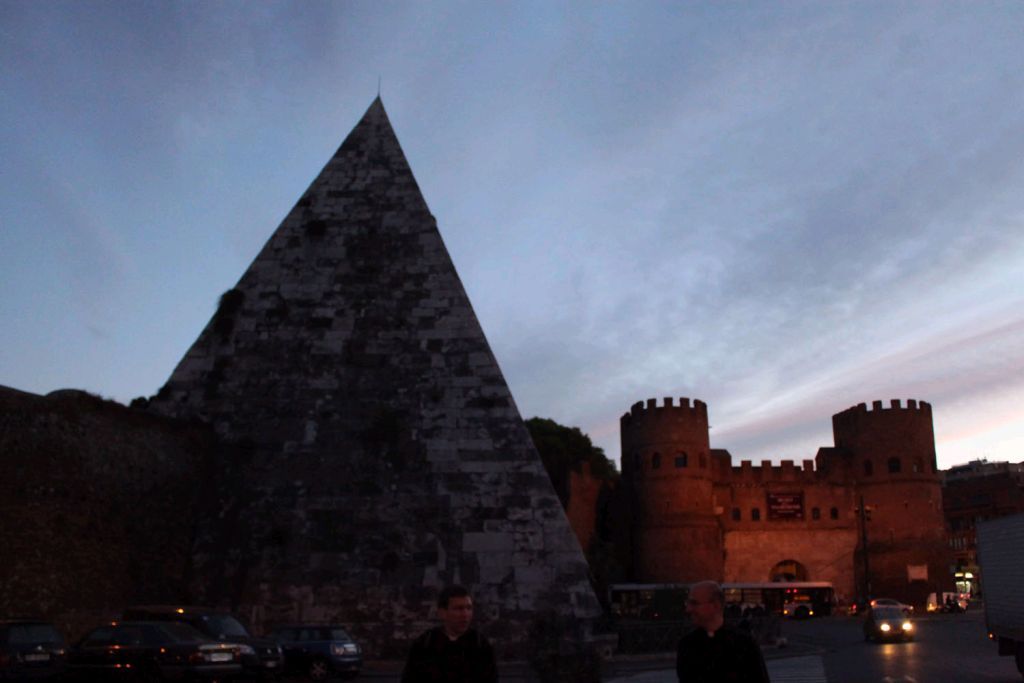
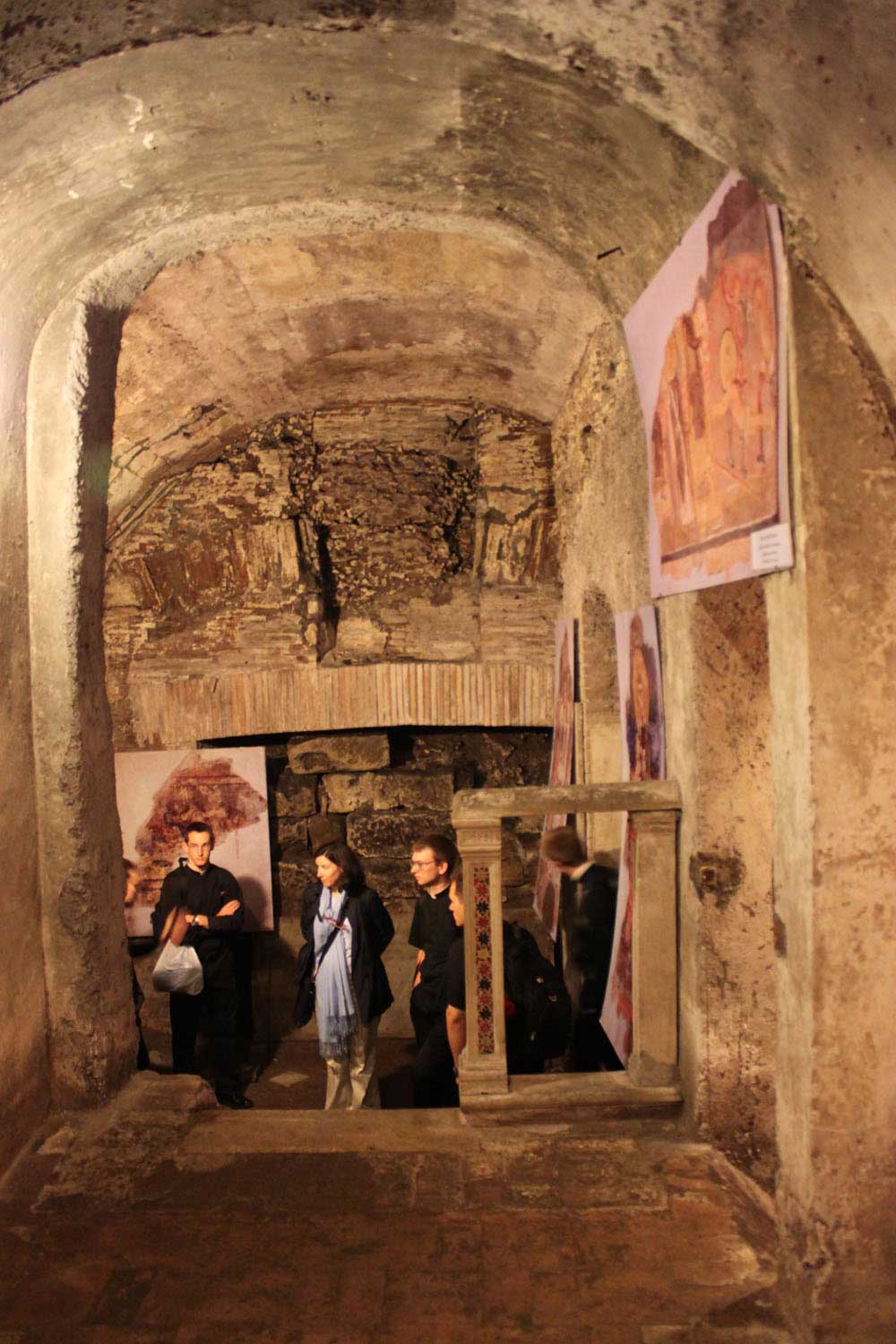
Today’s church, Santa Maria in Via Lata (St. Mary’s on Broad Street), lies adjacent to the Corso, from Roman times a major street running out the north side of the city. One tradition holds that this was the very site of Paul’s house arrest, the Christian home where he spent the last few years of his life. Archaeological studies have found remnants of a building dating back to the first century AD under the current church.

Spreading the Gospel in season and out of season

The ending of the book of Acts signifies the fulfillment of the words which Jesus had spoken to his apostles: “You will be my witnesses in Jerusalem, throughout Judea and Samaria, and to the ends of the earth.” (Acts 1:8) Indeed, Paul’s preaching of the Gospel in Rome – the Caput Mundi, the center of the world – started a chain of events which would end with the entire Roman Empire accepting the Christian faith. Paul, of course, could not have foreseen this. All he knew was that he had been entrusted with the Gospel of Jesus Christ, and that he was called to be faithful to that message even under the duress of his confinement. We, too, can promote the spread of the Kingdom by holding fast to that same Gospel and preaching it in season and out of season, knowing that God’s Providence will bring our efforts to fulfillment.

Written by Aaron Querishi

Photos by Fr. Justin Huber

Walking in the Footsteps: Fidelity

The Witness of Martyrdom

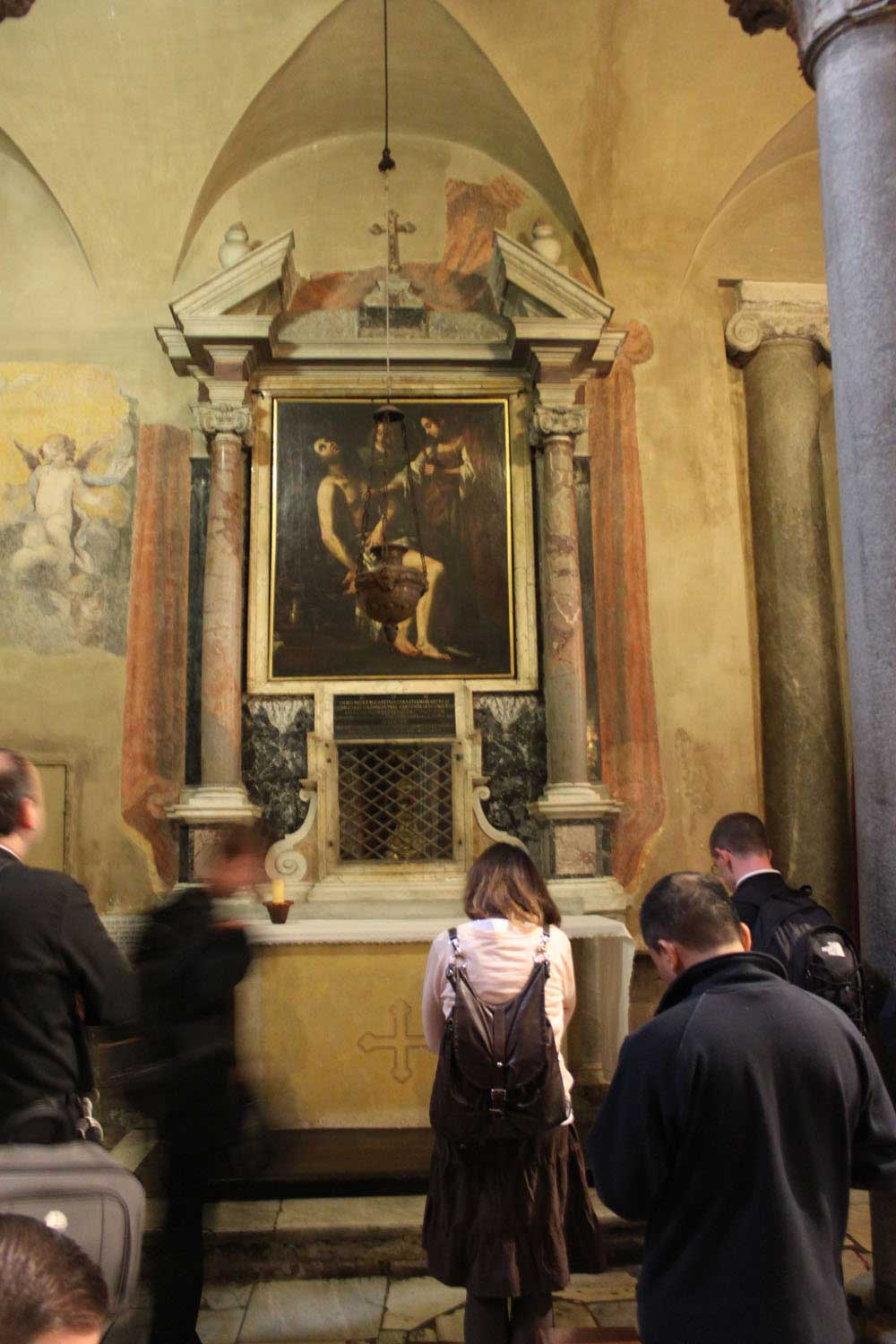
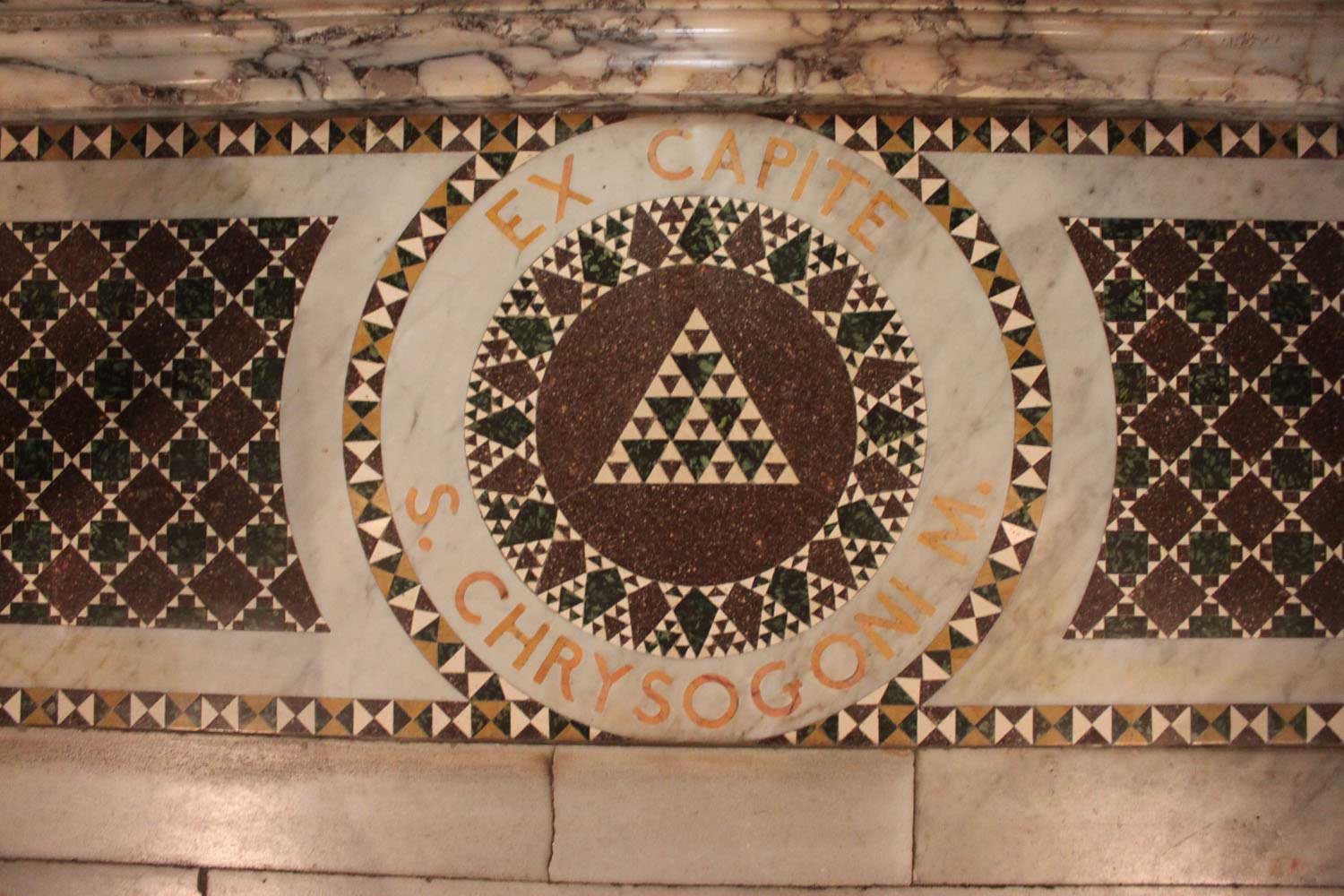
Today’s pilgrimage brings us to the Basilica of San Crisogono in Trastevere.  Situated on the site that is believed to have once been occupied by the oldest Church, built as such, in Rome.  The church honors the memory of Saint Chrysogonus, a Roman military officer who was martyred under Diocletian at the Northern Italian town of Aquileia in 304. His veneration in Rome dates back to at least the Roman Synod of 499, which mentions the church as the “Titulus Chrysogoni.” The church even has a Washington connection: it is administered by the Trinitarian Order, the same order that runs DeMatha high school. Saint Chrysogonus has the added distinction of being venerated by both the Catholic and Orthodox Churches.

Our Call to Fidelity

The theme of martyrdom ties in closely with the readings for the day, which recall two women accused of adultery: Susana, who is aided by the prophet Daniel and the unnamed woman, who is added by Jesus. One is innocent, the other guilty, but both find themselves attacked by those acting out of a lust for power and pleasure.  Their example provides us with lessons to consider as we make our way as pilgrims through the world. First, in the face of guilt, we must renew ourselves by acknowledging our guilt and asking for God’s forgiveness. Second, in the face to unjust attacks on faith and on the Church, we must continue to strive for holiness in witness to the Gospel of Christ, which infuses our lives with purpose and finality.  And finally, in the face of the uncertainties and challenges of life, we must stand undaunted, living with the hope that God’s grace will ultimately overcome and transform them.

Blog and Photos by Fr. Justin Huber

Walking in the Footsteps: God’s Fidelity

First Proclamation of the Nicene Creed

The Thursday after the Fourth Sunday of Lent brings us to San Martino ai Monti. Originally a house church, the original structure was built by Saint Sylvester (314-335) and was later dedicated to St. Martin of Tours (317-393) and Pope St. Sylvester. A preparatory meeting for the Council of Nicea in 325 was held here. Here Christians in Rome first proclaimed the Nicene Creed, a practice that continues to this day through the entire catholic world.

God’s Fidelity

Our reflection today is on the fidelity of God. The Lord made a promise to Israel, to build a house for it, to make it a great nation with descents beyond number. The Holy Catholic Church is the new Israel and the Lord’s promise extends to each of us.  We often think of making acts of faith in the Lord, but don’t as often think about His fidelity to us, His great love for us. Even when we fail to trust in Him, even when we fail to follow His word, He is still faithful to us. He will never turn back on his promise. He is always there for us, always available. Because of our sins, we have much to answer for. But because of God’s promise, He has more to answer for. God is faithful

Written By Fr. C. Gallagher

Photos by Fr. J. Huber

Walking in the Footsteps: In honor of Catechumens

The Patriarchal Basilica of Saint Paul Outside the Walls is the largest church in Rome after Saint Peter’s Basilica and is sometimes referred to as the “Ostian Basilica” because of its location along the Ostian Way. The Apostle Paul was brought to Rome as a prisoner and martyred between the years 64 and 67 during the persecution of Nero. Aquae Salviae, today’s Tre Fontana, about two miles from the basilica, is the traditional site of Paul’s martyrdom. Since he was a Roman citizen, his execution was probably by beheading rather than public torture. The body was claimed by the Roman matron Lucina, who buried it in her family tomb near a vineyard on the road to Ostia. An oratory was soon erected over it.

This basilica was the traditional site of the First Scrutiny of the Catechumenate. This is the reason why a major basilica was erected by Gregory the Great as a station church in mid-week. The tomb of the Apostles, called so specially by Christ, reminds one of the Lenten theme of conversion.

Today,  let us take some time to pray for the more than 1,100 men, women and children(catechumens and elect) coming into the church in the Archdiocese of Washington at Easter.

Adapted from the Pontifical North American College Guide to the Station Churches

Photos by Fr. Justin Huber

Walking in the Footsteps: Trusting The Lord’s Word

Choosing Christ

Today, to begin the fourth week of our Lenten Station Church Pilgrimage, we journeyed to the church of Santi Quattro Coronati (Four Holy Crowns).  A few blocks from the Coliseum, this church building dates back to the days of Emperor Constantine and was first used as a church around the year 630.  It commemorates two groups of martyrs.  The first group, for whom the church was named, was four Christian soldiers who refused to sacrifice to pagan gods and so were killed during the Diocletian Persecution.  The second group was five stone masons who were killed for refusing to make a statue of a pagan god.  In giving their lives for love, these two groups of heroic martyrs remind us of Christ’s unwavering love for us, even to the point of His death on a cross. As Lent draws closer to Good Friday, we remember that it is not just the martyrs who remind the world of Christ’s faithful love.  We too must listen to how the Lord is calling us to show the world that God is a God of mercy and love. In this way we become witnesses to Jesus just as the martyrs were.

On the strength of  Jesus’ Word

In today’s Gospel, Jesus challenges us to have faith in Him.  A royal official approaches Jesus and begs that He heal his dying son.  Rather than performing an obvious miracle, Jesus simply tells the official, “You may go; your son will live.”  St. John tells us that “the man believed what Jesus said to him and left.”  How many of us would have had that reaction?  Would we have believed as easily as the official did?  Most of us would have asked Jesus for a sign to prove that the boy would actually be healed.  Jesus’ word would not have been enough.  Or how many of us, trying to live out the Christian life, really believe that Jesus can heal our sinful nature?  Every day we try to follow Christ, and yet we repeatedly fall.  Today, Jesus is calling us to remember the gift of faith we have been given in our baptism.  We do not need to approach God with doubt, wondering whether He will love us with all our faults.  We approach Him as children, confident in His unending love.  Following Christ is not a matter of picking ourselves up by the bootstraps.  Rather, it is a life of faith in Christ who freely gives us the grace to follow Him.  All He asks of us is to live out this gift of faith.  Today Jesus is calling us to believe in His goodness and be open to his healing power in our lives.

Written by Christopher Seith

Photos by Fr. Justin Huber

Walking in the Footsteps: in small ways

Binding heaven and earth

Today’s Basilica of St. Mark recalls not only the evangelist Mark, but a holy Pope of the same name who constructed a basilica here in the mid-fourth century.

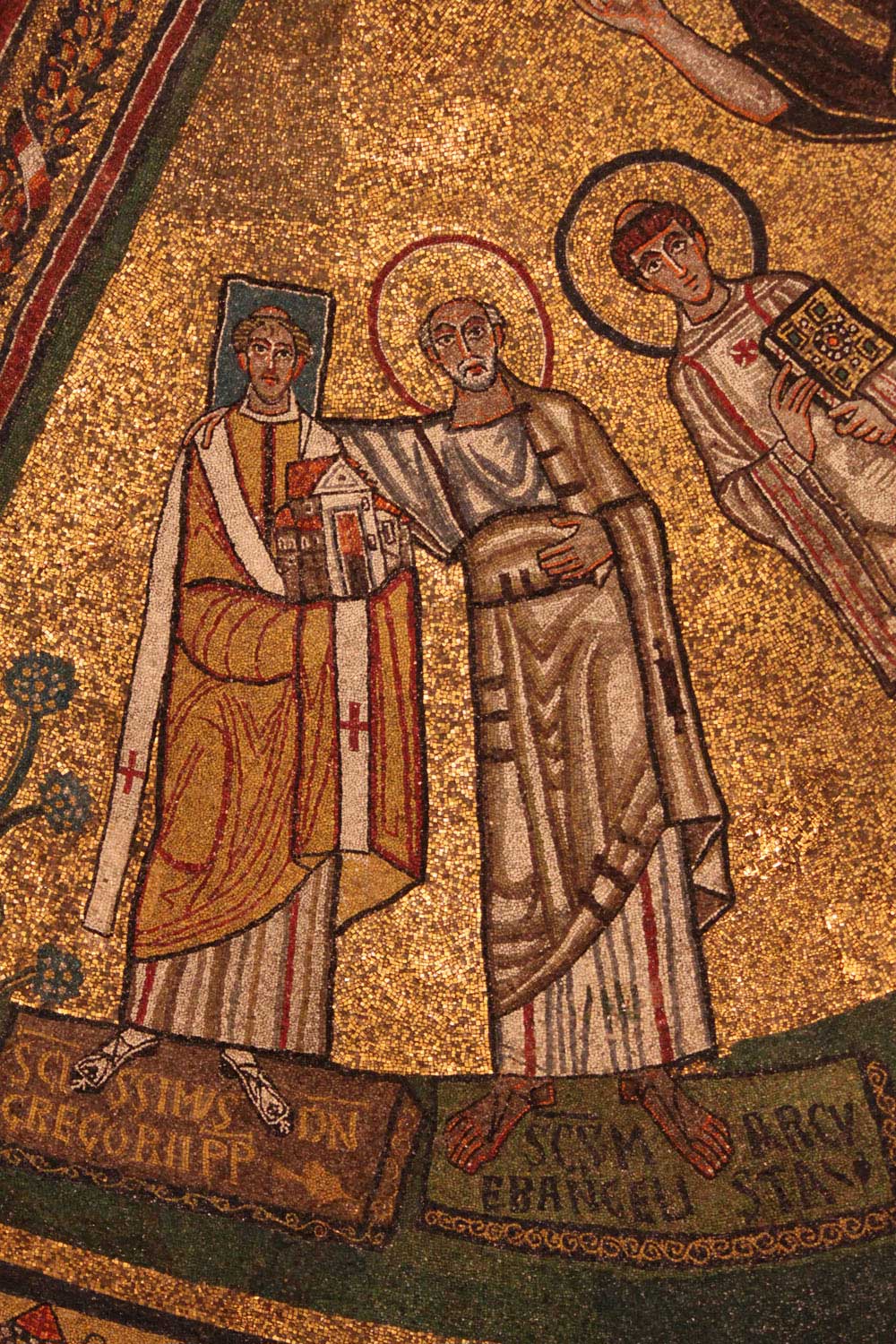
This was replaced by another basilica in the sixth century and a third in the ninth century.  What we have now is the third church, whose most notable addition is the beautiful mosaic depicting twelve lambs heading from Jerusalem and Bethlehem towards the Christ.  A rather typical image in mosaics, here we see an insightful and somewhat humorous addition as St. Mark the Evangelist rests his hand on the shoulder of Pope Gregory the IV of the ninth century.  The image seems to recall the bond between saints in Heaven, represented by St. Mark the Evangelist, and saintly Christians still on earth, represented by Pope Gregory, whose blue halo indicates that he was still living at the time of the mosaic’s construction.  Such a bond exists most strongly during the Mass, when the angels and saints in Heaven “gather” to celebrate with us, but even outside Mass the “Church triumphant” is praying for each one of us.

Sometimes God chooses the “little way”

Perhaps this or other articles of the Faith can seem trifling or irrelevant at times, but today’s first reading (2 Kgs 5:1-15b) gives us reason to stop and reconsider.  Naaman, commander of the Syrian army, travels to Israel to be healed of his leprosy by Elisha the prophet. Apparently expecting Elisha to amaze him with some incredible and awe-inspiring act, Naaman is disappointed to hear Elisha’s rather banal counsel: “Go and wash seven times in the Jordan, and your flesh will heal, and you will be clean.”

Though Naaman indignantly intends to return home, his servants are wise enough to advise him to follow through on Elisha’s counsel. “My father,” they said, “if the prophet had told you to do something extraordinary, would you not have done it?  All the more now, since he said to you, ‘Wash and be clean,’ should you do as he said.”

This story not only recalls the fact that God’s ways often surprise us, but also points especially to the fact that God often uses rather simple, “small” means to accomplish great effects, whenever we act out of faith and hope in Him. One might think of many Gospel instances of this truth, such as a woman simply reaching out to touch Jesus’ tassel to be healed (Luke 8:40-48), or a centurion expressing great respect and trust in his authority (Matt. 8: 4-13). One could also think of the countless ways Christians since the first centuries have placed their trust in God’s power to heal and bestow graces through the veneration of relics, saints, and holy sites, beginning even in the times of the apostles (see Acts 19).

Whether it be devotion to the saints, the belief that Jesus can forgive and strengthen through the Sacraments of Reconciliation and the Eucharist, or the conviction that one can grow closer to Christ through prayer, fasting, and almsgiving, God challenges us to trust that He can work miracles if we trust him.  This Lent is the perfect opportunity to return to not only accepting Christ’s words as true, but also act on them in even the “smallest” of ways.

“So Naaman went down and plunged into the Jordan seven times at the word of the man of God. His flesh became again like the flesh of a little child, and he was clean.”


Written by Timothy Graham

Photos by Fr. Justin Huber

Walking in the Footsteps: Metanoia

Metanoia

The station church of Saints Marcellinus and Peter is located between St. Mary Major and St. John Lateran at the intersection of two busy streets. These two saints, who are mentioned in Eucharistic Prayer #1 (The Roman Canon), were both beheaded for their faith. This small church no longer holds their remains (they were re-located to Germany in the 9th century for use in the new churches there), but it still preserves the memory of their witness to the Father’s love for all of us.

Today’s homily takes up the theme of  Lent as a season of conversion, of metanoia, of purifying our ways of thinking. The stational liturgy today asks us to admit our need for further conversion, and shows us the way back to the Father.

Learning from Our Father’s Generosity

The well-known parable of the Prodigal Son asks us to confront the attitude of the elder son present in all of us. The elder son becomes angry at the generosity shown by the father for the younger son, a son who seemed to have lived the easy life, full of pleasure and enjoyment. This anger is not just because the younger prodigal son is welcomed back; it’s because the father’s love seems disproportionate to the actions of his sons. From the elder son’s point of view, the father seems to be more generous to the younger son; in fact, he seems to love the younger son more despite what the elder son has done for the father.  “Look,” he says, “all these years I served you and not once did I disobey your orders; yet you never gave me even a young goat to feast on with my friends!”

Are we angry because others seem to be rewarded for doing nothing? Are we angry because our burdens seem to be more difficult than others’? Are we angry because we have to follow certain rules and others don’t, and they seem happier for it? In a word, are we angry because God still hasn’t given us our due? If we have these thoughts in our hearts, we really don’t know what redemption means. We really don’t know what Jesus accomplished through his passion death and resurrection.

But we can rediscover this Lent what it means to be saved. It’s appropriate that this station church, which is always connected to this Gospel in Lent, should have a shrine over there to Lourdes. It is at Lourdes where so many people who are ill and fearfully sick come to find rest. They bring the burden of feeling abandoned by God to Mary; they bring the heavy load of being the sickest person they know to this shrine and discover with and through Mary how much they are already blessed by God; how much they have already been given by God, freely, gratuitously, out of the generosity of his fatherly heart. They learned the meaning of what the father told his elder son, “Everything I have is yours”.

Mary, pray that we your sons and daughters may come to know this Lent the gratuitousness of divine love, a love that we already possess. And pray that we may in turn give that love to others. Amen.

Written by Fr. Anthony Lickteig

Photo by Fr. Justin Huber