The Battle Theme of Lent

A brief observation of the first two days in Lent reveals militaristic, even violent imagery in the battle against sin and the unruly passions of the flesh. The Collect (opening prayer) of Ash Wednesday provides an image of troops mustering for battle:

Grant, O Lord, that we may begin with holy fasting
this campaign of Christian service,
so that, as we take up battle against spiritual evils,
we may be armed with weapons of self-restraint.
Through our Lord Jesus Christ, your Son,
who lives and reigns with you in the unity of the Holy Spirit,
one God, for ever and ever.

“Battle,” “weapons,” and “armed” all clearly have military connotations, but so does the phrase “campaign of Christian service” if we look at the Latin text: praesidia miltiae Christianae. The service or action (praesidia) is one of Christian battle or militancy (militiae). This refers to the Church Militant, waging war against sin and the kingdom of darkness.

Thus the opening prayer on Ash Wednesday announced and summoned us to a battle that is engaged by the Church with special intensity during Lent.

The Gospel for Thursday after Ash Wednesday also has a battle theme. Jesus says,

If anyone wishes to come after me, he must deny himself
and take up his cross daily and follow me.
For whoever wishes to save his life will lose it,
but whoever loses his life for my sake will save it
(Luke 9:23-25).

The battle theme is particularly apparent if one looks at the Greek text. The word translated as “lose” in English does not capture the vigor of the Greek word ἀπόλλυμι (apollumi). Apollumi means more literally, I kill, destroy, I lose, I am perishing. It is from the Greek apó, meaning away from, with the intensifier ollymi, “to destroy.” Thus apollumi means to fully destroy, cutting off entirely. It implies permanent or absolute destruction.

So when Jesus says we must “lose” our life, it is really far stronger than the English translation captures. Losing our life involves a kind of violent overthrow of our worldly notions and the deep drives of sin. We must lose, that is, see utterly destroyed and cut off, all things worldly, fleshly, and of the devil. This is war, and it is going to involve more than a mumbled, half-hearted prayer on our part. Scripture says, In your struggle against sin, you have not yet resisted to the point of shedding your blood (Heb 12:4).

So behold the militaristic imagery as Lent begins. To arms!

The idea of such a battle might overwhelm us if we thought it must all be done in a day. Jesus says that we should take up our cross daily. Our daily cross is vital to our success. It’s not our weekly cross, or our monthly cross, or our yearly cross. We ought to do each day what we should do. If we put off or postpone the daily cross, the problem pile up. A monthly cross can seem overwhelming, and a yearly cross might seem impossible. Everyday discipline is crucial. Soon enough, the daily discipline becomes virtue; it becomes a good habit that one accomplishes fairly easily. To take up our cross daily is to endure short-term pain for long-term gain.

The battle is engaged! Fight it daily. Fight it with the Lord. Understand that it is battle, but in Jesus (and only in Jesus) the victory is won. Stay on the winning side and fight daily to the end.

Choices Have Consequences

The themes of early Lent are pretty basic. The ashes of Ash Wednesday announce the simple truth that we are going to die and subsequently face judgment. Hence we need to repent and come to believe the good news that only Jesus can save us.

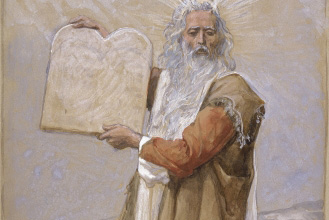
The reading for Thursday after Ash Wednesday features Moses laying out the basic reality that all of us have a choice to make:

Today I have set before you
life and prosperity, death and doom …

I call heaven and earth today to witness against you:
I have set before you life and death,
the blessing and the curse (Dt 30:15, 20).

So there is our choice: life or death, prosperity or doom. There is a Latin expression, Tertium non datur (No third way is given). We often like to think that we can take some middle path, but in the matter of the last things, there is no middle path, no third way. Either we choose God and His kingdom, and then reflect that choice in all of our smaller decisions, or we do not.

To those who think that a middle path is possible, I would say that it is the way of compromise, ambivalence, and tepidity. Walking such a path demonstrates a lack of commitment and a refusal to witness to Christ. These are not virtues that belong to God’s Kingdom; they pertain more to the kingdom of darkness. Jesus says, Let what you say be simply ‘Yes’ or ‘No’; anything more than this comes from evil (Matt 5:37). He also says, No one can serve two masters. Either you will hate the one and love the other, or you will be devoted to the one and despise the other. You cannot serve both God and money (Matt 6:24).

So we are back to a choice: for the Kingdom of Light or for the kingdom of darkness; for the world and its ways, or for God and His ways. Do we choose to gratify the flesh or nourish the spirit, to serve Satan and his agenda or to serve Christ and follow His will and plan?

You are free to choose, but you’re not free not to choose. That is to say, you must choose. If you think that you can go on simply not choosing one or the other, I’ve got news for you: not choosing is choosing the kingdom of darkness.

Many do not directly choose Satan, but rather indirectly choose him by following his ways. We are asked to choose God directly, by accepting the gift of faith and basing our life on what the He commands. Faith is not some sort of “default position” we can have by accident. Faith is the supernaturally-assisted and transformed human decision for God and all that that choice implies. Faith is a gift freely offered and one that we must freely accept; it is a choice that will not be forced on us. Through our many daily choices, we are called to reaffirm, by grace, the choice we have made for God.

So again, life is about choices: the fundamental choice of faith and all the daily choices that either affirm or deny the reality of our faith.

We live in times in which people like to demand free choice, but also like to evade the responsibilities that come with making choices. Moses goes on in the reading today to describe the fact that the choice we make for or against God will have consequences:

If you obey the commandments of the LORD, your God,
which I enjoin on you today,
loving him, and walking in his ways,
and keeping his commandments, statutes and decrees,
you will live and grow numerous,
and the LORD, your God,
will bless you in the land you are entering to occupy.
If, however, you turn away your hearts and will not listen,
but are led astray and adore and serve other gods,
I tell you now that you will certainly perish;
you will not have a long life
on the land that you are crossing the Jordan to enter and occupy (Dt 30).

Yes, choices have consequences. Even small daily choices have the cumulative effect of moving us in one direction or the other, toward God or away.

Many small choices also have a way of forming our hearts. Deeds become habits; habits become character; character becomes destiny. These choices form our hearts, establish our character, and move us into one future or another.

While sudden and dramatic conversions are possible as long as we are still living, it is more common that our hearts become more fixed over time and our fundamental character becomes less and less likely to change. As we get older, it’s harder to change because that’s what choices do to us: they move us in a certain direction, down a certain path; and the further along that path we go, the less likely we are to turn back.

Therefore, daily choices are important. It is essential to examine our conscience regularly and make frequent use of the Sacrament of Confession. Each day we ought to ask the question, “Where am I going with my life?” If we go on for too long living an unreflective life, it is easy to find ourselves deeply locked in sinful habits that become harder and harder to break. Frequent reflection is necessary and we ought not to make light of small daily decisions.

We live in times in which it is often easy to insulate ourselves from the immediate consequences of the choices we make. Medicine, technology, and social safety nets are all good things in and of themselves, but they do tend to shield us from immediate consequences, and help to cultivate the illusion that consequences can be forever evaded. They cannot.

We also live in times in which, perhaps more than ever before, the community is willing to bear the burden of poor individual choices. Again, this is not in and of itself a bad thing, but it does become an enabler of bad behavior, and fosters the illusion that consequences can be avoided forever. They cannot.

Our own culture is currently struggling under the weight of a colossal number of poor individual choices, ones that have added up to a financial, spiritual, moral, and emotional debt that we cannot pay. Sexual misconduct, divorce, cohabitation, abortion, sexually transmitted diseases, the use of hallucinogenic and addictive drugs, the casting off of discipline and parental responsibility, the rejection of faith and ancient and tested wisdom, rebellion, silence in the face of sin and injustice, greed, consumerism, factions, envy, discord, and on and on … all of this is taking a tremendous toll. The consequences are mounting and it is becoming clear that even the most basic functions of society such as raising the next generation, preserving order and stability, and ensuring the common good are gravely threatened.

And what is true collectively is also true for us as individuals. Many poor choices in small matters quickly draw us into self-destructive patterns that get more and more deeply entrenched. Without regular reflection and the reminder of penitential seasons like Lent, it is easy to lose our way. St. Augustine noted this in his Confessions, in which he described himself as being bound,

“not by another’s irons, but by my own iron will. … For in truth, lust is made out of a perverse will, and when lust is served, it becomes habit, and when habit is not resisted, it becomes necessity” (Confessions 8.5.10).

Moses’ warnings are before us as never before.

In 1917, a beautiful and holy woman (Our Lady) appeared to three little children. She explained that the horrifying war (World War I) was finally coming to an end, but also warned that if people did not turn back to her Son Jesus and start praying, an even more devastating war would ensue; Russia would spread her errors and great disaster would befall the world. Do I need to tell you what happened? Any even casual assessment of the 20th century would find it hard to conclude that it was anything but satanic in terms of its wars, death rates through violence and abortion, and in its persecution of the Church.

Life or death, prosperity or doom; what will you choose?

Choices! Consequences!

And now from heavy to humorous:

Four Immediate Results of Jesus’ Death on the Cross

crossLet’s conclude our consideration of certain texts from the Passion Narratives with one that describes the aftermath of Jesus’ death. The Gospel of Matthew recounts four immediate results of Jesus’ death, and while they describe historical events, they also signal deeper spiritual truths.

And when Jesus had cried out again in a loud voice, he gave up his spirit. At that moment, the curtain of the temple was torn in two from top to bottom. The earth shook, the rocks split, and the tombs broke open. The bodies of many holy people who had died were raised to life. They came out of the tombs after Jesus’ resurrection, went into the holy city, and appeared to many people. When the centurion and those with him who were guarding Jesus saw the earthquake and all that had happened, they were terrified, and exclaimed, “Surely he was the Son of God!” (Matt 27:50-53)

Let’s consider the four results described in this passage, each in turn.

I. Return At that moment, the curtain of the temple was torn in two from top to bottom.

The significance of the tearing of the Temple curtain and the way in which it happened ought not to be underestimated. Consider that God had walked intimately with Adam and Eve in the garden in the cool of day (cf Gen 3:8), but that after sin, they could no longer endure His presence; they had to dwell apart from the paradise that featured God’s awesome presence. Consider, too, how terrifying theophanies (appearances of God to human beings) were after that time. For example, the appearance of God on the top of Mt Sinai is described in the Book of Exodus:

When the people saw the thunder and lightning and heard the trumpet and saw the mountain in smoke, they trembled with fear. They stayed at a distance and said to Moses, “Speak to us yourself and we will listen. But do not have God speak to us or we will die” (Ex 20:18-19).

Had God changed? Was He different from when He walked with Adam and Eve in intimacy? No. We had changed and could no longer endure the presence of God.

Throughout the Old Testament, a veil existed between God and Israel. There was the cloud that both revealed God’s presence and concealed it. There was also the curtain in the sanctuary, beyond which the High Priest could only venture once a year, and even then in fear and trembling.

Sin had done this. Mere human beings could no longer tolerate God’s presence.

But with His Death on the cross, Jesus has canceled our sin. We once again have access to God through Christ our Lord. His blood has cleansed us and the ancient separation from the Father and from God’s presence has been canceled. But we will not encounter God in a merely earthly paradise; He has now opened the way to Heaven.

It is now up to us to make the journey there, but the way has been opened, the veil has been rent. Through this open veil the Father now says, “Come to me!”

II. Rendering of Judgment upon the World The earth shook, the rocks split …

Judgment has now come; Earth stands judged. This refers not merely to the created world, but also to the forces of this world, the forces of this age, which are arrayed against the Lord and His kingdom. These are forces that do not acknowledge the sovereignty of God but rather insist that political, social, cultural, and economic forces are what must hold sway and have our loyalty.

This earthquake, which has significant historical corroboration, demonstrates that the foundations of this rebellious world ultimately cannot stand before God. The foundations are struck; the powers of this world quake. Scripture says,

  1. People will flee to caves in the rocks and to holes in the ground from the fearful presence of the LORD and the splendor of his majesty, when he rises to shake the earth (Is 2:19).
  2. For thus says the LORD of hosts: Once more in a little while, I am going to shake the heavens and the earth, the sea also and the dry land. I will shake all the nations; and they will come with the wealth of all nations, and I will fill this house with glory, says the LORD of hosts (Haggai 2:6-7).
  3. In my zeal and fiery wrath, I declare that at that time there shall be a great earthquake in the land of Israel (Ez 38:19).
  4. The kings of the earth rise up and the rulers band together against the Lord and against his anointed, saying, “Let us break their chains and throw off their shackles.” The One enthroned in heaven laughs; the Lord scoffs at them. He rebukes them in his anger and terrifies them in his wrath, saying, “I have installed my king on Zion, my holy mountain” (Psalm 2:2-6).
  5. In the time of those kings, the God of heaven will set up a kingdom that will never be destroyed, nor will it be left to another people. It will crush all those kingdoms and bring them to an end, but it will itself endure forever (Daniel 2:42).
  6. The LORD will roar from Zion and thunder from Jerusalem; the earth and the heavens will tremble. But the LORD will be a refuge for his people, a stronghold for the people of Israel (Joel 3:16).
  7. A ruin! A ruin! I will make it a ruin! The crown will not be restored until he to whom it rightfully belongs shall come; to him I will give it (Ez 21:27).

Yes, the world shakes; the world is judged. And, most important, as Jesus says, Now is the time for judgment on this world; now the prince of this world will be driven out (John 12:31).

Do not doubt, dear reader, that no matter how powerful this world may seem in its pride and glory, it has already been shaken; it has already been judged. The world has been conquered and shaken to its very foundations. Do not put your trust or hope in any worldly reality; the world has been judged and shaken; it cannot stand the test of time. For here we have no lasting city, but we seek the city that is to come (Heb 3:14).

III. Resurrection to New Life … the tombs broke open. The bodies of many holy people who had died were raised to life. They came out of the tombs after Jesus’ resurrection and went into the holy city and appeared to many people.

“Death is struck and nature quaking. All creation is awaking, to its judge an answer making.” (from the Dies Irae). Yes, by dying, Jesus has destroyed our death.

Where, O death, is your victory? Where, O death, is your sting? The sting of death is sin, and the power of sin is the law. But thanks be to God. He gives us the victory through our Lord Jesus Christ (1 Corinthians 15:55-57).

Note well that although the text says that many of the dead appeared in Jerusalem, these appearances occurred after Jesus’ resurrection. Hence, we ought not to imagine ghosts or corpses walking around at 3:00 PM on Good Friday! Rather, they appeared on or after Resurrection Sunday. In this, they witness to the truth of resurrection and the initial fulfillment of the text from Ezekiel:

Behold, I will open your graves and cause you to come up out of your graves, My people; and I will bring you into the land of Israel. Then you will know that I am the LORD, when I have opened your graves and caused you to come up out of your graves, My people! I will put My Spirit within you and you will come to life (Ez 37:12-14).

Yes, on Good Friday, Jesus awakens the dead with the words, “Awake, sleeper, and arise from the dead, and Christ will shine on you” (Eph 5:14).

IV. Realization of Who Jesus Is When the centurion and those with him who were guarding Jesus saw the earthquake and all that had happened, they were terrified, and exclaimed, “Surely he was the Son of God!

Jesus most clearly showed His identity as the Son of God through His obedience to the Father. According to the Gospel of John, as Jesus rose from the table of the Last Supper, He said,

The prince of this world is coming. He has no hold over me, but he comes so that the world may learn that I love the Father and do exactly what my Father has commanded me. Come now; let us go forth (Jn 14:30-31).

The centurion, in seeing Jesus die this way, somehow recognizes in Him the obedience of the Son of God, who loves and obeys His Father.

By His obedience, Jesus has canceled our disobedience; His humility has canceled our pride. Yet the weakness of God is more powerful than any worldly force. The centurion, who knew power and was trained to respect it, saw in the earthquake and the other occurrences, an indication of the Lord’s glory. The Lord’s way to that glory is not our way. But His glory and Sonship cannot remain forever hidden! Scripture says,

See, he comes amid the clouds, and every eye will see him, even those who pierced him; and all peoples on earth will mourn because of him. Even So. Amen (Rev 1:7).

There Was a Man Who Had Two Sons – A Homily for the 4th Sunday of Lent

3.5Today’s Gospel is about a man who had two sons, both of whom forsook him and refused to relive in relationship with him. Although the sons seem to have very different personalities (one outwardly rebellious, the other outwardly obedient) they actually have similar internal struggles. In effect, neither one of them really wants a relationship with the father. Both prefer what their father has or can give them to their father himself.

In the end, one son repents and finds his way to the father’s heart. We are not so sure what happens to the second son because the story ends before that detail is supplied. Why did it end without telling us what happened? Because the story is really about you and me; it is we who must finish the story. The question we must answer is this: What do I really want: the consolation of God, or the God of all consolation? Do I want the gifts of God, or the giver of every good and perfect gift?

Let’s look at this Gospel in four parts.

I. Renegade Son – Most of us are quite familiar with today’s Gospel (the Parable of the Prodigal Son). In this story, most of us focus on the younger (and obviously sinful) son rather than the older one. This is interesting because it would seem that the Lord Jesus has His focus on the older son (the parable is addressed to the scribes and Pharisees, who see themselves as obedient). Nevertheless, let’s observe three things about this renegade son, also known as the Prodigal Son.

A. Corruption – This is an angry young man, alienated from his father. He wishes to possess what his father has, yet wants nothing to do with his father. In effect, he tells his father to drop dead. Yes, in effect he says, “Old man, you’re not dying fast enough. I want my inheritance now; I want to be done with you and cash in what is coming to me right now.”

His effrontery is even more astonishing given where and when it happened. Today we live in times when reverence for parents and elders is tragically lacking. But if our times are extreme in the one direction, ancient times in the Middle East were at the opposite extreme. In telling this parable as He does, Jesus shocks His listeners, who lived in a culture where no son would dream of speaking to his father in this way. Indeed, a son could be killed by his father for such insolence! Even to this day, so-called “honor killings” still occur in many parts of the Middle East. If a child brings dishonor to the family, it is not unheard of for the father to kill him or her. And while most governments forbid these practices, in many cultures people will look the other way and governments will seldom prosecute in such cases.

Thus, Jesus must have shocked his listeners with such a parable. Here was a son who did something so bold and daring as to be practically unthinkable. He was as insolent as he was insensitive, ungrateful, and wicked.

So hateful is this son that he has to go to a distant land to live. For even if his father does not kill him, his neighbors would surely set upon him and have him stoned for such insolence.

Even more astonishing than the son’s behavior, however, is the fact that father actually gives him his inheritance and allows him to leave.

This is Jesus’ veiled description of the patience and mercy of our Father, who endures even worse insolence from us, His often ungrateful children. We demand His gifts and grasp them with ingratitude; we want what God has, but do not want Him.

B. Consequences – The text says that the renegade son sets off “to a distant country.” It is always in a distant country that we dwell apart from God. The consequences of his action are great indeed.

This parable does not make light of sin. The Lord Jesus describes well a young man who chooses to live apart from God and in sinful rebellion. The result is that this renegade son lives in anguish and depravity. Once he runs out of money, he has no friends, no family, and no experience of his father.

So low is he that ends up looking up to pigs! So awful is his state that he becomes hungry for the disgusting mash that pigs eat. Yes, he is lower than an unclean animal—the most unclean animal that Jews can imagine—a swine.

Sin debases the human person and if its effects are not avoided, it orients us increasingly toward depravity. What was once unthinkable too easily becomes a common occurrence.

St. Augustine wrote of sin’s hold on individuals in his Confessions: “For of a forward will, was a lust made; and a lust served, became custom; and custom not resisted, became necessity. By which links, as it were, joined together (whence I called it a chain) a hard bondage held me enthralled” (Confessions, 8.5.10).

The renegade son is locked in to the consequences of his sinful choices. He is debased, debauched, and nearly dead.

C. Conversion – In an almost miraculous turn of events, the text says that he comes to his senses at last. Too many, especially today, suffer a darkened intellect due to the debasing effects of their sin; it would seem that no matter how debased, confused, and even enslaved they become, they still do not come to their senses, for their senseless minds have become darkened (cf Romans 1:21).

But thanks be to God, the renegade son does come to his senses and he says, I shall arise and go to my father! In this passage, the Greek text uses the word anistemi, here translated as “arise”—the same word used to describe the resurrection of Jesus. The young man’s father will later joyfully describe him as having been dead but then coming back to life.

St. Paul reminds us that we were dead in our sins, but God made us alive in Christ (cf Col 2:13). Thanks be to God for His mercy and for the conversion that He alone can effect in all of us, His renegade children, who ourselves have been debased, debauched, and dead in our sins. The conversion of this renegade son, we pray, is also our conversion, our rising and going back to the Father.

II. Rejoicing Father – The astonishment in this parable is only just beginning, for Jesus goes on to describe a father who is so merciful as to be shocking. He ascribes to the father things that no ancient father would ever do. And as He describes this ancient father, so filled with love and mercy that he casts aside personal dignity, we must remember that Jesus is saying, “This is what my Father is like.”

As the parable continues to unfold, we hear that the father sees the son while he’s still a long way off. This tells us that he was looking for his son, praying and hoping for his return.

In a human being such mercy is rare. The average person who is hurt and has his dignity scorned becomes resentful and avoidant, saying, “Never darken my door again!”

But how shockingly different this father is, lovingly and longingly waiting for the day when his son will appear on the horizon, looking for him day after day.

The text next tells us that when he saw his son, the father ran out to meet him, something no ancient nobleman would ever do. Running was a sign of being in flight or of being a slave on some errand. Further, in order to run, the ancients (who wore long garments) had to bare their legs—a disgraceful thing for nobility. Only common workers and slaves had their legs exposed.

Thus, here is the portrait of a father willing to debase himself in order to run and greet his returning son. When I take one step God takes two or more; he comes running to me!

In the parable, the robe and the ring that the father puts on his son are signs of family belonging or restoration. This is the full restoration of a young man who was willing to live as a slave in his own father’s house. But the father will have none of it. “You are my son! And my Son you have always been, whatever your sins. They are forgotten. You are my beloved son!”

What kind of Father is this? No earthly father would behave this way. This is the heavenly Father. Jesus is saying, “This is what my Father is like!”

III. Resentful Son – Now we turn our attention to the older brother. His sinfulness is more subtle. Outwardly, he follows his father’s rules; he does not sin in overt ways. His sins are more hidden.

Unlike his prodigal brother, he has never openly rejected his father. But inwardly, as we shall see, he is not so different.

Like his younger brother, the older son wants his father’s goods, not his father himself. To understand the subtlety of his struggle, let’s look at some of the details of the story. Notice the following fundamental issues with the resentful son:

  1. Distant – It is interesting that the last person to find out about the feast (and the reason for it) is the older son. This is the description of a son who is far away from his father, who is unaware of the happenings in his father’s life.

Off on some far-flung part of the property, he is going about his duties, which he seems to fulfill adequately. But we also get the feeling that there is a sense of distance between father and son.

Did this son not know that his father worried about his younger brother and was looking for him each day? It seems not! Even the lowly slaves in the household are drawn into the preparations for this great feast celebrating the return of the renegade son. It appears that the older son is the only one in the whole area who knows nothing about it. Even more telling is that he is unaware of his father’s joy at the return of his brother.

Yes, the resentful son is distant, a thousand miles away from the heart of his father.

  1. Disaffected – When this resentful son learns of the feast and the reason for it, he becomes sullen, angry, and resentful. He is disaffected. He stays away from the feast and refuses to enter.

So bitter is his resentment that his father will soon hear of it and come out to plead with him. Yes, this is a bitter, angry, and disaffected son.

But, dear reader, do not scorn him, for too easily we are he. Too easily, we die the death of a thousand cuts as we see sinners finding mercy. Too quickly do we become envious when others are blessed.

  1. Disconsolate – The father emerges from the feast to plead with his son to come in! Again, such a thing would be unheard of in the ancient world! Every father in those times would have commanded his son to come in to the feast and would expect to be obeyed immediately.

But this father is different, for he represents the heavenly Father, rooted in love more than in prerogatives and privileges. He has already demonstrated his love for his renegade son and now he does so for his resentful son.

The fact is, he loves both of his sons. Yes, the heavenly Father loves you and He loves me.

Tragically, the resentful son is unmoved by this demonstration of love. He remains disconsolate and must be confronted in his resentful anger.

  1. Disrespectful – Now we see the ugly side of the apparently obedient son. He does not really love or respect his father; he doesn’t really know him at all. He disrespects him to his face. He speaks of him as a slave master saying, “I have slaved for you … I have never disobeyed any one of your orders.”

Orders? I have slaved for you? Where is his love for his father? He does not see himself as a son but as an unwilling slave, one who follows orders only because he has to. In effect, he calls his father (to his face) a slave master, a despot.

Further, he accuses his father of injustice. Somehow he views the mercy his father showed to his brother as evidence of a lack of due mercy shown to himself. He considers his father unreasonable, unjust—even despicable. How dare his father show mercy to someone that he, the “obedient” son, does not think deserves it!

In calling his father an unjust slave owner and taskmaster, the son disrespects him to his face. But the father stays in the conversation, pleading with his son to reconsider.

  1. Disordered – Among the older son’s complaints is that his father never even gave him a kid goat to celebrate with his friends. But the goal in life is not to celebrate with friends; the goal is to celebrate with our heavenly Father.

Note how similar the two sons actually are. At one point the renegade son saw his father only in terms of what his father could give him; his father was only valuable to him in terms of the “stuff” he could get from him. And despite all his obedience, the older son—the resentful one—has the same problem. He seems to value only what his father can give him. It is not his father he really loves or even knows. It is the “stuff” that really interests him. He is concerned only what his father can give him.

In this way, the resentful son is disordered. He misses the whole point, which is not the “things” of his father but the relationship with his father. This is the point, the goal in life: to live with the Father forever in a relationship of love.

But again, be very careful before you condemn the resentful son. Too easily, we are he. It is so easy for us to want the good things of God but not God Himself. We want God’s blessings and benefits, but not His beloved self. We want the gifts of God, but not the God who is the giver of every good and perfect gift.

Yes, the disorder of this resentful son is too easily our disorder. There is something about our flesh that wants God to rain down blessings, yet once we have received them we want to run away and keep our distance from God. Relationships are complicated and dynamic. Our flesh prefers trinkets. We prefer to receive gifts on our own terms. Our flesh says, “Give me the priceless pearls, but begone with the powerful person who gives them!”

IV. Response – The father is outside pleading with his resentful son to enter the feast. And then, abruptly, Jesus ends the parable. Yes, the story ends! Does the resentful son go into the party or not? Why is the story left unfinished?

Simply put, it’s because you and I must finish the story. For we are so easily the resentful son.

Right now, the heavenly Father is pleading with you and me to enter the feast. Too easily we can brood and say that we have our reasons for not wanting to go into the feast. After all, that renegade son is in there. My enemy is in there. If Heaven involves meeting our enemy and celebrating with him, then too easily does our flesh say, “I’ll have nothing to do with it!”

Here is the great drama: will we enter the real Heaven? For the real Heaven is not merely a heaven of our own making, a heaven of our own parameters. Heaven is not a “members only” place.

Am I willing to enter on God’s terms? Or will I resentfully stand outside, demanding that Heaven be on my terms? Further, do I see Heaven as being with the Father, or is Heaven merely having the “stuff” I want?

The heart of Heaven is to be with the Father, to be with the Trinity. The danger with so many, even the religiously observant, is becoming the resentful son. The Father is pleading, pleading with us to enter the feast, pleading with us to set aside our prejudices and notions of exclusivity.

To the resentful son who said, “this son of yours …,” the father says, “your brother was lost and is found, was dead, and has come back to life.”

The Father is pleading for us to enter the feast—not some made-up feast where we choose the attendees—but the real, actual feast of Heaven, where some surprising people may be in attendance.

Will you enter the feast? The Father is pleading with you. He is saying, “Come in before it’s finally time to rise and close the door.” How will you answer Him? What is your response?

This parable is unfinished; you and I must finish it. What is your response to the Father’s pleading? Answer him!

Just for fun, here is a “retelling” of the parable in the “key” of F:

Feeling footloose and frisky, a feather-brained fellow forced his fond father to fork over the farthings and flew to foreign fields and frittered his fortune, feasting fabulously with faithless friends.

Fleeced by his fellows, fallen by fornication, and facing famine, he found himself a feed-flinger in a filthy farmyard. Fairly famishing, he fain would have filled his frame with foraged food from fodder fragments. “Fooey! My father’s flunkies fare finer,” the frazzled fugitive forlornly fumbled, frankly facing facts. Frustrated by failure and filled with foreboding, he fled forthwith to his family. Falling at his father’s feet, he forlornly fumbled, “Father, I’ve flunked and fruitlessly forfeited family favor!”

The farsighted father, forestalling further flinching, frantically flagged the flunkies to fetch a fatling from the flock and fix a feast.

The fugitive’s fault-finding brother frowned on fickle forgiveness of former folderol. But the faithful father figured, “Filial fidelity is fine, but the fugitive is found! What forbids fervent festivity? Let flags be unfurled. Let fanfares flare.”

And the father’s forgiveness formed the foundation for the former fugitive’s future faith and fortitude.


The Gospel Train Reaches Temptation Station – Stay on Board, Children! A Homily for the First Sunday of Lent

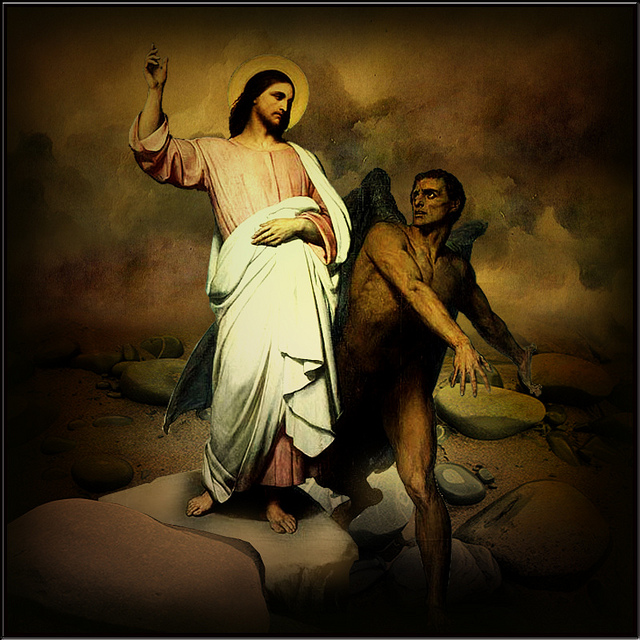
Jesus Tempted in the Desert
“Jesus Tempted in the Desert” by Jaci XIII is licensed under CC BY-NC-SA 2.0

There’s an old gospel song tradition that speaks of the Christian life as a ride on the “Gospel train.” The Gospel train is not always an easy ride with perfect scenery, but you’ve gotta get your ticket and stay on board.

Mysteriously, the train sometimes passes through difficult terrain. But just stay on board! On his way to glory, Jesus faced trials, hatred, and even temptation (yet without sinning).

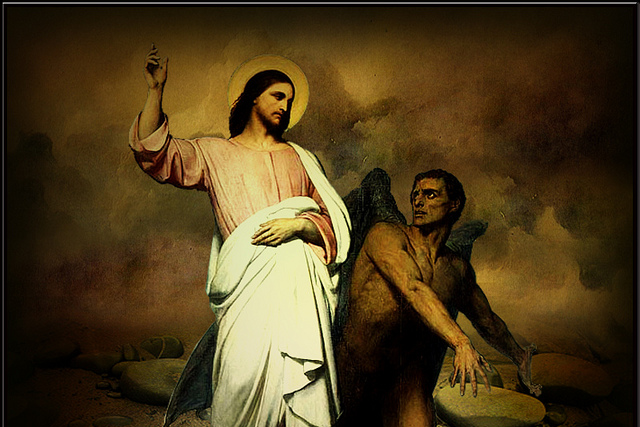
Today the Gospel train pulls into “Temptation Station” and we are asked to consider some of life’s temptations. The three temptations faced by Jesus are surely on wide display in our own times. What are these temptations and how do we resist them?

In this desert scene, the Lord Jesus faces down three fundamental areas of temptation, all of which have one thing in common: they seek to substitute a couch for the cross.

In a way, the devil has one argument: “Why the cross?” His question is a rhetorical one. He wants you to blame God for the cross, and in your anger, to reject Him as some sort of despot.

Well, pay attention, Church! The cross comes from the fact that you and I, ratifying Adam and Eve’s choice, have rejected the tree of life in favor of the tree that brought death. We, along with the devil, may wish to wince at the cross and scornfully blame God for it, but in the end the cross was our choice.

And if you think that you have never chosen the tree of death and that God is “unfair,” then prove to me that you have never sinned. Only if you can do that will I accept that you have never chosen the Tree of the Knowledge of Good and Evil over the Tree of Life and that you deserve something better than the cross. Only then will I accept that you have never insisted on “knowing” evil as well as good.

If you can’t, then you’ve made the same self-destructive, absurd choice that the rest of us have. It is not God that is cruel but we who are wicked and are to blame for the presence of the cross. The cross comes not from God but from us. We ought to stop blaming God for evil, suffering, and the cross and look in the mirror instead. The glory of this gospel is that the Lord Jesus entered into this twisted world of our making and endured its full absurdity for our sake. If there is evil in this world it is our choice, not God’s.

Have we finished blaming God? Are we ready to focus on our own issues? If so then let’s look at some areas of temptation that the devil is able to exploit because we indulge them.  Let’s also see the answer that the Lord Jesus has for these temptations. For the Lord, though tempted, never yielded.

1. Pleasures and Passions – The devil encourages Jesus to turn stones into bread. After such a long fast the thought of bread is surely a strong temptation. In effect, the devil tells Jesus to “scratch where it itches,” to indulge his desire, to give in to what his body craves.

We, too, have many desires and are told by the devil in many ways to “scratch where it itches.” Perhaps no generation before has faced such strong temptation. We live in a consumer culture that is highly skilled at eliciting and then satisfying our every desire. All day long, we are bombarded with advertisements that arouse desire and then advise us that we simply must fulfill those desires. If something is out of stock or unavailable in exactly the form we want at the instant we want it, we are indignant. Why should I have to wait? Why can’t I have it in that color? The advertiser’s basic message is that you can have it all. This is a lie, of course, but it is told so frequently that we feel entitled to just about everything.

Some of our biggest cultural problems are ones stemming from overindulgence. We are a culture that struggles with obesity, addiction, sexual misconduct, and greed. We struggle with a level of overstimulation that robs us of a reasonable attention span; boredom is a significant issue for many who are too used to the frantic pace of video games and action movies. We have done well in turning stones into bread.

Jesus rebukes the devil, saying, Man does not live on bread alone. In other words, there are things that are just more important than bread and circuses, than creature comforts and indulgence. Elsewhere Jesus says, A man’s life does not consist in the abundance of his possessions (Lk 12:15). I have written on this in another post: The Most Important Things in Life Aren’t Things.

2. Popularity and Power – Taking Jesus up a high mountain, the devil shows Him all the nations and people of the earth and promises them to Him if Jesus will but bow down and worship him. This is a temptation to both power and popularity; the devil promises Jesus not only sovereignty but also glory.

Because most of us are not likely to become sovereigns, and because temptation is only strong in those matters that seem remotely possible for us, I will focus instead on popularity, something we deal with regularly in this life. One of the deeper wounds in our soul is the extreme need that most of us have to be liked, to be popular, to be respected, and to fit in. We dread being laughed at, scorned, or ridiculed. We cannot stand the thought of feeling minimized in any way.

For many people the desire for popularity is so strong that they’ll do almost anything to attain it. It usually starts in youth, when peer pressure “causes” young people to do many foolish things. They may join gangs, get tattoos, pierce their bodies, and/or wear silly clothes. Many a young lady, desperate to have a boyfriend (and thus feel loved and/or impress her friends), will sleep with boys or do other inappropriate things in order to gain that “love.” As we get older, we might be tempted to bear false witness, to make “compromises” to advance our career, to lie to impress others, to spend money we don’t have to buy things we don’t really need, and/or to try to impress people whom we don’t even like. Likewise, we may be tempted to be silent when we should speak out for what is right.

All of this is a way of bowing before the devil, because it says that we are willing to sin in order to fit in, to advance, or to be popular. Jesus says, You shall worship the Lord, your God, and him alone shall you serve.

The real solution to this terrible temptation of popularity is to fear the Lord. When we fear God we need fear no one else. If I can kneel before God I can stand before any man. If God is the only one we need to please, then we don’t have to run around trying to please everyone else. Here too I have written on this matter elsewhere: What Does It Mean to Fear the Lord?

3. Presumption and Pride – Finally (for now) the devil encourages Jesus to test God’s love for Him by casting Himself off the highest wall of the Temple Mount. Does not Scripture say that God will rescue Him? The devil quotes Psalm 91: With their hands they will support you, lest you dash your foot against a stone. In our time the sin of presumption is epidemic.

Many people think that they can go one behaving sinfully, recklessly, and wantonly and that they will never face punishment. “God is love!” they boldly say, “He would never send anyone to Hell or punish them!” In saying this, they reject literally thousands of verses of Scripture that say otherwise. But they have refashioned God and worship this man-made idol. “God does not care if I go to Church,” they boldly claim, “He does not care if I live with my girlfriend.” The list continues to grow.

The attitude seems to be that no matter what I do, God will save me. It is presumptuous to speak and think like this. It is true that Hell and punishment are difficult teachings to fully comprehend and to reconcile with God’s patience and mercy. Nevertheless, God teaches it and we need to stop pretending that it really isn’t for real. This is presumption.

I have written elsewhere on the topic of Hell and why it makes sense in the context of a God who loves and respects us: Hell Has to Be.

A mitigated form of presumption is procrastination, wherein we constantly put our return to the Lord out of our mind. About this tendency it is said,

There were three demons summoned by Satan as to their plan to entrap as many human beings as possible. The first demon announced that he would tell them there is no God. But Satan wasn’t too impressed. “You’ll get a few, but not many and even those atheists are mostly lying and know deep down inside that someone greater than they made them and all things.” The second demon said he would tell them there is no devil. But Satan said, “That won’t work, most of them have already met me and know my power.” Finally the third demon said, “I will not tell them there is no God or no devil, I will simply tell them there is no hurry!” And Satan smiled an ugly grin and said, “You’re the man!”

Presumption, pride, and their ugly cousin procrastination are widespread today.

Jesus rebukes the devil by quoting Deuteronomy: You shall not put the Lord, your God, to the test. We ought to be very careful about presumption, for it is widespread today.

This does not mean that we have to retreat into fear and scrupulosity. God loves us and is rich in mercy. But we cannot willfully go on calling “no big deal” what God calls sin. We should be sober about sin and call on the Lord’s mercy rather than doubting that we that really need it or just presuming that God doesn’t mind.

The train is leaving the station soon. I hope that we’ve all benefited from this brief stop and have stored up provisions for the journey ahead: insight, resolve, appreciation, understanding, determination, and hope.

The journey ahead is scenic but difficult; temptations are a reality. But as the old gospel song says, “The Gospel train’s a’comin’, I hear it just at hand. I hear the car wheel rumblin’ And rollin’ thro’ the land. Get on board little children, Get on board, there’s room for many more!”

Never heard the song? Here’s a rendition of it:

The Key to True Fasting

blog2-11Required fasting is almost non-existent in the Catholic Church today. And even that required “fasting” (for those between the ages of 18 and 59) is really just eating somewhat less than normal (one regular meal and two small “snack-like” meals with no snacking between meals). Not much of a fast, really. Real fasting (going without food for the entire day) is practiced by some today as a personal discipline and it is laudable if a person is able to do so.

Yet even the mitigated fast is “hard” for many, as are most bodily disciplines in the soft Western world. We may think that we just have to get “tougher” and that by the power of our own flesh we can pull it off. I have no doubt that simple will power can get one through a fast, especially the mitigated one that is required. But even a non-believer can diet and fast. What we must seek is true fasting, spiritual fasting, which is far richer than merely forgoing food.

In the Gospel for today (Friday after Ash Wednesday), Jesus gives us an important key to true spiritual fasting:

The disciples of John [the Baptist] approached Jesus and said, “Why do we and the Pharisees fast much, but your disciples do not fast?” Jesus answered them, “Can the wedding guests mourn as long as the bridegroom is with them? The days will come when the bridegroom is taken away from them, and then they will fast” (Matt 9:14-15).

Notice the pattern: first comes the (wedding) feast, then the fast. What does this mean? Well, consider the wedding feasts of Jesus’ time. They often went on for several days, even a full week. During this time there was food, feasting, family, fellowship, and did I mention food? Lots of it, and wine, too! It was a time of satiation. But eventually this time of feasting ended and by then, people were filled. They’d had enough food for a while and so subsequent fasting made sense; it seemed natural. What does this teach us and why does Jesus use this image regarding fasting?

Simply put, if you want to be able to fast, spiritually and truly, you have to experience the wedding feast of the Lamb of God. In this great wedding feast—which we are to experience through prayer, scripture, and especially the Liturgy—we are to be filled with Christ. We are to encounter Him and feast abundantly on His Word and His Body and Blood, and to rejoice with Him exceedingly. When this happens we are equipped to fast authentically.

At some point the “groom is taken away” from us. That is to say, the Mass ends and we’re back to dealing with the world and its demands. Or perhaps we enter a penitential season, or we go through a difficult time during which God seems distant, or we struggle with temptation. At times like that, a fast of sorts is before us. But we are able to withstand it and are spiritually equipped to do so because we have been to the wedding feast and feasted with the Groom. Having done this, we are less enamored of the world and its charms; we are filled with Christ and simply need less of the world. This is true fasting.

But let me ask you, have you met Christ and been to the wedding feast with Him? One of the sad realities in parish life and in the Church is that many people have never really met Jesus Christ. They have heard about Him and know about Him, but they’ve never really encountered Him powerfully in prayer or the Mass. They are faithful to be sure. They are sacramentalized but not evangelized. They know about Jesus, but they don’t know Him. To them, the liturgy can be, and often is, a lifeless ritual to be endured rather than an encounter with Jesus Christ. Instead of being a wedding feast, the Mass is more like a visit to the doctor. For them, the majority of the Mass is a “waiting room” experience. Waiting, waiting, and then finally it’s up to get the medicine (Holy Communion), which is great because that means the Mass is almost over!

For many, personal prayer isn’t much better. It’s just another ritual: say some prayers and be done with it. God is really more of a stranger. Fasting is just another rule to follow, more out of obedience (to avoid punishment) than out of love, which seeks purification.

The disciples of John seem to have been of this sort. They were tough and self-disciplined; they knew how to fast! But it was a fasting of the flesh not the Spirit, and their pride seems to provide evidence of this. The only way to fast in a truly spiritual way is to have already been to the wedding feast and feasted with Jesus, the great bridegroom of the Church. Then, having been filled with every good and perfect gift, true fasting can begin.

So what is true fasting? It is fasting that no longer needs much of what the world offers because we have found a better prize: Jesus and His Kingdom. Who needs all that food, booze, power, money, baubles, bangles, and beads? In the words of an old gospel song, “I’d rather have Jesus than silver and gold. You may have all this world! Just give me Jesus!”

We can only say this, though, if we have really met the Lord and been satisfied by Him. Only then can true fasting ensue. As you may expect, meeting Jesus is more than a one-time event. It is a gradual, deepening awareness of Him and of His power in our life and in the liturgy. Make sure you don’t miss the wedding feast; it is the key to the truest fasting of all.

An Early Lenten Meditation on Spiritual Warfare

2.10blogAs we begin Lent, we do well to recall that we are engaged in a great and dramatic battle for our souls. The opening prayer for Ash Wednesday Mass makes use of the image of a military “campaign” and mentions weapons and battle: Grant, O Lord, that we may begin with holy fasting this campaign of Christian service, so that, as we take up battle against spiritual evils, we may be armed with weapons of self-restraint. The First Sunday of Lent lays out the tactics of the devil in terms of temptation, and relates how we must be prepared to refute and resist such things.

Every ancient prayer manual and guide to spirituality until about fifty years ago had at least one large section devoted to what was known as Pugna Spiritualis (spiritual battle or spiritual warfare). In more recent decades, many spiritual books have either downplayed or completely deleted references to spiritual battle or spiritual warfare.

Many modern approaches to faith, religion, and spirituality prefer to emphasize consoling themes rooted in self-esteem and affirmation. To be sure, the authentic faith can and does offer great consolation, but the truest and deepest consolation often comes after one has persevered along the sometimes-difficult path, along the “narrow way” of the cross. But too many today, in the name of affirmation and pseudo-self-esteem, are all too ready to excuse or even support grave moral disorders rather than fight them.

It is true that the Holy Father would have us focus on mercy this year. And so we should. But, paradoxically, mercy is a tactic of battle. Satan would “love” nothing more than for us to hold grudges and intensify our divisions through prideful resistance. He would prefer that we despair of God’s mercy or despair that it is even possible for us to live apart from sinful habits. Thus mercy is a tool of tactical genius; it breaks the cycle of negativity and sin and robs Satan of victories and of souls, snatching them back from the downward spiral of anger and despair.

Mercy does not mean saying that God doesn’t mind what you do. Rather, it means that saying that God loves you despite your sins and is extending to you a way out of the misery your sins have caused.

Grace and mercy are marvelously extended to us, but it is repentance that opens the door to these gifts. Repentance, too, is a battle tactic, because it embraces God’s daring move to break the satanic cycle of anger and despair. Repentance (metanoia) most literally means to come to a new mind, to a new way of thinking. Repentance is accepting God as our general and following His battle plans for our life. It is recognizing that sin is awful, but that grace and mercy are still extended to us and that we ought to accept and depend upon them. By unlocking grace and mercy, repentance deals serious blows to satanic plans and powers. To repent is to engage in the battle on the right side of the war.

In our times it is rare to hear spiritual realities being spoken of in warlike terms. Many prefer softer terms and images. Some are even outright offended at concepts such as spiritual warfare. Many hymnals have dropped older hymns that reference being on the battlefield for the Lord, or being soldiers in the army of the Lord.

With spiritual battle having been removed from many people’s spiritual landscape, the idea that the Lord would summon us to battle, or to ask us to choose sides, seems foreign, intolerant, and uncompassionate.

Even more dangerous, these modern conceptions not only distort Jesus, but they downplay the presence and influence of Satan. This is a very, very bad idea. Even if we cease fighting against Satan, he will never cease his sometimes very subtle attacks on us.

Jesus called consistently for prayerful, sober vigilance against the powers of evil and sin. Like it or not, we are in a battle. Either we will undertake the battle soberly and vigilantly, or we will be conquered and led off like sheep to the slaughter.

Contrary to the modern spiritual approaches, Christianity has been a militant religion since its inception. Jesus was exposed to every kind of danger from the beginning. Herod sought His life. Satan tried to tempt Him in the desert. Many enemies plotted on all sides as He worked His public ministry, misrepresenting Him, levying false charges, and conspiring to sentence Him to death (eventually succeeding, though only for a moment).

And as for Jesus, so also for His mystical Body, the Church: Saul, Saul why do you persecute me? (Acts 9:4) Jesus warned that the world would hate us (Luke 21:17, John 15:20), that in this world we would have tribulation (Jn 16:33), and that we should watch and pray lest we give way to temptation (Matt 26:41). He summons us to persevere to the end if we would be saved (Mk 13:13). Jesus rather vividly described the kind of struggle with which we live when He said, From the time of John the Baptist until now, the Kingdom of Heaven has suffered violence, and men of violence take it by force (Matthew 11:12). Indeed, no Christian until the time that Jesus returns can consider himself dismissed from this great spiritual battle, this great drama in which we exist, this battle between good and evil.

Unpopular theme or not, we do well to remember that we are in the midst of a great cosmic and spiritual battle. And in that battle we must be willing to choose sides and fight with the Lord for the Kingdom of God. Either we will gather with Him or we will be scattered. We are to fight for our own soul and the souls of those whom we love.

In Lent we move toward the awesome battle we call the Paschal Mystery, in which Jesus will conquer Satan’s pride by humility and obedience. We are reminded once again of the great cosmic battle that the Lord waged and that is still being waged today. Though already victorious in His mystical Body the Church, the Lord in His faithful members still suffers violence, rejection, and ridicule. Lent is a time to reclaim territory from the evil one, to take back what the devil stole from us. We are to advance the glory of God’s Kingdom through the fruits of great spiritual struggle, sacrifice, prayer, fasting, preaching, and an extensive missionary campaign to which the Lord has summoned and commissioned us.

The battle is on; the struggle is engaged! To spiritual arms, one and all! Fight the good fight for the Lord.

Still not convinced that we are at war? Let the Lord pull back the veil just a bit and let you look at what’s really going on. The final words of this article will not be mine; they will be the Lord’s. Here is described the cosmic battle that is responsible for most of the suffering and confusion you experience:

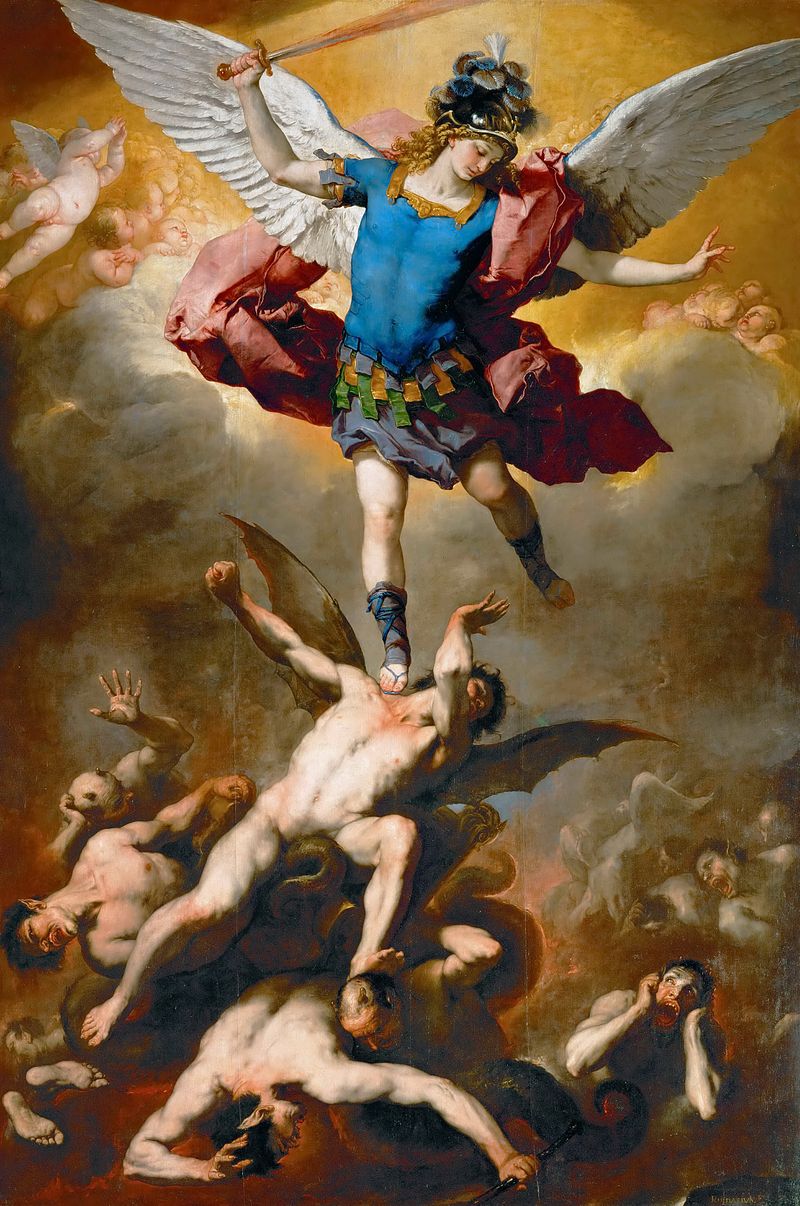
A great sign appeared in heaven: a woman clothed with the sun, with the moon under her feet and a crown of twelve stars on her head. She was pregnant and cried out in pain as she was about to give birth. Then another sign appeared in heaven: an enormous red dragon with seven heads and ten horns and seven crowns on its heads. Its tail swept a third of the stars out of the sky and flung them to the earth. The dragon stood in front of the woman who was about to give birth, so that it might devour her child the moment he was born. She gave birth to a son, a male child, who “will rule all the nations with an iron scepter.” And her child was snatched up to God and to his throne. The woman fled into the wilderness to a place prepared for her by God, where she might be taken care of for 1,260 days. Then war broke out in heaven. Michael and his angels fought against the dragon, and the dragon and his angels fought back. But he was not strong enough, and they lost their place in heaven. The great dragon was hurled down—that ancient serpent called the devil, or Satan, who leads the whole world astray. He was hurled to the earth, and his angels with him. Then I heard a loud voice in heaven say, “Now have come the salvation and the power and the kingdom of our God, and the authority of his Messiah. For the accuser of our brothers who accuses them before our God day and night, has been hurled down. They triumphed over him by the blood of the Lamb and by the word of their testimony; they did not love their lives so much as to shrink from death. Therefore rejoice, you heavens and you who dwell in them! But woe to the earth and the sea, because the devil has gone down to you! He is filled with fury, because he knows that his time is short.” When the dragon saw that he had been hurled to the earth, he pursued the woman who had given birth to the male child. The woman was given the two wings of a great eagle, so that she might fly to the place prepared for her in the wilderness, where she would be taken care of for a time, times and half a time, out of the serpent’s reach. Then from his mouth the serpent spewed water like a river, to overtake the woman and sweep her away with the torrent. But the earth helped the woman by opening its mouth and swallowing the river that the dragon had spewed out of his mouth. Then the dragon was enraged at the woman and went off to wage war against the rest of her offspring—those who keep God’s commands and hold fast their testimony about Jesus (Rev 12).

Here’s a great video reminding us that the Church is more a battleship than a cruise ship:

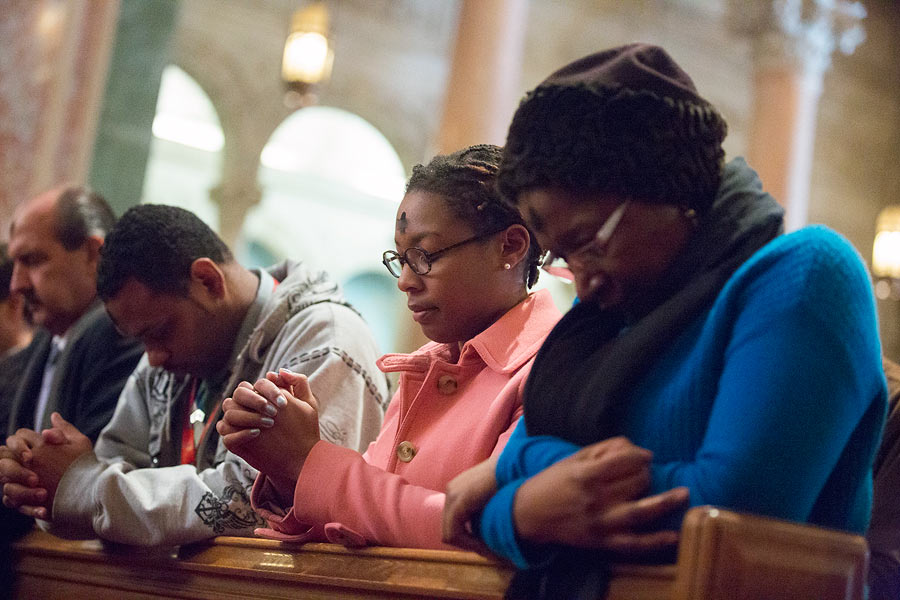
How Real Are Your Ashes? Five Meanings of the Ashes We Receive Today

Photo Credit: Jaclyn Lippelmann for the Catholic Standard

As a boy, I remember wondering why so many people liked to rush to Church to get ashes smudged on their foreheads. Frankly, I had some revulsion at the idea of having dirty ashes smeared on my forehead. I didn’t like it at all and would secretly rub them off when no one was looking. Today, though I’ll admit I still don’t like it too much, I behave myself and don’t rub them off!

I pray that this doesn’t seem impious, but I still marvel at how many people pack into Church to get ashes on their forehead. Sadder still, some who come don’t seem to want Holy Communion nearly as much. In fact, in some of the parishes where I served in the past, significant numbers walked out the door after receiving ashes and did not stay for Communion.

Of course most people who come to Mass are faithful and have their priorities straight. But it still interests me how large the numbers are for something that seems to me so unappealing and also challenging.

Indeed, the sign of ashes is quite challenging if we come to terms with what it really means. We are saying some pretty powerful stuff and making some extensive promises of a sort.

What do ashes signify? Perhaps a brief tour of Scripture is in order:

Humility Job said, “You [Oh Lord] asked, ‘Who is this that obscures my counsel without knowledge?’  Surely I spoke of things I did not understand, things too wonderful for me to know. You said, ‘Listen now, and I will speak; I will question you, and you shall answer me.’ My ears had heard of you but now my eyes have seen you. Therefore I despise myself and repent in dust and ashes” (Job 42:3-6).

Notice that Job does not merely repent in a general sense. Rather, having encountered God, he realizes that God is God, and that he, Jacob, is a creature, mere dust and ashes in the presence of God, who is being itself, who is all in all. Yes, Jacob is a son in the presence of a Father; he is not God’s equal that he might question God or put Him on trial.

Hence in this case the ashes represent not only repentance, but humility as well. The Church’s liturgy echoes this theme of humility in quoting Gen 3:19 “Remember, you are dust and unto dust you shall return” as the ashes are placed on the individual.

A Reminder of death and a call to wisdom – After Adam sinned, God told him, By the sweat of your brow you shall eat bread, till you return to the ground, for out of it you were taken; for you are dust, and to dust you shall return (Gen 3:19).

As he imposes the ashes, the priest usually recites some form of this passage. And memorable though it is, consider an even blunter form: “You are going to die.”

This is a salient and sobering reminder that we often get worked up and anxious about passing things, while at the same time being unmindful of the certain and most important thing, for which we really must be ready. We tend to maximize the minimum and minimize the maximum. Sadly, like the man in one of the Lord’s parables, we can amass worldly things and forget the final things. To him the Lord said, “You fool! This very night your soul is required of you; and now who will own what you have prepared?” So is the man who stores up treasure for himself, and is not rich toward God. (Luke 12:21-22).

Thus, to consider our final end is wise; to fail to do so is foolishness defined.

Ashes are a sacramental that points to the Sacrament – The Old Testament declared, You shall gather up the ashes of the heifer and put them in a ceremonially clean place outside the camp. They shall be kept by the Israelite community for use in the water of cleansing; it is for purification from sin … For the unclean person, put some ashes from the burned purification offering into a jar and pour fresh water over them. Then a man who is ceremonially clean is to take some hyssop, dip it in the water and sprinkle the tent and all the furnishings and the people who were there (Numbers 19:9, 17).

This text shows ashes obtained from a burned sin offering and mixed with sprinkled water as a cleansing ritual. In the Old Testament, this ritual could not actually take away sin (cf Heb 9:9-13) but it did provide for ritual purity. It also symbolized repentance and a desire to be free from sin.

In the same way, ashes on Ash Wednesday (mixed with holy water) cannot take away sin. They are a sacramental, not a sacrament.

To receive ashes on Ash Wednesday and then not go to confession some time during Lent is really to miss the point. If one really desires to repent and be clean from and free of sin, then from the sacramental of ashes one goes to the Sacrament of Confession. Otherwise the ritual of Ash Wednesday is pointless.

A sign of a true change – Scripture says, When the news [of Ninevah’s possible destruction in forty days] reached the king of Nineveh, he rose from his throne, took off his royal robes, covered himself with sackcloth and sat down in the dust (Jonah 3:6).

Here, too, repentance is symbolized. But the symbol alone is not enough; actual repentance is required. The king does not just “get ashes”; he issues a decree calling for fasting, prayer, and true reform: Do not let any man or beast, herd or flock, taste anything; do not let them eat or drink. But let man and beast be covered with sackcloth. Let everyone call urgently on God. Let them give up their evil ways and their violence. Who knows? God may yet relent and with compassion turn from his fierce anger so that we will not perish (Jonah 3:7-9).

Hence another option for the priest to say as he places the ashes is, “Turn away from sin and be faithful to the Gospel.”

It is not enough to get a sooty forehead. True repentance is called for, an actual intent to change. Otherwise the ashes are a false sign.

A summons to faith and a new mind – Jesus said, Woe to you, Korazin! Woe to you, Bethsaida! If the miracles that were performed in you had been performed in Tyre and Sidon, they would have repented long ago in sackcloth and ashes (Matt 11:21).

Jesus rebukes ancient towns for their lack of faith in what He said. It is good to recall that the Greek word translated here as “repented” is μετενόησαν (metenoesan), which more literally means “to come to a new mind or way of thinking.”

The fact is, there are many ways that we think about things that are more of the world than of God. Our ongoing challenge is to come to a new mind and to think more as God thinks. This is only possible by His grace, working through Scripture and Church teaching.

It is significant that the ashes are smeared on the forehead or sprinkled on the head. We are called to a faith that transforms our mind. We are called to be transformed by the renewal of our minds (Romans 12:2).

Hence another option for the priest is to say, “Repent and believe the Good News” as he imposes the ashes.

So, how real are your ashes? Do you intend the things described above as you go forth? Or is it just a ritual, something to do because it’s “sorta neat”? Pray and reflect on the deeper meaning of the ashes.