Biblical Basics about Mother Mary – A Homily for the Second Sunday of the Year

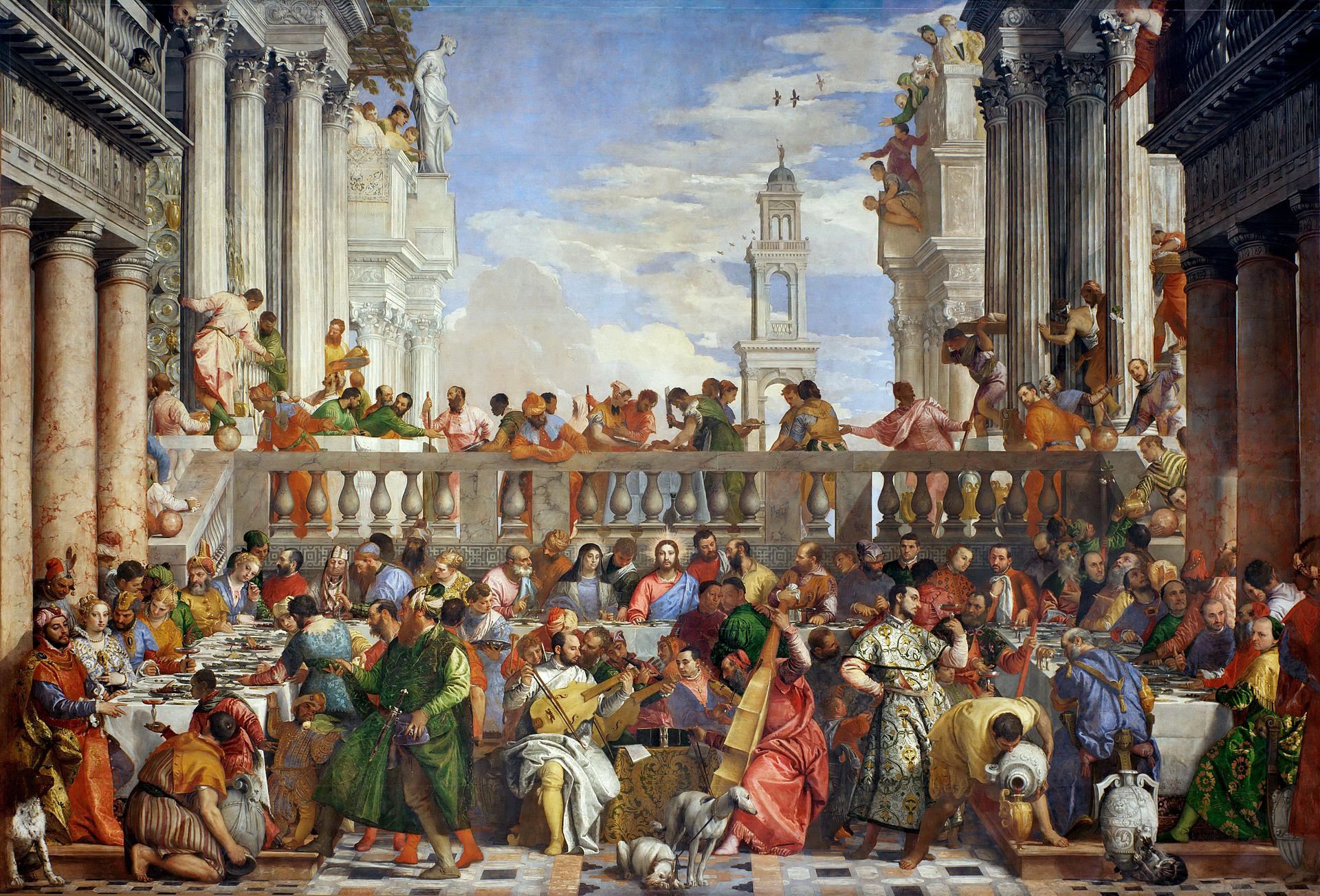
wedding-feastIn the gospel today of the wedding feast at Cana, there is a theological portrait of both Mother Mary and of prayer. Let’s look at the Gospel along five lines:

I. The place that Mary has – The text says, There was a wedding at Cana in Galilee and the mother of Jesus was there. Jesus and his disciples were also invited to the wedding.

A fascinating thing about these opening verses is that Mary almost seems to dominate the scene; the presence of Jesus is mentioned secondarily. St. Thomas Aquinas notes that at Cana, Mary acts as the “go-between” in arranging a mystical marriage (Commentary on John, 98; and 2, 1, n.336, 338, and 343, 151-152). Once the marriage is arranged she steps back; her final words to us are, “Do whatever he tells you.”

How many of us has Mary helped to find her Son and to find our place at the wedding feast of the Lamb? I know that it was Mary who drew me back to her Son when I had strayed.

II. The prayer that Mary makes – The text says, When the wine ran short, the mother of Jesus said to him, “They have no wine.

Notice another central role that Mary has: intercessor. She is praying for others to her Son. There are three qualities to her prayer:

Discernment – She notices the problem, probably even before the groom and bride do. Indeed, mothers often notice the needs of their children before they do. But why didn’t Jesus notice? Perhaps He did; surely, as God, He knew. But He waits for us to ask. Yes, God waits for us; He expects us to ask. In part this is respect; not all of us are ready to receive all of His gifts. This expectation that we ask is also rooted in God’s teaching that we must learn to depend on Him and to take our many needs to Him. The Book of James says, You have not because You ask not (James 4:2).

Diligence – Simply put, Mary actually prays. Rather than merely fret and be anxious, she goes directly to her Son out of love for the couple (us) and trust in her Son. She sees the need and gets right to the work of praying, of beseeching her Son.

Deference – She does not tell Jesus what to do, says simply notes the need: “They have no wine.” Mary is not directive, as if to say, “Here is my solution for this problem. Follow my plans exactly. Just sign here at the bottom of my plan for action.” Rather, she simply observes the problem and places it before her Son in confidence. He knows what to do and will decide the best way to handle things.

In this way Mary models prayer for us. What wine are you lacking now? What wine do your children and grandchildren lack? Do you notice your needs and the needs of others and consistently pray? Or must things get critical for you to notice or pray? And when you pray do you go to the Lord with trust or with your own agenda?

So the Scriptures teach that Mary is the quintessential woman of prayer, a paragon of prayer. Not only does she intercede for us, she teaches us how to pray. 

III. The portrait of Mary – The text says, Woman, how does this concern of yours affect me? My hour has not yet come. His mother said to the servers, “Do whatever he tells you.” Notice three things about this brief dialogue:

The title of Mary Jesus calls her “woman.” In Jewish culture this was a respectful way for a man to address a woman, but it was unheard of for a son to address his mother that way.

Hence this text stands out as unusual and signals that Jesus is speaking at a deeper level. In the Johannine texts Jesus always calls his Mother, “Woman.” This is in fulfillment of Genesis 3:15, which says, I will put enmity between you and the woman, and between your seed and her seed; he shall crush your head, while you strike at his heel. And thus Jesus is saying that Mary is this woman who was prophesied.

Far from being disrespectful to Mary, Jesus is actually exalting her by saying that she is the woman who was prophesied; she is the woman from whose “seed” comes forth the Son destined to destroy the power of Satan.

In this sense Mary is also the new Eve. For Jesus also calls her “Woman” at the foot of the Cross; He is the new Adam, Mary is the new Eve, and the tree is the Cross. And thus, just as humans got into trouble by a man, a woman, and a tree, so now we get out of trouble through the same path. Adam’s no is reversed by Jesus, who saves us by his yes. Eve’s no is reversed by Mary’s yes.

The tenacity of Mary – In Greek, Jesus’ words to his mother are, τί ἐμοὶ καὶ σοί, γύναι – ti emoi kai soi, gunai (What to me and to thee, Woman?). When this phrase appears elsewhere in the Scriptures (e.g., Gen 23:15; 1 Kings 19:20) it usually indicates some kind of tension between the interlocutors. On the surface, it would seem that Jesus is expressing resistance to the fact that His mother striving to involve Him in this matter. What makes this interpretation odd, though, is that Mary doesn’t seem to interpret Jesus’ response as resistance.

Perhaps there was something in the tone of voice that Jesus used, or perhaps there was a look between them that resolved the tension, and evoked Jesus’ sympathy for the situation. Whatever the case, Mary stays in the conversation with Jesus and overcomes whatever tension or resistance existed. In this we surely see her tenacity.

This tenacity comports well with the tenacity she showed at other times. Though startled by the presence of the angel Gabriel, she engaged him in a respectful but pointed conversation in which she sought greater detail. Mary also hastened to visit her cousin Elizabeth, and in the dialogue that followed she proclaimed a Magnificat that was anything but a shy and retiring prayer. She joyfully acknowledged the Lord’s power in her life, and all but proclaimed a revolutionary new world order.

To be tenacious means to hold fast in spite of obstacles or discouragements. However we interpret Jesus’ initial resistance to Mary’s concern, it is clear that Mother Mary does not give up; she expects the Lord to answer her favorably. This is made clear by her confident departure from the conversation, when she turns to the stewards with the instruction, “Do whatever he tells you.”

The trust of Mary – She simply departs, telling the stewards, “Do whatever he tells you.” She does not hover. She does not come back and check on the progress of things. She does not seek to control or manipulate the outcome. She simply departs and leaves it all to Jesus.

IV. The power of Mary’s prayer – Whatever his initial concerns regarding Mary’s request, Jesus goes to work. Now there were six stone water jars there for Jewish ceremonial washings, each holding twenty to thirty gallons. Jesus told them, “Fill the jars with water.” So they filled them to the brim. Then he told them, “Draw some out now and take it to the headwaiter.” So they took it.  And when the headwaiter tasted the water that had become wine, without knowing where it came from—although the servers who had drawn the water knew—the headwaiter called the bridegroom and said to him, “Everyone serves good wine first, and then when people have drunk freely, an inferior one; but you have kept the good wine until now.”

If we do the math, we may confidently presume that Jesus produced almost 150 gallons of the best wine. Mary’s prayer and tenacity produced abundant results.

Sometimes the Lord tells us to wait so that He can grant further abundance. Scripture says, But they who wait for the LORD shall renew their strength; they shall mount up with wings like eagles; they shall run and not be weary; they shall walk and not faint (Isaiah 40:31).

The Catholic tradition of turning to Mary and regarding her as a special intercessor with particular power is rooted in this passage. But Mary is not merely an intercessor for us; she is also a model for us. Following her example, we should persevere in prayer and go to the Lord with confident expectation of His abundant response. The effectual fervent prayer of a righteous man availeth much (James 5:16).

V. The product of Mary’s prayer – The text says, Jesus did this as the beginning of his signs at Cana in Galilee and so revealed his glory and his disciples began to believe in him.

At the conclusion of this gospel is the significant result that many began to believe in the Lord on account of this miracle. This is Mary’s essential role with reference to Jesus, that she should lead many souls to a deeper union with her Son. And having done so, she leaves us with this instruction, “Do whatever he tells you.”

Mary’s role is to hold up Christ for us to see, as she did at Bethlehem for the shepherds (and later the Wise Men) and as she did for Simeon and Anna at the Temple. Her role is to point to His glory as she does here at Cana. And ultimately her role is to hold His body in her arms at the foot of the cross after He is taken down.

As a mother, Mary has a special role in the beginnings of our faith, in the infancy and childhood of our faith. The text says that many “began to believe.” In Greek grammar, this phrase is an example of an inceptive aorist, often used to stress the beginning of an action or the entrance into a state. Thus Mary has a special role in helping to initiate our faith, in helping (by God’s grace) to birth Christ in us. As St. Thomas Aquinas say, she is the “go-between,” the great matchmaker in the mystical marriage of Christ and the soul. Having done that her final words are, “Do whatever he tells you.” And while she may draw back a bit, she continues to pray for us.

Here, then, are some biblical basics about Mother Mary, from this gospel of the wedding feast at Cana.

God’s Plan for Marriage and Family – A Homily for the Feast of the Holy Family

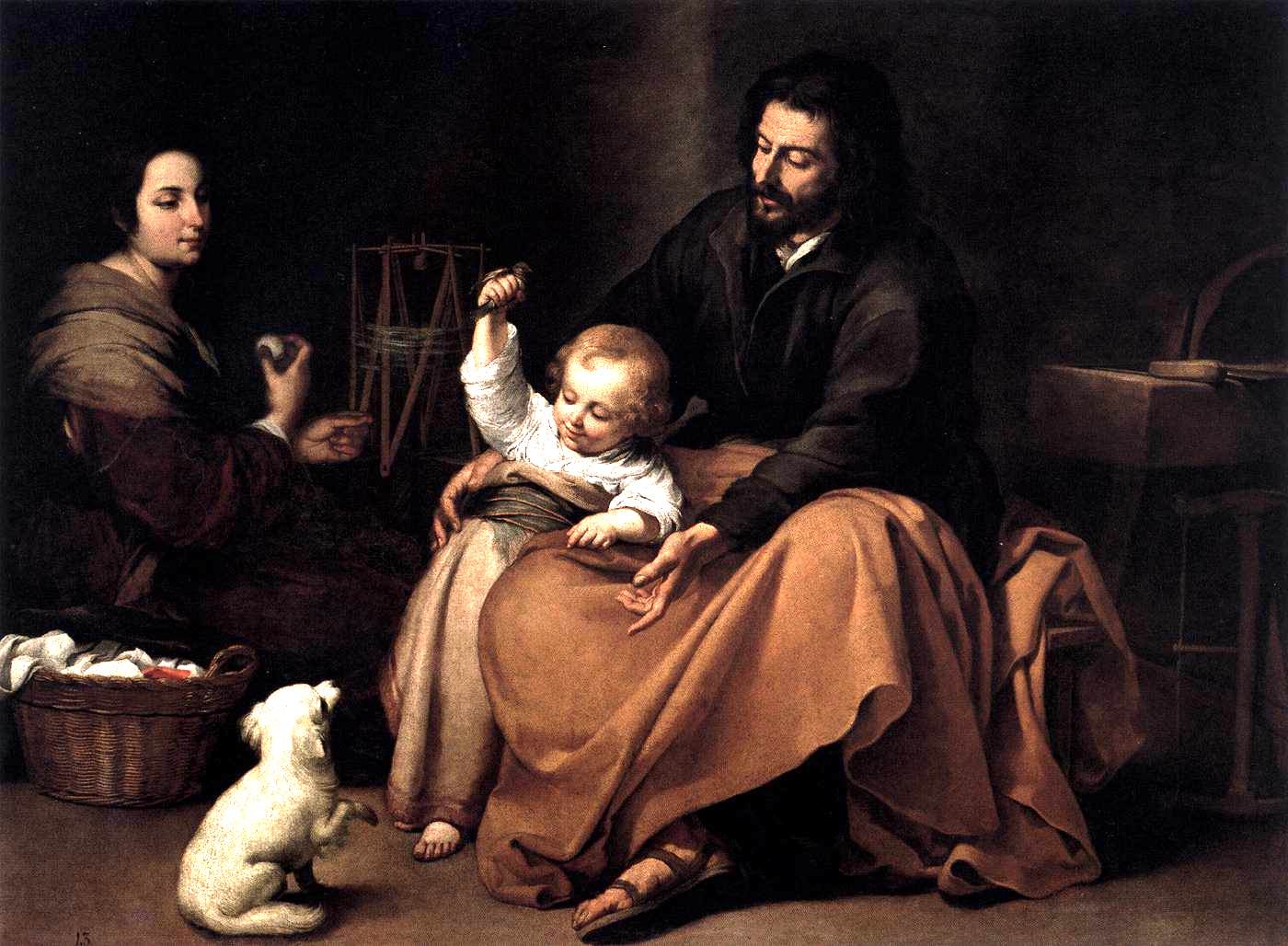
Holy-Family-blogHere in the middle of the Christmas Octave, the Church bids us to celebrate the Feast of the Holy Family. On the old calendar, the feast of the Holy Family fell on the Sunday after Epiphany, which makes some sense. For it is a bit odd with the new calendar to read a gospel portraying Jesus at twelve years of age when we celebrated His birth just a few days ago. And then next week, on the Feast of Epiphany, we revert back to a gospel in which He is an infant.

Nevertheless, here we are. Perhaps it is a good time to reflect on family life. For at Christmas time, immediate and extended family often gather together. On this feast of the Holy Family, let us consider three things: the structure of the family, the struggles of the family, and our strategy for the family.

I. Structure – All through the readings for today’s Mass, we are instructed on the basic form or structure of the family.

  1. God sets a father in honor over his children; a mother’s authority he confirms over her sons (Sirach 3:2).
  2. May your wife be like a fruitful vine, in the recesses of your home; your children like olive plants, around your table (Psalm 128:3).
  3. Wives, be subordinate to your husbands, as is proper in the Lord. Husbands, love your wives, and avoid any bitterness toward them. Children, obey your parents in everything, for this is pleasing to the Lord. Fathers, do not provoke your children, so that they may not become discouraged (Colossians 3:20–21).
  4. Each year, Jesus’ parents went to Jerusalem for the feast of Passover … Your father and I have been looking for you with great anxiety (Luke 2:45, 51,).
  5. And he was obedient to them … And Jesus advanced in age and wisdom and favor before God and man (Luke 2:51–52).

And thus we see the basic structure of the family:

  1. A father in honor over his children
  2. A wife and mother, supportive of her husband and his authority.
  3. A mother, having authority over her children, supported, loved, and encouraged by her husband and obeyed by her children
  4. Children who both honor and obey their parents
  5. Fathers, and by extension mothers, who instruct and admonish their children, not in a way that badgers or discourages them, but in a way that encourages them and builds them up.
  6. A family structure that helps children to advance in age, wisdom, and favor before God and man

This, then, is God’s basic teaching on family and marriage. This is the basic structure that God sets for the family: a man who loves his wife; a woman who loves her husband; and children conceived within their stable, lasting, and faithful union of mutual support and love, and raised in the holy fear of the Lord.

Add to this the principal description of the book of Genesis, which describes how God sets forth marriage: A man shall leave his father and mother, cling to his wife, and the two of them shall become one flesh (Genesis 2:24). And to this first couple God gives the mandate, Be fruitful and multiply (Genesis 1:22).

And thus the Bible sets forth the basic structure for the family: a father, a mother, and children, all of whom are reverential and who support one another in their various roles and duties.

Note how the structure of the family take its basic form in terms of its essential fruit: the procreation and rearing of children. Why should marriage be a stable and lasting union? Why is Adam told to cling to his wife, to form a stable and lasting union with her?

Because this is what is best for children! Children both need and deserve the stable and lasting union of a father and a mother, as well as the complementary influence of the two different sexes. This is the best atmosphere in which to raise and form children. Hence, the family structure of a father and a mother, a male and a female parent, flows from what is best for children. The structure of the family, as set forth by God, is rooted in what is best for children. This is what is sensible. And it is what is best, both sociologically and psychologically, for the proper development of children.

Even without considering the Bible, it makes intuitive sense that a child should have both a father and a mother, a male and a female influence. There are things that a father, a male, can better teach and model for a child than can a mother, a female. And there are things that a mother, a female, can better teach and model for a child than can a father, a male.

This much is clear before we even open the Bible. Both male and female influences are essential for the proper psychological and sociological development of a child. Clearly, then, God’s biblical mandate, that marriage should include both a father and a mother, is not without basis in simple human reason and common sense.

To intentionally deprive a child of this context is both unjust to the child and unwise. Hence, we see that the basic structure for marriage takes its shape from what is best for children. Both God and nature provide for a father and a mother, a male and a female, to conceive and raise a child.

It also makes sense based on simple human reasoning that the relationship should be stable, something upon which children can depend from day to day, month to month, and year to year throughout their formative years.

This, then, is the proper structure for marriage. It is set forth both by God and human reason.

II. Struggles – And yet what should be obvious to us as a culture seems to be strangely absent in the minds of many. Let us be clear: sin clouds judgment, making many think that what is sinful and improper is in fact good and acceptable. It is not. In our current culture we gravely sin against God and against our children through consistent misconduct and by the refusal to accept what is obviously true. The words of St. Paul are fulfilled in our modern times: their senseless minds were darkened, and they became vain and foolish in their reasoning (Rom 1:21).

It is clear today that the family is in grave crisis. It is also clear that it is the children who suffer the most. Our modern age in the Western world displays a mentality that is both deeply flawed and gravely harmful to children.

Marriage and family are in great crisis due to the willful, sinful behavior of the vast majority of adults in our culture in the areas of sexuality, marriage, and family life. The rebellion of adults against God’s plan has caused endless grief and hardship, and has created a culture that is poisonous to the proper raising and blessing of children.

Children have much to suffer in this world of our collective making. And while not all of us are equally guilty of contributing to their suffering, none of us is entirely innocent either, if for no other reason than our silence.

Consider that most children today are not born into the stable and lasting family unit they justly deserve, with a father and mother committed to each other till death do them part.

The problems begin with fornication, which is rampant in our culture today. And while most do not think of this as a sin of injustice, it is. This is so primarily because of what it does to children.

The fact is that many children today are conceived out of fornication. Tragically, most children who are thus conceived are outright murdered by abortion. Approximately 85% of abortions are performed on unmarried women. Despite all the claims that contraception makes every baby a “wanted” baby, nothing could be further from the truth. With the increased availability of contraception, abortion has skyrocketed. This is because the problem is not fertility; it is lust, promiscuity, fornication, and adultery. Contraception fuels these problems by further enabling them. The promises associated with contraception are lies; contraception does the opposite of what it promises.

Thus fornication and the contraceptive mentality (founded on lies) cause grave harm to children, beginning with abortion in huge numbers. And the children conceived of fornication who do manage to survive until birth are often subjected to the injustice of being born into irregular situations (e.g., households headed by single parents).

Add to this dismal picture the large number of divorced families. Make no mistake, these shredded families cause great hardship and pain for children. Children are shuttled back and forth between different households each week; they have to meet Daddy’s new girlfriend or Mommy’s new boyfriend; they endure all sorts of other family chaos. Blended families also dramatically increase the likelihood of sexual and emotional abuse because purely legal relationships seldom have the built-in protections of natural relationships.

All of this misbehavior, individual and cultural, harms children. Not being raised by parents in a traditional marriage dramatically increases a child’s likelihood of suffering many other social ills, starting with poverty.

The chief cause of poverty in this country is single motherhood/absent fatherhood.
71% of poor families are not married.
Children of single parent homes are two times more likely to be arrested for juvenile crime,
two times more likely be treated for emotional and behavioral problems,
twice as likely to be suspended or expelled from school,
33% more likely to drop out of school,
three times more likely to end up in jail by age 30,
50% more likely to live in poverty as adults,
and twice as likely to have a child outside of marriage themselves
[Getting the Marriage Conversation Right, by William B. May].

Added to the burdens that children experience is the new trend of same-sex adoption. Never mind that it is best for the psychological development of a child to have both a father and a mother, a male and a female influence. No, what is best for children must be sacrificed on the altar of political correctness. Same-sex couples seeking to adopt must now be given equal consideration under the law (in many states) to heterosexual couples. It is the adults and their rights that seem to matter most here; what is best for children is quite secondary.

These, then, are our struggles. Our families are in grave crisis; most children in our culture today are not raised in the stable and committed homes they deserve. And let us be even more clear: to intentionally deprive children of this sort of home by raising them outside of marriage or in same sex unions is sinful, wrong, and an injustice.

Let us also be clear that it is not possible to personally judge every case of a broken family. The modern world has experienced a cultural tsunami and many have been influenced by lies and false promises. If you are divorced, it may be the case that you tried to save your marriage but that your spouse was unwilling. Perhaps in a moment of weakness, or before your conversion to Christ, you fell and bore children outside of marriage but since then have done your best to raise them well.

In the end, though, children in our culture have had much to suffer on account of adult misbehavior. We need to repent and to beg God’s grace and mercy for our grave sins of commission, omission, and silence. We have set forth a bitter world for our children to inherit.

III. Strategy – So what are we to do? Preach the Word! Whatever the sins of those of us in this present generation (and there are many), we must be prepared to unambiguously re-propose the wisdom of God’s Word to our children, grandchildren, and great-grandchildren. Even if we have fallen short, we cannot hesitate to announce God’s plan for sexuality, marriage, and family.

Our strategic proclamation must include these key elements:

  1. No sex before or outside of marriage, ever, or under any circumstances. Sexual intercourse is designed for procreation, the production of children, and there is no legitimate use of it except within marriage.
  2. Children deserve and have the right to expect two parents, a father and mother, committed to each other till death do them part. Anything short of this is a grave injustice to children and a mortal sin before God.
  3. Gay unions, or single mothers and fathers, are not acceptable alternatives to biblical marriage. To intentionally subject children to this for the sake of “political correctness” does them a grave injustice.
  4. Marriage is about what is best for children, not adults.
  5. Married couples must learn to work out their differences (as was done in the past) and not resort to divorce, which offends God (cf Malachi 2:16).
  6. The needs of children far outweigh the preferences and needs of adults.

Whatever the personal failings of any of us in this present evil age (cf Gal 1:4), our strategy must be to preach the undiluted plan of God for sexuality, marriage, and family to our children, grandchildren, and great-grandchildren.

Back to the Bible! Back to the plan of God! Away with modern experiments and unbiblical schemes! God has given us a plan. And we, thinking we had better ideas, have caused great sorrow and hardship for our descendants. We have acted unjustly. We have murdered or children through abortion. By sowing in the wind we have caused those who have survived our misbehavior to inherit the whirlwind. It is time to repent and to help our heirs to rejoice in chastity, marriage, and the biblical family. Otherwise we are doomed to perish.

God’s plan must be our strategy in escaping from our struggles. We must get back to God’s structure for our families.

This song says, “So, humbly I come to you and say. As I sound aloud the warfare of today. Hear me, I pray. What about the children?”

Five Steps to Better Mental Health – A Homily for the Third Sunday of Advent

In modern times, we tend to link our notions of happiness and inner well-being to external circumstances and happenstance. And so we think that happiness will be found when the things of this world are arranged in the way we like. If we can just get enough money and creature comforts, we think we’ll be happy and have a better sense of mental well-being.

Yet many people can endure difficult external circumstances while remaining inwardly content, happy, and optimistic. Further, many who have much are still not content and are plagued by great mental anguish, anxiety, and unhappiness. Ultimately, happiness is not about happenstance or circumstances; it is an “inside job.”

St. Paul wrote,

For I have learned to be content whatever the circumstances. I know what it is to be in need, and I know what it is to have plenty. I have learned the secret of being content in any and every situation, whether well fed or hungry, whether living in plenty or in want (Phil 4:11-12).

It is interesting to note that Paul wrote these words, as well as those of today’s second reading, from his jail cell! So it’s not a bunch of slogans.

In today’s second reading, Paul tells us the “secret” to his contentedness, to joy and mental well-being regardless of the circumstances. He gives us a plan that (if we work it) will set the stage for a deeper inner peace, a sense of mental well-being and contentedness that is not easily affected by external circumstances. Let’s review what St. Paul has to say as a kind of “five-point plan.” (I am indebted to Rev. Adrian Rogers for the alliterative list, though the substance is my own reflection.)

Here is the text of St. Paul’s “five-point plan” for better mental health:

Rejoice in the Lord always. I will say it again: Rejoice! Let your moderateness be evident to all. The Lord is near. Do not be anxious about anything, but in everything, by prayer and petition, with thanksgiving, present your requests to God. And the peace of God, which transcends all understanding, will guard your hearts and your minds in Christ Jesus. [Finally, brothers, whatever is true, whatever is noble, whatever is right, whatever is pure, whatever is lovely, whatever is admirable—if anything is excellent or praiseworthy—think about such things. Whatever you have learned or received or heard from me, or seen in me—put it into practice. And the God of peace will be with you] (Phil 4:4-9).

Note that the final two sentences (shown above enclosed in square brackets) are not included in today’s liturgical proclamation, but it seems like a good idea to include it in these reflections, so I do.

Step I. Rejoice in the Presence of the Lord Rejoice in the Lord always. I will say it again: Rejoice! Let your moderateness be evident to all. The Lord is near.

Of supreme importance in the Christian life is requesting, receiving, and cultivating the gift of the presence of the Lord. We are too easily turned inward and forgetful of God’s presence. To become more consciously and stably aware of God’s presence is to be filled with joy and peace.

As an aside, note that the text mentions joy (χαίρω – Chairoo) but it also mentions moderateness. The Greek word used is ἐπιεικὲς (epieikes) which means to be gentle, mild, forbearing, fair, reasonable, or moderate. Epieíkeia relaxes unnecessary strictness in favor of gentleness whenever possible. Such an attitude is common when one is joyful and unafraid. By contrast, an unbending and unyielding attitude often bespeaks fear.

There are of course times when one should not easily give way. But often there is room for some leeway and the assumption of good will. A serene mind and spirit, which are gifts of the presence of God, can often allow for this; there is an increasing ability to allow things to unfold rather than to insist on controlling and manipulating conversations and outcomes and to win on every point.

The central point is that as we become more aware of God’s presence, and thus more serene and less conflicted within, we no longer need to shout others down or to win all the time. We can insist on what is true, but can express ourselves more moderately and calmly. We are able to stay in the conversation, content to sow seeds rather than insisting on reaping every harvest of victory.

Cultivating a joyful sense of the presence of God, and seeing the serenity and moderateness that are its fruits, is a first step toward, and a sure sign of, better mental health and greater contentment.

Step II. Rely on the Power of the LordDo not be anxious about anything, but in everything, by prayer and petition … present your requests to God.

There are very few things as destructive to our mental health as worry. Worry is like sand in a machine. Not only does it hinder the workings of the machine, it damages it. But simply being told not to worry isn’t very helpful. St. Paul is not simply saying, “Don’t worry.”

Paul has already laid groundwork for the diminishment of worry by telling us to cultivate a sense of the presence of God. When I was a little boy, my father left for the Vietnam War. During the year he was away, I spent many anxious nights worrying about a lot of things. But as soon as my father returned, my fears went away. Daddy was home and everything was all right.

To the degree that we really experience that God is near, many of our fears subside. My own experience is that as my awareness of God’s presence has grown, my anxieties have significantly diminished.

Paul also says that the power of God is only a prayer away. Here, too, I (and many others) can testify that God has a way of working things out. However, He may not always come when you want Him or handle things exactly as you want. When I look back and reflect on my life, I can truly say that God has always made a way for me. None of my struggles and disappointments have ever destroyed me; if anything, they strengthened me.

Whatever it is, take it to the Lord in prayer. Ponder deeply how He has delivered you in the past, has made a way out of no way, and has drawn straight with crooked lines.

Let the Holy Spirit anoint your memory to make you aware of God’s saving power in your life and recall how God has delivered you. These memories should give us serenity when we consider that prayer is both effective and an ever-present source of power.

Antidote – So much worry, which is a kind of mental illness, dissipates when we experience that God is present and that His power is only one prayer away.

So the second step to greater mental health is knowing by experience that God can and will make a way.

Step III. Remember the Provision of the Lord … with thanksgiving …

Thanksgiving is a way of disciplining the mind to count our blessings. Why is this important? Because too easily we become negative. Every day billions of things go right while only a handful go wrong. But what do we tend to focus on? You bet: the few things that go wrong! This is a form of mental illness that feeds our anxiety and comes from our fallen nature.

Gratitude disciplines our mind to count our blessings. As we do this, we begin to become men and women of hope and confidence. Why? Because what you feed, grows. If you feed the negative, it will grow; if you feed the positive, it will grow. God richly blesses us every day if we will but open our eyes to see it.

Step three is disciplining our fallen mind to see the wider reality of our rich blessings. This heals us and gives us great peace and a serene mind.

Step IV. Rest in the Peace of the Lord And the peace of God, which transcends all understanding, will guard your hearts and your minds in Christ Jesus.

As we begin to undertake these steps, our mental outlook and health improve. Gradually, serenity becomes a deeper and more stable reality for us. The text here says that this serenity will not only be present, it will “guard” (or as some translations say, “keep”) our hearts and minds in Christ Jesus. In other words, as this serenity grows it screens out the negativity of this world and the demons of discouragement. Having this peace allows us to see the Lord, and seeing the Lord deepens that peace … and the cycle grows and continues!

It has been my experience that the profound anxiety and anger that beset my early years has not only gone away, but is unlikely to return given the serenity I now increasingly enjoy. I am guarded and protected increasingly by the serenity God gives.

Step V. Reflect on the Plan of the Lord Finally, brothers, whatever is true, whatever is noble, whatever is right, whatever is pure, whatever is lovely, whatever is admirable—if anything is excellent or praiseworthy—think about such things. Whatever you have learned or received or heard from me, or seen in me—put it into practice.

Maintenance plan – As this serenity, this sense of well-being, comes to us, St. Paul finally advises a kind of maintenance plan wherein we intentionally and actively focus our thoughts and attention on what is godly, true, good, and beautiful.

What you feed, grows – While it may be true that we need to stay informed about the news of the world, beware a steady diet of the 24/7 news cycle. The media tend to focus on the bad news, on what is controversial and/or adversarial. If it bleeds, it leads. Too much of that and you’re unsettled before you know it. Limit your portions of this and focus on the greater, better, and lasting things of God. Ponder His plan, His truth, His glory, and His priorities.

And old song says, “More about Jesus would I know, more of his saving mercy show, more of his saving fullness see, more of his love who died for me.”

Yes, more about Jesus, less about this world. How can we expect to maintain our mental health and serenity on a steady dose of insanity, stinking thinking, wrongful priorities, endless adversity, darkness, chaos, and foolishness?

Do you want peace? Reflect on the Lord’s plan for you.

So, then, here are five steps to better mental health. It all begins with the practice of the presence of the Lord, calling on His power and being grateful for His providence, savoring His peace (which inevitably comes), and turning our attention more to the things of God and less to the things of this world.

Here’s to good mental health for us all! In times like these, we need to balance our sorrow with rejoicing in God’s ability to draw good from even the worst of circumstances.

Is Christ Really Your King? A Homily for the Feast of Christ the King

blog-11-21On the feast of Christ the King, we are called to acknowledge that Jesus is in fact our King. It is one thing to say that He is our King because the song in Church says that, or the preacher says that, or the Bible says that (yes, faith does come by hearing). But it is quite another for us to personally say that Jesus is our King. There comes a time when we must personally affirm what the Church has always announced: “Jesus is Lord, and He is King. He is my king. He has authority in my life.” This must become more than just lip service. It must become a daily, increasing reality in our life.

Kings take care of us, but they also have the authority to command us. Can Christ command you or me? Or are we more like the typical modern person who doesn’t like to be told what to do? Or perhaps we suffer from the more mild form of this attitude in which we reduce Jesus to being a “harmless hippie” who just says pleasant things about peace and flowers but would never rebuke us or command us to repent.

And so, again, here is the question: “Is Jesus Christ your King?”

That brings us to today’s Gospel. Now the Gospels are not theater; we aren’t in the audience watching a story unfold that took place 2000 years ago. No, we are in the story. We are not just supposed to sit back and observe what Peter, or Pontius Pilate, or James, or Mary Magdalene does. They are we and we are they.

This means that when Jesus asks one of them a question, we cannot merely wait to see how he or she will answer. No, we have to answer the question.

In today’s Gospel the spotlight moves to Pontius Pilate. The Lord asks the critical question of him (i.e., of us). We cannot simply wait to see how Pilate answers. We have to answer. Let’s consider this Gospel in three stages.

I. INDECISION In a remarkable display of literary artistry, John and the Holy Spirit vividly depict the vacillation of Pontius Pilate. For in this Gospel passage of the trial of Jesus, Pilate goes in and out of the praetorium (the governor’s palace) more than a bellhop through the revolving door of a hotel! Indeed he goes in and out seven times. Here is the text, with the portions describing his motions highlighted in bold:

29So Pilate went out to them and said, “What accusation do you bring against this man?” …..33Pilate [re]entered the praetorium and called Jesus…..” 39After he had said this, he went out to the Jews again, and told them, “I find no crime in him…..1Then Pilate took Jesus [back into the praetorium] and scourged him…… 4Pilate went out again, and said to them, “See, I am bringing him out to you, that you may know that I find no crime in him….8When Pilate heard these words, he was the more afraid; 9he re-entered the praetorium and [spoke] to Jesus….12Upon this Pilate [went back out] and sought to release him, but the Jews cried out, “If you release this man, you are not Caesar’s friend…When Pilate heard these words, he brought Jesus out and he sat down on the judgment seat (John 18-19 selected verses).

Did you count them? Seven times, Pilate goes into or out of the praetorium! Such a picture of indecision and vacillation! He’s trying to please the crowds. He’s trying to please his wife (who had warned him to have nothing to do with that innocent man (Mat 27:19)). He’s trying to help Jesus. But he can’t decide, so in and out he goes!

Pilate is just like us. We say that we love God, but we also love the world. We want to please others and we want to please God, but we cannot do both. We have to decide. But instead we vacillate; we are Pilate. We are often locked in indecision, trying to please the world and God.

Is Pilate really so different from many of us? Faced with a crucial decision, he weighs the consequences that choosing Jesus will have on his career, his family, his loyalty to country and Caesar, and his access to power. And while we may rightfully criticize Pilate for his choice, is it not easy for us to make compromises with the world for the sake of similar things? How often does Jesus our King take a back seat to career, politics, convenience, and so forth? So easily do we stay rooted in vacillation, compromise, and indecision.

II. INQUIRY – And now, in the midst of all this indecision, comes the question.

Pilate begins with his own question: “Are you the King of the Jews?” (John 18:33) But Jesus, who is on trial, turns the tables on Pilate. Jesus effectively puts Pilate on trial by asking him the crucial question:

Are you saying this on your own or have others been telling you about me?” (John 18:34)

It’s a remarkable question! And guess what … You have to answer it. I have to answer it. Do not wait for Pilate; he already gave his answer and faced judgment long ago. How do we answer it?

Notice what the Lord is getting at with his question. He is asking you if you call him a King merely because you’ve heard others say it or because you personally know him to be a King. Is he really your King, or this just a slogan you’ve heard in church before? Do you believe that He is King or do you merely parrot what you’ve heard others say?

There is an old gospel song that says, “Yes, I know Jesus for myself.” But is that really the case with us? Too many of us are satisfied with a kind of inferential faith. Inferential faith is based merely on what others have said: I think or suppose (that is, I infer) that Jesus is Lord because my mother said so, or my pastor said so. This is a good beginning, for after all, faith comes by hearing (Rom 10:17).

But there comes a moment when you have to say so. It is not enough that your pastor says so or your mother says so. And thus Jesus is asking you and me right now, Are you saying [I am King] on your own or merely because others have said so?

Answer him! It’s a crucial question, isn’t it? The faith of the Church is essential, normative, and determinative. But at some point you have to step up and say that you personally affirm that the faith of the Church is true and is yours, and then declare, “Jesus is Lord and King.”

What does it mean that Jesus is King? A king has authority, doesn’t he? Does Jesus have authority in my life? Do I have the obedience of faith (Rom 1:5) and base my life upon His will?

A king also takes care of his people and protects them. Do I allow the Lord to feed me with the Holy Eucharist? Do I allow Him to protect me from the poison of sin by the Sacrament of Confession and the medicine of His Holy Word? Am I willing to live within the protection of the walled city of His Church?

Is the Lord really my King? How do I answer? Is it just a slogan or is His Kingship real? Let the Lord ask one more time,

Are you saying [I am King] on your own or have others been telling you about me?

III. IMPLICATION – You have to answer. To refuse to answer is to answer.

A fascinating and wondrous literary device is employed by John and the Holy Spirit in this Gospel passage. We have already seen how Jesus, who was Himself on trial, has turned the tables and effectively put Pilate on trial. Pilate, who has the duty to question Jesus, is now being questioned by Him. It is Pilate who must now make a decision, not so much about Jesus, but about himself. He has been asked a question that he cannot ultimately avoid, and now it is time to answer. Here is where the ingenious literary device comes into play. Look carefully at this passage from John’s Gospel and see if you notice anything strange about it.

Upon this [the shouting of Crucify him!] Pilate sought to release him, but the Jews cried out, “If you release this man, you are not Caesar’s friend; every one who makes himself a king sets himself against Caesar.” When Pilate heard these words, he brought Jesus out, and he sat down on the judgment seat at a place called The Pavement, and in Hebrew, Gabbatha (John 19:12-13).

So what is strange here? Well, notice that when Pilate has Jesus brought out, it says that “he” sat down on the judgment seat. Who exactly is sitting on the judgment seat? You might say, “Pilate, of course!” And historically, that might be true. But the text is ambiguous as to exactly who “he” is. Most Scripture scholars argue that the line is supposed to be ambiguous.

From the standpoint of historical facts it was likely Pilate who took that seat. But from the standpoint of divine justice it is Jesus who takes it.

Jesus has turned the tables on Pilate. Pilate is now on trial and the verdict is about to be revealed. Pilate seals his own fate when he hands Jesus over to be crucified; his vacillation is over. Pilate has made his choice; he has answered the question.

In this context it is Jesus who sits silently upon the judgment seat. The verdict is in. In deciding to hand Jesus over, in deciding to favor himself and the crowds over Jesus, Pilate has brought judgment on himself.

Too many of us have cartoonish notions about our final judgment: a benign Jesus giving us a great big hug, or an angry one gleefully passing judgment on His “enemies.” Perhaps there is also some notion of a review of our deeds, both good and bad, and then the pronouncing of some sort of verdict while we cringe and wait. But Jesus is not a King who imposes His Kingdom. He invites us to enter into His Kingdom. Ultimately, judgment is about our choice, not His.

Judgment is finally this: The Lord, who suffered for us, quietly and respectfully sits on the judgment seat and accepts our final choice, a choice that is the cumulative sum of all the choices we made in life, a choice that is now and forever fixed. Isn’t that what really happens?

The Lord has asked the question of Pilate, as he does of us. The choice is for Pilate to make and the judgement is one he brings on himself. His choice is either to accept the Lord’s kingship or to reject it and watch Jesus led away while he (Pilate himself) stands alone, the judgment having been rendered by virtue of his own choice.

Yes, there are implications to whether we accept the Lord as our King or not. Today, the Lord asks us all if we will let Him be our King. And to those of us who say yes, the Lord has this further question: “Are you saying this on your own or have others been telling you about me?” Is He really our King? Think hard about it. There are implications.

The question that we must answer has now been answered by Pilate. What is your answer? What is mine?

But the Word of the Lord Remains Forever! A Homily for the 33rd Sunday of the Year

"O Jerusalem" by Greg Olsen
“O Jerusalem” by Greg Olsen

As winter approaches and we approach the end of the liturgical year, we ponder the passing quality of this world and the fading of its glories. Jesus’ words in the gospel today must surely have shocked, even horrified, his Apostles. Let’s look at His stunning words and seek to apply them in our own life.

The Place of this Gospel – As we complete the liturgical year, we find Jesus standing just outside of Jerusalem. In the last two months we have followed Him on His final journey: leaving Galilee, heading south along the Jordan River, passing through Jericho, and now making the nearly 2000 foot ascent to Jerusalem.

In today’s gospel, Jesus is at the top of the Mount of Olives with His Apostles. From this vantage point, they look across the Kidron Valley to the magnificent Temple and all of Jerusalem spread out before them. The Apostles marvel at the glorious beauty of the Temple. Its large, perfectly carved, white ashlar stones, gilded in gold, gleam like the sun. Indeed, it was one of the wonders of the ancient world, so beautiful and majestic.

But Jesus challenges their admiration. He shocks them with the admonition that all the glory they see is soon to be destroyed, that not one stone will be left on another, that it will all be thrown down (Mk 13:2). Shocked, the Apostles ask Him when this will happen and what signs will precede this awful event.

In what has become known as “Mount Olivet discourse,” the Lord warns, in great detail, of the coming destruction of the Temple and indeed of all Jerusalem. The Gospels of Matthew, Mark, and Luke all contain similar descriptions of what Jesus said on the Mount of Olives, overlooking Jerusalem in her glorious heyday.

Jesus warns of wars and rumors of wars. He speaks of a time in the near future when nation will rise against nation and a terrible conflict will ensue. In effect, He warns His disciples and their followers to have nothing to do with the coming wars. He tells them that when they see Jerusalem being surrounded by an army they should know that her destruction is at hand. If someone is on his rooftop he should not to go back into the house to gather his possessions; he should get out while the getting is good. If someone is out in the field he must not reenter the city of Jerusalem, but must flee to the hills. Jerusalem is doomed for its lack of faith and zealots are picking up the war with the Romans that they are destined to lose (Luke 21, Matt 24, Mark 13).

All of this leads us to today’s gospel (from the Mount Olivet discourse), which picks up in the middle. Jesus warns of days of tribulation, when the sun will be darkened, the moon not give its light, and the stars will fall from the sky!

In reading a text like this, we must not fall prey to an overly literal interpretation. Jesus is using prophetic language, a way of speaking that is meaningful, but not to be understood scientifically or literally. Stars cannot actually fall from the sky.

If I were to say, “The world has been turned upside down,” you wouldn’t expect that if you looked back toward Earth from outer space you would actually see Australia at the top and North America at the bottom of your view. If I were to say, “It’s raining cats and dogs,” you wouldn’t expect to look out your window and see animals coming down from the sky and landing on the front lawn. Although I’m speaking figuratively, you understand what I mean.

And so it is with Jesus’ use of prophetic imagery. Speaking of the heavenly luminaries as being darkened or cast down is a prophetic way of saying that all the fixed points, all the ways in which we tell time, know the seasons, navigate, and find perspective will be lost to us! The world as the Jewish people know it, centered on the Temple and rooted in their liturgical calendar, is about to be swept away. To the ancient Jewish people, the Temple was like their “Big Ben.” It was both the clock of the liturgical cycle and the great visual center of all of Israel.

The Lord is teaching them that what they see as the central hub of all they do is about to be taken away. The Temple, with all of its rituals, its liturgical cycle, and its endless slaughter of animals in sacrifice for sin, is about to be replaced. These ancient rituals merely pointed to Jesus and all that He would do. Jesus is now the Temple; He is also the Lamb Sacrifice. All that the Temple pointed to is fulfilled in Jesus. Thus the Temple is at an end. Jesus is ushering in a New Covenant.

In the Mount Olivet discourse, Jesus prophesies the end of the Temple, which will take place in a biblical 40 years. Sure enough, 40 years later (in A.D. 70), the Roman Army, after having surrounded Jerusalem for a period of 3 1/2 months, breached the walls, poured into the city, and destroyed the Temple and all of Jerusalem. In this epic battle, according to Josephus, 1.2 million Jewish people lost their lives. As Jesus prophesied, not one stone was left on another. According to Josephus, so complete was the destruction of Jerusalem, that when the Romans had finished their work it was not clear that the city had ever existed.

So this is the place of this gospel, a place of epic significance in the ancient world. An era of 1000 years was coming to an end. The world as the Jewish people knew it was ending. The Temple has never been rebuilt; it has been replaced by a Judaism without sacrifice, a rabbinic, a synagogue system. In 2000 years, despite several attempts, the Jewish Temple has never been rebuilt. Everything Jesus predicted came to pass. This is the historical place and context of this gospel.

But what does all of this mean for us, some 2000 years later? Let’s consider three basic themes.

I. The Perspective of Passing – Toward the end of this gospel, the Lord says, Heaven and earth will pass away, but my words will not pass away. Note the definitiveness of this statement: this world will pass away. That is to say, all of the things that impress us at the current moment: the “biggie-wow” stuff of this world, the impressiveness of the powerful, the influence of the popular, the glory of all the glitterati; all of this will pass away.

Indeed, even now it is passing away; its destruction is at hand. Scripture says,

  • The world in its present form is passing away (1 Cor 7:31).
  • We have here, no lasting city (Heb 13:14).
  • Put not your trust in princes, in mortal men in whom there is no hope. Take their breath, they return to clay, and their plans that day come to nothing (Psalm 146:3-4).

Yes, all of the glory, even what seems beautiful and fair, is passing away. Don’t be so impressed with this world’s offerings. All of it—no matter how powerful, influential, or sturdy it may seem—is slated for destruction. It is already passing away.

Some years ago I was in a museum and in one of the exhibits saw a photograph of a family from about the 1880s. At the bottom of the photo was this inscription: “My family, as it appeared for a brief time last summer.” A poignant caption. I thought of the people in that photo and concluded that every one of them was now dead. I also knew that the house in front of which the photo was taken had long since been destroyed, replaced by an expanding city district of buildings. All is passing; nothing remains here for long.

Painful though this perspective may be, it is important and healing. It brings with it a kind of strange serenity. Like every truth, the truth that all things are passing sets us free. Internalizing the truth that, As for man, his days, or the flower of the field are like the grass. The wind blows, and he is gone, and his place never sees him anymore (Psalm 130:15-16), painful though it may be, brings a kind of strange serenity. In this truth we are reminded not to set down too many roots here so that we are not resentful when this world passes away.

II. The Permanence Proclaimed – The Lord tells us that His words will not pass away. So although the world will pass away, the truth and the Word of God will remain forever.

Too many people root their lives in passing, ephemeral things. The challenge for us is to root our lives in the Word of God, which remains forever. Worldly glories, power, access, and wealth—all these things fade and disappear. But God’s wisdom and His plan remain forever.

Consider, for a moment, the Church. The Lord has said that the forces of Hell would strive to prevail, overpower, and destroy the Church. But the Lord promised that such attempts would never be successful (Matt 16:18). The Church is indefectible, by God’s Word, by His promise. No weapons, no war waged against the Church, will prevail.

In all of this the Lord has been proven true. The Church has the Roman Empire, the Carolingian Empire, the British Empire, the Soviet Socialist Republic, and many others rise to power only to fade and disappear.

How many heresies, how many philosophies have come and gone in the age of the Church? How many have laughed at the Church, announcing that she was passé, that her day was over, and that they would bury her? The Church has buried every one of her undertakers, outlived every one of her critics. Despite every prediction of her demise, she has persevered until this very day. By God’s grace, she has a permanence that outlasts every one of her enemies. She has read the funeral rites over every single prophet of her doom. And she will continue to do so.

In recounting all of this we do not simply gloat that an institution known as the Church has survived. Rather, we announce that the Church is the Bride of Christ and also His Body. The Church cannot be destroyed not because of human ingenuity, but on account of the power and grace of God. She will endure even though at times she will suffer, be ridiculed, or be marginalized. She will outlive every enemy. She will emerge from every persecution. She will never be removed. For the Church is the Body of Christ, the living Word of God. Though the world will pass away, the Word of the Lord will remain forever!

III. The Priority Prescribed – If this world as we know it is passing away and the Lord, His Kingdom, His Church, and His Word will remain forever, what then should be our priority? The Lord says, in effect, that we know very well what our priority should be but we willfully ignore it.

Learn a lesson from the fig tree. When its branch becomes tender and sprouts leaves, you know that summer is near. In the same way, when you see these things happening, know that he is near, at the gates.

Yes, we know very well that the Day of Judgment is coming. Too easily, though, we dream on and do not follow the prescribed priority. Wealth, fame, and glory are all uncertain and clearly passing. But death, judgment, Heaven, and Hell are certain and remain forever. We too easy fiddle on with things that are uncertain and passing while neglecting what is certain and eternal. Such foolishness!

It would be foolish to book passage on a sinking ship. Similarly, it is foolish to make this world and its demands our fundamental priority. It is wise to set our sights on, and lay hold of, the Kingdom that lasts forever.

It is sad that so many spend people their time “rearranging the deck chairs on the Titanic” of this world. It is tragic how much time, effort, and passion we spend on things that are pass through our fingers like sand. So much of our effort is expended on furthering our career, amassing wealth, and enlarging our homes. And so little is spent on improving our spiritual life.

Parents spend more time worrying about what college their children will attend than where they will spend eternity. If their child is failing math, they will go to great lengths to hire tutors to improve his test scores. But never mind that the child barely knows the four Gospels, the difference between the Old Testament and the New Testament, or even who Adam and Eve were. Never mind all that; we need to make sure they understand polynomials! It is fine that parents care about math scores and college venues, but how sad it is that eternal things often go unattended.

The greatest duty of parents is to prepare their children for eternity. But far more time and effort is often spent preparing them for passing things like a career. While education and career are important, eternal life is far more so. A son or daughter may graduate from Harvard Law School and become a famous attorney yet still go to Hell!

What are our priorities? Frankly, most of our priorities are not things that matter to God. Even if we attain the passing things we strive for, they will all ultimately slip through our fingers. We obsess over passing things like our physical health while neglecting enduring things like our spiritual health. We should care for our bodies, but even more should we care for our souls. If we would expend as much effort looking for a place and time to pray as we do looking for a restaurant and making a reservation to eat, we would be spiritual heavyweights rather than physically overweight.

In today’s gospel the Lord stands before the Temple: an impressive building, a symbol of power and of worldly glories. But impressed though the Apostles are, the Lord is not impressed with passing things. He counsels us to get our priorities straight and to focus on things that last: His Word, which never passes away, and our ultimate destiny, where we will spend eternity.

We find time for everything else, why not prayer, Scripture, fellowship in the Church, and the sacraments?

What are your priorities? Be honest, now, be honest.

This world is passing away. Far more essential for us than power, prestige, money, possessions, worldly philosophies, and the latest trends, is the Word of the Lord, which never passes away.

The world will laugh and say that God’s word is out-of-date, old-fashioned, or even hateful, bigoted, and intolerant. But in the end, time will prove where wisdom is. Long after the current critics of the Church, those who scorn the teachings of the Lord in the Scriptures and the Church, have passed on, the Church will still be here preaching Christ and Him crucified.

None of this is meant to sound triumphalist. It is simply rooted in a Word of truth that the Lord spoke long ago on a hillside overlooking glorious buildings soon to be reduced to rubble and an age soon to pass away. He said simply this: Heaven and earth will pass away but my words will not pass away.

In the end, Jesus wins. I know because I checked the end of the story. You can look it up (Rev 20-23). Get on the winning team. Stop trying to amass a treasure here that you can’t keep anyway.

The Paradox of Poverty – A Homily for the 32nd Sunday of the Year

blog11-7The first reading in today’s Mass, from 1st Kings, speaks to us of the paradox of poverty. And the paradox is this: it is often our poverty, our neediness, that provides a doorway for God to bless us with true riches. It is our emptiness that provides room for God to go to work.

Yes, in our riches we have “too much to lose.” To the rich and worldly minded, the Gospel seems too demanding. But in our poverty, emptiness, and detachment from this world, there comes a strange and unexpected freedom that makes it easier to step out in faith. And stepping out in faith is the only thing that can save us.

Yes, poverty brings a kind of freedom. You can’t steal from a man who owns nothing. You can’t threaten a woman who has nothing to lose. You can’t kill someone who has already died to this world.

Are you poor enough to be free? There’s a strange blessing in poverty. Let’s look at today’s first reading to see how poverty can usher in unexpected blessings.

I. The Desire Portrayed – In the first reading, the prophet Elijah encounters a widow at a city named Zarephath, a name that means “refining fire.” In those days, Elijah the prophet went to Zarephath. As he arrived at the entrance of the city, a widow was gathering sticks there; he called out to her.

Both Elijah and the woman are hungry, for there is famine in the land. But Elijah, as God’s prophet, speaks not only for himself, but also for God when he asks this very poor woman to share her meager food. For, truth be told, God has a desire, a hunger for us. The woman, too, as many desires, but her desires need to be purified in this place called “refining fire.”

Her hunger for earthly food must be seen as a symbol of a deeper hunger, a hunger for communion with God. At some point, our hunger must meet God’s hunger—and that point is Holy Communion. It is the place where our hunger for God and God’s hunger for us meet and we find serenity. Every other hunger only points to this deeper hunger; every other food is but a cruel and temporary morsel until this deeper hunger is satisfied.

Thus, two people meet at a place called “refining fire.” It is desire that has drawn them, a desire that is ultimately satisfied only in God.

II. The Dimensions of Poverty – When Elijah makes his request, the woman articulates her poverty: “Please bring me a small cupful of water to drink.” She left to get it, and he called out after her, “Please bring along a bit of bread.” She answered, “As the LORD, your God, lives, I have nothing baked; there is only a handful of flour in my jar and a little oil in my jug. Just now I was collecting a couple of sticks, to go in and prepare something for myself and my son; when we have eaten it, we shall die.”

We may wonder why God allows poverty and suffering. A partial answer is because there is such a grave risk in riches and comfort. The Lord is well aware of how hard it is for the wealthy and comfortable to enter the Kingdom of God. In riches we trust in ourselves, in poverty we can only trust God.

And it is only by trusting faith that we can ever be saved. And, as we have noted, there is a kind of freedom in poverty. The poor have less to lose. They can operate in wider dimensions and have a sort of freedom that the wealthy often lack.

Not only is it hard to steal from a poor man, but it also takes little to enrich him. A man who has lived in a great palace with cathedral ceilings and marble wainscoting may be discouraged with a humble domicile, whereas a poor man may be satisfied with a mere 8 x 10 room to call his own. A man who has had nothing to eat may appreciate sardines, whereas a well-fed man may need caviar to be grateful. The rich may miss many of life’s little blessings and suffer from boredom. The poor are less likely miss the brilliant color purple and delight even in small pleasures. The rich man’s world gets ever-smaller and less satisfying, while the poor man is more likely to have a wide appreciation for even the humblest things.

Here, again, is the paradox of poverty, wherein less is more, gratitude is easier to find, and losses are less painful. And, as we shall see in this passage, it is the woman’s poverty that opens her to lasting blessings. Having little to lose, she is free enough to accept the next stage of our story.

III. The Demand that is Prescribed – God’s prophet, Elijah, summons her to trusting faith: “Do not be afraid. Go and do as you propose. But first make me a little cake and bring it to me. Then you can prepare something for yourself and your son. For the LORD, the God of Israel, says, ‘The jar of flour shall not go empty, nor the jug of oil run dry, until the day when the LORD sends rain upon the earth.’”

Elijah tells her not to be afraid to share. In effect, he teaches her that the Lord will not be outdone in generosity. On a merely human level, Elijah’s request may seem almost cruel. But from a spiritual perspective, Elijah is summoning her to the faith that alone can truly save her.

Notice that although she expresses a fear, it is easily overcome. Why? Again, because she has little to lose. So many of our fears boil down to a fear of loss. And the more we have, the more we have to be anxious about. We have grown quite wealthy in recent decades. And what are our chief problems these days? Fear and anxiety about loss, and the maintenance and protection of our “stuff.” Scripture says, The sleep of a laborer is sweet, whether he eats little or much, but the abundance of a rich man permits him no sleep (Eccl 5:12). The wealthier we have become, the more we spend on psychotherapy and psychotropic drugs. We are anxious about so many things that sleepiness and stress are common problems.

We have too much stuff, too much to lose. Upon hearing Elijah’s request, most of us would call him crazy, cruel, or both. It’s a funny thing, though, this woman is free enough to take him up on his offer. How about you? How about me?

We, too, must come to realize that looking after merely our own interests will only feed us for a day. Only in openness to God and others can we procure a superabundant food, that which will draw us to life eternal.

IV. The Deliverance Produced – Having little to lose, the woman trusts in God’s Word (through Elijah) and shares her food: She was able to eat for a year, and he and her son as well; the jar of flour did not go empty, nor the jug of oil run dry, as the LORD had foretold through Elijah.

If we learn to trust God, we come to discover that He never fails. Of course it takes faith, and faith involves risk. This is where poverty can have its advantages. The woman takes the risk and shares what little she has. For her, though the risk is immediate, it is ultimately lower since she has less to lose.

And so the woman is free enough to risk it all. Her only gamble is trusting God, and God does not fail. Scripture says,

Cast your bread upon the waters, for you will find it after many days (Eccles 11:1).

Give, and it will be given to you. A good measure, pressed down, shaken together and running over, will be poured into your lap. For with the measure you use, it will be measured to you (Luke 6:38).

And if anyone gives even a cup of cold water to one of these little ones because he is my disciple, I tell you the truth, he will certainly not lose his reward (Matt 10:42).

Whoever sows sparingly will also reap sparingly, and whoever sows generously will also reap generously (2 Cor 9:6).

Give generously to him and do so without a grudging heart; then because of this the LORD your God will bless you in all your work and in everything you put your hand to (Deut 15:10).

He who is kind to the poor lends to the LORD, and he will reward him for what he has done (Prov 19:17).

A generous man will himself be blessed, for he shares his food with the poor (Prov 22:9).

He who gives to the poor will lack nothing, but he who closes his eyes to them receives many curses (Prov 28:27).

Do you believe all this? Or are these just slogans for someone else? Well, you don’t know until you try! And if you don’t think you can try, maybe you have too much to lose.

Consider this woman who was poor enough to be free, and free enough to try the Lord. And God did not fail. God never fails. I am a witness. How about you?

Here’s a fun song reminding us that too much “stuff” will wear us out.

Ninety-Nine and a Half Won’t Do – A Homily for the Feast of All Saints

All Saints

All SaintsToday is the Feast of All Saints. Some saints of the Church have a particular day on the calendar associated with them and are commonly recognized by name. Many more, though not as familiar to us, are still known by God and have been caught up with Him to glory. Today is their day, the day of the countless multitude who have made it home to glory by God’s grace and by their “Amen” to the gracious call of God. Let’s consider these saints under three headings, based on today’s readings.

I. Their Privileged Place: The first reading today, from Revelation, speaks to us of saints: from every nation, race, people, and tongue. They stood before the throne and before the Lamb, wearing white robes and holding palm branches in their hands. They cry out in a loud voice, “Salvation comes from our God, who is seated on the throne, and from the Lamb.” … They prostrated themselves before the throne, worshiped God, and exclaimed, “Amen. Blessing and glory, wisdom and thanksgiving, honor, power, and might be to our God forever and ever. Amen.”

Note how liturgical the description is. In fact, the most common way that Heaven is described is in liturgical imagery. The liturgy is a kind of “dress rehearsal” for Heaven. To those who find Mass “boring,” this description can be challenging.

Indeed, many people today have rather egocentric notions of Heaven. Heaven is a place where I will be happy, where I will see my family, where I will take leisure. I will have my mansion; I will no longer get sick; I can play all the golf I want, etc. Heaven is a “better place.” But this better place is generally understood in very personal terms; it’s a kind of “designer Heaven.” But Heaven is what it is, not what we conceive it to be.

As for the real Heaven, the heart of it is being with God, looking upon His glorious face and thereby having all our inexpressible longings satisfied. In Heaven, the saints behold the glorious face of God and rejoice. It is their joy to praise Him and to rejoice in His truth, goodness, and beauty.

Note, too, both the sense of communion of the saints with God and with one another. The biblical portraits present a multitude, a vast crowd. The biblical way to understand the multitudes in Heaven is not to envision physical crowding but rather deep communion. In other words, the Communion of Saints is not just a lot of people standing around talking or moving about.

St Paul teaches, So we, who are many, are one body in Christ, and individually members, one of another (Rom 12:5). And though we experience this imperfectly here on earth, we will experience it perfectly in Heaven. As members of one another, we will have deep communion, knowing and being known in a deep and rich way. Your memories, gifts, and insights will be mine, and mine will be yours. There will be profound understanding and appreciation, a rich love, and sense of how we all complete one another and are one in Christ.

Imagine the glory of billions of new thoughts, stories, and insights that will come from being perfectly members of Christ and of one another. Imagine the peace that will come from understanding and being understood. This is deep, satisfying, wonderful communion—not crowds of strangers.

St. Augustine had in mind the wonderful satisfaction of this deep communion with God and with one another in Christ when he described Heaven as Unus Christus amans seipsum (One Christ loving Himself). This is not some selfish Christ turned in on Himself. This is Christ, the Head, in deep communion with all the members of His body. This is all the members in Christ experiencing deep mystical communion with Him and one another, all swept up into the life of the Trinity. Again, as St. Paul says, and you are Christ’s, and Christ is God’s (1 Cor 3:23).

II. Their Prize of Perfection: The second reading, from the First Letter of John, says, Beloved, we are God’s children now; what we shall be has not yet been revealed. We do know that when it is revealed we shall be like him, for we shall see him as he is.

We cannot even imagine the glory of the saints in Heaven. The Heavenly Father once said to St. Catherine that if she were ever to see a saint in his or her transformed heavenly glory, she would fall down and worship because she would think she was looking at God.

This is our future, if we are faithful. We will reflect the glory of God and be transformed by the look of love and glory. Just one look, and oh, the glory we will reflect, God’s very own glory!

Gotta make a hundred; ninety-nine and a half won’t do. And when God is through with you and me, oh, the glory!

III. The Picture to Ponder: The Gospel today (the Matthean beatitudes) sets forth a kind of picture of what sanctity looks like. The beatitudes are the description of the transformed human person; they describe what happens to us as Jesus begins to live His life in us through the Holy Spirit.

This picture is not one that merely waits for Heaven, but one that is true of us even now as we grow into the likeness of Christ.

I have written more on the beatitudes HERE and HERE. For the purposes of today’s feast, we need to acknowledge that a beatitude is not something we do but rather something we receive. A beatitude declares an objective reality as the result of a divine act.

The present indicative mood of the beatitudes should be taken seriously and not transformed into an imperative of exhortation, as though Jesus were saying, “Start being poor or meek and then God will bless you.” Rather, He is saying that when the transformative power of the cross brings about in us a greater meekness, poverty of spirit, and so forth, we will experience that we are being blessed.

Beatitude is a work of God and results when we yield to His saving work in us. We are blessed when we accept and yield to the work that God alone can do. With this understanding, we see the beatitudes not as a prescription of what we must do per se, but as a description of what a human being is like whom Jesus Christ is transforming into a saint! And this transformation is a growing, stable, deep, and serene beatitude and holiness.

Therefore, today’s feast of all saints does not merely point to the completed saints in Heaven, but to us who would be saints, not just someday in the future but beginning now and in increasing degree.

At the end there will be saints and ain’ts. Which do you choose? As for me, ninety-nine and a half won’t do. I gotta make a hundred.

A Man Who Saw by Hearing

blog10-24Today’s gospel features the well-known story of the healing of the blind man (Bartimaeus). As when listening to any familiar story, we are inclined, upon hearing its opening lines, to think, “Oh, that story,” and just sort of tune out. But if we do so, we may miss many important details. The story of Bartimaeus is also our story; we, too, must let the Lord heal our blindness and give us sight. One paradox of this gospel is that the man receives his sight as the result of hearing.

Let’s look at this gospel in six stages.

I. The Perception of the Problem

The text says, As Jesus was leaving Jericho with his disciples and a sizable crowd, Bartimaeus, a blind man, sat by the roadside begging.

Bartimaeus has troubles; he is both blind and poor. But although he is physically blind, he is not spiritually blind. For he knows he has troubles; he knows he is blind. Knowing our troubles, being in touch with our neediness, is an important spiritual insight that many lack.

We are all so poor and needy that we depend on God for every beat of our hearts. Some people, though, feel self-satisfied, unaware of how blind, pitiable, poor, and naked they really are before God (cf Rev 3:17). In their pride, those who are spiritually blind lose this insight. They fail to ask for help from the Lord; they fail to ask for grace. Jesus said to the Pharisees, “If you were blind, you would not be guilty of sin; but since you claim you can see, your guilt remains” (John 9:41). In other words, physical blindness is not their problem, spiritual blindness is. And because they think themselves righteous on their own power, they think they do not need God and do not truly seek Him. Only humility and a true “vision” and experience of our poverty can help us to call out to God as we should.

But our blind man knows that he is blind, so he calls for help. As we shall see, however, his cries for help need some direction; they need to be properly specified and directed.

So we begin by noting that though Bartimaeus is blind he has spiritual insight.

Do we have this insight? Do we really understand how blind we are? We struggle to see God; we struggle to see and understand ourselves; we struggle to see others with compassion and understanding. Indeed, God is more present to us than is anything in this world. Yet somehow we can see all the things of this world, but struggle to see God. Neither do we see our own dignity, or the dignity and the gift of others, even our enemies. We do not see or understand how things work together, and we struggle to see and find meaning in the events of our day. We are also blind to our sin and seldom fully comprehend the harm our sin does.

Yes, we have a great deal of blindness; we struggle to see. But perhaps our worst blindness is that we do not even realize how blind we are. Like the Pharisees, we think that because we know a few things, we therefore know many things.

Consider the humility of the blind man: he knows he is blind; he knows he needs help, grace, and mercy. It is this humility that opens the door. Stage one in the journey must be the perception of the problem.

II. The Proclamation that is Prescribed

The text says, On being told it was Jesus of Nazareth who was passing by, he began to cry out and say, “Jesus son of David have pity on me.”

Note the subtle but important transition here. Up until this point, Bartimaeus has been calling upon anyone passing by for help. But no mere passerby, nor in fact anyone in this world, can ultimately help him with his real problem.

It is the same with us. Though we may turn to science, medicine, philosophy, economics, or politics, none of these can really help us. At best they can serve to specify what is wrong or to provide us with temporary medicines and passing comforts. But all these solutions will be rooted in this world, which is passing away.

True vision can only be granted by the Lord, who opens for us a vision of glory and who alone can draw us safely to that place where joys will never end and visions never cease.

When the blind man is told of the presence of Jesus, he directs his cry away from just any random passerby to the Lord, who alone can heal him: Jesus, son of David, have pity on me! The world, and passersby, can give him money or perhaps a meal, but only Jesus can give him meaning, the true vision that he really needs to see.

Do not miss the fact that his seeing comes, paradoxically, through hearing. For faith comes by hearing and hearing from the Word of God (cf Rom 10:17). It is a truth that faith is about hearing, not seeing. We often doubt things that we see. Even if our eyes see a marvel, we tend to dismiss it, thinking, “Oh, they have a way of doing that.” No, the eye is never satisfied with seeing (cf Eccl. 1:8). Faith comes by hearing and faith is obedience to what is heard. We walk by faith, by an inner seeing, not by physical sight.

Thus, it is by hearing that the blind man will come to see Jesus, who can help him to see. Bartimaeus hears from others that Jesus is passing by and takes up the proclamation that is prescribed: “Jesus, Son of David, have pity on me!”

III. The Perseverance that Produces

The text says, And they rebuked him, telling him to be silent. Yet he kept calling all the more, “Son of David, have pity on me!” Jesus stopped and said, “Call him.” So they called the blind man saying to him, “Take courage; get up. Jesus is calling you.”

It is true that those of us who seek to put our trust in the Lord and call on Him will often experience rebuke, hostility, and ridicule from the world. Bartimaeus ignores all of this; and so should we. He has heard the Name above all names, who alone in Heaven and earth can save, and calls upon Him.

Yes, Jesus does delay, not answering him right away. But the blind man perseveres, calling out all the more. Eventually, Jesus stops and says, “Call him.”

Why does God delay? While this is a very deep mystery, it is clear that one of the effects of His delay is to test our faith and strengthen it. In the end, it is not an incantation that saves us, but faith. Simply shouting, “In the name of Jesus!” is not enough. The name of Jesus is not some incantation like, “Open sesame.” Rather, it is an announcement of faith, and faith is more than words. Ultimately, it is not words alone that save us, but the faith that must underlie the words “Jesus, save me!”

IV. The Priority that is Presented

The text says, He threw aside his cloak, sprang up, and came to Jesus.

Do not miss this important detail. Bartimaeus’ cloak is probably the most valuable thing he owns. In that very arid climate, the temperature drops rapidly after sunset and it gets quite cool. In fact, so critical was the cloak that Scripture forbade taking one as collateral for a loan:  If a man is poor, do not go to sleep with his pledge in your possession. Return his cloak to him by sunset so that he may sleep in it (Deut 24:12-13).

But still, Bartimaeus casts aside his cloak and goes to Jesus. Thus, he leaves behind perhaps the most valuable and necessary thing for his survival in this world. Missing a meal might be inconvenient or uncomfortable but it would not kill him. But to spend one cold night without his cloak might well cause his death by hypothermia. In spite of this, Bartimaeus leaves everything behind and runs to the Lord.

What about us? What are we willing to leave behind in order to find Christ? An old gospel song says, “I’d rather have Jesus than silver and gold.” Another old hymn says, “There’s nothing between my soul and the Savior.” Is that true? Are you willing to leave it behind? Are you free enough to do so?

V. The Permission that is Procured

The text says, Jesus said to him in reply, “What do you want me to do for you?” The blind man replied to him, Master, I want to see!

Why does Jesus ask this question? Can He not see what a blind man needs?

But being healed takes courage. In this life, most of us seek mere relief, not healing. Tue healing takes courage because it brings about change and new demands on us. If the blind man is healed, it will no longer be acceptable for him to sit and beg; more will be expected; his life will be irrevocably changed.

Yes, to be healed requires courage. Many of us wonder why the Lord delays in answering our prayers. Perhaps we should think about a question from last week’s gospel: “Do you have any idea what you are asking?” Often we do not.

Truth be told, most of us want relief more than we want healing; there is a big difference. And the Lord is in the healing business. Do not miss what the Lord is really saying here. In effect, he says (to the blind man and to us), “Are you sure you really want healing?” The Lord respects us and our free will. He wants our consent before going to work. Though many of us think we want healing, we often don’t really know what we are asking.

The Lord waits … until a request makes real sense. He knows that many times we are not really ready for what he offers. He asks us, and only when our yes becomes definitive does He go to work.

VI. The Path that is Pursued

The text says, Jesus told him, “Go your way; your faith has saved you.” Immediately he received his sight and followed Jesus on the way.

As we have already seen, true healing brings forth radical change. The man who sat by the road begging now sees, but he is also up and walking about. And what is he doing? He is following Jesus. Faith has saved him. Faith not only gives sight but also summons us to obedience, an obedience that has us walk in the path of the Lord.

You see (pardon the pun), faith is more than an offer of relief. True faith instills real change: change in direction and change in the way we walk.

And thus today’s gospel speaks to us of a man who was blind, but, paradoxically, receives his sight and his faith by hearing. Bartimaeus heard of Jesus and then called on Him. Yes, his sight came from his hearing. And faith grants vision by hearing. True vision is seeing Christ, and having seen Him by hearing, following after Him.

I Want to Walk as a Child of the Light

1. I want to walk as a child of the light;
I want to follow Jesus.
God set the stars to give light to the world;
the star of my life is Jesus.

Refrain
In him there is no darkness at all;
the night and the day are both alike.
The Lamb is the light of the city of God;
Shine in my heart, Lord Jesus.

2. I want to see the brightness of God;
I want to look at Jesus.
Clear Sun of righteousness, shine on my path,
and show me the way to the Father.

3. I’m looking for the coming of Christ;
I want to be with Jesus.
When we have run with patience the race,
we shall know the joy of Jesus.