The Critical Danger of Unbelief

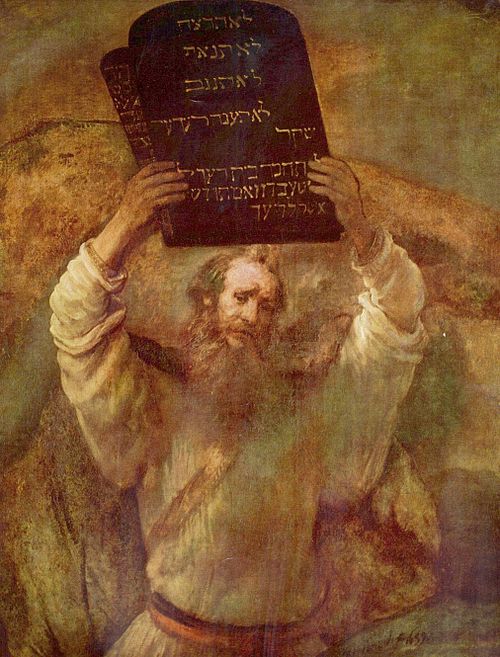
Moses Breaking the Tablets of the Law (1659) by Rembrandt

I had an interesting discussion with Matt Hadro on EWTN’s “Morning Glory” radio show about the rising number of “nones” in our country. When asked for their religious affiliation, “nones” do not identify themselves as atheists or agnostics, but rather check the “none” box. They tend to be dismissive of “organized” religion and generally believe that it is acceptable to construct a purely personal religious view and understanding of God.

Indeed, we live in times when many people make light of the fact that others do not believe in God or relegate their faith to a solely personal and largely irrelevant aspect of life. This attitude exists even among many Catholics who, though believers themselves, don’t seem to be overly concerned that others are not. What seems to be of greater concern to most believers—Catholics included—is that a person be “nice.” If a person is determined to be “nice,” little else seems to matter.

Frankly, all of us should be concerned by the rise of unbelief in our culture, whether it is atheism, agnosticism, “none-ism,” indifference, or the rampant secularism that relegates God to the margins. We should be concerned because unbelief on a wide scale (as is the case today) is not only unhealthy for a culture, it is dangerous to it.

This danger is fairly obvious when one considers that unbelievers (and most “under-believers” such as “nones”) think that they answer to no one. When one no longer acknowledges that God exists and sees everything, “reinvents” God, selects what he likes from what God has commanded, or doesn’t understand that he will ultimately have to answer to God for what he has or has not done, it is easy to ignore important aspects of the moral life.

Realizing that we will one day answer to God is an important reminder that we are not a law unto ourselves. The knowledge that we will not ultimately escape if we treat others with contempt, engage in serious injustice, live unchastely, or indulge greed, is an important curb on sin (or at least a call to repentance).

This observation does not mean that every unbeliever or “under-believer” lives a reprobate life. There are atheists who live exemplary lives, who exhibit natural virtues, whether they do so because it is to their benefit or simply because they have some ethical sense that comports with the right reason.

But, other things being equal, having large numbers of unbelievers who do not think that they are ultimately accountable for what they do or fail to do is never healthy to good order, morality, or virtue.

Further, when belief is lost by many, so is a common moral reference point. The Judeo-Christian moral view formed the basis for modern law, justice, constitutional rights, and ethics. While sectarian differences obviously existed in the country for 200 years before this rise of unbelief, there was basic agreement on the essential moral issues, based on a biblical worldview. The rise of unbelief has caused this moral consensus to break down. In its place there has arisen a tyranny of relativism, in which numbers matter more than reason. The one who wins is the one with the loudest megaphone, the most power, and the greatest influence.

This, too, is dangerous to a culture. Without a shared cultus, there can be no real culture. The word cultus refers to a reference point (God and His revelation) that is above and outside a culture, that is bigger and more lasting. Without that shared cultus, that devotion to someone higher, there can be no culture.

Today, when we cannot agree on what makes a marriage, or even on something as obvious as whether one is male or female, the tyranny is starting to resemble anarchy and nihilism. No culture can withstand such a basic undermining. Problems of this sort are civilization killers.

Thus, belief is not only important—it is critical. We cannot go on relegating this matter to the realm of the purely personal and largely irrelevant. Being “nice” is not enough. We must be accountable to God and see Him as authoritative in our life. If we are to survive we must do this, both individually and collectively.

The First Commandment says, I am the Lord your God. You shall have no other gods before me (Exodus 20:2). This is not some egocentric God, demanding worship and that He have no rivals. This is our loving Father, who knows what unbelief does to us. When we reject Him and/or turn to other gods, we are harmed immeasurably. We lose our way and inherit a lawless and confused world, in which the tyranny of relativism holds sway and no one thinks or acts as if he will one day answer for what he has and has not done.

Do not make light of the rampant unbelief in our world today. It is far more serious than most imagine. God commands the most serious things for our own well-being. The First Commandment is that we believe and that we call others to do the same. There is a reason that it is commandment number one!


Modesty and Beach Volleyball

One of the less edifying aspects of the Summer Olympics in Rio is the attire of the women’s beach volleyball players from Western countries. Most of the women wear a tiny bikini with the bottom being especially tiny. (I do not show a picture here because I deem it immodest to do so. Instead, I show a picture of some of the men, whose attire I mention below.)


Frankly, playing volleyball in a tiny bikini seems quite unnecessary. I would argue that it detracts from the sport because it distracts from the sport. The attention doesn’t seem to be drawn to the ball, shall we say. I would further argue that the attire encourages the focus not even on the women, but on certain aspects of the women’s bodies.

I can understand that swimmers (male and female) wear tight and sometimes abbreviated swimsuits to lessen drag in the water. Gymnasts, too, often wear brief and/or tight clothing to improve their performance and maximize the mobility of their limbs. The clothing is thus at least somewhat performance related.

But I can see no performance enhancement brought about by the wearing of tiny bikinis. Some will point out that the bikini top in question acts as a sports bra. Fine, but men wear supportive attire, too; but they do so under their shorts, not out in the open.


The Egyptian women’s beach volleyball player shown in the above photo illustrates that it is possible to compete quite well without wearing a bikini. One could argue that having short sleeves and shorter leg coverings might be cooler for the players. The impact on performance of wearing the hijab is debatable, but it is worn tucked in and did not seem to bother the women who wore it. These women played and competed well in a sport that is relatively new to their country and region.

Men’s beach volleyball attire also illustrates that near nudity is not required to play the sport well. The men do not play wearing tiny swimwear. They wear ample shorts along with t-shirts or tank tops.

I realize that each time the question of modesty has come up on this blog there are some readers who want to dismiss such discussions and emphasize the right of people to dress as they please. They believe that any sexual temptation aroused is almost wholly the fault of the viewer, not the one wearing the attire.

Modesty should avoid excessively burdening people. It seeks a middle ground wherein the one who dresses and the other who sees share responsibility. The one wearing the attire should not be burdened with difficult requirements, nor should the viewer be burdened by facing undue temptation. Mutual charity and concern are the goals.

The Catechism of the Catholic Church speaks of modesty as protecting the mystery, chastity, and dignity of the human person.

Modesty protects the mystery of persons and their love. … Modesty protects the intimate center of the person. It means refusing to unveil what should remain hidden. It is ordered to chastity to whose sensitivity it bears witness. … Modesty is decency. It inspires one’s choice of clothing. It keeps silence or reserve where there is evident risk of unhealthy curiosity. It is discreet (CCC 2521-2522).

As always, comments are appreciated, but I have found in the past that discussions about modesty are often difficult to have in a way that is helpful or charitable. Reasonable people may differ on the details of modesty. Modesty does involve a range of options, influenced by circumstances and the sensibilities of cultures. I have articulated here that I see no need for tiny bikinis in this sport and that I think more modest attire is important. If you disagree, please explain the relationship you see of the brief bikini to the sport, considering that men in general and women from other cultures who compete do not see the need to wear so little. If you agree, please remember in your comments that the imputation of motives to individuals is a sketchy and usually uncharitable thing to do. Everyone, please use care when commenting.

What Are Our Pets Really Saying? A Meditation on the Eager Expectation of All Creation

Dog and catI am often struck by the mystery of the relationship that dogs and cats set up with their owners. While I realize that we humans often project what we want their behavior to mean, I am still fascinated by the reality of how our pets come to “know” us and set up a kind of communication with us.

Dogs, especially, are very demonstrative, interactive, and able to make knowing responses. Cats are more subtle. My cat, Jewel, knows my patterns. She also knows how to communicate to me that she wants water, food, or just a back rub. She’s also a big talker, meowing each time I enter the room. I wish I knew what she wanted.

Yes, this interaction with our pets is indeed a mysterious thing. I am not suggesting that animals are on a par with us intellectually or morally; Scripture is clear that animals are given to us by God and that we are sovereign stewards over them.

But animals, especially our pets, are also to be appreciated as gifts of God. Scripture is also clear that animals will be part of the renewed creation that God will bring about when Christ comes again in glory:

The wolf will live with the lamb, the leopard will lie down with the goat, the calf and the lion and the yearling together; and a little child will lead them. The cow will feed with the bear, their young will lie down together, and the lion will eat straw like the ox. The infant will play near the hole of the cobra, and the young child put his hand into the viper’s nest. They will neither harm nor destroy on all my holy mountain, for the earth will be full of the knowledge of the Lord as the waters cover the sea (Isaiah 11:6-9).

Hence, when Christ from His judgment seat shall finally say, Behold, I make all things new (Rev 21:5), and when with John we see a new heavens and a new earth (Rev 21:1), I have little doubt that animals will share in that recreated and renewed kingdom where death shall be no more (Rev 21:4).

They are part of the Kingdom! Without elevating pets (no matter how precious to us) to the full dignity of human beings, it is not wrong to think that they will be part of the Kingdom of God in all its restored harmony and beauty.

Maybe now, in the mystery of our interaction with our pets, God is giving us a glimpse of the harmony we will one day enjoy with all creation. Scripture says,

For indeed, creation waits in eager expectation for the sons of God to be revealed. For the creation was subjected to frustration, not by its own choice, but by the will of the one who subjected it, in hope that the creation itself will be liberated from its bondage to decay and brought into the glorious freedom of the children of God (Romans 8:19-21).

Yes, creation itself is eagerly waiting the day when God says (in the words of an old spiritual), “Oh, preacher, fold your Bible, for the last soul’s converted!” And then creation itself will be set free from its bondage to death and decay and will be gloriously remade into its original harmony and the life-possessing glory that was once paradise.

Perhaps the mystery of our pets is that they are ambassadors for the rest of creation, a kind of early delegation sent by God to prepare the way and begin to forge the connections of the new and restored creation. Perhaps they are urging us on in our task of making the number of the elect complete so that all creation can sooner receive its renewal and be restored to the glory and harmony it once had. Who knows? But I see a kind of urgency in the pets I have had over the years. They are filled with joy, enthusiasm, and the expectation of something great.

They show joyful expectation! Yes, there was a kind of joyful expectation in the dogs of my youth: running in circles around me, dashing to greet me when I arrived home, and jumping for joy when I announced a car ride or a walk. My cats have always sauntered over to meet me at the door with a meow, an arched back, and a rub up against my leg. Somehow our pets manifest this Scripture passage: Creation waits in eager expectation for the sons of God to be revealed (Romans 8:19).

The Lord’s Judgment Will Not Be Delayed Forever – A Meditation on the Ten Lost Tribes of Israel

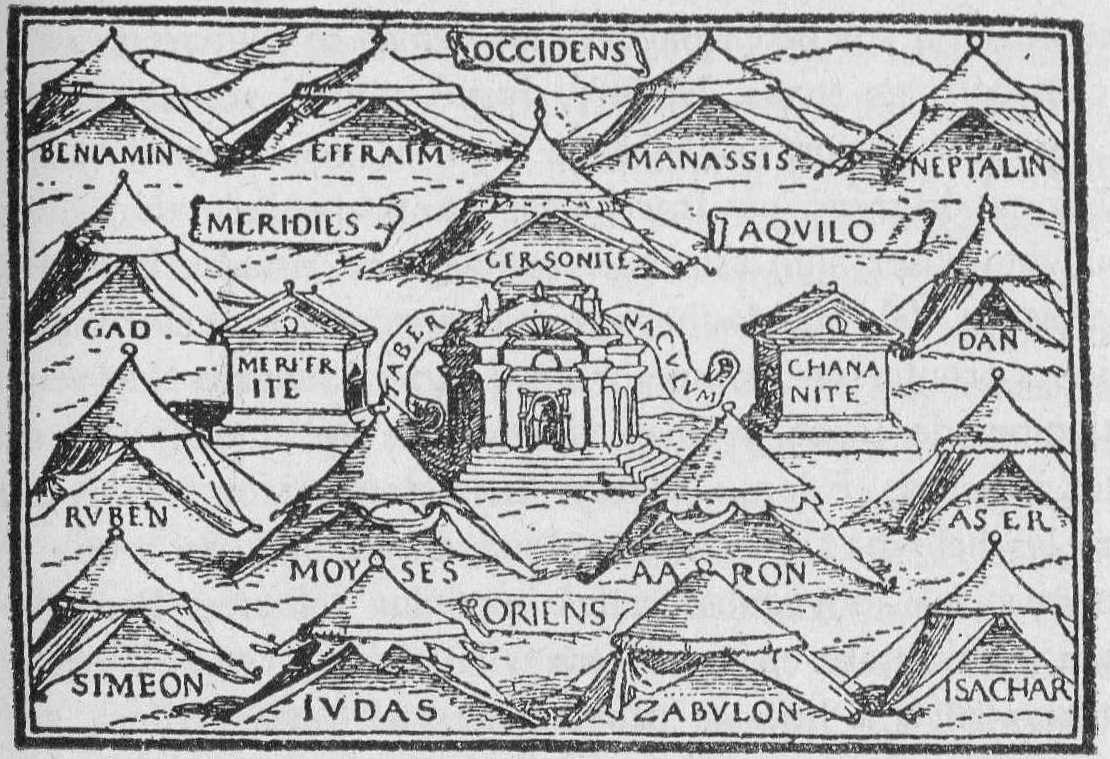
Tribes-of-IsraelThis post is a kind of follow-on from yesterday’s post as we read the stories of wickedness in ancient Israel and what God did about it.

The first reading from Monday’s Mass (of the 12th week of the year) describes a crucial, crushing moment in the history of ancient Israel: the loss of the Northern Kingdom and the destruction and deportation of what came to be called the Ten Lost Tribes of Israel.

Shalmaneser, king of Assyria, occupied the whole land [of Israel] and attacked Samaria, which he besieged for three years. In the ninth year … the king of Assyria took Samaria [which was then part of Israel] and deported the children of Israel to Assyria, setting them in Halah, at the Habor, a river of Gozan, and the cities of the Medes (2 Kings 17:5-6).

The Northern Kingdom of Israel had divided from the Southern Kingdom of Judah in 930 B.C. as a result of the bitterness following the tail end of Solomon’s reign and the reign of his successor Rehoboam. The tribes that formed the Northern Kingdom were Asher, Dan, Ephraim, Gad, Issachar, Mannasseh, Napthtali, Reuben, Simeon, and Zebulun. (Some from Levi were also settled there.) The survivors of the war were largely deported to Assyria and were “lost” by virtue of intermarrying with the people there. Though some debate the use of the term “lost,” claiming that there were people who escaped deportation or who fled to the South, as an identifiable group they were lost.

After the loss of the Northern Kingdom, only the tribes of Judah (and Benjamin) in the south remained. In effect, the tribe of Benjamin was absorbed into Judah.

Why had this come about? How had a nation blessed by God lost that blessing? Sacred Scripture, a prophetic declaration and interpretation of reality, provides this answer:

This came about because the children of Israel sinned against the LORD, their God, who had brought them up from the land of Egypt, from under the domination of Pharaoh, king of Egypt, and because they venerated other gods. They followed the rites of the nations
whom the LORD had cleared out of the way of the children of Israel and the kings of Israel whom they set up
(2 Kings 17:7-8).

These consequences did not come without warning. The Book of Deuteronomy (Dt 28:15-68) had long ago warned of what would happen if they broke their covenant bond with the Lord. The text is too lengthy to reproduce here, but the consequences described are frightening, and are exactly what did happen to Israel in 721 B.C. and Judah in 587 B.C. In addition to this ancient warning there were more contemporaneous warnings from the prophets:

And though the LORD warned Israel and Judah by every prophet and seer, “Give up your evil ways and keep my commandments and statutes, in accordance with the entire law which I enjoined on your fathers and which I sent you by my servants the prophets,”
they did not listen, but were as stiff-necked as their fathers, who had not believed in the LORD, their God. They rejected his statutes, the covenant which he had made with their fathers, and the warnings which he had given them, till, in his great anger against Israel, the LORD put them away out of his sight. Only the tribe of Judah was left
(2 Kings 17:13-15a, 18).

Even after all of this, Judah did not learn its lesson either, falling deeper and deeper into infidelity and sin. The Babylonians conquered Judah in 587 B.C., leading to the destruction of the Temple and the loss of the Ark.

Stories like these may seem distant, but their elements are sadly familiar to us in times like these, in which there has been a decrease in obedience to God’s laws and a great falling away from the faith. This is true in our nation, our culture, and even to a degree within the Church, where vast numbers have fallen away. St. Paul described them as those who will not tolerate sound doctrine, but with itching ears … will gather around themselves teachers to suit their own desires (2 Tim 4:3). He also described them as similar to Demas, [who] in his love of this world, has deserted me (2 Tim 4:10).

Yes, these are difficult times, times of pruning and purification in the Church and times of great judgment on the once-Christian West. As St. Paul says, the Old Testament stories are lessons and warnings for us: Now these things happened to them as examples and were written down as warnings for us, on whom the fulfillment of the ages has come. So the one who thinks he is standing firm should be careful not to fall (1 Cor 10:11-12).

There are distorted ideas of mercy today based on the belief that God will never punish; He will never say, “Enough!” But that is not mercy at all. For if the iniquity of our times continues unabated, many more will be lost. The body count and sorrow stemming from abortion, euthanasia, war, sexual confusion, greed, and hatred will grow ever higher. At some point, God applies a painful—though necessary—end to prideful, unrepentant iniquity.

Scripture says,

Do not say, “I have sinned, yet what has happened to me? for the LORD is slow to anger!” Do not be so confident of forgiveness that you add sin upon sin. Do not say, “His mercy is great; my many sins he will forgive.” For mercy and anger alike are with him; his wrath comes to rest on the wicked. Do not delay turning back to the LORD, do not put it off day after day. For suddenly his wrath will come forth; at the time of vengeance, you will perish (Sirach 5:4-7).

Therefore, heed the lessons of these ancient stories. We live in presumptuous times, in which many (who know better in the depths of their conscience) rationalize their sin and recast God as the “affirmer in chief,” whose love precludes punishment or judgment. But such a notion of love in incomplete, for love rejoices in the truth not in what is evil and harmful. God has more in mind than merely our own “happiness.” He is thinking of other people and future generations as well. He is patient and waits for our repentance, but He is no pushover. There comes a time when even the finest vineyards must be plowed under if they yield but sour grapes.

His mercy waits, but His judgment will not be delayed forever.

This song says, 

We have sinned, O Lord, and we have walked not in thy ways; but return,
O Lord, 
and we shall return; make thy face shine upon us, and we shall be safe

Letting Go of Our Obsession with Having the Perfect Body

Blog6-14-2016The Pope’s recent remarks about the obsession with having the perfect body were intended as a commentary on the rejection by some of the dignity and quality of life of the disabled. I will be writing more on that topic tomorrow. Today, however, permit me some musings on the obsession that many of us have with achieving the perfect body ourselves.

Let me start by saying (with all the good humor I can summon) that I do not have a perfect body. In fact, I have become increasingly dissatisfied with my appearance over the years as I gain weight, lose hair, and watch the gray eclipse the dark brown of what hair I do have left. Fatigue and sore joints are also increasingly my lot.

Yes, I am well aware that my body is far from perfect and is steadily “heading south.” Like many of you, I do my fair share of exercising, watching what I eat, etc. But trying to be something that I am not (a 21-year-old with a 28-inch waist and dark rich hair) is increasingly a losing battle. The fact is, I look just like my father, who looked just like his father. Genetics, body type, and age tend to win, and the energy required to try to overcome these is increasingly disproportionate to the results and to my other duties.

I do want to say that I love being 55. I would never want to be 25 again; I have learned too much in those 30 years. God has done important work in my spiritual life during that time—thank you, Lord! Spiritually, I am now younger, more confident, and stronger, even as my body ages—thank you, Lord. And Lord, please spare me from the obsession with having the perfect body.

Our culture’s obsession with the perfect body has terrible effects upon those who are younger as well. There are many young women today whom I regard as quite beautiful, who nevertheless struggle with low self-image; they are extremely anxious about any perceived imperfection in their hair, complexion, or body shape, no matter how minor. In our hyper-sexualized and visual culture, ordinary women often compare themselves unfavorably to famous women, many of whom look the way they do by spending thousands of dollars and countless hours on personal trainers, makeup specialists, and cosmetic surgery. And with the pervasiveness of photo-editing software, many women today are actually competing with the images of women who don’t even exist; they are “Photoshopped” (see video below).

Men are not immune to this either. Most men care more about their appearance than they will admit. I remember being obsessed for years with the gap between my two front teeth. It made it awkward for me to smile and I was very self-conscious about it. And yet when I asked people about it or admitted my embarrassment, most told me that they hadn’t even noticed it. Weight gain is now my primary irritant. My slash-and-burn Lenten diet merited only a 10 lb. loss, which stopped midway through Lent. A few extra laps around the park just doesn’t seem to do the trick anymore.

At the end of the day, the older body just seems designed to carry extra weight. We should ask the Lord for the proper balance in order to legitimately moderate our caloric intake and to watch our health without the preoccupation with the perfect body.

Part of the obsession for the perfect body is a result of our culture’s preoccupation with youth. Healthier cultures esteem the wisdom of age and look to elders for answers, but ours disdains its older members as “old,” “out-of-touch,” and with little to offer. Meanwhile, the young are considered “hip” and “relevant,” and are presented as the ones who really know what is going on and whose views are both glamorous and cutting edge. Young = good, old = bad.

Thus, younger bodies have become the image of perfection. And even when we leave youth behind, we are still obsessed with looking young. If we don’t, we are perceived as having “lost our edge.” Never mind that we may have reached the peak of our life intellectually, emotionally, spiritually, professionally, etc. If you don’t look young, you’re no good; you’re washed up. This is a foolish preoccupation with mere externals that dismisses the hoary crown of wisdom. Older bodies are rounder, grayer, and less agile. But perhaps God intends this, as we hopefully become more graceful, wise, and mindful in our walk, and as our personality becomes more “well-rounded.”

I have often mused that God built in a certain protection for us as we grow older: as we age and become “less attractive,” our eyesight worsens so that we don’t notice it so much! But then we go ahead and cancel that out by putting on glasses J. With corrective lenses, our artificially “young” eyes can’t bear the sight of our actually older bodies.

These are just some of my thoughts on today’s obsession with having the perfect body.

Help us, Lord! Keep us grateful for what you are doing in our souls even if our bodies are “heading south.” Help us to remember that every passing day here puts us one day closer to being with you. Keep us faithful so that we do not fear aging or the reminder of approaching death it may bring. One day, Lord, we will be in your presence, forever young before you, the Ancient of Days.

This Role Used to Be Filled by a Father

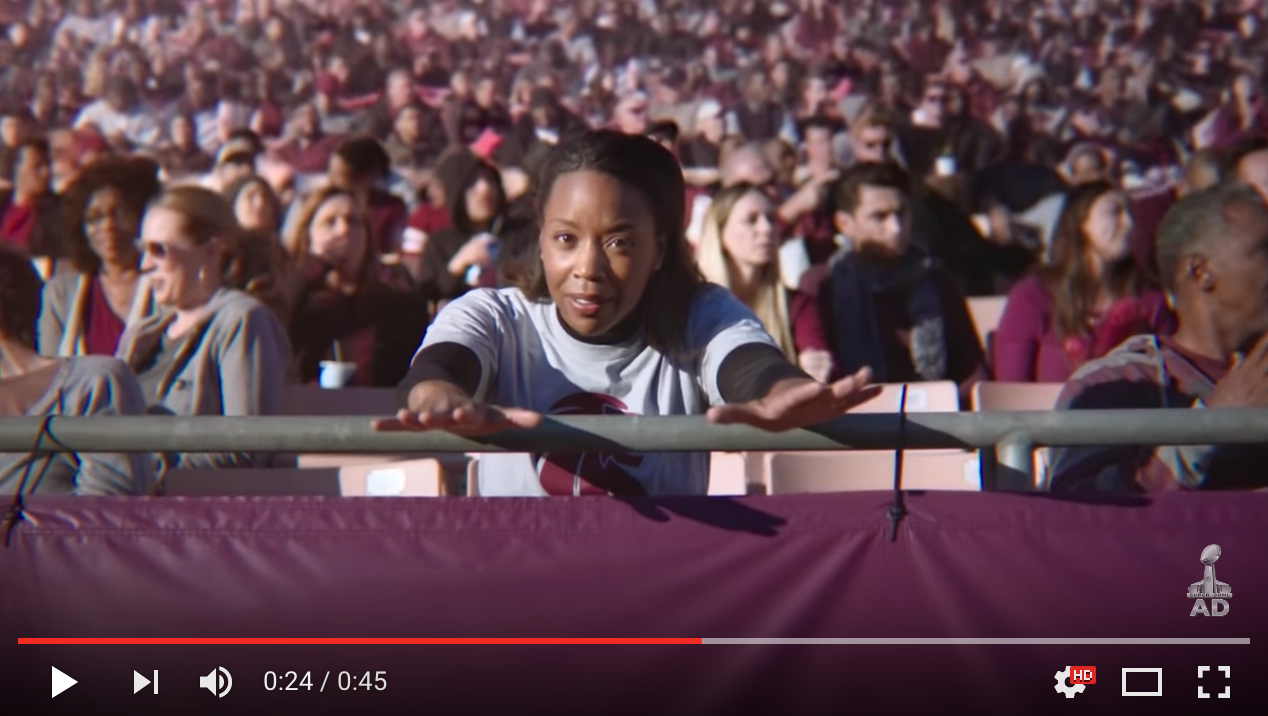
If you ask me (and even if you don’t ask me) something in the video below is amiss. Twenty years ago a father would have filled the role depicted in it. Watch it and see what you think. In making my observation I am not blaming women/mothers. But if any video could demonstrate that we have a crisis of fatherhood and “missing man syndrome,” this is it. There should be a father—a man—in this video, but he is absent. But the video reflects reality does it not? What will you and I do to change this?

Remember! On Memorial Day

memorial-dayWhat is honor? The full etymology of the word is debated, but what seems most likely is that it comes from the Latin word honos, which, though translated as “honor,” also points to the word “onus,” which means “weight” or refers to something heavy. Hence, to honor someone is to appreciate the weight, significance, or burden of something he has done. It is to acknowledge that he carried a great burden well, that he withstood a heavy load, that what he did was weighty, significant.

For many, Memorial Day means the beginning of summer. To others, it’s a day off to go shopping. But as I am sure you know, Memorial Day is really a day to honor those who have died in the service of our country, those who carried a great burden so that many of us did not have to.

Our soldiers, police officers, and first responders are deserving of our honor, for they put their lives on the line so that we can live more freely and experience abundance. None of us can fail to appreciate the burdensome weight that some carry so that we can live well, freely, and comfortably. Freedom is not free; it is costly.

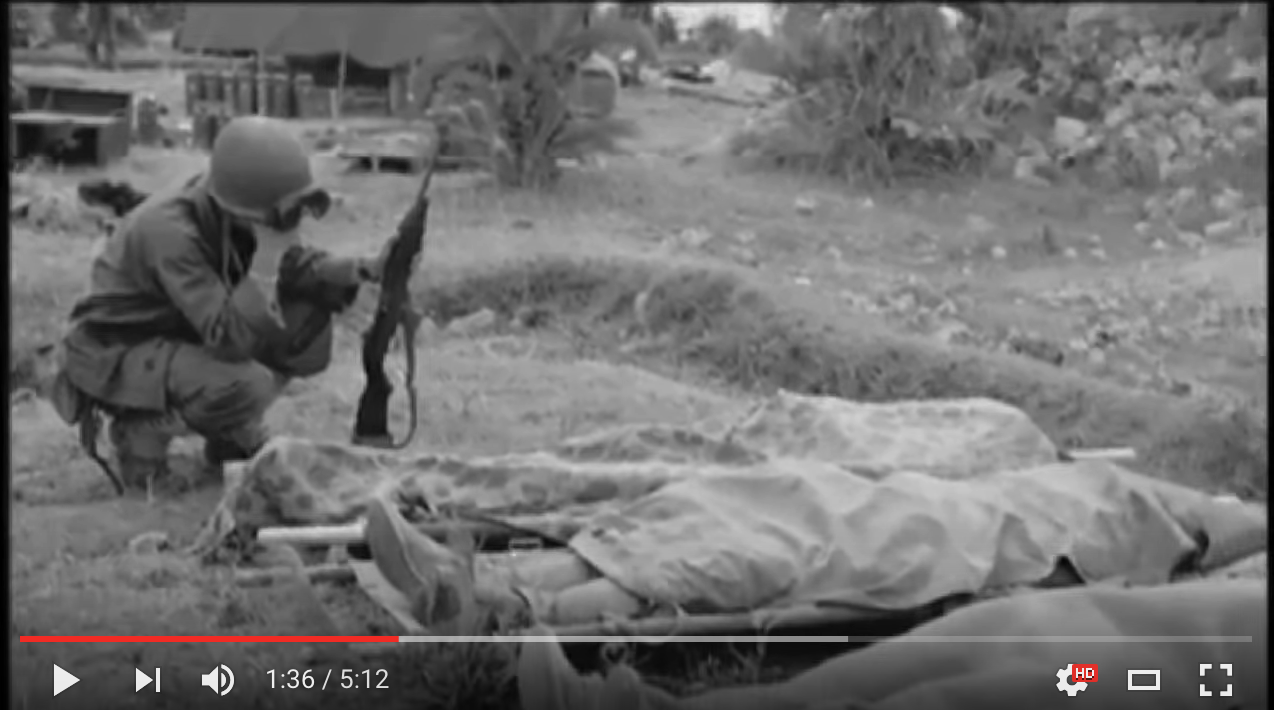
War remains controversial (as well it should). But soldiers do not create the politics they are sent to address. They are simply told that there is a danger to be faced, an injustice to be ended; and so they go. Private First Class Arthur Richardson is one of those who went north during the Korean War and did not return. He carried well the great weight of being a solider. He also carried the weight of collective human sinfulness (which is what brings war) and felt its burden keenly; he gave his life.

The love of one’s country (patriotism) is related to the fourth commandment. The Catechism teaches,

It is the duty of citizens to contribute to the good of society in a spirit of truth, justice, solidarity and freedom. The love and service of one’s country follow from the duty of gratitude and belong to the order of charity (CCC # 2239).

The Lord Himself makes it plain: “No one has greater love than this, to lay down one’s life for one’s friends” (John 15:13).

I recently watched Ken Burns’ documentary film on the Second World War, entitled simply, “The War.” It remarkably depicts the suffering and cost, and the burdens carried, especially by the soldiers. But it also shows the sacrifices made by many back home who scrimped, saved, and went without. Some endured the loss of loved ones. Some were detained in camps.

Each episode of the documentary begins and ends with the same beautiful and haunting anthem and can be heard in the video below. Its basic theme is “America, I gave my best to you.” The full text is as follows:

All we’ve been given by those who came before
The dream of a nation where freedom would endure
The work and prayers of centuries have brought us to this day
What shall be our legacy? What will our children say?

Let them say of me I was one who believed
In sharing the blessings I received.
Let me know in my heart when my days are through
America, America, I gave my best to you.

Each generation from the plains to distant shore
With the gifts they were given were determined to leave more.
Battles fought together, acts of conscience fought alone:
These are the seeds from which America has grown.  

For those who think they have nothing to share,
Who fear in their hearts there is no hero there.
Know each quiet act of dignity is that which fortifies
The soul of a nation that will never die.

America, [America] I gave my best to you.

The word “memorial” comes from the Latin memorare, which is an imperative meaning “Remember!” So Memorial Day is “Remember!” Day. To remember something is to allow it to be present in our minds and hearts such that we are grateful, sober, aware, and different.

This is a day to remember that there are men and women who have died so that you and I are able to live with greater security, justice, and peace. May these fallen soldiers rest in peace. We owe them both a debt of gratitude and our prayers.

Here is the song and video from “The War” by Ken Burns.

A Meditation on Being Overwhelmed

May 12 Blog PostThe first video at the bottom of this post presents a portrait of a man who is simply overwhelmed. He can’t seem to live up to expectations, neither those that are self-imposed nor those that are imposed by others.

One of the paradoxes of our time (at least in the West) is that we have so many creature comforts yet in many ways have never been so uncomfortable. Our high standard of living is accompanied by stress, worry, and a gnawing dissatisfaction. It seems that the more we have the more we worry.

In a way, we have too much to lose; we want and expect so much that we’re never satisfied. There is a kind of slavery that comes with having many possessions. If we’re not careful our possessions end up possessing us! Further, they set loose desires in us that can become extreme and difficult to master. In the end our desires expand with each new thing we get. It’s like a man who overeats; his stomach stretches so that he must eat more each time in order to feel full. Scripture says,

Whoever loves money never has money enough; whoever loves wealth is never satisfied with his income. … The sleep of a laborer is sweet, whether he eats little or much, but the abundance of a rich man permits him no sleep (Eccles 5:10,12).

The second video is an advertisement for Traveler’s Insurance that well depicts how our possessions cause us worry and make us restless. Of course, they claim that if you’ll just buy their insurance, all your worries will vanish! Nevertheless, it is a cute and poignant ad.

Yes, these two videos depict our times very well.

I believe that one of the deepest sources of stress today is the false notion that you can have it all: the well-appointed house in the suburbs, two fulfilling careers, well-raised children, etc.

But this is a lie. You cannot have it all. We all have to make choices. Life involves trade-offs. Choosing one thing often means saying no to other things. A father can’t necessarily climb the career ladder rapidly yet still be reasonably present to his wife and children. The big house in the suburbs isn’t always an acceptable option if it means a long commute, additional time away from the family, and/or a large mortgage that requires overtime and/or a second job. Buying all the latest gadgets isn’t wise if it means being unable to save for the children’s education or for retirement.

We simply can’t have it all. We have to decide what is important and make choices that reflect our priorities.

But as it is, we often want too much and on top of that, we want it right away. We entertain the notion that somehow we can have it all. This attitude then fuels unrealistic expectations. Not only do I believe I can I have it all, I think that I should have it all. And if I don’t have it all, then I’m either resentful, or I’m worried that I don’t measure up to other people’s unrealistic expectations. There’s an old saying that goes, “Most of us spend money we don’t have, to buy things we don’t need, to impress people we don’t like.” All of this is a recipe for stress, anxiety, and anger.

What to do? Decide! Decide what is important to you and then build your life around that. It’s going to mean that some other things have to go. If your family is your top priority, then you may not be able to accept that promotion if it means spending significantly less time at home. Some people do choose to wholly dedicate themselves to some work or cause. That’s fine. But someone who does make that choice should think twice about getting married (and having children).

And as for possessions, my advice is to simplify. It is far better to live in a smaller house in a less prestigious neighborhood and actually be able to know your spouse and children, than to live in the big house on the hill that requires long hours at work to pay for and is filled with anger over your absence and anxiety about money.

Scripture says, Better a little with the fear of the LORD than great wealth with turmoil. Better a small serving of vegetables with love than a fattened calf with hatred (Prov 15:16-17).

In the end, less is more. We want too much. We think we can have it all. But that’s not true. Psalm 86:11 says, Make simple my heart, O Lord (Simplex fac cor meum Domine). Ask the Lord to help you to desire what is good and then to build your life around that. You can’t have it all. You have to decide. Life involves trade-offs.

We must learn this deeply. If we don’t, we should expect to be overwhelmed and owned by what we claim to possess. Yes, a simple heart is a gift to pray for.

Here is a remarkable portrait of modern man: overwhelmed, anxious, fearful that he does not measure up to the unrealistic expectations of the world, yet unable to decide what is really important.