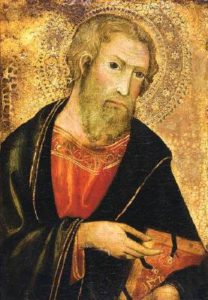
St. Paul on Respect for Authority

In daily Mass we have been reading from second chapter of the Letter to the Galatians. In it, St. Paul recounts his personal history and describes his authority. St. Paul’s story is interesting for three reasons:

  1. It shows that St. Paul did not ascend to the office of apostle (bishop) overly quickly but rather was formed in the community of the Church for quite some time and did not go on mission until he was sent.
  2. It spells out Paul’s relationship to authority within the Church.
  3. It shows the need for fraternal correction even of those under whose authority one falls.

Let’s take a look at each of these matters in turn.

1. On Paul’s conversion, formation, and ascent to the office of apostle (bishop) – Many people have oversimplified notions of Paul’s conversion and subsequent missionary activity. Many who have not carefully studied the texts of Acts, Galatians, and other references, incorrectly assume that Paul went right to work as a missionary immediately following his conversion.

Near the time of his conversion, Paul was described as “a young man” (neanias). Sometime after the death of Stephen, St. Paul had his conversion, encountering the risen Christ on the road to Damascus. Immediately following that encounter, he was blinded for three days and eventually healed by a Christian named Ananias, who also baptized him (Acts 9:9-19).

At that point, Paul went into the Desert of Arabia (Gal 1:17). Why he went there is not known, but it was likely to reflect and possibly to be further formed in the Christian faith to which he had come so suddenly and unexpectedly. Scholars differ on whether he was there for several years or just a brief time, but it would seem that some amount of time would be necessary to pray, reflect, and experience formation in the Christian way, possibly with other Christians. A period of one to three years would seem reasonable, but we can only speculate.

Paul then returned to Damascus, joining the Christian community there for a period of almost three years (Gal 1:18). While in Damascus, Paul took to debating in the synagogues. He was so effective in demonstrating that Jesus was the hoped-for Messiah, that some of the Jews there conspired to kill him.

St. Paul then fled Damascus and went to Jerusalem (Acts 9:20-25). He states that he went there to confer with Cephas (Peter) (Gal 1:18). Paul seems to imply that he thought it was time to confer with Peter because he had begun to teach and was gaining followers. Later, Paul would describe the purpose of another visit to Peter and the other leaders: to present the Gospel that I preach to the Gentiles … so that I might not be running or have run in vain (Gal 2:2). While there on this first visit, Paul stayed for 15 days, also meeting James.

After this consultation, Paul returned home to Tarsus and remained there for about three years. What he did during this time is unknown.

Barnabas then arrived and asked Paul to come to Antioch to help him to evangelize there (Acts 11:25-26). Paul stayed there for about a year.

Paul made another brief visit to Jerusalem to deliver a collection for the poor.

Upon his return to Antioch, Paul (Saul) was ordained as a bishop. The leaders of the Church at Antioch were praying and received instruction from the Holy Spirit to Set apart for me Barnabas and Saul for the work to which I have called them (Acts 13:3). As a result, the leaders of the Church in Antioch then laid hands on Barnabas and Saul and send them forth on their mission. This is Paul’s ordination and the source of his status as apostle (bishop).

Notice, however, that this sending forth happens years after Paul’s conversion. Depending on how long we assume he spent in the desert, we are talking about 7-10 years during which Paul lived in community with other members of the Church and conferred with Peter. He was not a self-appointed missionary and his conversion required completion before the Church sent him forth. Paul only undertook this going forth after being sent.

2. On Paul’s submission to authority – Paul was not a “lone ranger.” He submitted what he taught, first to Peter and later to other apostles and leaders (Acts 11 and 15). Paul states that to preach something other than what the Church proposes would be to run “in vain” (Gal 2:2).

Here was a man who was formed by the community of the Church and who submitted his teachings to scrutiny by lawful authority.

Here was man who went forth on his missions only after he was ordained and sent.

He appointed other leaders. As they went through the towns and villages on their missionary journeys, Paul and Barnabas also established authority in each church community they founded by appointing presbyters in each town (Acts 14:23).

Upon completion of their first missionary journey, Paul and Barnabas reported back to the leaders at Antioch who had sent them (Acts 14:27) and later to the apostles in Jerusalem (Acts 15). Hence, we have an accountability structure in the early Church and a line of authority. Paul was not an independent operator. He was not a self-appointed or self-ordained leader. He both respected authority and established it in the churches he instituted. He also made it clear to the Galatians and others that he had authority and that he expected them to respect it.

3. On true respect for authority – Paul clearly respected the authority of Peter: he conferred with him early on and later set forth the gospel that Peter had preached. However, there is also this description of Paul offering fraternal correction to Peter:

When Peter came to Antioch, I opposed him to his face, because he was clearly in the wrong. Before certain men came from James, he used to eat with the Gentiles. But when they arrived, he began to draw back and separate himself from the Gentiles because he was afraid of those who belonged to the circumcision group. The other Jews joined him in his hypocrisy, so that by their hypocrisy even Barnabas was led astray. When I saw that they were not acting in line with the truth of the gospel, I said to Peter in front of them all, “You are a Jew, yet you live like a Gentile and not like a Jew. How is it, then, that you force Gentiles to follow Jewish customs? (Gal 2:11-14)

There is something refreshing about this understanding of authority. Having authority does not mean that one is above reproof. Too many people shy away from speaking honestly to those in authority. Today that is beginning to change and well it should.

Paul stands face to face (κατὰ πρόσωπον αὐτῷ ἀντέστην) with Peter and rebukes his practice of sitting only with Jews. Peter had taught rightly of the equality of the Gentiles but drew back from keeping company with them. As Catholics, we teach of the infallibility of the Pope, but we do not teach that he is impeccable (sinless). Even those who teach rightly (as Peter did) sometimes struggle to fully live the truth they preach.

Clearly, correction and/or frank discussion should be done charitably, but it should be done. Paul is bolder than I would be, but he also lived in a different culture than I do. As we can see from the Gospels and other writings, Jesus and the apostles really “mixed it up” with others. The ancient Jews were famous for frank and vigorous discussion of issues, often including a lot of hyperbole. Our own culture prefers a gentler approach. Perhaps the modern rule is best stated this way: “Clarity with charity.”

Clarity – We show far greater respect for authority figures by speaking clearly and directly to them than through false flattery, inappropriate silence, or sinfully speaking scornfully of them behind their backs.

Charity – The need for clarity does not exclude an accompanying need for charity and proper respect for office and age. Sadly, I have found that those who wish to correct clergy today often go to the other extreme: using bold, disrespectful, and even insulting language; name calling; and impugning motives. Not only is this unnecessary, it is ineffective, especially in these times.

St. Paul demonstrates refreshing honesty with Peter, acknowledging his authority while respecting him enough to speak to him directly and clearly, not behind his back.

This video provides a brief summary of St. Paul’s life. Most scholars don’t agree with the remark (at about the 2:55 mark in the clip) that Paul was released from his imprisonment in Rome and then went to Spain, but there are two traditions in this regard.

https://youtu.be/gCcYRCPC3bA
What Is the “Sin of Human Respect”?

On one level “human respect” seems like a good thing. After all, we ought to respect, honor and appreciate one another. What then is meant by the “sin of human respect”? It is that sin wherein we fear man more than God; we are more concerned with what people think of us than what God thinks of us. This is an unholy, sinful fear, and is at the root of many of our sins, both of commission and of omission.

Consider some examples:

  1. A man goes up to a group of other men who are talking about the boss and also speaking inappropriately about some women in the office. He knows that their disparaging comments about the boss are unfair or even untrue. He also knows that talking about the women in the office using crude sexual imagery and lustful references is wrong. But because he wants to “fit in,” he joins in the conversation and contributes to what he knows is wrong. He laughs at the off-color jokes and makes no attempt to steer the conversation in a more appropriate direction. He does this because he fears rejection and is more concerned about what his co-workers think of him than what God thinks of him. He fears man more than he does God. That God is displeased with his actions is less important to him than that any of these men should be displeased.
  2. A young woman knows that sex before marriage is wrong and that this displeases God. However, she has dated a number of men now and has slept with most of them. She does this partly because she fears rejection. Perhaps if she does not give in to the desires of the young men she dates they will reject her and she will be alone. She thinks that a woman “has to do this” in order to be popular and desirable. She fears man more than she does God. What human beings think is more important to her than what God thinks. She may well minimize the importance of God’s displeasure by saying to herself, “Oh well, God understands.” But at the same time, she maximizes in her mind the importance of the displeasure of weak and fallible human beings, thinking that displeasing them would lead to catastrophe. She respects—that is, fears—man more than she does God.
  3. A pastor of a parish has a mandate from God and the Church to preach the whole counsel of God but he struggles to preach the “hard” things. After all, teaching on things like abortion, fornication, divorce, contraception, homosexual activity, euthanasia, and capital punishment causes some people to be upset. He fears this anger, fears offending people, fears being misunderstood. Once, when he spoke about abortion (because the Bishop mandated it), a few parishioners came up to him and told him that he should not bring politics into the pulpit. Once, when he had preached about the problem of divorce (the topic of that day’s Gospel), a (divorced) woman approached him after Mass saying that she felt hurt and “excluded.” Experiences like these have led the priest to “play it safe.” He always starts the homily with a joke and the people seem to love him for it. He chooses to preach only in abstractions and generalities. He exhorts people to be a little more kind, a little more generous, but avoids specificity. He does this because he fears man more than he does God. That God might be displeased that His people are not hearing the truth about important moral issues or receiving proper instruction in discipleship is a vague and distant fear to this priest. But one person raising an eyebrow at what he says is enough to ruin his whole week. Thus he goes silent as a prophet and becomes a people-pleaser instead. He respects—fears—man more than he does God.
  4. A mother knows that she is to raise her children in the fear of the Lord and train them in godly way, but oh, the protests when she tells them to do their chores, or go to bed, or do their homework! It’s just such a hassle to endure their anger and disappointment. She also remembers how stern her parents were and how she had vowed she would be nicer to her own children. So, little by little, she lets her authority erode and the children more often than not get their way. Her husband is not a strong disciplinarian and he wants to be thought of as “cool” by his children and their friends. God’s insistence on prayer, discipline, and respect for elders, gives way to what the children want. The oldest, a teenager, doesn’t want to go to Mass anymore. But after all, “You can’t force religion on kids,” they think. Here, too, the parents fear their children more than they do God. They have greater respect for their children than they do for God.

So these are some examples of the “sin of human respect.” It runs very deep in our wounded nature and leads to many other sins as well. Many people are desperate for attention, respect, acceptance, and approval from other human beings. Many of these same individuals, though (even the religiously observant), struggle to be nearly as concerned with what God thinks of them or whether He approves of their behavior.

God has a straightforward solution to this: we should fear Him and no one else. There is an old saying, “If I kneel before God I can stand before any man.” It makes sense that it is a lot easier to fear (respect) one, than many. The more we learn to fear (respect) God, the less concerned we become with what others think. This is not an invitation to become a sociopath who cares not a whit what others think. We are to remain polite, groom ourselves, and not intentionally pick fights. But in the end, we are instructed by the Lord to be freed of all the fearful trepidation of what others think.

Calling this is a straightforward solution refers more to its description than its execution. It is not easy to extract ourselves from this very deep drive; in fact, it takes a life time. But the first step to healing is admitting we have a problem. Then we begin to see it for what it is, understand its moves, and let the Lord steadily free us.

Let us also be clear: the fear of the Lord that is counseled here is not a cowering and servile fear. If this is all one can muster, though, it is better than having no fear at all! But the real goal is to have a filial fear of God, fearing to offend Him because we love Him. This type of fear of the Lord holds Him in awe. It is to have a reverence for Him rooted in deep love and gratitude. Out of this love and gratitude we fear to offend Him more than offending any other.

Perhaps some Scripture quotes that address various aspects of the problem of human respect and the remedy of holy fear will be a fitting conclusion to this reflection:

  1. Through the fear of the LORD a man avoids evil (Prov 16:6).
  2. Do not let your heart envy sinners, but always be zealous for the fear of the LORD (Prov 23:17).
  3. Better a little with the fear of the Lord than great wealth with turmoil (Prov 15:16).
  4. The fear of God will be with you to keep you from sinning (Ex 20:20).
  5. You alone are to be feared O Lord (Psalm 76:7).
  6. God is more awesome than all who surround him (Psalm 89:7).
  7. I lie down and sleep; I wake again, because the LORD sustains me. I will not fear the tens of thousands drawn up against me on every side (Psalm 3:4-5).
  8. I will give them singleness of heart and action, so that they will always fear me for their own good and the good of their children after them (Jer 32:39).
  9. The Pharisees came to Jesus and said, “Teacher, we know you are a man of integrity. You aren’t swayed by men, because you pay no attention to who they are; but you teach the way of God in accordance with the truth” (Mark 12:14).
  10. Woe to you when all men speak well of you, for that is how their fathers treated the false prophets (Luke 6:26).
  11. If anyone is ashamed of me and my words, the Son of Man will be ashamed of him when he comes in his glory and in the glory of the Father and of the holy angels (Luke 9:26).
  12. And do not be afraid of those who kill the body but cannot kill the soul; rather, be afraid of the One who can destroy both soul and body in Gehenna (Matt 10:28).
  13. If the world hates you, realize that it hated me first. If you belonged to the world, the world would love its own; but because you do not belong to the world, and I have chosen you out of the world, the world hates you (Jn 15:18-19).
  14. It does not concern me in the least that I be judged by you or any human tribunal; I do not even pass judgment on myself; I am not conscious of anything against me, but I do not thereby stand acquitted; the one who judges me is the Lord (1 Cor 4:3).
  15. From now on, let no one make troubles for me; for I bear the marks of Jesus on my body (Gal 6:17).
  16. We know what it is to fear the Lord, we try to persuade men. What we are is plain to God, and I hope it is also plain to your conscience (2 Cor 5:11).

Sinner Please Don’t Let This Harvest Pass – A Homily for the 27th Sunday of the Year

There is an urgency and clarity about today’s Gospel that is often lacking in modern Christians, including the clergy. In this Gospel, the message is urgent, provocative, and clear: there is a day of judgment coming for every one of us and we simply must be ready. The message is a sobering one for a modern world that is often dismissive of judgment and certainly of Hell. Yet Jesus says clearly that the Kingdom of God can be taken from us for our refusal to accept its fruits in our life.

Parables used by Jesus to teach on judgment and the reality of Hell are often quite vivid, even shocking in their harsh imagery. They are certainly not stories for the easily offended. And they are also difficult to take for those who have tried to refashion Jesus into a pleasant, affirming sort of fellow rather than the uncompromising prophet and Lord that He is.

No one spoke of Hell more often than Jesus did. Attempting to reconcile these bluntly presented teachings with the God who loves us so, points to the deeper mysteries of justice and mercy and their interaction with human freedom. But this point must be clear: no one loves us more than Jesus does and yet no one spoke of Hell and its certainty more often than Jesus did. No one warned us of judgment and its inescapable consequences more often than did Jesus. Out of love for us, Jesus speaks of death, judgment, Heaven, and Hell. As one who loves us, He wants none of us to be lost. So He warns us; He speaks the truth in love.

Historically, this parable had meaning for the ancient Jews that had already come to pass. God had established and cared for his vine, Israel. He gave them every blessing, having led them out of slavery and established them in the Promised Land. Yet searching for the fruits of righteousness he found little. Then, sending many prophets to warn and call forth those fruits, the prophets were persecuted, rejected, and even murdered. Finally, God sent His Son, but He too was murdered. There comes forth a sentence: He will put those wretched men to a wretched death and lease his vineyard to other tenants who will give him the produce at the proper times … Therefore, I say to you, the Kingdom of God will be taken away from you and given to a people that will produce its fruit. By 70 AD, Jerusalem was destroyed; the Temple was never to be rebuilt.

The Jewish people are not singled out in the Scriptures, for we all, like them, are a vineyard, and if we are not careful, their story will be our own story. We, like the ancients, have a decision to make. Either we accept the offer of the Kingdom and thereby yield to the Lord’s work and bring forth a harvest, or we face judgment for the fact that we have chosen to reject the offer of the Kingdom. God will not force us to accept His Kingship or His Kingdom. We have a choice to make and that choice will be at the heart of the judgment we will face.

Let’s take a closer look at the Gospel and apply it to the vineyard of our lives.

I. THE SOWING – The text says, There was a landowner who planted a vineyard, put a hedge around it, dug a wine press in it, and built a tower.  Then he leased it to tenants and went on a journey.

Note the care and providence of the landowner (God) who has given each of us life and every kind of grace. The image of the vineyard indicates that we have the capacity to bear fruit. This signifies the many gifts, talents, and abilities that we have been given by God.

The hedge calls to mind the protection of His grace and mercy. Though the world can be a tempting place, God has put a hedge of protection around us that is sufficient to keep us safe from serious sin, if we accept its power.

But note, too, that a hedge implies limits. And thus God’s protective graces, though sufficient, mean that we must live within limits, within the hedge that keeps the wild animals of temptation from devouring the fruits of our vine.

The tower is symbolic of the Church, which stands guard like a watchman warning of dangers to us who live within the boundaries of the hedge. And the tower (the Church) is also standing forth as a sign of contradiction to the hostile world outside, which seeks to devour the fruit of the vineyard.

That the landowner leases the the vineyard is a reminder that we are not our own; we have been purchased at great cost. God and God alone created all these things we call our own. We are but stewards, even of our very lives. We belong to God and must render an account and show forth fruits as we shall next see.

But this point must be emphasized: God has given us great care; He has given us His grace, His mercy, His very self. As the text from Isaiah says, What more was there to do for my vineyard that I had not done? God loves us and does not want us to be lost. He gives us every grace and mercy we need to make it. The Lord says, As surely as I live, declares the Sovereign LORD, I take no pleasure in the death of the wicked, but rather that they turn from their ways and live. Turn! Turn from your evil ways! Why will you die, O house of Israel? (Ez 33:11) This must be emphasized before we grumble too quickly about the subsequent judgment that comes. God offers every possible grace to save us. It is up to us to accept or reject the help.

II.  THE SEEKING – The text says, When vintage time drew near, he sent his servants to the tenants to obtain his produce.

There come moments in our lives when God looks for fruits. Remember that He is the owner and the fruits are rightfully His. He has done everything to bring forth the fruit and now deserves to see the produce of His grace in the vineyard of our life, which is His own.

And what fruits does the Lord seek? The values and fruits of the Kingdom: faith, justice, mercy, peace, forgiveness, chastity, faithfulness, generosity, love of the poor, love of one’s family and friends, even love of one’s enemy, kindness, truth, sincerity, courage to speak the truth and witness to the faith, and an evangelical spirit.

Note, too, that the text says he sends servants to obtain the produce. Here also is evidence of God’s mercy. Historically, God’s “servants” were the prophets. And God sent the prophets not only to bring forth the harvest of justice, but also to remind, clarify, and apply God’s Word and warn sinners. God patiently sent many generations of prophets to help Israel.

It is the same for us. God sends us many prophets to remind, clarify, apply, and warn. Perhaps they are priests or religious, parents, catechists, teachers, or role models. But they are all part of God’s plan to warn us to bear fruit and to help call forth and obtain some of those very fruits for God. Each in his own way says, as St. Paul did in today’s second reading, Whatever is true, whatever is honorable, whatever is just, whatever is pure, whatever is lovely, whatever is gracious, if there is any excellence and if there is anything worthy of praise, think about these things. Keep on doing what you have learned and received and heard and seen in me (Phil 4:8-9).

Yes, God seeks fruits, and rightfully so. And He sends His servants, the prophets, to help call them forth in us.

III. THE SINNING – The text says, But the tenants seized the servants and one they beat, another they killed, and a third they stoned.  Again he sent other servants, more numerous than the first ones, but they treated them in the same way.  Finally, he sent his son to them, thinking, ‘They will respect my son.’ But when the tenants saw the son, they said to one another, ‘This is the heir. Come, let us kill him and acquire his inheritance.’ They seized him, threw him out of the vineyard, and killed him.

Thus, despite all God has done by sending His servants, the prophets, the tenants reject them all, and with increasing vehemence. Their hearts grow harder. The landowner (God) even goes so far to demonstrate his love and his will to save, that he sends his own son. But they drag him outside the vineyard and kill him. Yes, Jesus died outside the city gates, murdered for seeking the fruit of faith from the tenants of the vineyard.

And what of us? There are too many who reject God’s prophets. They do so with growing vehemence and abusive treatment. Many today despise the Church, despise the Scriptures, despise fathers, mothers, friends, and Christians in general who seek to clarify and apply God’s Word and to warn of the need to be ready. It is quite possible that, for any of us, repeated resistance can cause a hardening of the heart to set in. In the end, there are some, in fact many according to Jesus, who effectively kill the life of God within them and utterly reject the Kingdom of God and its values. They do not want to live lives that show forth forgiveness, mercy, love of enemies, chastity, justice, love of the poor, generosity, kindness, and witness to the Lord and the truth.

We ought to be very sober as there are many, many today who are like this. Some have merely drifted away and are indifferent. (Some, we must say, have been hurt or  are struggling to believe, but at least they remain open.) Still others are passionate in their hatred for the Church, Scripture, and anything to do with God, and they explicitly reject many, if not most of the kingdom values listed above. We must be urgent to continue in our attempt to reach them, as we shall see.

IV. THE SENTENCING – The text says, What will the owner of the vineyard do to those tenants when he comes? They answered him, ‘He will put those wretched men to a wretched death and lease his vineyard to other tenants who will give him the produce at the proper times.’ Therefore, I say to you, the kingdom of God will be taken away from you and given to a people that will produce its fruit.

Here then is the sentence: if you don’t want the Kingdom, you don’t have to have it. At one level, it would seem to us that everyone wants the Kingdom, i.e., everyone who has any faith in God at all wants to go to Heaven. But what is Heaven? It is the fullness of the Kingdom of God. It is not just a place of our making. It is that place where the will of God, where the Kingdom’s values are in full flower. But as we have seen, there are many who do not want to live chastely, do not want to forgive, do not want to be generous to and love the poor, do not want God or anyone else at the center, do not want to worship God.

Self exclusion – Having rejected the Kingdom’s values, and having rejected the prophets who warned them, many simply exclude themselves from the Kingdom. God will not force the Kingdom on anyone. If you don’t want it, even after God’s grace and mercy and His pleading through the prophets, you don’t have to have it. It will be taken from you and given to those who do want it and appreciate its help.

The existence of Hell is rooted essentially in God’s respect for our freedom, for we have been called to love. But love must be free, not compelled. Hence, Hell has to be. It is the “alternative arrangement” that others make for themselves in their rejection of the Kingdom of God. At some point, God calls the question, and at death our decision is forever fixed.

Yes, Hell and the judgment that precedes it, are clearly taught here and in many other places by Jesus (e.g., Matt 23:33; Lk 16:23; Mk 43:47; Matt 5:29; Matt 10:28; Matt 18:9; Matt 5:22; Matt 11:23; Matt 7:23; Matt 25:41; Mk 9:48; Luke 13:23; Rev 22:15; and many, many more). This is taught by a Lord who loves us and wants to save us, but who is also well aware of our stubborn and stiff-necked ways.

What is a healthy response to this teaching? To work earnestly for the salvation of souls, beginning with our own. Nothing has so destroyed evangelization and missionary activity as the modern notion that everyone goes to Heaven. Nothing has so destroyed any zeal for the moral life or hunger for the Sacraments, prayer, and Scripture. And nothing is so contrary to Scripture as the dismissal of Hell and the notion that all are going to Heaven.

But rather than panic or despair, we ought to get to work and be more urgent in our quest to win souls for Christ. Who is it that the Lord wants you to work with to draw back to Him? Pray and ask Him, “Who, Lord?” The Lord does not want any to be lost. But, as of old, He still sends His prophets (this means you) to draw back anyone who will listen. Will you work for the Lord? Will you work for souls?  For there is a day of judgment looming and we must be made ready for it by the Lord. Will you be urgent about it, for yourself and others?

Photo Credit: Jean-Yves Roure

This video features the words of an old spiritual: Sinner please don’t let this harvest pass, and die and lose your soul at last. I made this video more than a year ago and in it there is a picture of Fr. John Corapi preaching. Since I made it long before his recent “troubles,” please do not attribute any implication from me by its inclusion; it is simply indicative of the “age” of the video.

Guardian Angels and Other Protectors, as Seen in a Commercial

Guardian Angel – Domenichino (1615)

Most of us struggle with the fact that God allows bad things to happen. Why does he not intervene more often to protect us from attacks of various sorts and from events that cause sadness, setbacks, or suffering?

While the answer is mysterious, the clearest response is that God allows suffering in order that some greater blessing may occur. To some degree I have found this to be so in my life; some of my greatest blessings required that I accept painful things as well.

I wonder if we consider often enough the countless times God did step in to prevent disaster in our life. We tend to focus on the negative things, overlooking an enormous number of often-hidden blessings: every beat of our heart, the proper functioning of every cell in our body, and all the perfect balances that exist in nature and the cosmos in order to sustain humanity.

Just think of the simple act of walking and all the missteps we might take each time but most often do not. Think of all the foolish risks we have taken in our life—especially when we were young—that did not end in catastrophe but surely could have. Think of all the poor choices we have made and yet escaped the worst possible consequences.

I thought of all these things as I watched the commercial below. While it speaks of the watchfulness of a father, it also makes me think of my guardian angel, who has surely protected me from many disasters.

As you watch the commercial, don’t forget to thank God for the many times He has rescued you through the intervention of your guardian angel. Thank Him, too, for His hidden blessings—blessings you know nothing of—that He bestowed upon you anyway. Finally, think of the wonderful mercy He has often shown in protecting you from the worst of your foolishness.

Bishop Barron at His Best and a Lament of a Growing Rift

The video below shows Bishop Robert Barron at his best. He is a master at decoding the deeper currents in our culture, and his analysis goes a long way toward showing how things have reached this point. He gives an in-depth review of the ideologies that are behind the rioting and unrest, pointing out the continued influence of the ideas of Karl Marx, Friedrich Nietzsche, Jean-Paul Sartre, and Michel Foucault.

The video is fifty minutes long, and some parts of it can be difficult to get through if you’re not schooled in philosophy, but no one can break it down the way Bishop Barron can. (If your time is limited, I’d suggest at least listening to the portion of his talk beginning at 37:05.) The Bishop explains why the assertions of these philosophers that there is no meaning in the external world other than what we humans put there, God has to be removed. The will overturns reason and man asserts his power to ascribe whatever meaning he wishes to all that is. Hence, reality and reason are replaced by raw power. This explains the bizarre assertions of the transgender movement and others who espouse views that deny obvious reality. It also explains the increasing violence we are seeing and the seeming inability to disagree or even converse in a civil manner. It is the tyranny of relativism. Power replaces reason and discourse. Those with the most power do not merely assert their views, they compel others to adopt and approve of them: “Bake me a cake, you bigot, or else we will destroy you.” Nietzsche is walking our streets.

Reality used to be something that we studied, learned from, and whose norms we obeyed. It’s the entire basis of the physical sciences. Beginning with the rise of nominalism in the 14th century, we have increasingly been living in our heads rather than in reality. We do not discover meaning; we project and assert it.

Scripture says, [A bishop] must hold firmly to the word as it was taught, so that he can encourage others by sound teaching and refute those who contradict it (Titus 1:9). Many long for our bishops to do more of this, especially at the deeper level of faith rather than just through policy statements aimed at the political order. I think Bishop Barron is to be commended for his effective teaching that helps people to identify errors, to recognize the hidden trends in our culture, and to celebrate the truth and beauty of Catholicism.

I must, however, also express a lament.

Many traditional Catholics have a tense relationship with Bishop Barron:

1. Traditional Catholics are concerned with what they describe as Barron’s puzzling views on universalism (the idea that most or all will be saved).

Word on Fire (Bishop Barron’s Evangelizing Organization replies: Bishop Barron does not hold to universalism, described here as “the idea that most or all will be saved.” He has explicitly denounced that view, which is heretical, and it’s both unfair and unhelpful to accuse of him holding it. You can read more about position here: https://wordonfire.org/hope

2. Traditional Catholics also lament his recent description of Jesus as a privileged way rather than the only way to the Father (cf. John 14:6).

Word on Fire replies: Bishop Barron affirms that Jesus is the only way to the Father. He has written and preached endlessly about the uniqueness and centrality of Christ for the salvation of the world. The phrase he used in the Shapiro interview (“privileged way”) was pulled out of context and interpreted in the worst possible way by critics. See what he actually said here, in its full context: https://www.wordonfire.org/hope/#shapiro

3. Traditional Catholics also wonder at his recent project on Vatican II, which though seemingly aimed at traditional Catholics did not address their concerns.

Word on Fire replies: The specific concerns he was addressing were those of extreme, radical traditionalists (not ordinary traditionalists) who claimed that Vatican II taught heresy, was not binding, and should therefore be “dropped and forgotten.” He adequately addressed all those criticisms in several places, including here: https://www.wordonfire.org/vatican-ii-faq

4. Finally they express concerns that requests for direct discussions with Bishop Barron seem, in general, to have gone unanswered. This is unfortunate. The Bishop shows great solicitude for many in our culture who are troubled by Catholic teaching; he’s good at listening and at responding effectively and charitably. This same solicitude seems to be lacking, however, toward some of his own flock who are troubled by certain trends in the Church.

Word on Fire replies: He’s talked with several traditionalist Catholics over the years, both privately and publicly…. Also, he’s an incredibly busy man and this isn’t his fundamental mission. His two main tasks are to shepherd the people of his Santa Barbara region and to evangelize people outside the Church, introducing them to Christ and all the gifts he wants to offer them. That isn’t to say traditionalist Catholic criticisms aren’t important to Bishop Barron, only that he has limited time and that’s not his top priority.

Traditional Catholics and Bishop Barron should be natural allies in the battle for souls and for our culture. Word on Fire claims that “90+%” of traditional Catholics are with them and that only a small vocal minority is concerned. I wouldn’t be so sure about that; I think the numbers are higher than they think and are growing, at least from my interaction and the reactions I get when I quote the good bishop.

The rift is both painful and harmful. I hope that Bishop Barron will become more open to direct discussions with some of the unofficial leaders and commentators from the more traditional wing of the Church. Without this we all tend to caricature and simplify each other’s positions. These discussions could be private at first and have the goal of crafting a strategy to heal the divisions that have set up. If Bishop Barron can sit down with Ben Shapiro, why not with Dr. Peter Kwasniewski or Dr. Ralph Martin?

I understand WOF’s retort about his external mission but I am concerned that ignoring this growing rift may make his external mission more difficult. Bishop Robert Barron is one of the great evangelizers and bridge-builders of our day, and I commend him for this. But it is also time to recognize that the traditionalist part of the Church is growing, and it is ill-advised for anyone to simply wave it off as a fringe movement. There are extremists in every sector of the Church, but there are also many faithful and joyful traditional Catholics who need to be kept close to the bosom of the Church and who deserve thoughtful interactions with our bishops. I and others have sought to initiate such discussions with Bishop Barron; I hope he will consider this.

Meanwhile, I will continue to enjoy and learn from what Bishop Barron does and pray for an end to this unfortunate rift. He does so much good; please don’t write him off just yet. Pray for unity and for a healing of the divisions that currently exist but should not.


Staying Close to the Lord in a Time of Crisis

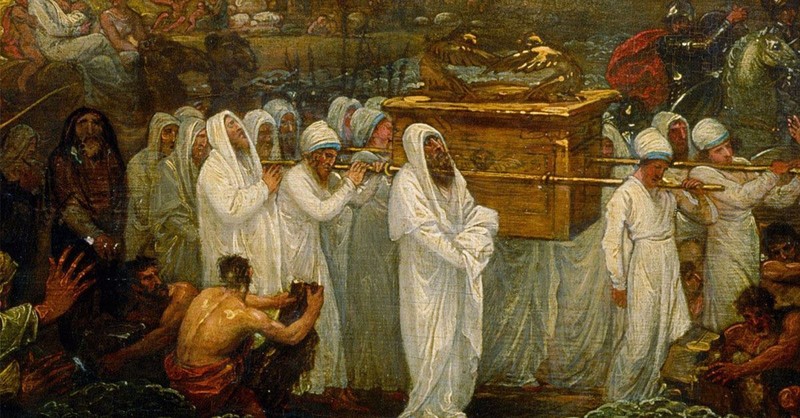
The ancient Jews had in their possession the Ark of the Covenant. It was a box of acacia wood, three cubits by two cubits (a cubit was the distance from a man’s elbow to the tip of his middle finger, or about 18 inches). In the Ark were the stone tablets of the Ten Commandments, the staff of Aaron, and a jar of the Manna. More important, it carried the presence of God! In some ways it resembles our tabernacles. The wings of the angels carved on its lid were said to form the mercy seat of God. Because the Ark sometimes had to be carried by the priests for long distances in the desert, there were two poles attached to its sides.

There came a moment with the Ark that seems to speak directly to our times—really to any moment of crisis or decision.

Early the next morning Joshua got up and left Shittim with all the Israelites. They went as far as the Jordan, where they camped before crossing over. After three days the officers went through the camp and commanded the people: “When you see the ark of the covenant of the LORD your God being carried by the Levitical priests, you are to set out from your positions and follow it…so that you can see the way to go, since we have never been this way before” (Joshua 3:1-4).

The instructions were addressed to a people who faced dangers and threats in this crossing. The Jordan River was in flood stage; the current was swift and the waters wide. Second, once in the Promised Land, they faced formidable enemies who were sure to resist their entrance. So terrifying was this threat that forty years earlier most had balked at the idea of going to the Promised Land. Although God had said that they would endure, they did not trust Him. For this lack of faith, God had them remain in the desert for forty years while He purified and strengthened them; during that time that sinful generation largely died out (Numbers 13:25-33,  Numbers 14:1-25).

Forty years later, the instruction to follow the Ark was both instructive and reassuring. Most simply, it meant: Follow the Lord and trust His power; trust His promise to vanquish foes and to deliver you to the Promised Land.

Today we find ourselves in a crisis of our own. We are struggling to emerge from a pandemic while many are still crippled with fear. We are experiencing a time of great civil unrest rooted in accusations of racial injustice and sinful reactions of looting, destruction of private and public property, and physical assault. Further, the nomination of a Supreme Court Justice has stirred strong feelings nearly across the board. Add to all this an approaching presidential election whose result is likely to be unknown until well after election day and which may be contested regardless of the result.

Yes, we are heading into difficult waters as were the Israelites of long ago. A “flood” of animosity grips our nation. The divisions are so deep that civil discussions are becoming increasingly rare. It is simple, raw power that seeks to prevail. Nietzsche roams our streets.

Though the events are separated by thousands of years, the instruction is the same: Follow the Ark of the Lord, for we have never been this way before. While there have been riots before, and there have been contested elections, we have never had both of those in addition to an unprecedented lockdown amidst a pandemic. The combination of political, racial, economic and health crises makes this arguably the worst time in this country since the 1860s. There are legitimate concerns expressed for the very future of our nation. In our lifetime, we have truly “never been this way before.”

In times like these, draw near to the Lord through prayer, Eucharistic Adoration, the rosary, and the Divine Mercy chaplet. Pour out your heart to God on behalf of our country. Humbly request His mercy and grace. If you are able, consider fasting and/or abstinence.

Uniting our country, recovering from a pandemic, addressing injustice, and stopping violence may not be things we can do on our own. Going to the Lord in humility, combining our prayers with others, and crying out together “Heal our Land, Lord!” will be our way of keeping our eye on the Ark of the Covenant and following where He leads, for, we have never been this way before. Seek the Lord, then, and follow Him.

Job and Suffering

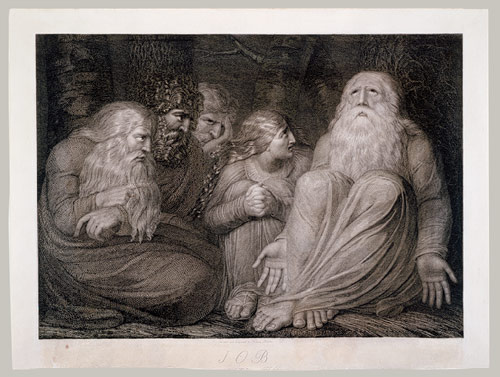
We are beginning to read from the Book of Job in daily Mass. One of its core issues is the problem of suffering and why God allows it. If God is omnipotent and omniscient then how can He tolerate evil, injustice, and suffering of the innocent? Where is God when a woman is raped, when genocide is committed, or when evil men hatch their plots? Why did God even conceive the evil ones and let them be born?

The problem of evil cannot be answered simply; it is a mystery. Its purpose and why God permits it are caught up in our limited vision and understanding. Scripture says that “all things work together for the good of those who love and trust the Lord and are called according to his purposes” (Rom 8:28). But how this is often difficult for us to see. Anyone who has ever suffered a tragic and senseless loss or has observed the disproportionate suffering that some must endure cannot help but ask why. And the answers aren’t all that satisfying to many.

As in the days of Job, we cry out for answers but few are forthcoming. In the Book of Job, God speaks from a whirlwind, questioning Job’s ability to even ask the right questions. In the end, though, He is God and we are not. This must be enough for us and we must look with trust to the reward that awaits the faithful.

One of the most perplexing aspects of suffering is its uneven distribution. In America as a whole, there is much less suffering than in many other parts of the world. And even here, some go through life strong, wealthy, and well-fed while others suffer crippling disease, sudden losses, financial setbacks, and burdens. And while a lot of our suffering comes from our own poor choices and/or lack of self-control, some of it seems unrelated. The most difficult suffering to accept is that inflicted on the innocent by third parties who seem to suffer no ill effects: parents who mistreat or neglect their children, those who exploit the poor or unsuspecting for their own gain exploited, etc.

Suffering is hard to explain simply or to merely accept. I think this just has to be admitted. Simple slogans and quick answers are seldom sufficient in the face of great evil and suffering. When interacting with those who are deeply disturbed by the problem of evil, a healthy dose of sympathy, understanding, and a call to humility will be more fruitful than forceful rebuttal.

A respectful exposition of the Christian understanding of evil might include some of the following points. (Note that these are not explanations per se (for suffering is a great mystery) and they are humble for they admit of their own limits.)

  1. The Scriptures teach that God created a world that was as a paradise. Although we only get a brief glimpse of the Garden of Eden, it seems clear that death and suffering were not part of it and that Adam and Eve caused their entry, despite being warned that this would be the result of eating from the forbidden tree.
  2. Even in Eden the serpent coiled from the branch of a tree called the Tree of the Knowledge of Good and Evil. So even in paradise the mystery of evil lurked.
  3. In a way, the tree and the serpent had to be there. We were made to love; love requires freedom; and freedom requires choice. The yes of love must permit of the no of sin. In our rebellious no both we and the world unraveled, ushering in death and chaos. Paradise was lost and a far more hostile and unpredictable world remained. From this fact came all of the suffering and evil we endure. Our sins alone cause an enormous amount of suffering on this earth, the vast majority of it by my reckoning. The suffering caused by natural phenomena is also linked to sin—Original Sin, wherein we preferred to reign in a hellish imitation rather than to serve in the real paradise.
  4. The link between human freedom and evil/suffering also explains God’s usual non-intervention in evil matters. To do so routinely would make an abstraction of human freedom and thus remove a central pillar of love. But there is mystery here, too, for the Scriptures frequently recount how God did intervene to put an end to evil plots, to turn back wars, and to shorten famines and plagues. Why does He sometimes intervene and sometimes not? Why do prayers of deliverance sometimes get answered and sometimes not? Here, too, there is a mystery of providence.
  5. The lengthiest Biblical treatise on suffering is the Book of Job. There, God shows an almost shocking lack of sympathy for Job’s questions and sets a lengthy foundation for the conclusion that the mind of man is simply incapable of seeing into the depths of this problem. God saw fit to test Job’s faith and strengthen it. In the end Job is restored and re-established with even greater blessings; it is a kind of foretaste of what is meant by Heaven.
  6. The First Letter of Peter also explains suffering in this way: In this you rejoice, although now for a little while you may have to suffer through various trials, so that the genuineness of your faith, more precious than gold that is perishable even though tested by fire, may prove to be for praise, glory, and honor at the revelation of Jesus Christ (1 Peter 1:6-7). In other words, our sufferings purify us and prepare us to meet God.
  7. Does this mean that those who suffer more are in need of more purification? Not necessarily. It could also mean that greater glory is awaiting them. The Scriptures teach, Therefore, we are not discouraged; rather, although our outer self is wasting away, our inner self is being renewed day by day. For this momentary light affliction is producing for us an eternal weight of glory beyond all comparison (2 Cor 4:16-17). Hence suffering “produces” glory in the world to come. Those who suffer more, but endure it with faith, will have greater glory in the world to come.
  8. Regarding the apparent injustice of uneven suffering it will be noted that the Scriptures teach of a great reversal when many who are last shall be first (Mat 20:16), when the mighty will be cast down and the lowly exalted, when the rich will go away empty and poor be filled (Luke 1:52-53). In this sense, it is not necessarily a blessing to be rich and well-fed, unaccustomed to suffering. The only chance the rich and well-heeled have to avoid this is to be generous and kind to the poor and those who suffer (1 Tim 6:17-18).
  9. As to God’s apparent insensitivity to suffering, we can only point to Christ, who did not exempt Himself from the suffering we caused by leaving Eden. He suffered mightily and unjustly but also showed that this would be a way home to paradise.

I’m sure you can add to these points. Be careful with the problem of evil and suffering; there are mysterious dimensions that must be respected. The best approach in talking to others may be with an exposition that shows forth the Christian struggle to come to grips with it. The “answer” of Scripture requires faith, but the answer appeals to reason. Justice calls us to humility before a great mystery of which we can see only a little. The appeal to humility in the face of a mystery may command greater respect from an atheist than would “pat” answers, which could alienate them.

God Can Use Anything, but He Shouldn’t Have to – A Homily for the 26th Sunday of the Year


In understanding Sunday’s Gospel, we cannot overlook the audience Jesus was addressing. The text begins, Jesus said to the chief priests and elders of the people …. In other words, He was addressing the religious leaders and religiously observant of His day. He calls at least three things to their attention, three common sins of the pious, if you will: lost connections, leaping to conclusions and lip service.

Let’s look at each of these in turn, remembering that although they are not exclusive to the religiously observant, they are considered in that context. Let’s also learn how they are particularly problematic when it comes to our mandate to hand on the faith through evangelization.

I. Lost Connections

The text says, A man had two sons. It goes on to describe these two sons as very different yet also quite similar. The man, of course, is God; we are the sons. Although we are all very different, we all have the same Father and we all have sin. A man had two sons is another way of saying that the sons had the same father. Yes, we all have a connection we cannot deny, whatever our differences.

Why emphasize this? Because it is too easy for us to try to sever the link we have with one another, to effect a kind of divorce from people we fear or do not like. For example, on the way to Mass we may drive past tough parts of town and see drug dealers, prostitutes, groups of young men loitering near liquor stores, and other outwardly troubled or rebellious people. It is easy to be cynical and say, “Some people’s children!” or “Look at that; how awful.” Or we may simply ignore them. Yet in doing this we fail to recall that these are my brothers and sisters. So easily we can dismiss them, write them off, separate ourselves from them. But God may have a question for us: “Where is your brother?” (Gen 4:9)

Yes, there are many people whom we try to disown. Perhaps they are of a different political party, economic class, or race. Perhaps we just don’t like them. We divide, but God unites. A man had two sons. Yes, they were different, but he was father to them both; he loved them both. He spoke to them and called them his sons.

In terms of evangelization, remember that Jesus sent us to all the nations. No longer were Israel and the Gentiles to be separated, the one considered chosen people and the other not. Hence the Church is catholic, universal, seeking to unite all. A man had two sons, but the two sons had one father. In seeking to evangelize, has it ever occurred to you that the least likely member of your family could be the one whom God most wants you to reach? Be careful of lost connections, for souls can be lost.

II. Leaping to Conclusions

A second “sin of the pious” is leaping to the conclusion that someone is irredeemably lost, writing someone. Many of the Scribes and Pharisees, the religiously observant of their day, had done just this with a large segment of the population. Rather than to going out and working among them to preach the Word and to teach the observance of the Law, many of them simply labeled the crowds “sinners” and dismissed them as lost. In fact, they were shocked that Jesus “welcomed sinners and ate with them” (e.g., Lk 15:2). In effect, Jesus says to them, “Not so fast. Don’t leap to conclusions or write anyone off. Sick people need a doctor. I have come to be their divine physician and to heal many of them.”

Thus Jesus, in today’s parable, speaks of a sinner who repents: [The Father] came to the first and said, “Son, go out and work in the vineyard today.” He said in reply, “I will not,” but afterwards changed his mind and went.

The point is that we just don’t know about people. We should be very careful not to write people off, even those who appear to be locked in very serious and sinful patterns or who seem to be hostile to God. The example of St. Paul should certainly give us hope, as should that of St. Augustine. St. Augustine wrote well on the fact that we just don’t know how things will turn out with people.

For what man can judge rightly concerning another? Our whole daily life is filled with rash judgments. He of whom we had despaired is converted suddenly and becomes very good. He from whom we had expected a great deal fails and becomes very bad. Neither our fear nor our hope is certain. What any man is today, that man scarcely know. Still in some way he does know. What he will be tomorrow however, he does not know (Sermo 46, 25).

Scripture also says, The oppressed often rise to a throne, and some that none would consider, wear a crown. The exalted often fall into utter disgrace; … Call no man happy before his death, for by how he ends, a man is known (Sirach 11:5-6, 28).

I man I knew (now deceased) once told me his story: He was raised in the Church, got all his Sacraments, went to Church regularly, and was a God-fearing man. In his early forties, though, he descended into alcoholism, began to be unfaithful to his wife, stopped going to Church, and was dismissive of God. Were you or I to have seen him at that time, we might easily have concluded that he was too far gone. When he was in his early sixties, he knows not how (except that someone must have been praying for him) but he pulled out of his rebellion and reentered the vineyard. He sought help for his drinking problem and reconciled with his wife and children. Daily mass, weekly confession, daily rosary, and Stations of the Cross—yes, when he returned, he really returned. He said to me that he had done a lot of sinning and so now it was time to do a lot of praying, to make up for lost time, as he put it. He died a penitent in the bosom of the Church.

You just never know. Don’t write anyone off. Nothing stabs evangelization in the heart more than the presumption that someone is an unlikely candidate for conversion. Keep praying and keep working. Jesus tells us the story of a son who told his father to “buzz off,” but later repented and went into the vineyard. Pray, hope, and work. You just never know. Don’t give up.

Don’t think that anyone is a permanent member of the vineyard, either. Pray, hope, and work even for those who seem well within in the vineyard, even for your own salvation. We all know of former parishioners, even leaders, who later drifted from the faith. St. Paul spoke of how he had a kind of sober vigilance about his own salvation: But I discipline my body and keep it under control, lest after preaching to others I myself should be disqualified (1 Cor 9:27).

III. Lip Service

The text says, The man came to the other son and gave the same order. He said in reply, “Yes, sir,” but did not go.

Consider the second son. He is respectful to his father. When told to go into the vineyard he tells his father that he will do so. He would not dream of cursing his father or addressing him in a strident way. You might say that he was outwardly respectful and religiously observant—a decent sort of fellow.

In the end, though, he doesn’t get around to going to the vineyard. For whatever reason, his obedience to his father was only cursory. His lack of follow-through demonstrates a great danger to the religiously observant: giving God “lip service.” Yes, we will praise the Lord, sing a hymn, shout Hallelujah, and say Amen on Sunday, but come Monday will we obey and go to the vineyard of obedience? Will we forgive those who have wronged us? Will we show generosity to the poor? Will we be chaste and compassionate? Will we love our spouse and children? Will we speak the truth in love, evangelize, and act as God’s prophets?

The greatest sadness of all is that it is our very religious observance (a good and commanded thing to be sure) that often blinds us to our wider disobedience. It is easy (and too common) for the religiously observant person to reduce the faith to rituals and, once the rituals are observed, to check off the “God box.” In effect saying or thinking, “OK, I’ve gone to Mass, paid my tithes, said a few Amens and praised the Lord by singing. Now I’m done.”

“Lip-service Christians” are terrible witnesses and a real blow to evangelization because they are so easy to spot. How on earth can we ever hope to win souls for Christ if people can see that we are just going through the motions, but living lives that are unreformed, and untransformed? Our greatest witness must be a life that is being changed by Jesus Christ, a life that manifests the biblical principles of love, justice, charity, forgiveness, mercy, generosity, and a biblical understanding of sexuality; a life that shows we have a renewed mind and heart.

Now none of us do this perfectly, but pray that God’s transformative power is at work in us and that people can see it in us. There is little that is more destructive to evangelization than phony, lip-service Christians, who give the outward appearance of obedience and religiosity but with no substance behind it. Nothing is more helpful to evangelization than Christians who show lives that are being transformed and made more joyful, serene, and holy.

All of this leads to the title of today’s post: “God can use anything, but He shouldn’t have to.” In other words, although none of us are perfect disciples and God can work through us no matter what—He shouldn’t have to do that.

So in today’s Gospel Jesus points out three powerful obstacles to His grace flowing through us to others: lost connections, leaping to conclusions, and lip service. All of these things lessen our effectiveness as disciples, prophets, and evangelizers sent out to make disciples of all the nations.