The Not-so-Nice Origins and Meanings of the Word “Nice”

Words can change meaning over time—sometimes dramatically. For example, “manufactured” originally meant “handmade” (manu (hand) + facere (make)). The word “decimate” used to mean “to reduce by a tenth” (decem = ten); now people usually use it mean “to wipe out completely.” The list of examples could go on and on. Yes, words do change meaning over time.

One word that has changed meaning dramatically over time is “nice.” Today it is an overused word that usually means pleasant, kind, or easygoing:  “Stop fighting and be nice now!”

But the adjective “nice” once meant anything but nice in the modern sense. Rather, it was a derogatory word used to describe a person as something of a fool.

The word “nice” comes from the Latin nescius, meaning “ignorant, unaware” (ne (not) + scire (know)). The Old French word “nice” (12th century) also came from this Latin root and meant “careless, clumsy, weak, simple, foolish, or stupid.”

In the 13th century, “nice” meant “foolish, stupid, or senseless.” In the 14th century, the word started to morph into meaning “fussy.” In the 15th century it meant “dainty, delicate.” By the 18th century it shifted to meaning “agreeable, delightful.” And by the 19th century it had acquired its current connotation of “kind and thoughtful.”

The word “nice” has certainly had a tortured history!

Given its older meaning of “ignorant, stupid, or foolish,” it is not surprising that the word “nice” is used only twice in the Douay-Rheims Bible, (which was published in the 16th Century) and in both cases the word is used  pejoratively: 

“The man that is nice among you, and very delicate, shall envy his own brother, and his wife, that lieth in his bosom,” [Deuteronomy 28:54]”

But to pursue brevity of speech, and to avoid nice declarations of things, is to be granted to him that maketh an abridgment.”[2 Machabees 2:32]

In the first quote “nice” is likened to an effeminate or dainty man. In the second quote brevity is commended to avoid “nice” (unkowning, erroneous or stupid) speech. So “nice” was not a nice word in the 16th Century.

Today the word can have a meaning that is properly praiseworthy and is basically a synonym for “good.” For example, one might comment, “That was a nice distinction you made.” Or, observing a sporting event, one might say, “That was a nice move!”

However, I am also convinced that the word “nice” is beginning to return to its less noble meanings. This takes place when it is used in a reductionist manner that seeks to simplify the entire moral life to being “nice.” Here, nice is used in the sense of being pleasant and agreeable. To the modern world, in which “pseudo-tolerance” is one of the only “virtues” left, being nice is about the only commandment left. It seems that much will be forgiven a person just so long as he is “nice.” And little will be accepted from a person who is not thought of as “nice.”

I suppose niceness has its place, but being nice is too akin to being harmless, to being someone who introduces no tension and is most often agreeable. As such, a nice person is not so far away from being a pushover, one who is easily manipulated, silenced, and pressured into tacit approval. And thus “nice” begins to move backward into its older meanings: dainty, agreeable, weak, simple, and even further back into weak, simple, unaware, and ignorant.

The pressure to “be nice” easily translates into pressure to put a dumb grin on your face and pretend that things are great even when they’re not. And to the degree that we succumb to this pressure, we allow those who seek to shame us if we aren’t nice get to watch with glee as we walk around with s dumb grin. And they get to think of us, “What an ignorant fool. What a useful idiot.” And thus “nice” takes up its original meaning.

We follow a Lord who was anything but a harmless hippie, or a kind pushover. He introduced tension, was a sign of contradiction, and was opposed by many because he didn’t always say and do pleasant things. Not everything he said was “nice.” He often used strong words: hypocrites, brood of vipers, whitewashed tombs, murderers of the prophets, and evildoers. He warned of judgment and Hell. He spoke in parables about burning cities, doom, destruction, wailing and grinding of teeth, and of seeing enemies slain. These are not kind words, but they are loving words, because they seek to shock us unto conversion. They speak to us of our true state if we remain rebels. Jesus certainly didn’t end up nailed to cross by being nice in any sense of the word.

In the end, “nice” is a weird word. Its meaning has shifted so many times as to be practically without a stable meaning. Today it has further degraded and increasingly returned to its original meaning. Those who insist on the importance of being “nice” usually mean it for you, but not for themselves. They want to have you walk around with a silly grin on your face, being foolishly pleasant, while they laugh behind your back.

To be sure, being “nice” in its best modern sense has its place. We surely should not go around acting like a grouch all day. But just as being nice has its place, so does being insistent, bold, and uncompromising.

Purgatory is Based on a Promise of Jesus’

I have blogged before on Purgatory. Here is a link to one of those blogs: Purgatory – Biblical and Reasonable. I have also written more extensively on its biblical roots here: PDF Document on Purgatory.

On this Feast of All Souls, I want to reflect on Purgatory as the necessary result of a promise. Many people think of Purgatory primarily in terms of punishment, but it is also important to consider it in terms of promise, purity, and perfection. Some of our deceased brethren are having the promises made to them perfected in Purgatory. In the month of November we are especially committed to praying for them and we know by faith that our prayers are of benefit to them.

What is the promise that points to Purgatory? Simply stated, Jesus made the promise in Matthew 5:48: You, therefore, must be perfect as your Heavenly Father is perfect. In this promise is an astonishing declaration of our dignity. We are to share in the very nature and perfection of God. This is our dignity: we are called to reflect and possess the very glory and perfection of God.

St. Catherine of Siena was gifted by the Lord to see a heavenly soul in the state of grace. Her account of it is related in her Dialogue, and is summarized in the Sunday School Teacher’s Explanation of the Baltimore Catechism:

The Soul in the State of GraceCatherine of Siena was permitted by God to see the beauty of a soul in the state of grace. It was so beautiful that she could not look on it; the brightness of that soul dazzled her. Blessed Raymond, her confessor, asked her to describe to him, as far as she was able, the beauty of the soul she had seen. St. Catherine thought of the sweet light of that morning, and of the beautiful colors of the rainbow, but that soul was far more beautiful. She remembered the dazzling beams of the noonday sun, but the light which beamed from that soul was far brighter. She thought of the pure whiteness of the lily and of the fresh snow, but that is only an earthly whiteness. The soul she had seen was bright with the whiteness of Heaven, such as there is not to be found on earth. ” My father,” she answered. “I cannot find anything in this world that can give you the smallest idea of what I have seen. Oh, if you could but see the beauty of a soul in the state of grace, you would sacrifice your life a thousand times for its salvation. I asked the angel who was with me what had made that soul so beautiful, and he answered me, “It is the image and likeness of God in that soul, and the Divine Grace which made it so beautiful.” [1].

Yes, this is our dignity and final destiny if we are faithful to God.

So, I ask you, “Are you there yet?” God has made you a promise. But what if that promise has not yet been fulfilled and you were to die today, without the divine perfection you have been promised having been completed? I can only speak for myself and say that if I were to die today, though I am not aware of any mortal sin, I also know that I am not perfect. I am not even close to being humanly perfect, let alone having the perfection of our heavenly Father!

But Jesus made me a promise: You must be perfect as the heavenly Father is perfect. And the last time I checked, Jesus is a promise keeper! St. Paul says, May God who has begun a good work in you bring it to completion (Phil 1:6). Hence, if I were to die today, Jesus would need to complete a work that He has begun in me. By God’s grace, I have come a mighty long way. But I also have a long way to go. God is very holy and His perfection is beyond imagining.

Yes, there are many things in us that need purging: sin, attachment to sin, clinging to worldly things, and those rough edges to our personality. Likewise most of us carry with us hurts, regrets, sorrows, and disappointments. We cannot take any of this with us to Heaven. If we did, it wouldn’t be Heaven. So the Lord, who is faithful to His promise, will purge all of this from us. The Book of Revelation speaks of Jesus ministering to the dead in that he will wipe every tear from their eyes (Rev 21:4). 1 Corinthians 3:13-15 speaks of us as passing through fire in order that our works be tested so that what is good may be purified and what is worldly may be burned away. And Job said, But he knows the way that I take; and when he has tested me, I will come forth as pure gold (Job 23:10).

Purgatory has to be—gold, pure gold; refined, perfect, pure gold. Purgatory has to be, if God’s promises are to hold.

Catholic theology has always taken seriously God’s promise that we would actually be perfect as the Father is perfect. The righteousness is Jesus’ righteousness, but it actually transforms us and changes us completely in the way that St. Catherine describes. It is a real righteousness, not merely imputed, not merely declared of us by inference. It is not an alien justice, but a personal justice by the grace of God.

Esse quam videri – Purgatory makes sense because the perfection promised to us is real: esse quam videri (to be rather than to seem). We must actually be purged of the last vestiges of imperfection, worldliness, sin, and sorrow. Having been made perfect by the grace of God, we are able to enter Heaven, of which Scripture says, Nothing impure will ever enter it (Rev 21:27). And again, you have approached Mount Zion and the city of the living God, the heavenly Jerusalem, and countless angels in festal gathering, and the assembly of the firstborn enrolled in heaven, and God the judge of all, and the souls of the just made perfect (Heb 12:22-23).

How could it be anything less? Indeed, the souls of the just made perfect. How could it be anything less if Jesus died to accomplish it for us? Purgatory makes sense based on Jesus’ promise and on the power of His blood to accomplish complete and total perfection for us. This is our dignity; this is our destiny. Purgatory is about promises, not mere punishment. There’s an old Gospel hymn that I referenced in yesterday’s blog for the Feast of All Saints that says, “O Lord I’m running, trying to make a hundred. Ninety-nine and a half won’t do!”

That’s right, ninety-nine and a half won’t do. Nothing less than a hundred is possible because we have Jesus’ promise and the wonderful working power of the precious Blood of the Lamb. For most, if not all of us, Purgatory has to be.

Ninety-Nine and a Half Won’t Do—A Homily for the Feast of All Saints

Today is the Feast of All Saints. Some saints of the Church have a particular day on the calendar associated with them and are commonly recognized by name. Many more, though not as familiar to us, are still known by God and have been caught up with Him to glory. Today is their day, the day of the countless multitude who have made it home to glory by God’s grace and by their “Amen” to the gracious call of God. Let’s consider these saints under three headings, based on today’s readings.

Their Privileged Place: The first reading today, from Revelation, speaks to us of saints: from every nation, race, people, and tongue. They stood before the throne and before the Lamb, wearing white robes and holding palm branches in their hands. They cry out in a loud voice, “Salvation comes from our God, who is seated on the throne, and from the Lamb.”…They prostrated themselves before the throne, worshiped God, and exclaimed, “Amen. Blessing and glory, wisdom and thanksgiving, honor, power, and might be to our God forever and ever. Amen.”

Note how liturgical the description is.In fact, the most common way that Heaven is described is in liturgical imagery. The liturgy is a kind of dress rehearsal for Heaven. To those who claim that Mass “boring,” this description can be challenging.

Indeed, many people today have rather egocentric notions of Heaven.Heaven is a place where Iwill be happy, where Iwill see myfamily, where Iwill take leisure. Iwill have mymansion; Iwill no longer get sick; Ican play all the golf I want. Heaven is a “better place,” but this better place is generally understood in personal terms; it’s a kind of designer Heaven. But Heaven is what it is, not what we want or conceive it to be.

At the heart of the real Heaven is being with God,looking upon His glorious face and thereby having all our inexpressible longings satisfied. In Heaven, the saints behold the glorious face of God and rejoice. It is their joy to praise Him and to rejoice in His truth, goodness, and beauty.

Note, too, the sense of communion of the saints with both God and one another.The biblical portraits are of a multitude, a vast crowd. The biblical way to understand the multitudes in Heaven is not to envision physical crowding but rather deep communion. In other words, the Communion of Saints is not just a bunch of people standing around chatting.

St. Paul teaches, So we, who are many, are one body in Christ, and individually members, one of another(Rom 12:5). Although we experience this imperfectly here on earth, we will experience it perfectly in Heaven. As members of one another, we will have profound communion, knowing and being known in a deep and rich way. Your memories, gifts, and insights will be mine and mine will be yours. There will be profound understanding and appreciation, a rich love, and sense of how we all complete one another and are one in Christ.

Imagine the glory of billions of new thoughts, stories, and insights that will come from being perfectly members of Christand of one another. Imagine the peace that will come from understanding and being understood. This is deep, satisfying, wonderful communion—not crowds of strangers.

St. Augustine had in mind the wonderful satisfaction of this deep communion with Godand one another in Christ when he described Heaven as Unus Christus amans seipsum (One Christ loving Himself). This is not some selfish Christ turned in on Himself. This is Christ, the Head, in deep communion with all the members of His body. This is all the members in Christ experiencing deep, mystical communion with Him and one another, all swept up into the life of the Trinity. Again, as St. Paul says, and you are Christ’s, and Christ is God’s(1 Cor 3:23).

TheirPrize of Perfection: The second reading, from the First Letter of John, says, Beloved, we are God’s children now; what we shall be has not yet been revealed. We do know that when it is revealed we shall be like him, for we shall see him as he is.

We cannot even imagine the glory of the saints in Heaven. Our Heavenly Father once told St. Catherine that if she were ever to see a saint in his or her transformed heavenly glory, she would fall down and worship because she would think she was looking at God Himself.

This is our future, if we are faithful. We will reflect the glory of God and be transformed by the look of love and glory. Just one look, and oh, the glory we will reflect, God’s very own glory!

I gotta make a hundred; ninety-nine and a half won’t do. When God is through with you and me, oh, the glory!

The Picture to Ponder: The Gospel today (the Matthean beatitudes) sets forth a portrait of sanctity. The beatitudes are the description of the transformed human person; they describe what happens to us as Jesus begins to live His life in us through the Holy Spirit.

This picture is not one that merely waits for Heaven; it is one that is true of us even now as we grow into the likeness of Christ.

I have written more on the beatitudes hereand here. For the purpose of today’s feast, we need to acknowledge that a beatitude isnot something we do but rather something we receive. A beatitude declares an objective reality as the result of a divine act.

The present indicative mood of the beatitudes should be taken seriously. They should not be interpreted as imperatives of exhortation, as though Jesus were saying, “Start being meek and thenGod will bless you.” Rather, He is saying that when the transformative power of the cross brings about in us a greater meekness, poverty of spirit, and so forth, we will experience that we are being blessed.

Beatitude is a work of God and results when we yield to His saving work in us. We are blessed when we accept and submit to the work that God alone can do. With this understanding, we see the beatitudes not as a prescription of what we must do per se, but as a description of a human being whom Jesus Christ is transforming into a saint! And this transformation is a growing, stable, deep, and serene beatitude and holiness.

Therefore, today’s feast of all saints does not merely point to the completed saints in Heaven, but to us who would be saints, not just someday in the future but beginning now and in increasing degree.

At the end there will be saints and ain’ts. Which do you choose? As for me, ninety-nine and a half won’t do. I gotta make a hundred.

A Word of Encouragement from Elisha the Prophet For a Difficult Week to Come

There is an old saying, “Stop telling God how big your storm is and start telling the storm how big your God is.”  In other words, we often need to shift our focus, building up our trust and confidence. Because we are so wired for fear, we tend to overestimate the power and shrewdness of demons, or of our enemies, or of whatever it is we fear. At the same time, we tend to underestimate the power of God, the power of our own resources, the strength that God gives us, and the perduring quality of what is good and true.

As we head into what is certain to be a difficult and contentious week (weeks?) ahead we need to draw close to God and trust him, whatever the outcome. There are clearly high stakes in this election but God is not overcome.  Whether in verdant pastures he leads us, or through the Valley of the Shadow of Death, the point is that he leads us.

Whatever our current conflicts, they are caught up into a bigger conflict where we all have a common enemy: satan. St Paul speaks to this in a reading from Thursday of the this 30th Week of the year:

Draw your strength from the Lord and from his mighty power. Put on the armor of God so that you may be able to stand firm against the tactics of the Devil. For our struggle is not with flesh and blood but with the principalities, with the powers, with the cosmic rulers of this present darkness, with the evil spirits in the high places. (Eph 6:10-11)

Yes there is a cosmic battle that gives birth to our worldly ones. Our truest and common enemy is not one another one another, “flesh and blood” as Paul writes, but it is Satan  and his minions. Sadly we allow them to divide us and so a battle rages now in our culture, full of wrath and loud shouting.

In the stormy days to come, of our own making and also of Satan’s making, stay very close to God. Be also encouraged by a  remarkable passage in the Second Book of Kings that draws back the curtain for a moment and shows us a world we seldom see. The passage centers on the prophet Elisha and the King of Syria’s attempt to capture and kill him. Elisha is not worried, but his young assistant (or servant) is quite dismayed by the approaching Syrian army:

When the servant of the man of God rose early in the morning and went out, behold, an army with horses and chariots was all around the city. And the servant said, “Alas, my master! What shall we do?” He said, “Do not be afraid, for those who are with us are more than those who are with them.” Then Elisha prayed and said, “O Lord, please open his eyes that he may see.” So the Lord opened the eyes of the young man, and he saw:  And behold, the mountain was full of horses and chariots of fire all around Elisha (2 Kings 6:15-17).

Yes, for just a moment the mystical curtain is drawn back, and the young servant of Elisha sees that we are not alone in this battle. Indeed, myriad angels, saints, and God Himself engage the battle for us. Elisha reminds us, Those who are with us are more than those who are with them. God’s power far surpasses whatever foolishness of the devil is making the rounds. At times, the city seems surrounded (as Elisha’s servant saw), but Elisha isn’t worried because he sees something else, something far greater and more glorious; he knows where to focus.

To be sure, there is a battle to be fought, but we do not fight it alone. There are a multitude of angels and saints and behold, chariots of fire round about. Lord open our eyes that we may see and understand that we are not alone. Give us the courage to engage the battle with the sword of your word, of your truth! Fix our focus on You, not on the storms of life.

This song in the video below says,

When the oceans rise and thunders roar
I will soar with you above the storm
Father you are king over the flood
I will be still and know you are God

Find rest my soul
In Christ alone
Know his power
In quietness and trust

A Word Picture of the Mission of the Church

The first reading from Wednesday’s Feast of Simon and Jude presents a key feature of the apostolic mission of the Church; it also provides an interesting word study. Here are the key verses:

You are no longer strangers and sojourners, but you are fellow citizens with the holy ones and members of the household of God, built upon the foundation of the Apostles and prophets, with Christ Jesus himself as the capstone (Ephesians 2:19-20).

The highlight of this passage is bringing people out of the status of strangers and sojourners and into the household of God, the Church. There are two Greek words that merit some of attention, and one of them paints a kind of picture of the work of every parish.

The Greek word translated as “strangers” is ξένοι (xenoi). Its primary meaning is “foreigners,” people from somewhere else. It is the root of the English word “xenophobic,” which refers to a fear of foreigners. For our purposes in this verse, the word just refers to those from far away. The word paints a picture of the catholicity of the Church, which is to include people from all nations, both near and far. The mission of the Church is unto all the nations so as by faith and Baptism to get them into the Church, which is the household of God.

The Greek word translated as “sojourners” is πάροικοι (paroikoi). While this translation is not inaccurate, it misses the subtleties of the Greek. There are two Greet roots: pará (close or beside) and oíkos (house). So, it means someone living close by. This is where the English words parochial and parish come from.

Thus, the Greek presents a kind of picture of what a parish is. It is a Church with people living nearby. Parishes have boundaries and the pastor and people are responsible for all the people inside their boundaries: all the people, not just the Catholics! So, the job of the parish (parochia in Latin) is to care for and evangelize all the people living nearby, all those inside its boundaries. The mission of a parish is, to use St. Paul’s image, to get those living nearby into the Household of God (the Church).

This, then, is the apostolic mission of the Church: to bring people from near and far into the Household of God, which is the Church solidly standing on the foundation of the Apostles with Christ as the great cornerstone or keystone on which all lean. These two Greek words present a kind of word picture that can assist us in perceiving our mission near and far!

A Reminder that Fornication is a Serious Sin that Can Exclude Us From Heaven

The epistle from Monday’s daily Mass (30th Week of the Year) contains an admonition against unchastity. This grave warning is essential in times like these, when many call good or “no big deal” what God calls sinful. This is especially true in the realm of sexuality; entire sectors of society not only tolerate but even celebrate sexual practices that Scripture calls gravely sinful and that will lead to Hell if not repented of. Homosexual acts, fornication, and adultery cannot be considered allowable by any Catholic or any person who sincerely accepts Scripture as the Word of God. Even those who do not share our faith should be able to observe the damage these acts cause: they spread disease, harm marriages and families, subject children to less-than-ideal households (e.g., single mother/absent father), and lead to abortion. Regarding the Pope’s recent remarks on same-sex union, I have written on that here at the National Catholic Register. On account of those remarks it seems necessary review once again important  teachings here and on the EWTN Morning Glory radio show.  

In today’s post I will focus on the sin of fornication and present the clear biblical teaching against it. Sadly, many Catholics report that little to nothing is heard from the pulpit or in the classroom about this issue. The hope in this post today is to present a resounding, biblical trumpet call to purity that leaves no doubt as to the sinfulness of sex before marriage. Scripture is clear: fornicators will not inherit the Kingdom of God. That is to say, fornication is a mortal sin and those who do not repent of it will go to Hell.

The usual conditions for mortal sin apply (grave matter, sufficient reflection, and full consent of the will). In most situations, these conditions are met. Over the years I have met with many sexually active couples preparing for marriage and have never found them to be surprised that I rebuke them for this. They know it is wrong; the voice of God echoes in their consciences. As for consent of the will, although some fall occasionally in a weak moment, consistent fornicating with no measures taken to prevent it (e.g., not cohabitating) is not weakness; it is sinful neglect of prudence and common sense.

We are in a sinfully confused cultural setting in which many either celebrate or make little effort to avoid what God calls serious sin. The Church must not lack clarity, yet pulpits and classrooms have often been silent. This has led to parents themselves to be silent—and silence is often taken as tacit approval.

Fornication cannot be approved of. It is sinful and excludes unrepentant sinners from Heaven. Our charity for souls compels our clarity about the grave sinfulness of premarital sex.

The following passages from the New Testament clearly condemn fornication and other unclean or impure acts. The gravity and clarity of such condemnations are helpful in the sense that they help us to take such matters seriously and steer clear of them. However, the condemnations should not be seen in isolation from God’s mercy, as He never fails to forgive those who come to Him with a humble and contrite heart. God hates sin, but He loves sinners and is full of mercy and compassion for them. This mercy must be accessed through repentance, however.

There is a general requirement for sexual purity.

Among you there must not be even a hint of sexual immorality, or of any kind of impurity, or of greed, because these are improper for God’s holy people. Nor should there be obscenity, foolish talk or crude joking, which are out of place, but rather thanksgiving. For of this you can be sure: No fornicator, no impure or greedy person—such a man is an idolater—has any inheritance in the kingdom of Christ and of God. Let no one deceive you with worthless arguments. These are sins that bring God’s wrath down upon the disobedient; therefore, have nothing to do with them (Ephesians 5:3-7).

Unrepentant fornicators are excluded from the kingdom.

The one who sat on the throne said to me, “See I make all things new!” Then he said, “Write these matters down for the words are trustworthy and true!” He went on to say: “These words are already fulfilled! I am the alpha and the omega, the beginning and the end. To anyone who thirsts I will give to drink without cost from the spring of life-giving water. He who wins the victory shall inherit these gifts and he shall be my son. As for the cowards and traitors to the faith, the depraved and murderers, the fornicators and sorcerers, the idol-worshipers and deceivers of every sort—their lot is the fiery pool of burning sulphur, the second death!” (Revelation 21:5-8)

Happy are they who wash their robes so as to have free access to the tree of life and enter the city through its gates! Outside are the dogs and sorcerers, the fornicators and murderers, the idol-worshipers and all who love falsehood. It is I Jesus who have sent my angel to give you this testimony about the Churches (Rev. 22:14-16).

No fornicator, no impure or greedy person—such a man is an idolater—has any inheritance in the kingdom of Christ and of God (Eph 5:5).

I warn you, as I have warned you before: those who do such things shall not inherit the kingdom of God! (Gal 5:21)

Sins of the flesh crush the spirit within us.

My point is that you should live in accord with the Spirit and you will not yield to the cravings of the flesh. The Flesh lusts against the spirit and the spirit against the flesh; the two are directly opposed. This is why you do not do what your will intends. If you are guided by the spirit you are not under the law. The acts of the sinful nature are obvious: sexual immorality, impurity and debauchery, idolatry, sorcery, hostilities, bickering jealousy, outbursts of rage, selfish rivalries, dissensions, factions, envy, drunkenness, orgies and the like. I warn you, as I have warned you before: those who do such things shall not inherit the kingdom of God! (Galatians 5:16-21)

Even our thought life is summoned to purity.

You have heard the commandment “You shall not commit adultery.” What I say you to is, Anyone who looks lustfully at a woman has already committed adultery with her in his thoughts. If your right eye is your trouble, gouge it out and throw it away! Better to lose part of your body than to have it all cast into Gehenna. Again, if your right hand is your trouble, cut it off and throw it away! Better to lose part of your body than to have it all cast into Gehenna (Matthew 5:27-30).

From the mind stem evil designs—murder, adulterous conduct, fornication, stealing, false witness, blasphemy. These are the things that make a man impure (Matt. 15:19-20).

Wicked designs come from the deep recesses of the heart: acts of fornication, theft, murder, adulterous conduct, greed, maliciousness, deceit, sensuality, envy, blasphemy, arrogance, an obtuse spirit. All these evils come from within and render a man impure (Mark 7:21).

Sexual impurity is a form of worldliness and idolatry.

Put to death whatever in your nature is rooted in earth: fornication, uncleanness, passion, evil desires and that lust which is idolatry. These are sins which provoke God’s wrath (Colossians 3:5-6).

My body is not my own to do with merely as I please.

Can you not realize that the unholy will not fall heir to the Kingdom of God? Do not deceive yourselves: no fornicators, idolaters, or adulterers, no sodomites, thieves, misers, or drunkards, no slanderers or robbers will inherit the kingdom of God. And such were some of you; but you have been washed, consecrated, justified in the name of our Lord Jesus Christ and in the Spirit of our God. Do you not see that your bodies are members of Christ? Would you have me take Christ’s members and make them members of a prostitute? God forbid! Can you not see that the man who is joined to a prostitute becomes one body with her? Scripture says, “The two shall become one flesh.” But whoever is joined to the Lord becomes one spirit with him. Shun lewd conduct. Every other sin a man commits is outside of his body, but the fornicator sins against his own body. You must know that your body is a temple of the Holy Spirit, who is within – the Spirit you have received from God. You are not your own. You have been purchased at a price. So, glorify God in your body (I Cor. 6:9-11, 15-20).

The call to Christian purity is not merely a human opinion; it is God’s declared truth. Further, sexual sin is a form of injustice.

Now my brothers, we beg and exhort you in the Lord Jesus that, even as you learned from us how to conduct yourselves in a way pleasing to God—which you are indeed doing—so you must learn to make still greater progress. You know the instructions we gave you in the Lord Jesus. It is God’s will that you grow in holiness: that you abstain from sexual immorality, each of you guarding his member in sanctity and honor, not in passionate desire as do the Gentiles who know not God; and that each must refrain from overreaching or cheating his brother in the matter at hand; for the Lord is the avenger of all such things, as we once indicated to you by our testimony. God has not called us to sexual immorality but to holiness; hence whoever rejects these instructions rejects, not man, but God who sends the Holy Spirit upon you (I Thess. 4:1-8).

Fornication and other sexual sins are numbered among the more serious sins.

We know that the Law is good, provided one uses it in the way law is supposed to be used—that is, with the understanding that it is aimed, not at good men but at the lawless and unruly, the irreligious and the sinful, the wicked and the godless, men who kill their fathers or mothers, murderers, fornicators, sexual perverts, kidnappers, liars, perjurers, and those who in other ways flout the sound teaching that pertains to the glorious gospel of God—blessed be he—with which I have been entrusted (1 Timothy 1:8-11).

Fornication and adultery dishonor marriage.

Let marriage be honored in every way and the marriage bed be kept undefiled, for God will judge fornicators and adulterers (Heb 13:4).

Therefore, do not be deceived. Fornication is a serious sin, a mortal sin. It is a sin that excludes one who does not repent of it from Heaven. It offends God, harms marriage and the family, spreads disease, encourages abortion, is an injustice to children and society, and dishonors marriage. It merits strong punishment, as God’s Word declares.

Do not despair of God’s mercy but do repent. Mercy is accessed only through repentance. It is wrong—seriously wrong—to fornicate. Repent without delay.

The Gospel, Standing on One Foot – A Homily for the 30th Sunday of the Year

There was an expression common among the rabbis of Jesus’ time, wherein one rabbi would ask another a question, and request that the answer be given while “standing on one foot.” This is a way of saying, be brief in your answer.

That idea may be behind the question that is raised in today’s Gospel by the scholar of law, who asks, “Teacher, which commandment in the law is the greatest?”

The text says that he asks this question of Jesus in order to “test” Him. In effect, he says to Jesus, “All right, let’s get right to the point. You’re talking about a lot of new things, but what is the greatest commandment?”

For this reflection, though, let’s just set aside the background hostilities and allow Jesus to recite the law, standing on one foot. In responding, Jesus recites the traditional Jewish Shema:

שְׁמַע יִשְׂרָאֵל יְהוָה אֱלֹהֵינוּ יְהוָה אֶחָד. Šĕmaʿ Yisĕrāʾel Ădōnāy Ĕlōhênû Ădōnāy eḥād. Hear, O Israel, the Lord is our God, the Lord is One.

The fuller text recited by Jesus is from Deuteronomy:

Hear, O Israel: The Lord our God, the Lord is one. Love the Lord your God with all your heart and with all your soul and with all your strength. These commandments that I give you today are to be upon your hearts (Deut 6:4-6).

Jesus then adds, also in common Rabbinic tradition, And the second is like it, love your neighbor as yourself. The whole law and the prophets depend on these two commandments.

That’s it—the whole law, standing on one foot. The first table of the law (the first three commandments): love the Lord your God. The second table of the law (commandments 4-10): love your neighbor.

There is value in noting several aspects of this summary:

  • The Leadership of Love – Jesus says that the whole law and the prophets depend on the command to love God and your neighbor. Love comes first and is the foundation, the power of the law. Jesus says elsewhere, “If you love me, you will keep my commandments” (John 14:15). In other words, it is love that enables us to keep the law. When we want to do something, then the doing is both joyful and in some sense effortless. Love changes our desires so that we want what God wants and we keep His law not because we have to but because we want to.
  • The Layers of Love – The text says we should love God with our heart, our soul and our mind. These layers of our existence encompass the whole of the interior person. Thus:
    • Mind – Through love we come to a new mind, that is, a new way of thinking.
    • Heart – Through love we receive a new heart; our desires are reformed and conformed to God.
    • Soul – Through love we receive a new soul. We begin to live a whole new life because the soul is the life-giving principle of the body.
  • The Lavishness of Love – Note the use of little word all. We love the Lord with all our heart, all our mind, and all our soul. When we love, we are not minimalists; we are lavish. Our response to God is wholehearted, not perfunctory. Love does not ask, What is the least I can do? Love asks, What more can I do?

It is said that Rabbi Hillel (110 B.C. – 10 A.D.), being even briefer, said of the second table of the law, “Do not do unto others that which you would hate done unto yourself … all the rest is commentary.”

We like to make it more complicated, but it really isn’t. If elaboration is required, consider the Ten Commandments, understood and expressed in the light of love:

  • I love no other gods. If I really love God, should I need separate laws that tell me that I ought not to put other gods, whether things or people, ahead of Him? No! I want to be faithful and would never dream of being unfaithful by “sleeping with other gods” of any kind.
  • I love His name. I do not need rules that forbid me from using God’s name hatefully or in vain and empty ways. I love His name; hearing it lights up my heart with love.
  • I love to praise Him. If I love God, I do not need to be compelled by law or fear to come to Mass on Sunday and worship Him. I want to worship Him and praise His name.
  • I love my family, Church, and country. If this is so, then I do not need to be told to revere those who have lawful authority in those places. I love my family; I am willing to honor, revere, and pray for them. I also love my Church and willingly love her leaders and pray for them. I follow the teaching of the Church with joy, trusting that I am hearing the voice of the Lord, who teaches me through the Church. I love my country and pray for our leaders, that God may uphold and guide them. I willingly follow all just laws and work for unity based in truth and for the common good.
  • I love my neighbors. If so, why would I want to kill them, whether physically, emotionally, or spiritually? If I love others, I revere their life and act in ways that build them up, encouraging them and helping them to have a richer, more abundant life rooted in the truth. I would never act recklessly to endanger any of them because I love them.
  • I love human life. If I love my neighbors, why would I tempt them or exploit them sexually? If I love the human family, why would I endanger it by treating lightly the great sacredness of human sexuality by which God calls us into existence? Why would I want to look at pornography or laugh at crude jokes that demean something so sacred? If I love others, why would I want to gratify myself at their expense?
  • I love others by respecting what is rightfully theirs. If I love others, why would I wish to steal from them, to harm or endanger what belongs to them, or to deprive them of what is rightfully theirs? Why would I be unjust to others by refusing them just wages? Why would I be unjust to the poor by refusing to help them when it is within my ability to do so? If I have two coats one of them justly belongs to the poor. If I love others why would I steal or act unjustly? I want to help them and am glad when they are blessed. I respect what they rightfully have and share in their joy.
  • I speak the truth in love. Why would I lie to those whom I love? Why would I seek to harm their reputations or gossip about them? Why would I pass on hurtful things that I don’t even know to be true? Why would I fail to share with them the truth in love? Love rejoices in the truth; why would I lie or suppress the truth?
  • I rejoice in the good fortune of others. If I love others why would I seek to possess what they have or resent them for what they do have? I love them and am happy for them. Perhaps their blessings mean that I too will be blessed.
  • I reverence the families of others. Why would I ever seek to harm the marriage or family of another or resent the gift he has in his spouse and family? I am happy for his blessings. I am happy that my friend has a loving wife and well-behaved children. Out of love, I seek to encourage him to rejoice in his gifts!

So it all comes down to love. Love rejoices in God. Love wants whatever God wants. Love rejoices in others and wants what is best for them.

Love is the key, but many of us struggle to love. God can give us a new heart, one that starts loving Him, fully and freely; one that has a deep love—even affection—for everyone. God will do that for us if we want it.

I will give you a new heart and put a new spirit in you; I will remove from you your heart of stone and give you a heart of flesh. And I will put my Spirit in you and move you to follow my decrees and be careful to keep my laws (Ez 36:26-27).

A thousand questions and doubts may come to mind when we are called to love. Even when we love, we cannot always say yes. Love sometimes must say no; love cannot approve of everything. Love must sometimes correct and reprove. In the end, people know whether you love them or not and they know whether you love God or not. If people know of your love for them and experience it, it is possible for them to receive even the difficult and challenging things you say. Yes, all these doubts and questions are answered by love.

Now I ought to stop, because if Jesus gives the “standing on one foot,” then the preacher must be brief as well. You and I like to complicate things and ask a lot of questions, but the answer is simple enough: love. Yes, all the rest is mere commentary.

This song reminds us that to love God is, first of all, to experience powerfully His love for us. One day it will finally dawn on us that the Lord died for us.

The Lord Is Eager to Engage the Battle; Are You?

The Gospel for Thursday of the 29th Week of the Year speaks of a great cosmic battle taking place all around us. In it, Jesus speaks of His mission to engage our ancient foe and to gather God’s elect back from the enslaving clutches of Satan, who was a murderer and a liar from the beginning (cf John 8:44).

Jesus is approaching Jerusalem for the final time and describes the battle that is about to unfold. It is a battle He wins at the cross and with His resurrection, but it is one whose parameters extend across time to our own era.

Let’s consider Jesus’ description of the cosmic battle and of His mission as the great Shepherd of the sheep and the Lord of armies.

A Passion to Purify – Jesus begins by saying, I have come to set the earth on fire, and how I wish it were already blazing!

Fire is both powerful and transformative. It gives warmth and makes food palatable, but it also consumes and destroys. Nothing goes away from fire unchanged!

The Lord has come to purify us by the fiery power of His love, His grace, and His Word. He has a passion to set things right.

Purification is seldom easy or painless, though, hence the image of fire. In this great cosmic battle, fire must be cast upon the earth not only to purify but to distinguish. There are things that will be made pure but only if other things are burned away and reduced to ashes.

This image of fire is important because many people today have reduced faith to seeking enrichment and blessings. Faith surely supplies these, but it also demands that we take up our cross and follow Christ without compromise. Many if not most enrichment and blessings come through the fiery purification of God’s grace, which burns away sin and purifies us of our adulterous relationship with this world. Fire incites, demands, and causes change—and change is never easy.

Therefore, Jesus announces the fire by which He will judge and purify this earth and all on it, rescuing us from the power of the evil one.

This is no campfire around which we sit singing songs. Jesus describes it as a blaze that must set the whole world on fire!

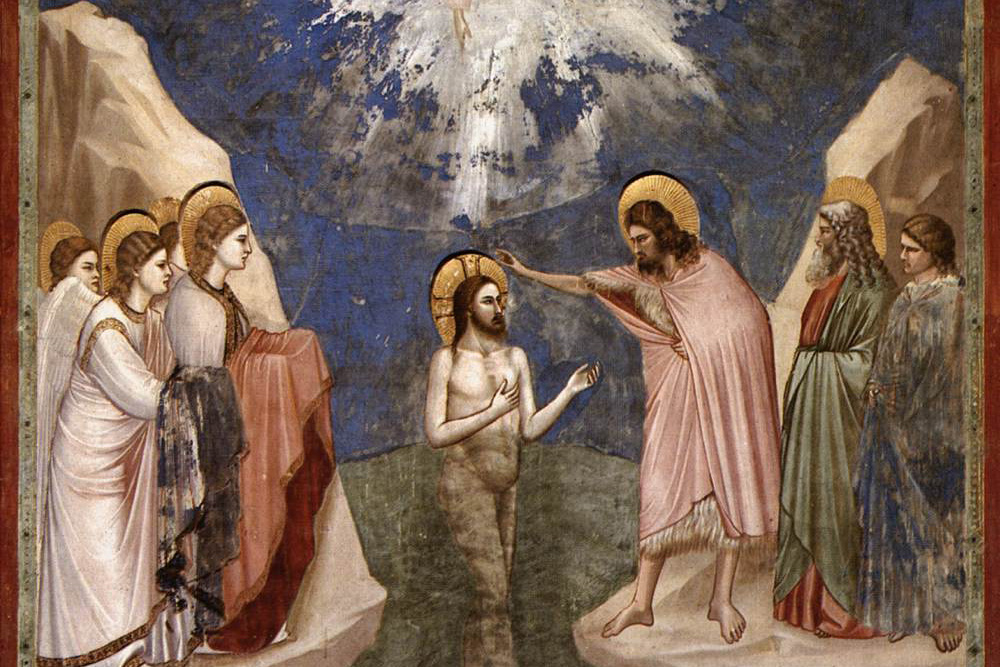
How do you get ready for fire? By letting the Lord set you on fire! John the Baptist promised of the Lord, He will baptize you with the Holy Spirit and fire (Matt 3:11). Indeed, the Lord sent forth His Spirit on the early Church as tongues of fire (cf Acts 2:3) to bring them up to the temperature of glory and to prepare them for the coming judgment of the world by fire.

The battle is engaged. Choose sides. If you think you can remain neutral or stand on some middle ground, I’ve got news for you about which side you’re really on. No third way is given. You’re either on the ark or you’re not. You’re either letting the fire purify you or you’re being reduced to ashes. You’re either on fire by God’s grace (and thereby ready for the coming judgment of the world by fire) or you’re not. The choice is yours. Jesus is passionate to set things right. He has come to cast fire upon the earth.

A Painful Path The text says, There is a baptism with which I must be baptized, and how great is my anguish until it is accomplished!

The Lord does not come among us merely come to get us out of trouble but to get into trouble with us. Though sinless, Jesus takes upon Himself the full weight of human sinfulness and manfully carries it to the cross. He accepts a “baptism” in His own blood on our behalf.

In waging war on our behalf against the evil one, Jesus does not sit in some comfortable headquarters behind the front lines; He goes out “on point,” taking the hill of Calvary and leading us over the top to the resurrection glory. He endures every blow, every hardship on our behalf.

Through His wounds we are healed by being baptized in the very blood and water He shed in the great cosmic war.

It is a painful path He trod, and He speaks of His anguish in doing it, but having won the victory He now turns to us and invites us to follow Him through the cross to glory.

The choice to follow is ours. In this sense the cosmic battle continues, as Jesus describes in the verses that follow.

A Piercing Purgation – In words that are nothing less than shocking, the Lord says, Do you think that I have come to establish peace on the earth? No, I tell you, but rather division. From now on a household of five will be divided, three against two and two against three; a father will be divided against his son and a son against his father, a mother against her daughter and a daughter against her mother, a mother-in-law against her daughter-in-law and a daughter-in-law against her mother-in-law.

The words shock but they speak a truth that sets aside worldly notions of compromise and coexistence with evil. For there to be true peace, holiness, and victory over Satan, there must be distinction not equivocation, clarity not compromise. Fire and water do not mix; you can hear the conflict when they come together: hissing, popping, searing, and steaming. One must win; the other must lose. Compromise and coexistence are not possible.

The Lord said (in Matthew 10:34) that He came not for peace but for the sword. In this there is a kind of analogy to a surgeon’s scalpel. The surgeon must wield this “sword” to separate out healthy flesh from that which is diseased. Coexistence is not possible; the diseased flesh must go. The moment one talks of “coexisting” with cancer, the disease wins. Were a doctor to take this stance he would be guilty of malpractice. When there is cancer, the battle must be engaged.

Thus, in this great cosmic battle, the Lord cannot and will not tolerate a false peace based on compromise or an accepting coexistence. He has come to wield a sword, to divide. Many moderns do not like it, but Scripture is clear: there are wheat and tares, sheep and goats, those on the Lord’s right and those on His left, the just and wicked, the lowly and the proud, the narrow road to salvation and the wide road to damnation.

These distinctions, these divisions, extend into our very families, into our most intimate relationships. This is the battle. There are two armies, two camps. No third way is given. Jesus says elsewhere, Whoever is not with me is against me, and whoever does not gather with me scatters (Matt 12:30).

About all this we must be sober and must work for our own salvation and the salvation of all, for while there may not be a season of mercy and patience now, the time is short for us all. The distinction between good and evil, righteousness and sin, will be definitive and the sword must be wielded.

Thus, the Lord speaks to us of a cosmic battle in the valley of decision (cf Joel 3). Jesus has won, and it is time to choose sides. Even if our own family members reject us, we must choose the Lord. The cosmic battle is engaged. The fire is cast, and the sword of the Spirit and God’s Word is being wielded. The Lord has come to divide the good from the wicked, the sheep from the goats. Judgment begins now, with the house of God. Scripture says,

For it is time for judgment to begin with God’s household; and if it begins with us, what will the outcome be for those who do not obey the gospel of God? (1 Peter 4:17)

If this be the case, how do we choose sides, practically speaking? And having chosen sides, how do we join the fight with the Lord in the cosmic battle?