The Whole Law, Standing on One Foot – A Homily for the 31st Sunday of the Year

Pharisees Question Jesus, by J. Tissot (1886-94)

Hillel the Elder, sometimes referred to as Rabbi Hillel, was a Jewish religious leader who lived shortly before Jesus’ time. There is a famous story told of him in which he was challenged by a potential convert to teach him the entire Torah while “standing on one foot.” In other words, can you distill the essence and present it succinctly?

That same theme may be behind the question that is raised today by the scholar of law, who asks, “Which is the first of all the commandments?”

In answering while “standing on foot,” Jesus recites the traditional Jewish Shema:

שְׁמַע יִשְׂרָאֵל יְהוָה אֱלֹהֵינוּ יְהוָה אֶחָד.
Šĕmaʿ Yisĕrāʾel Ădōnāy Ĕlōhênû Ădōnāy eḥād.

Hear, O Israel, The Lord our God is Lord alone!

The fuller text Jesus cites is from Deuteronomy:

Hear, O Israel! The Lord our God is Lord alone! You shall love the Lord your God with all your heart, with all your soul, with all your mind, and with all your strength. Take to heart these words which I enjoin on you today (Deut 6:4-6).

Jesus then adds, also in common Rabbinic tradition, The second is like it: You shall love your neighbor as yourself. The whole law and the prophets depend on these two commandments.

Do not miss the point that the discussion of the greatest “law” centers on the word “love.” Most of us miss this connection between the law and love.

Particularly in Western culture, we tend to put love and law just about as far apart from each other as any two things can be. For us, the law is about police officers and courtrooms, about forcing people to do things under threat of some penalty. Love, on the other hand, is about doing things willingly, because we want to rather than because we have to.

Note too, this is no mere sentimental love. It involves the heart but also the mind and will. In the verses that follow the Shema we read:

And you shall teach them diligently to your children and speak of them when you sit at home and when you walk along the road, when you lie down and when you get up. Tie them as reminders on your hands and bind them on your foreheads. Write them on the doorposts of your houses and on your gates. (Deut 6:7-9)

In other words, these teachings and precepts of the Lord are to be taken seriously and insisted upon. Parents are to drill them into their children. There is to be no forgetful moment when it comes to the Lord’s teachings. We are to observe them sleeping, walking, standing still; all the time! Love is like this. It thinks constantly of the beloved and what will please!

St Augustine is sometimes misquoted as saying “Love God and then do what you will.” This is inaccurate. A better translation says, “Love God and, what you will, do.” In other words, when we love our will is conformed to the beloved. We love what they love and who they love.

Consider that a man who really loves his wife does not need a law to tell him that he may not physically or verbally abuse her but rather must support, protect, and encourage her. Nevertheless, though he may not need the existence of the law in writing, he is in fact following the law of love when he observes these and other norms. There is a language of love, a law of love, an outworking of love’s works and fruits. In the end, love does what love is, and love is supportive, enthusiastic, even extravagant in keeping its own norms and laws. Love does what love is.

Thus, when asked about the law the Lord just says that we should love. Yes, love God passionately, with your whole heart, soul, and strength. As you do this, you will love what and whom He loves, for this is the natural fruit of love. The more one loves God, the more one begins to love His laws, His vision, what He values. Yes, all the commandments flow from loving God. Real love has its roots; it has its laws, methods, and modes.

Here, then, is the whole law, standing on one foot: love God. Let His love permeate you completely and every other commandment will implicitly flow from this love.

When we love God, we stop asking unloving questions like these:

Do I have to pray? For how long?
Do I have to go to confession? How often?
Do I have to go to Mass? How often? Where can I find the shortest and most convenient one?
Do I have to read God’s Word?
Do I have to make God’s teachings the priority of my life, overruling all else?
Do I need to honor and care for my parents?
Do I need to respect lawful authority and contribute to the common good?
Do I need to respect life from conception to natural death?
Do I need to work to cherish and safeguard the lives of others?
Do I need to live chastely, reverencing the gift of sexuality that is at the heart of human life and family?

Love does not ask whether we must respect each other enough to speak the truth in love, to be men and women of our word. It does not wonder whether it is acceptable to steal from others or to fail to give them what is justly due. It does not wonder whether we should be generous to the poor rather than greedy, or whether to be appreciative and satisfied rather than covetous.

No, love does not ask questions like these, for it already knows the answer; it lives the answer.

Love is the law, standing on one foot, and all the rest is commentary.

God is merciful and does supply the commentary: in His Scriptures and in the vast Tradition of the Church. Praise God for it all.

The saints say, “If God wants it then I want it. If God doesn’t want it then I don’t want it.” Is that the way most of us talk? Is that the way most of us talk? Many of us are heard to say, “How come I can’t have it? It’s not so bad; everyone else has it.” That doesn’t really sound like lovers talking does it? Somehow the saints knew the law of God and could say it standing on one foot. How about us?

All the commentary is nice, and surely needed, but don’t miss the point: You shall love the Lord your God with all your heart, with all your soul, with all your mind, and with all your strength, and your neighbor as yourself.

Love is the law, and the law is to love.

https://youtu.be/9E5e1TpEqb4

Seven Teachings on Hell From St. Thomas Aquinas

The teachings of the Lord on Hell are difficult, especially in today’s climate. I recently gave some talks at a Renewal Ministries conference in Ann Arbor Michigan and promised the participants I would repost this for their reference. When the videos of the conference come available, I will link to them. 

The most difficult questions on Hell that arise relate to its eternal nature and how to square its existence with a God who is loving and rich in mercy.

1. Does God love the souls in Hell? Yes.

How could they continue to exist if He did not love them, sustain them, and continue to provide for them? God loves because He is love. Although we may fail to be able to experience or accept His love, God loves every being He has made, human or angelic.

The souls in Hell may have refused to empty their arms to receive His embrace, but God has not withdrawn His love for them. He permits those who have rejected Him to live apart from him. God honors their freedom to say no, even respecting it when it becomes permanent, as it has for fallen angels and the souls in Hell.

God is not tormenting the damned. The fire and other miseries are largely expressions of the sad condition of those who have rejected the one thing for which they were made: to be caught up into the love and perfection of God and the joy of all the saints.

2. Is there any good at all in Hell? Yes. Are all the damned punished equally? No.

While Heaven is perfection and pure goodness, Hell is not pure evil. The reason for this is that evil is the privation or absence of something good that should be there. If goodness were completely absent, there would be nothing there. Therefore, there must be some goodness in Hell or there would be nothing at all. St. Thomas Aquinas teaches,

It is impossible for evil to be pure and without the admixture of good …. [So]those who will be thrust into hell will not be free from all good … those who are in hell can receive the reward of their goods, in so far as their past goods avail for the mitigation of their punishment (Summa Theologica, Supplement 69.7, reply ad 9).

This can assist us in understanding that God’s punishments are just and that the damned are neither devoid of all good nor lacking in any experience of good. Even though a soul does not wish to dwell in God’s Kingdom (evidenced by rejection of God or the values of His Kingdom), the nature of suffering in Hell is commensurate with the sin(s) that caused exclusion from Heaven.

This would seem to be true even of demons. In the Rite of Exorcism, the exorcist warns the possessing demons, “The longer you delay your departure, the worse your punishment shall be.” This suggest levels of punishment in Hell based on the degree of unrepented wickedness.

In his Inferno, Dante described levels within Hell and wrote that not all the damned experience identical sufferings. Thus, an unrepentant adulterer might not experience the same suffering in kind or degree as would a genocidal, atheistic head of state responsible for the death of millions. Both have rejected key values of the Kingdom: one rejected chastity, the other rejected the worship due to God and the sacredness of human life. The magnitude of those sins is very different and so would be the consequences.

Heaven is a place of absolute perfection, a work accomplished by God for those who say yes. Hell, though a place of great evil, is not one of absolute evil. It cannot be, because God continues to sustain human and angelic beings in existence there and existence itself is good. God also judges them according to their deeds (Rom 2:6). Their good deeds may ameliorate their sufferings. This, too, is good and allows for good in varying degrees there. Hell is not in any way pleasant, but it is not equally bad for all. Thus God’s justice, which is good, reaches even Hell.

3. Do the souls in Hell repent of what they have done? No, not directly.

After death, repentance in the formal sense is not possible. However, St. Thomas makes an important distinction. He says,

A person may repent of sin in two ways: in one way directly, in another way indirectly. He repents of a sin directly who hates sin as such: and he repents indirectly who hates it on account of something connected with it, for instance punishment or something of that kind. Accordingly, the wicked will not repent of their sins directly, because consent in the malice of sin will remain in them; but they will repent indirectly, inasmuch as they will suffer from the punishment inflicted on them for sin (Summa Theologica, Supplement, q 98, art 2).

This explains the “wailing and grinding of teeth” in so far as it points to the lament of the damned. They do not lament their choice to sin without repenting, but for the consequences. In the Parable of Lazarus, the rich man in Hell laments his suffering but expresses no regret over the way he treated the beggar Lazarus. Indeed, he still sees Lazarus as a kind of errand-boy, who should fetch him water and warn his brothers. In a certain sense the rich man cannot repent; his character is now quickened and his choices forever fixed.

4. Is eternal punishment just? Yes.

Many who might otherwise accept God’s punishment of sinners are still dismayed that Hell is eternal. Why should one be punished eternally for sins committed over a brief time span, perhaps in just a moment? The punishment does not seem to fit the crime.

This logic presumes that the eternal nature of Hell is intrinsic to the punishment, but it is not. Rather, Hell is eternal because repentance is no longer available after death. Our decision for or against God and the values of His Kingdom values becomes forever fixed. Because at this point the will is fixed and obstinate, the repentance that unlocks mercy will never be forthcoming.

St. Thomas teaches,

[A]s Damascene says (De Fide Orth. ii) “death is to men what their fall was to the angels.” Now after their fall the angels could not be restored [Cf. I:64:2]. Therefore, neither can man after death: and thus the punishment of the damned will have no end. … [So] just as the demons are obstinate in wickedness and therefore have to be punished for ever, so too are the souls of men who die without charity, since “death is to men what their fall was to the angels,” as Damascene says (Summa Theologica, Supplement, q 99, art 3).

5. Do the souls in Hell hate God? No, not directly.

St. Thomas teaches,

The appetite is moved by good or evil apprehended. Now God is apprehended in two ways, namely in Himself, as by the blessed, who see Him in His essence; and in His effects, as by us and by the damned. Since, then, He is goodness by His essence, He cannot in Himself be displeasing to any will; wherefore whoever sees Him in His essence cannot hate Him.

On the other hand, some of His effects are displeasing to the will in so far as they are opposed to any one: and accordingly a person may hate God not in Himself, but by reason of His effects. Therefore, the damned, perceiving God in His punishment, which is the effect of His justice, hate Him, even as they hate the punishment inflicted on them (Summa Theologica, Supplement, q 98, art 5).

6. Do the souls in hell wish they were dead? No.

It is impossible to detest what is fundamentally good, and to exist is fundamentally good. Those who say that they “wish they were dead” do not really wish nonexistence upon themselves. Rather, they wish an end to their suffering. So it is with the souls in Hell. St. Thomas teaches,

Not to be may be considered in two ways. First, in itself, and thus it can nowise be desirable, since it has no aspect of good, but is pure privation of good. Secondly, it may be considered as a relief from a painful life or from some unhappiness: and thus “not to be” takes on the aspect of good, since “to lack an evil is a kind of good” as the Philosopher says (Ethic. v, 1). In this way it is better for the damned not to be than to be unhappy. Hence it is said (Matthew 26:24): “It were better for him, if that man had not been born,” and (Jeremiah 20:14): “Cursed be the day wherein I was born,” where a gloss of Jerome observes: “It is better not to be than to be evilly.” In this sense the damned can prefer “not to be” according to their deliberate reason (Summa Theologica, Supplement, q 98, art 3).

7. Do the souls in Hell see the blessed in Heaven?

Some biblical texts say that the damned see the saints in glory. For example, the rich man in the parable can see Lazarus in the Bosom of Abraham (Lk 16:3). Further, Jesus says, There will be weeping and gnashing of teeth when you see Abraham, Isaac, Jacob, and all the prophets in the kingdom of God, but you yourselves are thrown out (Lk 13:28). However, St Thomas makes a distinction:

The damned, before the judgment day, will see the blessed in glory, in such a way as to know, not what that glory is like, but only that they are in a state of glory that surpasses all thought. This will trouble them, both because they will, through envy, grieve for their happiness, and because they have forfeited that glory. Hence it is written (Wisdom 5:2) concerning the wicked: “Seeing it” they “shall be troubled with terrible fear.”

After the judgment day, however, they will be altogether deprived of seeing the blessed: nor will this lessen their punishment, but will increase it; because they will bear in remembrance the glory of the blessed which they saw at or before the judgment: and this will torment them. Moreover, they will be tormented by finding themselves deemed unworthy even to see the glory which the saints merit to have (Summa Theologica, Supplement, q 98, art 9).

St Thomas does not cite a Scripture for this conclusion. However, certain texts about the Last Judgment emphasize a kind of definitive separation. For example, in Matthew 25 we read this: All the nations will be gathered before [the Son of Man], and he will separate the people one from another as a shepherd separates the sheep from the goats. … Then they will go away to eternal punishment, but the righteous to eternal life (Mat 25:32, 46).

Clearly, Hell is a tragic and eternal separation from God. Repentance, which unlocks mercy, is available to us; but after death, like clay pottery placed in the kiln, our decision is forever fixed.

Choose the Lord today! Judgment day looms. Now is the time to admit our sins humbly and to seek the Lord’s mercy. There is simply nothing more foolish than defiance and an obstinate refusal to repent. At some point, our hardened hearts will reach a state in which there is no turning back. To die in such a condition is to close the door of our heart on God forever.

Somebody’s knocking at your door.
Oh sinner, why don’t you answer?
Somebody’s knocking at your door!

The Real Jesus of Scripture Might Surprise You

If we could travel back in time to 30 A.D. and meet the Lord Jesus as He carried forth His public ministry, we might be quite surprised by what we saw. I say this because many of us are heirs to a rather filtered description of Him that is both Western and modern.

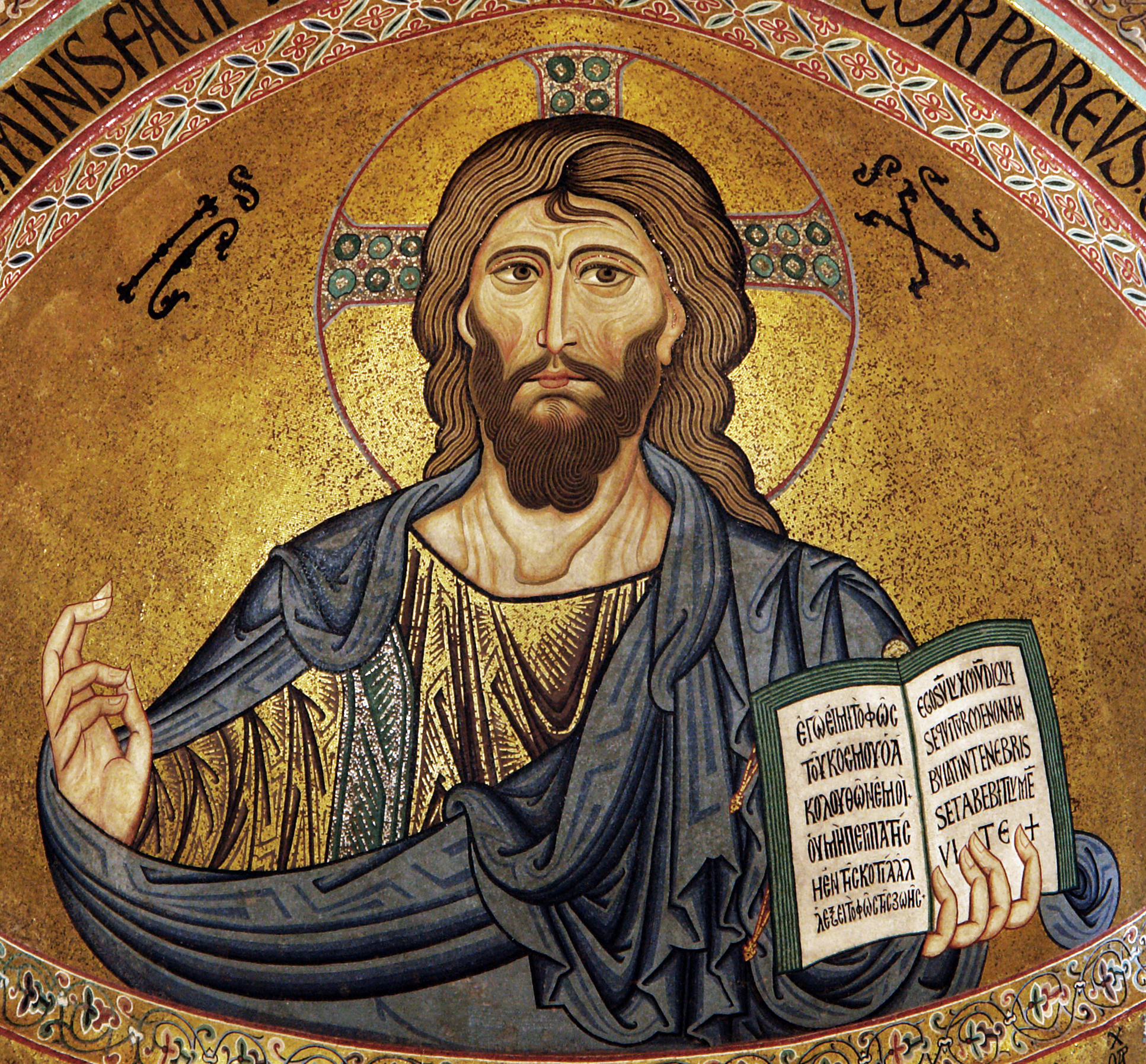
Most picture Jesus as fair-skinned and slender, with long, straight hair and a gentle beard. This physical reimagining of Him began rather early, gathered steam during the Renaissance, and has come to our day. I will not dwell here on His physical traits in this post, as I have written in detail on them elsewhere: What Did Jesus Look Like?.

As for His mannerisms, most imagine Jesus as gentle, kind, soft-spoken (except to mean people like the Pharisees), and “loving” in the modern sense. Images of him welcoming children, being the Good Shepherd, speaking of the lilies of the field, and forgiving the woman caught in adultery (but not the part when He tells her to stop sinning), predominate. Many modern people default to or strongly emphasize these images (rather than consulting the fuller text of Scripture) in interpreting Jesus. For many, the preferred images overrule the Sacred text, no matter how voluminous those balancing texts might be.

And thus if the Church, or a priest, or any Christian says anything that seems “hard” to modern ears, many will retort that Jesus is love and would never talk like this. Some years ago, after preaching a sermon on Hell and the need to be prepared for judgment, a woman in the parish I was visiting said this to me: “I didn’t hear the Jesus I know in your words today.” I replied that I was quoting Jesus Himself (the gospel of that Sunday was about the narrow road to salvation and the wide road to Hell). She was not fazed, and simply replied, “I know He never said that.” Her personal image of Jesus overruled even the sacred text. This is common today.

This is why I think the real Jesus, as described in Scripture, would surprise many modern people.

Surprise #1: His physical vigor and stamina

A mere consultation of the map reveals an enormous and diverse terrain where Jesus, His family, and His apostles routinely walked. Each year, Jesus journeyed on foot approximately 70 miles south to Jerusalem and then back again. His daily journeys took Him throughout the whole of Galilee and as far as 35 miles to the north (Tyre, Sidon, Caesarea Philippi). The terrain in the area was difficult, hilly (even mountainous) areas alternating between fertile lands and deserts within mere miles.

Jesus climbed the hills around the Sea of Galilee and mountains as high as Tabor. He, His family, and His followers often trod long journeys of many days. Travels could be dangerous because brigands and thieves lay in wait for opportune moments. The availability of lodging was unpredictable and many nights had to be spent out in the elements.

In His final journey to Jerusalem, Jesus took the desert route that went through Jericho. It is a howling desert that descends more than 800 feet below sea level. His climb to Jerusalem (more than 2500 feet above sea level) was more than 3000 feet up. Despite this difficult journey, He was the guest that very evening at the house of Martha and Mary, where He was anointed by Mary with costly nard.

Most moderns know little of such vigor and stamina. Many of us become winded by a mere hill; the thought of walking 70 miles would seem almost impossible to us. Those who go to the Holy Land today and follow the paths of Jesus usually do so in air-conditioned buses and complain of the steep hills that must be climbed on foot in Nazareth, Ein Karem, and Jerusalem.

These were hardy people, not the slight figures that modern artists often depict. It does not mean that they were extremely muscular, but they were used to hard physical work, long walks, and the sorts of hardships that would discourage many of us.

Surprise #2: His loud and challenging preaching

In those days there were no microphones or amplification of any kind. Preachers of that time did not (could not) use a gentle, suggestive tone. They had to shout out their message. Town criers were called such for a reason. Even indoors an elevated tone was required because crowded rooms muffle sound.

Jesus often preached outdoors, sometimes to crowds of thousands. Consider again His stamina and that such sermons were more of a shout than a mere discourse or exhortation. This would likely be challenging to us who are used to the more discussion-like quality of the preaching in the last hundred years.

A number of years ago I gave a talk on the Sacrament of Holy Matrimony to a large church gathering. For some reason the public address system was not working. Now I have a loud voice, but projecting it in such a large venue required a near shout. I tried to mitigate that by interspersing humor and other disarming methods, but about half of the audience indicated (on the evaluation forms they filled out) that I seemed angry or harsh. I was certainly not angry, and although the message of traditional marriage is challenging to modern notions, the emphasis was that grace assists fidelity and the forgiveness that is necessary for lifelong love.

A further surprising note on Jesus’ preaching is that he preached while seated. The sacred text affirms this tradition in many places. All the ancient rabbis preached while seated, it was a sign of authority.

Surprise #3: His uncompromising stance

Jesus was in the mode of the prophets, and the prophets were never ones to soft-pedal, compromise, or be vague. Any analysis of Jesus’ true message (not the selective and filtered modern version) shows that He made expansive, uncompromising demands on any who would be His disciples. We must repent and believe His Gospel. We must clearly accept that He is the only light, the only truth, and the only Son to the Father. We are to love no one and nothing more than we love Him. This includes our very family as well as the things most essential to our physical survival, such as career and livelihood. If we do not do this, then we are not worthy of Him. We must take up our cross daily. We must be willing to suffer even unto death for Him and what He teaches. It is not enough to love our neighbor; we must love our enemy. It is not enough to avoid adultery; we must have a comprehensive sexual purity that excludes all forms of sexual activity outside of biblical marriage, even impure thoughts. We must forgive others who have hurt us or else the Father will not forgive us.

Time and time again, the real Jesus warned of Hell and the necessity to be sober and serious about judgment. Jesus was not some angry preacher. Jesus, who loves us, warned that many would be unable and unwilling to enter Heaven on its terms; few would take the narrow road of the cross. Not all who say, “Lord! Lord!” will enter heaven, but only those who do the will of the Father. Many will hear from Him, “I know you not. I know not from whence you come. Depart from me.”

There is no compromise, no third way. We cannot serve two masters, God and mammon. A friend of the world is an enemy to God. He would say that no one who sets his hand to the plow and keeps looking back is fit for the reign of God. To our excuses and pleas for time in “getting our act together,” He might say, “Let the dead bury their dead, but you go and proclaim the Kingdom!”

There is little we can call gentle or soft in the mainstream of Jesus’ preaching. Though He invited His disciples to discover Him as the true shepherd, the true lover of our souls, who can give us the true Bread for which we hunger and lasting water to quench our thirst, He wants us carrying our cross, not reclining on our couch. Jesus healed many, but He insisted on faith being operative prior to performing miracles.

Jesus’ plan for us involves deep paradox; He challenges our every expectation. He does not apologize for offending our notions. He declared that if anyone was ashamed of Him and His teachings, then He would be ashamed of that person on the Day of Judgment. There is to be no compromise with the wisdom of the world.

All of this, though recorded clearly and consistently in the biblical record, is conveniently forgotten by. Most modern people prefer nuance and/or euphemisms; they prefer a suggestive and inviting tone. But Jesus, like the prophets of the day, combined a searing judgment on worldly ways with an uncompromising insistence that we choose sides.

Surprise #4: His urgency

Jesus had a determination that a lot of us would interpret as a kind of inflexibility. We like to discuss things; we celebrate collaboration and team work.

Jesus doesn’t fit in this box at all. He knew exactly what He wanted to do. He sent missionaries ahead of Him into every town and village. He accepted no correction from those objected to His course or to the fact that He ate with sinners. When the crowds objected to Jesus’ teachings (such as His teaching on the Eucharist at Capernaum), He did not reconsider His words or go out and hire a public relations firm to improve His image. He did not conduct focus groups to test out His words and ideas. No, Jesus doubled down on disputed teachings and then asked His disciples if they were going to desert Him. He had an urgent mission to convey the truth, not debate it at length with detractors.

Jesus was on the move and urgently pursued His task. He told His disciples that He must work while it was still day because the darkness was coming when work would cease. In his final journey to Jerusalem, it was said that Jesus “set His face like flint,” an expression that conveys firm resolve. He set out on the journey, fully knowing (and announcing) that He would suffer at the hands of men, die, and rise.

Jesus’ own apostles balked and resisted, wondering why He would go there knowing that the leaders sought to kill Him. When Peter tried to dissuade Him, Jesus turned to him angrily, challenged his worldly thinking, and called him Satan.

No, Jesus would not turn back. At one point, He rebuked the weak faith of the Apostles, saying, “How much longer must I tolerate you?!” He also warned, “He who does not gather with me scatters.”

So Jesus was urgent and unstoppable. Meanwhile, His apostles vacillated between resistance to the looming danger, denial, and avoidance. More than once, the sacred text indicates that they were afraid to ask Him any more questions.

Nothing would stop Jesus. Even at the Last Supper, as He arose to go forth to His Passion, Jesus said, “The world must know that I love the Father and that He sent me. Arise. Let us go hence.”

Only briefly (in the garden) did Jesus express even the slightest doubt. Quickly it was resolved: whatever the Father wanted would receive His assent. We are saved by the human decision of a divine person.

Why this urgency? It was to save us! “What should I say? ‘Father save me from this hour?’ No, it was for this hour that I came into the world” (John 12:27).

I am convinced that all of this urgency would surprise us. We are more comfortable with a Jesus who wandered about blessing people, telling stories, and who only at the very end fell into trouble. Nothing could be further from the recorded history of the sacred text. Knowing everything that would take place, Jesus set out manfully to His goal and would allow nothing to stop or sidetrack Him. This was His Father’s will and He was urgent.

Yes, I suspect that most of us would be surprised if we encountered Jesus back around the year 30 A.D. For those who have not internalized the biblical texts and have substituted a modern image far removed from the recorded truth, Jesus might seem overbearing and even impatient. They would see Jesus speaking broadly—even bluntly—in the mode of the prophets. Would there be nothing of the gentle Jesus that so many prefer? Of course there would, but not in the exclusive amount that many moderns prefer.

Perhaps I do well to finish with the words of Ross Douthat, who in his book Bad Religion, summarizes this well:

Christianity is a paradoxical religion because the Jew of Nazareth is a paradoxical character. No figure in history or fiction contains as many multitudes as the New Testament’s Jesus. He’s a celibate ascetic who enjoys dining with publicans and changing water into wine at weddings. He’s an apocalyptic prophet one moment, a [careful and] wise ethicist the next. … He promises to set [spouses against one another and] parents against children, and then disallows divorce; he consorts with prostitutes while denouncing even lustful thoughts. … He can be egalitarian and hierarchical, gentle and impatient, extraordinarily charitable and extraordinarily judgmental. He sets impossible standards and then forgives the worst of sinners. He blesses the peacemakers and then promises that he’s brought not peace but the sword. He’s superhuman one moment; the next he’s weeping.

The boast of Christian orthodoxy, as codified by the councils of the early Church and expounded in the Creeds, has always been its fidelity to the whole of Jesus. … [Where heresy says which one] Both, says orthodoxy …. The goal of the great heresies, on the other hand, has often been to extract from the tensions of the gospel narratives a more consistent, streamlined, and noncontradictory Jesus [1].

A Man Who Saw by Hearing – A Meditation on the Gospel of the 30th Sunday of the Year

In today’s gospel there is a very familiar story of the healing of the blind man Bartimaeus. As with any familiar story, the danger is that we, upon hearing its opening lines say, “Oh that story,” and we just sort of tune out. But there are many things in the details of the story that we can easily miss. Ultimately the story of Bartimaeus is also our story, for we too must let the Lord heal our blindness and give us sight. One paradox of this gospel that we shall note, is that the man receives his sight as the result of hearing.

Let’s look at this gospel in 6 stages.

Stage I–Perception of the Problem–the text says, As Jesus was leaving Jericho with his disciples, and a sizable crowd, Bartimaeus, a blind man sat by the roadside begging.

Bartimaeus has many troubles, he is blind, and he is poor. But although he is physically blind, he is not spiritually blind. For he knows he has troubles, he knows he is blind. And to know our troubles, to be in touch with our neediness, is an important spiritual insight that many lack.

It is possible for some to feel self-satisfied and to be unaware of how blind, pitiable, poor and naked they really are before God (cf Rev 3:17). Indeed, so poor and so needy that we depend on God for every beat of our heart. But some who are spiritually blind, lose this insight in becoming proud. They fail to ask for help from the Lord,  they fail to ask for grace. Jesus once said to the Pharisees Jesus said, “If you were blind, you would not be guilty of sin; but since you claim you can see, your guilt remains.” (John 9:41)  In other words, physical blindness is not their problem, spiritual blindness is. And because they think themselves righteous on their own power, they do not need God nor do they truly seek him. Only humility and a true “vision” and experience of one’s poverty can help us to call out as we should.

But our blind man knows that he is blind and so he calls for help. As we shall see, however, his cries for help need some direction, a need to be properly specified and directed.

So we begin by simply noting this man is blind, but still, he has spiritual insight.

Do we have this? Do we really understand how blind we are? We struggle to see God, we struggle to see and understand ourselves, we struggle to see others with compassion and understanding. Indeed, God is more present to us than anything in this world. Yet, we see all the things of this world, and still struggle to see God. Neither do we see our own dignity, or the dignity and the gift of others,  yes, even the dignity of our enemies. We do not see or understand how things work together, and we struggle to see and find meaning in the events of our day. We are also blind to our sin, and we seldom understand what harm our sin actually does.

Yes, we have a great deal of blindness, we do struggle to see. But perhaps our worst blindness is it we do not even consider how blind we are. But too easily, like the Pharisees we go on thinking that we know a few things, and that therefore we know many things.

Consider the humility of the blind man, who knows he is blind who knows he needs help, and grace, and mercy. It is a humility that opens the door. Stage one in our journey must be the perception of the problem.

Stage II–the Proclamation that is Prescribed. – The text says  On being told it was Jesus of Nazareth who was passing by, he began to cry out and say “Jesus son of David have pity on me.”

Note the subtle but important transition here. Up until this point he was calling upon anyone, who happened to pass by, for help. But no mere passerby, nor anyone in this world, can ultimately help him with his real problem.

It is the same with us. Though we may turn to science, or medicine, philosophy, economics or politics, none of these can really help us. At best they can specify what is wrong, give us temporary medicines, passing comforts, etc. But all their solutions will be rooted in this world, which is passing away.

True vision can only be granted by the Lord, who opens for us a vision of glory, and who alone can draw safely to that place where joys will never end and visions never cease.

The blind man is told of the presence of Jesus. And hearing this, he directs his cry away from any mere passerby to the Lord who alone can heal him: Jesus, son of David, have pity on me! The world, and passersby can get him money, perhaps a meal, but only Jesus can give him meaning, the true vision that he really needs to see.

And do not miss this point that’s seeing comes paradoxically through hearing. For faith comes by hearing, and hearing from the word of God (cf Rom 10:17). It is a truth that faith is about hearing, not seeing. For most frequently, we doubt what we see. Even if our eyes see marvels, we think, “They have a way of doing that.” No, the eye is never satisfied with seeing (cf Eccl. 1:8). Faith comes by hearing, and faith is obedience to what is heard. We walk by faith, by an inner seeing, not by physical sight.

Thus, it is by hearing that the blind man will come to see Jesus who can help them to see. He hears from others that Jesus is passing by, and he takes up the proclamation that is prescribed, “Jesus, son of David, have pity on me!”

Stage III–the Perseverance that Produces–the text says, And they rebuked him, telling him to be silent. Yet he kept calling all the more, “Son of David, have pity on me!” Jesus stopped and said, “call him.” So they called the blind man saying to him, “Take courage; get up. Jesus is calling you.

Is it true fact, that those of us who seek to put our trust in the Lord, and call on him, will often experience rebuke, hostility, and ridicule from the world. Note that the blind man ignores all of this. And so should we. He has heard the Name above all names, who alone in heaven and earth can save, and he calls upon him.

Yes, Jesus does delay, he does not answer him right away. But the blind man persevered, calling out all the more, and eventually, Jesus stopped and said, “Call him.”

Why does God delay? This is a very deep mystery, but it is clear that one of the effects of his delay would seem to be to test our faith and strengthen it. In the end, it is not an incantation that saves us, but faith. Simply shouting, “In the name of Jesus!” Is not enough. The Name of Jesus is not some incantation like, “Open sesame.” Rather, it is an announcement of faith, and faith is more than words. Ultimately, it is not words alone that save us, but the faith that must underlie those words, “Jesus! Save me”

Stage IV–the Priority that is Presented–the text says, He threw aside his cloak, sprang up, and came to Jesus.

Do not miss this important detail. His cloak was probably the most valuable thing he owned. In that climate, a very arid climate, it gets cool in the evening after sunset. The temperature drops rapidly. So critical was the cloak, that Scripture forbade the taking of a cloak as collateral for a loan:  If a man is poor, do not go to sleep with his pledge in your possession. Return his cloak to him by sunset so that he may sleep in it. (Deut 24:12-13)

But note, this man cast aside his cloak, and leaving it behind, he went to Jesus. Thus, he leaves behind perhaps the most valuable and necessary thing for his survival in this world. To miss a meal, might be inconvenient but it would not kill him. But to sleep one night, a cold night, without his cloak might well end his life through hypothermia. But leaving everything, he runs to the Lord.

What of us? What are we willing to leave behind to find Christ? An old gospel song says, I’d rather have Jesus than silver and gold. Another old hymn says, There’s nothing between my soul in the Savior. Is there? Are you willing to leave it behind?? Are you and I free enough to do so?

Stage V–The Permission that is Procured–the text says, Jesus said to him in reply, “What do you want me to do for you?” The blind man replied to him, Master, I want to see!

Why does Jesus asked this question? Can he not see what a blind man needs? Perhaps.

But honestly, healing takes courage. The fact is, in life, most seek mere relief. True healing takes courage because it brings change, and new demands. If the blind man is healed, it would no longer be acceptable that he should sit and beg. Having been healed, more will be expected of him. His life will be irrevocably changed.

Yes, to be healed requires courage. Many of us wonder, of the Lord’s delay in answering our prayers. Perhaps a question from last week’s gospel is applicable as we cry to the Lord: Do you have any idea what you are asking?” Often we do not.

Truth be told, most of us want relief more than healing. There is a big difference. The Lord is in the healing business, but most of us just want relief. Do not miss what the Lord says here. In effect, he says to the blind man, and to us, “Are you really sure you want healing?” The Lord respects us, and our freedom. He wants our consent before he goes to work. And often, though many of us think we want healing, we don’t really know what we are asking.

The Lord waits, until a request makes real sense. He knows that most of us are not always ready for what he really offers. He asks, and when our yes becomes definitive, he goes to work.

Stage VI – The Path that is Pursued–the text says, Jesus told him, “Go your way; your faith has saved you.” Immediately he received his sight and followed Jesus on the way.

As we have already seen, true healing brings forth radical change. And now man who sat by the road begging, sees, but is also up and walking about. And what is he doing? He is  following Jesus. For faith has saved him, and faith not only gives sight, but summons us to obedience, an obedience that has us walk in the path of the Lord.

You see, (pardon the pun), faith is more than an offer of relief. True faith instills real change. A change in direction, a change in the way we walk.

And thus this gospel speaks to us of a man who was blind. And paradoxically he received his faith by hearing. For he heard of Jesus and called on him. Yes, his sight came from his hearing. And faith grants to vision by hearing. True vision, is to see Christ, and having seen him by hearing, to follow after him.

I have it on the best authority that as he followed Jesus up the road, he sang this song:

Hard Spiritual Truths That Will Set Us Free

In today’s post I would like to ponder some hard spiritual truths, but ones that will set us free.

In calling them “hard truths”, I mean that they are not the usual cozy bromides that many seek. They speak bluntly about the more irksome and difficult realities we face. If we come to accept them, though, they have a strange way of bringing serenity by getting us to focus us on the right things rather than spending our time chasing after false dreams.

A person can spend his whole life being resentful that life isn’t perfect, forgetting all the while that we are all in exile. We are making a difficult journey to a life in which, one day, every sorrow and difficultly will be removed and death and sorrow will be no more—but not now.

There is a kind of unexpected serenity in living in the world as it is rather than resenting it for not being the way we want it to be. For now, the journey is hard and we have to be sober about our obtuse desires and destructive tendencies. That is why there is value in calling these insights “hard truths that will set us free.”

In the very opening section of his Spiritual Canticle, St. John of the Cross lays out a presumed worldview that the spiritually mature ought to have attained (because he presumes it of his reader, he states it only briefly).

We who live in times not known for spiritual maturity ought to slow down for a moment and ponder these truths, which are not only poorly understood but even actively resisted by many, including some who call themselves wise and spiritually mature.

Remember, now, these are hard truths. Many wish to bypass the harder teachings of God. Thus we do well to pay special attention to St. John, a spiritual master deeply immersed in Scripture, as a remedy for the soft excesses of our times.

Let’s first look at the quote from St. John and then examine his points. With the following preamble of sorts, St. John begins his Spiritual Canticle:

The soul … has grown aware of her obligations and observed that life is short (Job 14:5), the path leading to eternal life constricted (Mt. 7:14), the just one scarcely saved (1 Pet. 4:18), the things of the world vain and deceitful (Eccles. 1:2), that all comes to an end and fails like falling water (2 Sam. 14:14), and that the time is uncertain, the accounting strict, perdition very easy, and salvation very difficult. She knows on the other hand of her immense indebtedness to God for having created her solely for Himself, and that for this she owes Him the service of her whole life; and because He redeemed her solely for Himself she owes Him every response of love. She knows, too, of the thousand other benefits by which she has been obligated to God from before the time of her birth, and that a good part of her life has vanished, that she must render an account of everything—of the beginning of her life as well as the later part—unto the last penny (Mt. 5:25) when God will search Jerusalem with lighted candles (Zeph. 1:12), and that it is already late—and the day far spent (Lk. 24:29)—to remedy so much evil and harm. She feels on the other hand that God is angry and hidden because she desired to forget Him so in the midst of creatures. Touched with dread and interior sorrow of heart over so much loss and danger, renouncing all things, leaving aside all business, and not delaying a day or an hour, with desires and sighs pouring from her heart, wounded now with the love for God, she begins to call her Beloved …

Let’s examine these hard but freeing spiritual insights one by one. My commentary is in red.

The soul has grown aware of her obligations and observed

  1. that life is short (Job 14:5)

More than in any other age, we today entertain the illusion that death can easily be postponed; it cannot. We are not guaranteed the next beat of our heart, let alone tomorrow! It is true that with advances in medical science sudden death is not as common today, but too easily this leads us to entertain the notion that we can cheat death; we cannot.

Life is short and we do not get to choose when we will die. Both my mother and sister died suddenly, swept away in an instant. They never got to say goodbye. You do not know if you will even finish reading this sentence before death summons you.

This is wisdom. It is a hard truth that gives us an important perspective. Life is short and we don’t have any way of knowing how short.

What are you doing to get ready to meet God? What do you get worked up about? What are you not concerned about? Are your priorities rooted in the truth that life is short? Or are you waging bets in a foolish game in which the house (death and this world) always wins on its terms and not yours?

There is a strange serenity and freedom in realizing that life is short. We do not get as worked up about passing things and we become more invested in lasting things and in the things to come.

  1. [that] the path leading to eternal life [is] constricted ( 7:14)

Another illusion we entertain today is that salvation is a cinch, a done deal. The heresy of our time is a belief in almost-universal salvation, which denies the consistently repeated biblical teaching that declares, Enter by the narrow gate. For the gate is wide and the way is easy that leads to destruction, and those who enter by it are many. For the gate is narrow and the way is hard that leads to life, and those who find it are few (Matt 7:13-14 inter al).

In parable after parable, warning after warning, Jesus speaks with sober admonition about the reality of Hell and the finality of judgment. No one loves you more than Jesus does, and no one warned you more about Hell and Judgment than He did.

Salvation is not easy; it is hard. Jesus said this; I did not. He did not say this because God is mean but because we are stubborn, obtuse, and prefer darkness to light. We need to sober up about our stubbornness and our tendency to prefer “other arrangements” to what God offers and teaches. In the end, God will respect our choice. The day will come when our choice for or against the Kingdom and its values will be sealed forever.

This is a hard saying, but it sets us free from the awful sin of presumption, a sin against hope. It instills in us a proper focus on the work that is necessary to root us in God. Accepting this hard truth will make you more serious about your spiritual life and aware of the need for prayer, the Sacraments, Scripture, and the Church. It will help you to have more well-ordered priorities, ones that are less obsessed with the passing and more rooted in the eternal. It will make you more evangelical and urgent to save souls. It will turn you toward Jesus and away from Belial.

  1. [that] the just one [is] scarcely saved (1 Pet. 4:18)

This is a further truth that sets aside modern errors about an almost-universal salvation. The fuller context of the quote is this: For it is time for judgment to begin with God’s household; and if it begins with us, what will the outcome be for those who do not obey the gospel of God? And, “If it is hard for the righteous to be saved, what will become of the ungodly and the sinner?” (1 Peter 4:17-18)

Despite this and many other quotes and teachings like it, we go one presuming that almost everyone will go to Heaven. We set aside God’s Word in favor of human error and wishful thinking. We substitute human assurances for God’s warnings. We elevate ourselves over St. Paul, who said that we should work out our salvation in fear and trembling (Phil 2:12) and spoke of disciplining himself, lest after preaching to others he himself should be lost (1 Cor 9:27). Are we really better and more enlightened than Jesus? Than Paul? Than Peter?

Salvation is hard. This is not meant to panic us, but it is meant to sober us to the need for prayer, the sacraments, Scripture, and the Church. Without these medicines we don’t stand a chance; we must persevere to the end.

This hard truth sets us free from illusion and sends us running to the Lord, who alone can save us. Smug presumption roots us in the world. Godly fear and sober awareness of our stubborn and unrepentant hearts send us to Jesus, freeing us.

  1. [that] the things of the world [are] vain and deceitful ( 1:2)

Such a freeing truth! First, that the things of this world are vain. That is to say, they are empty, passing, and vapid. We so highly value power, popularity, and worldly glories, but those are gone in a moment. Who was Miss America in 1974? Who won the Heisman Trophy in that same year? If you by chance you do know, do you really care? Does it really matter? It’s empty show, glitter, fool’s gold; yet we spend billions on it and watch this stuff forever.

Although we should fight for justice, for the sake of the kingdom, even here the Scriptures counsel some perspective: I have seen a wicked, ruthless man, spreading himself like a green laurel tree. But he passed away, and behold, he was no more; though I sought him, he could not be found. (Ps 37:35-36).

And how deceitful is this passing world! The main deceit of this world is to say, “I am what you exist for. I am what matters. I am what satisfies.” These are lies and deceptions on all fronts. The form of this world is passing away; it cannot fulfill our infinite desires. Our hearts were made for God and only being with Him one day will satisfy us.

Yet so easily do we listen to the world’s seduction and lies! Too often we want to be lied to. We prefer to chase illusions and indulge vanity and deceit.

How freeing this truth is! We learn to make use of what we need and begin to lose our obsession with vain and passing things and with our insatiable desire for more. Yes, perhaps you can survive without that granite countertop.

This is a very freeing truth if we can accept its hard reality. Becoming more free, a deeper serenity finds us.

  1. that all comes to an end and fails like falling water (2 Sam. 14:14)

The world is passing away. It can’t secure your future. The world’s cruel lie that it can fulfill you is on display in every graveyard. So much for the world’s empty promise: “You can have it all!” Yes, and then you die.

Meditate on death frequently. Indeed, the Church bids us to rehearse our death every night in prayer by reciting the Nunc Dimittis.

Scripture says, For here we have no lasting city, but we seek the city that is to come (Heb 13:14). Do you have your sights fixed where true joys are? Or are you like Lot’s wife?

Let this truth free you to have the proper perspective. Since, then, you have been raised with Christ, set your hearts on things above, where Christ is, seated at the right hand of God (Col 3:1).

  1. that the time is uncertain

You have plans for tomorrow? Great, so do I. The only problem is that tomorrow is not promised or certain. Neither is the next beat of your heart. This is another hard but freeing truth.

  1. [that] the accounting [is] strict

Jesus warns, But I tell you that everyone will have to give account on the day of judgment for every empty word they have spoken (Matt 12:36). St. Paul says, He will bring to light what is hidden in darkness and will expose the motives of the heart (1 Cor 4:5). He adds, So we make it our goal to please him, whether we are at home in the body or away from it. For we must all appear before the judgment seat of Christ, so that each of us may receive what is due us for the things done while in the body, whether good or bad (2 Cor 5:9-10). James says, So speak and so act as those who are to be judged by the law of liberty. For judgment will be merciless to one who has shown no mercy (James 2:12-13). What James says is particularly chilling because so many today are without mercy.

If God judges us with the same strict justice we often dish out to others, we don’t stand a chance. The accounting will be strict anyway, so don’t pile on unnecessary severity and wrath toward others. This is another freeing truth that helps us take heed of the coming judgment.

  1. [that] perdition [is] very easy

I wonder why he might have repeated this; I just wonder!

  1. [that] salvation [is] very difficult

And look, he repeated this, too! I wonder why. Maybe repetition is the mother of studies.

  1. [that we are often and strangely ungrateful and unmoved] She knows on the other hand of her immense indebtedness to God for having created her solely for Himself, and that for this she owes Him the service of her whole life; and because He redeemed her solely for Himself she owes Him every response of love. She knows, too, of the thousand other benefits by which she has been obligated to God from before the time of her birth, and that a good part of her life has vanished

This is a sober truth that calls us to remember. What does it mean to remember? It means to have present in your mind and heart what the Lord has done for you so that you are grateful and different.

We live so many years and so many hours of each day in ingratitude. We get all worked up and resentful about the smallest setbacks while almost completely ignoring the incredible number of blessings we receive each day.

Our ingratitude is obnoxiously massive because of the easy manner in which we mindlessly receive and discount our numerous blessings while magnifying every suffering, setback, and trial. We spend so much of our life in the “Complaint Department.” We are often stingy, never even thinking to say, “Thank you, Lord, for all your obvious and hidden blessings. Thank you, Lord, for creating, sustaining, and loving me to the end, and for inviting me to know, love, and serve you.”

  1. that she must render an account of everythingof the beginning of her life as well as the later partunto the last penny ( 5:25) when God will search Jerusalem with lighted candles (Zeph. 1:12)

Did he repeat himself again? Now why do you suppose he does that? You don’t think he considers us stubborn, do you?

  1. [that] it is already lateand the day far spent ( 24:29)to remedy so much evil and harm
  2. [that the unrepentant will experience the wrath to come] She feels on the other hand that God is angry and hidden because she desired to forget Him so in the midst of creatures

The wrath of God is really in us, not in Him. His wrath is really our experience of discomfort before the holiness of God. It is like being accustomed to a dark room and suddenly being brought into the bright afternoon sunlight. We protest and claim that the light is harsh, but the light is not harsh. We are incapable of tolerating the light due to our preference for and acclimation to the darkness. In the same way, God is not “angry.” He is not moody or harsh. He is God and God does not change.

St. John teaches here the hard but freeing truth that God is holy; no one is going to walk into His presence unprepared. If we prefer the world and its creatures to the Creator, we thereby prefer the darkness and cannot tolerate the light. Heaven is simply not possible for those who prefer the darkness. Thus Jesus says, And this is the judgment: the light has come into the world, and people loved the darkness rather than the light because their works were evil (John 3:19). That’s right; this occurs just three verses after the famous and oft-quoted John 3:16.

While the sinful soul may “feel” that God is angry and is hiding Himself, the problem is in the sinful soul, not God.

The freedom of this hard saying comes in reminding us and urging us to get ready to meet God. God is not going to change; He can’t change. So we must change, and by His grace, become the light of His holiness.

  1. [that we need to call on the Savior] Touched with dread and interior sorrow of heart over so much loss and danger, renouncing all things, leaving aside all business, and not delaying a day or an hour, with desires and sighs pouring from her heart, wounded now with the love for God, she begins to call her Beloved.

Here is the real point of all of these hard truths: to make us love our Savior more, to learn to depend on Him and run to Him as fast as we can. Only when we know the hard truths are we really going to get serious.

After all, who is it that goes to the doctor? Is it the one who thinks he doesn’t have cancer (even though he does)? Or is it the one who knows he’s got it bad and that ain’t good?

Sadly, the answer is not clear enough to us in modern times, times in which—even within the Church—there are so many who don’t want to discuss any of the hard truths we need to lay hold of before we can really get serious.

A steady diet of “God loves you and all is well no matter what” has emptied our pews. Why? Well, who goes to the spiritual hospital if all he hears is that nothing is wrong and that his salvation is secure, almost no matter what?

The good news of the Gospel has little impact when the bad news is no longer understood. What does salvation mean if there is no sin and nothing to be saved from? Now of course the bad news should not be preached without pointing to the good news. The point is that both are needed.

St. John’s hard truths are not meant to discourage. They are meant to sober us and send us running to the doctor.

Now look, you’ve got it bad and that ain’t good. But the good news is, there’s a doctor in the house. Run to Him now; He’s calling you!

No Cross, No Crown – A Homily for the the 29th Sunday of the Year

In the Sunday Gospel, the Lord Jesus speaks of crosses and crowns. The apostles have only crowns in mind, but Jesus knows the price of the crown. So, He must teach them and us that crowns—the things we value most—come only through the cross.

It may help to review the context of this Gospel. Jesus is making His final journey to Jerusalem. He is on his way to the cross and has already announced this to His disciples on two occasions. Throughout Jesus’ final journey, the apostles prove unwilling and/or incapable of grasping what He is trying to teach them.

This Sunday’s Gospel is a perfect illustration of a common biblical theme that I refer to as the inept response. It is a common situation in the Gospels wherein Jesus presents a profound teaching, yet within a matter of verses or sometimes even just a few words, the apostles demonstrate that they have absolutely no understanding of what He has just told them.

You may recall that in the Gospel readings for the previous two Sundays, the Lord gave critically important teachings. Two weeks ago, he stood a young child in their midst and spoke of the child as being truly great. He also warned that we must be able to receive the Kingdom of God like a little child. Last week, He warned of the pernicious effects of wealth and spoke about how hard it is for the rich to enter the Kingdom of Heaven.

Despite these recent teachings, this Sunday’s Gospel opens with James and John (and later all the apostles) wishing honors upon themselves. They want seats at the head of the table, high offices in the Kingdom, which they still conceive of in worldly terms. Never mind that Jesus has taught them that the place of honor is not at the head or even the foot of the table; the honor is upon those who serve those at the table.

The apostles (and we) just don’t understand, no matter how clear Jesus is or how often He repeats Himself.

Let’s look at today’s Gospel in three stages.

Misplaced Priorities – The Gospel begins in this way: James and John, the sons of Zebedee, came to Jesus and said to him, “Teacher, we want you to do for us whatever we ask of you.” He replied, “What do you wish me to do for you?” They answered him, “Grant that in your glory we may sit one at your right and the other at your left.”

James and John ask an inept question and even demand to sit in places of honor. This is a misplaced priority. Their understanding of the place of honor is worldly. Further, they want to move to the head of the table. They want the Lord to grant them this honor. Even in a worldly way of thinking, places of honor must usually be earned. Although some people are born into royalty, most attain leadership and honors only after years of effort. Thus, even from a worldly point of view, James and John are being overly bold, exhibiting little understanding that prior to honors comes labor, comes the earning of those honors. They want the crown without the cross.

Major Price – The Lord Jesus replies to them, “You do not know what you are asking! Can you drink the cup that I drink or be baptized with the baptism with which I am baptized?”

Was Jesus astonished, amused, or saddened? It is not easy to say, but clearly James and John had absolutely no idea what they were asking—and neither do we. Too often we want blessings, honors, or seats in high places, but give little thought to the crosses that are necessary to get there and to stay there.

Those who finally attain leadership often understand what a cross it is. It can be lonely. There are many pressures and long hours of toil. True leadership has its benefits, but it is hard. Most leaders know also the sting of criticism.

There is an old joke among bishops that goes something like this: “When a man becomes a bishop, two things are certain: he will never again have a bad meal, and he will never again hear the truth.” Leaders in many other walks of life can relate to this.

The Lord Jesus wonders whether James and John have any idea what they are really asking. His question is also poignant, for He has been trying to teach them of the passion, the pain, the crucifixion that awaits Him, and which even He, the Lord of glory, must endure before entering into His glory. No, they do not know what they are asking; they just don’t get it.

This must make the Lord very sad. Sometimes we underestimate the suffering Jesus endured long before the garden of Gethsemane that fateful night, when His passion began in earnest. Prior to that evening, the Lord endured a kind of death by a thousand cuts: enemies trying to trap Him, crowds wanting medical miracles but no true healing, strident and judgmental religious leaders, and disciples who walked away from Him as he taught about the Eucharist. Even the Twelve, to whom He looked for friendship, seemed completely disconnected from what He was trying to teach them. He also knew that one of them would betray Him, another would deny Him, and all but one would abandon Him, never making it to the foot of the cross. Oh, the grief that they gave the Lord!

Oh, the grief that we continue to offer up! How we continue to offend His external glory and be difficult cases for Him! How easy it is for us to be hardheaded and stubborn, to have necks of iron and foreheads of brass! No, we should not be so quick to scorn the apostles because we do the same things.

The Lord can only remind them and us of the monumental price, the true cost. No cross, no crown! Ultimately, Heaven costs everything, for we must leave this world behind to reach it. The Easter Sunday of glory, whether in this world or in the world to come, is accessed only by a journey through Good Friday.

It is a major price, but it is one that James and John seem to dismiss. They simply state, categorically, that they are able to drink the cup that the Lord drinks and to be baptized into His death. They have no idea what they’re talking about, however, and neither do most of us.

Medicinal Prescription – The text continues, They said to him, “We can.” Jesus said to them, “The cup that I drink, you will drink, and with the baptism with which I am baptized, you will be baptized; but to sit at my right or at my left is not mine to give but is for those for whom it has been prepared.” When the ten heard this, they became indignant at James and John. Jesus summoned them and said to them, “You know that those who are recognized as rulers over the Gentiles lord it over them, and their great ones make their authority over them felt. But it shall not be so among you. Rather, whoever wishes to be great among you will be your servant; whoever wishes to be first among you will be the slave of all. For the Son of Man did not come to be served but to serve and to give his life as a ransom for many.”

Thus, the other apostles join in the inept response by becoming indignant that James and John are trying to get special dibs on the seats of honor. Their indignity simply shows that they also have no idea what the Lord is talking about.

The Lord tries to bring the big picture of the cross down to earth. He tries to make it plain, saying that the greatest in the kingdom is the servant of all, indeed the slave of all. It is not those who sit at the head of the table, the foot of the table, or any place at the table at all who are the greatest; the greatest are those who serve at the table.

Do they understand? Probably not, but neither do we. It takes most of us a lifetime before we finally get it through our thick skulls that the point in life is not to have the corner office with the view. We have everything upside down, backwards. We are not rich in what matters to God. We think of bank accounts, prestigious addresses, the square footage of our houses, high salaries, and impressive titles—not service.

We may be on our death beds before we finally realize that the greatest people in our lives are those with the ministry of care, those who feed us, those who change our bandages and give us basic care.

Like the apostles, we can be so foolish. At our final judgment, God will not care about the square footage of our house, our titles, or our worldly honors. What will capture His attention is the times when we served, when we gave a cup of cold water to the thirsty or food to the hungry, when we instructed the ignorant, when we prayed for the dying, when we cared for the needs of the poor. He will look for the calluses and the wounds of our service. He will listen for our proclamation of His Kingdom. He will tell us that what we did for the least of our brothers, we did for Him.

Don’t miss the point: there is no crown without the cross. In the Kingdom, honors and crowns are reserved for those who serve, who take up the cross of washing the feet of others, of going to the lowest of places.

In the Gospel this Sunday, the Lord speaks of crosses and crowns—in that specific order. We will not, we cannot, gain any crown in His Kingdom without being baptized into His death, into His cross, into the humble servitude of dying for others in loving service.


The Often-Disappointing Quality of the Prayer of the Faithful

One of the parts of the Ordinary Form of the Mass that was restored from antiquity is the Prayer of the Faithful. In my mind, however, there is an often disappointing quality to the intentions as they are used today. They are either overly particular and ideological or, at the other end of the spectrum, perfunctory and flat. Further, they often include prayers for the Pope, bishops, clergy, and also for the dead. But these sorts of prayers will be included in the Eucharistic prayer. Why “predundantly” include them here?

Some years ago, Peter Kwasniewski, in an article at New Liturgical Movement.org (here), summarized the problem very well.

It is surely no exaggeration to say that throughout the world the quality of these intercessions has tended to be deplorable, ranging from trite and saccharine sentiments to political propaganda, from progressivist daydreams to downright heretical propositions to which no one could assent without offending God. Even when the content is doctrinally unobjectionable, all too often the literary style is dull, flaccid, rambling, or vague. … [There is] problematic content, poor writing, and [a] monotonous manner of delivery.

Additional problems occur when there are people of many different nationalities present and it is felt necessary to have the petitions read in multiple languages. The impression is given that the intentions are directed more to the congregation than to God, who knows all languages and thoughts. I have been at Mass in the Basilica here in Washington, D.C. when as many as nine different languages were used in the Prayer of the Faithful, despite the fact that the vast majority of those present spoke English and/or Spanish. I seriously doubt that there were more than five people in attendance who could speak only German, Mandarin, or one of the other languages used. It quickly gets very tedious as a line of people traipse back and forth to the microphone.

It is all so different in the Eastern Liturgies, in which the Great Litany is so artfully woven into the liturgical experience and beautifully sung as well. I have memorized the Great Litany from the Liturgy of St. John Chrysostom (see video below).

In his article (here), Mr. Kwasniewski offers a variety of intercessions, and download links are provided. I have done so for my own use and you might wish to do the same.

I would also like to add that St. Peter Canisius composed intercessions for use in his time. Saints are certainly reputable sources of such things! Here is an article by Mark Woodruff  that details those prayers.

The point is that much can be done to improve the quality of the Prayer of the Faithful, which has remained an amateur outing at best and an ideological hornet’s nest at worst.

Perhaps some benefit can be obtained from reviewing the norms and the history of this portion of the Mass.

The General Instruction in the Roman Missal (GIRM) has this to say about the Prayer of the Faithful:

In the Prayer of the Faithful, the people respond in a certain way to the word of God which they have welcomed in faith and, exercising the office of their baptismal priesthood, offer prayers to God for the salvation of all. It is fitting that such a prayer be included, as a rule, in Masses celebrated with a congregation, so that petitions will be offered for the holy Church, for civil authorities, for those weighed down by various needs, for all men and women, and for the salvation of the whole world. As a rule, the series of intentions is to be

      1. For the needs of the Church;
        2. For public authorities and the salvation of the whole world;
        3. For those burdened by any kind of difficulty;
        4. For the local community.

Nevertheless, in a particular celebration, such as Confirmation, Marriage, or a Funeral, the series of intentions may reflect more closely the particular occasion.

It is for the priest celebrant to direct this prayer from the chair. He himself begins it with a brief introduction, by which he invites the faithful to pray, and likewise he concludes it with a prayer. The intentions announced should be sober, be composed freely but prudently, and be succinct, and they should express the prayer of the entire community (GIRM 69-71).

History – These intentions were very common in the early Church, occurring at about the same point in the Mass as today. They followed the Homily (note that in earlier days the Creed was typically not said). All of the Fathers of the Church make mention of them. In the beginning, this prayer was recited antiphonally by the priest and the assembly. Over time, the deacon assumed a more prominent role; he announced all the intentions and then the faithful responded with Kyrie eleison or some other acclamation. You can read the Kyrie Litany of Pope Gelasius here.

These intercessions endured until about the 9th century, well past the close of the patristic period. Their disappearance seems to coincide with their evolution into a Kyrie litany and their transfer to the beginning of the Mass. They eventually came to be regarded as an unnecessary appendage and were phased out. In the West they were used only on Good Friday, though they endured longer in certain particular areas. In the East they were never dropped. Today they have been restored to their original place in the Mass.

Further pastoral reflections – One reason that they are called “general intercessions” is that they extend beyond the needs and concerns of the local assembly. Please note that they are not called the particular intercessions. What sometimes happens in more extemporaneous settings is that certain very specific needs are expressed; the list can become quite long. It is not appropriate here to pray, “for my Aunt Sue’s friend, who is recovering from hip surgery and having a hard time due to her diabetes.” It is more appropriate to pray, “for all who are sick or struggling in at this time.” The point is to keep it general; this is not the time for a full medical update on everyone’s relatives or friends.

Calling it the “Prayer of the Faithful” has some historical merit because catechumens and others were dismissed before the proclaiming of the intentions. Another reason it is also common to call them “general intercessions” is that the whole Mass is really the prayer of the faithful. Through his opening prayer, the priest may link the intercessions to the reading, and through his closing prayer he may summarize them. This can help to place them in a clear context. Singing the intercessions is a beautiful option and is surely of ancient practice (cf Music in Catholic Worship # 74).

In the end, I think these intentions deserve better than we have given them. I realize that enthusiasts of the Traditional Latin Mass (of which I am one) may say, “Just get rid of them entirely,” but that is not realistic. They are here to stay, at least in our lifetime. Maybe we can try to do better by making use of multiple sources: ancient, Eastern, and modern yet elegant. I am interested in your thoughts and also any references to good additional sources.

Here is the Great Litany from the Liturgy of St. John Chrysostom:

What Does Heaven Cost? A Homily for the 28th Sunday of the Year

The Sunday Gospel invites us to wrestle with these fundamental, essential, focal questions: “What does Heaven cost?” and “Am I willing to pay it?”

I. Problematic Pondering – A rich man asks Jesus, Good teacher, what must I do to inherit eternal life?

Though his question is a good one, it is problematic because he couches it in terms of his own personal power and achievement. He wonders what he himself must do to attain eternal life.

The problem is that none of us has the holiness, the spiritual wealth, or the power to attain Heaven based merely on what we do. The kind of righteousness we need can come only from God. The misguided question of the rich man betrays two common misunderstandings that people bring to the question of salvation and the need for redemption.

The first misunderstanding comes about because we underestimate the seriousness of our condition. We tend to think that we’re basically in good shape. Perhaps we have a few flaws, but fundamentally we mean well and are decent. We suspect that a few sacraments, occasional prayers, and some spiritual “push-ups” will be sufficient. Any look to the crucifix should belie these notions. If it took the horrible death of the Son of God to rescue us, then our condition must be worse than we, with our darkened intellect, imagine.

Jesus related a parable of a man who owed a huge debt—10,000 talents (cf Mt 18:24). This was an amount so large as to be almost unimaginable. No one with such a debt is going to be able to repay it merely by working a little overtime or picking up an additional part-time job. The point is that we humans are in deep trouble and have absolutely no ability to rescue ourselves.

A second misunderstanding comes about because we tend to intellectualize and minimize what the law of God requires. We ask, “What must I do?” rather than “What must I become?” This bespeaks a law-based approach that seeks a manageable list of things to do in order to be saved rather than an open-ended relationship with God. “Okay, so I’m not supposed to kill anyone. No problem, I don’t like the sight of blood anyway. I’ve got this commandment down!” This thinking minimizes the commandment and what it asks of us.

These two misunderstandings seem to undergird the problematic nature of the rich man’s question. In order to engage the man further, Jesus in effect plays along with the premise; this leads us to the second point.

II. Playful Prescription – Jesus decides to follow up on the man’s premise, saying to him, You know the commandments: You shall not kill; you shall not commit adultery; you shall not steal; you shall not bear false witness; you shall not defraud; honor your father and your mother.

Jesus is being playful here in that He continues with the flawed premise of the man: that he can attain to Heaven by something he does.

It is interesting to ponder why Jesus quotes only the Second Table of the Law, the part pertaining to love of neighbor, omitting reference to the First Table of the Law, the commandments pertaining to love of God. Perhaps it is because the Lord recognizes that the man does love Him, for he is seeking the Kingdom of Heaven and asking how to enter into it. Therefore, the Lord focuses on the Second Table of the Law, which is in evidence in this man’s life, at least in this interaction. Further, as Scripture says elsewhere, How can you say you love God whom you do not see, if you do not love your neighbor whom you do see? (1 John 4:20) Hence, the Second Table of the Law fleshes out the First Table of the Law.

The Lord is not affirming here that the keeping of the commandments can save us or justify us. Even if we consider ourselves blameless, Scripture says, the just man sins seven times a day (Prov 24:16). We can affirm with Isaiah that, I am a man of unclean lips, and I live among a people of unclean lips (Is 6:5), and we must say with St. Paul, I do not nullify the grace of God, for if righteousness comes through the Law, then Christ died for no purpose (Gal 2:21).

While the law gives us a necessary and clear frame of reference for what pleases God, its summons Be holy, for I the Lord your God am holy (Lev 19:22) is not attainable through mere human effort unaided by grace. Jesus makes it clear that when God says, Be holy, He does not have in mind mere human holiness, for Jesus says, Be perfect, as your Heavenly Father is perfect (Matthew 5:48).

Thus, Jesus is drawing out the man’s problematic premise, but as we next see, the rich man doesn’t take the hint.

III. Perceived Perfection – Strangely—and humorously to our mind—the man boldly says, Teacher, all of these I have observed from my youth.

Notice that the man’s perfection is perceivedsimply noting it in himself does not mean that he actually has it in himself. Having heard Jesus quote the Second Table of the Law, he announces that he has observed all of these from his youth.

To be fair, his self-analysis was not uncommon for a Jewish man of his time. The Jewish people had a great reverence for the law, a beautiful thing in itself, but they tended to understand it in a fairly legalistic and perfunctory way.

For example, in a conversation with Jesus, a scribe of the law asks Him, And who is my neighbor? (Luke 10:29) It’s as if he is saying, “If I have to love my neighbor—and I acknowledge my duty to do so—how can I define ‘neighbor’ in such a way that this is manageable?” In other words, I recognize that I have limits. If justice comes to the law, then the law must have limits, defined in such a way that the keeping of the law remains within my power.

Jesus sets aside such thinking in the Sermon on the Mount (Matt 5-7), in which He calls for the law to be observed not in a minimalistic sense but in a way that fills it to the fullest. Jesus says that it is not enough not to kill; we must also reject anything that ultimately leads to killing or to wishing people were dead. The commandment not to kill requires not only that we not take life, but also that we banish from our heart and mind, by God’s grace, hateful anger, retribution, and revenge. The commandment not to commit adultery requires not merely that we avoid breaking the marital vows, but also that we banish from our heart and mind, by God’s grace, any lustful, impure, and unrighteous sexual thoughts.

Hence, the commandments and precepts of the law cannot, and should not, be understood in a minimalistic way. Jesus sets aside the usual manner of the people of His day: reducing the law to something manageable and then declaring that they have kept it. God seeks more than perfunctory observance. His grace desires to accomplish within us wholehearted observance. We need grace in order to be saved, in order to qualify for anything that God calls holy.

So, Jesus sets aside the rich man’s claims of righteousness and is now is ready to address the question, “What does Heaven cost?”

IV.  Pricey Prescription – What does Heaven cost? Everything! Jesus, looking at the man with love, says to him, You are lacking in one thing. Go, sell what you have, and give to the poor and you will have treasure in heaven; then come, follow me.

Ultimately, the cost of Heaven is leaving this world and everything in it to go and possess God and Heaven. To have Heaven we must set aside this world, not only its life but its pomp, ephemeral glories, and passing pleasures. If you want Heaven you’ve got to leave here!

Although we know this, we often live in a way that seeks to postpone the inevitable and to ignore the joke that this world is ultimately playing on us. The world says, “You can have it all!” Yes, you can, but then you die and lose everything. We like to postpone facing that fact, pretending that perhaps it ain’t necessarily so. We’re like the gambler who goes to the casino thinking he will be the exception to the general rule that the house always wins. You can’t cheat life; whatever we have when we die, whatever we claim to have won, we lose.

In the end, there is only one way to attain the things of lasting value. Only what you do for Christ will last. The Lord says, Store up for yourselves treasure in heaven, that neither rust nor moths can corrode, nor thieves break in and steal (Lk 12:33).

The Lord says that being generous to the needy and poor is a way of storing up treasure in Heaven. Sadly, most of us don’t believe that, thinking that clinging to our “treasure” here is a way of keeping it. It isn’t. Whatever we have here is slipping through our fingers like so much sand. The only way to keep it unto life eternal is to give it away to the needy and poor and to allow it to advance the Kingdom of Heaven and its values.

Otherwise, wealth is not only not helpful it is actually harmful. There are many texts in the Scriptures that speak of the danger and the harm of wealth, how it compromises our souls and endangers our salvation:

  • Jesus looked around and said to his disciples, “How hard it is for the rich to enter the kingdom of God!” The disciples were amazed at his words. But Jesus said again, “Children, how hard it is to enter the kingdom of God! It is easier for a camel to go through the eye of a needle than for a rich man to enter the kingdom of God(Mk 10:23-25).
  • For we brought nothing into the world, and we cannot take anything out of the world;  but if we have food and clothing, with these we shall be content. But those who desire to be rich fall into temptation, into a snare, into many senseless and hurtful desires that plunge men into ruin and destruction. For the love of money is the root of all evils; it is through this craving that some have wandered away from the faith and pierced their hearts with many pangs (1 Tim 6:7ff).
  • No servant can serve two masters. Either he will hate the one and love the other, or he will be devoted to the one and despise the other. You cannot serve both God and money (Luke 16:13).
  • But woe to you who are rich, for you have already received your comfort. Woe to you who are well fed now, for you will go hungry. Woe to you who laugh now, for you will mourn and weep (Luke 6:24-25).
  • But many that are first will be last, and the last first (Mat 19:30).
  • Listen, my beloved brethren. Has not God chosen those who are poor in the world to be rich in faith and heirs of the kingdom which he has promised to those who love him? (James 2:5).

While the Lord’s claim that Heaven costs everything bewilders us, we cannot fail to see its truth and that the world’s claims on us are rooted in a lie, in false declarations that we can be secure in the passing glories of the world. You can have the passing glories of the world, but then you die—end of glory. Because we like the lie, we entertain it. In the end, though, we give everything back because it was never ours to begin with, it only seemed that way.

How foolish we are, how blind! Speaking of blindness, note that the Lord looked at the man with love, yet the man went away sad. That look of love from the Lord never reached his soul. If it had, the result would surely have been different.

V. Powerful Possibility – So shocking is this teaching that even the apostles, who had in fact left everything to follow the Lord, are shocked by it. They see and are in touch with the depth of this wound in the human heart, the depth of our delusion that the world and its goods can satisfy us. They see and know how strong and numerous are the hooks that this world has in us. Thus, they cry out, Then who can be saved? Jesus responds, For man it is impossible, but not for God. All things are possible for God.

In the end, salvation must be God’s work. He alone can take these tortured hearts of ours, so rooted in passing things, and make them willing to forsake all things for the Kingdom of Heaven.  Only God can take our disordered love and direct it to its proper end: the love rooted in God and the things awaiting us in Heaven. Only God can remove our obsession with the Titanic and place us squarely in the Noah’s Ark that is the Church, the Barque of Peter.

Yes, God can give us a new heart, a properly ordered heart, a heart that desires first and foremost God’s love, a heart that can say, “I gratefully receive what you give me, Lord, and I covet nothing more. Thank you, Lord. It is enough. You, O Lord, are enough.”

Don’t miss the look of love that Jesus gave the young man, the look that He gives you. In the end, only a greater love, God’s love received, can replace the disordered love we have for this world.

St. Augustine wrote,

Such, O my soul, are the miseries that attend on riches. They are gained with toil and kept with fear. They are enjoyed with danger and lost with grief. It is hard to be saved if we have them; and impossible if we love them; and scarcely can we have them, but that we shall love them inordinately. Teach us, O Lord, this difficult lesson: to manage conscientiously the goods we possess and not covetously desire more than you give to us (Letter 203).

I prayed, and prudence was given me;
I pleaded, and the spirit of wisdom came to me.
I preferred her to scepter and throne,
and deemed riches nothing in comparison with her,
nor did I liken any priceless gem to her;
because all gold, in view of her, is a little sand,
and before her, silver is to be accounted mire.
Beyond health and comeliness I loved her,
and I chose to have her rather than the light,
because the splendor of her never yields to sleep.
Yet all good things together came to me in her company,
and countless riches at her hands
(Wisdom 7:7-1).

https://youtu.be/u62uYEssk7o/p>