Crisis At Christmas – A Homily for the 4th Sunday of Advent

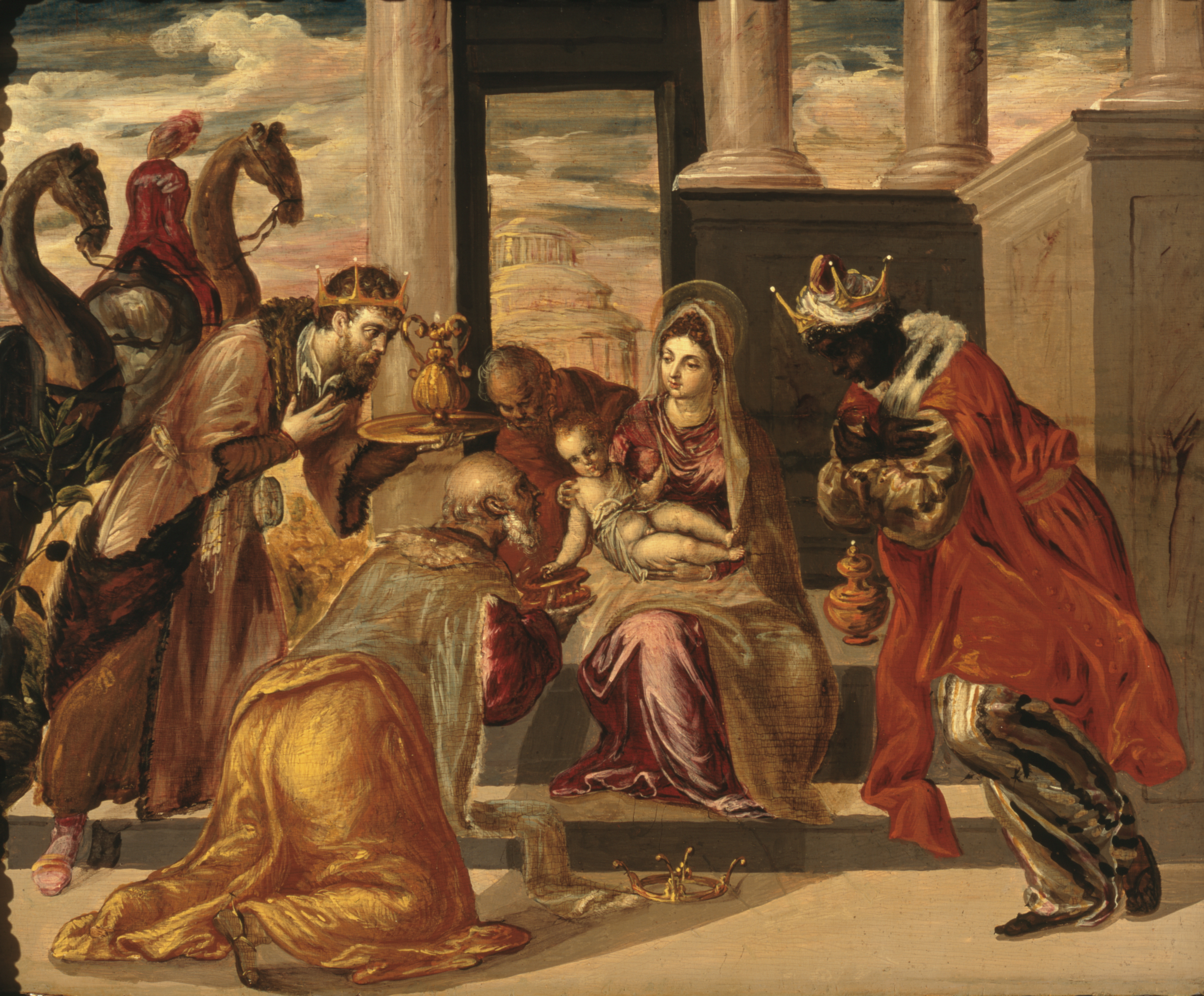
j-and-m-and-jToday’s Gospel gives us some background for the Christmas feast that we need to take to heart. It speaks to us of a crisis at Christmas.

We tend to sentimentalize the Christmas story as we think of the baby Jesus in the manger. It is not absolutely wrong to be sentimental, but we must also be prayerfully sober about how difficult that first Christmas was, and about the heroic virtue required of Mary and Joseph in order to cooperate with God in making it come to pass.

Let’s look at this Gospel in three stages: distress, direction, and decision.

  1. DISTRESS This is how the birth of Jesus Christ came about. When his mother Mary was betrothed to Joseph, but before they lived together, she was found with child through the Holy Spirit. Joseph her husband, since he was a righteous man, yet unwilling to expose her to shame, decided to divorce her quietly.

The marriage is off. When we read that Mary was found to be with child before she and Joseph were together, we need to understand how devastating and dangerous this situation was. Pregnancy in this circumstance  brought forth a real crisis for both families involved in Joseph and Mary’s marriage plans. Quite simply, it put all plans for the continuation of the marriage permanently off.

Why is this? We read that Joseph was a “righteous man.” To our ears this like saying that he was a “good man.” Most of the Fathers of the Church interpreted “righteous” here to refer to Joseph’s gracious character and virtue where he steps back from a sacred situation. And we surely suppose all this of him. More recent biblical scholarship includes the idea that it meant Joseph was also an “observer of the Law.” He would thus do what the Law prescribed. This explains his decision to divorce Mary because of her apparent lack of virginity prior to their coming together in the  marriage. Here is an example of the Mosaic Law in reference to such a matter:

But if the tokens of virginity were not found in the young woman, then they shall bring out the young woman to the door of her father’s house, and the men of her city shall stone her to death with stones, because she has wrought folly in Israel by playing the harlot in her father’s house; so you shall purge the evil from the midst of you (Deut 22:20-21).

While this seems quite extreme to us, we can also recognize how far we have gone in the other direction in modern times, making light of promiscuity. I doubt that anyone would argue that we should stone such a woman today, and rightly so, but this was the landscape in Joseph’s time.

What about stoning? It would seem that Jews of the first century had varying interpretations about whether stoning was required or whether it was simply permitted (cf John 8). As a virtuous and patient man, Joseph looks for and senses some freedom in not “exposing” Mary to the full effects of the Law (stoning). But it does not seem he can find a way that he can take her into his home. Thus, as a “righteous man” (i.e., follower of the Law) he decides that divorce is required even if stoning is not.

This leads us to two important reflections, one about Mary and one about Joseph.

Mary – We can see into what a difficult and dangerous position her yes (her fiat) to the angel placed her. She risked her very life by being found with child outside the normal marital act with her husband. We know that it is by the Holy Spirit she conceives, but her family and Joseph and his family do not yet, or at least cannot verify it. And even if Mary explained exactly how she conceived, do you think you would accept such a story? Mary’s fiat placed her in real danger. It is a great testimony to her faith and trust in God that she said yes to His plans.

Joseph – We can also see the kind of pressure he would be under to do what the Law and custom required. There is no mention of Joseph’s feelings at this point, but we can assume that when Mary was found to be with child prior to their being together in marriage, the social pressure on him to be legally freed from Mary were strong, regardless of his feeling or plans.

  1. DIRECTION Such was his intention [to divorce] when, behold, the angel of the Lord appeared to him in a dream and said, “Joseph, son of David, do not be afraid to take Mary your wife into your home. For it is through the Holy Spirit that this child has been conceived in her. She will bear a son and you are to name him Jesus, because he will save his people from their sins.”

Be not afraid. The principal exhortation of the angel was that Joseph “not be afraid” to take Mary as his wife. This exhortation is powerful because fear was a very big factor. Joseph had much to fear in taking Mary. Some of the Fathers of the Church believed that what the angel meant was that Joseph should not fear God’s wrath, since he would not actually be taking an adulterer or fornicator into his home. Others think that the angel meant that Joseph should not fear taking God’s chosen instrument (Mary) as his wife.

One can also imagine some other fears that needed to be allayed by the angel. For example, Joseph could easily be rejected by his family for taking Mary in. The community could likewise shun him, and as a businessman, Joseph needed a good reputation to be able to ply his trade. All of these threats loom if Joseph “brings evil” into his house rather than purging the (apparent) evil from the midst of his house. But the angel directs him not to fear; this will take courageous faith.

The angel’s explanation is unusual to say the least. What does it mean to conceive by the Holy Spirit? It’s not exactly a common occurrence! Would his family buy such an explanation? What about the others in the small town of Nazareth? Yes, people were more spiritual in those days, but it all seems so unusual!

Further, Joseph hears all this in a dream. We all know what dreams can be like. They can seem so real at the time, but when we are fully awake we wonder if what we experienced was real at all. Joseph has to trust that what he was told is real, and that he should not be afraid because God has given him direction. As is often the case with things spiritual, we have to carefully discern and walk by faith, not by fleshly sight and certitude. Joseph has a decision to make.

  1. DECISION When Joseph awoke, he did as the angel of the Lord had commanded him and took his wife into his home.

We can see the strong faith of Joseph and the kind of trust he had to put in God. He had been told not to be afraid, to rebuke fear. Manfully, Joseph does this. He makes the decision to obey God whatever the cost. We are given no information about how his family and others in the town reacted. However, the fact that the Holy family later settles back in Nazareth indicates that God did come through on His promise that Joseph need not be afraid.

Heroes of Faith! Recognize the crisis of that first Christmas and the powerful faith of Joseph and Mary. Their reputations were on the line, if not their very lives. They had great sacrifices to make in the wondrous incarnation of our Lord. Quite simply, Mary and Joseph are great heroes of the faith. For neither of them was their “yes” easy. It is often hard to obey God rather than men. Praise God that they made their decision and obeyed.

Mary and Joseph’s difficulties were not yet over. There was a badly timed census, which required a journey to Bethlehem in the ninth month of Mary’s pregnancy. Imagine walking 70 miles through mountainous terrain in such a condition! There may or may not have been a donkey, but I doubt that riding a donkey in the ninth month of pregnancy is all that comfortable either. And then there was no room in the inn; Jesus had to be born in a smelly stable. Shortly thereafter they had to flee through the desert to Egypt because Herod sought to kill Jesus.

Jesus is found in a real Christmas, not a “Hallmark” one. The crisis of the first Christmas prefigures the passion. This where Jesus is found: in the crisis of the first Christmas. You may wish for the perfect Christmas, but there is no perfect Christmas. Jesus will find you where you are, in real life, in the imperfect Christmas, where loved ones have passed away and there is grief, where a job has been lost and there is anxiety, where health is poor and there is stress, where families are experiencing strife. That’s where Jesus will be found, in your real Christmas. A Christmas of joy, yes, but also of imperfections, even crises. He is there waiting for you to find Him, in the real Christmas of your life.

This is an old African-American spiritual that reflects on the fact that true discipleship isn’t always easy. Joseph and Mary surely experience and exemplify what these words express.

I tol’ Jesus it would be all right
If He changed my name

Jesus tol’ me I would have to live humble
If He changed mah name

Jesus tol’ me that the world would be ‘gainst me
If He changed mah name

But I tol’ Jesus it would be all right
If He changed mah name

The Perfect Gift: A Homily for the 3rd Sunday of Advent.

What is the perfect gift? We tend to answer this question more in terms of what we want, but today’s Gospel teaches us that the perfect gift is what God is offering. One of the goals of the spiritual journey is to come to value, more than our latest desire, more than our perceived need—more than all else—what God offers.

The Gospel opens with John (who is in prison) sending his disciples to Jesus with a strange question: “Are you he who is to come, or should we look for another?” This is a strange question coming from the one who pointed Jesus out and spoke so powerfully of Him! Many of the Fathers of the Church (e.g., John Chrysostom, Gregory the Great, Theodore of Mopsuestia) interpreted John’s question as a rhetorical one,designed to teach his reluctant disciples to follow Jesus.

Essentially it does not matter if it is John or his disciples that are puzzled. It is we readers who really have this question. It is us that must accept the Messiah, Jesus as he is, not as we would wish him to be.

Today’s Gospel is best seen in three stages, as we are encouraged to make a journey from puzzlement, through purification, to perfection; a journey to understand that the perfect is gift is not one of our own imagining but of God’s true offer. It is a Gospel that encourages us to find and appreciate the perfect gift.

Puzzlement When John the Baptist heard in prison of the works of the Christ, he sent his disciples to Jesus with this question, “Are you the one who is to come, or should we look for another?”

This is a strange question given what St. John had already done!With delight, John had pointed out Christ as He approached, saying, Behold, the Lamb of God(John 1:29). With humble hesitation, John had baptized the One who would change everything. He encouraged his disciples to follow after the One who was mightier than he. So why this unusual question?

If John or his disciples seem puzzled, Consider that John’s comments in last week’s gospel had spoken of a Messiah who would root out injustice, crush the wicked, destroy the oppressors, and exalt the poor and the oppressed. Recall his words from last Sunday’s Gospel:

Even now the axe is laid to the root of the trees; every tree therefore that does not bear good fruit is cut down and thrown into the fire. “I baptize you with water for repentance, but he who is coming after me is mightier than I, whose sandals I am not worthy to carry; he will baptize you with the Holy Spirit and with fire. His winnowing fork is in his hand, and he will clear his threshing floor and gather his wheat into the granary, but the chaff he will burn with unquenchable fire(Mat 3:10-12).

John is now in prison, relegated there by a tyrant, an oppressor—the very sort of man John was sure that the Messiah would cut down and cast into the fire. Some might have wondered, based on that, Where was the hoped-for deliverance? Where was the exaltation of the lowly and the casting down of the mighty? Where was the axe being laid to the root of the tree? Jesus was not doing this sort of thing at all. Although He had some confrontations with religious leaders, His main work seems to have been healing the sick and summoning average people to repentance and faith.

Hence the question of some: Are you he who is to come, or should we look for another?

Other Old Testament texts had spoken of a wrathful coming of the Messiah. Here are a few:

        • Wail, for the day of the LORD is near; as destruction from the Almighty it will come. … Behold, the day of the LORD comes, cruel, with wrath and fierce anger, to make the earth a desolation and to destroy its sinners from it! … I will punish the world for its evil, and the wicked for their iniquity; I will put an end to the pride of the arrogant, and lay low the haughtiness of the ruthless. Therefore, I will make the heavens tremble, and the earth will be shaken out of its place, at the wrath of the LORD of hosts in the day of his fierce anger(Is 13:6-10).
        • Who can stand before his indignation? Who can endure the heat of his anger? His wrath is poured out like fire, and the rocks are broken asunder by him(Nahum 1:6).
        • But who can endure the day of his coming, and who can stand when he appears? (Mal 3:2)

John had worked hard calling people to repentance in order to get them ready for the great and terrible day of the Lord. Hence the  puzzlement is thus understandable from him or his disciples; Jesus goes about healing and preaching, and instead of slaying the wicked, endures scorn and ridicule from those in power.

The “perfect gift” for John or his followers would be to see all injustice rooted out, to see the threshing floor cleared and the distinction between the wheat and the chaff made obvious, to see the wicked burned with fire and the righteous shine like the firmament. Like many of the prophets, John sensed that the perfect gift was this: let judgment run down as waters and righteousness as a mighty stream(Amos 5:24).

Of itself this is a good and biblical vision that will one day be accomplished. But at this point is it the perfect gift? Is it the gift that Jesus wants to offer? What is the perfect gift?

Purification Jesus gives an answer to John’s disciples that draws from a different tradition of Messiah texts than those John had emphasized. The Old Testament texts that spoke of the Messiah were complicated and at times hard to interpret. While some texts spoke of His wrath toward the wicked and unjust, others spoke of His healing and mercy.

The differences in the description of the Messiah had a lot to do with the context, the audience, and also the possibility that the Messiah’s ministry might be accomplished in stages. Hence, while the comments John the Baptist last week were not wrong,  these wrathful and vindicating texts of the Messiah, the New Testament tradition came to understand such texts more in terms of the Messiah’s second coming than his first.

Jesus thus gives the following answer to those sent by John:

Go and tell John what you hear and see: the blind regain their sight, the lame walk, lepers are cleansed, the deaf hear, the dead are raised, and the poor have the good news proclaimed to them.

In this answer, Jesus stitches together many quotes and prophecies about the Messiah, mostly from Isaiah. For example, consider the following:

        • In that day the deaf shall hear the words of a book, and out of their gloom and darkness the eyes of the blind shall see. The meek shall obtain fresh joy in the LORD, and the poor among men shall exult in the Holy One of Israel(Isaiah 29:18-19).
        • The Spirit of the Lord GOD is upon me, because the LORD has anointed me to bring good tidings to the afflicted; he has sent me to bind up the brokenhearted, to proclaim liberty to the captives, and the opening of the prison to those who are bound; to proclaim the year of the Lord’s favor, and the day of vengeance of our God; to comfort all who mourn(Is 61:1-3).
        • The dead shall live, their bodies shall rise. O dwellers in the dust, awake and sing for joy! For thy dew is a dew of light, and on the land of the shades thou wilt let it fall(Is 26:19).
        • Then the eyes of the blind shall be opened, and the ears of the deaf unstopped; then shall the lame man leap like a hart, and the tongue of the dumb sing for joy(Is 35:5-6).

There is a need to purify our sense of what is best for God to do, to come to a better appreciation of the perfect gift.

To those who are disappointed in His lack of wrathful vengeance, Jesus says something quite remarkable: And blessed is the one who takes no offense at me.

Many of us have been hurt by others or have been deeply troubled by the fact that the wicked seem to prosper while the just struggle.When will God act? Why doesn’t He do something? It is very easy for us to be puzzled, discouraged, or even offended by God’s seeming inaction.

To all this Jesus simply says, And blessed is the one who takes no offense at me.

It is essential to accept Jesus’ teaching in order to have our sense of the perfect gift purified.Rejoicing in any other gifts than grace and mercy is very dangerous. Hoping for a wrathful punishment to be inflicted on the proud and all sinful oppressors, or wishing this upon individuals or even whole segments of the world, is very dangerous. The last time I checked, all of us are sinners.

Here, then, is the necessary purification in our thinking: God’s greatest gift is not the crushing of our enemies; it is His Son, Jesus. He is the Perfect Gift.

Further, it is not Jesus’ wrath that is His greatest gift; it is His grace and mercy. That is the perfect gift from the Perfect Gift.Without Jesus and a whole lot of His grace and mercy, we don’t stand a chance.

Perfection – And thus we see that the perfect gift is the grace and mercy of Jesus. It is not the destruction of our enemies. It is not a sudden, swift ushering in of justice before God’s chosen time. The perfect gift is the grace and mercy of Jesus, which all of us without exception desperately need.

In order to emphasize the absolute necessity of grace and mercy, and the perfect gift that they are, Jesus turns to the crowds and speaks of St. John the Baptist:

Jesus began to speak to the crowds about John, “What did you go out to the desert to see? A reed swayed by the wind? Then what did you go out to see? Someone dressed in fine clothing? Those who wear fine clothing are in royal palaces. Then why did you go out? To see a prophet? Yes, I tell you, and more than a prophet. This is the one about whom it is written: Behold, I am sending my messenger ahead of you; he will prepare your way before you. Amen, I say to you, among those born of women there has been none greater than John the Baptist.”

And thus St. John the Baptist is the best that this world has produced. But pay attention to what the Lord says next:

Yet the least in the kingdom of heaven is greater than he.

Do you see what grace and mercy can do? Do you see that they surpass any worldly excellence? The world can produce only human, worldly excellence. Grace and mercy produce heavenly excellence and make us like unto God. Without these gifts of God, we don’t stand a chance. John the Baptist needed grace and mercy; Mother Teresa needed grace and mercy. Grace and mercy are perfect and necessary gifts.

One day the perfect justice of God that we all seek will roll in. But unless and until you receive the perfect gift of grace and mercy through Jesus, you will not be able to endure the perfect justice of God. So until that time, it has pleased God to offer us the perfect gift of His Son, who by His grace and mercy will prepare us for that day.

If you are looking for the perfect gift this Christmas, look to Jesus. He alone can bestow the grace and mercy that we so desperately need. If even the holy St. John the Baptist was in need, how much more so you and I? Grace and mercy far exceed anything we can ask for or imagine.

Do you want to give the perfect gift to others?Then bring them to Jesus; bring them to Mass. Jesus awaits us in prayer, in the liturgy, in His Word proclaimed, and in the sacraments. Jesus is the perfect gift. The destruction of sinners is not the perfect gift; their conversion and salvation is.

Find the perfect gift this Christmas; find Jesus. Give the perfect gift this Christmas; give Jesus. Give Jesus the perfect gift this Christmas; give Him the give of your very self—the perfect gift.

A Prophet Who Prepares. A Homily for the Second Sunday of Advent

The Second Sunday of Advent usually features the Ministry of St. John the Baptist. He was the Prophet who fulfilled the Office of Elijah of whom it was said: See, I will send the prophet Elijah to you before that great and dreadful day of the Lord comes. He will turn the hearts of the fathers to their children, and the hearts of the children to their fathers; or else I will come and strike the land with total destruction (Mal 4:4-6).

Therefore St. John is a prophet who prepared the people of his time for the coming of Jesus, by summoning them to repentance and opening them to the Kingdom of God in its fullness.

But of course the coming of Jesus for which St. John prepared them has been fulfilled. And thus, for us who ponder John’s office, we need to realize that the coming of Christ for which we must be ready is his Second Coming.

Who is “John the Baptist” for us? Surely it is the Church, which Christ founded to prepare a people for him and draw us from darkness to light. But of course we experience the Church, not as an abstraction, but more locally in our Bishop, priests and deacons. Further we experience the Church in our parents and catechists. Through them all, the Church fulfills her mission to be a Prophet who prepares us.

And further, if you are prepared to accept it, YOU are also called to be a prophet who prepares others for the coming of Christ as judge. You do not work independent of the Church (at least you better not!). Rather the Church works through you.

The Catechism of the Catholic Church speaks of our prophetic office in the following way:

[the baptized] must profess before men the faith they have received from God through the Church” and participate in the apostolic and missionary activity of the People of God. (CCC, 1270)

So, we have an obligation to evangelize and to be prophets in this world who prepare others for judgement day. We are called to go before the Judge who is to follow and prepare the hearts of people we know.

But how can we do this effectively? What are the some of the essential ingredients of being a prophet who prepares? The ministry of St. John the Baptist in today’s Gospel provides four principles for prophets who prepare.  Let’s look at the elements that are displayed

I. Poise . Poise here refers to balance. The text says, John the Baptist appeared, preaching in the desert of Judea and saying, “Repent, for the kingdom of heaven is at hand!” Note the content of John’s preaching is twofold. He first says, “Repent!” And then adds, “For the Kingdom of God is at hand.”

Here is a balance to get right. The preacher and the prophet must speak frankly of sin and call people to repentance. But the prophet must also speak of the grace available to conquer that sin and the Good News that the Kingdom of Heaven is now open and available. Hence John the Baptist is willing and able to declare the reality of sin and the necessity of repenting from it. But he is also able to declare the availability of the Kingdom wherein one is able to find the grace to overcome sin.

Too many preachers, catechists and even parents lack this balance. In the past, some argue, that sermons were all fire and brimstone. Today it is too often, the steady diet “God is love” with little reference to the need to repent. This is one explanation of why our Churches have emptied in the past 40 years.

This is because the good news only has relevance and significance if the bad news is first understood. If you don’t know the bad news, the good news is no news. To illustrate, suppose you are looking at a newspaper and see a headline that announces a cure for a deadly disease has been found. But what if you have never heard of this disease and don’t even know you have it? It is not likely you will read the article, it will be only of passing interest. But, now suppose you know of this disease, and that you have it, and you know others who have it. Suddenly this headline jumps out, is very relevant, causes joy and is an article to read very carefully by you! Because you know very personally the bad news of the disease, the good news of the cure now means everything to you.

It is the same with the Kingdom. We have to know the bad news of sin in a very personal and profound way if the Good News of Salvation is going to be appreciated. But in the Church we have lately soft-pedaled the bad news. Thus the Good News is irrelevant to people and the medicine of the cure is pointless. Why pray, receive sacraments or read scripture if everything is really fine? Why bother coming to Church for all that stuff? Hence our Churches have emptied, in part, due to a lack of the proper balance of repent and the Kingdom of God is at hand.

If we are going to be powerful and effective prophet we are going to have to be able to speak frankly to others about the reality of sin and balance it with the joyful announcement of the Kingdom with its grace and mercy now being available. Prophecy must be proper by having the right balance.

Notice the St. John the Baptist wasn’t messing around and sugar-coating things. He was explicit, we need to repent or else. He spoke of a coming day of wrath and judgement for those who did not do so. He spoke of the axe being laid to the root of the tree. He spoke of fiery judgment, and unquenchable fire. And to the self-righteous he was not afraid to equate their pride with that of the ancient serpent, calling them vipers.

Too many are afraid to speak like this today, and therefore lack the balance necessary for a true preparing prophet. St. John joyfully announced the in-breaking of the Kingdom of God and the coming of the Messiah, but he spoke of repentance as the door of access. Do we have this balance, or do we preach mercy without repentance?

II. Product –  The text says, At that time Jerusalem, all Judea, and the whole region around the Jordan were going out to him and were being baptized by him in the Jordan River as they acknowledged their sins.

Here is the desired product of powerful prophecy: repentance unto salvation for all who believe. Prophets want to save people by drawing them to God’s grace, this is goal, the salvation of souls! Preparing prophets do not seek merely to scare people, they seek to prepare people.

To repent, to come to a new mind and heart by God’s grace, is to be prepared. This is the central work of the prophet who prepares and thus works to save others: repentance is unto salvation.

St. Paul wrote to the Corinthians about this aspect of prophecy and preaching. He is aware that he grieved some of them due to a strong rebuke he gave the community (cf 1 Cor 5) but he is glad that it produced a godly sorrow which in turn produced repentance and holiness. He also distinguishes between godly sorrow and worldly sorrow:

Even if I caused you sorrow by my letter, I do not regret it. Though I did regret it—I see that my letter hurt you, but only for a little while—yet now I am happy, not because you were made sorry, but because your sorrow led you to repentance. For you became sorrowful as God intended and so were not harmed in any way by us. Godly sorrow brings repentance that leads to salvation and leaves no regret, but worldly sorrow brings death. See what this godly sorrow has produced in you: what earnestness, what eagerness to clear yourselves, what indignation [at sin], what alarm, what longing, what concern, what readiness to see justice done…..By all this we are encouraged. (2 Cor 7:8-13)

An old priest once told me, “Never think you have preached well unless the line to the confessional is long.” Good preaching, among other things produces repentance unto salvation. It may cause some to be mad or sad, but if it is proper prophecy, it will produce a godly sorrow and the madness and sadness gives way to gladness. Here is the expected product of proper preaching: repentance unto salvation.

III. Purity – The text says: When [John] saw many of the Pharisees and Sadducees coming to his baptism, he said to them, “You brood of vipers! Who warned you to flee from the coming wrath? Produce good fruit as evidence of your repentance. And do not presume to say to yourselves, ‘We have Abraham as our father.’ For I tell you, God can raise up children to Abraham from these stones. Even now the ax lies at the root of the trees. Therefore every tree that does not bear good fruit will be cut down and thrown into the fire.

John the Baptist had no fear of people’s opinion and would not compromise the message based on his audience. All the credentials of the temple leaders did not impress him. Neither did the status of the Jews as the chosen people cause him to soften his message. John had no fear of human opinion, no need for the good favor of others, especially the rich and powerful.

Because of this his preaching had purity. He did not compromise the message out of fear or the need to flatter others. He spoke boldly, plainly and with love and desire for the ultimate salvation of all. If that called for strong medicine he was willing to do it.

The ancient martyrs went to their death proclaiming Christ but many of us moderns are afraid even of someone raising their eyebrows at us. Fear is a great enemy of powerful prophecy for by it many remain silent when they should speak. The fear of what other people may think causes many to compromise the truth and even sin against it. This sort of fear has to go if our prophecy is going to have the purity necessary to reach the goal.

IV. Person –  The text says, I am baptizing you with water, for repentance, but the one who is coming after me is mightier than I. I am not worthy to carry his sandals. He will baptize you with the Holy Spirit and fire. His winnowing fan is in his hand. He will clear his threshing floor and gather his wheat into his barn, but the chaff he will burn with unquenchable fire.

John’s audience and disciples were fascinated by him, and drawn by his charisma. But as they want to know more about him, John talks instead about Jesus. That’s the message, “Jesus, not me.” If we are going to be powerful prophets the message has got to be about Jesus, not about me and what I think. We are not out to win an argument and boost our own egos. We are not out to become famous. We are about Jesus Christ and his gospel, his message, his truth. John said of Jesus, “He must increase, I must decrease” (John 3:30). A prophet speaks for the Lord, not himself. A prophet announces God’s agenda not his own. A prophet is about Jesus.

Here then are four Principles of Powerful Prophecy: Poise, Product, Purity, Person.

You are now a preparing prophet whom the Lord seeks. Someone was John the Baptist for you. Someone brought you to Christ. Thank God for that individual or those individuals. But you too are to be John the Baptist for others. Learn from John, apply his principles and make disciples for Jesus Christ.

A Recipe for Readiness – A Homily for the First Sunday of Advent

The first weeks of Advent focus more on the Lord’s second coming in glory than on His first coming at Bethlehem. The gospel clearly states that we must always be prepared, for at an hour we do not expect, the Son of Man will come. “Ready” is the key word, but how should we be ready? 

The second reading from today’s Mass (Romans 13:11-14) gives us a basic recipe for readiness. We can distinguish five fundamental instructions in Paul’s recipe.

Wake up – The text says, … you know the time; it is the hour now for you to awake from sleep. For our salvation is nearer now than when we first believed; the night is advanced, the day is at hand. Let us then throw off the works of darkness and put on the armor of light; let us conduct ourselves properly as in the day, …

Although St. Paul has more in mind here than physical sleep, let’s consider for a moment some its aspects. When we sleep, we are unaware of what is taking place around us or even of what we are doing. A family member might tell us, “You were snoring and mumbling in your sleep!” “Really?” we might reply, “I didn’t realize I was doing that!” Another time we might doze off in front of the television and miss the game-winning touchdown or the critical scene that helped the movie to make sense. Further, when we are asleep our minds are dreamy and confused. Some of the craziest things happen in dreams because the more rational part of the brain is asleep; any absurd thought might manifest itself and seem perfectly understandable. When we finally do awake, we think, “What was that all about?”

This text, which tells us to wake up, refers to the moral and mindful sense of sleep. What St. Paul is really saying here is that we need to become more aware of what is happening in our life.

We cannot sleep through life like someone who is dozing on a couch. We need to be alert and aware of what is happening. We need to be morally awake and responsible for our actions. We cannot and must not engage in dreamy thinking that is not rooted in reality or is fundamentally absurd in its premises.

We need to be alert, rooted in what is real and what is revealed. We cannot go on calling good what God has called sinful. We need to wake up, drink the “coffee” of God’s Word, shake off the cobwebs of drowsiness, and start living in the light of holiness rather than in the darkness of deceit and sin.

Waking up also means taking responsibility and exercising authority over one’s life. When we sleep, we toss and turn, having little control over our movements, but when we are awake, we have authority over our actions and are responsible for them.

The first instruction in the recipe for readiness is to wake up. The cobwebs of groggy behavior must give way to the alertness of a new mind. There are many passages in Scriptures that make a similar point:

      • Do not be conformed to this world but be transformed by the renewal of your mind, that you may prove what is the will of God, what is good and acceptable and perfect (Rom 12:2).
      • Come to your right mind, and sin no more. For some have no knowledge of God. I say this to your shame (1 Cor 15:34).
      • Now this I affirm and testify in the Lord, that you must no longer live as the Gentiles do, in the futility of their minds; they are darkened in their understanding, alienated from the life of God because of the ignorance that is in them … put off your old nature, which belongs to your former manner of life and is corrupt through deceitful lusts, and be renewed in the spirit of your minds (Eph 4:17-18, 22-23).
      • Set your minds on things that are above, not on things that are on earth (Col 3:2).

Clean up – The text says, … not in orgies … not in promiscuity and lust … and make no provision for the desires of the flesh.

Notice the emphasis in this passage on sexuality. This is because the pagan world at the time of Paul was sexually confused and immature. Promiscuity, fornication, homosexual activity, divorce, abortion, and infanticide were all rampant. Sound familiar? We have slipped right back into that pagan immaturity and immorality. This text tells us it is time to clean up, grow up, and take authority over our sexuality, by God’s grace. It’s time to act more like adults than like irresponsible teenagers.

In saying that we should make no provision for the desires of the flesh, the text is indicating we should avoid the near occasion of sin. We should not put ourselves in compromising and/or tempting situations. To make “provision” literally means to “see ahead” or to “look toward” something in such a way as to facilitate it. The text says to resolve ahead of time not to provide occasion for the flesh.

Many people make light of sexual sin today, saying that it’s “no big deal” and that “everyone is doing it.” God says otherwise and speaks very strongly against it in His Word. He does not do this because He is a prude or because He wants to limit our fun. Rather, God wants to save us from a lot of suffering.

What does promiscuity get us? Sexually transmitted diseases, abortion, teenage pregnancies, children born outside of the nuclear and properly formed family, divorce, bitterness, jealousy, broken hearts, and discarded human beings. God is not out to limit our fun; He is trying to protect us. He is also trying to protect marriage and children. With all this promiscuity, it is children who suffer most. Many of them are simply killed by abortion. Those who do survive to be born are often raised in less-than-ideal settings, without both parents in the stable union of marriage. Many are born to teenage mothers who are not prepared to raise them.

God says that in order to be ready we have to clean up. We must take authority over our sexuality, by His grace. Promiscuity, pornography, illicit sexual union, and lust have to go. Those who make light of sexual sin have been deceived; it is a very serious matter and God makes this clear in His word:

      • As for lewd conduct or promiscuousness or lust of any sort, let them not even be mentioned among you; your holiness forbids this. Nor should there be any obscene, silly or suggestive talk; all that is out of place. Instead, give thanks. Make no mistake about this: no fornicator, no unclean or lustful person—in effect an idolater—has any inheritance in the kingdom of God. Let no one deceive you with worthless arguments. These are sins that bring God’s wrath down upon the disobedient; therefore, have nothing to do with them (Eph 5:3-7).
      • Can you not realize that the unholy will not fall heir to the Kingdom of God? Do not deceive yourselves: no fornicators, idolaters, or adulterers, no sodomites, thieves, misers, or drunkards, no slanderers or robbers will inherit the kingdom of God … Flee fornication … You must know that your body is a temple of the Holy Spirit, who is within—the Spirit you have received from God. You are not your own. You have been purchased at a price. So glorify God in your body (1 Cor 6:9-11).

Sober up – The text says, … not in drunkenness …

Physically, to be drunk means to have our mind confused due to the influence of alcohol. Conversely, to be sober is to have a clear mind that is capable of making sound judgments.

So much of our battle to be ready to meet God comes down to our mind. There are many fuzzy-headed, crazy, and just plain wrongful notions today that come out of a lack of sobriety. They emerge from the haze of unsound thinking and from a world that increasingly resembles the famous Star Wars barroom scene (in a moral sense).

Don’t believe everything you think. Much of what we think has come from a drunken and confused world. Reconcile everything you think with God’s Word and the teachings of the Church.

So, the third instruction in the recipe for readiness is to sober up, to request and receive from God a clear and sound mind. Here are some other Scripture passages that speak to this need:

      • Therefore, gird up your minds, be sober, set your hope fully upon the grace that is coming to you at the revelation of Jesus Christ (1 Peter 1:13).
      • Be sober, be watchful. Your adversary the devil prowls around like a roaring lion, seeking some one to devour. Resist him, solid in your faith (1 Peter 5:8).
      • Let the older men be sober, serious and temperate (Titus 2:2).

Lighten up – The text says, … not in rivalry and jealousy …

An awful lot of our sins revolve around our sensitive egos. In Galatians, Paul warns of other things that flow from this source: enmity, strife, anger, selfishness, dissension, factions, and envy (Gal 5:20).

These sorts of things have to go. We need to be more forgiving if we expect to be forgiven. We also need to be less stingy, more generous to the poor, and less prone to the kind of anger that comes from being thin-skinned or from a lack of humility.

Our biggest sin is pride; it is enemy number one. It has to go and along with it all its minions: envy, jealously, selfishness, hatred, fear, bitterness, a hard and unforgiving heart, and just plain old meanness.

The Lord wants to give us the gift of being more lighthearted and less serious about ourselves. He wants to give us a heart that is loving, generous, considerate, happy for the gifts of others, forgiving, truthful, patient, meek, and open to others; a heart that is less egocentric and more theocentric.

Dress up – The text says, But put on the Lord Jesus Christ …

If we miss this point, then everything else is just a bunch of rules about how to live. The moral life of the New Testament is not achieved; it is received. The moral life of the New Testament is not so much a prescription, as it is a description. It describes what we are like when Jesus Christ really begins to live His life in us.

St. Paul says, I have been crucified with Christ; and it is no longer I who live but Christ lives in me (Gal 2:20). Jesus says, I am the vine; you are the branches. Those who remain in me, and I in them, will produce much fruit. For apart from me you can do nothing (John 15:5). St. John says, But if anyone obeys his word, God’s love is truly made complete in him. This is how we know [i.e., experience that] we are in him: Whoever claims to live in him must walk as Jesus did (1 John 2:5-6).

Hence, the moral life is not imposed; it is imparted. It is not achieved; it is received. It is not demanded; it is delivered. There is surely a requirement that the moral law describes, but it can only be met in a real or full sense when Jesus Christ is living in us. If we try to accomplish it solely by our own flesh, we are destined to fail.

We must put on the Lord Jesus Christ. We must humbly give Him our life and assent to His kingship and authority over us. The more we surrender, the more He renders us fit to the life He describes. If we really hope to wake up, clean up, sober up, and lighten up, it will have to be a work of His grace.

The Book of Revelation speaks of the garment, the long white robe that is given to each of the saints to wear (Rev 6:11). Later, Revelation 19:8 describes the long white robe (of the Bride of the Lamb) as the righteous deeds of all the saints. It is in this sense that St. Paul tells us to “put on the Lord Jesus Christ.”

Hence, righteousness is given to us like a precious wedding garment. In the baptismal ritual, the newly baptized are clothed in white and told that their garments represent their dignity, which they are to bring unstained to the judgment seat of Christ. In the funeral rite, the cloth placed over the casket recalls the baptismal garment. Yes, the final instruction in the recipe for readiness is to dress up, to “put on the Lord Jesus Christ.” Only Jesus can truly get us ready.

Heaven is an Acquired Taste

There is a tendency today to forget that Heaven is an acquired taste; not everyone wants what God offers. While everyone wants to be happy, often happiness is conceived of in an egocentric way. Heaven is thought of as a personally designed paradise where we will be happy on our own terms.

But that is not what Heaven is. Heaven is the Kingdom of God in all its fullness. Its values and qualities are manifold but include many things that are not immediately desirable to those who live with hearts and minds that are worldly and sinful. The Kingdom of God features ideas that are often unpopular: love of one’s enemies, generosity, love of the poor, and chastity. Heaven features God and His teachings at the center, not me and what I think. Yes, Heaven is a place where every aspect of God’s law is perfectly manifested. Yet many find some of these things not only undesirable but downright obnoxious; some even call them hateful and intolerant. To those in darkness, the light seems harsh.

Yes, Heaven is an acquired taste. This helps to explain that the existence of Hell is not due to a “mean” God trying to remove people whom He doesn’t like from His presence. It is a respectful acceptance by God of the free decision made by those who do not want what He is offering. They do not want to think differently or even be told what to think. They do not want to give up their favorite sins or have their hearts purified of unruly or disordered appetites. In the end, God will not force us to love what and whom He loves. He will not force us to live in His Kingdom.

In his book The Great Divorce, C.S. Lewis makes this very point. In it, many people come to “tour” Heaven, some of whom do not like what they find. Some struggle to adjust, others are resentful and say, in effect, “No thanks.” If you have not read it, I strongly encourage you to do so; it is an important book to read and ponder.

In yesterday’s Gospel, the Lord inquires after our hearts by giving us the images of buried treasure and a pearl of great price. The one who finds them goes and sells all he has in order to obtain them. Does this describe your heart? Does it describe the hearts of our family, friends, and compatriots? Often, the answer is no. Most people are not will to give up everything for the Kingdom of Heaven. Our hearts are disordered. We easily desire things that are sinful and harmful, and not so much those that are good, holy, and lasting. We prefer apparent goods to true goods. If we are faithful, the Lord can get us to that disposition of heart—but it takes time. At least grant Him your willingness to get to that place!

In yesterday’s Gospel the Lord also speaks of a dragnet. While he uses it as an image for the final judgment, that final judgement ultimately depends on the myriad judgments we make in our daily life. As you haul the net of your life ashore, what do you keep, finding it valuable, and what do you discard? Do you value what God is offering and retain it or do you more highly value other things in the net? What do you keep and what do you discard? The answers to questions like these points to your place in the net at the last judgment. God will gather into His Kingdom those who have desired it, not those who have rejected it.

Give the Lord your heart. Open when He knocks. Let Him create a desire in you for the very things He is offering. In the end, Heaven is an acquired taste, more so than we commonly imagine. Let God give you a taste for better and higher things.

This song says, “I’m trying to make heaven my home!”

Do You Desire Heaven? Really?

This is the sixth in a series of articles on the Four Last Things: Death, Judgment, Heaven, and Hell.

After some sobering reflection on death and judgment over the past several days, it’s finally time to talk about Heaven. Now that is a topic everyone wants to hear about! Yet there is a strange disconnect today. As it becomes easier and easier to satisfy our desire for instant gratification, we find it harder and harder to take the time to ponder a future paradise.

Almost no one talks about Heaven today—except perhaps at funerals—and then it is often to inappropriately presume the instant promotion of the deceased through Heaven’s gate.

The way most of our prayers sound today, it seems that we would be content to have God make this world a better place. People will ask God to improve their health and solve their financial problems, but rarely will they express any desire to go to Heaven and be with Him. It is almost as if we were saying to God, “If you’ll make this world a little more comfortable I’ll just stay here forever!”

Many older prayers speak of longing for Heaven. The “Hail, Holy Queen” laments that we live in exile, in a valley of tears, and are poor, banished children of Eve, who long to see the blessed fruit of Mary’s womb, Jesus. Many old hymns refer to being free at last, to flying away to Heaven some bright morning when this life is over, to looking forward to that day. Yes, soon and very soon we are going to see the King! Older churches were designed to remind Catholics of Heaven; their structures were often centered around the vision of Heaven.

Do you long for Heaven or are you just trying to make it through the day? When was the last time you heard a sermon about Heaven? Does the thought of it excite you? It is after all our reward, which eye has not seen and ear has not heard!

A big factor for the lack of longing for Heaven is that our lives are so comfortable these days. It is a kind of comfort that both distracts us from spiritual things and focuses us on worldly things. Our comforts also make the cross seem strange, even immoral. If Heaven is obtained through the cross, many say “It’s too much trouble.” They would rather focus on getting that new channel added to their cable television service or planning a cruise.

Add to this that we live in a world that is utterly upside down, a world in which most are not rich in what matters to God, a world that obsesses over passing and trivial things and pays little mind to eternal and heavenly things. Learning to love Heaven can mean some pretty radical things. It often means being willing to be 180 degrees out of phase with the world’s priorities and preoccupations.

St. Cyprian pondered this problem, which seems to have been evident to some degree in the wealthy city of Carthage:

[Regarding death] we struggle and resist like self-willed slaves and are brought into the Lord’s presence with sorrow and lamentation, not freely consenting to our departure, but constrained by necessity.

Why then do we pray for the kingdom of heaven to come if this earthly bondage pleases us? … If we should rather serve the devil here than reign with Christ?

The world hates Christians, so why give your love to it instead of following Christ, who loves you and has redeemed you? So banish the fear of death and think of the eternal life that follows. That will show people that we really live our faith.

Who of us, if he had long been a sojourner in a foreign land would not desire to return to his native country? Who of us, when he had begun to sail there would not wish for a prosperous wind to carry him to his desired home with speed, that he might sooner embrace his friends and relatives? We must account paradise our country (De Mortalitate, 26).

Heaven is something we must learn to love. In this it is like many of the finer things in life. Its appeal may not be immediately obvious, but having been trained in its ways, we learn to love it very deeply.

If we think that it is only natural to love Heaven, we must become more sober. The fact is, we have obtuse spirits. We live in a fallen world, governed by a fallen angel, and we have fallen natures. We tend to love that which is destructive and harmful, and even knowing that, we are still attracted to it. We tend to esteem that which is foolish and passing, while glamorizing evil. We tend to call “good” or “no big deal” what God calls sinful.

G.K. Chesterton observed,

The point of the story of Satan is not that he revolted against being in hell, but that he revolted against being in heaven. The point about Adam is not that he was discontented with the conditions of this earth, but that he was discontented with the conditions of paradise (New York American, 12-15-1932).

If Satan revolted against Heaven even while still in Heaven, and Adam preferred something to paradise while still in paradise, how much more should we be sober about the fact that it is very easy for us, who have not yet seen paradise or Heaven, to despise or minimize the value of the glory of God’s Kingdom.

Help us, Lord, to desire Heaven, to learn its ways, to learn of you, and to love you above all things.

King of Thieves – A Homily for the Solemnity of Christ the King

Jesus Christ is King of Thieves, though He never stole. He is savior of sinners, though He never sinned.

Today’s Gospel chosen presents Jesus as reigning from the cross. Nothing could be more paradoxical. Let’s look at it from four perspectives:

Vision Today’s Gospel presents a vision or image of the Church.We like to think of more pleasant images: the Church is the Bride of Christ or the Body of Christ. Today’s image is more humbling to be sure: the Church is Christ, crucified between two thieves.

Yes, this is the Church too. In a way, we are all thieves.We are all sinners and have used the gifts and things that belong to God in a way contrary to His will. To misuse things that belong to others is a form of theft.

Consider some of the things we claim as our own and how easily we misuse them:our bodies, our time, our talents, our money, the gift of our speech, and the gift of our freedom. We call them ours but they really belong to God, and if we use them in ways contrary to His intention we are guilty of a form of theft.

Variance Consider, also, that the two thieves were very different. In the Church we have saints and sinners, and in the world there are those who will turn to Christ and be saved and others who will turn away and be lost.

One thief (the “bad thief”) derides Jesus and makes demands of Him.Are you not the Christ? Save yourself and us!The text says that this thief “reviles” Jesus, treating him with contempt.

The other thief (the “good thief”) reverences Christ and rebukes the other, saying,Have you no fear of God?The good thief recognizes his guilt: We have been condemned justly. He asks, Jesus remember me when you come into your kingdom, but he leaves the terms of it up to Christ. He acknowledges that he is a thief and now places his life under the authority of Christ the King.

Christ came to call sinners—thieves, if you will.Yes, we are all thieves, but pray God that we are the good thief, the repentant thief, the thief who is now ready to submit himself to the authority of Christ, who is King of all creation.

Heaven is a real steal, something we don’t deserve; it is only accessed through repentance and faith. The bad thief wants relief but will not open the door of his heart so that Jesus can save him. Mercy is offered and available to him, but it is accessed only through repentance and faith. The good thief does open the door of his heart and thereby is saved.

III. Veracity Is Christ really your king?A King has authority, so another way of posing this question is, “Does Christ have authority in your life?” Consider whether you acknowledge that everything you call your own really belongs to God and think about how well you use those gifts.

      1. How do you use our time?
      2. Are you committed to pray and to attend Mass every Sunday without fail?
      3. Do you use enough of your time to serve God and others, or merely for selfish pursuits?
      4. Do you use the gift of your speech to witness and evangelize, or merely for small talk and gossip?
      5. Do you exhibit proper care for your body?
      6. Are you chaste?
      7. Do you observe proper safety or are you sometimes reckless?
      8. Do you reverence life?
      9. Are you faithful to the Lord’s command to tithe?
      10. Do you spend wisely?
      11. Do you pay your debts in a timely way?
      12. Are you generous enough to the poor and needy?
      13. Do you love the poor and help them to sustain their lives?

It is one thing to call Christ our King, but it is another to be truly under His authority. The Lord is clear enough in telling us that he expects our obedience: Why do you call me, “Lord, Lord,” but do not do what I tell you? (Luke 6:46)

Is Christ your King? Which thief are you, really?

Victory The thief who asked Jesus to remember him manifested repentance, faith, and a kind of baptism of desire. In so doing, he moved into the victor’s column. Jesus’s words, Today you shall be with me in paradise,indicate a dramatic shift in the thief’s fortunes.

To be with Jesus—wherever He is—is paradise and victory. Soon enough, the heavens will be opened, but the victory is now and paradise begins now.

Thus the good thief claims the victory through his choice for Jesus Christ. Will you have the victory? That depends on whether you choose the prince of this world or the King of the Universe, Jesus. Some think that they can tread some middle path, choosing neither Jesus nor Satan. But if you do that, you’ve actually chosen the prince of this world, who loves compromise. Jesus says, Whoever is not with me is against me, and whoever does not gather with me scatters(Matt 12:30).

As for me, I’ve decided to make Jesus my choice. I pray that he will truly be my King in all things and that my choice will be more than mere lip service. Come, Jesus, reign in my heart. Let me begin to experience victory and paradise, even now!