The video below humorously illustrates a biblical principle of our hidden faults. We all have sins and behaviors that are apparent to others but of which we are unaware. And there are even deeper faults of which no one is aware except God Himself, who sees our innermost heart. Consider some of the following quotes:
By [your ordinances] your servant warned; in keeping them there is great reward. But who can discern his errors? From my hidden faults acquit me, O Lord. Keep your servant also from willful sins; may they not rule over me (Psalm 19:11-13).
You have set our iniquities before you, our secret sins in the light of your presence (Psalm 90:8).
For God will bring every deed into judgment, including every hidden thing, whether it is good or evil (Eccl 12:14).
Mind you, I have nothing on my conscience, but I do not stand thereby acquitted. It is the Lord who judges me (1 Cor 4:4).
The sins of some men are conspicuous, going before them to judgment, but the sins of others appear only later (1 Tim 5:24).
Call no man happy before he dies, for by how he ends, a man is known (Sirach 11:28).
Yes, some of our sins are obvious to us and we rightly work on them. But lest we sin through pride, we should always recall that we have sins and faults that are hidden from us. Others may see them, or perhaps only God.
At the end of the day, we’re all going to need a lot of grace and mercy!
Enjoy the commercial below that illustrates this fact well. And I hope you appreciate this little bit of humor; it’s been a tough week on the blog!
In today’s gospel the Lord gives us a very practical reminder: “The measure that you measure to others will be measured back to you.” What does this mean?
Well, if you were on your way to court and you received advice as to how you could influence the judge to be less severe in your case would you not seriously consider following that advice? Surely you would—unless of course the “advice” involved bribery or some other corrupt activity.
And in fact Jesus, our judge, has described an upright way by which we can avoid severity on the Day of Judgment. Simply put, the way is for us to show mercy to others.
Now I don’t know about you, but I am going to need a lot of mercy on the Day of Judgment! So I am very glad that the Lord has shown us how we can positively influence the outcome on Judgment Day. Consider some of the following texts:
Blessed are the merciful, for they will be shown mercy (Matt 5:7).
For if you forgive men when they sin against you, your heavenly Father will also forgive you. But if you do not forgive men their sins, your Father will not forgive your sins (Matt 6:14-15).
Speak and act as those who are going to be judged by the law that gives freedom, because judgment without mercy will be shown to anyone who has not been merciful. But mercy triumphs over judgment (James 2:12-13).
If a man shuts his ears to the cry of the poor, he too will cry out and not be answered (Proverbs 21:13).
Do not condemn, and you will not be condemned. Forgive, and you will be forgiven (Luke 6:37).
For the measure with which you measure others, will be the measure by which you are measured (Mark 4:24).
And finally there is the terrifying parable (too long to quote here) of the man who owed a huge debt to the king that he could never repay. And although the king cancelled the entire debt, the man refused to cancel the debt of a man who owed him a smaller amount. To this unmerciful man the king then decreed: ‘You wicked servant,’ he said, ‘I canceled all that debt of yours because you begged me to. Shouldn’t you have had mercy on your fellow servant just as I had on you?’ In anger his master turned him over to the jailers to be tortured, until he should pay back all he owed. “This is how my heavenly Father will treat each of you unless you forgive your brother from your heart” (Matt 18:32-35).
So the basic point is clear enough: if we want to be shown mercy when we are judged (and trust me, we’re all going to need a lot of it), then we need to pray for a merciful heart.
Let’s even go so far as to say that if anyone is harsh, mean-spirited, unforgiving, hypercritical, or condemning, he is a fool. He is simply storing up wrath for himself on the Day of Judgment. Now why would anyone want to do that?
Mercy is our only hope of avoiding strict judgment. And these texts show us that mercy here in this world will lead to mercy on Judgment Day.
It is true that there are times in this world when punishments must be issued and penalties assessed. Further, correction must be given to those in error. But to the degree that these are made with an eye to correction and reform, they are part of love and relate to mercy. Fraternal correction is a work of charity. It is better to suffer punishment in this world that leads to reform, than to evade punishment here and possibly end up in Hell. Thus, not all punishment/correction is excluded by the edict of mercy, but let love and mercy be the sources from which it comes.
So here is some advice to the wise: bury the hatchet now. Ask the Lord for a merciful and forgiving heart or else suffer the full force of a strict judgment. Pay attention! The judge is willing to be influenced on our behalf and has told us what will move him in our direction. Why hesitate any longer? The merciful are blessed because will be shown mercy. And without mercy, we don’t stand a chance.
In last Sunday’s Mass we read from the eighth chapter of the Book of Nehemiah. I posted a lengthy commentary on it last week (On the Wonder of the Word of God). In today’s post I would like to ponder a rather surprising emphasis of that text. Let’s start with a little background.
In a stunning reversal for the Jewish people, the Babylonians invaded Jerusalem and destroyed not only the city, but the Temple as well! Prophet after prophet had warned the people of the Northern Kingdom of Israel and Judah that if they did not repent, God would permit punishments to come upon them in the form of destruction and exile. Those warnings were not heeded. The Northern Kingdom was destroyed in 721 B.C. and the end came for the Southern Kingdom of Judah in 587 B.C. The Temple of God lay in ruins and the survivors of the war were led captive into exile in Babylon. As they went they sang this song:
By the waters of Babylon,
there we sat down and wept,
when we remembered Zion.
On the willowsthere
we hung up our lyres.
For there our captors
required of us songs,
and our tormentors, mirth, saying,
“Sing us one of the songs of Zion!”
How shall we sing the Lord’s song
in a foreign land?
If I forget you, O Jerusalem,
let my right hand wither!
Let my tongue stick to the roof of my mouth,
if I do not remember you,
if I do not set Jerusalem
above my highest joy! (Psalm 137:1-6)
After 80 years the Lord lifted this exile by permitting Cyrus and the Persians to defeat the Babylonians. Not only did Cyrus allow the Jews to return to their land, he even offered monetary aid for the rebuilding of the city wall and the Temple.
Nehemiah chapter 8, from which we read last Sunday, describes a gathering of the refugees who had returned at which there was a reading from Scripture that convicted them of their sin, explained the exile, and set forth blessings. The passage that seems to have been read was from the Book of Deuteronomy. Apparently this book had been neglected by the Jews in the decades prior to exile. Their forgetfulness of it proved fateful, for in it was described the blessings of keeping the law and the terrible curses that would befall those rejecting it. Among the consequences of rejecting the law were destruction and exile.
Standing there that bright morning at the water gate listening to the book being read to them, the people began to weep uncontrollably (Neh 8:9). They realized that they and their fathers could have avoided all the ensuing death and pain had they but heeded God’s Word.
But then comes the surprising focus of the second half of the chapter. Surely there were many infractions of the Law that they and their forbearers had committed: false worship, idolatry, sins against the truth, sexual sins, injustice to the poor, theft, greed, and murder. But none of these many was the focus of the summons to repentance that follows in Nehemiah 8:13ff. Rather, the focus was on a certain feast day that they had failed to celebrate.
Not celebrating a feast day? Really? Of all the sins to focus on; failing to celebrate a feast day? Yes.
The feast that they had been neglecting was the Feast of Booths (or the Feast of Tabernacles). It was a feast that commemorated their time in the desert and the giving of the Law by Moses.
Certainly it was an important feast; in a way it symbolized the whole Law. To our modern minds, though, the neglect of a feast hardly seems worth mentioning when compared to some of the other sins listed above that we human beings routinely commit.
So what’s going on here? Why are feast days important?
Most of us moderns do not pay much attention to sanctoral cycle that makes up the Church’s calendar. On this calendar are the feasts of saints as well as feasts that commemorate God’s saving acts: Christmas, Easter, Pentecost, Corpus Christi, the Annunciation, and so forth. To us these seem to be mere commemorations of events in the distant past; we do not use them to mark the passage of time. But the feasts of the Lord and His saints have value in our lives.
Prior to modern chronographic devices, people measured time by what God set forth: the sun, the moon, and the stars in their courses. But the feasts of the Lord that were also integral to their sense of time. Passover was an important feast, but so were many others: Pentecost, Tabernacles, the Day of Atonement, Rosh Hashanah, and especially the weekly Sabbath. God was the clock of the ancients.
This pattern continued into Christendom, when Sundays were cherished and feast days framed the year: Advent, Christmas, Epiphany, Lent, Easter, Pentecost, and the great feasts of the saints: Peter and Paul, John the Baptist, Joseph, Mother Mary, and many local saints. Indeed many words have come into our vocabulary that describe the Catholic Calendar: “Christmas” comes from Christ + mass. “Carnival” comes from the Latin carnis (meat) + vale (farewell) and signifies the great feast at which the last of the meat and fat were used up before Lent; Mardi Gras (Fat Tuesday) has a similar origin. “Holiday” comes from Holy Day.
With secularization these feasts have vanished into the background altogether. Holy Days were replaced by the secular mispronunciation “holidays” and became largely secular in focus. Today, Labor Day and Memorial Day mark the bookends of people’s summer more so than do the Feasts of the Sacred Heart (first Friday in June) and the Assumption (August 15). Christmas and Easter are still there, but they feature candy canes and Santa Claus, eggs and a bunny—not Jesus.
What does celebrating feast and Holy Days say? What it says is this:
God, you are central in our lives. We tell time by what you have done. Every week begins on Sunday in your house. In all the feasts we remember your saving works of the past and permit those acts to be present to us. We give you thanks for what you have done; we remember and we praise you. We celebrate your place in our life and we frame our lives around what you have done in our time and in our history. We love you, Lord, and not only do we celebrate what you have done, we celebrate you; we gather to praise you in your holy house and give you glory every Sunday and feast day. You are part of our lives, you are integral to them. We make room for you at our tables and on our calendar. You are ever before us. We also praise you for what you have done in the lives of the saints and we celebrate their lives, too. Our lives intersect with your salvation history. We tell time by you and what you have done.
So feasts are important. And while restoring a lost feast day might not occur to us as the first thing to do based on the call to repentance in Nehemiah 8, perhaps now its symbolic meaning can shine more brightly.
What about us? It surely didn’t help that the bishops removed most of the feast days as days of obligation. But frankly, most Catholics had lost any sense that they were feasts at all, referring to them merely as “holy days of obligation.” Instead of being feasts that framed our lives and interpreted them, they became things that interfered with our lives. Instead of looking forward to Church feasts as days to celebrate, many found them more to be cursed for the obligation they imposed. We have become very busy—too busy for God. We are all in a big hurry; there’s not even any time to celebrate. God has been shoved to the margins in our culture. We tell time by artificial devices. Gone are the feasts. Gone from our hearts is the God to whom the feasts referred. Even the sun, moon, and stars are largely absent from our lives as we stare into our little devices.
In response to this forgetfulness of God, to this moving of Him to the margins, God sends this instruction through Nehemiah:
“This day is holy to the Lord your God; do not mourn or weep”—for all the people wept as they heard the words of the Law. Then he said to them, “Go your way. Eat the fat and drink sweet wine and send portions to anyone who has nothing ready, for this day is holy to our Lord. And do not be grieved, for the joy of the Lord is your strength” (Neh 8:9-10).
The text goes on to explain the reason for this instruction: it was the restoration of a lost feast.
[For] they found it written in the Law that the Lord had commanded by Moses that the people of Israel should dwell in boothsduring the feast of the seventh month … for from the days of Jeshua the son of Nun to that day the people of Israel had not done so. “Go out to the hills and bring branches of olive, wild olive, myrtle, palm, and other leafy trees to make booths, as it is written.” So the people went out and brought them and made booths for themselves, each on his roof, and in their courts … And all the assembly of those who had returned from the captivity made booths and lived in the booths … And there was very great rejoicing. … They kept the feast seven days, and on the eighth day there was a solemn assembly, according to the rule (Neh 8:14-19).
What feasts have we forgotten? What does that forgetfulness symbolize? Are we really so happy to be freed of the “burden” of keeping festival with the Lord? The people of the ancient world worked hard, probably a lot harder than we do. But they knew how to stop, rest, and enjoy the festivals of the Lord.
Our faith used to frame our lives, our culture, our calendar, and our whole sense of time.
Wherever the Catholic sun doth shine, There’s always laughter and good red wine. At least I’ve always found it so. Benedicamus Domino! -Hilaire Belloc
What good is life without feasts? We have lost our way in the bland, secular calendar of Monday holidays and having relegated God to the periphery. What joys and hopeful reminders we have lost!
To every Christian and to the Church seeking rebuild a darkened culture comes this instruction, this admonition from Nehemiah 8 to remember the feasts of the Lord:
This day is holy to the Lord your God … do not be grieved, for the joy of the Lord must be your strength! … And there was very great rejoicing.
In this series of two posts, I ponder the glory of something we call order. I do this more in the form of a meditation than a treatise on the glory of order. In the first part (yesterday’s post) I set forth how the appreciation and understanding of order has suffered in the modern age. In this second part I want to meditate on the glory of order under four headings.
The English word “order” comes from the Latin ordo, which is a row or series ranked in some intelligible way. It indicates that something is arranged methodically toward some desired end or purpose. To give someone an order is to give authoritative direction for the purpose of attaining a willed outcome.
God has ordered all of creation. Things work together intricately to attain goals and fulfill purposes. And though this is evident to us who are believers, and should be evident even to those who do not believe in God, “order” can be a difficult thing to get our mind around. Therefore, permit me to paint four pictures or experiences of order drawn from the philosophical tradition. Again, my purpose is more meditative than intellectual. I hope to inspire in myself and in you, dear reader, a joy and serenity about the beautiful gift of order.
Here are four pictures of order:
I. Life is ordered energy. Consider the order of any living thing and be amazed. Some mysterious force we call “life” brings atoms, molecules, minerals, nutrients, tissue, and so forth together and organizes them with astonishing complexity (especially in higher life forms). Whole systems, macro- and micro-, interact in multiple ways and at many levels and thereby order (i.e., direct) living things to their purpose and goal. Life is ordered energy.
If you think you have life figured out, think again. Take a very simple example. Imagine an acorn. Now imagine a stone of similar shape and size. Externally they may look alike. But in the acorn is the mysterious spark we call life. Put the stone in the ground and years later nothing will have happened; it will still be a stone. But put the acorn in the ground and that mysterious spark we call life interacts with warmth and water. Years later the result will be a mighty oak tree with all of its complex processes up and running as it draws moisture and nutrients from the soil, and interacts with the environment around it through photosynthesis, pollination, and so forth. Life is ordered energy.
Take away that mysterious force we call life and disorder sets in almost immediately. I have experienced this mysterious departure of the organized energy we call life at more than a few bedsides. When someone breathes his last and the mysterious spark we call life departs with the soul, what exactly has happened? Scientifically, all we know is that the signs of life are gone. But the body does not weigh any less; we do not see a force lift up and move away. Something is gone, but not something that science can detect or measure. This is true even with the death of animals, trees, and plants.
Once that mysterious spark or force we call life departs, the body ceases to function in any orderly way. Processes stop, disorder and decay ensue, and the body (or life form) literally falls back to its basic elements. Life is ordered energy.
What a glorious thing is the order that life gives! The amazing interactions in our bodies at every level are simply astonishing. Life is ordered energy, but its origin is very mysterious. Surely it depends on the One who said, “I am life” (Jn 14:6), and who is existence itself. Surely someone sends life forth and summons it back. That someone we call God.
Of the LORD, Scripture says,See now that I myself am he! There is no god besides me. I deal death and I bring to life, I have wounded and I will heal, and no one can deliver from of my hand (Deut 32:39). The LORD brings death and makes alive; he brings down to the grave and raises up (1 Sam 2:6). Life is ordered energy.
Thank God for the mysterious and glorious order He gives to us that becomes life.
II. Beauty is the splendor of order. To see order and delight in it is to see a beauty beyond description, a beauty so vast and wide that our minds cannot comprehend it.
This is what we call the gift of wonder and awe, which is annexed to the gift of the fear of the Lord. We hold in awe the One who has done such things and established such order and purpose in all creation.
That order extends from the smallest units of matter outward and upward to the farthest reaches of the cosmos. Within our body, too, exists an order of multiple levels from the smallest parts of cells up through every structure and process of our body.
Order is beautiful and beauty is the splendor of order. Even in the narrower sense of human beauty and sexual attraction, the sense of beauty is connected to proportion, integrity, and clarity. In other words, we appreciate the way that different aspects of a person are integrated into the whole of who he/she is, how they are proportionate to each other, and the way that they allow the person’s humanity to shine forth physically in a way that attracts us.
All this, the beauty of the cosmos and the beauty of the human person, bespeaks order.
Yes, beauty is the splendor of order shining through! And thus we should bless the One whose beauty and order is reflected in what He has made! An old hymn says,
Lord of beauty, thine the splendor
shown in earth and sky and sea,
burning sun and moonlight tender,
hill and river, flower and tree:
lest we fail our praise to render
touch our eyes that they may see.
Beauty is the splendor of order.
III. Virtue is ordered love and desire. All of us are aware within ourselves of many passions, desires, and drives. They are more than just feelings; they are deep drives meant to orient us toward what is good and necessary, and cause us to seek such things.
Of themselves, the passions are good. However, since the fall of Adam and Eve our passions are unruly and often misdirected. As such, they are disordered.
To call them disordered means that they are not ordered (i.e., directed) to their proper end. This can happen in different ways. They can be disordered by excess. Desiring too much food can lead to the disorder of many health-related issues. Some passions become disordered by directing them to the wrong end. Sexual desire is meant to orient us toward a person of the opposite sex for the purpose of procreation and to develop the intimate bonds necessary to properly raise children. But many direct their sexual passions inappropriately through things like pornography, masturbation, fornication, and homosexual acts. Since these sorts of acts are not ordered toward the proper end, they are said to be “dis-ordered.”
Virtue is ordered love and desire. That is, virtues help us to properly order or direct our desires and loves toward the proper goal and to avoid excessive or disordered things. Natural virtues help us to gain self-mastery, by which we order our lives aright. Supernatural virtues help us to live under God’s authority and follow his godly order.
Virtues are the good habits that help us to order our lives, respecting our desires but understanding their true end or purpose. This leads to a life that is orderly, proportioned, and happier.
Vices, on the other hand, are those bad habits that introduce disorders into our life on the physical, mental, emotional, and spiritual levels. They hinder us from our goals and our purposes. They do not order our life; they disorder it.
Yes, virtue is ordered love and desire.
IV. Peace is resting in order. This is another beautiful picture, a kind of “payoff” of order. Peace is the experience in one’s life that everything that should be in our relationship with God and others is there. It is the experience of order and the capacity to enjoy it with the stable, serene confidence that God’s order is beautiful, good, and true.
With the gift of peace, we see how true God is, how wonderful is His plan, and how beautiful is the order that comes from Him. By this comes a resting in this disposition that we call peace.
On the contrary, disorder introduces anxiety and many other negative thoughts and feelings that tear us apart and make us unstable and unhappy. Sin promises pleasure today, but the bill comes due tomorrow; there is always the bill to be paid. Knowing this deep down inside robs us of peace despite the momentary pleasures that sin offers. The unrepentant sinner finds little peace and growing anxiety.
God’s order gives peace, even if it challenges us to change. Peace is resting in order.
Allow these four pictures of order to fascinate you. See the beauty of order; orient your life toward it and to find peace through it.
God’s bestowal of order, too often dismissed by the modern world, is indeed a very great gift. Receive it with gratitude. “Order, order, order in the cosmos!” And in us, too.
Here is a beautiful hymn that sings of the order of the cosmos:
In a series of two posts I would like to ponder the glory of something we call order. I do this more in the form of a meditation than a treatise. Some may argue that I am oversimplifying complex philosophical concepts. That may be true, but I am a pastor not an academic. And though I summarize here, I do not think I have been inauthentic in setting forth the concepts and problems that have birthed the modern age. My intended audience is people who seek some understanding of the mess we’re in today, but don’t have all day or all week to study it.
Thus permit me this meditation on the glory of order. In this first part, I set forth how the appreciation and understanding of order has suffered in the modern age. In part two (tomorrow’s post), I will meditate on the glory of order under four headings. For now, though, here is part one.
The English word “order” comes from the Latin ordo, which is a row or series ranked in some intelligible way. It indicates that something is arranged methodically toward some desired end or purpose. To give someone an order is to give authoritative direction for the purpose of attaining a willed outcome.
We live in times that are marked by increasing disorder. Socially, a lot of our disorder stems from the disorder at the heart of our families. As the family, the basic unit of society, breaks down, a fundamental order is lost; this brings disorder to the community, Church, state, and nation. But even here, there is a deeper disorder at work, more intellectual than merely social.
Intellectually, many today fail to appreciate order. Why is this?
In ancient and biblical times people saw the world as ordered by God and imbued with a wisdom that ordered it intricately. God created everything through His Word. He said, “Let there be light,” and there was light. By His Word (Logos) He spoke things into existence. But also by His Word He imbued everything with a logic (logike, a word that comes from Logos).
In the Old Testament this was known as the wisdom tradition. In the New Testament this vision is carried forward but with a glorious transposition, for the Word (Logos) became flesh and dwelt among us. Thus Jesus is the wisdom of God, the Second Person of the Trinity among us.
Yes, the ancient and biblical world saw creation as ordered. Jewish and Greek philosophers alike esteemed order and sought to learn from it. When chaos or disorder was noted it was seen as a departure from the normal order, as an anomaly, or as a paradoxical example of some deeper, hidden order.
This thinking and this respect for order continued largely intact from biblical times through the age of the Fathers and on to the High Middle Ages. God is a God of order. His creation, even this fallen version of it, bespeaks that order.
But this appreciation and understanding of order began to break down as early as the 14th Century with the rise of nominalism. Nominalism (from the Latin nomina (name)) was a theory of knowledge that came to dispute the existence of “universals.” Universals are the “form” in which similar things participate. For example, a tree participates in the universal we designate “treeness.” And while individual trees have unique qualities, they all share similarities in a basic form that we perceive as “treeness.”
As I stated above, this is not a philosophical paper and I cannot adequately summarize hundreds of years of debate in a paragraph, but fundamentally the nominalists (William of Occam, et. al.) argued that universals do not actually exist but rather are merely constructions or abstractions of the human mind. They are only names or categories into which we intellectually place things that are similar. In this case trees are stored in the category named “treeness.” (As an aside, the word nominalism comes from the Latin nomina, meaning name.)
Now whether “treeness” is real or just an abstraction may seem debatable and highly academic. But as nominalism became very influential in the 14th century, the focus started to shift away from the physical world to our minds. Reality used to be something we went out to meet, and having observed its order and its laws, learned from it and sought to base our thinking and our life upon what was actually out there.
After the dawn of nominalism, what we call reality became increasingly understood as more of a projection of the human mind than something that the human mind receives and learns to obey. As the centuries ticked by, man moved toward the center; creation and creation’s God were pushed to the edges. Perceived order came to be more of a projected order. And if man projects order and meaning then he can also change it. There is less to obey and more to command.
Welcome to the beginnings of the modern age and the seeds of thinking that one can, for example, create reality by deciding whether one is male or female, rather than determining it from the obvious physical data. Of course all of this took time to trickle down through the centuries, through the Cartesian divide and the Enlightenment.
Increasingly gone was the notion that order existed in creation and could easily be discovered and obeyed. The human mind, not creation, was the locus of order. Darwin spoke of creation having evolved, not out of order and someone who ordered it, but as the result of blind, random chance. There was thus no order, intelligent cause, purpose, or finality to be discovered. It was just all there by chance.
All sorts of other movements (e.g., nihilism) came from the shift that nominalism introduced, the shift of focus from reality to the mind. Since order could not be discovered and agreed upon, but rather just existed in the minds of individuals, the result was disorder, the tyranny of relativism, and a sort of despair in the modern age that anything really has intrinsic or universal meaning at all. The mind is a very lonely place when we sever it from what God has set forth in the Book of Creation and in His revealed Word.
As a believer, I have strongly resisted these modern notions, rooted ultimately in nominalism. I cannot say that I haven’t been influenced by such notions, but I have consistently resisted them since early adulthood. To me, the world shouts, “Order, order, order! I was designed! Come and meet my designer!”
Order is a beautiful thing. In creation God’s order is deep and intricate, vast and wide. It is apparent in the vastness of the entire cosmos and in the intricate workings of cells, molecules, and atoms. What glorious order is all about us! Discovering God’s order, I find peace, meaning, and order in my own life. Reverence for God’s order, an order that is actually out there and not just in my mind, gives me joy and helps me to trust. God has a plan. God has a purpose for every human person as well as for creation itself. Creation does not exist merely in my mind. It is an aspect of what God has created and permeates it. It is “out there” to be discovered and obeyed. It reaches my mind and includes my mind, but it is not just in my mind; it is actually there in what God has made through His Logos, which gives it a logike (logic) that I discover.
In tomorrow’s post, I will offer a brief spiritual meditation on order under four different headings that help to define the experience of order in practical ways:
Life is ordered energy.
Beauty is the splendor of order.
Virtue is ordered love.
Peace is resting in order.
Here are some words related to order/disorder:
Chaos – utter confusion. It comes from the late-Greek word khaos, referring to the primeval emptiness of the universe; this was as opposed to Kosmos, the ordered Universe. The extended sense of chaos (the void at the beginning of creation) has thus come to mean “orderless” confusion.
Pandæmonium (pan- (all) + daemonium (evil spirit)) literally means “all demon.” More figuratively it means “demons everywhere.” John Milton coined the word in Paradise Lost as the name of the palace built in the middle of Hell.
Anarchy – without a ruler, chief or principal
Disarray – lack of arrangement or order
Discord – without a common heart (dis (without) + cor (heart))
Recently one of my readers sent me a collection of sayings or proverbs on the topic of ministry. The collection is entitled Defining Ministry. The reader, who apparently does not think I follow modern trends very well, scolded me for being out-of-touch and recommended that I review the list. That reader apparently believes that those “proverbs” describe what I should be like, but am not.
I took my “assignment” seriously and read each one of the sayings. And I’m happy to say that I don’t measure up to most of them! The collection is too large to reproduce here, and in addition, as I do not know who the author is I cannot obtain permission to publish the material.
I think we do well to look at a small number of them if we want to know how some people view the concept of ministry and the role of pastoring. One of the pages contains a reference to a rather widely read “ministry” magazine, so many people may read and be influenced by these “proverbs.”
I want to emphasize that I have serious problems with every one of the “proverbs” I am about to list. I believe that they water down the kind of leadership and clear teaching that God expects from his ordained ministers. Christ’s Great Commission (Mat 28:18-20) was that His appointed apostles should go forth to the whole world to teach clearly what He had commanded, to make disciples, and to draw those disciples into the sacramental life of the Church unambiguously through baptism. So, in the Great Commission, there are clear truths to be announced and a mission to bring people out of darkness into light. The Lord sent them out to the world because the world needed light, truth, teaching, and a call to access mercy through repentance. The Apostles were given, in effect, a threefold office: to teach (as the text clearly says), to govern (the text says that they were to teach the commandments of the Lord), and to sanctify (the text says that they are to baptize). Therefore this was the ministry, the work of the apostles and their successors (the bishops, priests, and deacons). St. Paul, especially in the Pastoral Epistles, repeatedly instructed Titus and Timothy to teach, govern, and sanctify. Further, he said that they were to appoint other bishops, priests, and deacons to do the same work.
Now all this seems rather plain in the scriptural text. But sadly today, many of these things are not so plain to some, who are more influenced by modern cultural trends, than the instructions of Sacred Scripture and Tradition.
One the structural problems that all the sayings have is that they are all in the form of antitheses. Each one has the following structure:
“Ministry is ‘A’, not ‘B’.”
The problem with this structure is that it often leads to a false dichotomy. Now perhaps the writer of these sayings does not mean them to be understood absolutely. But a reader cannot be sure whether the author means them absolutely or not, given their rather absolute structure. Perhaps if the structure had been, “Ministry is more ‘A’ than ‘B’” then the message would have been clearer. Hence the proverbs remain open to the criticism of being false dichotomies, of being too absolute.
With this background in mind, let’s look at some of the sayings.
Ministry is not about doing, it is about growing.
Why place growing and doing in opposition to each other? Isn’t growing a form of doing? And doesn’t doing advance growth?
If I (as a priest) were to say that ministry is not about doing suggests that I could sit in my room all day and still call it “ministry” as long it somehow promoted “growth” in me. But this is silly; if I did that most people would call me lazy, not growing.
If this saying is directed toward those to whom I minister, it is also false, because while I surely do want them to grow, Jesus also makes it clear that He has things for us to “do” such as repent, believe the gospel, turn away from sin, deny ourselves, take up our cross, keep the commandments, love our neighbor, evangelize, cast out demons, and heal. He also warns, Not everyone who says to me, ‘Lord, Lord,’ will enter the kingdom of heaven, but only the one who does the will of my Father who is in heaven (Mt 7:21). And in the judgment scene of Matt 25:31ff it is clearly important to Him that we actually do things like feed the poor, give drink to the thirsty, and so forth.
Growth is nice, but deeds are surely required as well. They should not be opposed to each other.
Ministry is not about pulling people toward something, it is about walking with people while searching.
How strange and unbiblical! I suppose the road to Emmaus comes to mind. But Jesus walked with them and “pulled” them to recognize the truth that was before them. Having heard their complaints and confusion, He called the foolish and slow to believe (Luke 24:25). He went on to “pull” them toward the truth, instructing them at great length.
“Walking with people while searching” paints a picture of groping, not teaching. Jesus says, And if the blind lead the blind, both will fall into a pit (Mat 15:14). Clearly the Lord sent His ministers to bring the light and direction of His teaching to those who are searching, not just to search around with them and facilitate their searching. We are to help them find answers. To instruct the ignorant is a spiritual work of mercy as is counseling the doubtful.
Sacred ministers such as priest are not “know-it-alls,” but we are supposed to have answers and clear directions based on our prayer, our study of Sacred Truth, and our anointing. Our call isn’t merely to be out there “searching.” We’re supposed to be teaching because the Lord has already provided answers in His Word and in Sacred Tradition.
And we are supposed to be pulling people toward something, actually, toward Someone. Jesus says that this is exactly what the Father is doing through His Church: No one can come to Me unless the Father who sent Me draws him; and I will raise him up on the last day. It is written in the prophets, “And they shall all be taught of God” (Jn 6:44-45).
Yikes, how can a “proverb” such as this one be more wrong?
Ministry is not about providing answers, it is about provoking more and more fresh questions.
Again we have the false dichotomy. Why are answers and “more questions” opposed to each other? The fact is, answers provoke more questions; questions seldom provoke questions. A person has a question and then waits for an answer; nothing happens until an answer comes forth. This answer usually provokes more questions that seek clarification. So there is no dichotomy between providing answers and provoking more questions. In fact, there is a strong correlation between them.
So answers are of great importance both in preaching and in the ministry of the Gospel. Clearly the Lord sent us out with teaching, with answers to the questions in people’s hearts.
It is true that one teaching technique involves not answering all questions or solving every problem too quickly. This is an especially good method to use with children, who should often be encouraged to struggle with questions and problems so as to learn how to learn and to learn how to solve problems.
But if this is what the saying about is getting at, why not just say that? Instead, we are presented with a false dichotomy that says that giving answers is a bad thing, or at least that it is a poorer thing than sending people away to come up with more questions (the answers to which they will presumably not get from us).
Ministry is not about promoting doctrine, it is about announcing Jesus.
Again, why put these in opposition? Jesus sent them out to teach doctrine: Therefore go and make disciples of all nations, baptizing them in the name of the Father and of the Son and of the Holy Spirit, and teaching them to obey everything I have commanded you.
Talk about promoting doctrine! Jesus says that they are not just to teach it; they are to summon disciples to obedience. He warns, For whoever is ashamed of me and of my teachings in this adulterous and sinful generation, of him will the Son of Man also be ashamed when he comes in the glory of his Father with the holy angels (Mk 8:38). Thus Jesus connects Himself to His teachings, His doctrine, and His words; He is the Word, the Logos, made flesh. He says that to reject His teaching, His doctrine, is to reject Him and to face judgement for that.
St. Paul exhorted Titus, But as for you, speak the things that are consistent with sound doctrine (Titus 2:1). St. Paul links doctrine to Christ, as he should, since they are connected. He writes, What you heard from me, keep as the pattern of sound teaching, with faith and love in Christ Jesus (2 Tim 4:3). Ministry is promoting doctrine. And in promoting Christ’s teachings we are helping to announce Jesus.
Well, you get the point. There are dozens of other proverbs in the list, and it’s all downhill from these. The final one in the collection takes the cake:
Ministry is not about whether one believes in God, it is about following the Christ.
Here is a word to the wise: if you ever happen upon a “minister” who does not believe in God, run, do not walk, to the nearest exit! Further, if you ever happen upon a “ministry” that says it is not important for you to believe in God, make another hasty exit.
There is nothing—nothing—more important than faith in Jesus Christ. Without faith it is impossible to please God (Heb 11:6). And Jesus warns, If you do not come to believe that I AM, you will die in your sins (Jn 8:24).
The entire work of the Scriptures is to bring us to faith in Jesus, who is Christ and Lord. St. John writes, There were many other signs Jesus also performed in the presence of the disciples, which are not written in this book; But these are written that you may believe that Jesus is the Messiah, the Son of God, and that by believing you may have life in his name (Jn 20:31).
Nothing could be more flawed and confused than this final proverb. There is simply no ministry at all apart from faith in Christ Jesus as Lord. Nothing else matters without faith. What does it even mean to follow the Christ if one does not believe in God?
So, to whoever mailed me the proverbs (over 35 in number): I did read them and have pondered whether my ministry conforms to them. I must say that it does not. I plead guilty to not assimilating these notions of “ministry.” Frankly, I am so far removed from them that I cannot even begin to conceive of how I would apply them to my life.
I just have this funny idea that my work as a priest is to teach, govern, and sanctify God’s people; and to be taught by, governed by, and sanctified by the Church through the pastors of my own soul. I have this strange notion that there is a truth to be found and to be taught with clarity, patience, and conviction. Living the question is a cute concept, but without any answers at all, questions are cruel and taunting.
I also have this odd idea that Jesus did have a doctrine and that He identified with it, saying, I am the Way, the Truth, and the Life. He warned that we should follow Him, for no one would come to the Father except through Him.
Something tells me that ministry is about providing answers and setting forth doctrine. I am convinced that, because teaching and insisting was at the heart of Jesus’ ministry and “pulling” people to Father through faith was His deepest desire for us, my ministry should be no less.
Here is a depiction of Christ, the Teacher. In this video, He is teaching at the synagogue in Capernaum:
The gospel for this Sunday is continued next week, so I will postpone the analysis of it until then. Instead, I will focus on the first reading, from Nehemiah 8. It is a wonderful meditation on the glory and wonder of the Word of God and it deserves our attention.
The background of the text is that in 587 BC, Israel had been conquered by the Babylonians and the survivors of the war were led into exile in Babylon. After 80 years the Persians conquered the Babylonians. Cyrus, King of Persia, permitted the Jews to return to the Promised Land. Sadly, only a small number chose to return and rebuild the ruined land and city. Among them was Nehemiah, a Jew and a royal official, who led the small band back and oversaw the rebuilding of Jerusalem.
Along with Ezra the priest, he also led a spiritual renewal that was spurred on not only by the purification of exile, but also by the rediscovery of certain lost or forgotten sacred books. On one occasion the people gathered to hear the proclamation of one of the lost books. That is where we pick up today’s reading.
I. HUNGER for the Word of God – The text says, And all the people gathered as one man into the square before the Water Gate; and they told Ezra the scribe to bring the book of the Law of Moses which the LORD had given to Israel.
Note that the people are hungry for the Word of God. They have gathered together and now make the unified request (as one man) that the Book of the Law be brought and proclaimed to them.
The book that is likely referred to here is the Book of Deuteronomy. It would seem that the book had either been lost or at least severely neglected in the preaching of the time prior to the Babylonian exile of Israel. In Deuteronomy was contained not only a development of the Law but also a list of blessings for following it and grave warnings for not doing so. After the painful experience of exile, the people who gathered are aware that, had they heard and heeded Deuteronomy, they could have avoided the terrible events of the Babylonian conquest and the captivity of Israel.
So now, chastised and sober, they are hungry for this Word from God. As the Book of Psalms says, Before I was afflicted I went astray, but now I obey your word (Psalm 119:67).
Are you hungry for the Word of God? More so than for money? More so than for bodily food? Scripture says,
The ordinances of the LORD are true, and righteous altogether. More to be desired are they than gold, even much fine gold; sweeter also than honey and drippings of the honeycomb (Psalm 19:19).
Man does not live by bread alone, but that man lives by everything that proceeds out of the mouth of the LORD (Deut 8:3).
I have esteemed the words of his mouth more than my necessary food (Job 23:12).
I rejoice at thy word like one who finds great spoil (Psalm 119:162).
Are we hungry for the Word like this? It seems that we won’t miss a meal for our bodies, but we’ll go days without the Word. Our bodies gain weight and obesity is widespread in our culture. But our souls too easily languish and endure famine from the Word of God and the Sacrament of Holy Communion.
Are you hungry for his Word? An old song says, “More about Jesus in his word, holding communion with my Lord, hearing his voice in every line, making each faithful saying mine. More, more about Jesus, more of his saving fullness, see more of his love who died for me.”
II. HEARING of the Word of God – The text says, And Ezra the priest brought the law before the assembly, both men and women and all who could hear with understanding, on the first day of the seventh month. And he read from it facing the square before the Water Gate from early morning until midday, in the presence of the men and the women and those who could understand; and the ears of all the people were attentive to the book of the law. And Ezra the scribe stood on a wooden pulpit which they had made for the purpose
Notice these two things:
ASSEMBLY – There is a communal dimension to the celebration of God’s Word here. It’s not just a private celebration or reading. And while there is today in a more literate culture the possibility of reading the Scriptures alone, we should not neglect to gather with the Church and be taught the Word of God by others, especially the clergy, who are trained and anointed unto this task. Scripture says, And let us consider how to stir up one another to love and good works, not neglecting to meet together, as is the habit of some, but encouraging one another, and all the more as you see the Day drawing near (Heb 10:24). Too many think that all they need is the Bible alone. But notice that the proclamation of the Word is communal here. We’ll develop more on this topic in a later portion of the text.
AMOUNT of time – The text says that the proclamation and explanation of this Word took place from “morning to mid-day.” This is no “say it in seven minutes” sermon. It is an extended time spent studying, praying, and hearing the Word of God. Many today consider a Mass that runs longer than 45 minutes to be counterproductive. It’s funny how we excited we get when a three-hour football game goes into overtime, but then we complain when a sermon lasts longer than “regulation” time. We find so much time for other things and our attention span for them is long, yet we have so little time for the Word of God and we are so impatient that the reflection be over sooner rather than later. Yes, we find time for everything else. You can blame the preacher, and we may deserve it, but there’s usually more to the picture than just the preacher.
III. HONOR for the Word of God – The text says, And Ezra opened the book in the sight of all the people, for he was above all the people; and when he opened it all the people stood. And Ezra blessed the LORD, the great God; and all the people answered, “Amen, Amen,” lifting up their hands; and they bowed their heads and worshiped the LORD with their faces to the ground.
Note the remarkable honor given to the Word through active listening. While it is true that many today, especially more traditional Catholics, see silent and passive listening as the proper, pious, and respectful demeanor during the readings and sermon, this is not the cultural setting described in this passage. Neither is a quiet demeanor the ubiquitous norm in the Church today. It is not a question of which is right and which is wrong, but of whether or not the Word of God is being honored.
The listeners that morning some 2,500 years ago stood and said “Amen, Amen!” They lifted up their hands and even prostrated themselves on the ground while the Word was read. They were engaged in active listening, giving the Word their undivided attention and interacting with its sounds as it resonated within them. This is attentive listening, reflective and responsive, hearing with thoughtful attention.
There are different cultural expression of attentiveness, but you can tell a lot by looking at peoples faces. Even in cultures in which people exhibit a prayerful silence, these same people get excited at football games, even jumping to their feet. Excitement and exuberant joy are not unknown in cultures in which religious reserve is the norm. One would hope to rule out that such reservation is merely indicative of boredom. For those of us who are more reserved, we don’t want to be sour-faced saints, bored believers, distracted disciples, or cold Christians. While reverence is expressed by many through prayerful and attentive silence, we want to be sure it is not simply the face of the “frozen chosen.”
And for those of us who are more demonstrative, we want to be sure those outpourings are not a merely formulaic recitations of “Amen” or a sort of egocentric, theatrical acting. Neither should one simply seek to exalt the preacher or the pew just to get everyone “pumped up.” The “Amen corner,” where it exists, should be sincere.
The key point is to honor the Word of God, whether by reverent silence or exuberant response. But in no way should the Word of God leave one bored and unmoved.
IV. HELP unto the Word of God – The text says, The Levites also, helped the people to understand the law, while the people remained in their places. And they read from the book, from the law of God, clearly; and they gave the sense, so that the people understood the reading.
The Word is not alone. It is explained and interpreted. We need the Church in order to properly understand the Word of God, to have it authentically interpreted. And while devotional reading is to be encouraged, the Word of God is not meant to be read apart from the Church. As the Protestant experiment has shown, an attempt to have the Scriptures without the Church and the Magisterium, from whence the Holy Spirit uttered them, is to usher in disastrous, never-ending division. This truth is expressed well in the story about the Ethiopian official: So Philip ran to him, and heard him reading Isaiah the prophet, and asked, “Do you understand what you are reading?” And he said, “How can I, unless some one guides me?” And he invited Philip to come up and sit with him (Acts 8:30).
The authoritative preachers of God’s Word; the Bishops, priests, and deacons; have the task to read, analyze, organize, illustrate, and apply the Word of God in the liturgical setting.
In the task of proclaiming the Word of God, there is a need beyond that for authoritative teachers; there is also the need for the pastoral assistance of others. In my own community there are excellent lectors who often read the Word with such power and inflection that I hear it as I have never heard it before. Further, I have a wonderful choir that often sings hymns and passages rooted in the Scripture such that I come to know them as never before. It’s really pressed to my heart. My congregation, too, by its vivid response to the proclaimed Word and the preaching, brings forth insight and makes the Word of God an experienced reality.
V. HEARTFELT reaction to the Word of God– The text says, And Nehemiah, who was the governor, and Ezra the priest and scribe, and the Levites who taught the people said to all the people, “This day is holy to the LORD your God; do not mourn or weep.” For all the people wept when they heard the words of the law. Then he said to them, “Go your way, eat the fat and drink sweet wine and send portions to him for whom nothing is prepared; for this day is holy to our Lord; and do not be grieved, for the joy of the LORD is your strength.” So the Levites stilled all the people, saying, “Be quiet, for this day is holy; do not be grieved.”
They are so moved by what is proclaimed that they weep. Their weeping is due to the realization of what their past stubbornness has brought about: disaster, decline, and exile. Had they but heard and heeded God’s Law, this terrible period of Israel’s history could have been avoided.
True listening to the Word of God should bring forth a response. The desired outcome of preaching the Word is to elicit a response. The purpose of the Word of God is not only to inform, but to transform. It might make you mad, or sad, or glad, but if you are really listening to the authentic Word of God, you cannot remained unmoved. Scripture says,
For the word of God is living and active, sharper than any two-edged sword, piercing to the division of soul and spirit, of joints and marrow, and discerning the thoughts and intentions of the heart. And before him no creature is hidden, but all are open and laid bare to the eyes of him with whom we have to do (Heb 4:12).
VI. HEEDING of the Word of God – Nehemiah chapter 8 continues beyond the passage in the lectionary today. It goes on to say, On the second day the heads of fathers’ houses of all the people, with the priests and the Levites, came together to Ezra the scribe in order to study the words of the law. And they found it written in the law that the LORD had commanded by Moses that the people of Israel should dwell in booths during the feast of the seventh month, and that they should publish and proclaim in all their towns and in Jerusalem, “Go out to the hills and bring branches of olive, wild olive, myrtle, palm, and other leafy trees to make booths, as it is written.” So the people went out and brought them and made booths for themselves, each on his roof, and in their courts and in the courts of the house of God, and in the square at the Water Gate and in the square at the Gate of Ephraim. And all the assembly of those who had returned from the captivity made booths and dwelt in the booths; for from the days of Jeshua the son of Nun to that day the people of Israel had not done so. And there was very great rejoicing. And day by day, from the first day to the last day, he read from the book of the law of God. They kept the feast seven days; and on the eighth day there was a solemn assembly, according to the ordinance.
Among the things they discovered was that Israel had not been celebrating an important and appointed feast day: the Feast of Tabernacles (or Booths). This feast, while a harvest festival, was also a celebration that acknowledged the gift of the Law on Mt. Sinai. It is quite symbolic that they had stopped celebrating this particular feast. The leaders, having studied the Word of God, reestablished it and commanded the people to observe it carefully. This illustrates heeding of the Word of God.
Notice all the respect we’ve seen for the Word of God: they hungered for it, heard it, honored it, helped in its proclamation, and had a heartfelt reaction to it. But here’s where the real honor is given: now they heed it. There’s a lot of “lip service” paid to the Word of God, a lot of praise. Some even shout “Amen” in Church. But the real acid test is whether we heed the Word. An old spiritual says, “Some go to Church for to sing and shout. Before six months they’s all turned out.” Another says, “Some seek God don’t seek him right, they fool all day and pray at night.”
We are warned of the danger of failing to heed:
And every one that hears these sayings of mine, and does them not, shall be likened unto a foolish man, who built his house upon the sand: And the rain descended, and the floods came, and the winds blew, and beat upon that house; and it fell: and great was the fall of it (Mat 7:26).
And that servant who knew his master’s will, but did not make ready or act according to his will, shall receive a severe beating. But he who did not know, and did what deserved a beating, shall receive a light beating. Every one to whom much is given, of him will much be required; and of him to whom men commit much they will demand the more (Luke 12:47).
An hour is coming, has indeed come, when the dead shall hear the voice of the Son of God, and those who have heeded it shall live (John 5:25).
There is wonder in the Word of God, but only if we heed it.
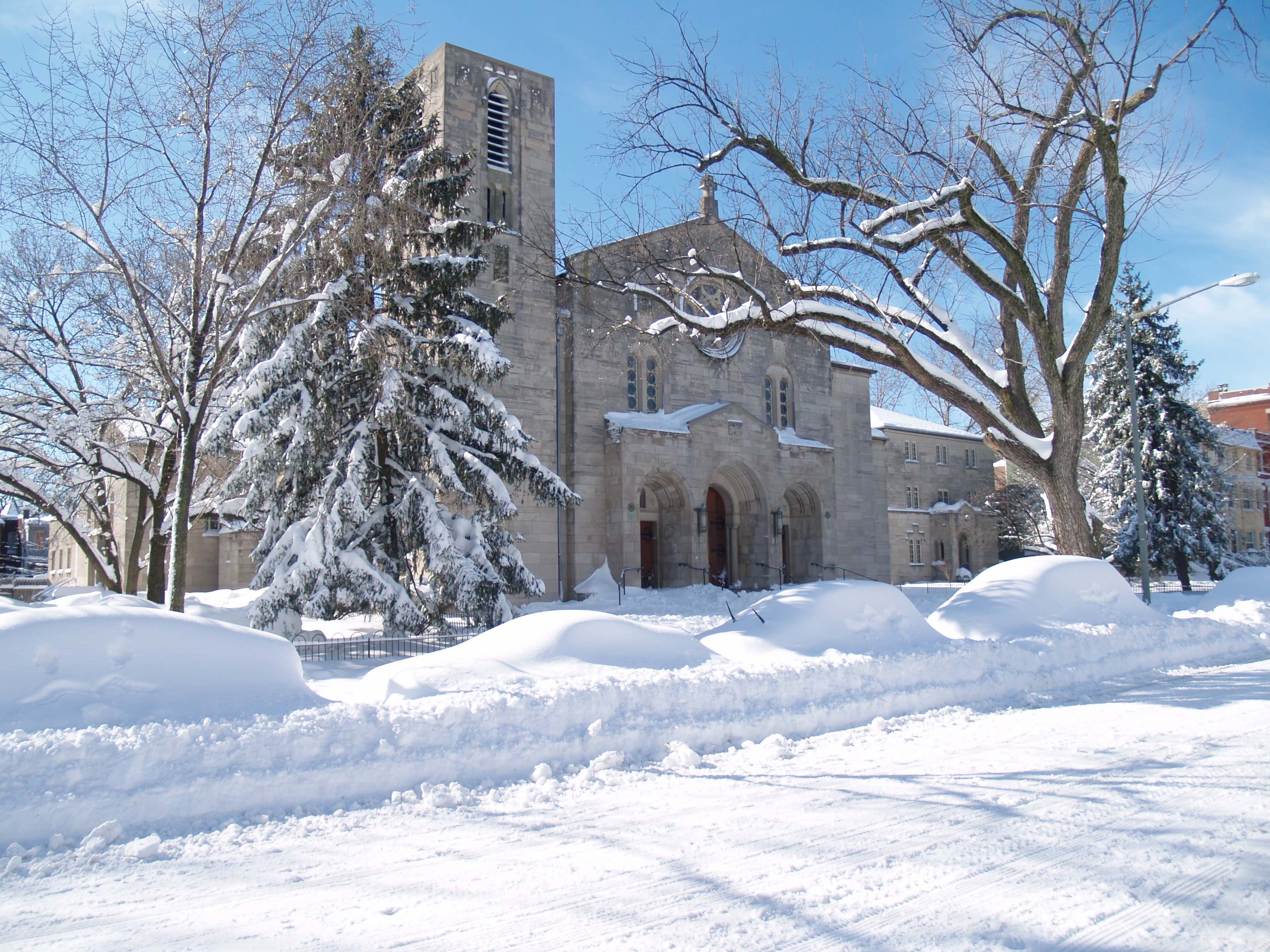
It’s snowing today in Washington, D.C. and I had a beautiful walk coming back from the March for Life this afternoon. Tonight I will enjoy another walk through the winter wonderland.
Not everyone likes snow but it is an amazing work of God. He takes a barren winter landscape and creates it anew. I can almost hear the Lord saying, “Behold, I make all things new!”
In the modern world we often walk past the glory of God hardly noticing the gifts that He provides every day. Tonight and tomorrow I don’t want to miss God’s gifts. It is true that these gifts come along with weather-related hardships, but maybe—just maybe—God can get a few of us here on the East Coast to stop for just a minute, rest a while, and behold His glory.
Getting “snowed in” provides a wonderful chance to become reacquainted with our family and even with our very selves. Just looking out the window and marveling at the snow as it falls with hypnotic and calming steadiness can be a prayer, if we think of God who sends it. Wherever you are, don’t walk through life and miss the glory of God!
In the Book of Sirach there is a beautiful and poetic description of God and the majestic work He creates even in the “dead” of winter. Enjoy this excerpt from Sirach and reflect spiritually on the glory of God in winter.
A word from God drives on the north wind.
He scatters frost like so much salt;
It shines like blossoms on the thornbush.
Cold northern blasts he sends that turn the ponds to lumps of ice.
He freezes over every body of water,
And clothes each pool with a coat of mail.
He sprinkles the snow like fluttering birds.
Its shining whiteness blinds the eyes,
The mind is baffled by its steady fall.
(Sirach 43, selected verses)
Enjoy this video, which reminds many of us of the joy and wonder of a snowfall like some of the ones we experienced when we were young.

 The video below humorously illustrates a biblical principle of our hidden faults. We all have sins and behaviors that are apparent to others but of which we are unaware. And there are even deeper faults of which no one is aware except God Himself, who sees our innermost heart. Consider some of the following quotes: