How does it happen that so many people insist on living obstinately in sin until they are ultimately lost? As with all progressive diseases, sin is a sickness that moves through stages, further debilitating and hardening the sinner in his ways.
St. Alphonsus Liguori laid out five stages through which sin (if not resisted and repented of in its initial attacks) takes an increasing toll on the human person, making repentance less likely and more difficult.
While the names of the stages are mine, I am summarizing the insights of St. Alphonsus, who details these stages in his lengthy essay, “Considerations on the Eternal Maxims” (also called “Preparation for Death”) in Chapter 22, “On Evil Habits.” I have added some of my own additional insights as well.
Stage 1 – Impairment – The first effect of habitual sin is that it blinds the understanding. Scripture says, Their own malice blinded them (Wisdom 2:21). Yes, every sin produces blindness, and the more that sins are multiplied, the greater the blindness they produce.
A further effect of this blindness is a foolish and dangerous walking about. Scripture provides several references for this:
The wicked walk round about (Ps. 12:8).
They stagger as with strong drink, they reel in vision, they stumble in giving judgment (Is 28:7).
Behold, the wicked man conceives evil and is pregnant with mischief and gives birth to lies. He makes a pit, digging it out, and falls into the pit that he has made (Ps 7:14-15).
And thus habitual sin leads to impaired vision and an impaired walk. Not seeing, the wicked stumble about and fall into a pit that they themselves made.
Stage 2 – Indifference – After an evil habit is contracted, the sins that previously excited sorrow are now viewed with increasing indifference. Scripture says the following:
Fools destroy themselves because of their indifference (Prov 1:32).
But he who is careless of conduct will die (Prov 19:16).
And to the increasingly indifferent and careless, the Lord gives this solemn and salutary warning: In little more than a year you who feel secure will tremble; the grape harvest will fail, and the harvest of fruit will not come (Is 32:10).
And thus, as unrepented sin grows, not only does the sinner stagger about and fall into pits, he cares less and less about the foolishness of his ways. The sins that once caused shame, or the thought of which caused sorrow and aversion, are either unnoticed or seem normal—even attractive.
Stage 3 – Improbability – As sin deepens its hold, the willingness and even the capacity to repent decreases. Why is this? St. Augustine answers well when he says, dum servitur libidini, facta est consuetudo, et dum consuetudini non resistitur, facta est necessitas (when lust was served it became habit, and when habit was not resisted it became necessity) (Confessions, 8.5.10). Sin deepens its hold on the sinner in this way.
Stage 4 – Incorrigibility – As Scripture says, The wicked man, when he is come into the depths of sins, has contempt (Proverbs 18:3). St. John Chrysostom commented on this verse, saying that habitual sinners, being sunk in the abyss of darkness, despise corrections, sermons, censures, Hell, and God; they despise everything.
A bad habit hardens the heart and the habitual sinner remains increasingly unmoved and mired in contempt for any correction or remedy. Scripture says of them, At your rebuke O God of Jacob, they have all slumbered (Psalm 76:7). An evil habit gradually takes away all remorse and supplants it with angry indignation at any attempted correction.
And then it happens that, instead of regretting his sins, the sinner rejoices in them, even laughing and boasting of them. Scripture says, They are glad when they have done evil and rejoice in the perverseness of evil (Proverbs 2:14). A fool works mischief as if it were for sport (Proverbs 10:23).
Thus they are incorrigible. They laugh at attempted correction and celebrate their sins with pride.
Stage 5 – Indisposition – When the understanding is deprived of light and the heart is hardened, the sinner ordinarily dies obstinate in his sin. Scripture says, A hard heart shall fare ill at the end (Ecclesiastes 3:27).
Some may say that they will amend their ways before they die, but it’s very difficult for a habitual sinner, even in old age, to change his life. St. Bernard said, “The man on whom the weight of a bad habit presses, rises with difficulty.”
Indeed, how can a sinner, weakened and wounded by habitual sin, have the strength to rise? Even if he sees the way out, he often considers the remedies too severe, too difficult. Though conversion is not impossible, he is indisposed because it all seems like too much work. In addition, his love has likely grown cold for the good things that God offers.
And thus, even on their deathbeds, many sinners remain unmoved and unwilling to change; the darkness is deep, the heart is hardened, and sloth has solidified.
In these ways sin is like a progressive illness, a deepening disease; it moves through stages much as does cancer. Repentance at any stage is possible, but it becomes increasingly unlikely, especially by stage four, when the sinner becomes proud of his sin and joyful in his iniquity.
The Gospel for today’s Mass features three hard sayings of the Lord. They are difficult for us moderns to hear because they offend against modern sensibilities; we easily taken aback by their abrupt quality. Here are the first two “offensive” sayings:
Do not give what is holy to dogs, (Mt 7:6)
or throw your pearls before swine, lest they trample them underfoot, and turn and tear you to pieces (Mt 7:6).
The modern notion offended against here is this: You’re not supposed to call people ugly names. This idea, though not wrong in itself, has become rather excessively applied in our times. We live in thin-skinned times of fragile egos; people are easily offended. The merest slight is often met with the threat of a lawsuit. Even observations intended to be humorous are labeled hurtful and out-of-line. But horror of horrors, here we have Jesus calling certain (unnamed) people dogs and swine; we demand an explanation for such horrible words coming forth from the sinless Lord Jesus!
Sophistication is needed. One of the reasons we are so easily offended today is, frankly, that we lack sophistication. We seem to have lost understanding of simile and metaphor.
Metaphors and similes are figures of speech that achieve their effect through association, comparison, and resemblance. They can highlight hidden similarities between two different things.
A simile directly compares two different things and normally includes words such as “like,” “as,” or their equivalent. Similes are “hit you over the head” comparisons such as this: “He is as swift as a cheetah!”
Some references say that similes are just a specific subset of metaphors, while others say that metaphors cannot use “like,” or “as.” But in either case, here is an example of a metaphor that is not a simile: “He’s a real workhorse!” Metaphors (that are not similes) are usually more effective (and subtle) than similes because the basis for comparison is often ambiguous. For example, if I were to observe someone doing something cruel I might say, “Wow, he’s a dog!” Now obviously I don’t mean that I believe that he is actually a dog. Rather, I mean that he is manifesting some of the qualities of a dog. However, just how many or which qualities he shares with an actual dog is left open to interpretation.
The point is that some sophistication and some appreciation for the nuances of language are necessary as we negotiate life’s road. We seem to have lost some of this today and so are easily offended.
This does not mean that no one ever intends offense; it only means that more care is necessary than simply interpreting everything in a literal way. In my example, the man acting cruelly would likely take offense and say, “Hey, he called me a dog!” What the speaker means is that you have taken on some of the qualities of a wild dog. Now to what extent he means that you are like a dog is intentionally ambiguous; it’s an invitation for you to think about how you may have surrendered some of your humanity and become more like a baser creature.
Examining what the Lord says – This sort of sophistication is necessary when examining the Lord’s “offensive” sayings. Let’s look at both of them in terms of their historical roots and in terms of the lesson being taught.
Obviously the Jewish people were not pointing out positive traits when they referred to people as a dog or swine. In the ancient world, dogs were not pets; they were wild animals that ran in packs. Pigs were unclean animals and something no Jew would ever touch, let alone eat. These are strong metaphors indicating significant aversion to some aspect of the person.
Do not give what is holy to dogs. This was a Jewish saying rooted in tradition. Some of the meat that was sacrificed to God in the Temple could be eaten by humans (especially the Levites), but in no way was it ever to be thrown to dogs or other animals to eat. If it was not consumed by humans, then it was to be burned. Sanctified meat was not to be thrown to dogs because it was holy.
[Do not] throw your pearls before swine, lest they trample them underfoot. In the Old Testament, pearls were an image for wisdom. But pigs only value what they can eat. If pigs were to come across pearls, they would sniff them, determine that they were not edible, and then simply trample them underfoot.
So what is being said? Sacred things, sacred matters, and participation in sacred matters should not be easily offered to those who are incapable of appreciating them. There are those who despise what we call holy. There is little that can be done in such cases except to deny them the pleasure of tearing apart or trampling underfoot what is holy. Jesus is saying that some people are like dogs, who would irreverently tear apart blessed food dedicated to God, having no concept of its holiness. Some people are like swine, who would trample underfoot anything that they could not eat or use for their pleasure.
There are also some who, though not hostile, are ignorant of sacred realities for some reason. Even if they do not intend offense, they must be instructed before being admitted to sacred rites. In the Western Rite, for example, children are not given the Holy Eucharist until they can distinguish it from ordinary food. In addition, more advanced spiritual notions such as contemplative prayer are often not appreciated unless one has been led in stages.
The Lord is thus indicating that holy things are to be shared in appropriate ways with those who are able to appreciate them. It is usually necessary to be led into the Holy and just walk in unprepared or unappreciative.
In the ancient Church there was something known as the disciplina arcani (discipline of the secret), wherein only the baptized and confirmed were admitted to the sacred mysteries of the Liturgy. Given the holiness with which the early Christians regarded the Mass, they exactly followed what the Lord is saying here. Careful instruction and gradual introduction to sacred truth was required before someone could enter something so holy as the Sacred Liturgy. Even the unintentional trampling underfoot of sacred realities through simple ignorance was to be strictly avoided. These were difficult times for the Church and persecution was common. Hence, the Lord’s warning to protect the holy things was not just so that they would not be trampled underfoot, but also so that those who were like dogs and swine would not turn and tear you to pieces (Mat 7:6).
In the centuries after the Edict of Constantine, the disciplina arcani gradually dissipated. Some remnants of it were revived in the modern Rite of Christian Initiation of Adults (RCIA), wherein the catechumens are dismissed halfway through the Mass so that they may reflect more fully on the Liturgy of the Word. Despite this, we have much to relearn today about a deep reverence for the Sacred Liturgy. It would not seem appropriate to lock our Church doors as was done in ancient times. But preserving good order in the Liturgy, inspiring reverence, encouraging proper dress, and instilling deeper knowledge of the true meaning of the Sacred Liturgy are all important ways to ensure that we do not trample underfoot what is sacred.
The Lord’s third hard saying destroys a notion that is, to most moderns, practically a dogma. The “dogma” is that just about everyone is going to Heaven. It is one of the most damaging notions of modern times because it removes the necessary sense of urgency in earnestly seeking our salvation, in staying on the narrow road that leads to salvation. In direct opposition to this destructive and presumptuous notion of practically universal salvation Jesus says,
Enter through the narrow gate; for the gate is wide and the road broad that leads to destruction, and those who enter through it are many. How small the gate and narrow the road that leads to life. And those who find it are few (Matt 7:12-13).
Pay close attention to the word few. We need to sober up and come to the biblical understanding that our salvation must be earnestly desired and sought. God’s love for us is not lacking but our love for him often is. In contrast, Jesus says that many are on a path of indifference or outright rejection of the kingdom, which leads to destruction.
The Kingdom of God is not some abstraction. It’s not a golf course or playground up in the sky. The Kingdom of God is the full realization of God’s will and His plan. It includes values like justice, mercy, kindness, chastity, and love of God and neighbor. It is clear that many (to quote Jesus) live in opposition or indifference to these values, while only a few (to quote Jesus) come to appreciate and are willing to receive these into their life wholeheartedly.
Yes, this is a hard saying of Jesus’. Many are on the path to destruction while only a few are on the road to salvation. The Lord is telling us the truth not to panic us, but to jolt us into earnestly desiring our own salvation and seeking it from God with devotion. It is also to make us sober about the condition of others; we must stop making light of sin and indifference, and work urgently to evangelize and to call sinners to repentance.
We need to realize that our tendency is to turn away from God. There is a great drama to our lives; we are either on one road or the other. No third way is given. It is not a popular teaching to be sure. It offends against modern sensibilities. But it is true; Jesus says it to us in love.
Ad old song says, “Sinner please don’t let this harvest pass, and die and lose your soul at last.”
This post is a kind of follow-on from yesterday’s post as we read the stories of wickedness in ancient Israel and what God did about it.
The first reading from Monday’s Mass (of the 12th week of the year) describes a crucial, crushing moment in the history of ancient Israel: the loss of the Northern Kingdom and the destruction and deportation of what came to be called the Ten Lost Tribes of Israel.
Shalmaneser, king of Assyria, occupied the whole land [of Israel] and attacked Samaria, which he besieged for three years. In the ninth year … the king of Assyria took Samaria [which was then part of Israel] and deported the children of Israel to Assyria, setting them in Halah, at the Habor, a river of Gozan, and the cities of the Medes (2 Kings 17:5-6).
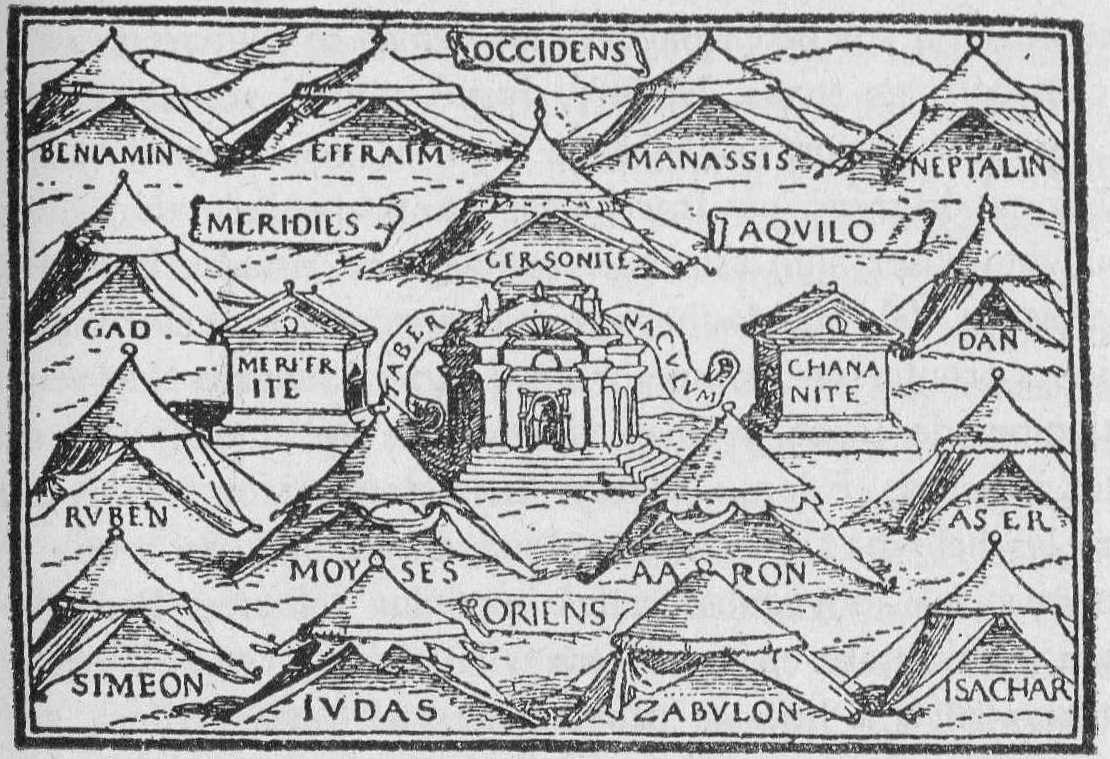
The Northern Kingdom of Israel had divided from the Southern Kingdom of Judah in 930 B.C. as a result of the bitterness following the tail end of Solomon’s reign and the reign of his successor Rehoboam. The tribes that formed the Northern Kingdom were Asher, Dan, Ephraim, Gad, Issachar, Mannasseh, Napthtali, Reuben, Simeon, and Zebulun. (Some from Levi were also settled there.) The survivors of the war were largely deported to Assyria and were “lost” by virtue of intermarrying with the people there. Though some debate the use of the term “lost,” claiming that there were people who escaped deportation or who fled to the South, as an identifiable group they were lost.
After the loss of the Northern Kingdom, only the tribes of Judah (and Benjamin) in the south remained. In effect, the tribe of Benjamin was absorbed into Judah.
Why had this come about? How had a nation blessed by God lost that blessing? Sacred Scripture, a prophetic declaration and interpretation of reality, provides this answer:
This came about because the children of Israel sinned against the LORD, their God, who had brought them up from the land of Egypt, from under the domination of Pharaoh, king of Egypt, and because they venerated other gods. They followed the rites of the nations
whom the LORD had cleared out of the way of the children of Israel and the kings of Israel whom they set up (2 Kings 17:7-8).
These consequences did not come without warning. The Book of Deuteronomy (Dt 28:15-68) had long ago warned of what would happen if they broke their covenant bond with the Lord. The text is too lengthy to reproduce here, but the consequences described are frightening, and are exactly what did happen to Israel in 721 B.C. and Judah in 587 B.C. In addition to this ancient warning there were more contemporaneous warnings from the prophets:
And though the LORD warned Israel and Judah by every prophet and seer, “Give up your evil ways and keep my commandments and statutes, in accordance with the entire law which I enjoined on your fathers and which I sent you by my servants the prophets,”
they did not listen, but were as stiff-necked as their fathers, who had not believed in the LORD, their God. They rejected his statutes, the covenant which he had made with their fathers, and the warnings which he had given them, till, in his great anger against Israel, the LORD put them away out of his sight. Only the tribe of Judah was left (2 Kings 17:13-15a, 18).
Even after all of this, Judah did not learn its lesson either, falling deeper and deeper into infidelity and sin. The Babylonians conquered Judah in 587 B.C., leading to the destruction of the Temple and the loss of the Ark.
Stories like these may seem distant, but their elements are sadly familiar to us in times like these, in which there has been a decrease in obedience to God’s laws and a great falling away from the faith. This is true in our nation, our culture, and even to a degree within the Church, where vast numbers have fallen away. St. Paul described them as those who will not tolerate sound doctrine, but with itching ears … will gather around themselves teachers to suit their own desires (2 Tim 4:3). He also described them as similar to Demas, [who] in his love of this world, has deserted me (2 Tim 4:10).
Yes, these are difficult times, times of pruning and purification in the Church and times of great judgment on the once-Christian West. As St. Paul says, the Old Testament stories are lessons and warnings for us: Now these things happened to them as examples and were written down as warnings for us, on whom the fulfillment of the ages has come. So the one who thinks he is standing firm should be careful not to fall (1 Cor 10:11-12).
There are distorted ideas of mercy today based on the belief that God will never punish; He will never say, “Enough!” But that is not mercy at all. For if the iniquity of our times continues unabated, many more will be lost. The body count and sorrow stemming from abortion, euthanasia, war, sexual confusion, greed, and hatred will grow ever higher. At some point, God applies a painful—though necessary—end to prideful, unrepentant iniquity.
Scripture says,
Do not say, “I have sinned, yet what has happened to me? for the LORD is slow to anger!” Do not be so confident of forgiveness that you add sin upon sin. Do not say, “His mercy is great; my many sins he will forgive.” For mercy and anger alike are with him; his wrath comes to rest on the wicked. Do not delay turning back to the LORD, do not put it off day after day. For suddenly his wrath will come forth; at the time of vengeance, you will perish (Sirach 5:4-7).
Therefore, heed the lessons of these ancient stories. We live in presumptuous times, in which many (who know better in the depths of their conscience) rationalize their sin and recast God as the “affirmer in chief,” whose love precludes punishment or judgment. But such a notion of love in incomplete, for love rejoices in the truth not in what is evil and harmful. God has more in mind than merely our own “happiness.” He is thinking of other people and future generations as well. He is patient and waits for our repentance, but He is no pushover. There comes a time when even the finest vineyards must be plowed under if they yield but sour grapes.
His mercy waits, but His judgment will not be delayed forever.
This song says,
We have sinned, O Lord, and we have walked not in thy ways; but return,
O Lord, and we shall return; make thy face shine upon us, and we shall be safe
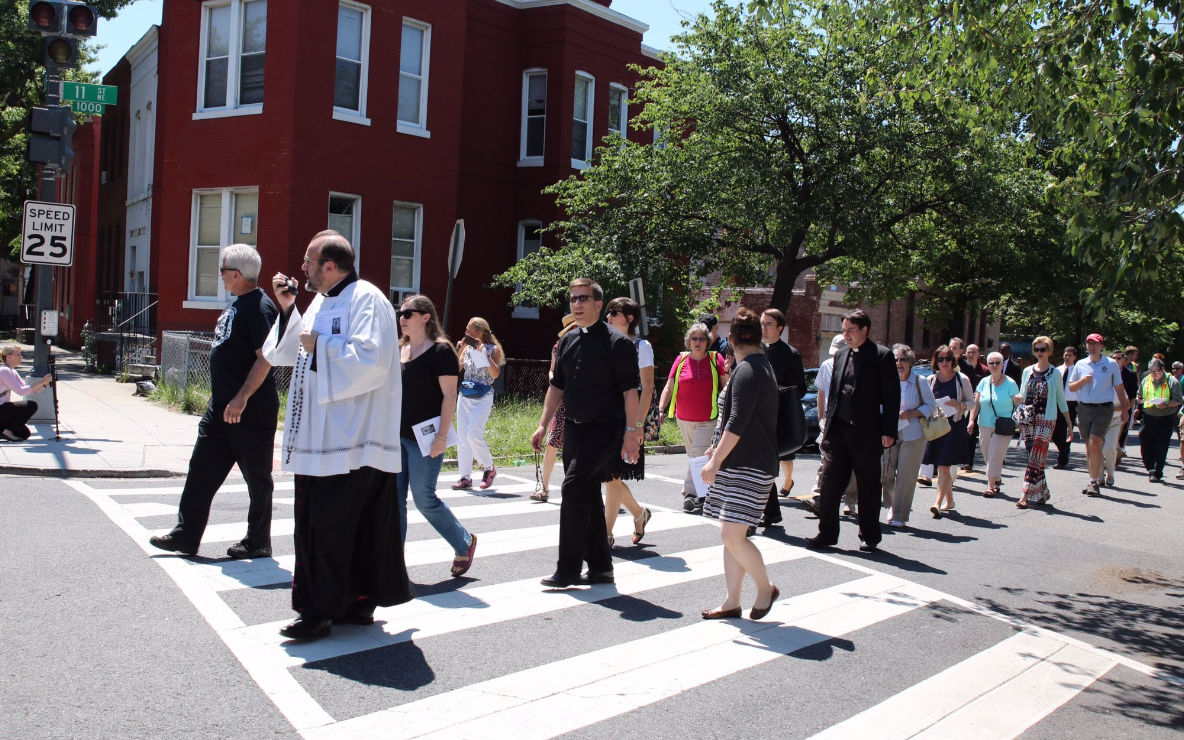
The following is from a Homily I preached just prior to our march and prayer vigil at the Planned Parenthood “clinic” being built here in Washington, D.C.
The first reading at Mass today (Saturday of the 11th week of the year) is from Second Chronicles; it details the reforms of King Joash and then his sad decline. Joash’s grandmother Athalia, a worshipper of Baal, was Queen of Judah and proved to be much like her mother Jezebel; she rose to power by having every possible competitor murdered, including almost all of her grandchildren. But Joash had been hidden away and so escaped her bloody rampage. Once he come of age, he was declared king by the high priest Jehoiada in a coup against Athalia. The wicked Athalia was killed during the coup. King Joash began reforms and restored the Temple and the proper worship of Yahweh.
When reading the elaborate stories of the kings of Israel in First and Second Kings, and First and Second Chronicles, it is easy to be bewildered by all the names, complex events, intrigue, and corruption.
Basically, they tell the story of a nation, blessed by God and called to manifest His glory, that turned time and time again to sin, including the worship of idols. Despite warnings from the prophets, the Israelites stubbornly refused to repent. Consequently, the once-blessed nation declined into weakness. The Ten lost tribes of Israel in the north went first, conquered by the Assyrians in 721 B.C. And even after seeing this, Judah (in the south) remained stubborn and was eventually conquered by the Babylonians in 587 B.C.
This story is all too familiar to us who live in a blessed nation, once deeply (though imperfectly) rooted in the Jewish and Christian Scriptures but now casting aside its roots. What will come of us if we do not repent?
Consider the sad tale told in today’s first reading.
I. The Solace – After the death of Jehoiada, the princes of Judah came and paid homage to King Joash, and the king then listened to them.
The story opens with a brief description of solace and unity in the aftermath of King Joash’s reforms. With the wide cooperation and generous contributions of the people, the Temple has been rebuilt and proper worship of God restored. For a brief moment the nation is in relative peace and unity, centered on God.
II. The Sin – [But] they left the temple of the LORD, the God of their fathers, and began to serve the sacred poles and the idols; and because of this crime of theirs, wrath came upon Judah and Jerusalem.
Idolatry returns. They go back to worshiping the Canaanite gods, the Baals. Why? Perhaps they supposed that prosperity would be more likely if they burned some incense to the local gods. But on a deeper level, the Israelites were enamored of the ways of the Canaanites and sought to imitate them. For indeed, the Canaanites lived lustily and often opulently. So did the Egyptians and other ancient cultures whose ways the ancient Jews too easily admired and sought after.
Surely this sounds familiar. Even now, most Catholics and Christians look and sound more like the secular world than like the Lord who rescued us. So deeply do we pine for glamour, power, and the lusts and priorities of this world!
The text says that wrath came down upon Judah and Jerusalem. What is wrath? It is our experience of the total incompatibility of our sinful state before the holiness of God. As such, wrath is more in us than it is in God. God is not moody; He does not suddenly become grouchy. He does not change—we do. As our sins darken our souls, the bright light of God seems harsh and painful. As sin accustoms us to iniquity, holiness seems hard, even hellacious. But the problem is in us, not in God. Wrath is our problem, not God’s.
This explains how a child in the womb, once thought a great blessing, is now seen by many as a threat that must be terminated. This is why chastity and lifelong marriage seem unrealistic to many in the modern secular mindset. But God is not harsh or wrathful; His Law is not impossible. It is we who are soft, so accustomed to darkness that the light seems too harsh. But God is not the angry and wrathful one, we are. A wrath, even a hatred of holiness has come upon us. Therefore, as a culture, we cling to our idols.
III. The Shout– Although prophets were sent to them to convert them to the LORD, the people would not listen to their warnings. Then the Spirit of God possessed Zechariah, son of Jehoiada the priest. He took his stand above the people and said to them: “God says, ‘Why are you transgressing the LORD’s commands, so that you cannot prosper? Because you have abandoned the LORD, he has abandoned you.’”
Why, America, do we cling to our sins so that we cannot prosper? Why do we insist on our own ways so stubbornly that we demand the right to kill our own children and our elderly? Why do we destroy our marriages and families through divorce, redefinition, and promiscuity? Why do stand by and watch the very pillars of our culture and its future collapse? Why?
God did not leave ancient Israel without prophets, and He has not left us without them either. Today we gather together to prophesy, to speak for God. As we march today praying, we appeal to the consciences of everyone who sees and hears us. And we say, as we must, that this is wrong. Abortion is wrong. It kills our children and gravely harms their mothers. This must end. Come to your senses, America! Abortion is not health care, because a patient always dies. Abortion is not pro-woman, because half of the millions of its victims are female. Let us not abandon the Lord, lest He abandon us, handing us over fully to our own sinfulness!
Yes, we prophesy today, as we must, on this and many other issues.
IV. The Stubbornness – But they conspired against him, and at the king’s order they stoned him to death in the court of the LORD’s temple. Thus King Joash was unmindful of the devotion shown him by Jehoiada, Zechariah’s father, and slew his son. And as Zechariah was dying, he said, “May the LORD see and avenge.”
In a shocking turn of savage wickedness, Joash the great reformer, kills the son of the very man who had saved him from being murdered and restored him to rightful power.
But the Lord does not leave unavenged any unrepented sin. We must seek the conversion of all before the Day of Judgment. Stubborn unrepentance will not go unanswered. The Book of Hebrews says of that day,
For if we go on sinning deliberately after receiving the knowledge of the truth, there no longer remains a sacrifice for sins, but a fearful expectation of judgment … For we know him who said, “Vengeance is mine; I will repay.” And again, “The Lord will judge his people.” It is a fearful thing to fall into the hands of the living God (Heb 10:26-31).
Our call for repentance is not merely an angry shout; it is a merciful call to seek the Lord while He may be found and to call on Him while He is still near (see Isaiah 55:6).
V. The Significance – At the turn of the year a force of Arameans came up against Joash. They invaded Judah and Jerusalem, did away with all the princes of the people, and sent all their spoil to the king of Damascus. Though the Aramean force came with few men, the LORD surrendered a very large force into their power, because Judah had abandoned the LORD, the God of their fathers. So punishment was meted out to Joash. After the Arameans had departed from him, leaving him in grievous suffering, his servants conspired against him because of the murder of the son of Jehoiada the priest. He was buried in the City of David, but not in the tombs of the kings.
A nation that God had blessed has now so thoroughly blocked its blessings that a force of just a few men is able to conquer it, toppling its king and local leaders and making the nation a vassal of Assyria. The text says this happened “because Judah had abandoned the Lord.” Joash, the king who once brought about great reform, saw death, because he had murdered the innocent prophet Zechariah.
America, what about us? Increasingly, we are abandoning the Lord.
How does abandoning the Lord weaken a nation? How can a nation be strong which no longer looks to God for a common moral vision? How can a nation have a unified culture without a common cultus (faith) to which all look with a reverent obedience and holy fear? How can a nation be strong when its families are weakened by divorce, sexual promiscuity, and sexual confusion? If our families are not strong, our communities are not strong. Weak and divided communities cannot constitute a strong nation tied together by loyalty and a common vision. Today, we seldom show the resolve and unity necessary to stave off our enemies, be they foreign aggressors or the moral evils within us. Often we cannot even agree on what is evil or on what is the cause of our malaise. We are becoming, like ancient Judah, an easy target. The words addressed to ancient Israel are increasingly appropriate for us: If you do not stand firm in your faith, you will not stand at all (Is 7:9).
Joash suffered death for his murder of the innocent. How can we as a nation forever escape judgment for our own shedding of innocent blood through abortion? God lamented the behavior of ancient Israel: The people have forsaken me and have profaned this place… they have filled this place with the blood of innocents (Jer 19:4). On your skirts is found the lifeblood of the innocent poor … yet in spite of all these things you say, “I am innocent” (Jer 2:34). And Jesus warned Israel about the shedding of innocent blood, Yes, I tell you, this generation will be held responsible for it all (Luke 11:50-51).
We who pray and march today love our country, culture, and people. We do not seek punishment, but a repentance that will heal. Our cries are not of condemnation but of loving concern.
Today’s reading is a sober reminder that no nation can stand or remain strong which sheds the blood of the innocent and calls it a legal right. America, we cannot forever evade the effect of our sins, especially those directed against those who are most vulnerable. We cannot find peace by shedding the blood of innocent children. We cannot remain strong and blessed if we do not return to the Lord and walk humbly with Him.
We march today in love and concern. We commend ourselves to the consciences of all who will see and hear us. We seek to make clear that what is called a “clinic” or a “women’s healthcare center” is in fact a place where thousands of innocent unborn children will have their lives ended.
Heal our land, O Lord. A great darkness has enveloped us. The darkness grows ever deeper as the effects of our sins multiply. Send a miraculous grace to heal our land. Help us who march today to reach others with the seed of truth!
The old hymn, “Once to Every Man and Nation,” succinctly presents the truth of today’s first reading:
Once to every man and nation, comes the moment to decide,
In the strife of truth with falsehood, for the good or evil side;
Some great cause, some great decision, offering each the bloom or blight
And the choice goes by forever, ’twixt that darkness and that light.
Today’s Gospel sets forth some parameters for picturing Christ. Sadly, just as in the time of Jesus, many today worship a “designer Messiah.” It is not the real, revealed Christ whom they acknowledge and worship. Rather, it is a Christ of their own fashioning, whom they “carve” in the form of an idol and then worship.
Let’s examine some of the parameters Jesus sets forth for our acknowledgement and worship of Him. As we shall see, the Lord denotes both problems and parameters in understanding who He is.
I. Confusion – The Gospel begins in this way: Once when Jesus was praying in solitude, and the disciples were with him, he asked them, “Who do the crowds say that I am?” They said in reply, “John the Baptist; others, Elijah; still others, ‘One of the ancient prophets has arisen.’”
Note that in this poll of popular opinion, every single answer proposed is wrong. This is an important insight because there seems to be an American obsession with taking polls, thinking that the results will yield answers and the truth. They do not. We simply learn what is popular.
In 1855, a poll of Americans would probably have found that most though slavery was fine. In 1940, a poll of Germans would probably have found that most thought Hitler was on target with his notions that Jews were an enemy of the State. And in 1950, a poll of Americans would probably have found that most thought racial segregation was good, even a sort of godly order.
Again, polls do not necessarily reveal the truth; they merely record what is popular. But what is popular is not always right, and what is right is not always popular.
Thus, Jesus’ informal poll does not disclose the truth, only opinion, and all of it—every bit of it—wrong. To all who love to cite polls and what “the majority think,” beware; the truth is not necessarily to be found in polls, merely what is popular. More is necessary than to ask what “the people” think. The Church cannot, and must not, be run simply on what the faithful want, think, or opine. Even more so, the Church cannot simply bow to popular opinion in the secular world. As we see in today’s Gospel, that is a very unreliable indicator of the truth.
II. Clarity – Jesus next poses the question to the college of apostles: Who do you (all) say that I am? There is only silence. In the poll of the college, the experts, the “inner circle,” there is too much positioning and guarded delay for an answer to come. The “academy” cannot generate an answer. The peer pressure and competition for the top spots is to great for bold and daring answers to come forth, answers that would cut against the grain and seem to defy monotheism. The chirp of the crickets of “careful” and fearful silence is all we hear. Among experts there is often a delayed response, in order to see what is the “acceptable” and politically correct opinion before responding. The panel of experts in today’s Gospel is too busy worrying about what will position them correctly to consider what is the correct answer to Jesus’ question.
Finally, though, one man among them is anointed by God to give the answer. After the long silence, the text says, Peter said in reply, “The Christ of God.”
This is the proper answer. Although the Lucan text is brief, recording only the answer, the Gospel of Matthew adds,
Blessed are you, Simon son of Jonah, for this was not revealed to you by flesh and blood, but by my Father in heaven. And I tell you that you are Peter, and on this rock I will build my church, and the gates of Hades will not overcome it. I will give you the keys of the kingdom of heaven; whatever you bind on earth will be bound in heaven, and whatever you loose on earth will be loosed in heaven (Matt 16:17-19).
And thus is supplied a kind of ecclesiology. The truth is not to be found in a mere poll of the general populace or even of the faithful. Neither is the truth to be found in the opinion of the college of the apostles or in the consensus of leaders, no matter how erudite or faithful. Rather, the Lord anoints Peter to supply the answer.
It is true that the college of bishops is an important element in considering Church doctrine. But a homily is not the place to set forth a full ecclesiology, but, at the end of the day, the Catechism reminds us:
When Christ instituted the Twelve, “he constituted [them] in the form of a college or permanent assembly, at the head of which he placed Peter, chosen from among them …. The Lord made Simon alone, whom he named Peter, the “rock” of his Church. He gave him the keys of his Church and instituted him shepherd of the whole flock. “The office of binding and loosing which was given to Peter was also assigned to the college of apostles united to its head.” This pastoral office of Peter and the other apostles belongs to the Church’s very foundation and is continued by the bishops under the primacy of the Pope. … The Pope, Bishop of Rome and Peter’s successor, “is the perpetual and visible source and foundation of the unity both of the bishops and of the whole company of the faithful … The Roman Pontiff, by reason of his office as Vicar of Christ, and as pastor of the entire Church has full, supreme, and universal power over the whole Church, a power which he can always exercise unhindered. The college or body of bishops has no authority unless united with the Roman Pontiff, Peter’s successor, as its head.” As such, this college has “supreme and full authority over the universal Church; but this power cannot be exercised without the agreement of the Roman Pontiff. The college of bishops exercises power over the universal Church in a solemn manner in an ecumenical council.” But “there never is an ecumenical council which is not confirmed or at least recognized as such by Peter’s successor” (Catechism 880-885).
And thus orthodoxy is ensured in and through Simon Peter and his successors. To those who object to this and who prefer democracy or consensus leadership, look to the confusion and silence that they produce in a situation like this and see that they are found wanting. If there are still concerns, talk to Jesus, who has set aside your preferences in favor of His own will and structure for the Church. The Church is hierarchical; fundamentally, Peter and his successors are its head. This generates the truth. All other approaches, no matter how popular or politically correct, fall short.
III. Cross– While accepting the answer, Jesus orders the apostles to a kind of holy silence for the time being. The text says, He rebuked them and directed them not to tell this to anyone. He said, “The Son of Man must suffer greatly and be rejected by the elders, the chief priests, and the scribes, and be killed and on the third day be raised.”
Why does Jesus rebuke them? Simply put, it is because many errors and distortions regarding the Messiah were common at the time.
At the time, most thought of the Messiah in political and worldly terms: The Messiah would come on a war horse with worldly power and ruthlessly destroy the Romans, reestablishing the kingdom of David as a political power and restoring economic prosperity to Israel.
Jesus, however, was trying to teach them that the more central work of the Messiah was rooted in the suffering servant songs of Isaiah 53 – 57, wherein the Messiah would suffer mightily on account of the people sins and yet by his suffering make them whole.
In effect, therefore, the essential error of that day was to conceive of the Messiah as a “cross-less” Christ. The Christ they conceived would supply everything, requiring nothing from them. He would usher in a kind of worldly kingdom on their terms. He would destroy others for their sake. If there was a cross, it would be for others, not for them. It was a Christ, the Messiah, without the cross.
In our own time, while there are errors regarding Christ’s divinity (and more rarely errors regarding his humanity), the essential error is very much the same: it is a “cross-less” Christianity.
Indeed, many today conceive of a fake, unbiblical Christ. To one degree or another, many have reduced Him to a harmless hippie who walked around blessing children, healing people, and if He said anything harsh at all, directed it toward the rich and powerful.
It is true that Jesus healed multitudes and consoled the afflicted, but He also spoke clearly of sin and warned of judgment and Hell. He demanded complete adherence to Him and His teachings without compromise. As we see in this Gospel and in many other places, Jesus demanded that we take up our cross daily in order to be His disciples and follow Him. Simply put, without the cross there will be no crown.
Indeed, many today have reworked Christ and no longer worship or revere the Christ of Scripture. Rather they worship a Christ of their own making and understanding, a Lord who affirms them and does not warn them the way the Christ of the Scriptures did.
Jesus Christ was no despot, but neither was He a pushover. He is the Lord and He will not simply come to us on our terms. He will not simply be what we demand that He be, any more than He was the Messiah that the first century Jews expected Him to be. Indeed, so insistent was He that He be what and who His Father called Him to be, that He lovingly went to the cross as the true Christ to save us from our sins. He did this even though we insisted (and would have been happy) if He had been a different kind of Messiah.
We must meet the real Christ if we are ever to be saved. We must worship the true, biblical Christ. We must adore Him and obey Him in order to be saved. We must not reinterpret or water down His words. We must encounter the true Christ and not think that we can merely dress Him in a cardigan sweater order to sell Him to a hypersensitive world gone soft. Only the real Jesus can save us.
And thus Jesus warns them, not to proclaim his to the world as the Messiah in worldly terms, as a redefined of Messiah. Indeed, right though Peter was, neither he nor the others would really, or fully understand him until he saw Him risen from the dead, and even more so until Pentecost.
And here, is a challenge for you and me: Who is the Jesus you worship? Is He the true Jesus proclaimed by the Scriptures and the Church? Or is He a Jesus of convenience, a comfortable Jesus who just happens to agree with your politics, worldview, and moral habits.
It is true that Jesus comforted the afflicted, but He also afflicted the comfortable. And the truth is, we are in both categories. Sometimes we are afflicted and the Lord consoles us, but sometimes we are all too comfortable in our sins. The Lord loves us too much to affirm us today if it would cause us to descend to Hell tomorrow.
Again, only the real Jesus will save us. And therefore Jesus warns the apostles (and us) to be sure that we understand what it really means to call him the Messiah, the Christ, the Lord.
IV. Close to Home – Jesus now brings the point closer to home. The text says, Then he said to all, “If anyone wishes to come after me, he must deny himself and take up his cross daily and follow me. For whoever wishes to save his life will lose it, but whoever loses his life for my sake will save it.”
Note that the text is clear in saying that Jesus is speaking now not merely to the apostles but to all.
This point is clear; there is simply no getting around it: the daily carrying of the cross is at the center of discipleship. Jesus is not handing out pillows or other sorts of bromides. He is speaking to us about the sober need to carry the cross daily. The real Jesus is speaking here, not a “cross-less” Jesus.
Do not miss the word daily (as in daily cross). Frankly, one of the great teachings to embrace is the importance of making make small, daily sacrifices. If we learn the wisdom in carrying small, daily crosses, many heavy crosses will be avoided. The cross of daily discipline and sacrifice actually makes life much easier.
For example, daily overeating brings about weight gain that could climb to a very high amount. It is a daunting cross to try to lose a large amount of weight. It is better to take on the more manageable daily cross of learning to live within limits and build the virtue of healthy eating habits.
In calling us to carry a cross daily, the Lord gives good advice. Better the small daily cross than the heavy, nearly impossible cross caused by deferring many duties. Vices indulged become habits that are seemingly impossible to break. Virtues growing daily become good character, lived almost effortlessly.
As another example, imagine a pianist who has taken up his daily cross, learning scales and basic music. Soon enough, he is able to play complex Chopin etudes and Bach preludes almost without effort. But consider a student who disdained daily practice. Now, looking at the notes of even one of the simpler Bach preludes, playing one seems impossible—and it likely is. The daily cross of practice helps avoid the nearly impossible crosses that would inevitably come without it.
Therefore, the Lord Jesus is not merely being harsh when He tells us to take up our cross daily; He is giving a us good, solid advice. The road to salvation is narrow and few find it. Why is it narrow and why do few find it? Because the narrow way is the way of the cross. But, given Adam and Eve’s choice, given the fact that we live in paradise lost, there is no other way back to paradise and to heaven except through the narrow way of the cross.
Therefore, in love—real love, not fake or sentimental love—Jesus—the real Jesus, not the fake Jesus—speaks to us of the cross.
Let this be clear: If we will walk with the real Jesus, He will make a way for us. He will open doors; he will end storms! But He did not do this without His cross and He will not do it apart from our own crosses. We must be willing to take up our own crosses daily: self-denial, renouncing sin, and practicing virtue. If we walk with Him in this way, he will be a “way-maker” for us.
Regarding His own cross, Jesus said that after three days He would rise. It is no less the case for us. If we will walk with Him in this narrow way of the cross, we will see glory. The Lord promises that He will do it!
I am already a witness (and I pray that you are too) that when we take up our crosses, doors begin to open, issues begin to resolve, and glory begins to manifest. Daily prayer, daily reading of Scripture, frequent Communion, frequent Confession, walking in fellowship—all of these have a cumulative affect. An old hymn says, “Yield not to temptation, for yielding is sin, each victory will help you, some other to win.”
Yes, victories mount, many little things that add up to a lot. Taking up daily crosses builds leverage. Virtues are fed and they grow; vices are starved and they diminish.
I promise you total victory in Christ Jesus. If you take up your cross daily, He will give the victory. But He will not do it without the cross. It is the real Jesus who says this—not the Jesus in a cardigan sweater. It is the real Jesus speaking from the cross, and now from glory.
The real Jesus does not deny the cross. He will stand by you and help you to carry it. With Jesus, you will carry it to glory. In three days you will rise.
The situation of the man in this commercial reminds me of modern life in general. We talk a lot about freedom, but compulsiveness, addiction, and lack of self-control are more the case with the average person. We have collectively rejected the “Ten Big Laws of God,” declaring our freedom from being told what to do. But the result has not been that we have fewer laws; rather we now have thousands of “little laws,” imposed upon us through oppressive government, by which we are told what we must do under penalty of law. Many cultural revolutionaries have marched under the banners of freedom and tolerance, but once having gained a foothold they have tyrannically forced their agenda on others by law. The talk of tolerance and respect for differences turned out to be just that—talk.
The man in this advertisement talks a lot about how important mobility is to him, but the reality of his life is far from his self-description. In fact, he seems quite unaware of his condition. Does he not seem familiar?
Photo Credit: Jaclyn Lipplemann, Catholic Standard
Allow me to begin with a simple parable. Every now and then I take a perfectly good paper clip and untwist it, reconfiguring it for some other purpose. Once, I used them to hang Christmas ornaments on my tree. Another time I fashioned a paperclip into a hook to keep my broken file drawer from rolling open. Now if paperclips could see or think, they might be horrified and saddened to see a fellow paperclip so deformed. Perhaps I could try to explain that not only were their “deformed” brethren not a disaster, they were actually quite useful and important to me in their condition. But alas, paperclips can’t understand this; they just “look on” with sadness and horror. After all, how can you expect a paperclip to understand any function other than holding together sheets of paper? They can’t understand things beyond the world that they know.
I have often wondered if this isn’t somewhat analogous to our understanding of things such as disability, birth defects, and the personal challenges of some of our fellow humans. As we look upon the disabled, the handicapped, the deformed, and the mentally ill, we are often moved to sadness and even horror. And we sometimes ask why God allows this. We often conclude that such people’s lives are unhappy or that they will never reach their full potential.
And yet I wonder if we really know what we’re talking about. Who of us can really say what our own purpose is in God’s plan is, let alone anyone else’s? We are like paperclips; we know only one thing. Our minds are too small to ever comprehend the very special and significant role that even the most “impaired” in our world play. Perhaps in Heaven we will realize what indispensable and central roles they had in God’s plan and His victory. Of all the paperclips in my drawer, some of the most useful to me are the ones I’ve twisted and refashioned.
A knowledge too high – I pray that you will accept my humble example of a paperclip. I mean no disrespect to humanity in comparing us to paperclips. We are surely more precious and complicated and God does not use us cavalierly like paperclips. But my example must be humble in order to illustrate what is a knowledge too high for us to grasp: the dignity and essential purpose of every human being to God and His plan.
Our judgment in this matter isn’t much better than that of a paperclip, when compared to God’s omniscient wisdom. If it is absurd for us to imagine that a paperclip could understand our ways, is it any less absurd to think we can understand God’s ways? And if we can’t understand His ways, then why do we make judgments as to another person’s role, usefulness, beatitude, or status?
It is easy for us to look down on the poor, but Scripture says that we should look up to them. God is especially close to the poor, the suffering, the brokenhearted, and the humble. Scripture says that God uses the lowly to humble the proud. And yet we so easily look with pity on those we consider disadvantaged.
Over twenty years ago, I worked for a year with the profoundly mentally disabled. They lay in beds and wheelchairs, often having little control over their muscles. None of them could talk and only a few could engage in even the most rudimentary communication. There was one man in his forties who had never emerged from a fetal position. He lay in a large crib, his tiny yet clearly adult body curled up like a newborn. But on his face was an angelic smile that almost never diminished.
He had been baptized as an infant and to my knowledge could not have sinned. Each visit, I looked with marvel upon his innocent and beatific countenance. What an astonishing gift he was! And who knows, except God, why he was this way? But God does know; I think He had very important reasons for permitting this. There was something central and indispensable in this man’s existence, some role that only he could fill. Apparently I was not able to fill it.
In this sense he was not disabled—he was differently abled, uniquely abled for something out of the ordinary. Looking upon him, I had little doubt that he was directly in touch with God in a way that I never had been; his radiant face conveyed that. With our human eyes we can be saddened, even appalled. But we’ll understand it better someday. One day, in the great by and by, we may be surprised to learn that the most critical people in God’s plan were the most humble and the most broken, and that we would never have made it without them.
This video depicts the paradox of disability that sometimes shines through to teach us that we do not see the whole picture. Patrick Henry Hughes was born with significant defects, but as he grew, remarkable gifts showed forth. This is just a little reminder from God, a glimpse of what God sees. To Him, the disabled are differently and wonderfully abled.
This rejection is perhaps most sadly evidenced by the fact that more than 90% of unborn children with a “poor prenatal diagnosis” are aborted. Perhaps the parents are informed that their child will have Down Syndrome, or maybe that the child has a birth defect that will lead to a lifetime of challenges or even to an early death.
The pressure on such families to abort is often enormous. They are told, “It’s the right thing to do,” or, “You shouldn’t make the child suffer.” Some are even made to feel that they are doing something unethical by bringing forth such children. In addition, parents are often pressured to make a decision quickly; doctors often want the decision to terminate made within a matter of days.
Is there such a thing as a life not worth living? Many in our culture seem to believe that there is. There has arisen the tragically ironic idea that death is a form of therapy, that an appropriate treatment for disabled unborn children is to kill them. Of course death is neither a treatment nor a therapy; it cannot be considered an acceptable solution for the one who loses his or her life. Yet this is often the advice that parents in this situation are given.
All of this “advice” and pressure goes a long way toward explaining why more than 90% of unborn children with a poor prenatal diagnosis are aborted. We in the Church cannot remain silent in the face of this; we must reach out compassionately to families experiencing such a crisis. Many of them are devastated by the news that their baby may have serious disabilities. Often they descend into shock and are overwhelmed by fear, conflicting feelings, and even anger towards God or others. Sometimes the greatest gifts we can give them are time, information, and the framework of faith. Simply considering some of the following may help:
Despite what parents are told, there is no rush. Serious, life-changing decisions should never have to be made within a short time period. Pressure should not be applied to families (by medical personnel or others); doing so is a grave injustice.
Prenatal diagnoses are not always accurate. We often think of medicine as an exact science; it is not. Data can be misinterpreted and predictions can be wrong. Further, there is a difference between the result of a screening and an actual diagnosis. A screening can point to a potential problem and assess its probability, but it is not a diagnosis. Further study is always called for if a screening indicates a possible issue. Sometimes, further tests after a screening reveal that in fact there isn’t a problem at all.
As the Pope pointed out, disabilities are not always as terrible as we, in our insistence on perfection, might imagine. Many people with disabilities live very full lives and are a tremendous gift to their families, the Church, and the world. Providing families with more information about disabilities and connecting them with other families who have experience is essential in helping them to avoid the doomsday mentality that sometimes sets in when an adverse prenatal diagnosis is received.
It is vital to connect the faithful with the most basic truths of our Christian faith. The cross is an absurdity to this world, but to those of the Christian faith it brings life and blessings in spite of the pain. Were it not for our crosses, most of us could never be saved. Raising a disabled child is not easy, but God never fails. He can make a way out of no way; He can do anything except fail. My own sister, Mary Anne, was mentally ill and carried a cross. We, her family, had a share in that cross. But Mary Anne brought blessings to us as well. In fact, I don’t know if I’d be a priest today if it had not been for her. I’m sure that I wouldn’t be as compassionate, and I doubt that I could be saved were it not for the important lessons Mary Anne taught me. I know that she brought out strength and mercy, not to mention humility, from all of us in the family. Her cross and ours brought grace, strength, and many personal gifts to all of us. The cross is painful, but it brings life as well. Easter Sunday is not possible without Good Friday. Yes, to the world the cross is an absurdity. To us who believe, it is salvation, life, and our only real hope; it is our truest glory to carry it as Christ did.
Disability is not an all-or-nothing proposition. Disability exists on a continuum. All of us are disabled in some way. Some of us have serious weight problems; others are diabetic, have high blood pressure, or experience heart problems. Some are intellectually challenged in certain areas. Others struggle with anxiety, depression, addiction, or compulsion. Some experience a loss of mobility as a result of an accident or just due to the aging process. The fact is, all of us have abilities and disabilities. Some disabilities are more visible than others; some are more serious than others. But in most cases, we are able to adjust and still live reasonably full lives. We may not be able to do all that we would like, but life still has blessings for us. And even our weaknesses and disabilities can, and do, bring us blessings by helping to keep us humble. How much disability is too much? Can we really be the judge of that? Can we really decide for someone else that his or her life is not worth living?
Life is often not what it seems. In this world, we value things like wealth, ability, strength, and power. But God is not all that impressed by these sorts of things. God has a special place for the poor and the humble. The Lord has said that many who are last in this life will be first in the next (cf Mat 19:30). There is a great reversal coming, wherein the mighty will be cast down and the lowly raised up. We may look upon those who suffer disability with a misplaced sense of pity, but they are going to be the exalted ones in the kingdom of Heaven. As we accept the disabled and the needy in our midst, we are accepting those who will be royalty in Heaven. We ought to learn to look up to them, to beg their prayers, and to hope that hanging on their coattails may help us to attain some of the glory they will specially enjoy. The world may refuse to see their dignity, but we who believe cannot fail to remember that the last shall be first. Yes, life is not always what it seems.
What about those who aborted their babies? We as a Church cannot avoid our responsibility to declare the dignity and worth of the disabled. More than ever, our world needs the Church’s testimony, for this 90% statistic is a startling one. But even as we witness to the dignity of the disabled and to the wrongness of abortion, we must also embrace those who chose abortion and now struggle with that decision. We are called to reconcile and to bring healing to all who have faced this crisis and fallen. Many were pressured and felt alone and afraid. We offer this embrace through confession and through healing ministries like Project Rachel, which offers counseling, spiritual direction, support groups, and prayer services. Even as the Church speaks out against abortion, she must also reconcile those who have fallen under the weight of these heavy issues.
Tomorrow I will write a little bit more on this topic and present a parable of sorts.

 How does it happen that so many people insist on living obstinately in sin until they are ultimately lost? As with all progressive diseases, sin is a sickness that moves through stages, further debilitating and hardening the sinner in his ways.