Strange Moments In Liturgical History – How a Paragon of Liturgical Tradition May Have Caused Unintended Effects

I have been asked by a number of people what I think of Pope Francis’ recent decision to remand a lot of the task of translating sacred texts to regional bishops’ conferences. To be honest, I have mixed feelings. On the one hand, I share many of the concerns about how the norms will be applied and how consistently accurate translations will be assured, but on the other, I do not know if it is healthy to place almost complete authority over the liturgy in Rome. In recent decades, many Catholics have depended on Rome to stamp out local liturgical abuses. Centralized authority is a double-edged sword, however. While some abuses have been addressed, there have also been many things imposed from Rome that those same Catholics have found far less pleasing.

As a kind of an admonition in this regard, I would like to republish an article I wrote a few years ago. It describes an unusual tale, one with some strange twists and turns, that helps to illustrate the problems with a sometimes heavy-handed centralized authority versus a more regional exercise of authority. Finding a balance for the Church in all this is not easy. I don’t know all the implications of permitting greater regional influence over translations, but something tells me that that either solution has potential problems. Here this is the reprint:

In the modern struggles and disagreements over the Liturgy, there tends to be a list of friends and opponents depending on one’s stance. For those of us with a more traditional leaning, Pope St. Pius X looms large as a friend and an image of tradition. He is usually seen as a defender of tradition and a great proponent of what today is called the Extraordinary Form (EF) or Traditional Latin Mass (TLM)—so much so that the Society of St. Pius X (SSPX) takes its name from him.

Yet things, people, and movements are seldom as simple as we would like them to be. There are many good reasons for admiring Pope St. Pius X’s attention to the Sacred Liturgy, but it can also be argued that he helped lay the groundwork for the revolution that would follow, not so much by his ideas but by his rather sweeping use of papal authority to influence and change the liturgy in his day.

One of the most far-reaching things he did had little impact on the average Catholic but it had a dramatic effect on priests, because it made changes to the Breviary, the prayers said by priests each day in the Divine Office (or Liturgy of the Hours). What makes what he did so significant was his use of papal power to rather summarily effect the change, a change that arguably did away with almost 1500 years of tradition, just because he wanted to. I’ll provide more of the details later, but first here is a little background. (If you want to bypass the background information, skip ahead to the red text below.)

Background:

The Roman Rite of the Mass developed and came to fundamental form in the very early days of the Church. Its most basic elements were mature by the 5th century, though most of its elements date back far earlier. Due to the influence of the Roman See, it was largely the pure template for the liturgical practice of the Western Church. However, there were many local variations to the Roman Rite, some of them significant enough to permit the use of another name altogether (e.g., the Gallican Rite, the Ambrosian Rite, the Sarum).

This diversity of liturgical practice caused tension at times, if for no other reason than its bewildering complexity. From time to time there were attempts made to unify the liturgy throughout Europe by recourse to the Roman Rite and the fundamental purity and antiquity it was accorded. Most notably, the Council of Trent decreed that any form of the liturgy that was less than 200 years old should be suppressed in favor of the Rite as celebrated in Rome. There was a reverence for antiquity and a wariness of novelty and recent innovations.

Yet even after Trent, especially in places like France, there was a tendency for accretions and innovations. In a display of what has sometimes been called Gallicanism, the decrees of the Council of Trent were either ignored or enforced less and less strenuously. Thus many local variations began again to develop. By the 18th century, many liturgists began to critique the disorderly state of affairs and emphasized a kind of ultramontanism (a term meaning, literally, “beyond (or over) the mountains” and referring to Rome), which sought to establish the Roman Rite more purely.

By the time of the First Vatican Council (1869-70), papal influence was already well established from antiquity, but was also growing against Gallicanism and other local episcopal influence. Weariness over local European divisions was also part of the growing influence of the Pope. The Dogma of Papal Infallibility, proclaimed at the First Vatican Council (though narrowly construed and only invoked in very specific circumstances), served only to highlight papal power and influence.

Thus by the time of Pope Pius X (1903-1914), the “booster shot” that had been given to the papacy enabled him to flex his papal muscles and extend his influence in more sweeping ways. All this leads us to the liturgical changes introduced by Pope Pius X.

It was in 1911, with the publication of Divino afflatus, that rather dramatic changes were made to the Roman Breviary.

Some of the changes were small: cleaning up some accretions, adjusting the calendar, and giving greater priority to the temporal cycle over the more erratic sanctoral cycle. The obligations of what parts of the office and other prayers had to be said by priests were also clarified.

Along with these minor changes was a casting aside of the ancient arrangement of the psalter. Most notably, the ancient and almost universal tradition of praying the Laudate psalms (148-150) every morning and again every night at Compline was simply removed and replaced. No tradition in the Church was as universal and ancient as this, but with one stroke of his pen, Pope Pius X did away with it. Almost no liturgist has ever described what the Pope did as anything less than dramatic and sweeping.

Alcuin Reid, OSB, in his The Organic Development of the Liturgy (pp. 74-76), quotes the views of a number of liturgical scholars on this action by Pope St. Pius X:

  1. Anton Baumstark (in a scathing remark): Down to the year 1911 there was nothing in the Christian liturgy of such absolute universality as this practice in the morning office, and no doubt its universality was inherited from the Synagogue … hence, to [this “reform”] of Psalterium Romanun belongs the distinction of having brought to an end the universal observance of a liturgical practice which was followed by the Divine Redeemer himself during his life on earth.
  2. Pius Parsch: It is rather amazing that despite the conservative character of the Church, Pius X should have resolved on this vast change which went counter to a practice of 1500 years’ standing.
  3. Robert Taft, SJ: … this was a shocking departure from the almost universal Christian tradition.
  4. William Bonniwell, OP: In the revision of Pius X the venerable office of the Roman Church was gravely mutilated.

Frankly, Pius X’s move was unprecedented in liturgical history. Although Pope Urban VIII’s redaction of the Latin Hymns of the Breviary was also an unfortunate and imprudent mutilation of ancient masterpieces, their use in the Church was less universal than the psalms of Lauds and the redaction was not imposed by judicial power.

The issue may seem minor to those unfamiliar with the Office, but the precedent of using sweeping judicial power to simply end an ancient tradition is not minor at all. It is this same thinking that would later allow a sweeping change of the Mass to be promulgated in 1970 and for the Old Rite to be “abolished” by judicial fiat of Pope Paul VI. The Mass promulgated in 1970 was not specified by the Second Vatican Council Fathers, but by a small consilium. It was not marked by organic change but (as Pope Benedict XVI and others have observed) rather was characterized by a hermeneutic of rupture and discontinuity. Only later would Pope Benedict XVI teach that there was no precedent for or right to abolish the older form Roman Rite (a rite far older than 200 years).
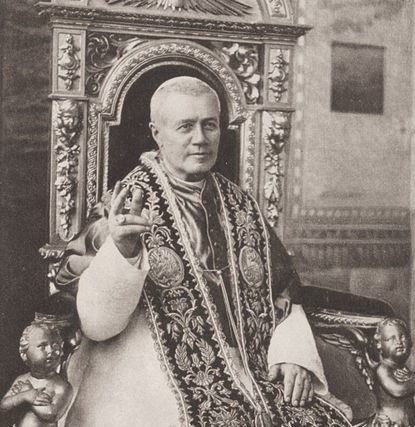
All of this heavy-handed use of papal power ironically had a precedent in Pope St. Pius X, the favored saint of many lovers of tradition. There were other liturgical waves that emanated from this indisputably good man and pope that have troubled us since. Among them was the disruption in the order of the Sacraments, when Pope Pius X moved First Communion to early youth but did not attend to the Sacrament of Confirmation. Thus the ancient order of initiation: Baptism, Confirmation, and Eucharist, was disrupted; Confirmation became a kind of “hanging” sacrament, detached from its liturgical and theological moorings. The result was its reduction to a sort of Catholic Bar Mitzvah.

Further, Pope Pius X was also dismissive, if not juridically forbidding, of orchestral masses. While he fostered chant—a good thing—he also suppressed a musical form that had inspired most of the classical composers (e.g., Mozart, Schubert, and Beethoven) to contribute to the Church’s musical patrimony. It would be 70 years before such Masses would again be heard widely in the Church.

Again, all of these issues are less significant for their immediate effect than for the groundwork they laid for what came later. The sudden liturgical changes of the 1960s would not have been possible in previous ages because although the Pope and Rome were strongly influential, local bishops and churches had a lot more leeway and influence on the liturgy.

This setup of local freedom is not without troubles. Too much diversity leads to difficulty and chaos. Some general norms need to hold sway; regional and even ecumenical councils need to help rein in extreme diversity by reasserting proper liturgical principles.

However, centralizing power over the liturgy within the papacy also presents serious difficulties. Plainly put, the liturgy is just too important to have it all depend on the notions of one man, even a holy man like Pius X. Many of his reforms were good, even necessary, and his sanctity is not in dispute; but even saints do not get everything right and some of what they say and do may later be exaggerated or corrupted by those that follow.

In recent decades, traditional Catholics have looked to Rome to resolve liturgical debates. On one level this has been necessary, as many local bishops and churches have seemingly abdicated their responsibility to oversee the liturgy, correct abuses, and guarantee the legitimate rights of the faithful.

However, traditional Catholics would also do well to understand the problems inherent in having an overly centralized control of the Sacred Liturgy. More needs to be done by traditional Catholics to build a foundation for good liturgy in their local parishes by building a culture that is respectful of tradition and sober about the pitfalls of depending too much on papal authority.

How strange it is that the paragon of traditional Catholicism should have, even if unwittingly, helped paved the way for what I would argue is the excessive use of supreme judicial authority in regard to the liturgy, a use so sweeping that even Pope Benedict XVI would have to announce that the suppression of the older Roman Rite was neither possible nor in effect.

Just one of those strange moments in liturgical history.

Considerations in Fraternal Correction

Fraternal correction is so important to the health of individuals, the family, the Church, and even nations, that some further reflection following Sunday’s Gospel is in order. The correction of a sinner is complex and difficult to accomplish well. Many avoid it entirely, especially due to these hypersensitive times, when some people base their very identity on their sins. Many take correction very personally, even labeling it “hate speech.” Those who dare to correct are often shamed for doing so and accused of “judging.”

Distinguishing between what God teaches to be good and what He teaches to be sin is a judgment that is required of us; our own judgment in the matter must conform to God’s revealed judgment. All moral exhortation in the Scripture aims to conform our understanding and judgment to God’s truth, revealed in Scripture and Natural Law. While we cannot judge a person’s ultimate state before God, we can and must judge; we must distinguish good from evil, virtue from sin.

Thus, difficult though it is, fraternal correction is required of us by God in a general way. However, this raises many questions: Is correction always required? Are we required to correct everyone? Does our obligation to correct vary and if so, how?

St. Thomas Aquinas sets forth some answers for us, both in terms of the basis of our obligation and its limits.

St. Thomas places the roots our obligation to correct one another in both charity and justice:

Now a man’s sin may be considered in two ways, first as being harmful to the sinner, secondly as conducing to the harm of others, by hurting or scandalizing them, or by being detrimental to the common good, the justice of which is disturbed by that man’s sin. … Now to do away with anyone’s evil is the same as to procure his good; and to procure a person’s good is an act of charity, whereby we wish and do our friend well. … Therefore, fraternal correction is an act of charity …. There is another correction which applies a remedy to the sin of the wrongdoer, considered as hurtful to others, and especially to the common good. This correction is an act of justice, whose concern it is to safeguard the rectitude of justice between one man and another (Summa Theologica II, IIae, q. 33, art. 1, Respondeo).

So, fraternal correction is required of us as a precept or command. However, there are prudential aspects of when and how to correct. This is because the command to correct is not one that forbids us from doing something (in which case we should never do it), but rather one that requires something of us under various circumstances. Although the precept to correct describes what we are to do as a general practice, it cannot possibly address every particular set of circumstances. St. Thomas says,

Fraternal correction is a matter of precept. [W]hile the negative precepts of the Law forbid sinful acts, the positive precepts inculcate acts of virtue. … [N]egative precepts bind always and for all times. On the other hand, acts of virtue must [be done] by observing the due circumstances, which are requisite in order that an act be virtuous; namely, that it be done where, when, and how it ought to be done. … [F]raternal correction is directed to a brother’s amendment: so that it is a matter of precept, in so far as it is necessary for that end, but not so as we have to correct our erring brother at all places and times (Summa Theologica II, IIae, q. 33, art. 2, Respondeo).

Thus, the particular circumstances will determine whom I must correct and how. As a general rule, parents are obligated to correct their children. Those in authority are more obligated to correct their subordinates. Elders are more obligated to correct those significantly younger. Family ties increase the obligation to correct; we are less obligated to correct strangers. Those with special training or standing such as teachers, pastors, bishops, and theologians are obligated to correct error and sin. However, their sphere of influence helps to focus their obligation. For example, a pastor’s greatest obligation is to instruct and correct his own parishioners; a bishop, his own flock; a teacher, his or her own students.

Generally, then, obligations to correct are lessened when the relationship is more distant or when one is in an inferior position.

However, just because an obligation is not as strong does not mean that there is never an obligation. For example, there are times when an inferior still ought to correct his superior. St. Thomas teaches this, but with an important distinction:

[C]orrection is twofold. One is an act of charity, which seeks in a special way the recovery of an erring brother by means of a simple warning: such like correction belongs to anyone who has charity, be he subject or prelate.

But there is another correction which is an act of justice purposing the common good, which is procured not only by warning one’s brother, but also, sometimes, by punishing him, that others may, through fear, desist from sin. Such a correction belongs only to prelates, whose business it is not only to admonish, but also to correct by means of punishments (Summa Theologica II, IIae, q. 33, art. 3, Respondeo).

St. Thomas adds,

A subject is not competent to administer to his prelate the correction which is an act of justice through the coercive nature of punishment: but the fraternal correction which is an act of charity is within the competency of everyone in respect of any person towards whom he is bound by charity, provided there be something in that person which requires correction.

… it follows that when a subject corrects his prelate, he ought to do so in a becoming manner, not with impudence and harshness, but with gentleness and respect. Hence the Apostle says (1 Timothy 5:1): “An ancient man rebuke not, but entreat him as a father” (Summa Theologica II, IIae, q. 33, art 4, Respondeo).

There is an additional consideration in administering fraternal correction publicly. As a general norm, the first approach should be to correct privately, but there are exceptions, which St. Thomas treats here:

With regard to the public denunciation of sins it is necessary to make a distinction: because sins may be either public or secret. On the case of public sins, a remedy is required not only for the sinner, that he may become better, but also for others, who know of his sin, lest they be scandalized. Wherefore such like sins should be denounced in public, according to the saying of the Apostle (1 Timothy 5:20): “Them that sin reprove before all, that the rest also may have fear,” which is to be understood as referring to public sins, as Augustine states (De Verb. Dom. xvi, 7).

On the other hand, in the case of secret sins, the words of Our Lord seem to apply (Matthew 18:15): “If thy brother shall offend against thee tell him his sin, but between you and him alone,” etc. …[So] there are … sins which injure none but the sinner, and the person sinned against, either because he alone is hurt by the sinner, or at least because he alone knows about his sin, and then our one purpose should be to help our sinning brother [privately] … Secondly, we ought to safeguard our sinning brother’s good name, both because the dishonor of one leads to the dishonor of others … and also because when one man’s sin is made public others are incited to sin likewise (Summa Theologica II, IIae, q. 33, art. 7, Respondeo).

When the secret admonition has been given once or several times, as long as there is probable hope of his amendment, we must continue to admonish him in private, but as soon as we are able to judge with any probability that the secret admonition is of no avail, we must take further steps … (Summa Theologica II, IIae, q. 33, art. 8, Reply to obj. 1).

Both St. Thomas’ and our Lord’s words thus indicate that private admonition does not always work. At such times (if the matter is serious), others can and should be brought in. (The even rarer remedy of excommunication should be applied only after repeated entreaties.) St. Thomas says,

Since, however, one’s conscience should be preferred to a good name, Our Lord wished that we should publicly denounce our brother and so deliver his conscience from sin, even though he should forfeit his good name. Therefore, it is evident that the precept requires a secret admonition to precede public denunciation (Summa Theologica, II, IIae, q. 33, art 7, Respondeo).

St. Thomas also addresses the case in which Church prelates must be corrected by those subject to them in some way. Clearly the matter must be serious and other more discreet methods should first be exhausted. St. Thomas teaches as follows regarding the public correction of Church prelates:

To withstand anyone in public exceeds the mode of fraternal correction, and so Paul would not have withstood Peter then, unless he were in some way his equal as regards the defense of the faith. But one who is not an equal can reprove privately and respectfully. Hence the Apostle in writing to the Colossians (4:17) tells them to admonish their prelate: “Say to Archippus: Fulfil thy ministry [Vulgate: ‘Take heed to the ministry which thou hast received in the Lord, that thou fulfil it.’ Cf. 2 Timothy 4:5.” It must be observed, however, that if the faith were endangered, a subject ought to rebuke his prelate even publicly. Hence Paul, who was Peter’s subject, rebuked him in public, on account of the imminent danger of scandal concerning faith, and, as the gloss of Augustine says on Galatians 2:11, “Peter gave an example to superiors, that if at any time they should happen to stray from the straight path, they should not disdain to be reproved by their subjects” (Summa Theologica II, IIae, q. 33, art. 4, Reply to obj. 2).

Note that although St. Thomas gives a general opinion in this regard based on solid principles, Canon Law and other standing practices should be considered if a specific instance arises in which a prelate needs to be reproved by his subjects. Angry denunciations and mere insubordination are out of place. As St. Paul says, An ancient man rebuke not, but entreat him as a father (1 Tim 5:1).

Conclusion: Fraternal correction is central to healthy families, a healthy church, and a healthy culture. In recent times we have done very poorly with this on every level. Our lack of charitable and clear correction goes a long way in explaining the moral confusion and darkness of our time. All of us, clergy and laity alike, need to recover a healthy respect for this act of charity toward the sinner and justice toward the wider community. In addition, all of us need to be more open to correction ourselves. Let us pray for courage, zeal, and charity in this regard.

On the Balance of Kindness and Correction

As a follow-up from Sunday’s Gospel (on correcting the sinner) it is important to reflect on balancing salutary discipline with necessary consolation and encouragement—never an easy task. For example, it is possible for parents to be so severe with their children that they become disheartened and lack necessary self-esteem; but it is also possible for parents to be so lax with them that the children become spoiled and lack proper self-discipline and humility. Scripture, seeking to balance teaching with encouragement, says, Fathers, do not exasperate your children; instead, bring them up in the training and instruction of the Lord (Eph 6:4).

Pastors, in their leadership of parishes, also need to find proper balance, offering kindness, consolation, encouragement, and witness to their congregations, while not failing to properly rebuke sin and warn of its consequences and of the coming judgment. St. Paul says,

You are witnesses, and so is God, how devoutly and uprightly and blamelessly we behaved toward you believers; just as you know how we were exhorting and encouraging and imploring each one of you as a father would his own children, so that you would walk in a manner worthy of the God who calls you into His own kingdom and glory (1 Thess 2:11-13).

Like a loving Father must the priest exhort, as one who teaches and who wants and expects the best for his flock.

It is hard to argue that we have the balance right in the Church today. Correction and rebuke, according to what most Catholics report, are seldom mentioned in the pulpit. Such omission is not acting like a father; a father would see how sin threatens the future of his children and in love would correct them, being willing to upset his children to prevent something far worse. There are also priests who teach and preach as if trying to win an argument and prevail over others, rather than out of loving concern; they may be unduly harsh. Proper balance is necessary.

In families, the trend seems to be toward being overly permissive. Too many children today have become incorrigible because they did not learn discipline when they were young. Too many are bold toward their elders and have lost the humility necessary for learning and maturity. This speaks to families in which the balance between encouragement and discipline has been lost. It is also true that some children are oppressed by the other extreme and are weighed down with discouragement, poor self-image, and anger. Again, proper balance is necessary.

In his Book of Pastoral Rule, St. Gregory presents some good advice in regard to this balance. While much of what he says is common sense, it is important to review it; common sense doesn’t seem to be so common today. St. Gregory’s treatise offers memorable imagery for the thoughtful reader, whether priest or parent. Here is what he has to say about addressing the wound of sin:

But often a wound is made worse by unskilled mending … in every case, care should be provided in such a way that discipline is never rigid, nor kindness lax. … Either discipline or kindness is lacking if one is ever exercised independently of the other. … This is what the scriptures teach through the Samaritan who took the half-dead man to the inn and applied wine and oil to his wounds. The wine purged them and the oil soothed them.

Indeed, it is necessary that whoever directs the healing of wounds must administer with wine the bite of pain, and with oil the caress of kindness; so that what is rotten may be purged to by the wine, and what is curable may be soothed by the oil.

In short, gentleness is to be mixed with severity, a combination that will prevent the laity from becoming exasperated by excessive harshness, or relaxed by undue kindness. … Wherefore David said, “Your rod and your staff have comforted me” (Psalm 23:4). Indeed, by the rod we are punished and by the staff we are sustained. If, therefore, there is correction by the rod, let there also be support through the staff. Let there be love that does not soften, vigor that does not exasperate, zeal that is not immoderate or uncontrolled, and kindness that spares, but not more than is befitting. Therefore, justice and mercy are forged together in the art of spiritual direction. (Rule II.6)

These are practical reminders to be sure, but they also come with the memorable images of wine and oil, rod and staff. Both are necessary; each must balance the other. There must be clarity with charity and charity with clarity; there must be veritatem in caritate (truth in love).

The Obligation of Clear, Compassionate Correction of the Sinner – A Homily for the 23rd Sunday of the Year

We live in times in which there is a widespread notion that to correct sinners is to “judge” them. Never mind that it is sin that we judge, not the sinner. Never mind that in accusing us of judging, the worldly-minded are themselves doing the very judging they condemn. Never mind any of that; the point of the charge is to try to shame us into silence. Despite the fact that Scripture consistently directs us to correct the sinner, many Catholics have bought into the notion that correcting the sinner is “judging” him. In this, the devil, who orchestrates the “correcting is judging” campaign, rejoices; for if he can keep us from correcting one another, sin can and does flourish.

Today’s Gospel is an important reminder and explanation of our obligation, as well instruction on how we should correct the sinner and be open to correction ourselves. Let’s look at it in four steps.

I. PRESCRIPTIONJesus said to his disciples: “If your brother sins (against you), go and tell him.” I placed “against you” in parentheses because although some ancient manuscripts contain this phrase, many do not. While some interpret this Gospel to command correction only when someone sins “against you,” none of the other texts we will review today contain this restriction. For the purpose of this reflection, I will favor those manuscripts that do not include the phrase “against you.”

Notice the brief but clear advice that when we see someone in sin, we ought to talk with him or her about it. Many, probably due to sloth, prefer to say that it’s none of their business what others do. Jesus clearly teaches otherwise.

In this teaching, Jesus is obviously speaking to the general situation; some distinctions are helpful and admissible in specific instances. For example, one generally has a greater obligation to correct people in grave matters than in less serious ones. One is more compelled to correct those who are younger than those who are older. One is more obligated to correct subordinates, less so, superiors. Parents are strongly duty-bound to correct their children, but children are seldom obligated to correct their parents. The general rule, however, remains: all other things being equal, there is an obligation to engage in Christian correction. Jesus says, “If your brother sins, go and tell him.”

There are many other Scriptures that also advise and even obligate us to correct the sinner. Some of the texts also speak to the way in which we should correct.

  • My brothers, if one of you should wander from the truth and someone should bring him back, remember this: Whoever turns a sinner from the error of his way will save him from death and cover over a multitude of sins (James 5:19).
  • Brethren, if a man is overtaken in any sin, you who are spiritual should recall him in a spirit of gentleness. Look to yourself, lest you too be tempted. Bear one another’s burdens, and so fulfill the law of Christ (Gal 6:1).
  • Let the word of Christ dwell in you richly, teach and admonish one another in all wisdom. (Col 3:16)
  • And we exhort you, brethren, admonish the unruly, encourage the fainthearted, help the weak, be patient with them all (1 Thess 5:14).
  • Thou shalt not hate thy brother in thine heart: thou shalt in any wise rebuke thy neighbor, and not suffer sin upon him (Lev 19:17).
  • Son of man, I have made you a watchman for the house of Israel; whenever you hear a word from my mouth, you shall give them warning from me. If I say to the wicked, ‘You shall surely die,’ and you give him no warning, nor speak to warn the wicked from his wicked way, in order to save his life, that wicked man shall die in his iniquity; but his blood I will require at your hand (Ez 3:17).

Hence, in charity, we have an obligation to correct someone who has gone over into sin. In correcting we ought to be gentle but clear. Further, we ought to correct with humility and not fall into the temptation of acting as if we are “superior.” Our goal is to limit sin’s effects and to apply necessary medicine to the problem of sin.

We will see more “correction texts” in a moment, but for now, let the first point be repeated: if your brother sins, talk with him about it.

II. PURPOSEIf he listens to you, you have won over your brother. Here, let us just briefly note that the point of this correction is to win a brother or sister back to the Lord; it is not to win an argument or to show superiority. The point is to contend with Satan, by God’s grace, and to win the person, who is in Satan’s grasp, back for God.

III. PROCESS – The Lord next sets forth a process for fraternal correction. It would seem that the process here is generally for more serious matters and that all these steps might not be necessary for lesser ones. For addressing the general situation in which a brother or sister is in a state of serious and unrepentant sin, the following process is set forth:

1.  Go and tell him his fault between you and him alone. This first step is often omitted in our fallen, gossip-prone, human condition. If a person is in sin, too frequently we will talk to everyone except the actual sinner about it. This is usually not helpful and in fact merely compounds the sin: the sinner goes uncorrected and sin multiplies through gossip. Satan gets a high return on his investment, often netting many sinners for the price of one.

Jesus is clear: speak to the sinner himself, first. There may be situations in which we need to seek advice from someone we trust about how best to approach the sinner, and sometimes we may need to check a few facts first, but such lateral discussions ought to be few and only with trusted individuals. The Lord is clear: step one is to go first to the sinner himself.

2.  If he does not listen, take one or two others along with you, so that ‘‘every fact may be established on the testimony of two or three witnesses.” This sort of option may seem difficult today in our cosmopolitan settings, but such things can occur in the right circumstances. Often these sorts of team efforts are called “interventions” and they are frequently done in the cases of addicts who resist treatment. Sometimes, too, it is used when a certain family member is engaging in hurtful practices such as demonstrating severe anger, refusing to forgive, or causing division within the family. Such interventions are usually conducted by several family members whom the person trusts and they often receive training of some sort before doing so. Depending on the gravity of the matter, these interventions are both necessary and counseled by the Lord as part of a method to end destructive and sinful behaviors.

3.  If he refuses to listen to them, tell the Church. This presupposes that the Church is experienced in a personal way and that the individual is connected to a body of believers who matter to him in some way. The presumption is that these are people he knows (e.g., pastors, parish leaders). This is not always the case in modern parishes, which can be large and impersonal and where many can attend yet stay on the fringes. Rather than simply dismissing this step as unrealistic, we ought to see it as setting forth an ideal of what parishes ought to be.

For those who have some relationship to the Church, this step needs to be considered in cases of grave sin. As a pastor, I have sometimes been asked to speak to someone’s family member who is in serious sin. Presuming other measures have been taken, I often do speak to him or her to warn about such things as fornication, cohabitation, abortion, drug use, anger issues, and disrespect for parents.

To be honest, though, unless the individual has more than a superficial membership in the parish, such talks are of limited effectiveness. Further, the word “Church” here should not be seen merely as meaning clergy. Sometimes there are others in the Church who ought to be engaged, such as leaders of organizations to which the person belongs, older parishioners (to speak to younger ones), and so forth. I have often engaged a team to speak, especially to younger people.

4.  If he refuses to listen even to the church, then treat him as you would a Gentile or a tax collector. Here we come to a matter of some controversy: excommunication. Treating someone as tax collector or Gentile is a Jewish way of saying, “Have nothing more to do with such a one; let him be expelled from the community.”

Some today object to the use of excommunication and often suggest, with some superiority, that “Jesus would never do such a thing.” Yet Jesus Himself is teaching us here to do this very thing. Excommunication is not a punishment to be inflicted upon someone simply to be rid of him or her, but rather as a medicine to bring forth repentance. In addition, excommunication comes only at the end of a long process; it is not something that that Church rushes to do. But it is taught here as well as elsewhere in Scripture. Consider some of the following examples:

  • We instruct you, brethren, in the name of our Lord Jesus Christ, to shun any brother who walks in a disorderly way and not according to the tradition they received from us (2 Thess 3:6).
  • If anyone refuses to obey what we say in this letter, note that man, and have nothing to do with him, that he may be ashamed. Do not look on him as an enemy, but warn him as a brother (2 Thess 3:14).
  • It is actually reported that there is immorality among you, and of a kind that is not found even among pagans; for a man is living with his father’s wife. And you are arrogant! Ought you not rather to mourn? Let him who has done this be removed from among you. For though absent in body I am present in spirit, and as if present, I have already pronounced judgment in the name of the Lord Jesus on the man who has done such a thing. When you are assembled, and my spirit is present, with the power of our Lord Jesus, you are to deliver this man to Satan for the destruction of the flesh, that his spirit may be saved in the day of the Lord Jesus (1 Cor 5:1).
  • Do not be deceived: “Bad company ruins good morals.” Come to your right mind, and sin no more. For some have no knowledge of God. I say this to your shame (1 Cor 15:33).
  • But rather I wrote to you not to associate with anyone who bears the name of brother if he is guilty of immorality or greed, or is an idolater, reviler, drunkard, or robber—not even to eat with such a one. Is it not those inside the church whom you are to judge? (1 Cor 5:11)

So there is a fairly strong, clear biblical mandate from both Jesus and St. Paul that excommunication may at times have to be used. It would seem from the texts we have surveyed that the purpose of excommunication is two-fold: to protect the community from the influence of serious sinners and to be a medicine to urge the wayward Christian unto saving repentance.

If any would doubt the seriousness of excommunication or think nothing of the Church’s solemn declaration of it, note that Jesus indicates that He will recognize the Church’s authoritative declaration: Whatever you bind on earth shall be bound in heaven, and whatever you loose on earth shall be loosed in heaven. Thus, let no one make light of the Church’s solemn declaration in such matters.

Today there is increasing demand for bishops to use this measure more often, especially for those who openly support and help fund abortion. It seems clear from the Scriptures we have surveyed that such a measure can, and at times should, be used at the end of a process such as Jesus describes. If one is directly involved in abortion—either by having one, performing one, paying for one directly, or directly assisting a woman to have one—he or she is automatically (self) excommunicated.

What of “Catholic” politicians and jurists who advance the availability of abortion and vote funding for it? Most (but not all) bishops have made a prudential decision not to make use of this measure for “Catholic” politicians who support abortion (or same-sex “marriage,” for that matter). Most of them say that they are concerned that it would be perceived as a political act rather than a moral shepherding of these wayward souls, and because the action would likely be misinterpreted and falsely portrayed by the media, they consider it unwise to excommunicate.

Bare minimum – It is not my role as a priest to critique bishops on whether or not they choose to excommunicate; bishops must make prudential judgments. At a bare minimum, I would hope that every Catholic (politician or not) who even comes close to procuring an abortion or advancing its availability to others has been privately instructed and warned by his pastor (or bishop in the case of prominent individuals) that if he does not change, and dies unrepentant, he will almost certainly go to Hell. Likewise, those of any prominence who help to advance other serious moral evils should be strongly admonished by pastors/bishops to return to the truth.

It is simply too serious a situation to leave a sinner of this magnitude uninstructed, unrebuked, or in any way unclear as to the gravity of the matter. The sinner should be instructed—yes, warned vividly—to repent at once and to refrain from Holy Communion until confession can be celebrated following true repentance.

IV. POWERAgain, amen, I say to you, if two of you agree on earth about anything for which they are to pray, it shall be granted to them by my heavenly Father.

The Lord is showing here how our unity will bring strength. How can we have unity in the Church if there isn’t agreement on basic moral principles and behavior? Thus fraternal correction not only helps the sinner, it helps the Church by helping to preserve our unity in the truth of the Gospel. Central to the truth that unites us is the moral law of Christ and His Church. Fraternal correction increases our unity and makes us and our prayer stronger.

Sadly, today it is evident that our unity and the power of our prayer as a Church is greatly diminished by the disunity among us and the way in which many continue for too long without being corrected by the Church. We are not a force for change because we are divided on the very truth that is supposed to unite us. Much of our division is further rooted in our failure to teach with clarity and correct the sinner.

Much work and prayer are necessary today to unlock the power of which the Lord speaks in today’s Gospel.

Earth, Air, Fire, and Water: Great and Yet Terrifying Blessings

Given the terrible storm that has devastated parts of the Caribbean and is bearing down on Florida as I write, it is possible that questions come to mind. There is certainly a violent component to life on this planet. We might even play on the words of an ancient hymn Dies Irae, dies illa. Yet what we experience as violent in one region can usher in blessings for the wider planet. Among other things, severe storms help to moderate the large difference in temperature between the equator and the poles. Regardless of any positive impacts, though, the local effects can be devastating.

Still, we ought to consider that some of God’s gifts come in strange and terrifying packages. The book of Job says,

The earth, though out of it comes forth bread,
is in fiery upheaval underneath (Job 28:2).

Yes, we live just above a fiery cauldron, separated from us by a thin membrane of earthly crust rife with cracks through which fire routinely flares, a crust that is always shifting and even shaking violently in earthquakes.

Yet were it not for this violent cauldron beneath us, it seems unlikely that we would have life here at all. Volcanoes and other tectonic activity keep our soil rich and recycled. In this fiery cauldron are brewed some of our most useful minerals and beautiful gems. Whole island chains and land masses are formed by eruptions and geothermal energy is a resource we have only just begun to tap. Many scientists think that volcanoes had a profound influence on the formation of an atmosphere in the early Earth period and that the molten core of the earth has an important influence on the Van Allen belt, a magnetic field that keeps the harmful portion of the sun’s radiation away from the earth’s surface.

Job had it right: some of God’s gifts come strange packages. The earth’s capacity to bring forth bread is directly connected to the fact that it is on fire beneath. Yet what a strange and terrifying package this gift comes in! Volcanoes and other seismic activity have claimed an enormous number of lives and a huge amount of property.

Water, such a rich source of life and blessing, can turn in a moment to utterly destroy life in huge numbers. Floods and tsunamis can sweep away vast areas in a flash.

Yet who can deny that without water, life would be impossible? Ah, water; nothing more life-giving and nothing more deadly. Yes, some of God’s gifts come in strange and terrifying packages.

I have often wondered why so many cities throughout the world are built on or near floodplains and along the “ring of fire,” with its volcanoes and fault lines. Of course the answer is plain enough: it is in these very areas that some of the richest soil and the greatest resources are to be found.

God’s and nature’s most life-giving gifts are but a few degrees separated from disaster and instant death. We live on the edge of an abyss because that is where life is found.

It’s such a thin line, really. Mors et vita duello, conflixere mirando! (Death and life compete in a stupendous conflict!)  To live is to cheat death.

All of the basic elements and forces: earth, air, water, and fire, are so death-dealing and yet so life-giving; somehow they are all part of the great cycle of living and dying that God intends.

Only God is existence itself; the rest of us are contingent beings and part of a cycle. Only in union with Christ, who said, I am the life, will we ever cheat death. As Bishop Fulton Sheen once said, “Christ gave the earth the only serious wound it ever received, the wound of an empty tomb.” With Christ—and only with Christ—will we one day give the earth that same wound.

For now, we live above the cauldron upon a thin crust; beneath us burns a tremendous fire. Somehow, mysteriously, it is the source of our bread.

The earth, though out of it comes forth bread,
is in fiery upheaval underneath (Job 28:2).

Yes, some of God’s greatest gifts come in strange and terrifying packages.

Distinguishing Between Healthy and Unhealthy Guilt

One of the trickier terrains to navigate in the moral world is the experience of guilt, in its sense of sorrow for sin.

On the one hand, we should experience an appropriate for sorrow, but on the other there are types of guilt that are self-destructive and inauthentic; these come either from our flesh or from the devil. Some forms of guilt can cause great harm and actually increase the frequency of sin due to the way they engender discouragement and self-disparagement rather than a chastened attitude confident of mercy, healing, and help. It is valuable to make some distinctions so that we can discern what sort of guilt is healthy and what sort is not.

St. Paul makes an important initial distinction in the Second Letter to the Corinthians. Paul had rebuked the Corinthians in an earlier letter (esp. 1 Cor 5) both for sinning and for tolerating sin their midst. Evidently his rebuke stung many of them and caused them significant sorrow. Paul writes,

Even if I caused you sorrow by my letter, I do not regret it. Though I did regret it—I see that my letter hurt you, but only for a little while—yet now I am happy, not because you were made sorry, but because your sorrow led you to repentance. For you became sorrowful as God intended and so were not harmed in any way by us. Godly sorrow brings repentance that leads to salvation and leaves no regret, but worldly sorrow brings death. See what this godly sorrow has produced in you: what earnestness, what eagerness to clear yourselves, what indignation, what alarm, what longing, what concern, what readiness to see justice done (2 Cor 7:8-11).

Notice how Paul distinguishes between “Godly sorrow” and “worldly sorrow.” The way we can distinguish them, according to Paul, is by their fruits.

Godly sorrow has these fruits:

  1. Repentance
  2. Earnestness to do what is right – the Greek word used is σπουδή (spoude), which refers also to a kind of swiftness rooted in enthusiasm.
  3. Longing for what is right – the Greek text speaks of how this Godly sorrow gave them ἐπιπόθησις (epipothesis), which is not just an eager longing but also a strong affection for what is good and just.
  4. Indignation for sin
  5. Holy fear of sin

It’s not a bad harvest, to be sure! Godly sorrow brings forth good things and will be known by its fruits. Paul goes on to say that Godly sorrow is a sorrow that God intends and that does not harm us in any way. Further, it leaves no regrets.

We might also add that Godly sorrow is rooted in love: love for God and others and our experience of God’s love for us. The sorrow is real and often quite sharp, but since it is rooted in love, it makes us run to the beloved whom we have offended, rather than from Him (as we sulk).

“Godly sorrow” would also seem to be related to perfect contrition, to which we refer in the Act of Contrition when we say, I detest all of my sins, not only because I fear the loss of Heaven and the pains of Hell, but most of all, because I have offended Thee, my God, who art all good and deserving of all my love. Perfect contrition regards love whereas imperfect contrition is related to fear of punishment. Hence Godly sorrow would also seem to assist and increasingly to perfect contrition.

What of “worldly sorrow,” as Paul calls it? He says only that it “brings death.” Here we must surmise that whereas Godly sorrow gives life and restores relationship and love, worldly sorrow and guilt sever these things. When we have this kind of guilt or “worldly sorrow” it is not our sins that we hate so much as our own self.

In worldly sorrow, Satan has us where he wants us. Indeed, worldly sorrow is most often a fraud, for though it masquerades as humility it is often really pride, wherein a person thinks, in effect, how could I have done such a thing?

If we can know something by its fruits, then we should note that worldly sorrow often makes us run from God in avoidance rather than to Him in love. Further, it often provokes anger in us, making us resentful of God’s law and of the fact that we should have to seek mercy and humble ourselves to God or to a person whom we have offended. Rather than making us eager to repent, it often causes us to delay repentance out of embarrassment or resentment. Further, these sorts of attitudes can lead us to rationalizing our sin and minimizing its significance.

Other people go in a very different direction, one of self-loathing and despair. They may magnify what they have done or overcorrect by descending into an unhealthy scrupulosity, rooted in fear of punishment more than in the love of God.

These negative fruits, though they often masquerade as piety, tend to make sin even more frequent. If a person is self-loathing, despairing of his capacity to live in God’s love and experience His correction, then he has little strength upon which to draw. He sees only weakness and guilt, missing the love and the splendor of grace. Perceiving no basis from which to get better, he descends deeper into sin, running further from God in unholy fear; the cycle just gets deeper and darker. Thus St. Paul describes worldly sorrow as bringing death.

When one starts to see “fruits” of this sort, it is increasingly likely that it is worldly sorry, which produces all these death-directed drives. A confessor or spiritual director will often have to work long and hard to break these negative cycles and help the person to find and experience Godly sorrow, which brings with it real progress. Godly sorrow is a sorrow to be sure, but one rooted in love.

Discernment in regard to guilt, to sorrow for sin, is essential. St. Paul gives us some good principles by which to distinguish the very different sorrows, Godly and worldly: by their fruits. Satan loves cheap imitations. Wolf that he is, he loves to masquerade in sheep’s clothing. Learn to recognize Satan’s cheap, “imitation sorrow” by its fruits, which are death-directed rather than God-directed.

On Priestly Discretion

To be discreet most commonly means to be careful, prudent, or circumspect, especially in terms of speech. The word discreet comes from Latin discretus, meaning separate or distinct. To be discreet is not to be secretive; it is to make a prudent discernment about what to say to whom and when to say it. Personal, private conversations ought to stay that way.

For a priest, discretion is obviously essential. This is true not only because we hear confessions (in which case absolute secrecy is mandatory) but also because many seek our counsel about things that are personal and confidential. We hear a lot of things that we have no business repeating, even to the person who sought our counsel or pastoral advice, without express provision and permission. Both pastoral and professional discretion are necessary.

There is a broader sort of discretion that is also important for priests, because we are public figures and represent not just ourselves, but the Church. This discretion involves being prudent and careful about expressing our personal views on topics such as politics, economics, and legislative policies.

This is particularly difficult today because many moral issues have been politicized. Economics and legislative policies often touch on important moral and spiritual truths. In such cases, to be discreet is to preach and teach the moral principles while avoiding merely partisan or ideological speech.

Another reason it is so difficult is because we live in contentious times and in a noisy, blabbermouth culture. Social media and other platforms such as YouTube and television talk shows encourage a lot of indiscreet and indiscriminate sermonizing and publishing of opinions. In this overall climate of indiscretion, priests can easily fall prey to the tendency to say too much about too many things. We can lose our focus on the Gospel and become too influenced by our opinionated culture.

Oftentimes priests feel baited or pressured to disclose their views. “What you think about that election, Father? What’s your view on all this global warming talk?” I’d like to make a humble request: please don’t bait us; we’re already too talkative as it is! 🙂 When I sense I am being drawn into such a conversation I have learned to say, “Why do you ask me this?”

Yes, discretion is so important for priests. Please help us stay on message and in our own field. Please help us to preach the Gospel. Please help us to learn the value of holy silence, not just in the moment, but in prayer as well, wherein we listen carefully to voice of God.

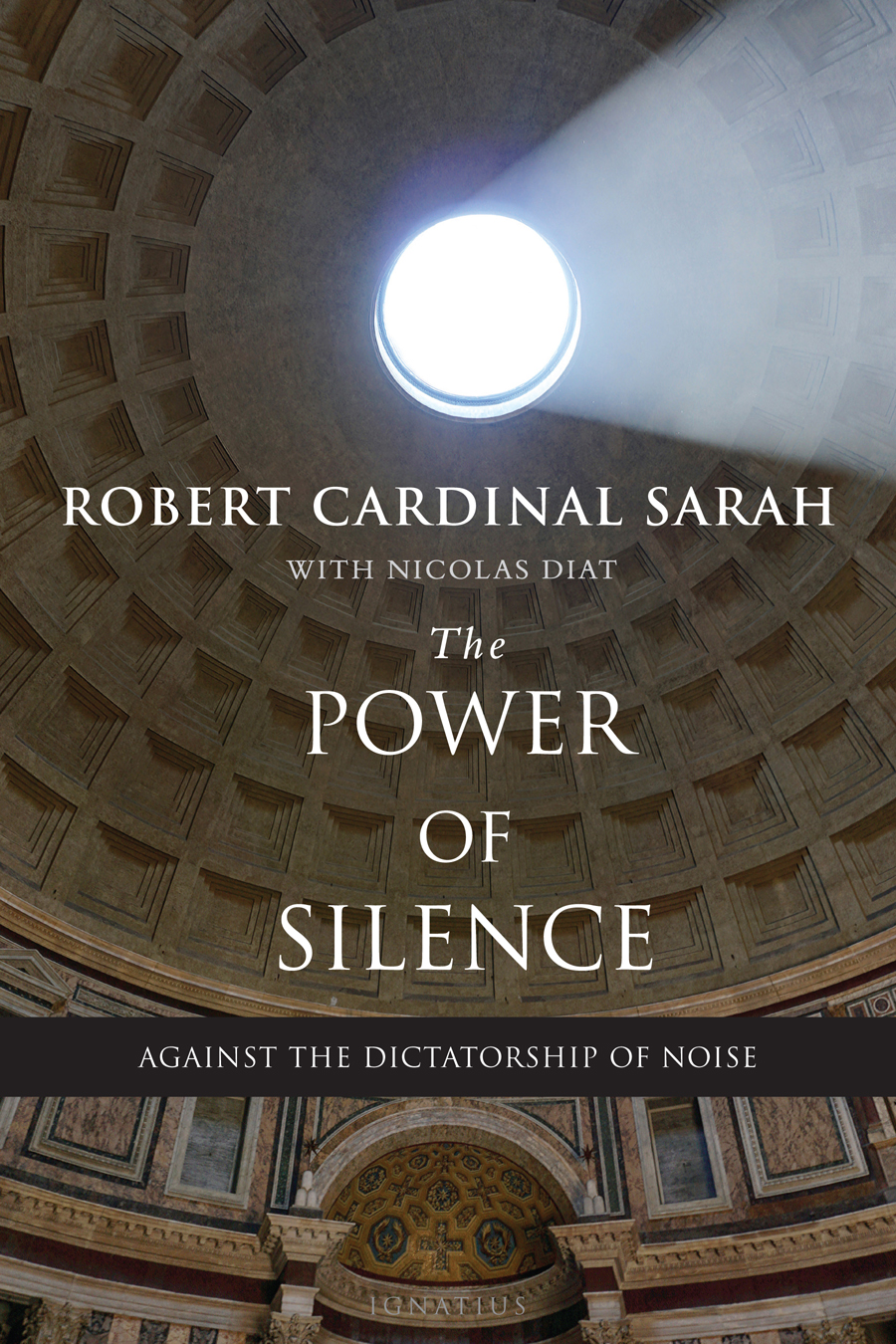
Cardinal Robert Sarah beautifully sets forth the need for priestly silence, in both prayer and in daily discretion. His words are critically important for all of us, but especially for priests:

The narcissism of excessive speech is a temptation from Satan. It results in a form of detestable exteriorization in which man wallows on the surface of himself, making noise so as not to hear God. It is essential for priests to learn to keep to themselves words and opinions they have not taken the trouble to meditate on, interiorize, and engrave in the depth of their heart. We must preach the word of God and certainly not our petty thoughts!

… Now this preaching implies silence. Otherwise it is a waste of time—petty, sententious chatter. Spiritual exhibitionism, which consists of exteriorizing the treasures of the soul by setting them forth immodestly, is the sign of a tragic human poverty and the manifestation of our superficiality. We [priests] often speak because we think that others expect us to do so. We end up no longer knowing how to be quiet because our interior dike is so cracked that it no longer holds back the floods of our words. Gods own silence, however, should teacher us that is often necessary to be quiet [Cardinal Robert Sarah, The Power of Silence, pp. 194-195].

Pray for priests. Help us, that we may be discreet and speak only after prayerful silence.

When Jesus Said No

One of the difficulties that many Christians experience is that although the needs around us are great, we are limited in both personal strength and resources. Lurking in the back of our minds is the idea that whatever the problem, Jesus would always help and therefore we should as well. Is it always wrong to say “no” when there is a need?

Jesus was quite generous with His time, attention, and resources. We are counseled to be rich in mercy and kindness, expansive in charity, and willing to forsake everything to follow Christ. For limited human beings, though, often with many competing obligations, are there no limits? Of course; there have to be. Well, what did Jesus do? Did He ever say no?

Many think that Jesus always said yes, especially to the poor and needy, but in fact there were times when Jesus said no. I’d like to look at three of them in particular. I chose these three because to some extent they deal with the needy. (Other examples of Jesus saying no pertain more to specialized circumstances or inappropriate requests (e.g., James and John asking for seats of honor, or Peter wanting to use a sword to defend Jesus).)

I. No to the sick? The Gospel for Wednesday of the 22nd week takes place in Capernaum. Jesus and His apostles have made quite an impression. He cured a demon-possessed man in the synagogue and word has spread. Jesus is lodging at the house of Simon Peter and has just cured Peter’s mother-in-law of a great fever. The story is picked up in the Gospel of Luke:

At sunset, all who had people sick with various diseases brought them to him. He laid his hands on each of them and cured them (Luke 4:40).

Clearly the Lord is helping a lot of people, as was His custom. The crowd has grown quite large and He continues to cure until sundown. Then comes a twist:

At daybreak, Jesus left and went to a deserted place. The crowds went looking for him, and when they came to him, they tried to prevent him from leaving them. But he said to them, “To the other towns also I must proclaim the good news of the Kingdom of God, because for this purpose I have been sent” (Luke 4:42-44).

Here we have what seems an unusual occurrence: The fact that the people of Capernaum are still distraught and searching for Him, implies that there are many sick still waiting for Jesus’ ministrations. Jesus, however, says no to their request that He return. He also indicates His intention to go on to other villages to preach, for that is what He has come to do.

Why does Jesus say no? For two reasons it would seem.

First, in terms of His humanity, He is limited. He has not come to save only Capernaum; therefore, He must devote attention to other places as well. In effect, He must allocate His “limited” (humanly speaking) resources justly and effectively. This is also the case with us. We must help the poor, but we must also feed our own children as well as meet other obligations. Saying no is not necessarily un-Christlike; rather, it is a humble admission of our limitations.

A second reason Jesus likely says no is that He will not allow Himself to be pigeon-holed as a medical miracle worker. He has come to preach and ultimately to take up His cross. Part of what He preaches is the role of the cross in life. It is not always appropriate to alleviate every burden. To be labeled as “Mr. Fix-it” is to be diminished. The Lord did not come merely to heal the body, but even more so to heal the soul. Jesus saying no is therefore also a teaching moment.

We who would imitate Christ should not think that alleviating burdens is our only mission. Sometimes it is more loving to let others carry the crosses that God intends for them. We are not necessarily being callous or un-Christlike as long as our intent is to allow people to experience necessary growth or to understand the consequences of their choices.

We must be careful not to excuse ourselves too easily from our duty to help others, but neither should we become enablers, causing others to become too dependent. In most cases, we should not do for others what they can do for themselves.

The good should not eclipse the best. The Lord would not allow himself to be drawn into a situation where what was good about Him (healing) eclipsed what was best (salvation and the preaching of the Kingdom). Hence, He sometimes said no.

II. “No” on a matter of social justice? On another occasion (during Jesus’ Sermon on the Plain) a man called out from the crowd,

“Teacher, tell my brother to share the inheritance with me.” [But] Jesus replied, “Man, who appointed me a judge or an arbiter between you?” Then he said to them, “Watch out! Be on your guard against all kinds of greed; a man’s life does not consist in the abundance of his possessions” (Luke 12:13-15).

Here, too, we have a bit of an unexpected twist. We might expect Jesus to side with this man. After all, isn’t sharing the family inheritance with potentially needy siblings a just and charitable thing to do? But Jesus says no and then warns the man of greed.

Jesus seems to have two reasons for saying no in this situation. First, He doesn’t want to get roped into being a legal arbiter in worldly matters. Second, He can see into the man’s heart and wants to rebuke his greed.

Jesus teaches us two things with his no. Sometimes people try to draw us into what does not concern us. They may ask us to take sides in a family dispute or on some issue on which it is not right for us to take sides. On other occasions, we may be asked to resolve matters involving two adults who should be expected to work out their own differences. Supervisors, pastors, and other leaders often experience such inappropriate attempts. There are surely times when leaders should help to arbitrate disagreements, especially if they pertain to specific matters over which they have authority; but there are also many occasions when requested help in such matters deserves a no in response.

We are also taught that we are not always required to give people exactly what they ask for. Although we are not gifted with Jesus’ ability to see into people’s heart and understand their motives fully, we can sometimes see that no is the best answer in a particular situation. Perhaps what a person is requesting is inappropriate or will harm others. Perhaps it will offend against the common good. Perhaps the request involves an unwise use of resources or is contrary to agreed-upon goals and priorities. There are many reasons we can and should say no. This may be so even if the one asking insists that it what he is requesting is just and fair. It may cause disappointment or incite anger, but that does not necessarily mean that we are doing anything wrong. Jesus did sometimes say no.

III. No to the hungry? The final example brings us to the shores of the Sea of Galilee. Jesus has just finished multiplying the loaves and fishes, feeding thousands of people. News of this has spread and the word of free food is drawing a crowd. Some of the crowd is not dispersing, so Jesus draws apart to pray and sends the apostles to the other side of the lake where He promises to join them later. After Jesus walks on the water (!) to meet the apostles in the boat, they all arrive on the other shore. News that Jesus headed in that direction reached some in the crowd, who then ran around the lake to meet Him. As Jesus disembarks, they greet Him with false surprise: “Rabbi! When did you get here?” Jesus was not born yesterday; He knows that they are merely looking for more free food. He says to them,

I tell you the truth, you are looking for me, not because you saw miraculous signs but because you ate the loaves and had your fill. Do not work for food that spoils, but for food that endures to eternal life, which the Son of Man will give you (John 6:26-27).

In effect, Jesus refuses to produce again the food of this world and instead summons them to faith. In the remainder of John 6, He goes on to teach extensively on the Holy Eucharist and insists that this food is more necessary for them. They are unimpressed and reject His teaching as a “hard saying” (Jn 6:60). In effect, this is another no from Jesus.

Feeding the hungry is usually something commended, even commanded, but in the end, Jesus will not allow them to seek only that which is good (bread) while refusing what is best (the Bread of Life).

As a priest, I have had this problem with some of the poor who come to me. When someone first comes to me asking for financial assistance, I give it wholeheartedly and inquire as to the story behind the need. The person almost always admits that he or she has no real church home. I then proceed to say that coming to Church and receiving Holy Communion are absolutely essential for salvation. If the people seeking help are not Catholics, I ask them to at least come and see if they are ready to accept the faith. Most of them do not follow up on this invitation and yet still come back looking for more money and resources. I then begin to place a condition upon continued assistance: they must either start coming or I must be sure that they are attending somewhere. I will not continue to give worldly food to those who refuse heavenly food.

Some have argued that this is not what Jesus would do, but in fact this is exactly what He did. He said no to those who wanted only their bellies filled but not their hearts. Of course in an emergency, or if little children are involved, this approach may have to be adapted. Furthermore, there are other places to get food and essentials in this country besides this one Catholic parish. Perhaps I can refer an individual somewhere else. In the end, though, I have to summon people not merely to the good, but to the best. This is not un-Christlike.

The essential point is that it is not always wrong to say no. Jesus did so even in some classic situations of social justice and charity. We should never refuse casually or be unnecessarily hurtful, but there are times when no is the best and in fact most Christlike answer.

Your additions, distinctions, and rebuttals are encouraged and appreciated in the comments section.

This song says, “Some of God’s greatest gifts are unanswered prayers.” Actually they are answered, I suppose, and the answer is no.