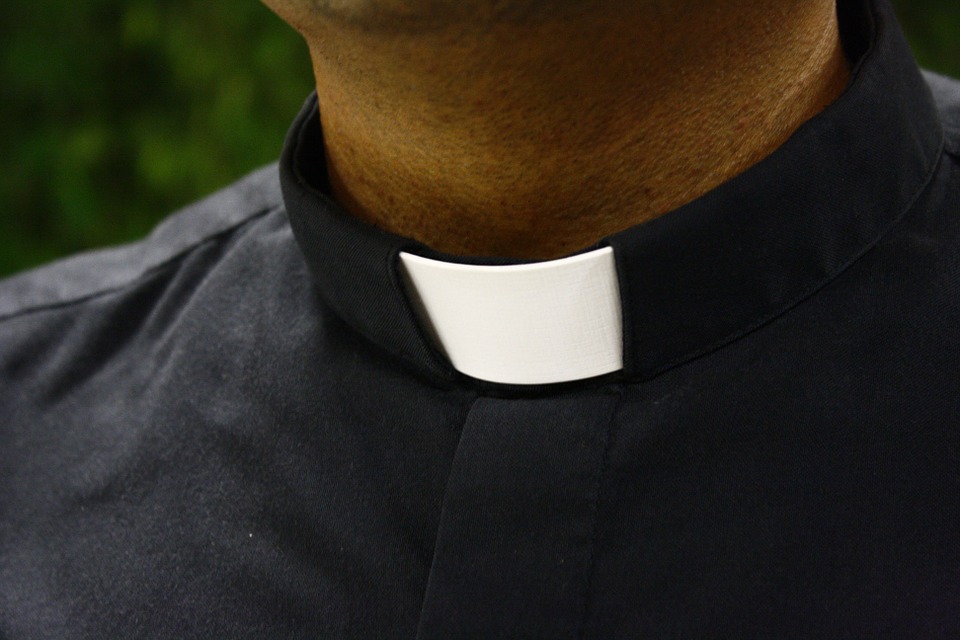
As human beings we are very visual; there is a certain demand of our flesh to see on its own terms. But of course God, who is pure spirit, will not be seen in this way.
How can the human eye perceive what is spiritual? It is not designed to do so. We cannot see God as God any more than we should expect to be able to see justice sitting down to lunch with humility. These are not physical concepts; they are metaphysical ones. We may see evidence of their existence, but we do not see them physically—so also with God. We see a lot of evidence of His existence, but we do not see Him with our earthly eyes.
There is a well-known (but inaccurate) saying, “Seeing is believing.” Actually it is not; seeing is only seeing. When we see things physically, one of two things happens, either of which eliminates the existence of any sort of faith:
We see something and accept it as true, in which case faith is no longer necessary, for it is not necessary to believe what we can plainly see.
We scoff or act bemused and continue to disbelieve, saying (for example when we see a magic trick), “There’s a way of doing that; it’s just an illusion.”
In either case, faith (human or supernatural) is set aside when we see something with our earthly eyes.
Therefore, as Scripture insists over and over again, faith is not a matter of seeing in a physical way.
Now faith is the substance of things to be hoped for, the evidence of things that appear not (Hebrews 11:1).
So we fix our eyes not on what is seen, but on what is unseen, since what is seen is temporary, but what is unseen is eternal (2 Cor 4:18).
For we walk by faith, not by sight (2 Cor 5:7).
For in this hope we were saved. But hope that is seen is no hope at all. Who hopes for what they already have? (Rom 8:24)
For now, we see only a reflection as in a mirror; then, we shall see face to face. Now I know in part; then I shall know fully, even as I am fully known (1 Cor 13:12).
And though you have not seen [Jesus], you love Him, and though you do not see Him now, but believe in Him, you greatly rejoice with joy inexpressible and full of glory, obtaining as the outcome of your faith the salvation of your souls (1 Peter 1:8-9).
Blessed are those who have not seen and yet believe (John 20:29).
So faith comes from hearing, and hearing through the word of Christ (Rom 10:17).
St. Thomas Aquinas says, Faith is a habit of the mind whereby eternal life is begun in us, making the intellect assent to what is non-apparent(Summa Theologica IIa IIae 4 ad 1).
Therefore, faith is not about what is seen with our earthly eyes. It comes from hearing—hearing the Word of God.
That said, faith is a way of knowing and thus also a way of “seeing,” but more in the intellectual sense, such as when we say, “Oh! Now I see” when we grasp a point intellectually. Although we know and “see” by faith, spiritual theologians such as St. John of the Cross remind us that the seeing and knowing by faith is “obscure.”
Usually we think of the word “obscure” with a slightly negative connotation. If something is obscure, it is tricky or hard to figure out; we look for something to illumine the darkness, to scatter the obscurity.
Not so fast. Consider the deeply paradoxical notion that the darkness, the obscurity, actually helps us to see better! Fr. Reginald Garrigou-Lagrange explains it this way:
Obscure faith enlightens us somewhat like the night, which though surrounding us with shadows, allows us to see the stars, and by them, the depths of the firmament. … That we may see the stars, the sun must hide, night must begin. Amazingly, in the obscurity of the night we see to a far greater distance than in the day; we see even the distant stars which reveal to us the immense expanse of the heavens. … [And so] faith, although obscure, opens up to us the supernatural world and its infinite depths: the Kingdom of God, His inner life, which we shall see unveiled and clearly in eternity (The Three Ages of the Interior Life, Tan Publications Vol 1, p. 361).
In the darkness we see farther and deeper into space. Sunlight is precious, but it envelops us; it closes us in a much smaller world. We see better what is near; what is farther off and higher up is lost to us. From the perspective of our physical senses, faith is a “dark” knowing or seeing. By it, we see farther and higher, longer and deeper.
Fr. Garrigou-Lagrange continues,
Faith is obscure but it illumines our intellect … in a way very superior to the senses and to reason. … What is evident for our senses is sensible, not spiritual; therefore, it is not God himself. … Now faith makes us attain here on earth the inner life of God in the penumbra, in obscurity. Consequently, a man who preferred visions to infused faith would deceive himself … for he would prefer what is superficial and exterior, and what is accessible to our faculties, to what surpasses them. He would prefer figures to the divine reality (Ibid).
Therefore, we must be wary of the strong demand of our flesh to see on its own terms. Our earthly eyes cannot see God on the terms that our flesh demands. He is just too immanent, too transcendent, for that. Our eyes see what physically exists but not Existence Himself. If we yield to this demand of our flesh we are going to limit our world immensely. We will certainly see worldly and physical things well, but we will miss the greater portion of reality: the Kingdom of God and God Himself!
Welcome to the modern world; a small world increasingly closed in on itself; a world no longer enchanted and charged with mystery; a world that demands to see only in physical terms, preferring what is superficial and exterior, preferring the creature rather than the Creator, who is blessed forever.
Ponder the great paradox of the “darkness” and “obscurity” of faith. In the humility of accepting the darkness, we see farther, higher, deeper, and longer. Jesus is the Light of the world, but we see Him in the “darkness” of faith; we understand Him most clearly not by the false light of this world, but by faith. Faith is obscure to our senses, but understood by our souls as a necessary condition to loving Him as our true and only Light.
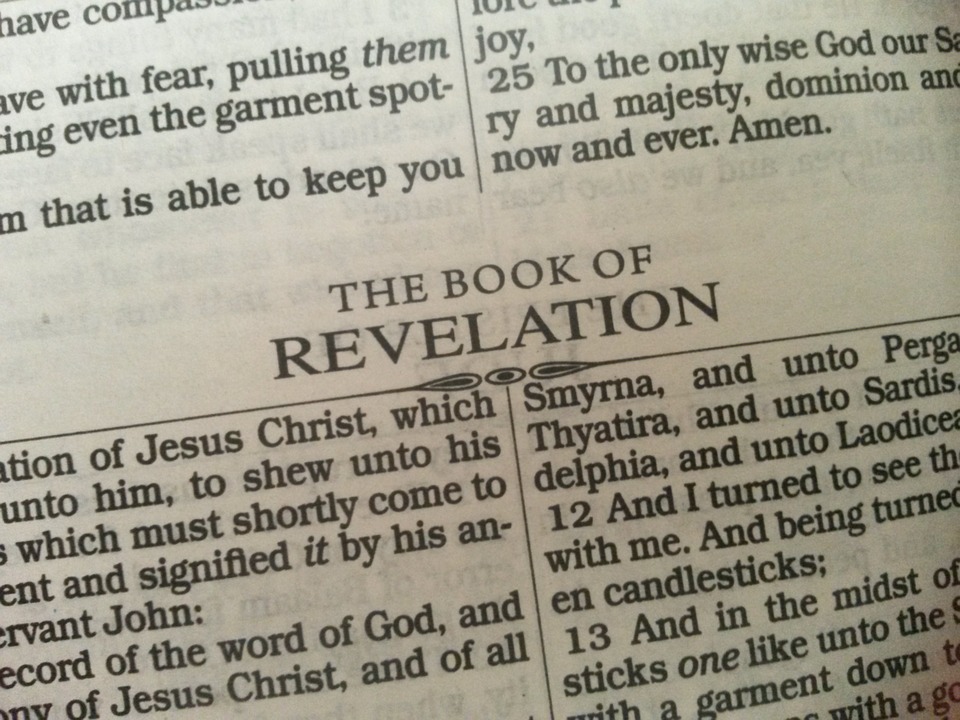
In daily Mass we are currently reading selections from the Book of Revelation—not a bad choice as the end of the liturgical year swiftly approaches.
While many suppose that the Book of Revelation is merely about the end of the world, it is about far more; it is also about what is happening right now. It was not written only for the end of the ages but for all ages. It is a book of glory that discloses the victory Jesus has already won. Don’t get lost in lots of exotic theories; Revelation is a prophetic book of glory.
Its title in Greek isἈποκάλυψις Ἰησοῦ Χριστοῦ (Apokalupsis Jesou Christou), which literally means “The Unveiling of Jesus Christ.” It is as if Jesus is pulling back the veil to show us what is really going on. He shows us the great drama of history and tells us that He has already won the victory. He declares that we should not to lose heart while the dust settles, while the wheat is separated from the chaff and the harvest is brought in.
We are too easily mesmerized or terrified by our limited view of history.We think that life depends on which political party wins, or whether a cure is found for some disease, or whether nations of the world can reach rapprochement—but the battle is far higher and deeper than our tiny slice of time. It is far deadlier and concerns more dramatic issues than what will happen to the GNP of the U.S. or which of the latest political theories will prevail.
This is a great drama between good and evil. It concerns the fundamental issue of where you will spend eternity. Yes, there is a great and cosmic battle in which we are all caught up; it is happening all around us. St. Paul says,
For we do not contend against flesh and blood, but against the rulers, against the authorities, against the cosmic powers over this present darkness, against the spiritual forces of evil in the high places. Therefore, take up the whole armor of God, that you may be able to withstand in the evil day, and having done all, to stand firm (Eph 6:11-13).
The Book of Revelation is speaking to the same reality. It unveils the true and cosmic battle. In so doing, it declares without ambiguity who the victor is: Jesus Christ our King, who has already won. There are only two kingdoms, two armies, two sides. You must decide whom you will serve: the prince of this world or the King and Lord of all creation.
Revelation opens with a vision of the glory of Jesus the Great Lord and Son of Man:
I, John, your brother and partner in the tribulation and the kingdom and the patient endurance that are in Jesus, was on the island called Patmos on account of the word of God and the testimony of Jesus. I was in the Spirit on the Lord’s day, and I heard behind me a loud voice like a trumpet saying, “Write what you see in a book and send it to the seven churches, to Ephesus and to Smyrna and to Pergamum and to Thyatira and to Sardis and to Philadelphia and to Laodicea.” Then I turned to see the voice that was speaking to me, and on turning I saw seven golden lampstands, and in the midst of the lampstands one like a son of man, clothed with a long robe and with a golden sash around his chest. The hairs of his head were white, like white wool, like snow. His eyes were like a flame of fire, his feet were like burnished bronze, refined in a furnace, and his voice was like the roar of many waters. In his right hand he held seven stars, from his mouth came a sharp two-edged sword, and his face was like the sun shining in full strength. When I saw him, I fell at his feet as though dead (Rev 1:10-17).
Yes, this is our Lord Jesus in His resurrected and conquering glory!At the name of Jesus every knee shall bend in the heavens, on the earth, and under the earth, and every tongue proclaim to the glory of God the Father that Jesus Christ is Lord (Phil 2:10-11).
Yes, Jesus Christ isthe faithful witness, the firstborn of the dead, and the ruler of kings on earth. To him who loves us and has freed us from our sins by his blood and made us a kingdom, priests to his God and Father, to him be glory and dominion forever and ever. Amen. Behold, he is coming amid the clouds, and every eye will see him, even those who pierced him, and all tribes of the earth will wail on account of him. Even so. Amen (Rev 1:5-7).
The second part of the Book of Revelation calls the Church and us as individuals to repentance and perseverance. The cosmic battle reaches the Church and individual disciples. The battle is in the Church and in the heart of every person. Thus, the letters to the seven churches referred to in Revelations 1. We are not to lose the love we had at first. We must be willing to endure hardship and persecution. We are to reject the fornicators and all those who propose any sort of sexual immorality. We are to resist syncretism and every form of false religion. We must resist Satan’s deep secrets; we must not be in any agreement with his ways. We must resist sloth and not fall back. We must resist lukewarmness as well as every sort of pride and self-satisfaction. The Church, clergy and laity, must fight the good fight, must persevere. We must endure hardship, keeping in mind the reward that awaits the courageous and the eternal disgrace that is coming to cowards and to all those who embrace the world, the flesh, and the devil.
John is then caught up into Heaven to see the glory of God and the heavenly liturgy. He has revealed to him what must take place soon. Historically, the Book of Revelation pointed to the destruction of Jerusalem and to the end of an era. Down through the ages, empires and nations have crumbled; eras and epochs have come and gone. Only God’s Kingdom, as proclaimed and made sacramentally present by the Church, has survived or will survive.
Today we are arguably at the end of another era and epoch. The West is crumbling, and decadence abounds. Confusion about basic reality is so widespread that our current world can credibly be compared to a lunatic asylum. Even within the Church, voices that should speak out prophetically remain silenced by fear. There is among Church leaders, clergy, and laity a widespread softness and a feeling that the risk of speaking out is too great.
The message of the Book of Revelation is a strong antidote to times like these—to all times past, present, and future: be strong, be prepared, and be willing to suffer, realizing that no matter how powerful evil may seem, Jesus is the victor. We are swept up into a cosmic battle that is much larger than our current situation but that reaches us nonetheless. Don’t think that you can sit on the fence; you must choose a side. Satan owns the fence and he is coming for you; he will say, “You belong to me.”
The seals, the bowls, and the trumpets of Revelation are but a further description of the cosmic battle and the wretched defeats that ultimately come to the defiant and disobedient. God will not leave unpunished those who despise His Kingdom and His holy ones. These seven ordeals times three are a call to repentance to those who survive. They are also a manifestation of God’s justice and ultimate authority over history.
A crucial battle comes in Revelation 12, when the red dragon with seven heads and ten horns besets Mother Mary, who is also an image of the Church. But the devil cannot prevail in the war that breaks out in Heaven. He is hurled to the earth, where he unsuccessfully pursues the woman (who is Mary and the Church). In a rage, he continues to pursue us. For the time being, the cosmic battle continues; Satan rages because he knows his time his short.
Satan is a big loser, but even losers have an uncanny ability to impress and dupe foolish, gullible people. Satan still makes empty promises and dangles passing pleasures before us. Sadly, many of the worldly and unspiritual fall prey to his lies. Mysteriously, God permits this until the full number of the elect is gathered in.
Then comes the end:
And fire came down from heaven and devoured Satan and his armies and followers. And the devil, who deceived them, was thrown into the lake of burning sulfur, where the beast and the false prophet had been thrown. They will be tormented day and night for ever and ever. Then I saw a great white throne and him who was seated on it. The earth and the heavens fled from his presence, and there was no place for them. And I saw the dead, great and small, standing before the throne, and books were opened. Another book was opened, which is the book of life. The dead were judged according to what they had done as recorded in the books. The sea gave up the dead that were in it, and death and Hades gave up the dead that were in them, and each person was judged according to what they had done. Then death and Hades were thrown into the lake of fire. The lake of fire is the second death. Anyone whose name was not found written in the book of life was thrown into the lake of fire.
Then I saw a new heaven and a new earth, for the first heaven and the first earth had passed away, and there was no longer any sea. I saw the HolyCity, the new Jerusalem, coming down out of heaven from God, prepared as a bride beautifully dressed for her husband. And I heard a loud voice from the throne saying, “Look! God’s dwelling place is now among the people, and he will dwell with them. They will be his people, and God himself will be with them and be their God. He will wipe every tear from their eyes. There will be no more death or mourning or crying or pain, for the old order of things has passed away.” He who was seated on the throne said, “I am making everything new.” Then he said, “Write this down, for these words are trustworthy and true” (Rev 20:9-21:5).
Yes, it is good that we read the Book of Revelation. In it, the Lord is telling us what is really going on and what the outcome will be. He is telling us not to lose heart. “In this world you shall have tribulation, but have courage, I have overcome the world” (John 16:33).
Be not dismayed, fellow Christians. Do not be fearful of what is coming upon this world. Even if it is the end of the era or epoch, the Church has endured such sea changes before. Christ has already won the victory and has promised that the Church will remain indefectible. When the current foolishness has run its course, we will still be here preaching the Gospel, even if we have become a small remnant and are preaching from our prison cells!
Do not be fearful. Do not be a coward. Preach boldly and with love. Continue to shine the light of the gospel in the darkness. The gospel will win; it always wins.
Don’t get lost in the details of the Book of Revelation and miss its message: victory in the midst of persecution and trial. It is a call to persevere. It is a pulling back of the veil to show us what the end shall be! Be strong, courageous, and certain. Jesus has already won the great victory in the cosmic battle. The dust is still settling, but know for certain that Jesus has won, and if you choose Him, so will you!
He who overcomes will inherit these things, and I will be his God and he will be My son. But for the cowardly and unbelieving and abominable and murderers and immoral persons and sorcerers and idolaters and all liars, their part will be in the lake that burns with fire and brimstone, which is the second death (Rev 21:7-8).
Regardless of what youthinkis going on, this is what isreallygoing on. Choose sides. I urge you to choose Christ with courage. Don’t look back. Come what may, Viva Cristo Rey!
As winter approaches and the end of the liturgical year draws near, we ponder the passing quality of this world and the fading of its glories. Jesus’ words in today’s Gospel reading must surely have shocked, even horrified, His apostles. Let’s look at His stunning words and seek to apply them in our own life.
The Place of this Gospel – Jesus is standing just outside of Jerusalem. In the last two months we have followed Him on His final journey: leaving Galilee, heading south along the Jordan River, passing through Jericho, and now making the nearly 2000-foot ascent to Jerusalem.
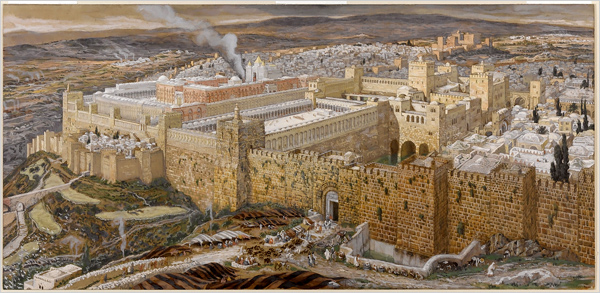
In today’s Gospel, Jesus is at the top of the Mount of Olives with His apostles. From this vantage point, they look across the Kidron Valley to the magnificent Temple and all of Jerusalem spread out before them. The apostles marvel at the glorious beauty of the Temple. Its large, perfectly-carved, white, gilded, ashlar stones gleam like the sun. Indeed, it was one of the wonders of the ancient world, so beautiful and majestic.
Jesus challenges their admiration. He shocks them with the admonition that all the glory they see is soon to be destroyed, that not one stone will be left on another, that it will all be thrown down (Mk 13:2). Shocked, the apostles ask Him when this will happen and what signs will precede this awful event.
In what has become known as “MountOlivet discourse,” the Lord warns, in great detail, of the coming destruction of the Temple and indeed of all Jerusalem. The Gospels of Matthew, Mark, and Luke all contain similar descriptions of what Jesus said on the Mount of Olives, overlooking Jerusalem in her glorious heyday.
Jesus warns of wars and rumors of wars. He speaks of a time in the near future when nation will rise against nation and a terrible conflict will ensue. In effect, He warns His disciples and their followers to have nothing to do with the coming wars. He tells them that when they see Jerusalem being surrounded by an army, they should know that her destruction is at hand. If someone is on a man’s rooftop, he should not to go back into the house to gather his possessions; rather, he should get out immediately. If someone is out in the field, he should not reenter the city of Jerusalem; rather, he should flee to the hills. Jerusalem is doomed for its lack of faith and zealots are picking up the war with the Romans that they are destined to lose (Luke 21, Matt 24, Mark 13).
All of this leads us to today’s Gospel (from the Mount Olivet discourse), which picks up in the middle. Jesus warns of days of tribulation, when the sun will be darkened, the moon will not give its light, and the stars will fall from the sky!
In reading a text like this, we must not fall prey to an overly literal interpretation. Jesus is using prophetic language, a way of speaking that is meaningful, but not to be understood scientifically or literally. Stars do not actually fall from the sky!
If I were to say, “The world has been turned upside down,” you wouldn’t expect that if you looked back toward Earth from outer space you would see Australia at the top and North America at the bottom. If I were to say, “It’s raining cats and dogs,” you wouldn’t expect to look out your window and see animals coming down from the sky and landing on the front lawn. Although I’m speaking figuratively, you understand what I mean.
So it is with Jesus’ use of prophetic imagery. Speaking of the heavenly luminaries as being darkened or cast down is a prophetic way of saying that all the fixed points, all the ways by which we tell time, know the seasons, navigate, and find perspective will be lost to us! The world as the Jewish people know it, centered on the Temple and rooted in their liturgical calendar, is about to be swept away. To the ancient Jewish people, the Temple was Big Ben. It was both the clock of the liturgical cycle and the great visual center of Israel.
The Lord is teaching them that what they see as the hub of all they do is about to be taken away. The Temple, with all its rituals, its liturgical cycles, and its endless slaughter of animals in sacrifice for sin, is about to be replaced. These ancient rituals merely pointed to Jesus and all that He would do. Jesus is now the Temple; He is also the Lamb Sacrifice. All that the Temple pointed to is fulfilled in Jesus. Thus, the Temple is at an end. Jesus is ushering in a New Covenant.
In the MountOlivet discourse, Jesus prophesies the end of the Temple, which will take place in a biblical 40 years. Sure enough, 40 years later (in A.D. 70), the Roman Army, after having surrounded Jerusalem for a period of 3 ½ months, breached the walls, poured into the city, and destroyed the Temple and all of Jerusalem. In this epic battle, according to Josephus, 1.2 million Jewish people lost their lives. As Jesus prophesied, not one stone was left on another. According to Josephus, so complete was the destruction of Jerusalem, that when the Romans had finished their work it was not clear that the city had ever existed.
So, this is the place of this Gospel, a place of epic significance in the ancient world. An era of 1000 years was coming to an end. The world as the Jewish people knew it was ending. The Temple has never been rebuilt; it has been replaced by a Judaism without sacrifice, a rabbinic, a synagogue system. In 2000 years, despite several attempts, the Jewish Temple has never been rebuilt. Everything Jesus predicted came to pass. This is the historical place and context of today’s Gospel.
What does this mean for us, some 2000 years later? Let’s consider three basic themes.
1. The Perspective of Passing– Toward the end of the Gospel passage, the Lord says, Heaven and earth will pass away, but my words will not pass away. Note the definitiveness of this statement: this world will pass away. All of the things that impress us: the might of the powerful, the influence of the popular, the glory of all the glitterati—all of this will pass away.
Indeed, even now it is passing away, its destruction is at hand. Scripture says,
The world in its present form is passing away (1 Cor 7:31).
We have here, no lasting city (Heb 13:14).
Put not your trust in princes, in mortal men in whom there is no hope. Take their breath, they return to clay, and their plans that day come to nothing (Psalm 146:3-4).
Yes, all of the glory, even what seems beautiful and fair, is passing away. Don’t be so impressed by this world’s offerings. All of it—no matter how powerful, influential, or sturdy it may seem—is slated for destruction. It is already passing away.
Some years ago, I was in a museum and in one of the exhibits saw a photograph of a family from about the 1880s. At the bottom of the photo was this inscription: “My family, as it appeared for a brief time last summer”—a poignant caption. I thought of the people in that photo, every one of them now dead. I also knew that the house in front of which the photo was taken had long since been destroyed, replaced by an expanding city district of buildings. All is passing; nothing remains here for long.
Painful though this perspective may be, it is important and healing. It brings with it a string kind of serenity. Like every truth, the truth that all things are passing sets us free. As for man, his days, or the flower of the field are like the grass. The wind blows, and he is gone, and his place never sees him anymore (Psalm 130:15-16). We are reminded not to set down too many roots here so that we are not resentful when this world passes away.
2. The Permanence Proclaimed – The Lord tells us that His words will not pass away. Although the world will pass away, the truth and the Word of God will remain forever.
Too many people root their lives in passing things. The challenge for us is to root our lives in the Word of God, which remains forever. Worldly glories, power, access, and wealth—all these things fade and disappear, but God’s wisdom and His plan remain forever.
Consider, for a moment, the Church. The Lord has said that the forces of Hell would strive to prevail, overpower, and destroy the Church, but He promised that such attempts would never be successful (Matt 16:18). The Church is indefectible, by God’s Word, by His promise. No weapons, no war waged against the Church, will prevail.
In all of this the Lord has been proven correct. The Church has seen the Roman Empire, the Carolingian Empire, the British Empire, the Soviet Socialist Republic, and many others rise to power only to fade and disappear.
How many heresies, how many philosophies have come and gone in the age of the Church? How many have laughed at the Church, announcing that she was passé, that her day was over, and that they would bury her? The Church has buried every one of her undertakers, outlived every one of her critics. Despite every prediction of her demise, she has persevered until this very day. By God’s grace, she has a permanence that outlasts every one of her enemies. She has read the funeral rites over every single prophet of her doom, and she will continue to do so.
In recounting all of this we do not simply gloat that an institution known as the Church has survived. Rather, we announce that the Church is the Bride of Christ and also His Body. The Church cannot be destroyed, not because of human ingenuity but on account of the power and grace of God. She will endure even though at times she will suffer, be ridiculed, or be marginalized. She will outlive every enemy. She will emerge from every persecution. She will never be removed. For the Church is the Body of Christ, the living Word of God. Though the world will pass away, the Word of the Lord will remain forever!
3. The Priority Prescribed – If this world as we know it is passing away, and the Lord, His Kingdom, His Church, and His Word will remain forever, what should be our priority? The Lord says, in effect, that we know very well what our priority should be, but we willfully ignore it.
Learn a lesson from the fig tree. When its branch becomes tender and sprouts leaves, you know that summer is near. In the same way, when you see these things happening, know that he is near, at the gates (Matt 24:32-33).
Yes, we know very well that the Day of Judgment is coming. Too easily, though, we dream on and do not follow the prescribed priority. Wealth, fame, and glory are all uncertain and clearly passing, but death, judgment, Heaven, and Hell are certain and remain forever. We too easy fiddle on with things that are uncertain and passing while neglecting what is certain and eternal. Ridiculous!
It would be foolish to book passage on a sinking ship. Similarly, it is imprudent to make this world and its demands our fundamental priority. It is wise to set our sights on, and lay hold of, the Kingdom that lasts forever.
It is sad that so many spend people their time “rearranging the deck chairs on the Titanic” of this world. It is tragic how much time, effort, and passion we spend on things that pass through our fingers like sand. So much of our effort is expended on furthering our career, amassing wealth, and enlarging our home; so little is spent on improving our spiritual life.
Parents spend more time worrying about what college their children will attend than where they will spend eternity. If their child is failing math, they will go to great lengths to hire tutors to improve his test scores. Never mind that the child barely knows the four Gospels, the difference between the Old Testament and the New Testament, or even who Adam and Eve were. Never mind all that; we need to make sure they understand polynomials! It is fine that parents care about math scores and college venues, but how sad it is that eternal things often go unattended.
The greatest duty of parents is to prepare their children for eternity, yet far more time and effort is often spent preparing them for passing things like a career. While education and career are important, eternal life is far more so. A son or daughter may graduate from Harvard Law School and become a famous attorney yet still go to Hell!
What are our priorities? Frankly, most of our priorities are not things that matter to God. Even if we attain the passing things for which we strive, they will all ultimately slip through our fingers. We obsess over passing things like our physical health while neglecting enduring things like our spiritual health. We should care for our bodies, but even more should we care for our souls. If we would expend as much effort looking for a time and place to pray as we do searching for a restaurant for dinner, we would be spiritual heavyweights rather than physically overweight.
In today’s Gospel the Lord stands before the Temple: an impressive building, a symbol of power and of worldly glories. Impressed by it though the Apostles are, the Lord is not impressed with passing things. He counsels us to get our priorities straight and to focus on things that last: His Word, which never passes away, and our ultimate destiny, where we will spend eternity.
We find time for everything else, why not for prayer, Scripture, fellowship in the Church, and the sacraments?
What are your priorities? Be honest, now, be honest.
This world is passing away. Far more essential for us than power, prestige, money, possessions, worldly philosophies, and the latest trends, is the Word of the Lord, which never passes away.
The world will laugh and say that God’s word is out-of-date, old-fashioned, or even hateful, bigoted, and intolerant. In the end, time will prove where wisdom is. Long after our current critics, those who scorn the teachings of the Lord in the Scriptures and the Church, have passed on, we will still be here preaching Christ and Him crucified.
None of this is meant to sound triumphalist. It is simply rooted in a Word of truth that the Lord spoke long ago on a hillside overlooking glorious buildings soon to be reduced to rubble and an age soon to pass away. He said simply this: Heaven and earth will pass away but my words will not pass away.
In the end, Jesus wins. I know because I checked the end of the story. You can look it up (Rev 20-23). Get on the winning team. Stop trying to amass a treasure here that you can’t keep anyway.
There are many biblical texts that speak of being generous to the poor, for to do brings bountiful blessings. Or, put negatively, if we are stingy, we will come up short in our own blessings.
Consider the following verses:
Here is a promise from the Lord:
Give, and it will be given to you. A good measure, pressed down, shaken together and running over, will be poured into your lap (Lk 6:38).
The text goes on to state a clear principle:
For the measure you measure to others, will be measured back to you (Lk 6:38).
The rule of returning proportion:
Remember this: Whoever sows sparingly will also reap sparingly, and whoever sows generously will also reap generously (2 Cor 9:6).
The Lord the admonishes us with this:
One man gives freely, yet gains even more; another withholds unduly, but comes to poverty (Prov 11:24).
And now a word from our sponsor (a snack manufacturer in the Philippines), illustrating well this text: Who sows sparingly will reap sparingly. You may find that the ad is “clever by half.”
Judas Maccabeus was Handel’s most famous oratorio during his lifetime, more popular even than the Messiah. There are many wonderful moments in it, especially its bold and brave choruses. Written in 1746, it covers the biblical events of 170–160 B.C., when Judea was ruled by the Seleucids and the people were compelled to worship Zeus. Some resisted; others obeyed. The priest Mattathias went to the hills and gathered others who were willing to fight for their faith. This is all recounted in the First Book of Maccabees in the (complete) Catholic Bible. The words to Judas Maccabeus largely paraphrase the biblical text and were written by Thomas Morell.
Of all the arias in the oratorio, I’ve often thought that this one should be more well known, due to its keen reminders to us:
Wise men, flattering, may deceive us;
With their vain, mysterious art;
Magic charms can ne’er relieve us,
Nor can heal the wounded heart.
But true wisdom can relieve us,
Godlike wisdom from above;
This alone can ne’er deceive us,
This alone all pains remove.
It’s a simple teaching, but so easily forgotten. In a world of false prophets and hucksters with empty promises of what are at best passing comforts, we need to recognize that we are easily deceived. In fact, we seem to enjoy being deceived more than we’d probably like to admit.
Flattery refers to excessive and insincere praise, especially praise given to another in order to further one’s own interests. It is used to beguile or to gain another person’s attention. It is likely of Germanic origin, stemming from a word that meant to stroke or caress repeatedly.
Many, from marketers to politicians to ideologues, seek to ingratiate themselves to us in order to sell products, ideas, or philosophies. The ideologues, especially, try to present themselves as great humanitarians, caring more than others do. They use euphemisms such as choice, progress, death with dignity, and tolerance, so as to stroke us to sleep, to beguile us, to hide the ugly reality (often the death of other human beings) of what these things produce.
So easily do they deceive us. I have noted in other posts that the root of the word deceived lead to the definition “to be picked up and carried off.” The image that comes to mind is that of limp prey in the mouth of a lion as it is carried off to be consumed.
Strangely, we often seem to like being deceived. Sometimes lies and euphemism help to hide uglier realities we would rather not face. It’s as if we say to the flatterers and liars, “Please lie to me. It’s just too much trouble to look at what’s really going on behind the veiled language.”
The text of the oratorio speaks of vain, mysterious art. Something that is vain is ultimately empty on the inside even if on the outside all seems wonderful and in good order.
The phrase mysterious art does not necessarily refer to magic, but to that which is unknown. Some flatterers like to use fancy terms, photos, movies, colorful graphs, and the like to impress us with their knowledge or to mesmerize us so that we dare not question or protest what they say.
However, as the text of the oratorio goes on to say, none of this can really help us. There may be momentary comforts, but soon they are gone. Satan (and to a large degree, the world) promises happiness now, but the bill comes later. In contrast, God often asks for sacrifice, discipline, and perseverance through difficulty up front and then lets us reap the reward later. Indeed, the cross produces glory far beyond the sufferings it brings: For our light and momentary troubles are achieving for us an eternal glory that far outweighs them all (2 Cor 4:17).
The oratorio goes on to teach that our wounded hearts need more than relief; they need healing, which only godlike wisdom from above can accomplis. Why? God Himself tells us why:
The heart is more deceitful than all else and is desperately sick; who can understand it? I, the LORD, search the heart, I test the mind (Jer 17:9-10).
To find healing, go to God and to His revealed Word and sacred teachings. He knows your heart because He made you. He knows what will really heal and nourish your heart. Be not deceived and mesmerized by false prophets, hucksters, and merchants of the mediocre; God alone can fill the God-sized space in your heart. Only God, who made us for Himself, can satisfy our longings.
The Gospel for Wednesday of the 32nd Week of the Year teaches that the Mass is the perfect offering of thanks to the Father. It does so in a remarkable and almost hidden way, but it is right there for us to see if we have eyes to see it.
The Gospel telling the story of the ten lepers contains all the essential elements of Holy Mass and thus it reminds us once that it is the Mass that is the perfect thanksgiving, the perfect Eucharist.
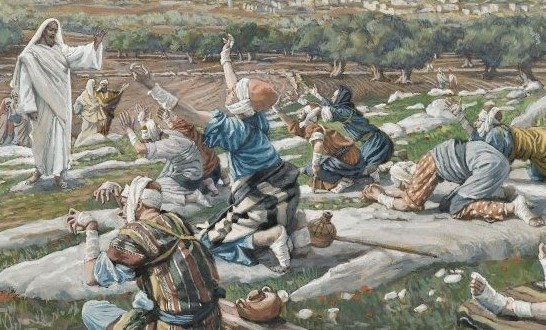
As Jesus continued his journey to Jerusalem, he traveled through Samaria and Galilee. As he was entering a village, ten lepers met him. They stood at a distance from him and raised their voice, saying, “Jesus, Master, have pity on us!” And when he saw them, he said, “Go show yourselves to the priests.” As they were going they were cleansed. And one of them, realizing he had been healed, returned, glorifying God in a loud voice; and he fell at the feet of Jesus and thanked him. He was a Samaritan. Jesus said in reply, “Ten were cleansed, were they not? Where are the other nine? Has none but this foreigner returned to give thanks to God?” Then he said to him, “Stand up and go; your faith has saved you” (Luke 17:11-19).
Let’s look and see how it is a Mass:
Gathering – Notice first that there is a gathering, of ten lepers, and they meet Jesus as he enters the village. We do this in every Mass: we gather, and the Lord draws near. In the person of the priest, who is the sacrament, who is the sign of His presence, Jesus walks the aisle of our church just as He walked those ancient roads.
Kyrie – Next, the lepers cry out for mercy just as we do at every Mass: Lord, have mercy! Jesus, Master, have pity on us!
Liturgy of the Word – Jesus then quotes Scripture and applies it to their life just as He does for us at every Mass. In saying, “Go show yourselves to the priests,” Jesus is referencing Leviticus 14, which gives detailed instructions as to how priests were to diagnose leprosy and how they were to determine that it had been cured. This is what is done at every Mass: God’s Word is proclaimed, and then the Lord Jesus, speaking through the priest or deacon, applies the texts to our lives.
Liturgy of the Eucharist – Next, one of the lepers fell at the feet of Jesus and thanked him. This is what we do during the Eucharistic prayer: we kneel and thank Jesus, and with Jesus we give thanks to the Father. The word Eucharist comes from Greek and means “to give thanks.” Here, the perfect thanks is rendered to the Father. Those who claim that they can stay home and give adequate thanks to God there should be rebuked as prideful. Only Jesus can give perfect thanks to the Father, and we can only give adequate thanks to Jesus by following His command to “Do this in memory of me.” We must be at Mass.
Ite Missa est – Finally, Jesus sends the leper on his way, saying, Stand up and go; your faith has saved you. We, too, are sent forth by Jesus at the end of every Mass, when He speaks through the priest or deacon: “Go forth, the Mass is ended” or “The Mass is ended. Go in peace.”
So, there it is. In this Gospel, which clearly instructs us to give thanks to God, is the very structure of the Mass. If you want to give proper thanks to God, and you are at Mass today, you’re in the right place. Only at Mass is perfect and proper thanks given to God.
It was all prefigured in this psalm: What return shall I make to the Lord for all the good he has done for me? The cup of salvation I will take up and call on the name of the Lord (Psalm 116:12). At every Mass, the very cup of salvation—the chalice containing Christ’s blood—is held up. It is the perfect sacrifice of thanks. It is the prescribed sacrifice of praise, the proper sacrifice of praise.
There is an old saying, “Stop telling God how big your storm is and start telling the storm how big your God is.” In other words, we often need to shift our focus, building up our trust and confidence. Because we are so wired for fear, we tend to overestimate the power and shrewdness of demons, or of our enemies, or of whatever it is we fear. At the same time, we tend to underestimate the power of God, the power of our own resources, the strength that God gives us, and the perduring quality of what is good and true.
I see a lot of this in deliverance ministry, where so many people come to us more fearful of the power of demons than they are trusting in the power of God. Part of the solution must be that they make a journey in faith, coming to realize that demons are not all-powerful; God and His angels are more powerful. Even if God mysteriously allows demons some access to our lives, it is only to act as a snare for the evil one and to unlock greater blessings for us who call out in faith.
There is a remarkable passage in the Second Book of Kings that draws back the curtain for a moment and shows us a world we seldom see. The passage centers on the prophet Elisha and the King of Syria’s attempt to capture and kill him. Elisha is not worried, but his young assistant (or servant) is quite dismayed by the approaching Syrian army:
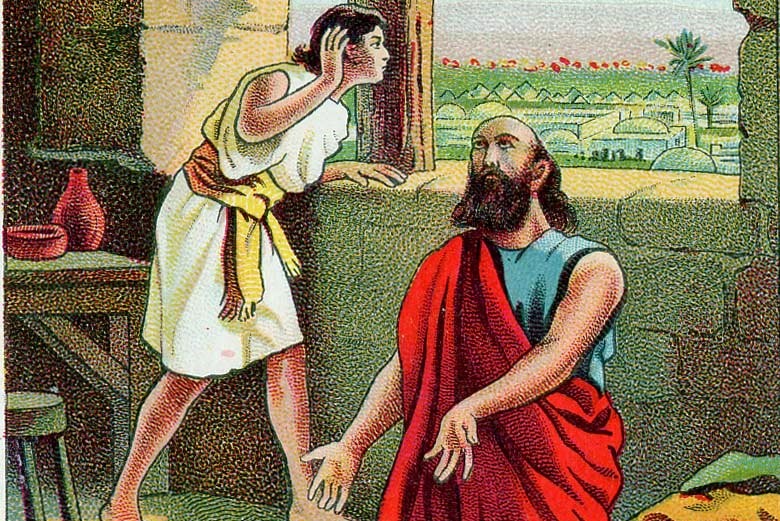
When the servant of the man of God rose early in the morning and went out, behold, an army with horses and chariots was all around the city. And the servant said, “Alas, my master! What shall we do?” He said, “Do not be afraid, for those who are with us are more than those who are with them.” Then Elisha prayed and said, “O Lord, please open his eyes that he may see.” So the Lord opened the eyes of the young man, and he saw: And behold, the mountain was full of horses and chariots of fire all around Elisha (2 Kings 6:15-17).
Yes, for just a moment the mystical curtain is drawn back, and the young servant of Elisha sees that we are not alone in this battle. Indeed, myriad angels, saints, and God Himself engage the battle for us. Elisha reminds us, Those who are with us are more than those who are with them. God’s power far surpasses whatever foolishness of the devil is making the rounds. At times, the city seems surrounded (as Elisha’s servant saw), but Elisha isn’t worried because he sees something else, something far greater and more glorious; he knows where to focus.
To be sure, there is a battle to be fought, but we do not fight it alone. There are a multitude of angels and saints and behold, chariots of fire round about. Lord open our eyes that we may see and understand that we are not alone. Give us the courage to engage the battle with the sword of your word, of your truth! Fix our focus on You, not on the storms of life.
This song in the video below says,
When the oceans rise and thunders roar
I will soar with you above the storm
Father you are king over the flood
I will be still and know you are God
Find rest my soul
In Christ alone
Know his power
In quietness and trust
The Book of the Prophet Malachi is set forth as a kind “riv” (a Hebrew word for a lawsuit, indictment, or controversy) by God. The Lord presents a legal case of sorts, which convicts ancient Israel of numerous deficiencies and calls for their repentance. The case shows a body of evidence that is just as true today as it was then. God has plenty to say and we have much to hear, much of which to repent.
As we consider the sins of the priests enumerated below, please understand that neither the biblical text nor my commentary should be construed as meaning that all or even most priests are like this. Sadly, though, sins and shortcomings are far too common among the clergy. As priests must strive to be better and more holy, so also must the laity remember to pray for us.
With that in mind, let’s consider the sins of the priests (as listed by Malachi) in three basic areas.
Shoddy Sacraments
A son honors his father, and a servant his master. If then I am a father, where is my honor? And if I am a master, where is my fear? So says the Lord of hosts to you, O priests, who despise my name. You say, “How have we despised thy name?” By offering polluted food upon my altar. And you say, “How have we polluted it?” By thinking that the Lord’s table may be despised. When you offer blind animals in sacrifice, is that no evil? And when you offer those that are lame or sick, is that no evil? Present that to your governor; will he be pleased with you or show you favor? says the Lord of hosts. And now entreat the favor of God, that he may be gracious to us. With such a gift from your hand, will he show favor to any of you? says the Lord of hosts. Oh, that there were one among you who would shut the doors, that you might not kindle fire upon my altar in vain! I have no pleasure in you, says the Lord of hosts, and I will not accept an offering from your hand. For from the rising of the sun to its setting my name is great among the nations, and in every place incense is offered to my name, and a pure offering; for my name is great among the nations, says the Lord of hosts. But you profane it when you say that the Lord’s table is polluted, and the food for it may be despised (Malachi 1:6-12).
Those are strong words indeed. While the injunction regarding blemished and polluted animals has changed, the intrinsic problem remains: careless celebration of the Liturgy and the sacraments.
One of the most common complaints from the faithful regards priests who violate liturgical norms and/or allow others to do so. Few things offend charity and unity as much as the open, sometimes egregious violation of liturgical norms. Although some violations are minor, why not just celebrate the Liturgy as it is set forth in the books? There are of course options, and not every complaint of the faithful is accurate or fair, but God’s people have endured several decades of exotic and often egocentric liturgical experiments, which are not approved and which take the focus off God and the proper worship due Him.
A priest cannot be expected to clear up every problem in the Liturgy the day he walks through the door, but proper liturgical formation of the faithful with due regard to charity and patience is one of his essential tasks as pastor of souls—and he should begin with himself. The liturgy, both its mechanics and its spiritual significance, should be his study and his great love.
Another problem that can emerge is inattentiveness to the dignity and beauty of the Mass and the sacraments. Proper attire and decorum are important ways that we communicate our love for God and one another. Priests should be properly vested, prepare their sermons prayerfully, and avoid mannerisms that are inappropriate or overly casual. Opulence is not necessary, but priests should ensure that liturgical appointments are clean, in good repair, and of proper dignity.
Decades ago, poor immigrant communities sponsored the construction of some of the most beautiful churches. They also supplied some of the finest art and liturgical implement. It is important that we keep what they have bequeathed to us in good repair. Further, priests can and should teach the faithful to follow the example of these recent ancestors of ours by seeking to build and maintain worthy churches, erected for the glory of God and not just the utility of man. In the recent past, many of the faithful have been shocked and hurt by the senseless “wreckovation” of sanctuaries and altars. Thanks be to God, many people today are growing in their appreciation of older churches and are seeking to preserve them.
If God was offended by the offering of a lame or sick animal, why should we think He is pleased with just “any old stuff” in the Sacred Liturgy? God does not need our gold chalices or our tall churches, but He knows that the shoddy, perfunctory, “anything goes” celebration of the Sacred Liturgy says something about our hearts, our priorities, and what we value.
Priests must avoid all conscious violation of liturgical norms, make central the devoted study of liturgy, and inspire respect among the faithful for the Sacred Liturgy. St. Paul summarizes well his liturgical teaching of 1 Cor 11-14 by concluding with this: But all things should be done decently and in order (1 Cor 14:40).
Burdens not Blessings? Behold your Barrenness!
“What a weariness this is!” you say, and you sniff at me, says the Lord of hosts … And now, O priests, this command is for you. If you will not listen, if you will not lay it to heart to give glory to my name, says the Lord of hosts, then I will send the curse upon you and I will curse your blessings; indeed, I have already cursed them, because you do not lay it to heart. Behold, I will rebuke your offspring, and spread dung upon your faces, the dung of your offerings, and I will put you out of my presence. So shall you know that I have sent this command to you, that my covenant with Levi may hold, says the Lord of hosts. My covenant with him was a covenant of life and peace, and I gave them to him, that he might fear; and he feared me, he stood in awe of my name (Malachi 1:13, 2:1-5).
The priests of that ancient Jewish time had families, and God warned that if the fathers did not obey, their children would suffer many curses. While priests today do not have children of their own, thousands call us “Father”!
In our day, the sins and omissions of priests surely have brought trouble upon the faithful. We have been through a period in which too many priests have been rebellious, unfaithful to Church teaching, slothful, unprepared to preach, un-prayerful, and irreverent. Some have even been guilty of grave sins and violations of their state in life. In addition, far too many priests and religious have left the sacred call they agreed to live for life.
All of this has resulted in many troubles for the faithful. Some are discouraged and angry; most are poorly catechized and ill-informed on critical moral issues. Many are confused by priests and bishops who have openly dissented, who do not listen to God or lay to heart His teaching and stand in awe of His name.
In this way, the flock is often harmed by this poor priestly leadership and example. Eighty percent of Catholics no longer attend Mass. Many of those who do attend are barely in communion with the Church’s teaching and struggle to live the glorious vision set forth in the gospel.
Sadly, this text from Malachi echoes a similar one from Zechariah:Strike the shepherd, and the sheep will be scattered (Zech 13:7). This is why the sins of priests are so serious and why the faithful must pray for them fervently. Not only are priests subject to targeted attack by Satan, they are also especially susceptible to grandiosity, pride, and the sin of craving human respect.
Pray that priests do not become weary of exhortation or speak of their office as a burden. Pray, too, that they do not succumb to modern notions that the Gospel is too burdensome for the faithful and therefore fail to preach it or to encourage the faithful to live it.
Sacerdotal Silence
True instruction was in [Levi’s] mouth, and no wrong was found on his lips. He walked with me in peace and uprightness, and he turned many from iniquity. For the lips of a priest should guard knowledge, and men should seek instruction from his mouth, for he is the messenger of the Lord of hosts. But you have turned aside from the way; you have caused many to stumble by your instruction; you have corrupted the covenant of Levi, says the Lord of hosts, and so I make you despised and abased before all the people, inasmuch as you have not kept my ways but have shown partiality in your instruction (Malachi 2:6-9).
Silent pulpits are all too commonplace in the Church today. Some priests prefer to play it safe, fearing to preach about the issues of the day out of human weakness. Others do not believe certain teachings themselves or think them impractical in modern times. Still others have turned aside from the truth, preaching and teaching outright dissent—and by preaching corruption they cause many to stumble.
It is tragic as well that so many priests are permitted to mislead the faithful without being disciplined for it by their religious superiors.
The text says that a priest should guard knowledge. That is, he should protect it from those who would distort it; he should refute error. He must also guard it from misunderstanding and see that it is presented in balance with other truths in Scripture and Tradition. St. Paul says this of a presbyter: He must hold firmly to the trustworthy message as it has been taught, so that he can encourage others by sound doctrine and refute those who oppose it (Titus 1:9).
The text of Malachi also warns against incomplete teaching, wherein a priest chooses which truths he will teach or emphasize and which he will not. St. Paul said to the elders at Miletus, Therefore I testify to you this day that I am innocent of the blood of all, for I did not shrink from declaring to you the whole counsel of God (Acts 20:26-27). Yes, the whole counsel, the complete truth, is to be taught by the priest.
Sadly, some of these rebukes concerning incomplete teaching must still be made today. Encourage your priests when they speak confidently and clearly. Thank them; give them support even if they challenge you. The job of a priest is not to be popular but to be a prophet. It’s tough work and it isn’t always welcomed. Even the prophets needed support from the 7000 who had still not bent the knee to Baal or kissed him (cf1 Kings 19:18). Pray for priests and encourage them to announce the whole counsel of God.
These are some of the sins of the priests that God sets forth. Let us not forget, however, that the world also has many hard-working, dedicated, loyal, and holy priests. Yet, as these passages remind us, priests can lose their way. They can forget the glory of the liturgies they celebrate, refer to their office and the gospel as burdensome, and growing too silent out of fear or laziness.


 As human beings we are very visual; there is a certain demand of our flesh to see on its own terms. But of course God, who is pure spirit, will not be seen in this way.