One and One and One Are One – A Homily for Trinity Sunday

There is an old spiritual that says, “My God is so high you can’t get over Him. He’s so low you can’t get under Him. He’s so wide you can’t get around Him. You must come in, by and through the Lamb.”

It’s not a bad way of saying that God is “other.” He is beyond what human words can describe, beyond what human thoughts can conjure. And on the Feast of the Most Holy Trinity, we do well to remember that we are pondering a mystery that cannot fit in our minds.

A mystery, though, is not something wholly unknown. In the Christian tradition, the word “mystery” refers (among other things) to something that is partially revealed, something much more of which remains hidden. Thus, as we ponder the Trinity, consider that although there are some things we can know by revelation, much more is beyond our understanding.

Let’s ponder the Trinity by exploring it, seeing how it is exhibited in Scripture, and observing how we, who are made in God’s image, experience it.

I. The Teaching on the Trinity Explored – Perhaps we do best to begin by quoting the Catechism, which says, The Trinity is One. We do not confess three Gods, but one God in three persons: [Father, Son, and Holy Spirit] … The divine persons do not share the one divinity among themselves but each of them is God, whole and entire (Catechism, 253).

So there is one God, and each of the three persons of the Trinity possesses the one divine nature fully. The Father is God; He is not one-third of God. Likewise, the Son, Jesus, is God; He is not one-third of God. And the Holy Spirit is God, not merely one-third of God.

It is our human experience that if there is only one of something and someone possesses it fully, then there is nothing left for anyone else. Yet, mysteriously, each of the three persons of the Trinity fully possesses the one and only divine nature, while remaining a distinct person.

One of the great masterpieces of the Latin Liturgy is the preface for Trinity Sunday. It compactly and clearly sets forth the Christian teaching on the Trinity. The following translation of the Latin is my own:

It is truly fitting and just, right and helpful unto salvation that we should always and everywhere give thanks to you O Holy Lord, Father almighty and eternal God: who, with your only begotten Son and the Holy Spirit are one God, one Lord: not in the oneness of a single person, but in a Trinity of one substance. For that which we believe from your revelation concerning your glory, we acknowledge of your Son and the Holy Spirit without difference or distinction. Thus, in the confession of the true and eternal Godhead there is adored a distinctness of persons, a oneness in essence, and an equality in majesty, whom the angels and archangels, the Cherubim also and the Seraphim, do not cease to daily cry out with one voice saying, Holy, Holy, Holy

Wow! A careful and clear masterpiece, but one that baffles the mind. So deep is this mystery that we had to “invent” a paradoxical word to summarize it: triune (or Trinity). Triune literally means, “three-one” (tri + unus) and “Trinity is a conflation of “Tri-unity,” meaning the “three-oneness” of God.

If all this baffles you, good! If you were to say that you fully understood all this, I would have to call you a likely heretic. For the teaching on the Trinity, while not contrary to reason per se, does transcend it and it is surely beyond human understanding.

And now a final image before we leave our exploration stage. The picture at the upper right is from an experiment I remember doing when I was in high school. We took three projectors, each of which projected a circle: one red, one green, and one blue (the three primary colors). At the intersection of the three circles the color white appeared (see above). Mysteriously, the three primary colors are present in the color white, but only one shows forth. The analogy is not perfect (no analogy is or it wouldn’t be an analogy) for Father, Son, and Spirit do not “blend” to make God. But the analogy does manifest a mysterious “three-oneness” of the color white. Somehow in the one, three are present. (By the way, this experiment only works with light; don’t try it with paint!)

II. The Teaching on the Trinity Exhibited – Scripture also presents images of the Trinity. Interestingly enough, most of the pictures I want to present are from the Old Testament.

I’d like to point out as a disclaimer that Scripture scholars debate the meaning of the texts I am about to present; that’s what they get paid the big bucks to do. I am reading these texts as a New Testament Christian and seeing in them a doctrine that later became clear. I am not getting into a time machine and trying to understand them as a Jew from the 8th century B.C. might have. Why should I? That’s not what I am. I am reading these texts as a Christian in the light of the New Testament, as I have a perfect right to do. You, of course, are free to decide whether you think these texts really are images or hints of the Trinity. Here they are:

Then God said, “Let us make man in our image, after our likeness …” (Gen 1:26)

God speaks of himself in the plural: “Let us … our …” Some claim that this is just an instance of the “royal we” being used. Perhaps, but I see an image of the Trinity. There is one (“God said”) but there is also a plural (us, our). Right at the very beginning in Genesis there is already a hint that God is not all by himself, but rather is in a communion of love.

Elohim

In the passage above, the word used for God is אֱלֹהִ֔ים (Elohim). It is interesting to note that this word is in the plural form. From a grammatical standpoint, Elohim actually means “Gods,” but the Jewish people understood the sense of the word to be singular. This is a much debated point, however; you can read more about it from a Jewish perspective here: Elohim as Plural yet Singular.

(We have certain words like this in English, words that are plural in form but singular in meaning: news, mathematics, acoustics, etc.) My point here is not to try to understand it as a Jew from the 8th century B.C. or even as a present day Jew. Rather, I am observing with interest that one of the main words for God in the Old Testament is plural yet singular, singular yet plural. God is one yet three. I say this as a Christian observing this about one of the main titles of God. I see an image of the Trinity.

And the LORD appeared to [Abram] by the oaks of Mamre, as he sat at the door of his tent in the heat of the day. He lifted up his eyes and looked, and behold, three men stood in front of him. When he saw them, he ran from the tent door to meet them, and bowed himself to the earth, and said, “My Lord, if I have found favor in your sight, do not pass by your servant. Let a little water be brought, and wash your feet, and rest yourselves under the tree, while I fetch a morsel of bread, that you may refresh yourselves, and after that you may pass on—since you have come to your servant.” So they said, “Do as you have said (Gen 18:1-5).

From a purely grammatical standpoint this is a very difficult passage because it switches back and forth between singular and plural references. The Lord (singular) appears to Abram, yet Abram sees three men (some have said that this is just God and two angels, but I think it is the Trinity). And then when Abram addresses “them” he says, “My Lord” (singular). The tortured grammar continues as Abram suggests that the Lord (singular) rest “yourselves” (plural) under the tree. The same thing happens in the next sentence, in which Abram wants to fetch bread so that you may refresh “yourselves” (plural) In the end, the Lord (singular) answers, but it is rendered as “So they said.” Plural, singular … which is it? Both. God is one; God is three. For me as a Christian, this is a picture of the Trinity. Because the reality of God cannot be reduced to mere words, we have here a grammatically difficult passage. But I can “see” what is going on: God is one and God is three; He is singular and He is plural.

Having come down in a cloud, the Lord stood with Moses there and proclaimed his Name, “Lord.” Thus the Lord passed before him and cried out, “The Lord, the Lord, a merciful and gracious God, slow to anger and rich in kindness and fidelity” (Exodus 34:5).

When God announces His name, He does so in a threefold way: Lord! … The Lord, the Lord. There is implicit a threefold introduction or announcement of God. Is it a coincidence or is it significant? You decide.

In the year that King Uzziah died I saw the Lord sitting upon a throne, high and lifted up; and his train filled the temple. Above him stood the Seraphim; each had six wings: with two he covered his face, and with two he covered his feet, and with two he flew. And one called to another and said: “Holy, holy, holy is the Lord of hosts; the whole earth is full of his glory” (Is 6:1-3).

God is Holy, Holy, and yet again, Holy. Some say that this is just a Jewish way of saying “very Holy,” but as Christian I see more. I see a reference to each of the three persons of the Trinity. Perfect praise here requires three “holys.” Why? Omni Trinum Perfectum (all things are perfect in threes). But why? As a Christian, I see the angels praising each of the three persons of the Trinity. God is three (Holy, holy, holy …) and yet God is one (holy is the Lord …). There are three declarations of the word “Holy.” Is it a coincidence or is it significant? You decide.

Here are three (of many) references to the Trinity in the New Testament:

        • Jesus says, The Father and I are one (Jn 10:30).
        • Jesus also says, To have seen me is to have seen the Father (Jn 14:9).
        • Have you ever noticed that in the baptismal formula, Jesus uses “bad” grammar? He says, Baptize them in the name (not names (plural)) of the Father and of the Son and of the Holy Spirit (Matt 28:19). God is one (name) and God is three (Father, Son, and Holy Spirit).

Thus Scripture exhibits the teaching of the Trinity, going back even to the beginning.

III. The Teaching of the Trinity Experienced – We who are made in the image and likeness of God ought to experience something of the mystery of the Trinity within us. And sure enough, we do.

    • It is clear that we are all distinct individuals. I am not you; you are not I. Yet it is also true that we are made for communion. We humans cannot exist apart from one another. Obviously we depend on our parents, through whom God made us, but even beyond that we need one another for completion.
    • Despite what the Paul Simon song says, no man is a rock or an island. There is no such thing as a self-made man. Even the private business owner needs customers, suppliers, shippers, and other middle men. He uses roads he did not build, has electricity supplied to him over lines he did not string, and speaks a language to his customers that he did not create. Further, the product he makes was likely the result of technologies and processes he did not invent. The list could go on and on.
    • We are individual, but we are social. We are one, but we are linked to many. Clearly we do not possess the kind of unity that God does, but the “three-oneness” of God echoes in us. We are one, yet we are many.
    • We have entered into perilous times where our interdependence and communal influence are under-appreciated. That attitude that prevails today is a rather extreme individualism wherein “I can do as I please.” There is a reduced sense at how our individual choices affect the whole of the community, Church or nation. That I am an individual is true, but it is also true that I live in communion with others and must respect that dimension of who I am. I exist not only for me, but for others. And what I do affects others, for good or ill.
    • The attitude that it’s none of my business what others do needs some attention. Privacy and discretion have important places in our life, but so does concern for what others think and do, the choices they make, and the effects that such things have on others. A common moral and religious vision is an important thing to cultivate. It is ultimately quite important what others think and do. We should care about fundamental things like respect for life, love, care for the poor, education, marriage, and family. Indeed, marriage and family are fundamental to community, nation, and the Church. I am one, but I am also in communion with others and they with me.
    • Finally, there is a rather remarkable conclusion that some have drawn: the best image of God in us is not a man alone, or a woman alone, but, rather, a man and a woman together in lasting a fruitful relationship we call marriage. For when God said, “Let us make man in our image” (Genesis 1:26), the text goes on to say, “Male and female he created them” (Genesis 1:27). And God says to them, “Be fruitful and multiply” (Gen 1:28). So the image of God (as God sets it forth most perfectly) is the married and fruitful couple.

We must be careful to understand that what we humans manifest sexually, God manifests spiritually. For God is neither male nor female in His essence. Thus, we may say, The First Person loves the Second Person and the Second Person loves the First Person. And so real is that love, that it bears fruit in the Third Person. In this way the married couple images God, for the husband and wife love each other and their love bears fruit in their children [1].

So today, as we extol the great mystery of the Trinity, we look not merely outward and upward so as to understand, but also inward to discover that mystery at work in us, who are made in the image and likeness of God.

Cross-posted at the Catholic Standard: One and One and One Are One – A Homily for Trinity Sunday

What If God Stopped Watching?

The commercial below imagines that God’s cell phone battery has run out of juice and He can no longer “watch” the earth. The result? Complete chaos!

Of course if God really were to stop watching or regarding His creation, the actual result would be much worse than chaos; it would be complete annihilation. Fortunately, the truth is that He will not stop watching us.

What is common, though, is for us to stop watching Him. The result? Complete moral chaos! Utter confusion! Welcome to the post-modern, secular West. God is the source of our truth, but many have stopped watching Him, and so have become confused about even the most basic moral and physical realities. It’s time to replace our batteries and reconnect with God.

Cross-posted at the Catholic Standard: What If God Stopped Watching?

The Common Logic of Those Who Defended Slavery in the Past and Those Who Defend Abortion Today

Senator Kirsten Gillibrand (D-NY) recently made remarks declaring that the moral stance of pro-life Americans is akin to racism.

I think there’s [sic] some issues that have such moral clarity that we have, as a society, decided that the other side is not acceptable,” Gillibrand said.

“Imagine saying that it’s OK to appoint a judge who’s racist or anti-Semitic or homophobic,” she continued. “Asking someone to appoint someone who takes away basic human rights of any group of people in America … I don’t think those are political issues anymore” [*].

Her conclusion is that our pro-life view, our side of the issue, is as unacceptable as racism. There is for her no room to accept that reasonable people can and do differ with her pro-abortion stance and do not see killing a child in the womb as an exercise of “reproductive choice.” Her position is that our view deserves no consideration at all and is not just wrong but immoral—as immoral as racism.

To this I can only reply that her allusion to racism has an irony she doubtless did not intend. The very movement she celebrates uses a logic almost identical to that used by racists (and others) to justify slavery. Consider these parallels between abortion and slavery:

      • The fate of certain human beings is dictated by the personal and financial interests of others.
      • The courts, including the Supreme Court of the United States, used categories of partial humanness prior to the civil war. Slaves were counted as 3/5 of a person for legal purposes and deemed the property of their owners. Today, children in the womb are not deemed persons at all but rather “products of conception.” An unborn child is treated more like a tumor inside the mother’s body than a unique, distinct human being.
      • Slaves were bought and sold at the will of the owner. That this separated married couples and families, undoubtedly causing tremendous pain and anguish, was not considered important or relevant. A slave owner could do what he wanted with his own property. Similarly, children in the womb and the effects on them are not even considered today; a woman may choose to do what she wants with her “own body.” This of course denies the reality that another distinct, unique human person, who we believe has rights as well, is killed in the “choice” involved.
      • The right to life, liberty, and the pursuit of happiness is not inalienable for the unborn child today. Just like the slaves, they are excluded from the vision that “all men are created equal.”
      • Babies in the womb, like the slaves of old, are not held to receive fundamental rights “from God.” Rather, they only have rights if more powerful people decide that they do.
      • The rights and desires of powerful individuals—slave owners, in the past; those already born, today—take precedence over those of others.
      • Like the slaves of yesterday, children in the womb today lack legal standing. They cannot advocate for themselves.
      • Fundamentally, both slavery and abortion are economic and convenience issues. Slavery was considered by many a “necessary evil” to protect economic, political, and social interests—so today with abortion.
      • Overturning the injustice depends on the unrelenting, courageous effort of people who are often labeled “fanatics” by their opposers. (“Abolitionist” was viewed as a pejorative by many at the time.)

I hope that Kirsten Gillibrand and others who share her views will consider how eerily similar their arguments are to those of slavery supporters. Far from being racists, we pro-lifers are the abolitionists of our day. The abolitionists of old were excoriated and hated, called extremists and religious zealots—but they were right. As a nation, we now look back with embarrassment that we ever supported slavery with such thinking.

Still not convinced? Let’s recast some common pro-choice statements in terms of slavery and see how they sound:

      • I am personally opposed to slavery, but I don’t want to impose my values on somebody else.
      • I’m not personally pro-slavery, but I do think slave owners should have the right to choose how they run their own plantation.
      • Let’s keep slavery safe, legal, and rare.
      • Releasing slaves might cause burdens on their owners and others.
      • Released slaves might have a hard life, living in poverty and tending to commit crime.
      • Slavery has been upheld by the Supreme Court. It is the settled law of the land and must be respected as such.
      • We really can’t say a slave is a person.
      • Abolitionists are just trying to impose their extreme religious views on us.

What do you think? How are they different than the current thinking about abortion? I wonder if Kirsten Gillibrand and others who pitch around this “racism” equivalency have really thought about the sound of their arguments.

Cross-posted at the Catholic Standard: The Common Logic of Those Who Defended Slavery in the Past and Those Who Defend Abortion Today

The Progressive Stages of Sin

We are living in times when many are doubling down on their sin. As the darkness grows, many fiercely defend their sinful practices. This is especially evident in the matter of abortion. The science could not be clearer that there is a unique, beautifully formed, distinct human life in the womb of a pregnant mother, with a heartbeat, brain activity, alternating sleep and wake cycles, and the ability to feel pain. Despite this, many demand that all limits on abortion be removed. They “shout” and celebrate abortion, rejoicing in the dismemberment of babies in the womb and all the while considering themselves morally superior to those who support life.

How does it happen that so many obstinately persist in sin and promote wickedness until they are ultimately lost? As with all progressive diseases, sin is a sickness that moves through stages, further debilitating and hardening the sinner in his ways.

St. Alphonsus Liguori laid out five stages through which sin (if not resisted and repented of in its initial attacks) takes an increasing toll on the human person, making repentance less likely and more difficult.

While the names of the stages are mine, I am summarizing the insights of St. Alphonsus, who details these stages in his lengthy essay, “Considerations on the Eternal Maxims” (also called “Preparation for Death”) in Chapter 22, “On Evil Habits.” I have added some of my own additional insights as well.

Stage 1: Impairment – The first effect of habitual sin is that it blinds the understanding. Scripture says, Their own malice blinded them (Wisdom 2:21). Yes, every sin produces blindness, and the more that sins are multiplied, the greater the blindness they produce.

A further effect of this blindness is a foolish and dangerous wandering about. Scripture provides several references for this:

        • The wicked walk round about (Ps. 12:8).
        • They stagger as with strong drink, they reel in vision, they stumble in giving judgment (Is 28:7).
        • Behold, the wicked man conceives evil and is pregnant with mischief and gives birth to lies. He makes a pit, digging it out, and falls into the pit that he has made (Ps 7:14-15).

Thus, habitual sin leads to impaired vision and an impaired walk. Not seeing, the wicked stumble about and fall into a pit of their own making.

Stage 2: Indifference – After an evil habit is contracted, the sins that previously excited sorrow are now viewed with increasing indifference. Scripture says the following:

        • Fools destroy themselves because of their indifference (Prov 1:32).
        • But he who is careless of conduct will die (Prov 19:16).

To the increasingly indifferent and careless, the Lord gives this solemn and salutary warning: In little more than a year you who feel secure will tremble; the grape harvest will fail, and the harvest of fruit will not come (Is 32:10).

Thus, as unrepented sin grows, not only does the sinner stagger about and fall into pits, he cares less and less about the foolishness of his ways. The sins that once caused shame, or the thought of which caused sorrow and aversion, either go unnoticed or seem normal—even attractive.

Stage 3: Incapacity – As sin deepens its hold, the willingness and even the capacity to repent decreases. Why is this? St. Augustine answers this well when he says, dum servitur libidini, facta est consuetudo, et dum consuetudini non resistitur, facta est necessitas (when lust was served it became habit, and when habit was not resisted it became necessity) (Confessions, 8.5.10). Sin deepens its hold on the sinner in this way.

Stage 4: Incorrigibility – As Scripture says, The wicked man, when he is come into the depths of sins, has contempt (Proverbs 18:3). St. John Chrysostom commented on this verse, saying that habitual sinners, being sunk in the abyss of darkness, despise corrections, sermons, censures, Hell, and God; they despise everything.

A bad habit hardens the heart and the habitual sinner remains increasingly unmoved and mired in contempt for any correction or remedy. Scripture says of them, At your rebuke O God of Jacob, they have all slumbered (Psalm 76:7). An evil habit gradually takes away all remorse and replaces it with angry indignation at any attempted correction.

Then, instead of regretting his sins, the sinner rejoices in them, even laughing and boasting of them. Scripture says,

        • They are glad when they have done evil and rejoice in the perverseness of evil (Proverbs 2:14).
        • A fool works mischief as if it were for sport (Proverbs 10:23).

Thus, they are incorrigible. They laugh at attempted correction and celebrate their sins with pride.

Stage 5: Indisposition – When the understanding is deprived of light and the heart is hardened, the sinner ordinarily dies obstinate in his sin. Scripture says, A hard heart shall fare ill at the end (Ecclesiastes 3:27).

Some may say that they will amend their ways before they die, but it’s very difficult for a habitual sinner, even in old age, to change his life. St. Bernard said, “The man on whom the weight of a bad habit presses, rises with difficulty.”

Indeed, how can a sinner, weakened and wounded by habitual sin, have the strength to rise? Even if he sees the way out, he often considers the remedies too severe, too difficult. Though conversion is not impossible, he is indisposed because it all seems like too much work. In addition, his love has likely grown cold for the good things that God offers.

Thus, even on their deathbeds, many sinners remain unmoved and unwilling to change; the darkness is deep, their hearts have hardened, and their sloth has solidified.

In these ways sin is like a progressive illness, a deepening disease; it moves through stages in much the same way that cancer does. Repentance at any stage is possible, but it becomes increasingly unlikely, especially by stage four, when the sinner becomes proud of his sin and joyful in his iniquity.

Beware the progressive illness of sin!

Cross-posted at the Catholic Standard: The Progressive Stages of Sin

The Power of Metaphor

A metaphor is a figure of speech in which two different things are equated for rhetorical effect. It can be used to provide clarity to something unfamiliar by comparing it to something familiar, or to point out hidden similarities between two unlike things. The word comes from the Greek metapherein (meta (beyond) + pherein (to bear or carry)), meaning “to transfer,” or, more literally, “to carry something beyond.”

A metaphor often seeks to capture something deeper by comparing it to something that is more easily grasped. In the metaphor “All the world’s a stage,” Shakespeare takes a deep concept (the world (or life)) and frames it in the context of something more manageable (a stage). This is not to say that a stage is precisely the equivalent of the world, but rather to capture some truth about the world and highlight it for understanding.

Similarly, stories can be used to communicate what is complex or to some degree inexpressible, by relating memorable experiences that disclose truth. Good stories often convey many complex truths at once. The best stories use surprise, irony, conflict, or some combination thereof to convey truth and wisdom in a memorable way.

Stories and metaphors can expose an underlying unity between seemingly unlike things. On a deeper level, things often shift, surprise, and even amuse us. Not everything is as it first appears; God does not easily fit into a convenient little box. Stories and metaphors can open windows onto wider vistas and expose deeper mysteries.

With this background in mind, consider the following stories. There is a wide collection of such stories from both the Rabbinic tradition and the Desert Fathers. The saints, too, have supplied us with many. The following selections are somewhat random, and I drew them from various sources. Many were taken from The Spirituality of Imperfection: Story Telling and the Search for Meaning. They are rich stories of the magnificent and mysterious reality called life.

In each case, the “story” is presented in bold, black italics. I have limited myself to very brief comments, shown in plain, red text.

When the disciples of the Rabbi Baal Shem Tov asked him how to know whether a celebrated scholar whom they proposed to visit was a true wise man he answered, “Ask him to advise you what to do to keep unholy thoughts from disturbing you in your prayers and studies. If he gives you advice, then you will know that he belongs to those who are of no account.”

Not all things have a solution. God sometimes allows things to happen in order test us; He asks us to live with difficulties. If there really were a solution to the problem of distraction and temptation, spiritual teachers would have provided it long ago. Therefore, those who claim to have solution to this common human problem are of little account.

2. When the Rabbi Bunam was asked why, when giving the Law, God so often says, “I am the Lord.” The Rabbi expounded, “This is God’s way of drawing us to his commands. And so he says to us by this expression: ‘Look, I am the one who fished you out of the mud. Now come over here and listen to me!’

In other words, the God who commands us is the same God who loves us and has rescued us countless times. Maybe we should listen to Him!

3. A woman sought out a confessor of long experience. In her confession she recounted the behaviors that troubled her. She then began to detail how these behaviors seemed somehow connected with her experience of having grown up in an alcoholic home. At that point the grizzled veteran confessor gently interrupted and asked, “My dear do you want forgiveness or an explanation?”

Some people confuse confession with therapy. Therapy offers explanations; confession seeks mercy and forgiveness.

4. Concepts create idols; only wonder comprehends everything. People kill one another over idols, but wonder makes us fall to our knees (St. Gregory of Nyssa).

Too often our certitude is rooted not in God or in true faith but in our own thoughts. Our thoughts can become idols and we can become ideologues. Wonder can bring us to our knees in humility and gratitude. Wonder opens us to all that God has done. Blind adherence to ideology can close us in on ourselves and our own limited thoughts.

5. The philosopher Diogenes was eating bread and lentils for his supper. He was seen by the philosopher Aristippus, who lived comfortably by flattering the king. Said Aristippus to Diogenes, “If you would learn to be subservient to the king, you would not have to live on lentils.” Said Diogenes in reply, “Learn to live on lentils, and you will not have to be subservient to the king.”

Serving the world comes at the cost of slavery to it.

6. A man of piety complained to Baal Shem Tov, saying, “I have labored hard and long in the service of the Lord, and yet I am little improved. I’m still an ordinary, ignorant person.” The rabbi answered, “You have gained the realization that you are ordinary and ignorant, and this in itself is a worthy accomplishment.”

Humility, reverence for the truth about ourselves, is the door.

7. One day some disciples of Abba Besarian ceased talking in embarrassment when he entered the house of study. He asked them what they were talking about. They said, “We were saying how afraid we are that the evil urge will pursue us.” “Don’t worry,” he replied, “You have not gotten high enough for it to pursue you. For the time being you are still pursuing it.”

Too often we pin the blame for our problems on the devil when the true cause is our own flesh.

8. The priest put this question to a class of children: “If all the good people in the world were red, and all the bad people were green, what color would you be?” A young girl thought hard for a moment, then her face brightened, and she replied, “I’d be streaky!”

We are all a mixed bag, neither completely good nor completely bad. The journey from evil to good is not yet finished. God alone is wholly good.

9. For me, prayer is a surge of the heart; it is a simple look turned toward heaven; it is a cry of recognition and of love, embracing both trial and joy (St. Therese of Lisieux).

Too often we make prayer into something complicated.

Here is a collection of sayings, most of which ring true to me, set to music:

Cross-posted at the Catholic Standard: The Power of Metaphor

What Is the Significance of the Veil Moses Wore?

The readings toward the end of the week in daily Mass come from St. Paul’s Second Letter to the Corinthians. In it, he spends substantial time developing the fact that Moses wore a veil to cover the afterglow of God radiating from his face.

In most traditional Catholic settings, we think of the veil as something a woman wears as a sign of traditional modesty. In this sense most of us consider it something good and positive, though perhaps some are less enthusiastic than others.

In Exodus, however, the veil is presented in far more ambivalent terms:

As Moses came down from Mount Sinai with the two tablets of the commandments in his hands, he did not know that the skin of his face had become radiant while he conversed with the LORD. … the children of Israel … were afraid to come near him. … he put a veil over his face. Whenever Moses entered the presence of the LORD to converse with him, he removed the veil until he came out again. On coming out, he would tell the children of Israel all that had been commanded. Then the children of Israel would see that the skin of Moses’ face was radiant; so he would again put the veil over his face until he went in to converse with the LORD (Exodus 34).

The mere afterglow of God’s glory was something that the people of old could not tolerate, so Moses wore a veil to shield them from it. Man, in his sinful state, is incapable of withstanding even the afterglow of God’s holiness.

The humility that they demonstrated is in many ways admirable. Unlike many people today, the ancients knew that God was utterly holy, and they were not. Many and varied were the rituals they carried out that recalled God’s holiness and man’s sinfulness.

An often repeated (but disputed) tradition is that the High Priest who went into the Holy of Holies once a year on the feast of Yom Kippur entered with much incense lest he catch a glimpse of the Holy One and be struck dead on account of his sins. It is also said that he wore bells sewn into his garment so that when he prayed, bowing and moving as he did so, those outside the veil knew that he was still alive. It is further said that he had a rope tied around his ankle so that if he were to be struck dead, he could be dragged out without others having to enter the inner sanctum and risk their own death in order to retrieve the body!

Whether this is true or not, it is clear that the ancient Jews understood that it was an awesome thing to be in the presence of the living and holy God, for who can look on the face of God and live? (cf Exodus 33:20)

How different this understanding is from that of us moderns, who manifest such a relaxed and comfortable posture in the presence of God in His holy Temple! Almost any sense of awe and holy fear has today been replaced by an extremely casual disposition, both in dress and in behavior. If the ancient Jewish practice was at one extreme, we are clearly at the other.

However, it would be a dubious position to hold that God expects the kind of fearsome reverence manifested in ancient Israel. Jesus came to grant us access to the Father through the forgiveness of our sins. Scripture says that as He died on the cross,

… Jesus cried out again with a loud voice and yielded up His spirit. And behold, the veil of the temple was torn in two from top to bottom; and the earth shook and the rocks were split (Matt 27:50-51).

Yes, the veil in the temple was torn in two from top to bottom. Extra-biblical traditions (e.g., Josephus) also hold that after the earthquake the large brass doors of the temple swung open and stayed that way.

Isaiah said, On this mountain he will destroy the veil that veils all peoples, the shroud that covers all nations (Is 25:7). This prophesy is fulfilled at the moment that Jesus dies on the cross on Mount Moriah (Golgotha) and the veil of the Temple is rent. On account of the cleansing blood of Jesus that reaches us in our baptism, we gain access again to the Father. Therefore, we have a perfect right (granted us by grace) to stand before the Father with hands uplifted to praise Him.

The veil is parted, torn asunder by Jesus. Thus, the veil that hid Moses’ face has a dual quality. While it does symbolize a great reverence, it also signifies a problem in need of resolution. We were made to know God, to be able to look on His face and live. Sin made us incapable of doing this, so the veil that Moses wore was one that ultimately needed to be taken away.

St. Paul speaks of us as looking on the face of the Lord with unveiled faces:

Setting forth the truth plainly, we commend ourselves to everyone’s conscience in the sight of God. And even if our gospel is veiled, it is only veiled to those who are perishing. The god of this age has blinded the minds of unbelievers, so that they cannot see the light of the gospel that displays the glory of Christ, who is the image of God. … For God, who said, “Let light shine out of darkness,” has made his light shine in our hearts to give us the light of the knowledge of God’s glory displayed in the face of Christ (2 Cor 4:2-6).

We are not like Moses, who would put a veil over his face to prevent the Israelites from seeing the end of what was passing away. But their minds were made dull, for to this day the same veil remains when the old covenant is read. It has not been removed, because only in Christ is it taken away. Even to this day when Moses is read, a veil covers their hearts. But whenever anyone turns to the Lord, the veil is taken away. … And we, who with unveiled faces contemplate the Lord’s glory, are being transformed into his image with ever-increasing glory, which comes from the Lord, who is the Spirit (2 Cor 3:13-18).

For some the veil remains; it is a veil that clouds their minds. It is not a veil of modesty or reverence; it is a veil of “unknowing,” which must be removed by the gift of faith.

In the Exodus account we have a kind of “veil in reverse.” Most of us, at least those with a traditional bent, think of the veil as something beautiful and reverent—and it is—but the veil of Moses spoke of the sins and sorrows of the people; it was a veil that needed to be removed.

That said, I think that we moderns must find our way back to a greater degree of reverence and awe before the presence of God. Even in the New Testament and after Jesus’ resurrection, there are stories of both St. John and St. Paul encountering the glory of the Lord Jesus manifested from Heaven. So awesome was this theophany that both of them were struck down. Paul, as yet unbaptized, was also blinded. John, though not blinded, fell to his face.

The removal of the veil of Moses is both necessary and prophesied. Cringing fear must give way to hopeful confidence and joy in the presence of the Lord. Especially in these proud times, when self-esteem is an inordinate focus, we must come to realize that we are in the presence of the Holy One of Israel.

As the ancient hymn from the Liturgy of St. James says, All mortal flesh must keep silence, and with fear and trembling stand, pondering nothing earthly minded, for with blessing in His, Christ our God to Earth descendeth, our full homage to demand.

The veil of Moses is removed, but the “veil” of reverence, whether physical or metaphorical, must remain.

Cross-posted at the Catholic Standard:  What Is the Significance of the Veil Moses Wore?

On Restoring the Lost Emphasis on Pentecost by Restoring the Octave and the Numeration of the Sundays after Pentecost

There are certain feasts so important that the Church celebrates them with an Octave. Currently we only have two: Christmas and Easter. Strangely, in 1970, the Octave of Pentecost was dropped. Not only was it dropped, but the very way of enumerating the year was altered as well: the weeks were no longer expressed in relation to Pentecost (e.g., “The Third Sunday After Pentecost”).

To me this is a sad loss because the Church really began her public mission to the nations on Pentecost. This was the date of her commission, her sending forth by the Lord. Renaming the time after Pentecost as “Ordinary Time” comes across poorly in English. Even pointing out that in this usage the word “ordinary” comes from “ordinal” (relating to the position of an item in a series (e.g., first, second, third)) doesn’t fully counteract the notion of ordinary as “nothing special.”

Pentecost was a pivotal event. Indeed, the Church’s entire history pivots here. She goes from discipleship (student) status to apostolic status. Having been formed and quickened by the Spirit, she is sent forth to make disciples of the nations and to baptize them. It makes perfect sense to enumerate the Church year in reference to this critical moment.

As for the Octave, if Christmas and Easter are foundational, certainly Pentecost is no less so. Restoring the Octave will give us the time to reflect more deeply on the meaning of that profound event. It will also allow us to draw more deeply from the Acts of the Apostles; currently we end our study of Acts too abruptly, speaking too little of St. Paul’s journey to Rome, a profoundly symbolic journey for him, the Church, and the Gospel.

For priests celebrating the Ordinary Form, it is often an option to celebrate votive Masses of the Holy Spirit in the week after Pentecost, as long as there are no obligatory memorials. But Pope Francis last year limited the Pentecost options even further when he instituted a new obligatory memorial: Mary Mother of the Church on the Monday following Pentecost. I love this title of Mary and the Mass for her under that title is good. But it has completely removed the possibility that a priest in the Ordinary form could ever celebrate an uninterrupted octave of Pentecost and that is unfortunate.

The celebration of the Extraordinary Form still includes a formal celebration of the Octave. Further the Sundays of the year are enumerated as Sundays after Pentecost.

I encourage my brother priests to consider celebrating as many votive Masses to the Holy Spirit that the calendar will allow in the week after Pentecost. This might mean, for those who are able to do it, celebrating in the Extraordinary Form during the whole week. Pentecost is just too important to be relegated to a one-day observation. Pentecost is pivotal; it is the prime feast of the Church’s mission to the world. An Octave is called for and the Sundays of the year should be restored in reference to Pentecost IMHO.

Octave anyone?

Cross-posted at the Catholic Standard: On Restoring the Lost Emphasis on Pentecost by Restoring the Octave and the Numeration of the Sundays after Pentecost

The Spirit of the Lord Filled the Earth – A Homily for Pentecost

What a wondrous and challenging feast we celebrate at Pentecost! A feast like this challenges us because it puts to the lie a lazy, sleepy, hidden, and tepid Christian life. The Lord Jesus said to the apostles, I have come to cast a fire on the earth (Luke 12:49). This is a feast about fire, a transformative, refining, purifying fire that the Lord wants to kindle in us. It is a necessary fire, for as the Lord first judged the world by fire, the present heavens and the earth are reserved for fire. Because it is going to be the fire next time, we need the tongues of Pentecost fire to fall on us to set us on fire and bring us up to the temperature of glory.

The readings today speak to us of the Holy Spirit in three ways: the portraits of the Spirit, the proclamation of the Spirit, and the propagation by the Spirit.

I. The Portraits of the Spirit – The reading today speaks of the Holy Spirit using two images: rushing wind and tongues of fire. These two images recall Psalm 50, which says, Our God comes, he does not keep silence, before him is a devouring fire, round about him a mighty tempest.

Rushing Wind – Notice how the text from Acts opens: When the time for Pentecost was fulfilled, they were all in one place together. And suddenly there came from the sky a noise like a strong driving wind, and it filled the entire house in which they were.

This text brings us to the very root meaning of the word “spirit.” Spirit refers to breath. This is preserved in the word “respiration,” which is the act of breathing. So, the Spirit of God is the breath of God, the Ruah Adonai (the Spirit, the breath of God).

Genesis 1:2 speaks of this, saying, the Spirit of God was moving over the face of the waters. Genesis 2:7 speaks even more remarkably of something God did only for man (not the animals): then the LORD God formed man of dust from the ground and breathed into his nostrils the breath of life; and man became a living soul.

So, the very Spirit of God was breathed into Adam, but he lost this gift and died spiritually when he sinned.

Thus, we see in this passage from Acts an amazing and wonderful resuscitation of the human person as these first Christians experience the rushing wind of God’s Spirit breathing spiritual life back into them. God does C.P.R. and brings humanity, dead in sin, back to life! The Holy Spirit comes to dwell in us once again as in a temple (cf 1 Cor 3:16). It has been said that Christmas is the feast of God with us, Good Friday is the Feast of God for us, but Pentecost is the Feast of God in us.

Tongues of Fire – The text from Acts then says, Then there appeared to them tongues as of fire, which parted and came to rest on each one of them.

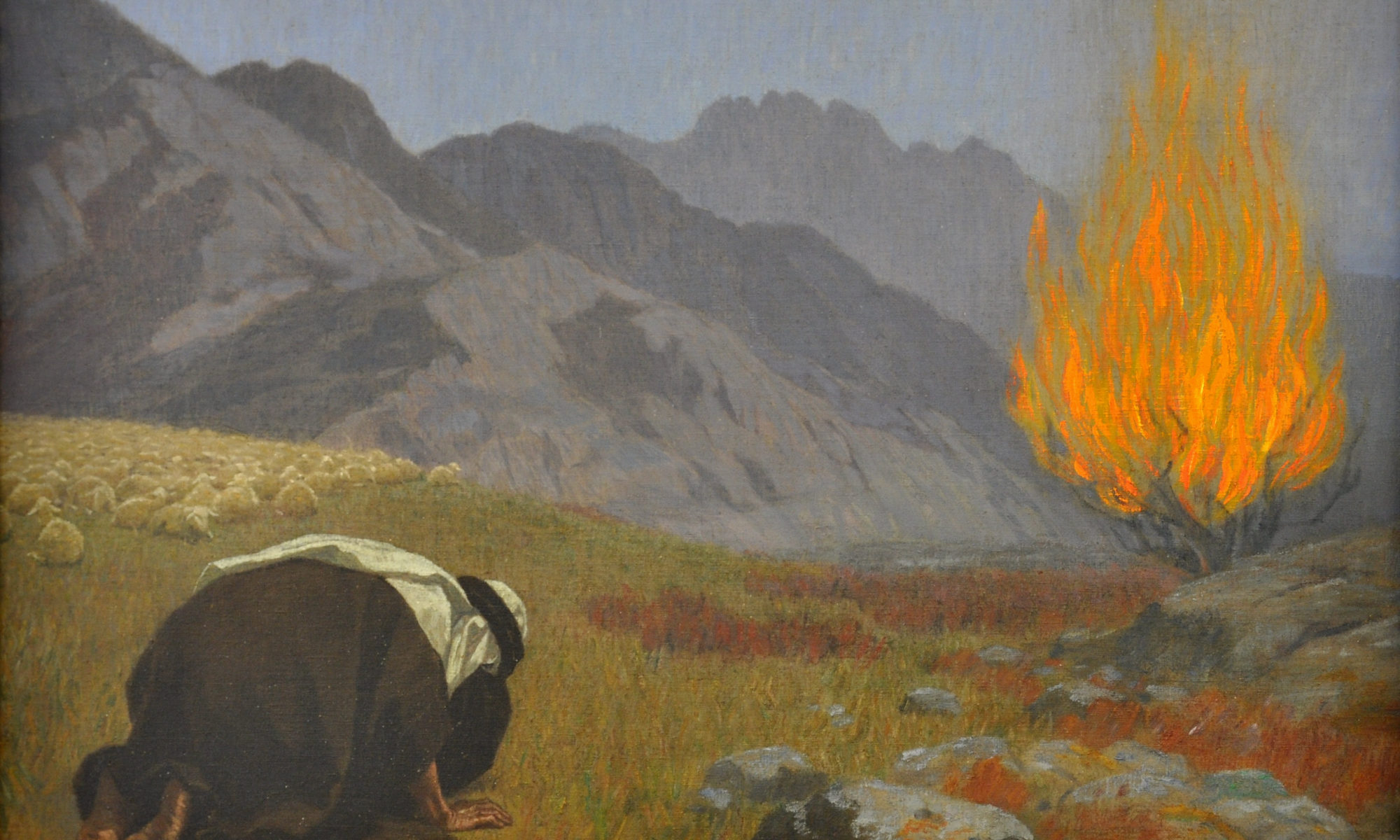
The Bible often speaks of God as fire or in fiery terms: Moses saw Him as a burning bush. God led the people out of Egypt through the desert as a pillar of fire. Moses went up onto a fiery Mt. Sinai where God was. Psalm 97 says,

The LORD reigns; let the earth rejoice; let the many coastlands be glad! Clouds and thick darkness are round about him; righteousness and justice are the foundation of his throne. Fire goes before him, and burns up his adversaries round about. His lightnings lighten the world; the earth sees and trembles. The mountains melt like wax before the LORD, before the Lord of all the earth. The heavens proclaim his righteousness; and all the peoples behold his glory (Psalm 97).

Scriptures also call God a Holy fire, a consuming fire (cf Heb 12:29) and a refining fire (cf Is. 48:10; Jer 9:7; Zec 13:9; Mal 3:3).

So it is that our God, who is a Holy Fire, comes to dwell in us through His Holy Spirit. As a Holy Fire, He refines us by burning away our sins and purifying us. As Job once said, But he knows the way that I take; when he has tested me, I will come forth as gold (Job 23:10).

God is also preparing us for judgment, for if He is a Holy Fire, then who may endure the day of His coming or of going to Him? What can endure the presence of Fire Himself? Only that which is already fire. Thus, we must be set afire by God’s love.

So, in the coming of the Holy Spirit, God sets us on fire to make us a kind of fire. In so doing, He purifies us and prepares us to meet Him one day, to meet Him who is a Holy Fire.

II. The Proclamation of the Spirit – You will notice that the Spirit came on them like “tongues” of fire. The reference to tongues is no accident, for the Holy Spirit moves them to speak and ultimately to witness. The text says, And they were all filled with the Holy Spirit and began to speak in different tongues, as the Spirit enabled them to proclaim. Now there were devout Jews from every nation under heaven staying in Jerusalem. At this sound, they gathered in a large crowd, but they were confused because each one heard them speaking in his own language. They were astounded, and in amazement they asked, “Are not all these people who are speaking Galileans? Then how does each of us hear them in his native language? We are Parthians, Medes, and Elamites, inhabitants of Mesopotamia, Judea and Cappadocia, Pontus and Asia, Phrygia and Pamphylia, Egypt and the districts of Libya near Cyrene, as well as travelers from Rome, both Jews and converts to Judaism, Cretans and Arabs, yet we hear them speaking in our own tongues of the mighty acts of God.”

So, behold how the Holy Spirit moves them to proclaim, not just within the safety of the upper room, but also in holy boldness before the crowds that have gathered.

Notice the transformation! Moments ago, these were frightened men huddled together in secrecy behind locked doors. Now, they go forth to the crowds and proclaim Christ boldly. They have gone from fear to faith, from cowardice to courage, from terror to testimony!

What about us? Too many Christians are silent, overcome by fear. Perhaps they fear being called names or being unpopular. Perhaps they are anxious about being laughed at or resisted, or of being asked questions they don’t feel capable of answering. Some Christians gather in the “upper room” of the parish and are active—even leaders—but once outside the safe confines of the “upper room” they slip into what I call “secret agent” mode.

Well, the Holy Spirit wants to change that. To the degree that we have really met Jesus Christ and experienced His Holy Spirit, we are less able to keep silent. An old gospel song says, “I thought I wasn’t gonna testify, but I couldn’t keep it to myself, what the Lord has done for me.” The Holy Spirit, if authentically received, wants to give us zeal and joy, to burn away our fear so that testifying and witnessing come naturally to us.

Note also how the Spirit “translates” for the Apostles. The people in the crowd spoke different languages, yet each heard Peter and the others in his own language. The Spirit, therefore, assists not only us but also those who hear us. My testimony is not dependent on my eloquence alone but also on the grace of the Holy Spirit, who casts out deafness and opens hearts. Every Christian should remember this. Some of our most doubt-filled encounters with others can still bear great fruit on account of the work of the Holy Spirit, who “translates” for us and overcomes obstacles we might think insurmountable.

III. The Propagation by the Spirit – In the great commission, the Lord said, Go, therefore, and make disciples of all nations, baptizing them in the name of the Father, and of the Son, and of the Holy Spirit, teaching them to observe all that I have commanded you. And behold, I am with you always, until the end of the age (Matt 28:19ff). He also said, I have come to cast a fire on the earth and How I wish the blaze were already ignited (Luke 12:49).

How is the Lord going to do this?

Perhaps a picture will help to illustrate. My parish church is dedicated to the Holy Spirit under the title “Holy Comforter.” Above the high altar is the following Latin inscription: Spiritus Domini, replevit orbem terrarum (The Spirit of the Lord, filled the orb of the earth). (See the photo above of our high altar.)

The walls of my parish church answer the question. The clerestory walls are painted Spanish red, and upon this great canvas are also painted the stories of the lives of twenty saints, surrounding us like a great cloud of witnesses (cf Heb 12:1). (See also the video below.) Over the head of every saint is a tongue of fire.

This is how the Spirit of the Lord fills the earth. It is not via “magic fairy dust.” It is in the fiery transformation of every Christian going forth to bring warmth and light to a cold, dark world. This is how the Lord casts fire upon the earth. This is how the Spirit of the Lord fills the orb of the earth—in the lives of saints (and in your life)!

In the end, the great commission (Matt 28) is our first and most important job. No matter what else we do, we are to do this. Parishes do not deserve to exist if they do not do this. As individual Christians, we are a disgrace and not worthy of the name if we fail to win souls for Jesus Christ. The Spirit of the Lord is going to fill the orb of the earth but only through us. The spread of the gospel has been placed in your hands. It’s scary, isn’t it!

In my short time on this planet, I have seen it. Parishes that were once big and booming (and, frankly, sometimes arrogant) are now in decline; some are near closure. It happens to the best if they do not evangelize, if they do not accomplish “job one.” The Lord wants to light a fire. Why not become fire? Let the Spirit propagate the Church through you. (Yes, I am talking to you.)

Enjoy the feast of Pentecost, but don’t forget that the basic image is very challenging, for it means getting out of the “upper room,” opening the doors, and proclaiming Christ to the world. Let the Holy Spirit light a fire in you. Then you can’t help but spread light and heat to a dark, cold world.

Let the evangelization of the whole world begin with you.

The video below features details from the clerestory of my parish, Holy Comforter in Washington, D.C. Notice the tongue of fire above each saint. The paintings show how the Spirit of the Lord fills the orb of the earth through the lives of the saints (and through you, too). It is not magic; it is grace, working in your life, through your gifts and your relationships, so that the Lord will reach each soul. The witnesses on the walls of my Church say, “You are the way that He will fill the earth and set it on fire.” Let the blaze be ignited in you!

The song accompanying the video says, “We are surrounded by a great cloud of witnesses, looking on, encouraging us to do the will of the Lord. Let us stand worthy and be faithful to God’s call … We must not grow weary …!”

Dum complerentur dies Pentecostes,
erant omnes pariter dicentes, alleluia,
et subito factus est sonus de coelo, alleluia,
tamquam spiritus vehementis,
et replevit totam domum, alleluia.

When the Day of Pentecost had fully come,
they were all with one accord in one place, saying, alleluia.
And suddenly there came a sound from heaven, alleluia.

Cross-posted at the Catholic Standard: The Spirit of the Lord Filled the Earth – A Homily for Pentecost