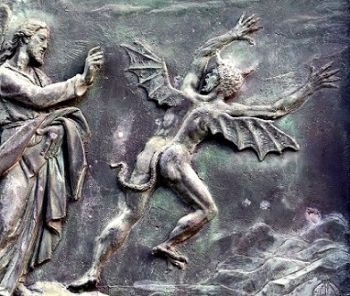
 There is wide interest today in the topic of exorcism. The publication in 2010 of Matt Baglio’s The Rite: The Making of a Modern Exorcist and the subsequent movie and interviews with Fr. Gary Thomas have sparked some of this interest. Prior to this, books such as An Exorcist Tells His Story, by Fr. Gabriele Amorth, had paved the way.
Frankly, another reason for the interest is that as our world becomes more secular, families disintegrate; the outright celebration of sinful practices spreads and there is an increase in bondage to sinful drives, psychological trauma, and openness to demonic influence.
A whole generation of priests were often taught to distrust the traditional understandings of trauma and dysfunction, which gave significant weight to spiritual causes. These priests were often trained to view most such things as merely psychological in nature. Thus, parishioners were often sent off on a recommended course of psychotherapy without so much as a prayer being said.
The tide is turning back to a more balanced approach. Catholics are rightly asking for spiritual help along with other approaches such as psychotherapy and psychotropic medicines.
With the renewed emphasis on exorcism in both the news and other sources, it must be said that some of the increasing number requesting the formal Rite of Exorcism manifest a misunderstanding of that rite as well as a lack of knowledge about other avenues of healing.
Demonic possession is rare and that is what the formal Rite of Exorcism is meant to address. Most people who present themselves (or someone they love) to the Church are not in fact possessed by the devil or demons. There may be obsession, oppression, or torment at work, along with psychological trauma, and other more natural sources of struggle.
For people who are not possessed, what is needed is deliverance, not exorcism.
What is deliverance? Deliverance is prayer and ongoing ministry that uses numerous approaches to bring healing and wholeness to those who, after baptism, have come to struggle significantly with bondage to sin and sinful drives, the influence of demons, or the effects of psychological and/or spiritual trauma.
Deliverance involves taking hold of the full freedom that God is given us, of helping the faithful who struggle to lay hold of the glorious freedom of children of God (cf Rom 8:21). St. Paul says that the Father has rescued us from the power of darkness and has brought us into the kingdom of his beloved Son, in whom we have redemption, the forgiveness of our sins (Colossians 1:13 – 14).
There is also a magnificent passage in the Acts of the Apostles in which St. Paul is told of his mission to the Gentiles by the Lord: I am sending you to [the Gentiles] to open their eyes and turn them from darkness to light, and from the power of Satan to God (Acts 26:17–18).
Fundamentally, this is a description of the ongoing work of deliverance, which the whole Church must accomplish for God’s chosen people. Deliverance seeks to take people out from under Satan’s power and place them under the authority and Lordship of Jesus Christ, to bring people to, or restore them to, their true identity as sons and daughters of God.
Even after baptism, it is possible that we open doors to Satan enabling him some degree of access to our heart and mind. When this is the case, a Christian, working with clergy and fellow believers alike, must take a stand against the schemes of the devil by repenting of sin and renouncing any form of agreement with the deceptions of the enemy.
Deliverance involves coming to an understanding of the tactics of the evil one and recognizing the flawed thinking that often infects our minds. It involves coming to know and name these tactics and the deep drives of sin within us. It involves repenting of them and steadily renouncing their influence so that we come to greater serenity, peace, and healing—to deliverance.
This deliverance is effected in many ways: by the Word of God proclaimed and devoutly read; through the frequent reception of sacraments of Holy Communion and confession; through spiritual direction; through the experience of the Sacred Liturgy, praise, and worship; through authentic, close fellowship with other believers; through personal prayer; through psychotherapy (where necessary); and through what might be called “deliverance ministry,” which often involves both clergy and lay praying with those who struggle and offering support and encouragement.
This is the description of a wider ministry of deliverance that looks past exorcism (which only applies in rather rare circumstances of possession). Deliverance ministry seeks to broaden healing to the large number of people (to some extent all of us at certain times) who need healing and deliverance.
 Who needs deliverance? While everyone can benefit from such a ministry in a general sort of a way, there are those among us who go through intense crises and need special, focused ministry. This ministry may occasionally involve formal exorcism, but it usually addresses a more general need for deliverance. This deliverance should be a multidisciplinary approach, as described just above.
My own experience with the need for deliverance ministry is quite personal. Some of you already know my story, but here it is for those who do not: At a critical point in my life, I needed deliverance. Specifically, I experienced grave and increasingly debilitating bouts of severe anxiety.
This significant torment began for me at about age 10, when I began to experience long periods of sleeplessness due to extreme worry. At the time, there were many crises underway in my family related to my sister’s severe mental illness and my parents’ struggles with alcohol. The episodes of extreme anxiety lasted for months at a time but were sporadic, coming and going somewhat mysteriously.
Throughout my teenage years, the frequency and intensity of these episodes increased, eventually spurring my parents to place me in outpatient psychotherapeutic counseling, through which I was prescribed psychotropic medicines. This was somewhat beneficial and my college and seminary years were largely serene.
I experienced a major crisis at age 33 when, as a young priest, I was asked to take a very challenging assignment. While I initially agreed to it, I was soon assailed by debilitating anxiety, sleeplessness, panic attacks, and almost non-stop rumination and depression. I was certain that I was losing my mind. This led to brief hospitalization and the need to step back from the assignment.
However, my crisis only worsened, descending into post-traumatic stress syndrome and deeper, darker depression. I also began to experience a demonic presence. Even on sunny days my peripheral vision was shrouded in a palpable darkness. I experienced demonic presence in my bedroom, a dark, brooding presence that tormented me throughout the night. I found it necessary to sleep in my outer room with the door open for fear of this presence.
Knowing and seeing my declining condition, a brother priest prayed with me and insisted that I seek help. It was clear that I was in need of deliverance, that I was not living the normal and promised Christian life. I was tormented by fear and locked in depression and self-loathing. My accuser, the evil one, had shown his face and largely robbed me of the glorious freedom of a child of God. Deliverance was needed, but I knew it wasn’t going to be easy.
More than twenty years later, I can tell you I have been delivered. Thank you, Jesus! I rarely worry about things now.
I also want to say that deliverance takes time and involves a multidisciplinary approach. Unfortunately, most people just want relief. But God is in the healing business; healing takes time, courage, prayer, patience, and waiting for the Lord.
The elements of my deliverance and healing included daily Mass, daily prayer and reading of Scripture, spiritual direction, psychotherapy, group therapy, weekly Al-Anon meetings, weekly confession, deliverance prayers, and walking in fellowship with the people of God. Gradually, through all these means, the dark moments grew briefer and the light grew brighter. My priestly ministry also grew richer. I became more compassionate and more able to help others in their struggles.
One of the things I had to discover was that my deliverance was linked to uncovering and naming sinful drives and distorted thinking, which provided doorways for the devil to rob me of my freedom.
The primary sinful drive with which I struggled was that of control, which is a form of pride. Growing up in an often-troubled home, one of my survival strategies had been to carve out small areas in my life that I could strictly control. For example, I kept my bedroom very clean, even locking it when I was away from the house. There were many similar things that I did; the little areas of life that I could control gave me some sense of safety.
As I grew older and my responsibilities increased, I brought this desire for control into those areas and often insisted on being in control of things that could not reasonably be controlled. Finally, struggling in the face of this challenging assignment I was given, I realized that I could never possibly keep everything under control; I spiraled into great crisis.
Ultimately I needed to repent of my strong drive to control. I had to see it for the pride that it was. I needed to learn to rely more on God. But striving to rely on someone other than myself—even God—was terrifying. It took lots of repentance, growing self-knowledge, and learning “the moves” of pride and control. In addition, I had to develop better and more reasonable strategies for dealing with these situations, accepting the fact that there are many things I cannot control.
Through it all, there were great battles with Satan, who did not want to easily relax his grip on me. Thanks be to God, I had many helpers, counselors, and people who prayed for me. Deliverance did come, slowly at first, but with increasing speed as time went on.
This is deliverance ministry. It takes time and many helpers from many different disciplines. Sacraments are essential and fundamental, as are prayer and the Word of God, but in most cases deliverance cases also requires psycho-therapeutic and medical intervention. This was my journey to deliverance.
In my years as a priest I have also walked with others, slowly helping them to find serenity and to appreciate that there is a big difference between relief and healing. Little by little, building trust and striving to increase the “healing team,” I have seen many make progress similar to my own—but it takes time; it is a journey. God proceeds very delicately and deliberately in these matters. Healing takes courage and God often waits until we are ready.
So, while recent interest in exorcism is encouraging, we must be careful not to focus too much on what is rare (demonic possession), overlooking what is often more necessary and applicable to most cases: deliverance prayer and ministry.
Here a few resources I would recommend:
Two excellent books on deliverance have been written by Neal Lozano:
Unbound: A Practical Guide to Deliverance
Resisting the Devil: A Catholic Perspective on Deliverance
Here are some deliverance prayers that I and others in this work often pray with the faithful, encouraging them to pray with others as well: Deliverance prayers.
An Unbound: Freedom in Christ Conference will be held in the Washington, D.C. area on August 11-12, 2017. More information is available here.
Submit yourselves, then, to God. Resist the devil, and he will flee from you (James 4:7). I am a witness.