Have You Found the Perfect Gift Yet?

Jesus said many paradoxical things. For example: Whoever finds his life will lose it, and whoever loses his life for my sake will find it (Mat 10:39). For whoever wants to save his life will lose it, but whoever loses his life for me will find it (Mat 16:25).

The basic rule of life the Lord announces is that when we want something too much, or very insistently on our own terms, we can never possess it. Rather, it possesses us. Only when we let go of our obsessions are we free to enjoy the true gift the Lord is offering. Indeed, many of our insistent and worldly expectations become the cause of our resentments. Some of God’s greatest gifts come to us in unexpected ways.

C.S. Lewis wrote,

Nothing in you that has not died will ever be raised from the dead …. Even in social life you will never make a good impression on other people until you stop thinking about what sort of impression you are making …. Give up yourself and you will find your real self … [but] [y]our real self will not come as long as you are looking for it. It will come when you are looking for Christ (Mere Christianity Book 4, Ch. 11).

At Christmas we often think of gifts, what to give and what we will receive; but this misses the truest point of Christmas, which is to look upon our Savior, Messiah, and Lord. He became flesh to show us our truer self. In thinking of Him and looking to Him, we find our truest self. The truer self we find, though, may be very different from some of our grander, worldly notions. Indeed, those self-delusions must be lost, pruned away; they must die for our true self to be found.

We have to stoop low to find Christ; we must seek Him humbly, and look for Him in humble places. He is found in Bethlehem, a tiny village in the shadow of the great Jerusalem. Even there He is in no comfortable dwelling, but out in back, down at the lowest end, in a cave behind a house, a place where animals are kept. Having descended into that cave, we must stoop still further, peering down close to the ground into a manger, a feeding trough. There we see Him.

Yes, there He is, devoid of earthly glories but with heavenly light shining through Him! Seeing Him, we see ourselves. Having descended, dying to earthly notions of life, having “lost” our life, we find it; and we see our own truest glory on the beautiful face of Christ.

Scripture says, For God, who said, “Let light shine out of darkness,” made His light shine in our hearts to give us the light of the knowledge of the glory of God in the face of Jesus Christ. (2 Cor 4:6) And we, who with unveiled faces reflect the glory of the Lord, are being transformed into His image with intensifying glory, which comes from the Lord, who is the Spirit (2 Cor 3:18).

Here is the perfect gift, that we should decrease and He should increase; that dying to our own glories and shedding the masks we like to wear we can now reflect His glories.

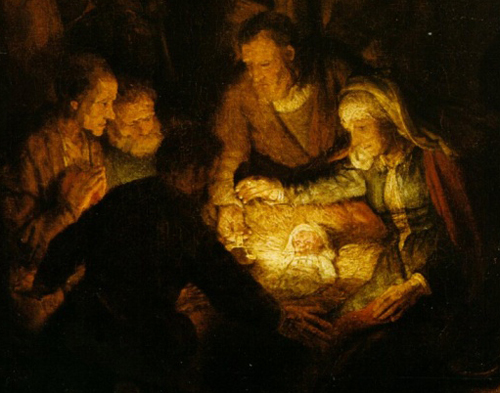
Perhaps a picture will help. For this, we turn to the master of light and darkness in painting: Rembrandt. In his “Adoration of the Shepherds” (above right) see how Christ is the true source of light. His light is reflected on the faces of those around Him. This is our greatest glory and our perfect gift, to reflect the glory of the Lord with faces unveiled. To reflect this glory, the shepherds had to journey through the darkness, stoop down low, and die to their expectations of where a King should be born. In the darkness they see Him and they reflect His glory with unveiled faces. The greatest gift, the perfect gift of Christmas, is pictured here. They reflect not their glories, but His.

May the perfect gift of Christmas be yours, be mine, be ours.
A Late Advent Message From the Lord

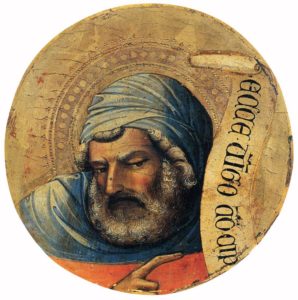
The Prophet Isaiah, by Lorenzo Monaco (1405-10)

As the end of Advent approaches, the Office of Readings features some final admonitions from the Book of the Prophet Isaiah. On the one hand they console; on the other, they challenge us to remain firm.

Isaiah addressed a people in exile who still awaited the first coming of the Lord. Today, these texts speak to us in difficult times when, exiled from Heaven, we await His magnificent Second Coming.

Let’s look at these admonitions from the Lord (Isaiah 46:3-13), which were addressed to three different groups in ancient Israel. However, let’s apply them to three groups in our own times: the faithful remnant, the foolish rebels, and the fainthearted at risk.

To the Faithful RemnantHear me, O house of Jacob, all who remain of the house of Israel, my burden since your birth, whom I have carried from your infancy. Even to your old age I am the same, even when your hair is gray I will bear you; It is I who have done this, I who will continue, and I who will carry you to safety.

This is directed to the devoted, to the remnant, to those who remain after the cultural revolution in our times, to those sometimes discouraged and sorrowful over the infidelity of loved ones and of the world around them. To these (often the elderly among us who remember a more faithful even if imperfect time) the Lord first speaks.

In effect, He says, Blessed are those who mourn, for they shall be comforted. Who are the mournful? They are those who see the awful state of God’s people: not glorifying the Lord in their lives, not knowing why they were made, spending themselves on what neither matters nor satisfies. Yes, those who mourn shall be strengthened, and, as their sorrow has motivated them to pray and work for the kingdom, they shall be borne to safety.

Such as these, the faithful remnant, should never forget that God has carried them from the beginning, even in the strength of their prime. Now, reduced by age, they are still carried by the Lord. He has never forgotten them and will carry them to safety; their faith in difficult times will be rewarded.

To The Foolish Rebels Remember this and bear it well in mind, you rebels; remember the former things, those long ago: I am God, there is no other; I am God, there is none like me. Whom would you compare me with, as an equal, or match me against, as though we were alike? There are those who pour out gold from a purse and weigh out silver on the scales; Then they hire a goldsmith to make it into a god before which they fall down in worship. They lift it to their shoulders to carry; when they set it in place again, it stays, and does not move from the spot. Although they cry out to it, it cannot answer; it delivers no one from distress.

The word “rebel” is from the Latin re (again) + bellum (war). In this context it refers to those who are forever at war with God and His plan for their lives. They foolishly forget His saving deeds. They imagine vain things: that there are other gods or entities that could save them. Even more foolishly, they craft other “gods” that they have to lift upon their shoulders to carry.

Many in our day act in the same way: always at war with God, His Church, and His plan. As G.K. Chesterton once noted, when people stop believing in God, it is not that they will believe in nothing but that they will believe in anything. Chesterton also wrote that when we break God’s big laws, we don’t get liberty; we get small laws. We transfer our trust away from God to false, crafted gods like government, or science, or the market. We hope that they will carry us, but we end up carrying the weight of these gods on our own shoulders. We carry this weight in the form of taxes, debt, and anxiety about everything in our health or environment (demanded by the increasingly politicized scientific and medical communities).

Science, the market, and government are not intrinsically evil, but they are not gods, either. They cannot deliver us from ourselves; only God can do that. To the many who rebelliously and foolishly persist with their “non-gods,” He says, “I am God; there is no other.”

To the Fainthearted at Risk Listen to me, you fainthearted, you who seem far from the victory of justice: I am bringing on my justice, it is not far off, my salvation shall not tarry; I will put salvation within Zion, and give to Israel my glory. At the beginning I foretell the outcome; in advance, things not yet done. I say that my plan shall stand, I accomplish my every purpose. I call from the east a bird of prey, from a distant land, one to carry out my plan. Yes, I have spoken, I will accomplish it; I have planned it, and I will do it.

Among the faithful there are some who are at risk, who are nearly ready to give up. God encourages them, but also warns that His plan will stand whether or not they endure. Thus there is an implicit warning from Jesus here (and an explicit warning elsewhere) that we must persevere. Jesus says that because lawlessness is increased, most people’s love will grow cold. But the one who endures to the end, he will be saved (Matt 24:12-13).

St. Augustine wrote, [God has] devised a plan, a great and wonderful plan … All this had therefore to be prophesied, foretold, and impressed on us as an event in the future, in order that we might wait for it in faith, and not find it as a sudden and dreadful reality (From a discourse on the psalms by Saint Augustine, bishop (In ps. 109, 1-3: CCL 40, 1601-1603)).

God’s plan will stand whether or not we do. We must stand as well, even when we want to faint or fall back. Our love must not grow cold nor our strength fail. God has triumphed and Satan has lost. We must choose with whom we will stand.

The evidence of the present age does not seem to show this, but as Scripture reminds us,

Therefore, we do not lose heart … So we fix our eyes not on what is seen, but on what is unseen, since what is seen is temporary, but what is unseen is eternal (2 Cor 4:16-17).

For all that is in the world, the lust of the flesh and the lust of the eyes and the boastful pride of life, is not from the Father, but is from the world. The world is passing away, and also its lusts; but the one who does the will of God lives forever (1 Jn 2:16-17).

Here, then, are some final instructions from the Lord this Advent, instructions for us who wait for Him: be faithful; the plan will come to pass. Do not be a foolish rebel, nor one of the at-risk fainthearted. Rather, be part of the faithful remnant. St. Paul says, Isaiah cries out concerning Israel: “Though the number of the Israelites be like the sand by the sea, only the remnant will be saved” (Romans 9:27).

The song performed in the clip below is entitled “Lord Help Me to Hold Out.”

Crisis At Christmas – A Homily for the 4th Sunday of Advent

j-and-m-and-jToday’s Gospel gives us some background for the Christmas feast that we need to take to heart. It speaks to us of a crisis at Christmas.

We tend to sentimentalize the Christmas story as we think of the baby Jesus in the manger. It is not absolutely wrong to be sentimental, but we must also be prayerfully sober about how difficult that first Christmas was, and about the heroic virtue required of Mary and Joseph in order to cooperate with God in making it come to pass.

Let’s look at this Gospel in three stages: distress, direction, and decision.

  1. DISTRESS This is how the birth of Jesus Christ came about. When his mother Mary was betrothed to Joseph, but before they lived together, she was found with child through the Holy Spirit. Joseph her husband, since he was a righteous man, yet unwilling to expose her to shame, decided to divorce her quietly.

The marriage is off. When we read that Mary was found to be with child before she and Joseph were together, we need to understand how devastating and dangerous this situation was. Pregnancy in this circumstance  brought forth a real crisis for both families involved in Joseph and Mary’s marriage plans. Quite simply, it put all plans for the continuation of the marriage permanently off.

Why is this? We read that Joseph was a “righteous man.” To our ears this like saying that he was a “good man.” Most of the Fathers of the Church interpreted “righteous” here to refer to Joseph’s gracious character and virtue where he steps back from a sacred situation. And we surely suppose all this of him. More recent biblical scholarship includes the idea that it meant Joseph was also an “observer of the Law.” He would thus do what the Law prescribed. This explains his decision to divorce Mary because of her apparent lack of virginity prior to their coming together in the  marriage. Here is an example of the Mosaic Law in reference to such a matter:

But if the tokens of virginity were not found in the young woman, then they shall bring out the young woman to the door of her father’s house, and the men of her city shall stone her to death with stones, because she has wrought folly in Israel by playing the harlot in her father’s house; so you shall purge the evil from the midst of you (Deut 22:20-21).

While this seems quite extreme to us, we can also recognize how far we have gone in the other direction in modern times, making light of promiscuity. I doubt that anyone would argue that we should stone such a woman today, and rightly so, but this was the landscape in Joseph’s time.

What about stoning? It would seem that Jews of the first century had varying interpretations about whether stoning was required or whether it was simply permitted (cf John 8). As a virtuous and patient man, Joseph looks for and senses some freedom in not “exposing” Mary to the full effects of the Law (stoning). But it does not seem he can find a way that he can take her into his home. Thus, as a “righteous man” (i.e., follower of the Law) he decides that divorce is required even if stoning is not.

This leads us to two important reflections, one about Mary and one about Joseph.

Mary – We can see into what a difficult and dangerous position her yes (her fiat) to the angel placed her. She risked her very life by being found with child outside the normal marital act with her husband. We know that it is by the Holy Spirit she conceives, but her family and Joseph and his family do not yet, or at least cannot verify it. And even if Mary explained exactly how she conceived, do you think you would accept such a story? Mary’s fiat placed her in real danger. It is a great testimony to her faith and trust in God that she said yes to His plans.

Joseph – We can also see the kind of pressure he would be under to do what the Law and custom required. There is no mention of Joseph’s feelings at this point, but we can assume that when Mary was found to be with child prior to their being together in marriage, the social pressure on him to be legally freed from Mary were strong, regardless of his feeling or plans.

  1. DIRECTION Such was his intention [to divorce] when, behold, the angel of the Lord appeared to him in a dream and said, “Joseph, son of David, do not be afraid to take Mary your wife into your home. For it is through the Holy Spirit that this child has been conceived in her. She will bear a son and you are to name him Jesus, because he will save his people from their sins.”

Be not afraid. The principal exhortation of the angel was that Joseph “not be afraid” to take Mary as his wife. This exhortation is powerful because fear was a very big factor. Joseph had much to fear in taking Mary. Some of the Fathers of the Church believed that what the angel meant was that Joseph should not fear God’s wrath, since he would not actually be taking an adulterer or fornicator into his home. Others think that the angel meant that Joseph should not fear taking God’s chosen instrument (Mary) as his wife.

One can also imagine some other fears that needed to be allayed by the angel. For example, Joseph could easily be rejected by his family for taking Mary in. The community could likewise shun him, and as a businessman, Joseph needed a good reputation to be able to ply his trade. All of these threats loom if Joseph “brings evil” into his house rather than purging the (apparent) evil from the midst of his house. But the angel directs him not to fear; this will take courageous faith.

The angel’s explanation is unusual to say the least. What does it mean to conceive by the Holy Spirit? It’s not exactly a common occurrence! Would his family buy such an explanation? What about the others in the small town of Nazareth? Yes, people were more spiritual in those days, but it all seems so unusual!

Further, Joseph hears all this in a dream. We all know what dreams can be like. They can seem so real at the time, but when we are fully awake we wonder if what we experienced was real at all. Joseph has to trust that what he was told is real, and that he should not be afraid because God has given him direction. As is often the case with things spiritual, we have to carefully discern and walk by faith, not by fleshly sight and certitude. Joseph has a decision to make.

  1. DECISION When Joseph awoke, he did as the angel of the Lord had commanded him and took his wife into his home.

We can see the strong faith of Joseph and the kind of trust he had to put in God. He had been told not to be afraid, to rebuke fear. Manfully, Joseph does this. He makes the decision to obey God whatever the cost. We are given no information about how his family and others in the town reacted. However, the fact that the Holy family later settles back in Nazareth indicates that God did come through on His promise that Joseph need not be afraid.

Heroes of Faith! Recognize the crisis of that first Christmas and the powerful faith of Joseph and Mary. Their reputations were on the line, if not their very lives. They had great sacrifices to make in the wondrous incarnation of our Lord. Quite simply, Mary and Joseph are great heroes of the faith. For neither of them was their “yes” easy. It is often hard to obey God rather than men. Praise God that they made their decision and obeyed.

Mary and Joseph’s difficulties were not yet over. There was a badly timed census, which required a journey to Bethlehem in the ninth month of Mary’s pregnancy. Imagine walking 70 miles through mountainous terrain in such a condition! There may or may not have been a donkey, but I doubt that riding a donkey in the ninth month of pregnancy is all that comfortable either. And then there was no room in the inn; Jesus had to be born in a smelly stable. Shortly thereafter they had to flee through the desert to Egypt because Herod sought to kill Jesus.

Jesus is found in a real Christmas, not a “Hallmark” one. The crisis of the first Christmas prefigures the passion. This where Jesus is found: in the crisis of the first Christmas. You may wish for the perfect Christmas, but there is no perfect Christmas. Jesus will find you where you are, in real life, in the imperfect Christmas, where loved ones have passed away and there is grief, where a job has been lost and there is anxiety, where health is poor and there is stress, where families are experiencing strife. That’s where Jesus will be found, in your real Christmas. A Christmas of joy, yes, but also of imperfections, even crises. He is there waiting for you to find Him, in the real Christmas of your life.

This is an old African-American spiritual that reflects on the fact that true discipleship isn’t always easy. Joseph and Mary surely experience and exemplify what these words express.

I tol’ Jesus it would be all right
If He changed my name

Jesus tol’ me I would have to live humble
If He changed mah name

Jesus tol’ me that the world would be ‘gainst me
If He changed mah name

But I tol’ Jesus it would be all right
If He changed mah name

Mastering the Passions, as Seen in a Christmas Commercial

Most of us struggle with one of more of our passions: anger, love, sorrow, desire for food or drink, desire for sexual intimacy, desire for possessions, desire for popularity, and so forth. None of these is inherently wrong; indeed, they are good as they come from the hand of God. They become sinful when focused on the wrong object or when they become excessive. The key is to learn to master them through moderation/self-control and by focusing them on the purpose for which they are intended.

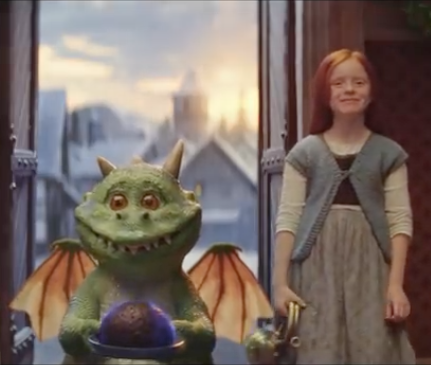
This year’s John Lewis Christmas commercial features a young fire-breathing dragon who, though not fierce, has an ability that he cannot seem to control. He must learn to use it only at the proper time and for good purposes. Allow his ability to breathe fire to represent a passion (e.g., anger, love). Observe the damage caused when this passion is uncontrolled or focused on the wrong things, but also observe the blessing brought when the young dragon learns to master it and use it for a good purpose.

https://youtu.be/r9D-uvKih_k

What Little Children Can Teach Us About Prayer

When it comes to our struggle in personal prayer there are some things that we need to unlearn. For too many, private prayer is often a formal, even stuffy affair, that drips of boredom and unnecessary formality and has lots of rules. Perhaps we learned some of our lessons too well.

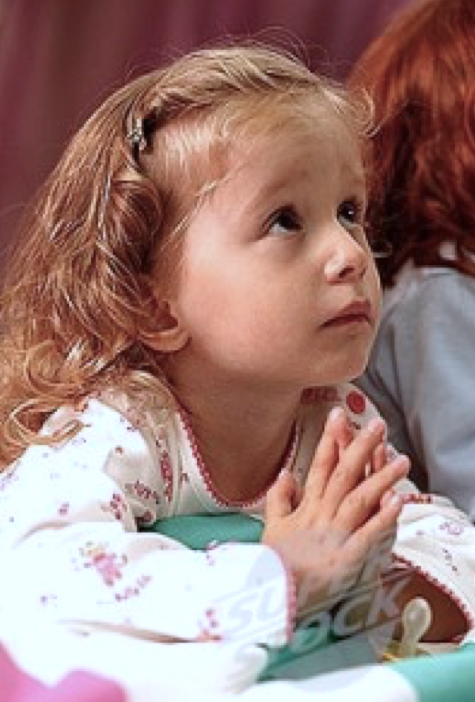
And yet many of the youngest children have not learned these lessons, and they seem to pray with great ease. They are unassuming and will say almost anything to God. It is true that children may have a lot learn about public and liturgical prayer, but when it comes to personal and private prayer they have much to teach us.

Perhaps a parable is in order:

A young girl received her First Holy Communion and, when she returned to her pew, she was noticed by her parents to be in rather deep prayer. After Mass they asked her, “What were you praying about after your First Communion?” “Well,” she said, “I prayed for mommy and daddy, and my (dumb) brother too! And then I sang Jesus a song, and told him a ghost story.”

So informal, so conversational, so unassuming, so real.And yet, it is the way many little children pray.

But over the years it seems we drift away from this honest simplicityand layer on lots of “shoulds and oughts.” Perhaps we over learn, or over apply, some of the lessons we learn about human interactions. I remember as a child that a neighbor woman took up a “goofy hair style.” And so I said to my mother in a voice that might be overheard, “Mom, why does that lady have Goofy hair?” “Shhhh….” she said, “Don’t say that, you might hurt her feelings.” She later admitted to me that the hair WAS goofy,  but explained that there are many things we shouldn’t say. We should keep certain things to our self.

This sort of lesson is an important one to learn and has its place. But like any lesson it can be over applied. The fact is that many today remain silent when they should speak out by way of fraternal correction. There are times when we need to be honest and clear. So too in our personal prayer with God.

Early in my priesthood a woman came to me and spoke quite frankly and vividly about her anger and disappointment with God who had made her suffer loss. “Have you talked to God about this?” I asked. “Oh no! Father,” she said with her hands in the air, “I can’t talk to God like that.” And she smiled as these words left her mouth because she knew they were silly. I smiled too and said, “He already knows doesn’t he….So you know what your prayer needs to be about. Now talk to him just like you talked to me.”

The Book of Psalms is the prayerbook that God entrusted to Israel. In it is enshrined every human emotion,thought and experience. There is joy, exultation, praise and serenity. But there is also anger, fear, disappointment and even hatred. It’s all in God’s “official prayer book.” And thus God teaches that the whole range of experience, thought and emotion is the stuff of prayer. It is precisely these things that God wants to engage us on.

Little children seem to know this instinctively.They pray about what is going on, what interests them, and they do so plainly and without a lot of formality. Even the bad stuff is out there.

I have a brief but clear memory of my prayer life as a little child. I must have been about 5 or 6 and there was a Sacred Heart statue on the dresser. I would see that statue and start talking to God in the freest way, and God would speak to me, simply and in a way a child could understand. But it was very real. And then the memory shuts off. It is just a small window into my early childhood, one of the few, and it was filled with God.

Since my late 20s I have striven to find my way back to that simple and profound experience of the presence of God in prayer. So simple, yet so real. Somewhere along the line it faded. Perhaps I had over learned the lesson that there are just things you’re not supposed to say and the conversation became strained and unreal and ultimately assumed the “irrelevance” that many today claim of their prayers.

I have made a lot of progress in journey back by unlearning some of the rules I applied.Hearing little children pray has been a great help. It is the littlest ones really who seem to live in that enchanted world of the presence of God. By 5th grade it is fading fast and by 7th grade the flesh has fully manifested and a kind of spiritual dullness seems to overtake most middle school kids. But wow, can little kids pray. The Book of Psalms says exore infantiumfrom the mouth of infants and little children you have perfected praise O Lord unto the exasperation of your enemies. (Psalm 8:2).

Do a little unlearning where required in the prayer department.Though we need to teach kids about the liturgical and public prayer which has its necessary rules, they have much to show us in terms of private prayer; a prayer that is personal, unassuming, about real things and spoken with childlike simplicity and trust. Amen I say to you, unless you receive the kingdom of God like a little child you shall not enter it. (Mark 10:15)

A teacher collected these prayers from her young students and insists that all these prayers are real, actually written by children. Enjoy the unassuming and direct, yet respectful  approach to God. The teach asked the children to begin all their prayers, “Dear God…”

Sermon Lengths Should Vary

A recent analysis by the Pew Research Center shows the rather unsurprising fact that sermons at Catholic masses are much shorter than those at Protestant and Evangelical services. The Catholic News Agency reports:

An analysis of nearly 50,000 sermons, given across a variety of Christian denominations during the months of April and May this year, found that the median length of a sermon was 37 minutes, but for Catholic priests, the average length was just 14 minutes.

Pew found that historically black Protestant sermons had the longest median length of 54 minutes, while mainline Protestant sermons were an average of 25 minutes long, with evangelical churches falling in between at 39 minute [sic] per sermon (CNA).

Catholic clergy are generally considered to be poorer preachers than their Protestant counterparts, and I would argue that the shorter sermon length has something to do with that. The expectation that a sermon be brief, about twelve minutes, affects what is said and how it is said. It also makes a number of forms of preaching, some of them among the most satisfying for the congregation, impossible.

Some years ago, a brother priest asked one of his parishioners who had left for a large Protestant denomination why he had done so. “They teach the Word,” was the man’s answer. We can certainly lament that the man would not have left the faith had he understood the True Presence of Christ in the Eucharist, but people also have a hunger for God’s Word effectively taught and presented. For this reason, a good sermon deeply rooted in a biblical text is very satisfying. Long before I was ordained a priest, I listened to recordings of Protestant preachers like Adrian Rogers and Tony Evans. I marveled at how these men could take a text and teach from it line by line, creatively applying it to life. Even if I did not agree with every point they made or thought that they missed something that a Catholic would see, they saw the text as full of meaning and served up rich spiritual fare for their listeners.

Archbishop Fulton Sheen had this ability, too. He’d find a crucial point most others would miss and develop it beautifully. I remember once he noted that the disciples had forgotten to bring bread with them on the boat and emphasized the detail in the text that said, “They had only one loaf with them in the boat.” With the authority that only Sheen could command he proceeded to say, “And the loaf was Christ, who alone is our necessary Bread.” From this insightful teaching he went on to develop four aspects of it.

This sort of teaching and preaching takes time. I would argue that the relative inferiority of Catholic preaching isn’t just that Catholic clergy are poorly trained; it is also the limited time tolerated by the faithful. With such an abbreviated length, Catholic sermons tend to present a single principle drawn from the readings without being able to fully develop it. Good biblically based preaching usually involves going through a passage in the following steps: read it, analyze it, organize it, illustrate it, and then apply it. This sort of preaching isn’t likely to happen in a twelve-minute homily.

I also am told by many Catholics that priests need to teach more from the pulpit. There is a very long list of topics that they want to hear preached about more. I would argue that this also requires more than a mere twelve minutes.

I do not say that every member of the clergy should preach longer. Some simply don’t have the skill to do so. Others are in situations were a longer sermon is not possible due to the overall Mass schedule. There are also going to be ethnic/racial differences that factor in. So, neither do I argue that longer sermons teaching in depth out of a biblical text should be used in all situations. However, I do argue that if they want the “better” sermons of the denominations noted for excellent preaching, more Catholics might want to consider tolerating a longer sermon, at least at certain Masses.

I have spent most of my priesthood in predominantly African-American parishes. In such congregations, longer sermons are assumed. The people have high expectations of the sermon; they also interact with the preacher through encouraging interjections such as “Amen” and “All right now.” In these settings I routinely preach about thirty minutes; it is a great luxury. This permits me to preach through a biblical text examining its stages or exploring several aspects of the teaching it sets forth. Most of you who read my Sunday sermons posted here or listen to them online know this. One sermon might cover four aspects of discipleship derived from a Gospel pericope. Another might explore the stages of faith the man born blind goes through in the Gospel of John. Most of my parishioners would be surprised if I gave a ten-minute sermon, wondering what had happened. Once when I gave a short sermon a woman playfully rebuked me, saying, “Father, you left too much fruit in the tree this morning. We need a better harvest next week.”

Some Catholics have told me that they think long sermons are a mistake no matter who is in the pulpit because the purpose of the Mass is not to be a glorified bible study; it is an act of worship. Perhaps, but isn’t the Lord being worshipped when the faithful are attending to His proclaimed and preached Word with devotion?

Over the years, I have found that people have pretty strong opinions about sermons, both length and content. I suppose the best way for me to end this piece is by saying that perhaps we can all make a little room for one another in the Church. Some priests preach longer and are good at it. Some are not and better off keeping the sermon short and to the point. Other priests preach brilliant, memorable homilies that are quite brief. Vive la différence! Even in my own parish, not every liturgy is the same: our 11:00 AM Mass runs well over an hour, while our 7:00 PM Mass is no longer than forty-five minutes. Hence, in my own sermons, both content and length vary.

The one thing that is most clear to me is that rigid declarations that no sermon should be longer than a certain number of minutes (8, 10, 12, or whatever) are disrespectful of legitimate differences across cultures, liturgical traditions, and even personal temperaments. Pastors and congregations can and should work out their own situations and provide variety even there. Live and let live.

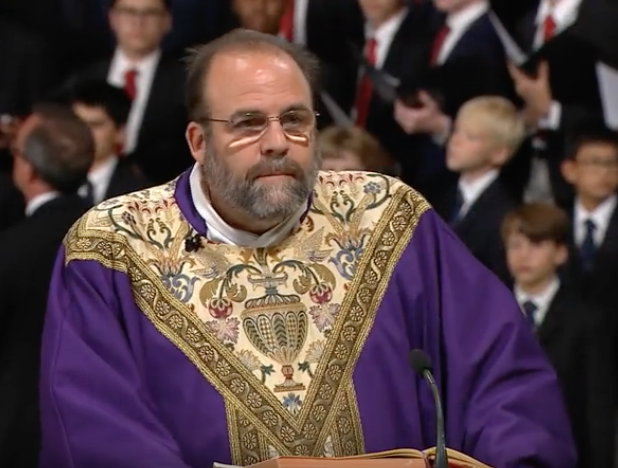
This sermon clip shows that, when I have to, I can preach in under four minutes. This was a half-hour TV Mass and only four minutes for the sermon is allotted. I certainly don’t consider it one of my better efforts and would liked to have developed the possibility that St. John did have supernatural grace. But all that one can do in so brief a moment is to throw out a few thoughts and exit gracefully. In my written online sermon I developed, in three stages, going from the imperfect gift we merely want to the perfect gift that God is actually offering.  In my recorded parish homily, given the generous time allotted in that setting I was able to sample well from the Prophets as well as the Gospel text itself. 

Advent Hymn: Rorate Caeli Desuper

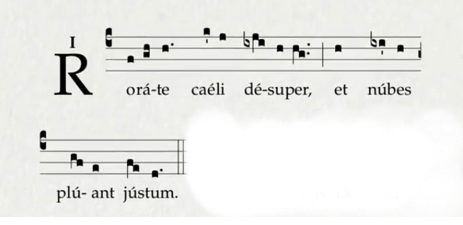
One of the least well-known, yet most theologically important, Advent hymns is “Rorate Caeli Desuper.” Some congregations know it under its English title: “Drop Down Ye Heavens from Above.” One of the reasons for its lack of popularity is that it is chant-like rather than metrical and thus harder for a congregation to sing. It is in the form of an antiphon and verses. The text of the antiphon is from Isaiah 45:8, and the verses are drawn largely from Isaiah 63-64. The hymn as a whole gives exquisite poetical expression to the longings of patriarchs and prophets, and symbolically of the Church, for the coming of the Messiah. The verses point to the Babylonian captivity of the Jewish people. The antiphon plaintively seeks a savior:

Rorate caeli desuper et nubes pluant justum

Drop down dew, you heavens from above, and let the clouds rain down the Just One

An extended version of the antiphon is found in the Divine Office:

Rorate caeli desuper et nubes pluant justum
Aperiatur terra et germinent Salvatorem

Drop down dew, you heavens from above, and let the clouds rain down the Just One
Let the earth be opened and bring forth the Savior.

In this version, there is an echo of Isaiah 55:

As the rain and the snow come down from heaven, and do not return to it without watering the earth and making it bud and flourish, so that it yields seed for the sower and bread for the eater, so is my word that goes out from my mouth: It will not return to me empty, but will accomplish what I desire and achieve the purpose for which I sent it(Isaiah 55:10-1).

In this post we will focus on the hymn version.As a hymn, it is usually paired with a series of Scripture verses, drawn from a desperate period in Jewish history, which summoned a powerful cry for a savior:

Latin English
Roráte caéli désuper,
et núbes plúant jústum.
Drop down dew, ye heavens, from above,
and let the clouds rain down the Just One.
Ne irascáris Dómine,
ne ultra memíneris iniquitátis:
ecce cívitas Sáncti fácta est desérta:
Síon desérta fácta est, Jerúsalem desoláta est:
dómus sanctificatiónis túæ et glóriæ túæ,
ubi laudavérunt te pátres nóstri. (Is 64:9-10)
Be not angry O Lord,
and longer remember our iniquity:
Behold your holy city is made a wilderness,
Sion is a deserted, Jerusalem is desolate:
The house of your holiness and glory,
where our fathers praised you.
Peccávimus,

et fácti súmus tamquam immúndus nos,
et cecídimus quasi fólium univérsi:
et iniquitátes nóstræ quasi véntus

abstulérunt nos:
abscondísti faciem túam a nóbis,
et allisísti nos in mánu iniquitátis nóstræ. (Is 64:6-7)

We have sinned,

and are as an unclean thing,
and we all fall as a leaf:
and our iniquities, like the wind,

have taken us away:
thou hast hid thy face from us:
and hast consumed us, because of our iniquities.

Víde Dómine afflictiónem pópuli túi,
et mítte quem missúrus es:
emítte Agnum dominatórem térræ,
de Pétra desérti ad móntem fíliæ Síon: (Is 16:1)
ut áuferat ípse júgum captivitátis nóstræ.
Behold, O Lord, the affliction of your people,
and send forth him whom you will send;
send forth the Lamb, the ruler of the earth,
from Petra of the desert to the mount of the daughter of Sion: that he may take away the yoke of our captivity.
Consolámini, consolámini, pópule méus:
cito véniet sálus túa:
quare mæróre consúmeris,
quia innovávit te dólor?
Salvábo te, nóli timére,
égo enim sum Dóminus Déus túus,
Sánctus Israël, Redémptor túus.
Comfort ye, comfort ye my people;
For your salvation will suddenly come:
why are you consumed with sadness?
why hath sorrow seized you?
I will save you: do not be afraid.
For I am the Lord your God,
the Holy One of Israel, your Redeemer.

The plaintive verses come from the Book of the Prophet Isaiah, which was written in a terrible period of Israel’s history.Isaiah lived between two tumultuous events: the destruction of the Northern Kingdom by Assyrians in 721 B.C. and the destruction of the Southern Kingdom of Judah by the Babylonians in 587 B.C. Though Isaiah died long before the fateful events of 587 B.C., the third part of his book prophesies it (though some scholars argue that the third section was appended by a later author). Let’s review this calamitous event.

The conquest of Judah and the siege of Jerusalemwas a military campaign carried out by Nebuchadnezzar II, king of Babylon in 587 B.C. He had defeated Egyptian forces in 595 B.C. and subsequently invaded Judah. King Jehoiakim of Judah resisted Babylonian rule, but to avoid the destruction of Jerusalem he shifted allegiance from Egypt to Babylon and paid tribute from the treasury in Jerusalem. In 591 B.C., during the fourth year of his reign, Nebuchadnezzar suffered military losses against the Egyptians and this perceived weakness led to numerous rebellions among the states of the Levant, which owed allegiance to Babylon, including Judah. King Jehoiakim stopped paying tribute to Nebuchadnezzar and adopted a pro-Egyptian position.

Nebuchadnezzar dealt severely with this rebellion,laying siege to Jerusalem. King Jehoiakim died during the siege, possibly on December 10 588 B.C., and the city eventually fell on 2 Adar (March 16) 587 B.C. Nebuchadnezzar pillaged the city and the Temple. Much of the surviving Jewish population of Judah, numbering about 10,000, was deported to Babylon. None remained except the very poorest (who eventually became the Samaritans). Also taken to Babylon were the treasures and furnishings of the Temple, including golden vessels dedicated by King Solomon. Jerusalem lay a burning ruin.

According to the Book of Second Kings,

Surely this happened to Judah at the LORD’s command, to remove them from His presence because of the sins of Manasseh and all that he had done, and also for the innocent blood he had shed. For he had filled Jerusalem with innocent blood, and the LORD was unwilling to forgive(2 Kings 24:3-4).

Jeremiah had warned,

From the thirteenth year of Josiah son of Amon king of Judah until this very day—twenty-three years—the word of the LORD has come to me, and I have spoken to you again and again, but you have not listened. And the LORD has sent all His servants the prophets to you again and again but you have not listened or inclined your ear to hear. The prophets told you, ‘Turn now, each of you, from your evil ways and evil deeds, and you can dwell in the land that the LORD has given to you and your fathers forever and ever. Do not follow other gods to serve and worship them, and do not provoke Me to anger with the works of your hands. Then I will do you no harm. But to your own harm, you have not listened to Me,’ declares the LORD, ‘so you have provoked Me to anger with the works of your hands.’ Therefore this is what the LORD of Hosts says: ‘Because you have not obeyed My words, behold, I will summon all the families of the north,’ declares the LORD, ‘and I will send for My servant Nebuchadnezzar king of Babylon, whom I will bring against this land, against its residents.’

These verses of this hymn are no less than a cry of desperation. The Jews had staggered hundreds of miles to Babylon and now had to live apart from the land, the Temple, and the culture God had given them. Weeping and lamenting, they said, By the rivers of Babylon we sat and wept when we remembered Zion. There on the poplars we hung our harps, for there our captors requested a song; our tormentors demanded songs of joy “Sing us a song of Zion.” How can we sing a song of the LORD in a foreign land? If I forget you, O Jerusalem, may my right hand cease to function(Ps 137:1-5).

It was dreadful. Most people had lost a substantial number of family members as well as everything they owned; as they were driven into exile, the last thing they saw was the destroyed city and the smoldering ruin of the Temple. Isaiah 63and 64, along with the Lamentations of Jeremiah the Prophet, capture well this devastating moment for the Jewish people.

Hence, perhaps as no other Advent Hymn, Rorate Caeli Desuper powerfully illustrates the desperate need that ancient Judah had for a savior to rend the heavens and come down. The plaintive verses, drawn mainly from Isaiah’s prophetic lament, draw us into the desperate situation of God’s people, who have lost everything due to their sin and now seek salvation through repentance.

Advent has rather lost its penitential character today, but as this song illustrates, there was once a more somber and sober sense of the ancient need for a savior and our ongoing need for His graces. As the first three verses indicate, we tend to stray and thus are afflicted by the weight and destruction of our sins. Our passions blow us about like leaves in the wind and we lose our way. Up goes the cry in the third verse:

Behold, O Lord, the affliction of your people,
and send forth him whom you will send;
send forth the Lamb, the ruler of the earth,
from Petra of the desert to the mount of the daughter of Sion:
that he may take away the yoke of our captivity.

In the final verse comes the Lord’s merciful answer:

Comfort ye, comfort ye my people;
For your salvation will suddenly come:
why are you consumed with sadness?
why hath sorrow seized you?
I will save you: do not be afraid.
For I am the Lord your God,
the Holy One of Israel, your Redeemer.

Therefore, let the Advent cry go up:

Rorate caeli desuper et nubes pluant justum
Aperiatur terra et germinent Salvatorem

Heavens drop dew from above and the clouds rain down the Just One
The earth shall be opened and bring forth the Savior.

Here is the hymn sung in Latin Chant; its sober tones capture well a time that was cloudy and dark and when the cry for a Savior pierced the clouds:

And here is a beautiful polyphonic rendering of the Ne Irascaris(verse 1) by William Byrd, who wrote it in lament for the destruction of the Catholic Church in England of the 16thcentury:


Rediscovering the Original Meaning of the Word “Relevant”

A word we hear frequently these days is relevance, or the related relevant. There is great insistence today that whatever is said, taught, or presented should be relevant. Often what this means is that it should be applicable, reasonable, easily understood, and, above all, modern.

This is the most problematic aspect of the modern meaning of the word. Relevance today means being in agreement, or in step, with modern times; with the thinking, leanings, customs, and mores of people here and now.

And not only are our ideas, teachings, and views expected to be relevant, so are our institutions, such as the Church. We often hear the demand that the Church should be relevant; that her teachings, structure, methods, and views should be up-to-date and should speak to the issues modern people deem important.

With proper distinctions, relevance does have its place. It is important for the Church to speak to issues that are of current concern. An extended sermon on a text from Leviticus detailing how to slaughter animals properly during the Temple sacrifice might well be critiqued as irrelevant to the average Christian today. In addition, we moderns face many issues that were unknown to the ancients, such as the morality of in vitro fertilization.

Therefore, the Church must make some adjustments with respect to culture and era, and it is reasonable for people to expect that.

However, as with many concepts that are in themselves good and proper, the demands for relevance are often taken too far. What many today want when they demand that the Church be relevant is that she reflect the culture around her, that she be more of a thermometer recording the temperature rather than a thermostat seeking to set it. For many, relevance means that the Church should reflect the views of her members rather than those of her founder and Head, Jesus Christ, who is the same yesterday, today and tomorrow, and whose Word endures forever. Relevance, to many, also means that the Church should cast aside a large number of her basic teachings and practices.

As a result, there is a lot of tension around the words relevant and relevance. It is necessary to distinguish authentic concerns for relevance from inauthentic ones.

Part of the problem in determining the proper degree of relevance is that the word itself has lost much of its original meaning. In a certain sense, many use the word to mean the opposite of its original sense.

The Latin etymology is re (again) + levare (to lift). Hence, the literal meaning is “to lift up something again.” And because re can describe a repetitive action, the word can also mean “to lift up something again and again.”

The original connotation of the word is that something has been dropped or cast aside, and then someone picks it up again. It is as though something that has fallen away or fallen into disuse is then picked up and presented anew or freshly. It could even theoretically be applied to something that was cast aside as old-fashioned or out-of-date and then taken up again or presented anew.

In a way, then, from its Latin roots, relevant means rather the opposite of its current usage. Something relevant was brought back from the dustbin, not something brand new and popular!

This examination of the Latin roots suggests a possible way forward in recapturing the word relevant and using it with proper balance.

The re in the word demands that the Church ever lift up her unchanging truths, especially when they have been carelessly cast aside. However, this does not simply mean rehashing ideas in the same way. The idea or truth is still valid, but the way we express it may need adapting; it may need re-presenting. Obviously, as the Church encounters new languages, translations need to be made. As cultures change or new situations and circumstances arise, some of the analogies and images used to express unchanging truths may need adjustment. The Latin roots capture the notion that although things sometimes do fall away or are dropped, they need to be picked up again and often re-presented, that is, presented in new and fresh ways.

In addition, the levare in the Latin root shows that if something significant has been dropped, it is important to pick it up again. Certain things cannot be allowed to drop or fall away; they must be picked up again and again.

Therefore, despite demands that the Church let some of her teachings drop or that we make them go away, the notion of relevance from its Latin roots says just the opposite. To be relevant we must re+ levare; we must insist on picking them up again and again, presenting them freshly. Even if the culture is hostile, we must continue to present, to re-present, to lift up again and again the truths that God has given us, which can never die.

In this sense we can respond to a world that demands we be relevant, “Amen!” We must pick up again and again the perennial truths that God has given us, but at times we must also accept the challenge to present them freshly and in a manner that is understandable, even infectious, to our listeners.

Relevance anyone?

This song says, “Everything old is new again. … Don’t throw the past away, you might need it some rainy day.”

https://youtu.be/afw4Iqf3Wws