Elizabeth Lent, junior at Notre Dame and parishioner from Little Flower takes us back to World Youth Day. Read about her experience at Cuatro Vientos.
Saturday, August 20th-Sunday, August, 21st
The past 48 hours have been a whirlwind of emotions, culminating World Youth Day 2011 in an unimaginably high spirit of enthusiasm and hope.
At 9:15 am on Saturday morning our group head out to make the 5 mile hike to Cuatro Vientos, an airport outside of town where the vigil would be held that evening. That night everyone would sleep outside and then wake up to attend mass with the Pope on Sunday morning. Carrying backpacks stuffed with our next three meals, sleeping bags and pads, we prayed the Joyful mysteries of the Holy Rosary and sang the Chaplet of Divine Mercy…For the sake of His sorrowful passion, have mercy on us and on the whole world… We also joined in signing praise songs with other groups walking along side us. Making friends with some fellow Americans from California, we got lost with them a few times during the hike; don’t we all lose our way in life occasionally, knowing though that the Lord will always come after us like the lost sheep, just as he did through the helpful volunteers scattered all over to help direct the crowds.
Arriving at Cuatro Vientos at noon we maneuvered around masses of people all gathering to honor the Pope andreceive his words and blessing. We left our things in section D8 where we would be sleeping that evening and then proceeded to stuff our pockets with food, water, a journal, cards, and anything else we would want for the rest of the day. Next stop was to claim our seats in front of the stage where Pope Benedict XVI would lead a vigil celebration that evening and we would not return to our backpacks until 11pm. Our group, fortunate to receive tickets for the front section of seats, secured the seventh row in the second bunch of seats, front and center from the stage. As we waited for the Pope’s arrival at 7pm, the sun’s heat beat down on us but we were all just so pleased to be sitting down, it was a blessing to see how much we take for granted in our ordinary life, something so simple as a chair. We also may take advantage of how present Our Lord is to us each and every day. We may not always make us of his love for us, believing that we can do it on our own, but nothing can be done without the power and love of God.
Throughout the afternoon, several bands performed and pop culture music was played on loud speakers. It was purely fun the many times the whole community of youth stood up on our chairs, waving flags, singing, and dancing along to these songs we were all familiar with, uniting us into one body, one family. As we had these 6 hours to spare, my friend and I who are working on a documentary film about World Youth Day had a lot of time to go around and meet with youth from several countries. Asking why they came to WYD and what they believed to be the significance of the youth in the Catholic Church, we had the opportunity to interview two young adults from Ethiopia, several girls from Canada, two English guys, an Aussie, and others. At one point we talked to a brother and sister from Southern France. The sister answered our questions in French, and though we had no clue what she was saying, it was clear to see she was quite hyped up and enthusiastic about her faith. The excitement and emotion that came through in her eyes, hand motions, and tone of voice was absolutely powerful. It makes me smile now, remembering how alive this young women was. This is the spirit of the youth in the Church, the spirit that we are all hear fighting to renew in the world.
Written by: Elizabeth Lent, Junior at University of Notre Dame and parishioner at Little Flower in Bethesda
Today we celebrate the legacy of someone we know next to nothing about. You’ve heard of the Tomb of the Unknown Soldier? Perhaps we could call today the Feast of the Unknown Apostle! I’m speaking, of course, about St. Bartholomew.
We know that he’s an apostle. We know that he was born in Cana of Galilee. We know that he was first brought to Jesus by Philip, because today’s gospel tells us that. And we know that he was sometimes called Nathaniel, because today’s gospel tells us that too. Later traditions say that he traveled to India, maybe he wrote a gospel that’s now lost to us, and was martyred for the faith. But that’s about it!
But perhaps it’s a good thing we don’t know much about St. Bart. Maybe the fact that we don’t have a lengthy chronicle of his teachings and mighty deeds should remind us that as Christians, we aren’t meant to draw attention to ourselves.
Instead, we’re asked to die to self, and live for Christ;
We’re to build up God’s kingdom, not our own reputations;
It’s God’s glory we are to seek, and not our own;
Self-sacrifice, and not self-promotion, is our goal;
We are to ask: “Lord, what can I do for you?” and not, “Lord, what’s in it for me?”
History doesn’t always remember those who answered this call, but heaven is full of them. And we know that St. Bartholomew is in heaven! But at the end of the day, perhaps that’s all we really need to know.
Over 22 years ago as I was finishing seminary and about to be ordained my spiritual director gave me some advice on seeking a new spiritual director in my diocese. “Look for some one who has suffered,” He said. At the time I wondered about this but have come to find that it was true.
Suffering brings a profound wisdom if it is endured with faith. I have also discovered this in my own life. As much as I have hated any suffering I have endured I have to admit it has brought gifts in strange packages. Through it I discovered gifts and strengths I did not know I had. Through it I experienced things I would have avoided. Through I learned to seek help and not depend so much on myself. Through it I became better equipped to help others in their struggles. Through suffering my faith grew and so did my compassion and generosity for others who have struggled.
The scriptures say that “A broken humbled heart the Lord will not scorn” (Ps 51). A few years ago my current spiritual director shared a strange saying with me: Everything needs a crack in it, that’s how the light gets in.” Yes indeed, the light gets in through a broken heart, a heart with fissures or openings. Rarely does the light get in through a perfect wall, a perfect and strong barrier.
This is a painful truth to be sure and it makes me want to run. But in the end I have learned that it is true. God has done more with my brokenness than my strength. And, in a paradoxical way, my brokenness has become more and more my strength. I wonder if you have experienced the same? Where would we be without our crosses and sufferings? What do we have of true value that has not come at the price of suffering?
Let me get out the way and let a Saint explain it. This is from St. Rose of Lima whose feast we celebrated yesterday. This is an excerpt of what was in the breviary:
Our Lord and Saviour lifted up his voice and said with incomparable majesty: “Let all men know that grace comes after tribulation. Let them know that without the burden of afflictions it is impossible to reach the height of grace. Let them know that the gifts of grace increase as the struggles increase. Let men take care not to stray and be deceived. This is the only true stairway to paradise, and without the cross they can find no road to climb to heaven.”
When I heard these words, a strong force came upon me and seemed to place me in the middle of a street, so that I might say in a loud voice to people of every age, sex and status: “Hear, O people; hear, O nations. I am warning you about the commandment of Christ by using words that came from his own lips: We cannot obtain grace unless we suffer afflictions. We must heap trouble upon trouble to attain a deep participation in the divine nature, the glory of the sons of God and perfect happiness of soul.”
Suffer well fellow Christians. Beg deliverance to be sure but realize that even in the delay of relief, God is up to something good.
If this post seems familiar, it is. I am away on vacation this week and some (not all) of my posts will be repeats.
An Irish bishop once preached: “Paddy Murphy went to Mass, and never missed a Sunday. But Paddy Murphy went to hell, for what he did on Monday!” It was the bishop’s intention to remind his listeners –in a rather crude and direct way!- that Christianity involves more than simply fulfilling religious obligations.
Our Lord seems to say the same thing in today’s gospel. As we heard, he challenged those scribes and Pharisees who kept religious rituals but neglected more important matters, such as justice, mercy, faith, generosity, and sacrifice.
You and I can be tempted to fall into this same trap. And when this happens, we lose sight of the fact that at the heart of Christianity are not rituals but a relationship- a personal relationship with God the Holy Trinity.
Such a relationship was Jesus’ deepest wish for the scribes and Pharisees he criticized. And it is his deepest wish for us.
Back in Seminary days we would often study the question of authorship when it came to books of the Bible. Especially in modern times there are extensive debates about such things. I remember being annoyed at the question in most cases since I didn’t really care who the Holy Spirit gave the text to, in the end, God was the author.
I was also annoyed at some of the premises used to reject authorship. For example, it was widely held by modern scholars that St. Paul couldn’t possibly be the author of the the Pastoral Epistles (1 & 2 Timothy, Titus) since the description of the Church was “far too developed” to have been written prior to 65 AD. Never mind that the Acts of the Apostles describes many of the “dubious” hierarchal elements (presbyters (e.5. Acts 14:23), deacons (e.g. acts 6:3), and apostles (bishops). Never mind any of that, for us moderns there is the tendency to consider as “primitive” early eras. So Paul’s authorship was questioned by many in those days.
John’s gospel too was considered far too lofty by modern scholars to have been written by a “simple fisherman.” Where could this “unlettered man” have gotten such profound and mystical insights? Again, never mind that he may have been as old as 90 when he authored the gospel, and may have pondered it for some 60 years. Never mind that he lived for at least part of that time with the sinless Virgin Mary, who knew her son as no one knew him and saw him with sinless eyes. No, never mind the power of grace and infused vision. No, it was too much for many modern and rationalistic scholars to accept that a simple fisherman could pull it off. It must have been by some other more lettered man like “John the Elder,” or it must have been other smarter types in the Johanine community, or school that authored this.
Here too I was just a simple 25 year old seminarian but it seemed to me that far too many modern interpreters stressed only the human dimension of Revelation. Something more mystical was missing from their view. That God could somehow give a profound vision to the early Apostles, and an infused mysticism was almost wholly absent in their analysis. Even as a 25 year old I knew better than to exclude that. I was young, but had already experienced aspects of the charismatic movement where inspiration and gifts were to be sought and expected.
And had not Jesus himself said to the Apostles, But the Paraclete, the Holy Ghost, whom the Father will send in my name, he will teach you all things, and bring all things to your mind, whatsoever I shall have said to you (Jn 14:26).
I recently came across a quote from Origen, the early 3rd Century Father, whose insight into John struck me as profound and telling, deeply faithful and challenging for every Christian. Pondering himself, where John “got all this” Origen says,
We may therefore make bold to say that the Gospels are the first fruits of all the Scriptures, but that of the Gospels that of John is the first fruits. No one can apprehend the meaning of it except he that has lain on Jesus’ breast and received from Jesus Mary to be his mother also. (Origen, Commentary on John, 6)
There is was, the lynchpin, the truest answer. John had mystical vision and saw the Lord in the loftiest way because he knew and experienced the heart of the Lord, and had Mary for his Mother. John was a brilliant theologian and possessed of deep insight, less because he knew books, and more because he knew the Lord, heart to heart.
And how surely and truly Mary’s role in this cannot be overlooked. Think of the conversations she and John must have had, the mystical prayer she must have enjoyed, and shared with John, the memories and the things that only the heart of a sinless mother could see and know. How John must have marveled at the gift of her. And how he too, who had known the heart of the Lord, and rested at his heart, at the Last Supper must have been able to pray and converse with her.
Speculation you say? Perhaps. But a vision I share with the great theologian Origen. It was love that gave John insight, it was relationship with Jesus, and with Mother Mary, by Jesus own gift, that his mystical gospel took flight.
And what of you and me? How will we gain insight into the Lord, and the truth of his Gospel? Books and learning? Studying Greek? Reading commentaries? Sure, all well and good. But these things are best at telling you what the text is saying. But it takes a deep relationship with the Lord to see Scripture’s mystical meaning.
Study? Sure. But don’t forget to pray! Scripture comes from the heart of the Lord and it is only there, by entering the heart of the Lord, and living there through prayer that Scripture’s truest meaning will ever be grasped.
Having trouble getting there? No one loves and understands Jesus like his Mother Mary. Ask her intercession and help, she will show you the heart of her Son.
Jesus gave John two gifts: the gift of his heart, and the gift of his mother. And John soared to such places that people could ask, “How did he get all this?” But you know how.
He offers you and me the same. Do you want vision, do you want to appreciate the depths of scripture and all God’s truth? Do you want the eyes of your heart opened to new mysteries and mystical experience? Accept the gifts Jesus offers: the gift of his heart, the gift of his mother.
Consider well the admonition of one of the most learned men who ever lived:No one can apprehend the meaning of it except he that has lain on Jesus’ breast and received from Jesus Mary to be his mother also.
Here is Fr. Thomas Luis de Victoria at his most mystical: O Magnum Mysterium (O Great mystery and wondrous sacrament, that animals would witness the birth of Christ. O Blessed Virgin whose womb merited to carry the Lord Jesus Christ, Alleluia!)
I know! I apologize for using one of those rather haughty theological words: Hermeneutic! I also know that many DO in fact know what the word means. But just in case you don’t let’s define. Fundamentally a “hermeneutic” is an interpretive key, a way of seeing and understanding the world.
So what do I mean when I speak of a “hermeneutic of suspicion?” Well, consider the times in which we live. Most people are suspicious of just about everything and everyone! It is a common and usual worldview that politicians lie, the Government is lying, big business is lying, advertisers are lying, the Church is lying. It is presumed that cover-ups are common and, even if there is not outright lying most people and organizations are just acting out of selfish motives and self-serving agendas. If their motives are not selfish they are otherwise bad motives: Liberal! Conservative! Bigoted! Homophobe! Hater! Infidel! Socialist! Selfish Capitalist! Reactionary! Well, you get the point. Everyone is simply dismissed because they have an ”agenda” and this agenda is somehow less than pure, fair or neutral.
You may well think that some or much of what is said abouve is true. But in pondering this all-pervasive “hermeneutic of suspicion” I wonder if there do not have to be some limits to its application and conclusions. Is “everyone” really lying or just acting out of a less than pure agenda? Is it always wrong to have an agenda? Is self interest always a bad thing? Is it always wrong for groups to seek to influence the national discussion even if that influence serves their interest and worldview? Clearly lying is wrong and there is such a thing as lying but is everything I call lying really lying?
I don’t have simple answers to these questions and PLEASE understand I am not some moral relativist who is simply asking for everything to be murky and gray. But our culture is really overheated at the moment with suspicion. There is a pervasive presumption of the worst in terms of motives, sincerity and the like. It is getting harder and harder to have any kind of a conversation at all about issues without the names and the labels sallying forth and the impugning of motives. I don’t have a simple formula to come up with the right balance between a healthy skepticism and pathological suspicion but I would like to propose a few benchmarks toward a better balance.
1. Everyone DOES have an agenda and that is OK. It’s not wrong to have a worldview and to seek to influence others to that way of thinking. The very word “agenda” is intended as pejorative but it need not be. The problem seems to come up when everyone is defensive about having and “agenda.” Since that is somehow supposed to be “wrong” we start to do unhealthy things. We often try to hide our truest agenda and paper it over with less than sincere descriptions of what we think and what we want. We start to talk in code and engage in political correctness, jargon and other circumlocutions that are not always true or at least frank. We become less transparent and this fuels suspicion. If we can just accept that we all have agendas and that’s fine, then we become more frank and honest, and suspicion recedes. In terms of full disclosure let me share my agenda: I am a Roman Catholic Christian and I believe everything that the Church teaches in matters of faith and morals. I believe Jesus Christ Founded the Catholic Church, that it is the one true Church. It is my desire that everyone on this planet become Roman Catholic and thus embrace the fullness of the faith given by Jesus Christ and revealed through the Apostles. Clear enough? That’s my agenda.
2. Self interest is not always bad– I do a lot of organizing work in the neighborhood working with the Washington Interfaith Network, a local chapter of the Industrial Areas Foundation. One of our key principles is to help people identify their interests and then act upon them. If they want more affordable housing, great! Then let’s work to find others who have a similar interest and build power around that shared interest. Self interest can be a powerful motivator toward great ends. Instead of being suspicious and cynical that people have self interest in mind, what if we just accepted that this is the universal human condition and used it to engage people for good ends? It’s not wrong to care about myself. I really ought to get my needs met and that also helps others because I am less of a burden on them. If ALL we care about is our self that is a problem. But most people instinctively understand that their self interest is linked to the good of others too. My life is more secure and stable if there is a healthy, strong and vibrant neighborhood. So I can be engaged around my own interests to work for a just and healthy world. The fact that I get something out it does make my motives somehow impure. But the hermeneutic of suspicion demands “pure” motives and unrealistically defines pure as completely selfless. What if we just stopped all that and accepted that people act on what interests them and that it isn’t necessarily bad. Accepting this makes us less suspicious and cynical.
3. Faith and Trust in the Church are an essential balance to the hermeneutic of suspicion– While it is true that we have to be sober that live in a world where lies are told and where motives are not always pure, it is also true that we have to refuse radical suspicion and cynicism. There IS truth, and there are those who do speak and teach the truth. We must find and seek those harbors of the truth and build and lower our anchor there. For Catholics, the harbor of the truth is the Church. Scripture describes the Church as the Pillar and bulwark of the truth” (1 Tim 3:15). One of the great tragedies of the hermeneutic of suspicion is that many Catholics have adopted this attitude toward the Church. Yes, there is sin and even corruption in the Church, but despite that the Church has never failed to hand on the authentic truth of Jesus Christ. Jesus Christ does speak through his Church. I emphatically trust that fact. I believe and profess all that the Catholic Church believes, teaches and proclaims to have been revealed by God. I can do no other. This is my faith. I trust God and believe that he speaks through the Catholic Church despite whatever human weakness is evident in the Church. God can write straight with crooked lines and he can teach infallibly even despite human weakness in the Church. Without a harbor of truth the hermeneutic of suspicion can and will overwhelm us. We will mistrust everyone and everything and have no real way to sort out all the conflicting claims and counterclaims. Without faith and trust both in God and in the Church I am lost, adrift on a sea of suspicion and cynicism and the hermeneutic of suspicion overwhelms me. This is sadly true today of so many who are cut off from the truth thinking they can trust no one. In them the hermeneutic of suspicion has its most devastating effect. The lack of trust locks them into a tiny world, dominated by suspicion and doubt. Only the gift of faith and trust can diminish such deep suspicion. With faith we can measure all things by God’s truth and know what is true from what is false. We have a measuring rod to judge what is true and thus we need not flee to suspicion.
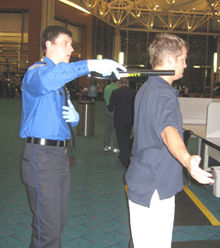
When he was the Archbishop of Washington, Cardinal James Hickey told a funny story of an experience he had at Reagan National Airport, while on his way to Rome. Even though he was 75 years old and obviously dressed as a bishop, he was told by an embarrassed ticket agent that he had “fit the profile” of an international terrorist, mostly because he held a one-way ticket. As a result, he had to submit to a complete search. Although he was able to laugh about it later, at the time Cardinal Hickey was, shall we say, not amused.
This story just goes to show that none of us wants to be falsely identified or misunderstood. Jesus himself was very concerned about being properly understood, as we heard in today’s gospel. When he asked his friends about who people thought he was, he received a variety of answers: John the Baptist, Elijah, Jeremiah, maybe one of the other old prophets come back to life. Yet each of these answers, while not bad in light of the circumstances, was wrong. It was up to Peter who, prompted by the Holy Spirit, proclaimed Jesus to be the Messiah, the Son of the living God.
Jesus wishes to be properly understood, not for his sake, but for ours. This is because our understanding of who Jesus is has profound implications for our behavior. As Christians, we seek to live in imitation of Christ. It follows, then, that the image we have of Christ will largely dictate how we shape our lives in order to conform to his. If we operate with a distorted image of Jesus, we will end up living distorted lives.
All of us here today share common beliefs about Jesus. When we recite the Creed together, we say, “We believe in one Lord, Jesus Christ, the only Son of God, eternally begotten of the Father,” and so forth. Nevertheless, we can profess correct doctrine in Jesus and still operate with a warped image of who he is. Just consider Peter in today’s gospel. He correctly identified Jesus as the Messiah. But then, moments later, as we’ll hear in next week’s gospel, he was appalled to learn that Jesus would be tortured and executed. His image of Jesus, at that time, did not include the possibility of his suffering and death.
Like Peter, most of us operate with a limited understanding of who Jesus is. Which is understandable; as today’s second reading reminded us, the things of God are largely a mystery to us! I have a suspicion that when we meet the Lord face-to-face at the end of our lives, we will be absolutely astonished by the full reality of who he is. In the meantime, however, our image of Jesus needs to be constantly revisited, challenged, and revised.
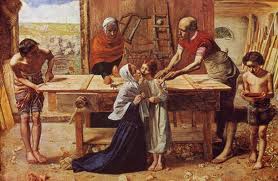
To do this, it’s important to recall where our images of Jesus have come from. For instance, our culture shapes our image. I once read how Victorian England was scandalized by a painting, called “The Carpenter’s Shop,” that depicted Jesus and the rest of the Holy Family in Joseph’s workplace. They were portrayed as rustic, simple, and poor- just as Scripture and historians tell us they were. Yet the class-conscious Victorian English refused to accept Jesus as portrayed in such a way. Their culture had a warped understanding of Jesus. You and I need to be on guard for how our materialistic, faced-paced, self-centered, and superficial culture might disfigure our image of our Lord.
In addition, our parents play a significant role in shaping our image of Jesus. Their attitudes, prejudices, ways of handling stress, work-habits, intelligence, and temperament all contribute. Distant parents suggest a distant Jesus; angry parents evoke an angry Jesus; happy parents reflect a joyful Jesus, and so forth. Conscious of this, we need to honestly reflect on our experience with our parents and consider how this may have influenced our understanding of Jesus.
Sometimes our image of Jesus is simply a projection of ourselves. This might result in a Jesus who never challenges us and smiles upon everything we do. It might also result in a Jesus who too much reflects our anger and incapacity to forgive each other. This Jesus is quick to punish and slow to pardon, is easy to fear but hard to love. Once an adult daughter asked her mother to forgive some old hurts. Both of them are committed, practicing Catholics. Yet when the mother hesitated to forgive, the daughter asked, “Don’t you think if I told Jesus I was sorry, he’d forgive me?” But the mother said, “I don’t presume to say what Jesus would or would not do.” Sadly, her image of Jesus had been warped by her pain and resentment.
To grow in an authentic understanding of Jesus, we can do several things. First of all, we need to explore the Scriptures, especially the gospels, which paint for us complimentary and complex portraits of the Lord. “Ignorance of the Scriptures,” insisted St. Jerome, “is ignorance of Christ.” We also need to pray- honestly, openly, and frequently- and let the Spirit of Jesus deepen our relationship, and thus deepen our understanding. We need to be active in the Church, the body of Christ, where our brothers and sisters in Christ can help shape our image of Christ. We need to embrace the teachings of the Church, which come with authority and the guidance of the Holy Spirit. And we need to try and understand our pain and suffering in light of the Jesus’ cross.
First and foremost, however, you and I need to love. To truly understand Jesus, the one who came not to be served but to serve, who gave up his life that ours might be saved, we need to be generous, sacrificial, and loving people as well. Imitation may be the sincerest form of flattery. But when it comes to Jesus, imitation is the key to understanding who he truly is. To love him is to know him, and to know him is to love him.
The Gospel today sets forth the biblical basis for the Office of Peter, the Office of the Papacy, for Peter’s successors are the Popes. The word “Pope” is simply an English version (via Anglo-Saxon and Germanic tongues) of the word “papa.” The Pope is affectionately called “Papa” in Italian and Spanish as an affectionate indication that he is the father of the family, the Church.
That Peter receives an office, and not simply a charismatic designation we will discuss later. As to certain objections regarding the office of the Papacy, we will also deal later. But for now lets look at the basic establishment of the Office of Peter in three steps.
I. The Inquiry that Illustrates – The text says, Jesus went into the region of Caesarea Philippi and he asked his disciples, “Who do people say that the Son of Man is?” They replied, “Some say John the Baptist, others Elijah, still others Jeremiah or one of the prophets.” He said to them, “But who do you say that I am?“
It should be noted that, in asking these questions, Jesus is not merely curious about what people think of him. He seems, rather, to be using these questions as a vehicle by which to teach the apostles, and us, about how the truth is adequately revealed and guaranteed.
Jesus’ first two questions reveal the inadequacy of two common methods:
1. The Poll – Jesus asks who the crowds say he is. In modern times we love to take polls, and many moderns put a lot of weight in what polls say. More than just politics, many people, Catholics among them, like to point out that X% of Catholics think this, or that, about moral teachings, or doctrines and disciplines. It is as if the fact that more than 50% of Catholics think something, it must be true, and that the Church should change her teaching based on this.
But, as this gospel makes clear, taking a poll doesn’t necessarily yield the truth. In fact ALL the assertions of the crowd were wrong, no matter what percentage thought them. Jesus is not John the Baptist, Elijah, Jeremiah, or one of the prophets redivivus. So, running the Church by poll taking or democracy seems not to be the model that works.
2. The Panel – Jesus, having taught this implicitly, now turns to a panel of experts, a “blue ribbon committee,” if you will. He asks the twelve, “Who do you (apostles) say that I am?” Here we simply get silence. Perhaps they were looking around like nervous students in a classroom not wanting to answer, lest they look like a fool. The politics on the panel leads not to truth, but to a kind of self-serving, politically correct silence.
That Peter finally speaks up is true. But, as Jesus will say, he does not do this because he is a member of the panel, but for another reason altogether.
Hence the blue ribbon panel, the committee of experts, is not adequate in setting forth the religious truth of who Jesus is.
And through this line of questioning, Jesus instructs through inquiry. Polls and panels are not adequate in yielding the firm truth as to his identity. All we have are opinions, or politically correct silence. Having set forth this inadequacy, the Gospel now presses forth to describe the plan of God in adequately setting forth the truths of faith.
II. The Individual that is Inspired – – The text says, Simon Peter said in reply,”You are the Christ, the Son of the living God.” Jesus said to him in reply, “Blessed are you, Simon son of Jonah. For flesh and blood has not revealed this to you, but my heavenly Father.
We are taught here not merely that Peter spoke, but also how he came to know the truth. Jesus is very clear to teach us that Peter spoke rightly, not merely because he was the smartest, (he probably wasn’t), or because some one else told him, (Jesus is clear that flesh and blood did not reveal this to him), and not merely because because he guessed, and just happen to get the right answer. Jesus teaches that Peter came to know the truth and speak it because God the Father revealed it to him. God the Father inspires Peter. There is a kind of anointing at work here.
So here is God’s methodology when it comes to adequately revealing and guaranteeing the truths of the faith: he anoints Peter.
It’s not polls, or panels that God uses, it’s Peter.
And while truths may emerge in the wider Church, reflecting what is revealed, it is only with Peter and his successors that such views can be definitively set forth, and their truth adequately guaranteed. Thus, the other apostles are not merely bypassed by God, but He anoints Peter to unite them and give solemn declaration to what they have seen and heard.
The Catechism says of Peter and his successors, the popes:
When Christ instituted the Twelve, he constituted [them] in the form of a college or permanent assembly, at the head of which he placed Peter, chosen from among them….The Lord made Simon alone, whom he named Peter, the “rock” of his Church. He gave him the keys of his Church and instituted him shepherd of the whole flock. The office of binding and loosing which was given to Peter was also assigned to the college of apostles united to its head. This pastoral office of Peter and the other apostles belongs to the Church’s very foundation and is continued by the bishops under the primacy of the Pope.
The Pope, Bishop of Rome and Peter’s successor, is the perpetual and visible source and foundation of the unity both of the bishops and of the whole company of the faithful. For the Roman Pontiff, by reason of his office as Vicar of Christ, and as pastor of the entire Church has full, supreme, and universal power over the whole Church, a power which he can always exercise unhindered.”
The college or body of bishops has no authority unless united with the Roman Pontiff, Peter’s successor, as its head. As such, this college has supreme and full authority over the universal Church; but this power cannot be exercised without the agreement of the Roman Pontiff. The college of bishops exercises power over the universal Church in a solemn manner in an ecumenical council. But there never is an ecumenical council which is not confirmed or at least recognized as such by Peter’s successor. (Catechism of the Catholic Church, #s 880-884 selected)
All these truths point back to this moment when we see how God himself chooses to operate.
And note too, the dimension of faith we are called to have. We are to assent to the Pope’s teaching and leadership not merely because we think he is smarter, or because it might happen that he had power, riches other worldly means that might impress us or compel us to assent. Rather, no, we assent to the Pope because, by faith, we believe he is inspired by God. It is not flesh and blood in which we put our trust, it is God himself, whom we believe has acted on our behalf by anointing someone to affirm the truth, and adequately guarantee that truth to be revealed by God.
And this then leads to the final stage wherein Jesus sets forth a lasting office for Peter.
III. The Installation that is Initiated – The text says, And so I say to you, you are Peter, and upon this rock I will build my Church, and the gates of the hell shall not prevail against it. I will give you the keys to the kingdom of heaven. Whatever you bind on earth shall be bound in heaven; and whatever you loose on earth shall be loosed in heaven.”
Jesus does not merely praise Simon for a moment of charismatic insight. He goes further, and declares that he will build his very Church upon Simon, and thus he calls him, Peter (Rock). And here too, he does not merely mean this is a personal gift or recognition that will die with Peter. In giving him the keys, he is establishing an office, not merely indicating a personal promotion for Peter. This will be God’s way of strengthening and uniting the Church. In Luke’s Gospel Jesus says more of this:
Simon, Simon, behold, Satan demanded to have you, all that he might sift you all like wheat, but I have prayed for thee, Peter, that thy faith may not fail; and when thou hast turned again, strengthen thy brethren. (Luke 22:31)
Hence, it is clear once again that God’s plan for the Church is to strengthen one man, Peter and his successors, that in turn the whole Church may be strengthened and united.Thus the Lord Jesus establishes not only Peter, but also his office. This is God’s vision and plan for his Church.
It is true many have objected to this teaching. There is no time here to do a full apologetical reply to every objection. But frankly most of the objections amount to a kind of wishful thinking by some, who want this text to mean something other than what it plainly means. Nothing could be clearer that the fact that Jesus is establishing Peter and an office which will serve as a foundation for the unity and strength of his Church.
Some object that within verses Peter will be called “satan” and will later deny Christ. But Jesus knew all this, and still said and did what he does here.
Others object that Jesus is head and foundation, that he is the Rock. True enough, but apparently Jesus never got the objectors’ memo, for it is he himself who calls Peter rock, and establishes him with the authority to bind and loose. It is also true that both Jesus and Peter can be head and rock, in terms of primary and secondary causality (more on that HERE). And yet again, that Peter and his successors are head and rock by making visible and being the means through which Christ exercises his headship and foundational aspect.
Finally, to return to the title of this post, “If no one is Pope, EVERYONE is pope!” For the fact is, without a visible head, there is no principle on earth for unity in the Church. The Protestant experiment tried to replace the Pope with scripture and gave it sole authority. But Protestants cannot agree on what Scripture says, and have no earthly way to resolve their conflicts. While they say that authority resides in Scripture alone, the fact is, in claiming the anointing of the Holy Spirit and thus the ability to properly interpret Scripture, they really place the locus of authority within themselves, and become the very pope they denounce. Having denied that there is a Pope they become one themselves. If no one is pope, everyone is pope.
I have read that some objectors think Catholics arrogant in asserting that we have a Pope whom we trust to be anointed by God to teach us without error on faith and morals. But what is more arrogant, to claim there is a Pope other than me, or to in fact act like one myself?
In the end, the Protestant experiment is a failed one. Many estimates place the number of Protestant denominations as high as 30,000. I personally think this is slightly exaggerated, but not much. They all claim the Scriptures as their source of truth but differ on many, very essential matters, such as the necessity of baptism, once saved always saved, sexual morality, authority etc. When they cannot resolve things they simply subdivide. There is an old joke, told even among protestants that goes:
Once I saw this guy on a bridge about to jump. I said, “Don’t do it!” He said, “Nobody loves me.” I said, “God loves you. Do you believe in God?” He said, “Yes.” I said, “Are you a Christian or a Jew?” He said, “A Christian.” I said, “Me, too! Protestant or Catholic?” He said, “Protestant.” I said, “Me, too! What franchise?” He said, “Baptist.” I said, “Me, too! Northern Baptist or Southern Baptist?” He said, “Northern Baptist.” I said, “Me, too! Northern Conservative Baptist or Northern Liberal Baptist?” He said, “Northern Conservative Baptist.” I said, “Me, too! Northern Conservative Baptist Great Lakes Region, or Northern Conservative Baptist Eastern Region?” He said, “Northern Conservative Baptist Great Lakes Region.” I said, “Me, too!” Northern Conservative Baptist Great Lakes Region Council of 1879, or Northern Conservative Baptist Great Lakes Region Council of 1912?” He said, “Northern Conservative Baptist Great Lakes Region Council of 1912.” I said, “Die, heretic!” And I pushed him over.
A strange little joke, and not entirely fair since most Protestants of different denominations I know get along fine personally. But the truth is, the denominations disagree over many very essential things. The Protestant experiment is a failure that leads only to endless divisions. The Church needs a visible head. The Bible alone does not suffice, for there are endless disagreements on how to interpret it. Some one must exist to who all look and agree that he will resolve the differences after listening.
Jesus has installed an individual in this role to manifest his office of rock and head and that individual is Peter and his successors.
Here’s a light-hearted video I put together commemorating the Pope’s many visits to unite and strengthen us.

 Elizabeth Lent, junior at Notre Dame and parishioner from Little Flower takes us back to World Youth Day. Read about her experience at Cuatro Vientos.
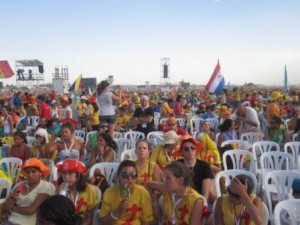 receive his words and blessing. We left our things in section D8 where we would be sleeping that evening and then proceeded to stuff our pockets with food, water, a journal, cards, and anything else we would want for the rest of the day. Next stop was to claim our seats in front of the stage where Pope Benedict XVI would lead a vigil celebration that evening and we would not return to our backpacks until 11pm. Our group, fortunate to receive tickets for the front section of seats, secured the seventh row in the second bunch of seats, front and center from the stage. As we waited for the Pope’s arrival at 7pm, the sun’s heat beat down on us but we were all just so pleased to be sitting down, it was a blessing to see how much we take for granted in our ordinary life, something so simple as a chair. We also may take advantage of how present Our Lord is to us each and every day. We may not always make us of his love for us, believing that we can do it on our own, but nothing can be done without the power and love of God.